Digestive System Anatomy, Functions, and Regulation
 Call Kai
 Learn
Learn Practice Test
 Spaced Repetition
 Match
Match Flashcards
 Knowt Play
1/49

There's no tags or description
Looks like no tags are added yet.
Name | Mastery | Learn | Test | Matching | Spaced | Call with Kai | Chat |
|---|
No analytics yet
Send a link to your students to track their progress
50 Terms
What is the digestive tract also known as?
Gastrointestinal (GI) tract or Alimentary canal
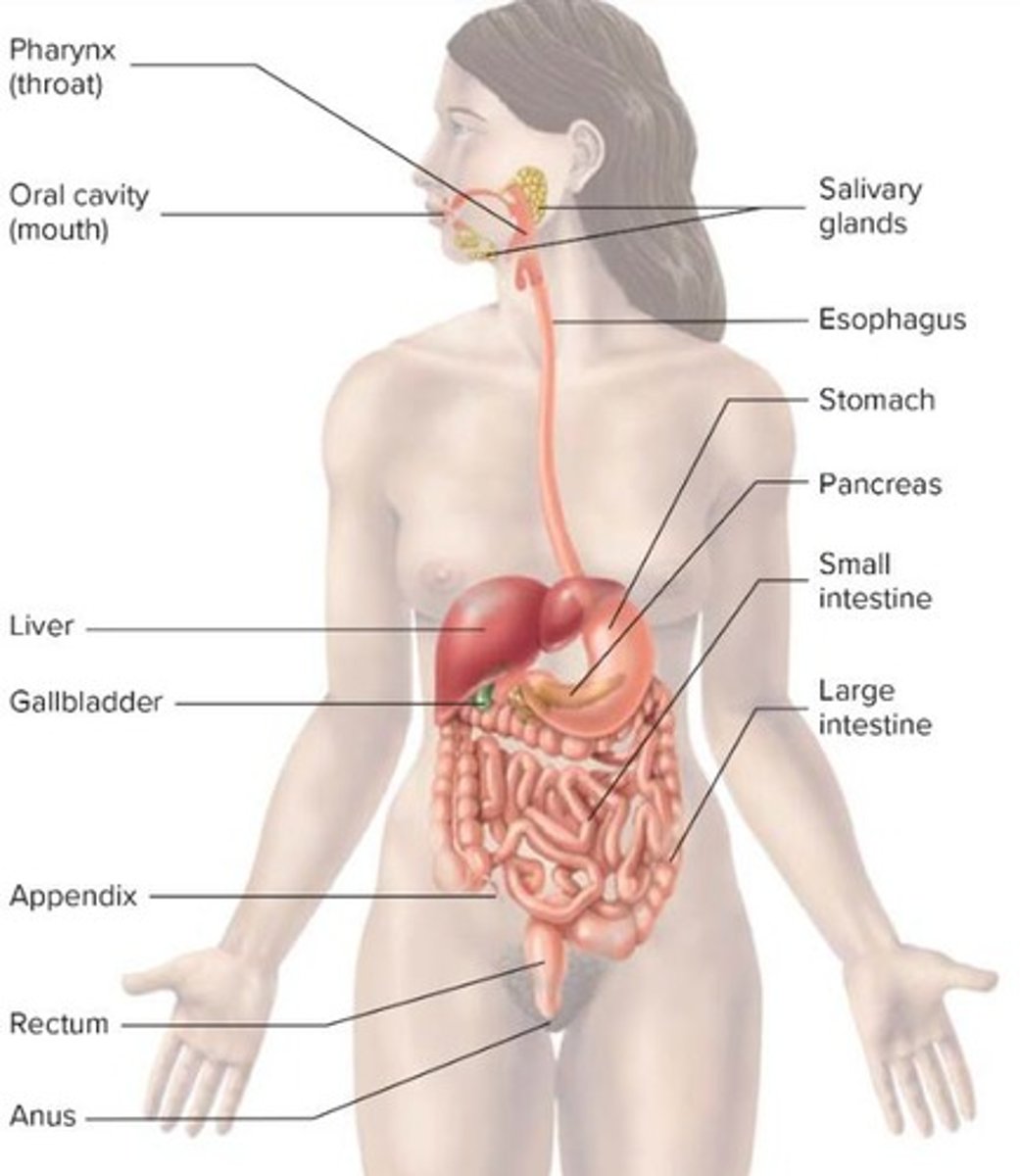
List the organs of the GI tract.
Mouth, pharynx, esophagus, stomach, small intestine, large intestine
What are the accessory organs of the digestive system?
Tongue, teeth, salivary glands, liver, gallbladder, pancreas
What role does the central nervous system (CNS) play in the GI tract?
Regulates taste, smell, emotions, conscious decisions, hunger, and thirst
What is the function of the autonomic nervous system (ANS) in digestion?
Stimulates or inhibits the digestive system, targeting smooth muscle and glands
What is the enteric nervous system (ENS)?
A nervous system that can function independently, located in the submucosa layer
What are the main functions of the oral cavity in digestion?
Ingestion, mastication, propulsion/mixing, secretion, absorption
What is the primary function of the stomach?
Propulsion/mixing, secretion (HCl), digestion, absorption of water, alcohol, and aspirin
What occurs in the small intestine?
Complete breakdown of food molecules, secretion of HCO3 and bile, absorption
What is the function of the large intestine?
Propulsion, secretion of mucus, absorption of salt and water
Define mastication.
Chewing
What is the process of digestion?
Breakdown of large organic molecules into smaller ones that can be absorbed
What is the role of secretion in digestion?
Addition of liquids, enzymes, and mucus to ingested food
What does absorption refer to in the digestive system?
Moving molecules from the GI tract to the bloodstream
What are the four tunics of the GI tract?
Mucosa, submucosa, muscularis, serosa
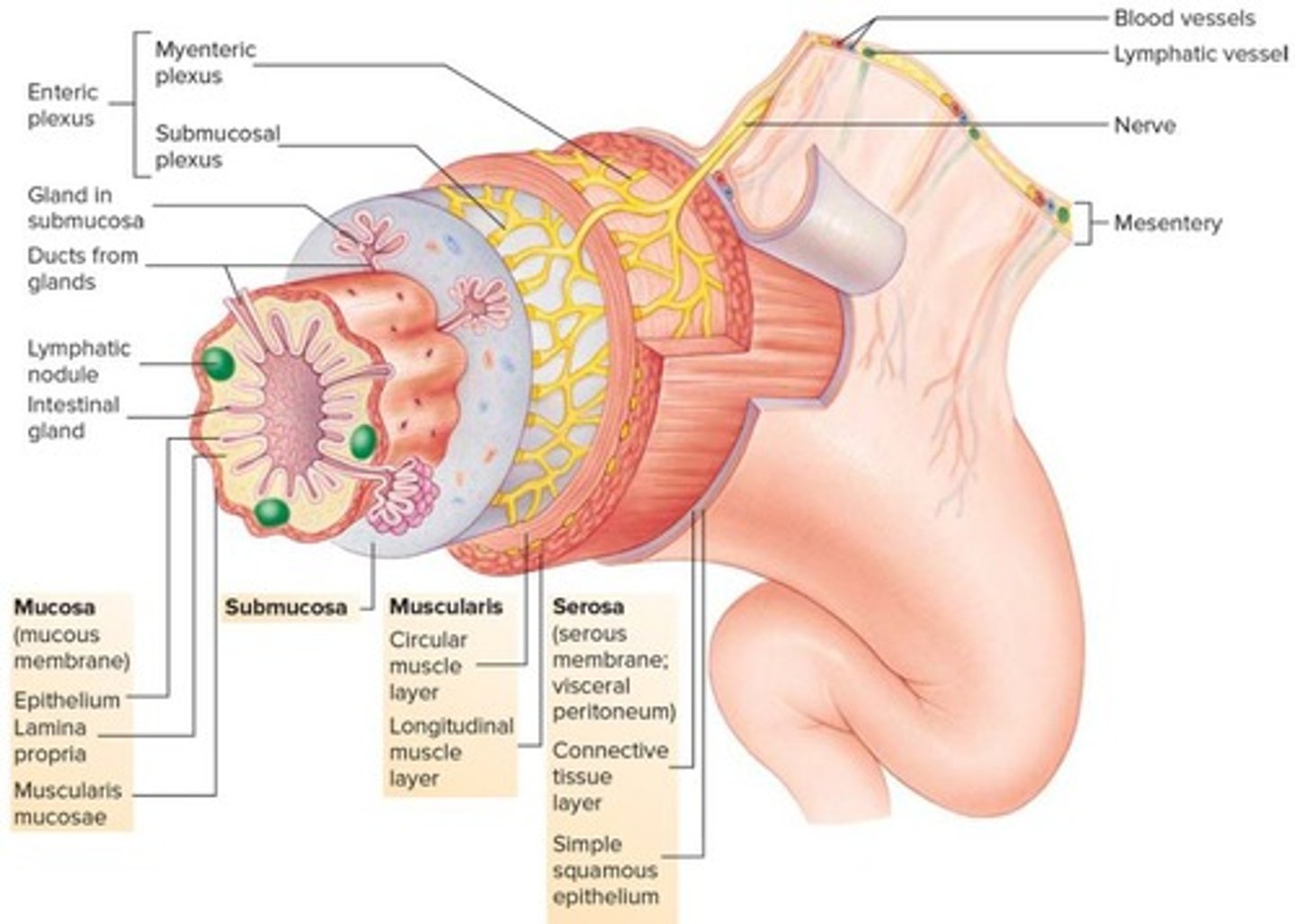
What is the function of the peritoneum?
Wraps organs; visceral peritoneum wraps organs, parietal peritoneum lines the abdominal wall
What are mesenteries?
Membranes that connect abdominal organs and provide blood/nerve connection from the abdominal wall to organs
What does retroperitoneal mean?
Located behind the peritoneum (e.g., kidney, pancreas, duodenum, rectum)
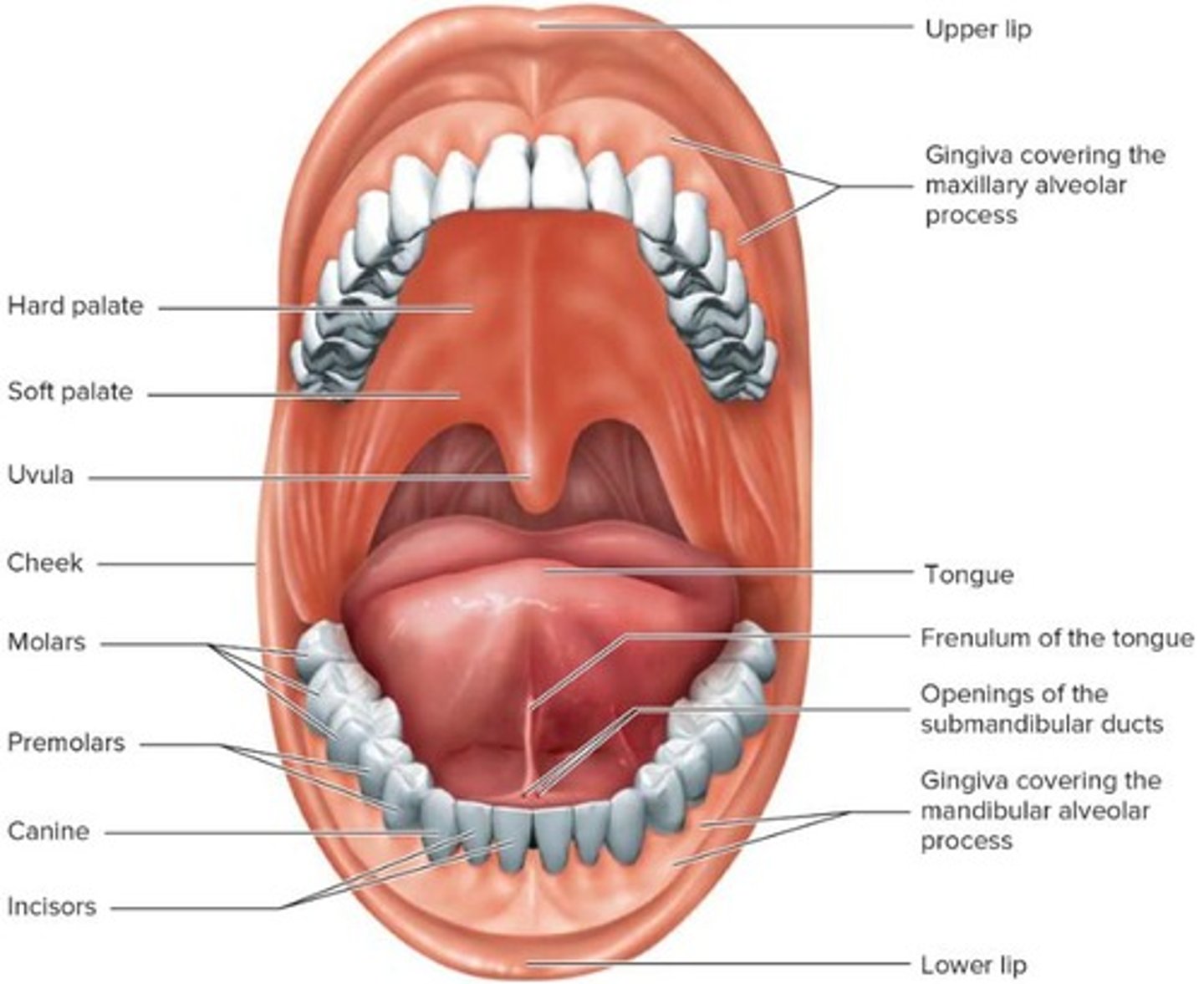
What structures are included in the anatomy of the oral cavity?
Lips, cheeks, teeth, tongue, palate, tonsils, salivary glands
What muscle forms the lips?
Orbicularis oris muscle
What is hypoxia?
A condition in which there is a deficiency of oxygen in the tissues.
What muscle is important for mastication?
Buccinator muscle
What is the role of mastication?
It starts the mechanical digestion process.
What part of the tongue is covered in papillae?
Anterior 2/3rd
What is the posterior 1/3rd of the tongue known for?
It has minimal taste buds and large amounts of lymphatic tissue, known as the lingual tonsil.
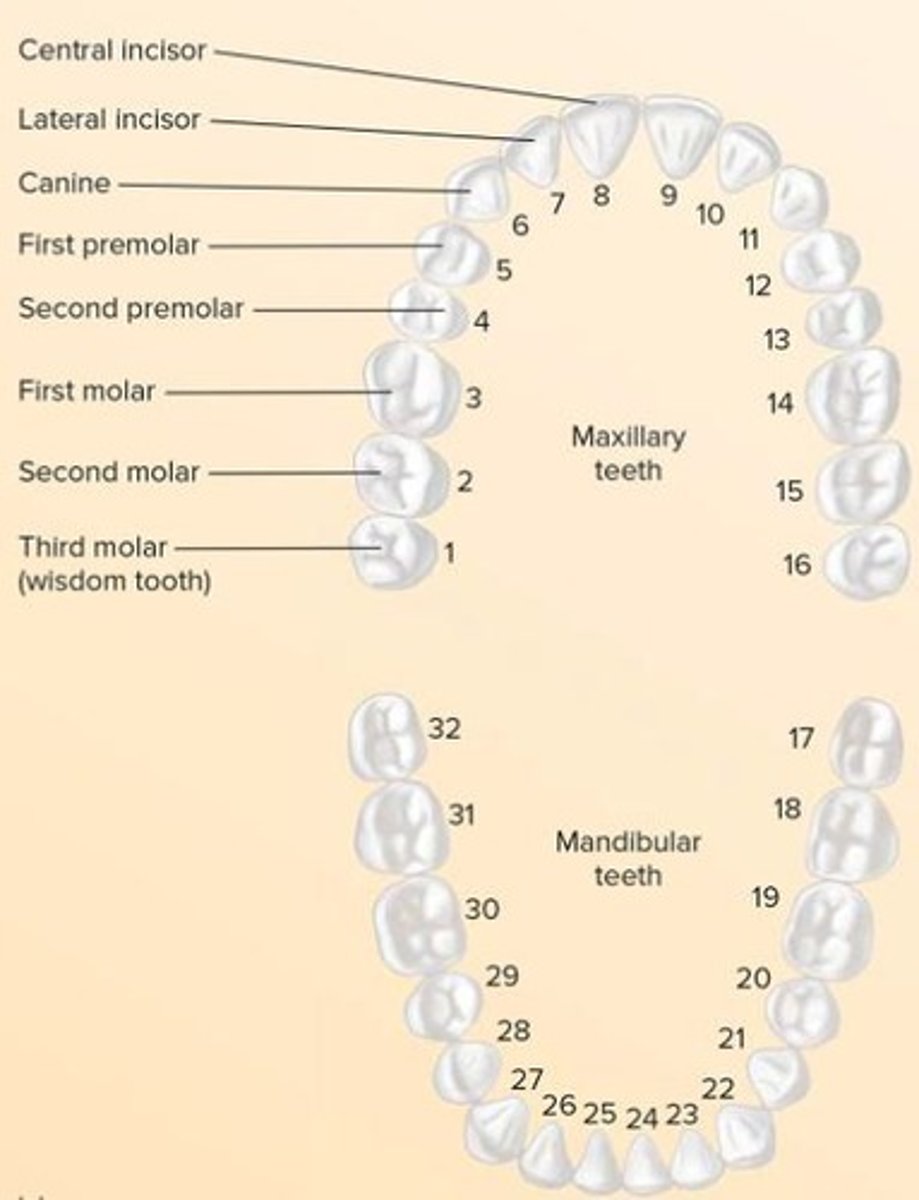
How many teeth do adults typically have?
32 teeth
What are the four quadrants of teeth in adults?
Left Upper (LU), Right Upper (RU), Left Lower (LL), Right Lower (RL)
What are the three regions of each tooth?
Crown, Neck, Root
What is the function of periodontal ligaments?
They secure teeth to the bone.
What is the primary cause of tooth loss in adults?
Periodontal disease
What separates the nasal cavity from the oral cavity?
The palate
What are the two types of palate?
Hard palate (bony) and Soft palate (muscle and connective tissue)
What is the function of salivary glands?
They produce saliva to keep the oral cavity moist and aid in digestion.
What enzyme in saliva breaks down starch?
Salivary amylase
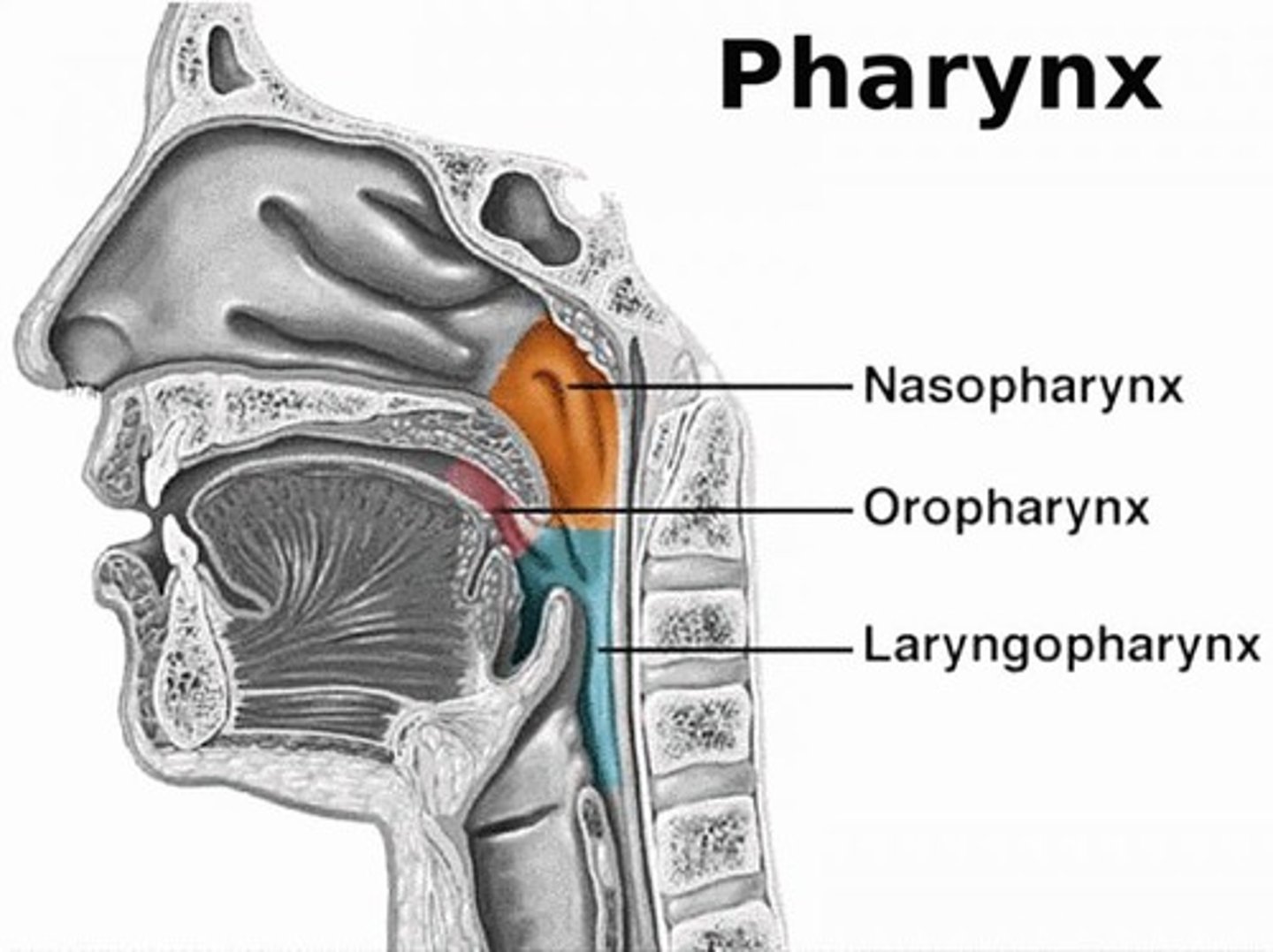
What are the three regions of the pharynx?
Nasopharynx, Oropharynx, Laryngopharynx
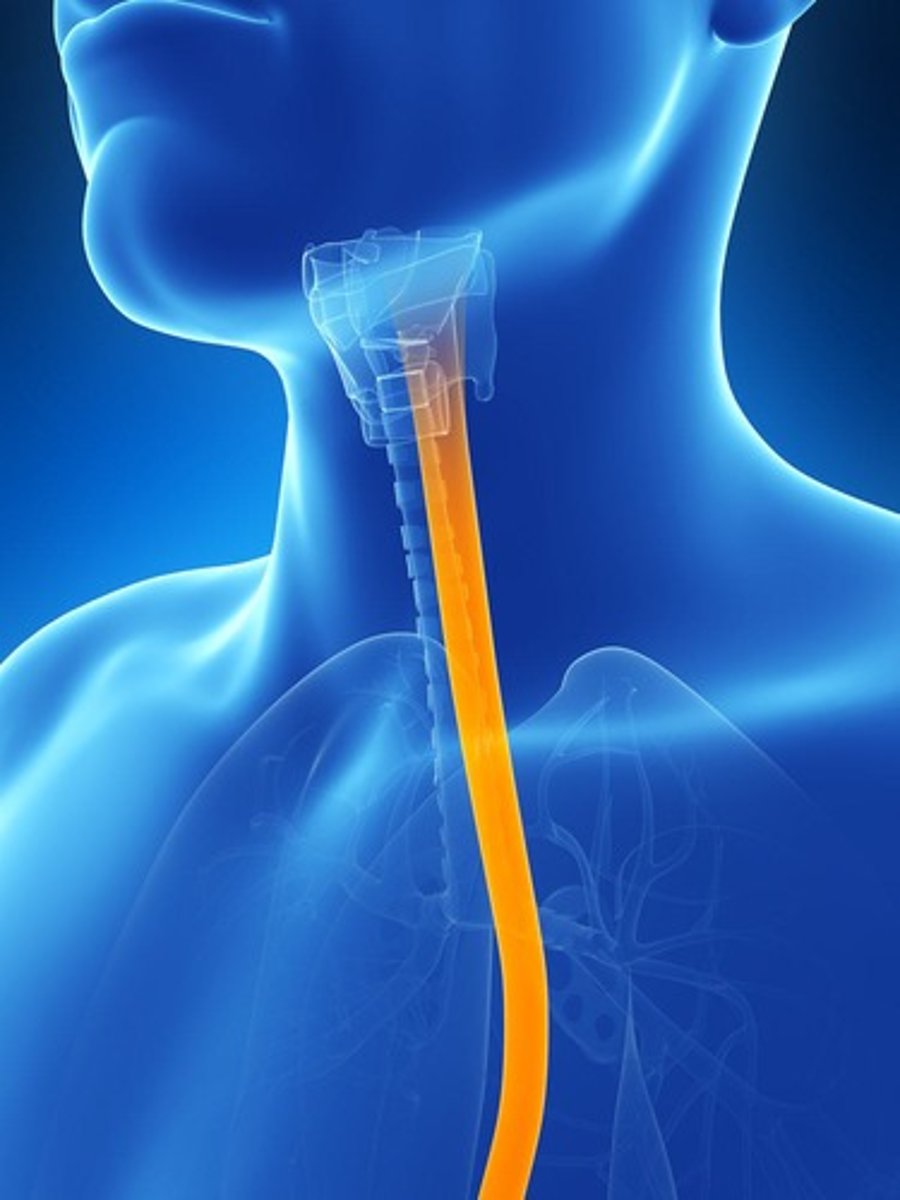
What is the function of the esophagus?
It transports food from the pharynx to the stomach.
What type of muscle is involved in the movement of food through the esophagus?
Skeletal and smooth muscle
What are the three phases of swallowing?
Voluntary phase, Pharyngeal phase, Esophageal phase
What are the four parts of the stomach?
Cardiac part, Fundus, Body, Pyloric part
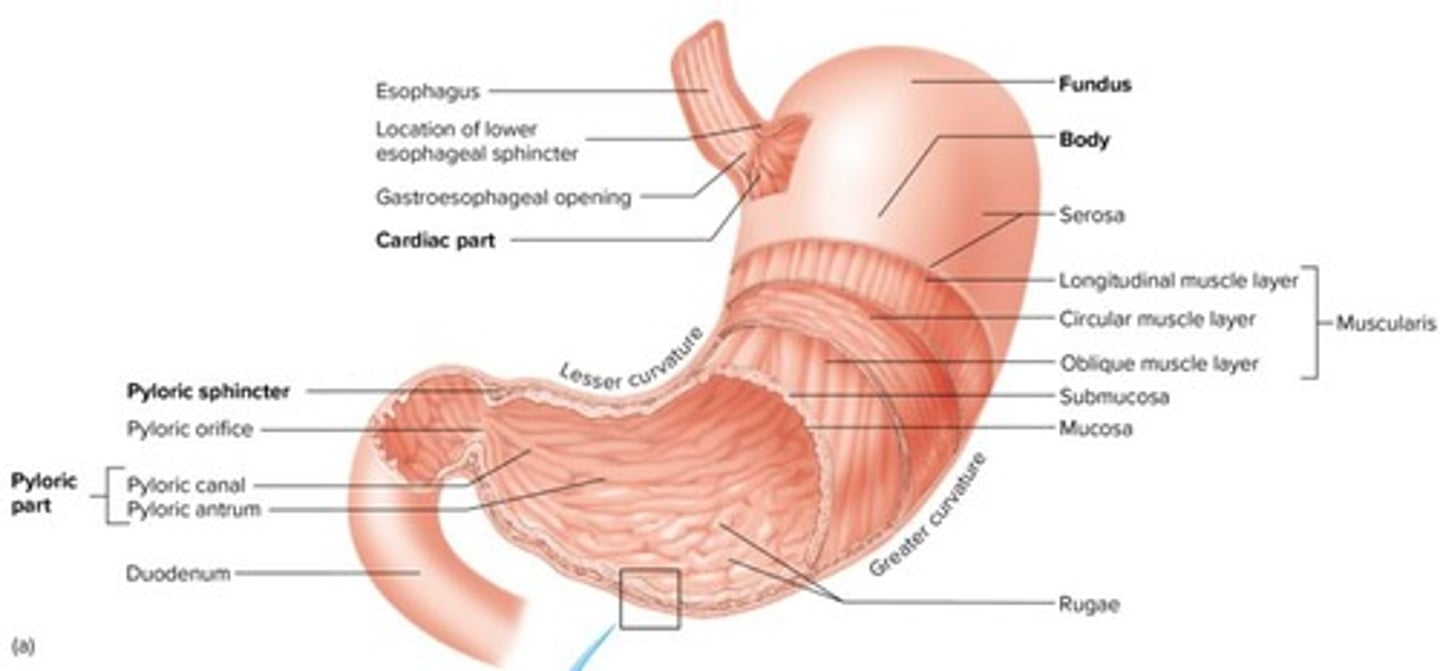
What is the role of the muscularis layer in the stomach?
It is responsible for churning the bolus.
What hormone increases gastric secretions?
Gastrin
What is the function of the liver?
It processes products of digestion, stores glucose, produces bile, and detoxifies substances.
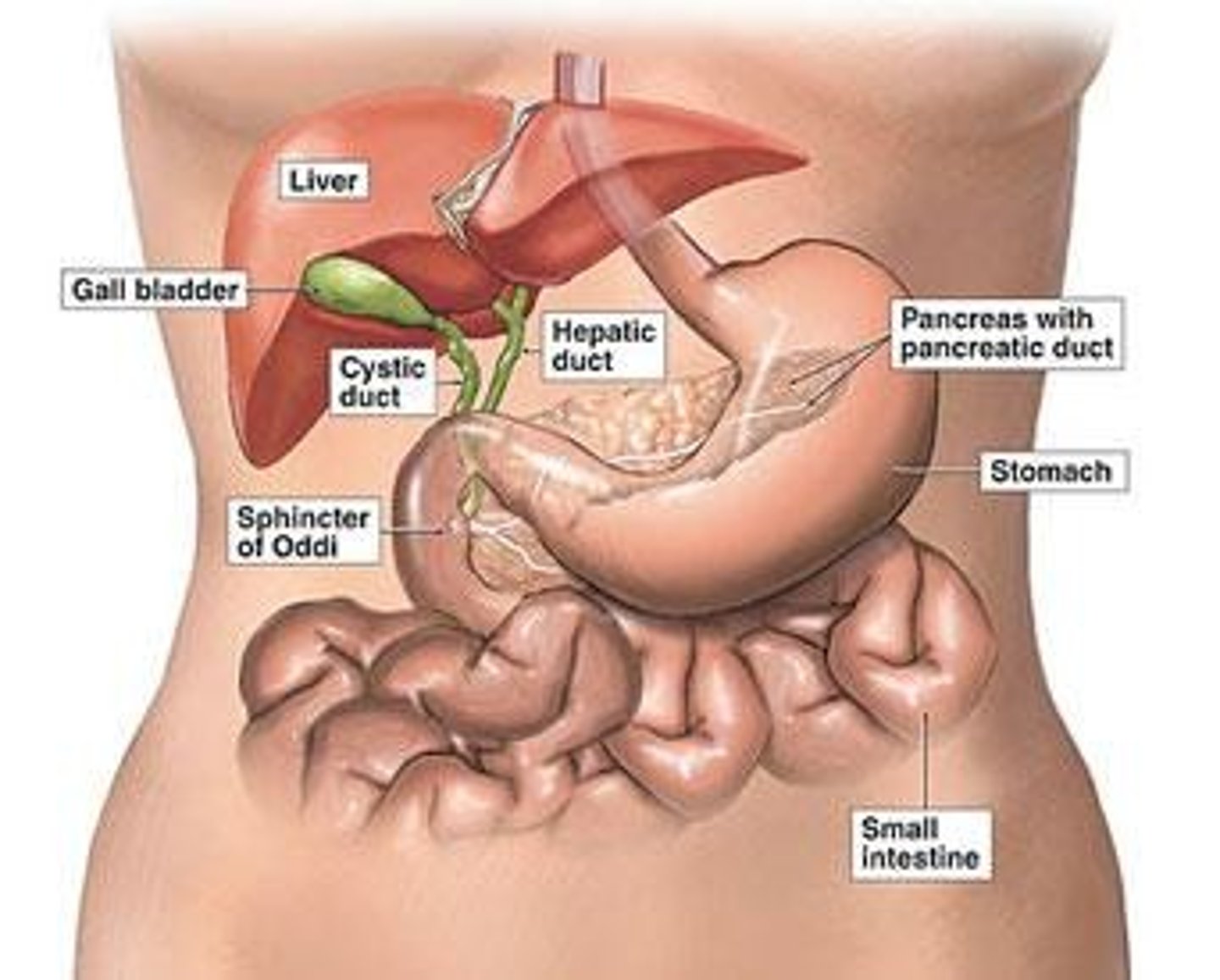
What is the largest internal organ?
The liver
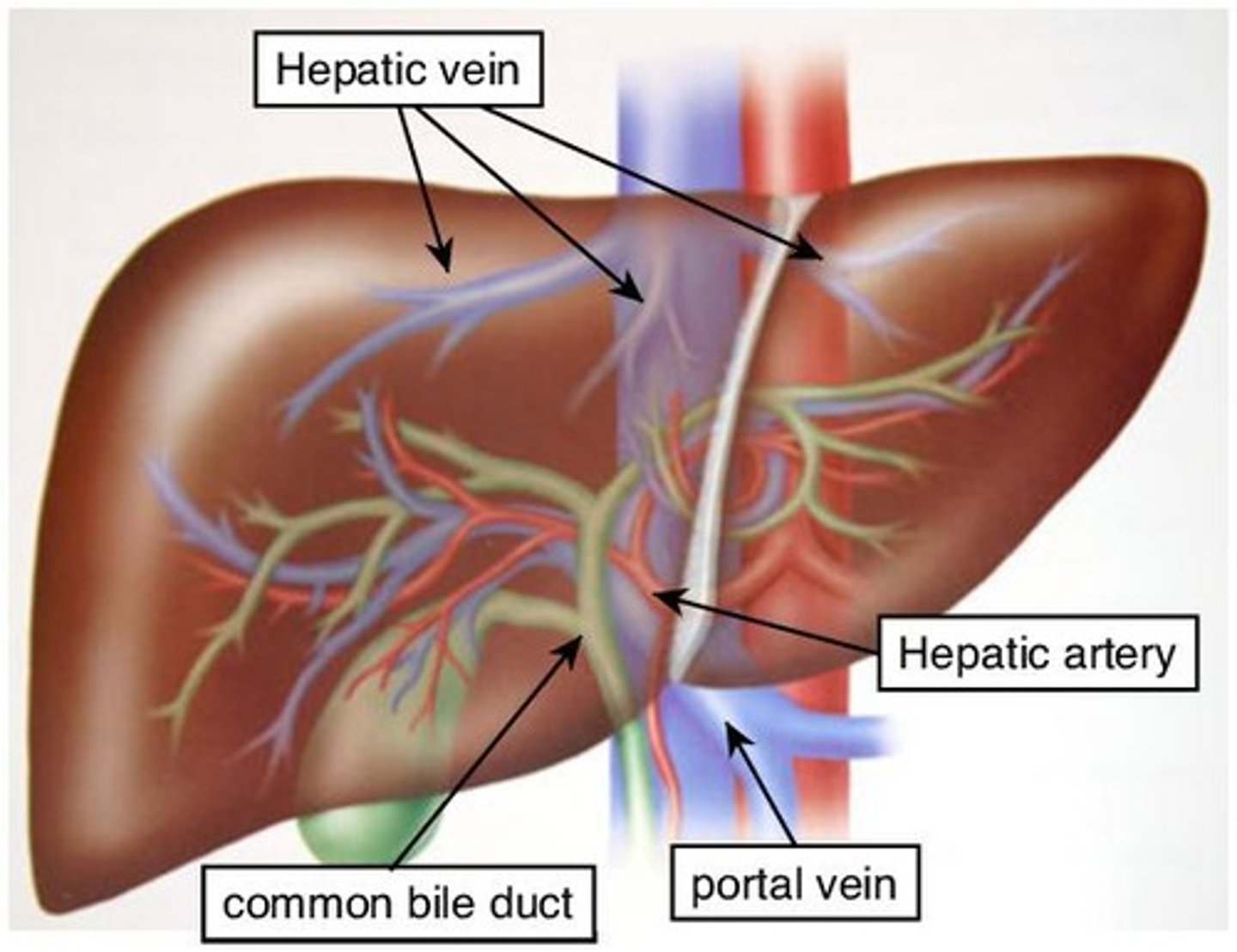
What is the function of bile?
It emulsifies fats and neutralizes stomach acid.
What are the three regions of the small intestine?
Duodenum, Jejunum, Ileum
What is the primary function of the small intestine?
Digestion and absorption of nutrients
What is the role of the cecum?
It is the beginning of the large intestine and connects to the appendix.
What is the defecation reflex center?
It is located in the sacral portion of the spinal cord.
What is the primary enzyme that breaks down proteins in the stomach?
Pepsin
What percentage of water is absorbed in the small intestine?
92%