Lab Exam
 Call Kai
 Learn
Learn Practice Test
 Spaced Repetition
 Match
Match Flashcards
 Knowt Play
1/164

There's no tags or description
Looks like no tags are added yet.
Name | Mastery | Learn | Test | Matching | Spaced | Call with Kai |
|---|
No analytics yet
Send a link to your students to track their progress
165 Terms
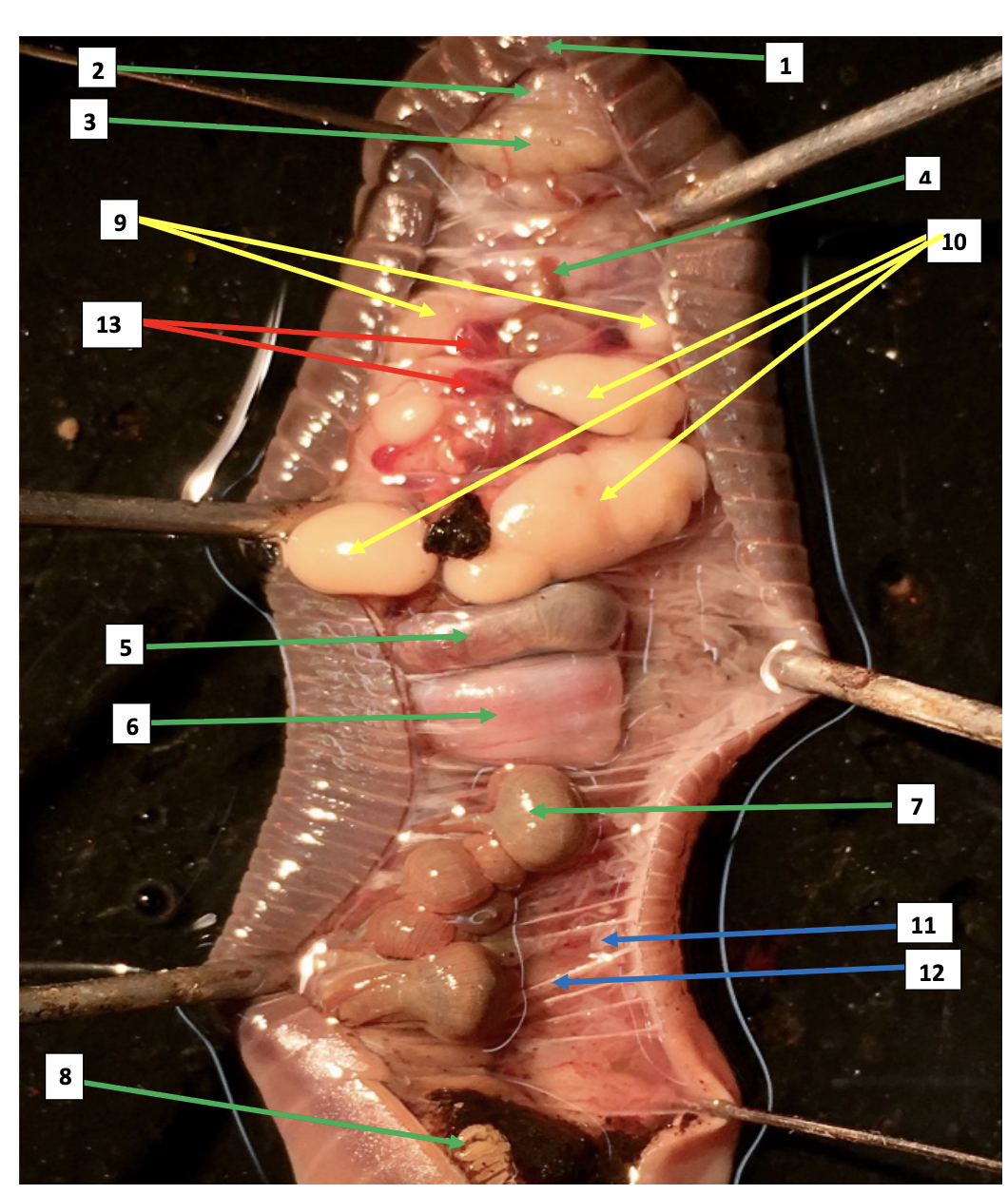
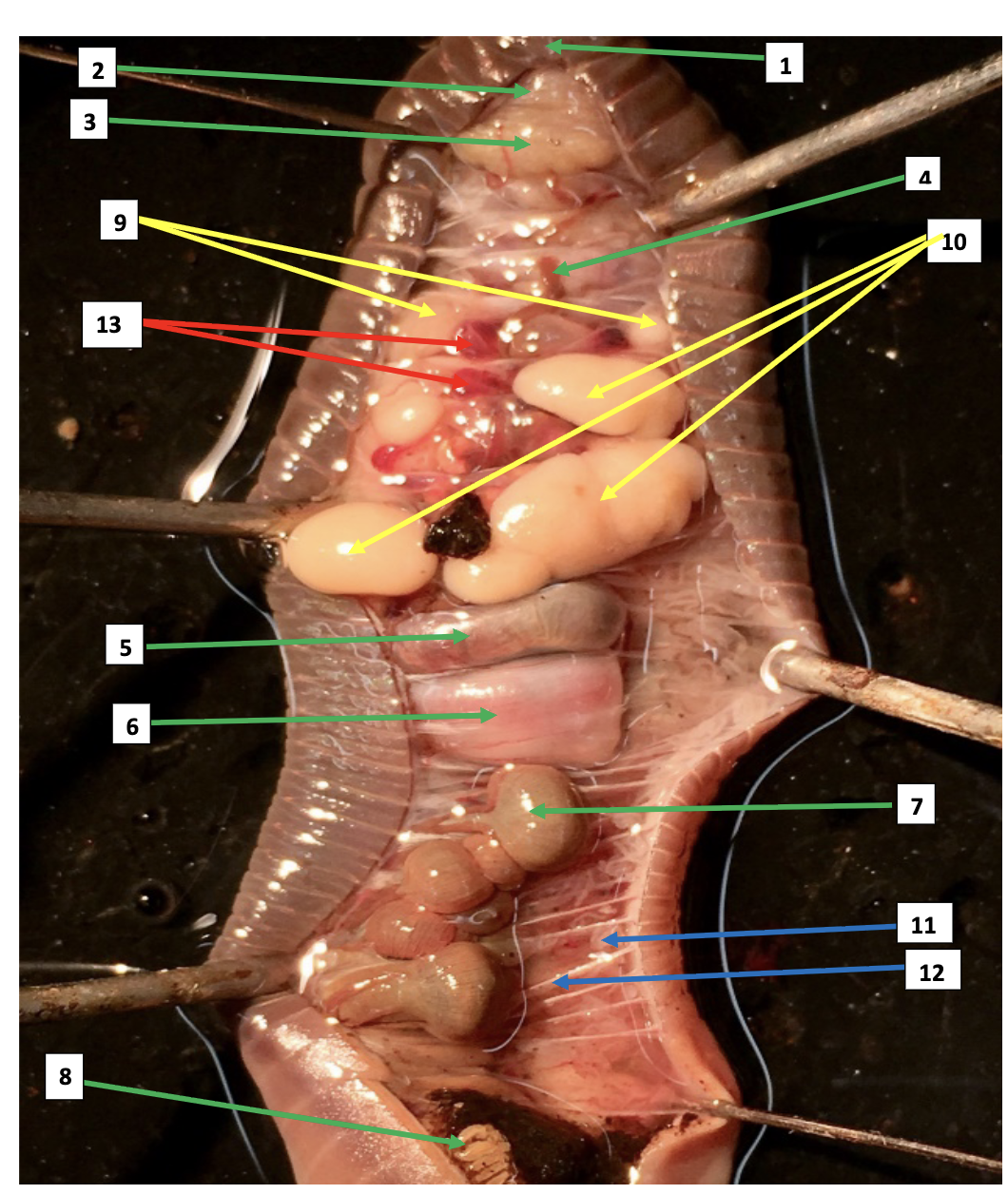
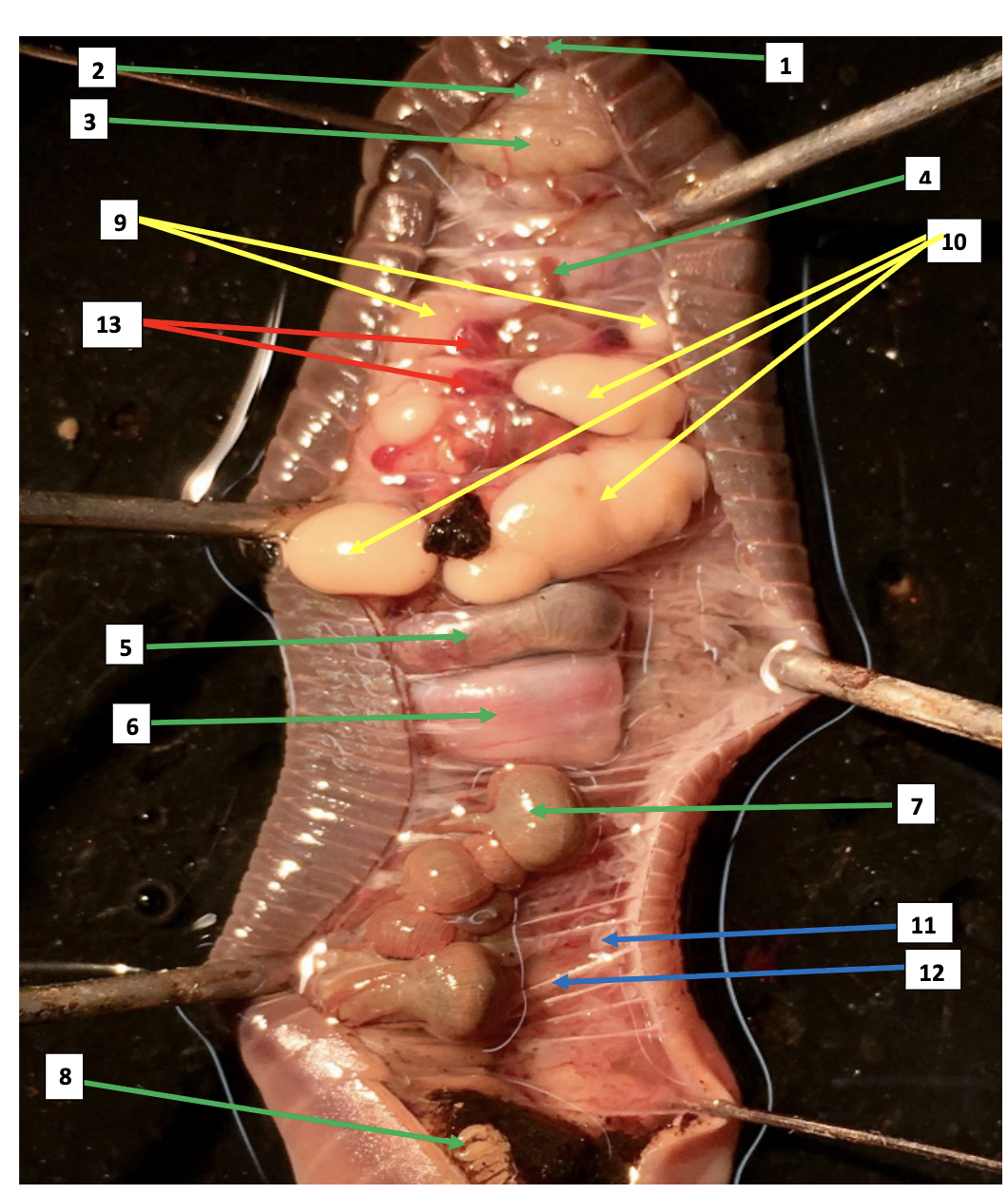
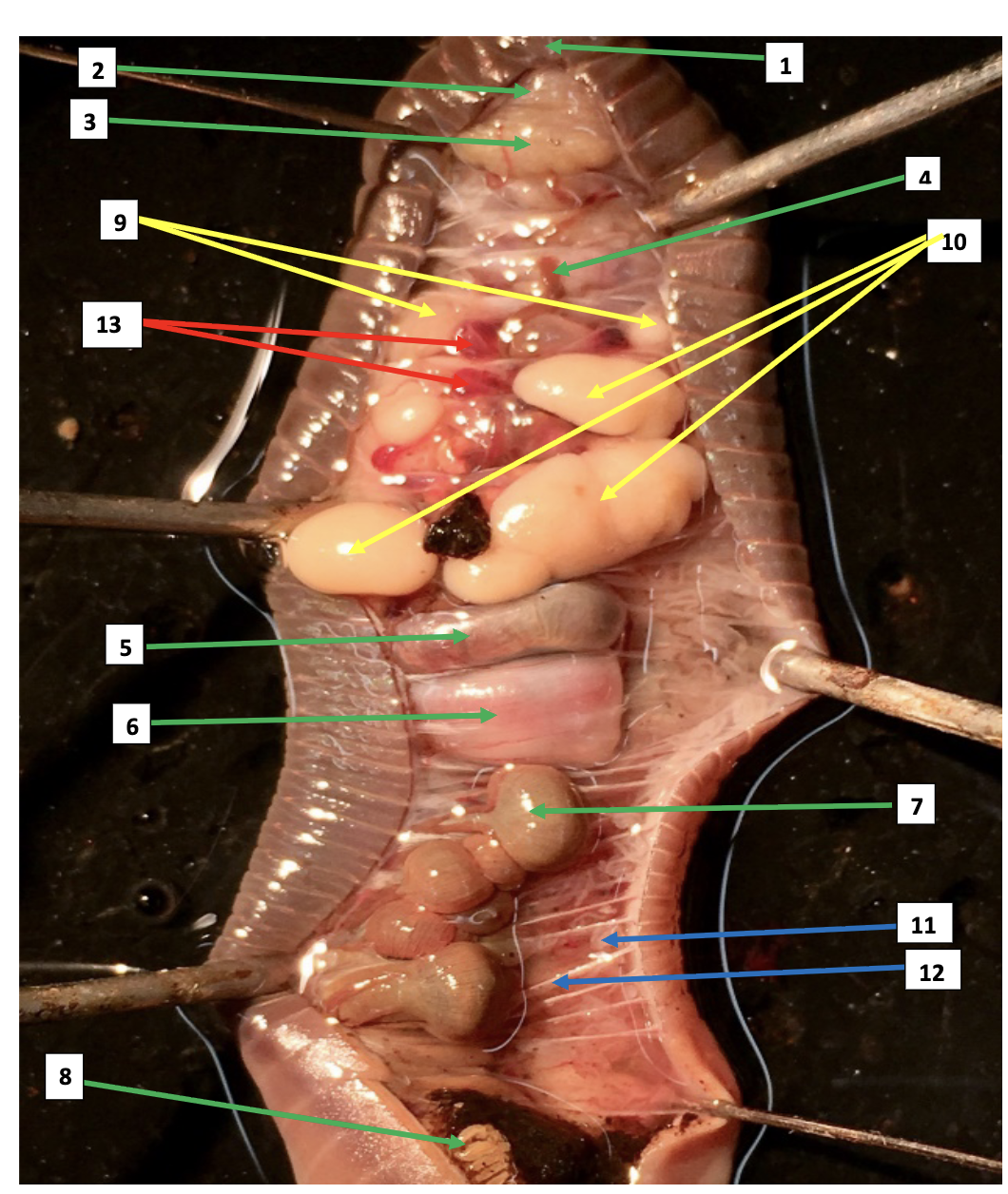
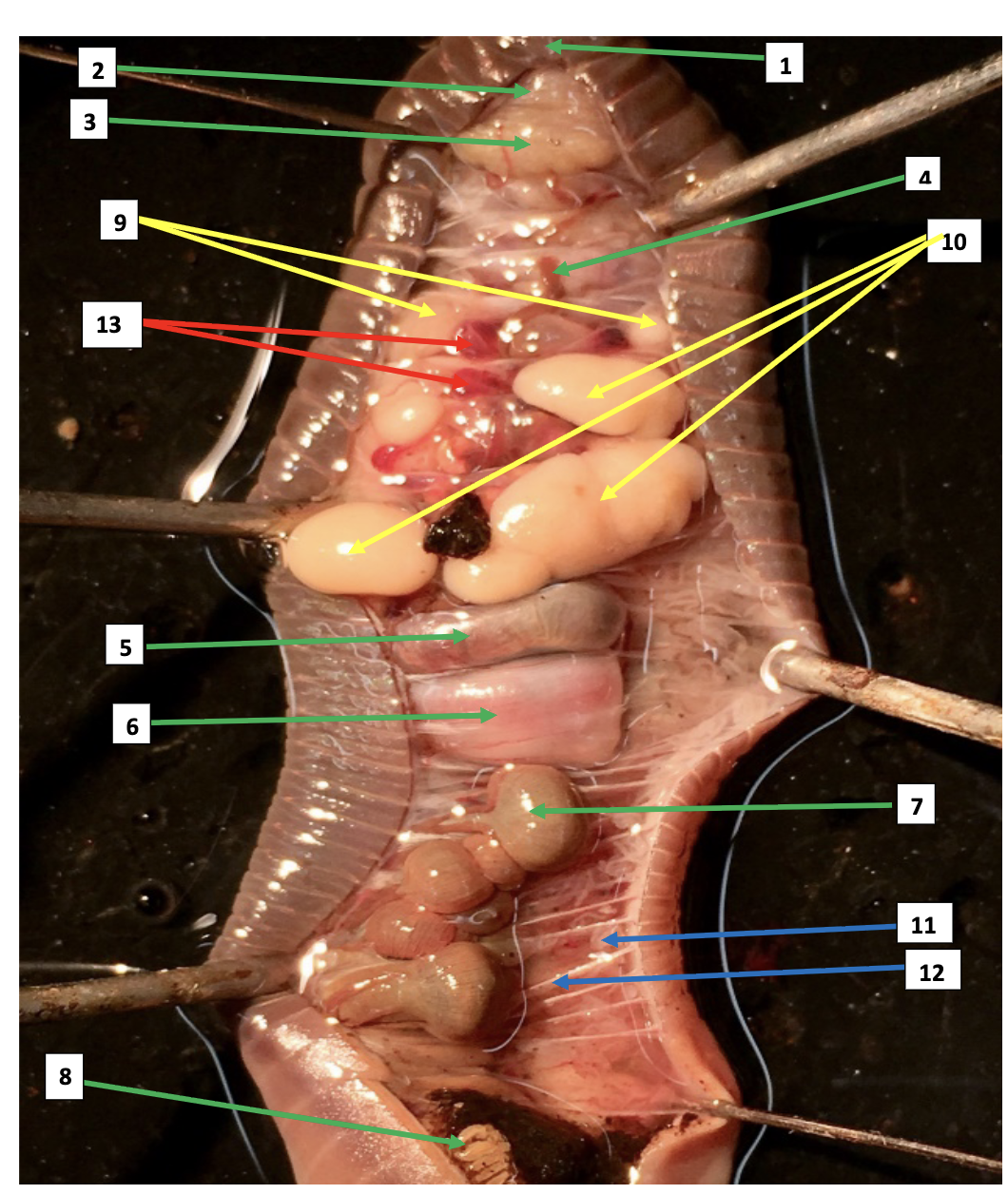
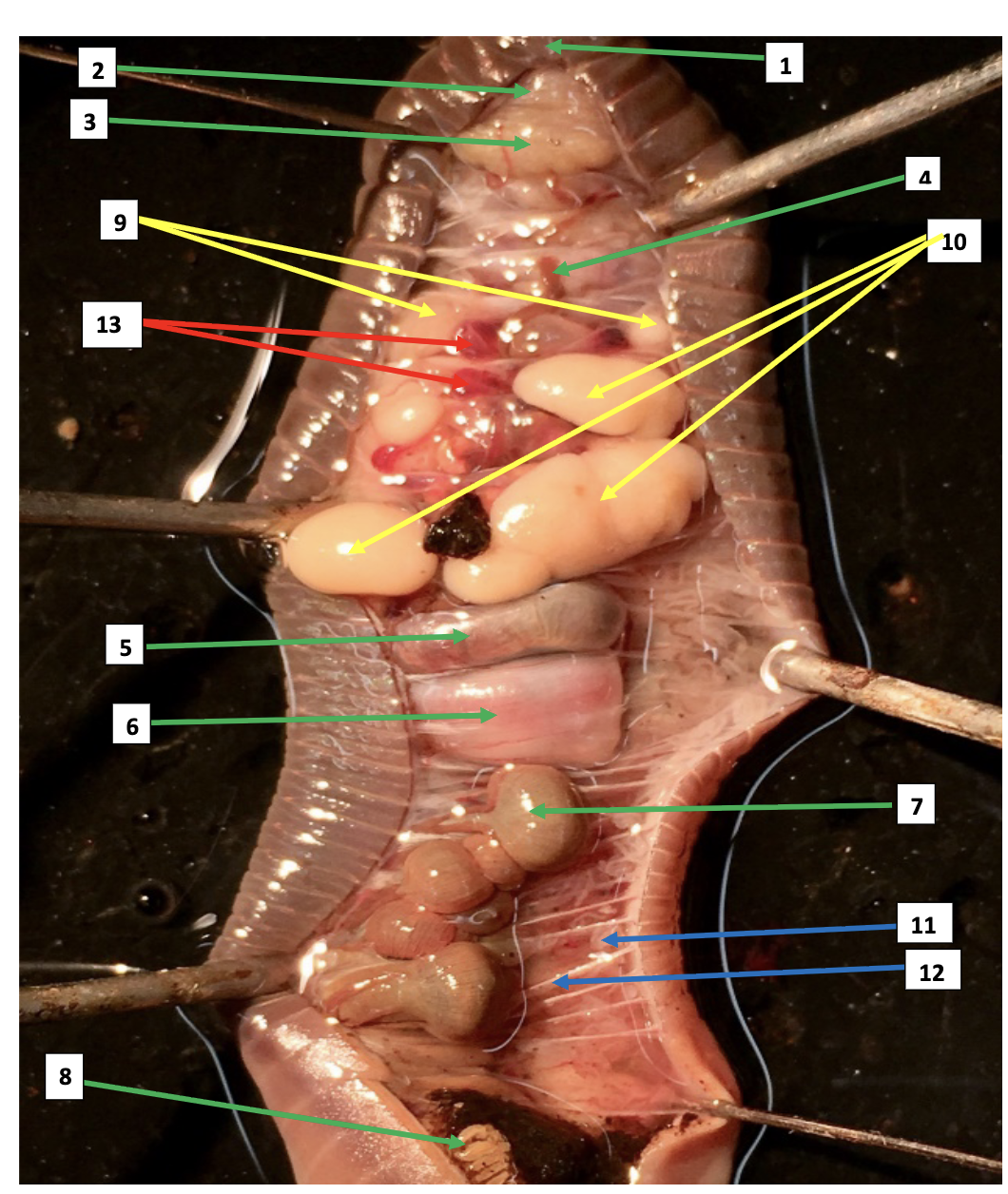
Label 1
Prostomium: The small lobe above the mouth that helps with sensing and digging
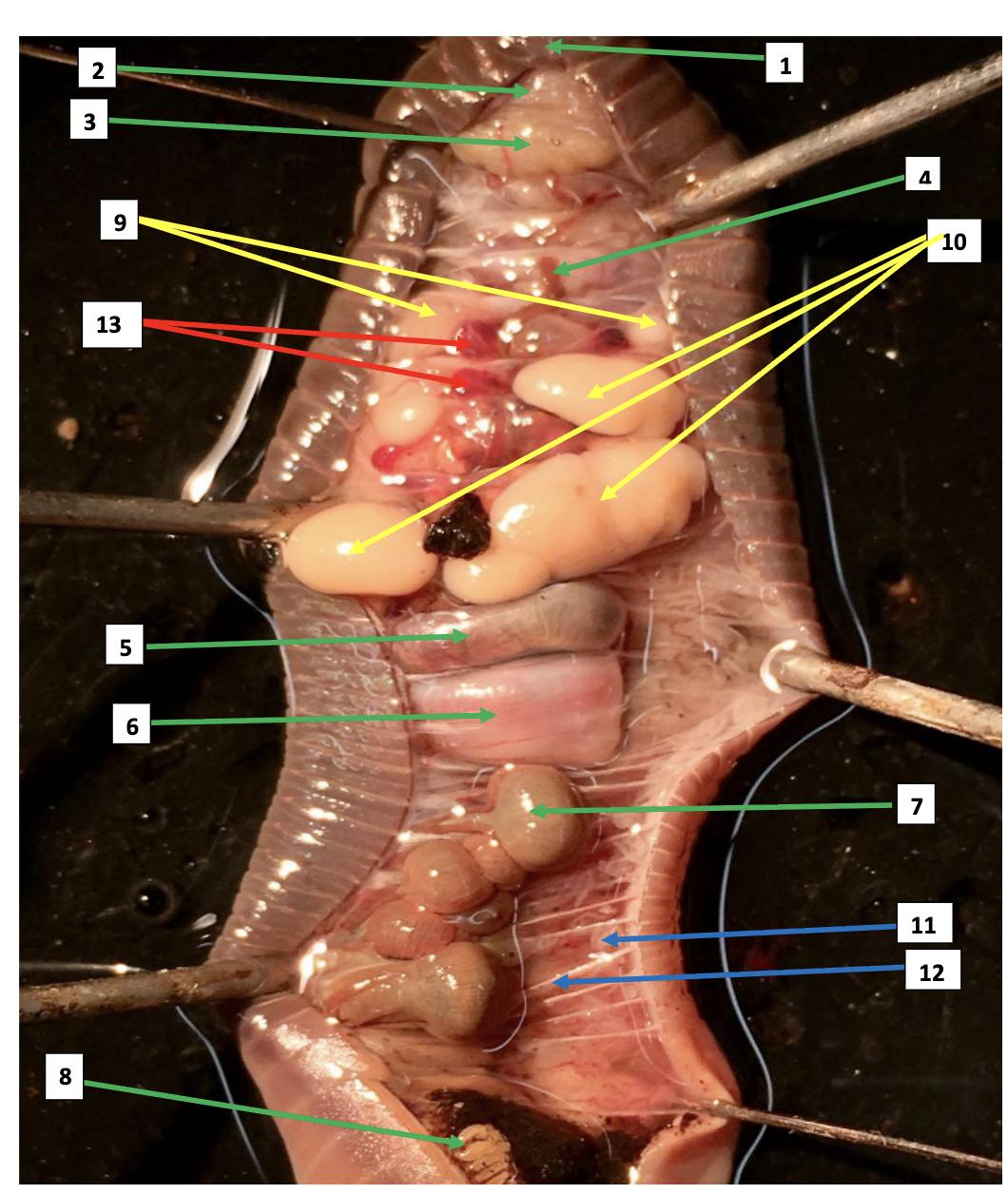
Label 2
Mouth. The opening where food enters the digestive tract
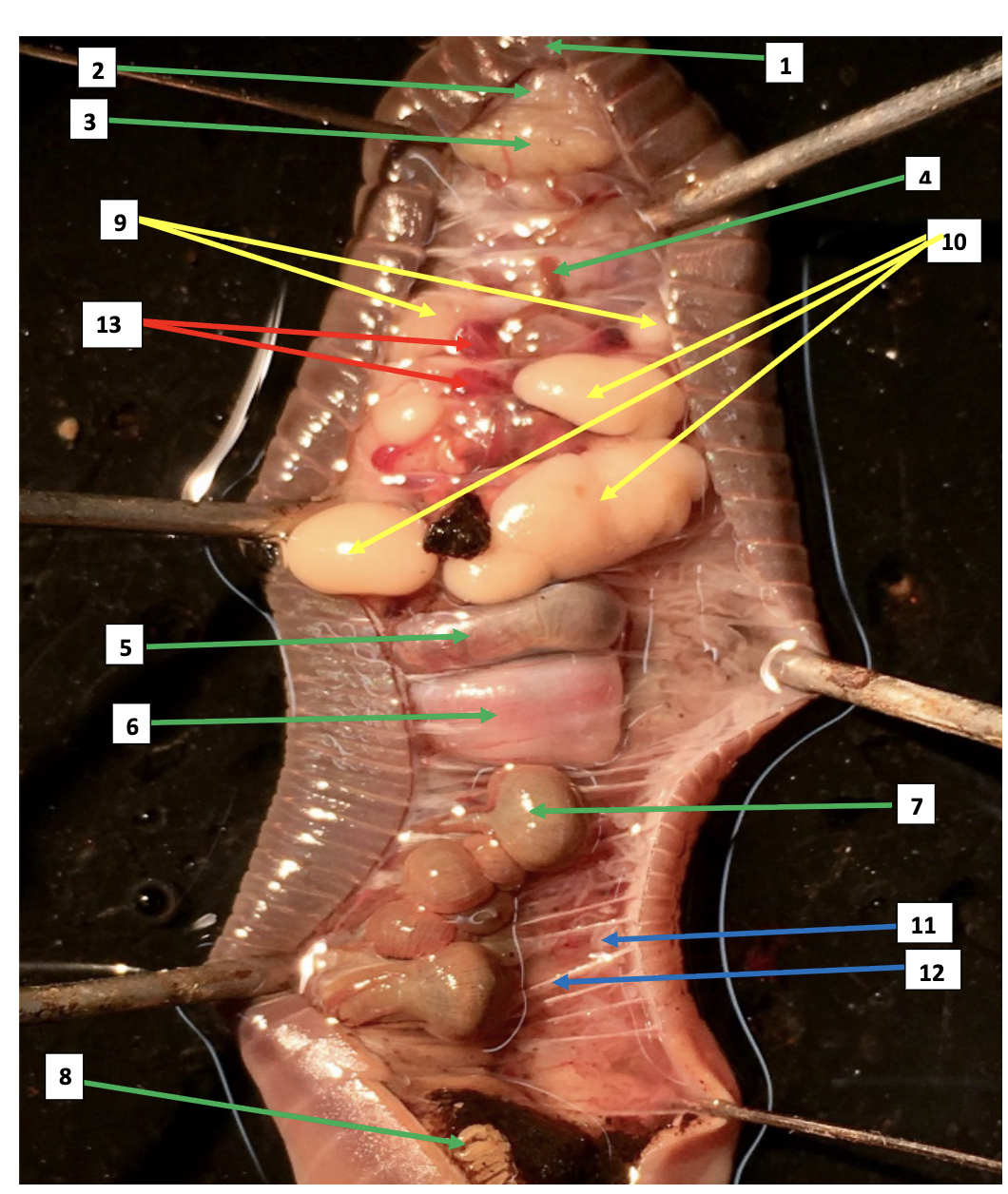
Label 3
Pharynx. A muscular structure used to suck soil and food into the body
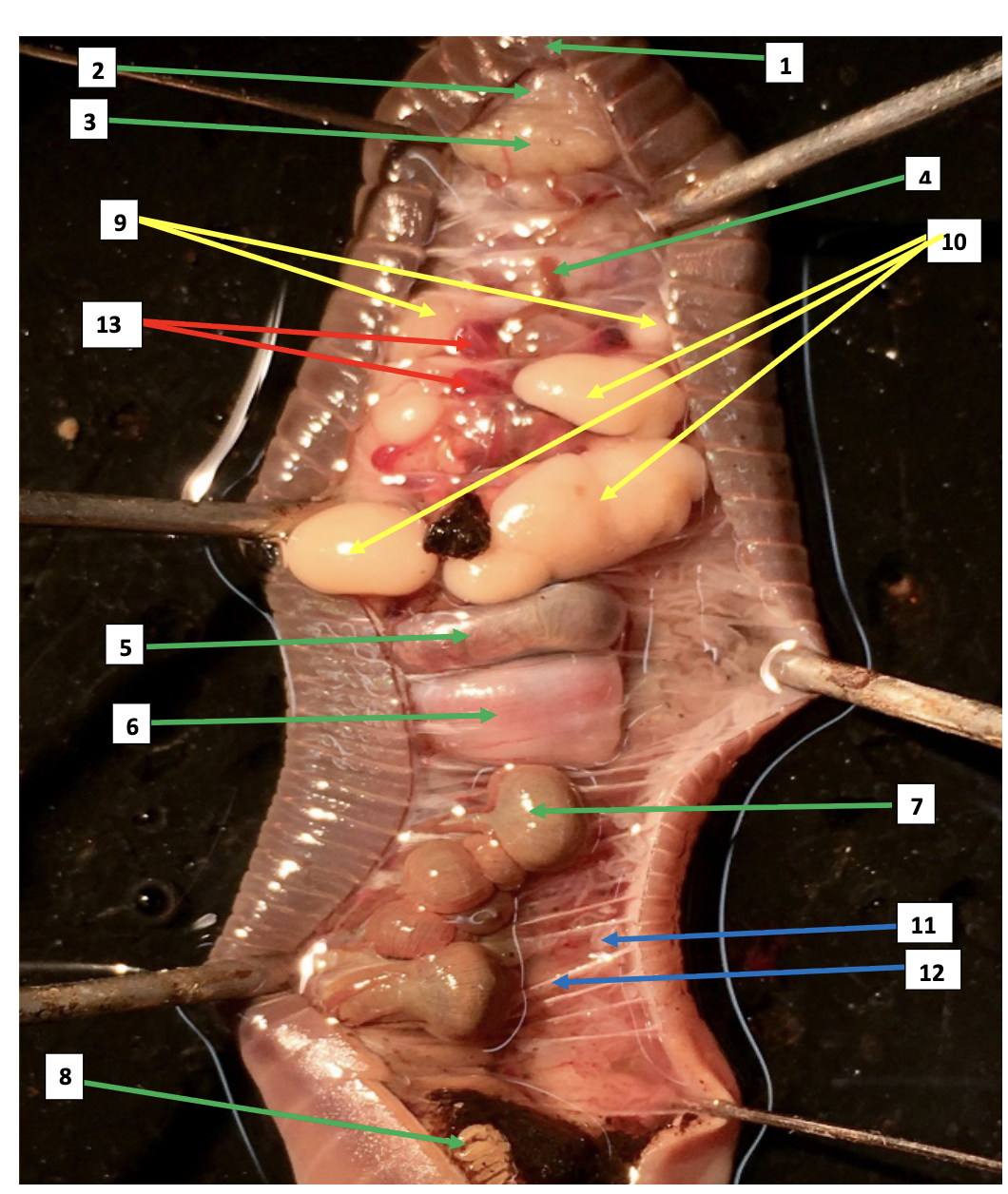
Label 4
Esophagus. The tube connecting the pharynx to the crop
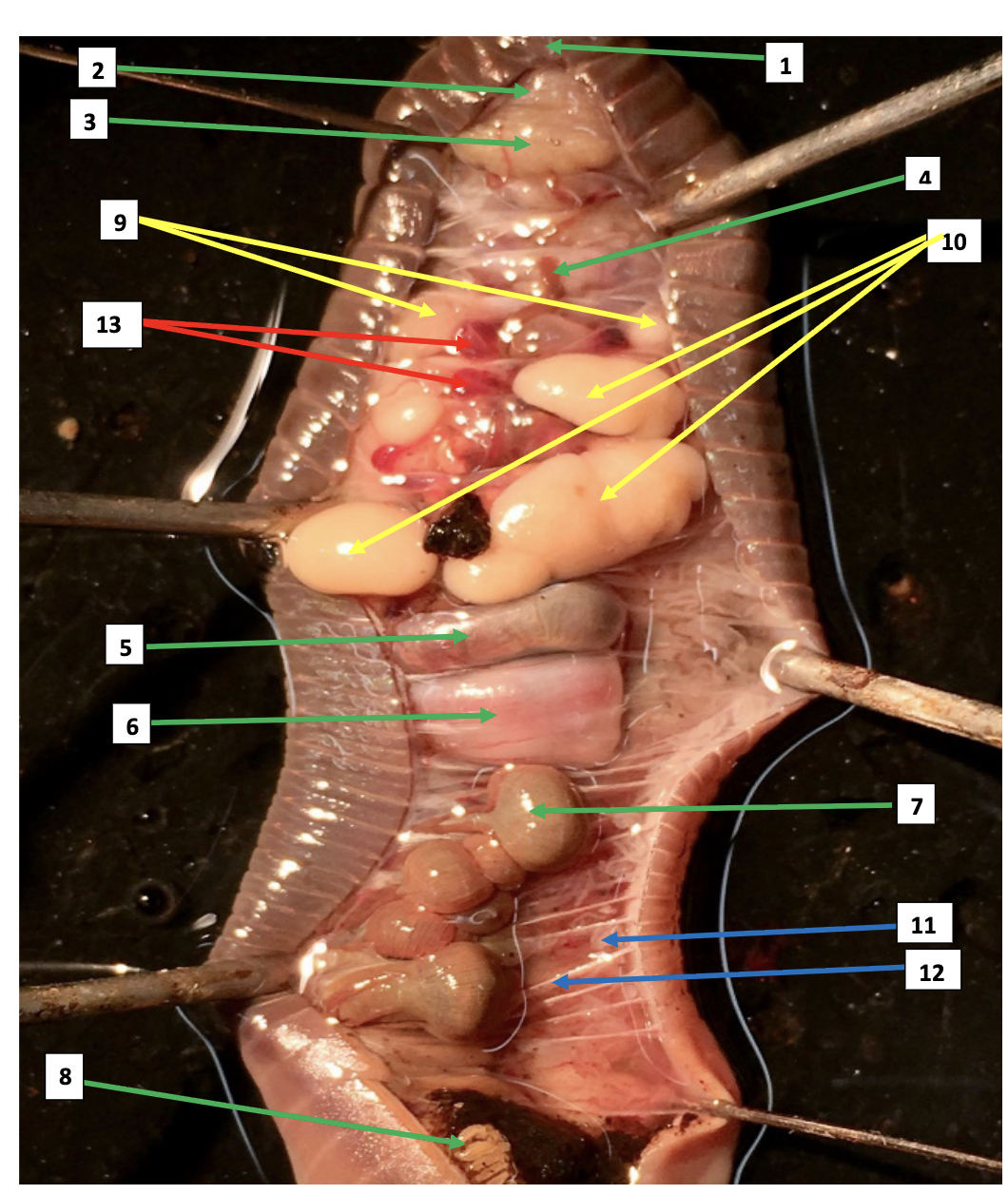
Label 5
Crop. A thin-walled storage area for food before it enters the gizzard
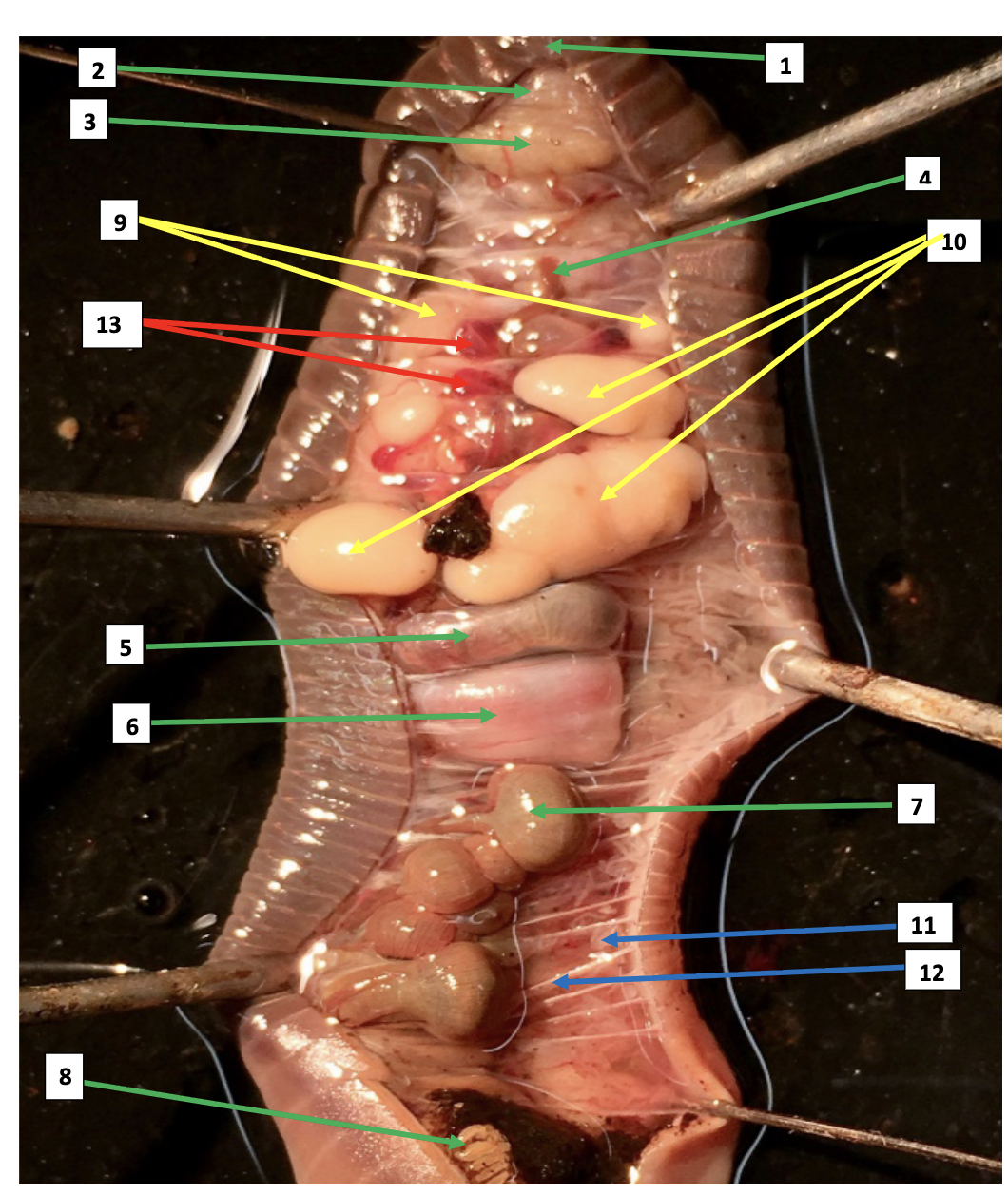
Label 6
Gizzard. The thick, muscular organ that uses grit to grind food down.
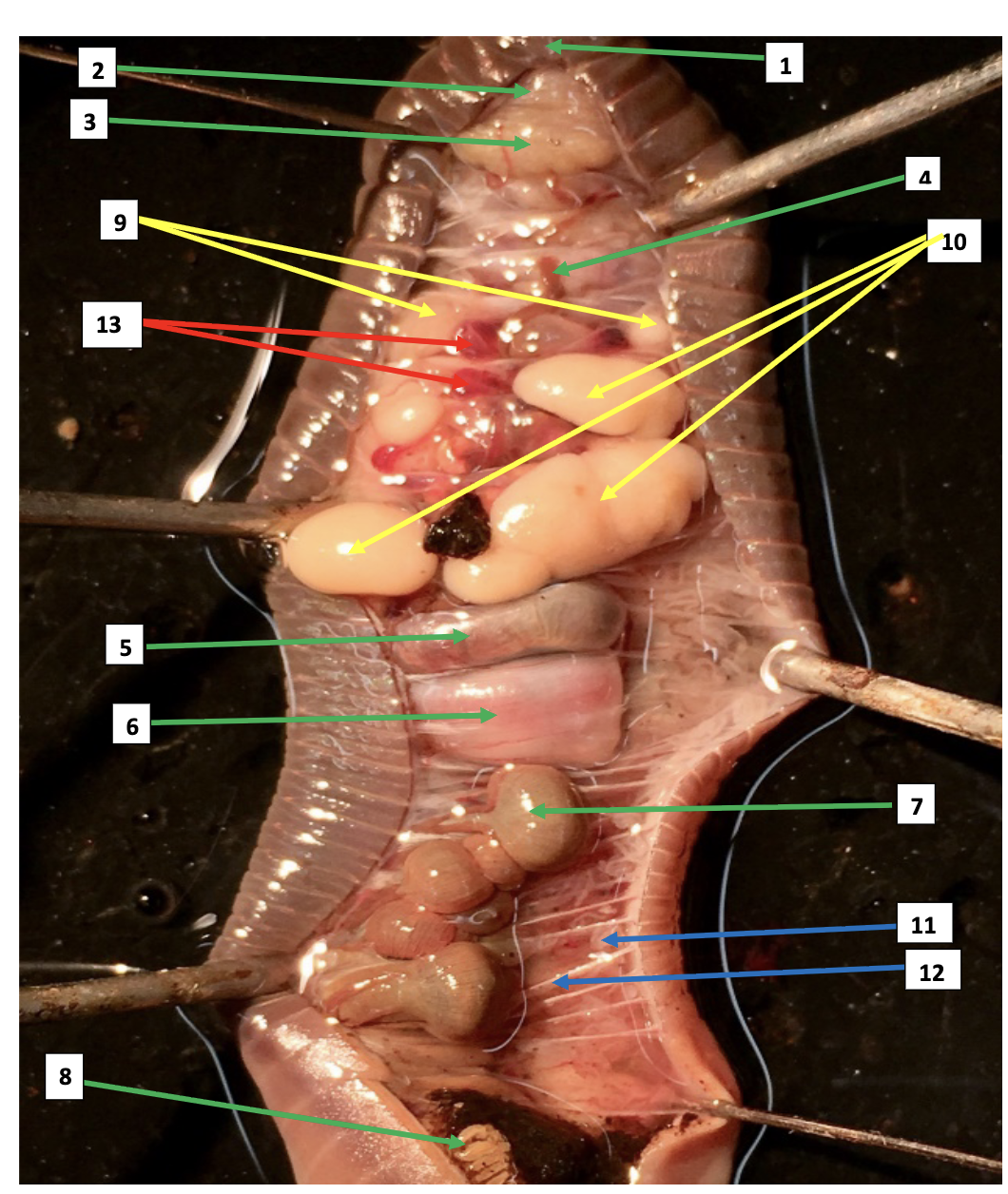
Label 7
Intestine. Where digestion and nutrient absorption primarily occur
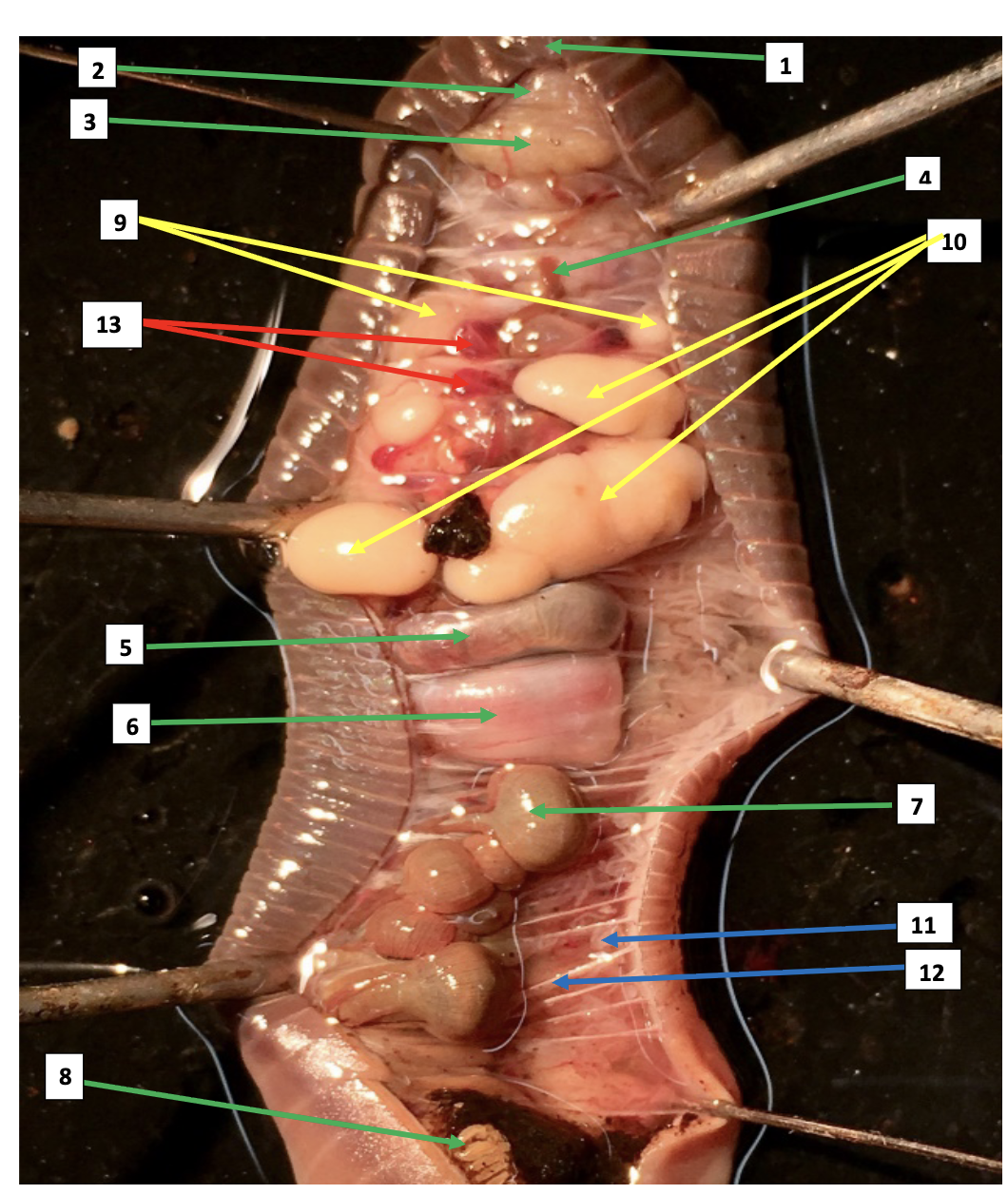
Label 8
Chlorogogen tissue. Yellowish tissue covering the intestine (helps with metabolism and synthesis)
Label 9
Seminal receptacles. Small, round white structures that receive sperm from a mate
Label 10
Seminal Vesicles: Large, prominent creamy-white lobes where the worm’s own sperm matures before mating.
Label 11
Metanephridia. Tiny, coiled tubes (visible on the body wall) used for excretion
Label 12
Dorsal blood vessel: Often visible running along the top of the intestine
Label 13
Aortic arches (Hearts): Dark, muscular tubes wrapping around the esophagus to pump blood.
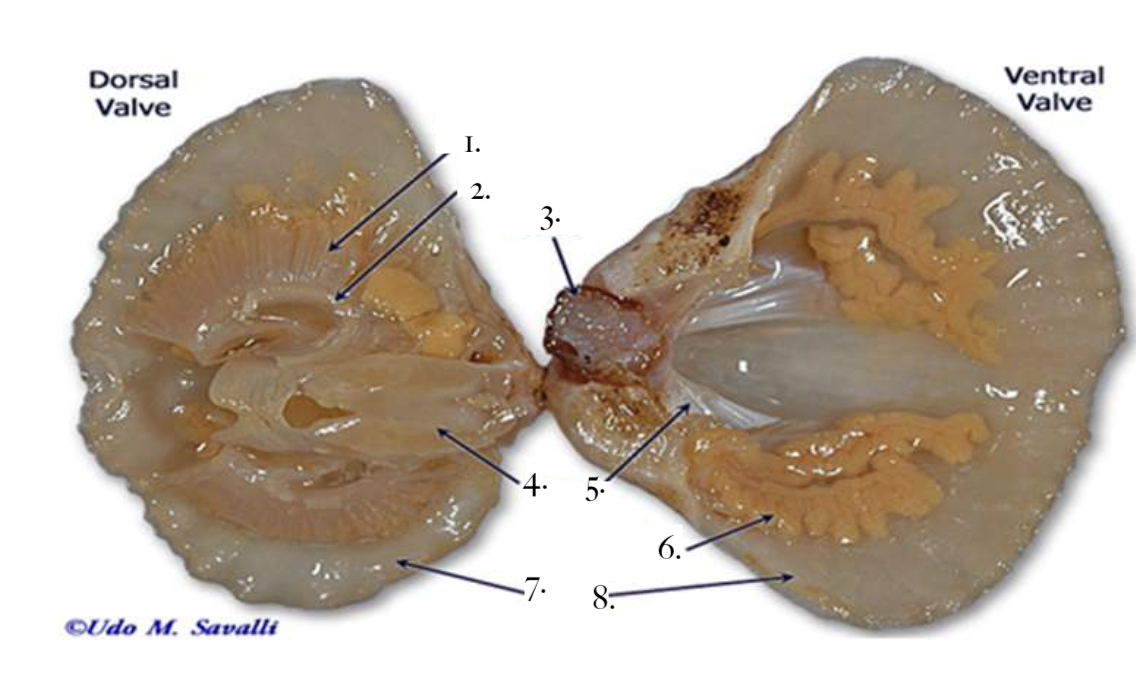
Label 1
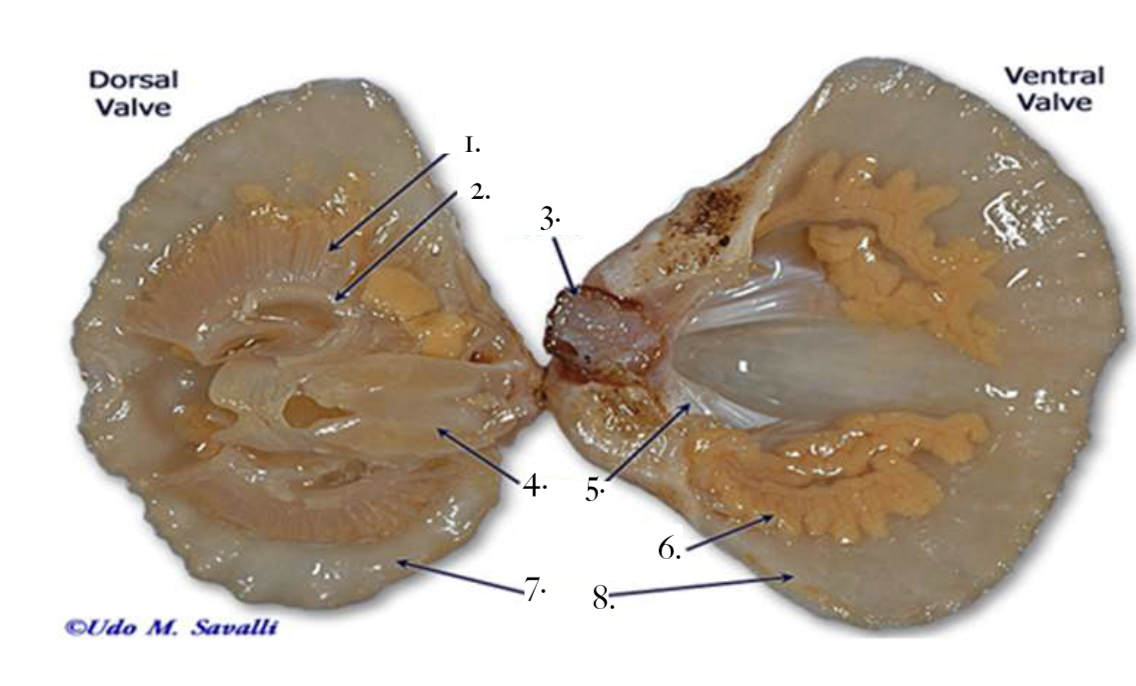
Lophophore Tentacles: A crown of ciliated tentacles used for both filter feeding and respiration. It creates water currents to trap food particles.
Label 2
Lophophore Arm: The structural support for the lophophore, often reinforced by a calcareous skeleton in some species.
Label 3
Pedicle: A fleshy, muscular stalk that anchors the brachiopod to the substrate (ricks or sandy seafloor).
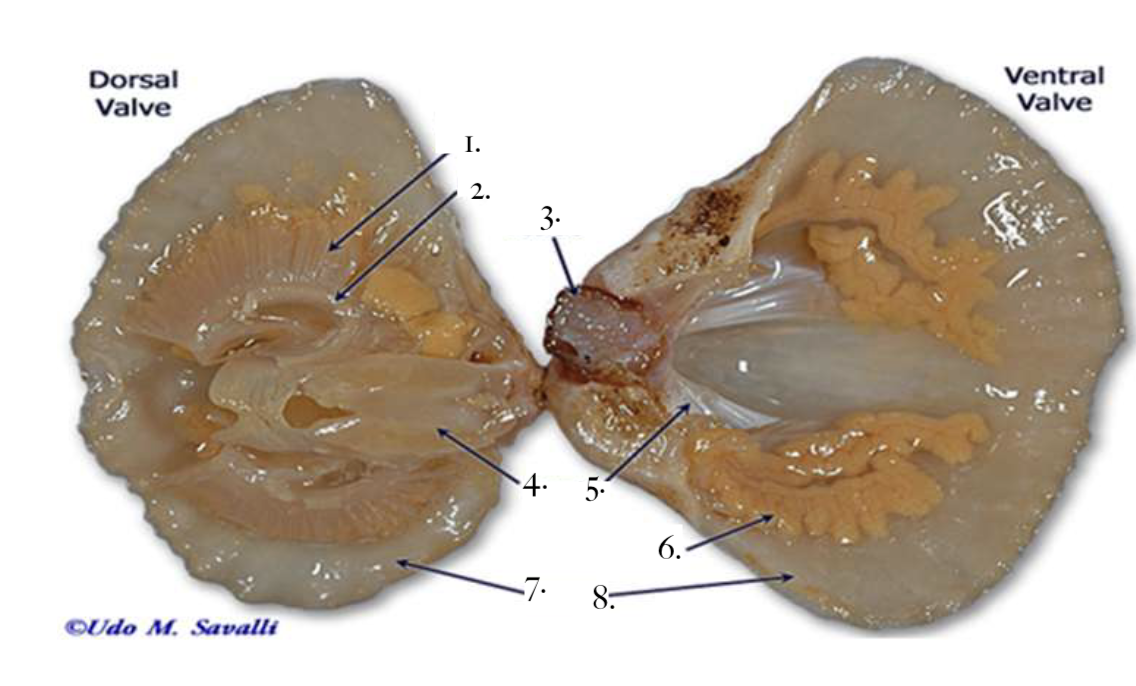
Label 4
Adductor Muscle: The muscle responsible for closing the valves tightly to protect the soft body inside.
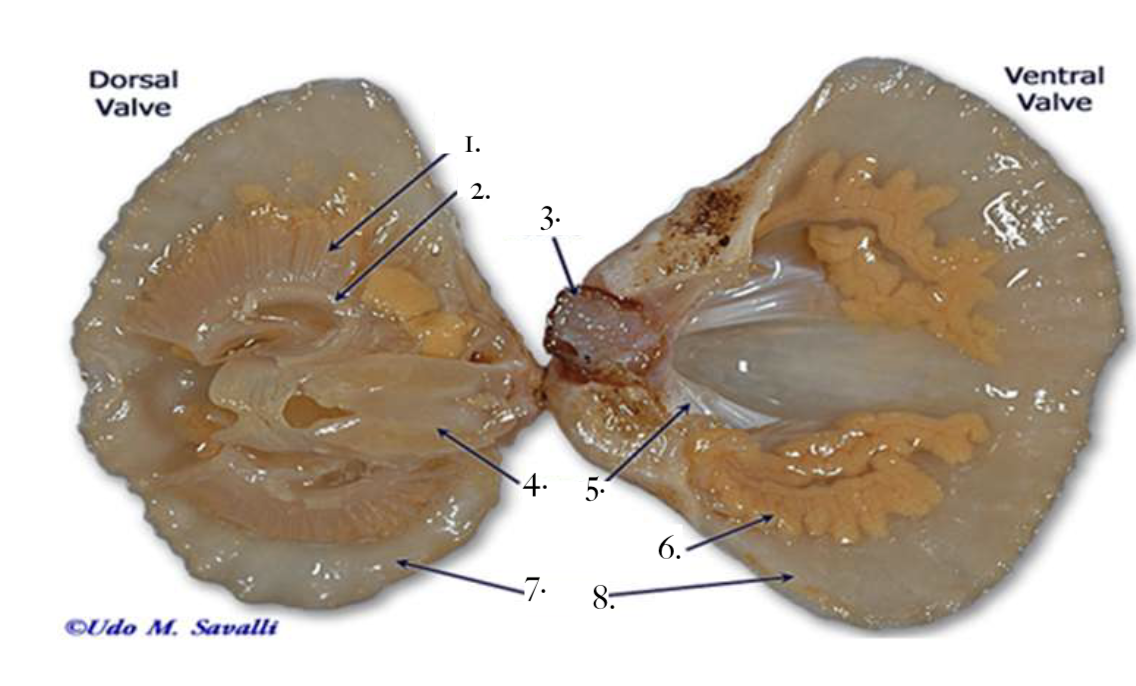
Label 5
Adductor Muscle: The muscle responsible for closing the valves tightly to protect the soft body inside.
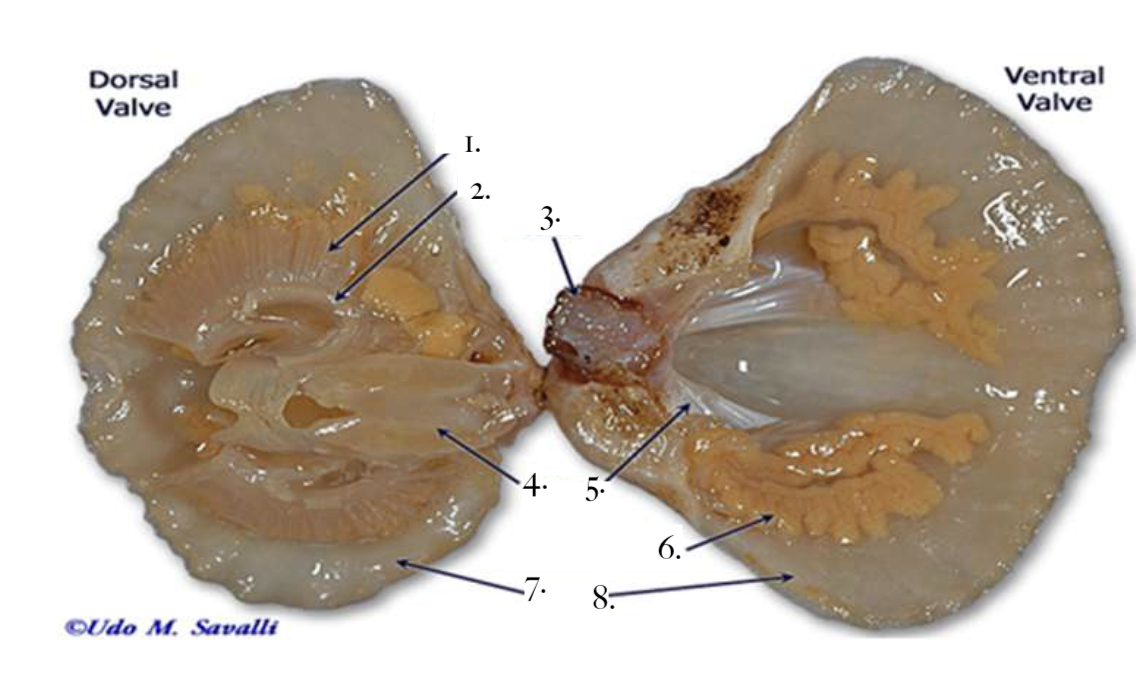
Label 6
Gondads: Organs resonsible for the production of gametes (eggs or sperm) for reproductionresponsible
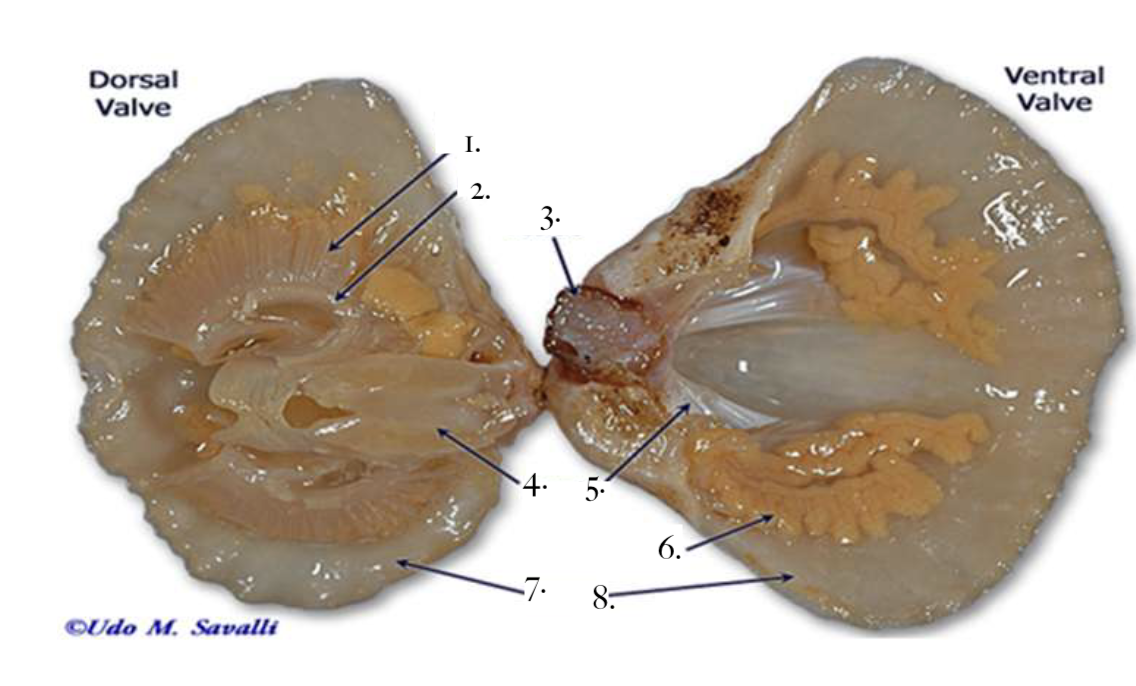
Label 7
Mantle: The open space between the valves where the lophophore resides and water circulates.
Label 8
Mantle: The open space between the valves where the lophophore resides and water circulates.
Label 1
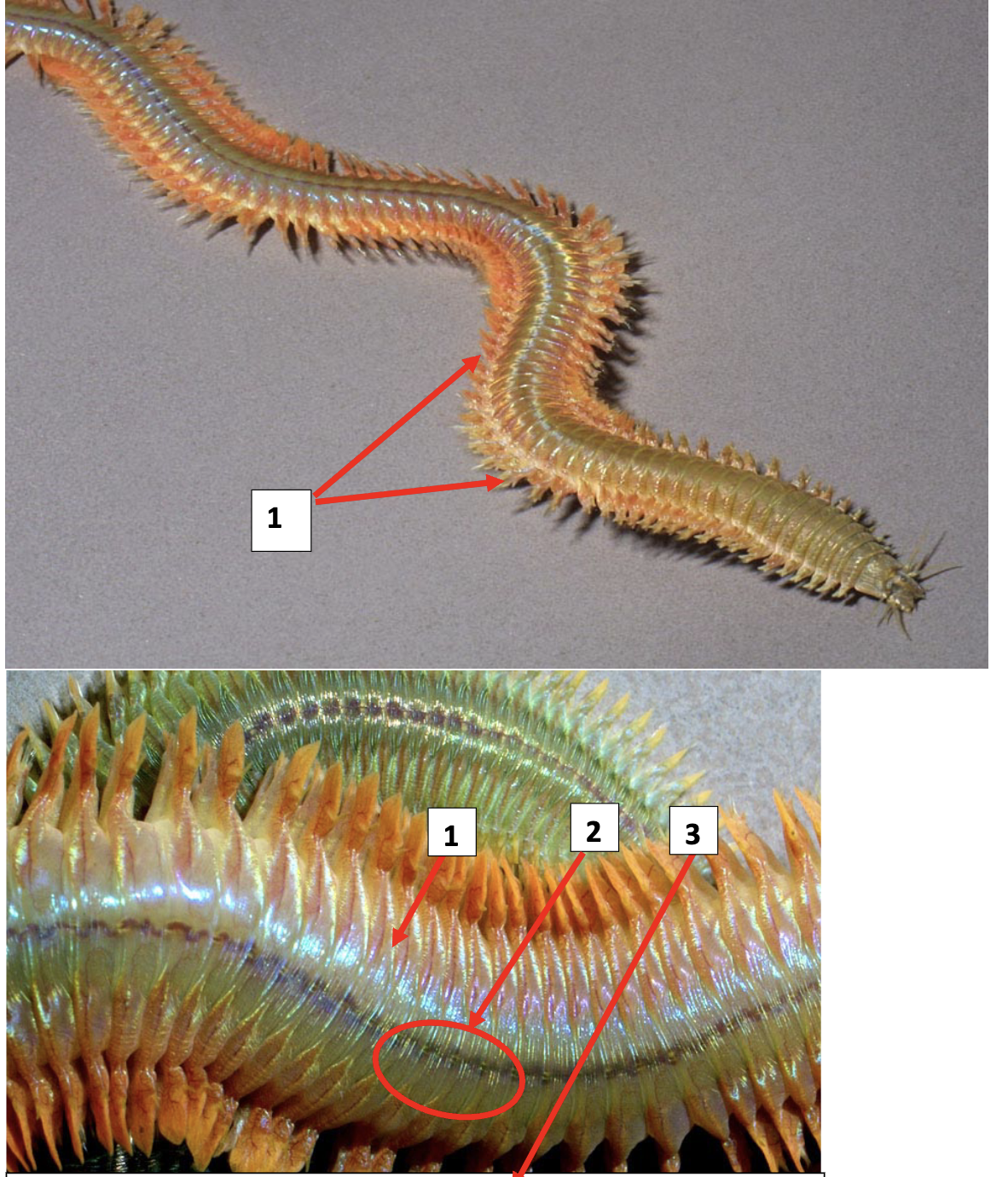
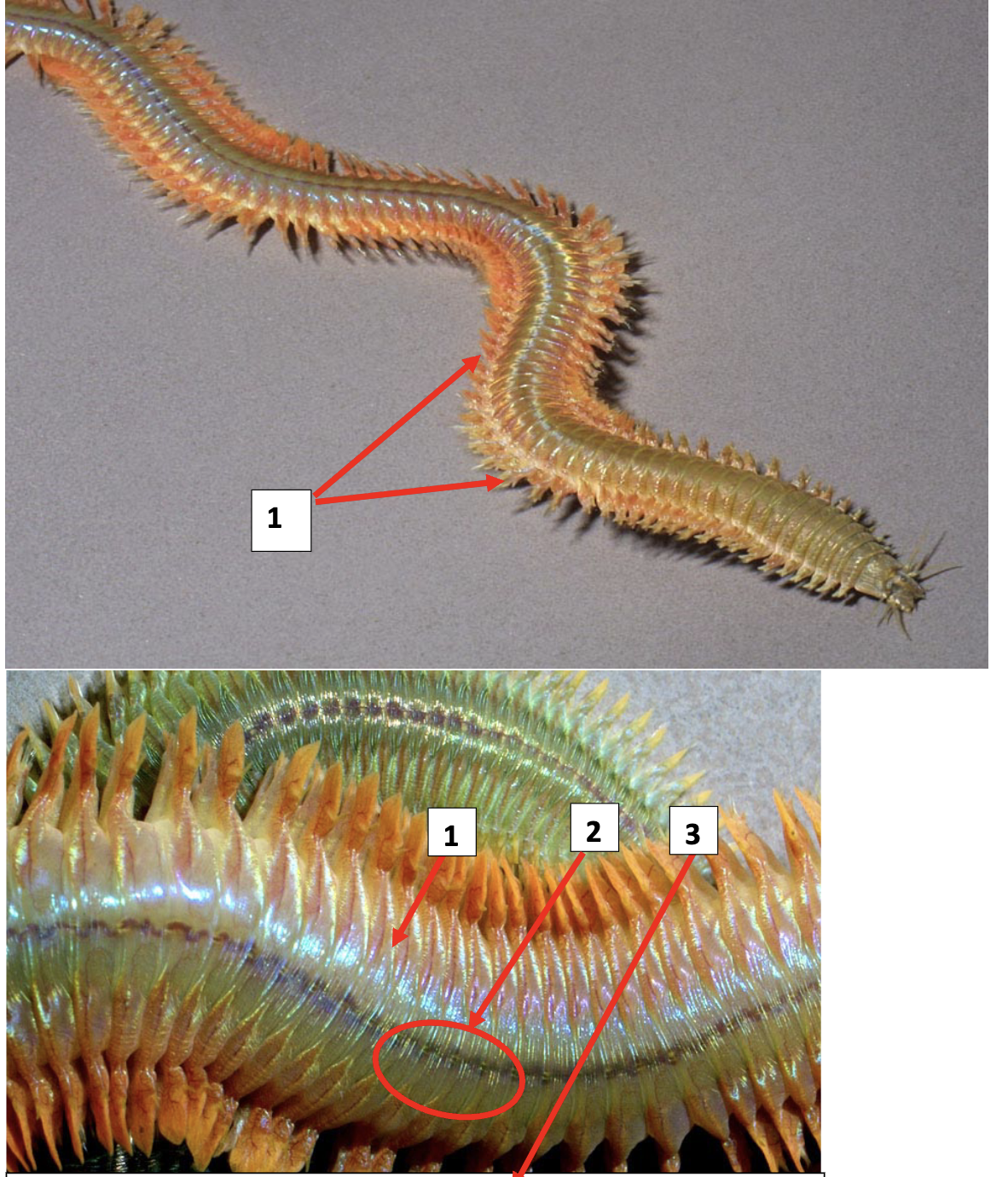
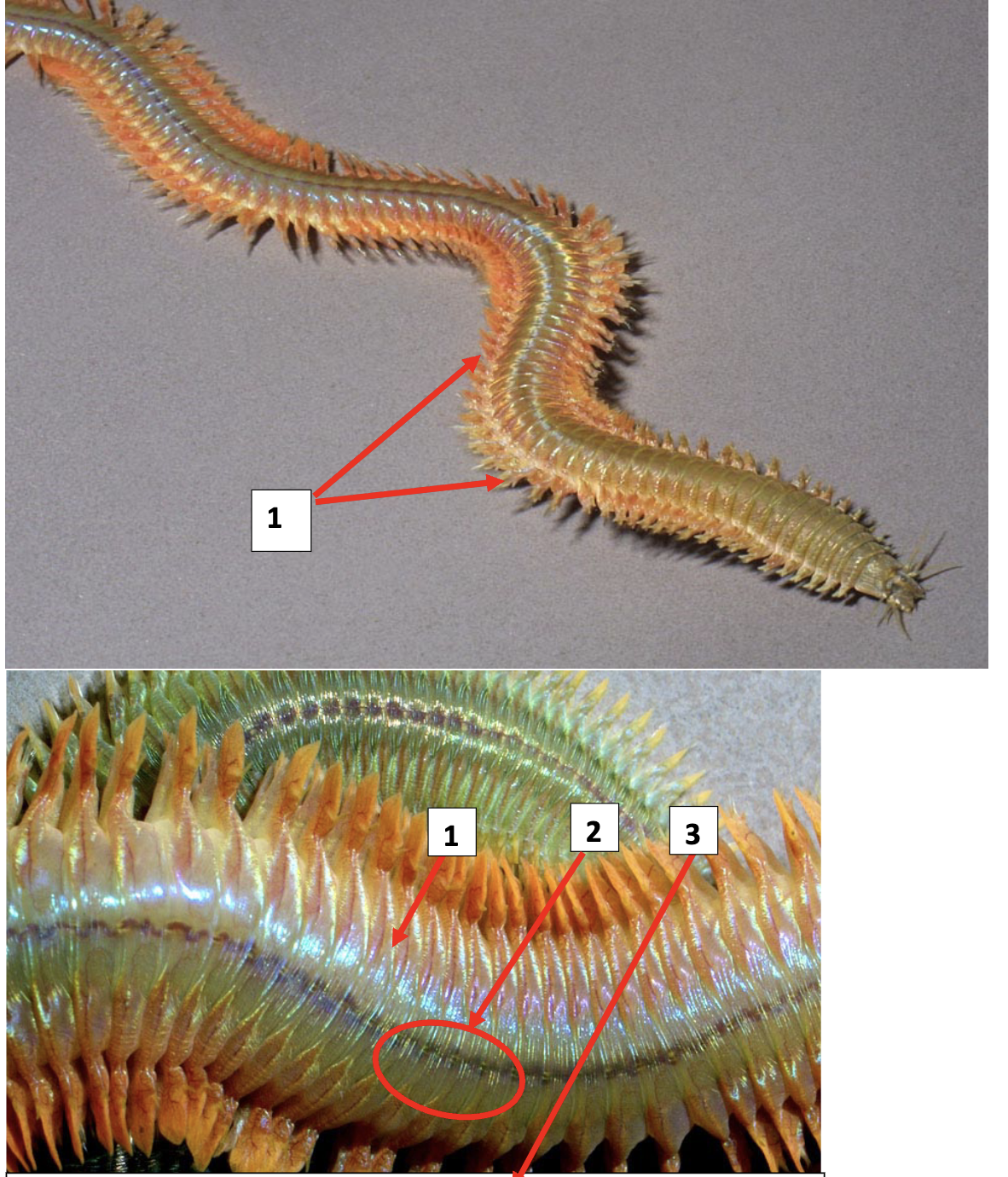
Parapodia: Paired, fleshy, paddle-like appendages on each segment used for locomotion (swimming and crawling) and gas exchange.
Label 2
Dorsal Blood Vessel: The main longitudinal vessel that carries blood anteriorly (toward the head). It is visible here through the skin as a dark line.
Label 3
Cuticle: The non-cellular, protective outer layer that covers the epidermis. In many polychaetes, it produces that distinct iridescent sheen.
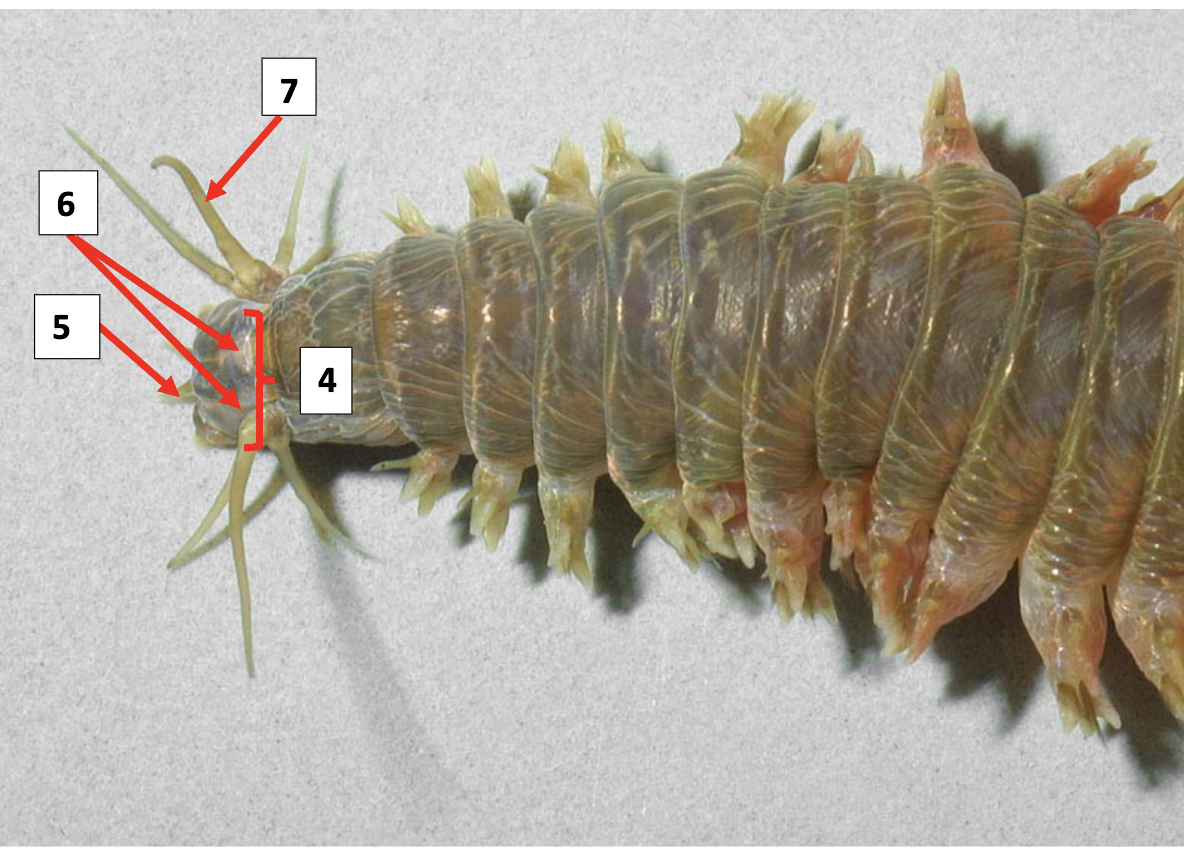
Label 4
Prostomium: The most anterior (front) lobe of the head, which contains many of the worm's sensory organs.
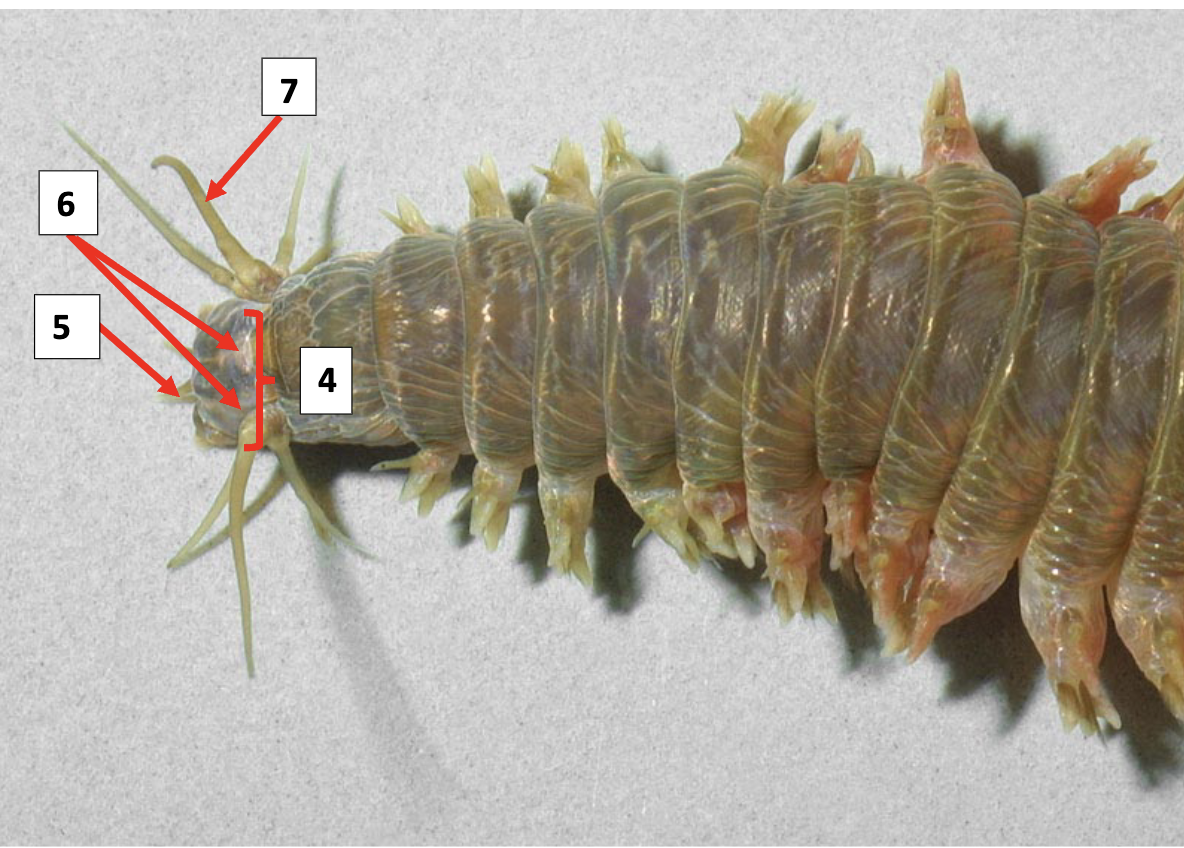
Label 5
Antennae: Short sensory appendages on the front of the prostomium used for chemoreception and touch.
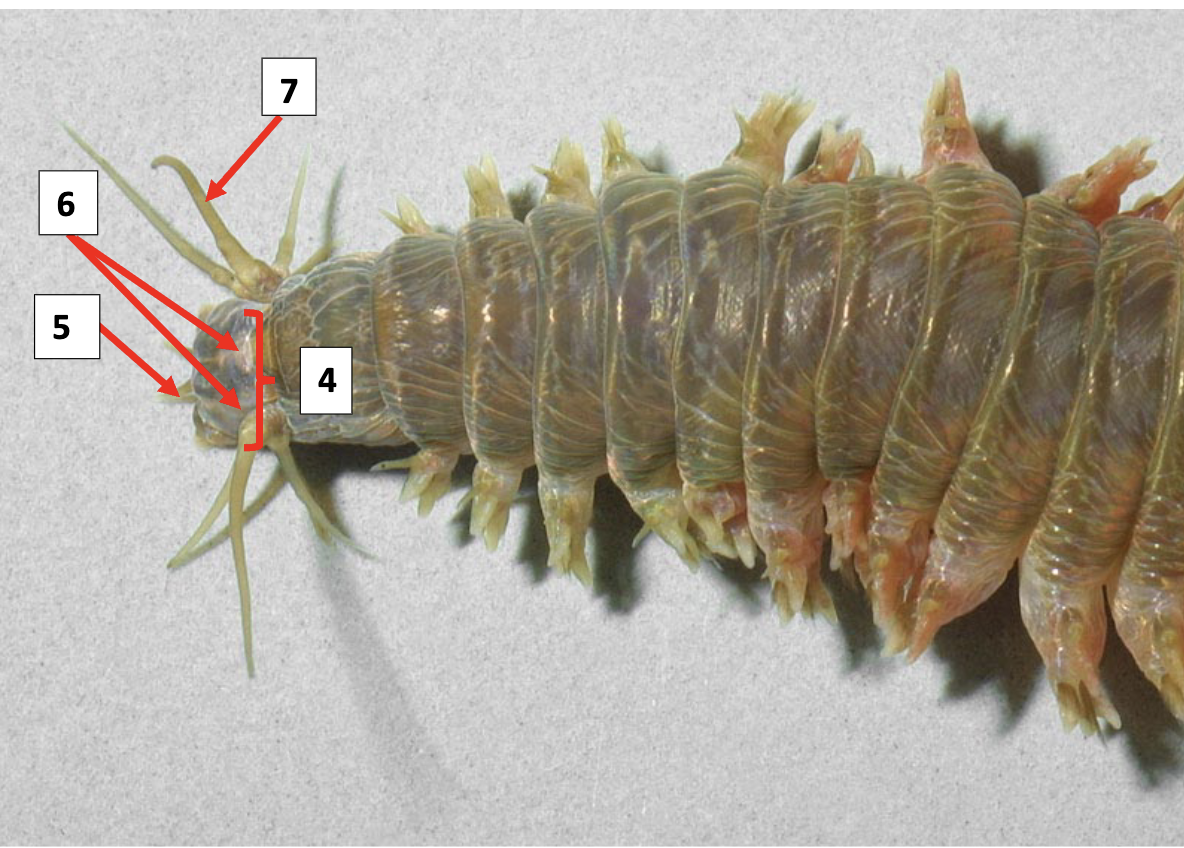
Label 6
Eyes: These four dark spots are simple light-sensing organs (ocelli) that detect light intensity and direction
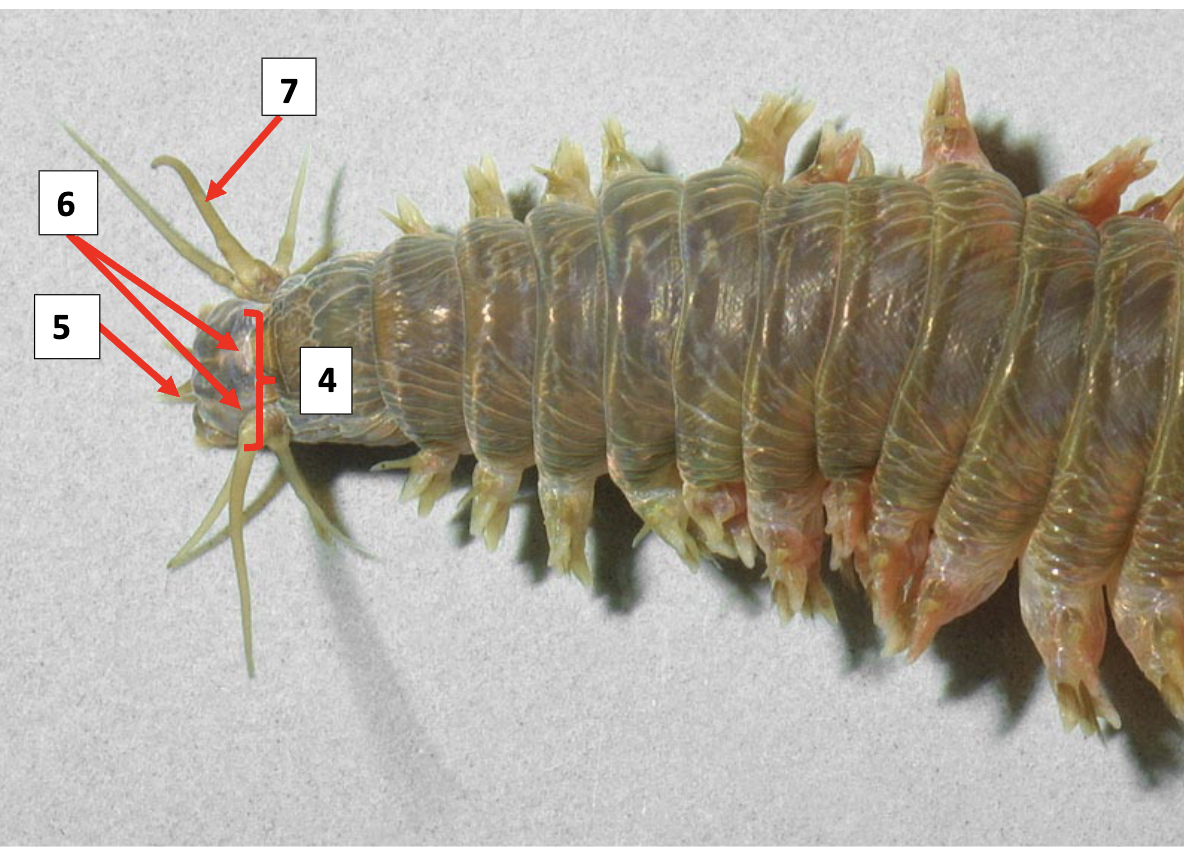
Label 7
Tentacular Cirri: Long, hair-like sensory structures arising from the segment behind the prostomium (the peristomium). They act like whiskers to navigate through sand or crevices
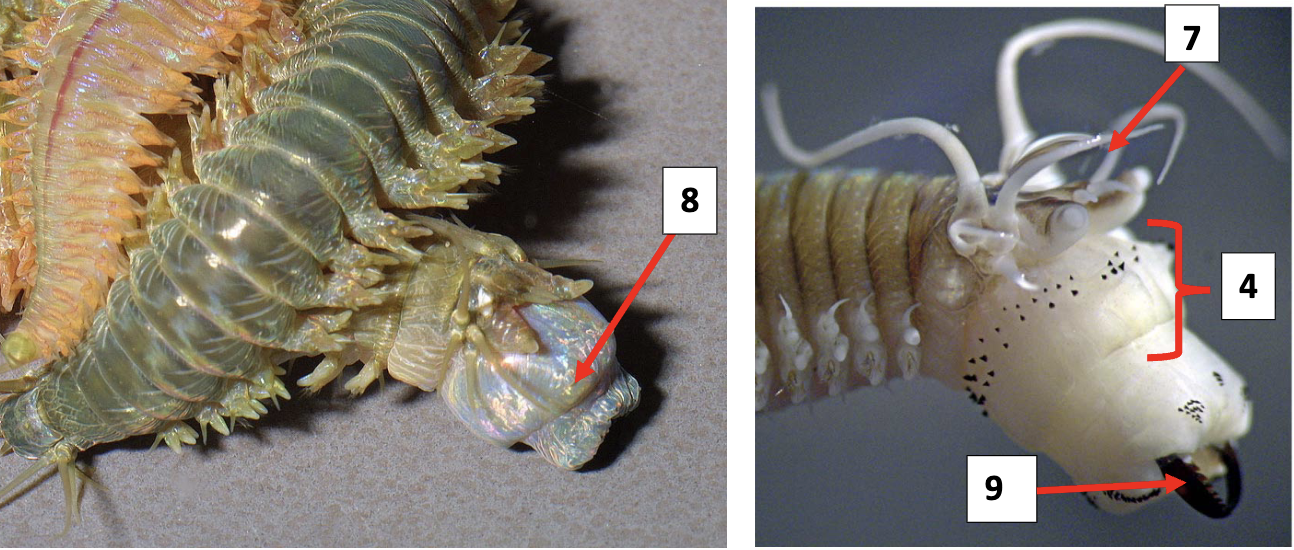
Label 4
Prostomial Region: The dorsal part of the head (the prostomium) that remains visible even when the pharynx is extended
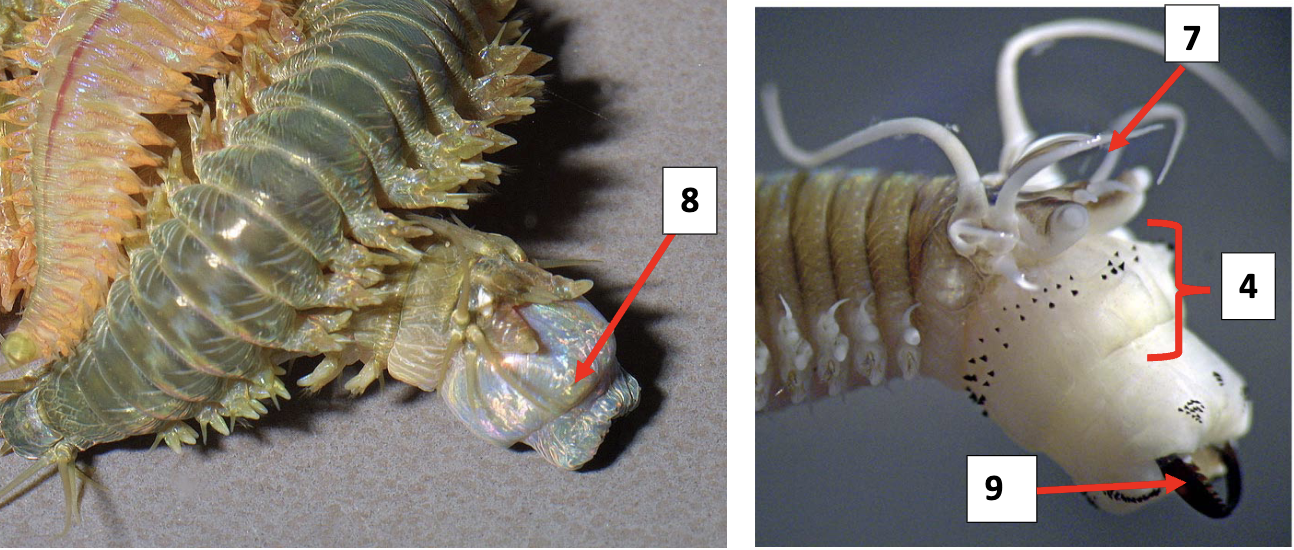
Label 7
Tentacular Cirri: The long, sensory "whiskers" used to detect chemical cues and physical touch in the environment
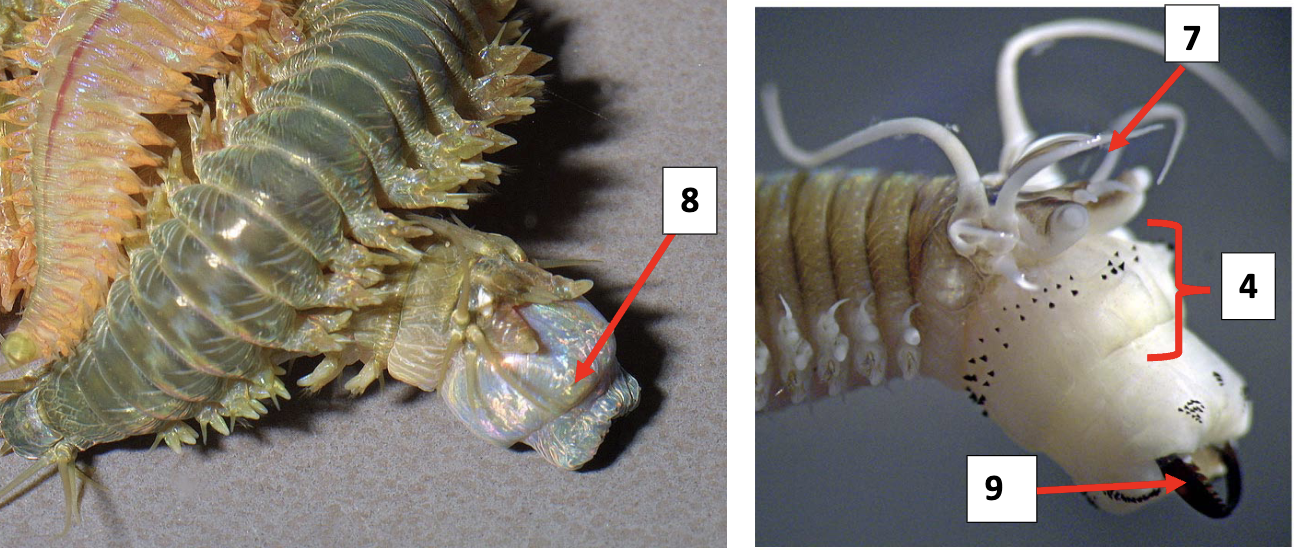
Label 8
Pharynx: The muscular, eversible part of the digestive tract that is pushed out (everted) during feeding
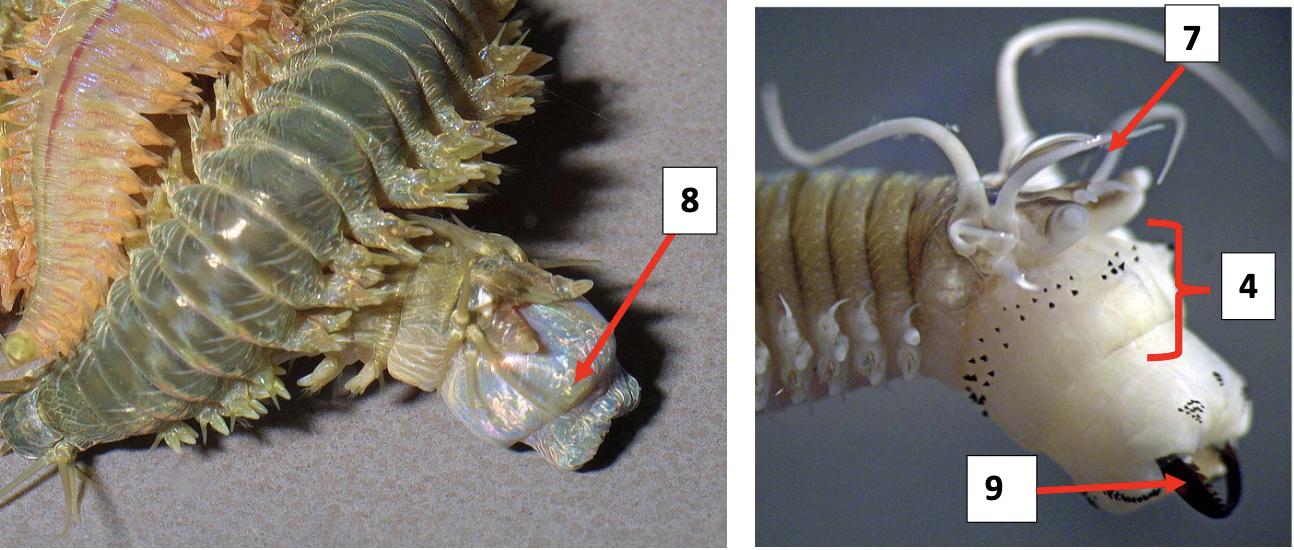
Label 9
Jaws: Chitinous, pincer-like structures at the tip of the pharynx used to seize and tear prey
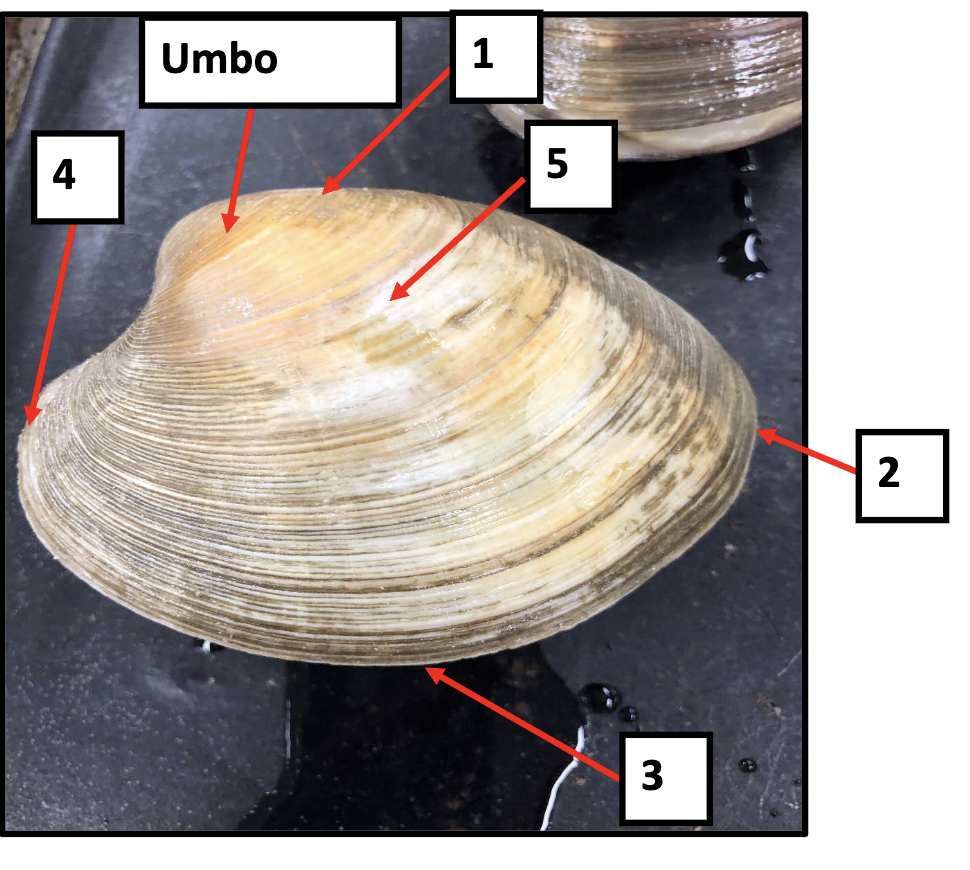
Label 1
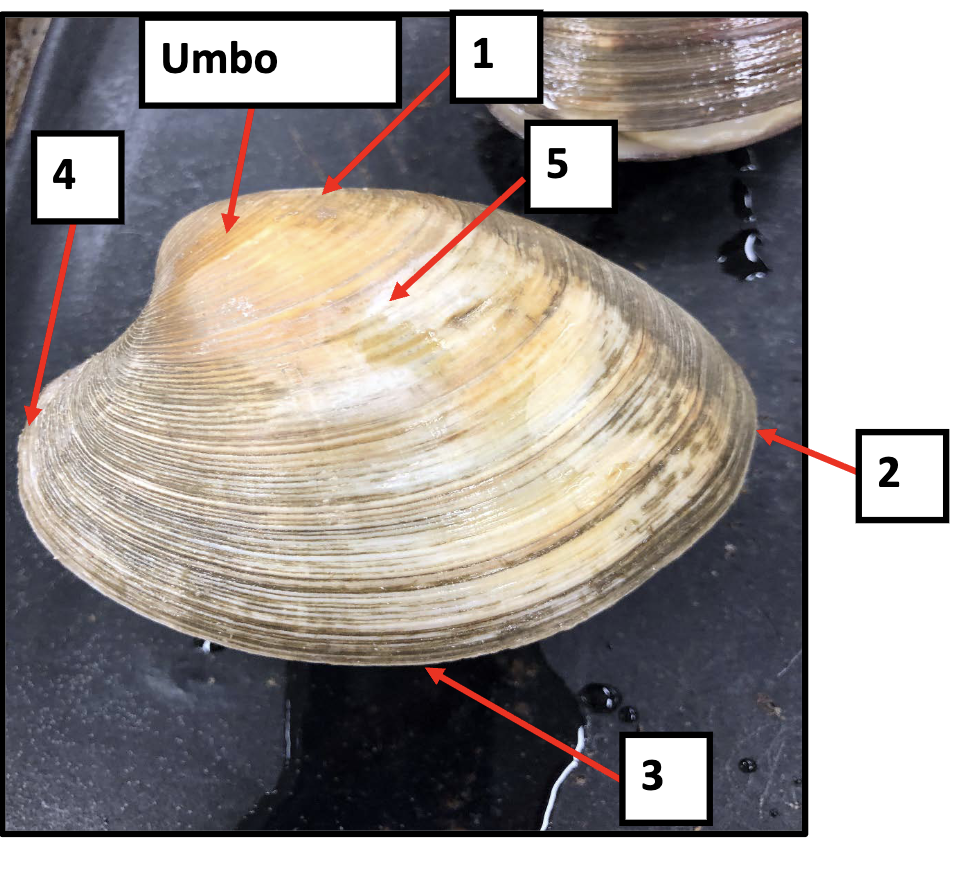
Dorsal: This is the "top" of the animal, where the hinge and the Umbo (the oldest part of the shell) are located
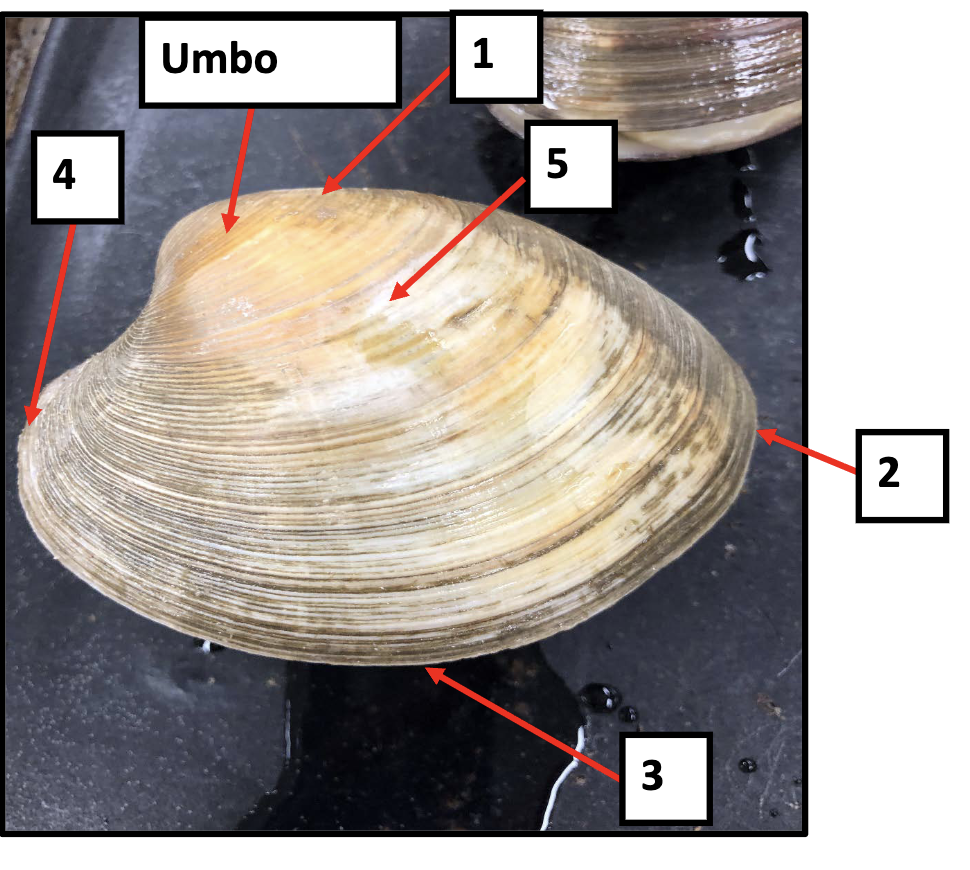
Label 2
Posterior: This is the "back" end. In a living clam, this is usually where the siphons (incurrent and excurrent) extend to pull in water
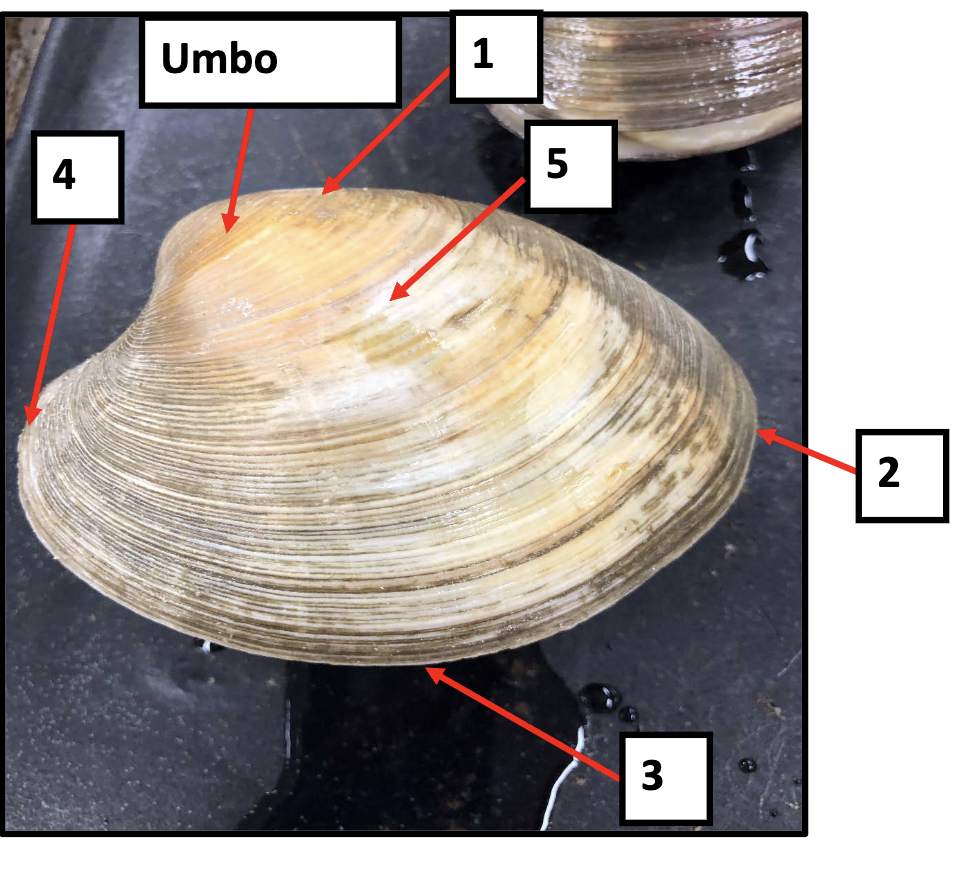
Label 3
Ventral: This is the "bottom" edge, opposite the hinge. This is the part of the shell that opens to allow the muscular foot to extend
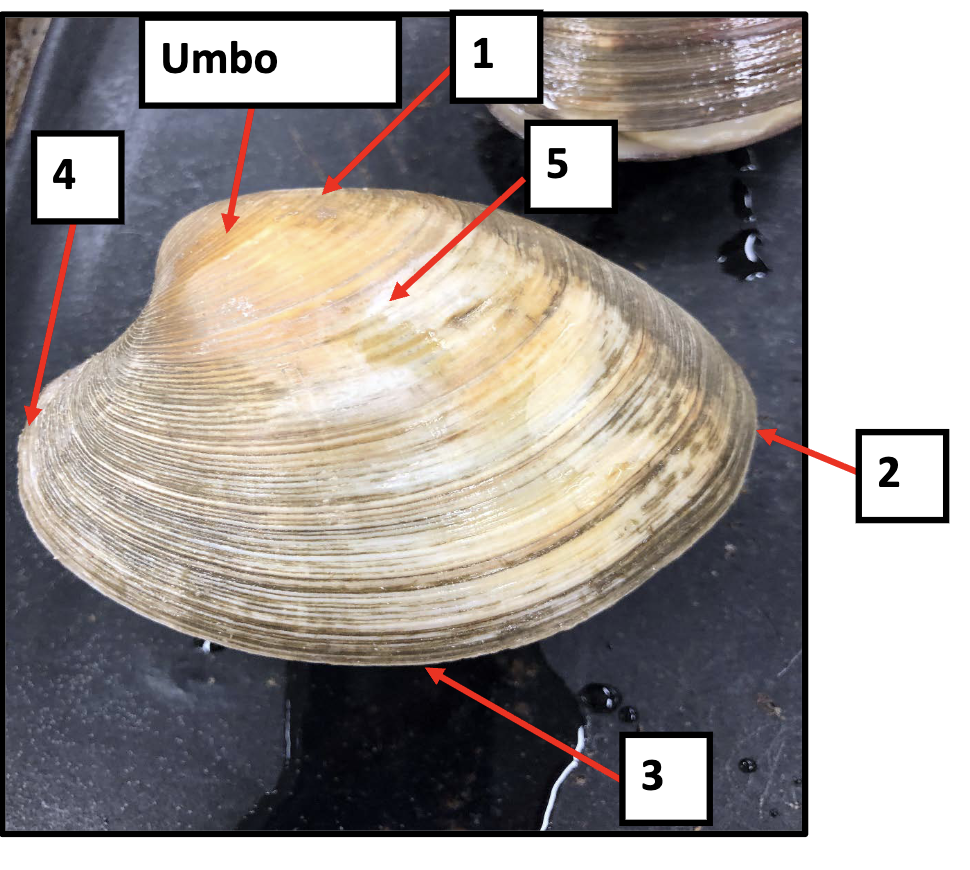
Label 4
Anterior: This is the "front" end. It is usually more rounded than the posterior end and is the direction the animal moves toward when burrowing
Label 5
Concentric lines that indicate periods of shell secretion. Similar to tree rings, they can sometimes reflect the age or environmental conditions the clam has lived through
Label 1
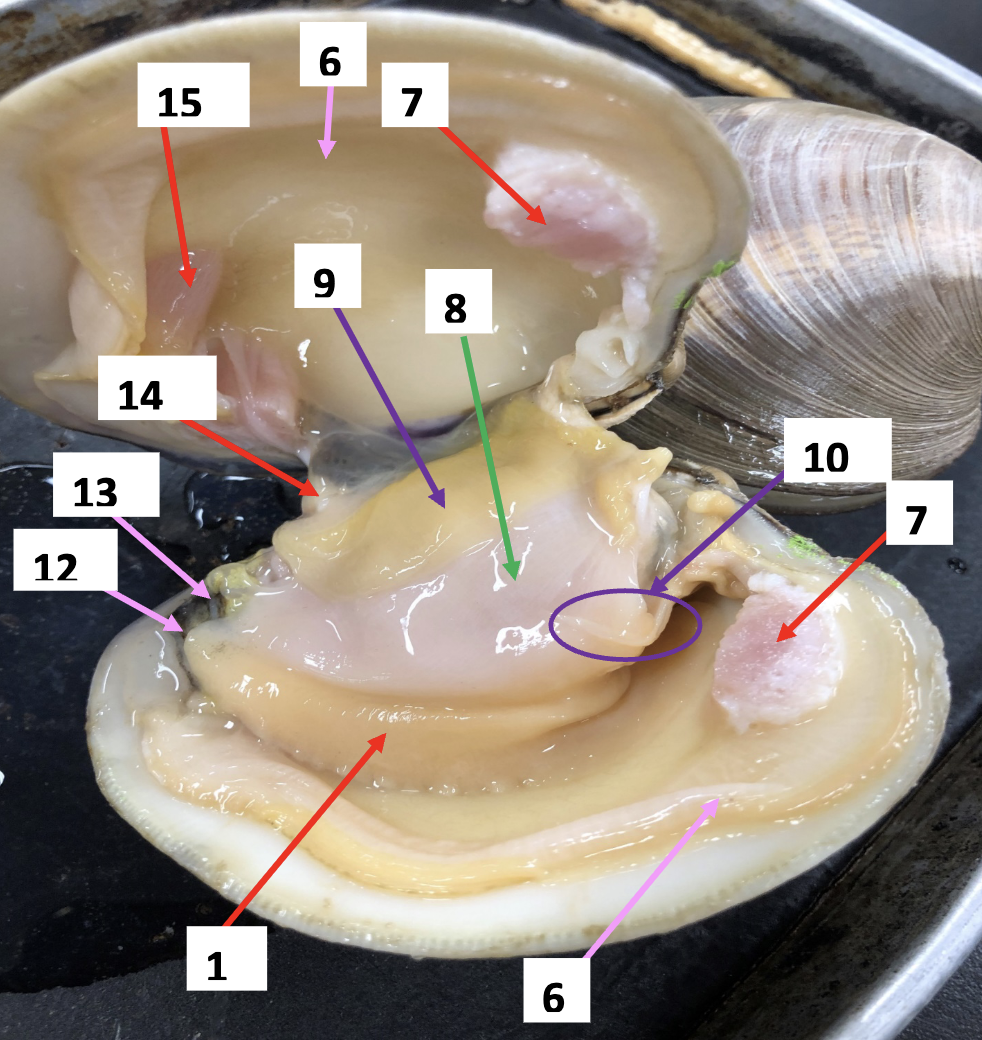
Gills: Striated sheets used for gas exchange and trapping food particles from the water.
Label 6
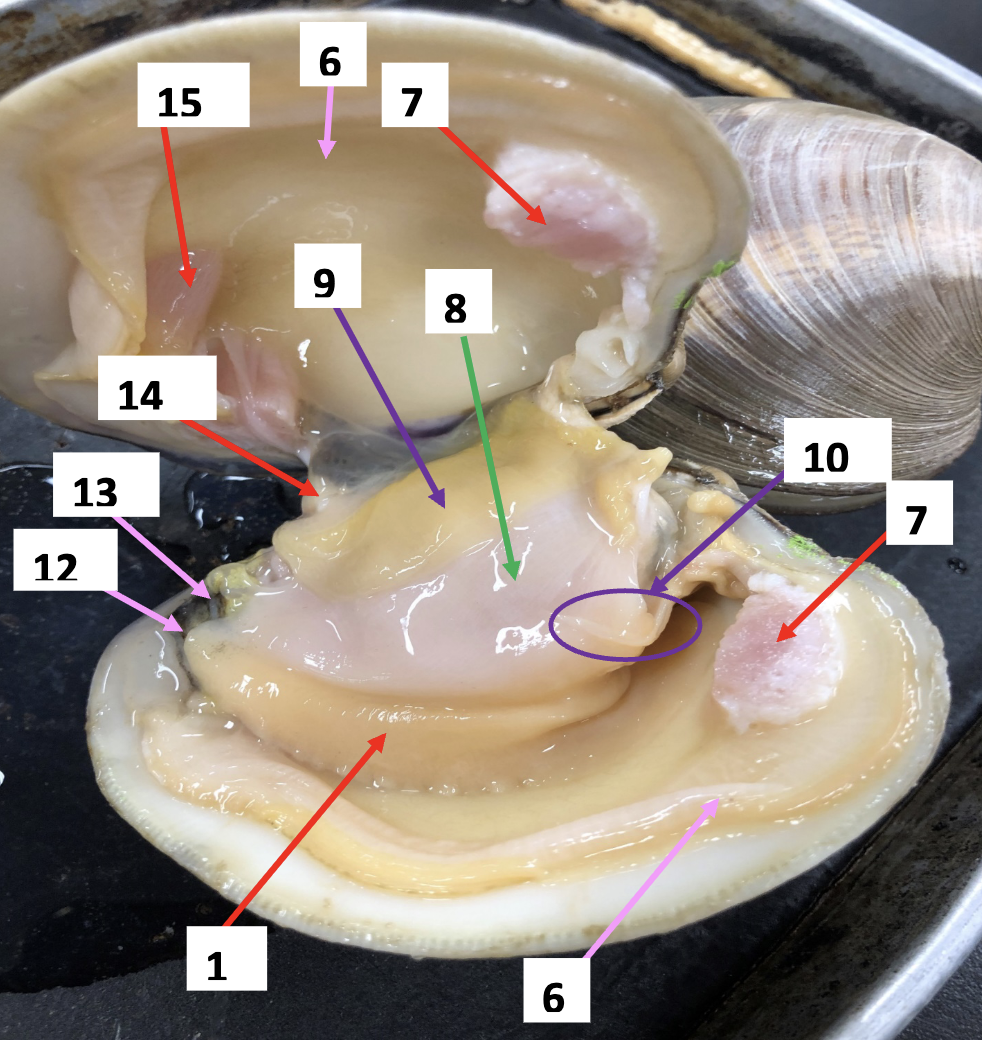
Mantle: The thin tissue layer that lines the shell and secretes the calcium carbonate shell
Label 7
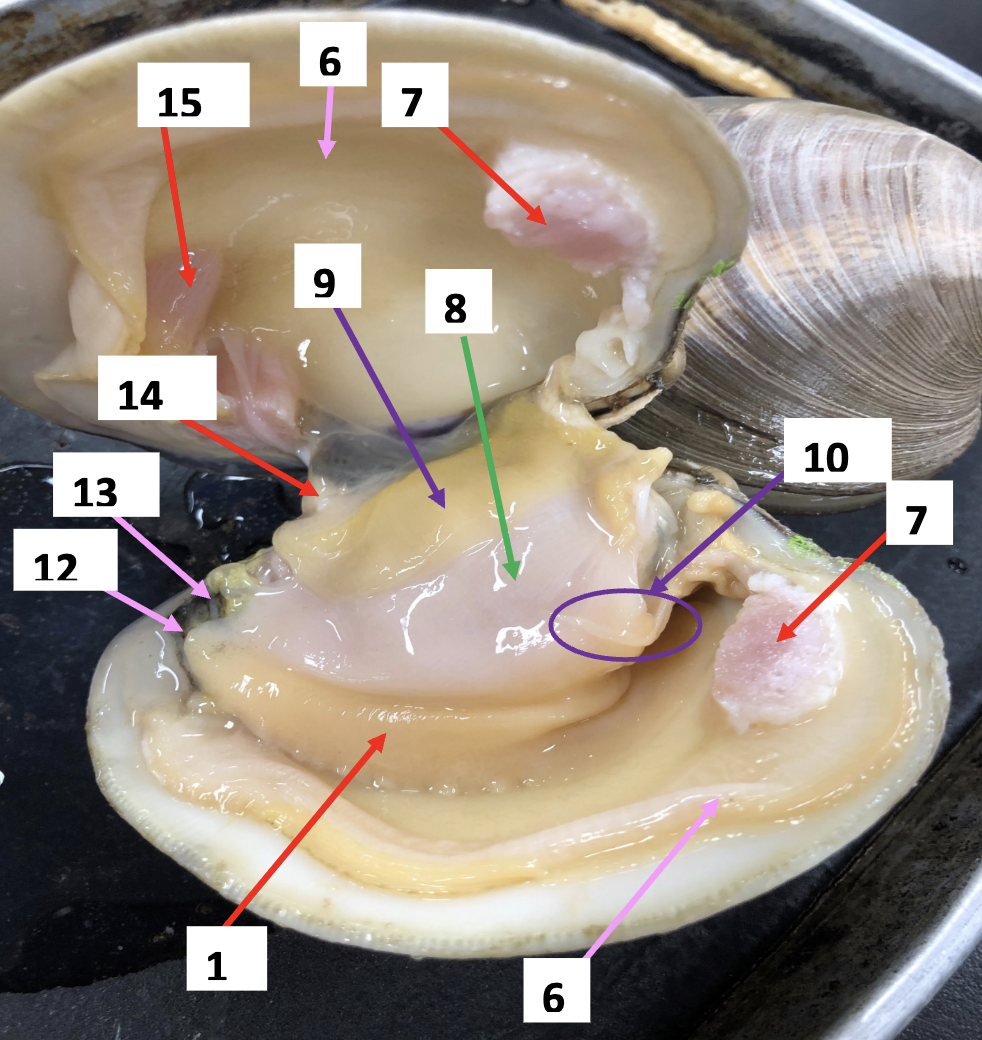
Anterior Adductor Muscle: A strong muscle that works with the posterior muscle to close the valves tightly
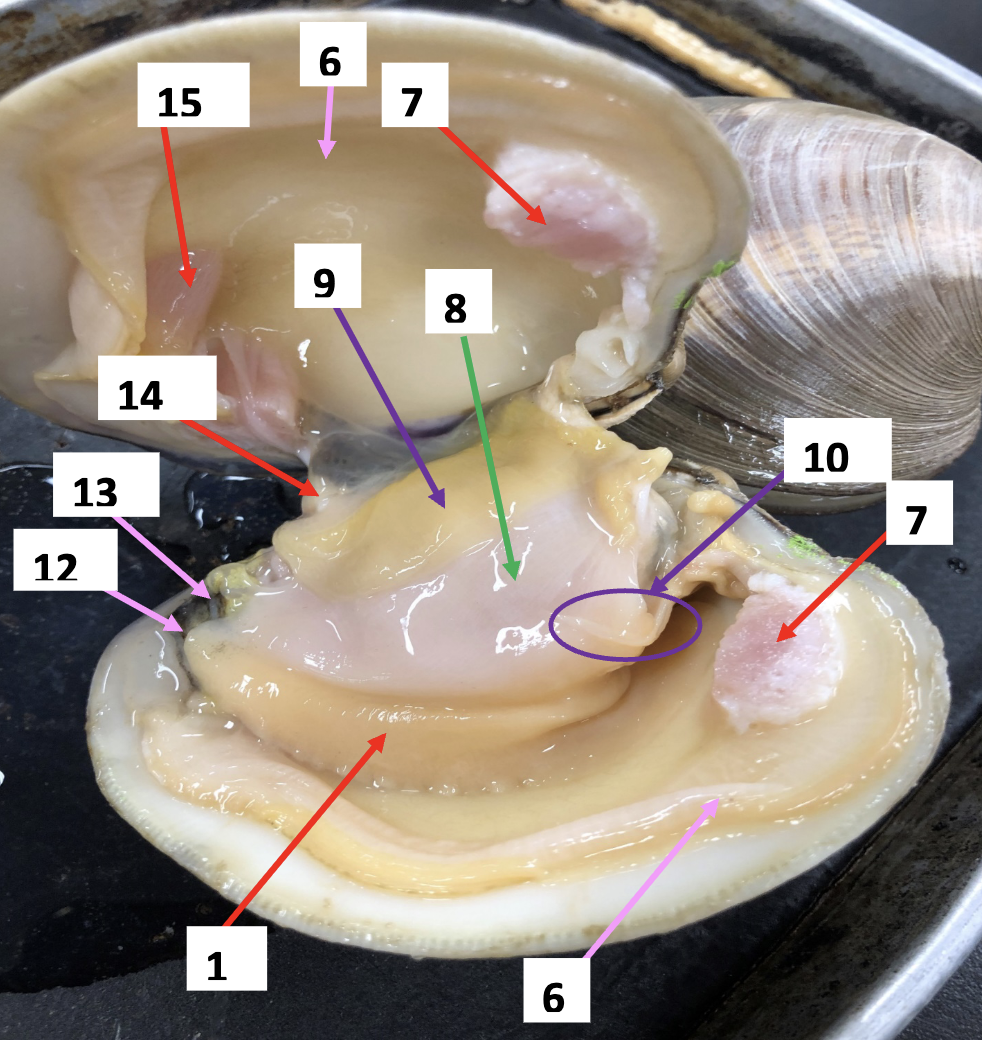
Label 8
Foot: A muscular organ used for locomotion and burrowing into the sediment
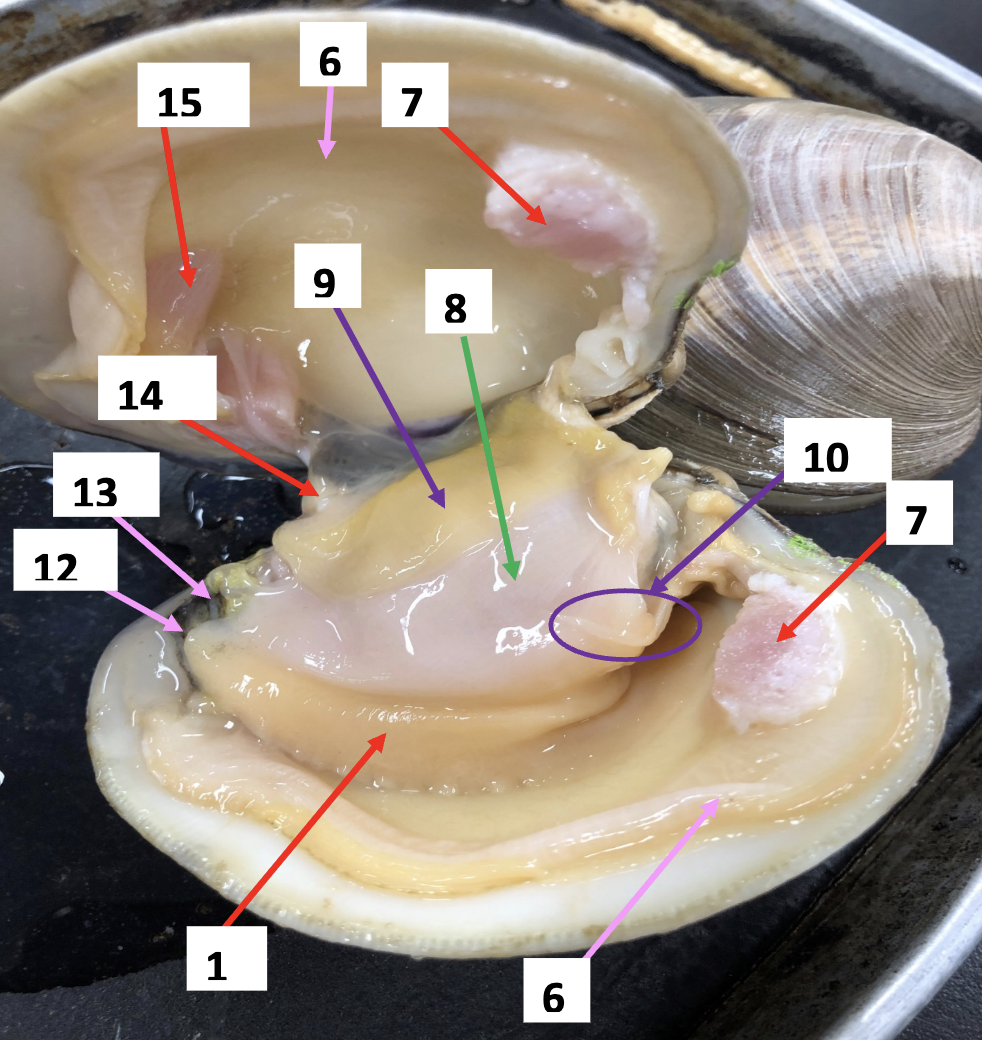
Label 9
Visceral Mass: The central area containing the digestive gland, gonads, and stomach
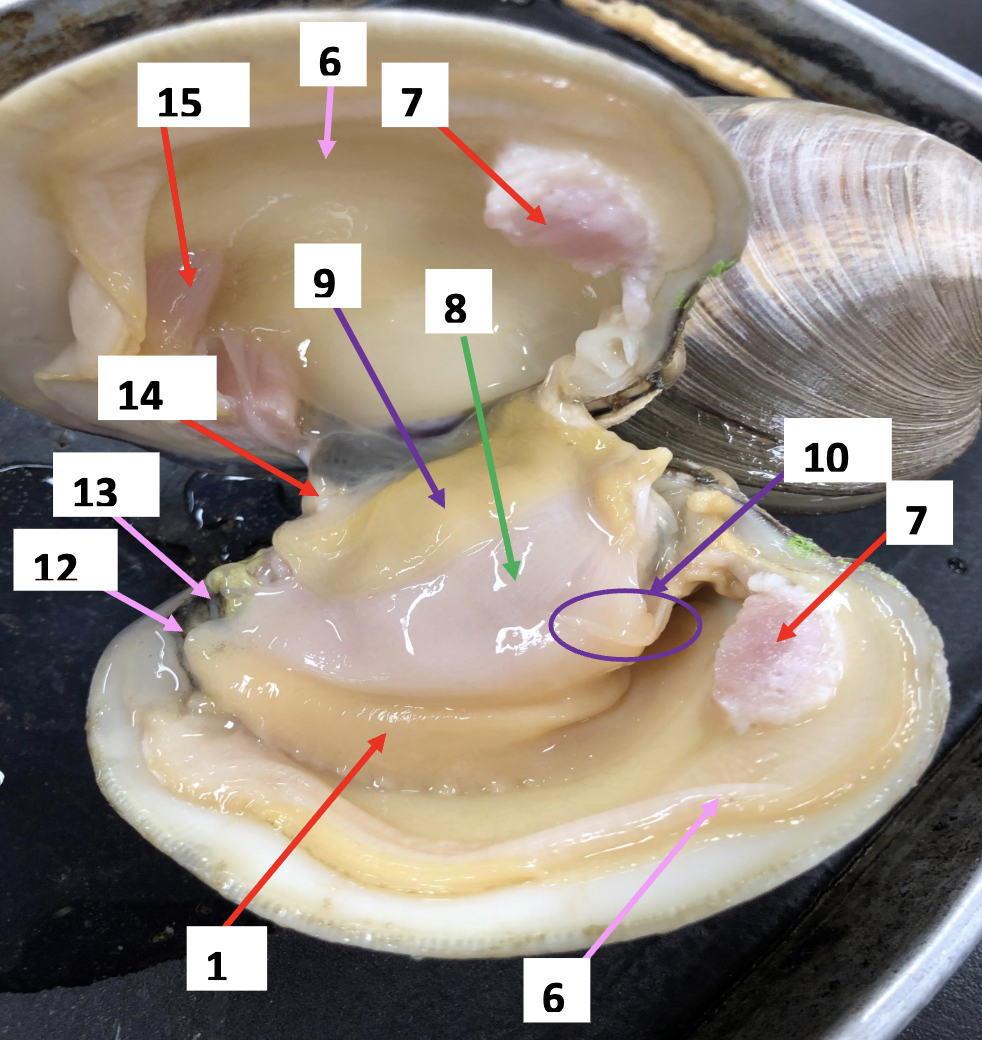
Label 10
Labial Palps: Flap-like structures that sort food particles from the gills and guide them into the moutH
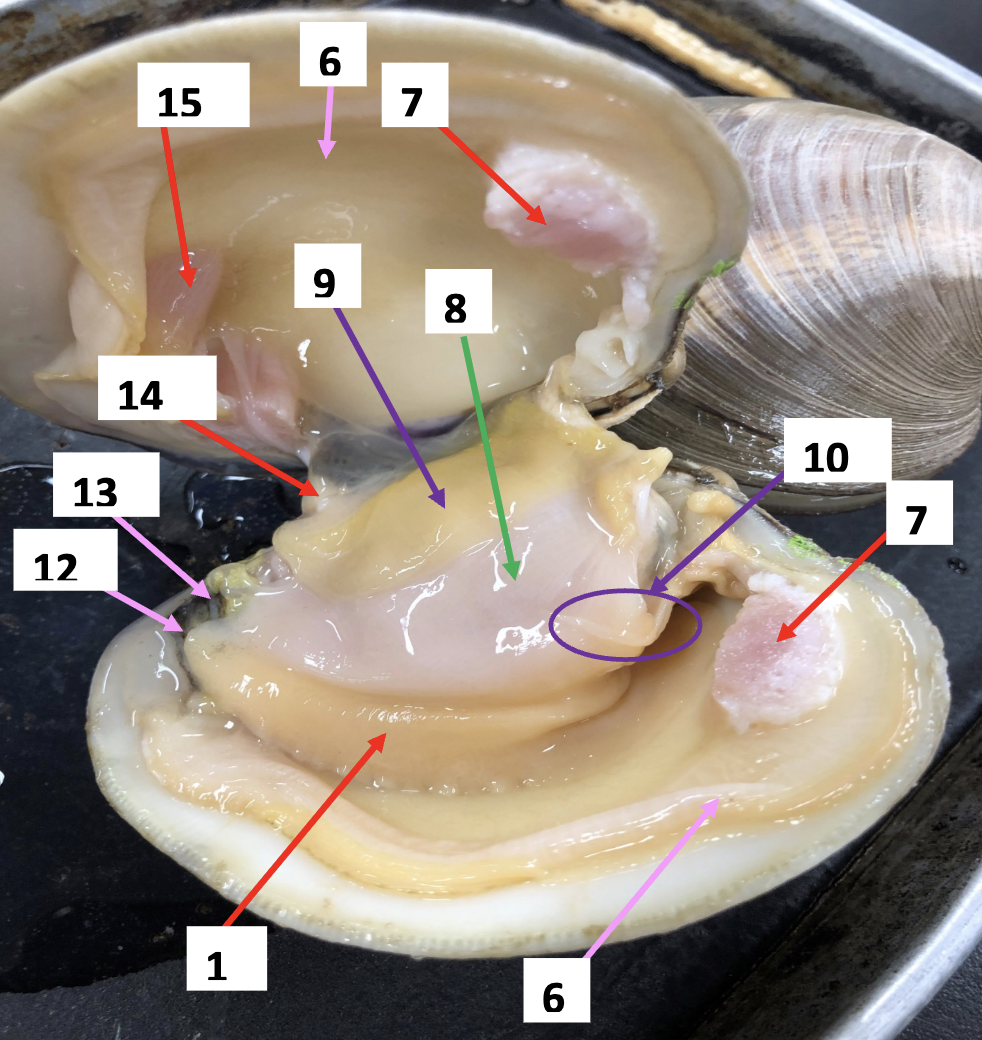
Label 11
Inhalent Siphon: Pulls oxygenated nutrient-rich water into the mantle cavity
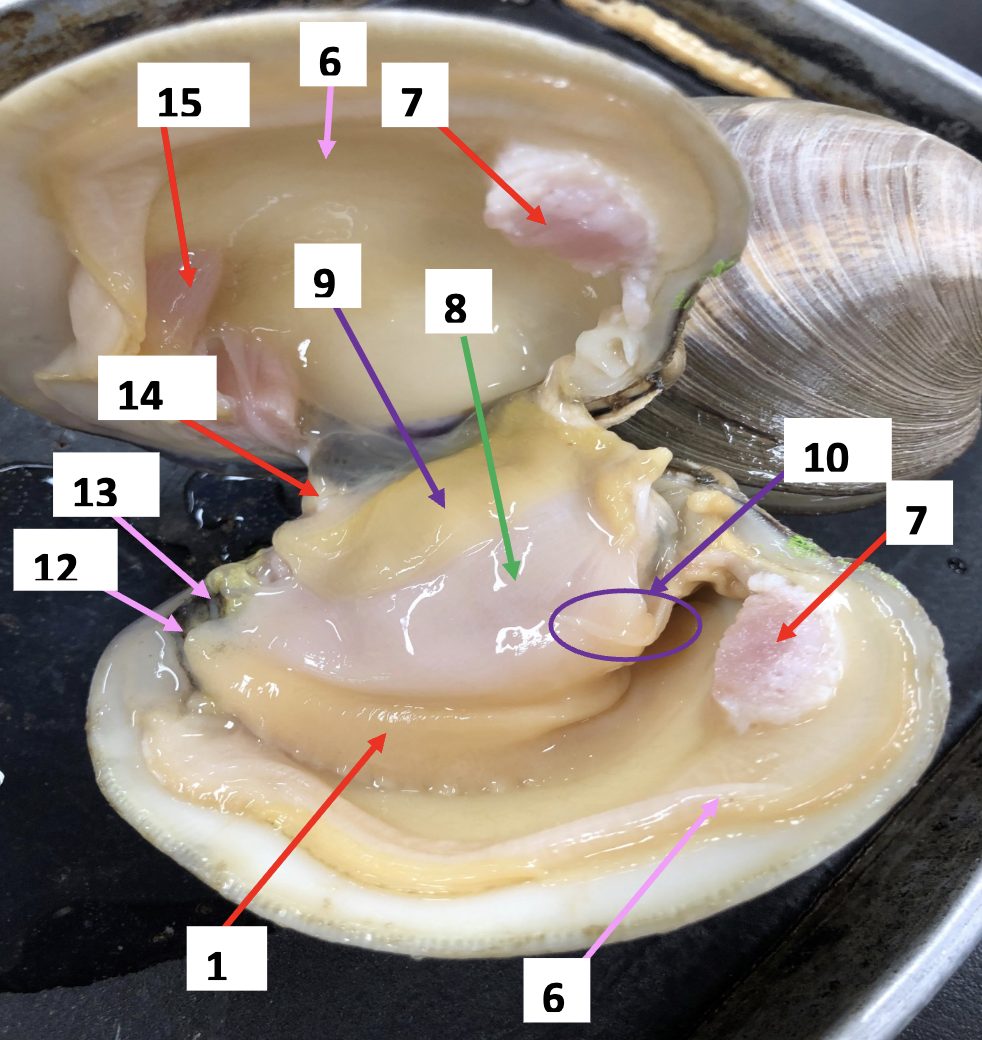
Label 12
Exhalant Siphon: Expels waste and deoxygenated water out of the body
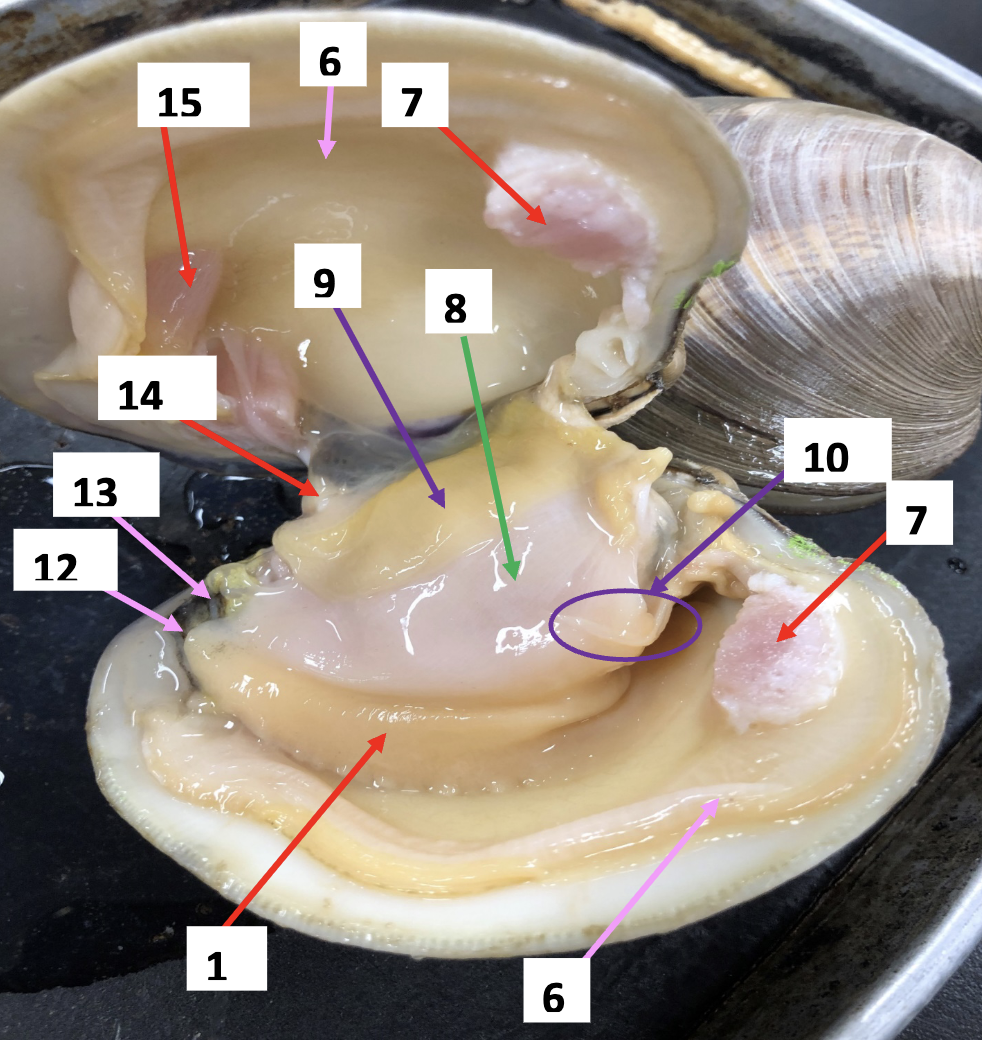
Label 13
Exhalant Siphon: Expels waste and deoxygenated water out of the body
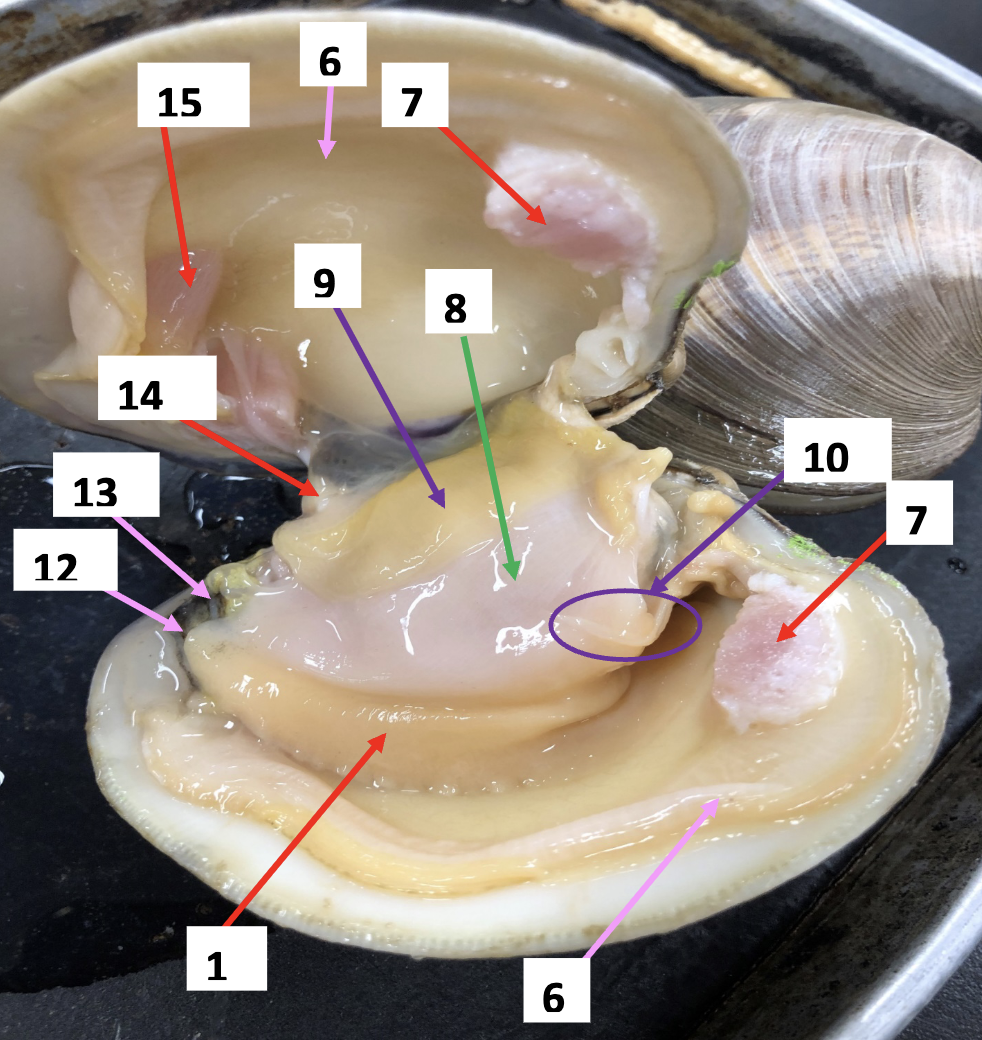
Label 14
Heart/Pericardial Cavity: Located dorsally near the hinge; the heart pumps hemolymph through an open circulatory system
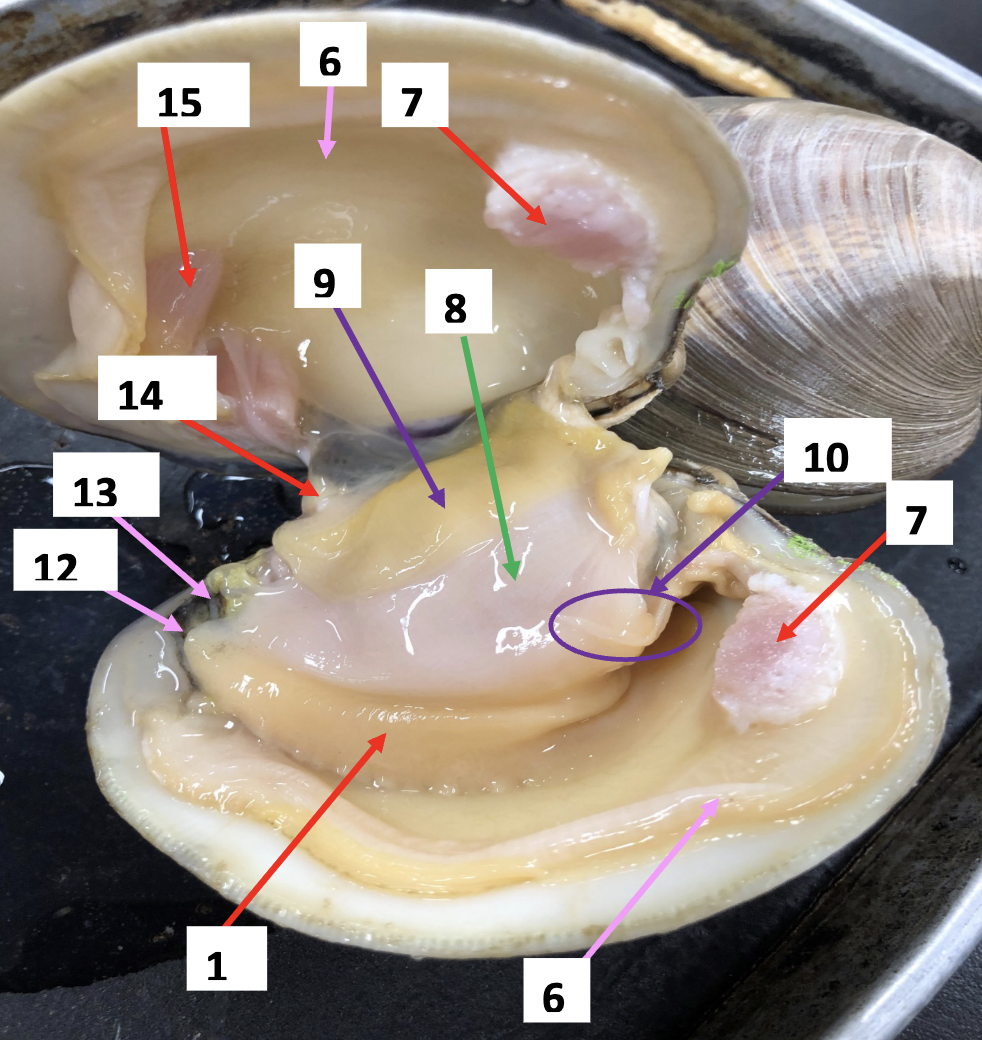
Label 15
Posterior Adductor Muscle: The larger of the two muscles responsible for holding the shell shut against predators.
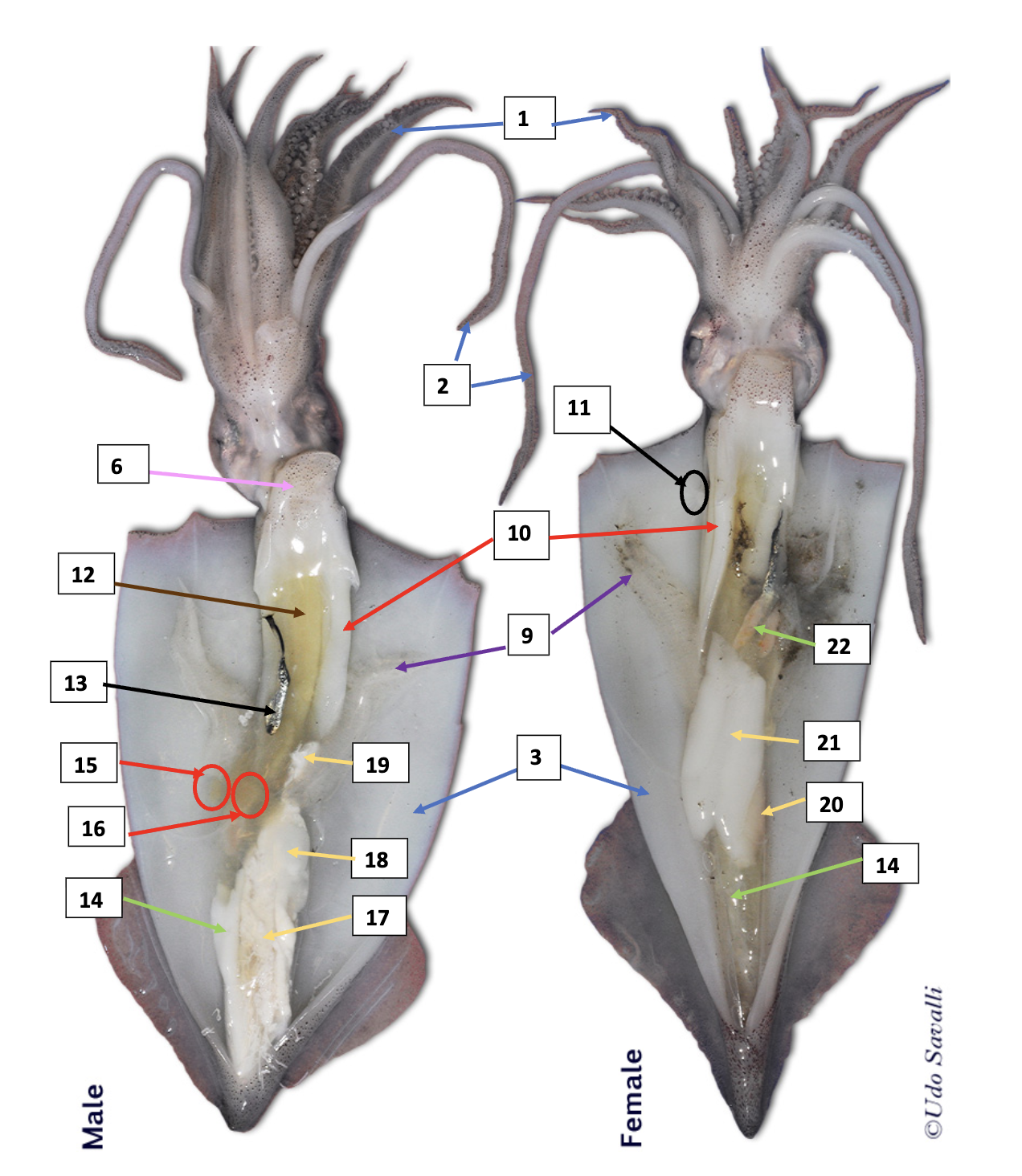
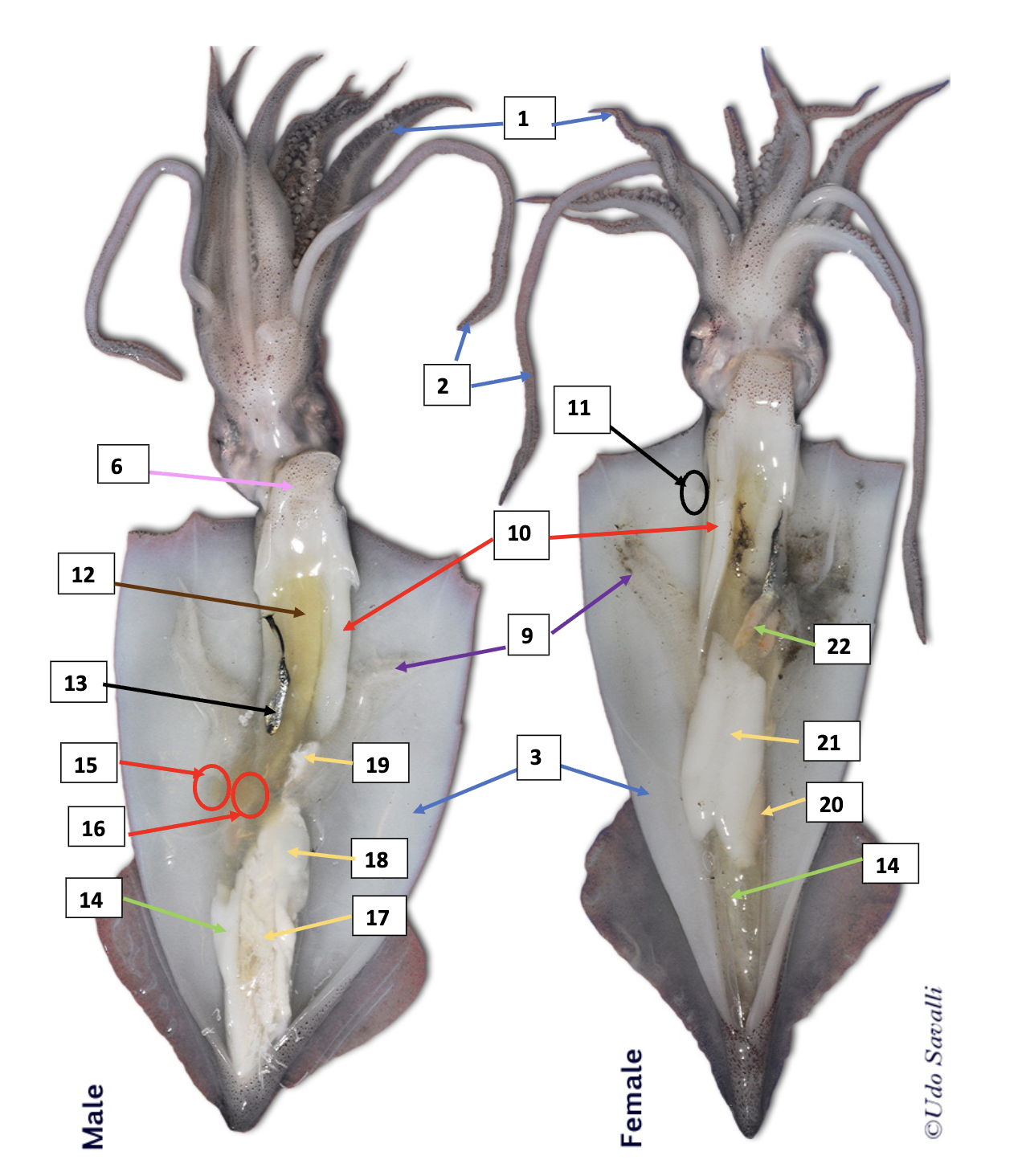
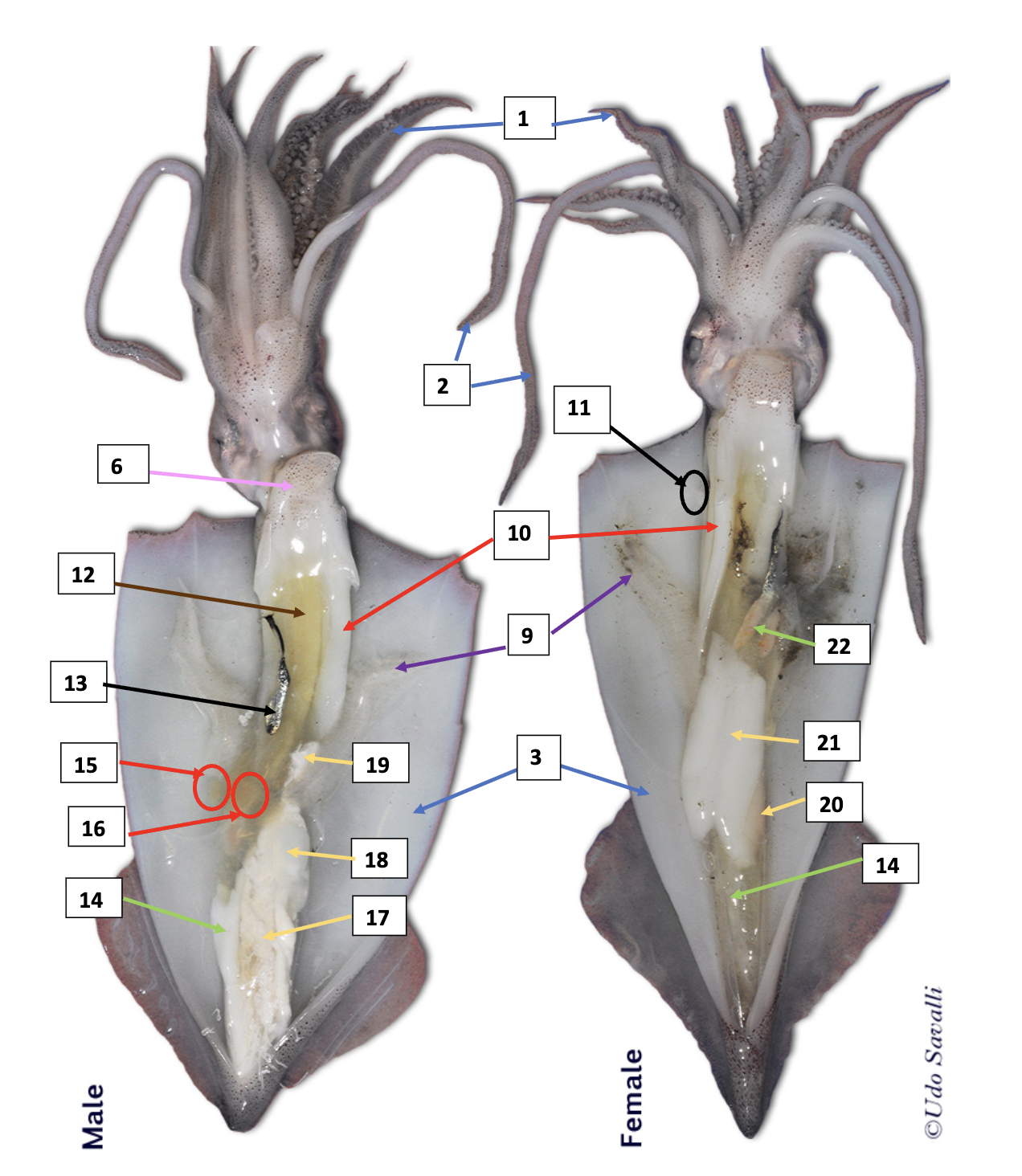
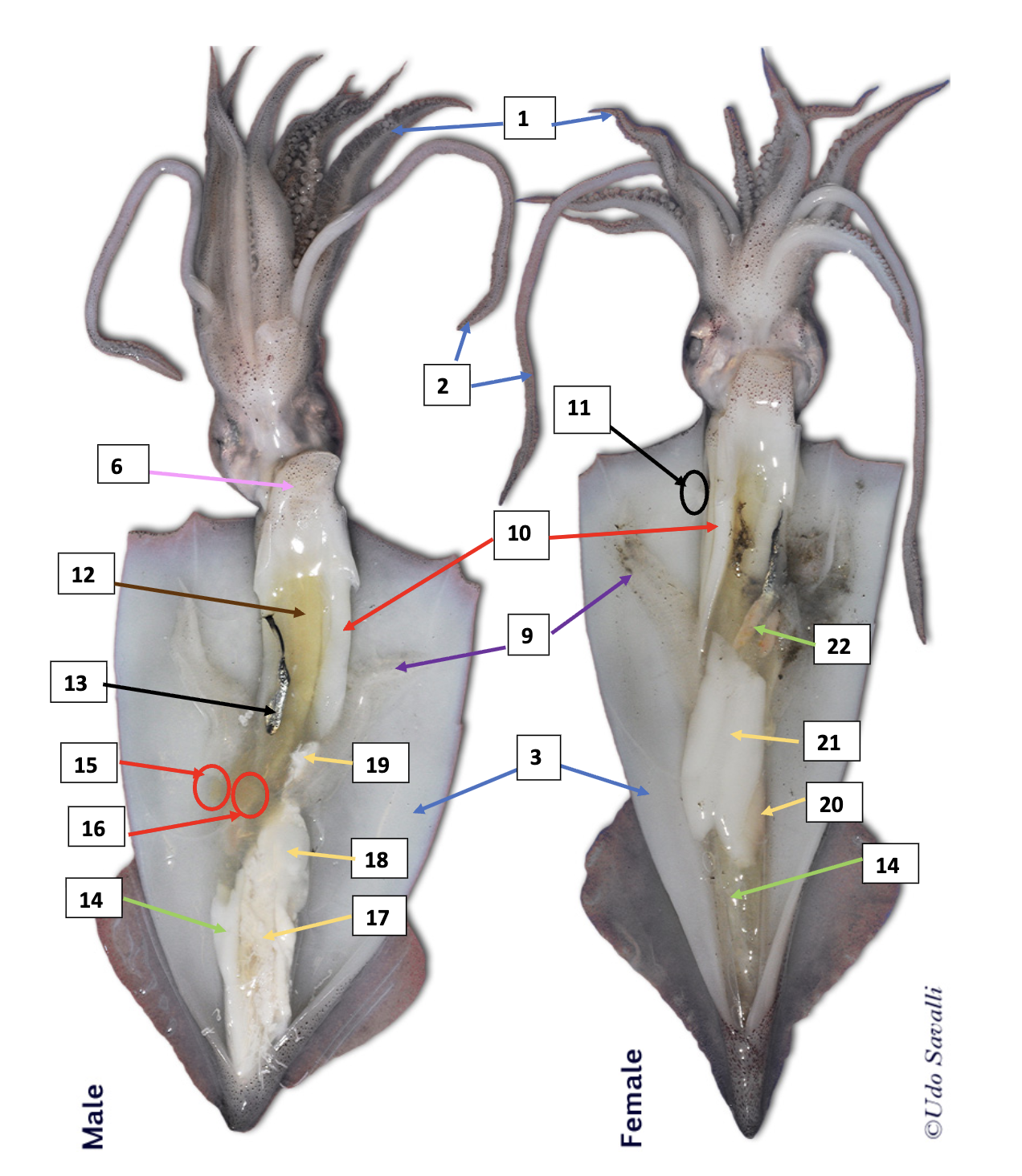
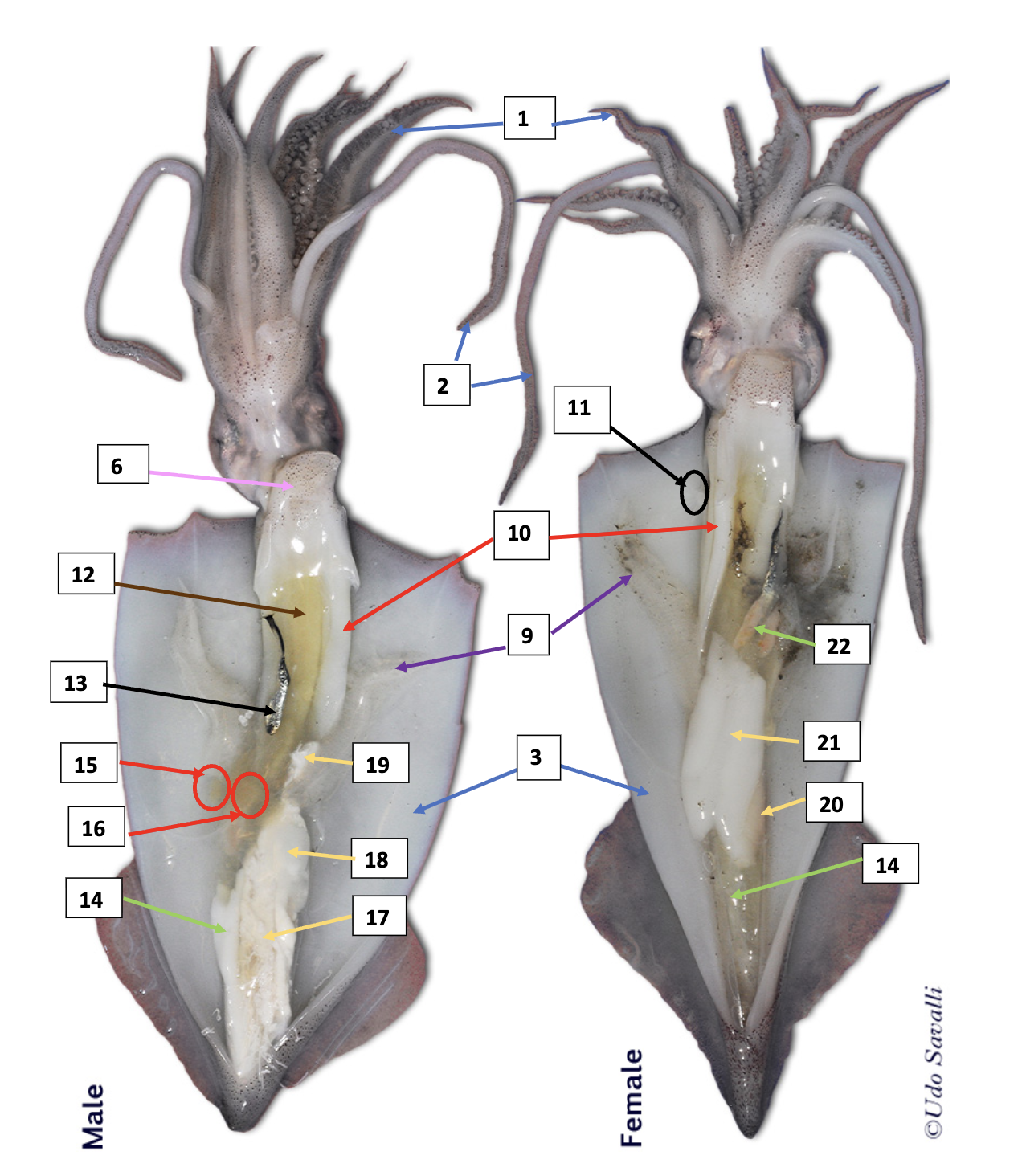
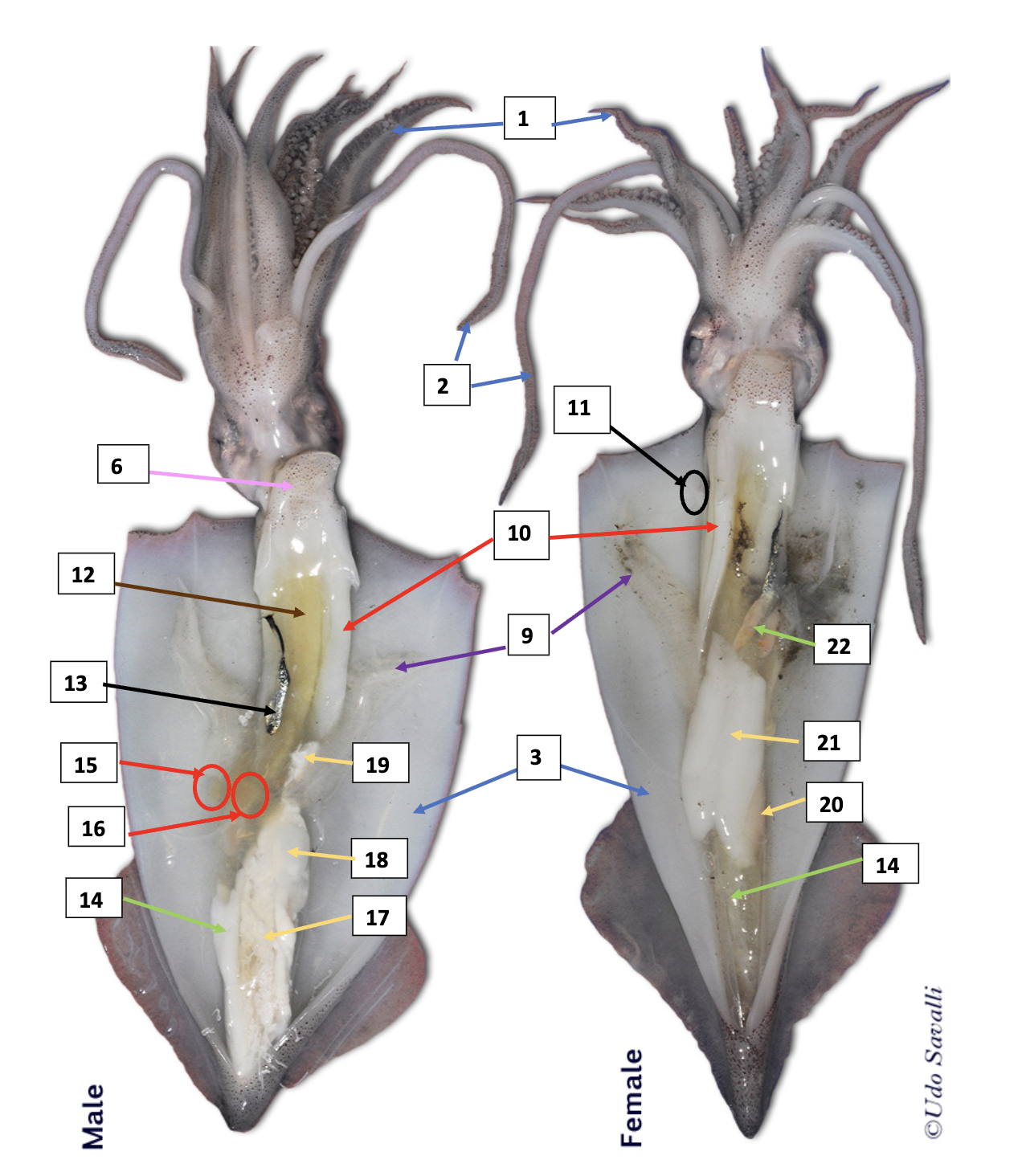
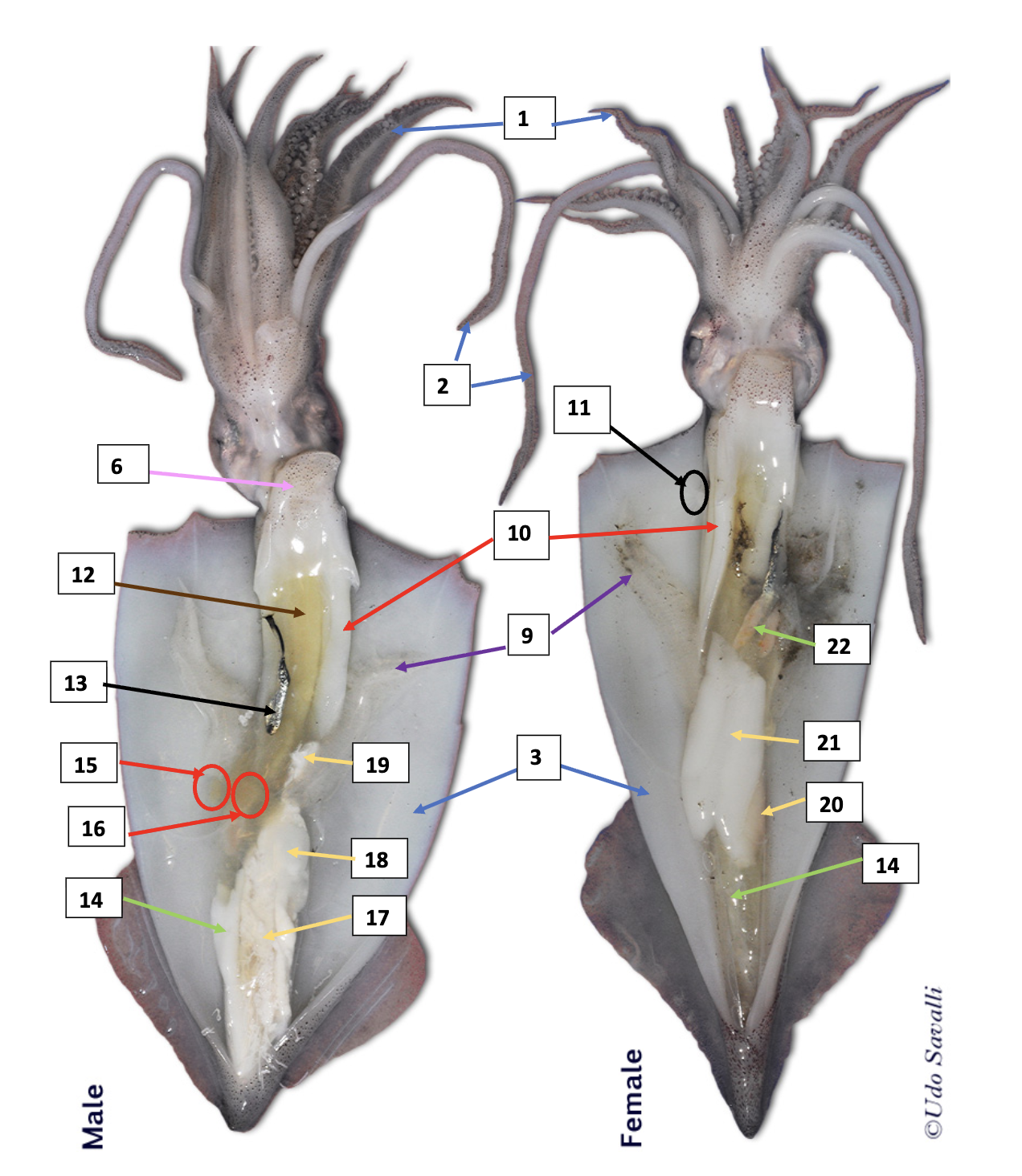
Label 1
Arms: Eight shorter appendages used for manipulating prey and bringing it to the mouth
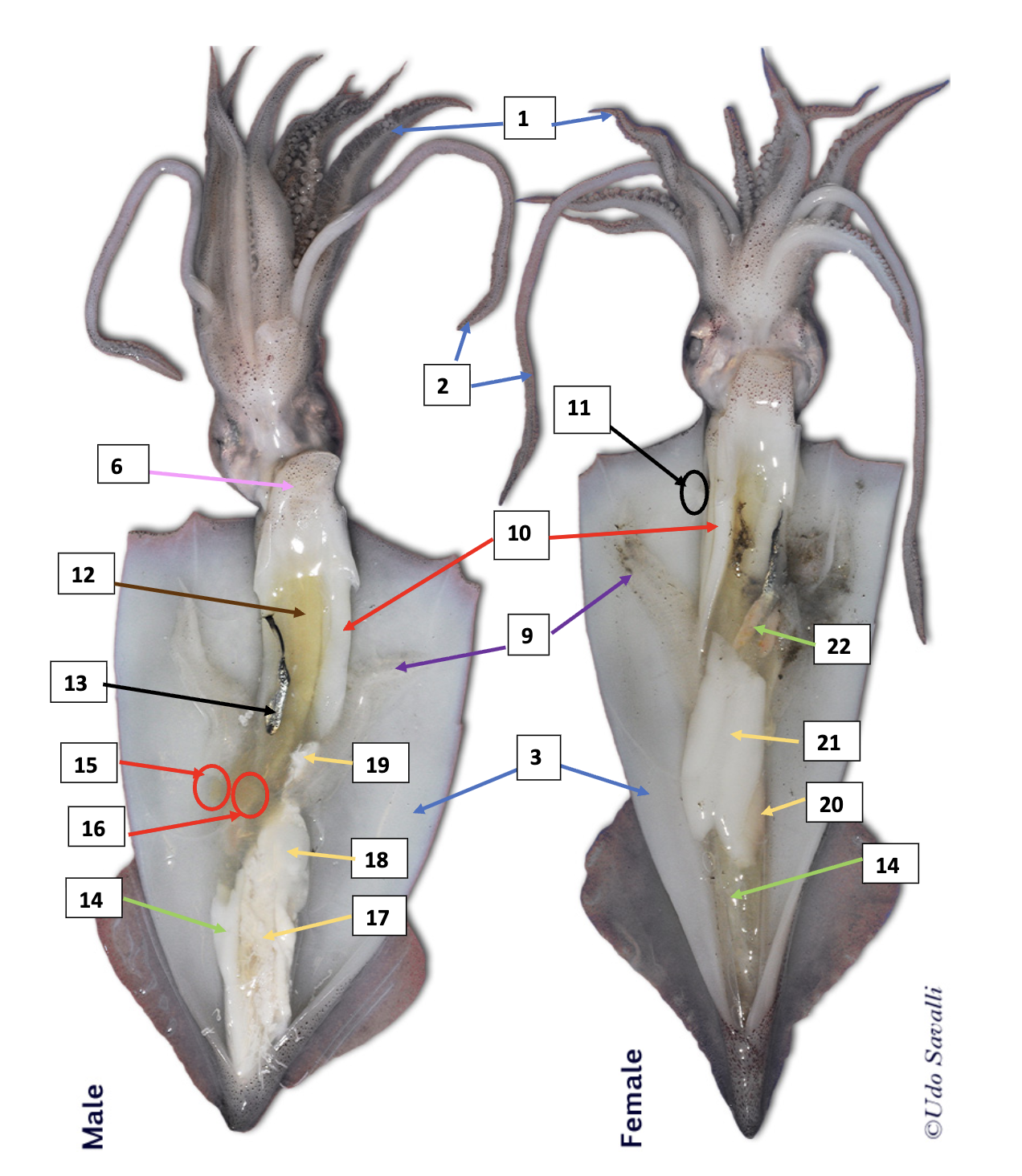
Label 2
Tentacles: Two long, retractable appendages used for striking and capturing prey at a distance
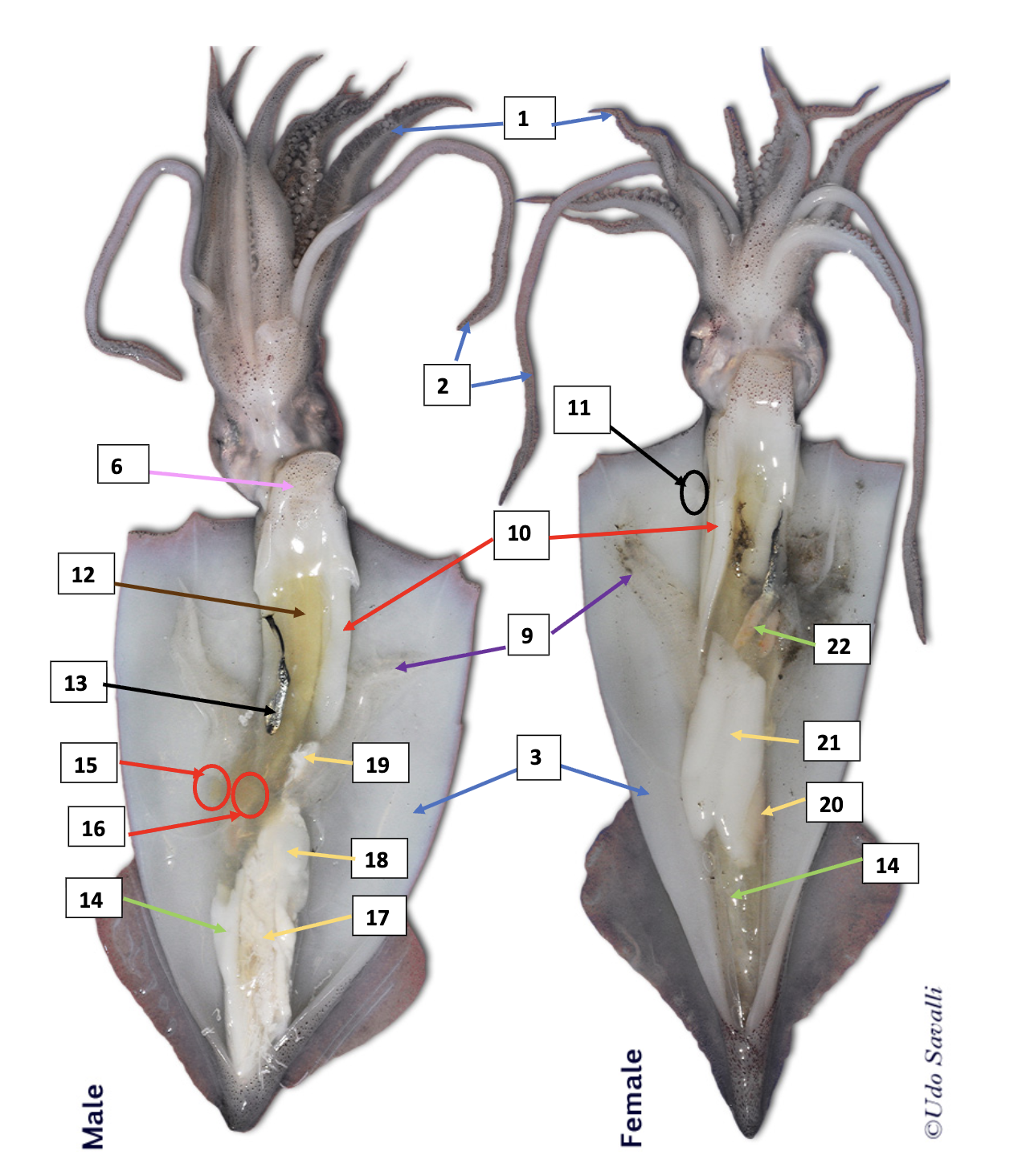
Label 3
Lateral Fin: Muscular flaps used for steering and stabilization during swimming
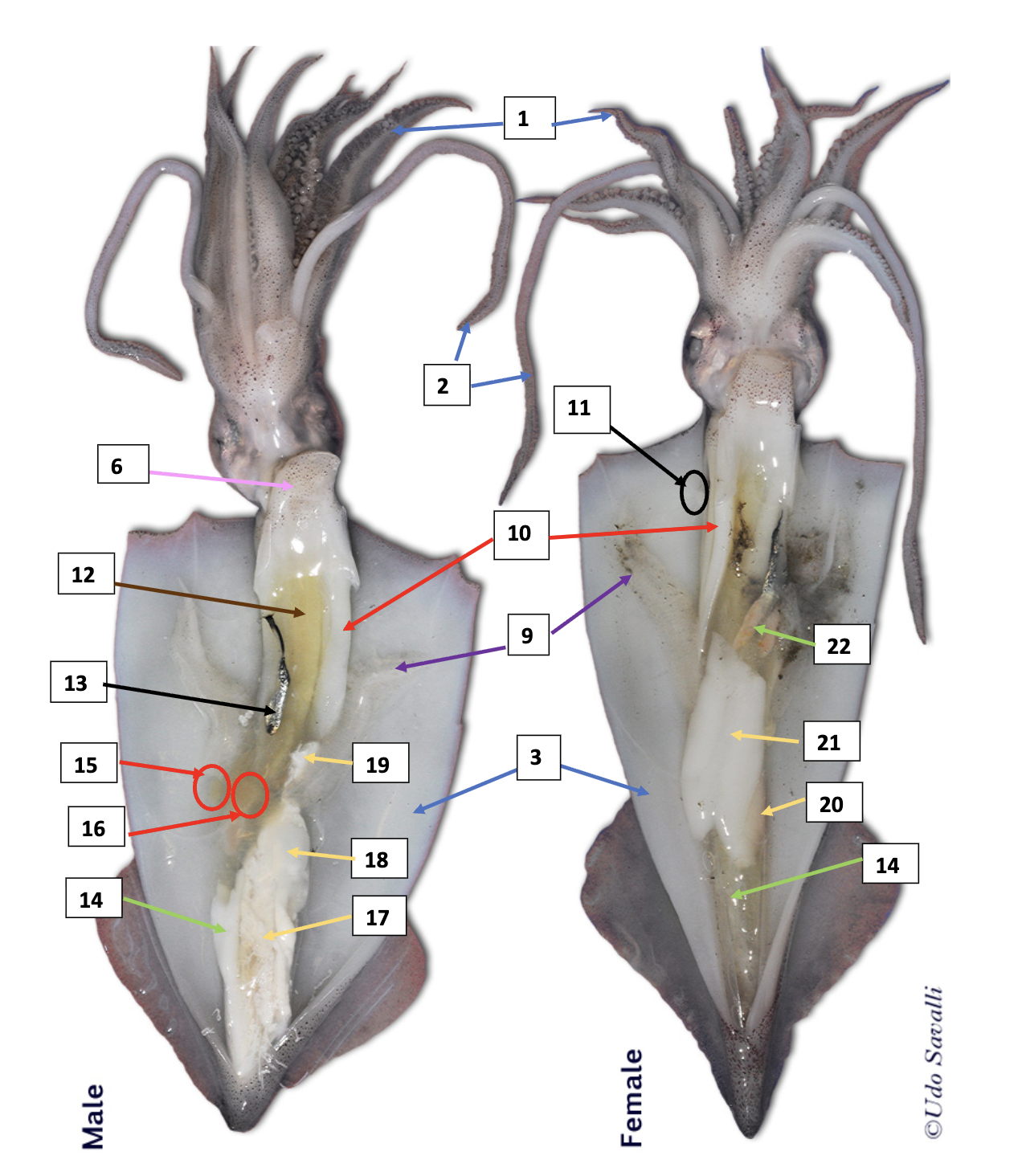
Label 6
Funnel (Siphon): The muscular tube that expels water from the mantle cavity for jet propulsion
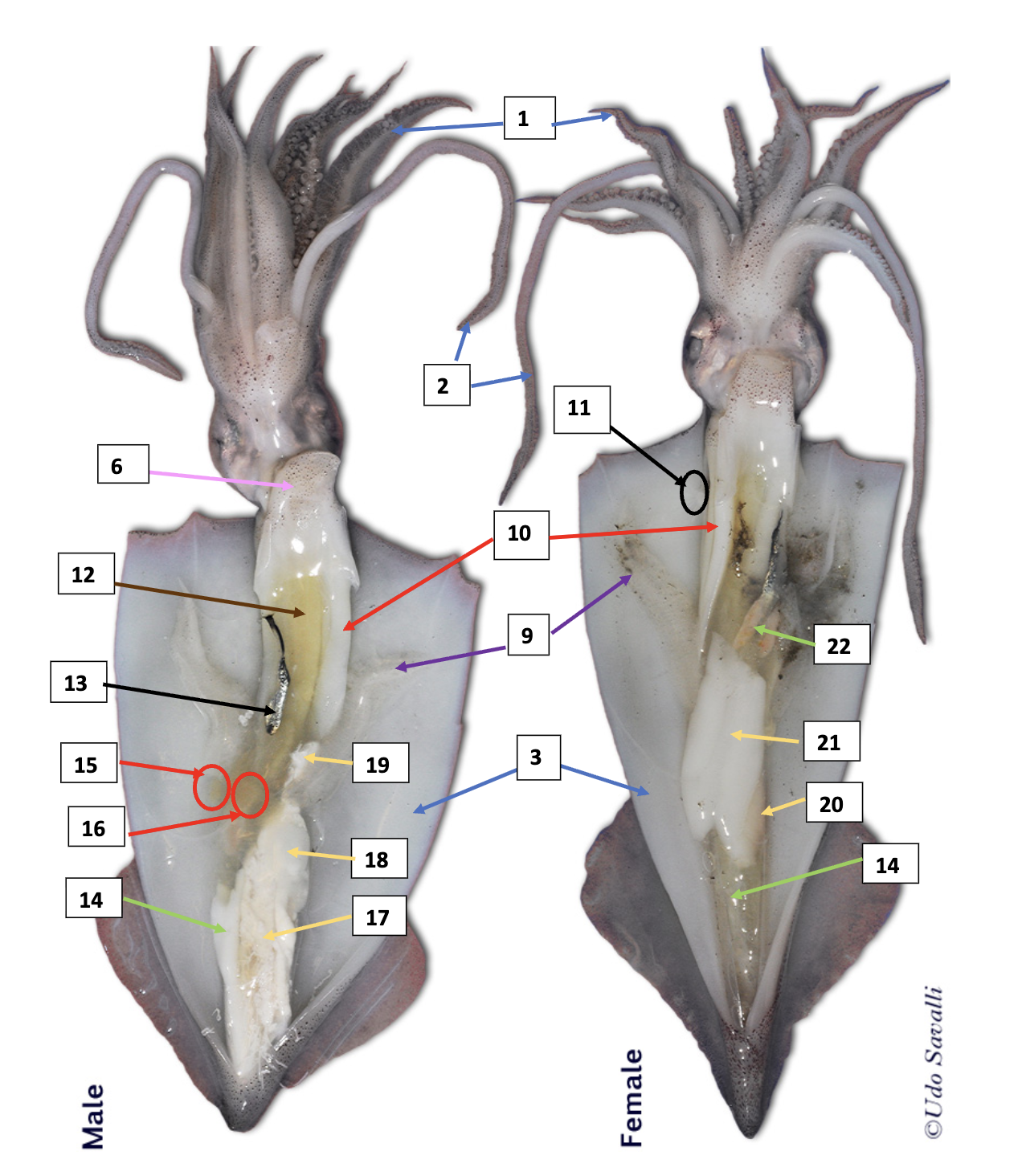
Label 9
Gills (Ctenidia): Paired, feathery organs used for respiration (gas exchange)
Label 10
Funnel Retractor Muscles: Large muscles that control the position and direction of the funnel
Label 11
Stellate Ganglion: Part of the nervous system that controls the rapid contraction of the mantle
Label 12
Digestive Gland (Liver): A large, yellowish organ that secretes digestive enzymes
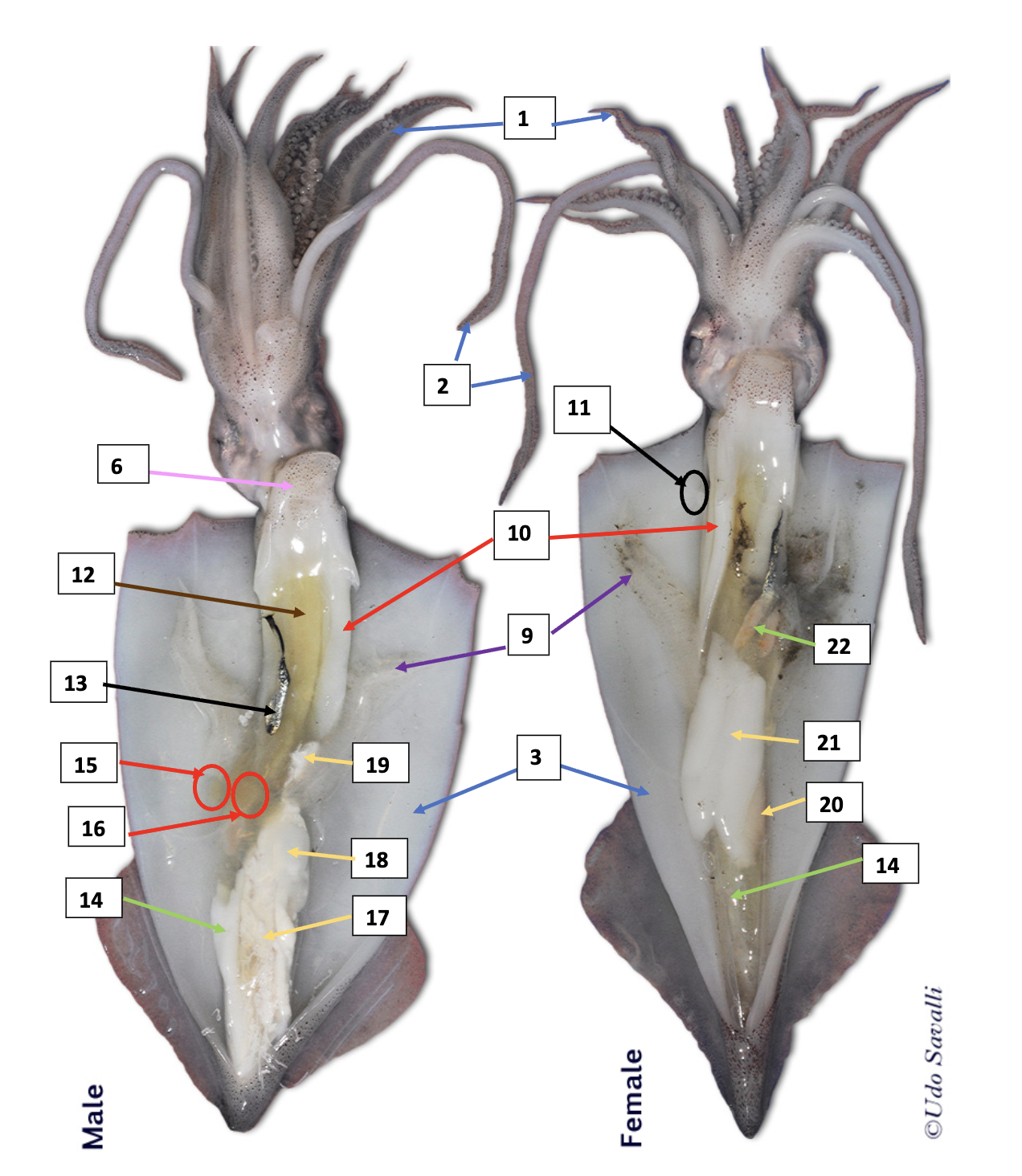
Label 13
Ink Sac: A silvery/black sac that stores ink used to confuse predators during escape
Label 14
Caecum: A large, thin-walled sac where the majority of nutrient absorption occurs
Label 15
Branchial Heart: Small, muscular pumps at the base of each gill that push blood through them
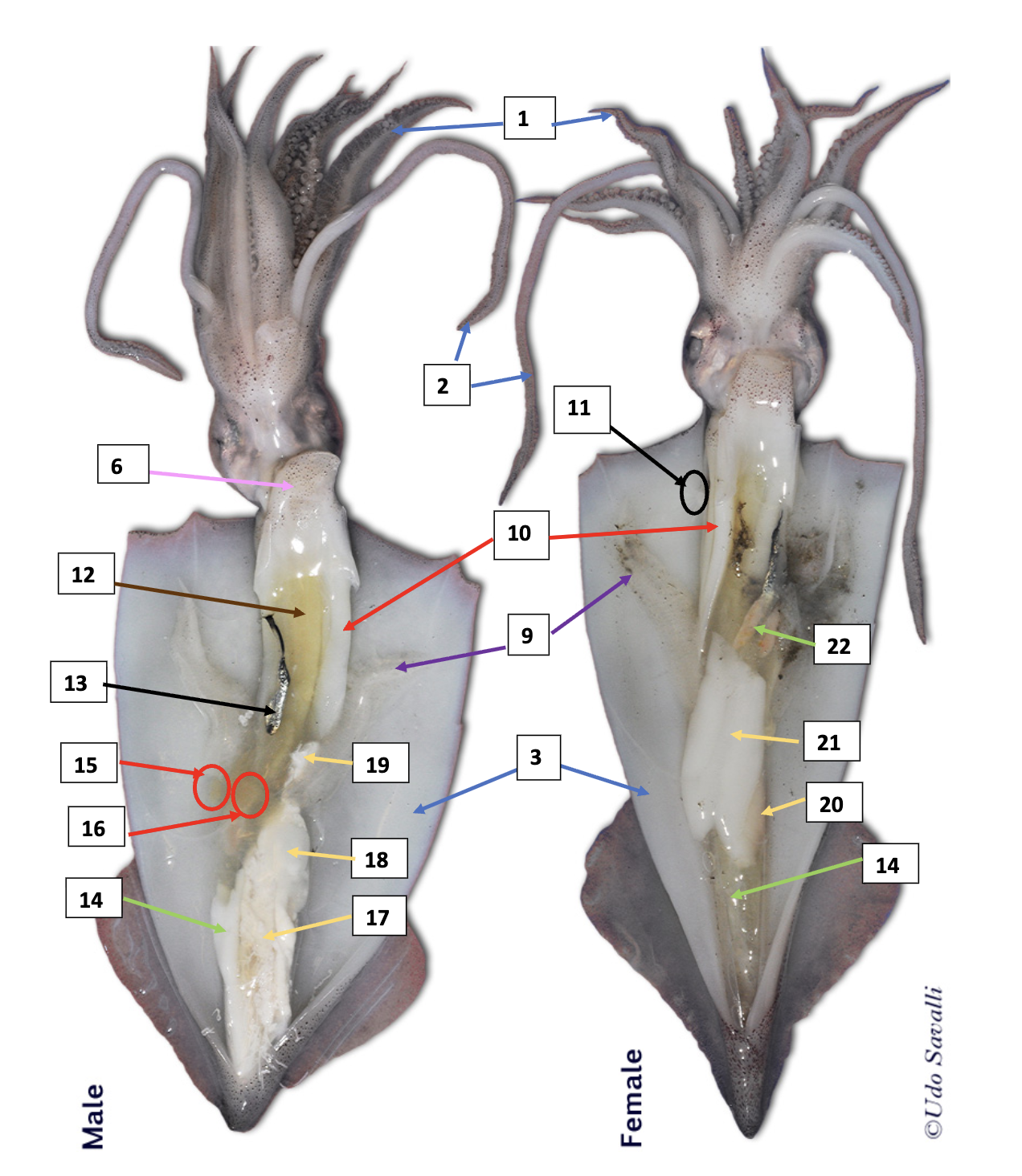
Label 16
Systemic Heart: The primary heart that pumps oxygenated blood to the rest of the body
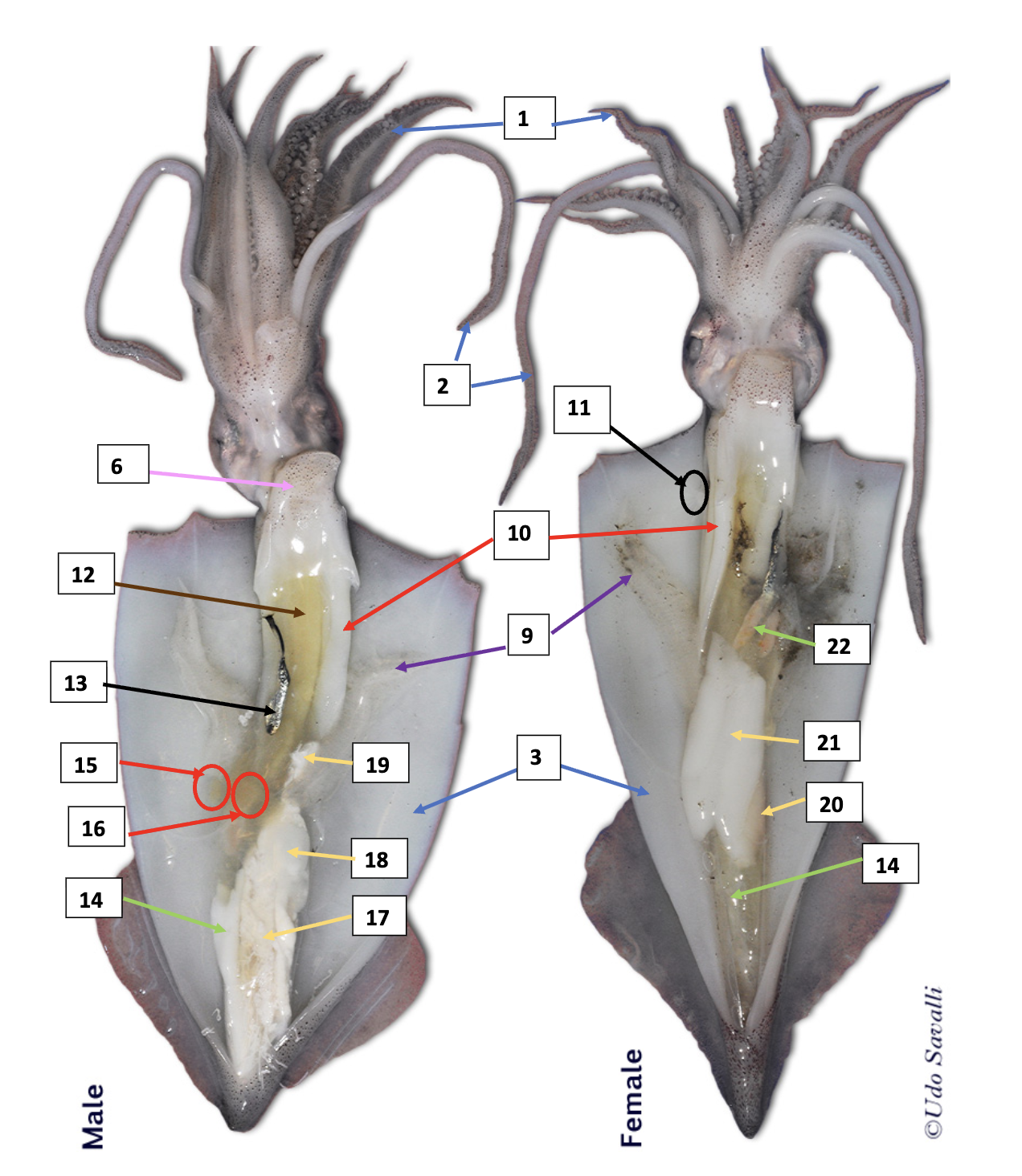
Label 17
Testis (Male): The organ where sperm is produced
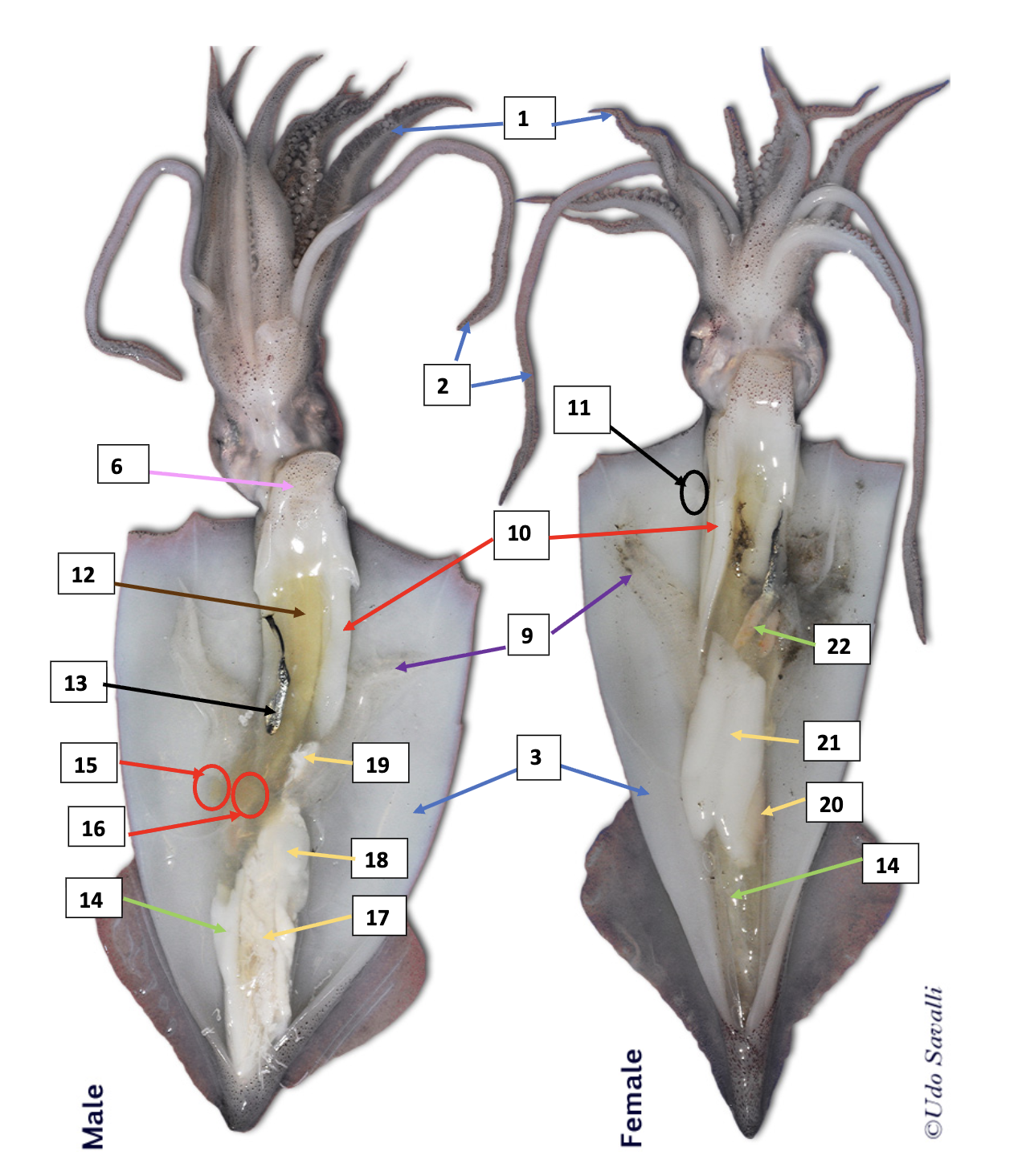
Label 18
Spermatophoric Complex: Packs sperm into packets (spermatophores) for transfer to the female
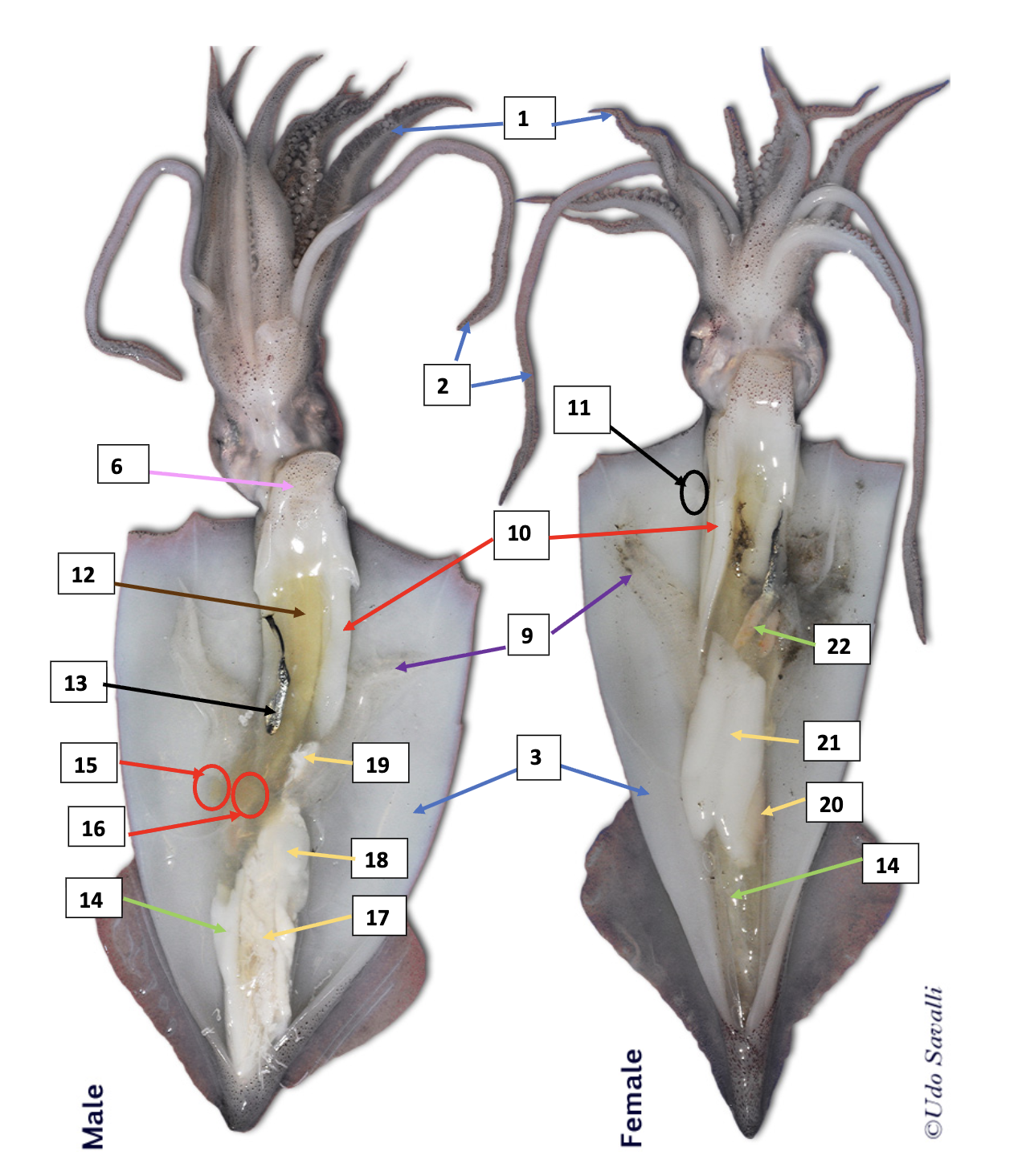
Label 19
Penis: A muscular tube used to direct spermatophores toward the female
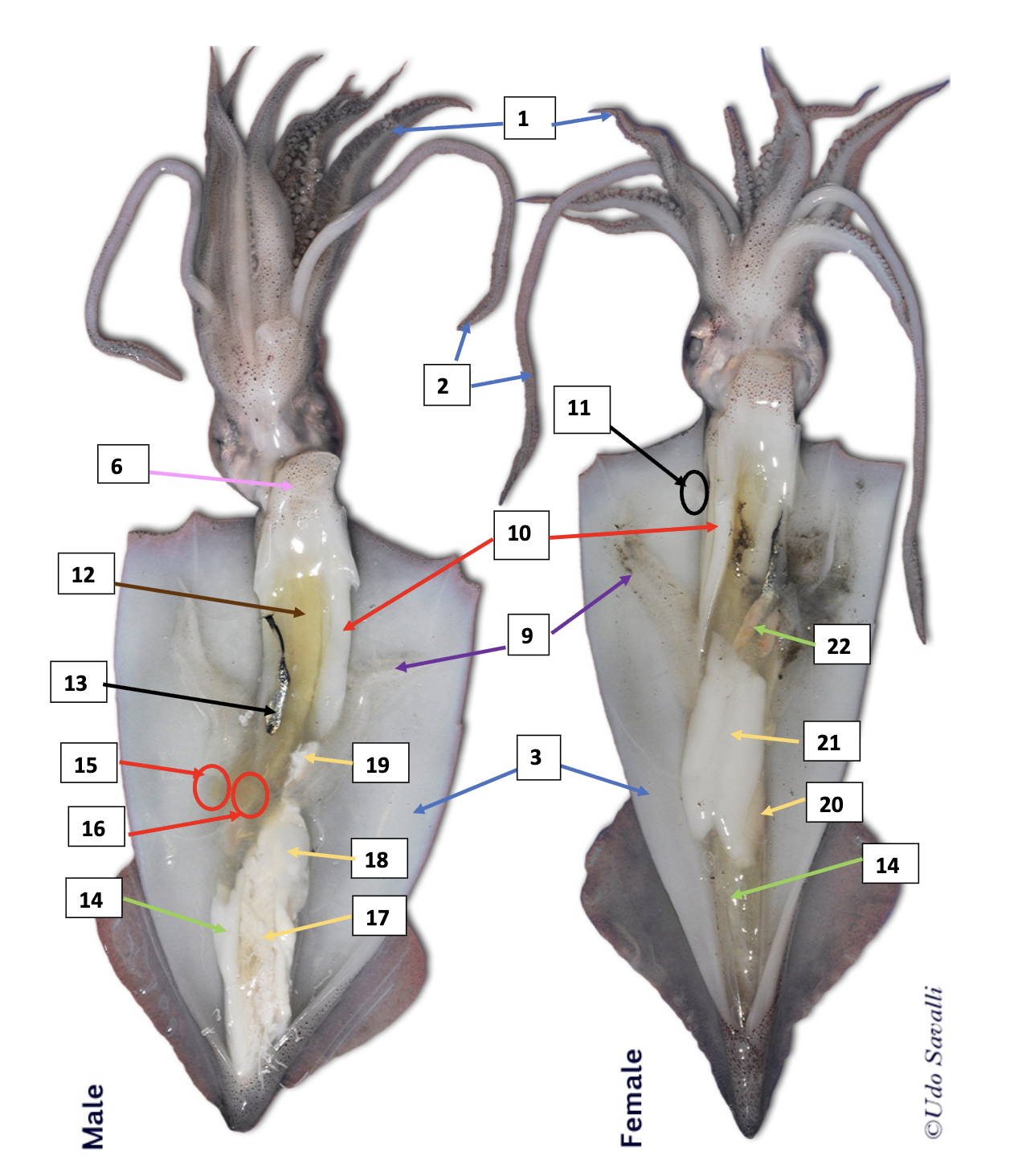
Label 20
Ovary: The large organ where eggs are produced (often fills the posterior end)
Label 21
Nidamental Gland: Large, white paired glands in females that secrete the protective coating for egg masses
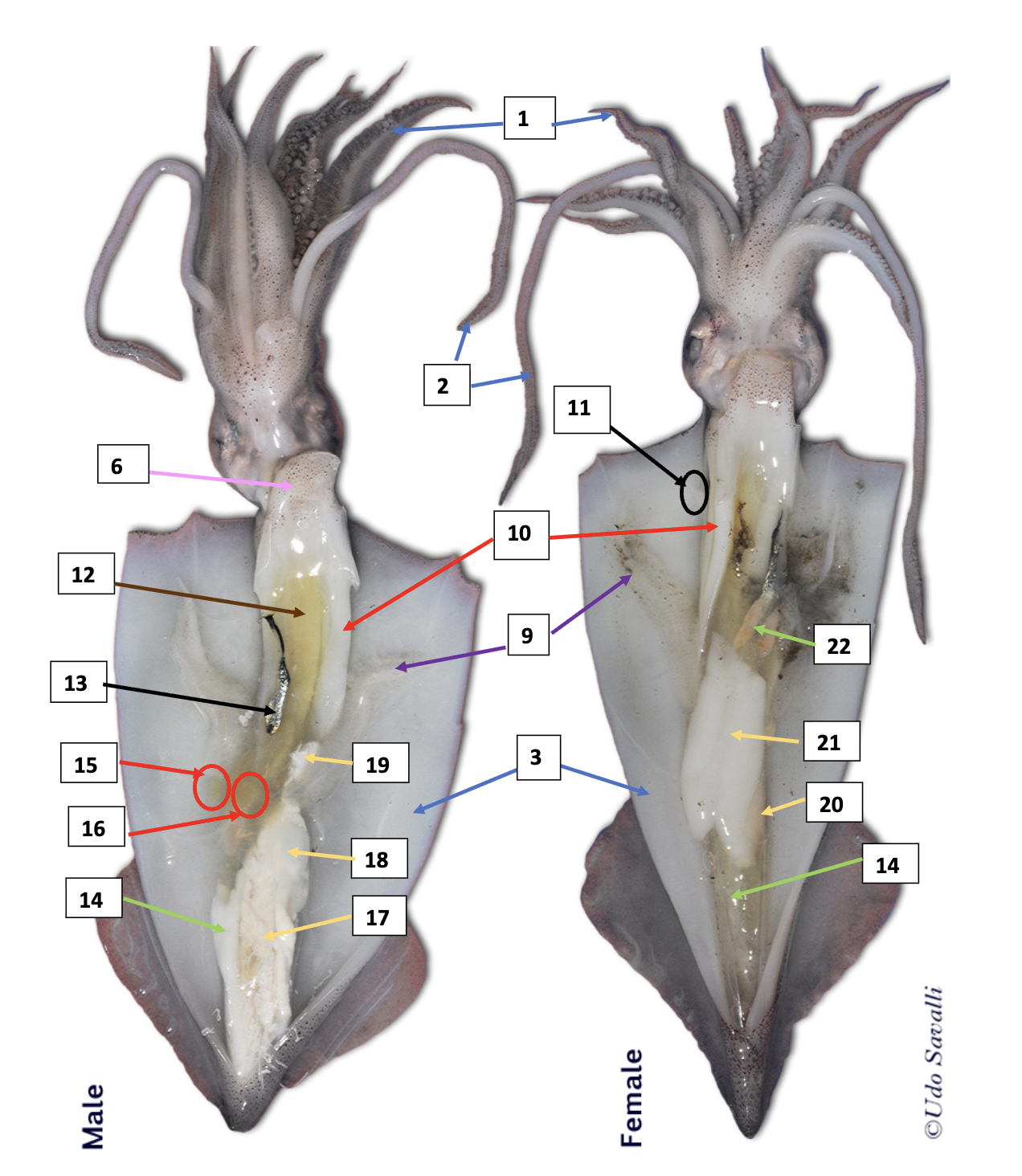
Label 22
Kidney: Part of the excretory system, located near the branchial hearts
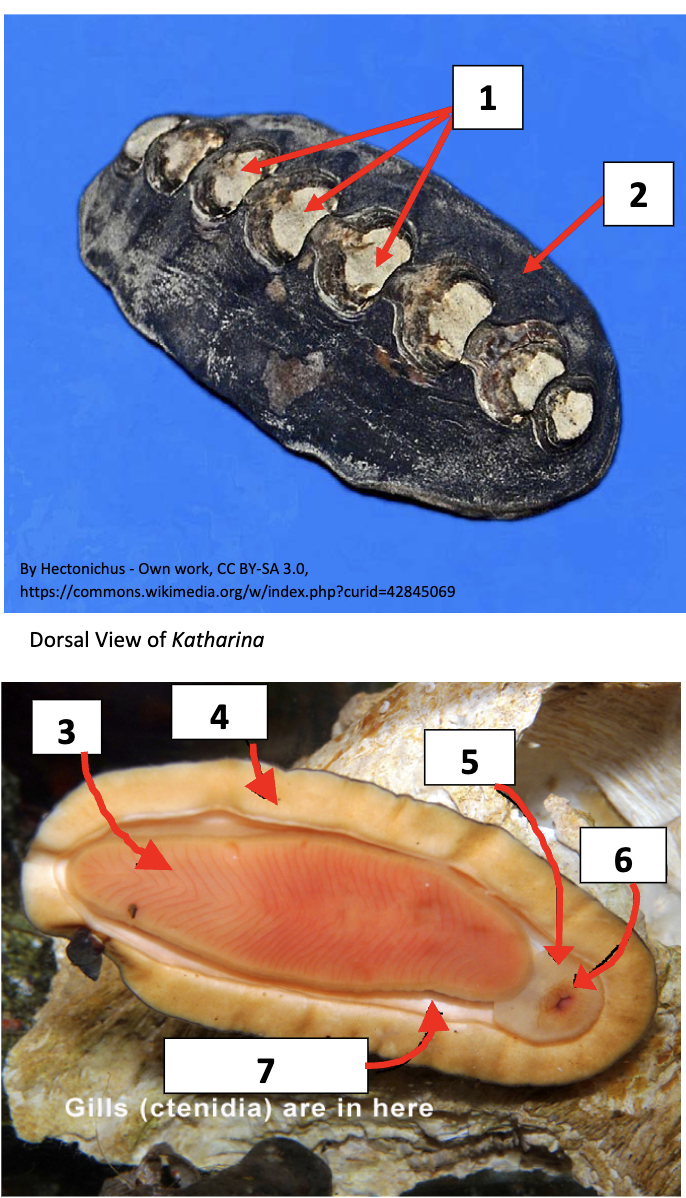
Label 1
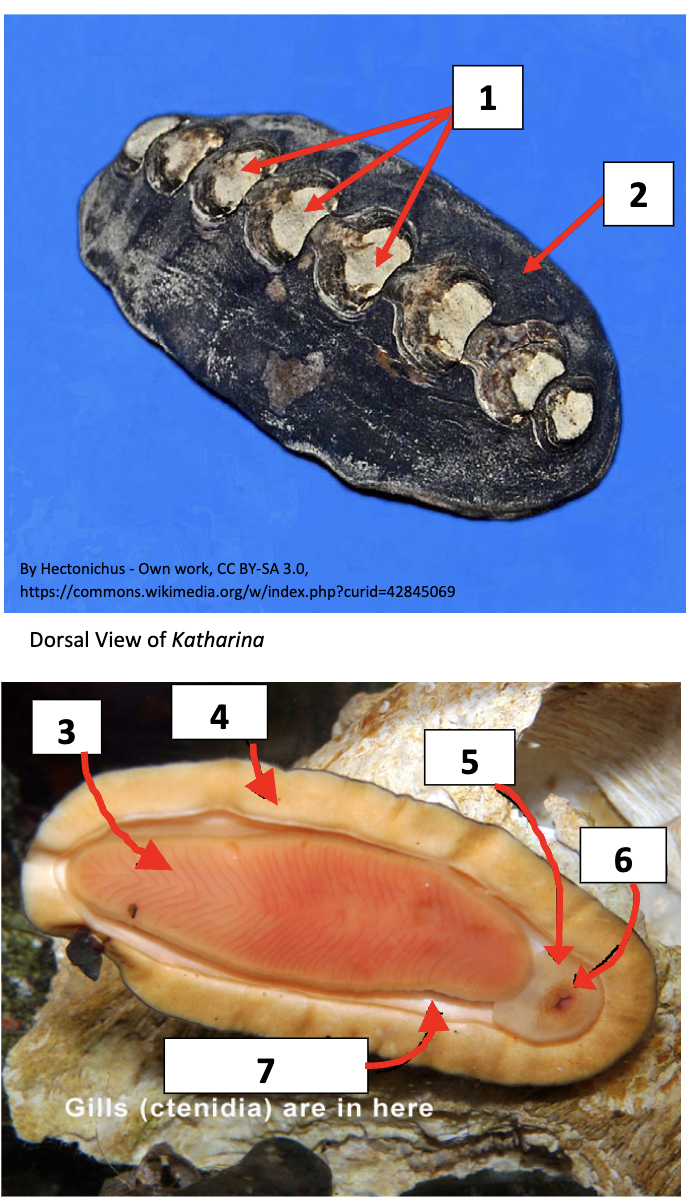
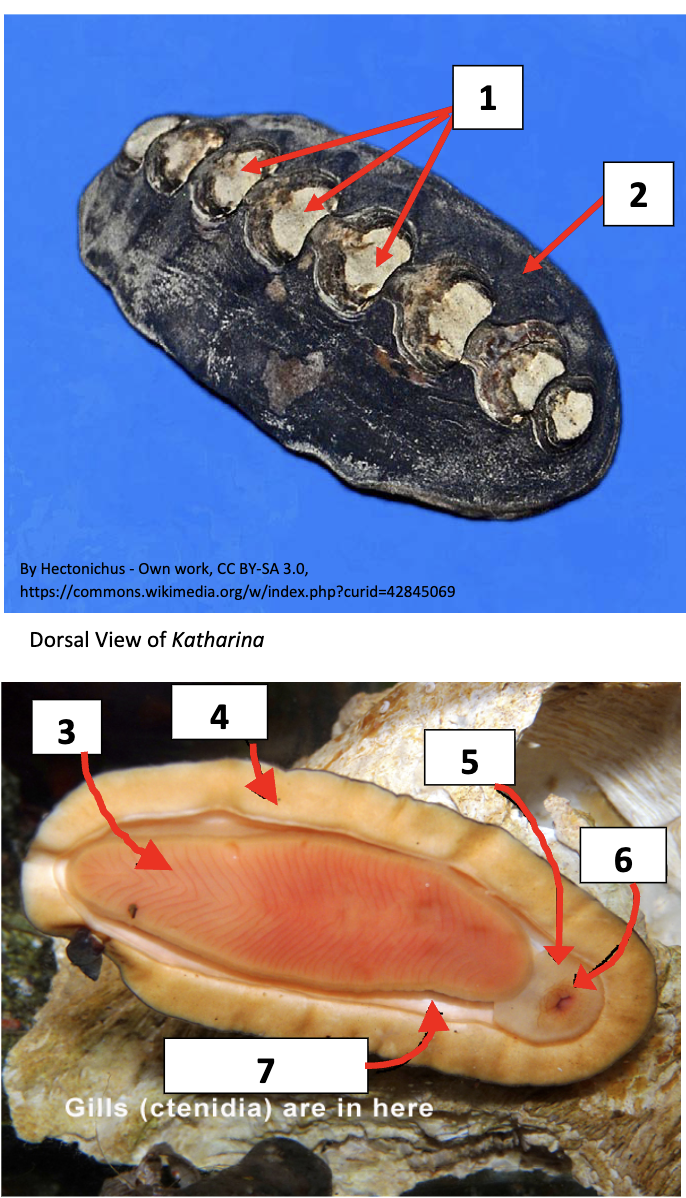
Valves: Eight overlapping calcareous plates that provide protection while allowing the body to flex and curl
Label 2
Mantle: In this species, the mantle is thickened and leathery, covering most of the valves to provide extra protection from drying out
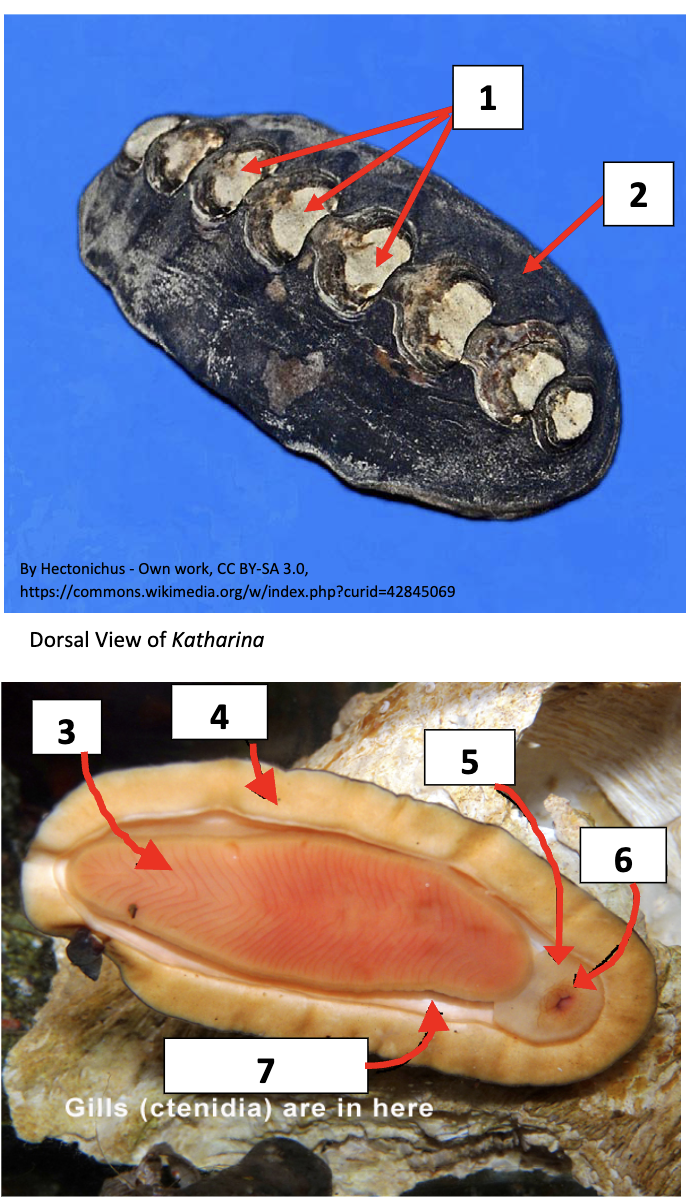
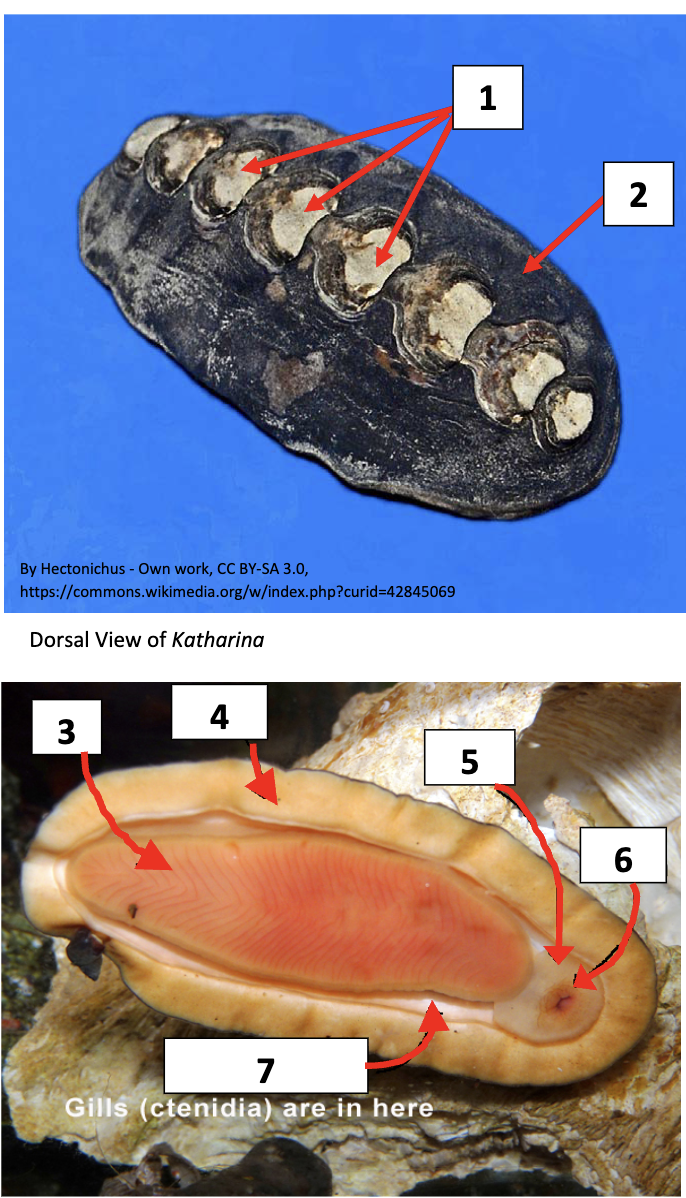
Label 3
Foot: A large, flat, muscular organ used for powerful suction and slow creeping along rocky surfaces
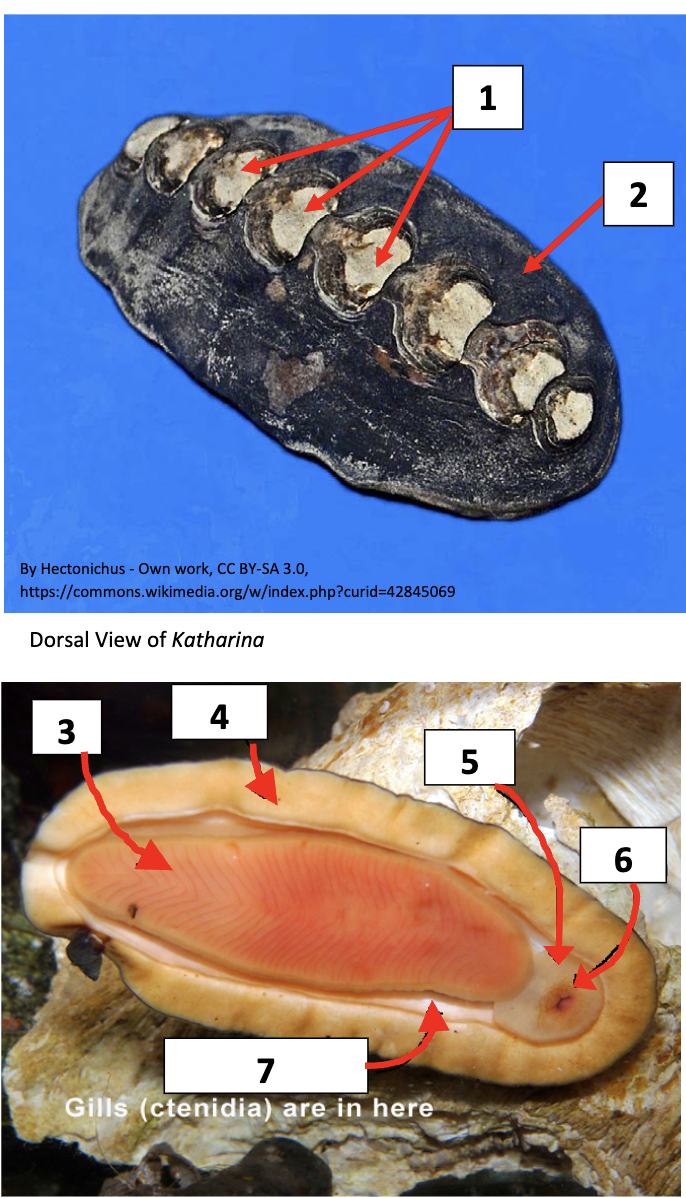
Label 4
Mantle (Girdle-Ventral): The underside of the fleshy girdle that surrounds the foot
Label 5
Head: The anterior region, which lacks eyes or tentacles but contains the feeding apparatus
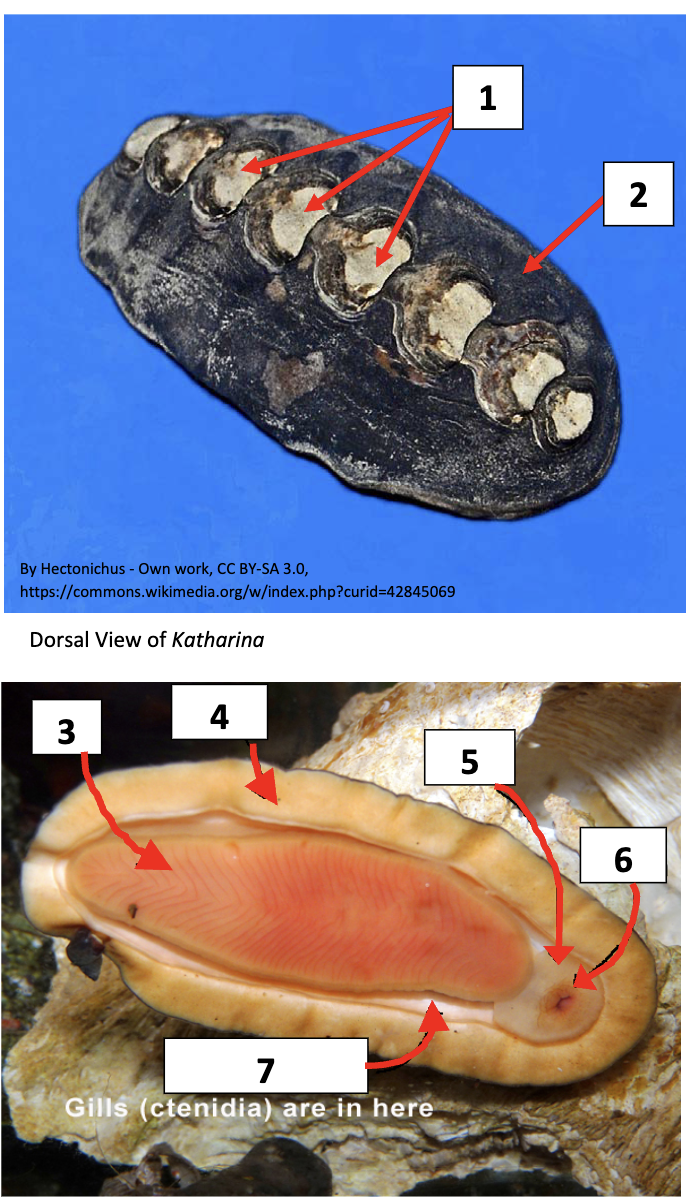
Label 6
Mouth with Radula: The opening where the radula (a rasping "tongue" with magnetite-capped teeth) scrapes algae off rocks
Label 6
Mantle Cavity: The groove (pallial groove) located between the foot and the girdle where the gills (ctenidia) are housed
Label 1
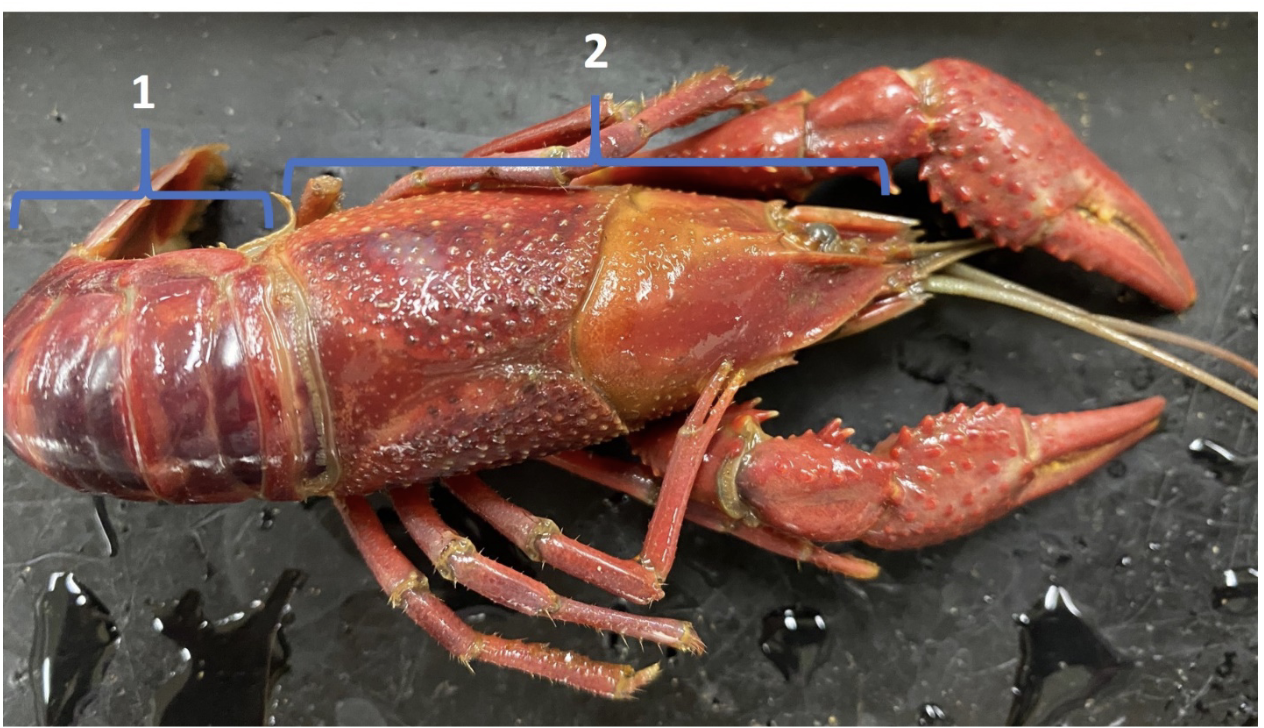
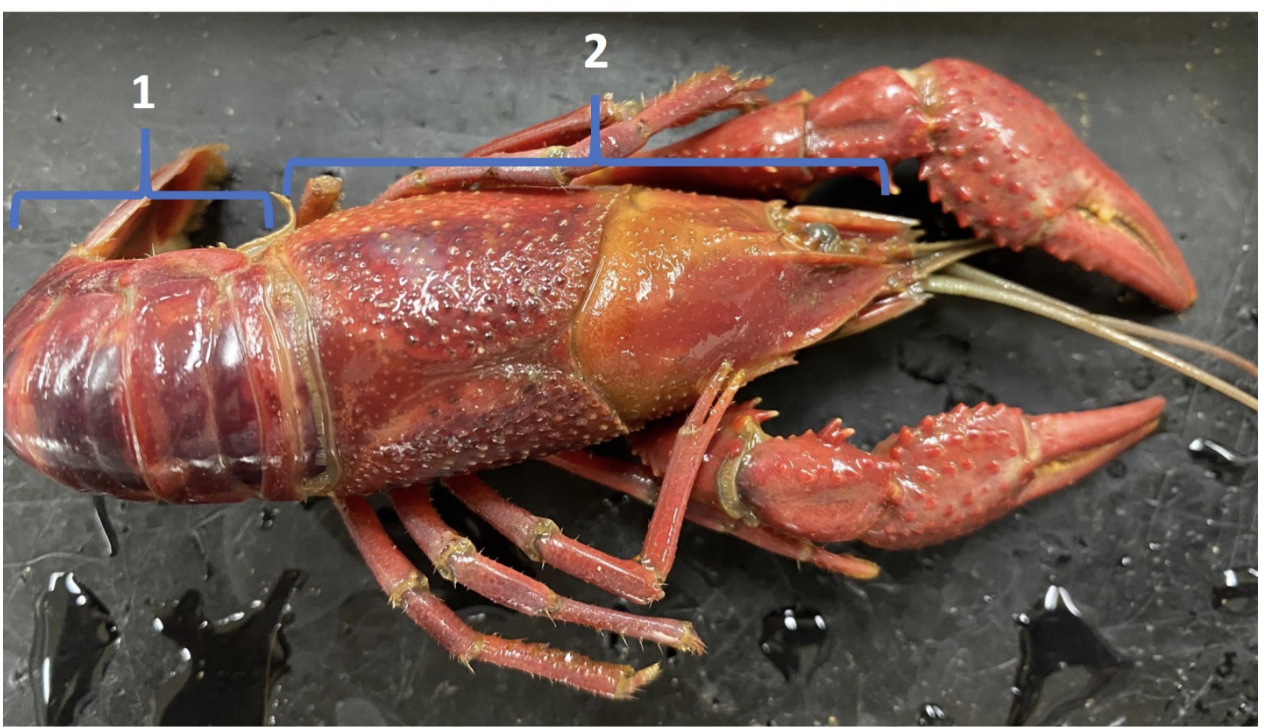
Abdomen: The posterior, segmented region of the body. It is highly muscular and flexible, used primarily for swimming (especially the rapid "tail-flip" escape response)
Label 2
Cephalothorax: The anterior region formed by the fusion of the head and the thorax. It is covered by a continuous shield-like part of the exoskeleton called the carapace.
Label 3
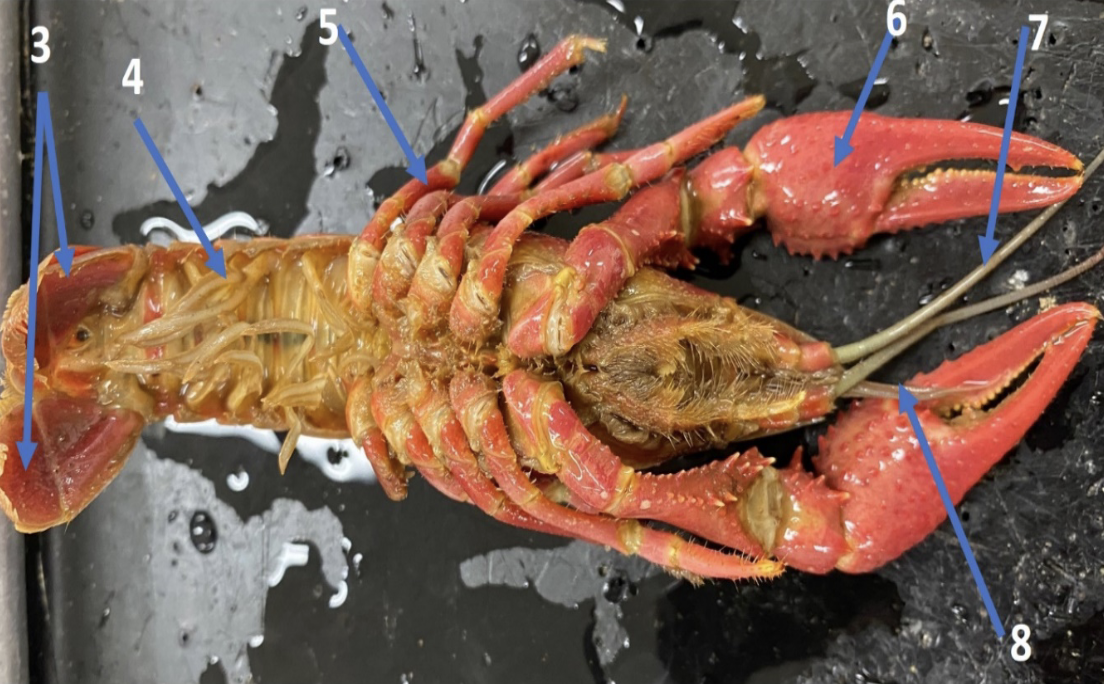
Uropods: Part of the "tail fan." These lateral appendages, along with the central telson, are used for powerful backward swimming
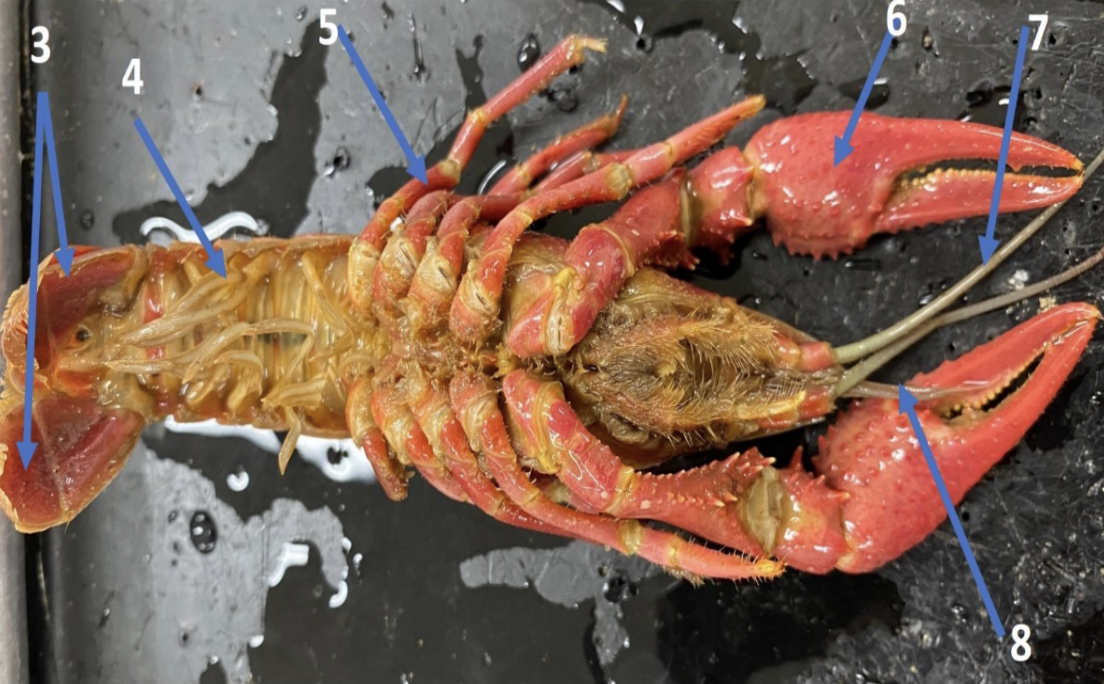
Label 4
Swimmerets (Pleopods): Small appendages on the abdomen used for creating water currents over the gills and, in females, for carrying eggs
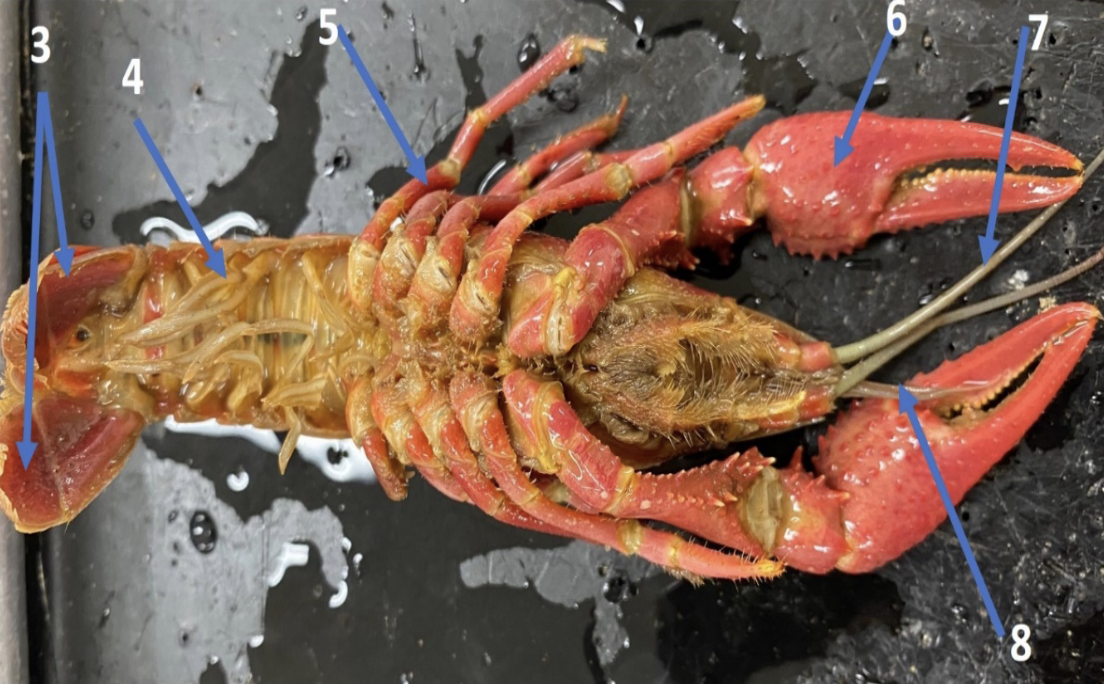
Label 5
Walking Legs (Pereiopods): Used for moving across the substrate. In some species, the first few pairs also have small pincers for handling food
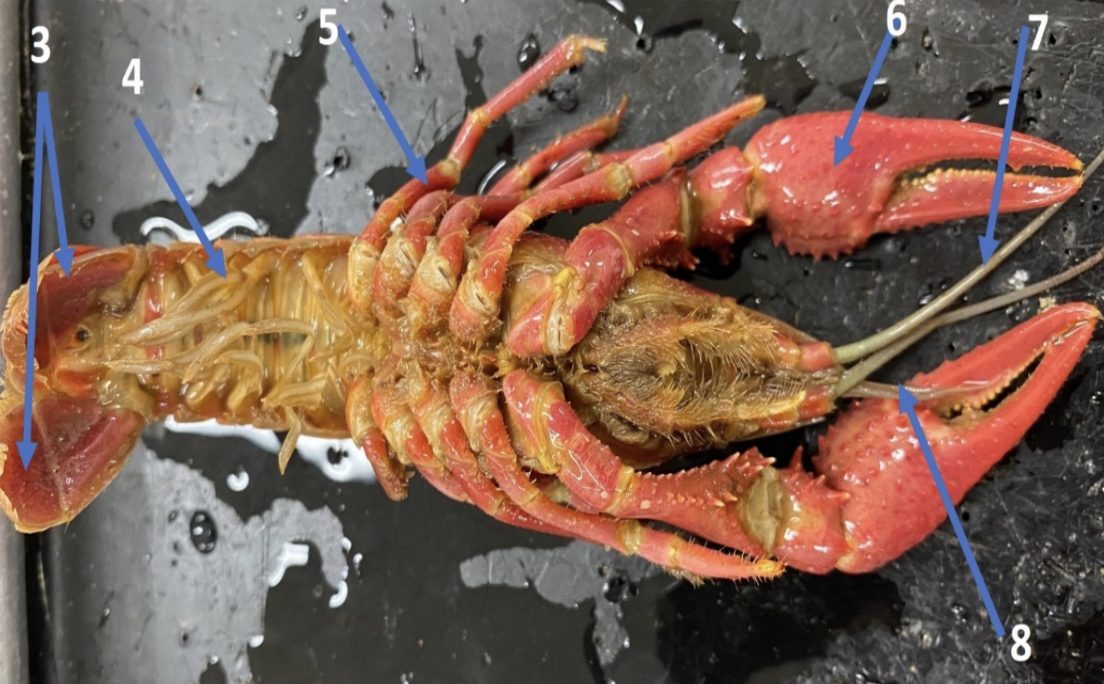
Label 6
Cheliped: The large "claws" used for defense, territorial displays, and crushing prey
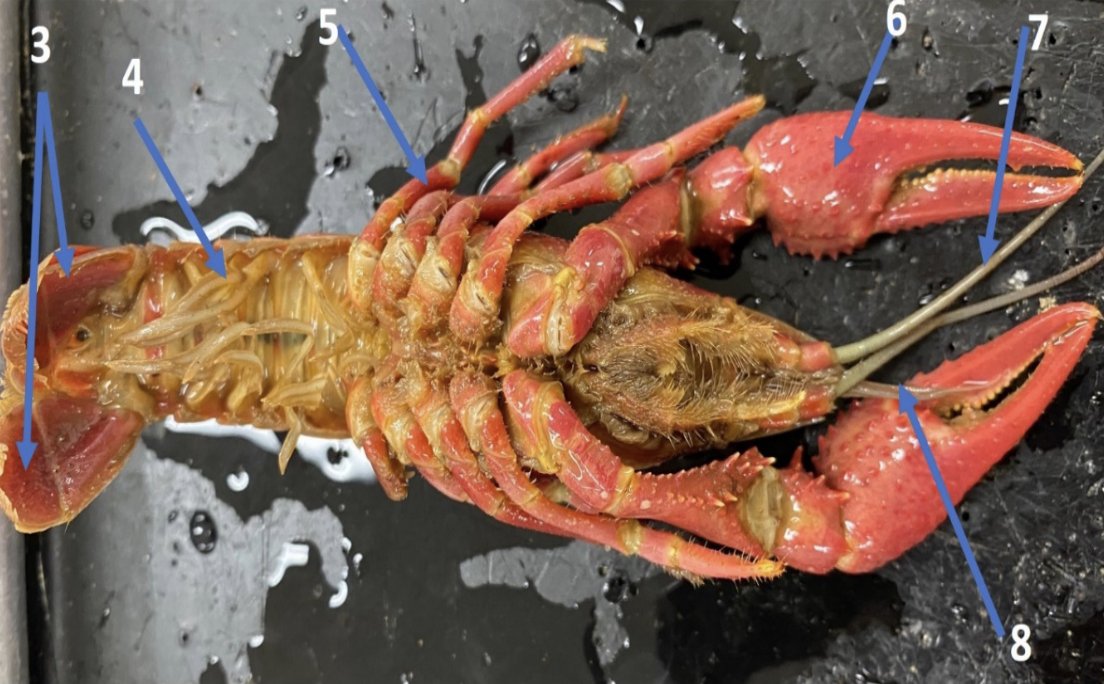
Label 7
Antennae: Long, flexible sensory structures used for touch and detecting chemical cues in the water over long distances
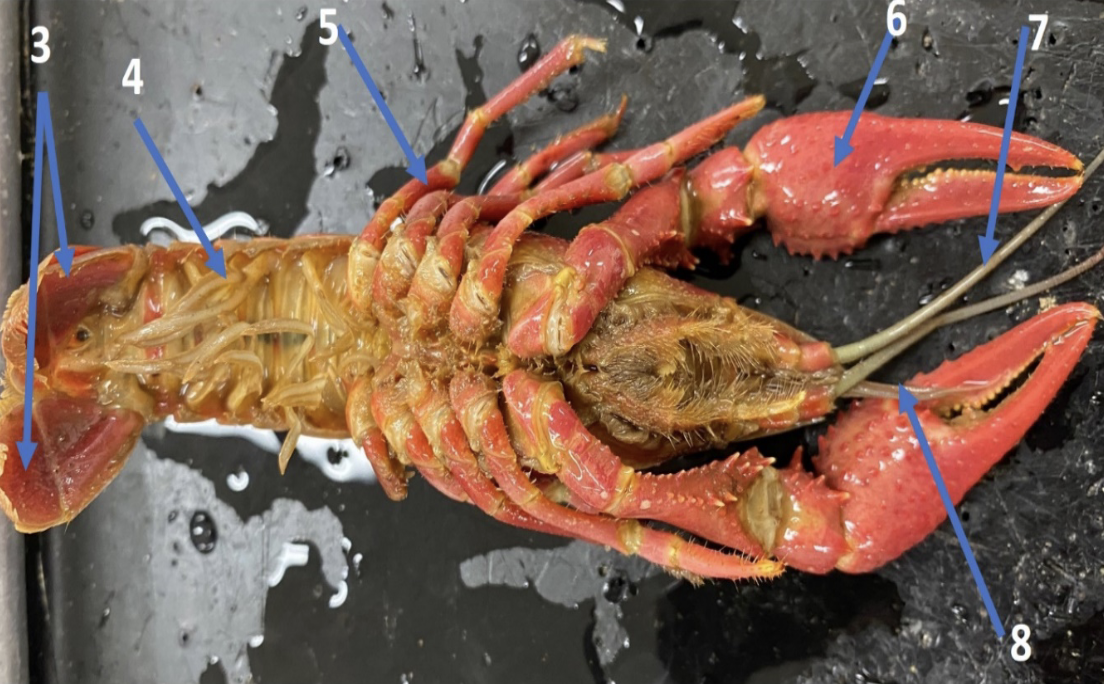
Label 8
Antennules: Shorter, branched sensory organs that help the crayfish with balance and "tasting" the water
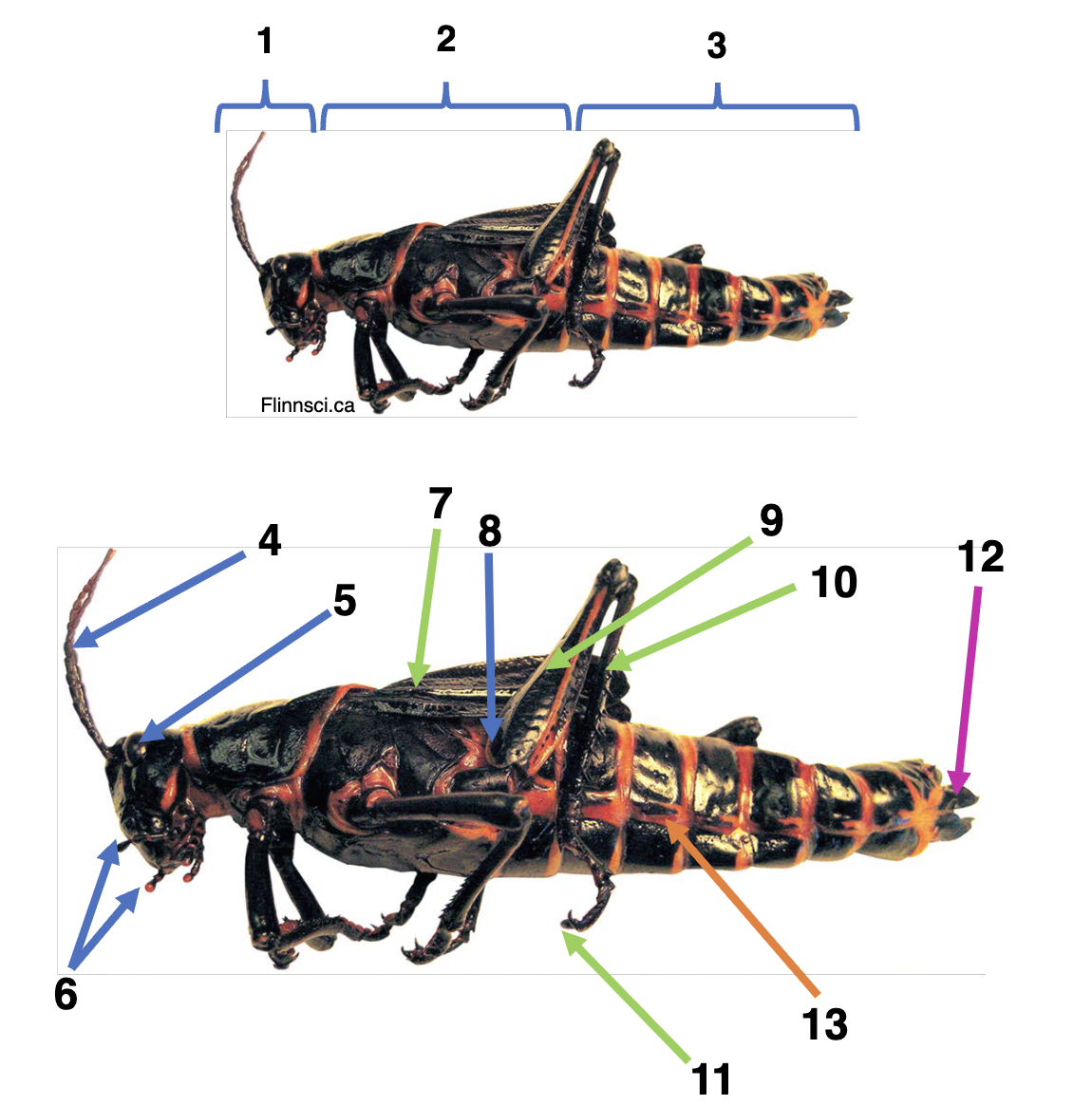
Label 1
Head: The sensory and feeding center, containing the brain, eyes, antennae, and mouthparts
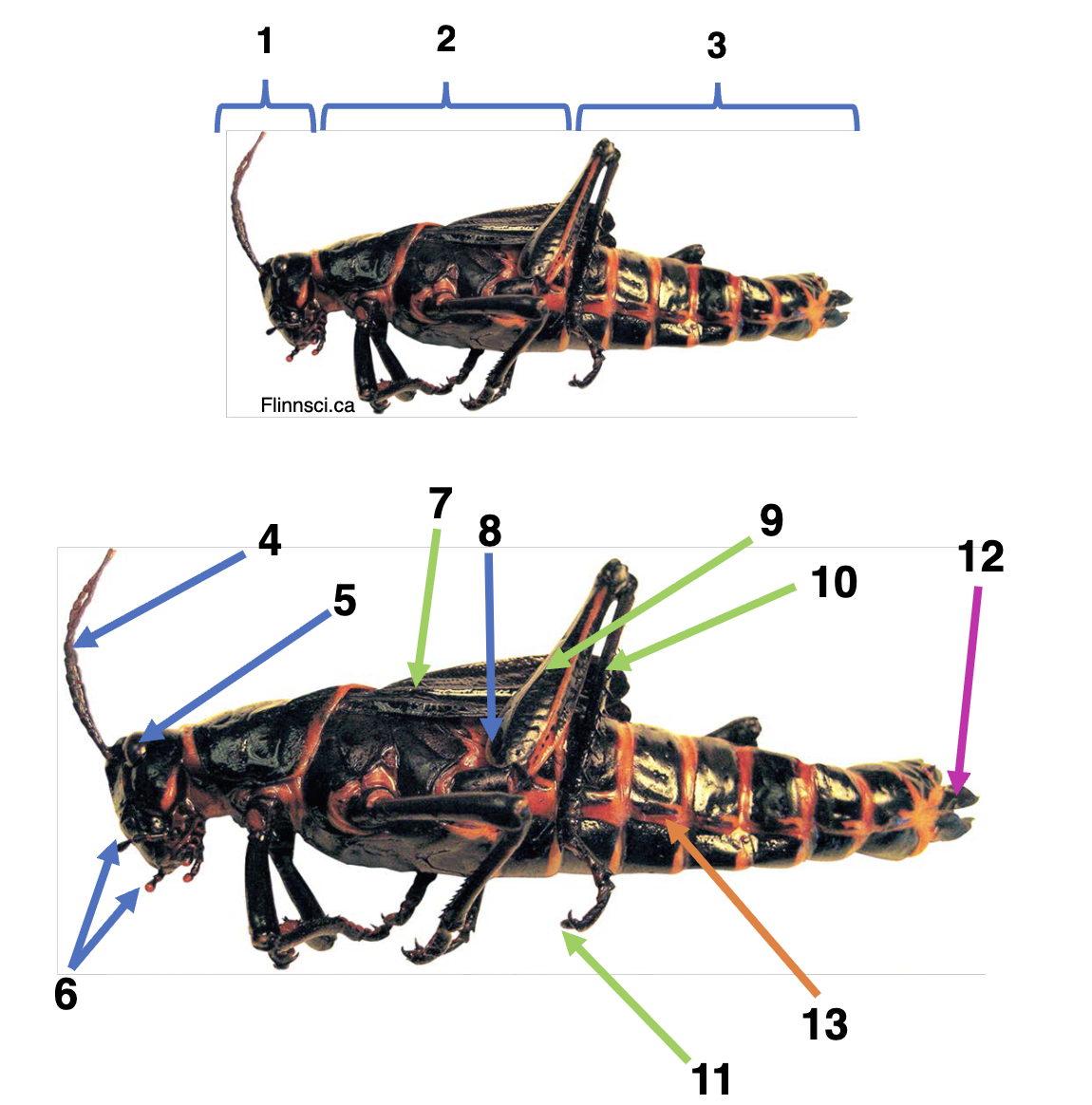
Label 2
Thorax: The locomotor center, where all legs and wings are attached. It is divided into the prothorax, mesothorax, and metathorax
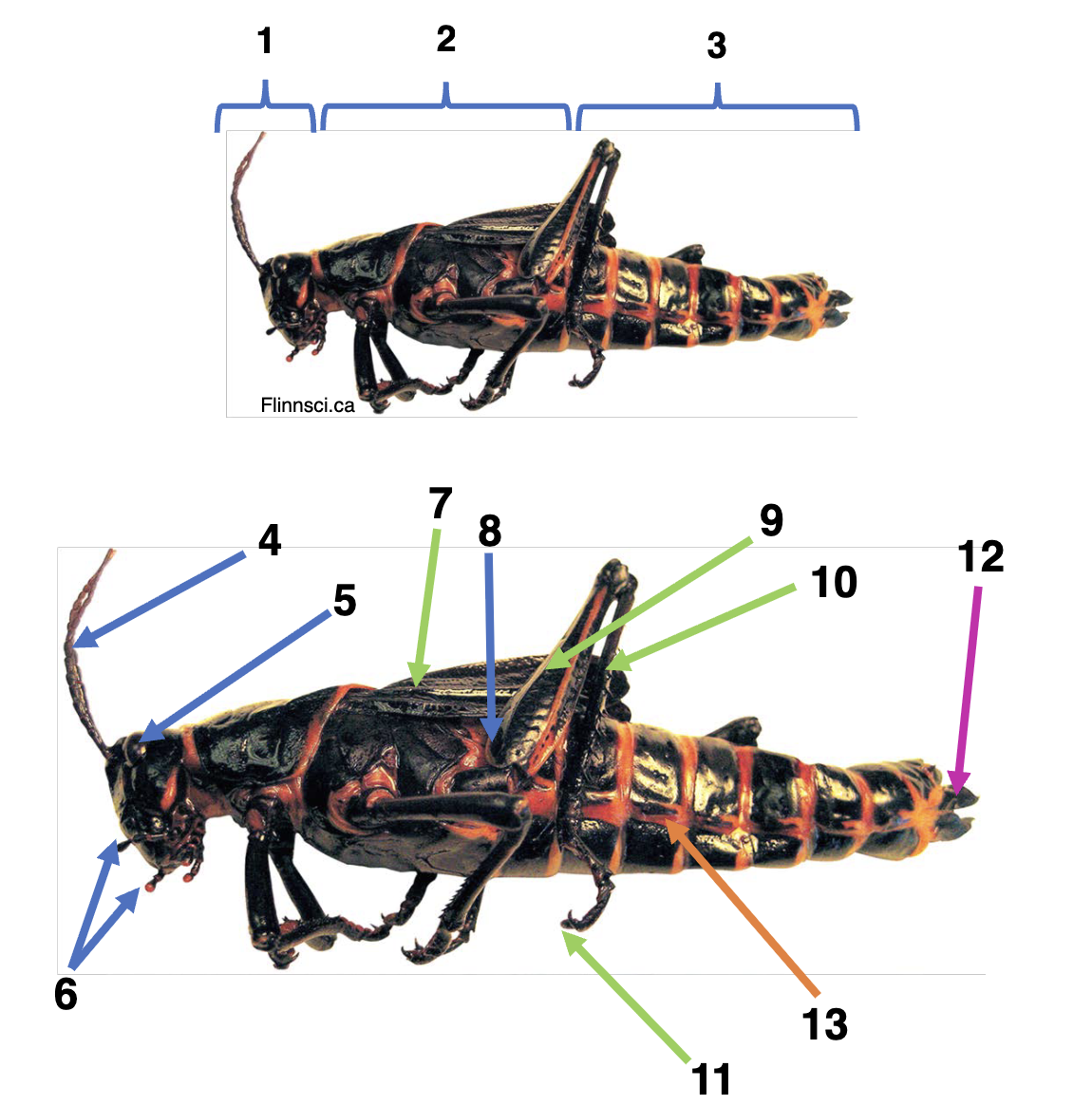
Label 3
Abdomen: The metabolic and reproductive center, containing the digestive tract, heart, and reproductive organs
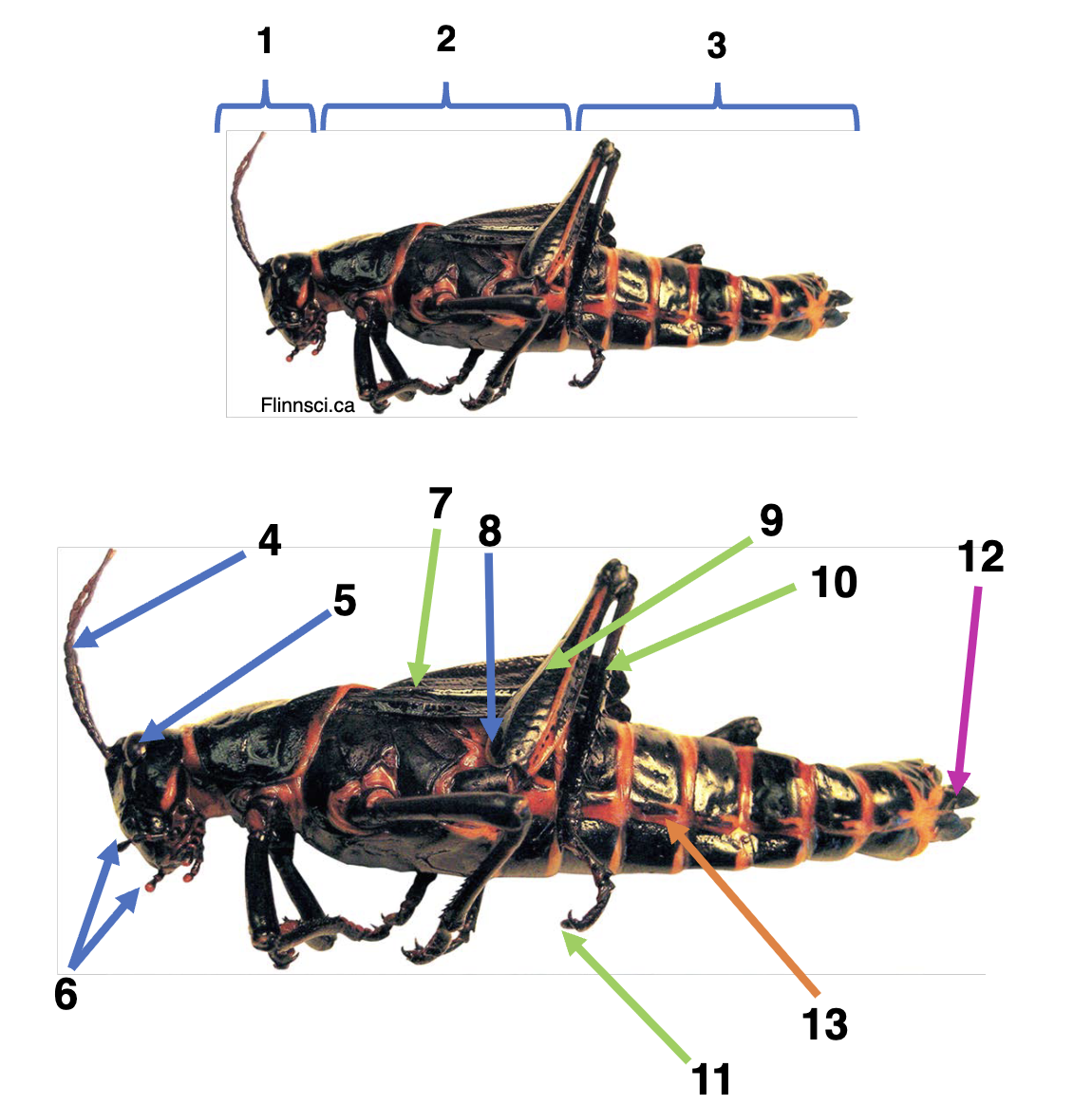
Label 4
Antenna: Long, segmented sensory appendages used for chemoreception (smell/taste) and touch.
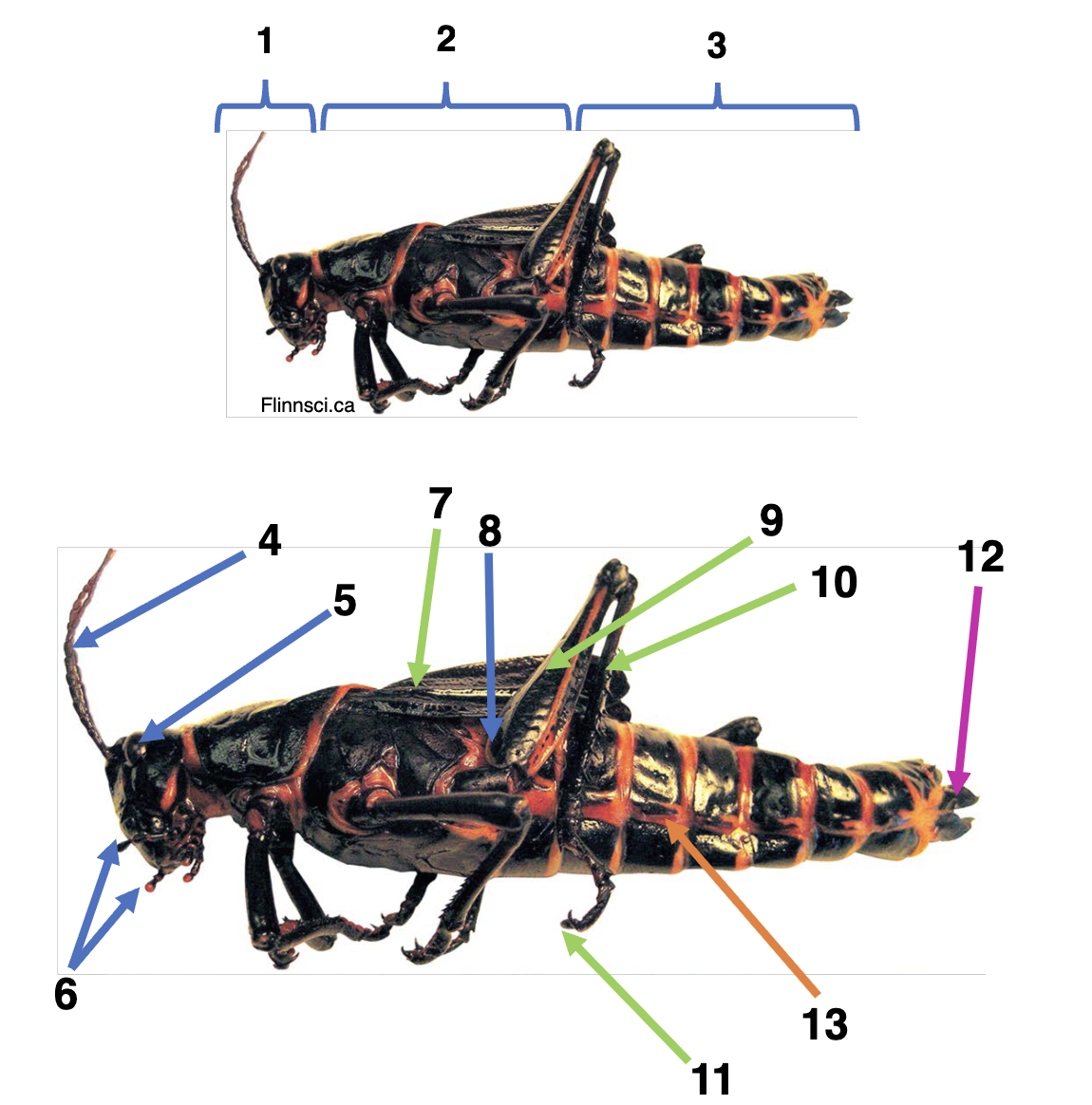
Label 5
Compound Eye: Large eyes made of many individual units (ommatidia) that are excellent at detecting motion.
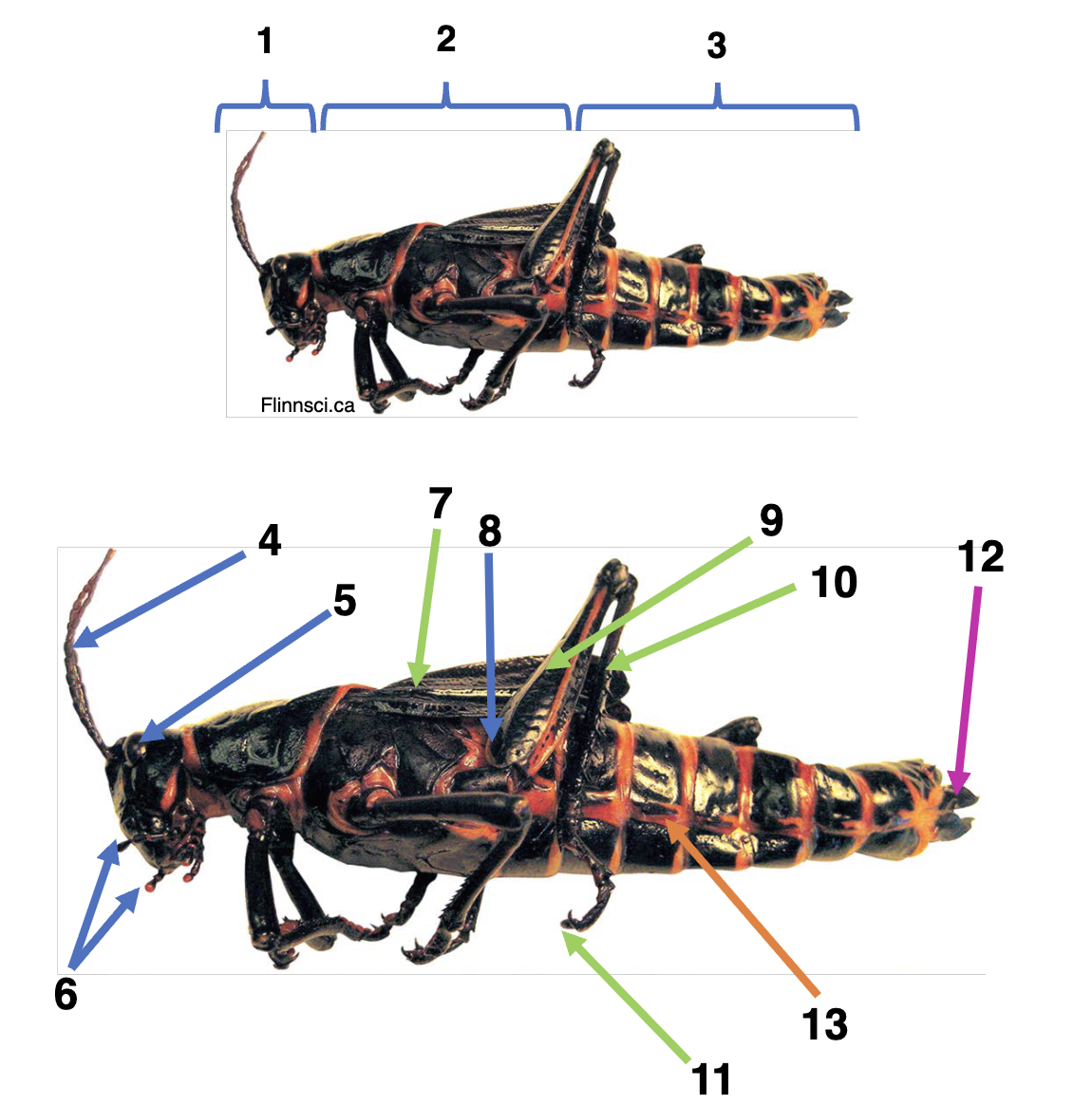
Label 6
Mouthparts (Palps): Specialized appendages (labial and maxillary palps) used to manipulate and taste food before ingestion
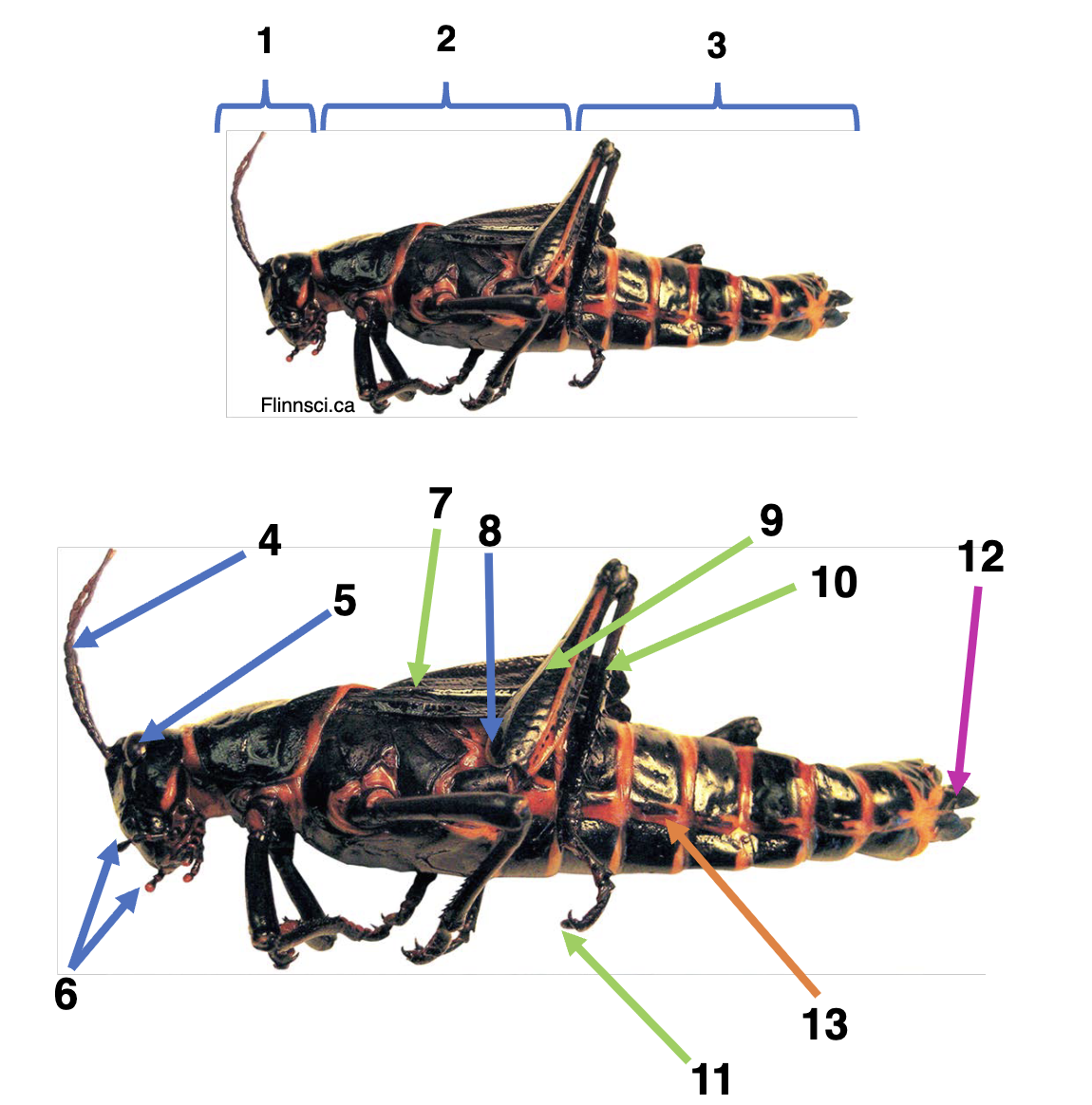
Label 7
Forewing: A leathery wing (tegmina) that serves to protect the delicate hindwings underneath.
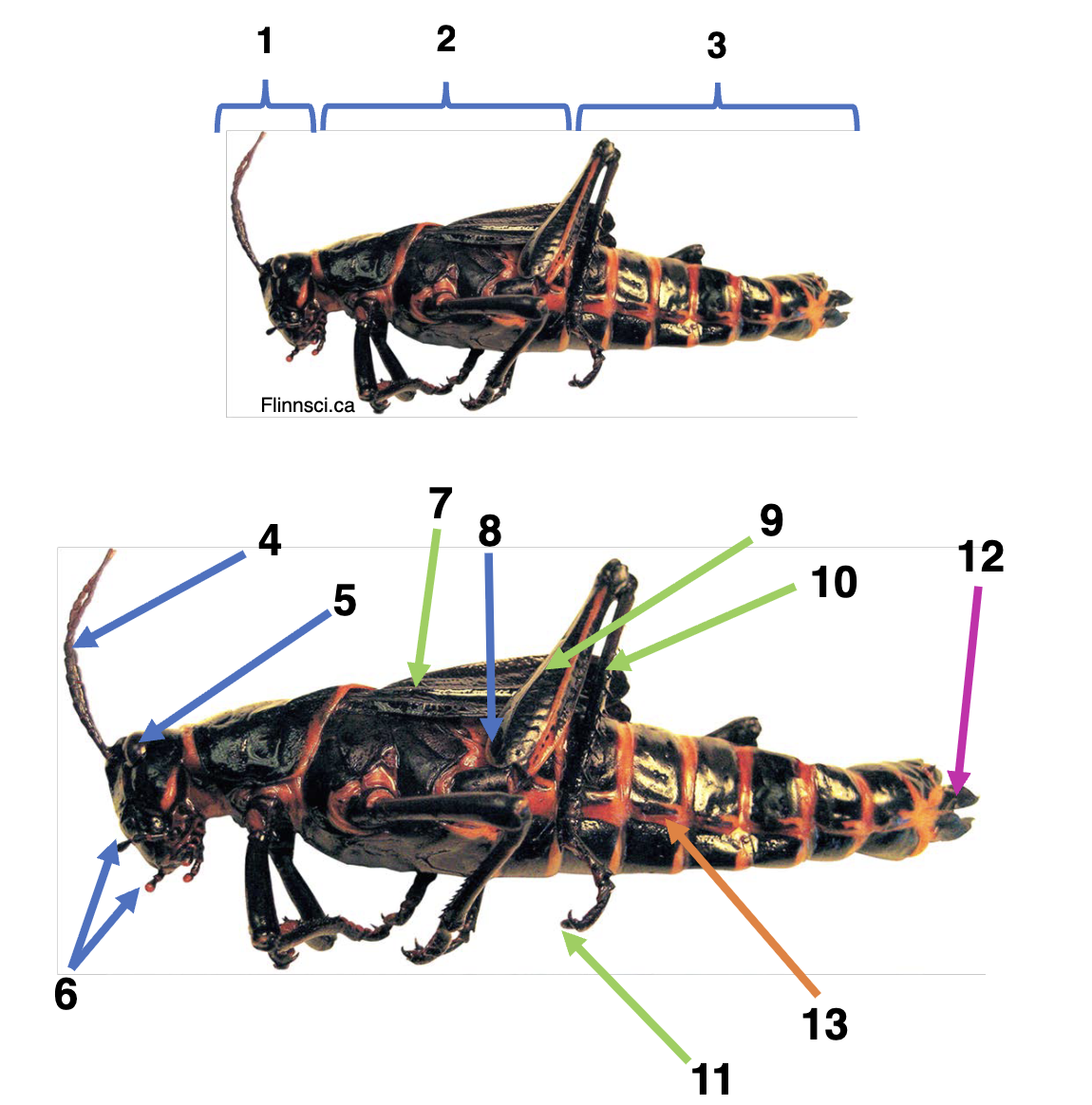
Label 8
Tympanum: A thin, translucent membrane on the first abdominal segment used for hearing (detecting sound vibrations).
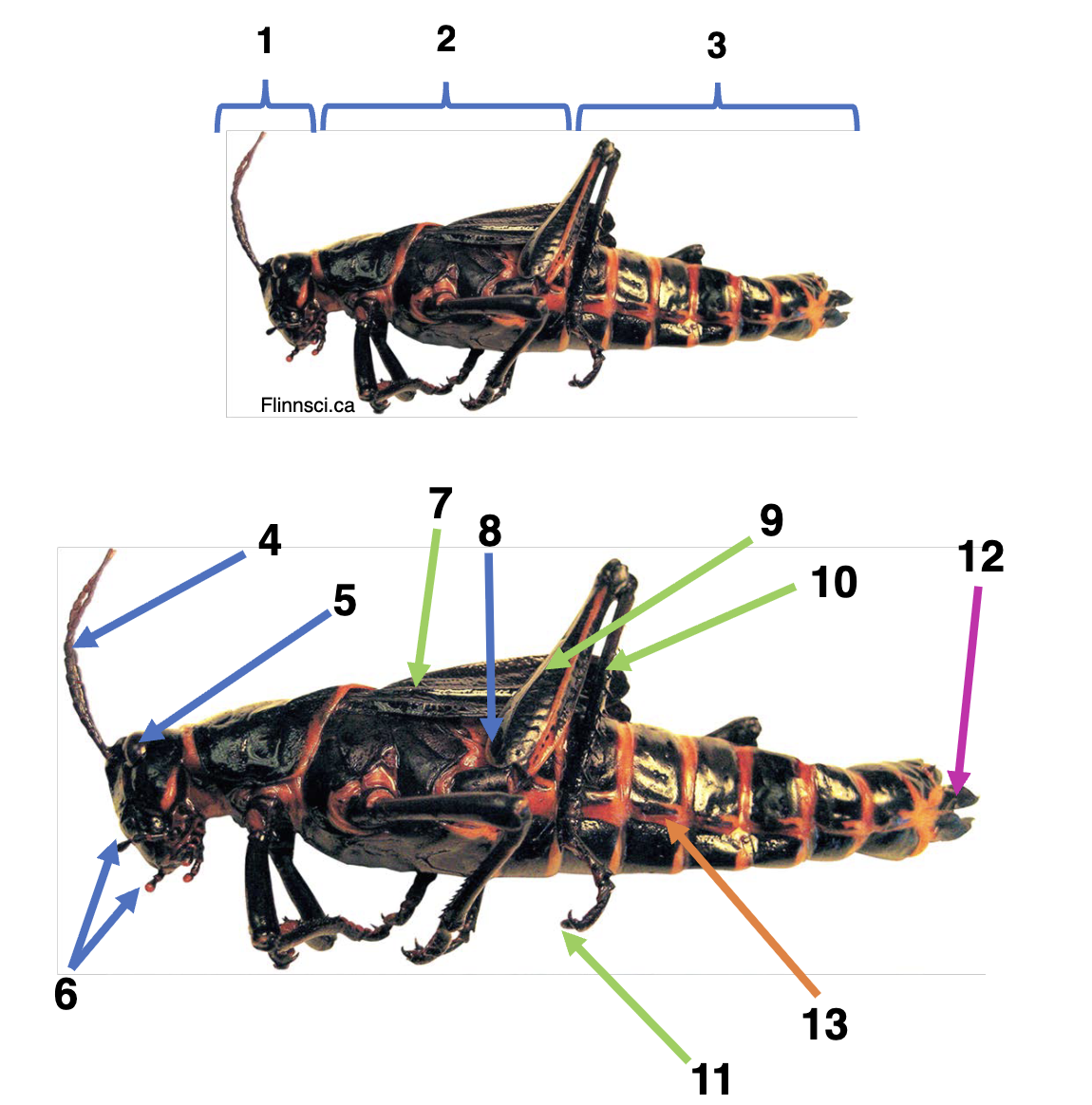
Label 9
Hindwing: The larger, membranous wing used primarily for flight
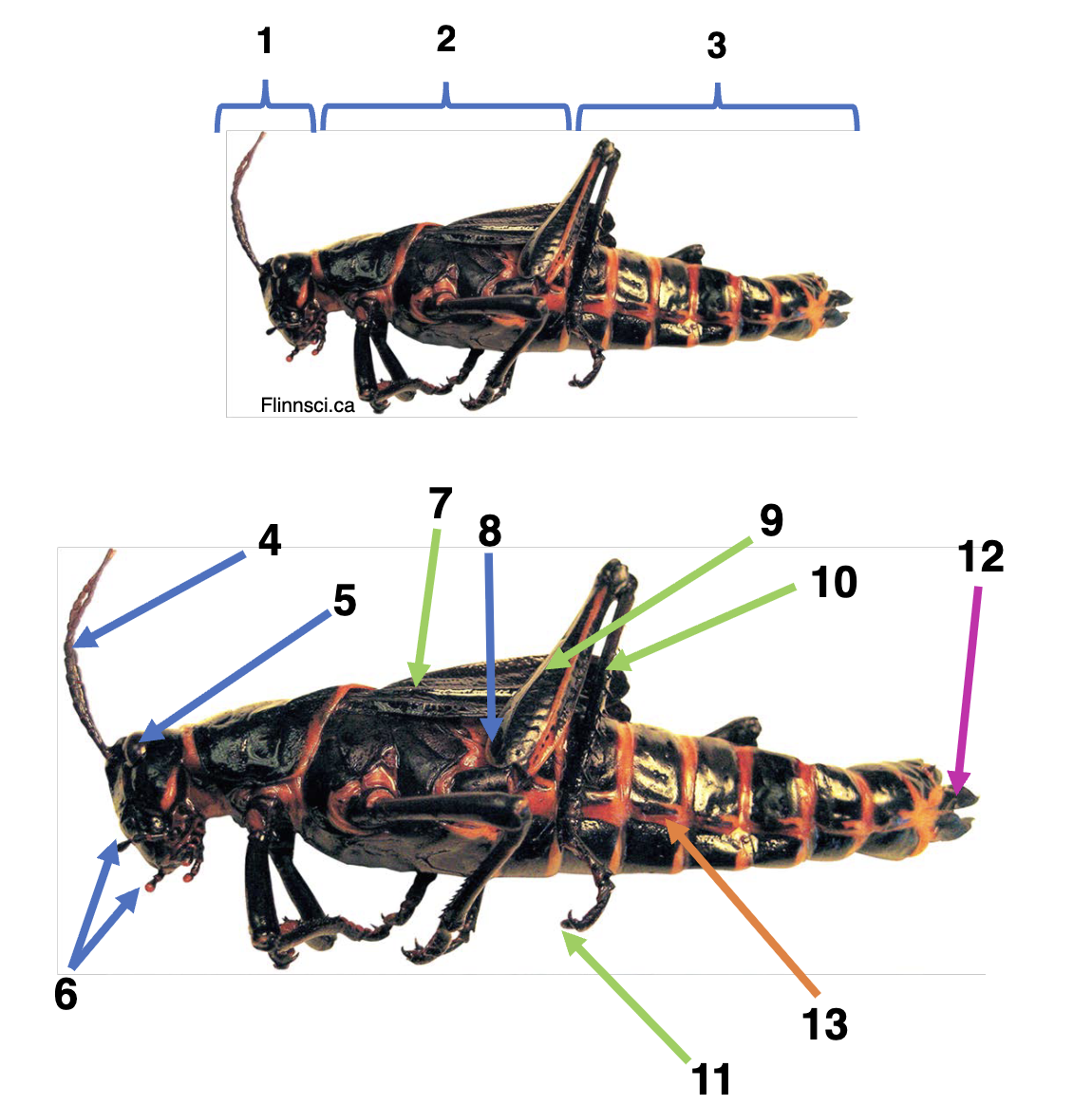
Label 10
Jumping Leg: The enlarged metathoracic leg, featuring a powerful femur and tibia for leaping
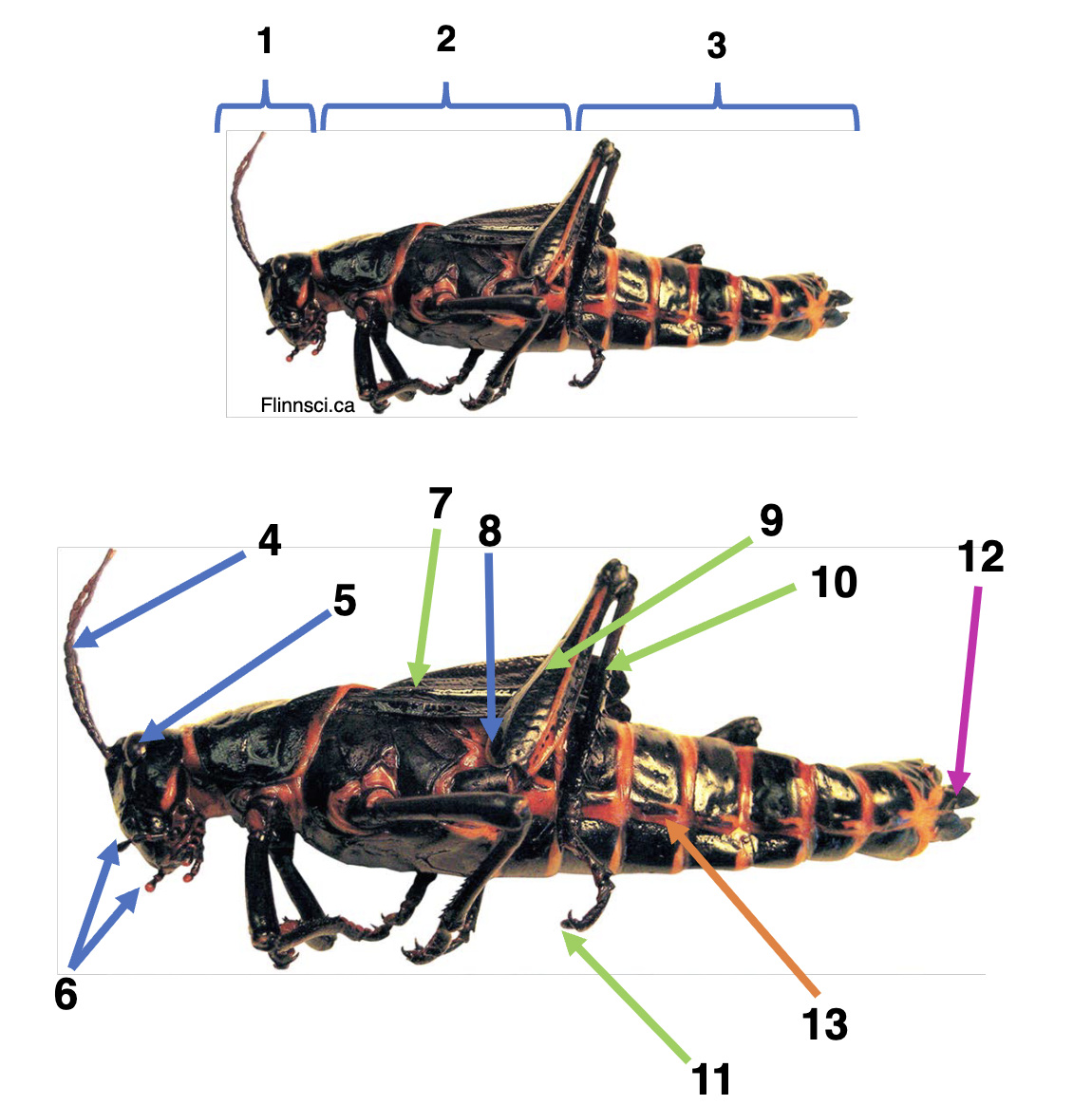
Label 11
Walking Leg: The prothoracic and mesothoracic legs used for stability and slow movement
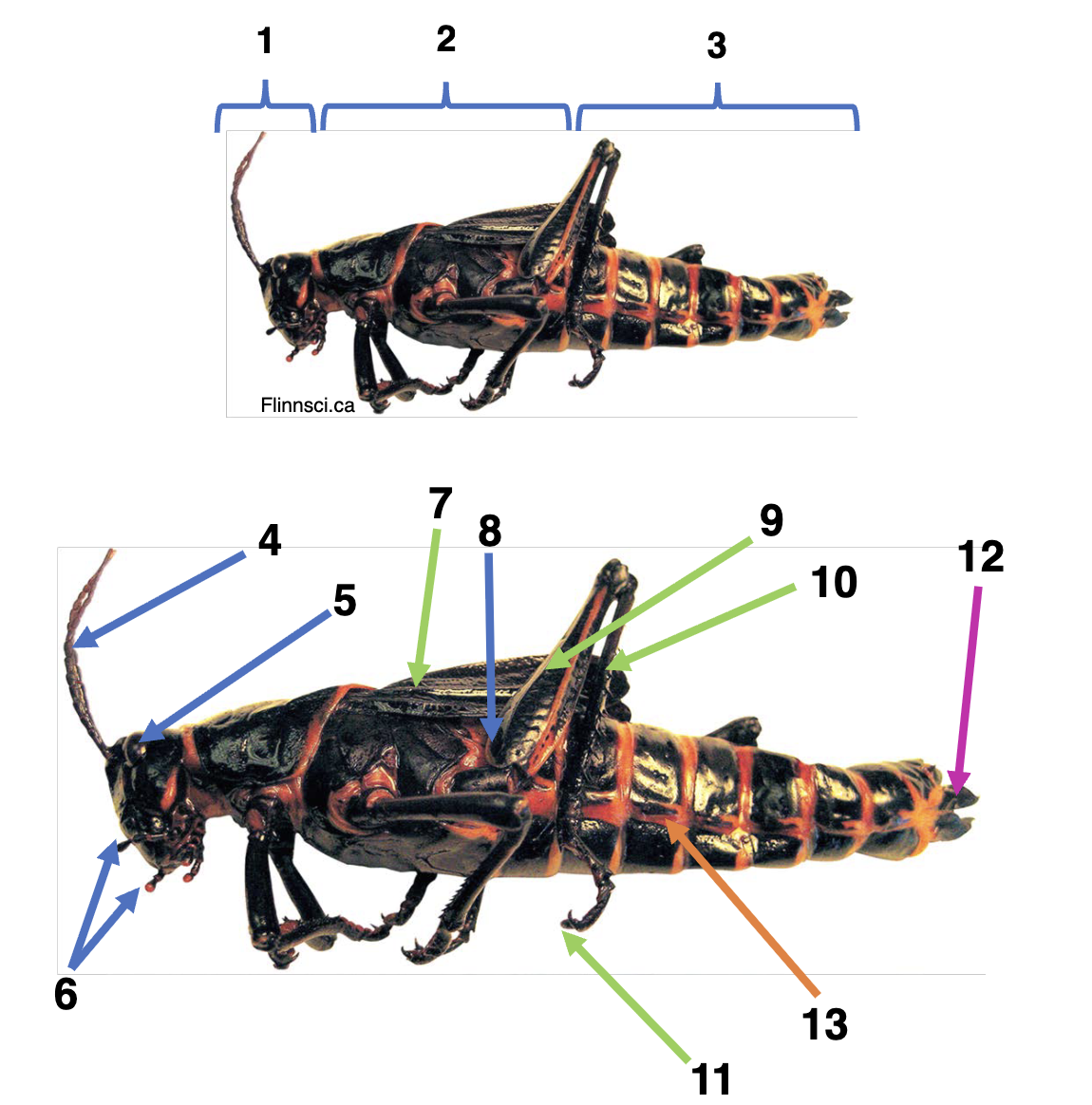
Label 12
Ovipositor: A specialized structure at the end of the abdomen used to dig holes and deposit eggs into the soil
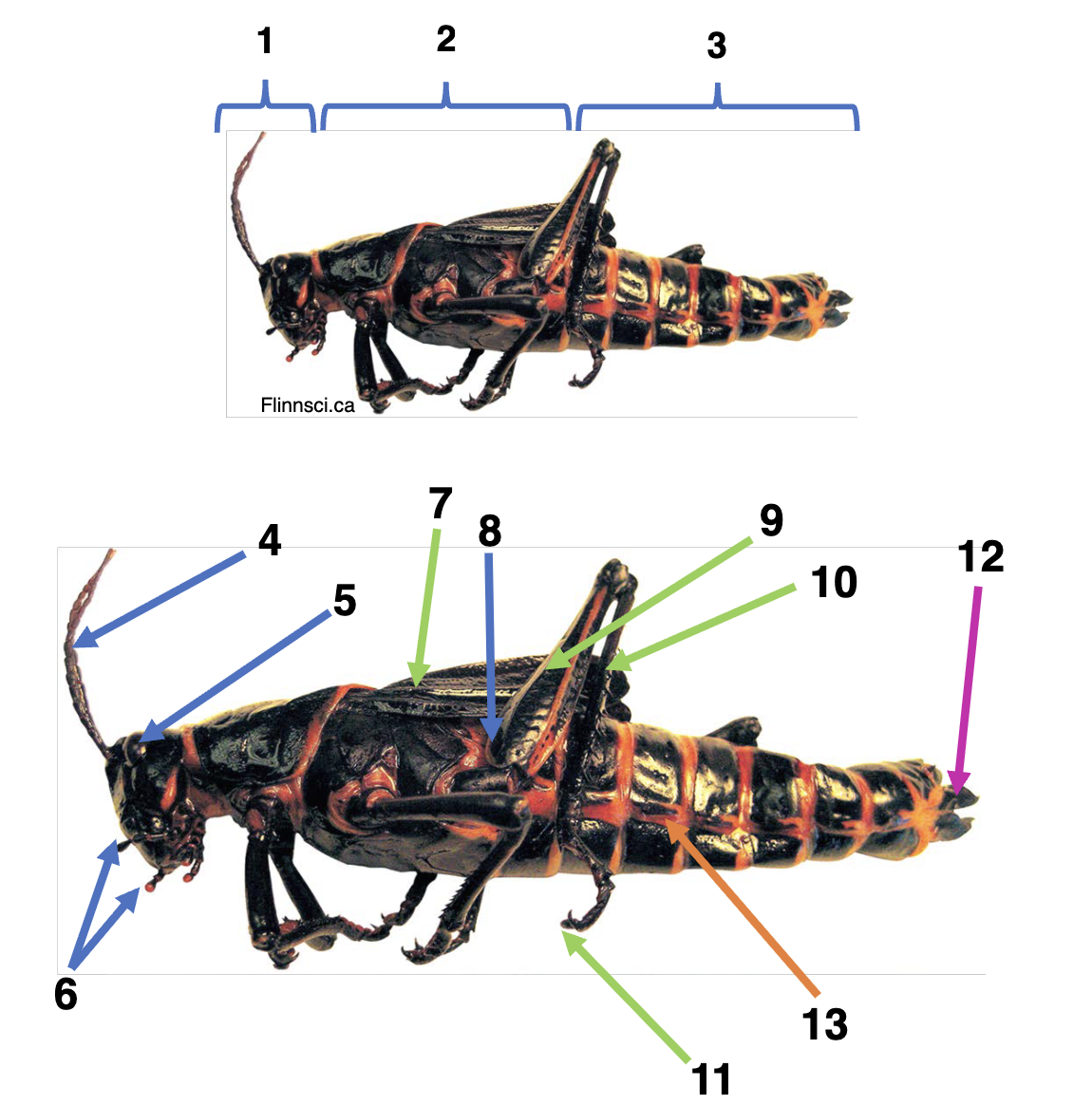
Label 13
Spiracles: Small pores along the sides of the thorax and abdomen that allow air to enter the tracheal system for respiration
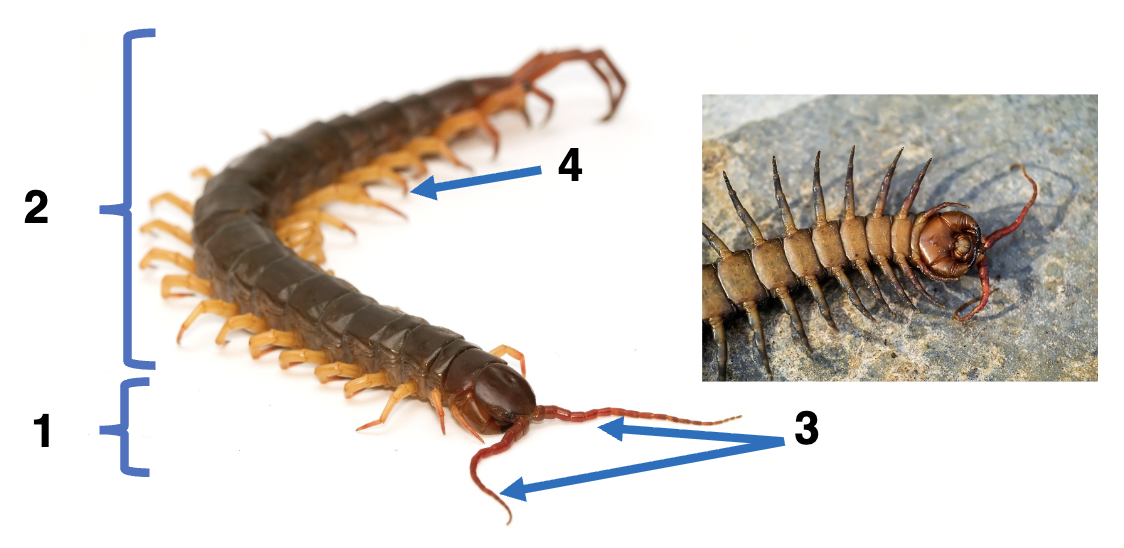
Label 1
Head: The specialized anterior region containing the brain, antennae, and modified mouthparts for feeding
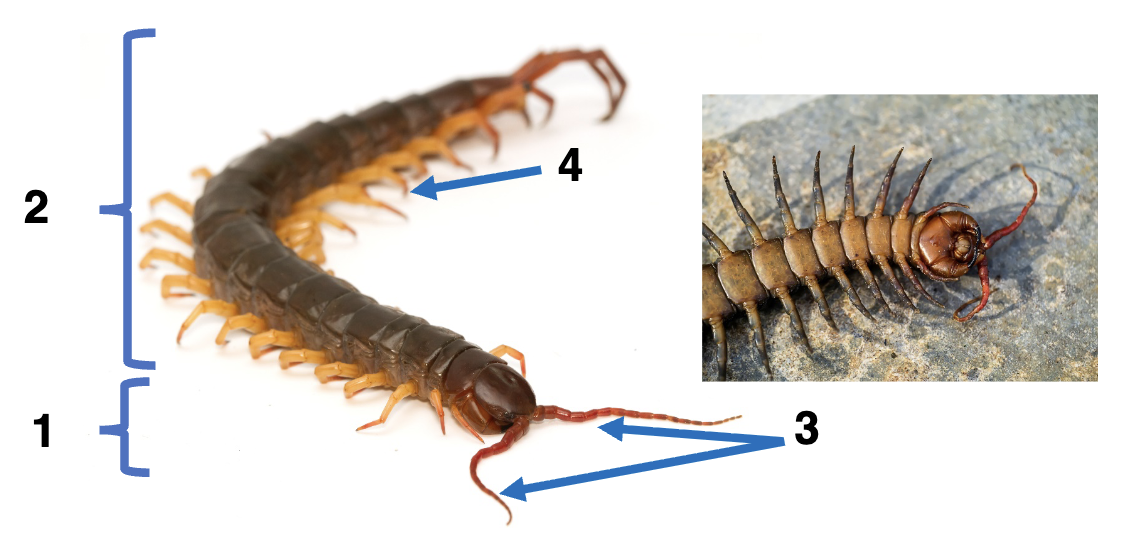
Label 2
Trunk: The long, multi-segmented body region. Unlike insects, centipedes do not have a separate thorax and abdomen
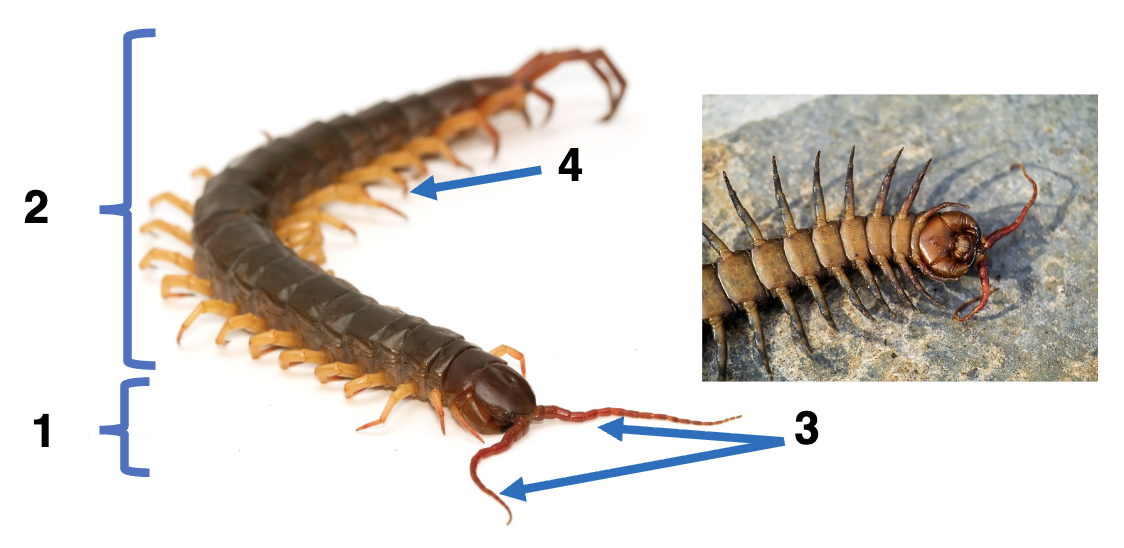
Label 3
Antennae: Paired sensory organs used for chemoreception and detecting vibrations in the environment
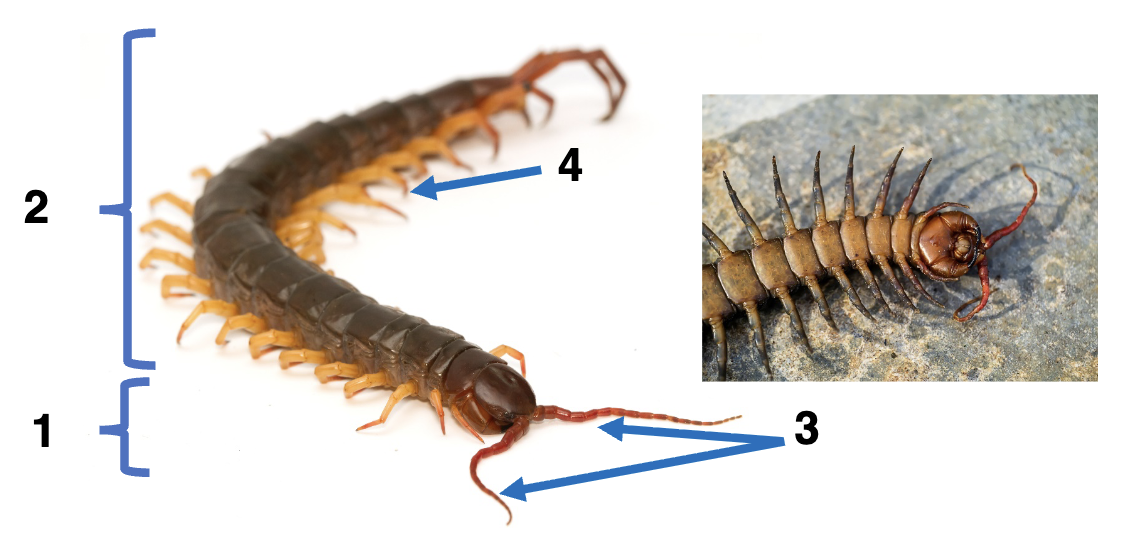
Label 4
Walking Legs: Positioned laterally, there is one pair of legs per body segment, which allows for rapid, scurrying movement
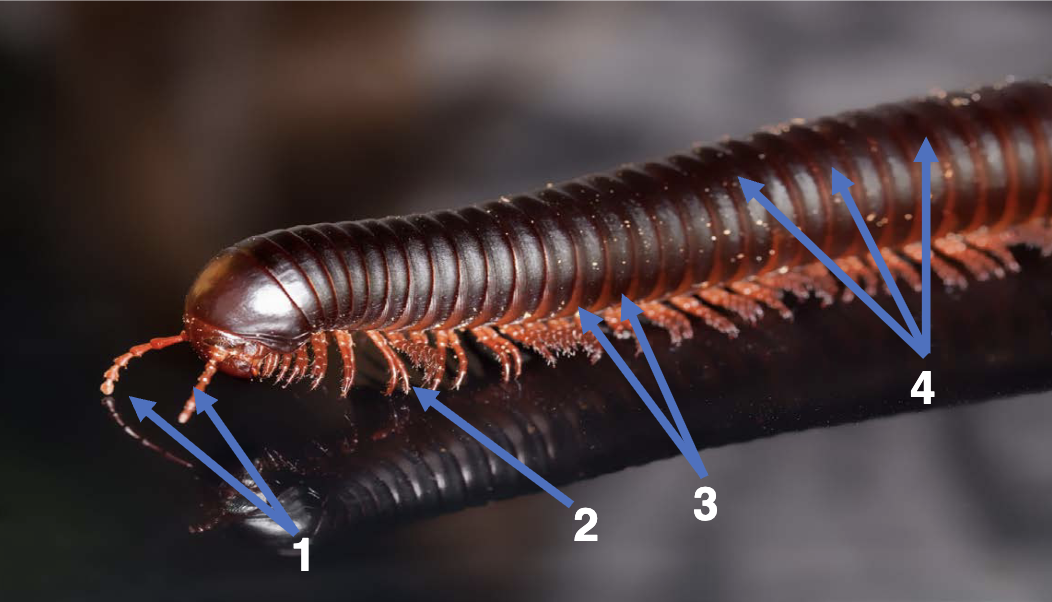
Label 1
Antennae: Key sensory organs used to navigate and locate decaying organic matter (food) in dark or subterranean environments
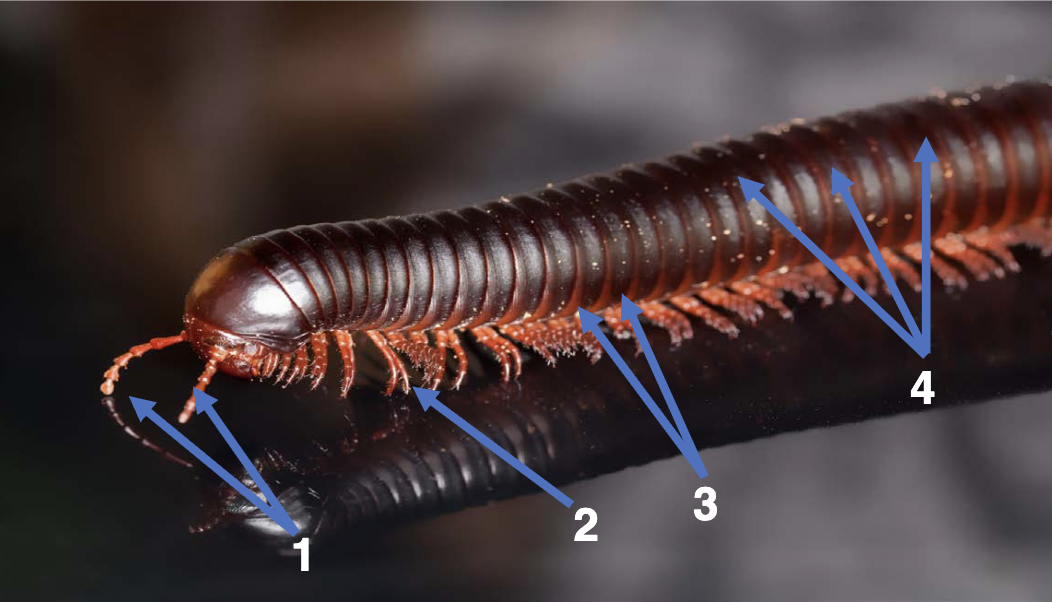
Label 2
Walking Legs: Millipedes have two pairs of legs per diplosegment (fused segments), which provide the torque needed for "bulldozing" through soil

