orgo chap2 PP1
 Call Kai
 Learn
Learn Practice Test
 Spaced Repetition
 Match
Match Flashcards
 Knowt Play
1/132

There's no tags or description
Looks like no tags are added yet.
Name | Mastery | Learn | Test | Matching | Spaced | Call with Kai | Chat |
|---|
No analytics yet
Send a link to your students to track their progress
133 Terms
hydrocarbons
compounds containing carbon and hydrogen
aliphatic hydrocarbons
derived from fats and oils and contain mostly carbon-carbon single bonds
aromatic hydrocarbons
derived from essential oils and contain single and double carbon-carbon bonds
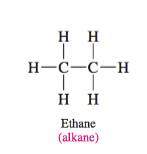
alkanes
only C-C single bonds and C-H bonds
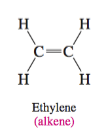
alkenes
contain at least one C-C double bond
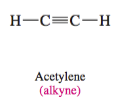
alkynes
contain at least one C- triple bond
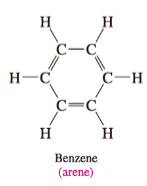
arenes
contain a phenyl ring of alternating C-C and C=C bonds
most important: benzene
What does the valence bond model describe?
The valence bond model describes how covalent bonds form between atoms.
What do atoms involved in a covalent bond have?
Atoms involved in a covalent bond have interpenetrating clouds of valence electrons.
What does “interpenetrating clouds” mean?
It means that the valence-electron clouds of two bonding atoms overlap with one another.
What theory describes a covalent bond as the overlap of orbitals?
Valence bond theory describes a covalent bond as the overlap of two filled orbitals.
According to valence bond theory, what forms a covalent bond?
A covalent bond forms through the overlap of two filled orbitals.
What orbitals overlap in H₂?
The two 1s orbitals of the two hydrogen atoms overlap.
What does the overlap of the two 1s orbitals produce?
The overlap produces a covalent bond between the two hydrogen atoms.
What type of covalent bond is formed when two 1s orbitals overlap in H₂?
A sigma (σ) bond.
sigma bond
orbital + orbital > overlap > sigma bond

What type of bond are single bonds in other organic molecules?
Single bonds in organic molecules are sigma (σ) bonds.
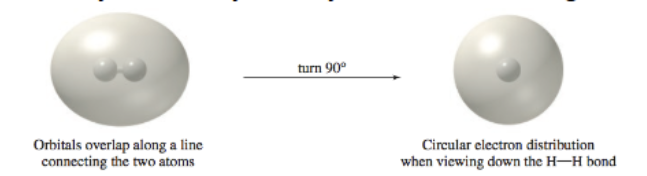
What symmetry does a sigma bond have?
A sigma bond has cylindrical symmetry about the bonding axis.
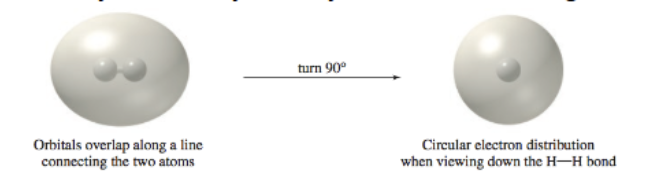
What does "bonding axis" mean?
The bonding axis is the imaginary line connecting the two nuclei involved in the bond.
What does cylindrical symmetry mean for a sigma bond?
The electron density of the sigma bond is distributed symmetrically around the axis connecting the two nuclei.
How are pi bonds formed?
Pi bonds are derived from side-on overlap of 2p orbitals.
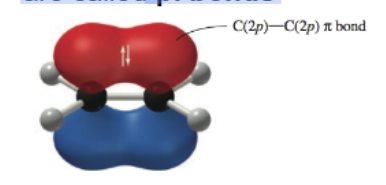
What does "side-on overlap" mean?
The 2p orbitals overlap alongside each other, rather than directly head-to-head along the bonding axis.
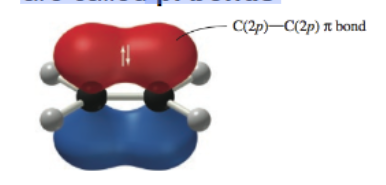
What type of orbitals are specifically mentioned as forming pi bonds?
2p orbitals
What does a pi bond contain along the bonding axis?
A pi bond contains a node along the axis connecting the bonding nuclei.
What is a node?
In the context of this slide, a node is a region along the axis connecting the bonding nuclei where the electron density is zero.
What is the key difference in orbital overlap?
σ bond: direct overlap along the bonding axis.
π bond: side-on overlap of 2p orbitals.
What is the key symmetry difference?
σ bond: has cylindrical symmetry about the bonding axis.
π bond: has a node along the bonding axis.
Where do electrons reside according to molecular orbital theory?
Just as electrons in atoms occupy atomic orbitals, electrons in molecules occupy molecular orbitals.
What are molecular orbitals?
Molecular orbitals are orbitals that describe electrons within molecules.
atoms > atomic orbitals
molecules > molecular orbitals
How many types of molecular orbitals are described?
There are three types:
Antibonding orbitals
Nonbonding orbitals
Bonding orbitals
What are antibonding orbitals?
Antibonding orbitals are higher in energy than atomic orbitals and have nodes between the bonding nuclei.
How are antibonding orbitals represented?
asterisk *
Where are antibonding orbitals in terms of energy?
They are higher in energy than the atomic orbitals from which they are formed.
Antibonding →
higher energy + node between nuclei
What are nonbonding orbitals?
atomic orbitals not involved in bonding
electrons in molecules occupy
molecular orbitals
bonding orbitals
lower in energy than atomic orbitals, with significant density between the bonding nuclei
Where are bonding orbitals in terms of energy?
They are lower in energy than the atomic orbitals from which they are formed.
What is found between the bonding nuclei in a bonding orbital?
There is significant electron density between the nuclei.
Bonding →
lower energy + electron density between nuclei
How are molecular orbitals generated?
Atomic orbitals are added, subtracted, and scaled to generate molecular orbitals.
Atomic orbitals →
added + subtracted + scaled → molecular orbitals
How many molecular orbitals must be produced?
The number of molecular orbitals must equal the total number of atomic orbitals in the atoms of the molecule.
What determines the total number of molecular orbitals?
The total number of atomic orbitals contributed by the atoms in the molecule.
If two atomic orbitals combine, how many molecular orbitals result?
Two molecular orbitals must result.
For example:
2 AO→2 MO
Typically, these are a bonding MO and an antibonding MO.
What properties do molecular orbitals have?
Like atomic orbitals, molecular orbitals have:
Energy
Shape
Occupancy
Do molecular orbitals always have localized shapes?
No. Molecular orbitals often have delocalized shapes.
What does "delocalized" mean here?
It means that the molecular orbital can extend over more than one atom rather than being confined to a single atom or bond.
How are molecular orbitals constructed?
Molecular orbitals are weighted sums or linear combinations of atomic orbitals.
What does "linear combinations of atomic orbitals" mean?
Atomic orbitals are mathematically combined with one another to produce molecular orbitals.
What happens to the two atomic 1s orbitals in H₂?
The two atomic 1s orbitals are added and subtracted to generate the molecular orbitals of H₂.
What do adding and subtracting the 1s orbitals produce?
They generate the bonding and antibonding molecular orbitals of H₂.
What does adding the atomic orbitals represent?
Constructive interference, which produces the bonding molecular orbital.
What does subtracting the atomic orbitals represent?
Destructive interference, which produces the antibonding molecular orbital.
What type of interference produces a bonding molecular orbital?
Constructive interference.
What type of interference produces an antibonding molecular orbital?
Destructive interference.
What should you notice about the shapes of the molecular orbitals?
The shapes of the molecular orbitals reflect whether constructive or destructive interference has occurred.
What does an orbital energy diagram show?
An orbital energy diagram shows:
The atomic orbitals that contribute to each molecular orbital
The relative energies of the atomic orbitals and molecular orbitals
The occupancy of the molecular orbitals
What does "occupancy" mean in an orbital energy diagram?
It refers to which molecular orbitals contain electrons.
Bonding molecular orbital σ →
lower energy → occupied
Antibonding molecular orbital σ* →
higher energy → unoccupied
What is the general formula for alkanes?

What are the simplest alkanes?
The simplest alkanes are:
Methane
Ethane
Propane
What happens to boiling point as molecular weight increases?
alkanes
adding more carbons…
Boiling point increases with molecular weight.
What geometry do methane, ethane, and propane have at their carbon atoms?
All three molecules have tetrahedral geometry at their carbon atoms.
What is the general structural characteristic of alkanes?
They contain C–C and C–H bonds and follow the general formula CₙH₂ₙ₊₂.
What are molecular orbitals?
Weighted sums or linear combinations of atomic orbitals.
What happens when two 1s orbitals in H₂ are added?
They produce the bonding MO through constructive interference.
What happens when two 1s orbitals are subtracted?
They produce the antibonding MO through destructive interference.
Which is lower in energy: σ or σ*?
σ (bonding).
Which MO is occupied in H₂?
Only σ.
What does valence bond theory suggest about covalent bonds?
Valence bond theory suggests that bonds are derived from the overlap of atomic orbitals.
What geometric problem does this create for alkanes?
The problem is explaining how tetrahedral geometry can result from the overlap of s orbitals and p orbitals that are 90° to one another.
carbon only has two unfilled orbitals but its geometry in alkanes is tetrahedral
carbon: 1s2 2s2 2px1 2py1
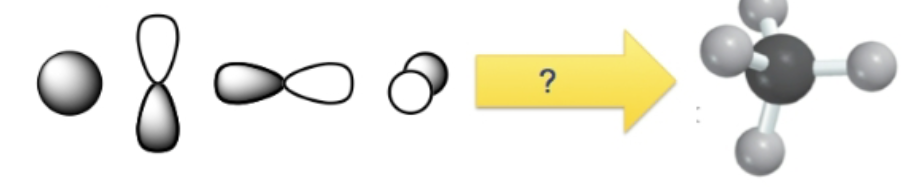
Why is the 90° angle between p orbitals a problem?
The observed geometry around carbon in alkanes is tetrahedral, but the atomic p orbitals are oriented 90° apart. Therefore, simply using the original s and p orbitals does not explain the observed tetrahedral arrangement.
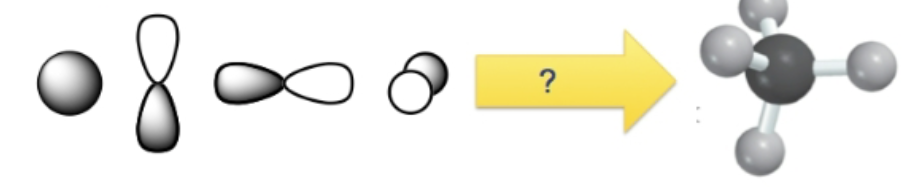
What mathematical device is used to explain the observed geometry?
Hybridization is used as a mathematical device to explain the observed geometry.
What is hybridization?
Hybridization is the mixing of atomic orbitals on the same atom to produce a new set of hybrid atomic orbitals.
What happens to atomic orbitals during hybridization?
Atomic orbitals on the same atom are mixed together.
What is produced through hybridization?
A new set of hybrid atomic orbitals is produced.
Why is hybridization important for understanding alkanes?
It provides a way to explain the observed tetrahedral geometry of carbon in alkanes using the valence bond model.
What is the purpose of sp³ hybridization in carbon?
sp³ hybridization produces the four hybrid atomic orbitals (AOs) on carbon needed for bonding in CH₄.
Which atomic orbitals are mixed to produce the four sp³ hybrid orbitals?
One 2s orbital and three 2p orbitals are mixed.
How many hybrid orbitals are produced from one 2s and three 2p orbitals?
Four sp³ hybrid orbitals are produced.
Why are four hybrid orbitals needed for carbon in CH₄?
Carbon needs four hybrid AOs for bonding in CH₄.
What geometry do the resulting sp³ hybrids have?
The resulting sp³ hybrids point toward the vertices of a tetrahedron.
What molecular geometry does this explain?
It explains the tetrahedral geometry around carbon in CH₄.
CH4 hybridization
1(2s)+3(2p)→4sp3
sp³ → 4 hybrid orbitals → tetrahedral arrangement
How are the four C–H bonds in CH₄ formed?
The four C–H bonds are formed from overlap of the sp³ hybrid AOs on carbon with 1s AOs on the hydrogens.
What orbital does carbon use to form each C–H bond?
An sp³ hybrid atomic orbital.
What orbital does hydrogen contribute to the C–H bond?
A 1s atomic orbital.
What type of bond is each C–H bond in CH₄?
Each C–H bond is a sigma (σ) bond because it results from orbital overlap along the bonding axis.
What is the molecular formula of ethylene?
C₂H₄.
What important structural feature does ethylene contain?
Ethylene contains a double bond.
What geometry does each carbon atom have in ethylene?
Each carbon has trigonal planar geometry.
Can the hybridization model explain the geometry of ethylene?
Yes. The hybridization model can explain both the trigonal planar geometry and the C–C double bond.
What is the hybridization of the carbon atoms in ethylene?
The carbon atoms are sp² hybridized.
How is ethylene also represented in the PowerPoint?
As H₂CCH₂.
C₂H₄ →
C=C → trigonal planar at each carbon → sp² hybridized
How many sigma bonds does each carbon form in ethylene?
Each carbon forms three σ bonds.
What orbitals are mixed to form the three sp² hybrids?
One 2s atomic orbital and two 2p atomic orbitals are mixed.
What happens to the remaining 2p orbital?
One unhybridized 2p orbital remains.