skin integrity & wound healing WEEK 4
 Call Kai
 Learn
Learn Practice Test
 Spaced Repetition
 Match
Match Flashcards
 Knowt Play
1/69

There's no tags or description
Looks like no tags are added yet.
Name | Mastery | Learn | Test | Matching | Spaced | Call with Kai | Chat |
|---|
No analytics yet
Send a link to your students to track their progress
70 Terms
What are the main functions of the integumentary system?
Protection(barrier)
insulation (fat protects form trauma)
sensation(detect pain/heat,etc)
thermoregulation (vasocontriction/vasodilation)
aesthetic function (emotion and appearance)
What should the nurse assess when inspecting and palpating the skin?
LOOK: color, lesions, hair, nails.
FEEL: temperature, moisture, texture, turgor.
Where should color changes be assessed in a patient with dark skin?
Oral mucosa, lips, and nail beds
What intrinsic (internal) factors can impair skin integrity?
Circulation,
nutrition,
diabetes,
smoking,
medications.
What is pressure?
Force that pushes straight down onto tissue.
What is friction?
Skin rubbing against a surface
What is shear?
Skin stays in place while the skeleton underneath slides.
What is wound dehiscence?
Partial or total separation of wound layers.
What is evisceration?
Protrusion of visceral organs through a wound opening.

What should the nurse do for evisceration?
Cover with sterile saline-moistened gauze, keep patient NPO, and notify the surgeon immediately.
What does TACO stand for when assessing wound drainage?
Type, Amount, Color, Odor.
What does a strong or pungent wound odor suggest?
Infection.
What can an elevated WBC indicate in a patient with a wound?
Possible infection, which can delay healing.
Why is hemoglobin important for wound healing?
Low hemoglobin decreases oxygen delivery to healing tissue.
What does a low albumin level indicate in wound healing?
Poor nutrition and reduced ability to rebuild cells
What does serous wound drainage look like?
Thin, watery, clear to pale yellow.

What does purulent drainage look like, and what does it indicate?
Thick, cloudy pus; indicates infection.
What is sanguineous drainage?
Bloody drainage containing many RBCs.

What does bright-red sanguineous drainage indicate?
Fresh bleeding.
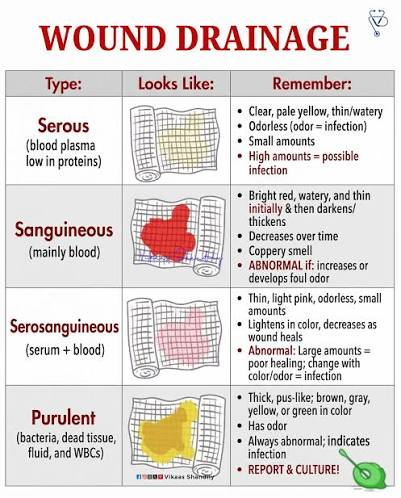
What does darker sanguineous drainage indicate?
Older bleeding
What are classic findings of cellulitis?
Hot, tender, erythematous, edematous skin with diffuse borders.

What causes herpes zoster (shingles)?
Reactivation of the varicella zoster virus.
What is the characteristic rash pattern of shingles?
Painful vesicles in a one-sided, band-like dermatome pattern.

When should antiviral treatment for shingles ideally begin?
Within 72 hours of rash onset.
What is postherpetic neuralgia?
Pain that persists after the shingles rash has cleared
How does sustained pressure cause tissue injury?
Pressure compresses blood vessels → decreased blood flow → ischemia → necrosis.
What six factors does the Braden Scale assess?
Sensory perception,
moisture,
activity,
mobility,
nutrition,
friction & shear.
What is the possible Braden Scale score range?
6–23
What does a LOWER Braden Scale score mean?
Higher risk for pressure injury.
What Braden Scale score indicates pressure-injury risk in this lecture?
≤18
What defines a Stage 1 pressure injury?
Intact skin with non-blanchable erythema.

What defines a Stage 2 pressure injury?
Partial-thickness skin loss; shallow ulcer or intact/ruptured blister.
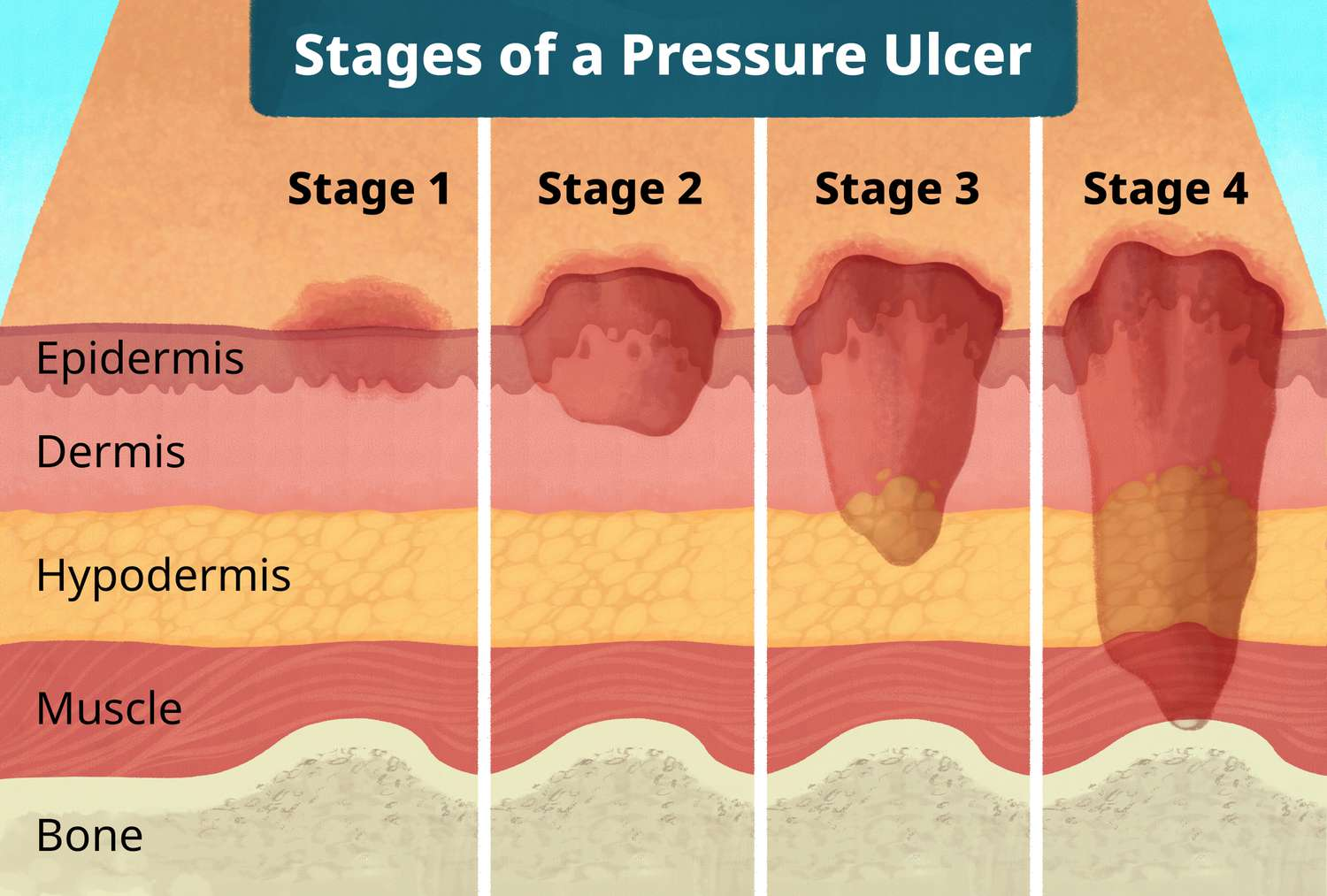
What defines a Stage 3 pressure injury?
Full-thickness skin loss into subcutaneous tissue; fat may be visible, but muscle, tendon, and bone are not.

What defines a Stage 4 pressure injury?
Full-thickness tissue loss reaching muscle, bone, tendons, or ligaments.

What makes a pressure injury unstageable?
Slough or eschar obscures the wound depth.
Should stable, dry eschar on the heel be removed?
No. It should not be softened or removed.

What does a deep tissue injury (DTI) look like?
Persistent non-blanchable deep red, maroon, or purple discoloration.
What serious complications can occur from advanced pressure injuries?
Osteomyelitis(infection and swelling of bone tissue caused by bacteria, fungi) and sepsis.
How often should an immobile, at-risk patient be repositioned?
Every 2 hours.
How should the head of the bed be positioned to help prevent pressure injuries?
Keep HOB at 30° or less.
How should the heels be protected from pressure injuries?
Elevate heels off the mattress with pillows under the legs
What is the difference between primary and secondary intention?
Primary: edges approximated, minimal scarring.
Secondary: heals inside out, longer healing, greater scarring/infection risk.

In what direction should a wound be cleaned or irrigated?
Least contaminated → most contaminated. Never reuse the same gauze across the wound.
When should an analgesic be administered before a dressing change?
30–60 minutes before the dressing change.
What is the major difference between heat and cold therapy?
Heat → vasodilation and increased circulation.
Cold → vasoconstriction and decreased blood flow; cold compresses are applied for 20 minutes.
A nurse is caring for a client whose abdominal surgical wound suddenly opens and the internal organs protrude through the incision. Which action should the nurse take?
A. Apply a dry sterile dressing and place the client in high-Fowler’s position
B. Cover the area with sterile saline-moistened gauze and notify the surgeon
C. Attempt to gently replace the organs into the abdominal cavity
D. Irrigate the wound and encourage the client to drink fluids
Correct Answer: B
Rationale: Evisceration is protrusion of visceral organs through a wound opening. The nurse should cover the area with sterile saline-moistened gauze, keep the client NPO, and notify the surgeon immediately. The organs should never be pushed back into the wound
A nurse assesses a client's wound and notes thick, cloudy, green drainage. How should the nurse document this drainage?
A. Serous
B. Sanguineous
C. Purulent
D. Hemorrhagic
Correct Answer: C
Rationale: Purulent exudate is thick, cloudy pus that may be yellow, green, tan, or brown. It is a red flag for infection. Serous drainage is thin and watery, while sanguineous drainage is bloody.
Which wound drainage finding indicates fresh bleeding?
A. Clear, watery drainage
B. Thick, yellow drainage
C. Dark bloody drainage
D. Bright-red bloody drainage
Correct Answer: D
Rationale: Bright-red sanguineous drainage indicates fresh bleeding. Darker sanguineous drainage indicates older blood
A nurse observes a client sliding downward in bed while the client's skin remains against the sheets. Which mechanical force is occurring?
A. Pressure
B. Shear
C. Friction
D. Ischemia
Correct Answer: B
Rationale: Shear occurs when the skin remains in place while the skeleton underneath slides. This stretches and damages small blood vessels and increases pressure-injury risk
A nurse obtains a Braden Scale score of 16 for a client. How should the nurse interpret this finding?
A. The client has adequate tissue perfusion
B. The client has no pressure-injury risk
C. The client is at risk for pressure injury
D. The client has a Stage 1 pressure injury
Correct Answer: C
Rationale: The Braden Scale ranges from 6–23, and a score of 18 or lower indicates pressure-injury risk. Remember: lower score = higher risk
Which finding should the nurse identify as a Stage 1 pressure injury?
A. Intact skin with non-blanchable erythema
B. Open blister with partial-thickness skin loss
C. Full-thickness wound with visible adipose tissue
D. Full-thickness wound with exposed bone
Correct Answer: A
Rationale: Stage 1 pressure injuries have intact skin with non-blanchable erythema. The skin remains red when touched and released
A nurse assesses a client and observes a shallow, painful pressure ulcer involving partial-thickness skin loss. Which stage should the nurse document?
A. Stage 1
B. Stage 2
C. Stage 3
D. Stage 4
Correct Answer: B
Rationale: A Stage 2 pressure injury involves partial-thickness skin loss and may appear as a shallow ulcer or an intact/ruptured blister.
Which assessment finding is consistent with a Stage 3 pressure injury?
A. Intact skin with non-blanchable redness
B. Partial-thickness loss involving the epidermis
C. Full-thickness skin loss with visible subcutaneous fat
D. Full-thickness tissue loss with exposed bone
Correct Answer: C
Rationale: Stage 3 involves full-thickness skin loss extending into the subcutaneous tissue. Fat may be visible, but muscle, tendon, and bone are not exposed.
A nurse assesses a pressure injury and observes exposed muscle and bone. How should the nurse stage the injury?
A. Stage 1
B. Stage 2
C. Stage 3
D. Stage 4
Correct Answer: D
Rationale: Stage 4 involves extensive full-thickness tissue loss that reaches muscle, bone, tendons, or ligaments.
A nurse assesses a pressure injury that is covered with slough and eschar, making it impossible to determine the depth of tissue damage. How should the nurse classify the injury?
A. Deep tissue injury
B. Stage 2
C. Unstageable
D. Stage 3
Correct Answer: C
Rationale: A pressure injury is unstageable when slough or eschar obscures the wound, preventing confirmation of the depth of tissue loss
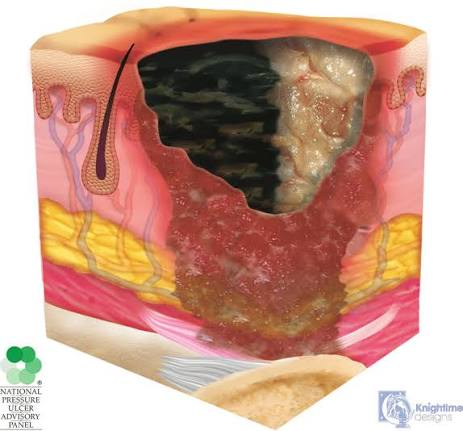
A nurse assesses a client's heel and identifies stable, dry eschar. Which action is appropriate?
A. Soften the eschar with saline
B. Remove the eschar immediately
C. Irrigate beneath the eschar
D. Leave the stable, dry eschar intact
Correct Answer: D
Rationale: According to the lecture, stable, dry eschar on the heel should not be softened or removed.
Which intervention should the nurse implement for an immobile client at risk for pressure injuries?
A. Maintain the head of the bed at 45°
B. Reposition the client every 2 hours
C. Place the client's heels directly against the mattress
D. Massage areas of non-blanchable erythema
Correct Answer: B
Rationale: The lecture recommends repositioning every 2 hours for clients who cannot move independently. The HOB should be 30° or less, and the heels should be elevated off the mattress.
A nurse is cleaning a client's wound. Which technique should the nurse use?
A. Clean from the most contaminated area toward the least contaminated area
B. Use the same gauze several times to reduce tissue irritation
C. Clean from the least contaminated area toward the surrounding skin
D. Scrub the wound vigorously to remove microorganisms
Correct Answer: C
Rationale: Wounds should be cleaned from the least contaminated area toward the surrounding skin. During irrigation, solution should flow from least to most contaminated. The same gauze should never be reused across the wound
A client reports significant pain during dressing changes. Which nursing intervention is appropriate?
A. Administer an analgesic immediately after the dressing change
B. Administer an analgesic 30–60 minutes before the dressing change
C. Remove the dressing rapidly to shorten the procedure
D. Avoid analgesics because they interfere with wound assessment
Correct Answer: B
Rationale: The nurse should administer an analgesic 30–60 minutes before a dressing change to improve comfort during wound care
A nurse is teaching a client about heat and cold therapy. Which statement demonstrates understanding?
A. "Heat causes vasoconstriction and decreases blood flow."
B. "Cold causes vasodilation and increases tissue oxygenation."
C. "Cold causes vasoconstriction and can decrease swelling."
D. "Continuous heat should be applied for at least 1 hour."
Correct Answer: C
Rationale: Cold causes vasoconstriction, decreasing blood flow and helping control hemorrhage, edema, and pain. Heat causes vasodilation. Continuous heat for 1 hour or longer can trigger reflex vasoconstriction and damage epithelial cells.
what are hydrogel dressing used for?
debridement for wounds with necrotized tissue and eschar

what are wet gauze dressing used for?
used for packing when continous debridement is needed.
wet dressing are moistened in normal saline
what are transparent films/dressings used for?
cover superficial wounds that have minimal exudate(fluid discharged from tissue).
have reduced ability to absorb moisture

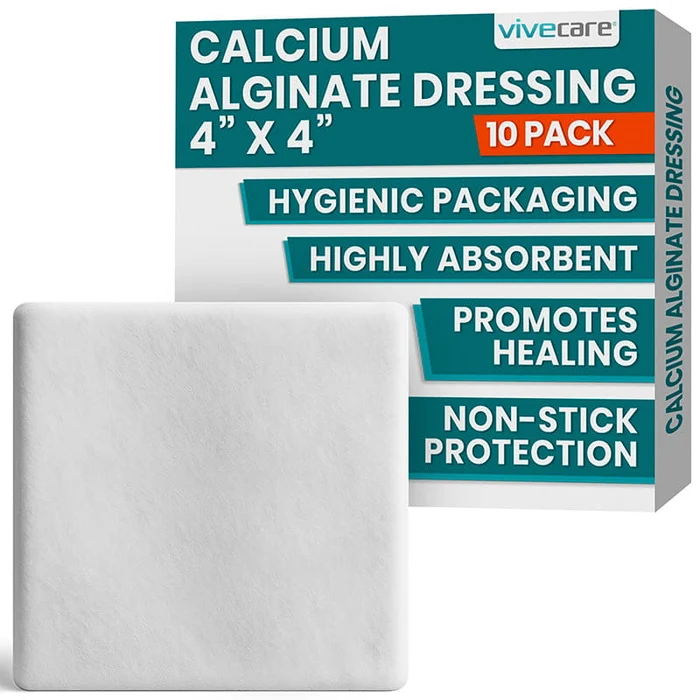
what are alginate dressing used for?
used for moderate to high wounds with high drainage(exudate)
what are the three extrinsic(external) factors that affect the integumentary system?
trauma
burns
surgical wounds
what is the epidermis layer?
FIRST LAYER/outmost layer, stratum corneum is thin, dead keratinized cells. Basals cells divide and move upward
Keratinocytes (provide waterproofing via keratin)
melanocytes (produce melanin for skin pigmentation)
no blood supply
this layer is asscessed for color changes(ex cyanosis) and integrity breaks (blisters)
what is the dermis layer?
SECOND LAYER provides strength, support, and protection. Made of collagen, blood vessels, and nerves
what is the subcutaneous/hypodermis layer?
THIRD LAYER made of fat and connective tissue
insulatates
anchors skin to bone
what does blanchable mean?
a red or pink area of skin temporarily turns white or pale when you press on it then returns to red when you release the pressure
THIS IS HEALTHY
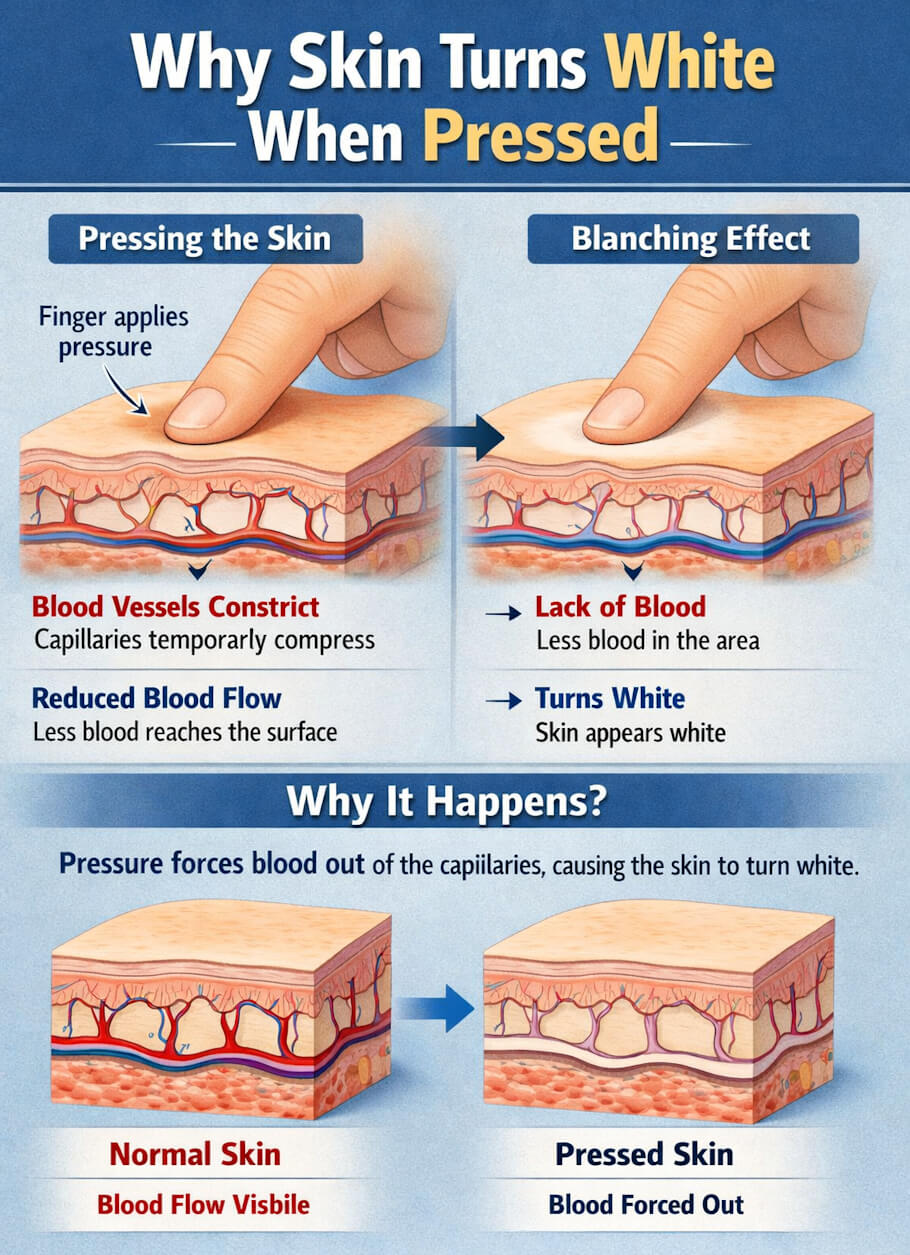
what does non blanchable mean?
a reddened or discolored area of skin does not turn white (or pale) when you press on it
THIS IS NOT HEALTHY AND USUALLY A LEVEL ONE PRESSURE INJURY
