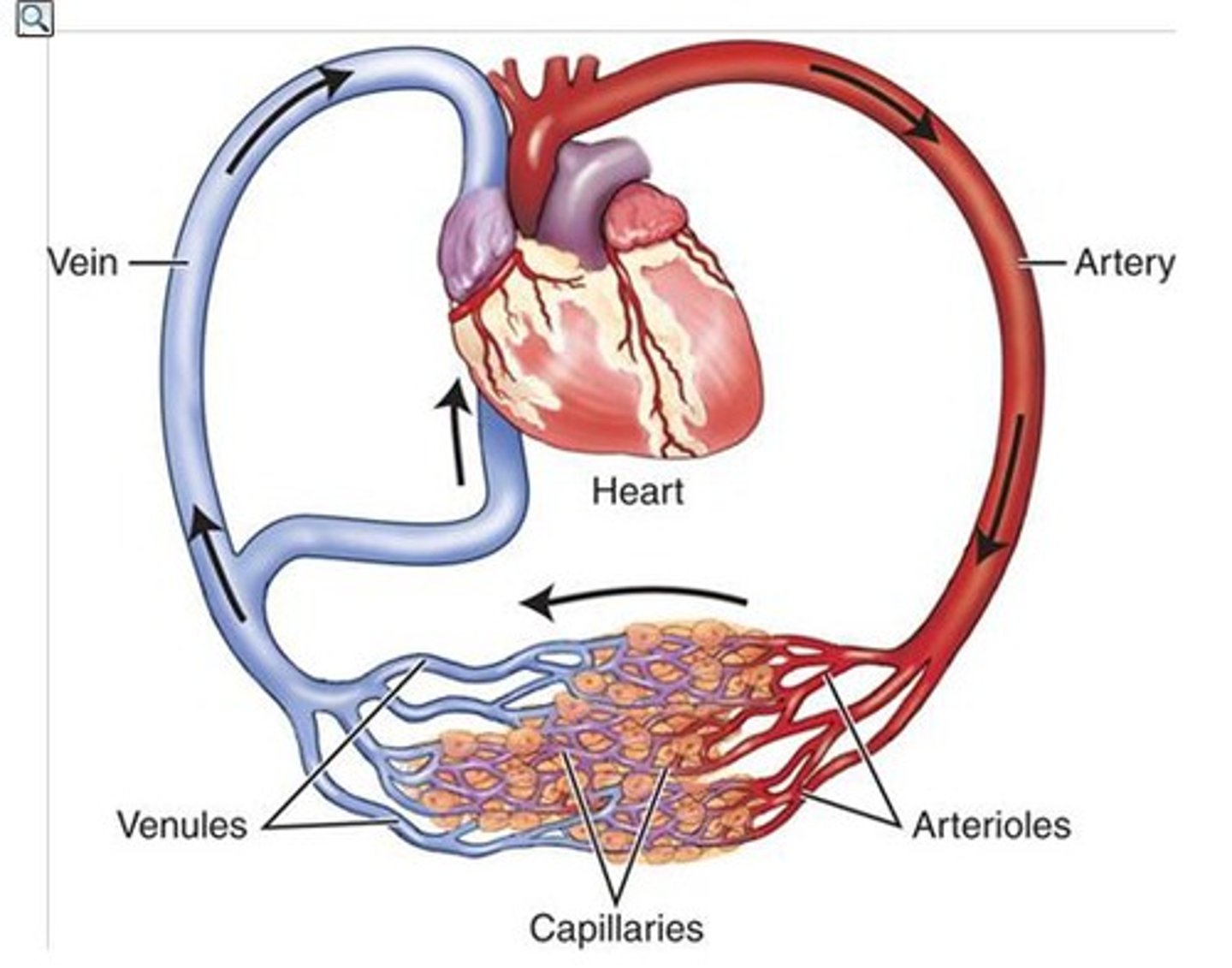
How Blood Flows Through the Heart
 Call Kai
 Learn
Learn Practice Test
 Spaced Repetition
 Match
Match Flashcards
 Knowt Play
1/32

There's no tags or description
Looks like no tags are added yet.
Name | Mastery | Learn | Test | Matching | Spaced | Call with Kai |
|---|
No analytics yet
Send a link to your students to track their progress
33 Terms
Superior Vena Cava
Receives deoxygenated blood from the top half of the body and takes it to the heart
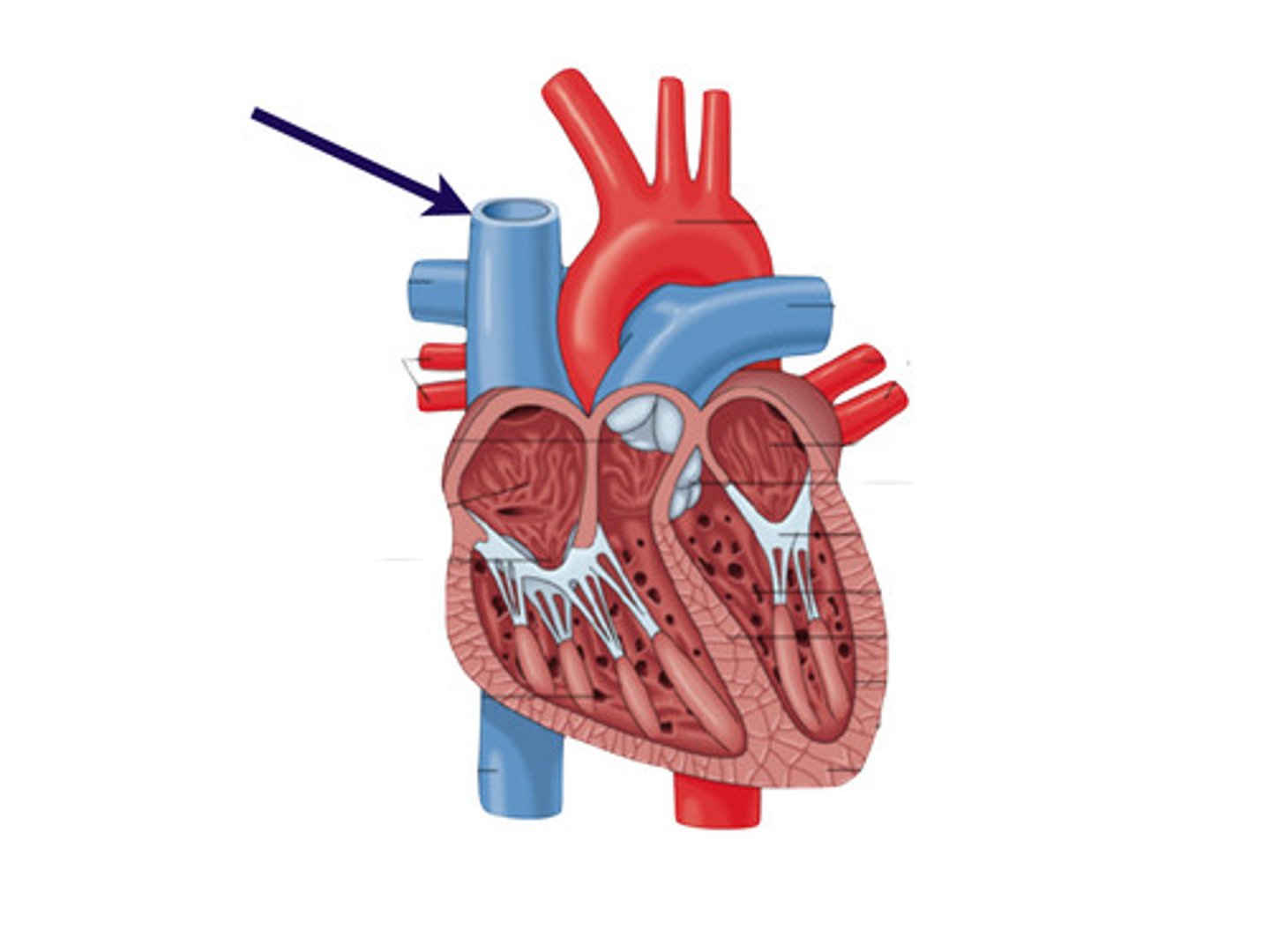
Inferior Vena Cava
Receives deoxygenated blood from the bottom half of the body and takes it to the heart
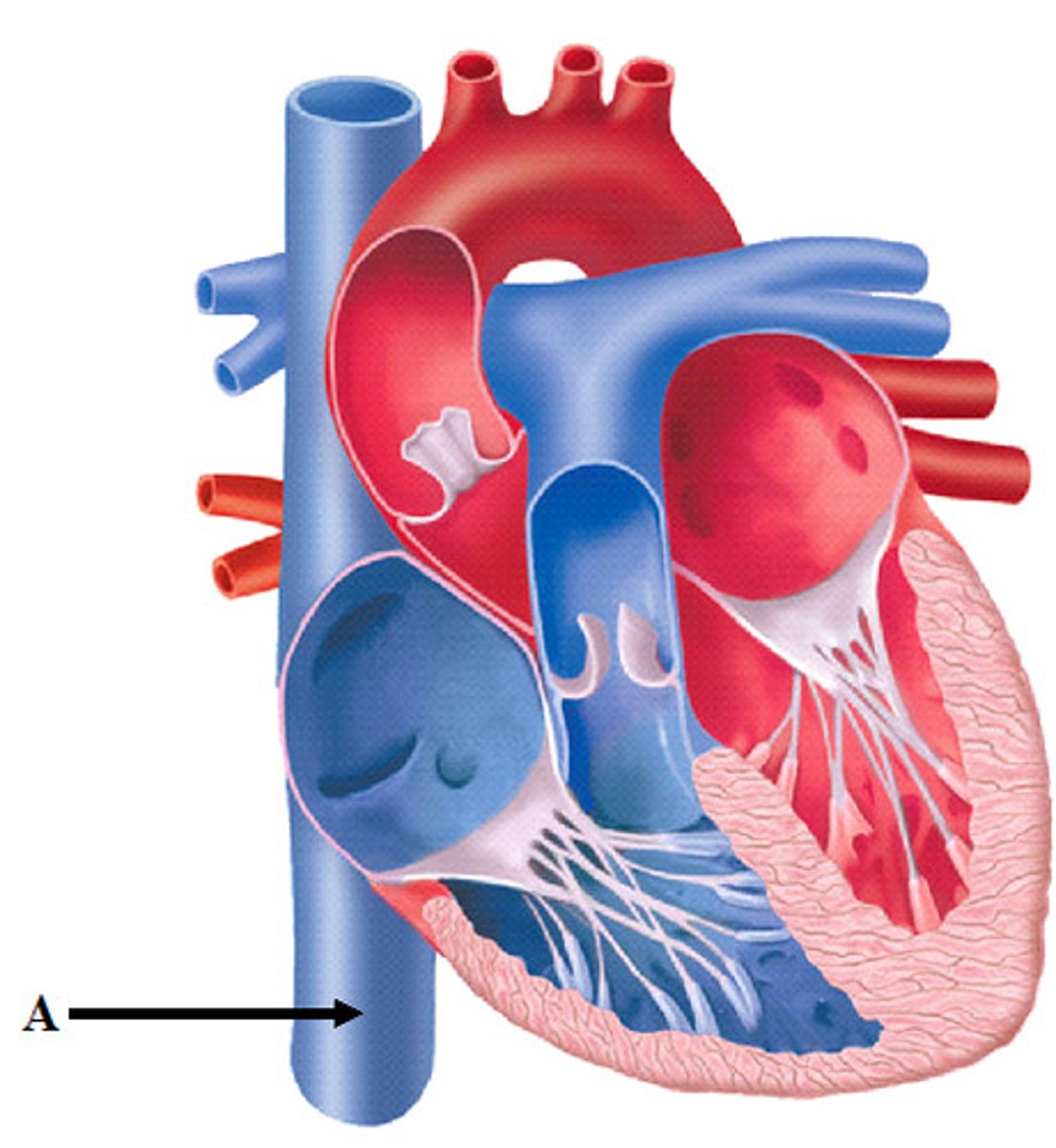
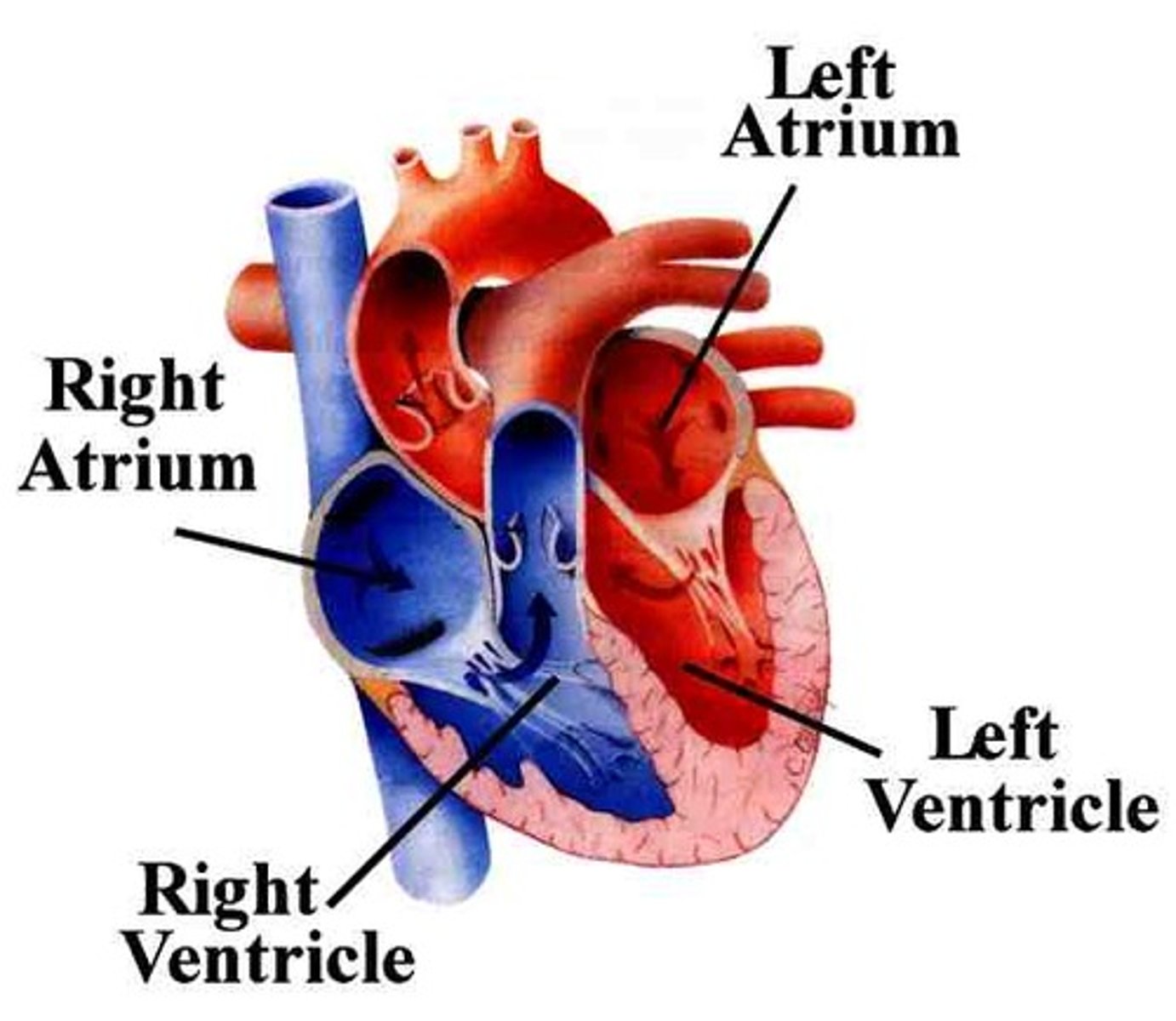
Right Atrium
Deoxygenated blood comes here after enter the heart through both vena cavas
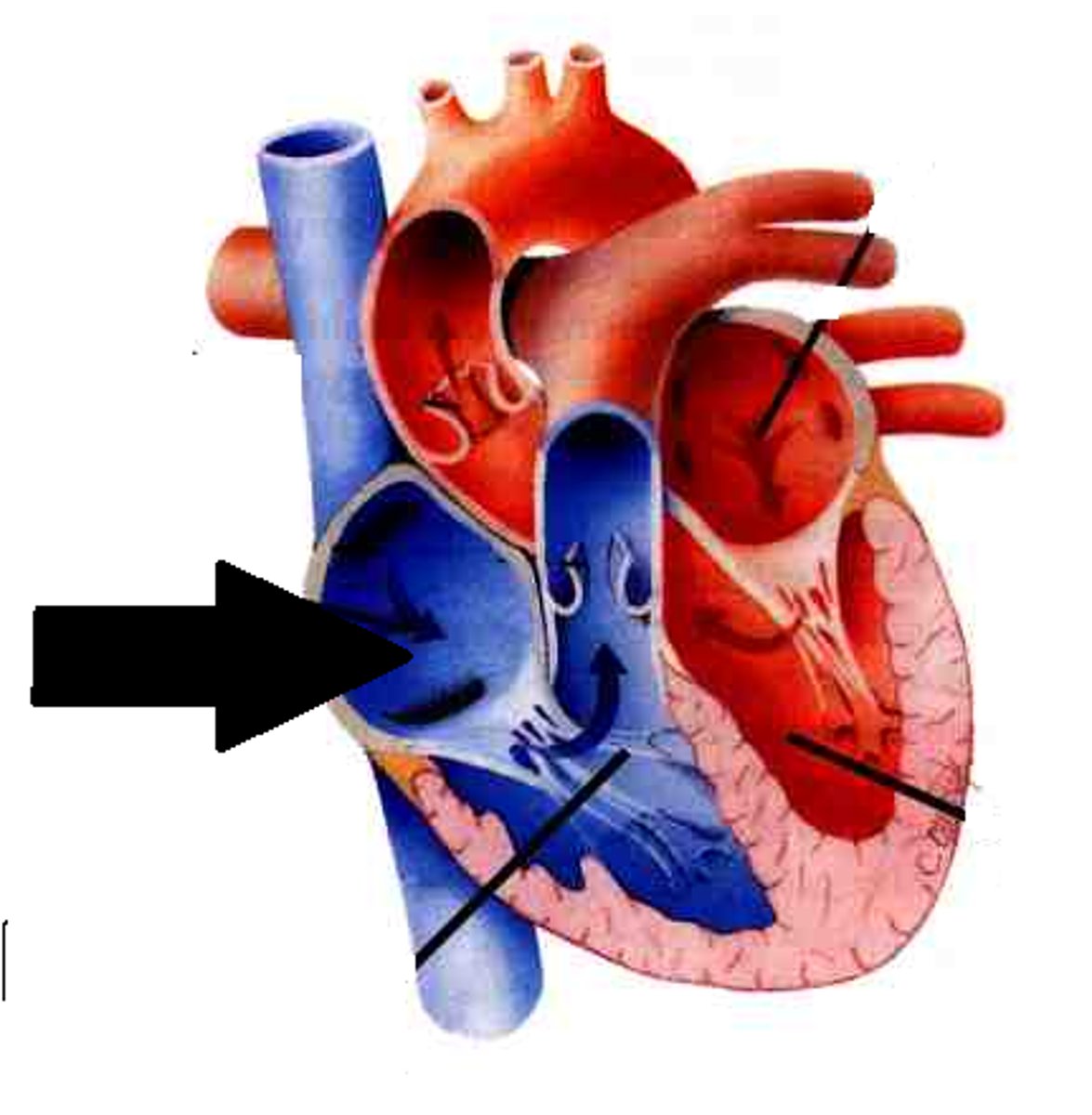
Tricuspid valve
Controls the direction of blood flow from the right atrium to the right ventricle
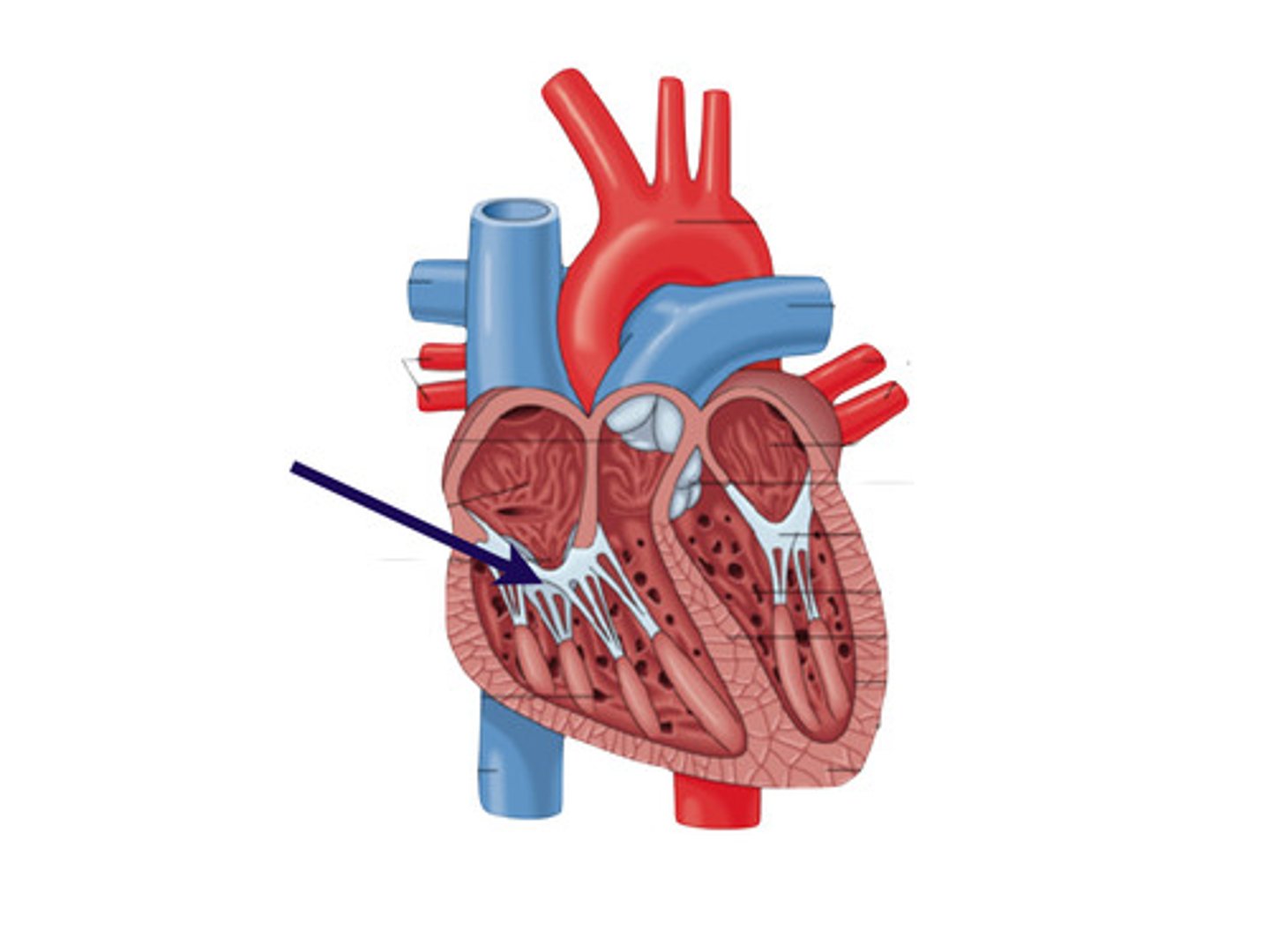
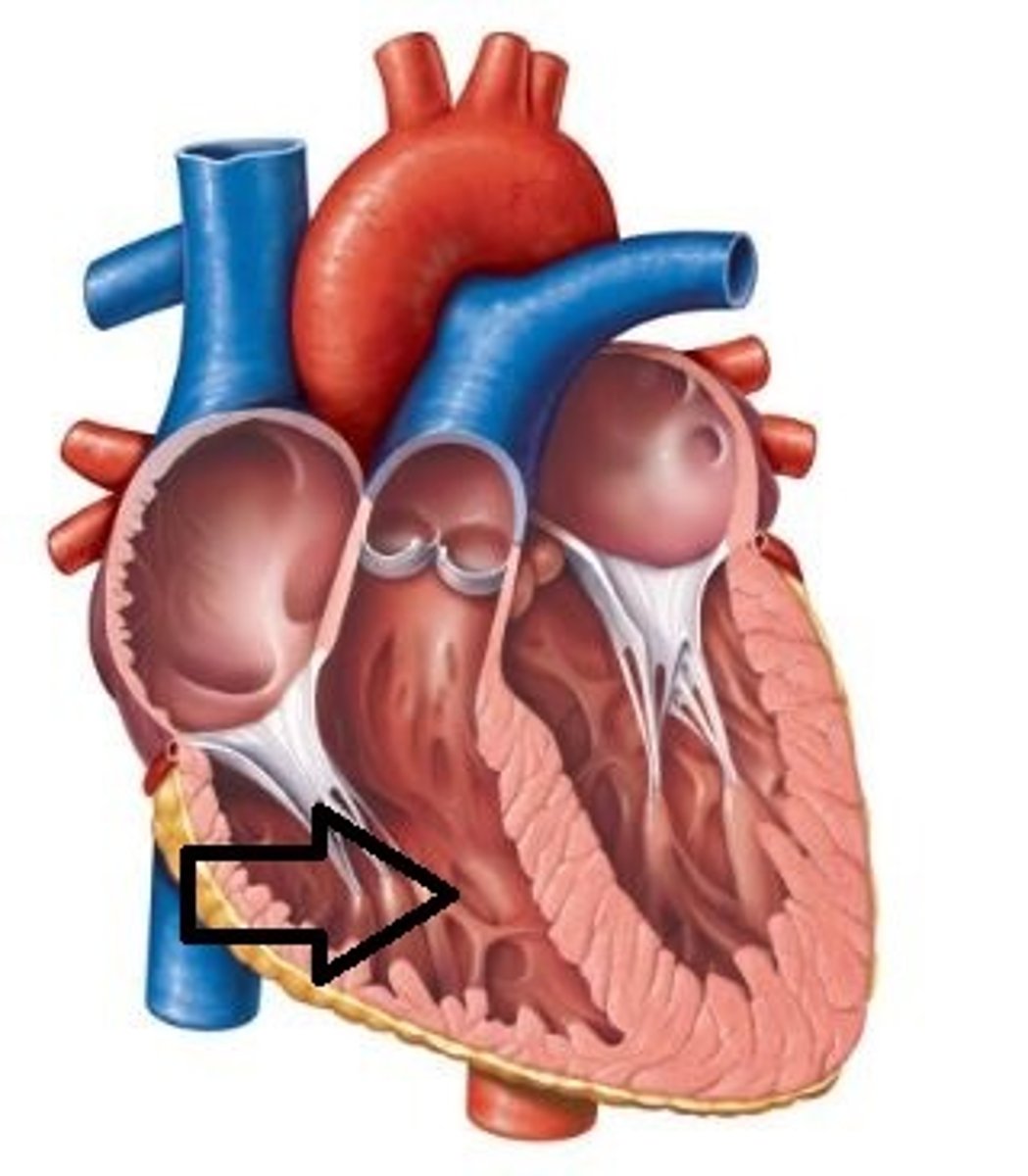
Right Ventricle
Receives the blood from the right atrium and moves it through the pulmonary valve
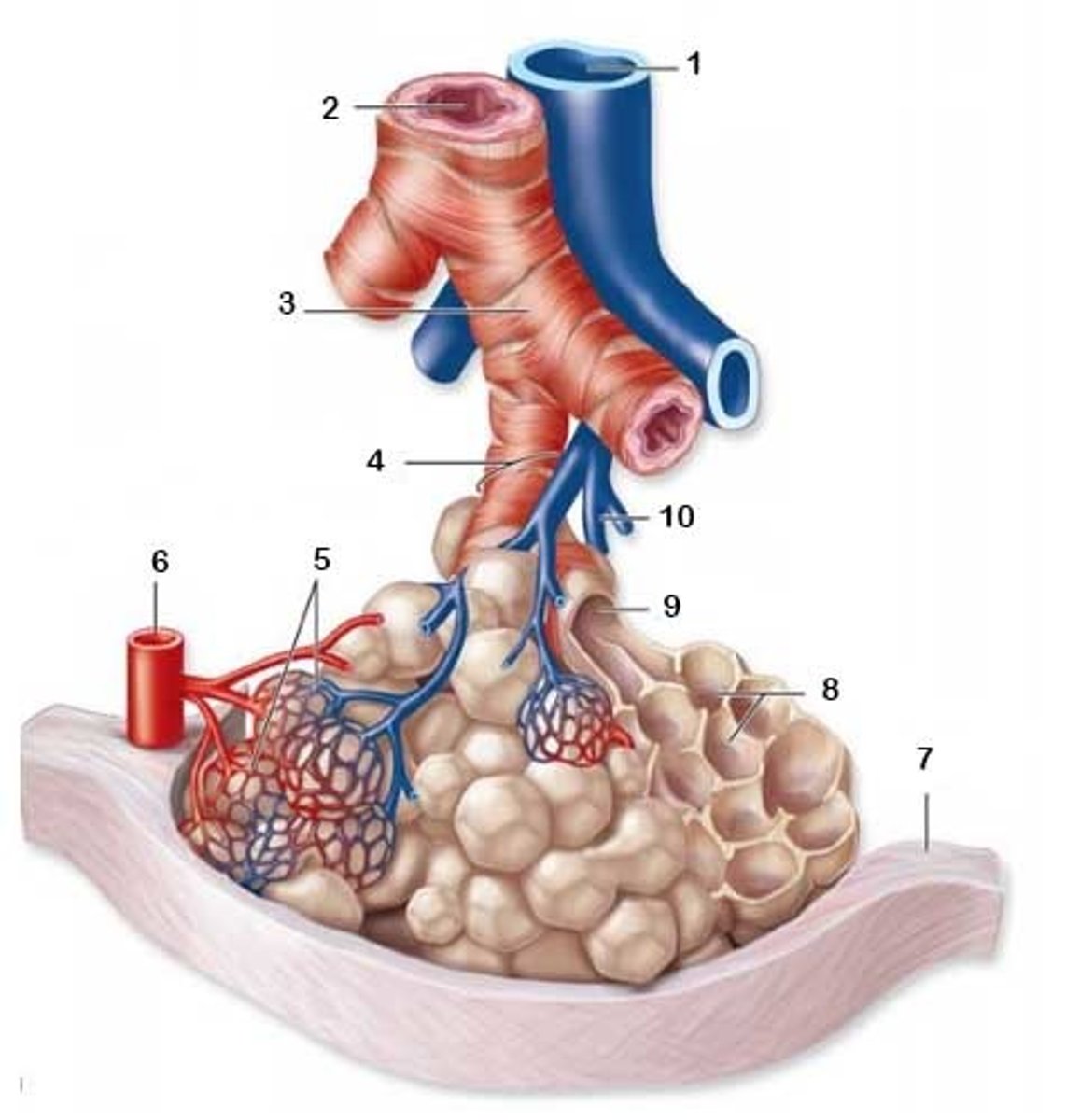
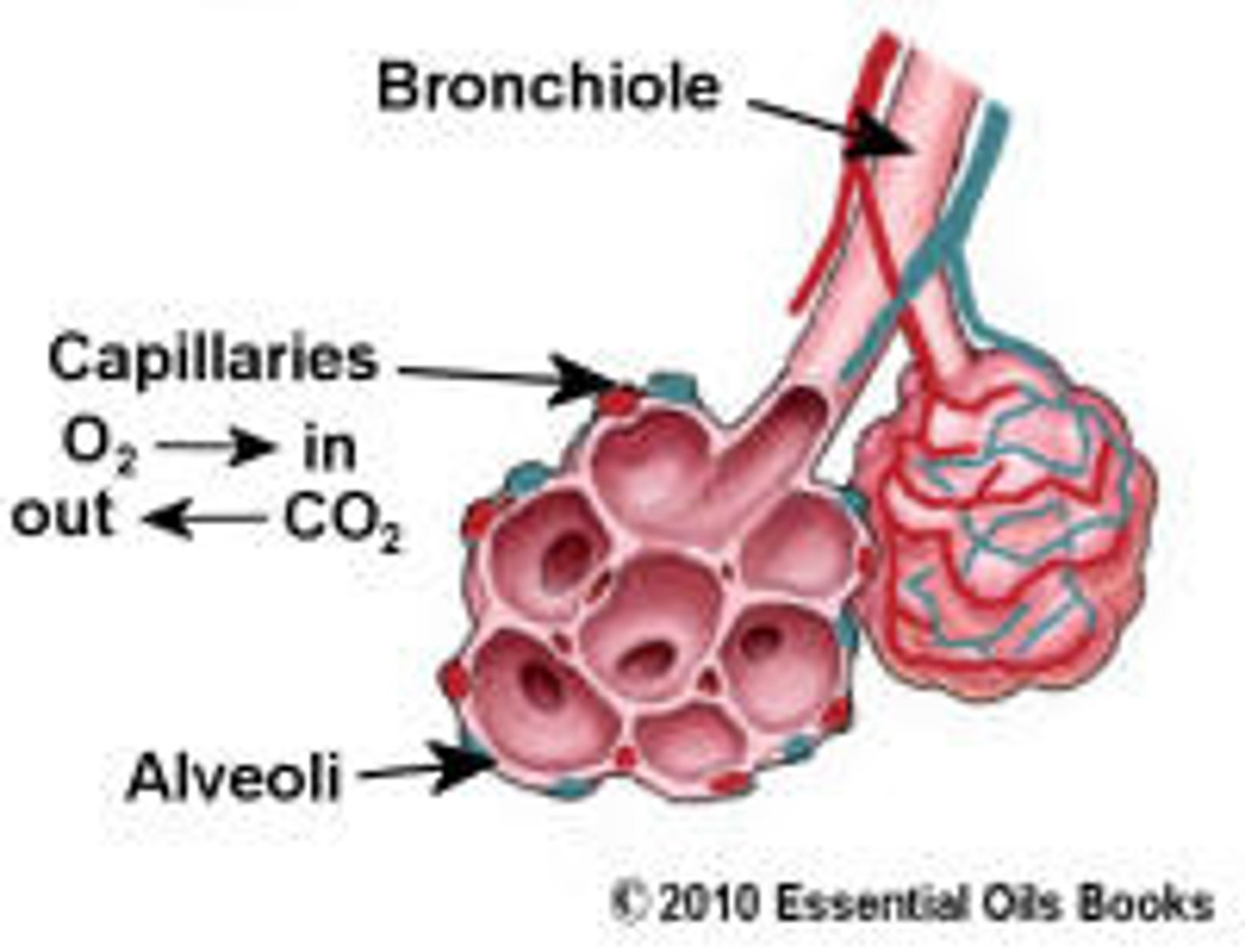
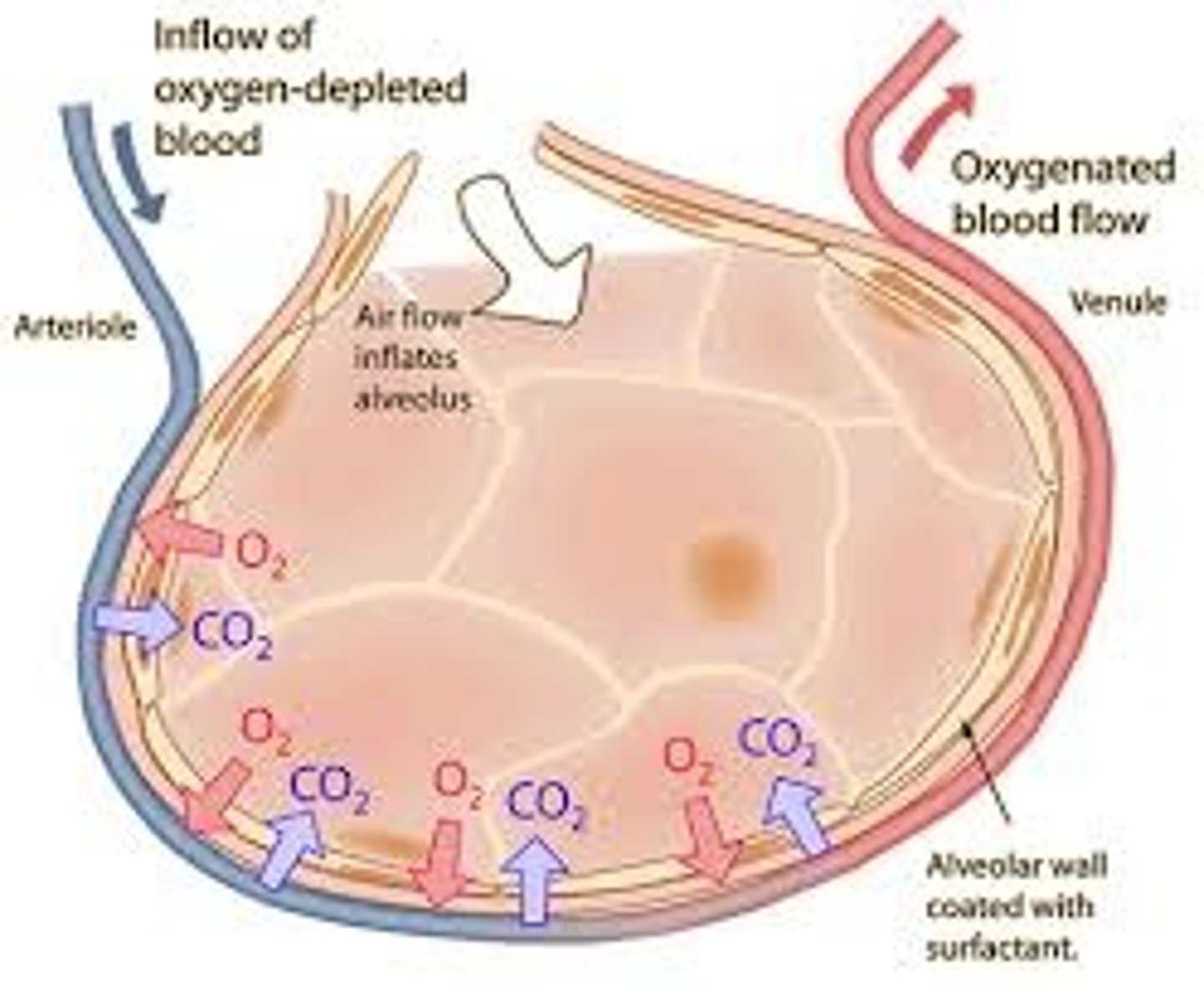
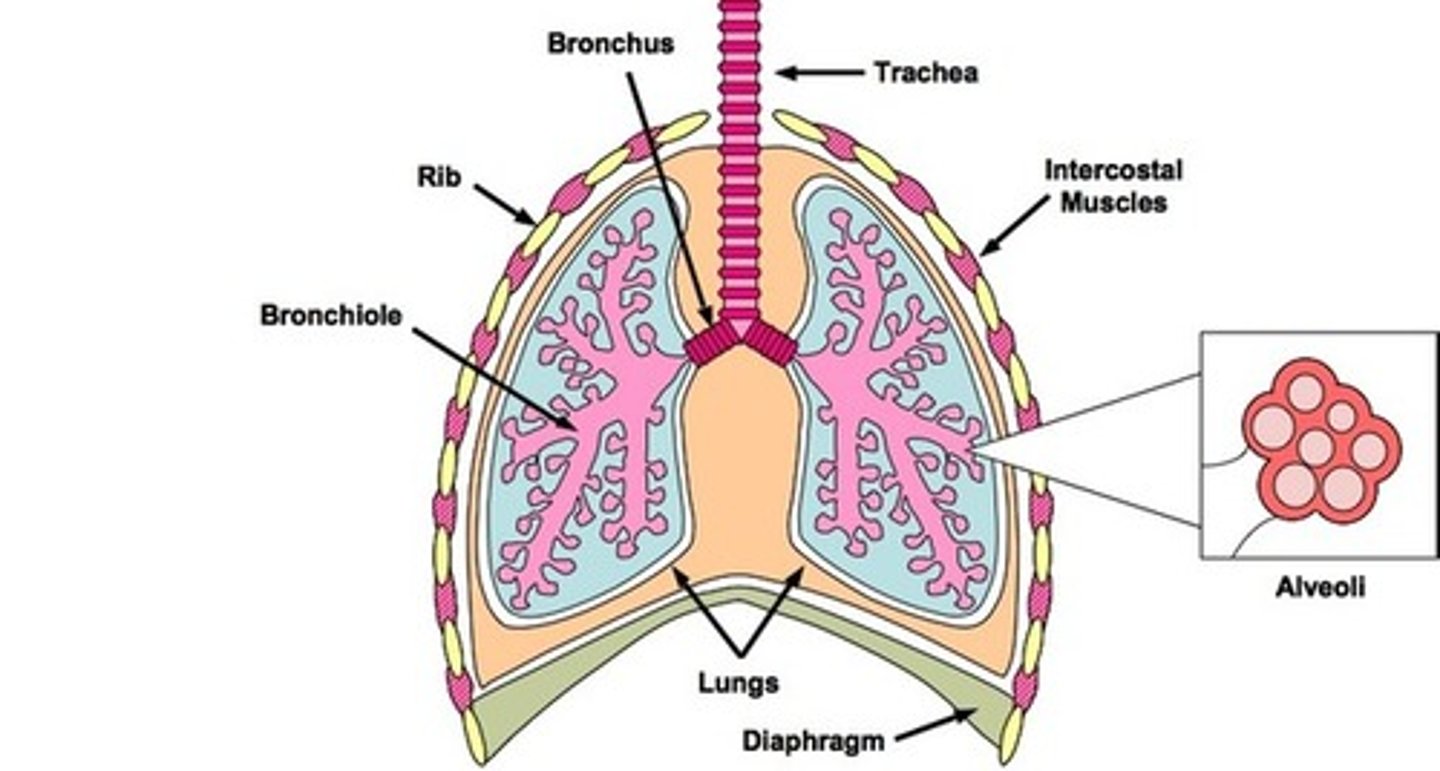
Aveolar Capillaries
where gas exchange happens in the lungs
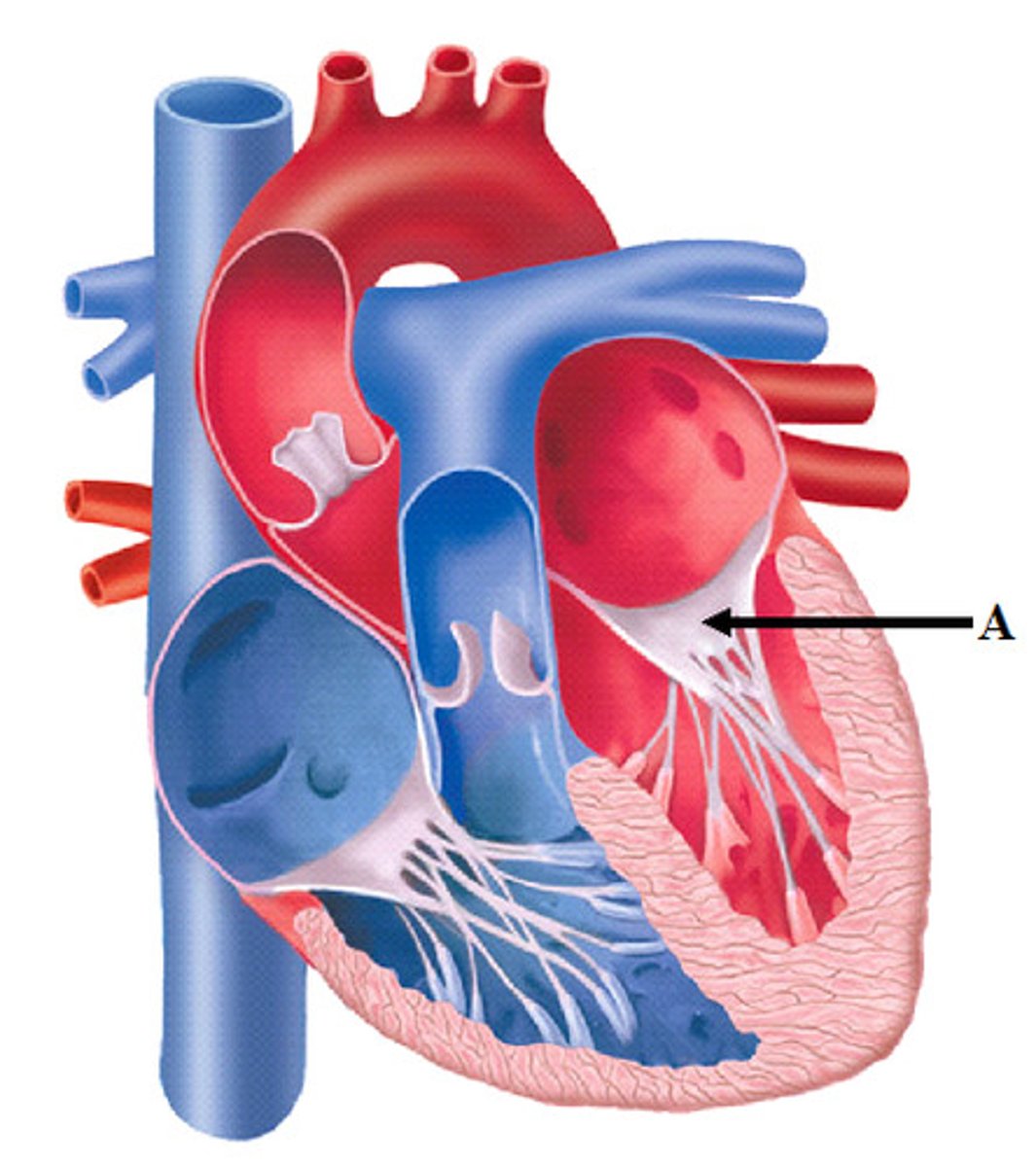
Mitral/Bicuspid valve
valve between the left atrium and the left ventricle.
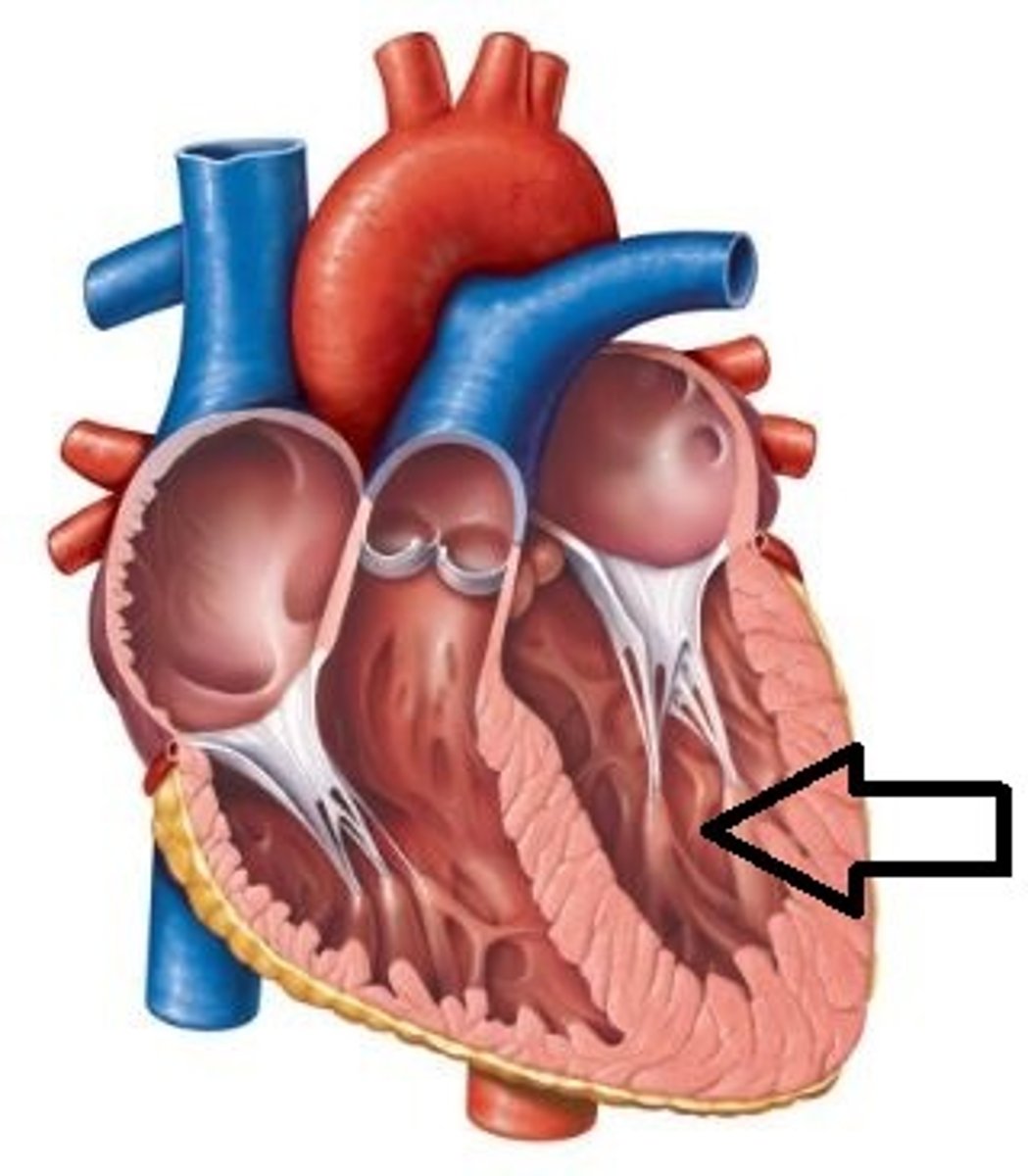
Left ventricle
pumps oxygenated blood to the body through the aorta
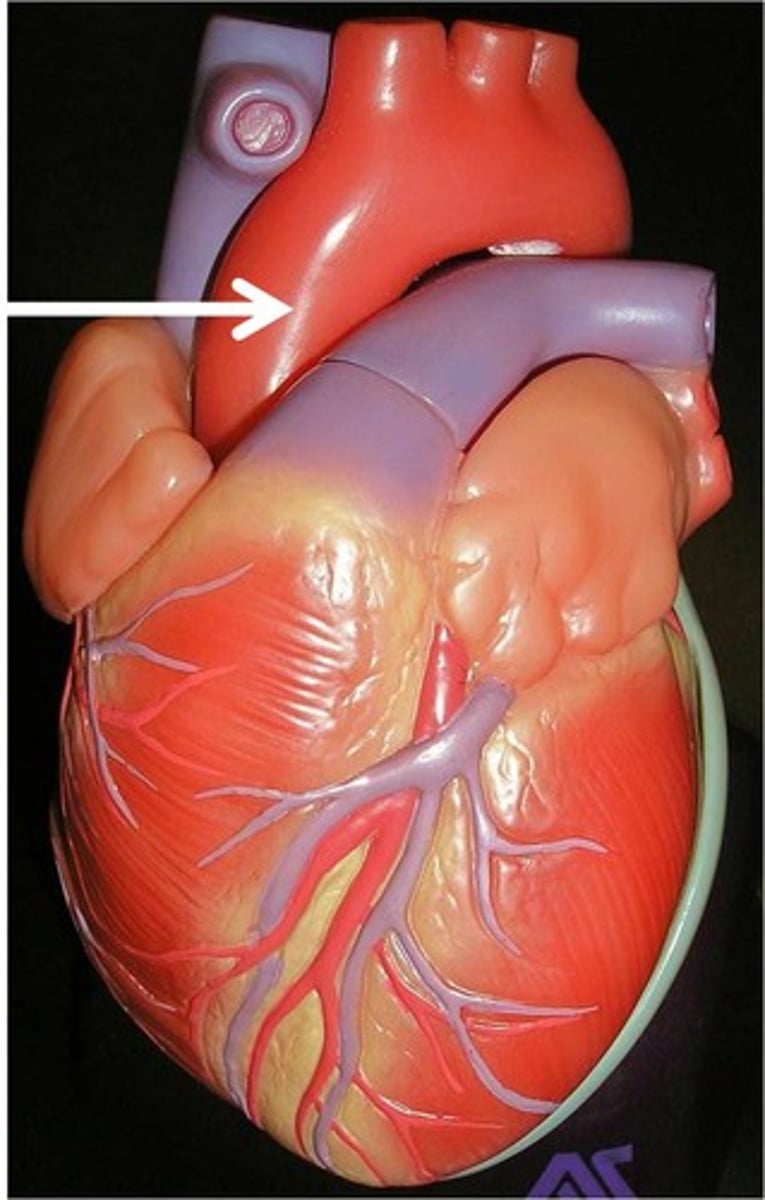
Aorta
Largest artery in the body-distributes oxygenated blood to the body
Arteries
carry blood away from the heart
capillaries
Microscopic vessels through which exchanges take place between the blood and cells of the body
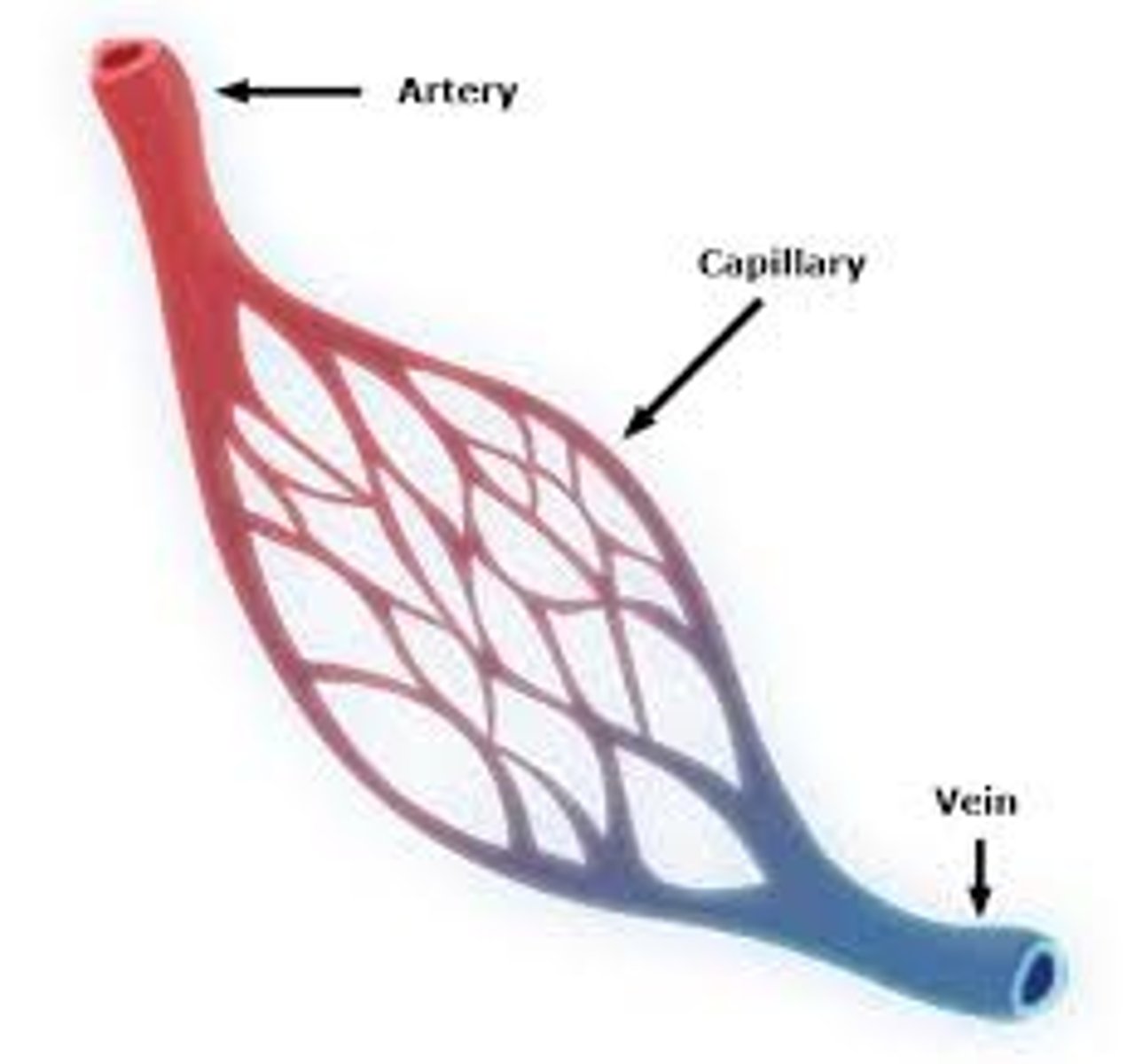
Veins
carry blood back to the heart
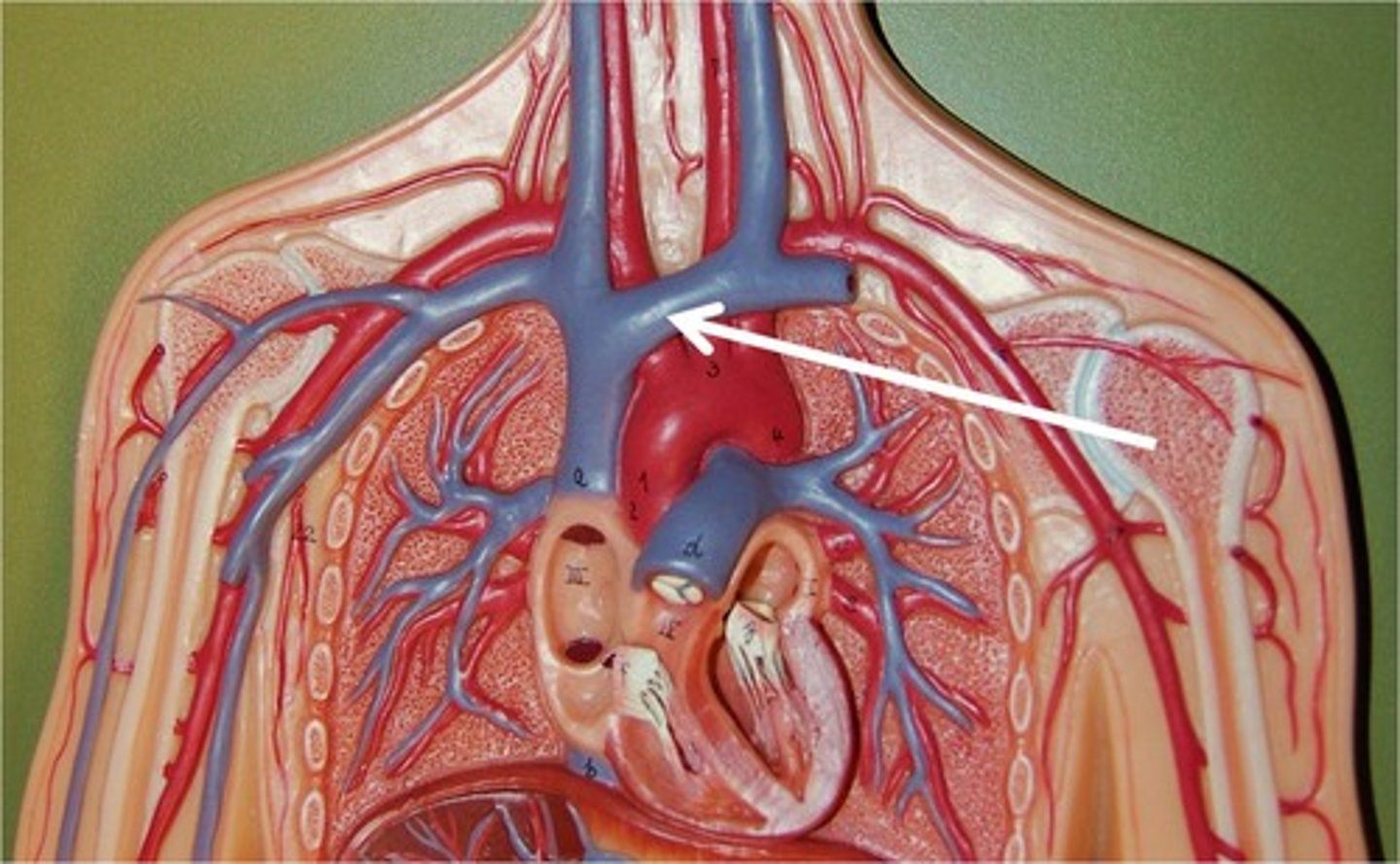
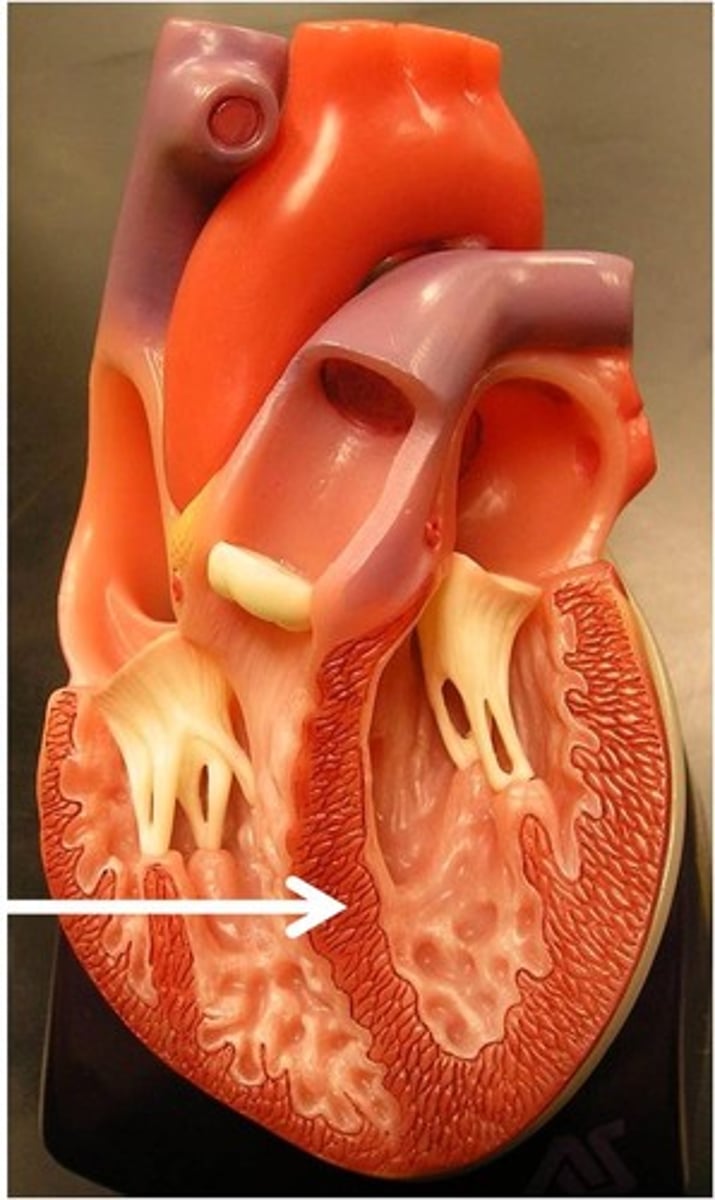
septum
Divides the right and left chambers of the heart
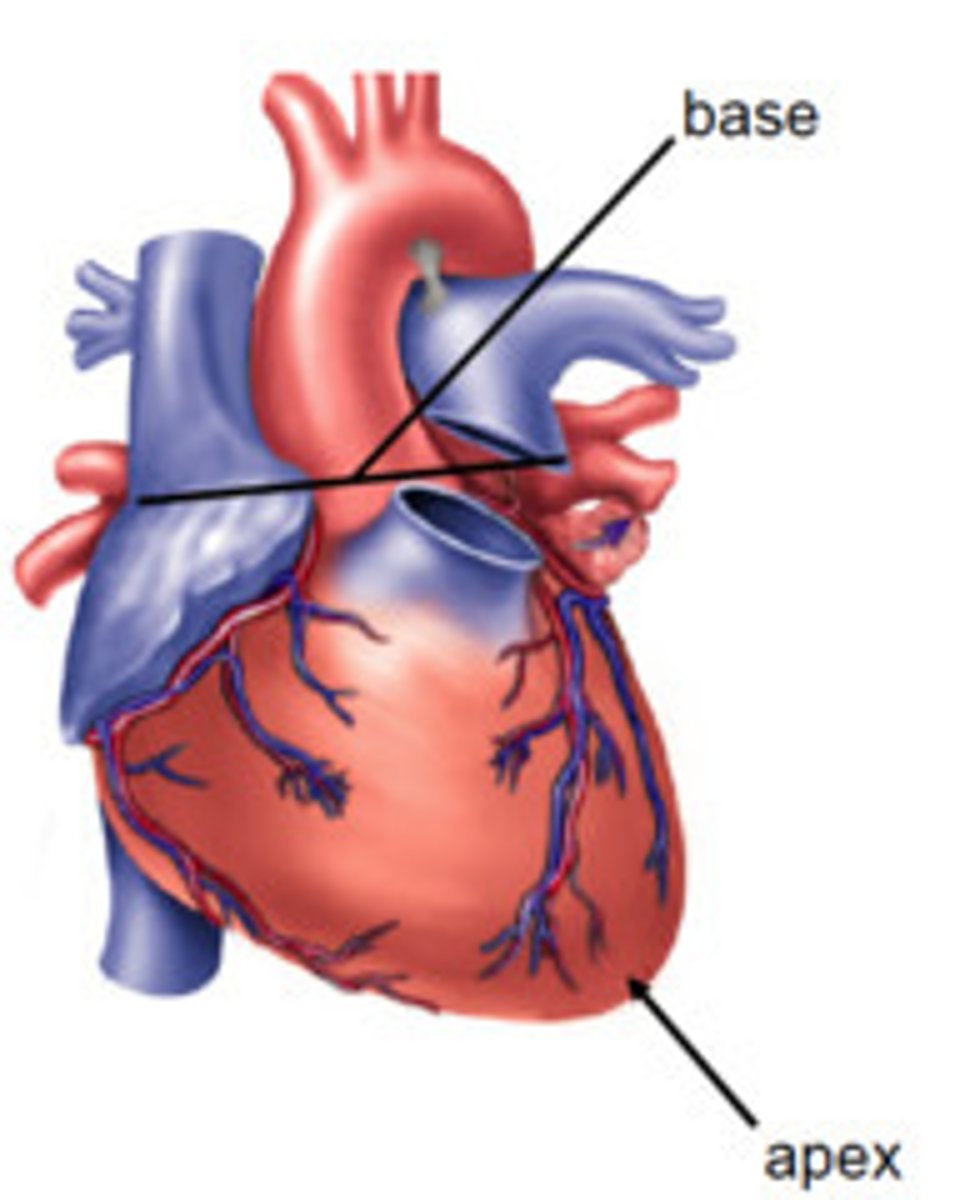
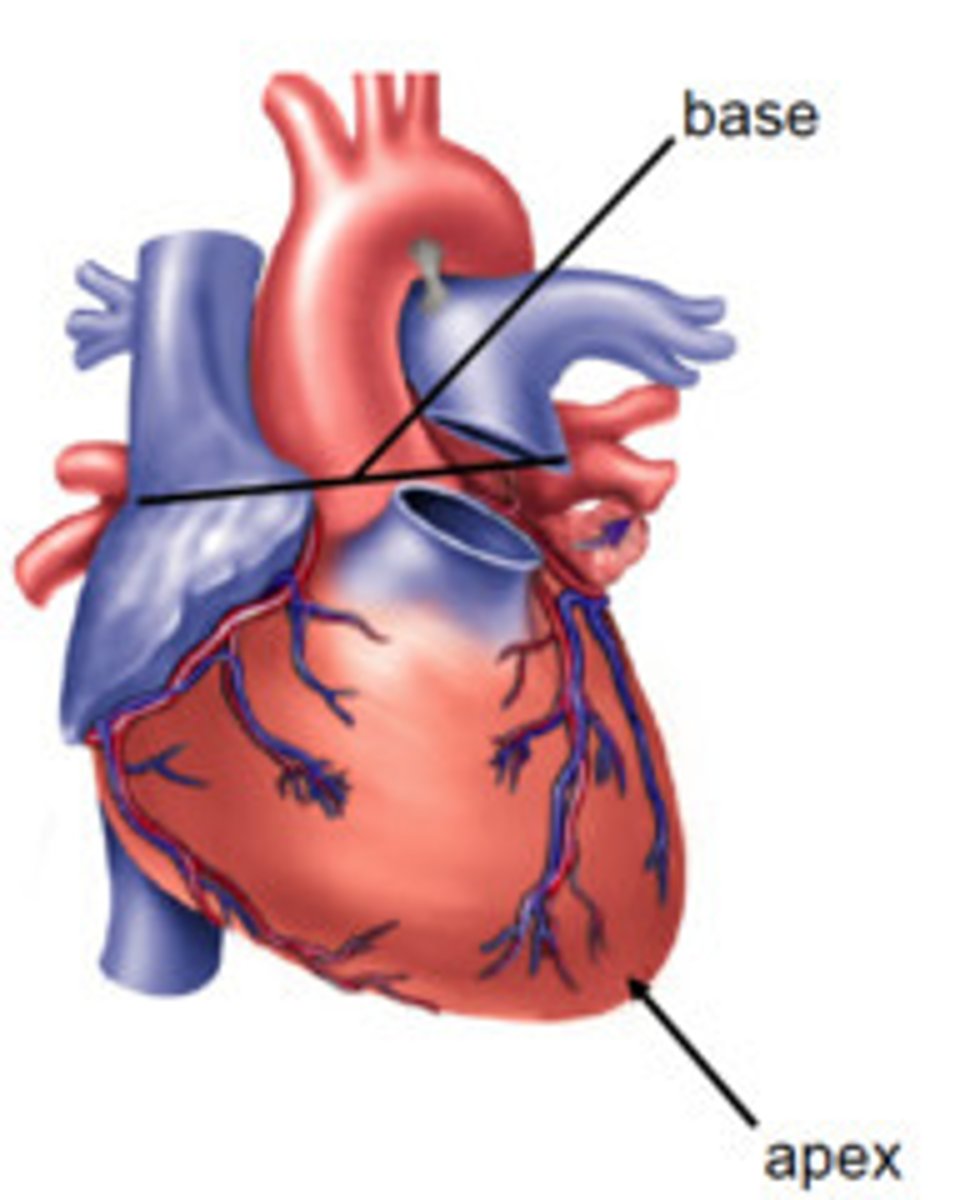
apex
distal end of the heart
Atria (plural for atrium)
thin upper chambers that receive blood returning to the heart via veins.
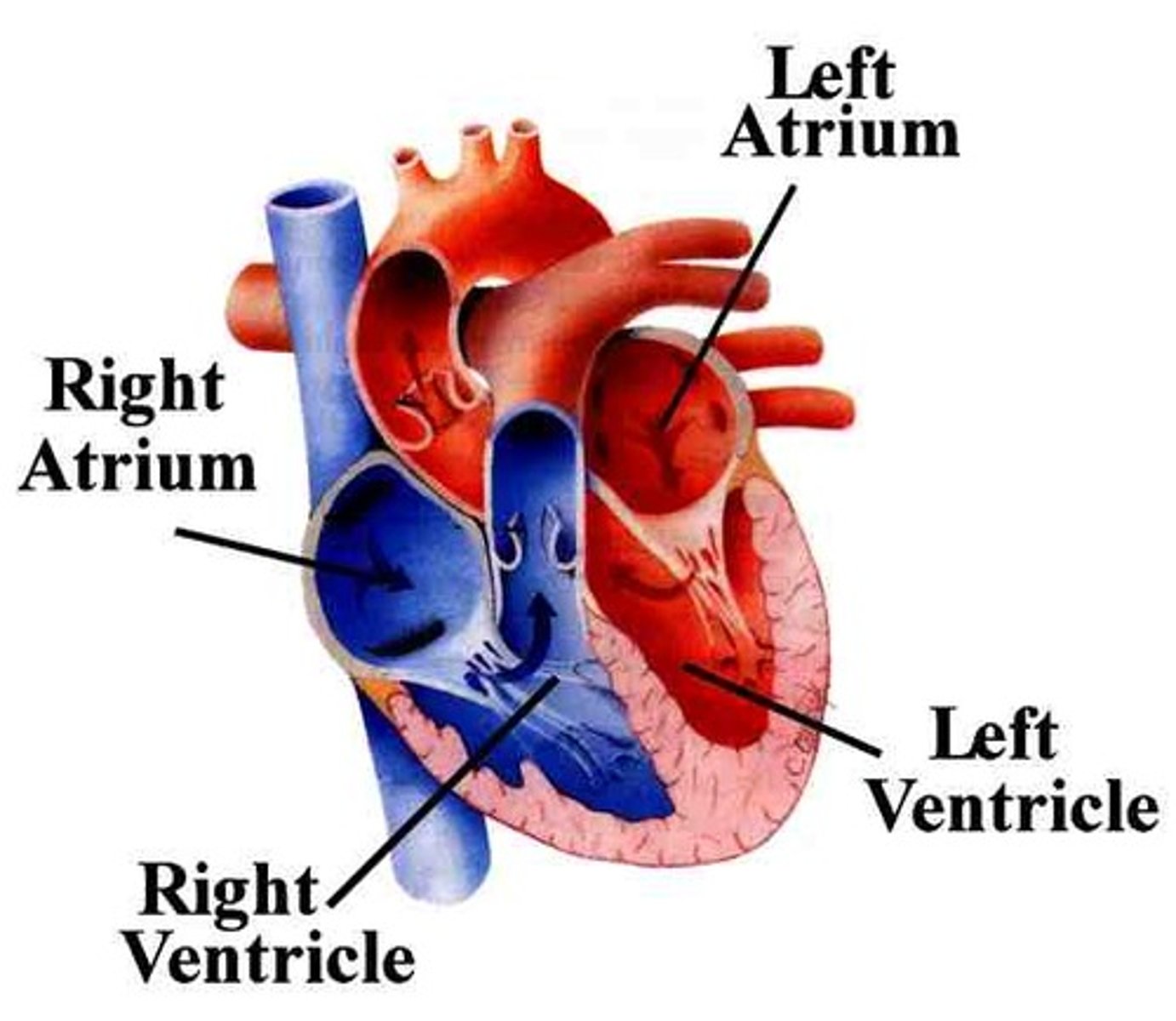
Ventricles
thick, muscular lower chambers
Receive blood from the atria above them
Force (pump) blood out of the heart through the arteries.
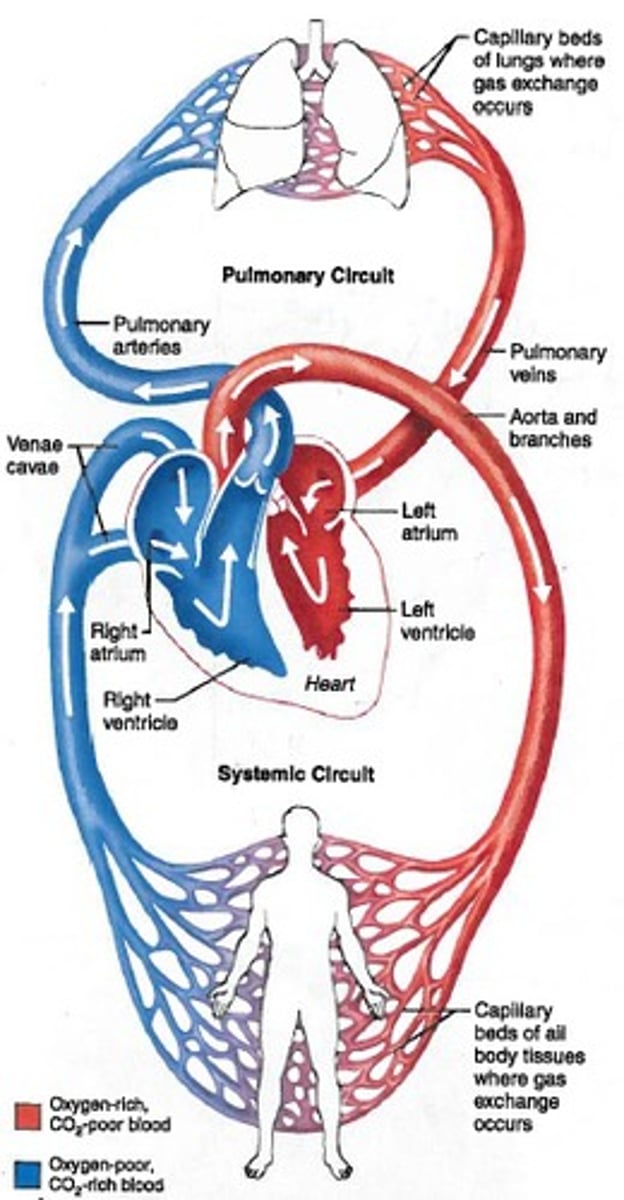
Systemic Circulation
delivers blood to all body cells and carries away CO2
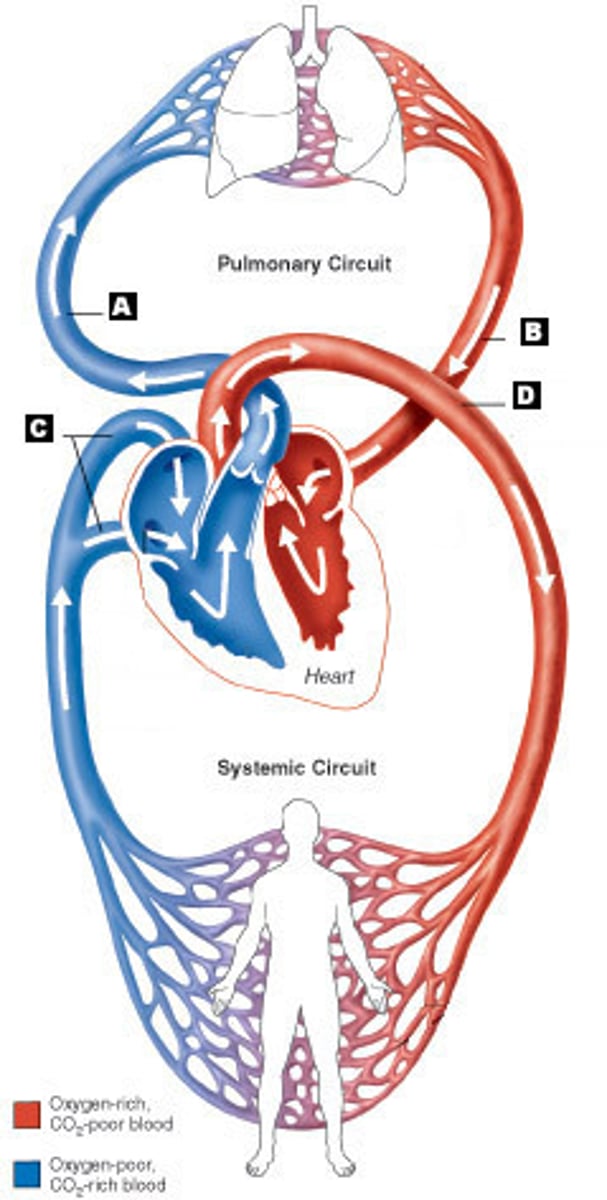
Pulmonary Circulation
gets rid of CO2 and oxygenates blood (through lungs)
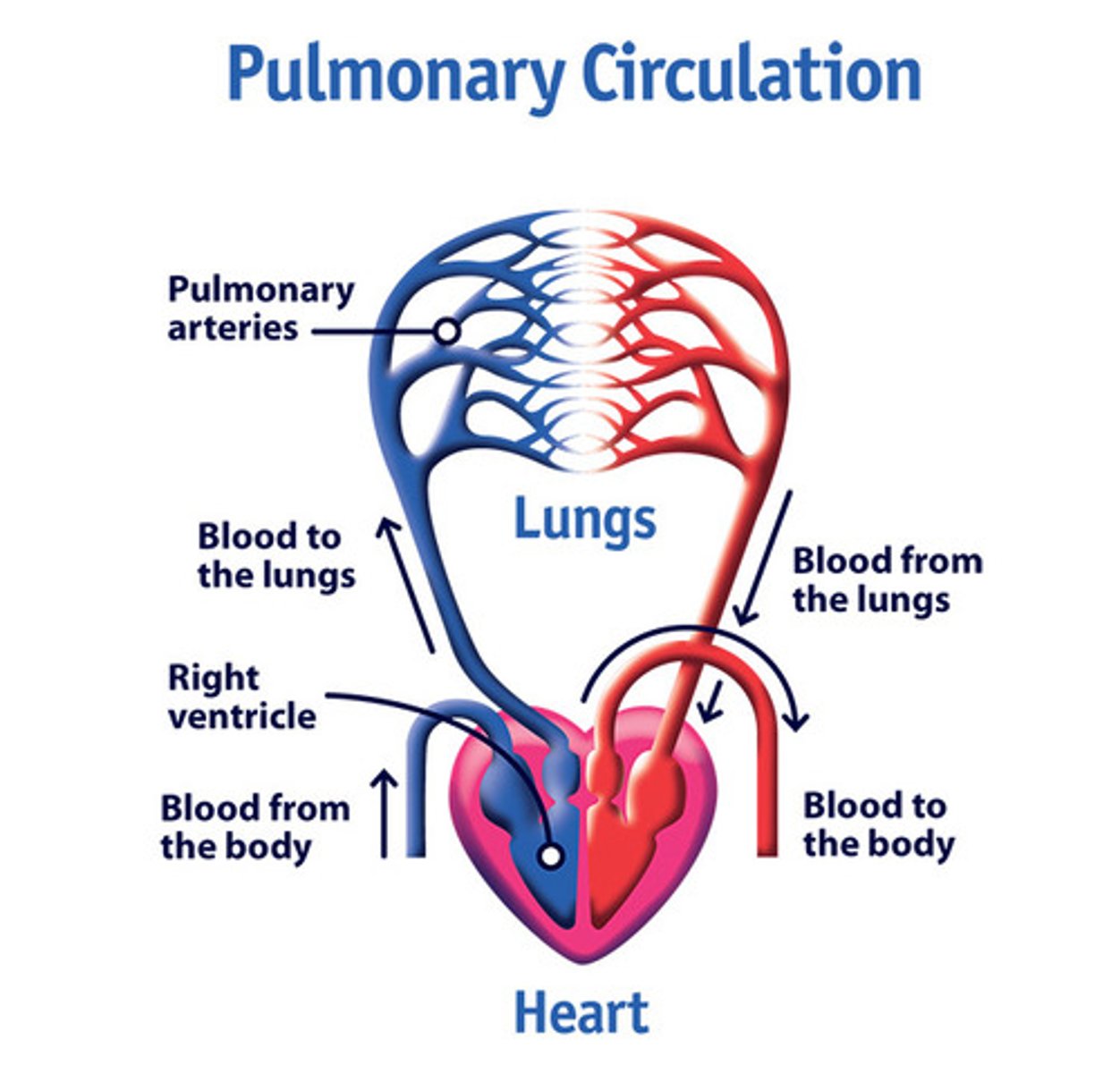
Pulmonary
means "lungs"
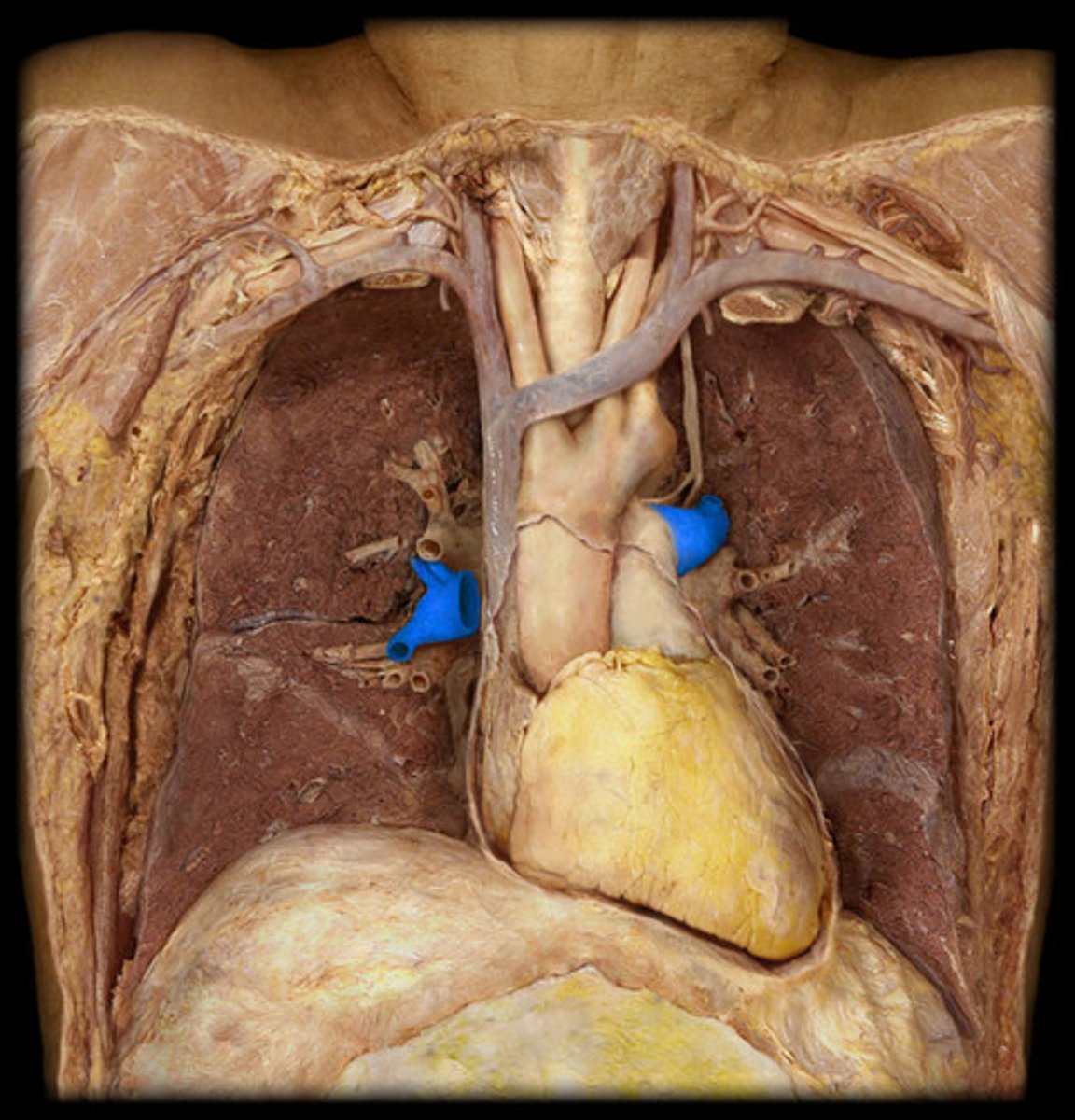
systemic
means "body"
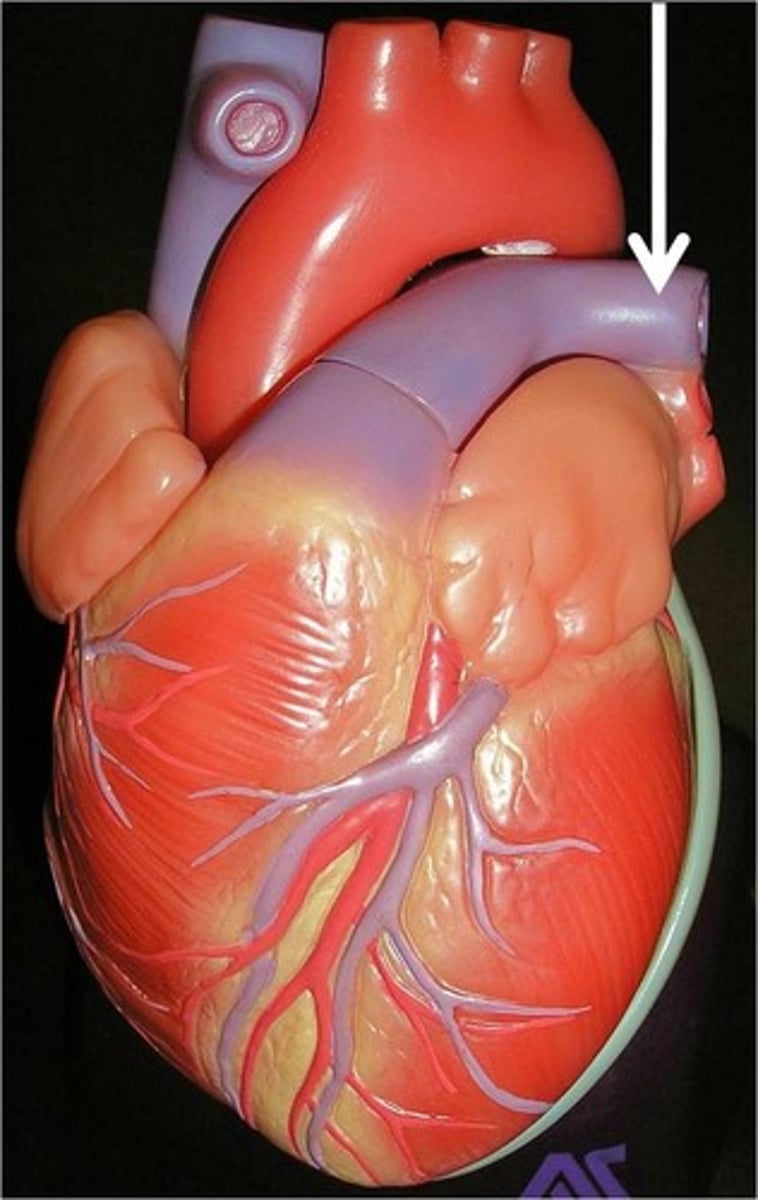
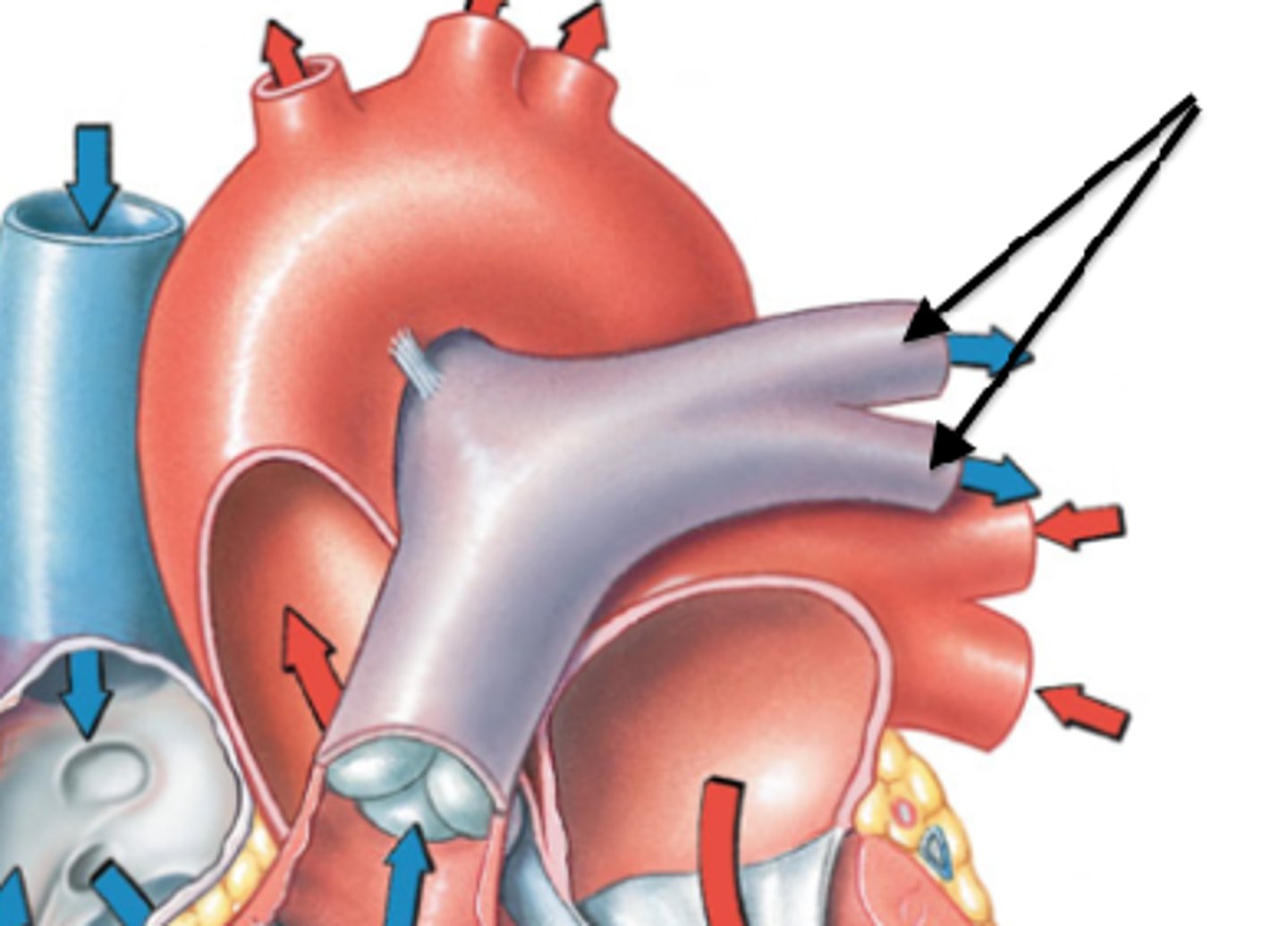
pulmonary arteries
carry deoxygenated blood out of the right ventricle and into the lungs
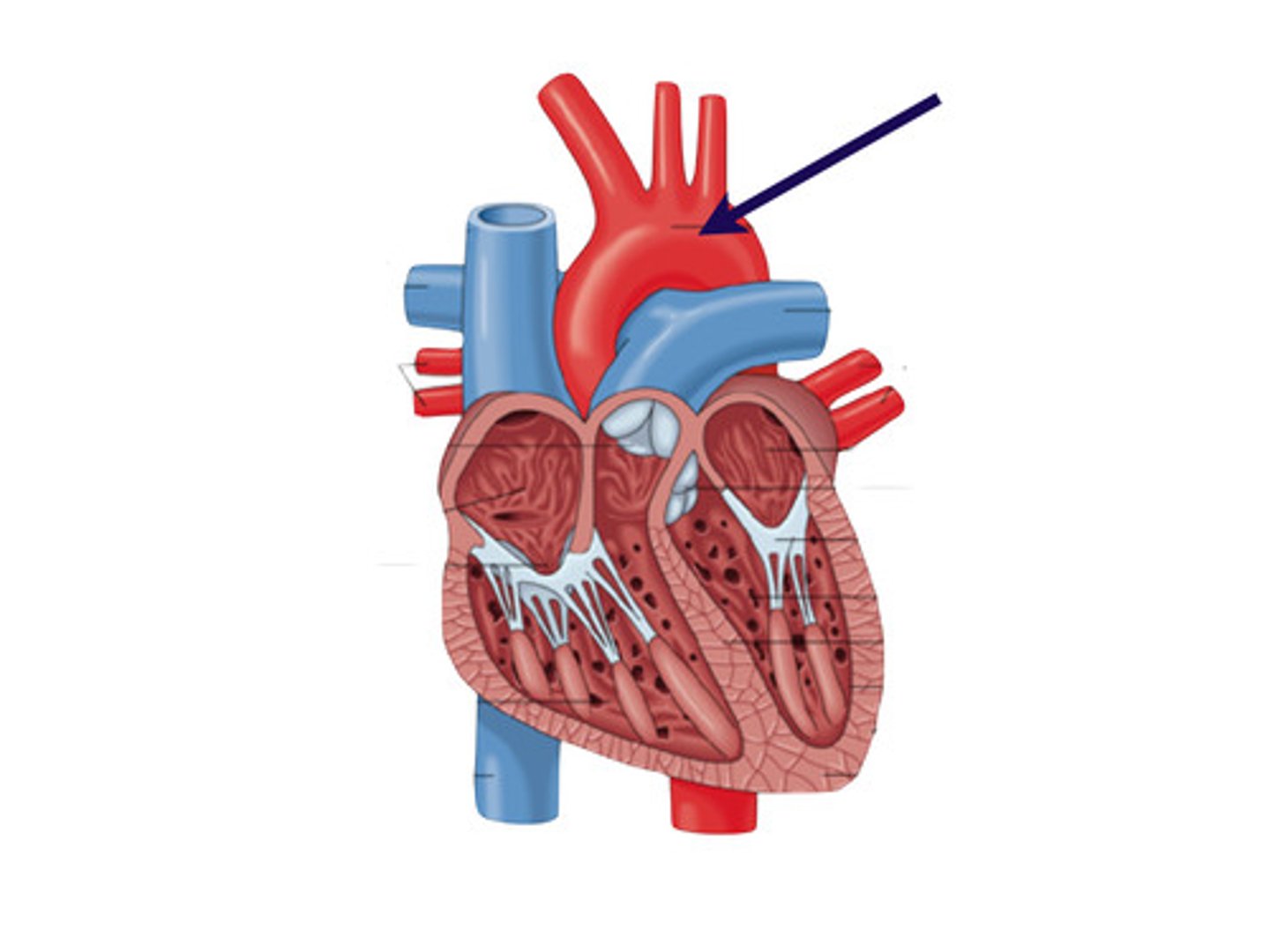
aorta
Largest artery in the body
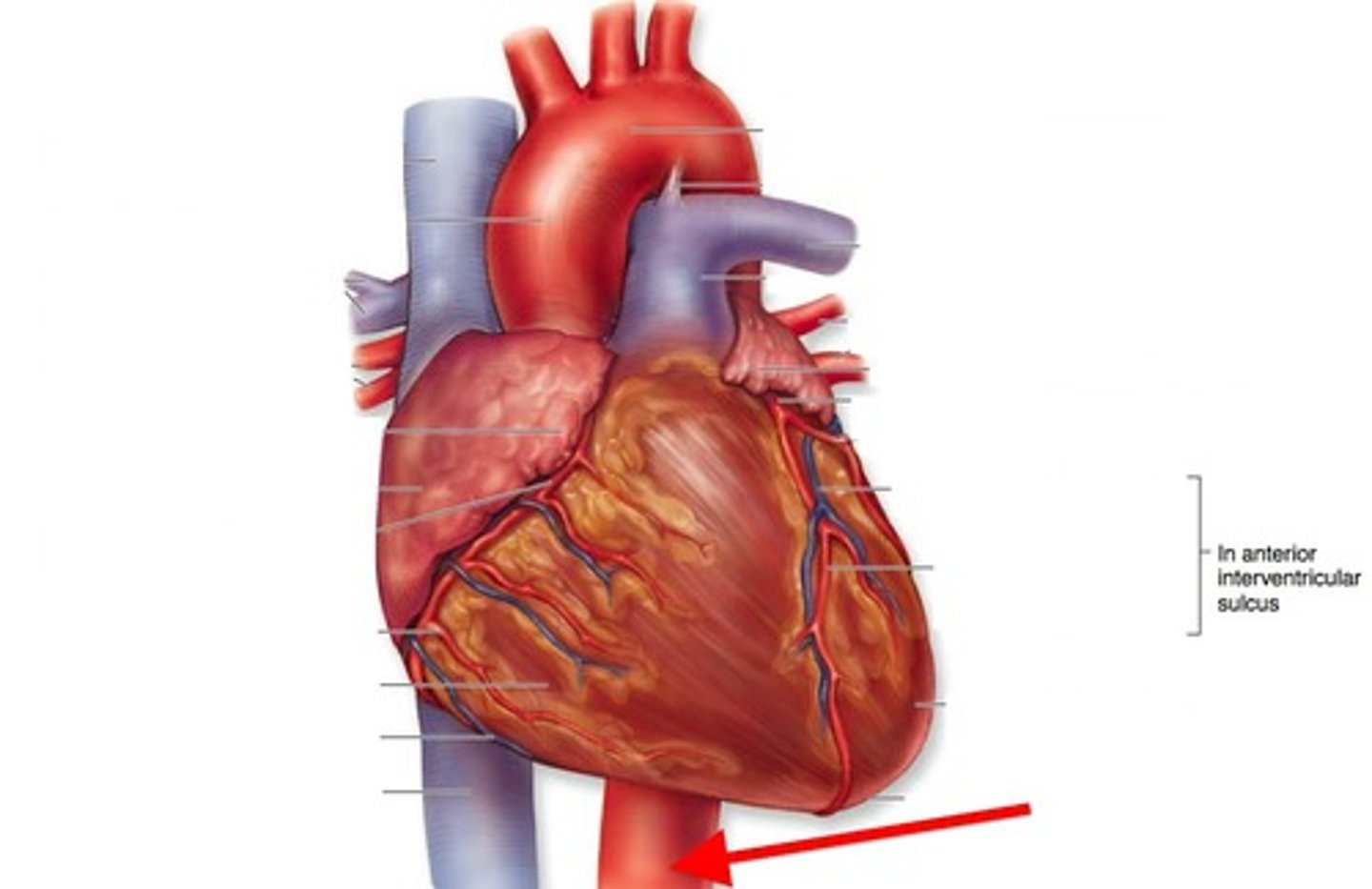
descending aorta
the descending part of the aorta that branches into the thoracic and abdominal aortae
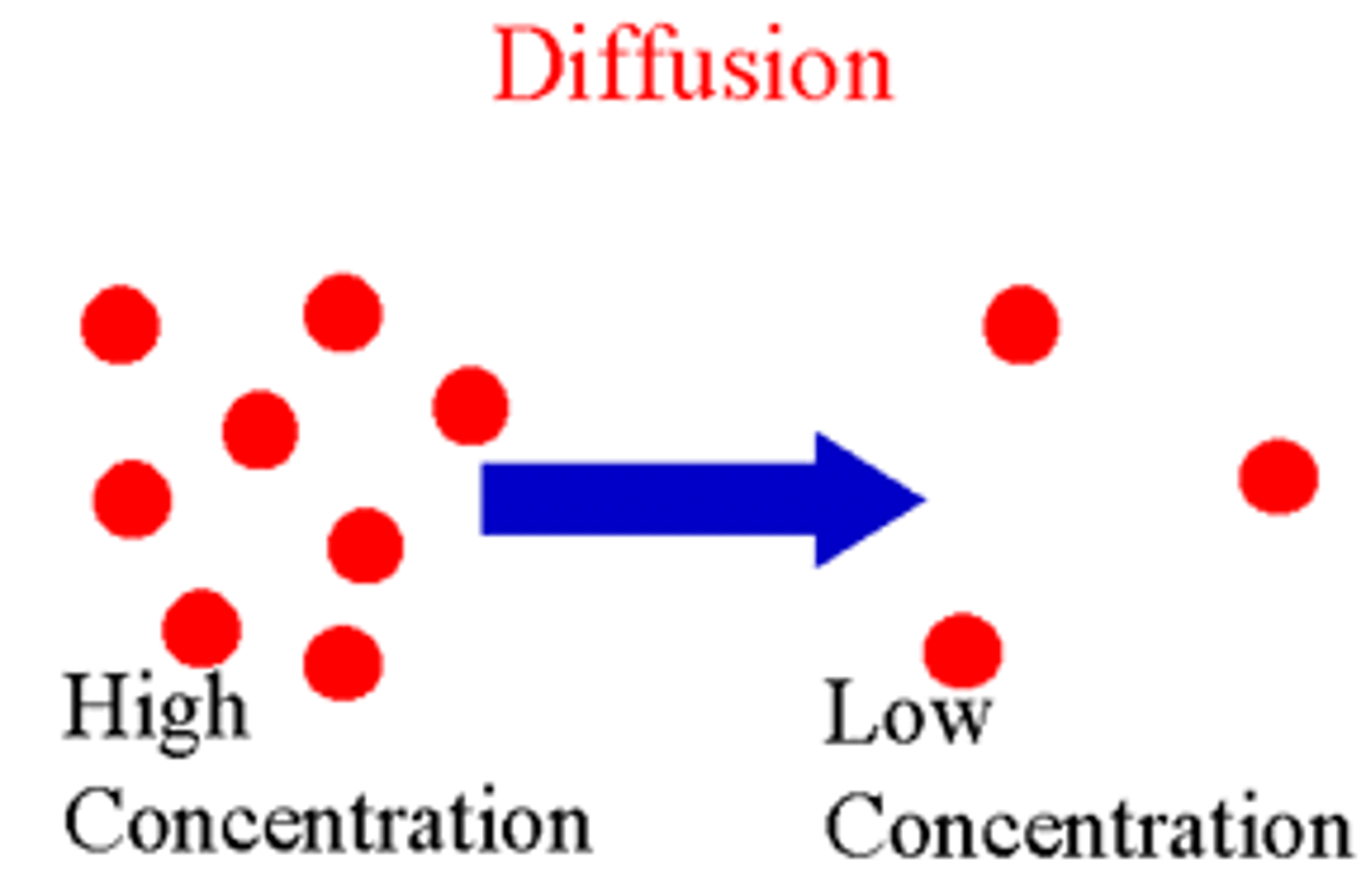
diffusion
Movement of molecules from an area of higher concentration to an area of lower concentration.
gas exchange in the lungs
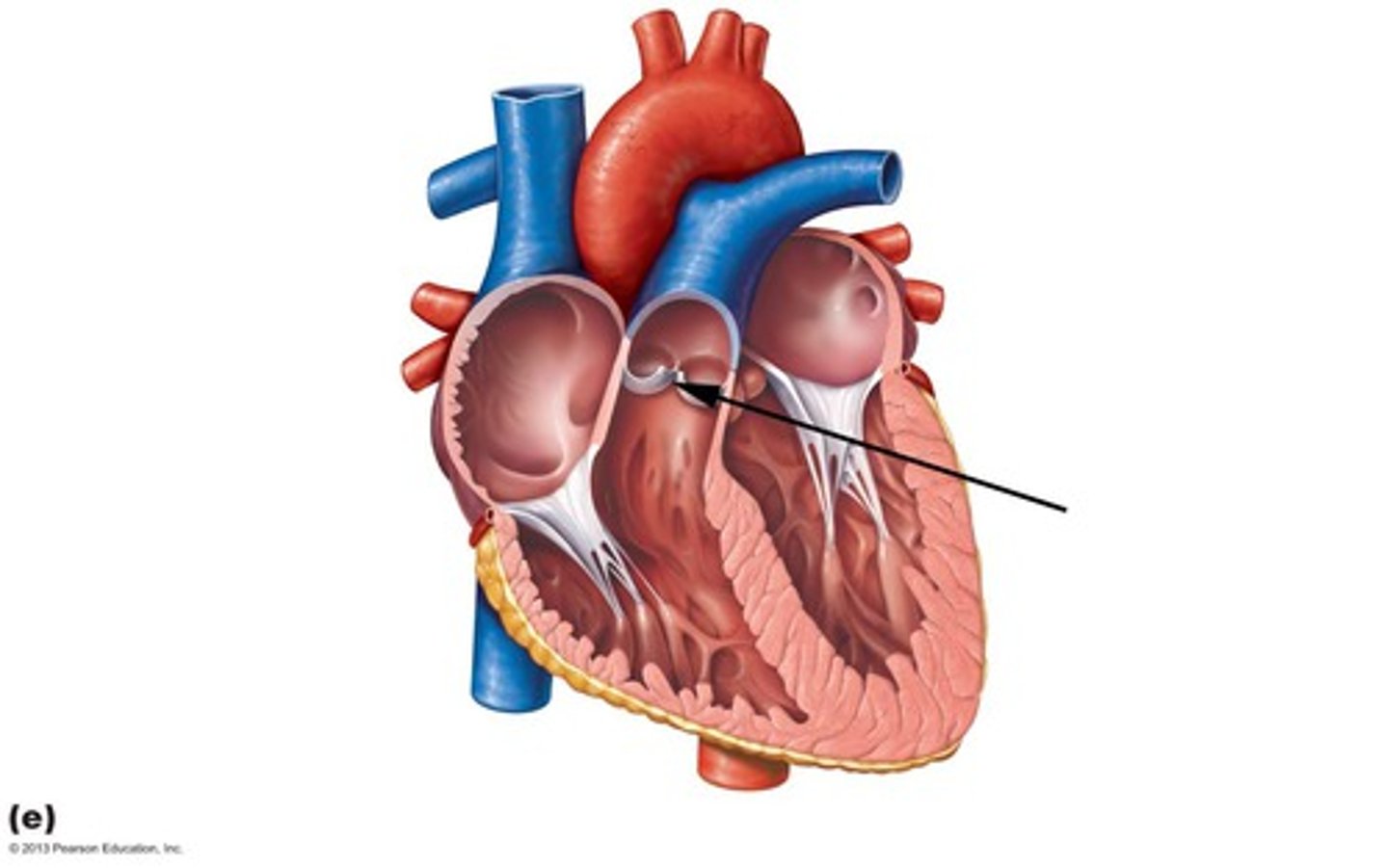
pulmonary valve
valve positioned between the right ventricle and the pulmonary artery
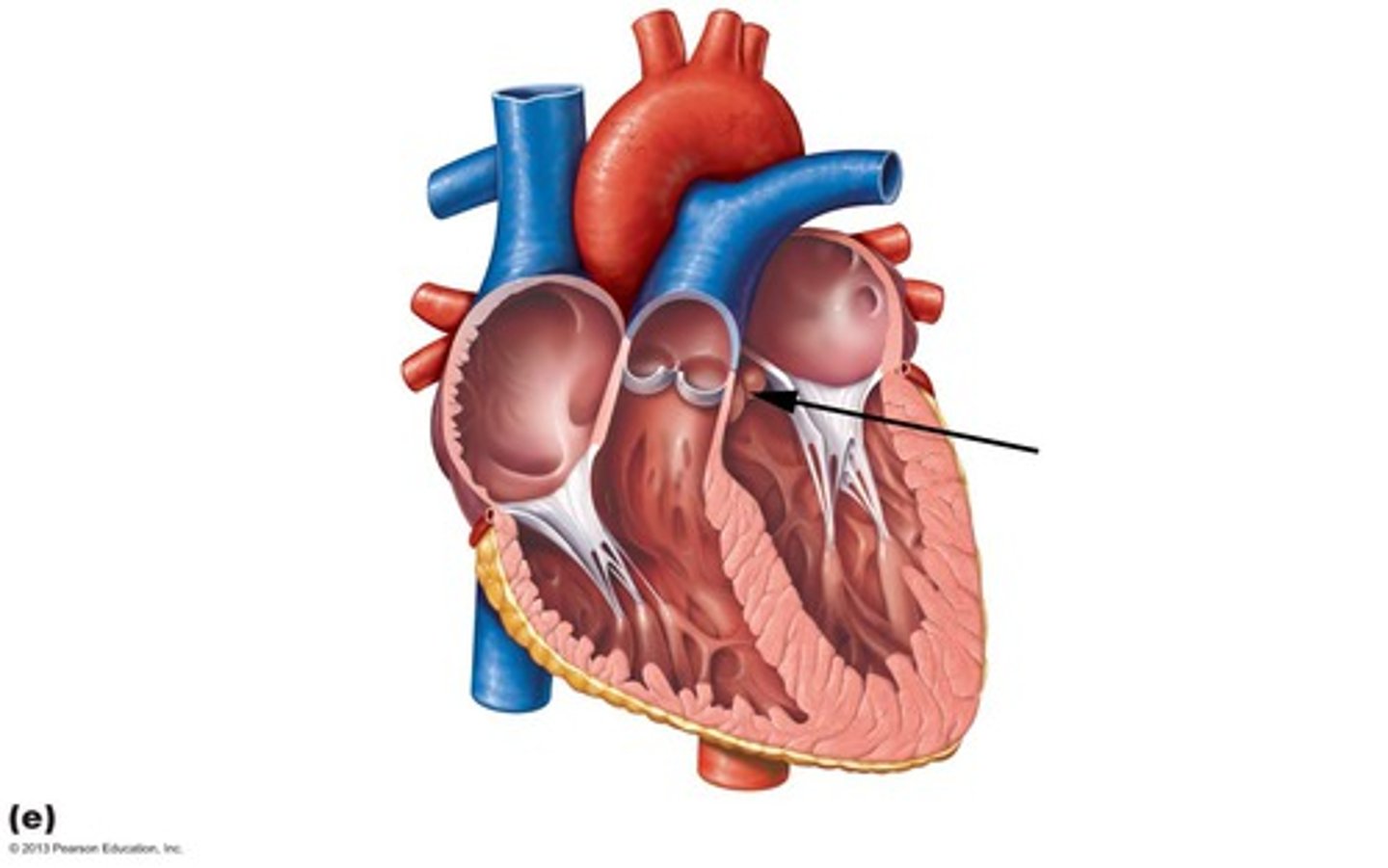
aortic valve
heart valve between the left ventricle and the aorta
septum
Divides the right and left chambers of the heart
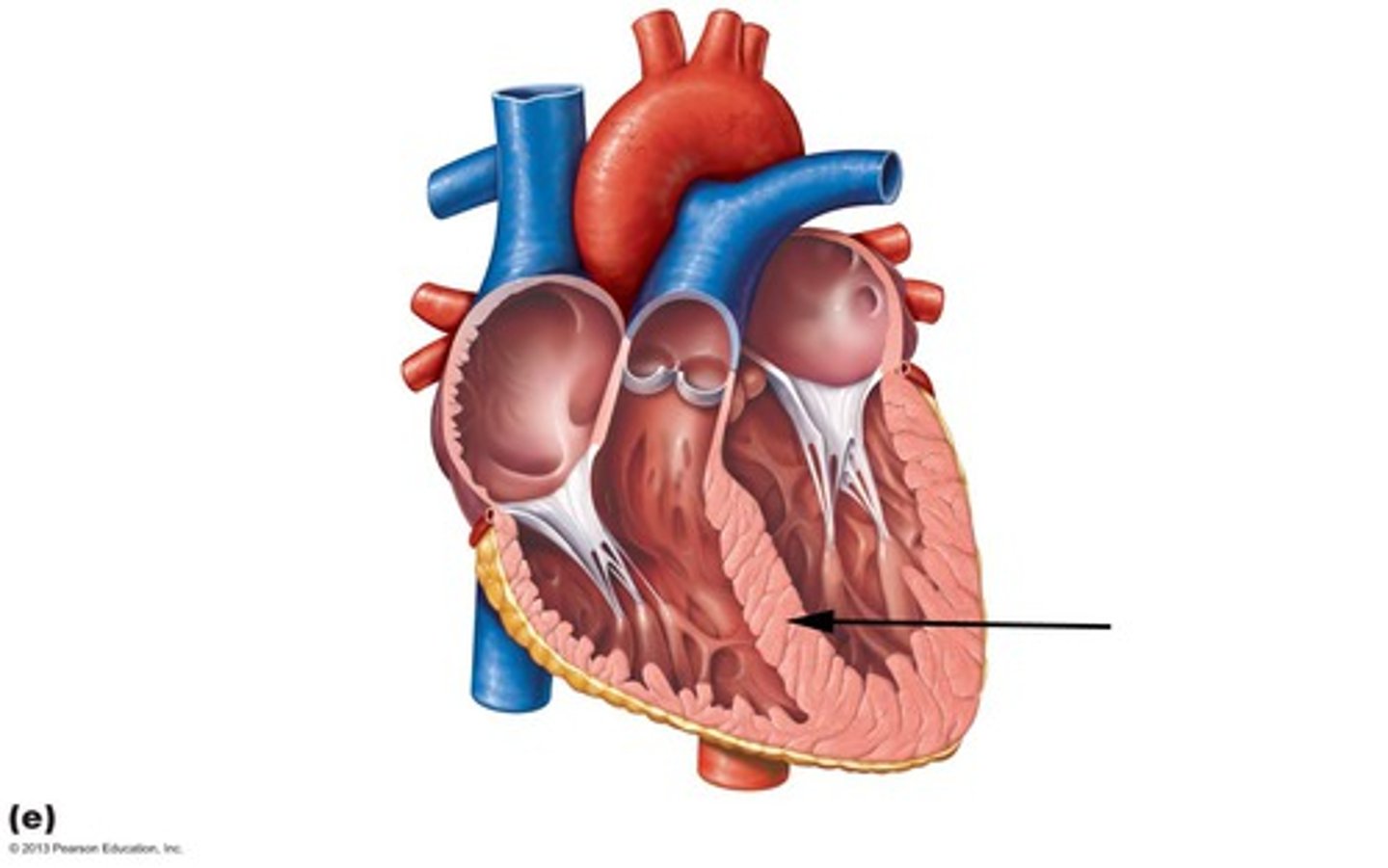
apex of the heart
lower tip of the heart
diffusion in the lungs
From the alveoli capillaries in your lungs, CO2 leaves your bloodstream (exhale) and O2 enters your bloodstream (inhale)
Aveoli Capillaries
tiny hair-like capillaries in your lungs where gas exchange occurs
arteries
carry blood away from the heart
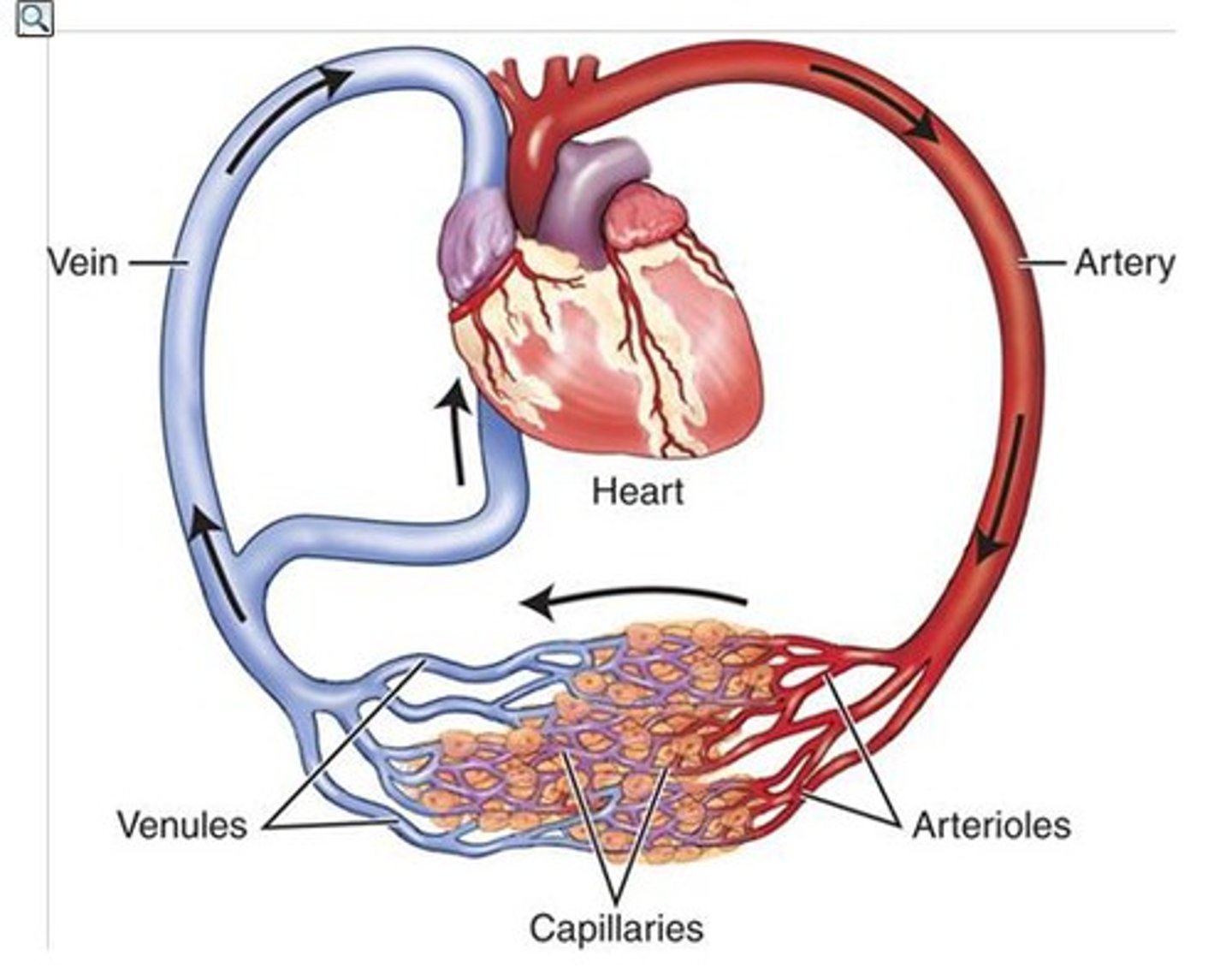
veins
Blood vessels that carry blood back to the heart