10.3 - Changes in ecosystems
 Call Kai
 Learn
Learn Practice Test
 Spaced Repetition
 Match
Match Flashcards
 Knowt Play
1/17

There's no tags or description
Looks like no tags are added yet.
Name | Mastery | Learn | Test | Matching | Spaced | Call with Kai | Chat |
|---|
No analytics yet
Send a link to your students to track their progress
18 Terms
What is the definition of a population?
The number of a particular species living in one habitat
What are abiotic factors & give examples?
The physical/non-living aspects to an ecosystem:
climatic factors (e.g. temperature, water/humidity, light/shade)
soil factors (e.g. soil pH, mineral supply, soil composition, moisture)
human factors (e.g. pollution)
catastrophes (e.g. floods & fires)
What is the difference between density-independent & density-dependent factors?
Density-independent factors (abiotic factors):
the size of the effect is independent of the size of the population (e.g. low light intensity will limit plant growth regardless of the number of plants present)
Density-dependent factors (biotic factors):
the size of the effect depends on the size of the population (e.g. bigger population = greater competition)
What are biotic factors?
The living aspects of an ecosystem (e.g. food, competitors, predators, parasites & pathogens)
What is inter-specific competition?
Competition for resources (e.g. food, space, water, light) between members of different species
What is the competitive exclusion principle?
Two species cannot co-exist in the same habitat if they have the same niche, as one species will out-compete the other
What is intra-specific competition?
Competition for resources (e.g. food, water, space, light) between members of the same species:
only occurs if they have the same niche

What is the relationship between predator & prey populations?
The populations of predators & their prey depend on each other, so they tend to show cyclical cycles
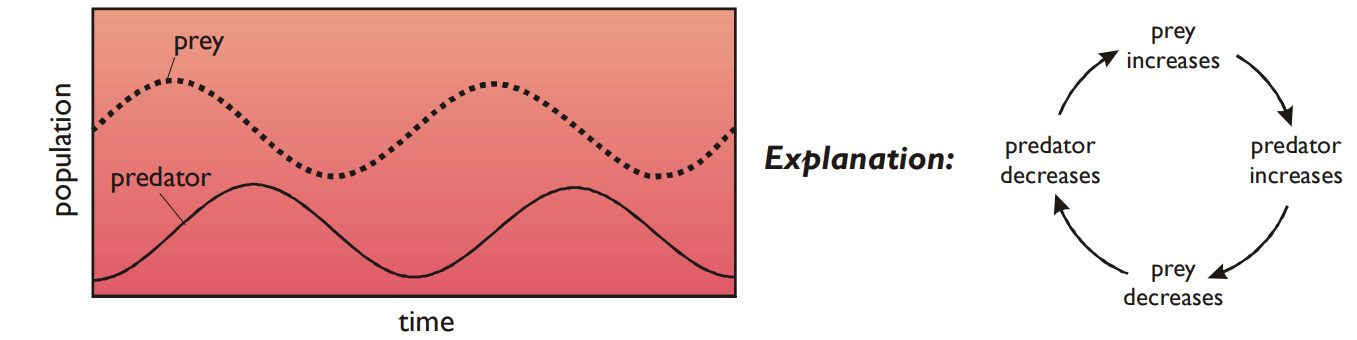
What is the relationship between parasites/pathogens & their hosts’ populations?
Parasites/pathogens & their hosts have a close symbolic relationship, so their populations oscillate
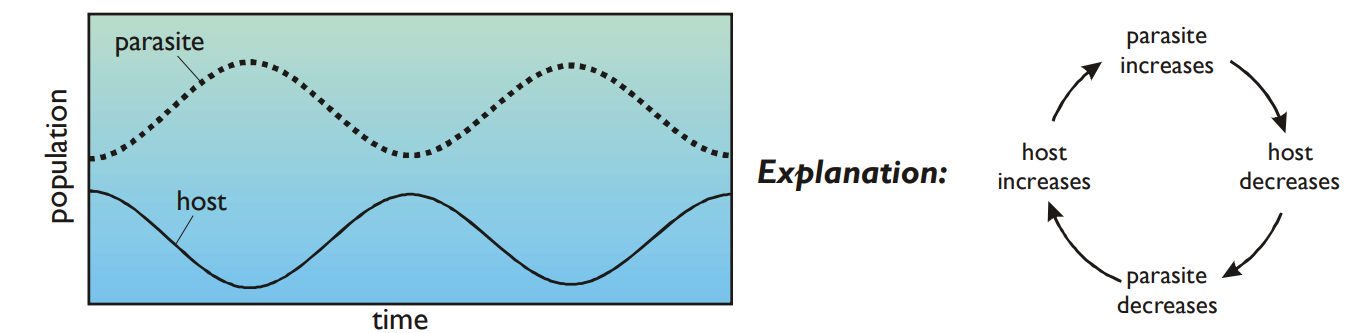
When do abiotic & biotic factors govern who survives?
Abiotic factors: in harsh environments
Biotic factors: in mild environments (e.g. competition)
What is the definition of succession?
Change in species of plants & animals taking place over time, leading to a climax community
What is the definition of a climax community?
A stable, mature community that undergoes little or no succession & where plants & animals have established equilibrium (e.g. oak or pine forest)
As succession proceeds, how does the habitat become less harsh & the abiotic factors less hostile?
Daily temperature fluctuations decrease, due to shade
Water is more easily available, as it is retained in the soil
The amount of nitrates increase, due to nitrogen fixation & decay
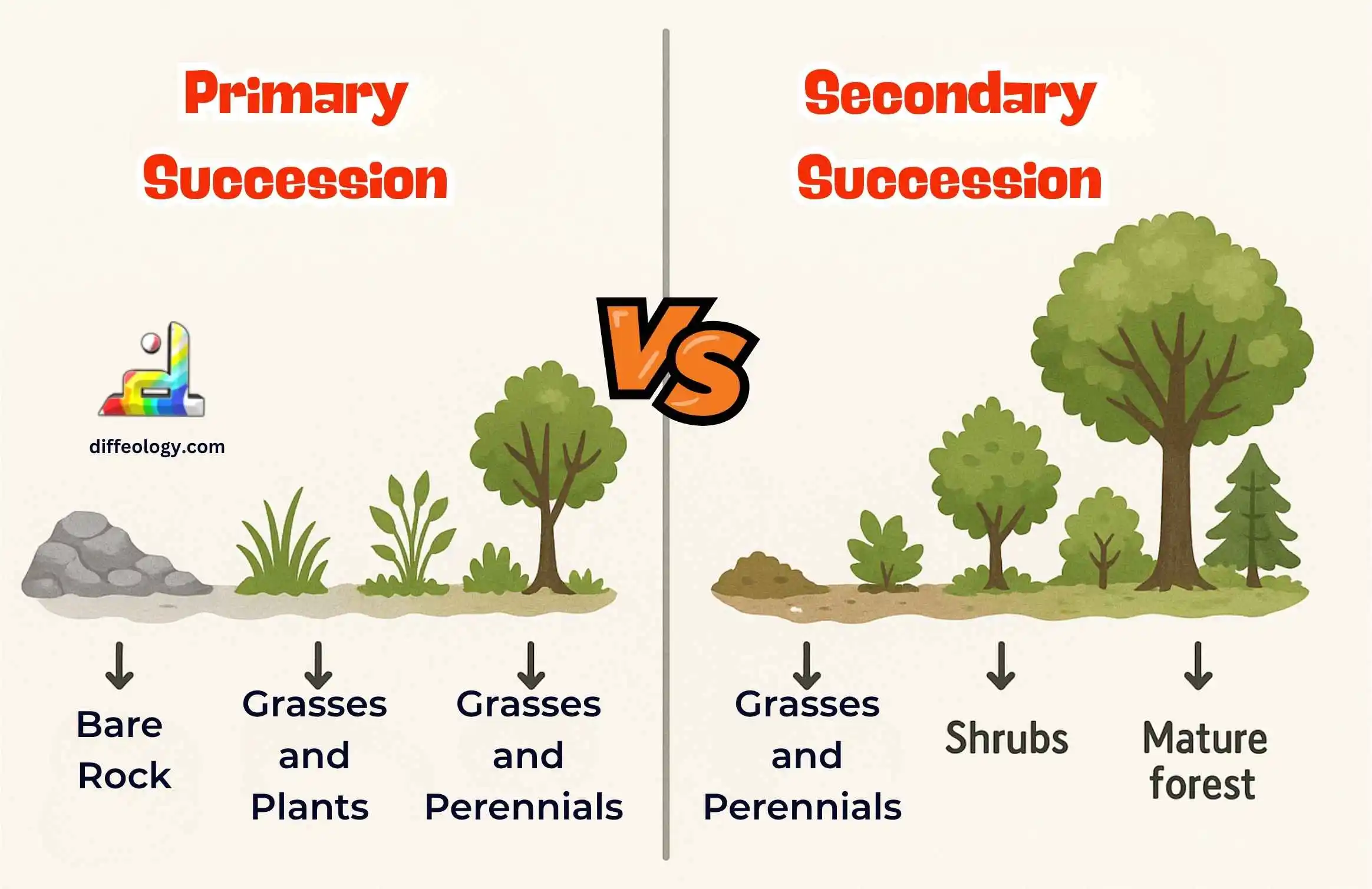
What is the difference between primary & secondary succession?
Primary succession: occurs on newly formed or exposed land with no soil & previously devoid of life
Secondary succession: existing community has been removed, leaving soil intact but with no plant or animal species (e.g. forest fire)
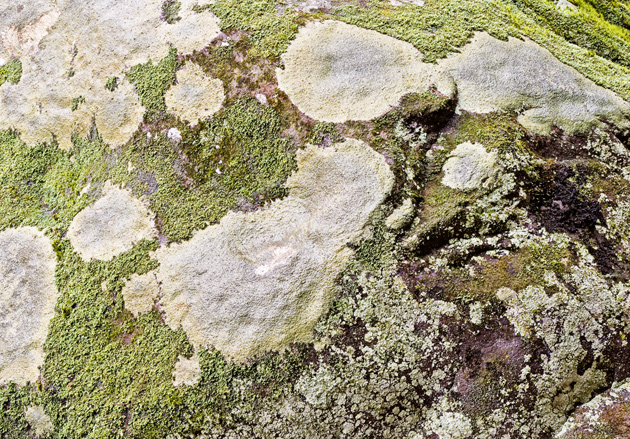
What are lichen?
Start the process of primary succession:
the only species that can survive on bare rock with very little water & nutrients
they have a mutualistic relation between algae & fungi
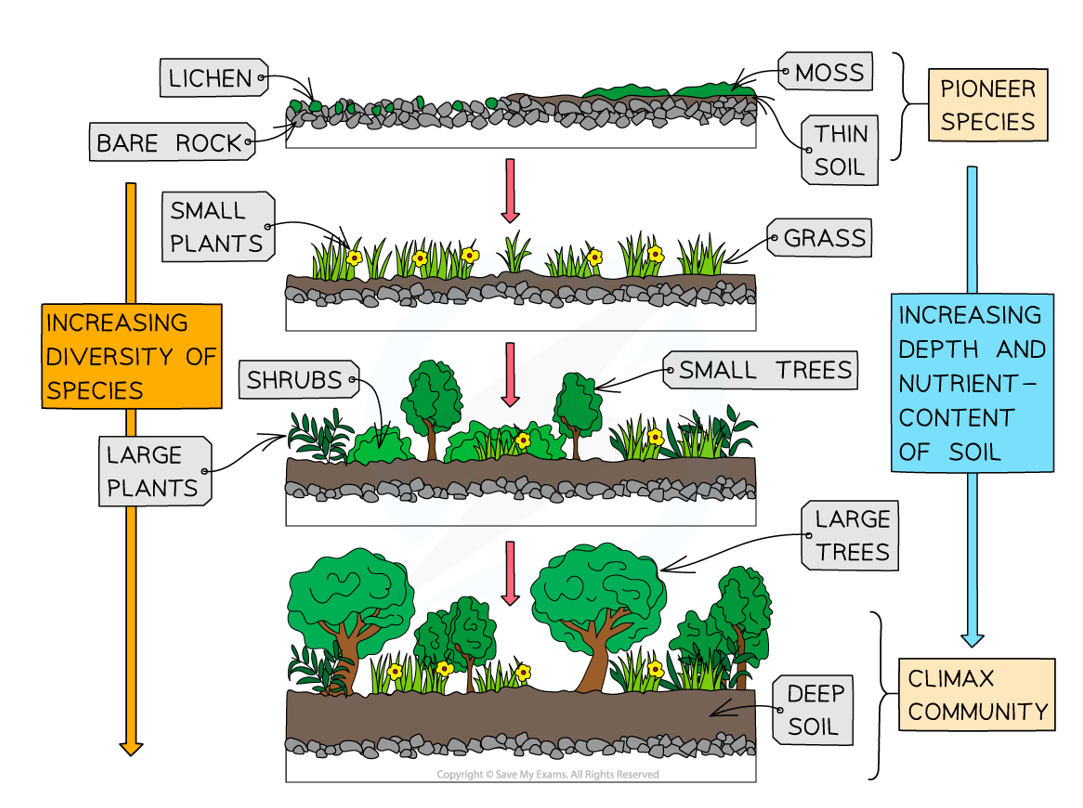
Outline primary succession (6 steps)
Begins with pioneer species (e.g. lichen) that can survive harsh conditions (little water & nutrients) to form a thin layer of soil
Mosses & small plants grow, increasing the soil depth, nutrient & water content
Over time, larger plants establish themselves, further changing the environment
Each new species alters the environment, making it less suitable for the previous species, leading to out-competition
This ongoing change increases biodiversity & leads to a less hostile environment
The final, stable stage is called the climax community (typically dominated by trees)
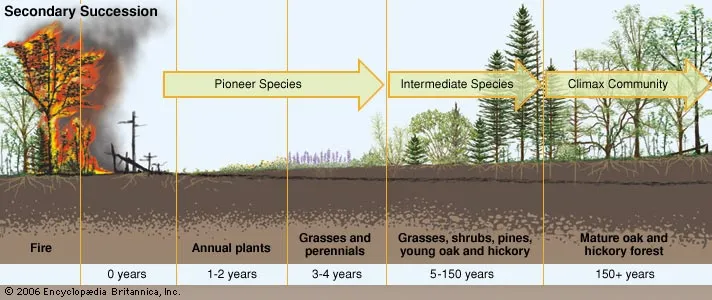
Outline secondary succession (5 steps)
Primary succession is disrupted (e.g. by volcanic eruptions/wildfires) & plants are destroyed
Succession starts again, but doesn’t start from bare rock as the soil has already been formed
Biodiversity increases as species richness & the number of organisms increases
Larger plant species & animals start to colonise the area
Food webs become more complex
What is a plagioclimax community?
Human activity (e.g. ploughing, weeding, mowing, herbicides, burning, etc) prevents succession in a habitat from reaching its natural climax community