Give Me Liberty: An American History - Seagull 7th Edition - Chapter 1 Vocabulary
 Call Kai
 Learn
Learn Practice Test
 Spaced Repetition
 Match
Match Flashcards
 Knowt Play
1/17

There's no tags or description
Looks like no tags are added yet.
Name | Mastery | Learn | Test | Matching | Spaced | Call with Kai | Chat |
|---|
No analytics yet
Send a link to your students to track their progress
18 Terms
Tenochtitlán
capital of the Aztec empire (modern day Mexico) and one of the world's largest cities
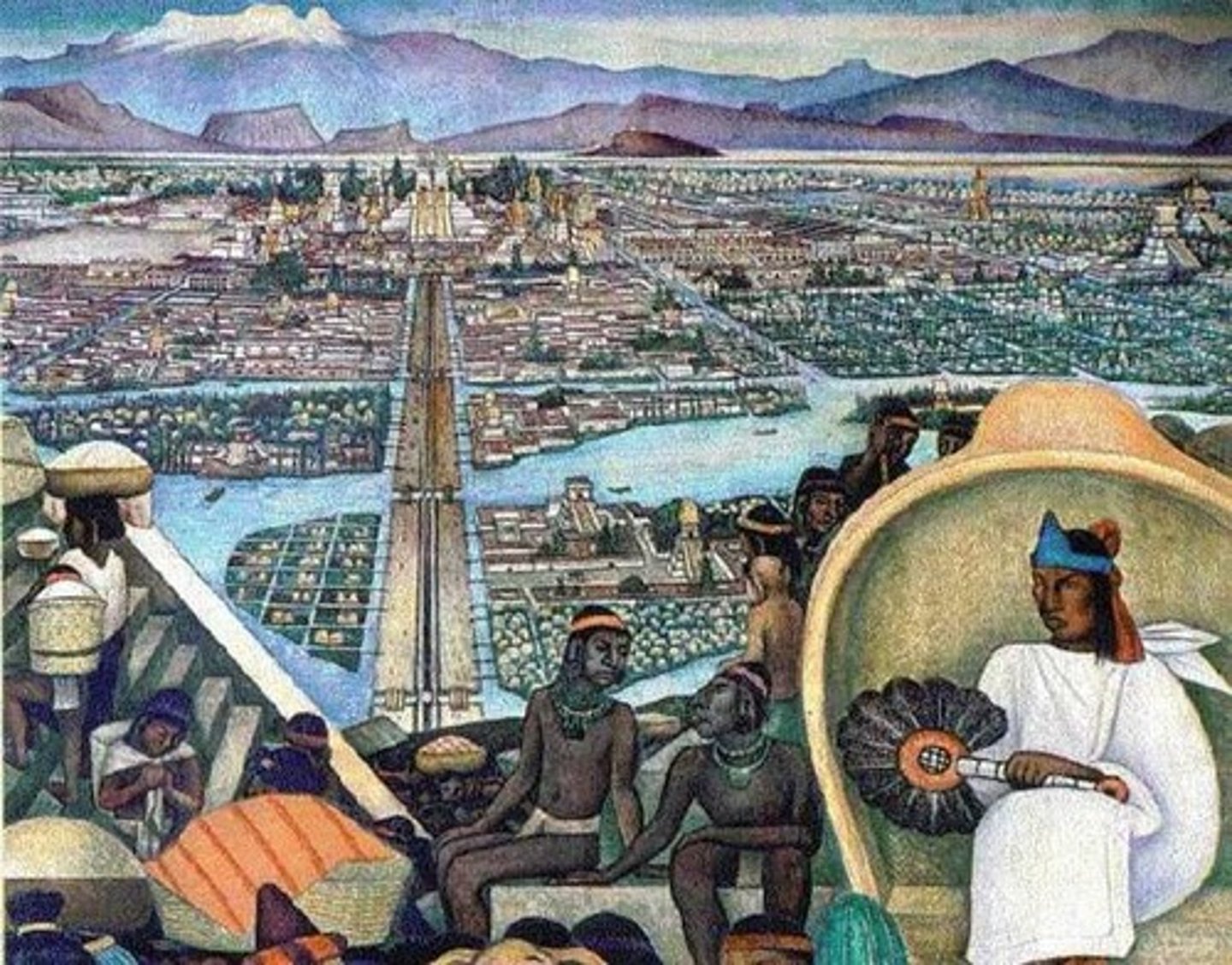
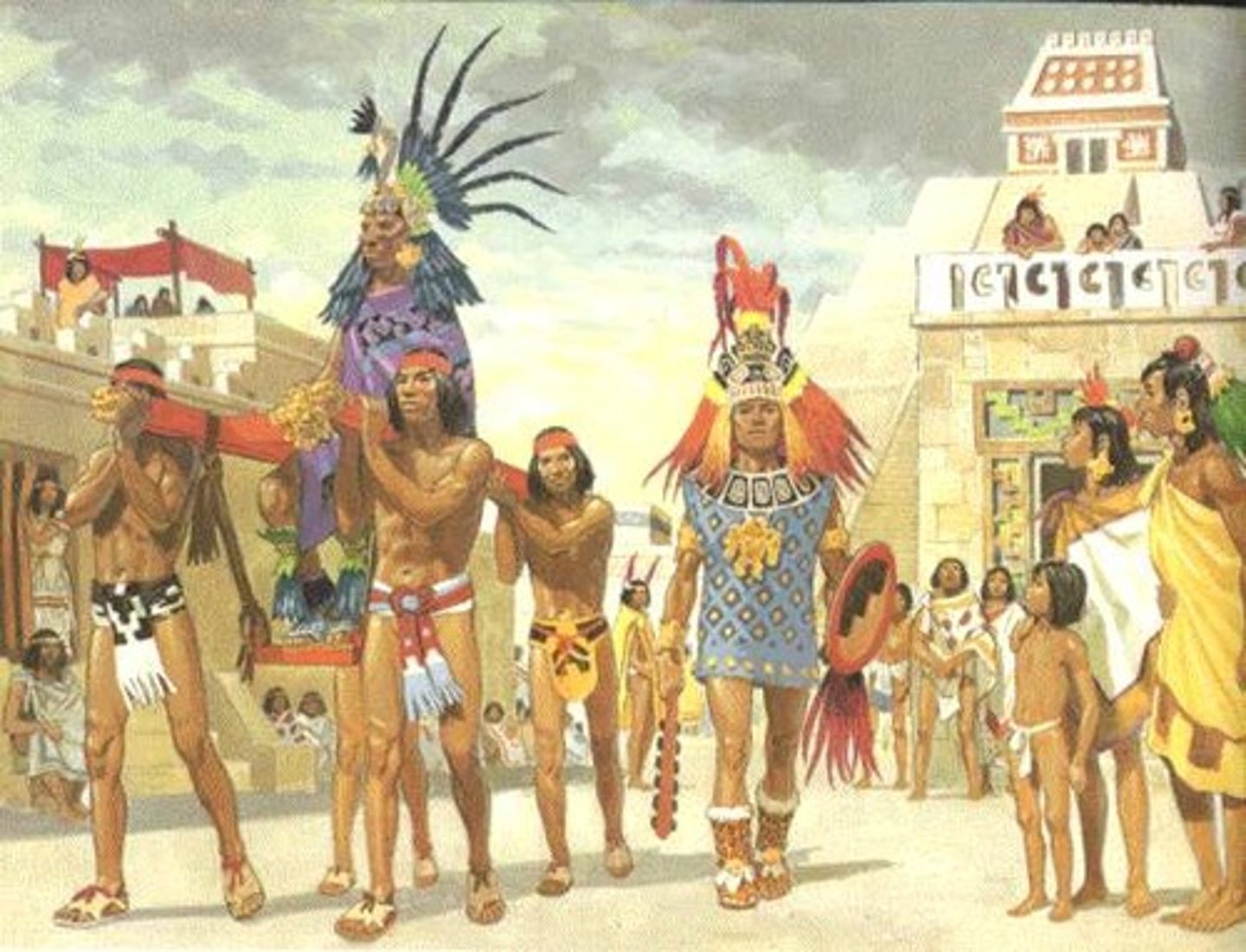
Aztec
(1200-1521) 1300, they settled in the valley of Mexico. Grew maize, beans, and squash known as the "three-sisters." Engaged in frequent warfare to conquer others of the region.
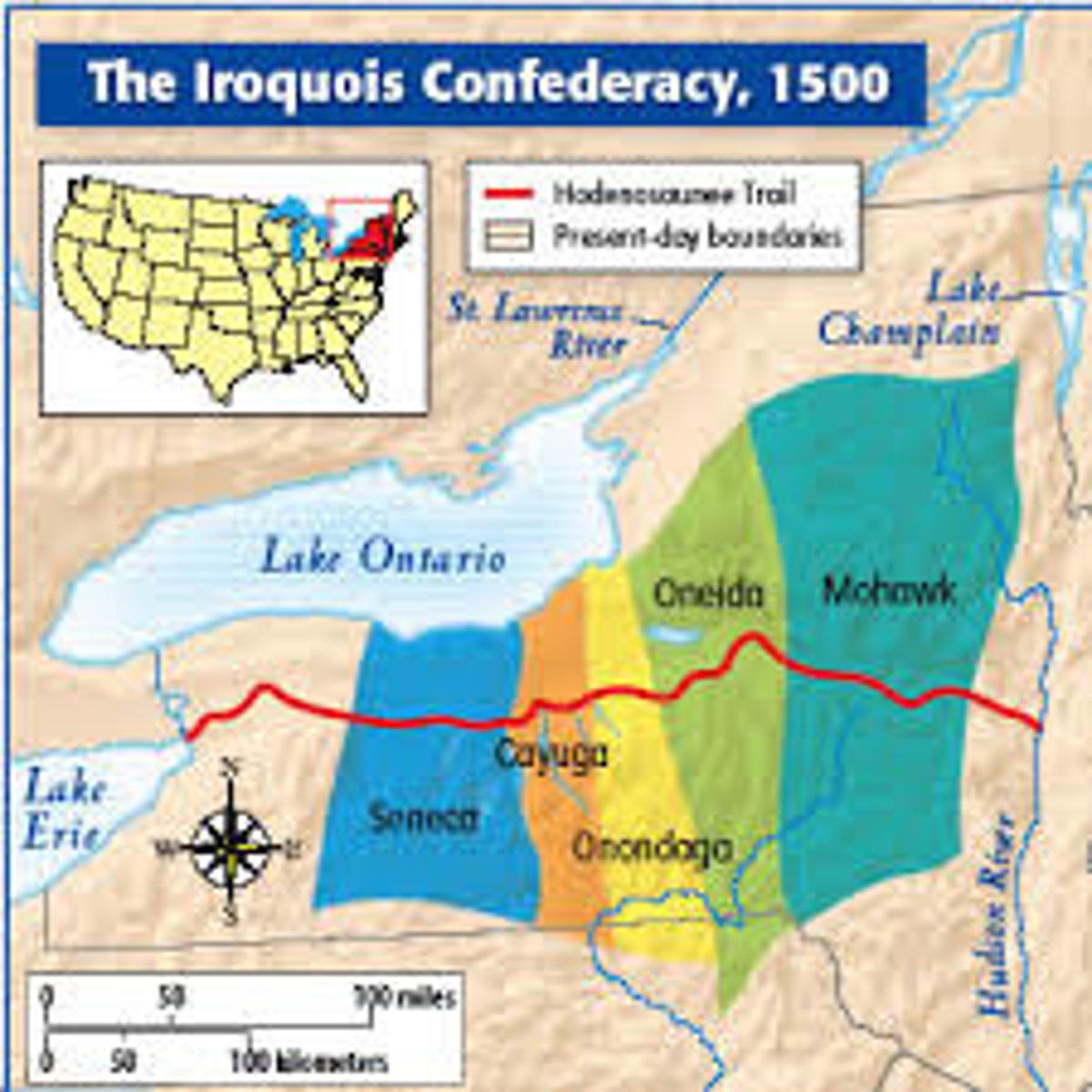
Great League of Peace
Formed by the five Iroquois peoples - the Mohawk, Oneida, Cayuga, Seneca, & Onondaga - to bring stability to their region; each year representatives met to coordinate behavior toward outsiders.
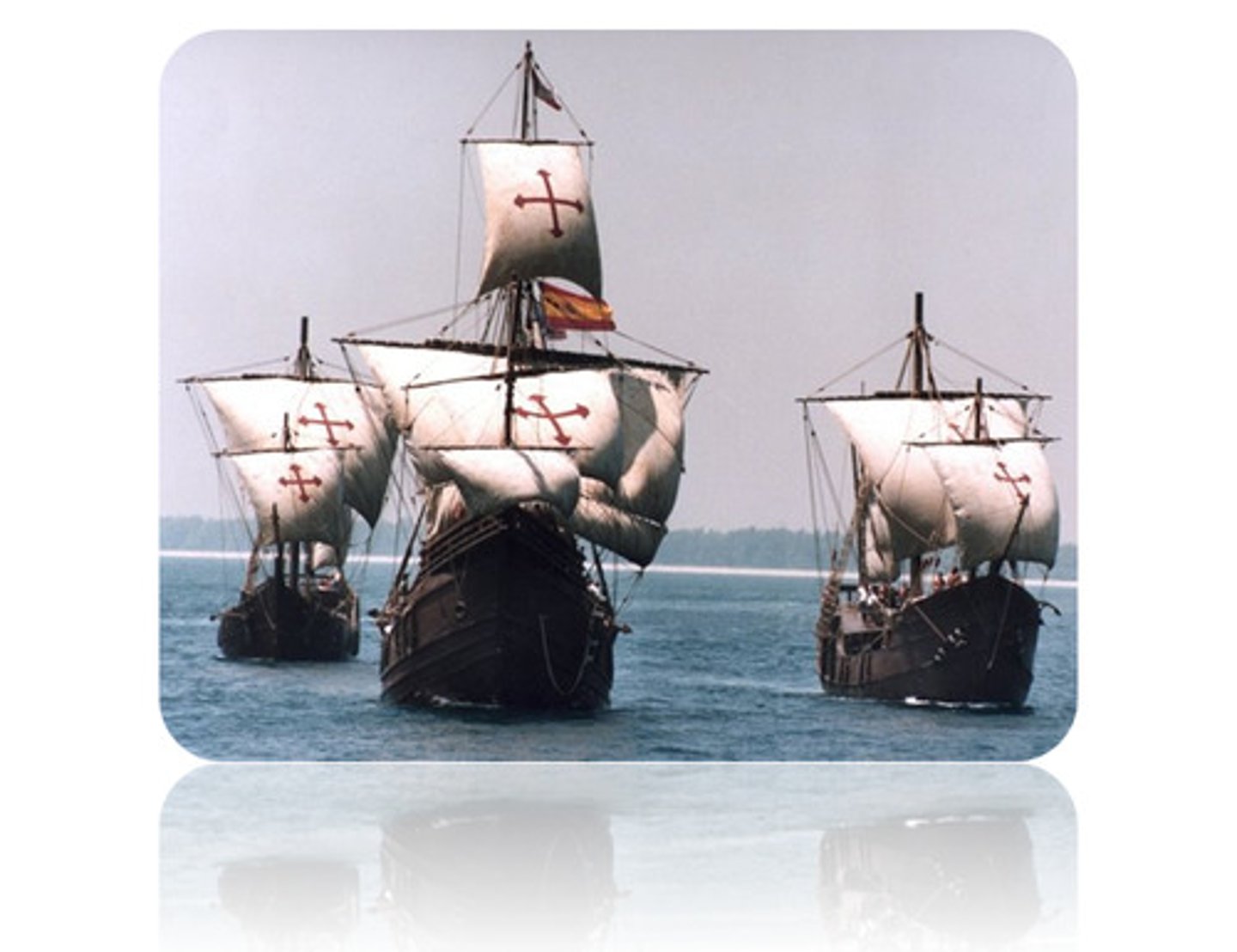
caravel
A small, highly maneuverable three-masted ship used by the Portuguese and Spanish in the exploration of the Atlantic.
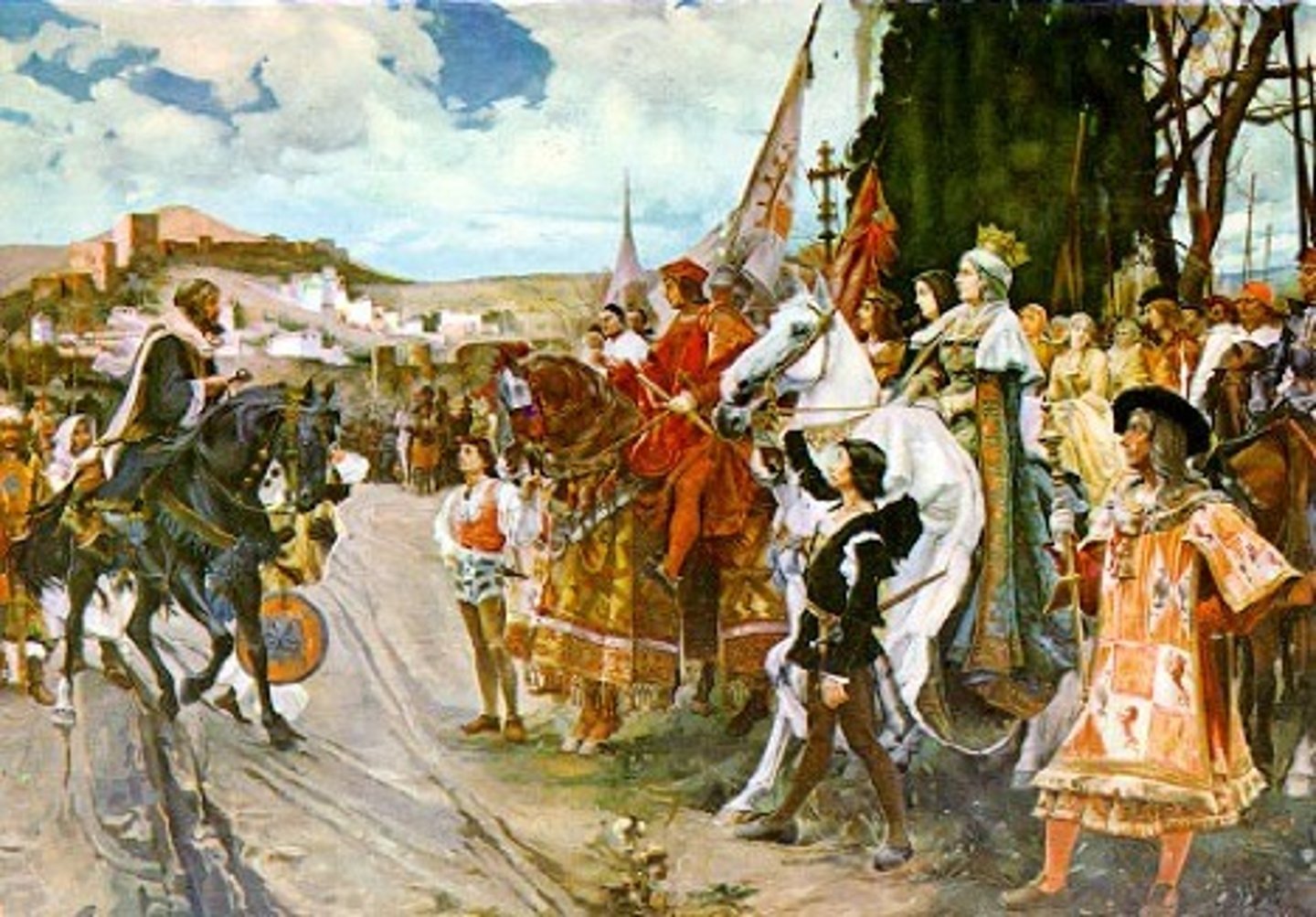
reconquista
Beginning in the eleventh century, military campaigns by various Iberian Christian states to recapture territory taken by Muslims. The "reconquest" of Spain from the Moors was completed by King Ferdinand and Queen Isabella in 1492.
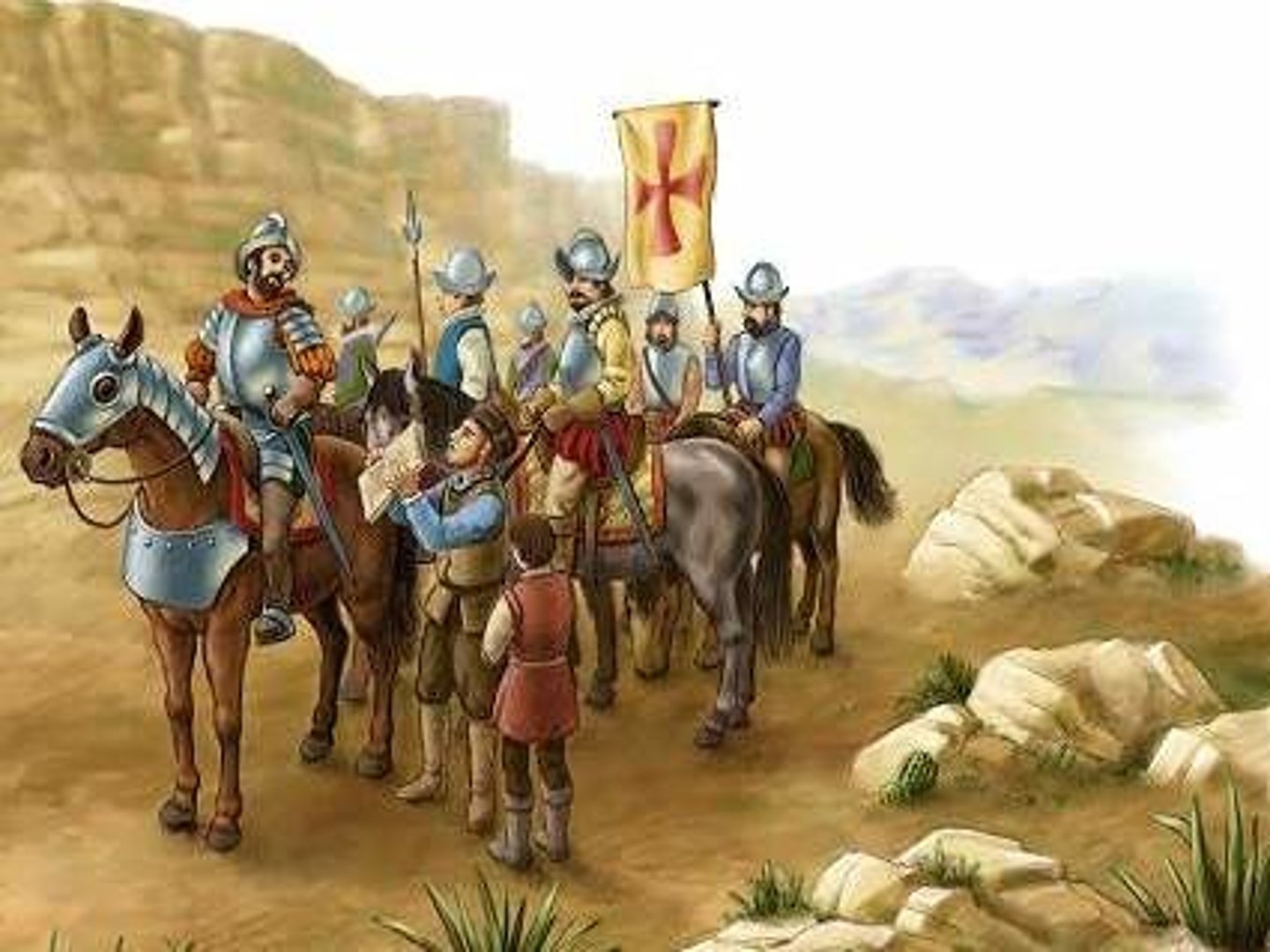
conquistadores
Spanish 'conqueror' or soldier in the New World. They were searching for the 3-G's: gold, God, and glory.
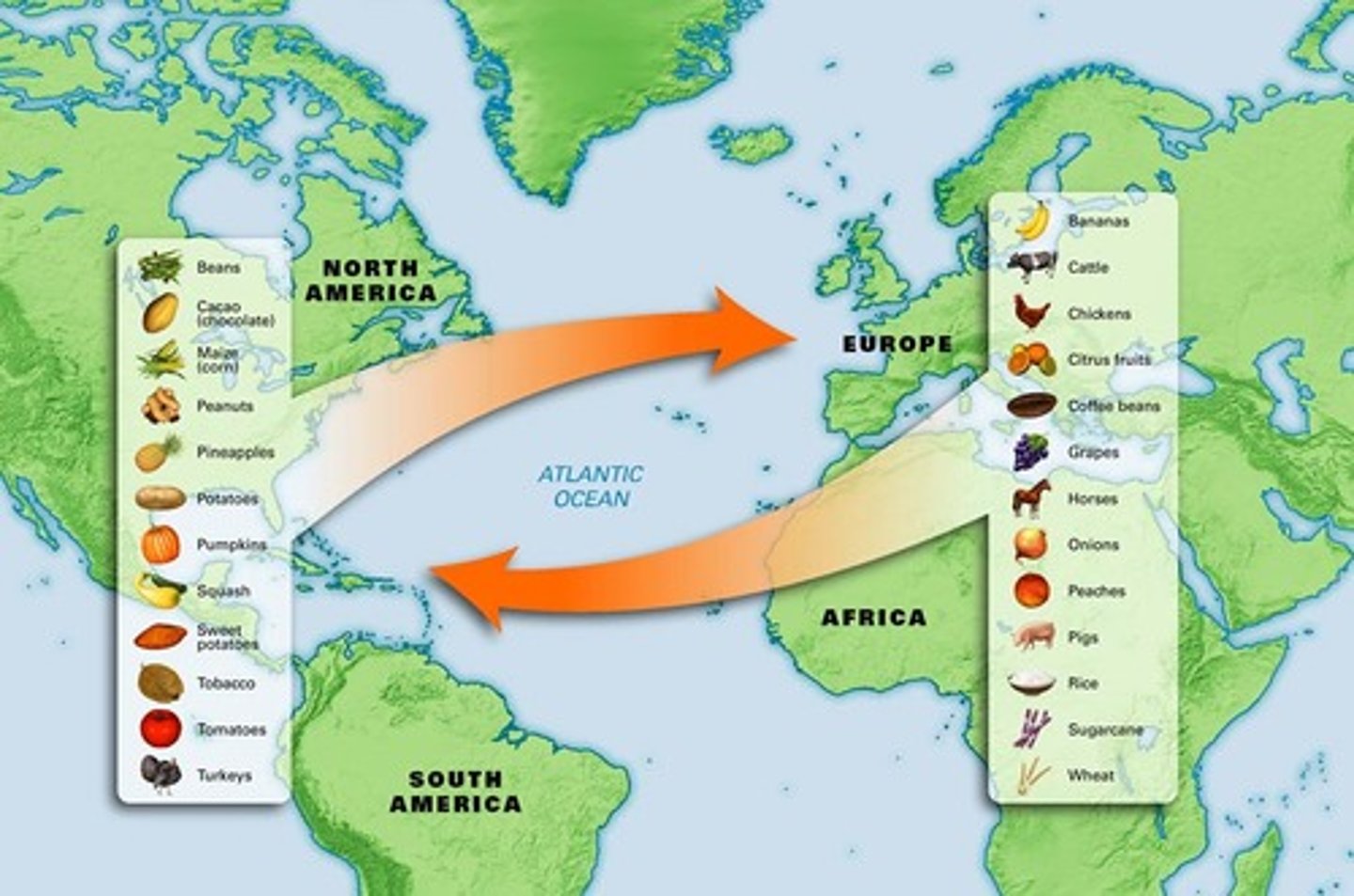
Columbian Exchange
The transatlantic flow of plants, animals, diseases, and technologies between the Americas and the rest of the world following Columbus's voyages.
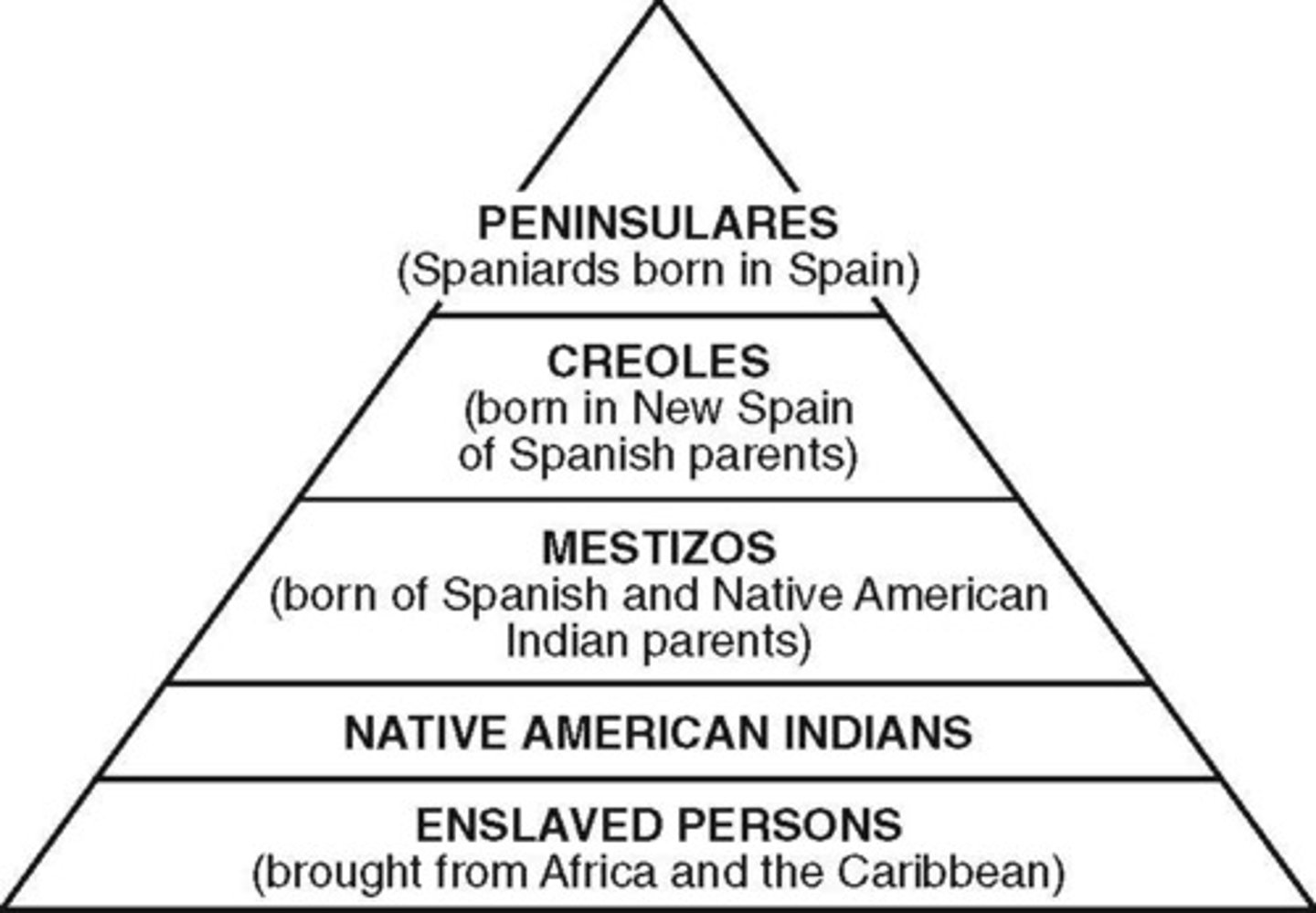
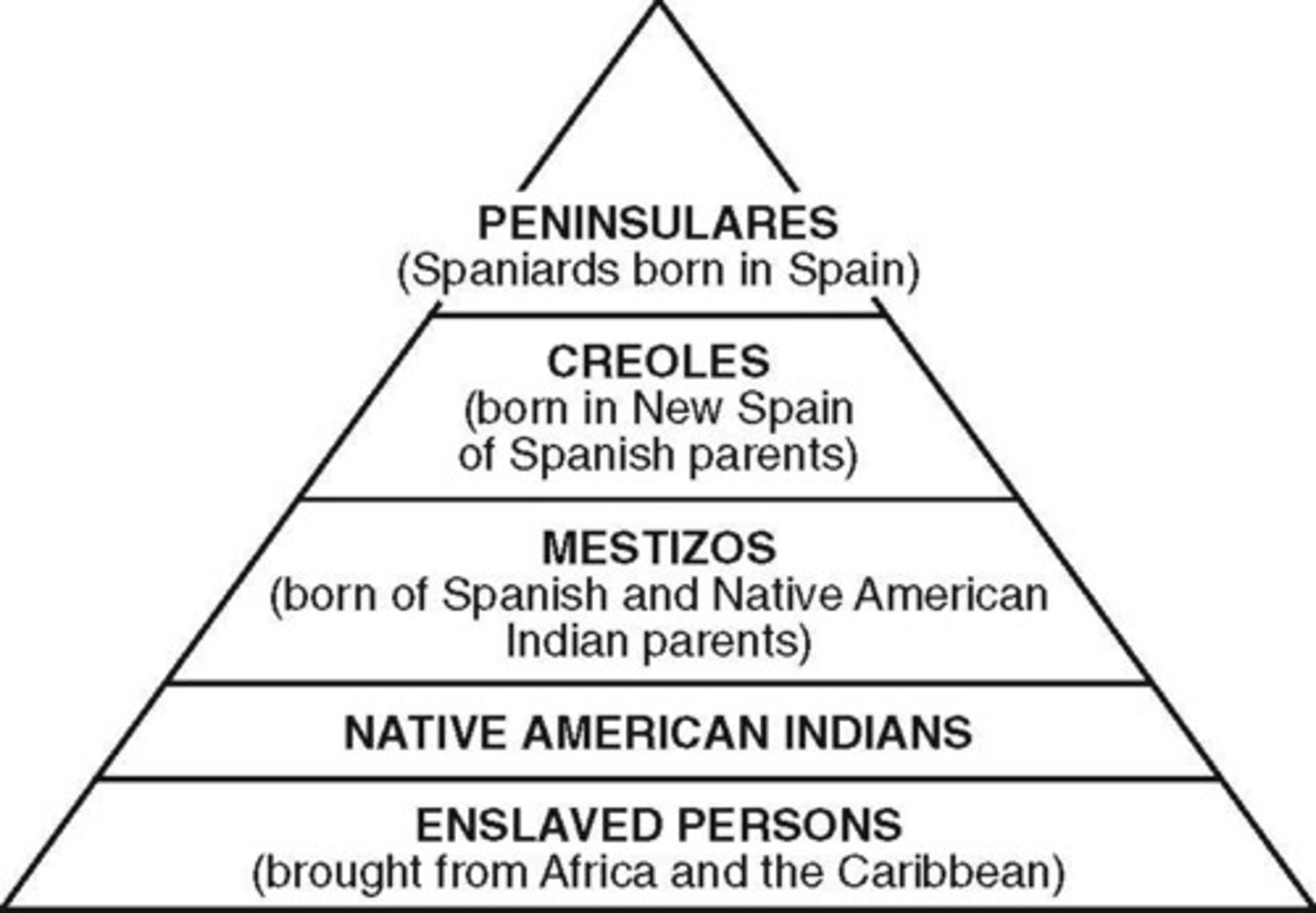
creoles
Descendants of Spanish-born but born in Latin America; resented inferior social, political, economic status.
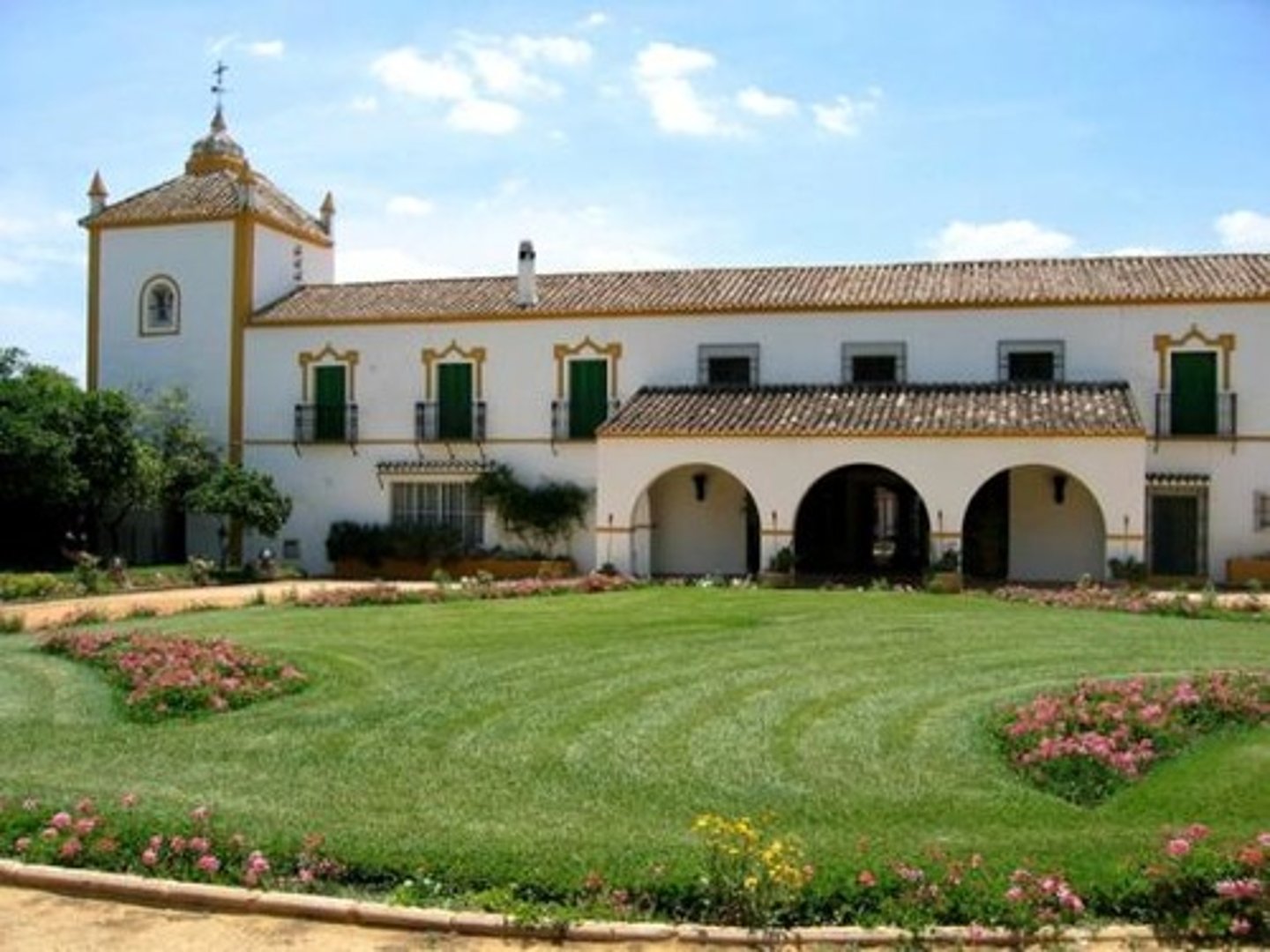
hacienda
Spanish colonists formed large, self-sufficient farming estates known as these.
mestizos
A person of mixed Native American and European ancestry.
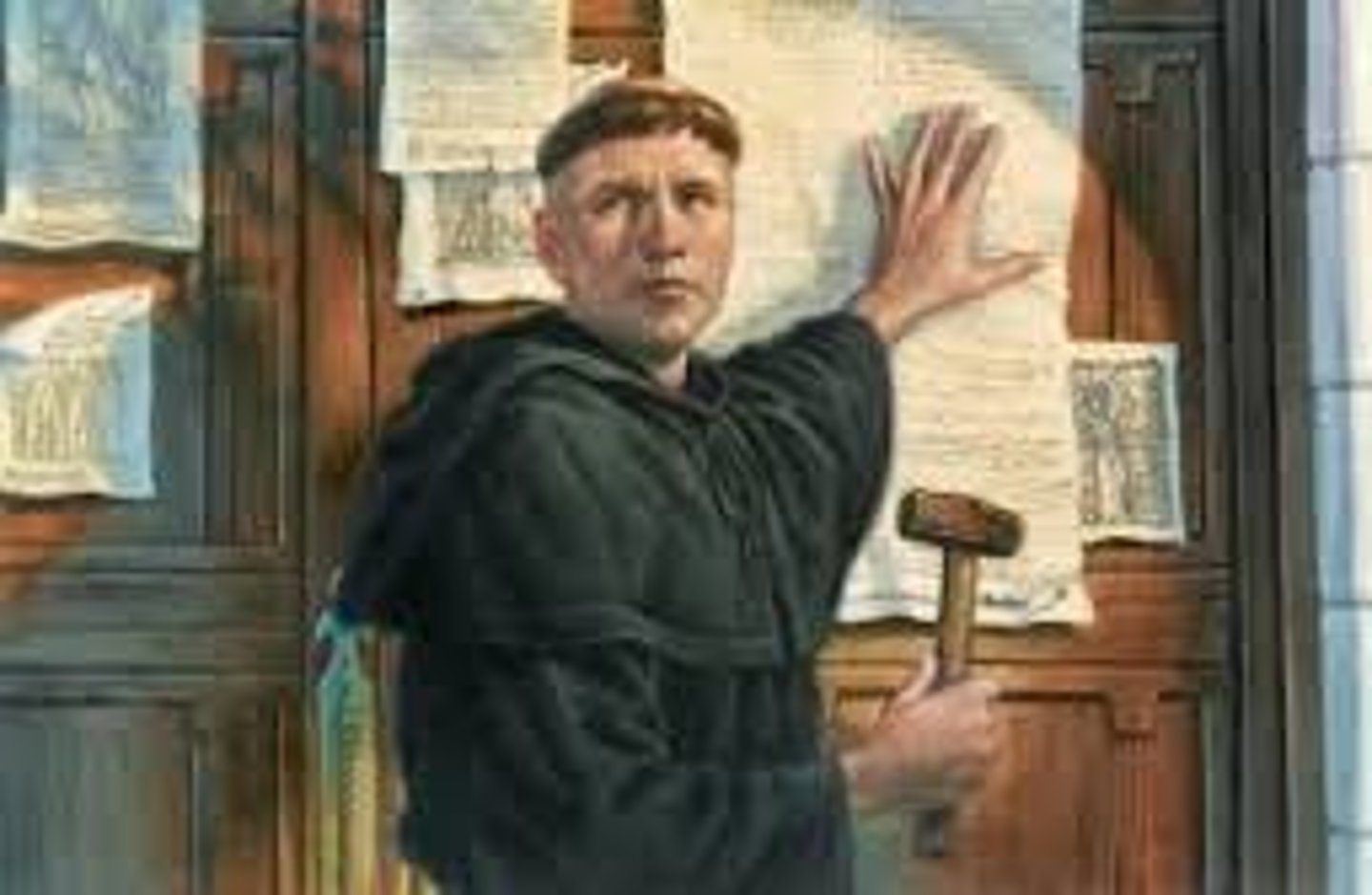
Ninety-Five Theses
The list of moral grievances against the Catholic Church by Martin Luther, a German priest, in 1517.
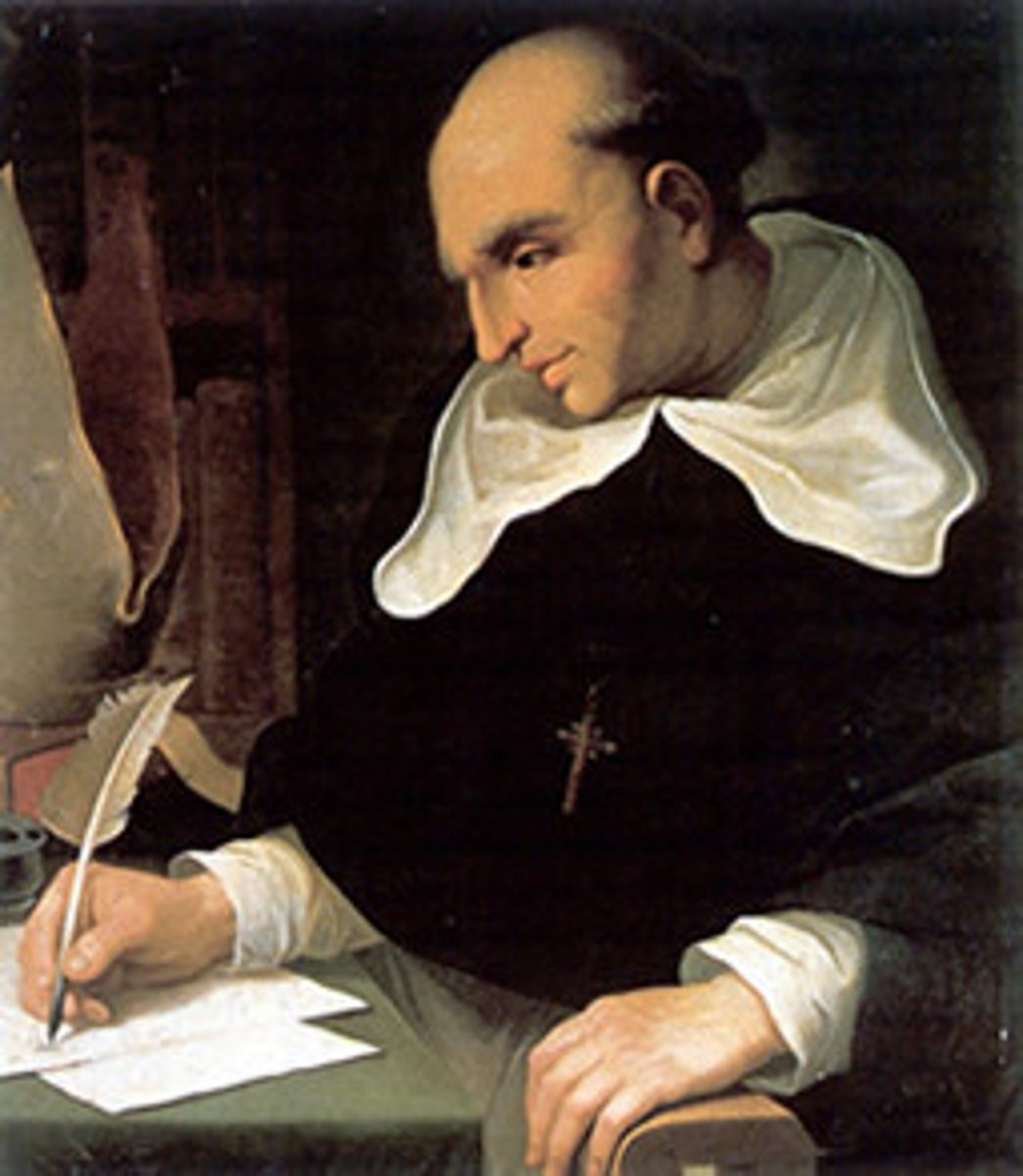
Bartolomé de Las Casas
A 16th century Dominican priest who wrote about the injustices of Spanish rule; he argues that Indians were rational beings and that Spain had no grounds to deprive them of land and freedom.
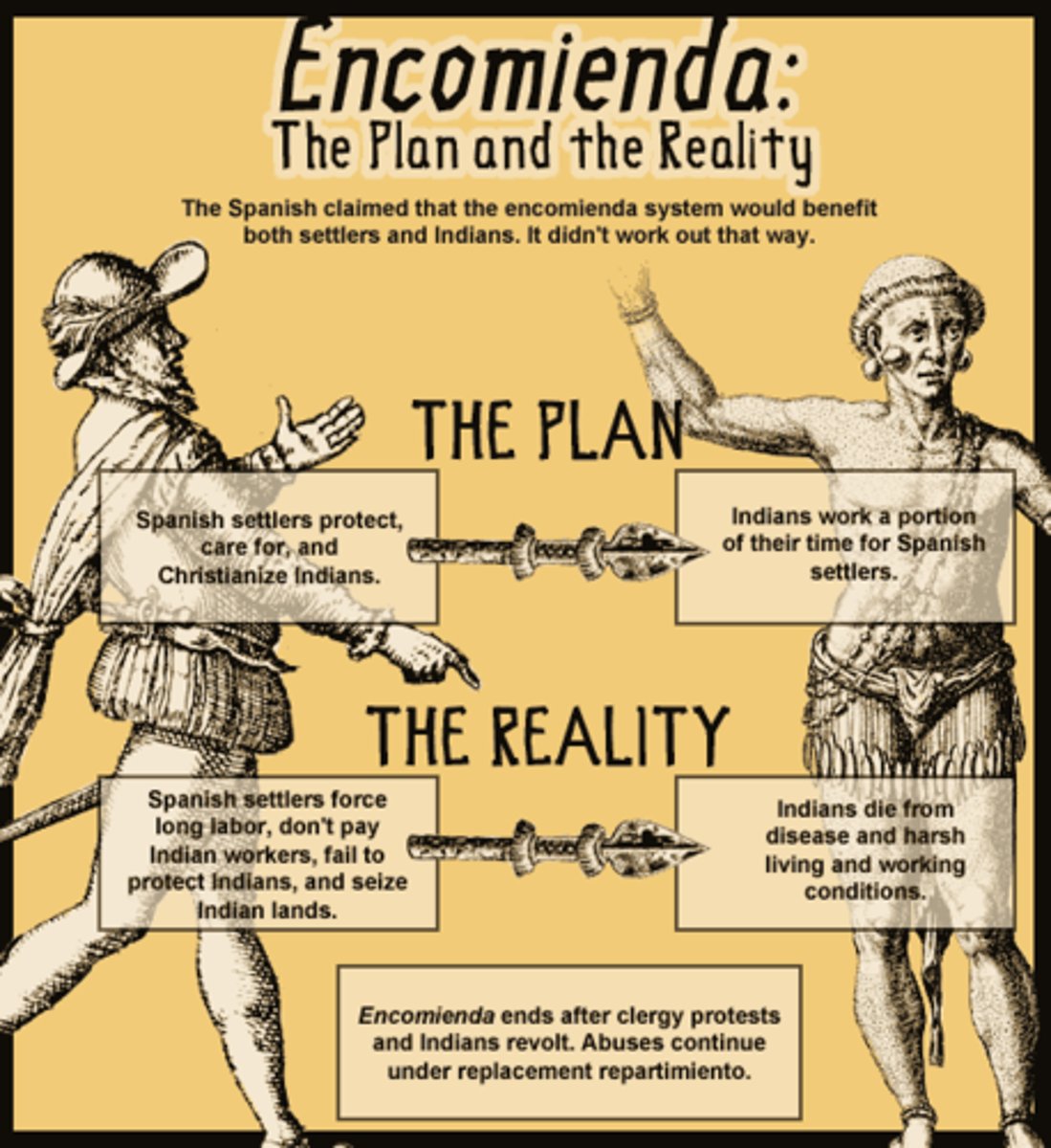
repartimiento system
A system instituted by Spain in which residents of Indian villages remained legally free and entitled to wages, but were still required to perform a fixed amount of labor each year; replaced the enocomienda system in 1550.
Black Legend
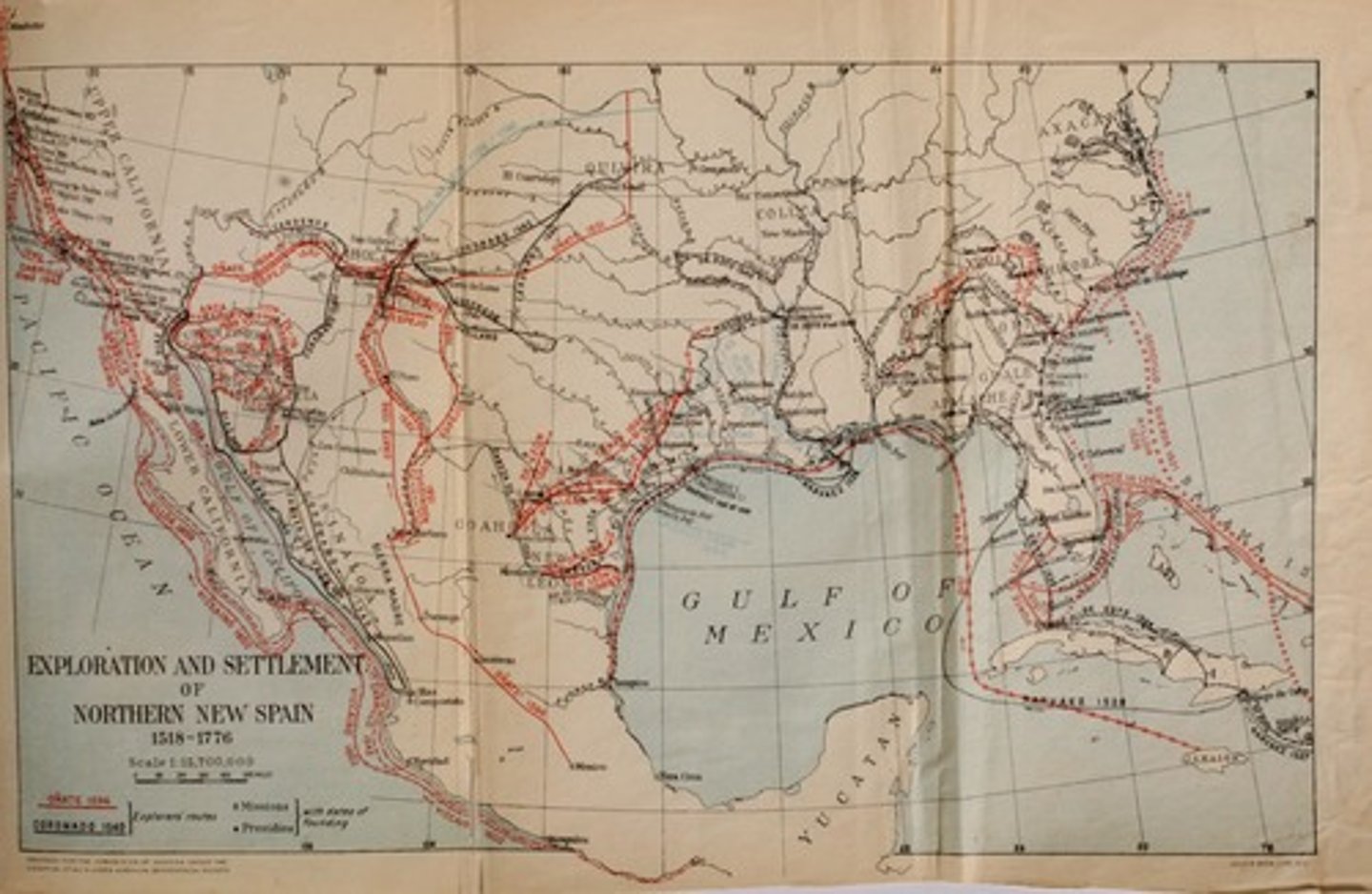
Idea that the Spanish New World empire was more oppressive toward the Indians than other European empires; was used as a justification for English imperial expansion.
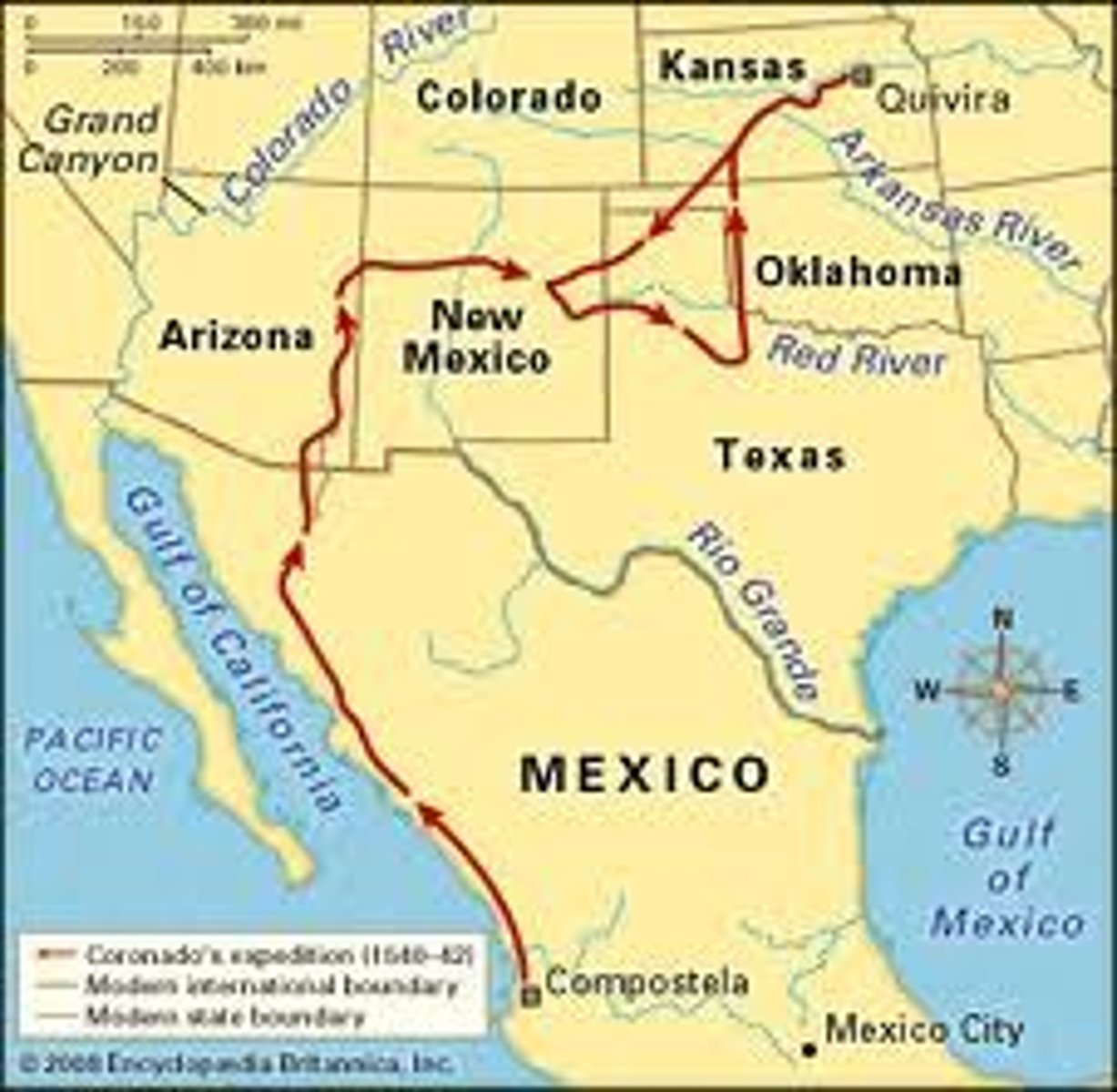
Pueblo Revolt
Uprising in 1680 in which Pueblo Indians temporarily drove Spanish colonists out of modern-day New Mexico.
indentured servants
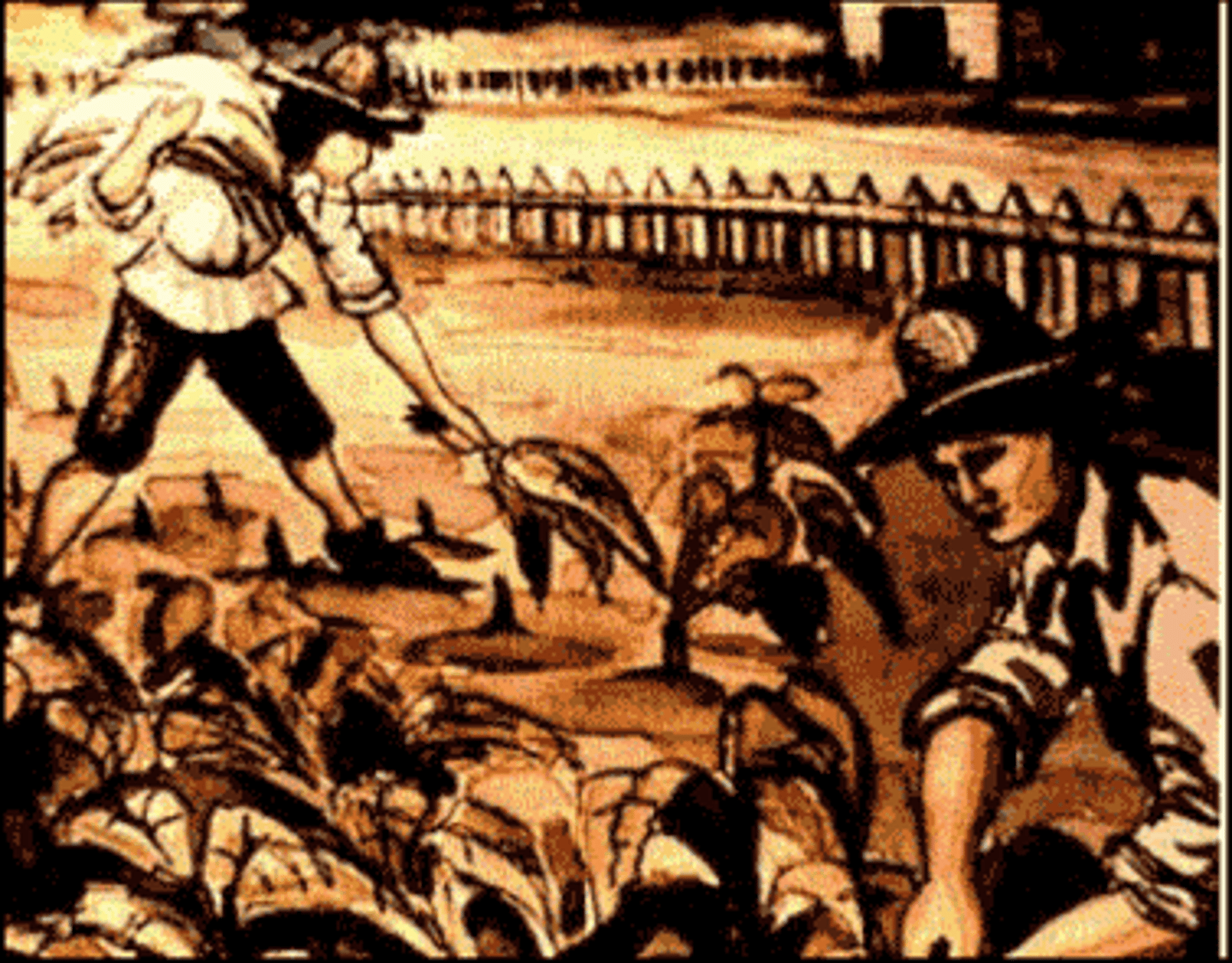
Settlers who signed on for a temporary period of servitude to a master in exchange for passage to the New World; Virginia and Pennsylvania were largely peopled in the 17th and 18th centuries by English and German indentured servants.
métis
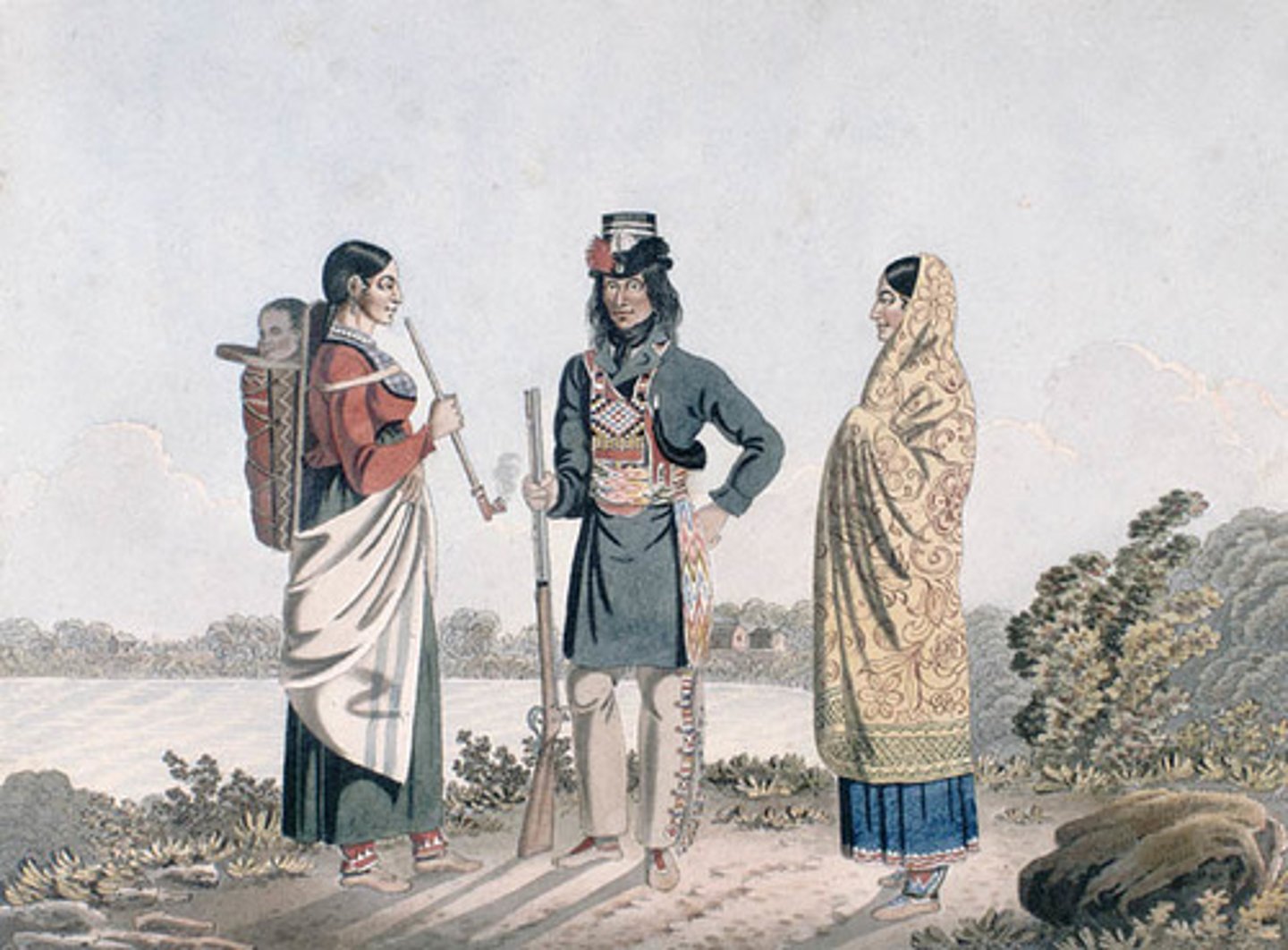
The children of marriages between Indian woman and French traders and officials; they often became guides, traders, and interpreters.
borderland
a region centered around the boundary between places, often containing a lot of cultural diversity.