Psychology U4 AOS 1
 Call Kai
 Learn
Learn Practice Test
 Spaced Repetition
 Match
Match Flashcards
 Knowt Play
1/66

There's no tags or description
Looks like no tags are added yet.
Name | Mastery | Learn | Test | Matching | Spaced | Call with Kai | Chat |
|---|
No analytics yet
Send a link to your students to track their progress
67 Terms
A) Consciousness
B) Is it a psychological construct. Why/why not?
Consciousness is the level of awareness an individual has over their own internal and mental processes including their thoughts, feelings, perceptions and existence, and awareness of the external world around them
It is a psychological construct meaning that it is a concept that cannot be objectively observed or measured through the collection of data but is widely understood to exist
Normal waking consciousness (NWC)
Altered state of consciousness (ASC) + examples
In ASC, level of awareness is only lower than in NWC. T or F?
Normal waking consciousness (NWC) is a state of consciousness in which an individual is awake and aware of their internal and external environments
In this state, individuals can manage their attention and thoughts and perceptions are organised, logical and clear
Altered state of consciousness (ASC) is a state of consciousness that is distinctly different/differs from normal waking consciousness (in terms of quality of experience and levels of awareness)
e.g.
Coma
Under anaesthetic
Drug induced state
Intoxication
Meditation
Hypnosis
Sleep
False. In this state, level of awareness is lower or higher in NWC.
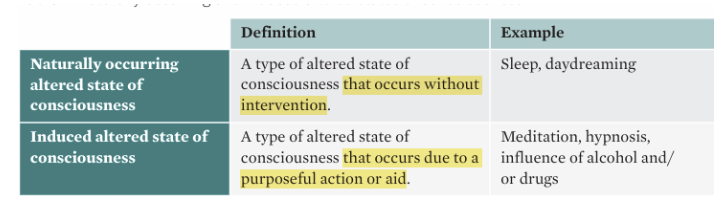
Altered states of consciousness can be further categorised into induced or naturally occurring.
Explain what these mean and give examples of which ASC is what:
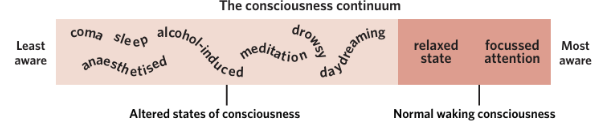
consciousness continuum
The consciousness continuum is a visual representation of the different states of consciousness that progress from lower levels of awareness to higher levels of awareness
Sleep + is it a psychological construct
Characteristics
Sleep is a regular and naturally occurring altered state of consciousness that involves a loss of awareness of the world and disengagement with internal and external stimuli
It can also be considered a psychological construct
Characteristics of sleep include:
a reduced ability to control behaviour
a reduction in the control we have over thoughts, for example, we lack control over what we dream about
less accurate understanding of the passage of time
perceptual and cognitive distortions
What are the two types of sleep? Explain each.
REM (rapid eye movement) sleep is a type of sleep characterised by rapid eye movement, high levels of brain activity, and low levels of physical activity
NREM (non-rapid eye movement) sleep is a type of sleep characterised by a lack of rapid eye movement and is subdivided into three different stages
--> It's divided into 3 stages of sleep
Sleep episode
Sleep cycle + how long are they typically
How many sleep cycles in each episode
A sleep episode is the full duration of time spent asleep which is made up of multiple repeated cycles of REM and NREM sleep, called sleep cycles --> each sleep cycle is an approximately 90-minute-period that repeats during a sleep episode
--> The number of sleep cycles an individual experiences in a sleep episode depends on an individual’s sleep duration (However, on average, there are usually around five or six sleep cycles during a typical sleep episode)
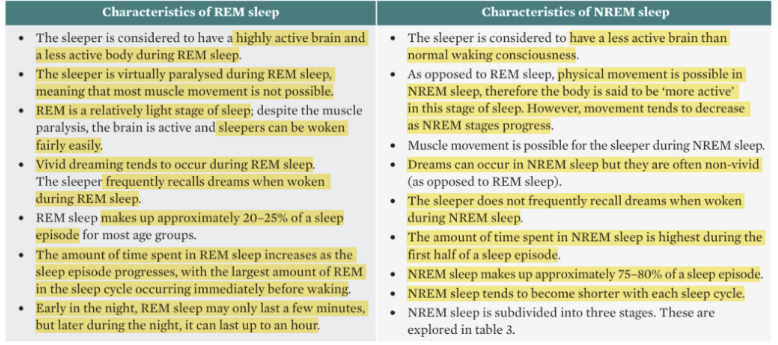
Compare REM and NREM sleep:
(Hint: brain activity, muscle movement and tone, type of sleep, ability of person to wake up, dreaming, proportion of sleep episode it takes up, heartrate/breathing rate, other names)
REM | NREM |
|
|
|
|
|
|
|
|
Compare different stages of NREM sleep:
(Hint: types of sleep, movement, length, proportion of sleep episode, waking ability, other names and more)
NREM stage 1 | NREM stage 2 | NREM stage 3 |
--> this transition is signified by the experience of the hypnagogic state, in which some people experience feelings of floating or falling or a sudden jerk (known as a hypnic jerk)
|
|
|
When we fall asleep, we experience (in order) in a cycle – 90 min: —> in reference to the different types of sleep
NREM 1 sleep
NREM 2 sleep
NREM 3 sleep
NREM 2 sleep
REM sleep
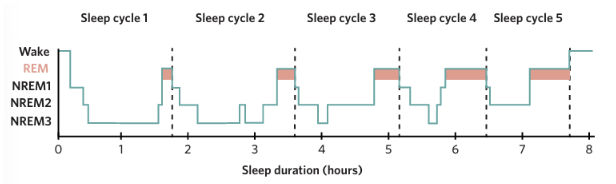
What is this called and what is it used for?
Above is a hypnogram, which is a sleep graph that tracks the proportion of time spent in each stage of sleep, including awakenings, throughout a sleep episode
Polysomnography
Some measures of consciousness (and consequently sleep) include:
How do these measures differ
Polysomnography: sleep study consisting of various methods of data collection
Some measures of consciousness (and consequently sleep) include:
the electroencephalograph (EEG)
the electromyograph (EMG)
the electro-oculograph (EOG)
sleep diaries
video monitoring
EEGs, EMGs, and EOGs are considered to be objective physiological measures in which they provide reliable, unbiased, quantitative data that can indicate someone’s state of consciousness
However, they do not provide qualitative detail about the personal experience of sleep, such as an individual’s thoughts or feelings.
Additionally, changes in physiological responses may be due to factors other than a change in consciousness, thus the findings may lack validity at times
Sleep diaries and video monitoring are considered to be subjective measures – meaning that information is provided by an individual and is related to their personal experiences --> the accuracy and reliability of such measures can be limited due to their subjective nature
Subjective data includes both qualitative and quantitative data
Electroencephalography (EEG)
How is this measured/used
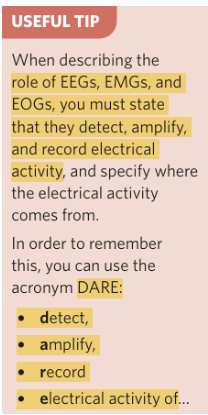
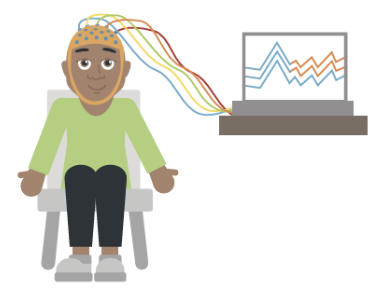
An electroencephalograph (EEG) is a device that detects, amplifies, and records the electrical activity of the brain's neurons
When neurons communicate, they emit electrical impulses which are detected by the EEG and then presented as brain wave patterns --> which are then used make a judgement about the state of consciousness a person might be in
In order to take these readings, a medical professional/researcher attaches electrodes to the outside of a person’s head – on a person's scalp or through a cap that is worn
Do EEGs measure brain waves in the brain?
No.
It is important to understand that EEGs measure electrical impulses that are then represented through brain waves
In this way, EEGs do not actually measure brain waves, but rather brain waves are used to describe the electrical activity of the brain.
Hence, you should say that EEG recordings show specific brain waves to represent the electrical activity of the brain, rather than that the brain shows specific brain waves
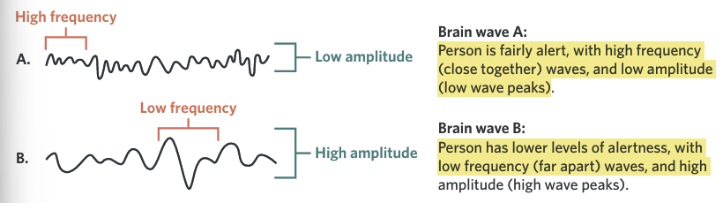
Brain waves vary in frequency (rate) and amplitude (height): What do these mean?
Describe the type of brain waves displayed when a person is active vs has lower levels of alertness?
Frequency is the number of brain waves that occur per second
Amplitude is the intensity and height of the brain waves
Describe the type of brainwaves shown in the different stages of sleep (REM, N1, N2, N3)
Higher frequency and lower amplitude in REM sleep - due to brain being active in REM sleep
High frequency and low amplitude in NREM sleep stage 1 (transitioning from wakefulness to sleep), but lower frequency and higher amplitude than normal-waking consciousness
Medium frequency and medium amplitude in NREM sleep stage 2 (light sleep)
Lower frequency and higher amplitude in NREM sleep stage 3 (deep sleep)
Electromyography (EMG)
How is this measured/used
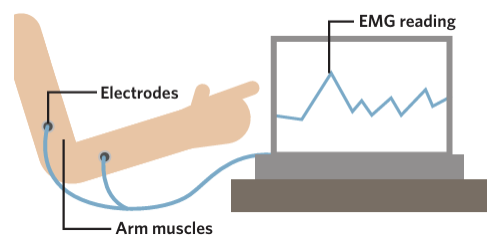
An electromyograph (EMG) is a device that detects, amplifies, and records the electrical activity of the body’s skeletal muscles
This is done by attaching electrodes to the skin above the muscles under investigation, the movement and tension of muscles are recorded
TIP: To remember what EMG measures --> think of the middle letter 'M' --> as 'm'uscles
Describe the muscle movements shown in the different stages of sleep (REM, N1, N2, N3)
During REM sleep, EMG readings show low activity, due to there being low levels of physiological activity (body paralysis) during this type of sleep
During NREM sleep, EMG readings show medium/moderate activity, due to there being some physiological activity during this type of sleep --> however, as NREM sleep stages progress, an EMG is likely to show lower activity as movement is less likely to occur (although it is still possible)
Electro-oculography (EOG)
How is this measured/used
An electro-oculograph (EOG) is a device that detects, amplifies, and records the electrical activity of the muscles responsible for eye movement/around the eye
The movement of these muscles, and therefore movement of the eyes, is measured by electrodes that are attached to the skin above the muscles
TIP: To remember what EOG measures --> think of the middle letter 'O' --> as 'o'ccipital
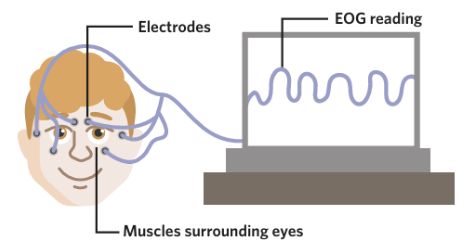
Does EOG detect, amplify and record electrical activity of eyes?
No. The EOG detects, amplifies, and records electrical activity of muscles surrounding the eyes, and uses this to infer eye movements. In order to gain full marks, it is essential that you state 'muscles surrounding the eyes'.
Describe eye movement in the different stages of sleep
Eye movements, which are facilitated by the movements of muscles surrounding the eyes, are a physiological response that can be used to investigate the type of sleep a person is experiencing
During REM sleep, an individual experiences rapid eye movement, so an EOG is likely to show high activity
During NREM sleep, an individual does not experience rapid eye movement, so an EOG is likely to show low activity
Sleep diaries
What sort of information do they include:
Examine their relability/usefullness
Sleep diaries are a record containing subjective self-reported descriptions from an individual about their sleep and waking patterns, including judgements they might have about the quality and nature of their sleep
It can include both qualitative and quantitative data
This information is recorded over a period of time, most commonly a few weeks
Some of the information that can be recorded by an individual in a sleep diary include:
The duration of sleep – time spent asleep --> waking and sleeping time
the quality of sleep
thoughts and feelings before going to sleep
thoughts and feelings after waking up
behaviours before going to sleep
behaviours after waking up
the number of times sleep was disrupted + sleep disturbances
Other info
Food intake
Caffeine intake
Daytime naps
Exercise throughout the day
Use of screens before bed
Sleep diaries are beneficial as they provide qualitative information and therefore are often extensive in detail and description
This method is subjective and therefore can be less reliable/accurate than objective measures
Video monitoring
Video monitoring involves the use of camera and audio technologies to record an individual as they sleep
This provides data specific to the individual to track their sleeping and waking periods, their movements and activities when sleeping, sleep positions, and the sounds they make while sleeping (e.g. sleep talking, teeth grinding)
The interpretation of video monitoring is subjective
Biological rhythms
Circadian rhythms
Sleep-wake cycle + is it a type of circadian rhythm?
Examples of circadian rhythms
Biological rhythms are repeated biological processes that are regulated by internal mechanisms
Circadian rhythms are biological occurrence where one complete cycle has a duration of 24 hours
The sleep-wake cycle is a 24-hour-cycle that is made up of time spent sleeping and time being awake and alert
It is a type of circadian rhythm
Other examples of circadian rhythms:
Release of melatonin
Release of cortisol
Body temp
Secretion of growth hormone
Ultradian rhythms
Examples of ultradian rhythms
Ultradian rhythms are biological occurrence with a duration of less than 24 hours
TIP: You can remember it as 'U'ltradian as 'U'nder 24 hours
A sleep cycle is an example of an ultradian rhythm as sleep cycles involve changes in physiological activity that repeat in a cyclic manner in less than 24 hours
Suprachiasmatic nucleus (SCN) + it’s function
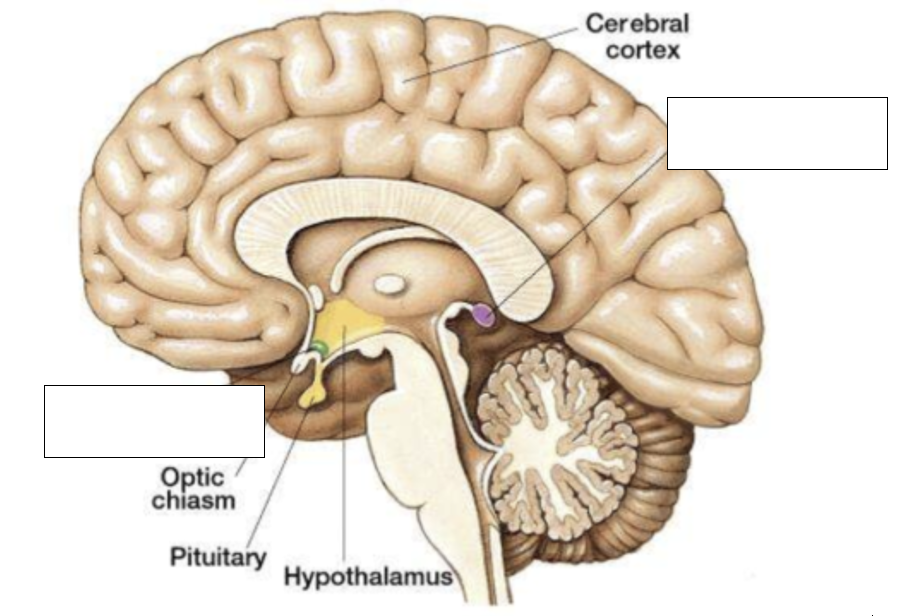
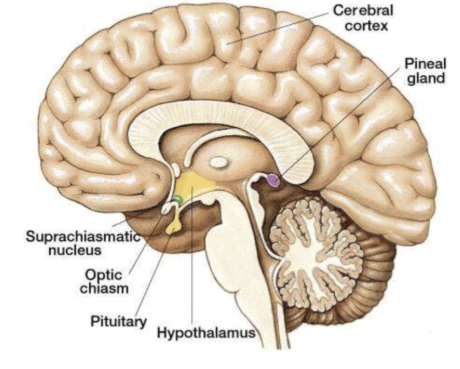
The suprachiasmatic nucleus (SCN) is an area of the hypothalamus that is responsible for regulating an individual’s sleep-wake patterns
Considered as the body's master clock
The SCN receives information from both external and internal cues to help modulate the circadian rhythm
External cues involve information from the environment, such as the presence or absence of light
Internal cues involve information that originates within the body (such as the expression and suppression of particular genes, known as clock genes)
Melatonin
How does SCN help assist the secretion of melatonin?
When is melatonin typically secreted?
Melatonin is a hormone released by the pineal gland typically at night time to induce feelings of sleepiness as part of the sleep-wake cycle
The information from our internal cues and external cues dictate the messages that the SCN sends to the pineal gland, which is a gland in the brain responsible for the production and release of melatonin
--> at night, when dark, greater quantities of melatonin are released
--> during day, when it is light, very little melatonin is released
Typically:
At around 8 to 9pm, melatonin levels should reach a level that starts to induce a sense of calmness, which promotes sleepiness, leading to an individual naturally wanting to induce sleep at around 10 to 11pm
Melatonin peaks between 2 and 4am, when individuals are typically in the deepest sleep, before gradually declining over the night and before waking in the morning
T or F? Melatonin directly induces sleep
T or F? SCN releases melatonin
False.
Melatonin does not directly induce sleep, but rather promotes a state of calm and relaxation/sleepiness to help make it easier to fall asleep where it travels to all areas of the body via the bloodstream
False
The SCN does not actually release melatonin —> It is only responsible
for sending neural messages to the pineal gland, which enables the pineal gland to release melatonin
Therefore, when answering questions about the role of the SCN in the sleep-wake cycle, you should make sure you do not write that SCN releases melatonin, but rather that the SCN signals to the pineal gland to release melatonin.
Cortisol + how does it help regulate the sleep-wake cycle
Cortisol is a hormone that is responsible for increasing alertness and maintaining heightened arousal
It also helps regulates the sleep-wake cycle as it is released by the adrenal glands (specifically adrenal cortex) in the morning to promote wakefulness and alertness
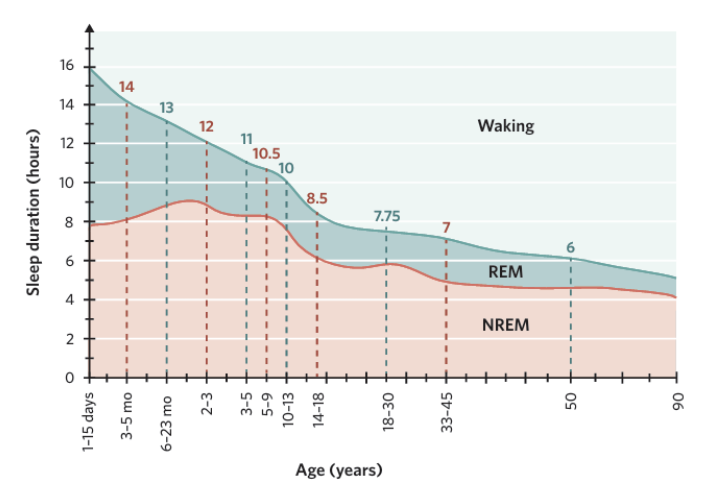
Using this graph, comment on what changes occur:
As could be seen above:
Sleep duration and the proportion of REM sleep generally decreases as age increases
However, these trends occur at different rates as the proportion of REM sleep stops significantly decreasing from childhood onwards
For babies/toddlers (0 - 24 months) - comment on their sleep
(Talk about hours of sleep, proportion of sleep episode which is REM and NREM, muscle movement and more)
Neonatal period (1–15 days) |
|
Infancy (3–24 months) |
|
For childhood (2-14 yrs) - comment on their sleep
(Talk about hours of sleep, proportion of sleep episode which is REM and NREM, NREM sleep stage which is abundant and more)
Childhood (2–14 years) |
|
For adolescence (14–18 years) - comment on their sleep
(Talk about hours of sleep, proportion of sleep episode which is REM and NREM, NREM sleep stage time and more)
Adolescence (14–18 years) |
|
For adulthood (18 –75 years) - comment on their sleep
(Talk about hours of sleep, proportion of sleep episode which is REM and NREM, N3 sleep and more)
Young adulthood (18–30 years) |
|
Middle adulthood (30–75 years) |
|
For old age(75+ years) - comment on their sleep
(Talk about hours of sleep, proportion of sleep episode which is REM and NREM, sleep disorders/problems and more)
Old age (75+ years) |
|
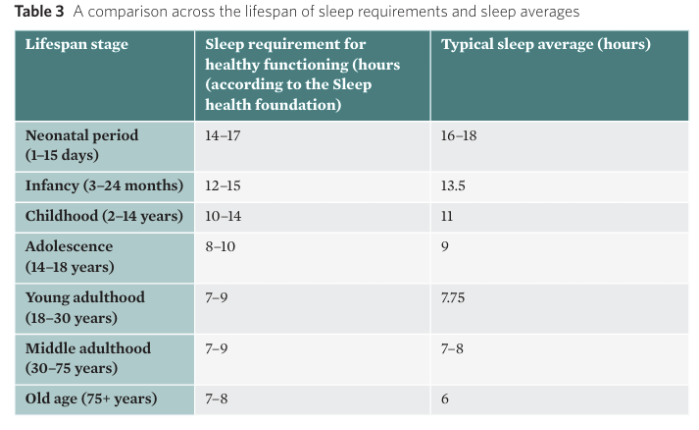
T or F? It's a misconception that we require less sleep when we age – sleep needs to remain constant throughout adulthood, yet elderly are receiving less
Showcase the sleep requirements for healthy functioning and the average hrs slept by each age group
T. It's a misconception that we require less sleep when we age – sleep needs to remain constant throughout adulthood, yet elderly are receiving less
Sleep deprivation
Full sleep deprivation
Partial sleep deprivation
Sleep deprivation describes a state caused by inadequate quantity and/or quality of sleep
Quantity is about how many hours of sleep is experienced
And quality is about how well one slept including the types of sleep experienced, as well as the presence of sleep disruptions
Full sleep deprivation is when an individual has no sleep within a 24-hour-period
Partial sleep deprivation is when an individual sleeps for some duration within a 24-hour-period, but the sleep duration is too short, or the quality of sleep is poor
Causes of sleep deprivation
Emotional stress or excitement
Medical conditions and medication
Food, caffeine, drugs or alcohol
Work, school requirements
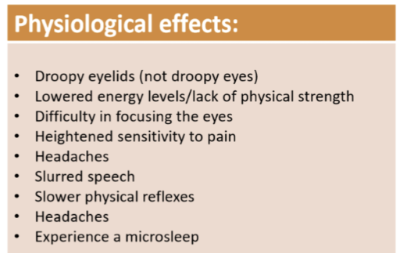
Physiological effects of sleep deprivation
Affective effects
Some affective effects of sleep deprivation include
Affective effects refer to the changes in emotions and emotional responses that arise from sleep deprivation
Some affective effects of sleep deprivation include:
Poor emotional regulation; resulting in amplified emotional responses that are out of proportion (exaggerated) in comparison to normal emotional responses
Irritability and moodiness (mood swings)
Lack of motivation
Increase in negative emotions
Reduced ability to cope with stress
Difficulty judging other people’s emotions
Reduced empathy towards others
Impaired ability to appropriately respond to situations; thus, people may overreact (emotionally) to minor things and experience emotional outbursts
Increase in aggression and impatience
Heightened anxiety
Feelings of fatigue
Behavioural effects
Some behavioural effects of sleep deprivation include:
Behavioural effects refer to the changes in actions and the ability to control them that arise from sleep deprivation
Some behavioural effects of sleep deprivation include:
Sleep inertia (sense of disorientation after waking)
excessive sleepiness during the day
increased likelihood of engaging in risk-taking behaviours
fatigue/lack of energy
slowed reaction time
reduced efficiency/productivity; thus, it takes more time to complete tasks – reduced speed & accuracy
reduced motor control and heightened clumsiness, contributing to higher rates of accidents and injuries
involuntary lapses into microsleeps (where the individual briefly falls asleep for a few seconds without awareness of doing so)
diminished social functioning and impaired control of behaviour
Cognitive effects
Some cognitive effects of sleep deprivation include:
Cognitive effects refer to the changes in mental processes that arise from sleep deprivation – thinking, planning, reasoning, learning and memory
Some cognitive effects of sleep deprivation include:
reduced concentration/attention
Memory lapses (failure, mistake)
diminished ability to perform cognitive tasks, particularly as the duration of the task increases
impaired decision-making processes and problem-solving abilities + reduced ability to make decisions quickly and effectively
diminished creativity and ability to utilise abstract thought/impaired abstract thinking
Difficulty processing information
irrational and/or illogical thinking
reduced speed in processing and understanding information
more time spent analysing situations and a greater likelihood of overlooking important details
impaired visual and spatial ability - Distorted perception
Difficulty dividing attention
Memory problems
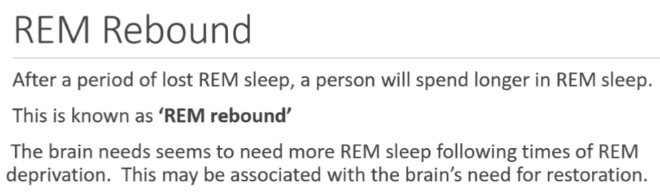
REM Rebound
Blood alcohol concentration (BAC)
Alcohol is a depressant drug. What does this mean?
Blood alcohol concentration (BAC) is a measure of how much alcohol is in a person’s bloodstream
If a person’s BAC is 0.05, there are 0.05 grams of alcohol for every 100 ml of blood in that person’s body
Because alcohol is a depressant drug, it will slow down the nervous system and decrease alertness, concentration, reflexes, and decision-making
A BAC of 0.05 is roughly equivalent to ___ hours of sleep deprivation (___ sleep deprivation)
A BAC of 0.10 is roughly equivalent to ___ hours of sleep deprivation (___ sleep deprivation)
A BAC of 0.05 is roughly equivalent to 17 hours of sleep deprivation (partial sleep deprivation)
A BAC of 0.10 is roughly equivalent to 24 hours of sleep deprivation (full sleep deprivation)
Both sleep deprivation and alcohol alter an individual’s emotional state when compared to how the individual typically experiences emotions. Talk about how:
Generally speaking, sleep deprivation negatively affects someone’s emotional functioning, making them more irritable or sensitive while alcohol can have a range of effects on someone’s emotions, including making them feel: happy and excited, angry, sad
In the short-term, alcohol is more likely to have a range of emotional effects as previously described + however, in the long-term, alcohol is more likely to have a dulling effect on emotions as it is a depressant drug
Sleep disorders
Sleep disorders are disturbances to typical sleeping and waking patterns
Circadian rhythm sleep disorders
Causes of circadian rhythm sleep disorders
Effects of circadian rhythm sleep disorders
Circadian rhythm sleep disorders are sleep disorders that involve a mismatch (or misalignment) between a person's sleep-wake cycle and a sleep-wake pattern/schedule which is desired/required
Causes of circadian rhythm sleep disorders
They are fundamentally caused by a disruption to the typical sleep-wake cycle --> this can be due to a biological issue, such as the sleep-wake shift that occurs in adolescents, or lifestyle changes, such as shift work
Effects of circadian rhythm sleep disorders
They tend to result in an individual experiencing some form of sleep deprivation Therefore, an individual may experience:
amplified emotional responses
Excessive sleepiness
Insomnia (unable to fall asleep)
Fatigue
Irritability
reduced ability to concentrate
Circadian rhythm sleep disorders can also be disruptive to an individual's lifestyle
e.g. Sleeping and waking at abnormal times can result in an individual
being late for certain commitments
feeling sleepy at abnormal times, which makes it difficult to complete daily tasks
Delayed sleep phase syndrome (DSPS)
When is melatonin released in this disorder
To be diagnosed with DSPS, a person needs to experience symptoms for how long?
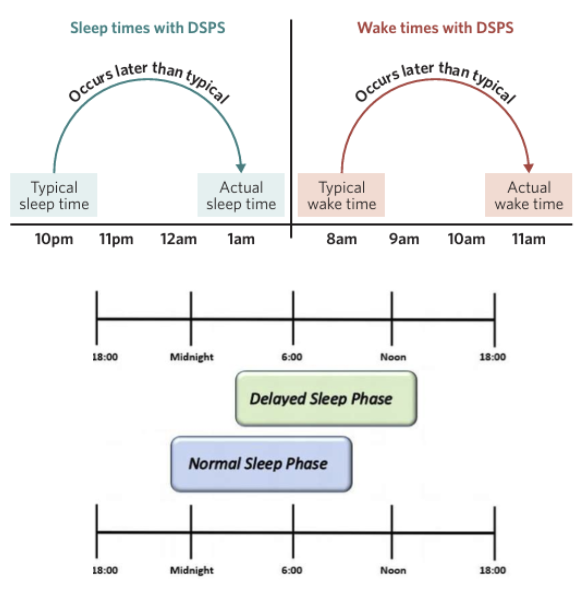
Delayed sleep phase syndrome (DSPS) is a type of circadian rhythm sleep disorder characterised by a later sleep onset time and a later awakening time compared with the time that is desired/accepted/conventional
In this way, the sleep-wake cycle is delayed – where melatonin is released later
Sleep is usually 2 or more hours later than needed/acceptable
To be diagnosed with DSPS, a person needs to experience symptoms for more than 3 months
e.g. if an individual typically starts sleeping at 10pm and wakes at 8am, with DSPS they may instead start sleeping at 1am and wake at 11am
Advanced sleep phase disorder (ASPD) + when is melatonin released in this disorder
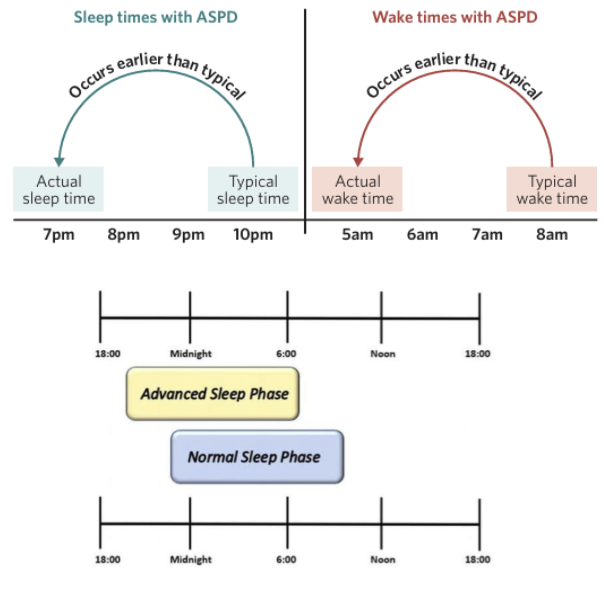
Advanced sleep phase disorder (ASPD) is a type of circadian rhythm sleep disorder characterised by an earlier (advanced) sleep onset time and an earlier (advanced) awakening time, compared
with what is desired/accepted/conventional
In this way, the sleep-wake cycle is advanced - where melatonin secretion occurs earlier
Sleep is usually 2 or more hours later than needed/acceptable
e.g. if an individual typically sleeps at 10pm and wakes at 8am, with ASPD they may sleep at 7pm and wake at 5am
Why are ASPD and DSPS considered as disorders?
It becomes a disorder because the sleep schedule can interfere with daily life.
For example for ASPD:
They become extremely sleepy in the early evening and may struggle to stay awake for dinner, social events, or homework.
They wake up very early (e.g. 4–5 am) and cannot fall back asleep, even though they don't need to be awake yet.
Their sleep schedule doesn't match school, work, or family schedules
e.g. In DSPS:
They cannot fall asleep early, even if they go to bed at 10 pm because their body isn't ready to sleep yet.
They struggle to wake up early for school or work
They may be tired and sleepy during the morning
Their sleep schedule doesn't match school, work, or family schedules, making it difficult to function during normal daytime hours
Shift work
Examples of jobs that involve shift work
Shift work disorder
Shift work is an occupation that involves working at unusual hours, such as working overnight
This can mean an individual has to sleep at unusual times, such as during the day, rather than at night.
Shift work schedules include day shift, afternoon shift and night shift
When workers are rostered for the same shift for their work (a fixed schedule)
Shift work also involves rotating shift work, which may involve working a week of morning shifts, followed by a week of night shifts – shifts are at different times
Some occupations that involve shift work include nurses, road workers, hotel staff, paramedics, police, fire fighters, airline staff, pilots and drivers
Shift work disorder: when scheduled work hours are out of sync with their natural circadian rhythm
Shift work effects include:
Insomnia (a sleep disorder characterised by difficulty falling asleep and staying asleep)
Fragmented sleep - shift work often involves working unusual hours and therefore having to sleep at unusual hours --> this can involve repeatedly waking up during a sleep episode and having multiple short sleep episodes during the day (naps), as opposed to one regular sleep episode (approximately 8 hours)
Shift work disorder
Feel sleepy during their work shift
More vulnerable to workplace accidents or errors
Partial chronic sleep deprivation
Quality and quantity of sleep can be adversely affected
Tips for shift workers
Be rostered on only one shift schedule to allow circadian rhythms to adjust
Try to stay on one shift schedule for as long as possible
Better if day shift is followed by afternoon shift, or afternoon shift is followed by evening shift
Eat regular, healthy meals and avoid hard-to-digest food before bed
Avoid caffeine and stimulants 6 hrs before they plan to go to bed
Exercise regularly
Ensure sleeping environment is conclusive to sleep (dark room, cool room temp, earplugs and wear eye mask)
Wear sunglasses when driving home from night shift to avoid morning light
Bright light therapy + how often does it occur/sessions length
Bright light therapy is a method used to shift a person’s sleep-wake cycle to a desired schedule through timed exposure to the eyes of intense but safe amounts of light
Change occurs over a period of time involving multiple sessions of bright light therapy
Exposure sessions can last from about 15 minutes to a couple of hours and are conducted up to a few times a day (once or twice) + In order to readjust the sleep-wake cycle, a person needs to conduct these sessions for at least a few consecutive days
Bright light therapy for the different types of sleep disorders
Delayed sleep phase syndrome |
--> this acts as an external cue to the suprachiasmatic nucleus (SCN), signalling that it is daytime - this suppresses melatonin production and promotes the release of cortisol, helping the person feel awake/energised
|
Advanced sleep phase disorder |
--> this acts as an external cue to the suprachiasmatic nucleus (SCN), signalling that it is still daytime - this delays melatonin production and promotes wakefulness
|
Shift work related sleep disorder |
--> as this t exposure acts as an external cue to the suprachiasmatic nucleus (SCN), signalling that it is daytime - this promotes the release of cortisol, increasing alertness and helping the individual stay awake during their shift
|
Sleep hygiene
Mental wellbeing - it’s relationship to sleep
Sleep hygiene healthy habits and practices to optimise getting to sleep when desired and achieving the quality and quantity of sleep required for good mental health and wellbeing
It is positive and beneficial, as it improves the quality and quantity of sleep
Mental wellbeing is an individual’s psychological state, involving their ability to think, process information, and regulate emotions
Research suggests there is a link between poor sleep (sleep deprivation and/or sleep-related problems) and mental illness
Thus, good sleep is likely to reduce the likelihood of mental health problems and promote mental wellbeing
The relationship between sleep and mental wellbeing is bidirectional, meaning that sleep can impact mental wellbeing and mental wellbeing can impact sleep
How to uphold sleep hygiene (talk about time, sound, light, technology, association with bed, temp, food & drink consumption, exercise)
time; sleeping and waking at a time that enables an adequate amount of sleep, and sleeping and waking at a consistent time each day
sound; sleeping in a fairly quiet space
light; sleeping in a dark space and reducing bright light exposure close to sleeping time
comfort; sleeping in a comfortable space
technology/devices; avoiding bright screen use close to sleeping time
association with bed; avoiding doing activities other than sleeping in bed (like studying or watching TV)
Temperature; cool temp
food and drink consumption; avoiding large meals, caffeine, and alcohol before sleeping time
exercise; engaging in exercise early in the day and avoiding exercise close to sleeping time
Zeitgebers
Endogenous factors
Examples of Zeitgebers
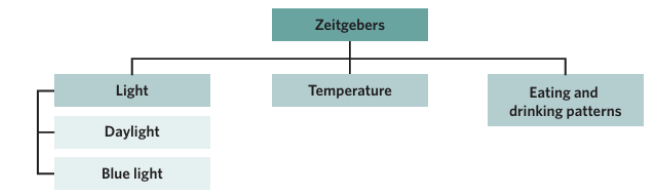
Zeitgebers are external cues from the environment that influence the circadian rhythm/provide signals to our brains to do things at certain times
German word for 'time givers'
Sleep-wake patterns can be improved when individual is exposed to the correct zeitgebers at the appropriate times to optimise sleep
Endogenous factors means originating or growing from within an organism, system, or body – internal factors
Blue light + it’s sources
Daylight
How light affects sleeping patterns
How to utilise light to improve sleep
Blue light is a type of light that can be emitted both naturally and artificially
Its artificial sources include technological devices such as laptops, tablets, television and phones
Daylight is the typical light an individual is exposed to during the day, and is mostly natural blue light (it has a short wavelength)
Daylight acts as a zeitgeber as it regulates the sleep-wake cycle by signalling to the suprachiasmatic nucleus (SCN) to cease melatonin production and promote wakefulness
Artificial blue light can also act as an external cue in the same way that daylight does, thus promoting wakefulness – and so exposure to natural or artificial blue light at night time can reduce sleepiness
So limit exposure to 'blue light' a couple hours before bed, sleep onset will be easier to achieve
If unavoidable to view screens in the evening (due to finishing HW/work commitments) then changing brightness of screens to warmer tones may assist
Explain how temp affects sleep:
There is a link between having a cool room temperature and experiencing improved quantity and quality of sleep --> it is thought that this is because body temperature drops during sleep, thus, a cooler room temperature helps body temperature cool
Research contends that 18.3 degrees Celsius is an ideal room temperature for sleep
Extreme temperatures (very high or very low) are not good for sleep quality and quantity
Body temp does not vary significantly, so a small change can have a large effect
Eating and drinking patterns
Explain why one shouldn’t eat too late at night/near bedtime or in early hours in the morning
Eating and drinking patterns refer to what, when, and how much food and drink is consumed by an individual
The circadian system prepares the body to be more efficient at digesting, absorbing and metabolising food earlier in the day, when one is more active
For instance, insulin sensitivity (regulates blood sugar) is greater in the morning – meals are better processed when eaten in the first half of the day
Since melatonin is released at night, reduces insulin release – body is unable to process sugars properly when eat late at night or early in the morning (when melatonin is high)
Hence one should not eat too late at night or in early hours in the morning
Explain how these foods affect the quality and quantity of sleep:
caffeine
alcohol
spicy foods
high-sugar and high-fat foods
caffeine |
|
alcohol |
|
high-sugar and high-fat foods
|
|
spicy foods
|
|
The amount of food we eat can also influence sleep quality and quantity, where:
Specifically, going to sleep feeling hungry can lead to poorer sleep quality and quantity
Eating large meals close to sleep time and going to sleep overly full can impair sleep patterns
What is rem and nrem sleep respoinsible for?
NREM (Non-Rapid Eye Movement) sleep is mainly responsible for:
Physical restoration and repair of the body (e.g. muscle growth and tissue repair).
Conserving energy.
Strengthening the immune system.
Some consolidation of declarative memories (facts and events), especially during deep NREM sleep.
REM (Rapid Eye Movement) sleep is mainly responsible for:
Cognitive restoration (restoring brain function).
Memory consolidation, particularly procedural (skills) and emotional memories.
Processing emotions.
Most vivid dreaming.