Introduction, Course Overview, Health Promotion, and Prevention
 Call Kai
 Learn
Learn Practice Test
 Spaced Repetition
 Match
Match Flashcards
 Knowt Play
1/104

There's no tags or description
Looks like no tags are added yet.
Name | Mastery | Learn | Test | Matching | Spaced | Call with Kai | Chat |
|---|
No analytics yet
Send a link to your students to track their progress
105 Terms
Disease Prevention
- brings down health
- opposite of health promotion
How will we achieve these goals?
- focusing on populations
- being thoughtful in how we find solutions
- learning in context
What are we focusing on about Populations?
- Who are they exactly?
- What is their health and oral health status?
- What are the dental services they receive?
- What are possible solutions to improve health, including oral health?
Being thoughtful can be frustrating...
- Why are we spending so much time on a population I don't care deeply about?
- Why are there more opinions and ideas than concrete answers?
- Who cares? I came to dental school to learn how to fix teeth
Does this make sense to...
- your Head?
- your Heart?
- your Wallet?
The Three P's
- where is your Passion?
- where can you Perform?
- who are the People you want to serve?
What is our target as a dental profession?
- place the optimal dental filling on a tooth
- achieve optimal oral health for our patient
- achieve optimal oral health for our community
- achieve optimal health for all
What can we learn from COVID-19 pandemic?
- rural areas with no services, immunocompromised elderly, and low socioeconomic areas have proportionally suffered more
- asthma, diabetes, etc. have suffered prior to this pandemic
- it interrupted access to food, dental appointments, etc. because we could not leave the house to do anything
What can we learn from BLM?
- 'health disparities' happen in a system in which we are a part of
- more people need to get involved
"I don't know anything about it..."
knowledge
"I don't feel I could do anything about it..."
confidence
"I don't want to do anything about it..."
willingness
Social Contract
- implicit agreement among members of a society to cooperate for social benefits
- ex: sacrificing some individual freedom for state protection
- theories of this became popular in 16th, 17th, and 18th centuries among theorists such as Thomas Hobbes, John Locke, and Jean-Jacques Rousseau, as a means of explaining origin of government and obligations of subjects
Society's Expectations of Medicine
services of the healer, assured competence, altruistic service, morality and integrity, accountability, transparency, objective advice, and promotion of public good
Medicine's Expectations of Society
trust, autonomy, self-regulation, a healthcare system that is value-driven and adequately funded, participation in public policy, shared responsibility, for health, a monopoly, and both non-financial and financial rewards
What does success look like in public health?
less Dental Health Professional Shortage Areas (DHPSAs)
Changing Public Perception
- patients see that dentists just want to make money and don't care about the patient meanwhile that is not true
- dentists genuinely care about their patients and want to provide them with utmost care
Lots of children visit the dentist
- get public funded health insurance
- # gone up because school required, parents make them, and access to more preventative care
Less seniors and adults visit the dentist
- gone down a lot
- don't get funded by public health insurance, etc. like children do
Shifting Dental Care Use Patterns
patient mix is shifting with increased demand for dental care services among children, seniors, and low-income individuals covered by government-run healthcare programs
What are you going to do about shifting dental care use patterns?
#1 learn about different US populations
-- who are they?
-- what is their oral health status?
-- what dental services do they receive?
#2 be introduced to fundamental public health concepts
#3 discuss possible oral health solutions for these populations
Re-examining the Dentist's Role
- health promotion
- prevention
- disease management
You are the Governor and have a one million dollar budget. How would you use it to most effectively address the disease of COVID-19?
- help educate people
- invest in PPE
- more hospitals, ventilators, work force
You are the Governor and have a one million dollar budget. How would you use it to most effectively address the disease of Dental Caries?
- health education
- more fluoride
- subsidize dentists to work in areas of most need
"Flattening the curve"
with more PPE and education
Public Health
- science of protecting and improving health of people and their communities
- achieved by promoting healthy lifestyles, researching disease and injury prevention, and detecting, preventing, and responding to infectious diseases
- concerned with protecting health of entire populations
- populations could be as small as local neighborhood or as big as an entire country or region of the world
Dental Public Health
- part of dentistry providing leadership and expertise in population-based dentistry, oral health surveillance, policy development, community-based disease prevention and health promotion, and the maintenance of dental safety net
- it is that form of dental practice that serves community as patient rather than individual
- ex: "My patient is Manhattan."
"I made a difference to that one"
make an impact 1 patient at a time
Change in focus from procedures to policy
procedures --> people --> populations --> programs --> policy
Social Determinants of Health
conditions in environments where people are born, live, learn, work, play, worship, and age that affect a wide range of health, functioning, and quality of life outcomes and risks
What factors determine our health?
- education
- economic stability
- neighborhood and physical environment
- health care system
- food
- community and social context
Keyes Diagram 1963
- "how you get cavities"
- flow chart of host and teeth, microflora, and substrate (diet)
- dental professionals focus on this, but there is more than just that (goes back to what factors determine our overall health)
Fisher Owens et al 2007
- much of oral health is focused in oral cavity and on # of limited individual-level factors
- presented multi-level conceptual model expands this to include family and community levels of influence on oral health outcomes
- 5 key determinants of health
5 Key Determinants of Health
1. genetic/biological factors
2. social environment
3. physical environment
4. health behaviors
5. dental/medical care
Health Promotion
- lifts up health
- process of enabling people to increase control over and to improve their health
- involves populations as a whole in the context of their everyday lives
- focuses on things in the community that help good health and well-being rather than focusing on people at risk for specific diseases
- can be successful from large community levels
Health Promotion can include
- communication
- education
- advocacy for policy, systematic, and organizational changes
Health Promotion can be at the
- individual level
- community level
- state-federal level
Examples of Health Promotion Campaigns
- Folic Acid and Neural Tube Defects
- Know Your Lemons and Breast Cancer
- The Truth Campaign and Adolescent Tobacco Use
- ilikemyteeth.org (focus on community water fluoridation)
Prevention
population-based and individual-based interventions aiming to minimize burden of diseases and associated risk factors
Primary Prevention
- actions aimed at avoiding the manifestation of a disease
- ex: brushing teeth, fluoride
Secondary Prevention
- deals with early detection when this improves chances for positive health outcomes
- ex: screening for early signs of tooth decay
Upstream-Downstream Example
- health promotion: media campaign about importance of walking safely
- primary prevention: warning sign
- secondary prevention: net before the rapids
- tertiary prevention: rescue team
Examples of Effective Prevention Programs
- small pox vaccination
- seat belts
- lead (paint, gasoline)
- community water fluoridation
Promotion
- focused on efforts to keep people healthy
- aim to engage and empower individuals and communities to choose healthy behaviors, and make changes that reduce risk of developing chronic diseases and other morbidities
Health Prevention
- focused on reducing development and severity of disease
- focuses on specific efforts aimed at reducing development and severity of chronic diseases and other morbidities
Cues to Action and Prevention
- people's beliefs influence their health-related actions or behaviors
- events, people, or things that trigger people to change behavior
- advice from others, illness of family member or social media can influence cues
- ex: nutrition info on menus, calendar reminders, internal cues like chest pain or fatigue
Challenges to Health Promotion and Prevention Programs
- gathering sufficient evidence
- translating evidence into effective communication info
- identifying effective and sustainable interventions
- expanding from individual level to community-based including policies
- community trust (know your community)
Prevention vs Treatment
- lower expense
- improved health
- quality of life
- ethics
Dental caries is largely unaffected by surgical repair
another cavity may appear because did not focus on the entire tooth from the beginning
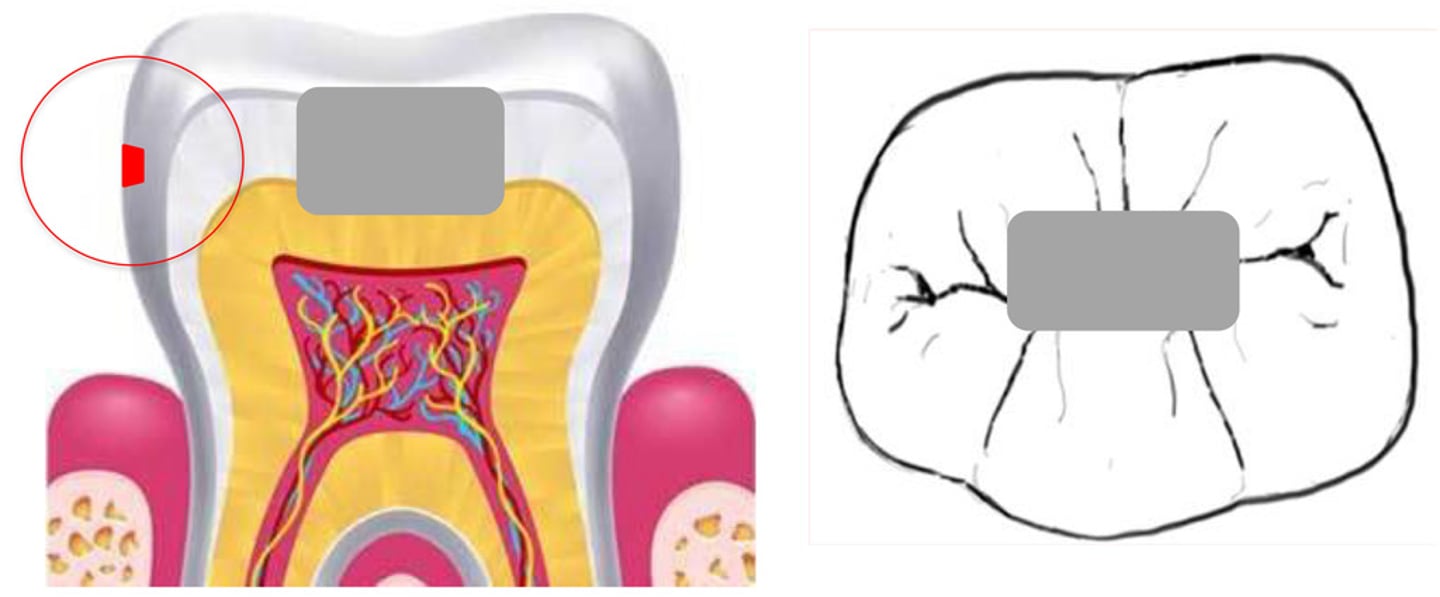
When would you say as a dentist that just filling cavities is no longer working?
- not getting paid for talking about prevention
- only getting paid for amount of cavities we are filling
Surgical repair of dental caries is largely ineffective
- up to 66% relapse within 2 years
- underlying dietary and home care behaviors persist
- restorative dental care is not inherently preventative
- current challenges to implementing disease management
- focus on dental surgical procedures
- 'financial driver' in clinical practice
Dental cavity
hole in tooth
Dental caries
- disease process that is chronic, transmissible (mother --> child, if mom is good at making cavities so can child, improve oral health in mothers is important, progressive (continues), diet-dependent, fluoride-mediated, reversible (to a point), consequential, largely unaffected by surgical repair (we can fill cavity but still can have damage to tooth in future if not treated properly)
- bacterial disease process caused by acids from bacterial metabolism diffusing into enamel and dentin and dissolving mineral
No dental cavity, No dental caries
- surgical repair: N
- future risk: N
- healthy mouth
Dental cavity, Dental caries
- surgical repair: Y
- future risk: Y
- busted mouth
Dental cavity, No dental caries
- surgical repair: Y
- future risk: N
- just 1 tooth affected
- small enough but won't progress to other teeth
"Yes, and..."
- silver cap turned black
- healthy gums
- progression of disease has been arrested
- cavity remains so we fill it (if baby tooth, leave and will fall out)
- active cavity (hole)
- cavity decay (mushy, ashy)
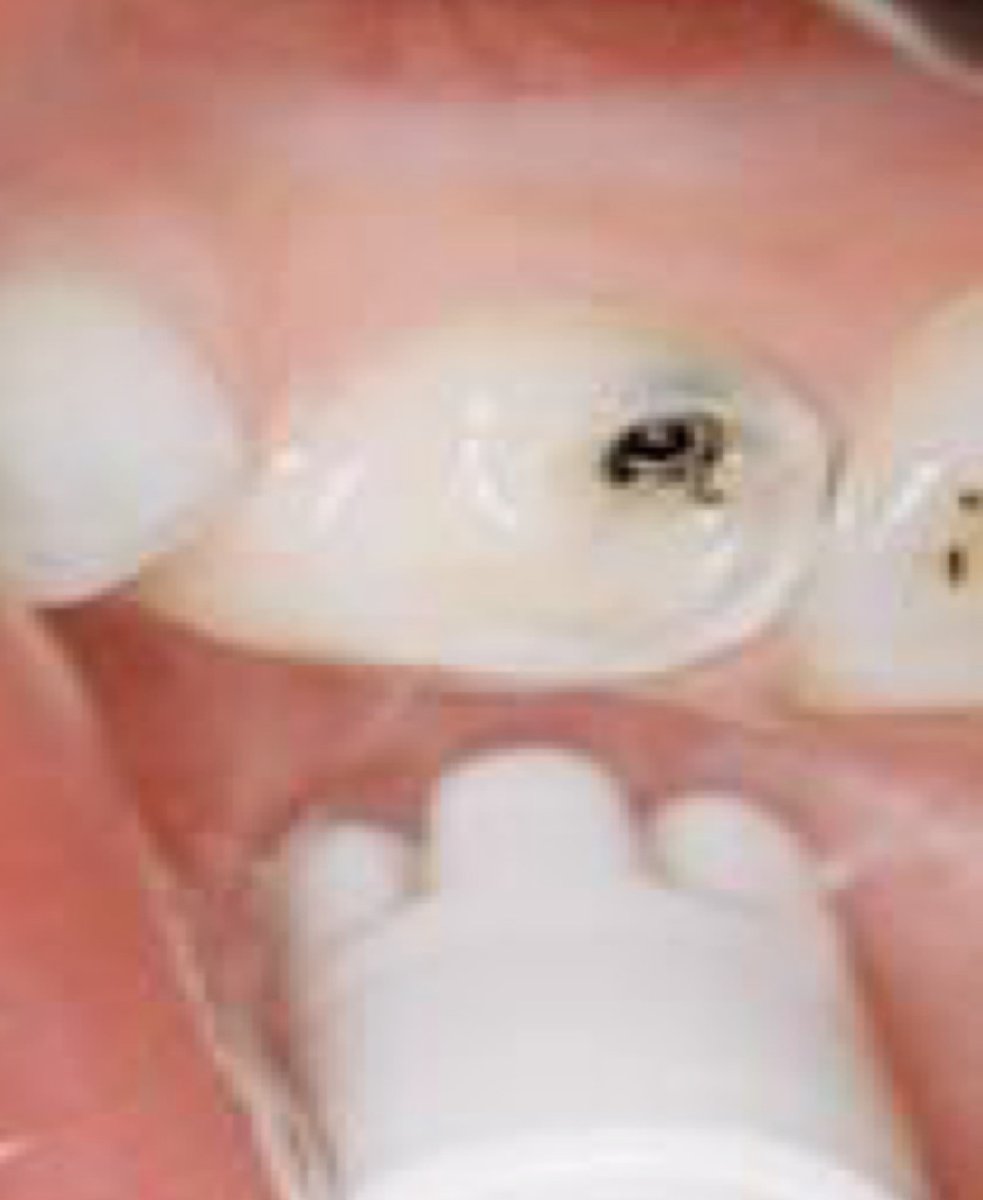
No dental cavity, Dental caries
- surgical repair: N
- future risk: Y
- plaque, gingivitis
- cariogenic plaque
Accumulation of plaque
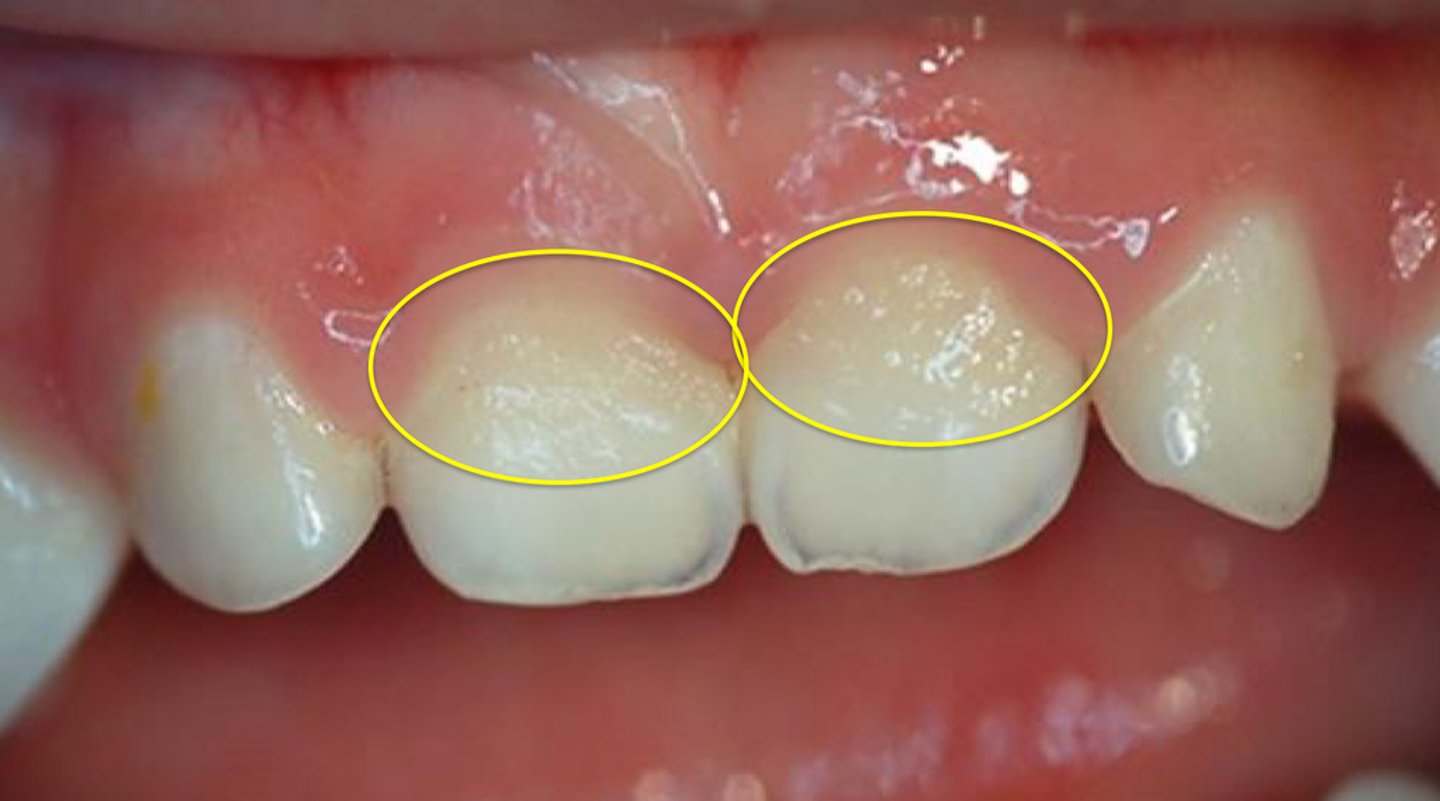
Demineralization and inflamed gingiva
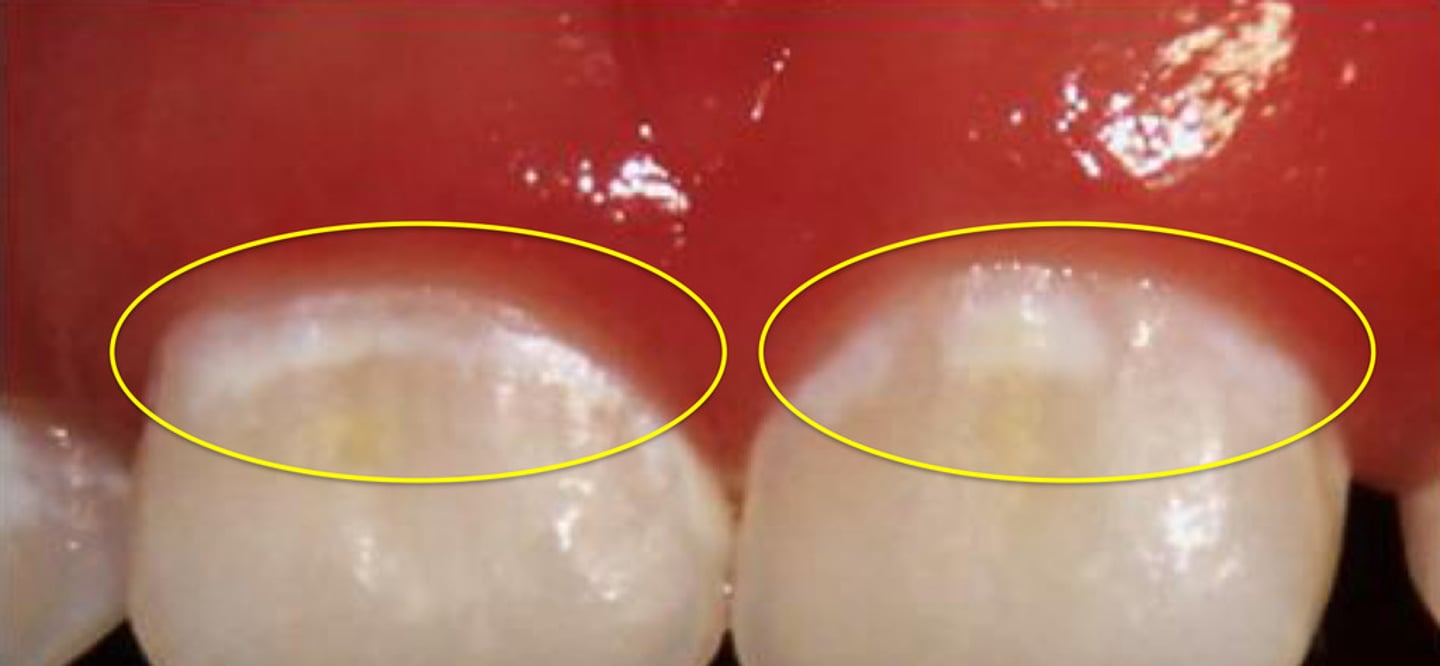
Accumulation
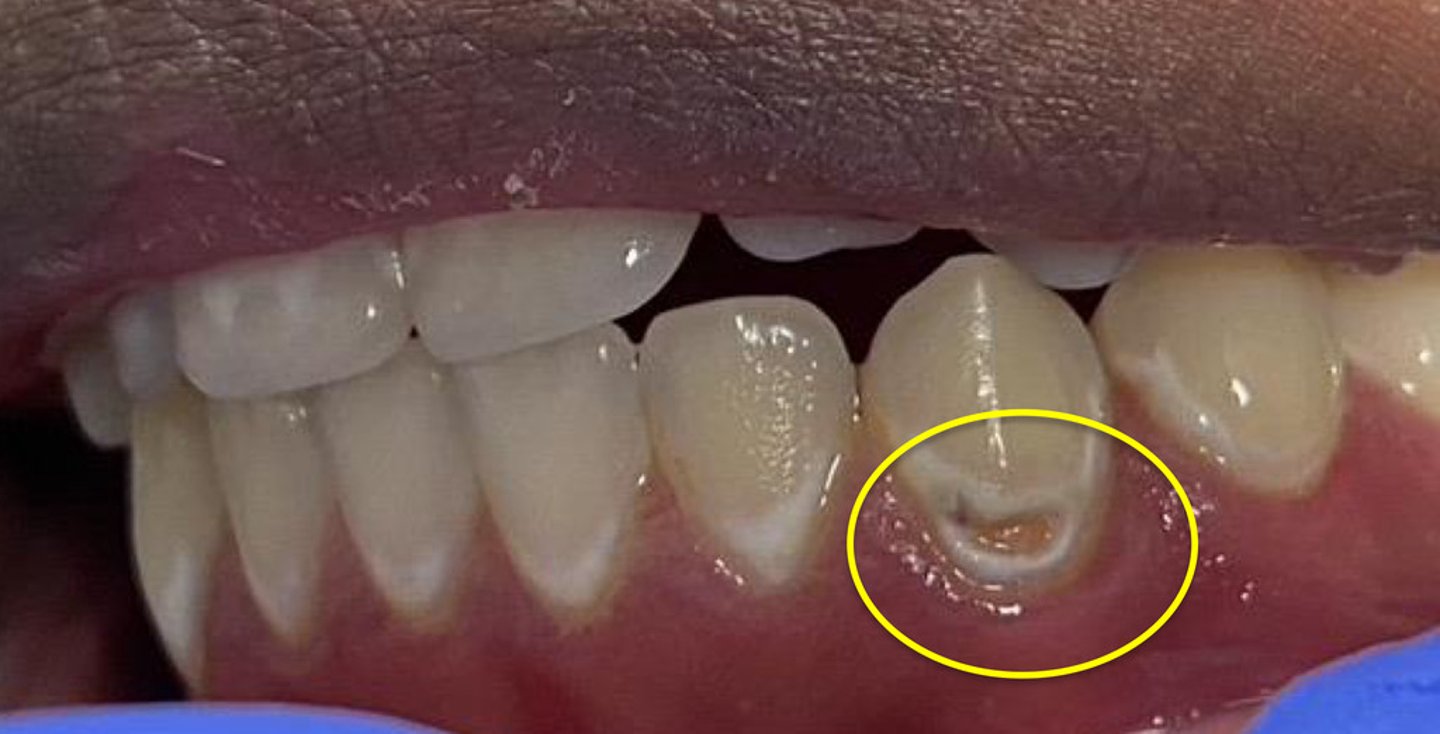
Affected nerve
now have to take root out and do root canal
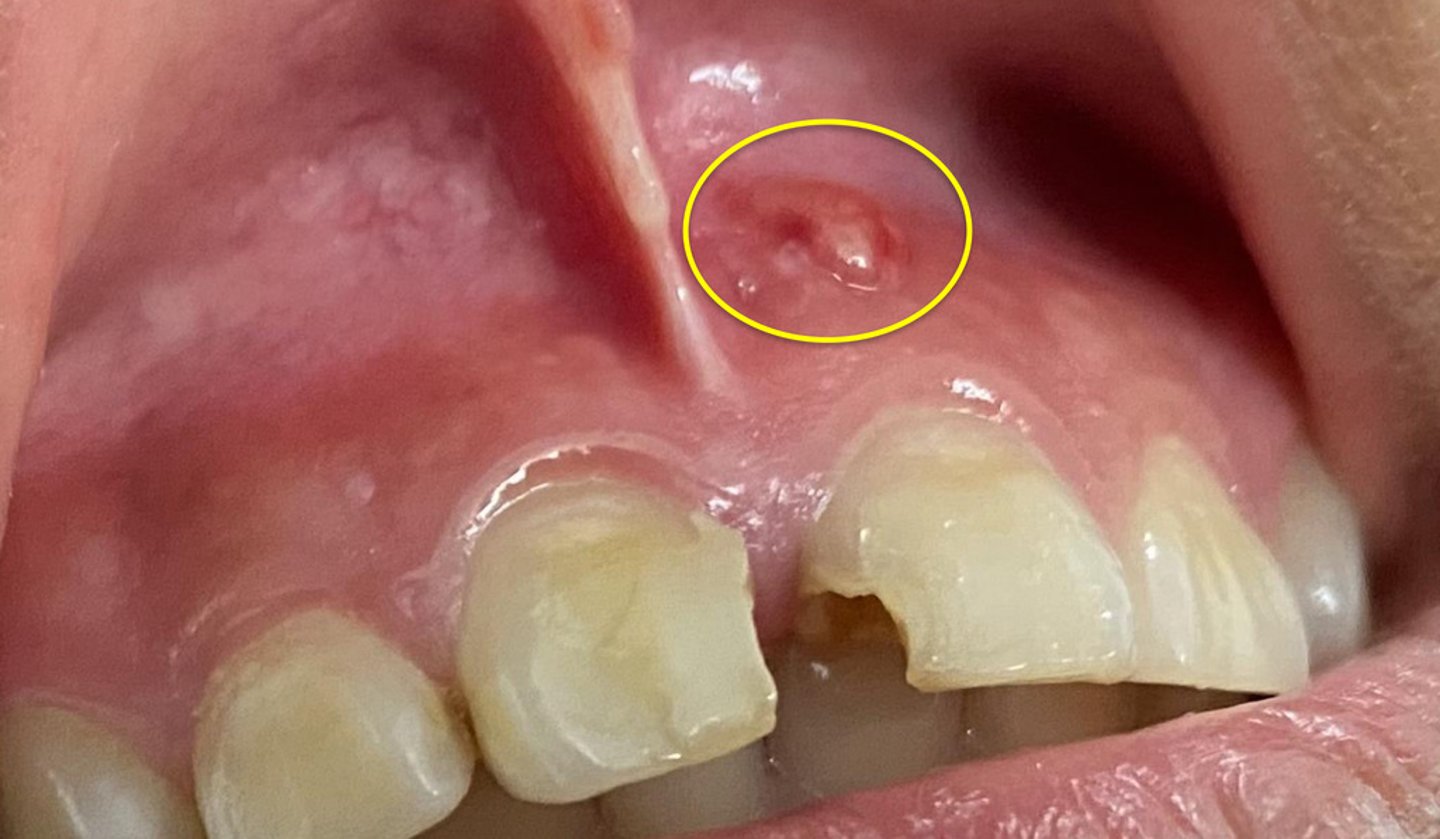
Epidemiology
- study of prevalence and spread of disease
- who gets it and how much
DMFT
- Decayed Missing Filled Teeth
- main outcome of cavity control
'Caries experience'
having had a cavity, a filling, or tooth pulled due to dental caries
Prevalence of Dental Caries
- 91% of adults 20-64 have had dental caries in their permanent teeth
- white adults and those living in families with higher incomes and more education have had more decay
Unmet Needs of Dental Caries
- 27% of adults 20-64 have untreated decay
- black and Hispanic adults, younger adults, and those with lower incomes and less education have more untreated decay
Severity of Dental Caries
- among adults with caries, the mean number of teeth affected was lower during 2011-2016 (7.4 teeth) than during 1999-2004 (8.2)
- change appears to be primarily associated with a decrease in mean number of filled teeth and no detectable change in untreated decay
- Hispanic subgroups and those with lower incomes have more severe decay in permanent teeth
- black and Hispanic subgroups and those with lower incomes have more untreated permanent teeth
How does dental caries progress?
- not well understood if dental caries was a genetic disease, dietary disease, or transmissible infectious disease until 1960s
- localized chemical demineralization of tooth surface by acid produced by bacteria as a byproduct of fermentation of dietary carbohydrates (DCH)
Primary Etiological Factors of Dental Caries Progression
- cariogenic bacteria
- fermentable carbohydrate diet
- susceptible tooth
- biofilm + sugar = acid release --> causing cavities
Biofilm
- community of microorganisms growing on surface
- express properties not exhibited by same organisms in individual cultures
Dental Plaque
- biofilm that forms naturally on tooth surface
- consists of mixed community of microbes embedded in extracellular matrix of bacteria and salivary polymers
- have diverse microflora
Most Common Cariogenic Species
- streptococcus mutans (mutans streptococci)
- lactobacillus rhamnosus (lactobacilli)
Acidogenic
ability to rapidly convert sugars to acid
Aciduric
ability to maintain sugar metabolism under extreme environmental conditions such as low pH
Contribute to the biofilm matrix
ability to produce extracellular and intracellular polysaccharides
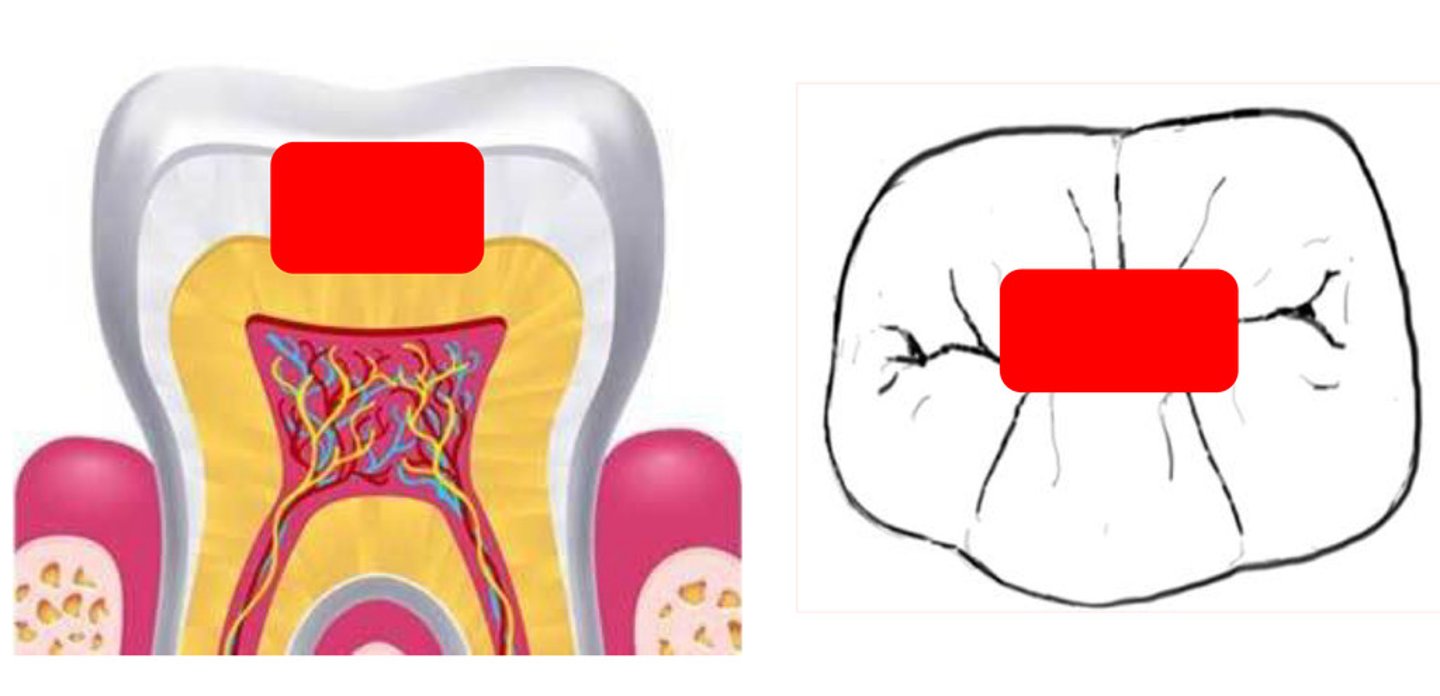
Incipient carious lesion - smooth surface
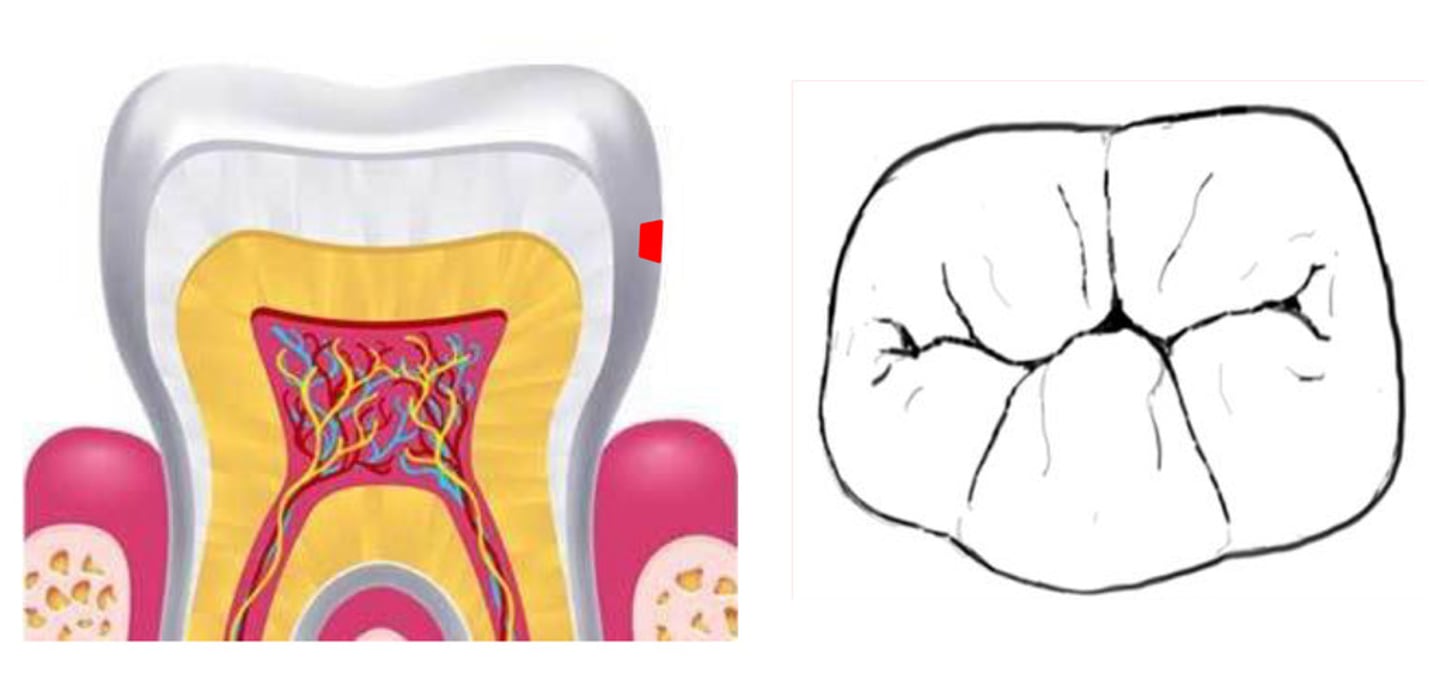
Incipient carious lesion - pit and fissure
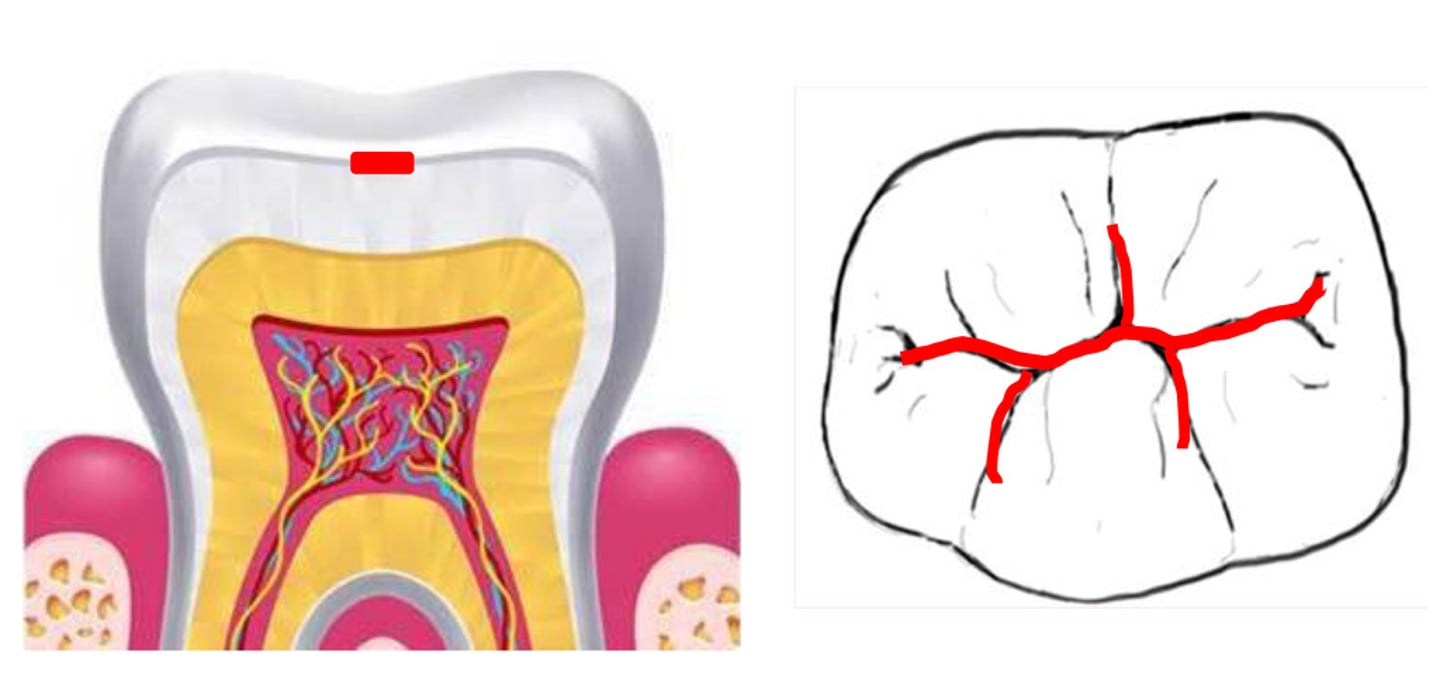
Interproximal caries
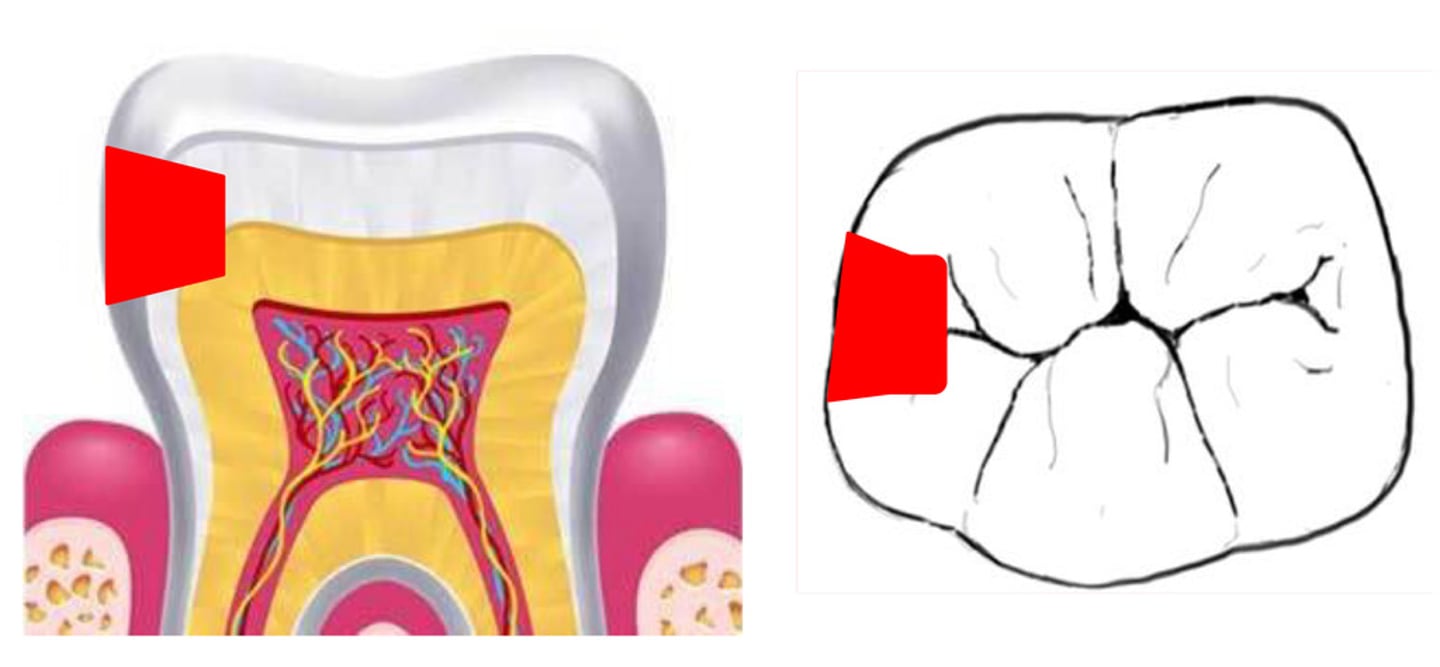
Caries into dentin
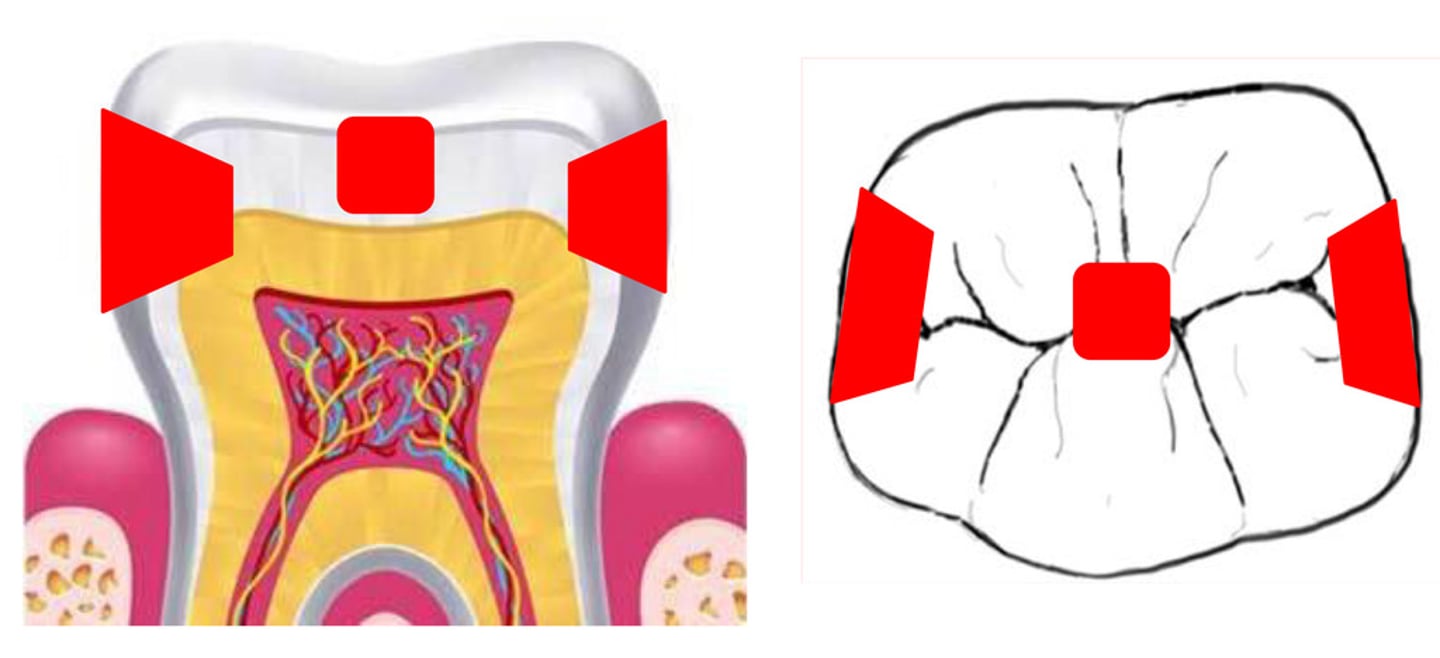
Caries crossing proximal line angles
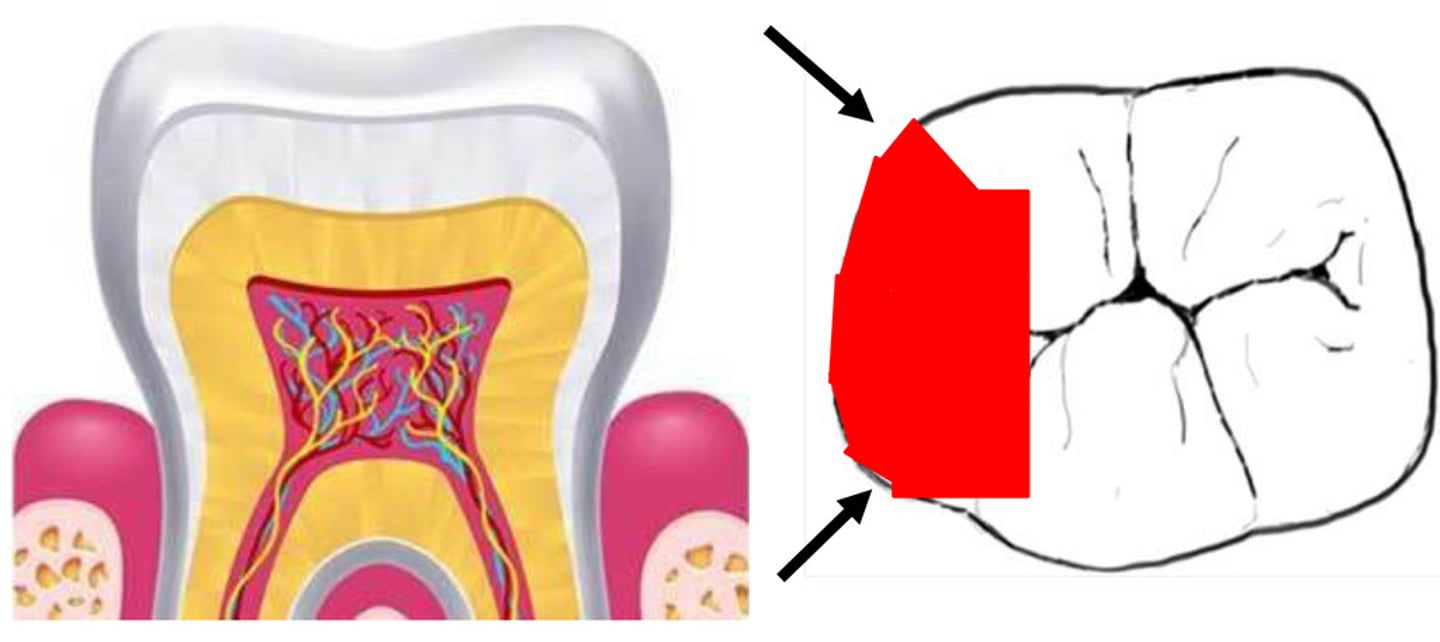
Multi-surface caries
on the crown
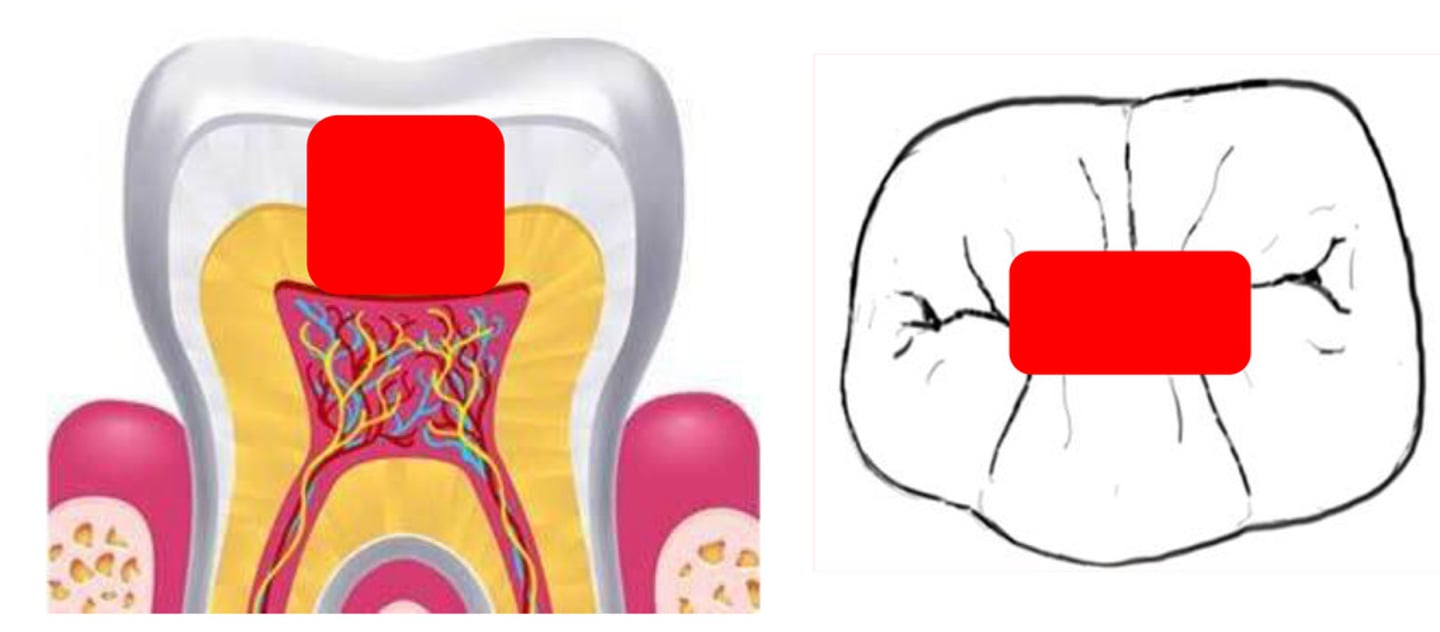
Deep carious lesion
- close to nerve
- will gain sensitivity
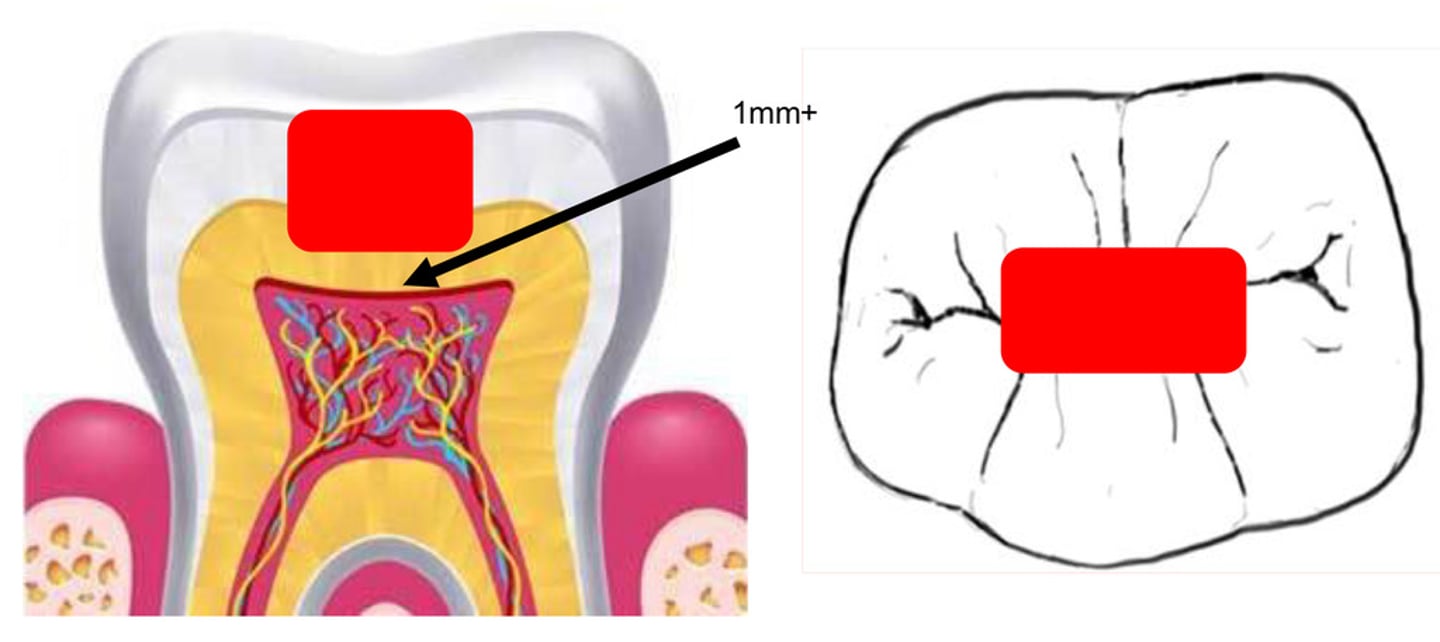
Deep carious lesion at pulp
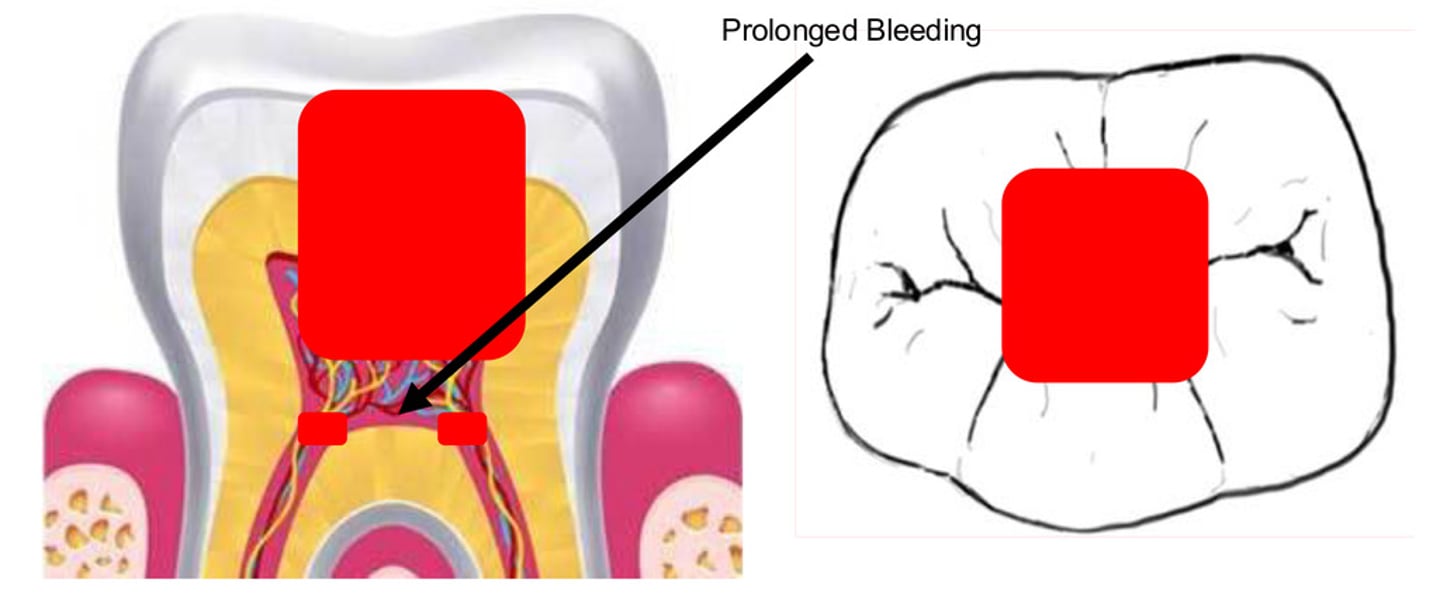
Prolonged bleeding
Caries Risk Assessment
- CAT
- CAMBRA
- Cariogram
Caries Risk Domains
- biological = bacteria load, development
- environmental = CHO/diet, saliva/buffering capacity
- behavioral = F-exposure/home care/dental home?
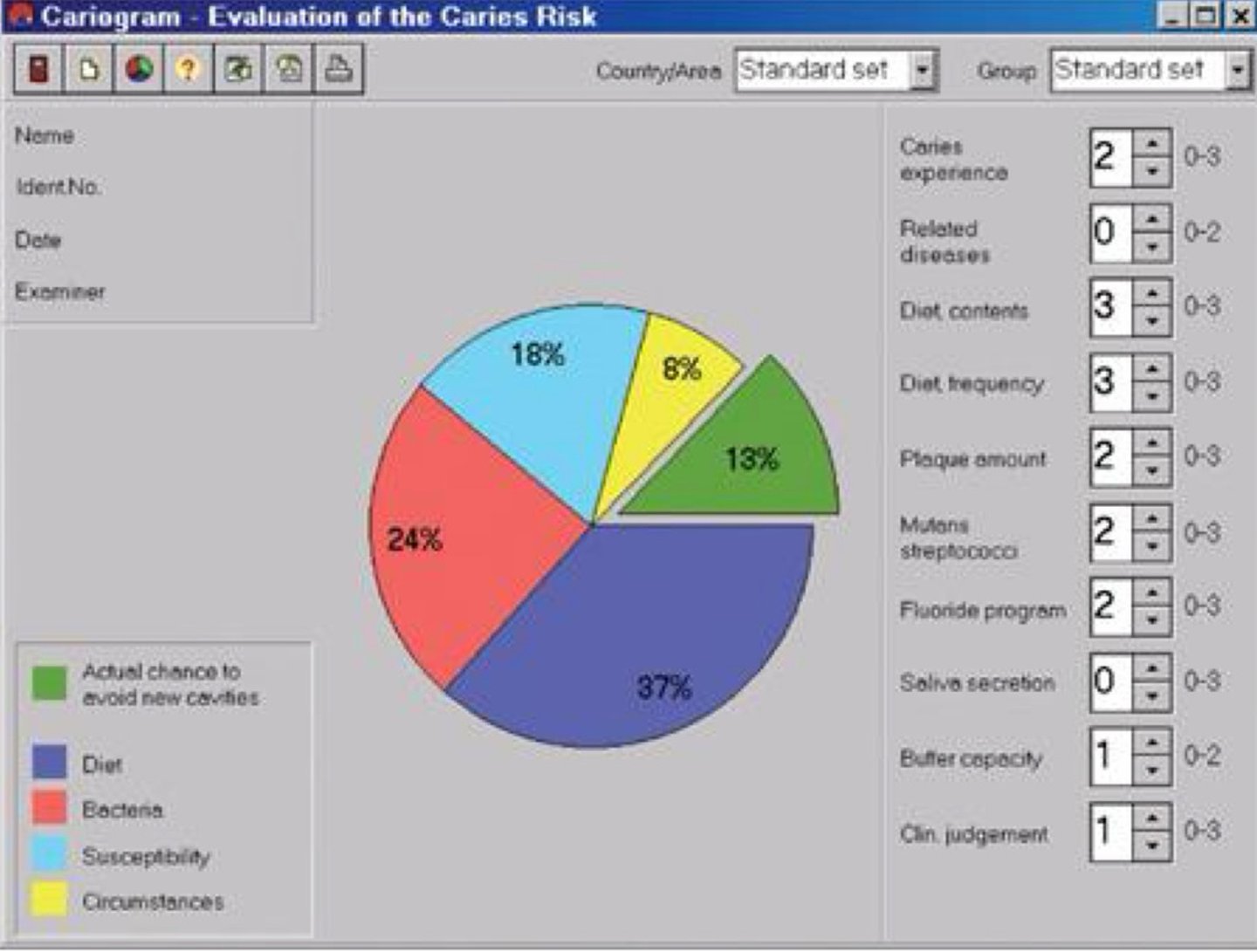
Cariogram
- computer program showing graphical picture that illustrates a possible overall caries risk scenario
- contains algorithm that presents a 'weighted' analysis of input data, mainly biological factors
- expresses as to what extent different etiological factors of caries affects caries risk
- identifies caries risk factors for individual and provides examples of preventative and treatment strategies to clinician
Pros of Cariogram
- applies comprehensive and exhaustive approach to identification of risk
- process includes questionnaire, interview, estimation of oral hygiene, and saliva sampling
Cons of Cariogram
includes salivary tests with microbiological cultivations which can be costly, time consuming, and delay the process
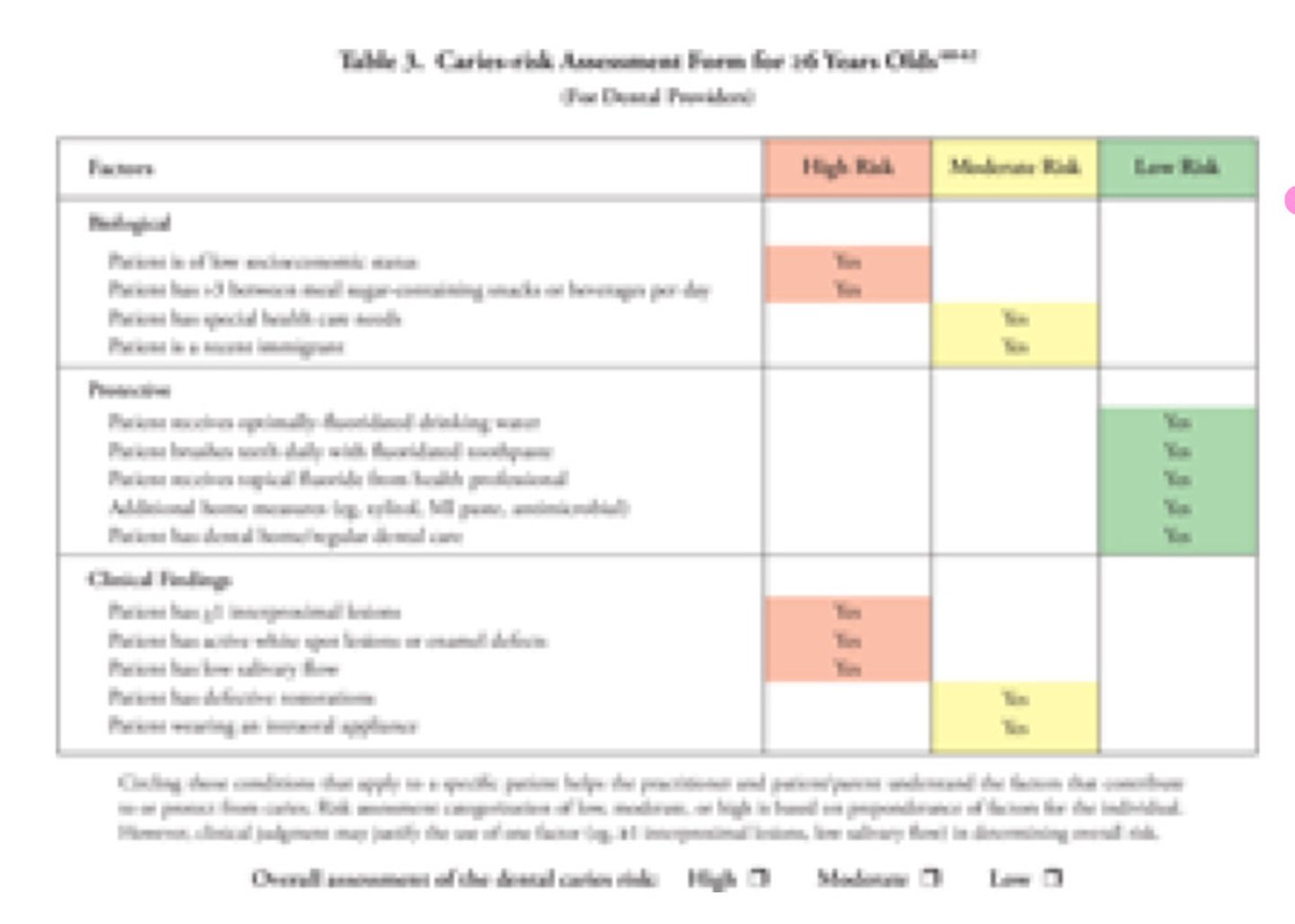
AAPD Caries-Risk Assessment Tool (CAT)
- consists of various 1 page assessment forms (based on patient's age) which characterize risk in terms of biological/behavioral factors, protective factors, and clinical findings
- tool includes recommendations for treatment planning based on patient risk
- factors evaluated: socioeconomic status, diet (sugar and beverage consumption), special health care needs, recent immigrant, fluoride use, oral hygiene, dental home, interproximal lesions, active white spot lesions or enamel defects, salivary flow, restorations, wearing an intraoral appliance
- separate forms for ages 0-5 years and age 6> years
- separate tools for dental professionals and for non-dentists
ADA Caries-Risk Assessment Tool (CAT)
- 1 page risk assessment questionnaire which allows dental professional to rate patient's risk as low, medium, or high based on number of behavioral, health, and clinical conditions
- risk is given a numerical value
- identified factors: fluoride exposure, sugary foods or drinks (diet), eligible for government programs, caries experience of mother, caregiver or other siblings, dental home, special health care needs, restorations/cavitated carious lesions, non-cavitated carious lesions, teeth missing due to caries, visible plaque, dental/orthodontic appliances and salivary flow
Pros of ADA and AAPD CAT
- simple to use
- easily integrate into clinical record
- AAPD provides clear, research-based caries management protocol
- ADA encourages additional clinical examination to determine risk and guide treatment planning
Cons of ADA and AAPD CAT
- point in time assessment
- not clinically tested to provide predictive utility
CAMBRA
- process for infant/toddler is compromised of parent/caregiver interview, examination of child, assignment of caries-risk level, and bacterial cultures if indicated
- model includes recommendations for preventative services based on identified risk
Pros of CAMBRA
simple and straightforward to use
Cons of CAMBRA
- interviews are used as complete risk assessment
- factors identified on interviews do have relationship with caries risk, but have not been tested to be predictive of future caries incidence
- point-in-time measure of risk
- preventative services and recall recommendations for low-risk children do not account for the sometimes rapidly changing circumstances that can drastically modify risk in short period of time
The Caries Balance (Featherstone 2008)
key pathological and protective factors determine whether the caries process progresses, reverses, or is in balance
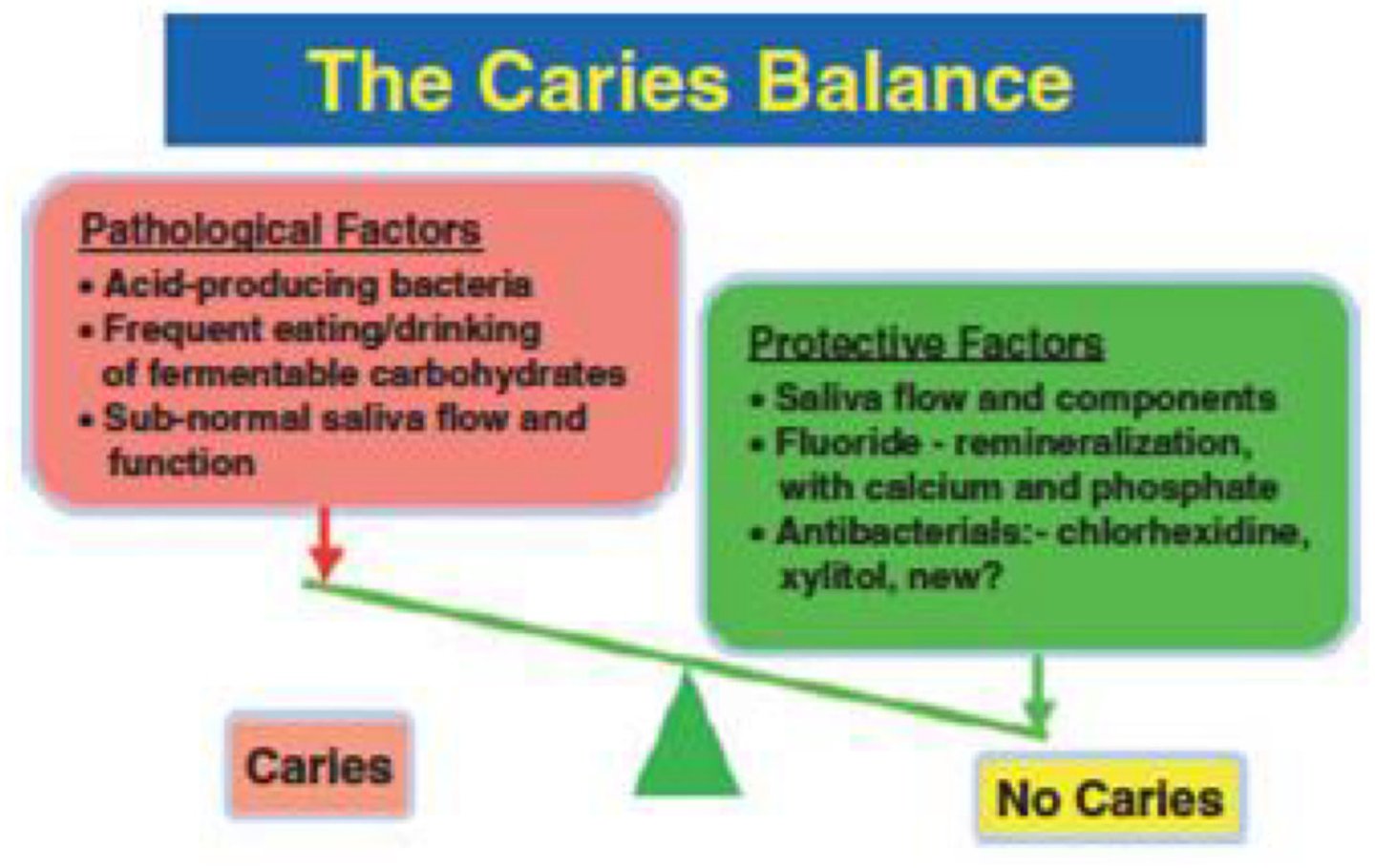
Caries Process
- continuum resulting from many cycles of demineralization and re-mineralization
- placing the dental filling only removes offending bacteria from that cavity in tooth
- does not deal with disease in rest of mouth
Re-mineralization
natural repair process for non-cavitated lesions and relies on calcium and phosphate ions assisted by fluoride to rebuild new surface on existing crystal remnants