chp. 13/14: cell respiration
 Call Kai
 Learn
Learn Practice Test
 Spaced Repetition
 Match
Match Flashcards
 Knowt Play
1/83

There's no tags or description
Looks like no tags are added yet.
Name | Mastery | Learn | Test | Matching | Spaced | Call with Kai | Chat |
|---|
No analytics yet
Send a link to your students to track their progress
84 Terms
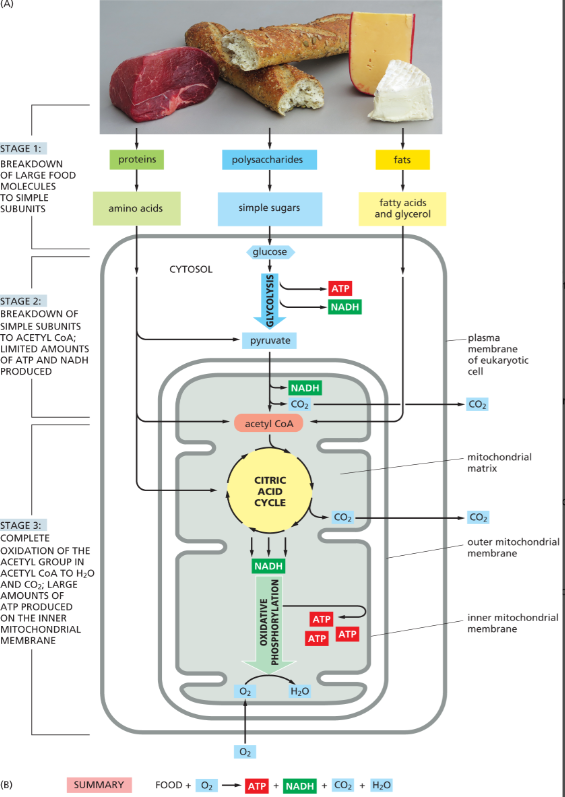
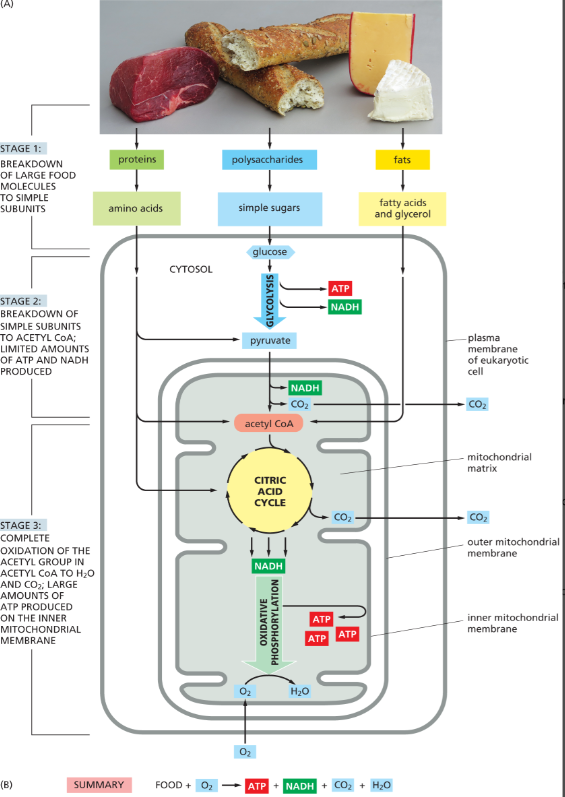
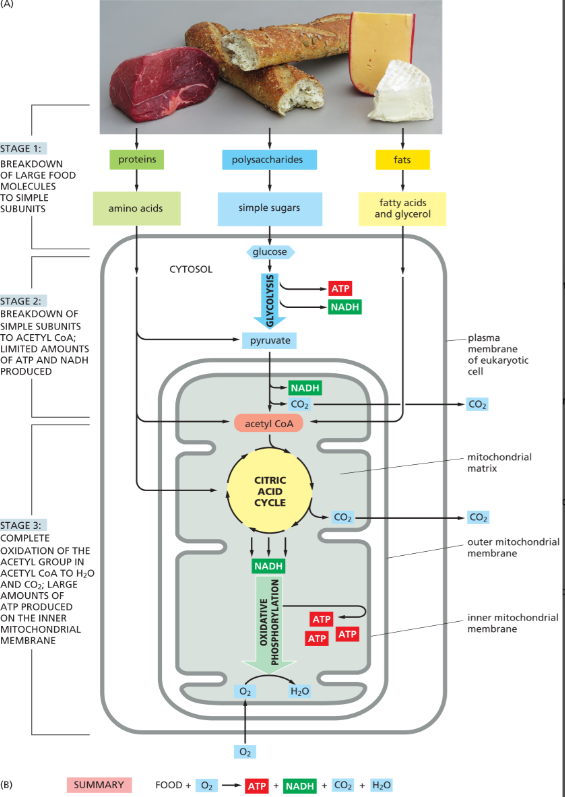
breakdown of food molecules occurs in 3 stages
digestion
glycolysis
citric acid cycle + oxidative phosphorylation
cells release energy from food via the stepwise oxidation of glucose
cell respiration
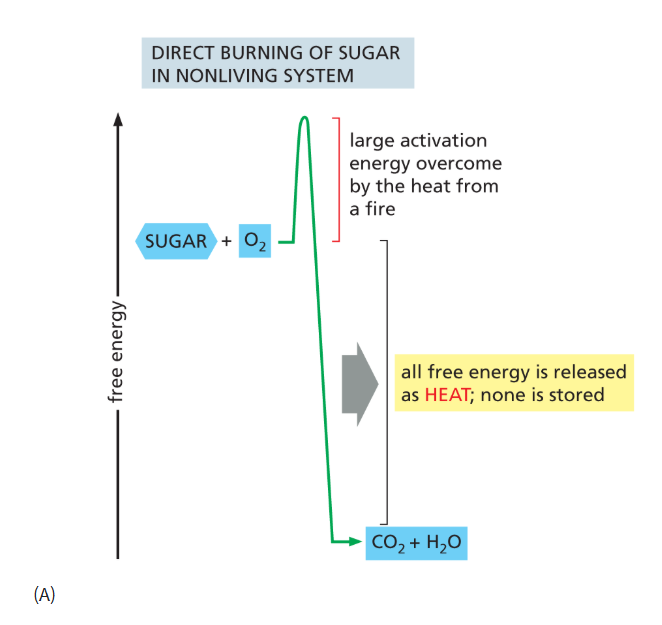
process where cells harvest energy stored in food accompanied by uptake of O2 and release of CO2
combustion rxn
heat and light r released
How do animal cells make ATP?
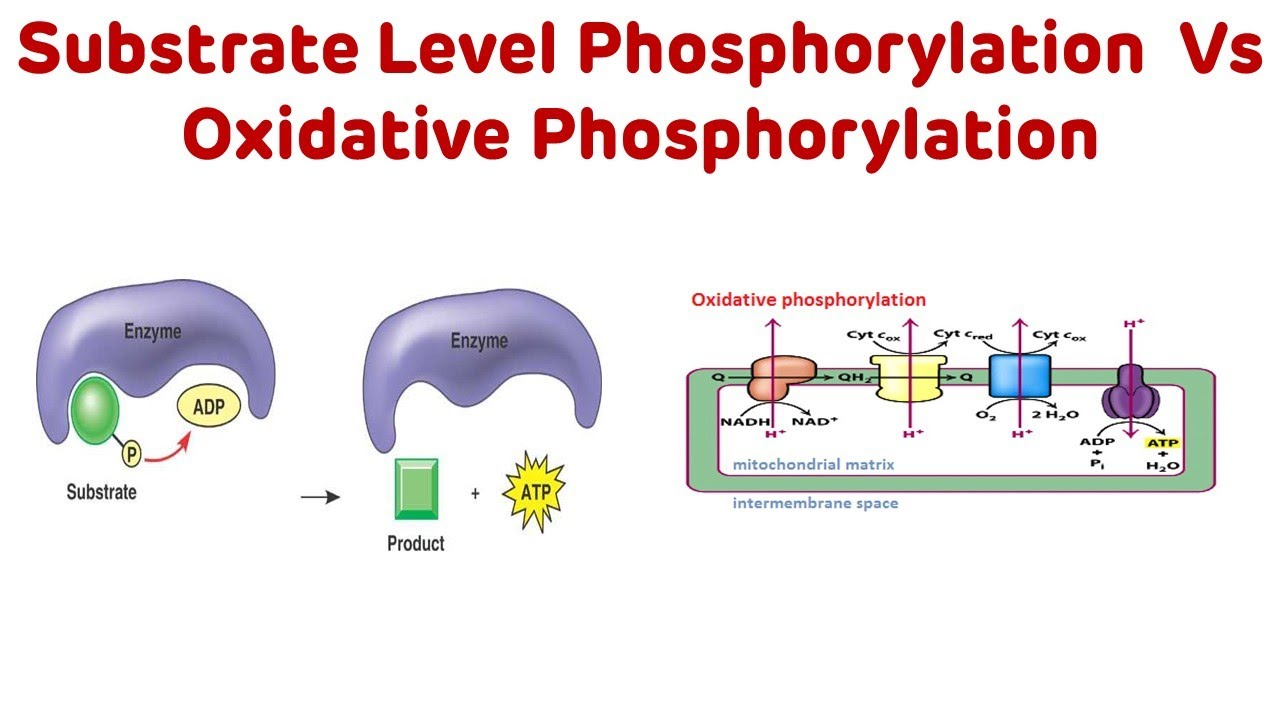
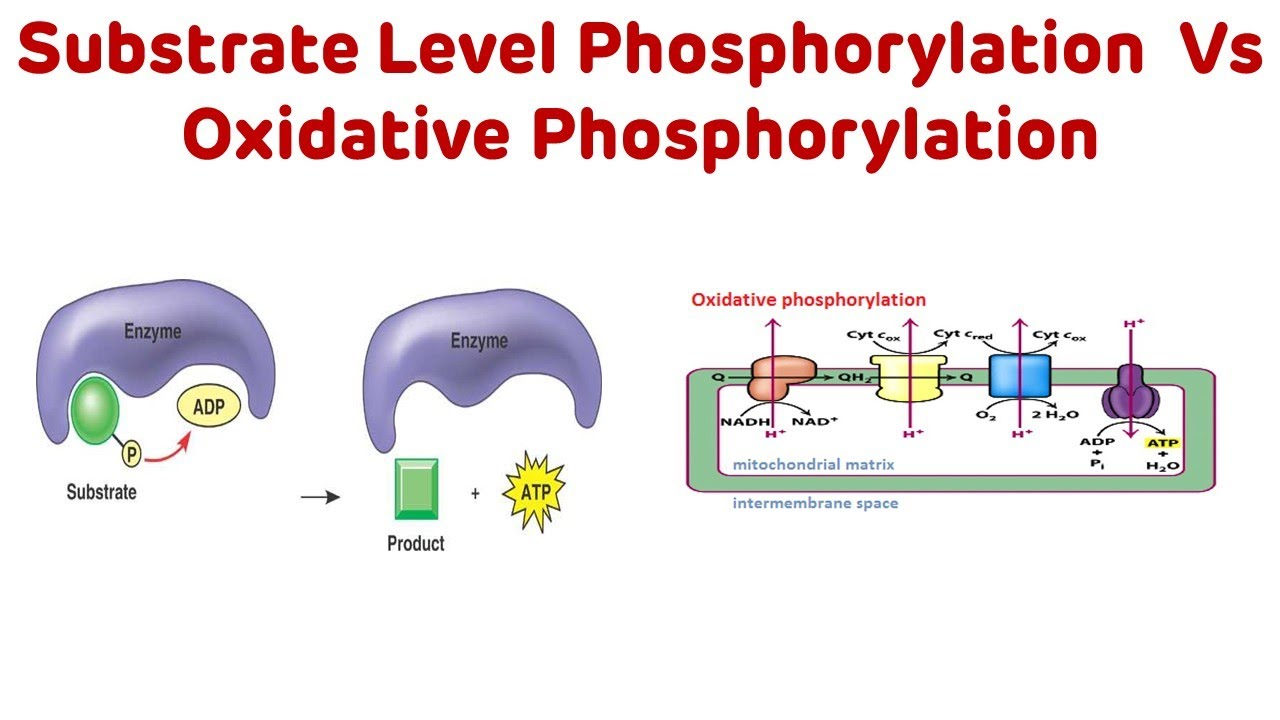
Substrate-level phosphorylation – energy from breaking down food molecules is used directly to make ATP from ADP + phosphate.
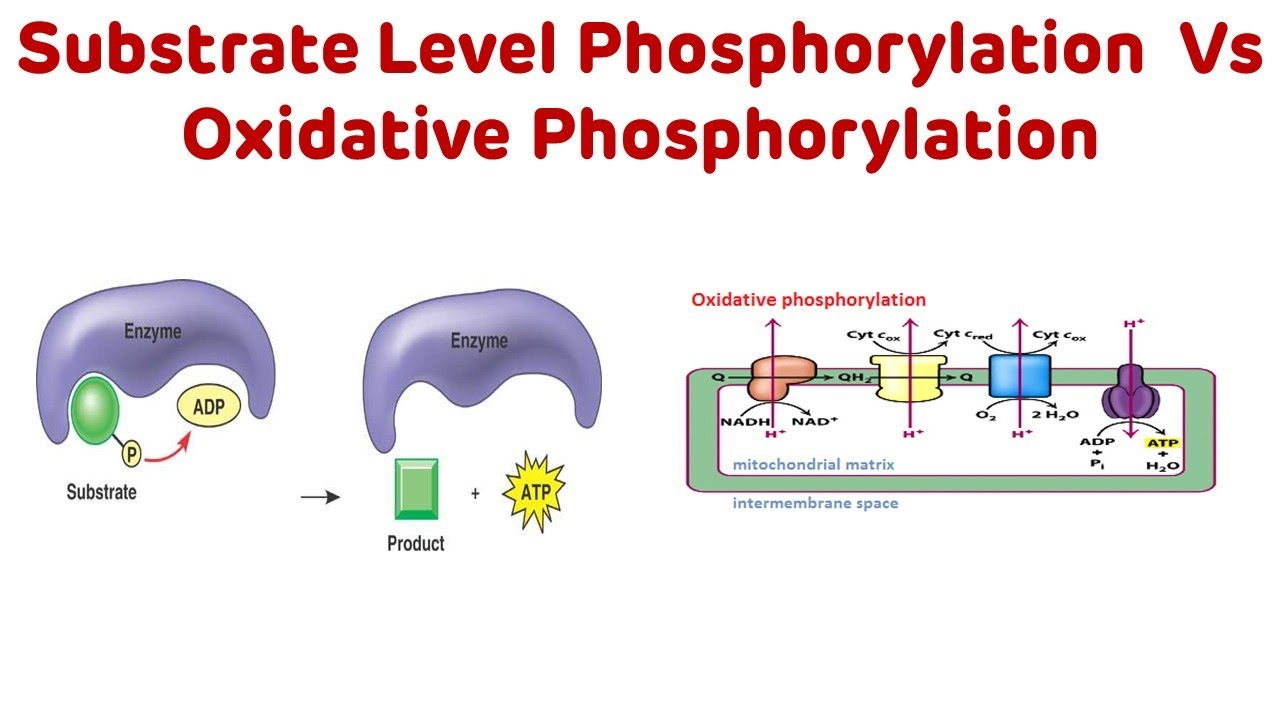
Oxidative phosphorylation – energy from activated carriers (like NADH) drives ATP production, mainly on the inner mitochondrial membrane.
substrate-level phosphorylation
energy from breaking down food molecules is used directly to make ATP from ADP + phosphate by coupling the rxn
occurs inside cytoplasm and mitochondrial matrix
oxidative phosphorylation
energy from an activated carrier (like NADH) is used to drive ATP synthesis/production
occurs in inner mitochondrial membrane of eukaryotes, or plasma membrane of aerobic prok.
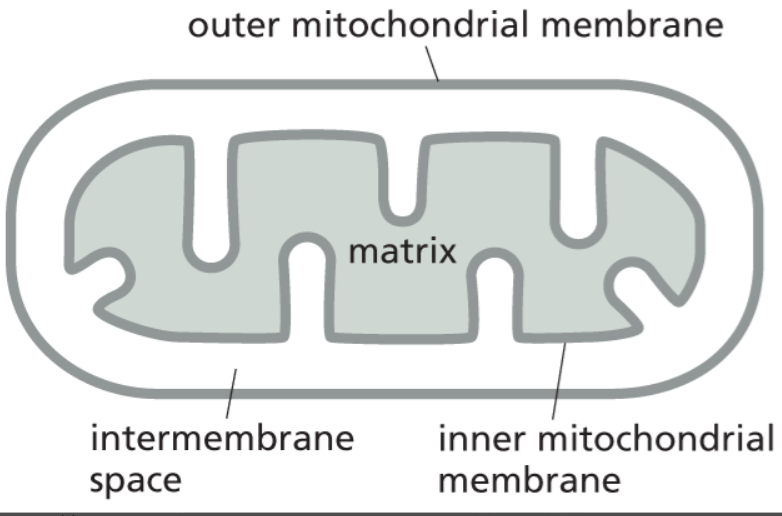
mitochondria structure
outer mitochondrial membrane
intermembrane space (the gap between outer and inner membranes; where H+ can build up.)
inner mitochondrial membrane (folded into cristae; site of oxidative phosphorylation (makes most ATP).)
matrix (innermost part)
digestion
catabolism of big polymers to simple monomers (proteins, polysacc, fats → a.a, sugar, fatty acid + gylcerol)
occurs either outside of cell in intestine or in lysosomes
after digestion, the small organic molec. enter cytosol for their gradual oxidative breakdown
glycolysis
stage 2 of catabolism where it splits each molecule of glucose (6C) into 2 smaller molecules of pyruvate (3C)
this is an anaerobic process!
takes place in cytosol
produces 2 activated carriers: ATP and NADH
pyruvate then transferred into the matrix of mitochondria where a big enzyme complex converts each pyruvate into CO2 + acetyl CoA
CAC and oxidative phosphorylation
The acetyl group in acetyl CoA is transferred to an oxaloacetate molecule to form citrate, which enters a series of reactions called the citric acid cycle.
in CAC: acetyl group is oxidized to CO2 and produces alot of NADH
CAC takes place in mitochondrial matrix
The high energy e- from NADH r passed to the electron transport chain
energy released by their transfer drives oxidative phosphorylation → produces ATP and consumes O2. (where majority of ATP is made)
nearly 50% of the energy that could, in theory, be derived from the breakdown of glucose or fatty acids to H2O and CO2 is captured and used to drive the energetically unfavorable reaction ADP + phosphate ⟶ ATP.
takes place in mitochondrial inner membrane
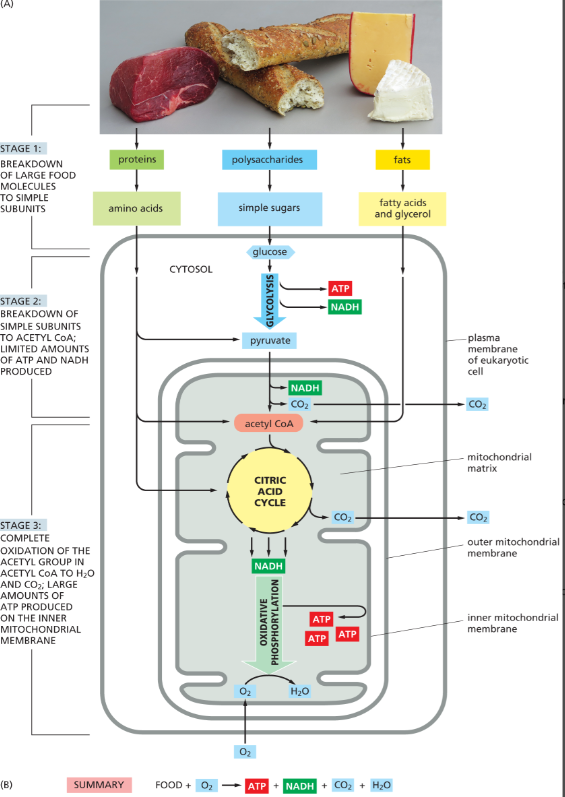
where does glycolysis take place?
takes place in cytoplasm and is anaerobic
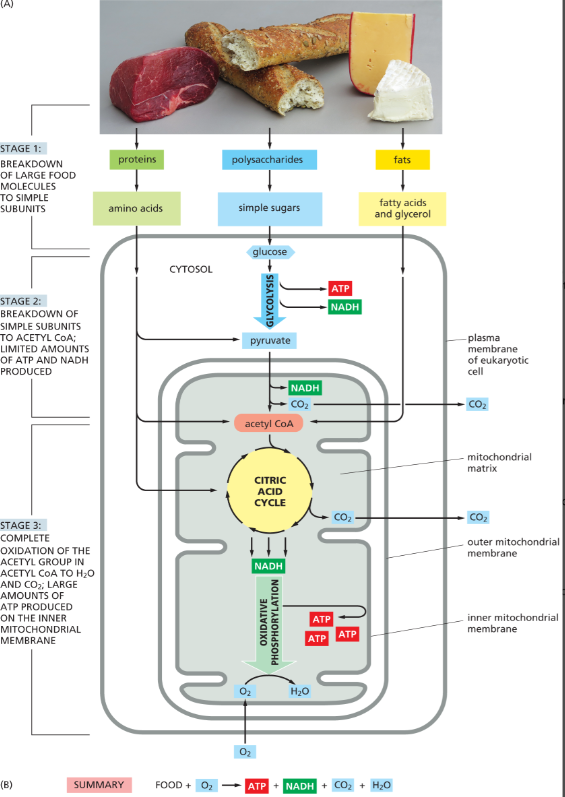
where does the CAC take place?
in mitochondrial matrix
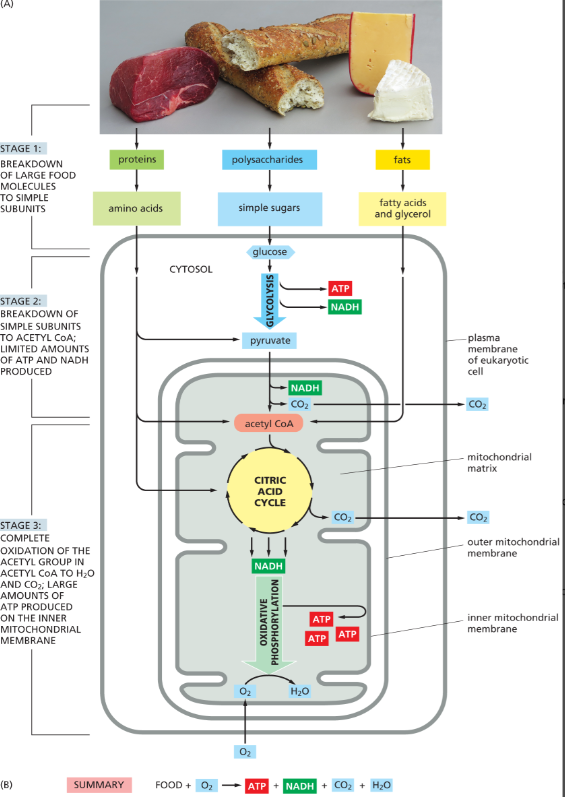
where does oxidative phosphorylation take place?
the inner mitochondrial membrane
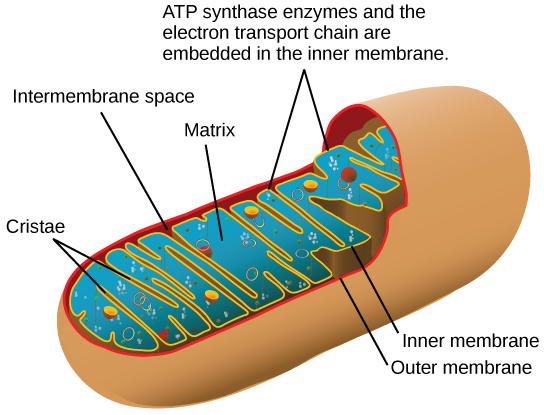
what is the result of glycolysis?
glucose (6C) is oxidized into 2 molecules of pyruvate (3C)
Uses 2 ATP at first (investment phase).
Produces 4 ATP + 2 NADH later (payoff phase).
Net gain: 2 ATP + 2 NADH per glucose.
remember this is one of most ancient processes and doesn’t need O2
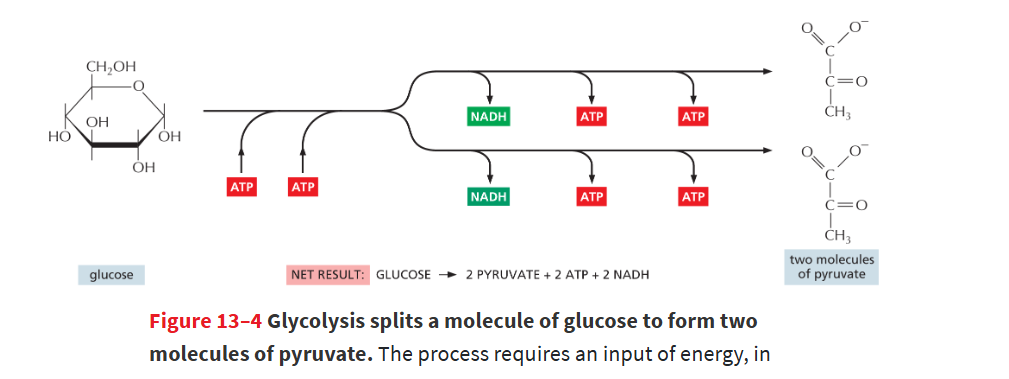
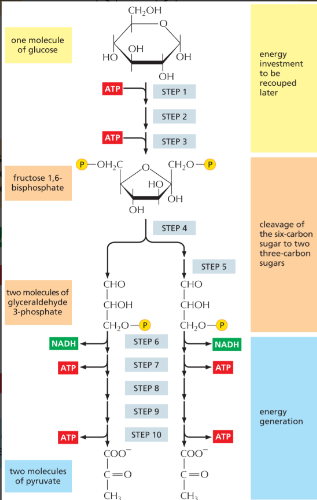
molecules in glycolysis
1 Glucose (6C)
initial energy investment (-2 ATPs) will be regenerated later
1 Fructose 1,6-bisphosphate (6C)
cleavage
2 Glyceraldehyde 3-phosphate (3C)
energy generation by the oxidation of 2 G3P => 2 NADH
by substrate-level phosphorylation (the transfer of a phosphate from a sugar intermediate to ADP)
=> 4 ATP
2 Pyruvate (3C) (product of glycolysis)
1 Fructose 1,6-bisphosphate (6C)
this is the cleavage step of glycolysis where this molecule has been phosphorylated and is getting split into 2 G3P
2 Glyceraldehyde 3-phosphate (3C)
this is whats produced from the cleavage of glucose in glycolysis
kicks off energy generation phase
kinase
catalyzes the addition of a phosphate group to molecules
isomerase
catalyzes the rearrangement (flipflop) of bonds within a single molecule
dehydrogenase
catalyzes the oxidation of a molecule by removing a hydrogen atom plus an electron (H-)
G3P dehydrogenase generates NADH
mutase
catalyzes the shifting of a chemical group from one position to another within a molecule
how is ATP made in glycolysis?
through substrate-level phosphorylation
a phosphate group is transferred directly from a substrate molecule—one of the sugar intermediates—to ADP.
glycolysis produces 4 ATP but nets 2 cuz 2 are used in the first steps
NADH in glycolysis
Activated carrier of electrons that is widely used in the energy-producing breakdown of sugar molecules
2 NADH produced in glycolysis per glucose consumed
they are transported into mitochondria, where they donate their electrons to an electron-transport chain that produces ATP by oxidative phosphorylation in the inner mitochondrial membrane.
when it gives up its electrons, it converts to NAD+ which is available for glycolysis
fermentation
The breakdown of organic molecules without oxygen. This form of oxidation yields less energy than aerobic cell respiration.
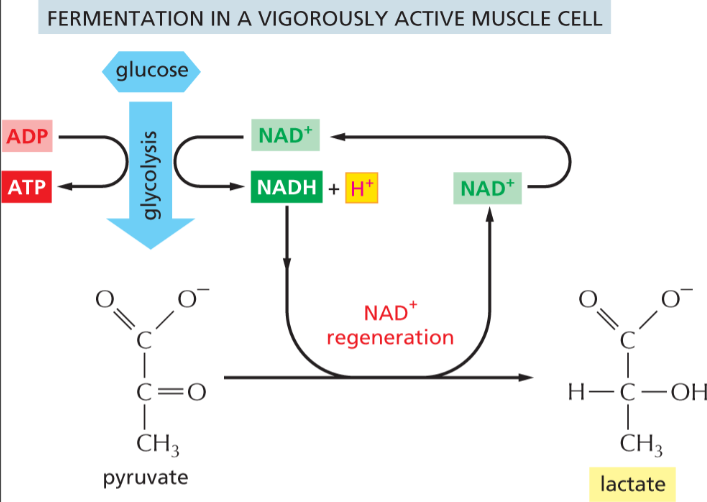
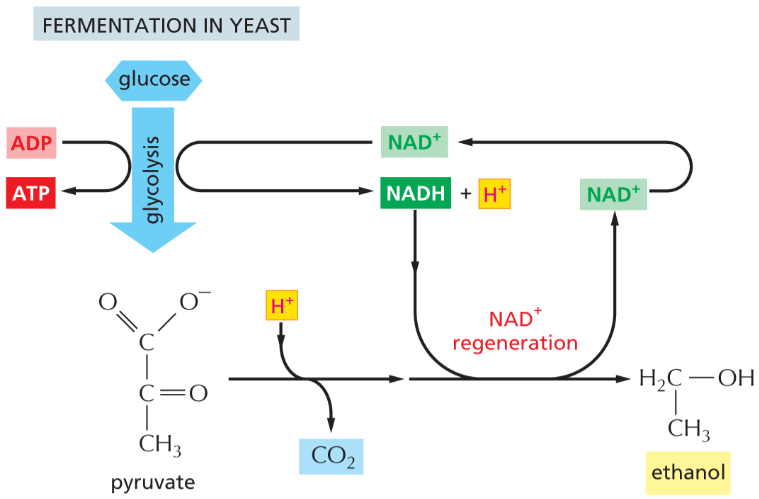
there are 2 types: in muscle cells (lactate) and in yeast (ethanol)
How do cells make ATP without oxygen?
Glycolysis still occurs, making 2 pyruvate + 2 NADH per glucose.
Fermentation converts pyruvate into lactate (muscle) or ethanol + CO₂ (yeast).
NADH → NAD⁺ is regenerated so glycolysis can keep running.
Produces much less ATP than full mitochondrial oxidation.
fermentation in muscle cell
Pyruvate + NADH → Lactate (happens in cytosol)
NADH → NAD⁺ (regenerated to keep glycolysis running)
Muscle cells during intense exercise
Key point: Produces a small amount of ATP; lactate is excreted or later converted back to pyruvate in the liver
fermentation in yeast
Pyruvate + NADH → Ethanol + CO₂ (happens in cytosol)
NADH → NAD⁺ (regenerated for glycolysis)
Brewing beer, baking bread
Key point: Also produces only a small amount of ATP; CO₂ causes bread to rise
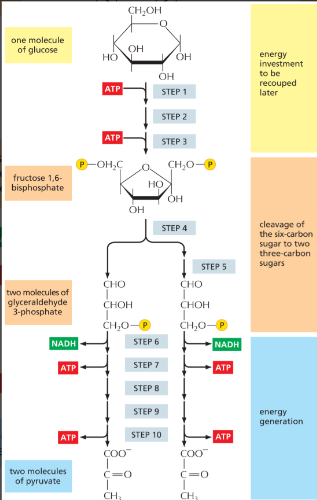
How do glycolytic enzymes couple energy to make ATP and NADH in glycolysis?
Energy released from oxidizing glyceraldehyde-3-phosphate is used to form NADH and a high-energy intermediate, which then donates a phosphate to ADP to make ATP. (steps 6-7)
Cells couple reactions by using the energy released from one favorable reaction to drive another unfavorable reaction
pyruvate dehydrogenase complex
a giant complex of 3 enzymes that decarboxylates pyruvate after glycolysis
it produces: CO2, NADH, and Acetyl CoA
acetyl-CoA produced when acetyl group derived from pyruvate becomes linked to coenzyme A (CoA)
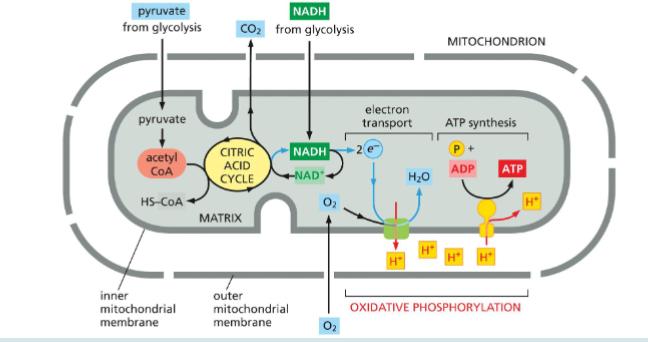
fatty acids r also converted into acetyl-CoA
Fatty acids are broken down two carbons at a time.
Each cycle produces:
Acetyl CoA
NADH
FADH₂
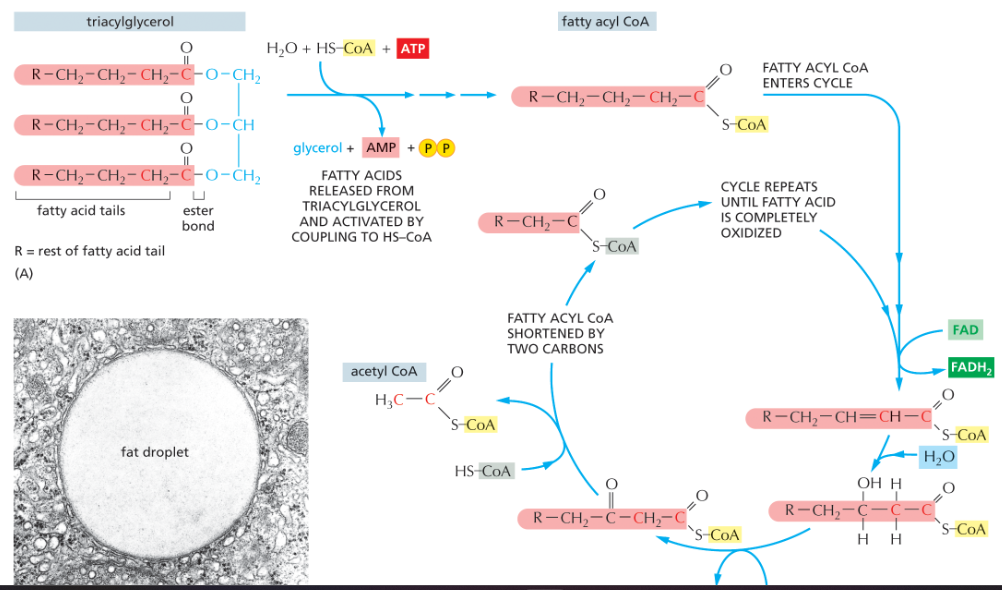
how is pyruvate converted to acetyl CoA?
happens in mitochondrial matrix and occurs by the pyruvate dehydrogenase complex
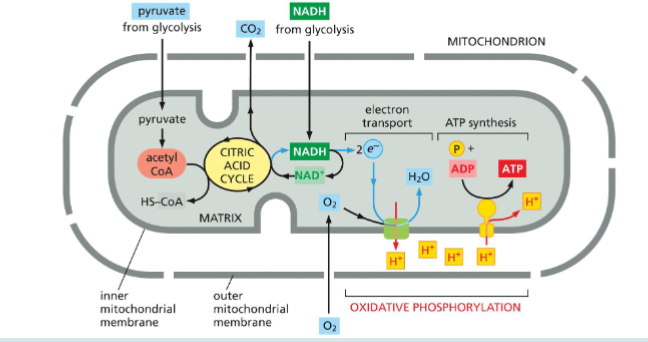
amino acids r also converted into acetyl CoA
Some amino acids are converted into:
Acetyl CoA or
Citric acid cycle intermediates
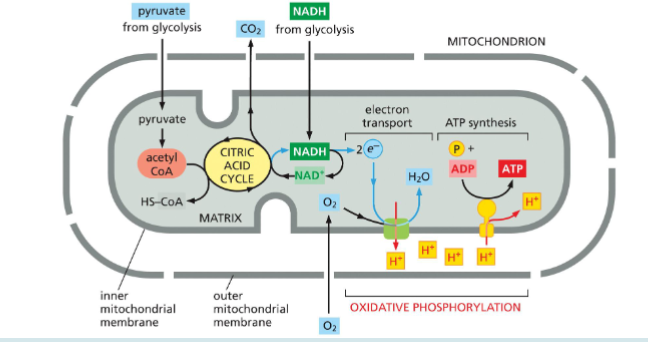
Why is acetyl CoA important?
it is the starting fuel for the Citric Acid Cycle
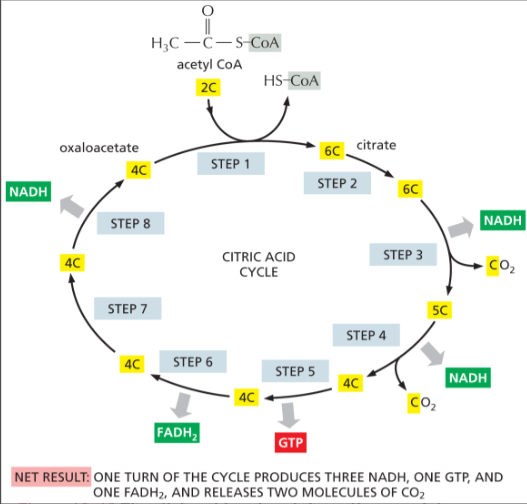
Acetyl-CoA (2 carbons) enters the citric acid cycle.
It combines with oxaloacetate (4 carbons).
This forms citrate (6 carbons).
So the first reaction of the cycle is:
Acetyl-CoA + oxaloacetate → citrate
where does the oxidation of pyruvate and CAAC occur?
in the mitochondrial matrix
where does the electron transport chain and oxidative phosphorylation occur?
in the inner mitochondrial membrane
folded into cristae
production of ATP
oxidative phosphorylation in mitochondria produces most of the ATP used by eukaryotes
regeneration of NAD+
NAD+ is required for glycolysis to take place.
under aerobic conditions, this NAD+ is regenerated when NADH donates e- to the respiratory chain
provision of precursors for biosynthesis of a.a, nucleotides, and fatty acids
intermediates produced by the CAC, which takes place in the mitochondrial matrix, serves as precursors for the synthesis of many macromolecules
participation in synthesis of heme and iron-sulfur clusters
these metal-containing components play a central role in e- transport during oxidative phosphorylation
cell signaling
mitochondria buffer the conc’n of Ca2+, an ion that plays a role in many signaling processes, including muscle contraction
generation of new reactive oxygen
although reactive oxygen species can damage macromolecules, they r also involved in cell signaling
regulation of apoptosis
molecules released from the mitochondria trigger a proteolytic cascade that leads to cell death
What waste product is released from the citric acid cycle?
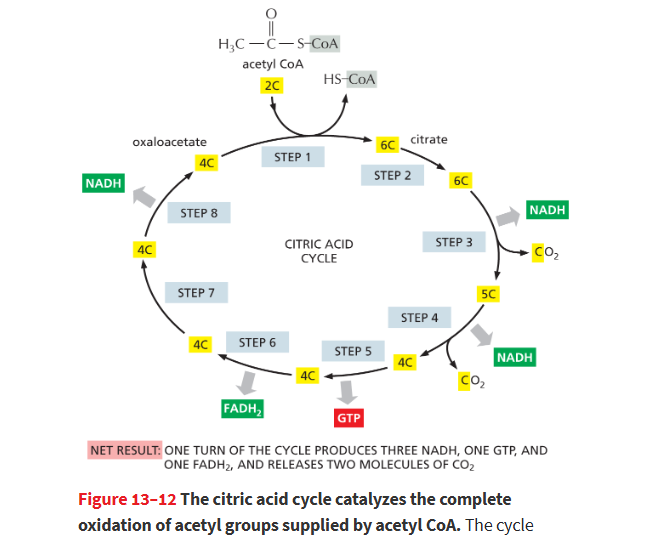
CO2
CO2 comes from the carbon atoms of the acetyl group in acetyl-CoA
the oxygen comes from water
the CAC doesnt directly use oxygen
Oxygen gas is used later in the electron transport chain, where it accepts electrons and becomes H₂O
the other O present in CAC come from water
why is oxygen important
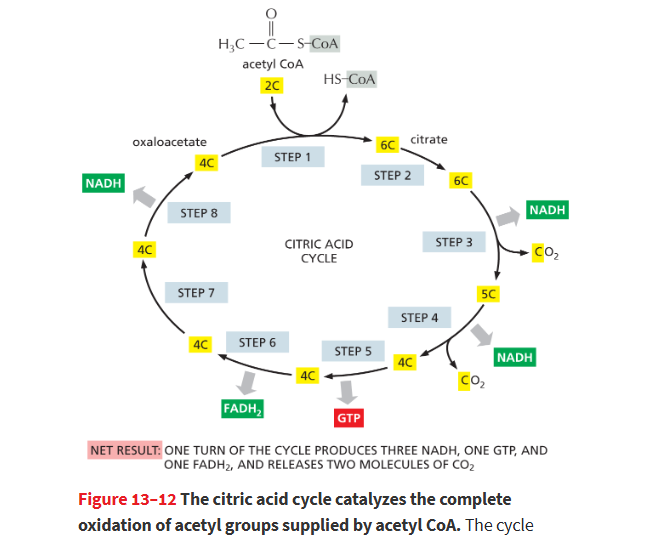
Oxygen is required for NADH to hand off its electrons, so as to regenerate the NAD+ that is needed to keep the citric acid cycle going.
O2 will be the FINAL electron acceptor! and produces water
What molecule is formed when acetyl-CoA (2C) combines with oxaloacetate (4C)?
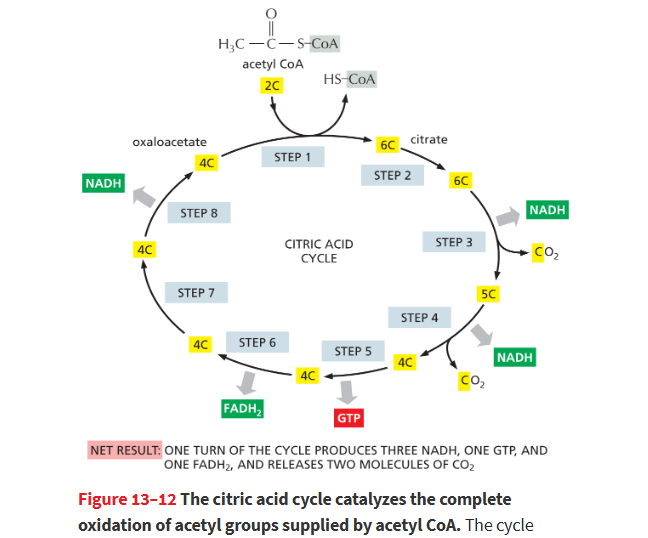
Citrate (citric acid), a six-carbon molecule.
the oxaloacetate consumed at the start of the process is regenerated at the end
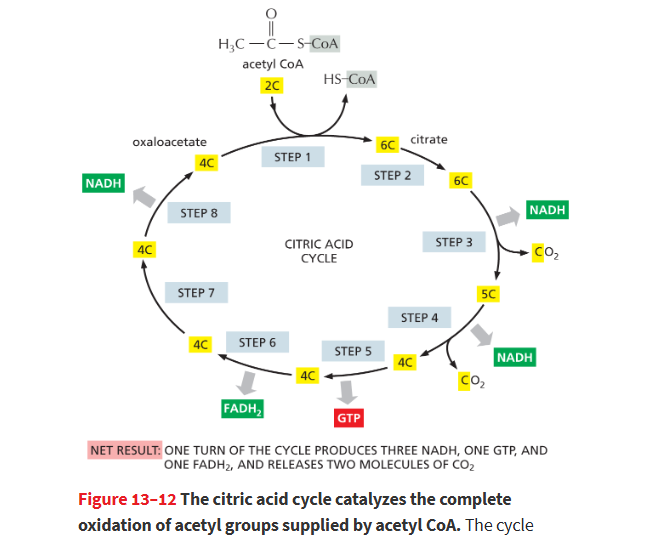
What happens to the high-energy electrons carried by NADH and FADH₂?
They are transferred to the electron transport chain in the inner mitochondrial membrane.
outcome of CAC
The final outcome of the Citric Acid Cycle (CAC) is the complete oxidation of an acetyl group into CO₂ and the production of high-energy carriers.
Products:
4 CO₂
6 NADH
2 FADH₂
2 GTP (which can convert to ATP)
Also:
Oxaloacetate is regenerated, so the cycle can continue.
What these products are used for
NADH and FADH₂ carry high-energy electrons to the Electron Transport Chain, where most ATP is produced.
CO₂ is released as a waste product and exhaled.
What happens to the high-energy electrons carried by NADH and FADH₂?
They are transferred to the electron transport chain in the inner mitochondrial membrane.
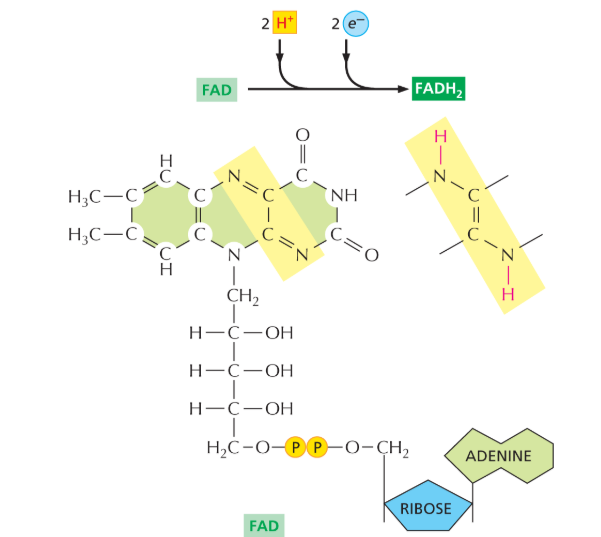
FADH2
A high-energy electron carrier produced by reduction of FAD during the breakdown of molecules derived from food, including fatty acids and acetyl CoA.
transports electrons to the electron transport chain.
produced in the CAC
what does one turn of the CAC produce
The final outcome of the Citric Acid Cycle (CAC) is the complete oxidation of an acetyl group into CO₂ and the production of high-energy carriers.
Per one turn of the cycle (per acetyl-CoA)
Products:
2 CO₂
3 NADH
1 FADH₂
1 GTP (which can convert to ATP)
where do the 2 carbons in actetyl CoA come from?
they come from pyruvate, not CoA!
how many oxidation steps r in CAC?
4
in each of these, the # of C-H bonds decreases and the number of C-O bonds will increase
in one turn of the CAC how many decarboxylations r there
2
everytime the molecules will get smaller as C is lost as CO2
The citric acid cycle starts with oxaloacetate (4C), combines it with acetyl-CoA (2A) to make citrate (6C), and at the end of the cycle, oxaloacetate (4C) is regenerated to start again.
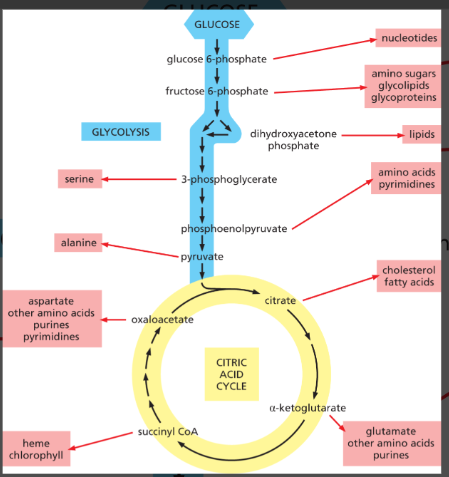
How do glycolysis and the citric acid cycle support biosynthesis?
They provide precursors that cells use as building blocks to make amino acids, nucleotides, lipids, and other essential molecules.
For example, oxaloacetate and α-ketoglutarate from the citric acid cycle are precursors for aspartate and glutamate.
siphoned off for anabolic pathways
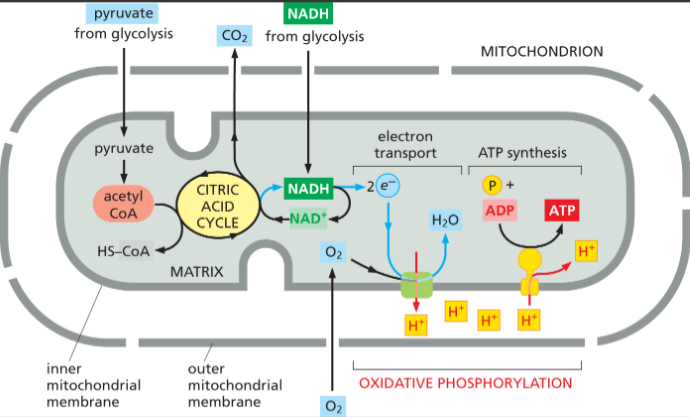
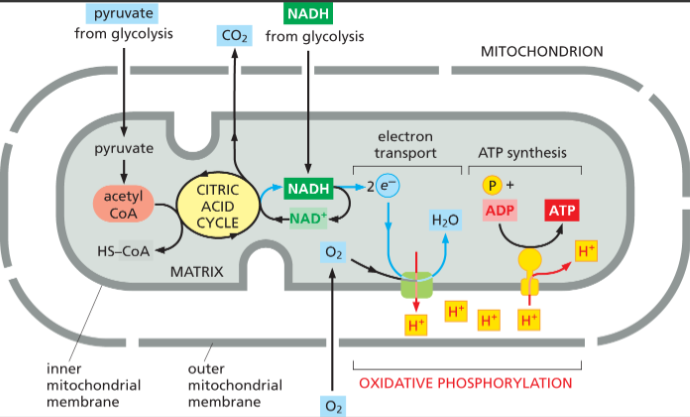
How does oxidative phosphorylation generate most of a cell’s ATP?
NADH and FADH2 donate electrons to the electron transport chain in the inner mitochondrial membrane. Energy from the electrons pumps H⁺ into the intermembrane space, creating a proton gradient. This gradient drives ATP synthase to make ATP from ADP and phosphate. Oxygen acts as the final electron acceptor, forming water
produces net: 30 ATP
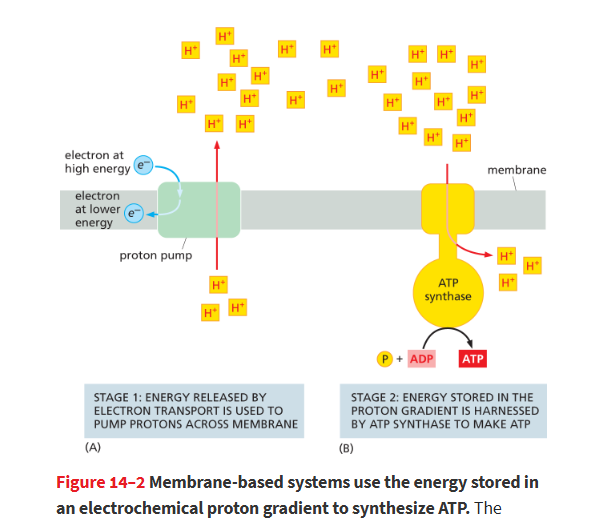
What are the two stages of membrane-based ATP synthesis?
Proton gradient formation: High-energy electrons move through an electron transport chain, releasing energy that pumps protons across the membrane, creating an electrochemical gradient.
ATP production: Protons flow back through ATP synthase, using the energy of the gradient to convert ADP + phosphate into ATP.
This process is called chemiosmotic coupling.
chemiosmotic coupling
Mechanism that uses the energy stored in a transmembrane proton gradient to drive an energy-requiring process, such as the synthesis of ATP by ATP synthase or the transport of a molecule across a membrane.
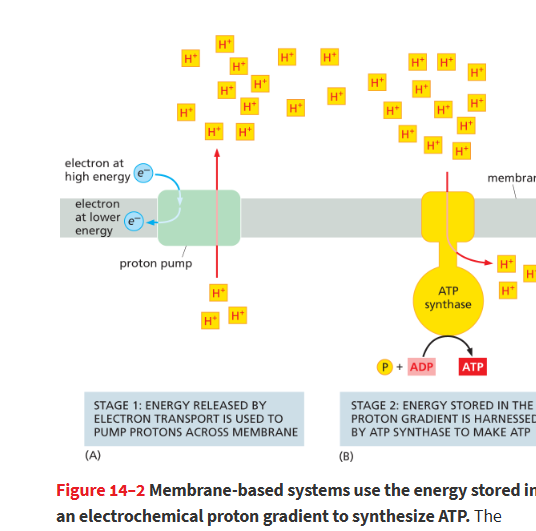
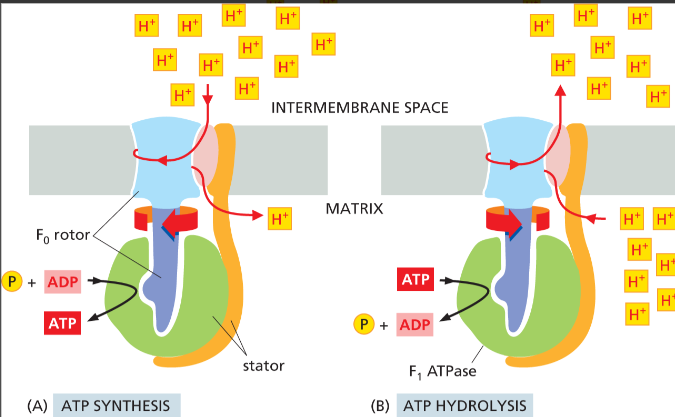
ATP synthase
Abundant membrane-associated enzyme complex in e- transport chain that uses the flow of protons (H⁺) down their gradient to power the conversion of ADP + phosphate into ATP
during oxidative phosphorylation and photosynthesis.
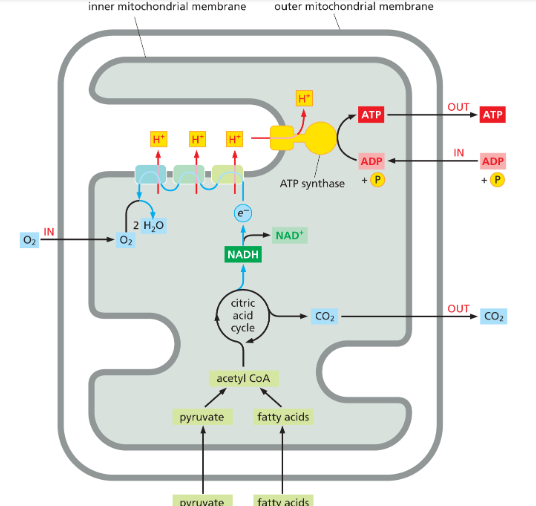
Where does acetyl CoA come from in the mitochondria?
Pyruvate from glycolysis and fatty acids from fat breakdown are converted into acetyl CoA in the mitochondrial matrix.
in CAC, the acetyl group is oxidized to CO2, releasing energy stored in high-energy electrons.
Which molecules carry the high-energy electrons from the citric acid cycle?
NADH and FADH2.
Where do the electrons from NADH and FADH2 ultimately go?
To molecular oxygen (O2), forming water (H2O).
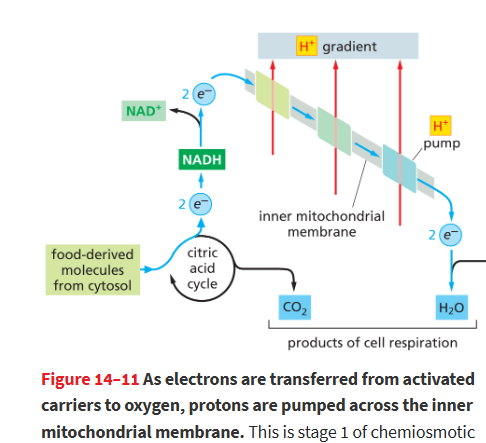
How is a proton gradient generated in mitochondria?
The energy released as electrons move through the electron-transport chain pumps protons (H+) across the inner mitochondrial membrane.
respiratory enzyme complexes
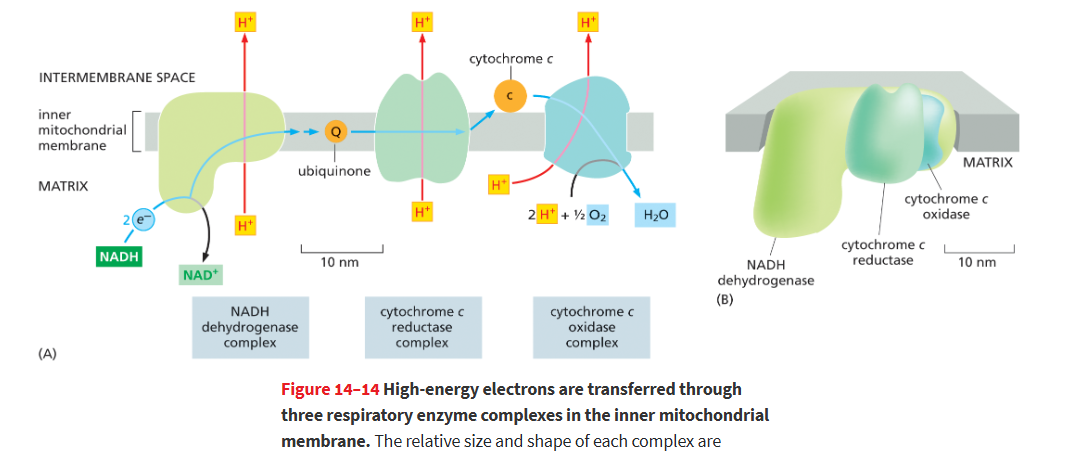
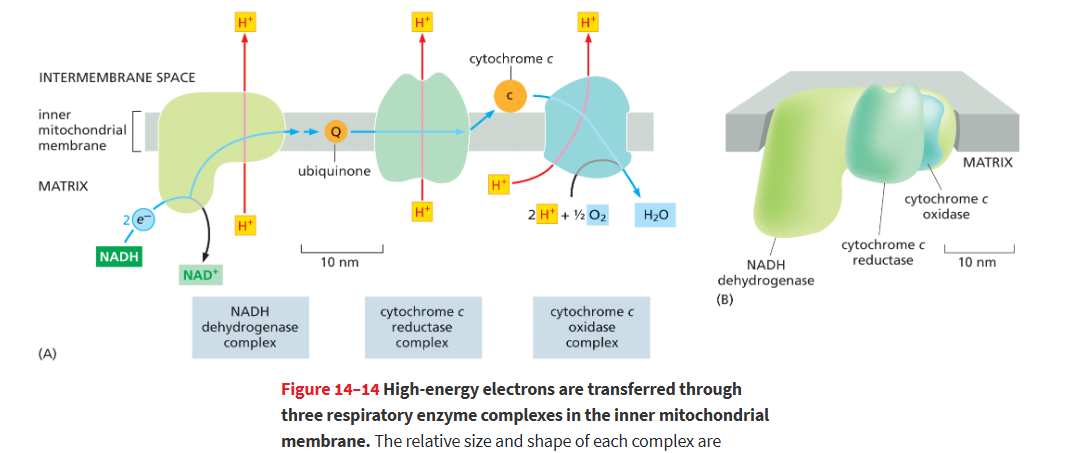
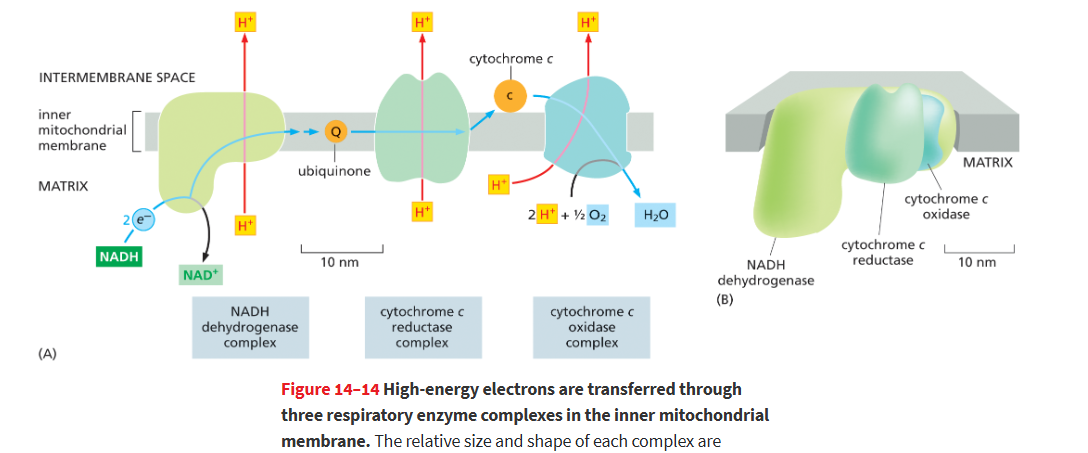
Set of proteins in the inner mitochondrial membrane that facilitates the transfer of high-energy electrons from NADH to oxygen while pumping protons into the intermembrane space. so they can be thought of as proton pumps
there r 3 in inner mitochondrial membrane:
NADH dehydrogenase complex
cytochrome c reductase complex
cytochrome c oxidase complex.
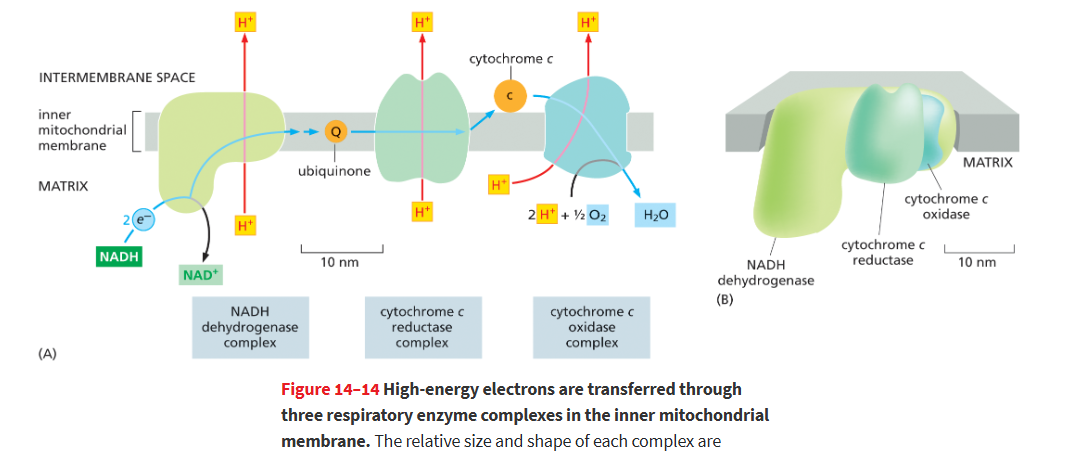
What is the first complex in the electron-transport chain and what does it do?
NADH dehydrogenase complex; it accepts electrons from NADH and converts a hydride ion (H–) into a proton (H+) and two high-energy electrons (2e–).
How do electrons move between the complexes in e- transport chain?
Mobile electron carriers, ubiquinone (Q) and cytochrome c (c), ferry electrons from one complex to the next.
Which step in the electron-transport chain consumes oxygen?
The final electron transfer to O2 at the cytochrome c oxidase complex forms water; this consumes nearly all the oxygen we breathe.
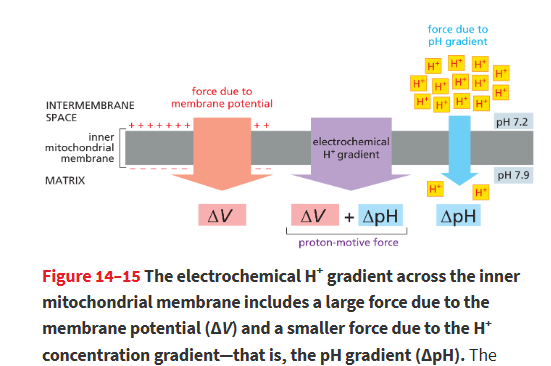
How does the proton gradient affect pH and create a voltage across the membrane?
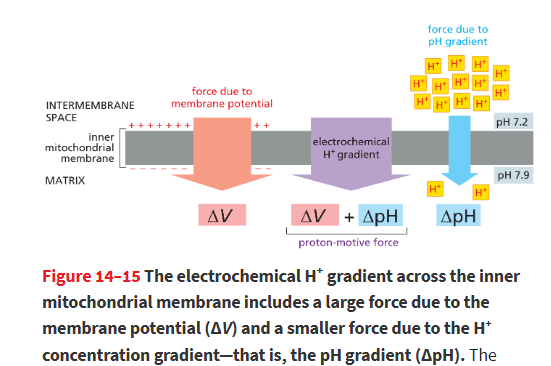
The matrix becomes more basic (~pH 7.9) and the intermembrane space becomes more acidic (~pH 7.2), creating a pH gradient.
Protons accumulate in the intermembrane space, making it positive, while the matrix side becomes negative, forming a membrane potential.
proton-motive force
The combined energy from the pH gradient and the membrane potential that drives protons back into the matrix through ATP synthase.
Can ATP synthase work in reverse?
Yes, it can hydrolyze ATP to pump protons against the gradient if the proton gradient is too low.
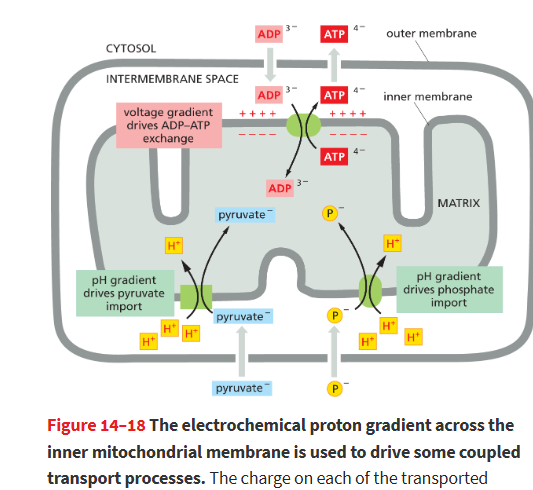
Besides ATP synthesis, what else does the electrochemical proton gradient drive in mitochondria?
It drives the transport of small molecules (like pyruvate, ADP, phosphate) and proteins across the inner mitochondrial membrane.
They are co-transported along with protons moving down their electrochemical gradient.
how much energy does one NADH molecule provide
enough net energy for 2.5 ATP
how much energy does one FADH2 molecule provide
Because the electrons donated by FADH2 are of lower energy and enter further down the respiratory chain than those donated by NADH, they promote the pumping of fewer protons: each molecule of FADH2 thus produces only 1.5 molecules of ATP.
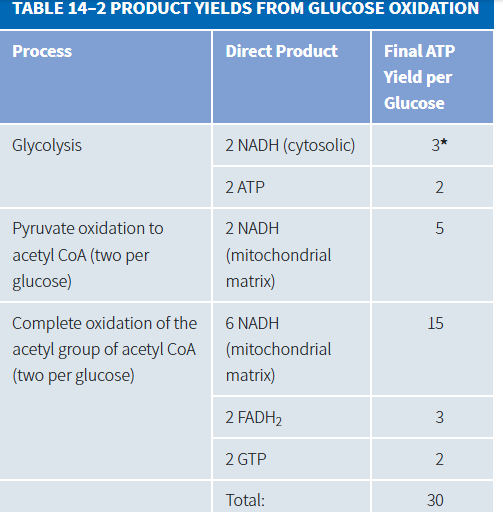
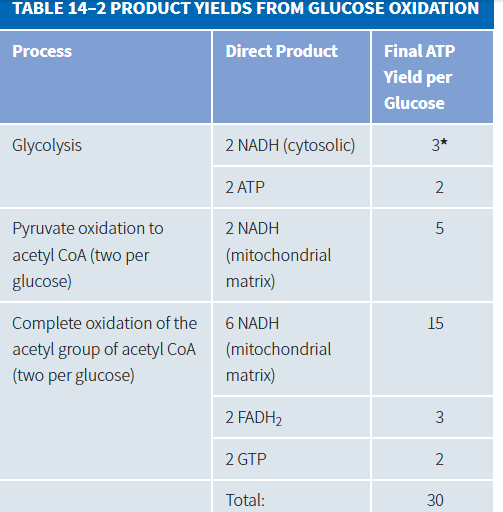
what is the net yield of respiration?
30 ATP
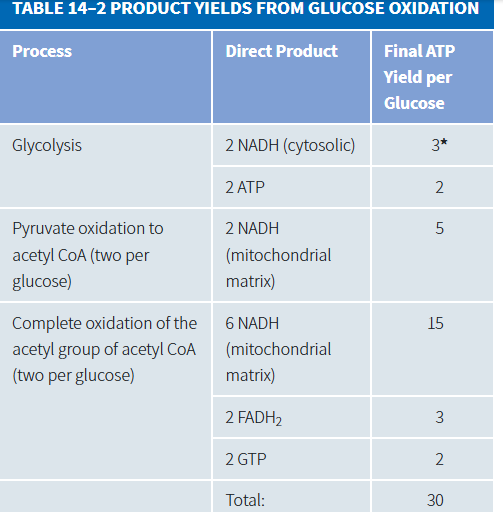
how much ATP from glycolysis and CAC?
4 ATP
how much ATP from oxidative phosphorylation
28
how many NADH from glycolysis
2
how many NADH from oxidation of pyruvate
2 NADH
how much NADH and FADH2 from CAC
6 NADH
2 FADH2
Where does each stage happen and what’s made?
Glycolysis: cytosol → 2 ATP, 2 NADH, 2 pyruvate
Citric Acid Cycle: mitochondrial matrix → 6 NADH, 2 FADH2, 2 ATP, 4 CO2
Oxidative Phosphorylation: inner mitochondrial membrane → ~28 ATP, H2O
How is fermentation different from aerobic respiration?
Fermentation → no O2, only 2 ATP from glycolysis.
Aerobic respiration → uses O2, makes ~30 ATP from all 3 stages.