Culinary Basic Knowledge
 Call Kai
 Learn
Learn Practice Test
 Spaced Repetition
 Match
Match Flashcards
 Knowt Play
1/182

There's no tags or description
Looks like no tags are added yet.
Name | Mastery | Learn | Test | Matching | Spaced | Call with Kai | Chat |
|---|
No analytics yet
Send a link to your students to track their progress
183 Terms
allergen:
almost always a protein contained in the food that the body can’t tolerate causing a chain reaction of the immune system including antibody secretion (e.g. digestive reaction). any prod w/ allergens must be labelled since 01.01.2015.
14 allergens:
gluten
dairy
groundnuts
nuts
eggs
soy
mustard
celery
sesame
fish
crustaceans
mollusks
lupine
sulphites
gluten
wheat (spelt and khorasan/kamut), rye, barley, oats are found in foods containing flour e.g. baking powder, batter, breadcrumbs, bread, cakes, couscous, meat prods, pasta, pastries, sauces, soups, fried foods (rolled in flour)
dairy prods
cow, sheep, goat milk, butter, cheese, cream, milk powders, yoghurt are dairy products. there are traces in foods brushed/glazed with it and in powdered soups and sauces
groundnuts
e.g. peanuts, ingredient in biscuits, cakes, curries, desserts, sauces (e.g. satay), as well as in groundnut oil and peanut flour (margarine too)
nuts
nuts whichc grow on trees e.g. cashews, almonds, hazelnuts. found in bread, biscuits, crackers, desserts, nut powders used in curries, stir fry, ice cream, marzipan, nut oils, sauces (not peanuts = legume and grow underground).
eggs
found in cakes, some meat products, mayo, mousses, pasta, quiche, sauces, and pastries or food brushed or glazed w eggs including croissants
soy
found in bean curd, edamame, miso, textured soy protein, soy flour or tofu, soy staple ingredient in asian food. also in desserts, ice cream, meat products, sauces and veg products
mustard
Mustard is a common allergen found in mustard seeds and products made with them, such as mustard sauce and dressings.
celery
includes celery stalks, leaves, seeds, root called celeriac. found in celery salt, salads, meat products, soups, stock cubes
sesame
found in bread (on hamburger buns), breadsticks, hummus, sesame oil, tahini, sometimes toasted and used in saladsf
fish
traces in fish sauces, pizzas, relishes, salad dressings (caesar), stock cubes and worcestershire saucec
crustaceans
crabs, lobster, prawns, scampi. shrimp paste in thai/SEA curries or salads too
mollusks
mussels, land snails, squid, whelks, commonly found in oyster sauce or as ingredient in fish stews
lupine
legume. used in bakery and pastry and found in common flour and pastasu
sulphites
ingredient used in dried fruit e.g. raisins, dried apricots and prunes. might find in meat prods, soft drinks, veg and wine and beer. asthma = higher risk of allergen to SO2
epipin
a single dose injector of adrenaline used in case of allergic/anaphylactic reaction
3 key words in H&S
safety, protection, ergonomics
key individual behaviors (5)
be aware of other ppl working
avoid abrupt movements
keep aisles free
wipe up floor spills
careful when handling hot liquids
basic rules
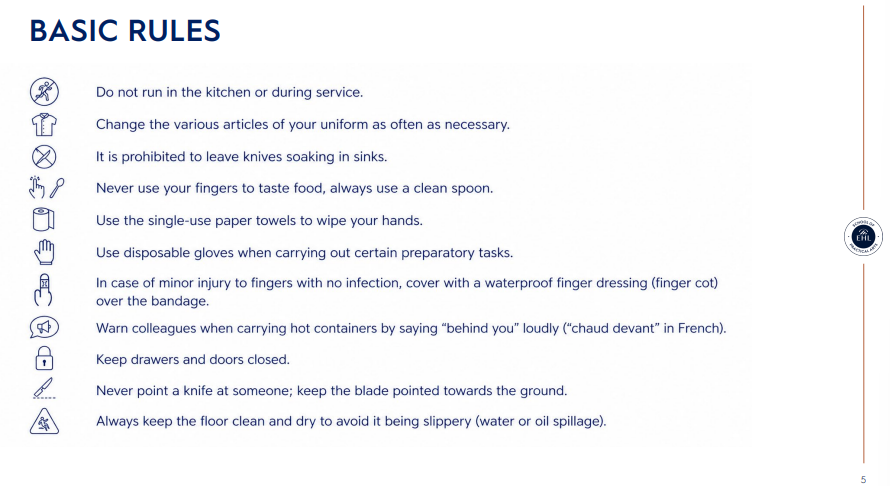
security
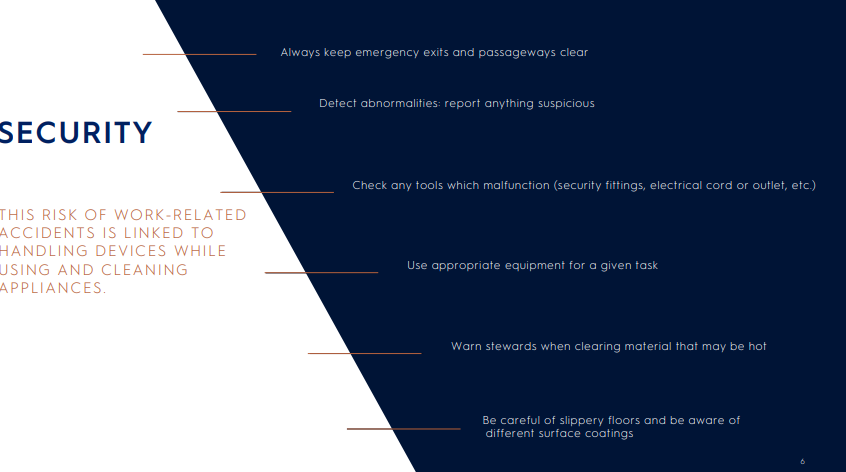
ergonomics
before lifting, assess load and method + where to carry
use trolleys for this as much as poss
warn ppl around
straight back and lift w legs and keep load close to body
place down = slow bend, straight back to protect feet
wait before resuming
4 symptoms of fainting attacks
sweating
muscle weakness
paleness
blurred vision
what to do during fainting attacks (3)
if in distress, lay down on back
raise legs above heart level (w/ chair if poss)
drink water, juice, herbal tea
what to do: burns
put hand under cold water for 15mins (15C, 15meters from spout)
what to do: cuts
first aid kits available or go to infirmary.
4 rules when experiencing flu in workshop:
wear face mask
wear disposable gloves
wash hands on regular
consult doc if symptoms persist
alcohol % in workplace accidents and % in worker issues
20%, 10%
benefits to organizations with prevention policies (alcohol and drugs)
prevent accidents
limits absenteeism
care for physical and mental health
increase reliability
reduce loss of productivity
preserve reputation
play role in personal dev and indi indentities
ethical and balanced approach in one’s career nad work life
marche en avant
“go forward”, principle for ensuring food hygiene and safety in kitchen linked to implementing HACCP methods.
consists in avoiding clean thigns crossing w/ dirty things so circulation flow created among two main zones (dirty and clean). appllied in space and time
how is MEA applied in space
clear and separate access for clean and dirty and raw and processed prods
when will MEA apply in time and how
if only one access = specific time range where dirty prods go in and out of kitchen thru same access
MEA: what must be done when food products are delivered (2) + why: (8) and (4)
cross check delivery form w/ received product by verifying: qt, references, product names, batch no., use-by & best before date, quality, freshness, temp of product and vehicle.
must be recorded by designated individual on paper/computer to ensure food traceability labels, to prevent fraud, trace incidents of food poisoning, prove to inspectors HACCP followed
bouquet garni
Parsley stalks, thyme, and bay leaves tied together securely and sometimes accompanied by celery and/or leek according to use
to butter
coating a baking pan with butter, a tart ring, or other items to facilitate removing a preparation from a baking pan
to call out
when waiters inform the kitchen that dishes have to be prepared for a table
to clarify
To refine a stock using egg white OR to melt butter slowly in a bain-marie to separate the non-fat elements (whey)
to color
Add a coloring agent or colored raw material to a preparation
to deglaze
Add a liquid (water, stock, wine, etc) to a hot cooking container in order to dissolve the cooking juices
to degrease
To remove the fat which has formed on the surface of a stock or sauce etc. by using a small ladle
to dress/plate
to place food harmoniously on serving dishes or plates
FIFO
first in, first out, to describe way of storing goods that have been stored first will be used first
to fillet
to remove the fillets from a fish with a flexible-bladed knife
filming
To protect food preparations by covering them with cling film or similar food-safe plastic wrap
to follow
During the call out, waiters can announce a dish "to follow" meaning it will be prepared later (for example "lentil soup and risotto to follow", which means the lentil soup was just called out but the risotto will be prepared later)
to glaze veg
To cook vegetables in a mix of water, salt, sugar, and butter; coat with the reduced cooking liquid to obtain a light, golden or brown glaze
to glaze pastries
Before baking: coating a pastry with a thin layer of egg wash in order for them to color in the oven (e.g. croissant) OR after baking: coating a pastry w/ warm jam, icing, chocolate, etc. (e.g. chocolate cake)
kneaded butter
Mixture of an equal amount of softened butter and flour which is used to thicken soups and sauces
to line
to place rolled-out pastry dough inside a baking tin or cake baking ring
to marinate
To place food (pieces of meat, game, or fish) in a flavored liquid mixture (the composition of which may differ depending on the food) to tenderize it and give flavor
mise en place
set of actions to be completed prior to each service in a restaurant
to moisten
To add a liquid (stock, wine, or water) to a preparation to enable the cooking process
new order
announcing a new order. However the dish is not called out yet, and will be prepared later, after the call out
to pipe
using a piping bag with or without a nozzle to shape a certain preparation or mixture (whipped cream, choux pastry etc)
preliminaries
First steps of food prep (peeling, trimming, washing, etc.) prior to the cooking process. This process should takae place in a special zone.
to reduce
Concentrating a liquid through evaporation
to roughly chop
To cut (parsley, tomatoes, bones, fish bones etc) into large pieces
roux
A binding or thickening agent that is composed of flour cooked in fat (melted butter, etc.) for a short or long time according to the desired , golden, or brown
rush “coup de feu”
Busy/intense moment of service
to scale
remove scales of fish by scraping
to scrape
To thoroughly clean the edge of a container with a plastic scraper or a rubber spatula
to separate
To separate egg whites from egg yolks
to sift
To filter food through a sieve (flour, bread, crumbs, sugar, etc.)
to simmer
to cook slowly and evenly
to slice thinly
to cut vegetable items e.g. onions, leeks, into strips and thin slices
softened butter
Fresh butter, softened and worked with a spatula until its consistency is like that of a cream
to strain
To put food products (cream, puree, soup, stock,e tc) through a strainer, a conical strainer or sifter
supreme
Chicken breast or game fillet OR wedge of citrus fruit from which the skin, albedo (pith) membranes and seeds have been removed
to sweat
To remove the natural water from vegetables by heating them gently with a little fat and avoiding any coloring
to trim
Removing the fins from fish (first step of fish cleaning)
to turn “tourne”
To give a regular and rounded shape to some vegetables to improve the presentation and regulate cooking
to zest/grate
To scrape the skin of a piece of citrus fruit in order to extract its flavor
MEA: what happens when delivery is offloaded
packaging removed and sent to garbage area, then main storage and separated into:
frozen goods at -18C
refrigerated goods in cold room
veg and fruits 4-8C
eggs and dairy 4-5C
fresh meat 2-4C
fresh fish 0-2C
dry goods at 25C max (room temperatures)
then taken to kitchen to prep and cook before serve
what must be followed when storing goods
stock management system FIFO must be followed when storing goods. food prods just received are shelved behind those already in stock to make it easier to check inventory and manage use by date
how can cross-contamination occur
transfer of one substance/object to another w/ a potentially harmful effect and can occur during prep, storage, or work areas or cleaning
microbiological hazards
physical hazards
chemical hazards
7 haccp principles
hazard analysis
critical control point
critical limits
monitoring procedure principle
corrective actions
verification procedure
record keeping
ARQHA
certified private hygiene company that come unannounced to take food and surface samples for lab analysis to ensure standards met
purpose of HACCP
preventative control system that aims to ensure food is safe to protect consumers from possible dangers linked to consuming food products. developed by NASA for astronaut food and its a rigorous documented and verifiable method that is mandatory in many countries
5 key points of management and control that HACCP is based off
ingredients - all food stuffs
equipment - all machines (manual+electric) and tools
handling staff
work methods - temp mgment, prep time, storage in cold
work env - kitchen, storing, changing
all can lead to hazard
hazard
anything that can cause harm, injuries, accidents or other undesirable effects
3 main types of hazard and examples
physical = any foreign object e.g. dust, soil, hair, plastic, glass that appears if food isnt washed correctly. can cause choking/broken teeth
m/b hazard = any pathogenic toxins e.g. bacteria and mold if wrong storage temp, dirty equip or poor employee hygiene. can cause food poisoning
chem hazard = any chem contamination e.g. detergent/ink spread on food. can cause food poisoning
CCP principle
by identifying all hazards, now can associate ccp to prevent, reduce, and avoid danger. diff method of control for safety for each danger
critical limits
line that defines what’s safe and unsafe. each ccp has a target value and tolerance limit
monitoring procedure
precise methods and tools needed after defining hazards, ccp, and target and tolerance, by carrying out observations, tests and method
corrective actions
must be implemented when crit limits reached/tolerance exceeded, last bastion of protection
verfication procedure
implementing specific written procedures to verify and monitor effectiveness of haccp
keeping records
establishes appropriate documentation system to support effective implementation of measures 1-6
3 fundamental principles respected for hygiene:
prevention - prevention is imperative, staff must follow relevant suitable and thorough training
mastery - approaches and processes set up to anticipate, prevent, control, analyze, and correct potential negligence or weakness
control - training, recs, strict hygiene habits, and efficient monitoring are key to avoiding food poisoning and preventing food-borne diseases transmitted by ppl, equip, env, or improper handling of food prods
prevention
wash hands, a lot of food poisoning causes are hand borne. only do in place designated for this, use antibac soap and take time to rub properly, use disposable paper towel to dry
wash when resuming work, after smoking, after bathroom, before handling bac sensitive products, after handling cardboard boxes, dirty equip, bins, waste, chem and after blowing or touching nose, restyling hair & sneezing or coughing
single use gloves
protect food products not hands, made of nitrile and latex free
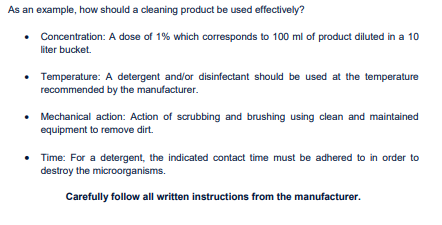
sinner circle
principle defining four key factors in order to reach good cleaning process:
concentration
temperature
mechanical action
time
decreasing one factor should be compensated by another
yellow cutting board
raw poultry
red cutting board
meat + cooked poultry
green cutting board
vegetables
blue cutting board
fish + shellfish
white cutting board
pastries and fruit
brown cutting board
cheese and bread
why are sample dishes used (3)
to enable m/b and sometimes chem analyses on diff dishes served to consumers (according to legislation)
must be taken in sufficient qts, clearly labelled, preserved at least 5 days after served to consumer in conditions that won’t alter m/b quality
ensures good hygiene of food products
tersano
stabilized aqueous ozone (SAO) that cleans and sanitizes all washable surfaces by breaking down dirt and other contaminants in same way as traditional cleaning prods, w/o impacting env. after cleaning, prod turns back into water and o2 leaving no residue
certification or label
distinctive sign affixed to a product, ensuring its quality by respecting certain specs. often associated w/ the notion of terroir