Siu -- T1DM Carb Calculations
 Call Kai
 Learn
Learn Practice Test
 Spaced Repetition
 Match
Match Flashcards
 Knowt Play
1/27

There's no tags or description
Looks like no tags are added yet.
Name | Mastery | Learn | Test | Matching | Spaced | Call with Kai | Chat |
|---|
No analytics yet
Send a link to your students to track their progress
28 Terms
describe the pathophysiology of T1DM
when glucose levels are high, the pancreas fails to release insulin. The beta cells in islet of langerhans are destroyed with also prevents insulin release
What are the symptoms of T1DM?
polyuria, polydipsia, polyphagia, wt loss, lethargy
what are the major goals of T1DM therapy?
near normal blood glucose and HbA1c, prevent DKA/hypoglycemia, normal quality of life, nutritional education and psych support, prevent DM related complications
What are the glucose and HbA1c % goal levels for pediatric patients?
premeal: 80-130mg/dL
after meal: <180
HbA1c: <7%
What is the complication with treating children with T1DM?
it is highly individualized and children <6 yrs aren’t able to recognize their symptoms or communicate them properly.
What type of T1DM therapy is often neglected?
medical nutrition therapy (carbs 50%, protein 20%, fat 30%) since the ADA does not recommend specific diets
What are examples of ideal carbohydrates?
fruits, vegetables, whole grains, legumes, low fat milk, high fiber foods
humalog, admelog (lispro), novolog, fiasp (aspart), and apidra (glulisine) are what type of insulin?
rapid acting
novolin R and humulin R (regular) are what type of insulin?
short acting
Novolin N, Humulin N (NPH) are what type of insulin?
intermediate
lantus, basalar, toujeo (glargine), levemir (determir), and tresiba (degludec) are what type of insulin?
long acting
PK properties of insulins
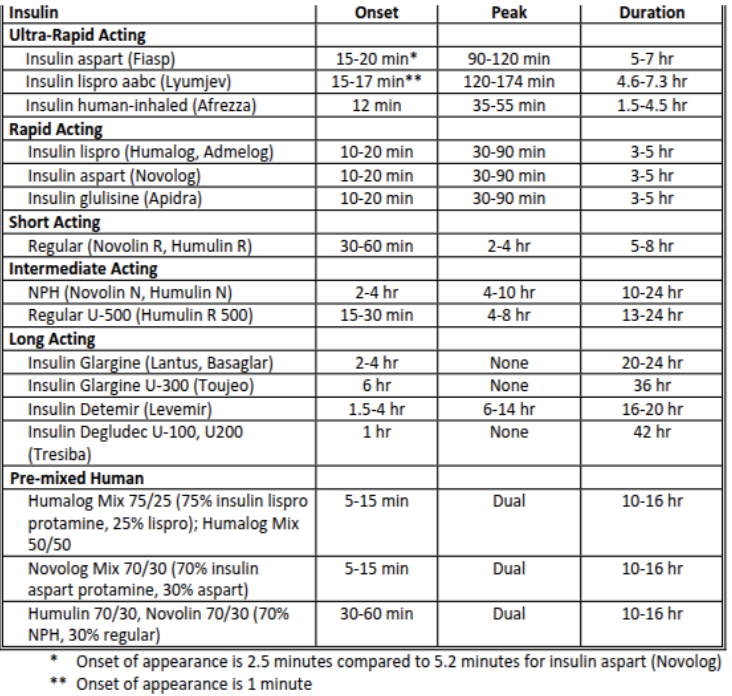
What are the 4 common insulin regimens for T1DM?
multiple daily dose (basal): rapid acting with meal + long acting at night
BID (conventional): NPH with rapid/short acting
continuous SUBQ (insulin pump): rapid acting with continuous basal infusion, deliver when eating/need correction
continuous IV infusion: DKA in PICU setting
what does the target glucose represent?
an individuals ideal blood glucose level
basal insulin
single dose of insulin given during meals (rapid acting) or when blood glucose is too high
What is CHO counting?
dietary method that involves consistent intake with meals and snacks, moderate consumption of CHO, keeping daily logs of flood intake and blood glucose, reading food labels.
How do you calculate the total daily dose?
0.5-1 units/kg/day
what is rule of 500 CHO factor?
500/TDD = grams of CHO covered by 1 unit of insulin
lispro, aspart, glulisine (rule of 400 for regular insulin)
What is the rule of 1800 correction factor (for insulin sensitivity)?
1800/TDD = mg/dL of blood glucose will fall per unit of insulin
normalizes hyper/hypoglycemia premeal readings
lispro, arpart, glulisine (rule of 1500 for regular insulin)
what is the meal calculation?
CHO factor (units of insulin for CHIO consumed) ± correction factor (units of insulin for hyper/hypoglycemia before meals)
DOUBLE CHECK ANSWER
AS is an 8 year old female (wt = 30kg) newly diagnosed with T1DM. Calculate the TDD, CHO Factor, and Correction Factor if she takes lispro.
TDD = 15-30 units
CHO Factor: 16-33
Correction Factor: 60-120
CHECK SLIDE 35
ASK FOR HELP
What should you consider when adjusting insulin? What’s first, what is basal and bolus insulin dosing based on, what is prioritized?
correcting hypoglcemia first
basal insulin based on fasting control
bolus insulin based on postprandial and correctional control (ISF)
dose of insulin responsible for area of poor control changed 10-20%
FASTING CONTROL > PRANDIAL > CORRECTIONAL CONTROL
Why is pump therapy not used for every T1DM patient?
expensive, high risk of DKA, complexity, lifestyle intrusion, preference, under/overdose and pump failure
Describe insulin pump therapy
allows both continuous and non-continuous bolus doses of insulin at a programmed unit/hr basal rate and programmed carbohydrate and correction ratios. Administered SUBQ using single rapid acting insulin. INCREASED USE IN CHILDREN
what are the advantages of insulin pump therapy?
small dose increments vs injections, able to have different basal rates throughout the day, only rapid acting, allows flexible lifestyle, effective glycemic control, better metabolic control with CSII than with MDI due to reduction in HbA1c
What is the criteria for pump therapy?
≥4 injections, >4 blood glucose test/day, family/pt interest, fail to achieve HbA1c goals, recurrent hypoglycemic evets, changing eating and and lifestyle habits, recurrent DKA
What is the OmniPod Tubeless System
water proof pod attached to skin to deliver insulin with a built in cannula and reservoir holding 200 units of insulin. Basal rates range from 0.5 to 30 units/hr in 0.05 unit increments. USED IN ADULTS AND CHILDREN