Rheumatoid arthiritis Drug
 Call Kai
 Learn
Learn Practice Test
 Spaced Repetition
 Match
Match Flashcards
 Knowt Play
1/64

There's no tags or description
Looks like no tags are added yet.
Name | Mastery | Learn | Test | Matching | Spaced | Call with Kai | Chat |
|---|
No analytics yet
Send a link to your students to track their progress
65 Terms
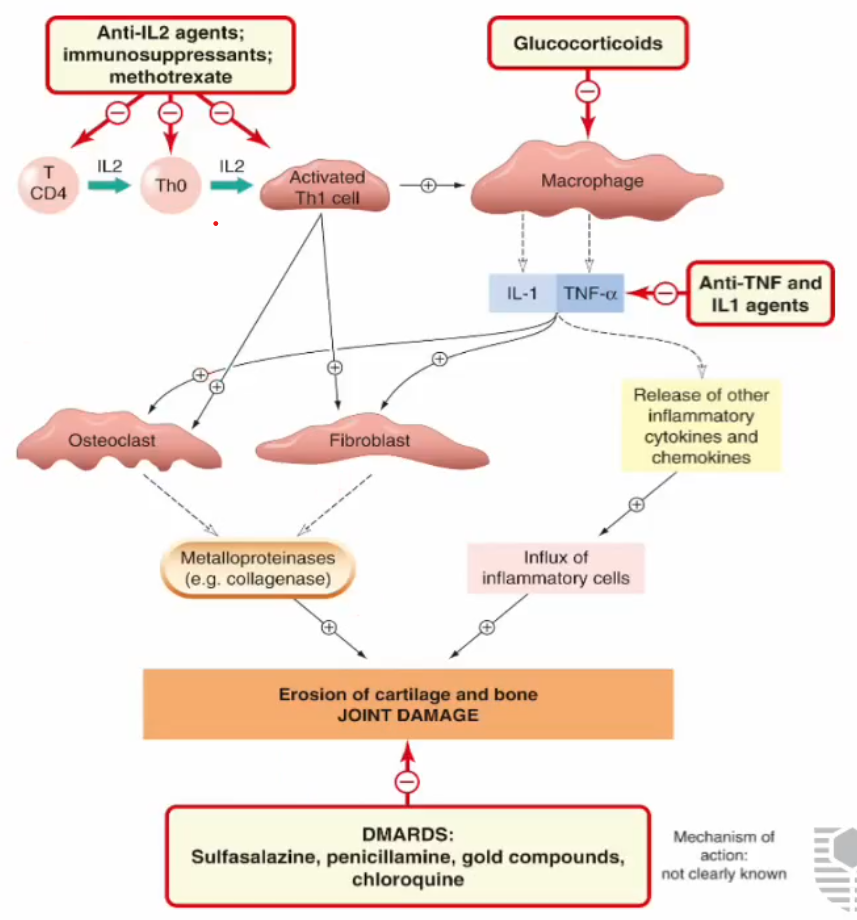
Indomethacin MOA
Potent NSAID (INDOCID)
COX inh
CNS analgesic effect
Inhibits PNS motility (WBCs)
A/E of Indomethacin
Highly toxic (Take with food)
Dizzy
Vertigo
Headache
gastric irritation
constipation
Hydroxychloroquine MOA
Anitmalarial that also causes the remission of RA
Inhibits chemotaxis
Inhibits phospholipase A2 = Inhibition of proinflammatory cytokine (prostaglandins and leukotrienes) synthesis
Reduces IL-1 synthesis → message doesnt get out there
S/E - Hydroxychloroquine
RETINAL TOXICITY
QT prolongation → arrhythmia (C/I in drugs that have the same effect)
Blurred vision
headache
dizziness
Hydroxychloroquine use
early/mild RA use
Methotrexate dose
7.5-15mg per week (low dose)
Methotrexate MOA
dihydrofolate reductase inhibitor
Folic acid antagonist
Blocks dihydrofolate → tetrahydrofolate via thymidylate synthase
stops polyglutamate conjugates forming
Reduced 5 - lipoxygenase pathway- leucocytes
reduces IL-1 macrophages
S/E and toxicity of methotrexate
Adenosine regulates inflammation - receptor-mediated uptake of it is disturbed
Thrombocytopenia
Myelosuppression
Huge increase risk of cancers while on methotrexate
C/I methotrexate
NSAIDs (ONLY high doses of Methotrexate)
Probenecid
Sulfonamides
ALL ABOVE KEEP METHOTREXATE IN CIRCULATION FOR TOO LONG
Cyclosporin - accelerates - nephro and hepotoxicity (can be used together with dose adjustments)
antidote to methotrexate toxicity
Folinic acid (leucovorin) + divided doses over 24h if oral
Methotrexate benefit
Slows progression and less permanent damage to joints
Etanercept MOA
Fusion protien between 2 protiens: TNF receptor protien and Fc protien (that’s found on IgG).
Drug binds to TNF-a to block it from binding to the TNF receptors (the TNF resebling protien helps it do that).
Synviocytes, Osteoclasts and chondrocytes will hence won’t cause excessive inflammation (as TNF-a drives their work up).
Therefore, it blocks inflammation
Also binds to lymphotoxin-alpha, which also reduces inflammation, but not main machanism. (More relevant to treatment of juvenile arthiritis).
S/E of etanercept
Protien - hence it will cause:
Swelling, pain, itching
Metastatic melanoma risks (its a TNF-a drug)
Allergic rxn
Immune response affected - vaccines may not work as well
Etanercept Dose
1-2 times a week
Low dose becuase it is potent
Infliximab MOA
Anti-TNF-a monoclonal
Similiar MOA to entanercept (except it is a monoclonal antibody)
A/E of infliximab
Infections and antichimeric antibody production
Domrant infections reactiviated!
Infusion site - eczema, erythmia, itching, pain, swelling
Vertigo
Serum sickness
Vomitting
Dizziness
Abdominal pain
fever
Infliximab dose
1 week plasma life therefore dose every 4-8 weeks
Combination with methotrexate (good 2 yr prognosis)
Adalimumab dose and benefit
2-week half-life
Fully humanised – reduced risk of anaphylaxis
Methotrexate combination - good
FYI used in psorasis and IBD
A/E adalimumab
Hyperlipideamia
Golimumab and Certolizumab pegol
G - 2 week half life
CP - rapid onset 2-4 wk dosing
Both work well with methotrexate (usually used with it due to increased synergy.
Why? stops antibodies from being formed by body to fight these drugs.)
Complaince is an issue (pain due to SC, a problem w all SC injections)
Anakira MOA
IL-receptor antagonist
Anakira Dose
100mg/day injection (SC)
2 weeks to see effect
Anakira A/E
Not humanised protien - injection site eyrythmia, ecchymosis, inflammation
headache
risk of serious infection
Neutropenia
C'/I Anakira
Anti-TNF-a drugs
Tocilizumab MOA
IL-6 targetting - most abundant IL in synovial joints of RA (& JIA) patients
Better given with methotrexate.
Tocilizumab Dose
IV dose once evry 4 wks (4mg/kg)
Tocilizumab A/E
possible increased AST and ALT levels (only while on drug)
Increased LDL levels, hypertension, headache and diziness
Nuetropenia
Janus Kinase Inhibitors MOA
Tofacitinib - Kinase 3, 1, 2 can be inhibted by this drug (in order of magnitude of inhibition, inhibits 3 the most)
Baricitinib - (1 and 2 kinase inhibition)
Upadacitinib (mostly Kinase 1 inhibition)
All prevent cell proliferation via JAK-STAT induction systems in the nucleus (that are supposed to produce cytokines)
Can induce apoptotic pathways in lymphocytes (tells the lymphocytes to perform programmed cell death).
Reduction of T-lymphoctyes (not just through cell programmed death?
C/I of JKIs
CYP3A4 and CYPC19 substrates (increases JKI serum levels)
Not TNF-a drugs
Haemoglobin <80g/L
A/E of JKIs
Latent infections may return
Increased cancer risk
Increased Lipid blood levels'
Reduced HR (Tofacitinib)
liver damage
aneamia
Gut perforations
Dose of JKIs
Tofacitinib - 5mg oral tabs bd
Baricitinib - 2-4mg d
Upadacitinib - 15mg d
Gold salts - general MOA
Gold builds in synovial joints (in reticuloendothelial cells like circulating macrophages)
Gold Salts - Aurothiomalate
Reduces the following:
Mitogen induced lymphocyte proliferation
release & activity of lysosomal enzymes
production of O2 radicals / metabolites
chemotaxis from neutrophils
mast cell mediator release
Gold salts - Auranofin MOA
Reduced induction of IL-1 and TNF-a
Gold salts A/E
Lesions in mucous membranes (grey/blue depositis)
Exfoliating dermatitis and other rashes (avoid if u have dermatitis alr)
peripheral neuropathy
Nephrotoxicity
protienuria
Hepatitis
Encephalopathy
With Oral Auranofin:
diarrhoea
Stomatitis
Nausea
Vomiting
Conjunctivitis
D-Penicillamine MOA
Reduced collagen formation , rheumatoid factor (marker of auto-immune disorder) and immune complex
Chelating ability - possible role
Cystiene substitue - makes soluble complexes with cystiene
D-Penicillamine - AEs C/I
Very similiar to gold
Allergic to penicillin - DO NOT USE (a metabolite of penicillin)
GI tract:
Taste - everything tastes metallic
Nasuea
both these S/E can cause anorexia
Blood:
Leukopenia - aplastic aneamia - STOP ASAP
Autoimmune conditions
Rashes, stomatitis (stomach inflammation)
Protienuria
Goodpasture’s syndrome (not under gold’s AEs)
D-Penicillinamine dose
Start low with a gradual increase
Effectiveness: weeks to months
250mg daily for a month, and increases ~every month
Leflunomide MOA
Prodrug
Pyrimidine inhibitor (dihydroorotate dehydrogenase inhibitor)
Lymphocyte proliferation blocked
Reduces joint swelling
Dose of leflunomide
Starts 100mg/d — 3 days, then 5-25 mg/d
long half life → <2 weeks
C/I Leflunomide and antidote
Warfarin and phenytoin → CYP2C9 inhibition
Methotrexate - increases hepatoxicity (still can be used together w/ caution)
Preg - teratogenic - leave off getting pregnant up to 6 months after ur last dose.
B/F - will get in milk
Othe liver damaging drugs taken with leflunomide can cause liver failure
Cholestyramine - helps to eliminate drug faster if patient exposed to toxicity
AEs of Leflunomide
Hepatotoxicity
N, V, D
Hair loss
Weight loss
Weakness
Headache
‘Dizziness
Pnuenmonia
Peripheral nueropathy
Hypertension (Measure BP prior to treatment!)
SUMMARY OF RA DRUGS
Symptoms of RA to dientify in patients
Maise
Fatigue
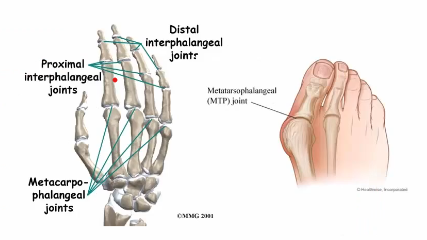
SYMMETRICAL pattern of joint pain, stiffness, swelling and redness
Involvement of MCP, PIP & MTP joints (too long to list real names)
NOT usually the joints closest to your nails (that’s more osteoarthiritis)
Morning stiffness
Weight loss
Fever
Depression
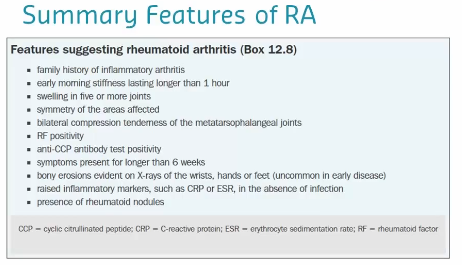
Lab results to look for
elevated:
Erythrocyte Sedimentation Rate (ESR)
CRP
Presence of RF (an antibody present when body undergoing autoimmune diseases, detected less in early stages of RA)
HLA typing → looks for genetic markers in blood that are associated with RA
Antinuclear Antibody
Antibody to CCP (appears before symptoms appear)
Normocytic normochromic Aneamia: low serum iron, normal to low TIBC, and normal to high ferritin
Changes in joint radiographs
Non-drug interventions of RA
Mediterranean diet
Physio, exercise
Smoking cessation
Immunisation
Omega-3 fatty acid supplement (fish oil - 2.7g d)
Gamma linolenic acid (GLA) — evening primose oil (up to 2.8g GLA daily).
reduces inflammatory cytokines
First line for RA
NSAIDs
COX-2 selective or non-selective inhibitors
Trail and error between different NSAIDs
lowest dose for shortest time
Can be used with paracetamol
Avoid w/ corticosteroids and anticoags - risk of GI bleeding
PPI prophylaxis in over 65s and patients w/ history of PUD
Peroxicam → highest risk of GI bleeding
Ibuprofen - lowest risk of GI bleeding
Second line for RA
Corticosteroids:
Bridge therapy while waiting for DMARDs (like methotrexate to work)
calms “disease flares”
IM or IV
Intraarticular injections with methylpredinisolone acetate 120mg → prolonged effect of 8 wks, not repeated in same joints > 4x per year
Followed by 24-48 hour splint and bed rest
Risk: infection, osteonecrosis, and tendon rupture
Corticosteroid dose
Prednisolone 5-15mg d
used at lowest possible dose for shortest time possible
if treatment is >3 wks ot patient on >7.5mg d, taper dose slowly to cease
Advantages and disadvantages of corticosteroid use
+
Reduces pain/swelling dramatically
Reduced disease progression
-
lower dose = lower efficacy
Undesirable S/Es w/ long term use (like dyspepsia and hyperglycemia)
Third line
DMARDs (there’s first line and second line under these)
Reduces synovial inflammation and prevent joint damage
Slow onset: 2-6 months
Combination therapy preferred (monotherapy usually not enough)
Should be introduced at the time diagnosis (ASAP)
Sulfasalazine - 1st line DMARD
1st line in mild disease
Dose 500mg daily → max: 1.5g
4-12 weeks for onset
G6PD and sulfonamide allergy – screen patient and avoid this drug if present
GI AEs minimised with EC tablet
Another AE: blood dycrasias
Monitor FBP, CrCl, LFTs
Hydroxychloroquine - 1st line DMARD
In mild disease - 1st line (less effective + less toxic)
Used in combination w/ other DMARDs
200mg - 400mg daily
onset - 2-6 months
G6PD deficiency – screen patient for it and avoid using drug if present
Retinopathy (endoapthamology reviews important), worsening posarisis
Monitor FBP, CrCl, LFT
Methotrexate - 1st line for moderate to severe RA
DMARD
most commonly used drug in RA patients
onset quick: 4-6 wks
Used alone/combination
Combos: Methotrexate + hydroxychloroquine/sulfasalazine/leflunomide
10- 25 mg WEEKLY!!! oral
Folic acid 5-10mg – coadministered to avoid GI toxicity and mouth ulcers
At least 24 hour gap between methotrexate and folic acid doses
ONLY high-dose methotrexate - interaction with NSAIDs
Monitor FBP, CrCl, LFTs, CXR
Leflunomide - 2nd line DMARD
Used if methotrexate is not suitable
onset - 4weeks
10-20mg d
Trasient elevation of AST & ALT
Monitor FBP, CrCl, LFTs, BP
3rd line - Biological DMARDs
Used when synthetic DMARDs didn’t work
Used with methotrexate usually
Don’t use >1 Biological DMARD → increased risk of infection and malignancy
Monitor for infection, especially latent ones (Hep B and TB in particular)
Pneumococcal, influenza, Hep A and B, and HPV vaccines are essential
Biological DMARDs - TNF-a Inhibiors
C/I in patients with TB, hepatitis B and C, grade III/IV heart failure
AEs (already mentioned): infusion/injection site reactions, URTIs and other infections, thrombocytopenia, malignancies
Monitor FBP, CrCl, LFT
Biological DMARDs - Rituximab
Severe RA not responding to TNF-α inhibitor
Onset: 4 months
Administered as IV infusion
A/Es: infusion related reactions, infections, muscle pain, weakness
Monitoring: FBP, LFT and CrCl
Biological DMARDs- Abatacept
Reserved for RA not responding to TNF-α inhibitor
Onset: 14 days
Administered by IV infusion
A/Es: Infusion related reactions, infections, hypertension, increased liver enzymes, blood dyscrasias, hypersensitivity
Monitoring: FBP, LFT and CrCl
Biological DMARDs - Anakinra
Slower onset (2 weeks)
less effective than TNF-α inhibitors
Administered by SC inj
A/Es: injection site reactions, neutropenia, serious infections, raised total cholesterol (monitor levels)
Monitoring: FBP and lipid profile
Biological DMARDs - Tocilizumab
Tocilizumab
Onset: 2-4 weeks
Administered by IV infusion
A/Es: infusion site reactions, neutropenia, thrombocytopenia, hyperlipidaemia, infections, GI ulceration
Monitoring: FBP, LFT, lipids
Biological DMARDs -Tofacitinib
Moderate to severe RA after failed methotrexate and TNF alpha antagonist treatment
Can be used as monotherapy or in combination with other DMARDs (except cyclosporine, azathioprine)
C/I: TB, hepatitis B and C
A/Es: Infections, elevated LFT, diarrhoea, nausea, rash, headache, dyslipidaemia, blood dyscrasias, GI perforation
Monitoring: FBC, Hb, lipid, LFT
Biological DMARDs - Baricitinib
Used in combination with Methotrexate
C/I: TB, hepatitis B and C
A/Es: Nausea, abdominal pain, infections, elevated CK and LFT, dyslipidaemia, blood dyscrasia
Monitoring: FBC, Hb, lipid, LFT
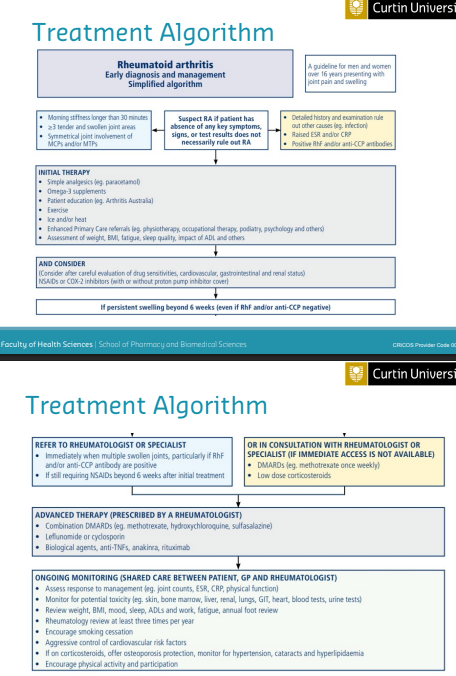
Summary of Treatment algoirthm
On slide 39 of last lecture
Measuring success of treatment
Number of tender and swollen joints
Duration of morning stiffness (<1 hour?)
ESR and CRP
Functional status
Monitor development of extra-articular manifestations → problems outside the joints (lungs, depression etc)