Chem 1124 Chapter 1 Flashcards
 Call Kai
 Learn
Learn Practice Test
 Spaced Repetition
 Match
Match Flashcards
 Knowt Play
1/64

There's no tags or description
Looks like no tags are added yet.
Name | Mastery | Learn | Test | Matching | Spaced | Call with Kai | Chat |
|---|
No analytics yet
Send a link to your students to track their progress
65 Terms
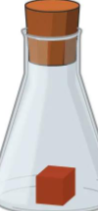
-State of Matter
-Fixed Shape
-Fixed Volume
Solid

-State of Matter
-Takes Shape of Container
-Forms Horizontal Surface
-Fixed Volume
Liquid

-State of Matter
-Expands to Fill Container
Gas

-State of Matter
-Gaseous
-Contains appreciable numbers of electrically charged particles
*Kinda like superheated Gas
Plasma

The total amount of matter within an object is described as an objects ___.
Mass

___ refers to the force that gravity exerts on an object.
*Differs per planet
Weight

The Law of Conservation of ___ states:
Whatever we begin with, no matter what changes it goes through, will have the same building blocks.
*Melt a piece of candy; whatever it’s made of is still around in that puddle and in the air
Matter

When matter changes among solid, liquid, or gaseous states, it goes through a ___ change.
Physical

When matter converts from one type to another entirely, it experiences a ___ change.
*Typically, irreversible
Chemical
-Pure Substance
-Composed of only one type of atom
Ex. Diamond (100% C)
Oxygen(100% O)
Element
-Pure Substance
-Composed of 2+ different atoms
Ex. H2O (Water) = O and H
NaCl (Table Salt) = Na and Cl
Compound
When 2+ substances are combined without chemical reaction occurring is described as a ___.
*Can be separated by a physical process
Ex. Brass, Air, Sand, CCCD Ice Cream
Mixture

-Mixture
-Uniform Composition
-Looks the same throughout mixture
Ex. Brass, Air
Homogenous

-Mixture
-Composition Varies
-Looks different throughout mixture
Ex. Sand, CCCD Ice Cream
Heterogenous

-Characteristic
-Stays same no matter chemical composition
-Can be measured without changing matter’s identity
Ex. Electrical Resistance
Density
Hardness
Boiling/Freezing Point
Physical Property

-Change in State/Properties of Matter
-No change in chemical composition
Ex. Melting
Boiling
Evaporation
Crushing
Physical Change

-Can be observed when chemical reaction occurs
-Chemical composition has changed
Ex. Flammability
Chemical Bond Formation
Breaking Chemical Bonds
Reactivity with O2
Chemical Properties

-Change in state/property of matter
-Change in chemical composition
Ex. Rusting
Burning Wood
Fruit Rotting
Chemical Change
-Weight
-Volume
-Internal Energy
-Size
-Length
-Area
these are all examples of ___ properties.
*Depends on amount of matter present (More stuff vs. less matters)
Extensive
-Boiling Point
-Melting Point
-Hardness
-Density
-Malleability
-Refractive Index
these are all examples of ___ properties.
*Does not rely on amount of matter present (More stuff vs. less stuff doesn’t matter)
Intensive
In this class, we use a __ to measure length.
*Represented by m
Meter
In this class, we use a __ to measure mass.
*Represented by kg
Kilogram
In this class, we use a __ to measure time.
*Represented by s
Second
In this class, we use __ to measure temperature.
*Represented by K
Kelvin

In this class, we use a __ to measure amount of substance.
*Represented by mol
Mole

Density = Mass/___
*Density determines what floats
Volume
To change a standard unit to microunit you have to multiply it by 10 to the ___.
-6
To change a standard unit to milliunit you have to multiply it by 10 to the ___.
-3
To change a standard unit to kilounit you have to multiply it by 10 to the ___.
3
To change a standard unit to megaunit you have to multiply it by 10 to the ___.
6
To change a standard unit to centiunit you have to multiply it by 10 to the ___.
-2
All nonzero digits are ___ significant
Always
Zeros are only significant ___.
Sometimes
__ digits in scientific notation are significant.
All

Zeros in between non-zeros are significant
True

Trailing zeros are significant except after a decimal
False

Leading zeros are __ significant
Not
How many sig figs?
6.57 × 10^9
3
How many sig figs?
0.00000004
1
How many sig figs?
2,561,000
4
When identifying sig figs for multiplication/division:
*The answer should have as many sig figs as your __ uncertain number (number with least number of sig figs)
Most
When identifying sig figs for addition/subtraction:
*The answer has as many sig figs as the __ places of the number we are adding with the least number of decimal places
Decimal
When figuring out sig figs of a problem with multiplication/division and addition and subtraction:
Do not ___ until all done solving the problem.
Round

-Close to the true value
-Average of measurements is close to the truth
A value is ___ if these are true.
Accurate

-Is repeatable
-Does not necessarily need to be close to the truth
-Consistent results
Precise
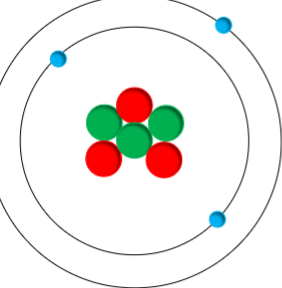
This is a diagram of an ___
Atom
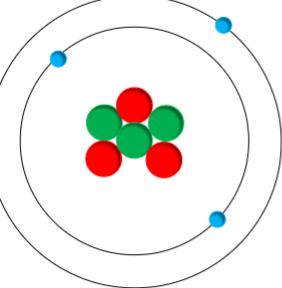
The blue dots in the atom represent ___.
*e⁻
-1 charge
Electrons
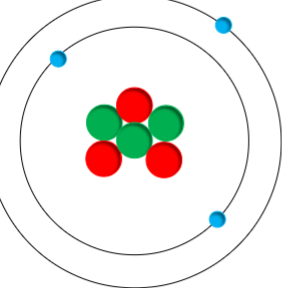
The red dots in the atom represent ___.
p+
+1 charge
*Determines the identity of an element
Proton
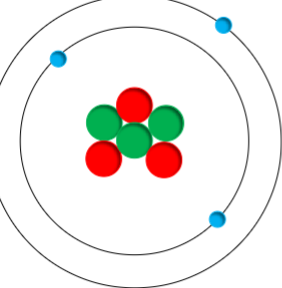
The green dots in the atom represent ___.
n°
No charge
Neutrons
An ___ is:
-An element with the same number of protons and electrons
-Has a differing number of neutrons
-Has a different mass due to differing number of neutrons
Isotope

For an atomic symbol:
“A” represents our ___ ___.
*Consists of the number of protons + Neutrons in atom
Mass Number

For an atomic symbol:
“Z” represents our ___ ___.
*Consists of the number of protons
Atomic Number
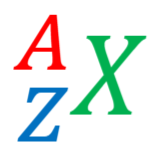
For an atomic symbol:
“X” represents our ___ ___.
*One or two letter abbreviation of element name
Element Symbol

When an atom has a differing number of electrons than its number of protons, the atom is described to be an ___.
Ion

-Ion
-More Protons than electrons (Can only remove electrons)
-Positive Ion
Cation

-Ion
-Less Protons than electrons (Can only remove electrons)
-Negative Ion
Anion

Protons — Electrons = ___ ___ of an atom.
Total Charge
Unit used to deal with small masses of individual atoms
*(amu)
Atomic Mass Unit

This equation is how you find the ___ ___ of elements
Average Mass

The little number next to the hydrogen (H) is referred to as a ___.
Subscript

The big number next to the hydrogen (H) is referred to as a ___.
Coefficient

___ formula uses the chemical abbreviation to signify the number/types of atoms present in a molecule/compound.
Molecular

___ formula gives us same info as molecular formula but also how atoms are connected.
Structural
6.022×10²³ is also referred to as ___.
*A mole of something
*Nₐ
Avogadro’s Number

A compounds ___ formula indicates:
-Types of atoms present
-Simplest Whole-Number Ratio of number of atoms in the compound
Empirical Formula