C. Sugar derivatives
 Call Kai
 Learn
Learn Practice Test
 Spaced Repetition
 Match
Match Flashcards
 Knowt Play
1/48

There's no tags or description
Looks like no tags are added yet.
Name | Mastery | Learn | Test | Matching | Spaced | Call with Kai | Chat |
|---|
No analytics yet
Send a link to your students to track their progress
49 Terms
b. Carboxylic acids
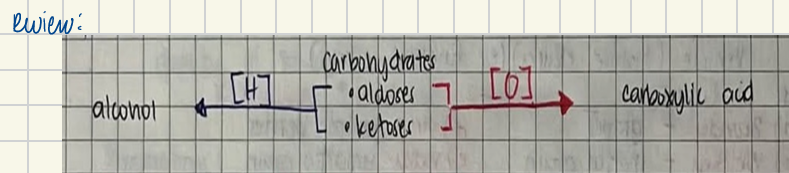
Products of oxidative metabolism of carbohydrates (aldoses and ketoses).
a. Sugar alcohols
b. Carboxylic acids
c. Aldehydes
d. Ketones
a. Alcohols
Products of reductive metabolismof carbohydrates (aldoses and ketoses).
a. Alcohols
b. Carboxylic acids
c. Aldehydes
d. Ketones
b. Cherry juice (Prunus cerasus)
Source of malic acid used as a vehicle in cherry-flavored syrup.
a. Apple
b. Cherry juice
c. Grapes
d. Orange
a. Apple (Malus domestica)
Another source of malic acid.
a. Apple
b. Cherry juice
c. Grapes
d. Orange
a. Vehicle in cherry-flavored syrup
Use of malic acid.
a. Vehicle in cherry-flavored syrup
b. Preservative
c. Antioxidant
d. Buffering agent
b. Benzoic acid
Acid used to treat incompatibility caused by pectin in cherry juice.
a. Citric acid
b. Benzoic acid
c. Lactic acid
d. Oxalic acid
c. Fumaric acid
Organic acid used as a drug salt.
a. Lactic acid
b. Oxalic acid
c. Fumaric acid
d. Citric acid
b. Ferrous fumarate
Iron preparation that contains fumaric acid.
a. Ferrous sulfate
b. Ferrous fumarate
c. Ferric citrate
d. Ferrous gluconate
c. Lactic acid
Organic acid used in infant feeding formula.
a. Oxalic acid
b. Citric acid
c. Lactic acid
d. Tartaric acid
b. Lactic acid
vaglna is acidic
Organic acid used in feminine wash preparations.
a. Fumaric acid
b. Lactic acid
c. Oxalic acid
d. Citric acid
b. Lactacyd®
Commercial feminine wash containing lactic acid.
a. Betadine®
b. Lactacyd®
c. Hibiscrub®
d. pH care®
c. Acidic
Property of the vagina maintained by lactic acid.
a. Alkaline
b. Neutral
c. Acidic
d. Basic
a. Fungal infection and irritation
Acidic vaginal environment helps prevent these conditions.
a. Fungal infection and irritation
b. Viral infection
c. Bacterial infection and irritayion
d. Dehydration
b. Oxalic acid
Organic acid found in kamias and balimbing.
a. Citric acid
b. Oxalic acid
c. Fumaric acid
d. Lactic acid
b. Oxalidaceae
Plant family associated with oxalic acid.
a. Rutaceae
b. Oxalidaceae
c. Poaceae
d. Fabaceae
b. Itchiness
Effect of oxalic acid from kamias and balimbing.
a. Sweet taste
b. Itchiness
c. Sedation
d. Analgesia
c. Oxalic acid
Least soluble plant acid.
a. Citric acid
b. Lactic acid
c. Oxalic acid
d. Fumaric acid
a. Removes stain from clothes
Use of oxalic acid in the household.
a. Removes stain from clothes
b. Food preservative
c. Flavoring agent
d. Sweetener
b. Citric and tartaric acids
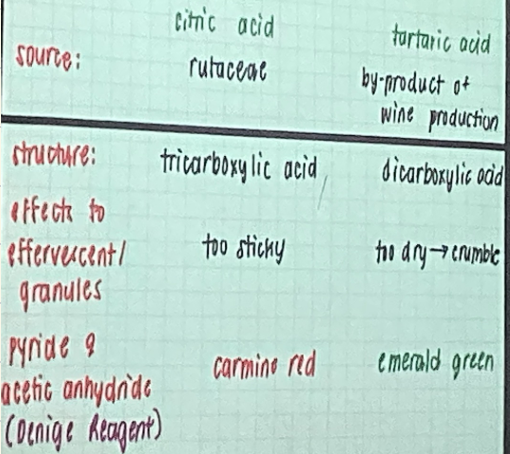
Organic acids used as acidulants in effervescent preparations.
a. Oxalic and lactic acids
b. Citric and tartaric acids
c. Fumaric and lactic acids
d. Oxalic and fumaric acids
a. Rubiaceae
Source of citric acid.
a. Rubiaceae
b. Oxalidaceae
c. Fabaceae
d. Rutaceae
d. By-product of wine production
Source of tartaric acid.
a. Citrus fruits
b. Barley
c. Sugar cane
d. By-product of wine production
c. Tricarboxylic acid
Citric acid is classified as this type of acid.
a. Monocarboxylic acid
b. Dicarboxylic acid
c. Tricarboxylic acid
d. Aromatic acid
b. Dicarboxylic acid
Tartaric acid is classified as this type of acid.
a. Monocarboxylic acid
b. Dicarboxylic acid
c. Tricarboxylic acid
d. Hydroxy acid
a. Too sticky
Effect of citric acid on effervescent granules.
a. Too sticky
b. Too dry
c. Too brittle
d. Too soft
b. Too dry and crumbly
Effect of tartaric acid on effervescent granules.
a. Too sticky
b. Too dry and crumbly
c. Too hard
d. Too elastic
b. Carmine red
Color produced by citric acid with pyridine and acetic anhydride (Denigés reagent).
a. Emerald green
b. Carmine red
c. Violet
d. Yellow
c. Emerald green
Color produced by tartaric acid with pyridine and acetic anhydride (Denigés reagent).
a. Carmine red
b. Blue
c. Emerald green
d. Purple
b. Ethanol
Grain alcohol.
a. Methanol
b. Ethanol
c. Isopropanol
d. Propanol
c. Ethanol
Product of glucose fermentation.
a. Mannitol
b. Sorbitol
c. Ethanol
d. Glycerol
c. Ethanol
Only alcohol we can consume
a. Mannitol
b. Sorbitol
c. Ethanol
d. Glycerol
b. 50% or 95% w/v
Common concentration of raw ethanol.
a. 20% w/v
b. 50% or 95% w/v
c. 70% w/v only
d. 100% w/v
c. 70%
Recommended concentration of ethanol used as a disinfectant or antiseptic.
a. 30%
b. 50%
c. 70%
d. 95%
a. Vehicle
Pharmaceutical use of ethanol in tinctures and elixirs.
a. Vehicle
b. Lubricant
c. Disintegrant
d. Binder
c. Brandy
[Ethanol types of liquor]
Liquor produced from grapes.
a. Rum
b. Vodka
c. Brandy
d. Gin
a. Whisky
[Ethanol types of liquor]
Liquor produced from malted grains.
a. Whisky
b. Rum
c. Vodka
d. Tequila
b. Rum
[Ethanol types of liquor]
Liquor produced from molasses.
a. Brandy
b. Rum
c. Gin
d. Vodka
a. Gin
[Ethanol types of liquor]
Liquor produced from juniper berries.
a. Gin
b. Rum
c. Whisky
d. Brandy
c. Vodka
[Ethanol types of liquor]
Liquor produced from unmalted grains.
a. Tequila
b. Brandy
c. Vodka
d. Rum
b. Tequila
[Ethanol types of liquor]
Liquor produced from blue agave.
a. Gin
b. Tequila
c. Rum
d. Whisky
b. Mannitol
Sugar alcohol obtained from the exudate of manna.
a. Sorbitol
b. Mannitol
c. Xylitol
d. Glycerol
b. Fraxinus ornus
Plant source of manna.
a. Sorbus aucuparia
b. Fraxinus ornus
c. Saccharum officinarum
d. Bos taurus
a. Osmotic diuretic
Therapeutic use of mannitol.
a. Osmotic diuretic
b. Antacid
c. Laxative
d. Expectorant
b. Lowers intracranial pressure
Effect of mannitol on intracranial pressure.
a. Increases intracranial pressure
b. Lowers intracranial pressure
c. No effect on intracranial pressure
d. Causes cerebral edema
b. Sorbitol
Also known as D-glucitol.
a. Mannitol
b. Sorbitol
c. Xylitol
d. Dulcitol
a. Berries of mountain ash (Sorbus aucuparia)
Source of sorbitol.
a. Berries of mountain ash
b. Grapes
c. Sugar cane
d. Barley
a. Sweetener in toothpaste and chewing gum
Common use of sorbitol.
a. Sweetener in toothpaste and chewing gum
b. Preservative
c. Antioxidant
d. Emulsifier
b. Half as sweet as sucrose
Sweetness of sorbitol compared with sucrose.
a. Equal to sucrose
b. Half as sweet as sucrose
c. Twice as sweet as sucrose
d. Three times sweeter than sucrose
c. Low
Glycemic index of sorbitol.
a. High
b. Moderate
c. Low
d. Variable