Y10 Science
 Call Kai
 Learn
Learn Practice Test
 Spaced Repetition
 Match
Match Flashcards
 Knowt Play
1/23

There's no tags or description
Looks like no tags are added yet.
Name | Mastery | Learn | Test | Matching | Spaced | Call with Kai | Chat |
|---|
No analytics yet
Send a link to your students to track their progress
24 Terms
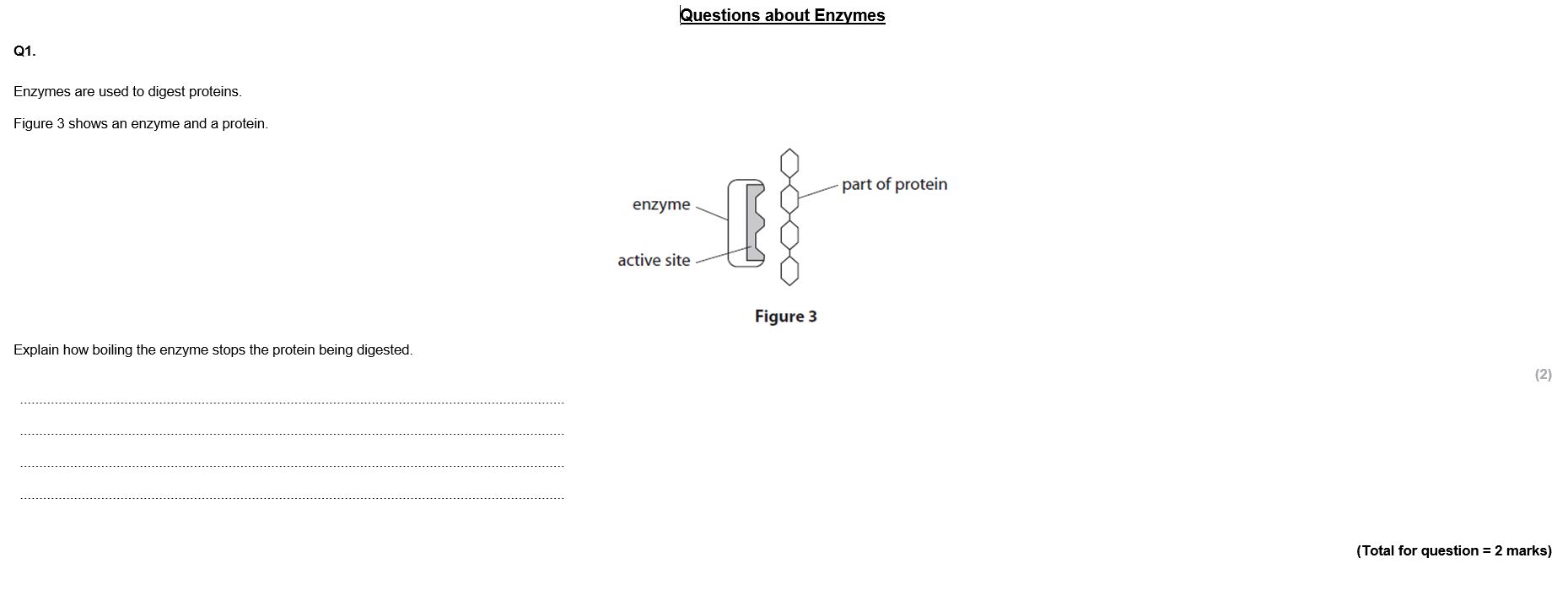
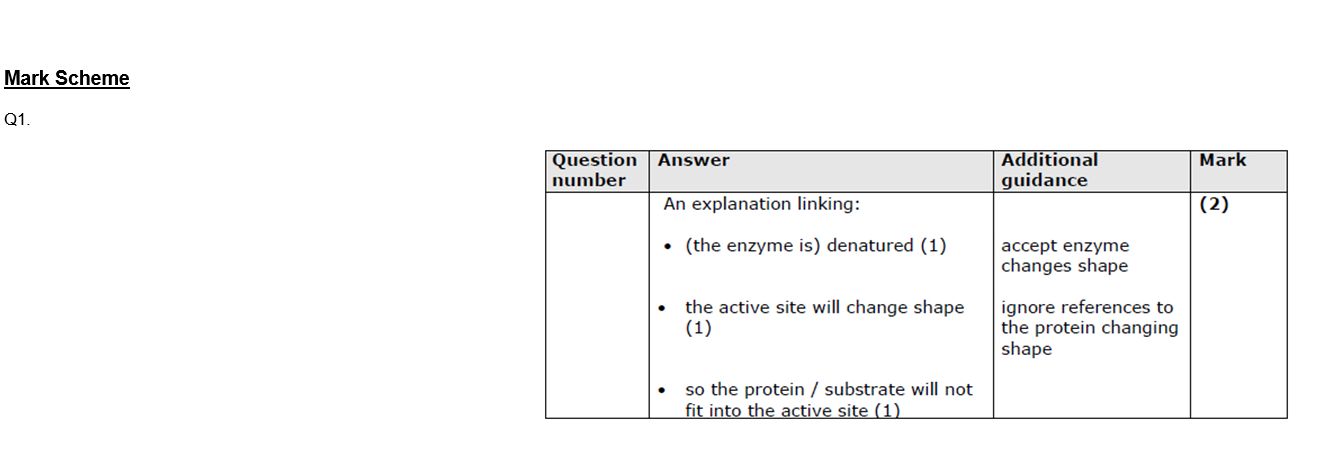
Complete this exam-style answer: “Boiling stops digestion because…”
Complete this exam-style answer: “Boiling stops digestion because…”
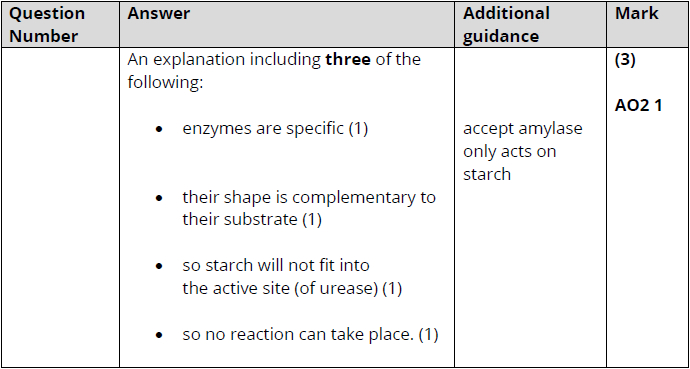
Q4.
Urease is an enzyme that breaks down urea into smaller molecules.
Explain why urease will not break down starch into smaller molecules
Use 'therefore' or 'because'
What affect does extremely high pH have on enzymes?
Extremely high pH denatures enzymes.
What colour does iodine turn if starch is present?
Blue-black.
What does a calorimeter measure?
Calorimeters measure the energy stored within a food.
What does an enzyme do?
An enzyme is a acid that breaks down food to and sugar to go in the blood stream
What does the term optimum mean for enzyme temperature?
Optimum is the temperature which gives the highest enzyme activity. At the point where it stops denaturing
What does “specific” mean when describing enzymes?
It means the enzyme only works with one (or a small group of) substrates because the active site has a matching shape.
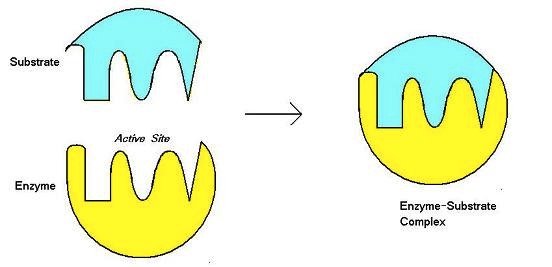
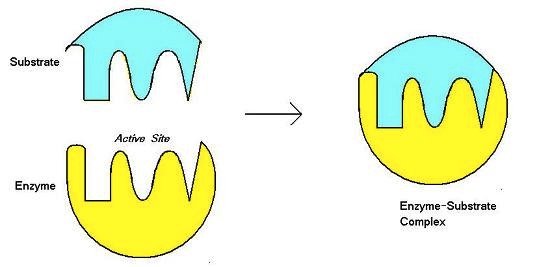
What is a substrate?
The substrate is the molecule an enzyme acts on.
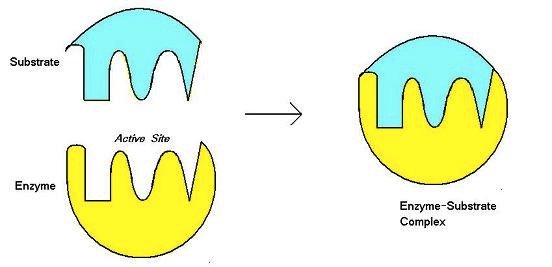
What is an enzyme–substrate complex?
It is the temporary complex formed when a substrate binds to an enzyme’s active site.
What is the active site?
The active site is the specific part of the enzyme where the substrate binds.
What is the correct calculation for the rate of an enzyme reaction?
The correct calculation for rate of reaction is amount of substrate used ÷ time taken.
What is the optimum temperature?
The temperature at which the enzyme works fastest.
What is the test for reducing sugars?
The test for reducing sugars in Benedict's solution.
What type of enzyme is amylase?
Amylase is a carbohydrase found in saliva in your mouth.
What type of enzymes break down carbohydrates?
Carbohydrates are broken down by carbohydrase enzymes.
What type of enzymes break down fats?
Fats are broken down by lipase enzymes.
What type of enzymes break down proteins?
Proteins are broken down by protease enzymes.
Why does enzyme rate increase as temperature rises (up to optimum)?
Because particles gain kinetic energy, collide more often, and form more enzyme–substrate complexes.
Why does the rate drop above the optimum temperature?
Because the enzyme denatures and the active site changes shape, so the substrate no longer fits.
Why would iodine stay blue-black if no enzyme is added?
Because the starch has not been broken down.
Why would iodine stay blue-black if no enzyme is added?
Because the starch has not been broken down.
Why would iodine stay brown/orange after 10 minutes with amylase?
Because amylase has broken down the starch, so no starch remains.