BLOOD FLUKE: SCHISTOSOMA JAPONICUM
 Call Kai
 Learn
Learn Practice Test
 Spaced Repetition
 Match
Match Flashcards
 Knowt Play
1/20

There's no tags or description
Looks like no tags are added yet.
Name | Mastery | Learn | Test | Matching | Spaced | Call with Kai | Chat |
|---|
No analytics yet
Send a link to your students to track their progress
21 Terms
Mindoro
Leyte
Sorsogon
Mindanao
Common in what places in the PH?
S. japonicum
Smallest blood fluke
Philippines
Japan
Far East (China, Southeast Asia)
This reflects where the specific snail host exists.
Geographic distribution
T
T or F
Female is longer but slimmer, and usually stays inside the male’s groove.
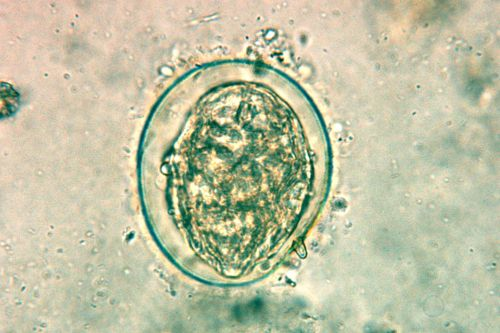
Rudimentary lateral (knob-like) spine
a small, poorly developed lateral spine
appears like a tiny knob, not sharp or obvious
Egg morphology
Oriental Blood fluke
Common name
Man
FH
Dogs
cats
carabao
other mammals
Reservoir host
Snail:
HabitaOncomelaria hupensis quadrasi
IH
Superior mesenteric vein in the small intestine
Habitat
Cercaria
Infective stage
Skin penetration
MOT
Smooth
nontuberculated
Adult morphology: Integument
6–7 testes
No of testes
short
with 1–4 eggs
Only a few eggs are present at a time (unlike species with many eggs in uterus)
ovary is located centrally
Uterus
3000 days per day
No. of eggs per day
Stool examination
rectal biopsy specimen
Laboratory Diagnosis
Katayama’s disease (snail fever)
Oriental schistosomiasis
Swamp fever
Enumerate: Pathology
Katayama’s disease (snail fever)
Pathology
Acute phase of infection.
Caused by the body’s immune reaction to migrating larvae and egg deposition
Symptoms: fever, chills, cough, diarrhea, enlarged liver/spleen.
Oriental schistosomiasis
Pathology
The chronic disease form in Asia.
Eggs get trapped in tissues → inflammation and granuloma formation, especially in the liver and intestines.
Praziquantel
Treatment