RP10
 Call Kai
 Learn
Learn Practice Test
 Spaced Repetition
 Match
Match Flashcards
 Knowt Play
1/17

Earn XP
Description and Tags
Preparation of a pure organic solid (and test of it's purity).
Name | Mastery | Learn | Test | Matching | Spaced | Call with Kai | Chat |
|---|
No analytics yet
Send a link to your students to track their progress
18 Terms
What two substances do you react together to form aspirin?
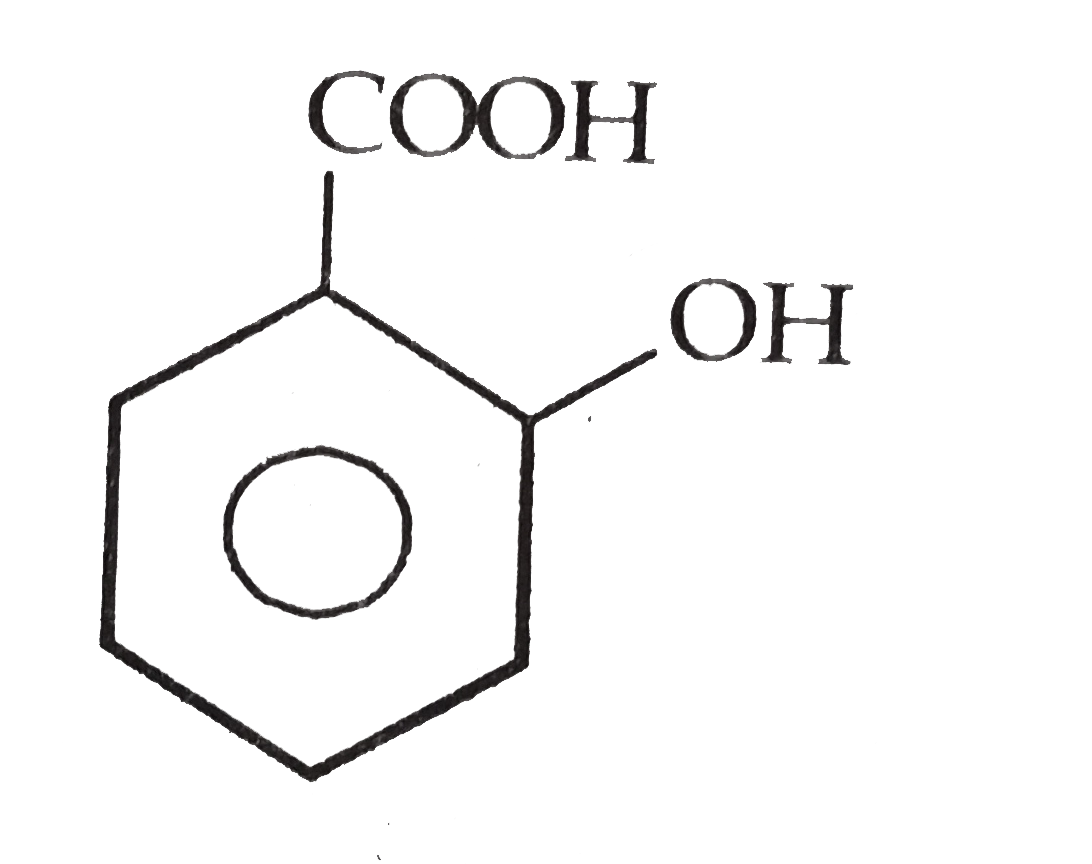
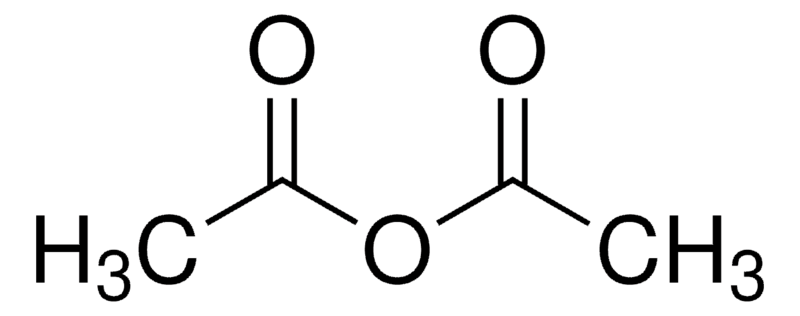
2-hydroxybenzoic acid, ethanoic anhydride.
Draw the displayed formula of 2-hydroxybenzoic acid.
Draw the displayed formula of ethanoic anhydride.
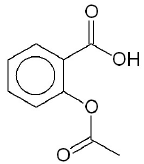
Draw the skeletal formula of aspirin.
List the five main steps of this practical in order.
1) Preparation.
2) Separation of the crude product.
3) Purification of the crude product.
4) Drying the product.
5) Checking purity of product.
Talk me through the preparation of aspirin.
1) Weigh out a recorded mass of 2-hydroxybenzoic acid, add it to the conical flask.
2) Measure out a recorded volume of ethanoic anhydride with a measuring cylinder, add it to the conical flask.
3) Add five drops of concentrated sulfuric acid to the conical flask (catalyst).
4) Swirl the contents of the conical flask (to ensure thorough mixing of reactants and catalyst).
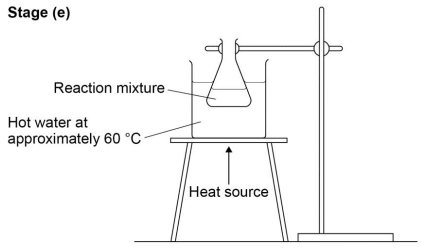
5) Heat the conical flask in a hot water bath (beaker of water above bunsen burner) for roughly 20 minutes, do not allow the temperature to exceed 65 degrees celsius.
Draw and label the apparatus used for heating up the reaction mixture in preparation.
Talk me through the separation of the crude product.
1) Allow the conical flask to cool once removed from the heat.
2) Mix the conical flask contents with a given volume of water and stir (this precipitates the solid product).
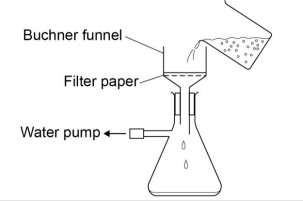
3) Filter off the solid aspirin under reduced pressure.
4) Collect the solid aspirin on the filter paper and allow it to dry.
Draw and label the apparatus used for reduced pressure filtration.
Talk me through purification (recrystallisation).
1) Using a measuring cylinder, measure out a given volume of ethanol.
2) Prepare a beaker of hot water that has a temperature below 78 degrees celsius (as that is the boiling point of ethanol).
3) Add the aspirin (without scraping the filter paper) to the boiling tube containing ethanol in the hot water.
4) Stir the boiling tube contents until all the aspirin has dissolved in the ethanol.
5) Pour the aspirin in ethanol into a measured volume of water in a conical flask.
6) Leave conical flask to cool slowly (white crystals should form).
7) Cool this mixture in an ice bath.
8) Filter of the purified product under reduced pressure again.
9) Record the mass of the dry purified aspirin.
Why is the reaction mixture heated with a water bath or electric heating mantle instead of directly with a bunsen burner?
The reactants (2-hydroxybenzoic acid and ethanoic anhydride) are highly flammable.
Why is reduced pressure filtration used to filter the product instead of gravity filtration?
Reduced pressure filtration is faster and more efficient.
In recrystallisation, why is the impure product dissolved in the minimum volume of hot water?
So that a saturated solution is created, this maximises the yield of aspirin obtained.
It purifies the product (solution becomes saturated as soon as temperature drops, forcing pure product to crystallize out of the solution while leaving any soluble impurities dissolved).
Why is the solution filtered whilst still hot?
To remove insoluble impurities (remain as residue on filter paper).
Prevents the product from crystallising too early (this would block the filter paper is reduce the yield of the procedure).
Why is the filtrate cooled in ice?
This greatly reduces the solubility of the organic product, forcing solid crystals of aspirin to form while soluble impurities remain dissolved.
Why are the filtered solid crystals washed with cold water?
To remove any impurities without dissolving the purified product.
True or false? The solubility of an organic substance increases as temperature rises.
True.
What is the most likely impurity after the recrystallisation process when making aspirin? How can you remove it?
Unreacted 2-hydroxybenzoic acid. Make sure cooling is slow and controlled and the product is rinsed with an ice-cold solvent.