Criminal Justice System: Courts, Actors, and Procedures
 Studied by 4 people
 Call Kai
 Learn
Learn Practice Test
 Spaced Repetition
 Match
Match Flashcards
 Knowt Play
1/62

There's no tags or description
Looks like no tags are added yet.
Name | Mastery | Learn | Test | Matching | Spaced |
|---|
No study sessions yet.
63 Terms
What is the first step in the criminal court process after an arrest?
Booking
What is the role of courts in the US legal system?
To determine the significance and meaning of social behaviors, apply legal norms, and resolve disputes.
What is the difference between the inquisitorial and adversarial systems?
Inquisitorial systems involve judges investigating facts, while adversarial systems have two advocates representing positions to an impartial audience.
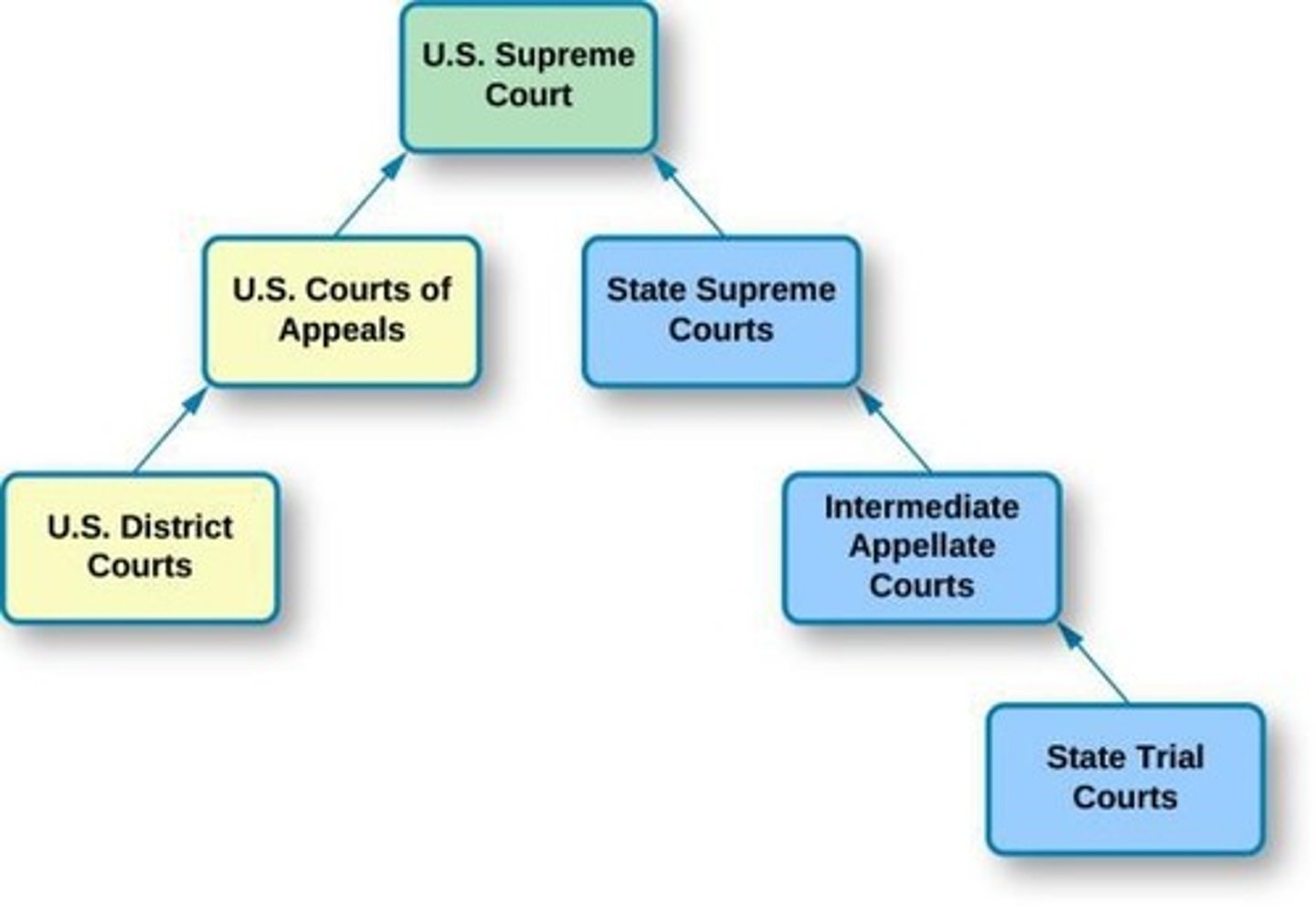
How many court systems exist in the US?
51 court systems: 1 federal and 50 state systems.
What are the types of jurisdiction in courts?
Subject matter jurisdiction, geographical jurisdiction, personal jurisdiction, and hierarchical jurisdiction.
What is the function of trial courts in the state court system?
To handle criminal cases and high-value civil cases.
What is the purpose of appellate courts?
To review previous cases.
What is the role of a judge in court proceedings?
To referee proceedings and evaluate arguments to determine guilt.
What is required to practice law in most states?
A Juris Doctorate (J.D.) and passing the bar examination.
What is the role of a District Attorney?
The head government attorney in a district, typically elected, responsible for prosecuting cases.
What are the two types of attorneys in criminal trials?
Defense attorneys and prosecutors.
What is pretrial detention?
The holding of defendants in jail after booking, which is not considered punishment.
What are the conditions for release on recognizance (ROR)?
No detention or bail/bond before trial.
What are some alternatives to the traditional cash bail system?
Plea bargaining, long detentions, loans from bail bond companies, risk assessment tools, and house arrest/monitoring.
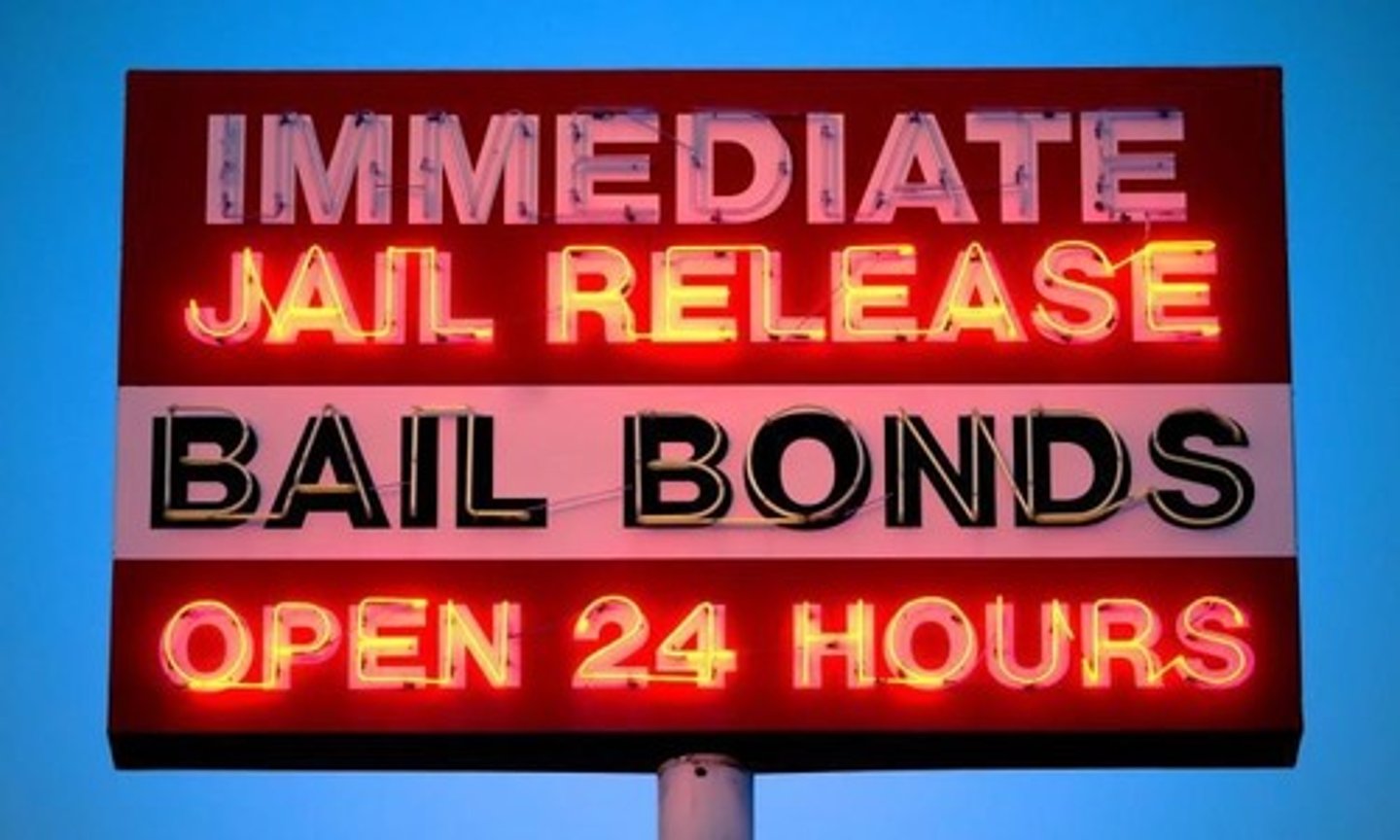
What is the problem with bail bond agencies?
They charge high fees and have no standardized practices.
What is the purpose of risk assessment tools in the context of bail?
To determine eligibility for release without bail using calculations and algorithms.
What is a common issue with risk assessment tools?
They may be potentially biased.
What role do witnesses play in court?
They provide testimony about events and evidence.
Who is the plaintiff in a court case?
The person bringing the court case.
Who is the defendant in a court case?
The person accused of wrongdoing.
What is the significance of the Grand Jury in the criminal court process?
To determine whether there is enough evidence to indict a suspect.

What happens during jury selection?
Potential jurors are questioned and selected to serve on a jury for a trial.
What is the role of a defense attorney?
To argue positions and present evidence on behalf of the defendant.
What is the process of arraignment?
The defendant is formally charged and asked to enter a plea.
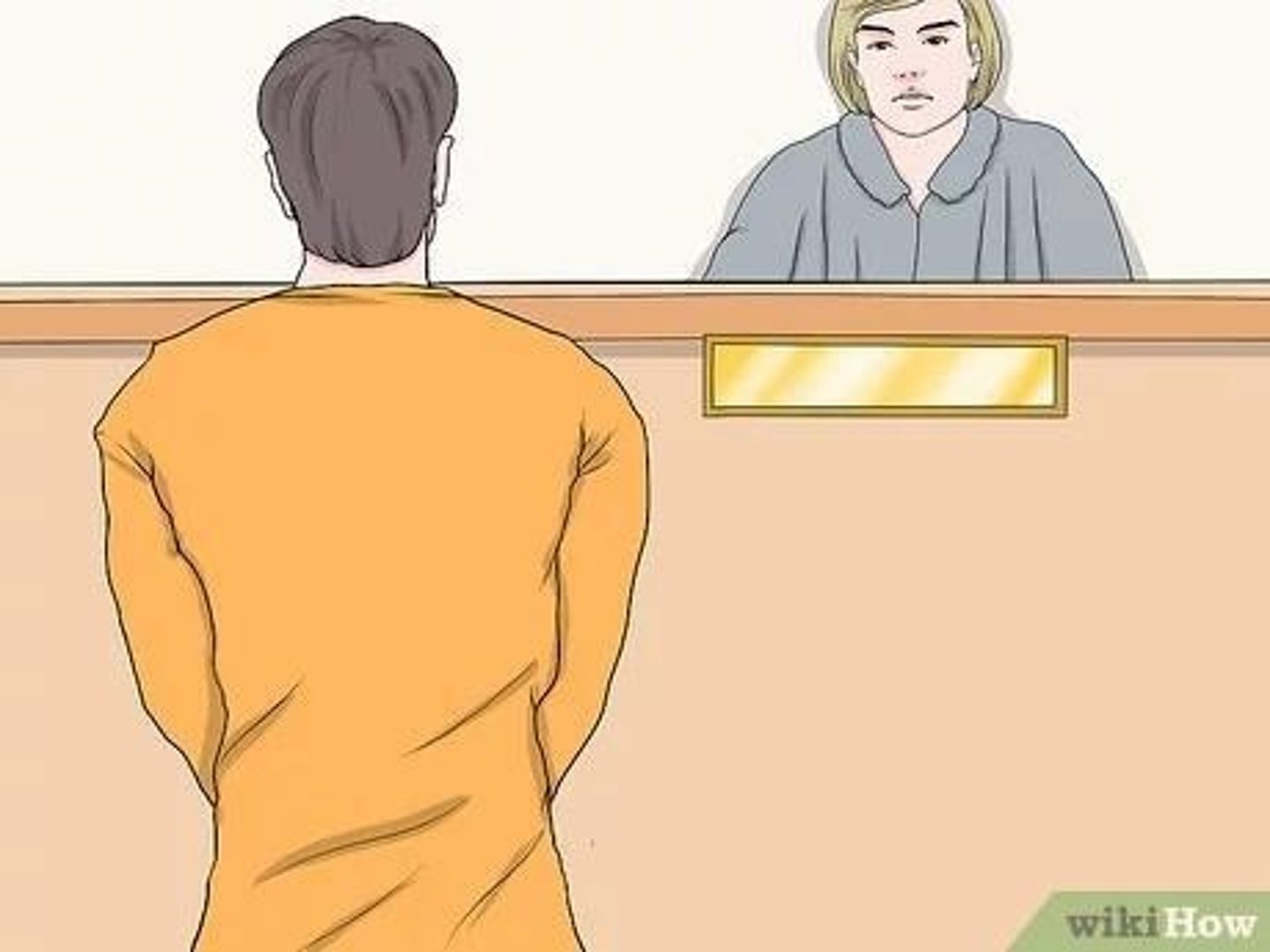
What is the purpose of sentencing in criminal court?
To determine the punishment for a convicted defendant.
What are the two types of court systems in the US?
Federal and state court systems.
What are the main stages of the criminal court process?
Investigation, Grand Jury, Information, Indictment, Arrest, Booking, Preliminary Hearings, Negotiation, Arraignment, Jury Selection, Trial, Sentencing, Mitigation, Appeals.
What is the legal status of pretrial detention?
Detention is not a punishment; conditions for release are determined by a judge.
What does Release on Recognizance (ROR) mean?
It allows a defendant to be released without bail based on their promise to appear in court.
What are the two main global models of court systems?
Inquisitorial System and Adversarial System.
How does the Inquisitorial System operate?
Judges investigate the facts of cases, sometimes with a panel.
What is the role of judges in the Adversarial System?
Judges act as referees between two advocates representing opposing positions.
How are federal judges appointed in the United States?
They are appointed by the President and confirmed by the Senate.
What is the role of a District Attorney?
They represent the state in criminal court and are typically elected.
What is an indictment?
It is a formal charge filed by a prosecutor to initiate criminal proceedings.
What is the significance of the 6th Amendment in criminal trials?
It guarantees the right to legal counsel for defendants.
What is plea bargaining?
A negotiation process where the defendant pleads guilty to a lesser charge to receive a lighter sentence.
What is the 'CSI Effect'?
The phenomenon where jurors have heightened expectations for forensic evidence due to crime TV shows.
What proactive mechanisms do courts use to handle prejudicial publicity?
Limit availability of prejudicial material through closure, restrictive orders, and protective orders.
What are some reactive mechanisms to address media effects on court proceedings?
Voir dire, Continuance, Change of Venue, Sequestration, Jury Instructions.
What is the focus of the documentary 'Gideon's Army'?
It highlights the challenges faced by public defenders in the Georgia court system.
What is the purpose of a Grand Jury?
To evaluate evidence and decide whether to indict a suspect, not to determine guilt.
What is the role of defense attorneys in criminal trials?
To represent the accused and ensure the state proves its case beyond a reasonable doubt.
What are the two types of defense attorneys?
Private attorneys paid by the defendant and public defenders appointed by the state.
What is meant by 'courtroom workgroup'?
The informal community of courtroom professionals who develop processes to achieve justice.
What is the significance of the OJ Simpson trial in media history?
It was the biggest media trial, with a verdict watched by over 150 million viewers.
What is the focus of the documentary 'Gideon's Army'?
The documentary focuses on public defenders.
What must a judge issue after a conviction?
A sentence or sanction.
What are the types of sentences that can be issued in criminal cases?
Fines, probation, intermediate sanctions, incarceration, life imprisonment, and death (capital punishment).
What is a concern regarding fair sentencing?
Bias and mistakes, especially with the death penalty, and disparities by class, race, and gender.
What is the difference between discretion and mandatory minimums in sentencing?
Discretion allows judges to use personal judgment, while mandatory minimums impose fixed sentences that can be seen as overly harsh.
What is restorative justice?
An approach that emphasizes addressing harm rather than punishment.
What does diversion in the criminal justice system refer to?
The interruption of prosecution to address underlying issues.
What are specialty courts?
Courts designed for populations with unique needs, emphasizing treatment, such as juvenile and drug courts.
What is the date for Exam 3?
Thursday, November 6th.
What materials will Exam 3 cover?
Unit 3 materials, including assigned readings (Chapters 7, 8, & 9), lectures, and videos like 'Gideon's Army'.
How many questions will be on Exam 3?
50 questions, consisting of multiple choice and true/false.
How long will students have to complete Exam 3?
60 minutes.
Where can students find study aids for Exam 3?
On Brightspace.
What is the significance of Veterans' Day in the course schedule?
There will be no classes on Tuesday, Veterans' Day.
What is due before the class after Veterans' Day?
Chapter 10 review.
What is the purpose of the Kahoot! review?
To participate for bonus points.
What should students do to get credit for the Kahoot! review?
Use their real name (Last name, First name) when participating.