Lecture 19 - Patterns of Inheritance 2 - BIOMED EXAM 3
 Call Kai
 Learn
Learn Practice Test
 Spaced Repetition
 Match
Match Flashcards
 Knowt Play
1/121

There's no tags or description
Looks like no tags are added yet.
Name | Mastery | Learn | Test | Matching | Spaced | Call with Kai | Chat |
|---|
No analytics yet
Send a link to your students to track their progress
122 Terms
Who is affected by Autosomal Recessive disorders? (Homozygous dominant, heterozygous, homozygous recessive, etc.)
- Homozygotes (recessive)
- Compound heterozygotes
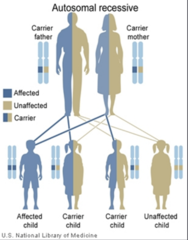
Why are homozygotes (recessive) affected by autosomal recessive disorders?
There are identical changes on both alleles of a specific gene

Why are compound heterozygotes affected by autosomal recessive disorders?
- Both alleles of a gene harbor changes, but the specific changes are different
- Ex. c.3265G>T vs. c.125A>C

TRUE/FALSE
Autosomal Recessive disorders occur equally in males and females
TRUE

Which is more common: Autosomal recessive disorders or Autosomal dominant disorders?
Autosomal Dominant disorders
TRUE/FALSE
Autosomal Recessive disorders occur equally in all ethnicities and races
FALSE
Autosomal Recessive disorders follow specific ethnic/racial trends
What type of transmission do Autosomal Recessive disorders follow: Vertical or Horizontal?
Horizontal transmission (Usually just one generation affected)

Autosomal Recessive disorders are more common in ______________________ families
Consanguineous
Parents of affected children from autosomal recessive disorders are ______________ ____________.
Obligate carriers
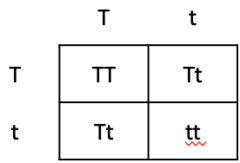
What is the genotypic ratio of autosomal recessive disorders if both parents are carriers?
- 25% chance to have an affected child (tt)
- 50% chance the child will be an unaffected carrier (Tt)
- 25% chance the child will be unaffected, non-carrier (TT)
___________________________ Syndrome is characterized by:
- Palmer-plantar hyperkeratosis
- Inflammation and degeneration of the periodontium
- May have nail dysplasia and excessive sweating
Papillon-LeFevre Syndrome

What gene is affected in Papillon-LeFevre Syndrome?
CTSC gene
Papillon-LeFevre Syndrome onset is ____ years old
1-5 years old
In Papillon-LeFevre Syndrome, deciduous teeth erupt _______, and premature _________________ of teeth results in secondary teeth that may be lost by ____ years old
- Early
- Exfoliation
- 17 years old
TRUE/FALSE
Papillon-LeFevre Syndrome is an X-linked recessive disorder
FALSE
Papillon-LeFevre Syndrome is an Autosomal Recessive disorder
What disorder is characterized by a deleterious allele that leads to defective synthesis of the pigment melanin?
Human albinism

What pattern of inheritance does Human albinism follow?
Autosomal Recessive
What disorder is characterized by a deleterious allele that leads to a defective chloride ion transport protein, which results in secretion of excessive amounts of mucus in the lungs?
Cystic Fibrosis

What pattern of inheritance does Cystic Fibrosis follow?
Autosomal Recessive
What are the different types of Sex-Linked Traits?
- X-linked Traits (Dominant or Recessive)
- Y-linked Traits
- Sex-Limited Traits
- Mitochondrial
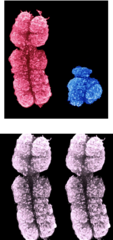
Who is affected by X-Linked Dominant disorders?
- Heterozygous XX females
- Hemizygous XY males
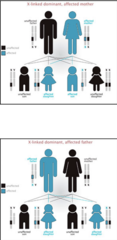
Why are heterozygous XX females affected by X-Linked Dominant disorders?
46,XX: Change in one of 2 copies of the gene is sufficient to cause the disorder
TRUE/FALSE
X-Linked Dominant disorders affect both males and females equally
FALSE
Twice as many affected females as males

Why are hemizygous XY males affected by X-Linked Dominant disorders?
- 46,XY: Possess only one X chromosome; a change in one copy of the gene causes the disorder
- More likely to be severe and even lethal in XY males
TRUE/FALSE
There is no male-to-male transmission in X-Linked dominant disorders
TRUE
TRUE/FALSE
All XX female children of affected XY males will be affected in X-Linked Dominant disorders
TRUE
What disorder is characterized by:
- Lower extremity bowing
- Stress fractures
- Short stature
- Craniosynostosis
- Osteomalacia (bone softening in adults)
- Oral manifestations
- Defective dentin and enlarged pulp chambers
- Prone to dental abscesses
X-Linked Hypophospatemic Ricketts (XLH)

What pattern of inheritance does X-Linked Hypophospatemic Ricketts (XLH) follow?
X-Linked Dominant
What gene is affected in X-Linked Hypophospatemic Ricketts (XLH)?
PHEX
PHEX regulates _________ gene →Inhibits kidneys from reabsorbing ______________ in blood stream, causing too much _____________ to be excreted in the urine
- FGF23
- phosphate
- phosphate
Who is affected by X-Linked recessive disorders?
- Heterozygous XX females are unaffected carriers
- Homozygous XX females are affected (this is an exception)
- Hemizygous XY males are affected

Why are Heterozygous XX females unaffected carriers of X-Linked Recessive disorders?
46,XX: Change is needed in both copies of gene to cause the disorder
____________ ________________ can cause a hemizygous XX female to show findings of the condition in X-linked recessive disorders
Skewed X-inactivation
Why are Hemizygous XY males affected in X-linked recessive disorders?
46,XY: Possess only one X chromosome; which is sufficient to cause the disorder
TRUE/FALSE
X-linked recessive disorders affect twice as many females as males
FALSE
Males affected much more than females because of decreased likelihood of two altered copies required for transmission in females
TRUE/FALSE
There is no male-to-male transmission in X-Linked recessive disorders
TRUE
TRUE/FALSE
All XX female children of affected males will be affected in X-linked recessive disorders
FALSE
All XX female children of affected XY males are obligate carriers
What conditions must be met for a homozygous XX female to be affected by an X-Linked recessive disorder?
What is an example?
Exception to the rule: If the conditions does not affect fertility or life expectancy, AND is common in the general population, then it is possible to have affected XX females - example: color-blindness
What is an example of an X-Linked recessive disorder seen in the Britich monarchy?
Hemophilia

What type of color blindness is an example of an X-Linked recessive disorder?
Red green color blindness

What does the punnet square of X-linked recessive color blindness look like for a male with color blindness mating with a female carrier?

Y-linked disorders are also called _____________ disorders
Holandric
Why are Y-linked disorders considered rare?
Rare because so few genes on the Y chromosome

TRUE/FALSE
There are no currently well understood Y-linked disorders besides infertility
TRUE
Who is affected by Y-linked disorders?
Only XY males are affected
Who do affected XY males pass their Y-linked disorders on to?
Affected XY males pass the change on to ALL their XY sons and NONE of their XX daughters
What is an example of Y-linked disorders?
Ear hair growth

________________ ___________________ is an autosomal trait, but is only expressed in one sex
Sex-Limited Inheritance
TRUE/FALSE
Sex-Limited Inheritance is only inherited in a recessive manner
FALSE
May be inherited in a dominant or recessive manner
Why is the determination of the pattern of inheritance in sex-limited inheritance complicated?
Determination of pattern of inheritance is complicated by the fact that the affected family members of the sex that does not show the phenotype can appear to be unaffected
What Sex-limited inheritance disorder is characterized by an iron disorder in which the body absorbs too much iron from the food you eat?
Hemochromatosis

Is hemochromatosis autosomal dominant or autosomal recessive?
Autosomal recessive
When will males and females affected by hemochromatosis begin displaying symptoms?
- XY Males usually start showing symptoms in their 40s
- XX Females won't display symptoms due to menstrual cycle until they complete menopause in their 60s
What type of cancer is an example of a sex-limited inheritance disorder?
Breast cancer
Is breast cancer an autosomal dominant or autosomal recessive disorder?
Autosomal dominant
Who is more likely to develop breast cancer: males or females?
XX Females are more likely to develop breast cancer than XY males
In ___________, researchers discovered mitochondria have their own _________, different than the nuclear ___________ found in the cells' nucleus.
- 1963
- DNA (mtDNA)
- DNA (nDNA)
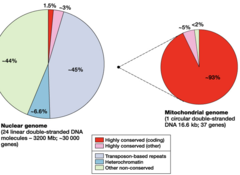
Mitochondrial and metabolic medical conditions include more than _____ different identified diseases with different genetic features.
40
What is the common factor among all mitochondrial diseases?
The common factor among these diseases is that the mitochondria are unable to completely burn food and oxygen in order to generate energy.
____________________ is the presence of a mixture of deleterious and normal mtDNA molecules within a cell
Heteroplasmy
_____________________ is a cell that contains a pure population of either deleterious or normal mtDNA
Homoplasmy
Where do virtually all your mitochondria come from?
Come from your XX mother
The __________, originating in the XX female, have about ____________ copies of mitochondrial DNA.
- Ovum
- 100,000
The __________, originating in the XY male, have fewer than _______ copies, and these are generally lost at fertilization.
- Sperm
- 100
TRUE/FALSE
Affected fathers and mothers of mitochondrial disorders will both produce affected offspring
False-ish
- PREVIOUSLY BELIEVED: Affected XY fathers produce no affected offspring, while the offspring of affected XX mothers are all affected
- In 2018, three families with mitochondrial disease inherited from the FATHER were identified. Additional instances of paternal inheritance have since been documented, but it is still incredibly rare.
- Biparental inheritance - offspring have mtDNA from both parents
TRUE/FALSE
Symptoms of mitochondrial disease can vary from person to person
TRUE
Why do symptoms of mitochondrial disease vary from person to person?
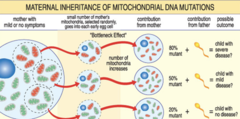
- This is explained by heteroplasmy.
- Individuals with higher percentage of deleterious mtDNA will have more severe phenotype.
• Can vary greatly within the same family
• Depends on the % of mitochondria with the mutation passed on by the parent
What are 4 different examples of Mendelian Genetics in Dentistry?
1. Single gene changes in structural proteins
2. Disorders of cranio-facial development
3. Disorders of tooth development caused by changes in transcription factors
4. Systemic disorders
What are 2 examples of single gene changes in structural proteins in dentistry?
1. Enamel structure (amelogenesis imperfecta)
2. Dentin structure (dentinogenesis imperfecta)
What are 2 examples of disorders of cranio-facial development in dentistry?
1. Clefting
2. Branchial arch disorders
What are 4 examples of disorders of tooth development caused by changes in transcription factors in dentistry?
1. Number of teeth
2. Size of teeth
3. Shape of the teeth
4. Primary failure of eruption
What are 4 examples of systemic disorders in dentistry?
1. Immunity
2. Connective tissue
3. Bleeding disorders
4. Downs syndrome
_____________________ is when individuals are related by descent from a common ancestor
Consanguinity
Consanguinity increases the risk of having a child affected by an ______________ ______________ disorder - shared genes
Autosomal recessive

How is Consanguinity depicted on a pedigree?

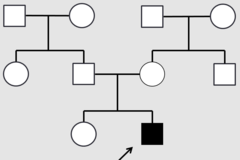
___ _______ are new deleterious change that occurs in the individual, but is not present in either parent
De novo
______________ ________________ and ____________ conditions can appear for the first time in the family as a new change
- Autosomal dominant
- X-linked
TRUE/FALSE
You cannot assume a condition is de novo
Test to confirm!
True
__________ ___________________ is the difference in degree and type of clinical manifestations in people with the same genotype
- Degree of severity
- Types of features present or absent
Variable Expressivity
TRUE/FALSE
Variability of features does NOT occur between family members
FALSE
Variability of features can occur between families and between members of the same family
Variability is often a result of other _____________ and __________________ factors influencing the expression of the gene
- Genetic
- Environmental
TRUE/FALSE
DNA testing can NOT predict phenotypic variation
TRUE
______________ ___________________ is when in some disease conditions, not every person with a deleterious change exhibits the phenotype
Incomplete Penetrance
TRUE/FALSE
Incomplete Penetrance can result in a condition that may appear to skip a generation
TRUE
In incomplete penetrance, modifying _________ and/or _____________ factors negate the effects of the change
- Genes
- Environmental
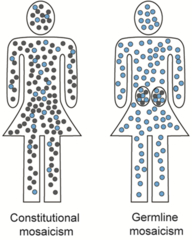
__________________ is the presence of more than one cell line in the body
Mosaicism

_____________ ________________ is the presence of more than one cell line in the egg or sperm cells only
Germline mosaicism
A family presents to clinic with their child, who has been diagnosed with Neurofibromatosis type 1 (NF1, autosomal dominant).
Both parents are unaffected, confirmed by genetic testing.
However, the patient's paternal half-sibling also has NF1.
How is this possible?
Germline Mosaicism

________________ is the interaction between two or more genes to control a single phenotype
Epistasis

In Epistasis, an allele at one locus ________ or ___________ the effects of alleles at other loci
Hides or modifies
TRUE/FALSE
Epistasis exhibits normal dihybrid cross ratio of 9:3:3:1 of phenotypes
FALSE
Deviates from normal dihybrid cross ratio of 9:3:3:1 of phenotypes
TRUE/FALSE
Epistasis can be dominant or recessive
TRUE
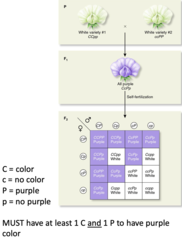
What are 2 examples of Epistasis?
- Sweet pea flower color
- Kernel color in wheat
____________________ is part of inheritance that is not passed down in the DNA sequence (occurs at the level of DNA packaging)
Epigenetics
What factors influence epigenetics?
- Age
- Environment/Lifestyle
- Disease state
What are 4 ways that Epigenetics control gene expression?
1. Regulation of gene expression by turning off or on different regions of the chromosome
2. Imprinting
3. X chromosome inactivation
4. Heterochromatin maitenance
How can regions of the chromosomes be turned off/on to regulate gene expression?
- In different cell types, certain genes are not necessary
- Affects gene expression through histone modification, DNA methylation, non-coding RNA gene silencing
- Tags are inherited during meiosis
What is imprinting?
Genes whose expression is determined by the parent that contributed them (methylation)
How are X chromosomes inactivated?
XIST (X-inactive specific transcript) coats inactive X chromosome
What 2 things does Heterochromatin maintenance control?
- Developmental controls
- Tissue specific expression controls