Micro lecture exam #3
 Call Kai
 Learn
Learn Practice Test
 Spaced Repetition
 Match
Match Flashcards
 Knowt Play
1/85

There's no tags or description
Looks like no tags are added yet.
Name | Mastery | Learn | Test | Matching | Spaced | Call with Kai | Chat |
|---|
No analytics yet
Send a link to your students to track their progress
86 Terms
protozoa
single celled, eukaryotic, have complicated life cycles and multiple hosts
change form and physiology during life cycle
what is the parasite, vector, and reservoir for MALARIA?
parasite: Plasmodium
vector: female anopheles mosquito (host for sexual phase of life cycle)
reservoir: humans (host for asexual phase of life cycle)
describe the sexual phase of malaria parasite life cycle in female anopheles mosquito.
mosquito bites an infected human
it collects gametocytes through the bite which then fuse to form a zygote
the zygote divides through meiosis turning itself into oocytes
in each oocyte, sporozoites are made through schizogeny (asexual reproduction)
these sporozoites can then be found in the mosquitoes salivary glands, and are ready to infect a new human
describe the asexual phase in humans that ends with merozoites forming more gametocytes.
infected mosquito bites human
sporozoites are injected into humans which then travel down to the human’s liver
in the liver, they mature into merozoites through schizogeny
when merozoites are made, they are released into the blood and infect RED BLOOD CELLS
merozoites divide by schiogeny in RBCs and are even released into plasma
These mezoroites continue to infect RBCs and can even turn into gametocytes
those gametocytes can be taken up by other mosquitoes
what is schizogeny? where does it occur and what does it form?
schizogeny is asexual reproduction
protozoan cells divide repeatedly in host cell
forms merozoites in
occurs in liver cells and RBCs
Plasmodium’s influence on mosquito feeding behavior (malaria)
when they have sporozoites in their salivary glands, they feed more than normal
when they just acquired a gametocyte form a human, they stop feeding to complete their sexual stage
plasmodium’s effect on human’s body odor (malaria)
when they are recently infected (just bit), humans smell LESS attractive to a human — havent gone through their asexual phase
when they have mature merozoites — they are already infected and humans smell more attractive to mosquitos (want to get their gametocyte)
statistics of malaria
oldest evidence of malaria in dominican republic (mosquito in amber)
paradoxism symptoms: high fevers, chills, shivering, sweating
300-500 million new cases per year
what does human malaria come from?
form gorilla strain
toxoplasma life stage cycles
cat becomes infected by eating an intermediate host like a bird or rat that contain bradyzoites(humans can be hosts too — just not eaten by cats)
the parasite undergoes sexual reproduction in the small intestine
through the sexual reproduction, immature, unsporalated oocytes are formed
released in cat feces into environment (takes 1-5 days to sporolate and be infectious)
asexual reproduction of toxoplasma after ingested by rodent
rodent ingests oocytes with sporozoites
sporozoites phagotyze in rodent which form tachyzoites
tachyzoites infect tissue cells — forming tissue cysts with bradyzoites
bradyzoites reactivate and form more tissue cysts ORRR are ingested by a cat
difference between toxoplasma and malaria life cycles?
the hosts are different for both: malaria is anopheles mosquito while toxoplasma are cats
intermediate host for malaria is humans while toxoplasma can have multiple —humans, rodents, livestock, birds
malaria need a vectors (mosquito) which toxoplasma does not — can be contracted by undercooked meat or cat feces
how do humans become infected with toxoplasma?
eating undercooked meat or ingesting oocytes from cat feces, soil, produce
cryptosporidium — diarrhea disease
reflects different levels of sanitation in water
can be found in fecal contaminated water and food
why is cryptosporidium difficult to eliminate from water supply?
their oocytes are too small to filter, are resistant to chlorine, and are difficult to stain
reservoirs for cryptosporidium
mammals, birds, reptiles, humans
platyhelminths
flatworms
acoelomate — lack a body cavity
nemahelminthes
round worms
possess a false body cavity
structure of beef tapeworm
scolex — head w suckers for attachment
proglottid segments — have their reproductive organs
beef tapeworm life cycle (taenia)
adult version forms in human
larvae and cyst forms in cow
human portion of beef tapeworm life cycle
human eats undercooked meat with cysticercus (cyst)
the larva in the cysticercus forms the scoled
the scolex then attaches to the intestinal wall, forming the adult
the adult version of virus forms the proglottid segments with eggs
eggs released in feces
cow side of beef tapeworm
consumes grass with fertilized eggs
those eggs form larvae in cow intestine
larvae move forward from intestine into body of cow
once in body they form cysts in muscle of cow
how can humans contract dog tapeworm?
from pet kisses
How does the human role in Echinococcus differ from the beef tapeworm?
Humans are accidental intermediate hosts in Echinococcus, but definitive hosts in beef tapeworms.
What disease does Enterobius cause, and what is its main characteristic?
Causes round worm infection (most common); characterized by perianal itching, especially at night.
mostly infects kids, easily spread
What disease does Ascaris cause, and what is its main characteristic?
Causes ascariasis; large intestinal roundworms that can migrate to lungs.
What disease does Necator cause, and what is its main characteristic?
Causes hookworm disease; larvae penetrate bare skin and feed on blood in intestines.
free living larvae
What disease does Trichinella cause, and what is its main characteristic?
Causes trichinellosis; acquired from undercooked pork, larvae encyst in host muscle tissue.
reservoirs: wild hogs, pigs, rodents, dogs, cats
What disease does Wuchereria cause, and what is its main characteristic?
Causes lymphatic filariasis (elephantiasis); transmitted by mosquitoes, blocks lymphatic vessels.
human only host
What disease does Dirofilaria cause, and what is its main characteristic?
Causes heartworm disease; transmitted by mosquitoes, primarily targets canine hearts.
What disease does Anisakis cause, and what is its main characteristic?
Causes anisakiasis; acquired from raw seafood, larvae irritate stomach/intestinal walls.
fish roundworm
life cycle and hosts for clonorchis — liver fluke
Organism Type: Monoecious (hermaphroditic).
Hosts Required:
1st Intermediate Host: Freshwater snail.
2nd Intermediate Host: Freshwater fish.
Definitive Host: Humans (or fish-eating mammals).
Transmission: Humans eat undercooked or raw freshwater fish containing encysted metacercariae. The larvae migrate up the bile ducts and mature into adults in the liver.
How do Schistosoma hosts and life cycle differ from Clonorchis?
Schistosoma has no second intermediate fish host (snail and human only); cercariae directly penetrate human skin.
anthropod vectors
blood sucking insects
ex: anophelesmosquitoes, deer tick, blackfly, etc
mechanical vectors
pick up parasite, pathogen, egg, cyst in one place and drop it off at another
ex: flies and roaches
biological vectors
all or part of life cycle of agent occurs in vectors
ex: mosquitoes, lice, and ticks
what is a reservoir?
organism maintaining pathogen in nature, often a bird or rodent
can be stable or unstable (unstable could die — has disease)
transovarial transmission
arthropods serve as both reservoir and vector
all stages of vector life cycle infected
bacteria passed from eggs into adults and back into eggs
no other host needed
ensures babies born infected
EX: rickettsia rickettsia
What is the life cycle of the agent causing epidemic typhus?
Rickettsia prowazekii is transmitted by human body lice through feces rubbed into bites.
What is the life cycle of the agent causing plague?
Yersinia pestis is maintained in wild rodents and transmitted to humans by fleas.
What is the life cycle of the agent causing Lyme disease?
Borrelia burgdorferi is transmitted by blacklegged deer ticks feeding on rodents and deer.
What is the life cycle of the agent causing Rocky Mountain spotted fever?
Rickettsia rickettsii is transmitted through tick bites and maintained via transovarial transmission.
What factors promote mosquito-vectored diseases, and how are they controlled?
Warm standing water and high humidity; controlled by removing water and using insecticides.
yellow fever
Causes fever, chills, jaundice (yellow skin due to liver damage).
or hemorrhagic symptoms.
dengue fever — mosquito
"Breakbone fever" (severe muscle/bone pain), can progress to hemorrhagic fever.
west nile virus
Mostly asymptomatic, but can cause severe encephalitis in the elderly.
reservoir is crows
zika
Can cause mild symptoms, but is highly teratogenic (causes microcephaly in unborn babies)
ebola
Not mosquito-vectored (spread by contact with bodily fluids); causes severe hemorrhagic fever
Infestations vs. Arthropod Diseases
An infestation is when arthropods live on or in the host's body tissues directly, rather than just transmitting an internal pathogen.
What are two examples of infestations?
Scabies (mites) and pediculosis (lice).
epidemiology
study of the cause of disease, development of disease, and transmission of disease
retrospective epidemiology
looks backwards from outbreak to find cause of disease
they do not know the bacterium that caused the disease
look for factors that allow disease to occur
remove those same factors that allow it to occur
prospective epidemiology
look forward
understand cause of disease and recognize factors/conditions that cause disease
look for and remove factors that allow disease to occur
they separate sewage water from drinking water
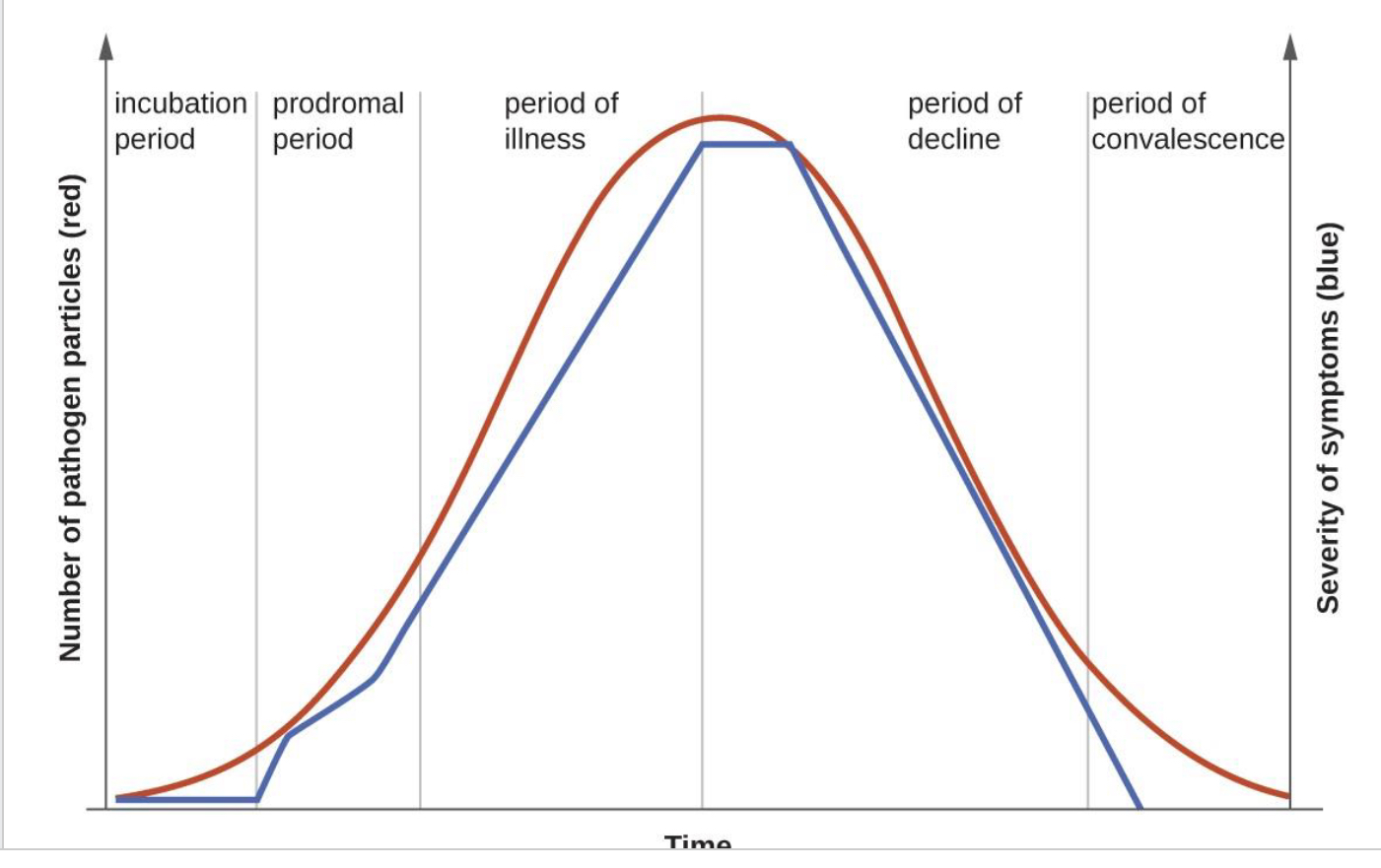
what are the stages of development and their characteristics?
incubation: time between infection and symptoms
prodromal: onset of mild illness symptoms (may or may not occur) — when you can sense you are getting sick
illness: display classic symptoms of disease
decline: get medications, immune system responds & symptoms decrease
convalescence: recover and return to health
what are the four disease transmission patterns?
endemic, pandemic, epidemic, and sporadic
endemic
always present at low but constant levels
ex: chicken pox, lyme disease, or even cholera
epidemic
widespread illness with higher level of infection than normal
ex: ebola
sporadic
occurs occasionally at low levels in diff locations
ex: hookworms, chagas disease
pandemic
world wide occurrence
ex: HIV, flu, HPV, chlamydia, COVID 19
what are the four factors that influence incubation time of a disease agent?
type of pathogen/parasite, virulence characteristics
infective dose — # of cells entering body
infection site — lungs and skin
health of immune system: incubation varies for diff disease
john snow
determined fecal contaminated water to be source of cholera
capped contaminated well and removed handle
obtaining drinking water from other wells - end of cholera
semmelweis
investigated maternal deaths in childbirth
realized they were delivering babies with contaminated hands = higher death rates
introduced hand washing with chlorine
florence nightingale
introduced handwashing, disinfection, and aseptic techniques into nursing
figured out lice was the vector for epidemic typhus
cleanliness and removal of lice helped decrease typhus
3 forms of bacterial flora that grow on, in or around our body
normal
transient: normally not harmful, removable with hand washing, not adapted to body
opportunistic
all may cause infection if get below epithelium
describe ways that different conditions/ treatments can allow the opportunistic flora to proliferate and damage the body
anytime your body becomes vulnerable (like the scenarios listed below) they allow opportunistic flora to damage body:
weakened immune system due to illness
treatment with broad spectrum antibiotics
joint and catheter implantations
burns/other injuries
exposure to unsanitary conditions
NOTE: transient and normal can both become opportunistic
How can treatments allow opportunistic flora to damage the body?
Antibiotics kill competitive normal flora, allowing resistant opportunists to overgrow
How does normal flora change over time?
It shifts based on age, diet, hormones, and environmental exposures
How does normal flora benefit us?
By preventing pathogen colonization (microbial antagonism) and producing vitamins.
What is the structure and genetics of the influenza virus?
Enveloped virus with a segmented, single-stranded RNA genome and surface spikes (H and N).
H and N are antigens on surface that allow virus to bind and enter host cell
How does influenza spread?
Through respiratory droplets and aerosols from coughing or sneezing.
What is the difference between antigenic drift and antigenic shift?
Drift is minor mutations; shift is major genetic reassortment creating new subtypes
What are the host characteristics and pandemic potential of Influenza Strain A?
Influenza A infects humans as well as animals (birds, swine, horses)
high pandemic potential due to antigenic shift.
What is the structure and genetic characteristics of HIV?
HIV is a retrovirus containing two identical strands of single-stranded RNA
reverse transcriptase
enveloped virus
Which cells does HIV infect and why?
CD4+ T cells and macrophages, because gp120 binds to CD4 receptors
How does HIV affect the immune system?
It destroys CD4+ T helper cells, severely crippling cell-mediated immunity
Why do many HIV-positive patients eventually die from AIDS?
HIV progresses to AIDS — AIDS destroys immune response
Severe immunodeficiency leads to fatal opportunistic infections or cancers.
Why are multiple drug treatments (cocktails) most effective against HIV?
They prevent drug resistance, target multiple replication stages, and lower viral load.
What are three examples of HIV inhibitors and their targets?
fusion inhibitors: block receptors on virus (entry)
Reverse transcriptase inhibitors (genome replication)
integrase inhibitors: prevent HIV DNA from inserting into host DNA
What is the organelle of motion in Phylum Sarcodina?
Pseudopods (false feet).
What is a karyosome?
A dense chromatin mass within the nucleus of some protozoa
What are two prominent disease agents in Sarcodina?
Entamoeba histolytica (amebic dysentery) and Naegleria fowleri (primary amebic meningoencephalitis
What is the motility characteristic of Phylum Ciliophora?
Movement via short, hair-like cilia.
Which Ciliophora parasite causes human disease, and how is it transmitted?
Balantidium coli; transmitted via the fecal-oral route from swine.
it is the only ciliated human intestinal pathogen
Why are Ciliophora and Sarcodina cysts and trophozoites easy to distinguish?
Trophozoites are motile and irregular; cysts are round, dormant, and thick-walled.