UV-Vis
 Call Kai
 Learn
Learn Practice Test
 Spaced Repetition
 Match
Match Flashcards
 Knowt Play
1/28

There's no tags or description
Looks like no tags are added yet.
Name | Mastery | Learn | Test | Matching | Spaced | Call with Kai | Chat |
|---|
No analytics yet
Send a link to your students to track their progress
29 Terms
what is spectroscopy?
study of interaction btwn electromagnetic (EM) radiation and sample.
interaction is based on EM rad. being absorbed or emitted by sample
what is spectrometry
measurement of EM rad. absorbed or emitted by sample
what is electromagnetic radiation + two representations
a form of light energy transmitted through space at high velocities
a stream of particles carrying energy, called photons. each travelling in a wave-like pattern at the speed of light
rep as wave model/particle (photon) model
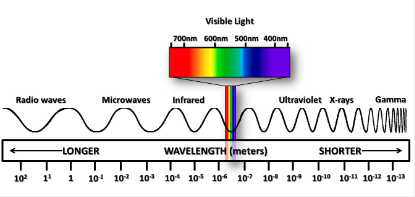
what is wavelength λ (m)
linear distance of one complete cycle btwn successive maxima/minima
what is frequency v (Hz)
no. of waves passing a fixed point per unit time/ no. of oscillations that occur in 1s
equation for wave model
c = vλ
c - speed of light, v - freq, λ - wavelength
equation for particle model
E=hv=λhc
6.63⋅10−34 s → h / Planck’s constant
name 2 types of spectroscopy
absorption spectroscopy
emission spectroscopy
when does absorption of energy occur (ground to excited state)
electrons in atoms/ions/molecules usually present in GROUND state
if a photon passes near the e-, energy of photon matches energy difference btwn ground & excited state
energy from photon is transferred to electron → EXCITED state
in this spectroscopy, energy states & amt of energy that can be ____ are discrete
absorption spectroscopy
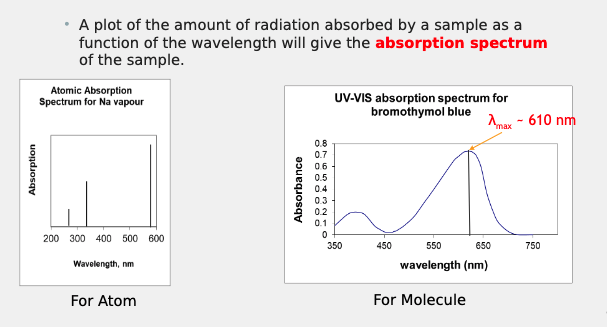
what is the name of the plotted graph for radiation absorbed by sample & how does it differ for atoms and molecules
absorption spectrum. atoms are straight vertical lines while molecules is a graph line joined together
what is the UV-Vis absorption range
Near-UV region: 180-380nm
Visible region: 380-780nm
*vacuum UV region: 10-180nm (not useful bc air absorbs most of EM rad. in this region & instruments need to under vacuum conditions)
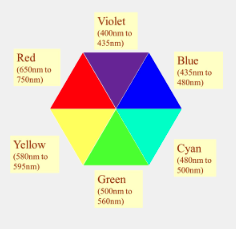
how does absorption of radiation affect how we see coloured objects
When white light passes through an object, some wavelengths of light will be absorbed
unabsorbed wavelengths of light are transmitted
residual transmitted wavelengths are seen as colour (COMPLEMENTARY to what is absorbed!!!)
what are chromophores and chromogens
chromophores - the absorbing groups in chem. species
chromogens - chem species containing chromophores
basically: chromogens have chromophores
examples of chromogens (organic & inorganic species)
organic:
saturated compounds with N, O, halogens
unsaturated compounds with double, triple bonds, aromatic rings
inorganic:
transition ions with PARTIALLY filled d-orbitals
ions that can form soluble complexes with chelating reagents
equation for absorbance of radiation
A=log(T1)=εbc
A - absorbance, b - optical pathlength (cm), ε - molar absorptivity (M-1cm-1), c - concentration (M or mol/L), T - transmittance
what is transmittance (T)
ratio of radiant power (I) in a beam of radiation after it has passed through a smaple to the power of the incident beam (Io)
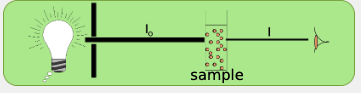
what is Beer’s Law
The absorbance is directly proportional to pathlength and concentration of sample.
A ∝ b,c
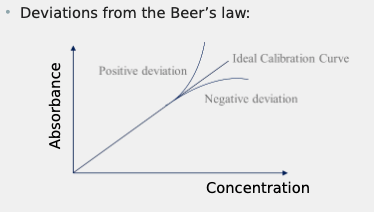
what are the 2 factors that contribute to deviations from Beer’s Law
Fundamental limitations of Beer’s law
at high conc (>0.1M) indiv atoms/molcules no longer behave independently of o/a
due to proximity, interactions of atoms occur & affects ability to absorb rad. → change in ε
Instrumental deviations
output from continuous light source will always produce a specific band width (±5nm)
always results in negative deviation
Beer’s Law is only valid for low concentrations of analyte and monochromatic radiation.
What are the 4 main components for optical spectroscopy
light source, monochromator (wavelength selector), sample chamber, detector
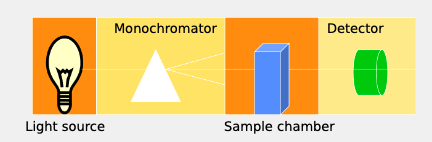
what are the qualities of a good light source and EXAMPLES of light source
qualities: (provide appropriate λ for analyte in sample to absorb at)
beam emits rad. over a wide spectral range
adequate intensity to be detected
provides stable output
examples:
tungsten filament lamp (Vis)
Deuterium discharge lamp (UV)
what is a monochromator for
aka wavelength selector - to disperse light into its component λs, allow rad. with a narrow wavelength to pass through exit slit to sample
eg. prisms, reflection gratings
what is a sample chamber for & examples, some factors to consider when selecting sample cells
to contain sample, must be transparent in the λ region being measured
eg. quartz cuvette (UV, Vis), glass cuvette (Vis)
factors: λ of rad. used, amt of sample avail., nature of sample (aq or organic)
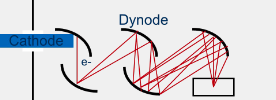
what does a detector do and how does it work
Record and convert electronic signal to instrumental signal
photomultiplier tubes for signal amp
tube contains photo-emissive cathode & several dynodes in vacuum
cathode coated w/ easily ionizable material eg. alloys of alkali metals (K, Na, Ca, Mg) w/ Sb, Bi, Ag
single beam vs double beam
single beam: sample and reference cells are read at different times
double beam: monochromatic beam split into 2 components, one beam for sample & other beam for reference
compensate fluctuations & wavelength changes from rad. source
allows continuous recording of spectra (absorbance as a function of λ)
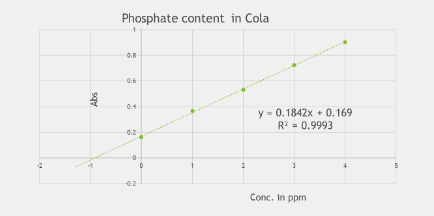
how to find conc of unk. analyte?
conc must be within linear dynamic range of the series of standard solutions prepared (at a range of appropriate conc) eg. 5 standards
standard curve method & standard addition method can be used
what is matrix interferences & 2 ways to eliminate it
when any other chem. component in sample absorb in the same wavelength as analyte of interest
blank correction
standard addition method
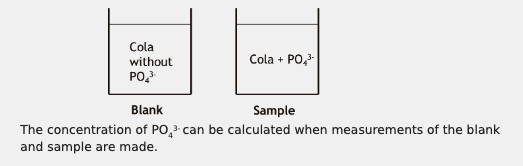
how does blank correction work (to elim. matrix interference)
measure a blank (0 conc of analyte) against the sample to find conc of analyte
note: hard to obtain a representative blank (need identical sample w/o analyte) so can cause inaccuracies in test result
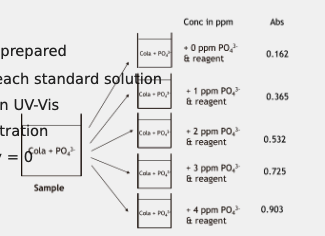
how to use standard addition method
prep series of analyte standard solutions w/ same amt of sample added into each
measure each standard on UV-Vis
plot absorbance against concentration
calculate analyte conc using y = 0