Introduction to Process Control
 Studied by 0 people
 Call Kai
 Learn
Learn Practice Test
 Spaced Repetition
 Match
Match Flashcards
 Knowt Play
1/44

There's no tags or description
Looks like no tags are added yet.
Name | Mastery | Learn | Test | Matching | Spaced |
|---|
No study sessions yet.
45 Terms
Control system
a system that provides the desired response by controlling the output
the output is controlled by varying input
In control systems, the ______ is controlled by varying _______
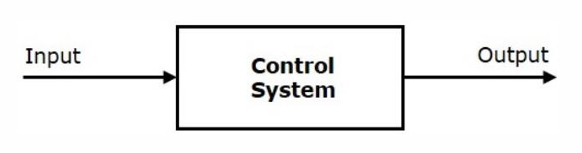
Diagram of a control system
Traffic light system
Toaster
Thermostat
Coffee maker
Washing Machine
Examples of a control system
To maintain a process at a desired, constant operating condition (temperature, pressure, composition, etc.) in the face of disturbances
To force it to follow a desired trajectory with time
What are the objectives of a control system?
ELSCC
Encounter a process
Learn how it behaves
Specify how you wish to control it
Choose an appropriate equipment
Check if applying control has improved things
Process of a Control system
Error = [Set point value] – [Measurement signal of controlled variable]
Generalized Process Control system equation
MCF
measurement (often several)
control strategy (embedded in a controller)
final element for implementing the control action
Elements of a Control system
a valve, heater or other variable input
The final element is usually __________________
Measurements
A wide range of on-line measuring devices (sensors) exists in the process industries, the most common being those for flow rate, pressure, liquid level, temperature, pH, and other selective measures of chemical composition.
Classical PID (proportional-integral-derivative)
______________________ controllers still dominate feedback strategy in industrial applications.
p - signal to the final control element
ps - nominal value
e - error signal
What do these symbols represent:
p
ps
e
Final Element
The control action signal calculated by the controller is sent to the final control element, a device which implements the change of a suitable input to the system.
Flow rate
The variable input as the final element is usually this
controlled variable
the process variable that we want to maintain at a particular value
set point
the desired value of the controlled variable
disturbances
any process variables that can cause the controlled variable to change. variables that we have no control over
manipulated variable
Process variable that is adjusted to bring the controlled variable back to the set point
disturbance rejection
set point tracking
Common Attributes of Control Systems
disturbance rejection
The ability to maintain the process variable at its desired value in spite of disturbances that might be experienced
set point tracking
The ability to move the process variable from one setting to a new desired setting
Continuous time vs. Discrete-time Control Systems
SISO vs. MIMO Control Systems
Open Loop vs. Closed Loop Control Systems
Feedback vs. Feedforward Control Systems
Classifications of Control Systems
type of the signal
Control systems can be classified as continuous time control systems and discrete time control systems based on the ________________ used
continuous
In continuous time control systems, all the signals are ______________ in time
continuous in time
In discrete time control systems, there exists one or more ________ time signals
Number of inputs and outputs
Control systems can be classified as SISO control systems and MIMO control systems based on the ________________ used
SISO (Single Input Single Output) Control systems
They have one input and one output
MIMO (Multiple Input Multiple Output) Control systems
They have more than one input and more than one output
Open loop
—the measured value of the controlled variable is not fed back to the controller (input), i.e. the control action is independent of the desired output
Closed loop
the measured value of the controlled variable is fed back to the controller, i.e. the control action is dependent on the desired output
Sprinkler system
Example of an open-loop system
Feedback control
using information about the deviation of the system from its desired state (error signal) to control the system information (to adjust the process inputs)
Feedforward control
measure disturbances and compensate for them before the controlled variable deviates from the set point, i.e. information about expected conditions are used to adjust the process inputs
Oven
Example of feedback control
egg toss
Example of feedforward control
EMSAM
● Enhanced process safety
● Meeting ever-stricter product quality specifications
● Satisfying environmental constraints
● Address operational constraints
● More efficient use of raw materials and energy and increase profitability
Advantages of Process Control
MTSC
Measurements
inadequate/inaccurate measurements
Time
long time delays in either the process or the measurements
System
varying or nonlinear nature of the system
Control loops
interaction of several quasi-independent control loops
Problems in Process Control
Suppress influence of external disturbances
Ensure stability of a chemical process
Optimize performance of a chemical process
Issues to be Addressed in Process Control
digitally calculated control signals
Replacement of analogue controllers by ________________________, even for conventional PID controllers
Conventional controller
the controller parameters are often adjusted ("tuned") on-line, although prior knowledge of the system to be controlled will provide some guidance in their choice
Model-based controller
makes use of a model of the process (either fundamentally-based or empirical) to decide on the appropriate control strategy to be implemented to achieve the desired objective. In principle, these can lead to improved performance, but, in practice, their performance may be strongly dependent on the accuracy of the model used.