GCSE Engineering
 Call Kai
 Learn
Learn Practice Test
 Spaced Repetition
 Match
Match Flashcards
 Knowt Play
1/40

There's no tags or description
Looks like no tags are added yet.
Name | Mastery | Learn | Test | Matching | Spaced | Call with Kai | Chat |
|---|
No analytics yet
Send a link to your students to track their progress
41 Terms
Light emitting diode (LED)

A type of diode that glows when electricity is passed through it. Only allows current to pass in one direction.
Light dependent resistor

Changes resistance in a current according to the level of light. Resistance increases as light levels increase.
Fixed resistor

Resists and directs the flow of electricity. Divides voltage between different parts of the circuit.
Motor

Converts electrical energy into kinetic energy.
Lamp
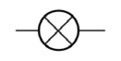
Converts electrical energy into light energy. Can also be used to determine whether electricity is flowing or not.
Switch
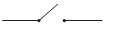
Allows and breaks the flow of current in a circuit.
Cell
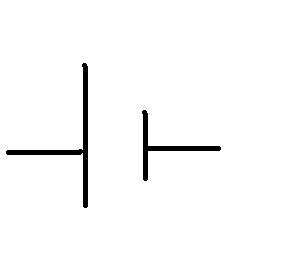
Provides power to a circuit. Converts chemical energy into electrical energy.
Battery
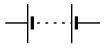
Two or more of a cell (only then can it be called a battery).
Capacitor
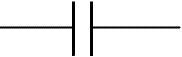
Stores electrical charge.
Variable resistor
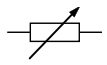
The resistance can be changed continually, such as in a volume knob.
Thermistor
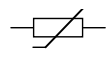
Resistance changes depending on the temperature. As resistance decreases, temperature increases.
Fuse

Can cut the circuit by melting if the circuit's current has reached an unsafe level.
Diode

Two-terminal electronic component that acts as a one-way valve for electrical current.
Push to make switch

When the button is pushed, the current either breaks or allows the flow of current through the circuit.
Integrated circuit
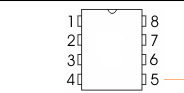
Self-contained circuits with many separate components (e.g. resistors, diodes, capacitors etc.) etched into a tiny silicon chip.
- take up very little space, allowing products to be made much smaller
- cost much less to make than the individual components needed to do the same function.
1. A multilayered PCB is populated with components using a 'Pick and Place' robot.
2. It is flipped and components are added to the back side.
3. Components are stuck on using adhesive.
4. The PCB is dropped into a solder bath.
Describe the process of surface mount technology. (4 marks)
It increases wear resistance as it is less easy to scratch, making it more durable.
Explain why steel is hardened. (2 marks)
1. It makes them harder to shape or form.
2. Makes it brittle.
Give two disadvantages of hardening steel. (2 marks)
1. It is ductile so it can be drawn into long wires.
2. It has high electrical conductivity so it enables current to flow effectively.
Explain why copper is a suitable material for use in electrical products. (2 marks)
1. Can be reheated and reshaped multiple times, although the quality reduces each time it is reheated.
2. More easily recycled (than thermoset plastics).
Give two advantages of using thermoplastics. (2 marks)
Not heat resistant, as it can melt or soften when heated.
Give one disadvantage of using thermoplastics. (1 mark)
1. HIPS (high impact polystyrene)
2. Acrylic
3. Polypropylene
Name three different thermoplastics. (3 marks)
1. They retain their form even in extreme heat.
2. They are usually strong (NOT tough)
3. Good insulators
Give three advantages of using thermoset plastics. (3 marks)
1. It can only be heated and shaped once.
2. As a result it is more difficult to recycle.
3. Also brittle.
Give three disadvantages of using thermoset plastics. (3 marks)
1. Urea formaldehyde.
2. Polyester resin.
3. Silicone
Name three different thermoset plastics. (3 marks)
1. Clean material using a steel bush to get rid of any grease.
2. Release gas into the machine.
3. Press down on the lever to release the filler electrode. Remove any excess using pliers.
4. Using the ground electrode, clamp it onto the surface where your metal is to form a circuit.
5. Clamp the two metals you need to weld together onto the surface.
6. Begin welding by holding the torch against the areas that need welding.
THERMAL JOINING: Describe the process of MIG Welding. (6 marks)
Tin is used as the joining component.
1. Tin the bare wires.
2. Place the component on the PCB so they are in contact.
3. Apply heat using the soldering iron.
4. Heat the solder onto the component and PCB and remove it so it solidifies.
THERMAL JOINING: Describe how to join electrical components together using solder. (4 marks)
1. Clean material using flux to help the fillet metal flow in between the two material.
2. Place the base metal on the brazing hearth.
3. Hold the filler rod against the base metal, heating the filler rod only
4. Let the filler rod soften until it fills the gap completely. Let it cool.
THERMAL JOINING: What are the 4 steps in brazing? (4 marks)
a) Copper coated steel
b) Brass
c) Tin
THERMAL JOINING: Name the metal that is commonly used for:
a) the filler electrode in MIG welding
b) the filler metal in brazing
c) for soldering
1. Material is heated using a gas torch or oven.
2. It turns cherry red in colour.
3. Carbon is added.
4. It is reheated until it achieves the correct level of hardness.
5. Rapidly cooled before testing.
Describe the process of case hardening low carbon steel. (5 marks)
1. Granules of plastic are fed into a hopper.
2. A heater heats up the tube and when it reaches a high temperature a screw thread starts turning.
3. A motor turns the screw thread, driving the molten plastic forward.
4. A highly accurate split steel mould is used and the plastic is injected into it at a high pressure.
5. The thermoplastic cools and once set, the item is ejected from the mould.
Describe the process of injection moulding. (5 marks)
1. Place the mould into position.
2. Load the sheet of material onto the machine (so it is above the mould).
3. Apply heat so the material softens.
4. Raise the mould into the sheet of material until there is a dip in the material.
5. Turn on the vacuum to suck out the air.
6. Let it cool before trimming down.
Describe the process of vacuum forming. (6 marks)
HIPS
It becomes soft when heated and can be reheated and reformed if unsuccessful.
Name a suitable polymer for vacuum forming. (1 mark)
Explain why it is suitable for this process. (2 marks)
1. It gives a greater degree of accuracy.
2. Designs can be digitally stored and edited later.
3. It is easier to rectify mistakes.
Explain the benefits to an engineer of using CAD instead of drawing by hand. (3 marks)
1. Quicker to produce.
2. More consistent (all turn out the same).
3. More accurate.
List three benefits of using moulds to manufacture products. (3 marks)
Advantages:
1. High degree of accuracy.
2. Repeatable for mass or batch production.
3. Easier to make complex circuits.
Disadvantages:
1. High setup cost.
2. A lot of training required in operating the software/machinery.
3. High maintenance costs.
List three advantages of using CNC Routing to manufacture a PCB. (3 marks)
Give three disadvantages. (3 marks)
1. A process where metals are heated to a specific temperature,
2. And then allowed to cool SLOWLY.
3. Process allows molecules to realign,
4. Making the material more soft, ductile, and malleable.
5. This makes the material easier to shape and machine.
What is annealing?
1. A process where an electric charge and specific chemicals are used to oxidise the surface of a metal,
2. And then dyed a different colour.
What is anodising?
1. To make the surface resistant to corrosion.
2. To make the surface of the metal harder.
Why are metals anodised?
Study of measurements of the Human body.
What are anthropometrics? (1 mark)
When iron is coated in zinc to make it resistant to corrosion.
What is galvanising? (1 mark)