Systems test 2026
 Call Kai
 Learn
Learn Practice Test
 Spaced Repetition
 Match
Match Flashcards
 Knowt Play
1/40

There's no tags or description
Looks like no tags are added yet.
Name | Mastery | Learn | Test | Matching | Spaced | Call with Kai | Chat |
|---|
No analytics yet
Send a link to your students to track their progress
41 Terms
Sensory receptors
Chemoreceptors
Mechanoreceptors
Photoreceptors
Thermoreceptors
Pain Receptors
Chemoreceptors
Detects chemical from different molecules and changes them into electrical signals
found in mouth (taste), nose (smell), internal organ (sensitive to the composition of body fluids)
There is a strong link between emotions and smells. a certain smell can trigger very strong emotions or memories
Mechanoreceptors
Sensitive to touch, pressure, sound and motion and are located in the skin, the inner ear and muscles.
Photoreceptors
Sensitive to light and are located in the back of the eyes (retina)
rods and cones assist to see
rods
these sensors function in low light and are found at the edges of the retina.
also aid in peripheral vision
cones
work best in bright light, detecting fine details and colour
3 types of cones- blue, red, green
Colour blindness is caused when any of these cones aren’t present
Thermorecpetors
Sensitive to temperature changes (hot or cold)
Brain interprets these messages as hot or cold
INTERNAL- hypothalamus
EXTERNAL- skin
Pain receptors
Sensitive to chemical changes in damaged cells and are located throughout the body, but most are located in the skin
Send nervous impulses to sensory neurons which carry the nerve impulses to the CNS
CNS
Stands for central nervous system
The control centre of the body
made up of brain and spinal cord
mostly consists of interneurons
receives all incoming messages from the environment and processes them
PNS
peripheral nervous system
made up of all the nerves outside the CNS
Carries information from the body to the CNS and back again to the body
Two parts- autonomic and somatic
autonomic part of PNS
controls involuntary actions like
heartbeat, respiration, digestion and perspiration
Has two parts
para systematic- rest and digest, slows down heart rate
sympathetic- fight or flight, speeds up heart rate
somatic part of PNS
controls voluntary muscle movements
walking, waving
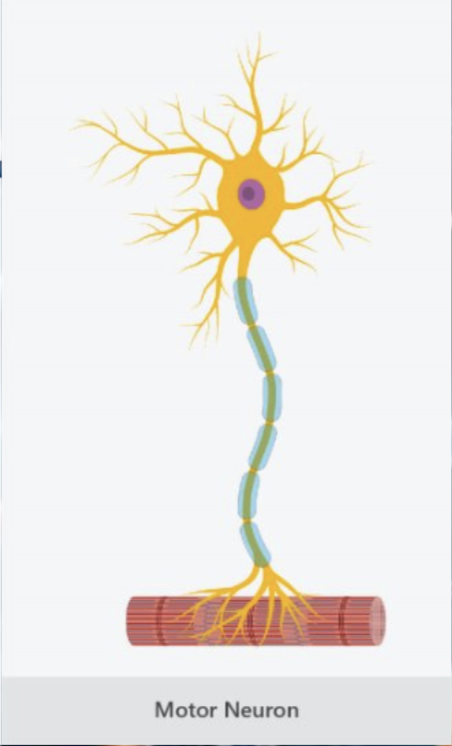
draw and label a neuron

cell body
aka soma
contains nucleus
dendrites
very sensitive tree like extension attached to the cell body
receive nerve impulses (messages) from other nerve cells - the nerve signal is carried towards the cell body
axon
thin fiber like extension from the cell body with branching at the end
can be up to 1 m long
sends nerve impulses to other nerve cells - the nerve signal is carried AWAY from the cell body, towards the synaptic terminals
myelin sheath
fatty layer that covers axon
helps speed up the nerve impulse
protects the nerve impulses from crossing wires with other nerves
synaptic terminal
aka axon terminal, motor end plate
a bulb at the end of axon
where the electrical message is passed across a synapse (small gap between neurons) to the next nerve cell dendrite
synapse
gap between neurons
electrical nerve impules cannot travel across a synapse
messenger molecules neurotransmitters carry a chemical signal
neurotransmitter
released from the axon on one side of the synapse and carries impulses to the dendrite on the other side of the synapse
process how electrical signals are passed down the axon to axon terminal
step 1. when the electrical impulse (signal) recheas the axon terminal, the vesicles release neurotransmitters into the synapse

step 2. the nerve impulse travels across the synapse via the neurotransmitters and is picked up by the dendrites on the next neuron

step 3. the chemical stimulates the nerve impulse then continues travelling down the dendrite of the next neuron towards the cell body

Sensory neurons
detect changes in the environment via receptors and send messages to the brain
pain, receptors in the back, to the brain and spinal cord (CNS)

Motor neurons
carry signals from the CNS to effectors
Effectors are muscle cells or glands that put messages into effect
inter neuron neuron
nerve cells that connect sensory neurons to motor neurons
link sensory neurons directly to motor neurons
they are the most common neuron
only make connections with other neurons

reflexes
fast, simple, automatic and involuntary responses to stimuli, always causing the same motor response
involves the peripheral nerves and often the spinal cord but not the brain
helps protect body from damage
sequence of reflexes
Stimulus- change in environment (senses)
Sensory receptor- detects change (eyes, skin, etc)
Sensory neuron- carries signal from receptors to spinal cord
Interneuron- relays the signal from sensory neuron to motor neuron
Motor neuron- carries signal to effector cells
Effector cells- cause responses (muscle cells)
draw and label reflex arc

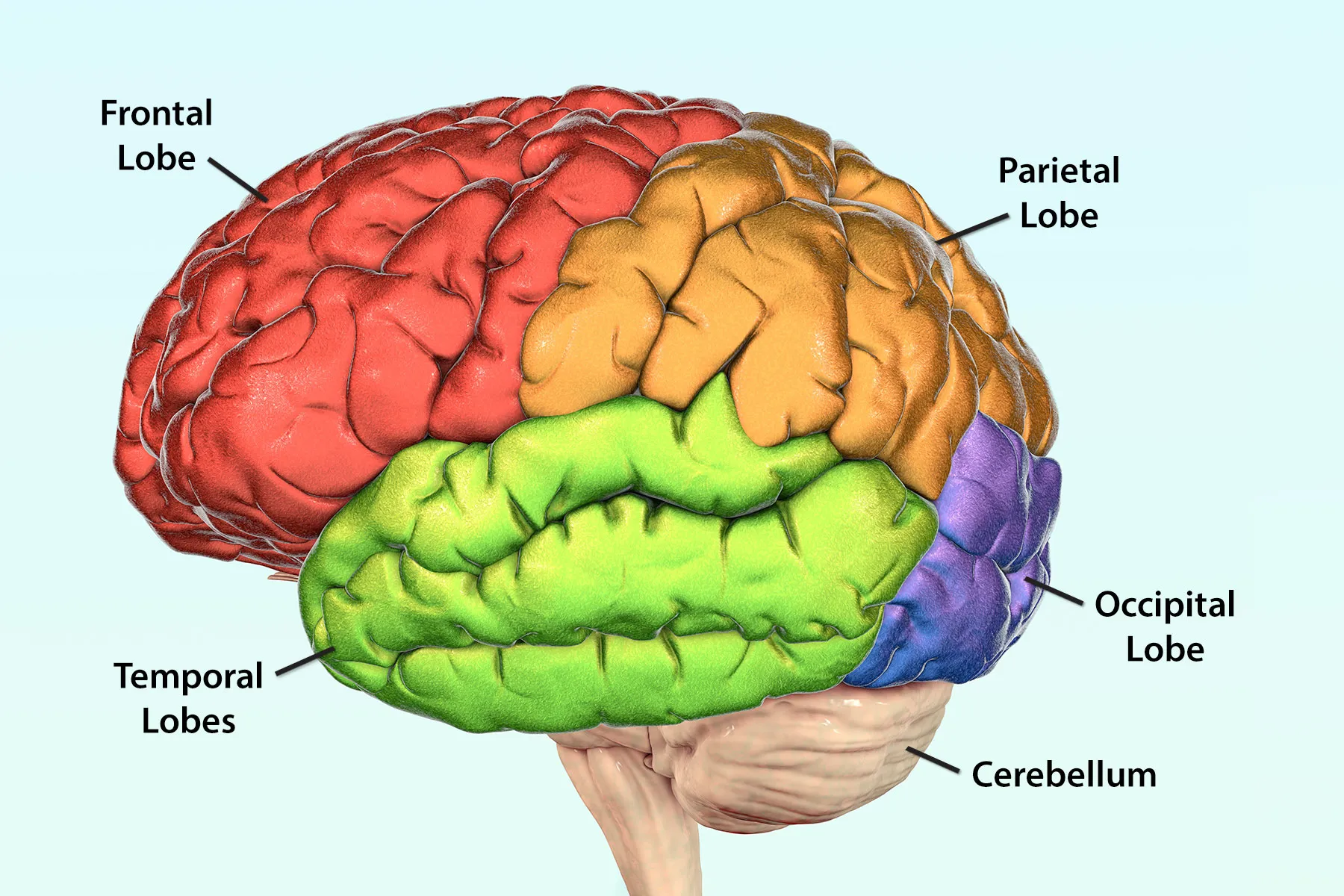
cerebrum
majority part of brain
controls conscious thoughts (senses, thinking and memory) and voluntary movements
receive sensory messages from your body
4 lobes of cerebrum
frontal lobe
occipital lobe
parietal lobe
temporal lobe
draw the brain
frontal lobe
front of the brain
controls
personality
the way you communicate
movement of the body
concentration
planning and problem solving
meaning of words
emotional reactions
smell
occipital lobe
Back of the brain
Visual processing and gets its information from the eyes
Different areas of the occipital lobe look after spatial perception, colour and movement
parietal lobe
Senses and interpreting things
visual interpretation
processing of language and maths
responsible for spatial awareness and navigational skills
body awareness
touch and pressure
taste
temporal lobe
either side of the brain
closely linked to hearing
processes what your hear into things that makes sense, including language
responsible for object recognition (including face
where long-term memories are processed)
emotions
smell
thalamus
inside the brain
process sensory info and sends it to cortex
cerebellum
underneath the brain near the occipital lobe
responsible for motor control (movements) of motor coordination, balance and posture
brainstem (parts)
Goes to form the spinal cord
medulla- controls automatic functions like breathing and digestion
pons- assists in automatic functions
midbrain- receives and processes sensory info like movement
spinal cord
the information superhighway to the nerves, connecting the brain to the rest of the body
it runs from the brain to the bottom of your spine and is protected by the spinal column
brain & spinal cord is CNS
white matter
Parts of the CNS that contain neurons covered in myelin
these areas are where the axons are connecting different parts of gery matter to each other
grey matter
parts with mainly cell bodies, dendrites and synaptic terminals (pinkish grey)
this is where thinking occurs
the hemispheres
the left sie of the brain controls the RIGHT side of the body
the right side of the brain controls the LEFT side of the body