AP Human Geography Unit 2
 Call Kai
 Learn
Learn Practice Test
 Spaced Repetition
 Match
Match Flashcards
1/51

There's no tags or description
Looks like no tags are added yet.
Name | Mastery | Learn | Test | Matching | Spaced | Call with Kai | Chat |
|---|
No analytics yet
Send a link to your students to track their progress
52 Terms
Demography
The composition of a particular human population
Overpopulation
When a population exceeds the countries carrying capacity
Carrying Capacity
The amount of people the country can support
Census
Data from a certain area
Population Distribution
Human factors influence population distribution. Such as preferences to natural features. People like to live near family/ friends as well as safe areas, economic opportunities, transportation, similar cultural groups and economic opportunities.
Population Density
The amount of people per land area
Arithmetic Density
Calculated by dividing a region's population by its total land area.
Physiological Density
Calculated by dividing a region's population by its amount of arable land
Agricultural Density
Calculated by dividing a region's population of farmers by its amount of arable land
Crude Birth Rate
the total number of births per 1000 people
Crude Death Rate
the total number of deaths per 1000 people over the age of 1
Natural Increase Rate
the percentage of population grows in a year
Population Growth Rate
Measurement which combines both natural increase and net migration to calculate the overall growth of a country's population
Zero Population Growth
A condition of demographic balance where the number of people in a specified population neither grows nor declines
Total Fertility Rates
the average number of children a woman is likely to have within her lifetime
Doubling Time
the amount of time it takes for the population of a region to double
Demographic Transition Model
DTM Stage 1: High Stationary
CBR: High
CDR: High
RNI: Stable, no increase
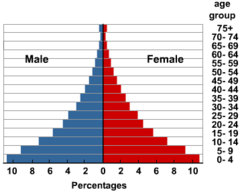
DTM Stage 2: Early Expanding
CBR: Rapidly falling
CDR: High
RNI: Rapid Increase
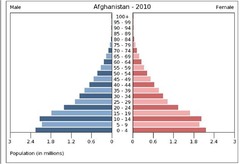
DTM Stage 3: Late Expanding
CBR: Slowly falling
CDR: Falling
RNI: Less rapid increase, still increasing

DTM Stage 4: Low Stationary
CBR: Low
CDR: Low
RNI: Stable, no growth, slow increase

DTM Stage 5: Declining Growth
CBR: Low
CDR: Very low
RNI: Negative, slow decline
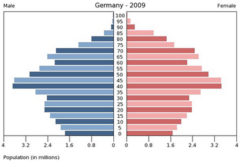
Sex Ratio
The ratio of males to female
Maternal Mortality Rate
total number of maternal deaths due to pregnancy or childbirth per 1000 successful pregnancies/births
Infant Mortality Rate
Total number of infant deaths per 1000 live births
Dependency Ratio
Comparison of potential workforce to the "dependent population"
Elderly Support Ratio
The number of people age 15-64 per one older person aged 65 or older
Epidemiology
The study of disease and other factors related to health
ETM Stage 1
Pestilence and Famine (High CDR)
ETM Stage 2
stage of receding pandemics
ETM Stage 3
degenerative and human created diseases
ETM Stage 4
Delayed Degenerative and Emerging Infections
ETM Stage 5
Reemergence of infectious and parasitic disease
Pronatalist
Policies that are designed to encourage large family sizes to increase the rate of population growth
Antinatalist
Anti-natalist policies are policies that are designed to discourage large family sizes in order to slow the rate of population growth
Intervening obstacles
an environmental, political, cultural, or economic feature that hinders or stops a migrant's journey to their intended destination
Over population
occurs when a region's population exceeds the local availability of essential resources needed to maintain a decent standard of living
Intervening opportunities
closer, alternative destinations that divert migrants or travelers from reaching their original, more distant goal
Forced migration
the permanent movement of people compelled by external cultural, political, or environmental factors rather than personal choice
Voluntary migration
the permanent or semi-permanent movement of people undertaken by choice, typically driven by economic, social, or environmental opportunities rather than direct coercion or survival threats.
Internally displaced persons
people forced to flee their homes due to conflict, violence, human rights abuses, or natural disasters who remain in their country's bourdiers
Refugees
an individual forced to flee their home country due to war, political persecution, or violence, and who crosses an international border to seek safe
Asylum seekers
a forced migrant who has crossed an international border to escape persecution, war, or violence and has formally requested legal protection in another country, but is still waiting for an official decision on their status
Transnational migration
a type of voluntary movement where individuals cross international borders while maintaining active social, economic, cultural, and political ties to their home country
Transhumance migration
the seasonal, cyclical movement of herders and their livestock between fixed summer pastures (usually high up in the mountains) and winter pastures (usually down in the lowland valleys)
Internal migration
the permanent or semi-permanent movement of people within the borders of a single country
Chain migration
a type of voluntary migration where people move to a specific destination because family members, friends, or community members from their home area have already settled there
Step migration
a long-distance relocation that happens in a series of shorter, staged stops rather than all at once.
Guest worker
legal, temporary voluntary migrants who move to a more developed country (MDC) from a less developed country (LDC) to fill specific labor shortages
Rural to urban migration
he voluntary internal movement of people from rural farming or countryside areas into cities
Urban to suburban migration
the movement of people and businesses from central city cores to the lower-density residential and commercial areas on the outskirts of a metropolitan region
Brain drain
the large-scale voluntary emigration of highly skilled, educated, and trained professionals from one country or region to another