Chapter 5: Digestive System
 Call Kai
 Learn
Learn Practice Test
 Spaced Repetition
 Match
Match Flashcards
 Knowt Play
1/180

There's no tags or description
Looks like no tags are added yet.
Name | Mastery | Learn | Test | Matching | Spaced | Call with Kai | Chat |
|---|
No analytics yet
Send a link to your students to track their progress
181 Terms
main functions of digestive or GI system
ingestion
digestion
absorption
elimination
ingestion
food material taken into mouth
digestion
food is broken down, mechanically and chemically, as it travels through the GI tract
digestive enzymes
aid breakdown of complex nutrients
proteins → amino acids
sugars → glucose
fats → fatty acids or triglycerides
absorption
digestive food passes into the bloodstream through lining cells of the small intestine
nutrients travel to all cells of the body
cells burn nutrients to release the energy stored in food
elimination
body eliminated solid waste materials that cannot be absorbed into bloodstream
the large intestine concentrates feces
wastes pass out of the body through the anus
the GI tracts begins with the
oral cavity
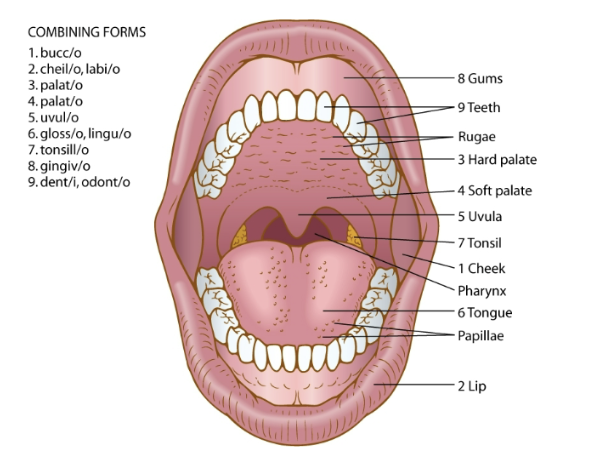
major parts of the oral cavity
cheeks
lips
hard palate
soft palate
rugae
uvula
tongue
papillae
tonsils
gums
teeth
pharynx
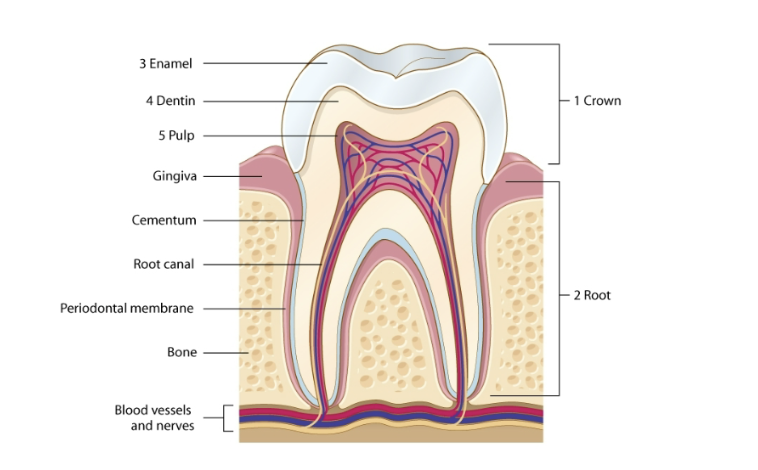
anatomical terms of a tooth
crown
root
enamel
dentin
pulp
gingiva
cementum
root canal
periodontal membrane
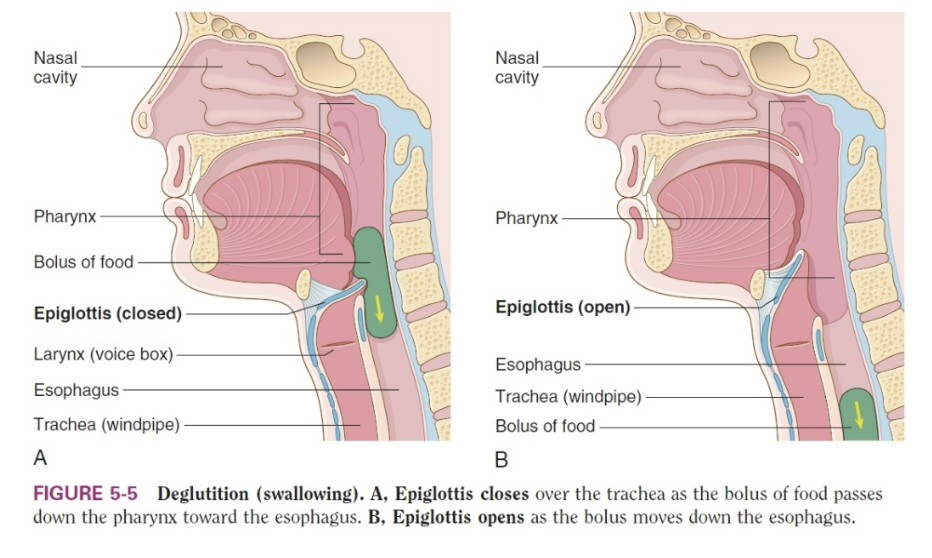
deglutition
swallowing
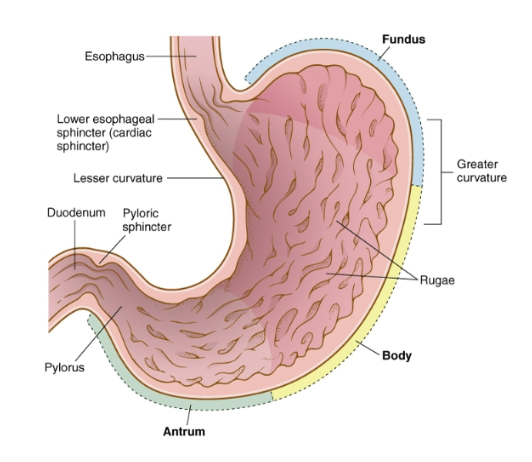
parts of the stomach
lower esophageal sphincter
fundus
greater curvature
lesser curvature
rugae
body
antrum
pylorus
pyloric sphincter
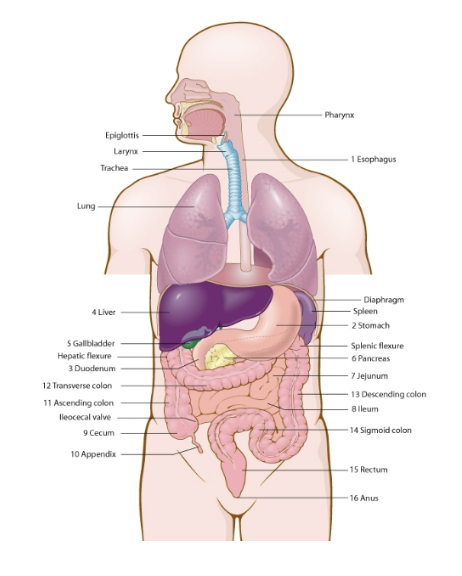
anatomical terms of digestive tract
esophagus
stomach
duodenum
liver
gallbladder
pancreas
jejunum
ileum
cecum
appendix
ascending colon
transverse colon
descending colon
sigmoid colon
rectum
anus
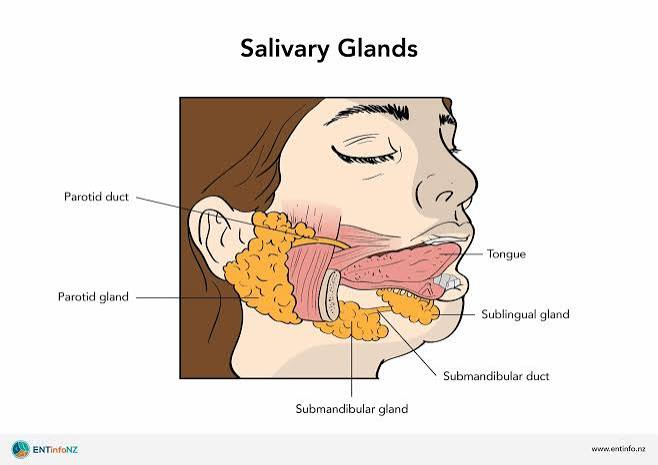
salivary glands
parotid gland
sublingual gland
submandibular gland
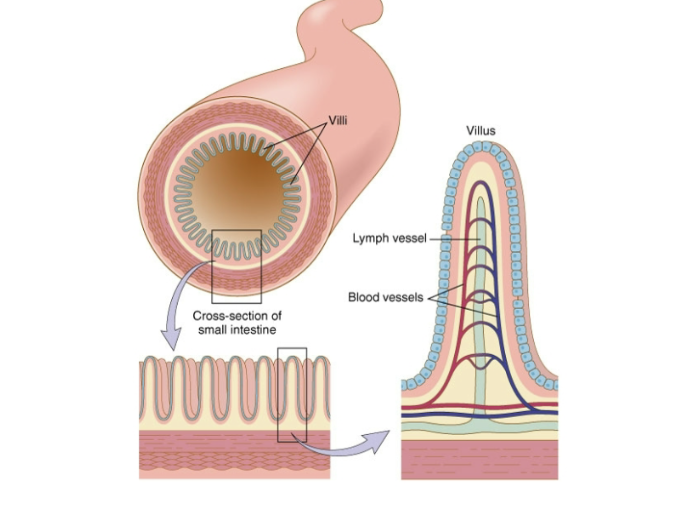
small intestine
break down food, absorb vital nutrients and extract water
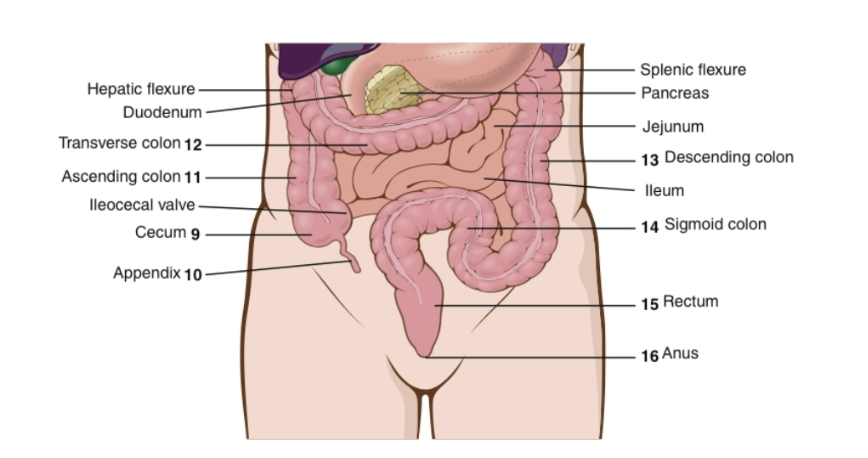
parts of large intestine
cecum
appendix
ascending colon
transverse colon
descending colon
sigmoid colon
rectum
anus
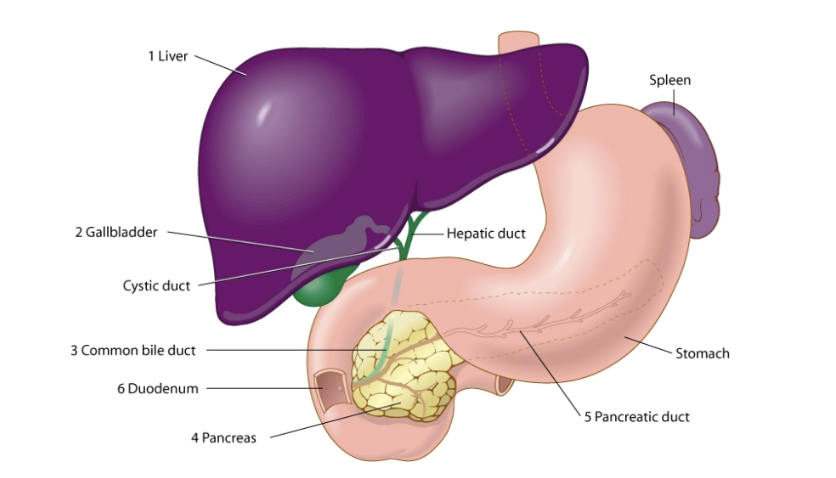
parts of liver, gallbladder, and pancreas
liver
gallbladder
common bile duct
pancreas pancreatic duct
duodenum
liver
produces bile
helps maintain normal blood glucose levels
manufactures blood proteins necessary for clotting
releases bilirubin, a pigment in bile
removes toxins and poisons from the blood
if bilirubin cannot leave the body and remain the in the bloodstream
hyperbilirubinemia
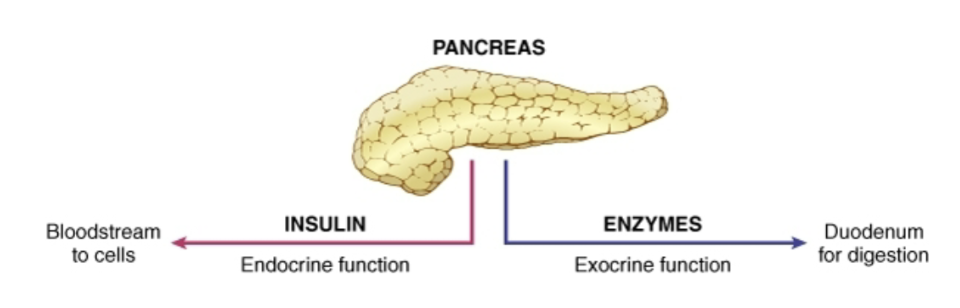
the pancreas and its functions
endocrine function: insulin goes into bloodstream to cells
exocrine function: secrete enzymes to duodenum for digestion
endocrine glands
ductless and secrete hormones directly into bloodstream
exocrine glands
secrete substances like sweat, digestive enzymes, mucus through ducts onto bodies or into internal cavities
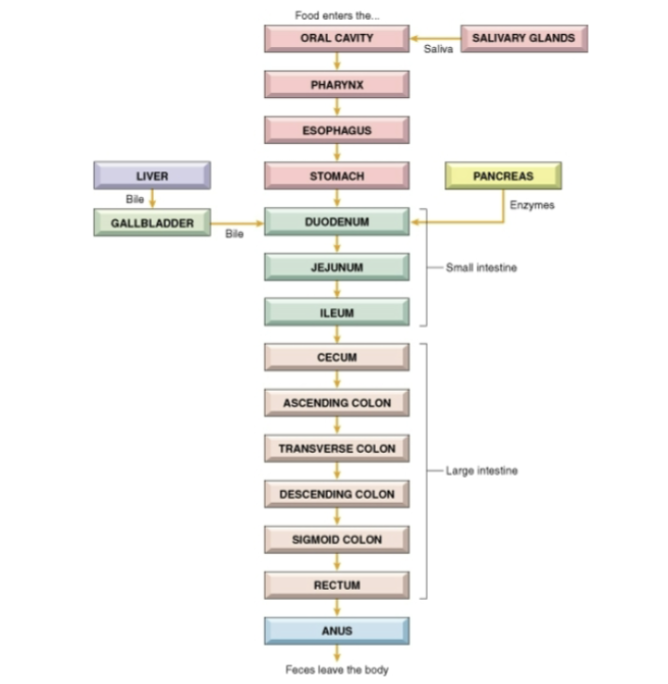
food pathway through GI tract
food enter through oral cavity and exits through anus
first part of the large intestine
cecum
absorption
passage of materials through the walls of the small intestine into the bloodstream
amino acids
small building blocks of proteins; released when proteins are digested
amylase
enzyme secreted by the pancreas and salivary glands to digest starch
anus
terminal end or opening the digestive tract to the outside of the body
appendix
blind pouch hanging from the cecum
bile
digestive juice made in liver and stored in gallbladder
breaks up large fat globules
composed of bile pigments, cholesterol, and bile salts
bilirubin
pigment released by the liver in bile
bowel
intestine
canine teeth
pointed, dog-like teeth nect to incisors; also called cuspids or eyeteeth
cecum
first part of LI
colon
consists of ascending, transverse, descending, and sigmoid segments
common bile duct
carries bile from the liver and gallbladder to the duodenum
defecation
elimination of feces from the digestive tract through the anus
dentin
primary material found in teeth; covered by enamel in the crown and a protective layer of cementum in the root
duodenum
first part of small intestine; measures 12 inches long
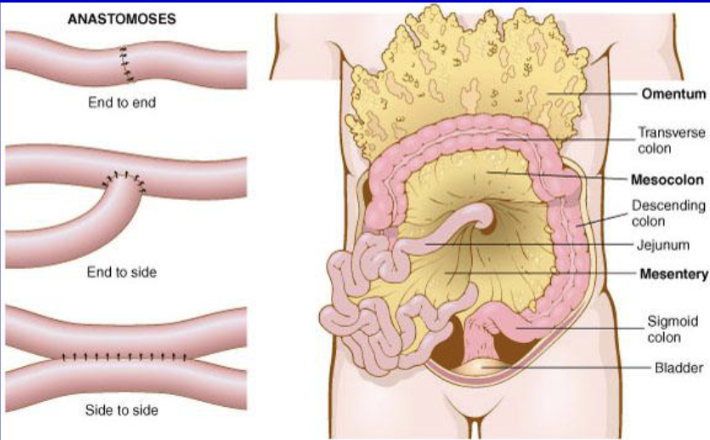
three types of anastomoses
end to end
end to side
side to side
anastomosis
surgical, natural, or pathological connection between two tubular structures in the body, such as blood vessels or loops of intestine
elimination
act of removal of materials from the body
emulsification
physical process of breaking up large fat globules into smaller globules
enamels
hard, outermost layer of a tooth
enzyme
chemical that speeds up reactions between substances; enzyme names end in -ayse
esophagus
tube connecting throat to the stomach
fatty acids
substances produced when fats are digested; category of lipids
feces
solid wastes, stool
gallbladder
small sac under the liver; stores bile
glucose
simple sugar
glycogen
starch; glucose is stored in the form of glycogen in liver cells
hydrochloric acid
substance produced in the stomach; necessary for digestion of food
ileum
third part of small intestine
incisor
one of four front teeth in dental arch
insulin
hormone produced by endocrine cells of the pancreas
transports sugar from the blood into cells and stimulates glycogen formation by the liver
jejunum
second part of small intestine
lipase
pancreatic enzyme needed to digest fats
liver
large organ in RUQ of abdomen
secretes bile
stores sugar, iron, and vitamins
produces blood proteins
destroys worn out RBCs
filters out toxins
normal adult liver weighs about 2.5 to 3 pounds
lower esophageal sphincter (LES)
ring of muscles between esophagus and stomach
mastication
chewing
molar teeth
sixth, seventh, and eighth teeth from middle on either side of dental arch
palate
roof of mouth
pancreas
organ behind the stomach, produces insulin and enzymes
papillae, papilla
small projections on tongue
parotid gland
salivary gland within the cheek, just anterior to the ear
peristalsis
rhythmic contractions of tubular organs
pharynx
throat, common passageway for food from the mouth and for air from the nose
portal vein
large vein bringing blood to the liver from the intestines
protease
enzyme that digests protein
pulp
soft tissue within a tooth, containing nerves and blood vessels
pyloric sphincter
ring of muscle at the end of the stomach, near the duodenum; opens when a wave of peristalsis passes over it
pylorus
distal region of the stomach, opening to the duodenum
rectum
last section of the large intestine, connecting end of colon and anus
rugae
ridges on hard palate and wall of stomach
saliva
digestive juice produced by salivary glands; contains enzyme amylase
sigmoid colon
fourth and last, S-shaped segment of the colon, just before the rectum; empties into the rectum
sphincter
circular ring of muscle that constricts a passage or closes a natural opening
stomach
muscular organ that receives food from the esophagus
triglycerides
fat molecules composed of three parts of fatty acids and one part glycerol; subgroup of lipids
uvula
soft tissue hanging from the middle of the soft palate
villi, villus
microscopic projection in the wall of the small intestine that absorb nutrients into the bloodstream
an/o
anus
append/o, appendic/o
appendix
bucc/o
cheek
cec/o
cecum
celi/o
belly, abdomen
cheil/o
lip
cholecyst/o
gallbladder
choledoch/o
common bile duct
col/o
colon
colon/o
colon
dent/i
tooth
duoden/o
duodenum
enter/o
intestines, usually small intestine
esophag/o
esophagus
faci/o
face
gastr/o
stomach
gingiv/o
gums
gloss/o
tongue
hepat/o
liver
ile/o
ileum