pathophys Final
 Call Kai
 Learn
Learn Practice Test
 Spaced Repetition
 Match
Match Flashcards
 Knowt Play
1/192

There's no tags or description
Looks like no tags are added yet.
Name | Mastery | Learn | Test | Matching | Spaced | Call with Kai | Chat |
|---|
No analytics yet
Send a link to your students to track their progress
193 Terms
The GI tract is called
alimentary canal
GI tract pathway
mouth, pharynx, esophagus, stomach, small intestine, large intestine, rectum, anus
ascessory organs
teeth, toungue, salivary glands, liver, pancreas
alimentary canal histology layers
serosa (outer)
muscularis externa
submucosa
mucosa
mini brain of the alimentary cancal
enteric nervous system
enteric nervous system two parts
short
long
short enteric nervous system
only enteric neurons,
sensory neurons (stretch, osmolarity, PH)
to interneurons
to motor neurons which are the effectors to muscles and glands
long enteric nervous system
involves the CNS, sympathetic and parasympathetic nervous system
what do sensory neurons in the enteric nervous system do
the sense stretch, osmolarity, and PH
what mouth do
ingestion, mechanical breakdown, initiates propulsion, starts digestion
what begins breakdown of food
mastication
what saliva do
cleans mouth, lubricates food, dissolves food chemicals, compacts food into bolus, contains amylase (breakdown of food), protection against microorganisms
salvation happens at
thought of food
salivary glands contain
amylase, IgA, water, K+, Na+
what are effectors in the enteric nervous system
smooth muscle, glands, and endocrine cells of GI tract
peristalis and segmentation
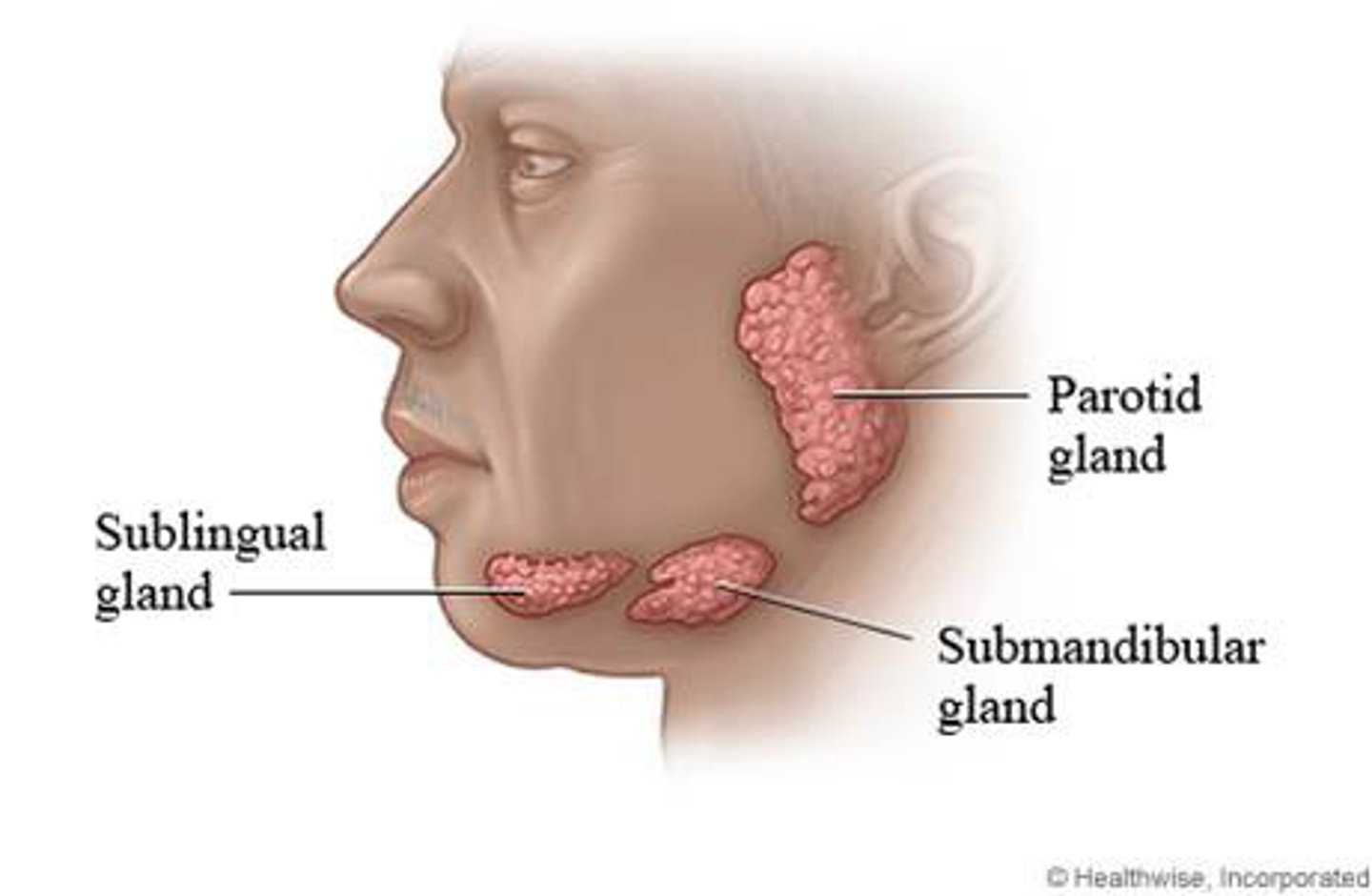
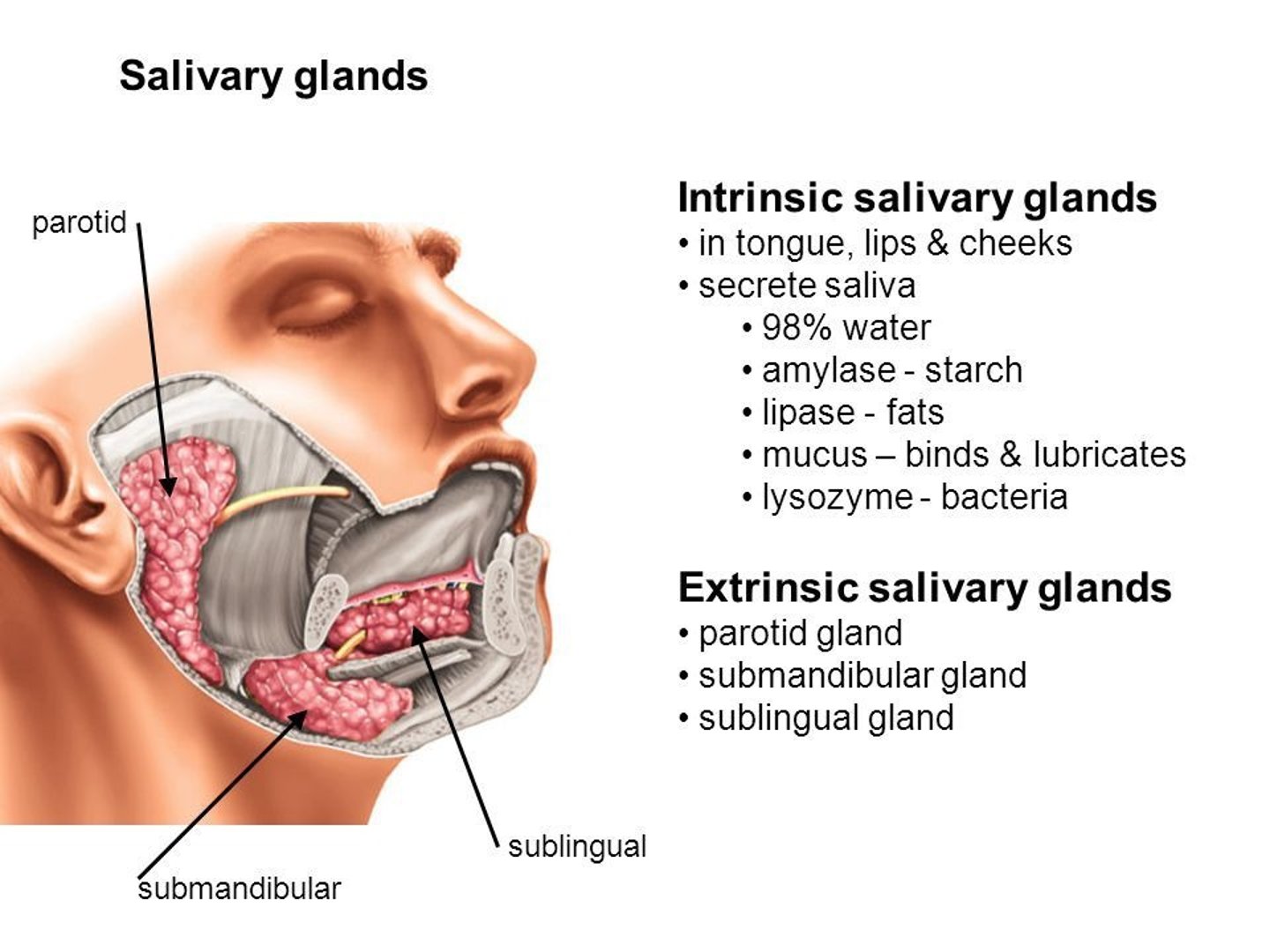
extrinsic salavary glands
outside oral cavity
parotid
submandibular
sublingual
intrinsic salivary glands
buccal, labial, palatine
where does food go after mouth
pharynx
two types of pharynx
oropharynx and laryngopharynx
what closes the larynx
epiglottis
what is esophagus lined with
stratified squamous epithelium
what do esophageal glands secrete
mucus to aid in bolus movement
Deglutition
swallowing
two phases of deglutition
buccal phase, pharyngeal-esophageal phase
buccal phase of deglutition is (voluntary/involuntary)
voluntary, occurs in the mouth, food is formed into a bolus, the bolus is forced into the pharynx by the tongue
ends when food leaves mouth
the pharyngeal-esophageal phase of deglutition is (voluntary/involuntary)
Involuntary - primarily vagus nerve
Control center in the medulla and lower pons
food passes from oropharynx to stomach in less than 8 seconds
buccal phase drawing steps
mandible depresses or opens, tongue elevates, downward slope (pushes food), UES is closed during buccal phase
pharyngeal phase drawing steps
to prevent bolus from going to the larynx the epiglottis covers, to prevent bolus from going to nasopharynx, the uvula and soft palate rises
the UES is open during pharyngeal phase
Esophogial phase drawing steps
UES closes to prevent upwards movement
peristalis propels food down the esophagus
gastoesophageal sphincter opening
LES/ gastroesphageal sphincter opens
what is peristalsis controlled by
pacesetter cells which surround lumen of the GI tract, trigger APs in smooth muscle
what is the lower esophageal sphincter called
gastroesophageal sphincter
what is bolus converted to in stomach
chyme
what is mostly digested in the stomach
large proteins
what break down the proteins in stomach
HCL and pepsin, pepsin digests proteins into smaller proteins
what is also digested in the stomach (not the top one the other two)
lipids by lingual lipase, and carbs (SOME digestion)
what can be absorbed in the stomach
little absorption but lipid soluble compounds can be absorbed like aspirin and alc
how do peristaltic contractions move in stomach
move from fundus to pylorus, with vigorous peristalsis occuring in pyloris
how does chyme move into small intesting
pyloric sphincter opens, chyme moves into the duodenum, when pyloric sphincter closes, it creates rethopulsion
mucous cells in stomach
produce bicarbonate-rich alkaline mucus to protect the stomach from acidity and stress
parietal cells of stomach
secrete HCl (increase acidity and digests proteins)and intrinsic factor (B12 absorbtion)
chief cells of stomach
secrete pepsinogen which will be converted to pepsin for protein digestion.
G cells of stomach
- release gastrin --> stimulate parietal cells --> release HCl
how does stomach protect itself
mucous coat, tight junctions, epithelial cell replacement
gastritis
inflammation of the stomach lining if anything breaches mucusal barrier, ulcers, H pylori
3 phases of gastric secretion
cephalic, gastric, intestinal
cephalic phase produces __ of gastric juices
1/3
when does cephalic phase begin
before bolus enters stomach, sight and smell of food stimulate the vagus nerve to start cephalic phase
gastric phase produces ___ of gastric juices
2/3
What does the cephalic phase do?
prepares your body for digestion, vagus nerve innervates parietal cells to extrete HCL and intrinstic factor, cheif cell to secrete pepsinogen,
What is the role of the gastric phase?
Processing the ingested materials by acid and enzymes.
When does the gastric phase begin?
when food enters the stomach
what happens during gastric phase
stretch further stimulates vagus nerve
G cells--> gastrin--->stimulates parietal cells to secrete more HCL and intrinsic factor---> produce gastric juices
What is the role of the intestinal phase?
control the rate of gastric emptying, largely inhibitory
first step of intestinal phase
peptones (smaller protein fragnments) stimulate intestinal G cells, produces gastrin, act on parietal cells, more gastric juices
second step of intestinal phase
fatty acids and glucose enter the small intestine and stimulate S cells ---> secretin (inhibit stomach g cells)
and also stimulate I cells---> CCK (inhibit parietal cells) so there are mo more gastric juices
what do fatty acids and glucose stimulate in the small intestine
S and I cells
S--> secretin
I---> CCK
what inhibits G cells from prodcuing gastrin in the gastric phase
sympathetic nervous system and high acidity
how much absorbption occurs in the small intestine
90%
duodenum main function
neutralize acidic chyme and begin absorbtion
where is most nutrient absorbtion
jejunum
sugars, amino acids, fatty acids,
what increases absorbtion in the jejunum
plicae circulares (muscular flaps) and villi
where does the illeum end
ileocecal valve
what does the illeum absorb
what was missed by jejunum, B12, bile salts, sugars
enterocytes
small intestine cells, absorb nutrients and electrolytes in the vili, secree intestinal juives to absorb nutrients in chyme
goblet cells
in small intestine, secret mucus
paneth cells
in small intestine, secrete defensins and lysozomes, which kill certain bacteria
enteroendocrine cells
I and S, secrete secretin and CCK
what movement happens in small intestine
peristalsis and segmentation
what does segmentation do
mix chyme with bile and enzymes moving both directions, nonajacent segments of small intestine contract
peristalsis in small intestine is driven by what
the enteric nervous system (myenteric plexus) PNS and distension
migrating motility complex
sweeps intestines clean between meals, peristalsis that occurs in the fast state, begins 90-120 minutes after meal, stops when food is eaten, pulls everything into large intestine
what is migrating motility complex stimulated by
motilin---> released in small intestin in between meals
large intestine divided into
ascending colon, transverse colon, descending colon, sigmoid colon, rectum
what is large intestine separated by
flexures, making feces
what happens in large intestine
very luttle digestin, form and propel feces, absorb water and electrolytes left over, prodice and absorb vitamains
how are vitamains K, biotin, and pantothenic acid created
by bacteria in large intesting
what is gut bacteria creating
vitaman k, biotin, pantothenic acid
vitamin k
blood clotting, used by liver to synthasize prothrombin
Biotin
glucose metabolism, and fat synthesis
Pantothenic Acid (B5)
a component of co-enzyme A, which is fatty acid synthesis and other metabolic processes
intestinal bacteria
ferment indigestible carbs, break down fiber, could be linked with dementia, provide protective and metabolic functions like vitamins K and B
ascending colon
processes chyme delivered by the ileum, some vitamins produced here
how to ascending colon move chyme
peristalsis
what does ascending colon absorb
water to solidify stool
transverse colon absorbing?
water and electrolyte absorbtion
what does transverse colon do
stores solid feces
how does feces move through transverse colon
haustration
haustration
involuntary, sluggish contraction of the haustra, back and forth movement but slowly,
what is power propulsion
in transverse colon, used to move feces over longer distance, pushing it out faster, used when recieving lots of chyme
descending colon function
prepares waste for eliimination, channel between transverse and sigmoid
sigmoid colon function
store fecal wastes(reservoir) until they are ready to leave the body
final reabsorption of vitamins and mineral and water, pushes feces into the rectum
rectum function
stores and expels feces, temporary storage, movement of fecal matter into the rectum triggers urge to defecate
anus
anal orfice, anal canal connects anus and rectum, releases feces
defecation reflex first step
stretch receptors detect movement of feces into the rectum
defecation reflex second step
parasympathetic motor fibers stimulate contraction of rectum and relaxation of internal anal sphincter
defecation reflex third step
voluntary motor neurons open external anal sphincter allowing feces to pass
blood in stool and urgency
large intestine
liver function
energy metabolism (maintains blood glucose and blood lipids)
produces proteins
drug metabolism
storage of fat sikuble vitamins and iron
produces bile
carb energy metabolism liver
glucose convert to glycogen, stored in liver
fructose and galactose also taken up by liver
gluconeogenesis