APAH Chunk 1, 2 and 3
 Call Kai
 Learn
Learn Practice Test
 Spaced Repetition
 Match
Match Flashcards
 Knowt Play
1/37

There's no tags or description
Looks like no tags are added yet.
Name | Mastery | Learn | Test | Matching | Spaced | Call with Kai | Chat |
|---|
No analytics yet
Send a link to your students to track their progress
38 Terms

A giant megalithic stone city built on artificial islands to keep the king's rivals close and centralized.
Nan Madol (#213)
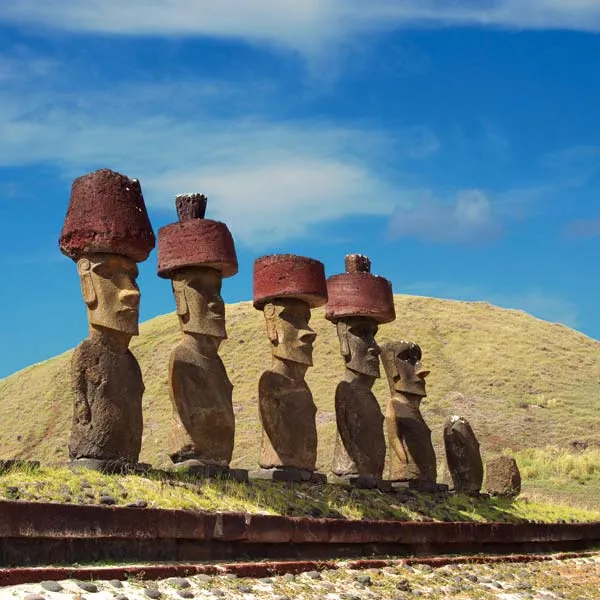
Giant Easter Island volcanic stone statues that represent powerful deified ancestors who look out over the island.
Moai on platform (Ahu) (#214)
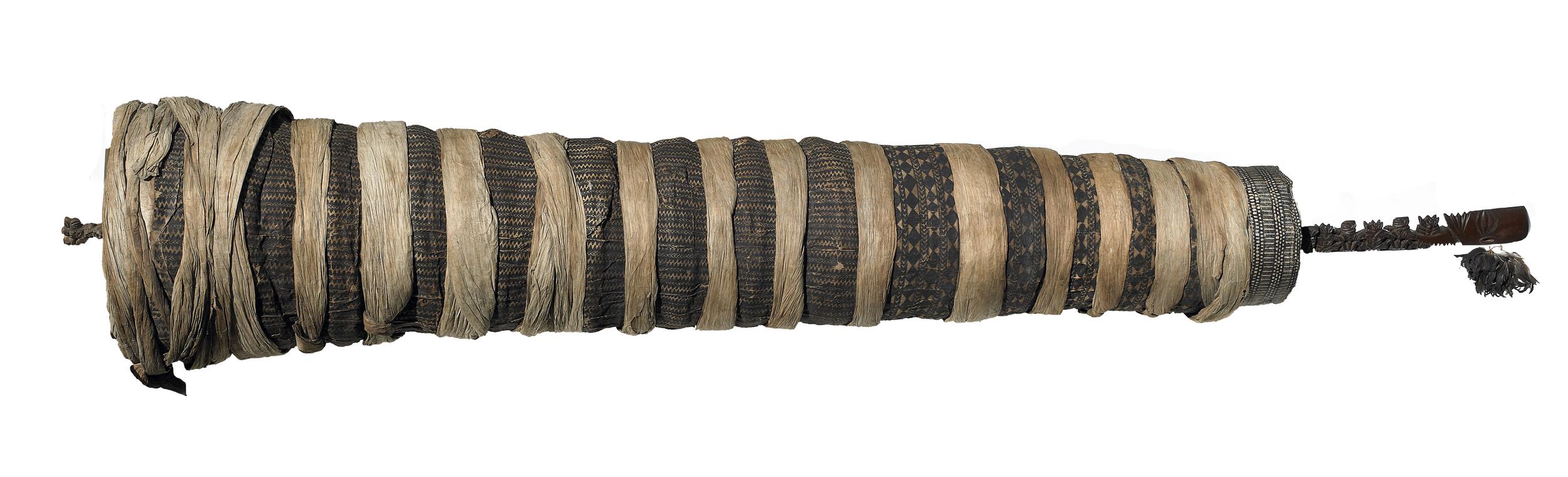
A wooden core carved with ancestral figures, wrapped in barkcloth to keep its intense spiritual power safe inside.
Staff God (#216)

A minimalist, smooth wooden statue from Nukuoro with clean geometric lines, used in annual religious harvest rituals.
Female Deity (#217)

A turtle-shell mask from the Torres Strait that combines a human face with a bird, used in dances to connect with ancestors.
Buk (Mask) (#218)

Single-use wooden funeral sculptures made to guide souls to the dead, which are destroyed or sold immediately after the ritual ends.
Malagan Display and Mask (#222)

Pounded mulberry tree bark painted with intricate geometric spirals by women.
Hiapo / Barkcloth (#218 in your packet)
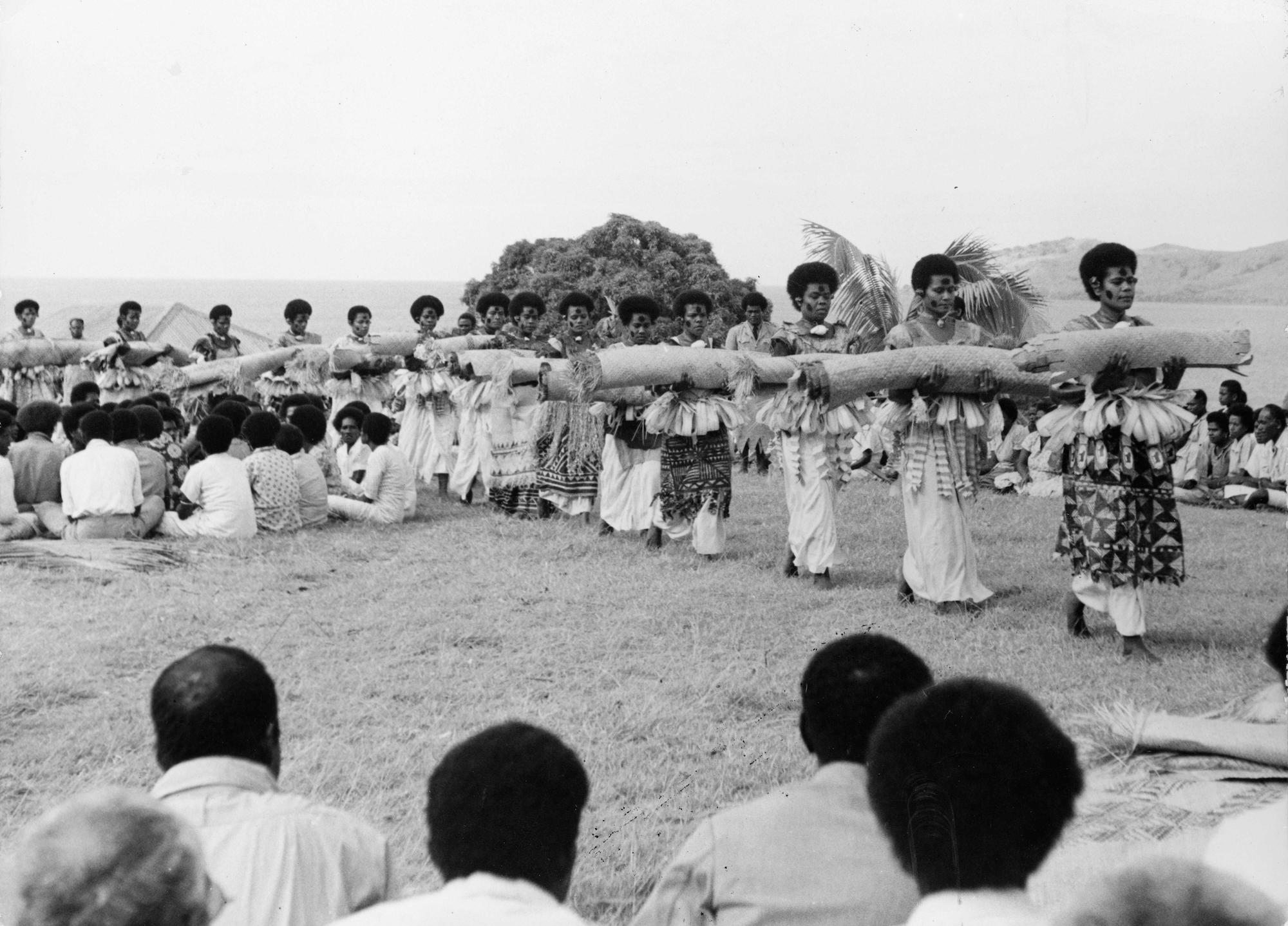
A massive performance where women gifted simple, woven textile mats to celebrate Queen Elizabeth II's visit.
Presentation of Fijian Mats (#222 in your packet)

A vibrant red and yellow cape made from 60,000 rare bird feathers to protect a Hawaiian chief's spiritual energy.
'Ahu 'ula / Feather Cape (#215)
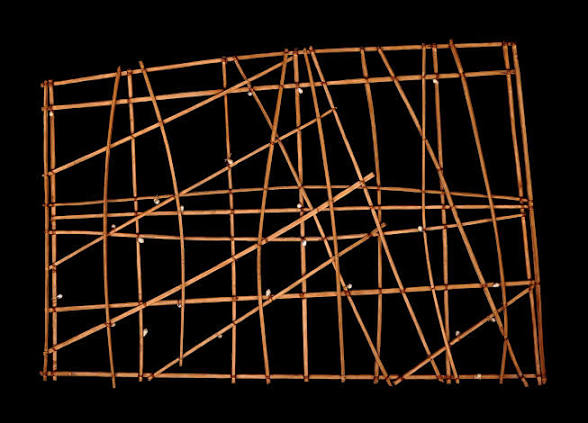
A grid of sticks and shells used on land to memorize ocean wave patterns before sailing.
Navigation Chart / Stick Chart (#221)

Ancient pottery shard with stamped geometric patterns tracking the early migration paths of the Lapita people.
Terra Cotta Fragment (#11)

A highly polished, prehistoric pestle carved into the shape of an anteater, used for sacred rituals.
Ambum Stone (#9)
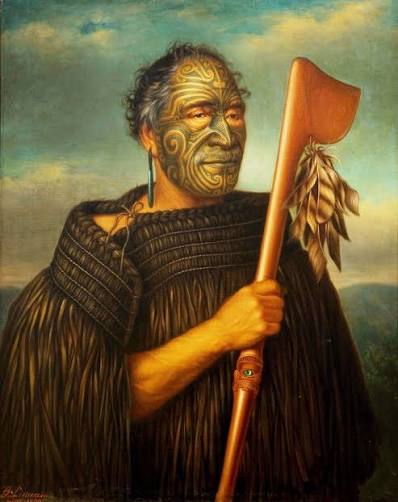
A European-style oil painting of a Māori chief, using his facial tattoos (moko) and feathered cloak to broadcast his supreme status.
Tamati Waka Nene (#220)

A massive, abstract painting by a self-taught Indigenous Australian artist capturing the vibrant green landscape after rain.
Earth's Creation (#234)

A modern bull sculpture made entirely of flattened corned-beef tins, critiquing how Western trade destroyed local health and environments.
Pisupo Lua Afe (#237)

Auguste Rodin chose to show city heroes looking miserable, sad, and fearful instead of brave and victorious. He also wanted it placed on the ground level so everyday people could look them in the eyes, rather than high up on a pedestal.
The Burghers of Calais (#119)

Maya Lin broke the rules of traditional war monuments by creating a minimalist, reflective black granite wall cutting into the earth instead of a heroic statue of soldiers. Visitors see their own reflections mixed with the names of the fallen.
Vietnam Veterans Memorial (#225)
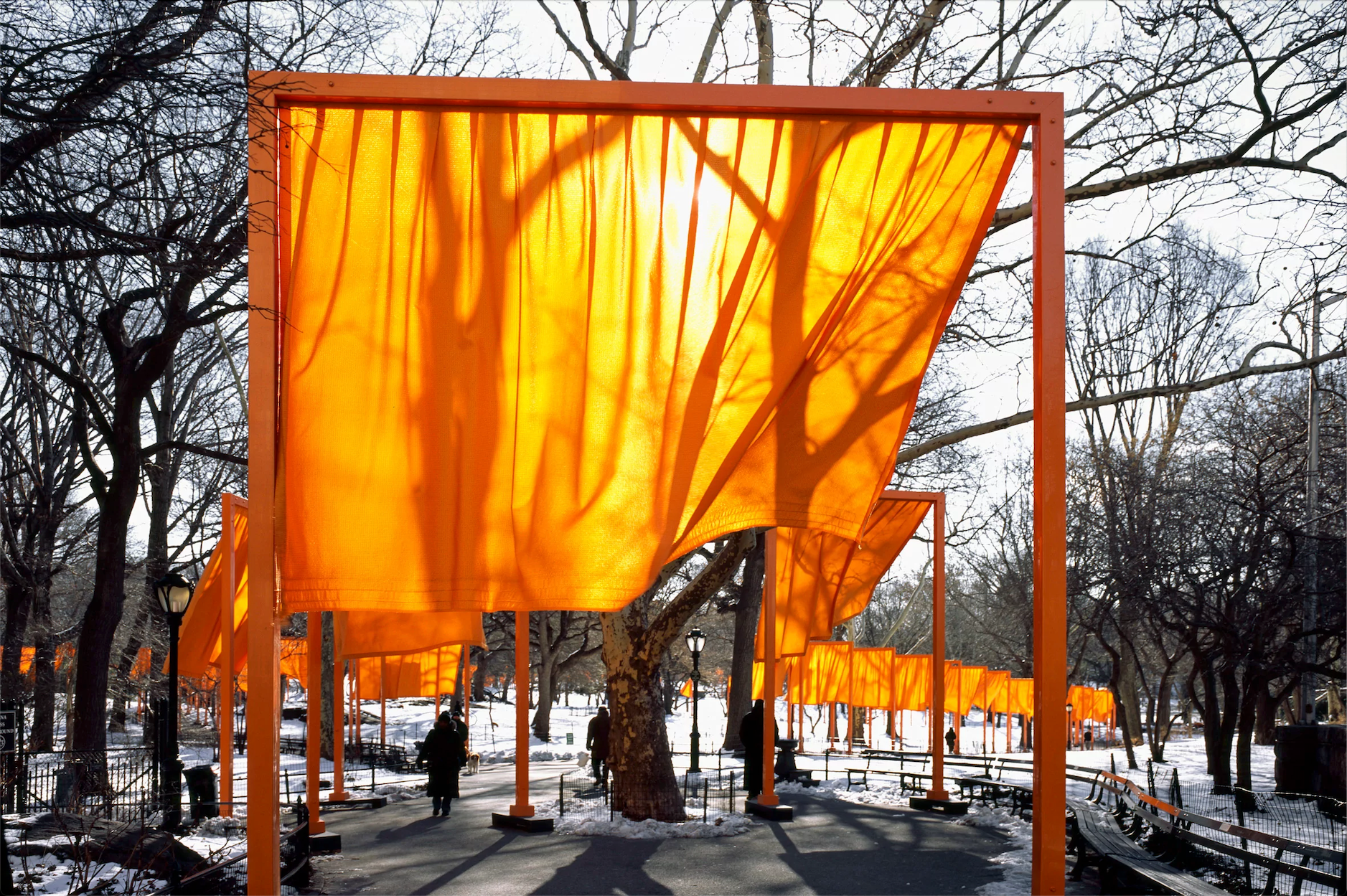
Christo and Jeanne-Claude installed thousands of saffron-colored fabric gates through Central Park in New York City for just two weeks. It forced people to look at a familiar public park in a completely new, vibrant way.
The Gates (#224)

Robert Smithson used trucks and tractors to build a 1,500-foot coil of black basalt rocks stretching into Utah’s Great Salt Lake. It is designed to change over time as the water levels rise, fall, and leave white salt crusts behind (dealing with time and nature).
Spiral Jetty (#240)

Originally staged uninvited at the 1966 Venice Biennale, Kusama placed 1,500 mass-produced, reflective stainless-steel spheres in a public lawn.
The Big Idea: It critiques the commercialization of art. She physically sold the balls to visitors for $2 each alongside a sign reading “Your Narcissism for Sale,” forcing people to look at their own vanity reflected in the spheres.
Narcissus Garden (#207 - Yayoi Kusama)

A large-scale, double-sided video installation inside a dark room. On one side, a man is slowly consumed by rising fire; on the other side, the same man is engulfed by downpouring water.
The Big Idea: This is an immersive sensory public experience dealing with spiritual rebirth, destruction, and time. It uses high-speed film to slow a 10-second event into an intense, meditative minutes-long performance.
The Crossing (#239 - Bill Viola)
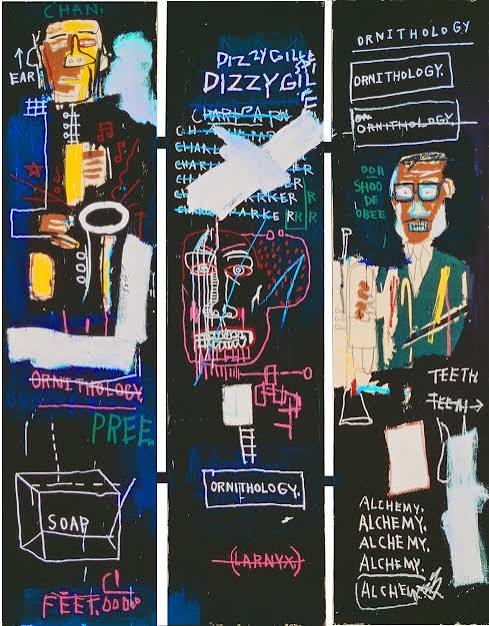
A massive neo-expressionist triptych (three-panel painting) mounted in a public format. It pays homage to legendary Black jazz musicians like Charlie Parker and Dizzy Gillespie.
The Big Idea: This is an immersive sensory public experience dealing with spiritual rebirth, destruction, and time. It uses high speed film to slow a 10-second event into an intense, meditative minutes-long performance.
Horn Players (#226 - Jean-Michel Basquiat)

A massive granitic stone trading city complex. The large conical tower resembles a royal grain bin, symbolizing the king's generosity, wealth, and control over resources.
Conical Tower and Circular Wall of Great Zimbabwe (#167)

A monumental mud-brick (adobe) structure in Mali. The protruding wooden beams (toron) serve as permanent scaffolding for the annual community ritual of replastering the mosque's walls to protect it from rain.
Great Mosque of Djenné (#168)

A cast brass relief plaque from Benin. It utilizes hieratic scale (making the king or Oba the largest figure) to visually broadcast his absolute military and political power over his subjects.
Wall Plaque from Oba’s Palace (#169)

The sacred soul of the Ashanti nation in Ghana. It is believed to have fallen from heaven, contains the soul of the people (Sunsum), and is so sacred that it is never allowed to touch the ground or be sat upon—it sits on its own personal chair.
Sika dwa kofi (Golden Stool) (#170)

A stylized wooden portrait figure of a Kuba ruler. It serves as a literal historical record of his reign, marked by a unique personal emblem (ibol) carved at the base (for this king, a drum).
Ndop (Portrait Figure of King Mishe miShyaang maMbul) (#171)

A smooth, polished portrait mask from the Baule people honoring a specific, respected living woman. It is worn in joyful public dances to celebrate her beauty, wisdom, and moral character.
Mblo Mask (#174)

A Chokwe mask carved by men but worn to honor fertile, ancestral mothers. The white clay circles around the eyes symbolize the spiritual sight a woman gains through motherhood.
Pwo Mask (#175)

The famous Sande Society mask from Sierra Leone. This is the only mask in the curriculum worn exclusively by women. Its dark, polished surface and fat rolls under the neck represent health, ideal beauty, and fertility for young girls completing their adulthood initiations.
Bundu Mask (#175)
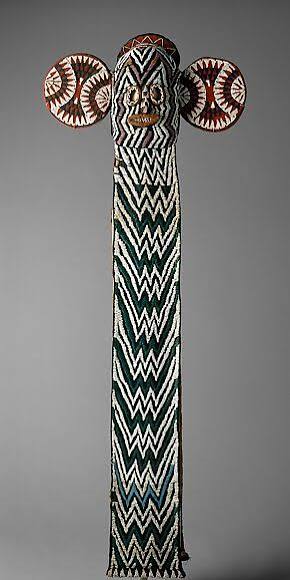
A spectacular, beaded elephant mask used by the Kuosi society in Cameroon. The elite dancers wore it in energetic, dynamic performances to celebrate the divine status of the king and enforce court laws.
Aka Elephant Mask (#178)

A personal Igbo wooden shrine featuring prominent ram horns (symbolizing strength and assertion). It honors a man's right arm—his personal achievement, hard work, and success in life.
Ikenga (Shrine Figure) (#176)

An ergonomic wooden board map embedded with beads and pins used by the Luba kingdom. Specially trained experts touch the beads to orally recite the genealogical history, migration stories, and laws of the kingdom.
Lukasa (Memory Board) (#177)

A stylized, muscular wooden figure from the Fang people designed to sit on top of boxes containing ancestral bones. Its intense, warning expression protects the sacred remains from malicious spirits and curious uninitiated individuals.
Reliquary Figure (byeri) (#179)

A powerful wooden spiritual figure from the Kongo culture. To finalize an official treaty, cure a disease, or curse a criminal, community members drive iron nails or blades directly into the wood to "wake up" the spirit inside.
Power Figure (Nkisi n’kondi) (#172)

A brilliant architectural wood carving by a master Yoruba artist. It highlights the political authority of the senior wife, who physically stands over the seated king to symbolize that women are the core spiritual foundation of Yoruba society.
Veranda Post of Enthroned King and Senior Wife (#180 - Olowe of Ise)
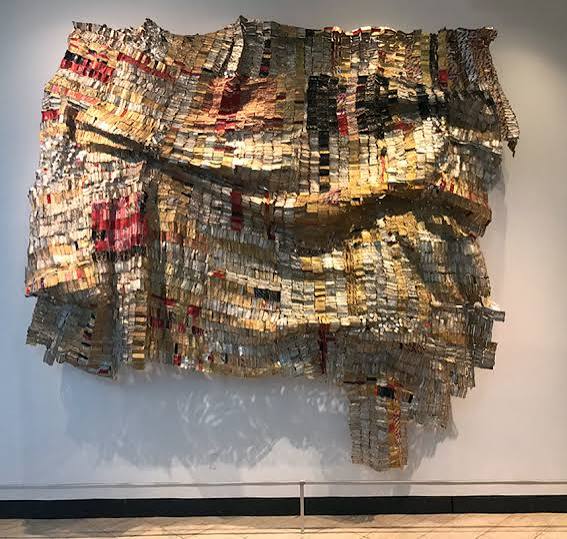
A contemporary installation hanging like a tapestry, constructed from thousands of flattened, recycled aluminum liquor bottle caps. It links modern consumer trade straight back to the historical realities of African slave trade routes.
Old Man’s Cloth (#245 - El Anatsui)

A contemporary mixed-media collage depicting a hybrid female figure reclining on a blanket. It explicitly critiques the Western exploitation, hyper-sexualization, and exoticization of Black female bodies throughout colonial history.
Preying Mantra (#247 - Wangechi Mutu)