Animal Phys Digestion
 Call Kai
 Learn
Learn Practice Test
 Spaced Repetition
 Match
Match Flashcards
 Knowt Play
1/11

There's no tags or description
Looks like no tags are added yet.
Name | Mastery | Learn | Test | Matching | Spaced | Call with Kai | Chat |
|---|
No analytics yet
Send a link to your students to track their progress
12 Terms
Food needed for
Energy (metabolic fuel, heat), Growth (raw materials used to build macromolecules, etc.), Reproduction (need energy & raw materials).
Principal body components
water = 60% of body and 60-95% of cells
Protein = ½ of organic matter
Lipids = fatty acids, fuel, cushioning, protection, energy reserve. Anhydrous lightweight.
Minerals = metalloproteins, enzymes
Nucleic acids = DNA, RNA
Carbohydrates = mostly structural, used up for metabolism as quick energy
Feeding
Animals evolve specific feeding apparatus’ and behaviors to meet their nutritional demands through specific foods suited to them. Animals make choice in food to try to balance nutrition to meet their needs (spider lipid vs carb example).
Ex. type of beak in birds. Radula in snail.
Digestive Breakdown
enzymes produced by animal breaks down food ingested.
Fermentative breakdown
heterotrophic microbes in animals help breakdown food through fermentation (symbiosis).
Absorption
transport proteins help absorb products of digestion and fermentation.
Nutrients Acquired
Nutrients delivered to cells after absorption. Triggers negative feedback to show animals nutritional requirements are being met.
Foregut fermenters - Ruminants
Foregut = esophagus and stomach.
Ruminant mammals - herbivores
heterotrophic, fermenting microbes live in non-acidic fluid of enlarged rumen and help breakdown plant material.
Rumen - first chamber of stomach where fermentation takes place
Reticulum - 2nd chamber, 2nd largest.
Omasum - 3rd chamber, leaf-like folds, allow liquid and fine particle to filter through.
Abomasum - 4th chamber “true stomach”. Secretes acid and digestive enzymes.
Pylorus - valve at bottom of stomach, controls entrance into intestines.
Intestines
Often regurgitate matter from rumen to be rechewed and swallowed.
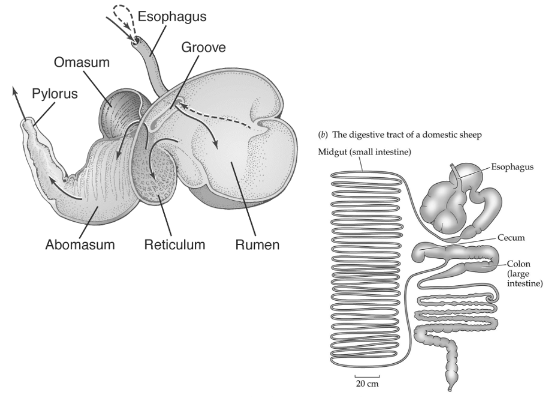
Digastric Digestion in Ruminants
Smooth muscle in rumen contract to mix food and bacteria in churning manner.
Microbial fermenters breakdown cellulose to make short chain organic acids while releasing methane and CO2. The short chain organic acids are digested by animal.
Microbial fermenters breakdown protein into organic acids and ammonia.
Microbes use ammonia (from feed breakdown and/or urea from liver of animal) and organic acids (from feed breakdown) for protein synthesis. The bacterial protein is digested by animal.
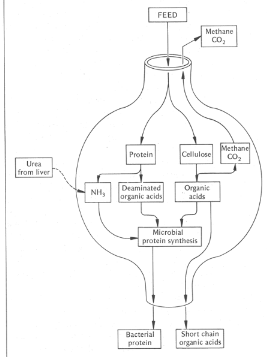
Midgut fermenters
Tilapia, carp, catfish.
Food fermented and nutrients absorbed in small intestine.
Hindgut fermenters
Rabbits, elephants, horses, rhinos, apes, rodents, some turtles and lizards, some herbivorous birds.
Occur in hindgut (large intestine and cecum). Enlarged cecum and/or enlarged colon
Large intestine does not digest and absorb nutrients, except water and some fermentation products. Carbohydrates and cellulose breakdown to produce short-chain fatty acids and diffuse through gut wall into blood wherever they occurred in gut.
Microbes plus other nutrients must be reingested through feces to absorb nutrients (vitamins & amino acids) in small intestine.