Free Radical Halogenations and Diels alder
 Call Kai
 Learn
Learn Practice Test
 Spaced Repetition
 Match
Match Flashcards
 Knowt Play
1/20

Earn XP
Description and Tags
Light and heat reactions with alkenes
Name | Mastery | Learn | Test | Matching | Spaced | Call with Kai | Chat |
|---|
No analytics yet
Send a link to your students to track their progress
21 Terms
Arrow rules (again)
Arrows point away from electrons, NEVER EVER EVER toward electrons.
Atoms that are attacked by arrows (or electrons) are called electrophiles
Atoms that are do the attacking are called nucleophiles.
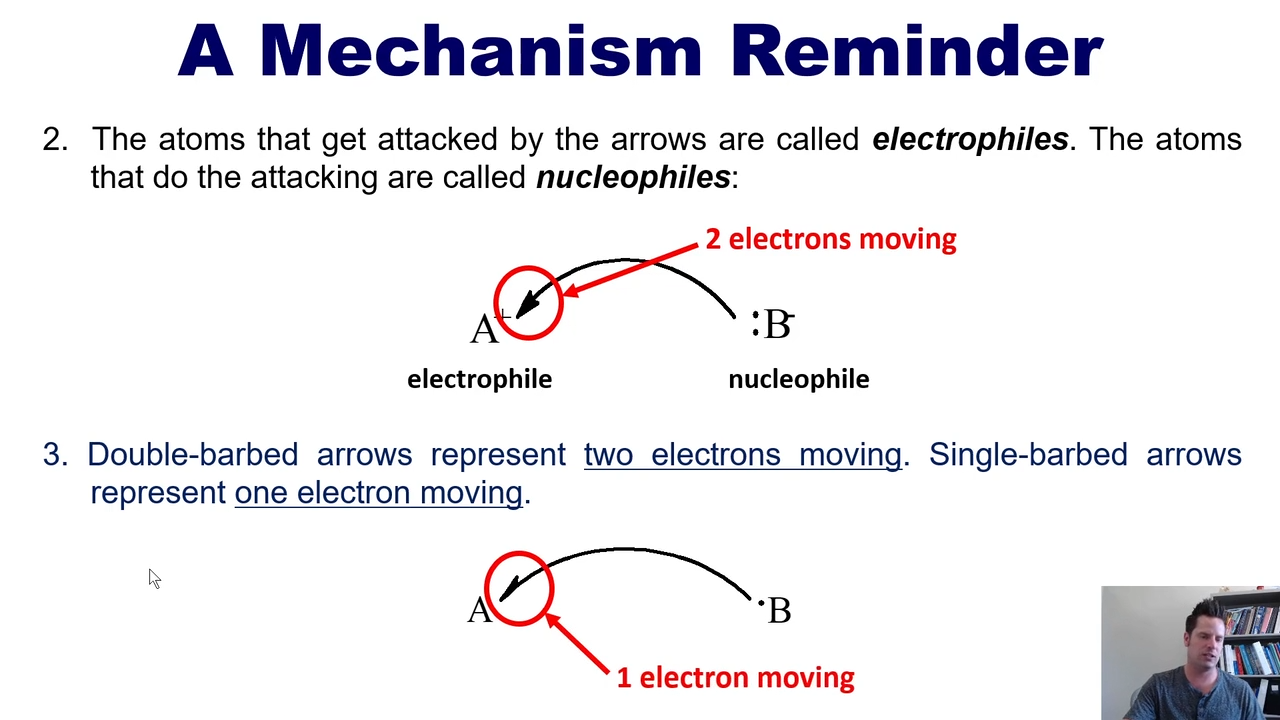
Radical Reactions
Reactions that involve only one electron.
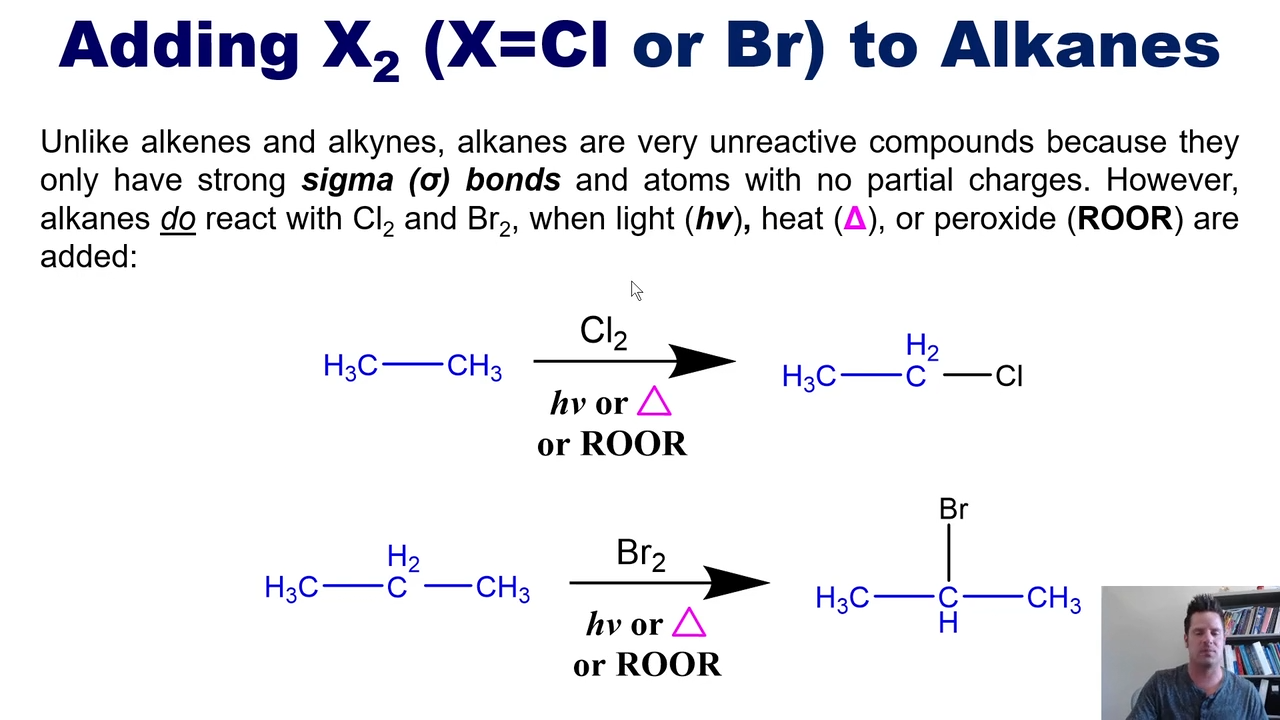
Adding X2 to Alkanes
Alkanes are generally very unreactive compounds. Since they only have sigma bonds. However, the do react with Cl2 and Br2, when heat (hv) (Δ) or ROOR (peroxide)
this is a radical reaction
Alkene Halogenation reaction mechanism
3 steps
Initation
Halogen splits into two Halide radicals
Propagation
The Halogen forms a bond with a hydrogen and forms a Carbon hydrogen radical. This radical occurs on the most substituted carbon.
Then the radical will bond with a halogen molecule to create an Alkyl Halide and a halogen radical. [this continues the propagation steps]
Termination
Ends the reaction by combining different radicals into non-radical byproduct.
![<p>3 steps</p><p><strong>Initation</strong></p><ul><li><p>Halogen splits into two Halide radicals</p></li></ul><p><strong>Propagation</strong></p><ul><li><p>The Halogen forms a bond with a hydrogen and forms a Carbon hydrogen <strong>radical. </strong>This radical occurs on the most substituted carbon. </p></li><li><p>Then the <strong>radical </strong>will bond with a halogen molecule to create an <strong>Alkyl Halide </strong>and a <strong>halogen radical. </strong>[this continues the <strong>propagation </strong>steps]</p></li></ul><p><strong>Termination</strong></p><ul><li><p>Ends the reaction by combining different radicals into non-radical byproduct. </p></li></ul><p></p>](https://assets.knowt.com/user-attachments/f8a47d27-df43-4088-9c26-2892bbd57b5f.png)
Br vs Cl (Free radical Halogenation)
Br ALWAYS ends up on the most substituted Carbon or on a resonance stabilized carbon
Cl is less selective and can give mixtures of products
Initiation steps key
An initiation step does not have radicals on the left
Needs radicals on the right.
Propagation steps key
A step with one or more radicals on both sides of the equations.
Termination steps key
Radicals on the left side of equation,
NO radicals on the right.
Do radical intermediates undergo rearrangments?
No
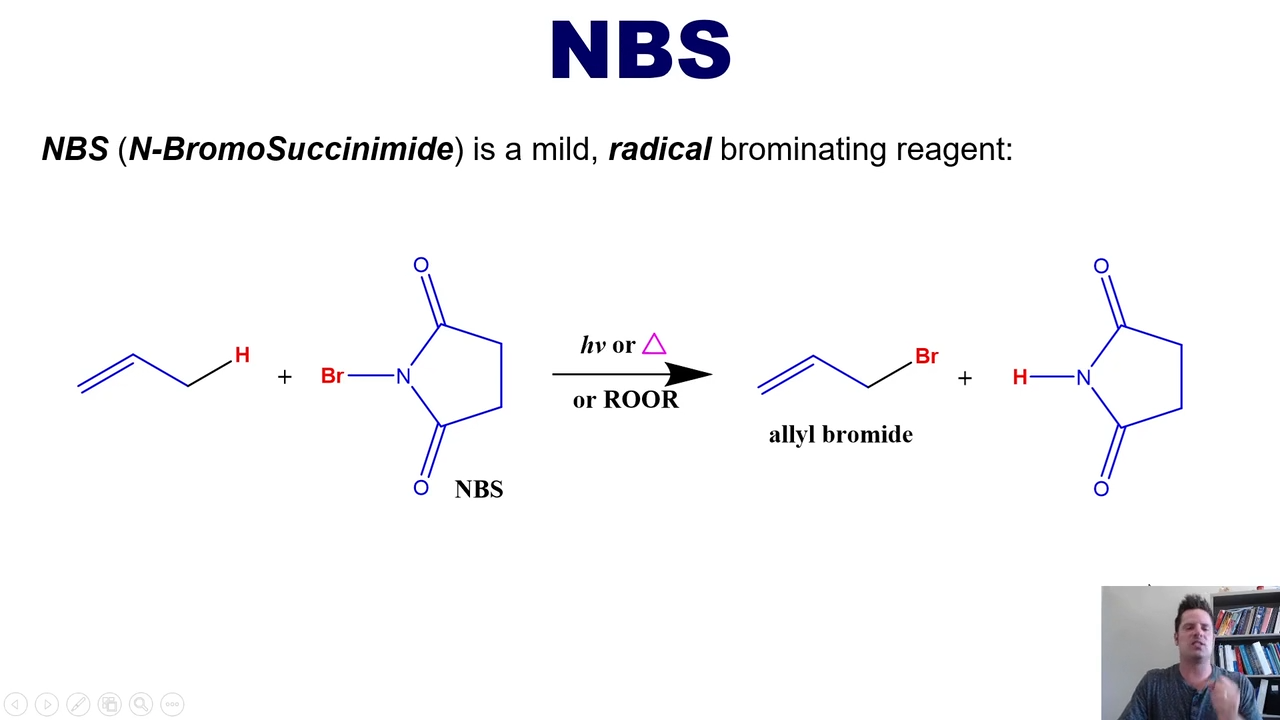
NBS
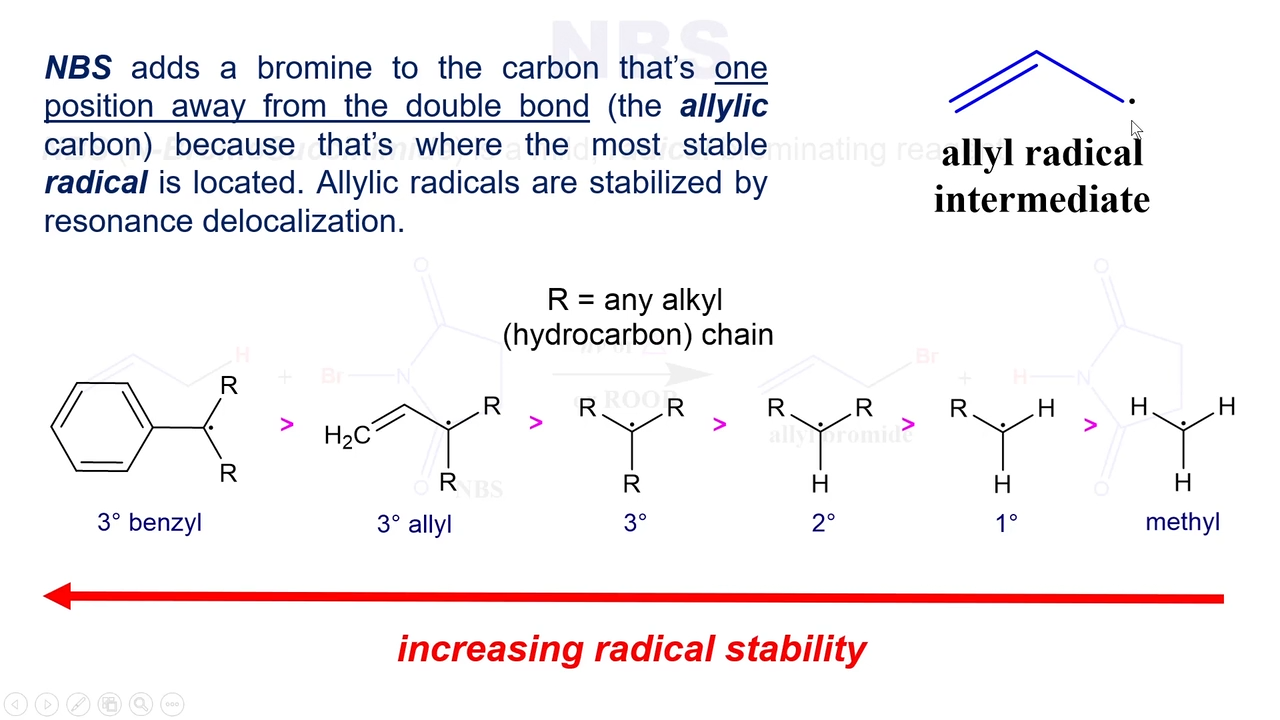
NBS adds a single bromine to the carbon that’s one position away from the double bond.
NBS radical intermediate
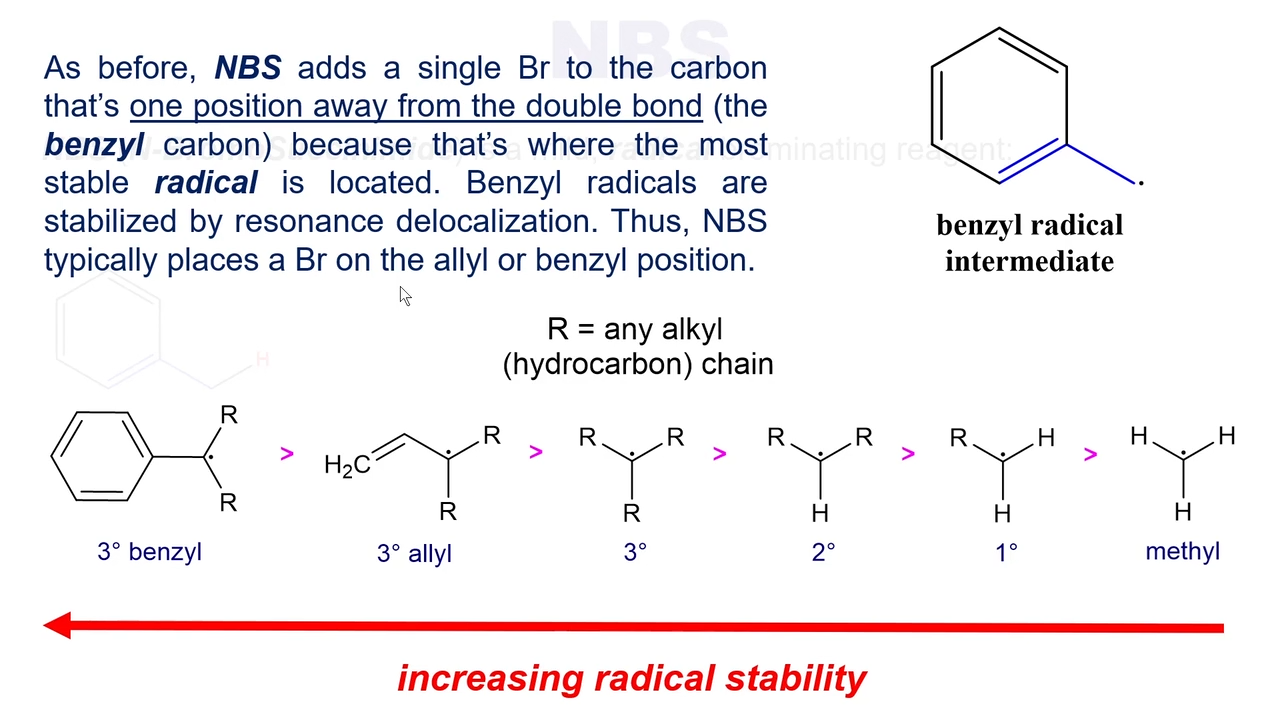
NBS in benzyl rings
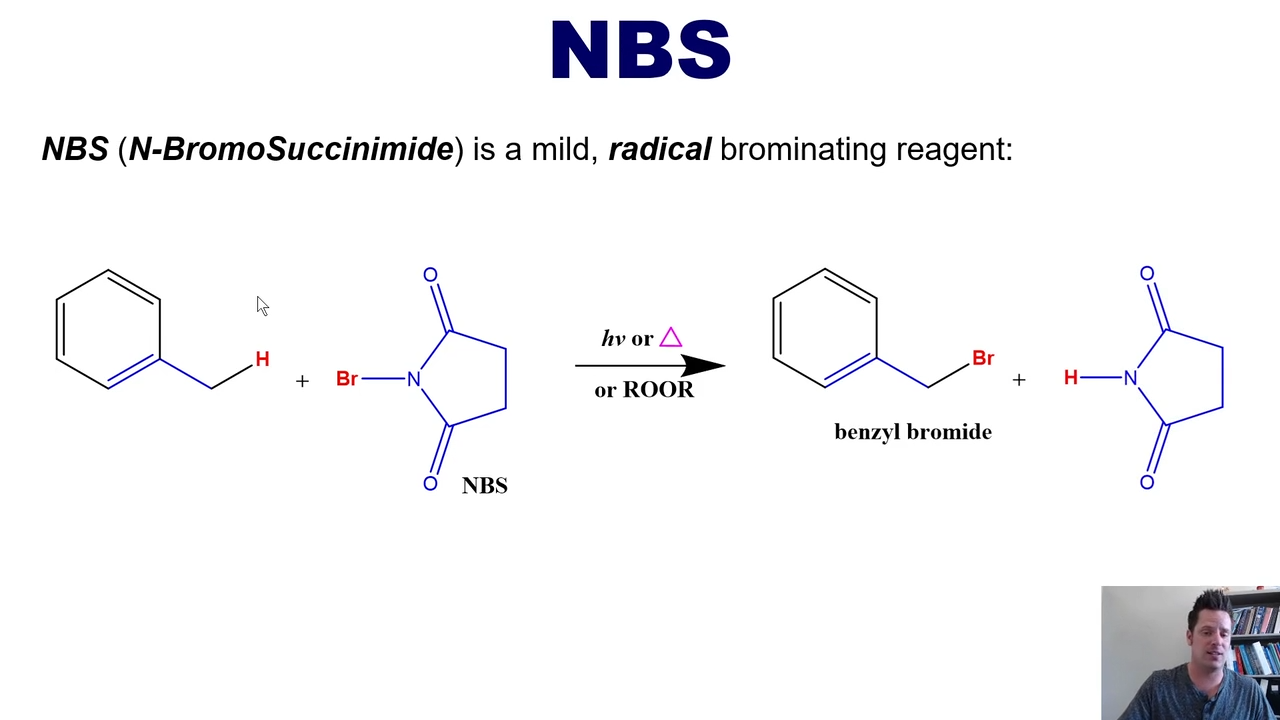
Diels alder Cycloaddition reaction mechanism
Door hinge reaction my beloved :3
There is a reaction between a conjugated diene and a dienophile.
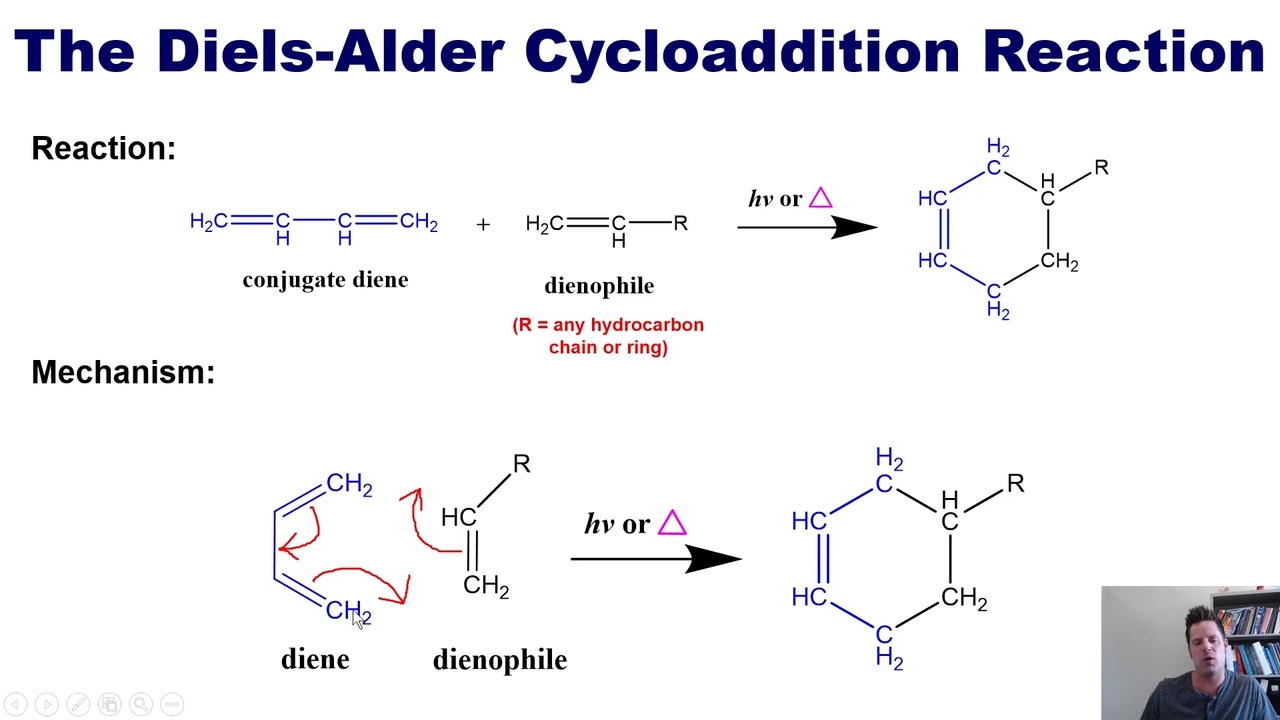
Diels alder with a triple bond.
Diene and dienophile reactions.
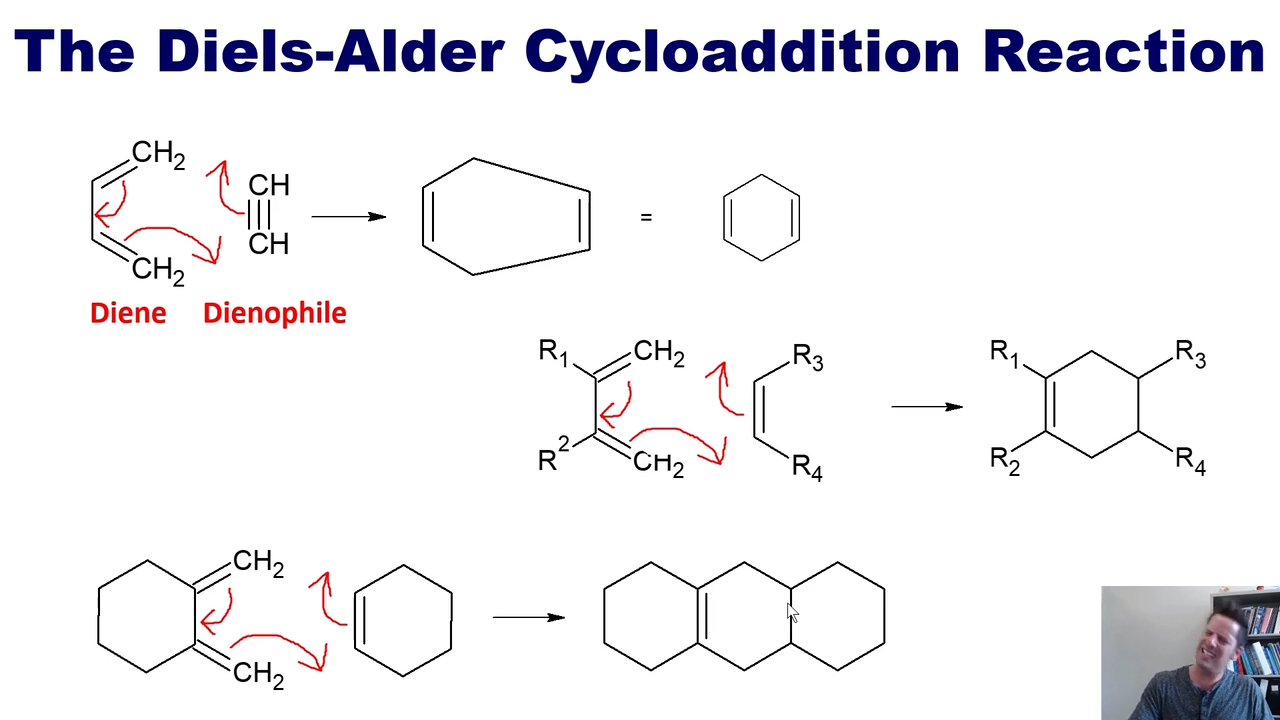
Diels alder with Cyclic dienes
You shift the cyclic diene up where it does not have the alkenes.
If it points right, what is it called? Where does it point?
It is the endo, it points down
If it points left , what is it called? Where does it point?
Exo, up
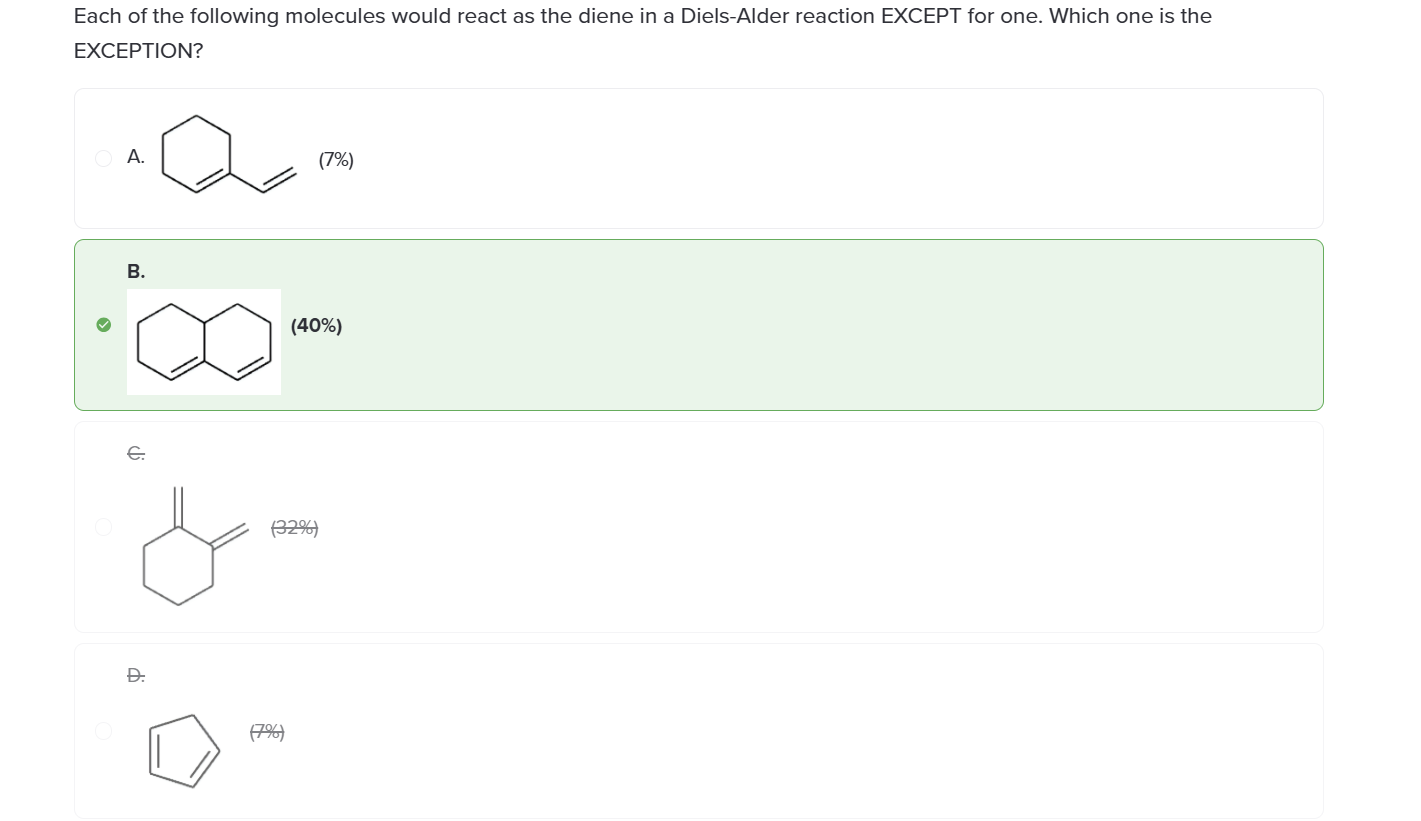
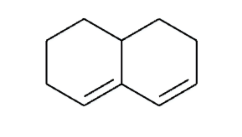
What cannot undergo diels alder?
Things that are stuck and cannot shift into a pacman positions. IE, this one.
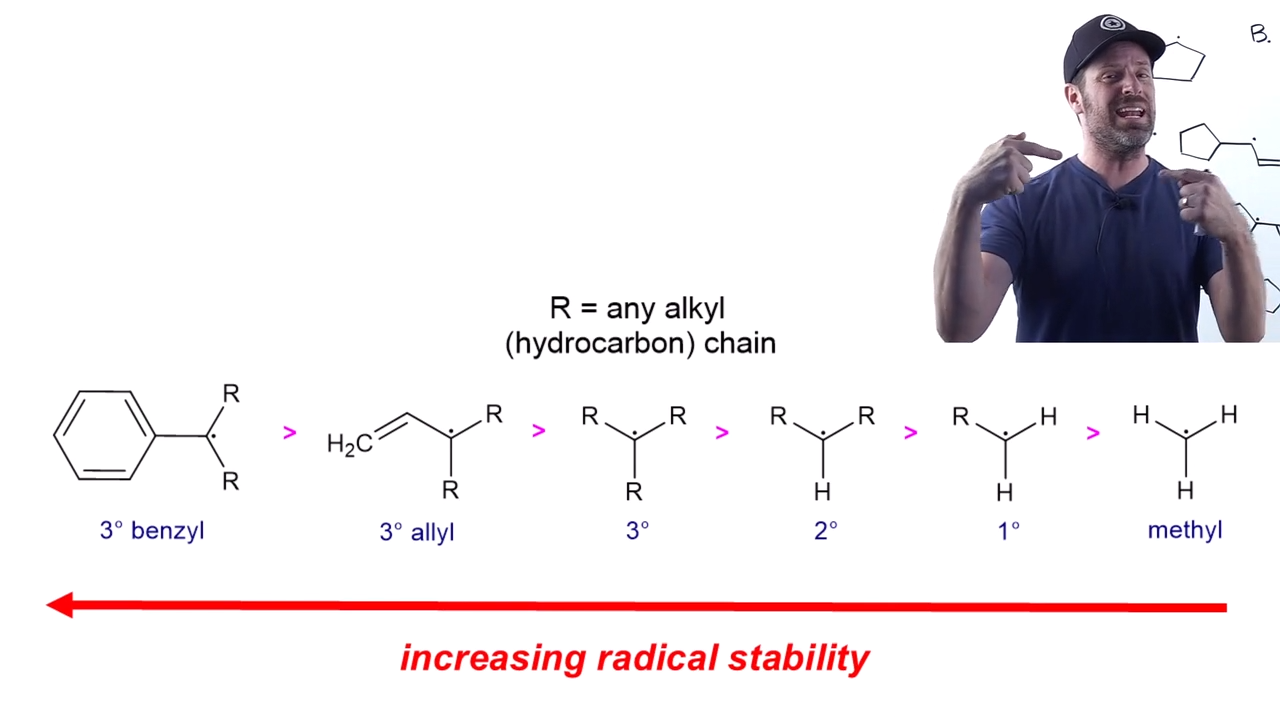
Radical Stability trend
Other differences between Endo and Exo
Have different activation energy
Endo is typically more favored in comparison to exo