collagen disease.
 Call Kai
 Learn
Learn Practice Test
 Spaced Repetition
 Match
Match Flashcards
 Knowt Play
1/14

Earn XP
Description and Tags
disease, biochem.
Name | Mastery | Learn | Test | Matching | Spaced | Call with Kai | Chat |
|---|
No analytics yet
Send a link to your students to track their progress
15 Terms
collagen amino acid compo, and needed cofactors
aa:glycine + proline + hydroxyproline. proline needs to be hydroxylated via lysyl and hyroxyl with cofactor of vitamin C [Vitamin C → collagen hydroxylation]. then AAs need to cross-link via lysl oxidase which cofactor is Copper. the corss-linking is for both collagen and elsatin
copper deficiency: (lysyl oxidase requires copper)
weak connective tissue since it cross-links collagen and elastin.
ATP7A= Menkes, ATP7B= Wilson
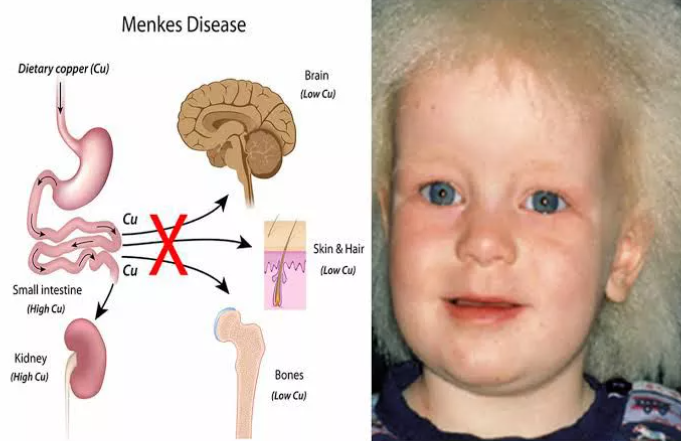
Menkes Disease/copper transport disease/hypercupermia/linky hair syndrome
mutation in ATP7A due to x-linked recessive, accumulate copper in intestine and kidney while brain and liver thrive to it, kinky-light-hair, brittle bone and developmental delay, hypothermia and saggy face

Wilson disease: cant remove excess copper from organs so it builds up into blood
major accumulative organs: liver= jaundice, ascites.
brain= hypotonia, tremor ’wingbeat’
eyes= Keyser Fischer rings.
a mutation in ATP7B cause impair in copper clearance.

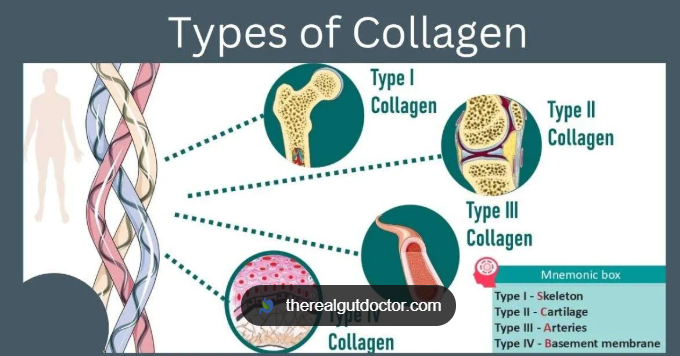
collagen types
Collagen | Main locations | Step 1 association |
|---|---|---|
Type I | Bone, skin, tendon, dentin, sclera | OI |
Type II | Cartilage, vitreous | Cartilage disorders |
Type III | Blood vessels, skin, hollow organs | Vascular EDS |
Type IV | Basement membranes | Alport / Goodpasture concepts |
Type V | Skin, connective tissue | Classical EDS |

defect in collagen type 1: “Osteogenesis Imperfecta”
Autosomal dominant in COL1A1 and COL1A2 .
brittle bone= fractures with minimal trauma+ short stature+ bowed limbs+ scoliosis, Blue sclera: sclera too thin gives uvea color, hearing loss, dentinogenesis imperfecta: brownish discolor of teeth.
collagen type disorder
are mutations in gene COL2A1, only manifest in chondrocyte inflmaation with vitreous fluid manifestation (floaters)
disorder of type 3 collagen (vascular and skin)
the classic disorder is vascular Ehlers-Danlos (most life threatening EDS) and other conditions that cause collagen1 and 3 abnormal deposition(the two involved in scar formation) are as fibrotic disorder”“cirrhosis and idiopath pulmo fibros” and keloids.
vascular Ehlers-Danlos (young pt with spontaneous organ rupture)
Autosomal dominant in COL3A1.
since collagen 3 is defective and normally within blood vessels and hollow organs then it’s associated with risk of fragile vessel= aneurysm and dissections and sudden organ rupture whether intestinal, uterine spontaneously
collagen type 4 disease (basement membrane: GNitis, lens, ear)
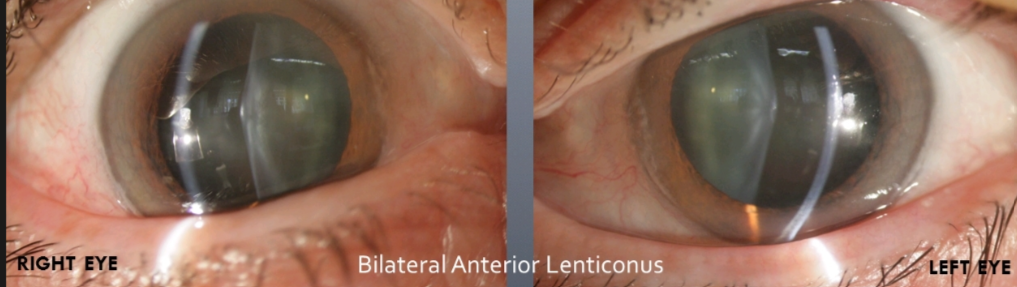
Alport syndrome an -linked mutation in COL4A5 , usually hematuria is first sign to notice then ESRD along with sensoneuronal hearing loss and lens: anterior lenticonus and corneal opacities(bm in cornea)
Alport Vs Goodpasture
Alport is genetic defect yet goodpasture is an autoimmune attack causing both GNitis and lung vasculitis ’haemoptysis’.
type 5 collagen disease ‘skin and ct’
Ehlers-Danlos classic syndrome: autosomal dominant mutation in COL5A1 causing hyperextensible skin and hypermobile joints and ‘cigarrete-paper’ ATROPHIC scar

Vascular EDS has facial characters
sunken cheeks, protruding eyes and thin nose with small chin


Marfan Syndrome “not collagen but Fibrillin and increased TGF beta signlaing”
sx: tall, slender long limbs, joit laxity with scoliosis.
mitral valve prolapse and aortic root dilation: risk of dissection and aneurysm.
ectopia lentis a displacement into superotemporally


a disease with ophthalamic finding usually confused with marfan
Homocystinuria a defect in Cystathionine β-synthase deficiency than convert hom to cysta, occurs due to b6 deficinecy, results in same skeletal sx as Marfan BUT, homo cause thrmobosis to endothelial cells injury and CNs sx as delay and most important the lens is INFERONASALLY