Antimicrobial Sales, Use and Stewardship
 Call Kai
 Learn
Learn Practice Test
 Spaced Repetition
 Match
Match Flashcards
 Knowt Play
1/32

There's no tags or description
Looks like no tags are added yet.
Name | Mastery | Learn | Test | Matching | Spaced | Call with Kai | Chat |
|---|
No analytics yet
Send a link to your students to track their progress
33 Terms
What is antimicrobial resistance (AMR)?
when organisms survive exposure to an antimicrobial product expected to kill them or inhibit their growth
What can AMR result in?
increased frequency of treatment failures
increased severity of infections - prolonged duration, increased hospitalisation and mortality
loss of treatment options - human and animal health
What are the global risks of AMR?
1.27 million additional deaths per year
What’s important relating to antibiotic stewardship?
keep antibiotics working in animals
minimise risk of AMR transmission to humans
disease prevention
responsible antibiotic use
What should you consider when making a health plan for disease prevention?
biosecurity
infection control
husbandry
vaccination
What should be considering when using antibiotics responsibly?
correct drug, dose and duration
lowest clinically effective risk category
only use when appropriate
Which bacteria are highest risk in terms of transfer of resistance from animals to humans?
E.coli
Salmonella spp.
Campylobacter spp.
What is considered when Highest Priority Critically Important Antibiotics are categorised?
need in human medicine
risk of resistant bacteria/resistance genes spreading
indications & availability of alternative antibiotics if resistance did occur
Which antibiotic groups are the most critical for human medicine?
fluoroquinolones
cephalosporins (3rd/4th gen)
colistin
What are category B antibiotics?
RESTRICT
critically important in human med and use in animals should be restricted to mitigate risk to public health
only used when no category C/D antibiotics that could be clinically effective
use based on antimicrobial susceptibility testing
What is the risk of resistance transfer in 3rd and 4th gen cephalosporins?
resistance often transferable (plasmid mediated)
What is the risk of resistance transfer in polymyxins (colistin)?
resistance gene can spread in plasmid
What is the risk of resistance transfer in quinolones/fluoroquinolones?
select for resistance in campylobacter spp. and salmonella spp.
What does the Red Tractor Farm Assurance scheme say about use of HP-CIA in cattle?
only used as last resort, alongside antibiotic sensitivity testing and/or diagnostic testing
What does the red tractor farm assurance scheme say about use of HP-CIAs in pigs?
requirement to follow Pig Veterinary Society Prescribing Principles
HP-CIA
high priority critically important antibiotic
What is considered regarding AMR surveillance in animals in the UK?
antibiotic use
sales
usage per sector
monitoring
control programmes
scanning surveillance
What sectors are involved in the Veterinary Antibiotic Distribution Channel?
pharmaceutical company
feedmill company
wholesalers
veterinary practice
producer
animal
Which countries tend to have higher use of antibiotics?
countries with lots of pigs
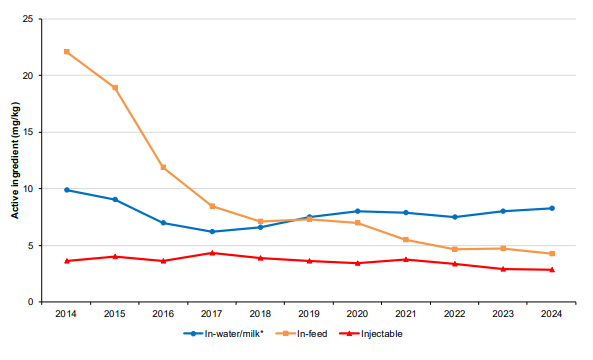
What does this graph show?
shift away from in-feed use and increase of in water use
What are reasons for collecting antibiotic use data?
monitor trends and impact of control measures/legislation
target setting
link with resistance data
benchmarking and behaviour change
supporting trade and market access
reputation, trust and transparency
link with disease management programmes
What are the key elements of holistic animal health management?
good animal husbandry
prudent and medically efficient use of antibiotics
effective biosecurity
relevant vaccinations
What is a legal requirement regarding antibiotic use in the EU?
antibiotic use data collection
What food-producing animal species have the highest antibiotic usage (from most to 4th highest)
pigs
broilers
gamebirds
laying hens
What food-producing animal species have the highest HP-CIA usage (from most to 5th highest)?
gamebirds
trout
pigs
laying hens
meat poultry
How has the use of antibiotics in companion animals changed?
decreased
What are the challenges regarding getting antibiotic use data?
fragmented supply chain/diverse farm types
technical barriers - lack of integration with PMS
motivation barriers
resources/infrastructure
data sharing/trust
What is considered regarding the future of antibiotic data?
expectation that antibiotic use data collection will be collected
focus on greater automation/links to PMS/continuous ‘real-time’ data collection - guide to vet-farmer discussion and decision making
move towards companion animals
integration with other datasets including health and welfare, disease & resistance
PMS
practice management system
What harmonised outcome indicators measured for?
antibiotic sales
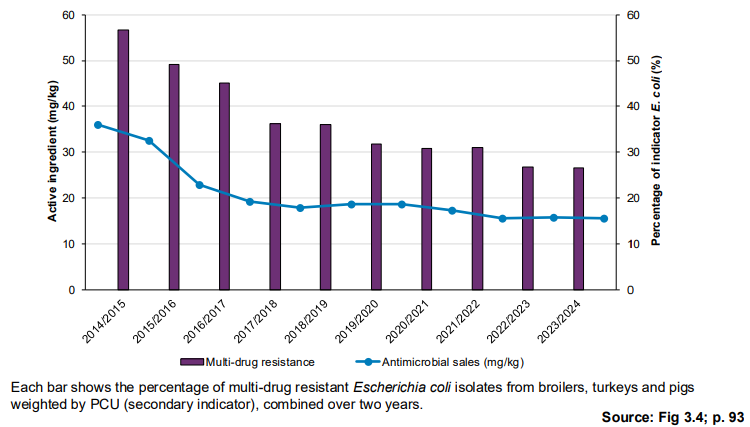
What does overlaying indicators for sales with those for resistance illustrate?
how reductions in antibiotic sales since 2014 are reflected in reductions in resistance over the same time period
What are the 3 main ways of administration of antibiotics?
treatment
metaphylaxis
prophylaxis
Why is there success in reducing antibiotic use?
government focus
leadership
relationship building
antibiotic sales and resistance monitoring
industry ownership
sector stewardship groups
data collection - benchmarking & target setting
vet and farmer education and goal-setting