Unit 3: Quantities in Chemical Reactions - Lesson 1: Introduction of the Mole
 Call Kai
 Learn
Learn Practice Test
 Spaced Repetition
 Match
Match Flashcards
 Knowt Play
1/8

Earn XP
Description and Tags
Vocabulary flashcards covering the concept of the mole, Avogadro's number, atomic mass, molar mass, and multi-step mass-particle conversions.
Name | Mastery | Learn | Test | Matching | Spaced | Call with Kai | Chat |
|---|
No analytics yet
Send a link to your students to track their progress
9 Terms
Mole
A chemical counting unit representing 6.02×10²³ units of a substance, used to quantify microscopic entities like atoms or molecules.
Avogadro's number (NA)
The constant 6.02×10²³ (or 602,000,000,000,000,000,000,000), representing the number of particles contained in one mole.
Amadeo Avogadro
The scientist in whose honor Avogadro's number is named, who discovered that gases at the same pressure and temperature contain the same number of molecules regardless of the gas type.
Molar Mass
The mass of one mole of a substance expressed in grams per mole (g/mol), which equals the numerical value of its average atomic mass.
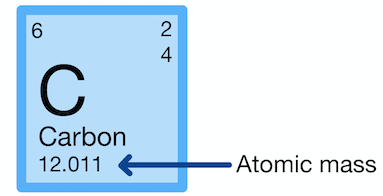
Atomic Mass
The average mass of a specific element based on its naturally occurring isotopes, given in units (u).
Molar Mass of a Compound
The sum of the molar masses of all individual elements present in a chemical compound or molecule.

Moles to Particles Formula
The equation used to calculate the number of moles from a given count of particles: Number of moles=Avogadro numberNumber of particles.

Moles to Mass Formula
The equation used to convert between mass and moles: number of moles=molar mass (g per mole)mass (g).

Mass to Particles Conversion Process
A two-part calculation process where mass must first be converted to moles using molar mass, and then moles are converted to the number of particles using Avogadro's number.