Anatomy and Physiology - EMT
 Call Kai
 Learn
Learn Practice Test
 Spaced Repetition
 Match
Match Flashcards
 Knowt Play
1/109

There's no tags or description
Looks like no tags are added yet.
Name | Mastery | Learn | Test | Matching | Spaced | Call with Kai | Chat |
|---|
No analytics yet
Send a link to your students to track their progress
110 Terms
Anatomic Position
The position of reference in which the patient stands facing you, arms at the side, with the palms of the hands forward.
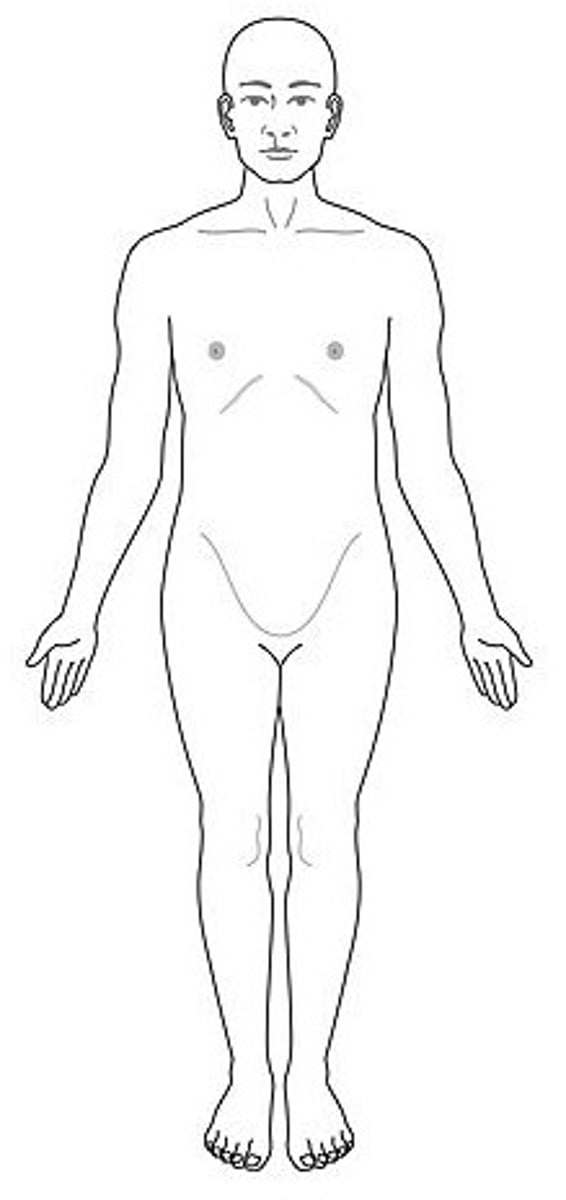
Anterior
toward the front
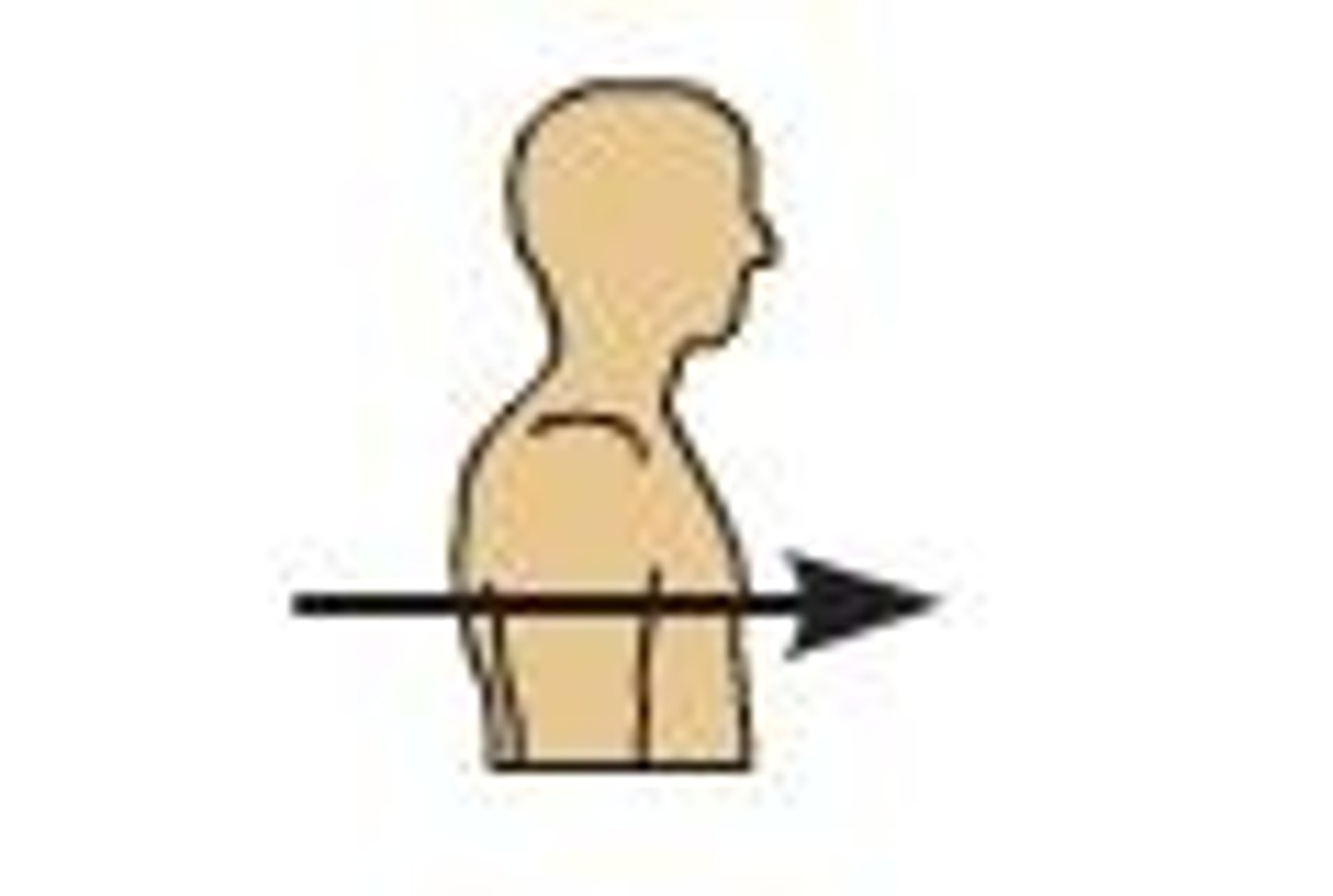
Posterior
toward the back
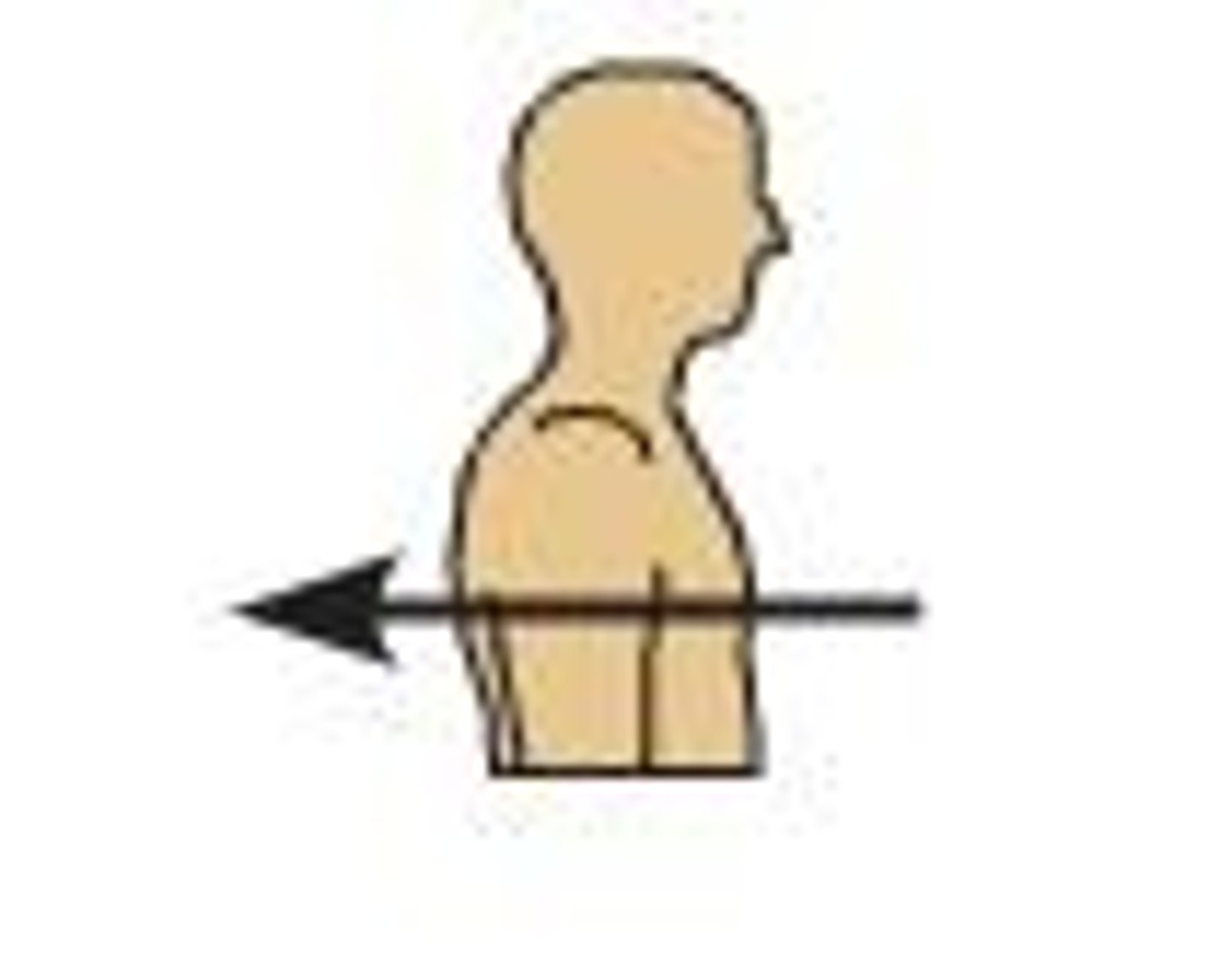
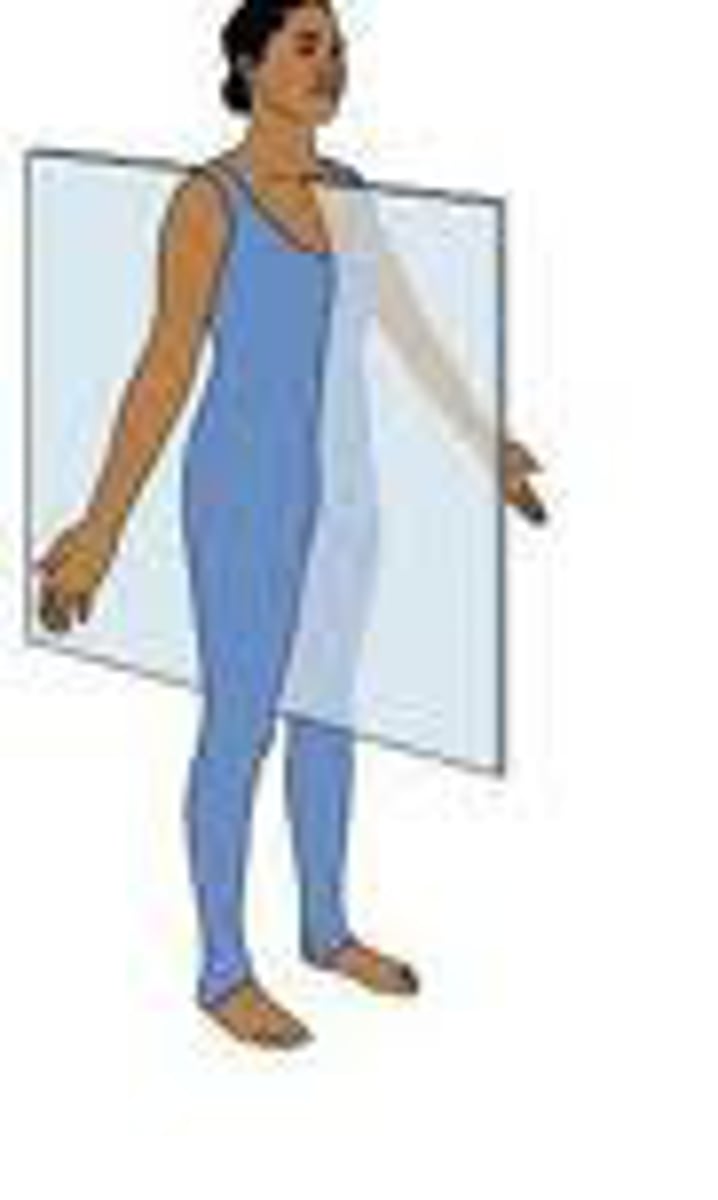
Midaxillary
imaginary vertical line from the middle of the armpit to the angle
Divides the body into anterior and posterior
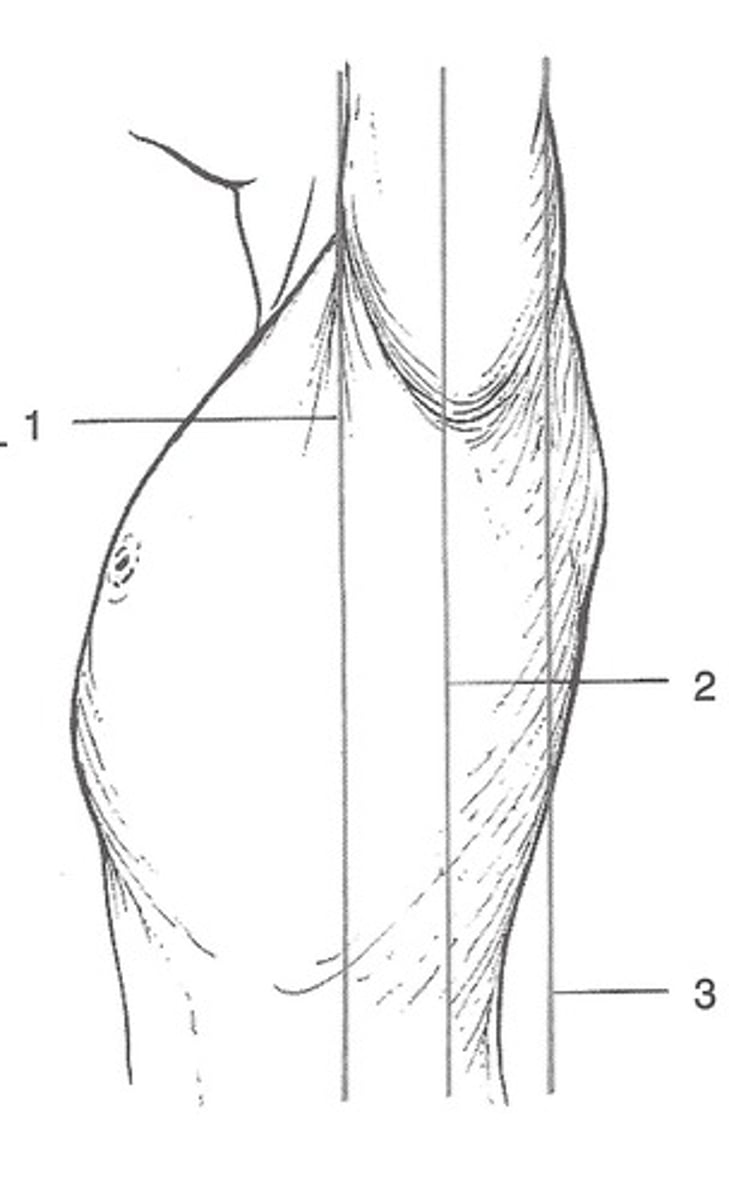
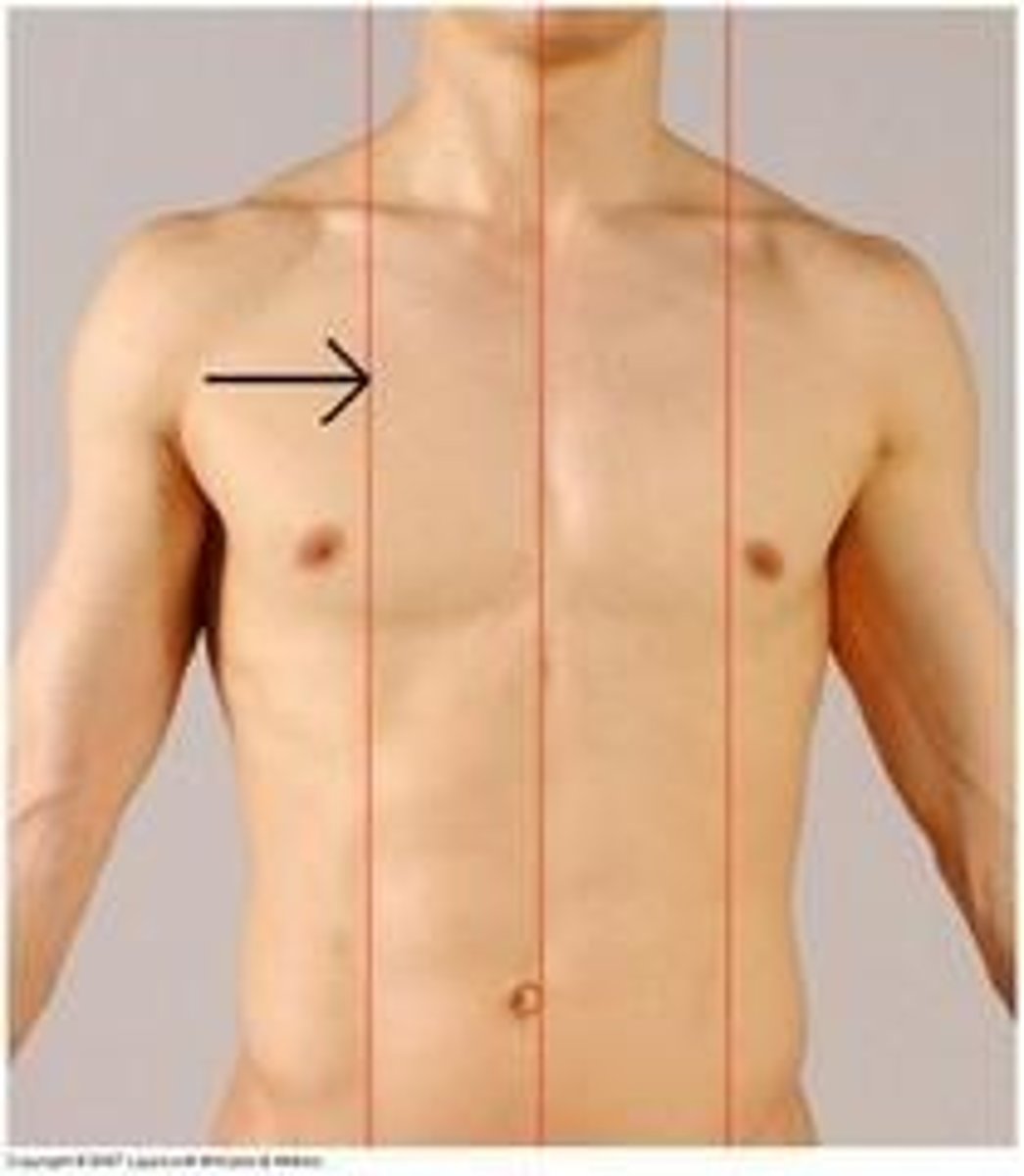
Midline
imaginary vertical line through the middle of the body: nose through umbilicus
Divides the body into right and left
Midclavicular
Imaginary vertical line through the midpoint of the clavicle, parallel to midline
Superior
Nearer to the head (used referencing head and torso)
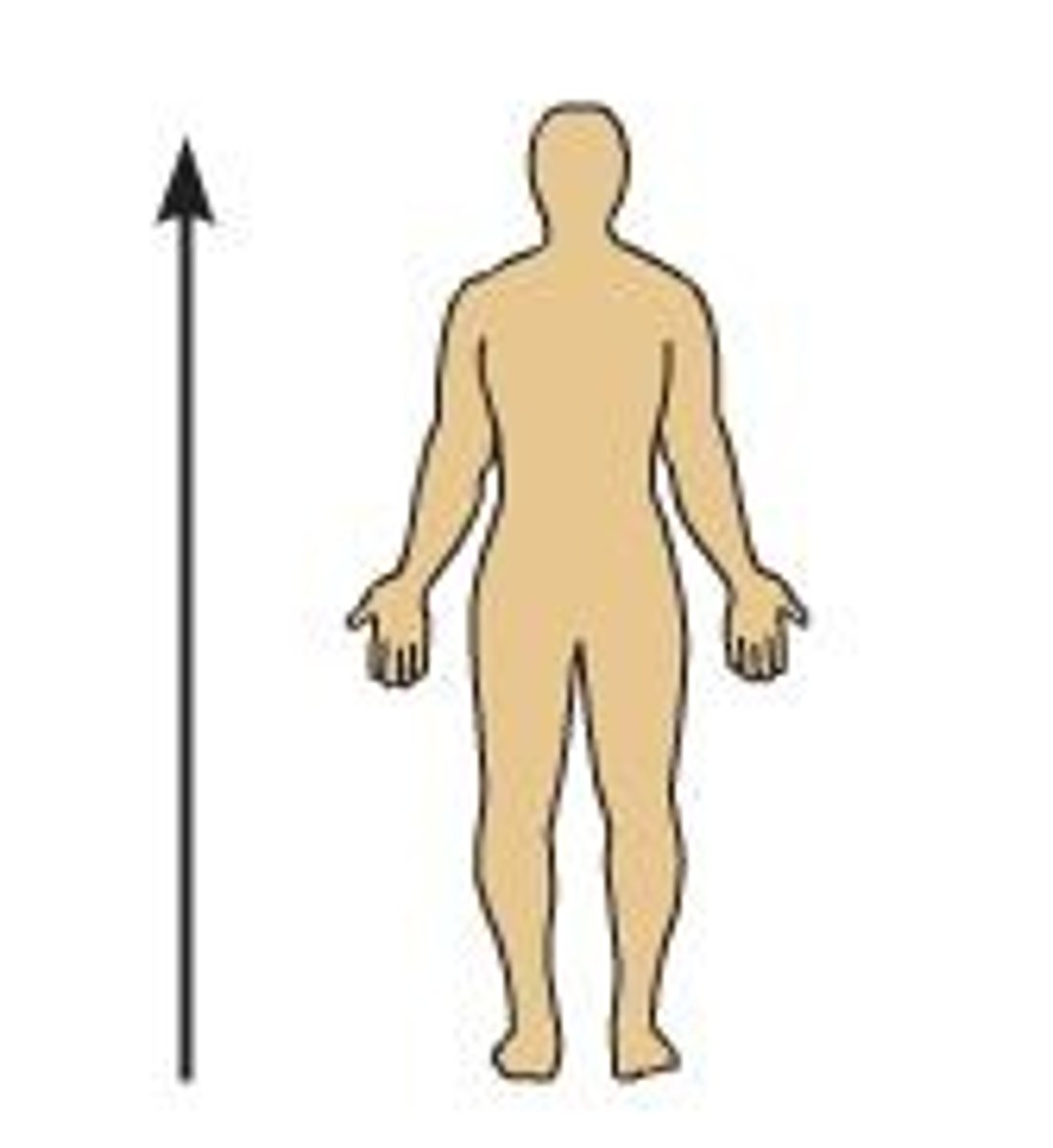
Inferior
Nearer to the feet (used referencing head and torso)
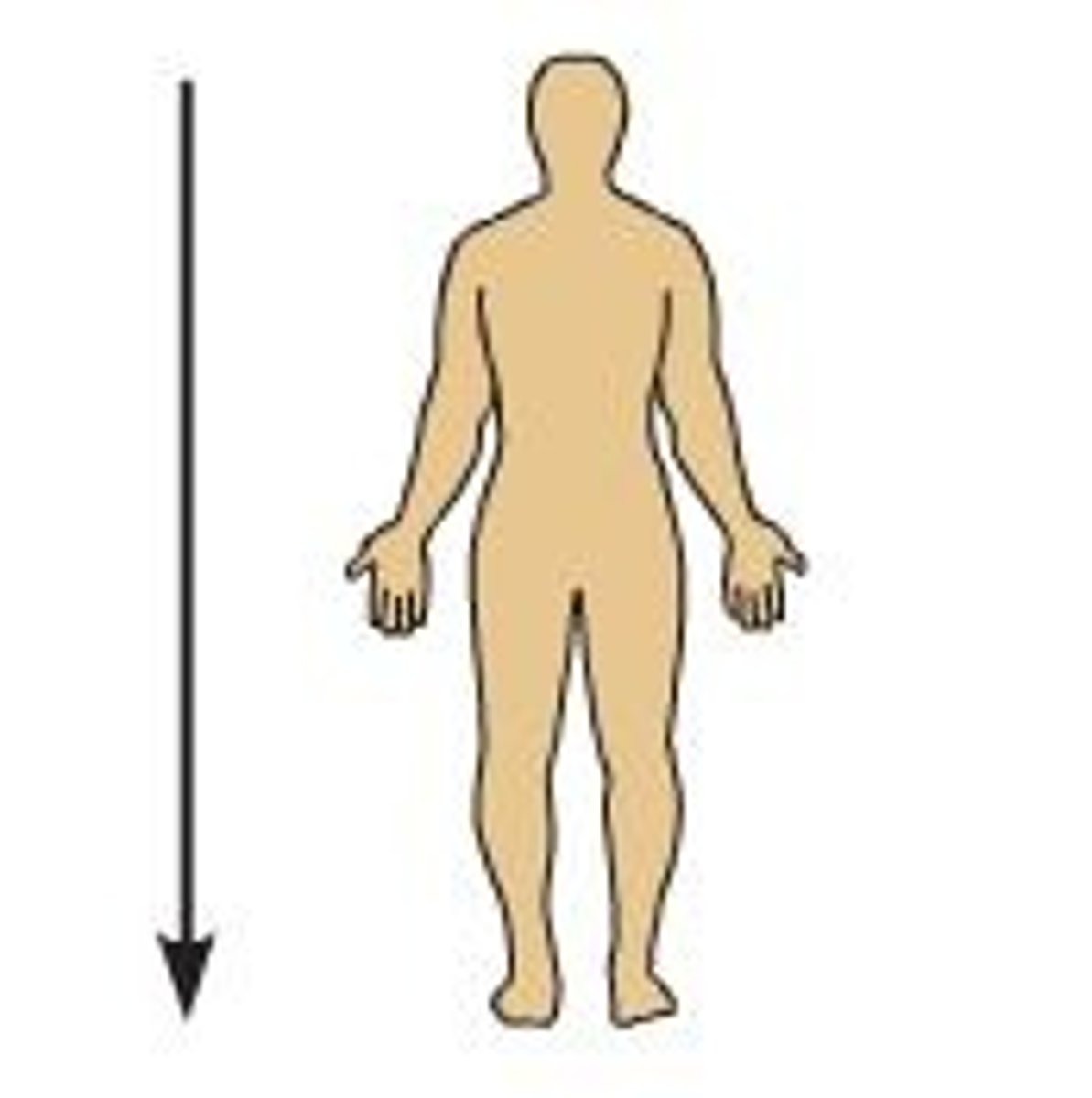
Lateral
Part of body away from midline
Ex: Radius lateral
Medial
Part of the body toward the midline
Ex. Ulna medial
Proximal
Closer to the trunk (orgin)
Normally referencing arms and legs
Distal
Farther from the trunk of the body or nearer to the free end of the extremity
Normally referencing arms and legs
Dorsal
Posterior surface. Toward the back
Ex: Dorsalis pedis pulse
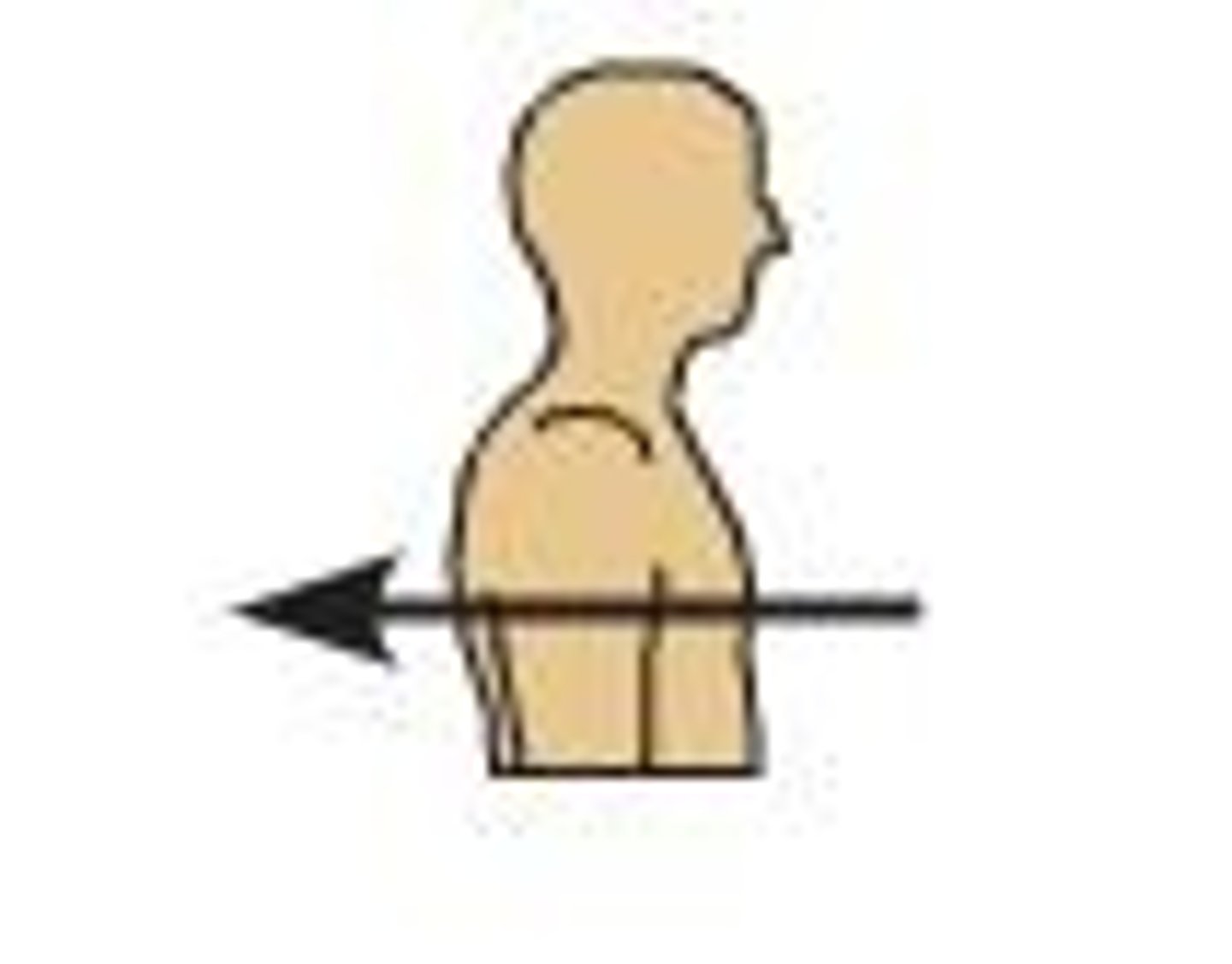
Palmer
Palm or front of hand (no fingers)
Plantar
Bottom of the foot
Ex: Planter wart
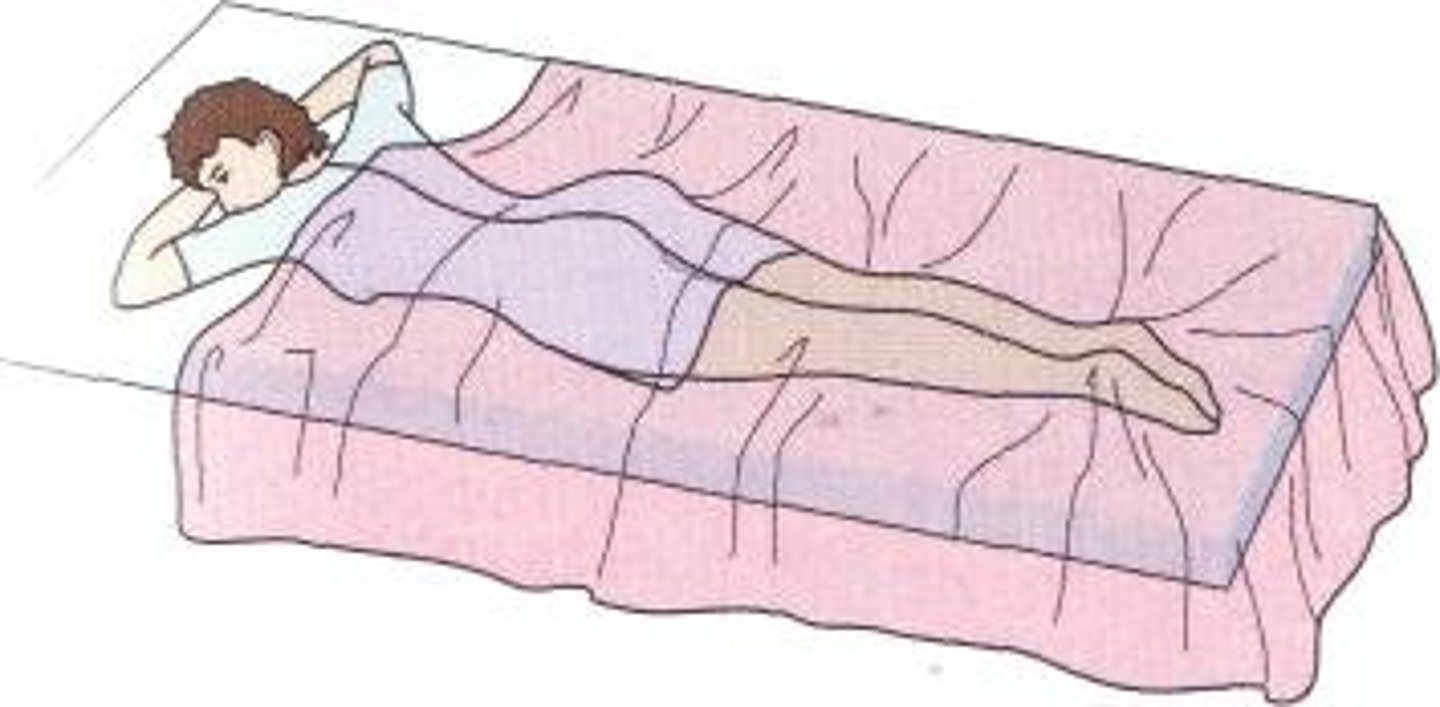
Prone position
lying face down. Never transport like this unless necessary.
i.e. Burns on back, cleaning bowel movement, etc
Must constantly checking ABC's
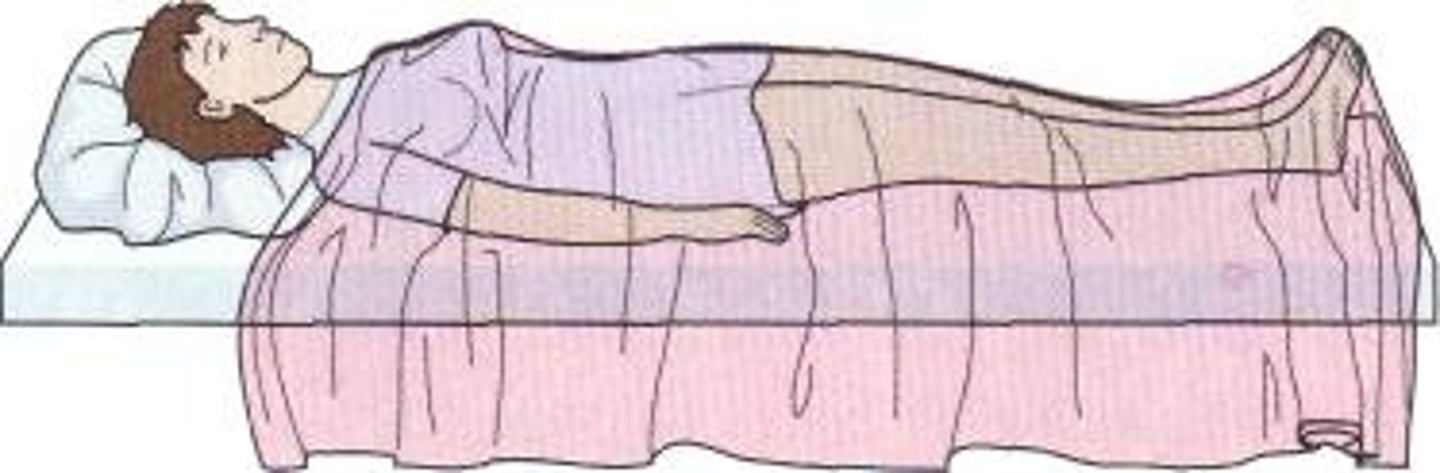
Supine position
lying on back, facing upward
Posterial surface
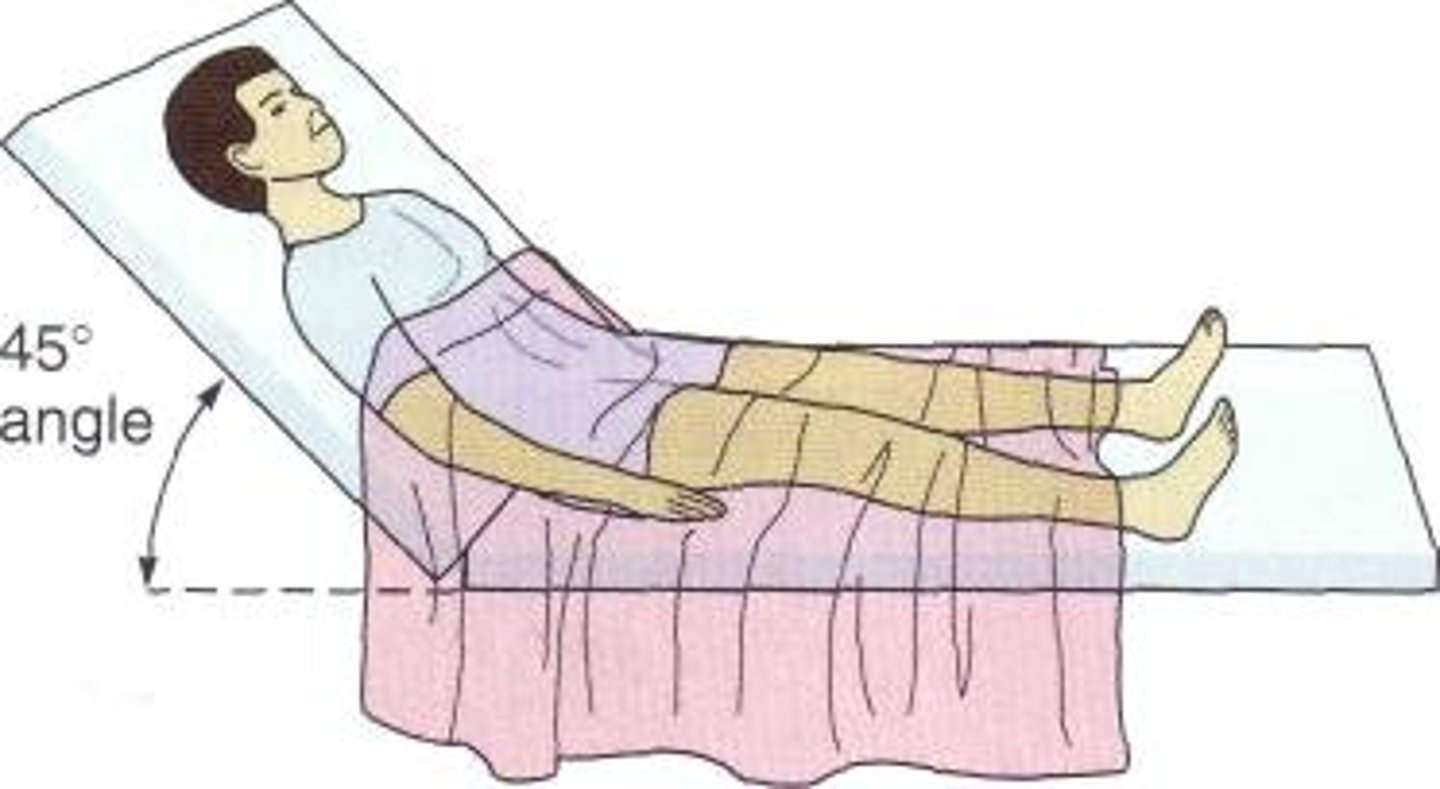
Fowler's position
Semi-sitting position, body sitting up at 45-degree angle, knees bent. Put a pillow/blanket under knees to elevate slightly (relaxes abdominal muscles thus preventing pain)
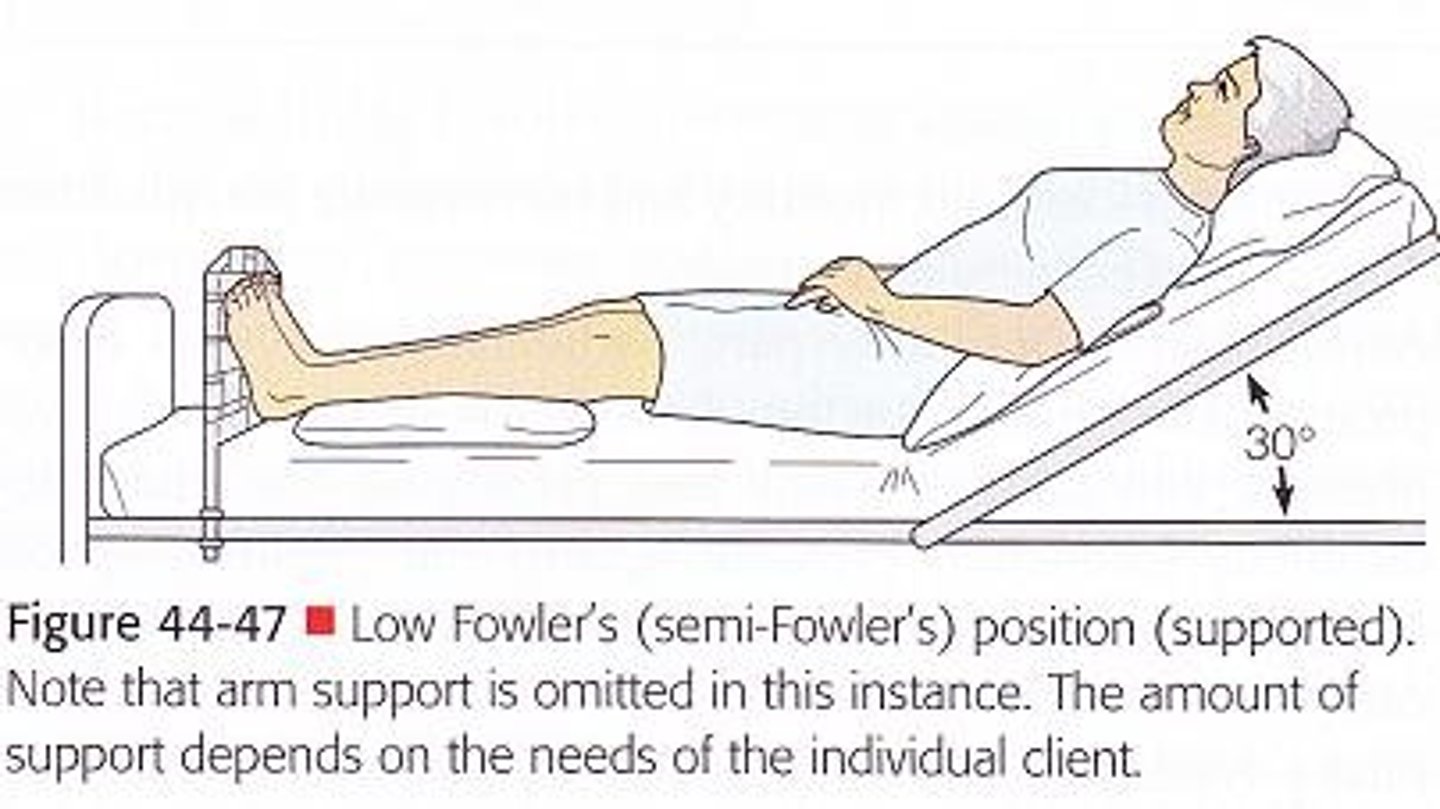
Semi-Fowler's Position
Semi-sitting position, body sitting up less than 45-degree angle (about 20 degrees), knees bent. Put a pillow/blanket under knees to elevate slightly (relaxes abdominal muscles thus preventing pain)
Use this position after some sort of abdominal surgery or trauma. Protects airway and keeps vomit down
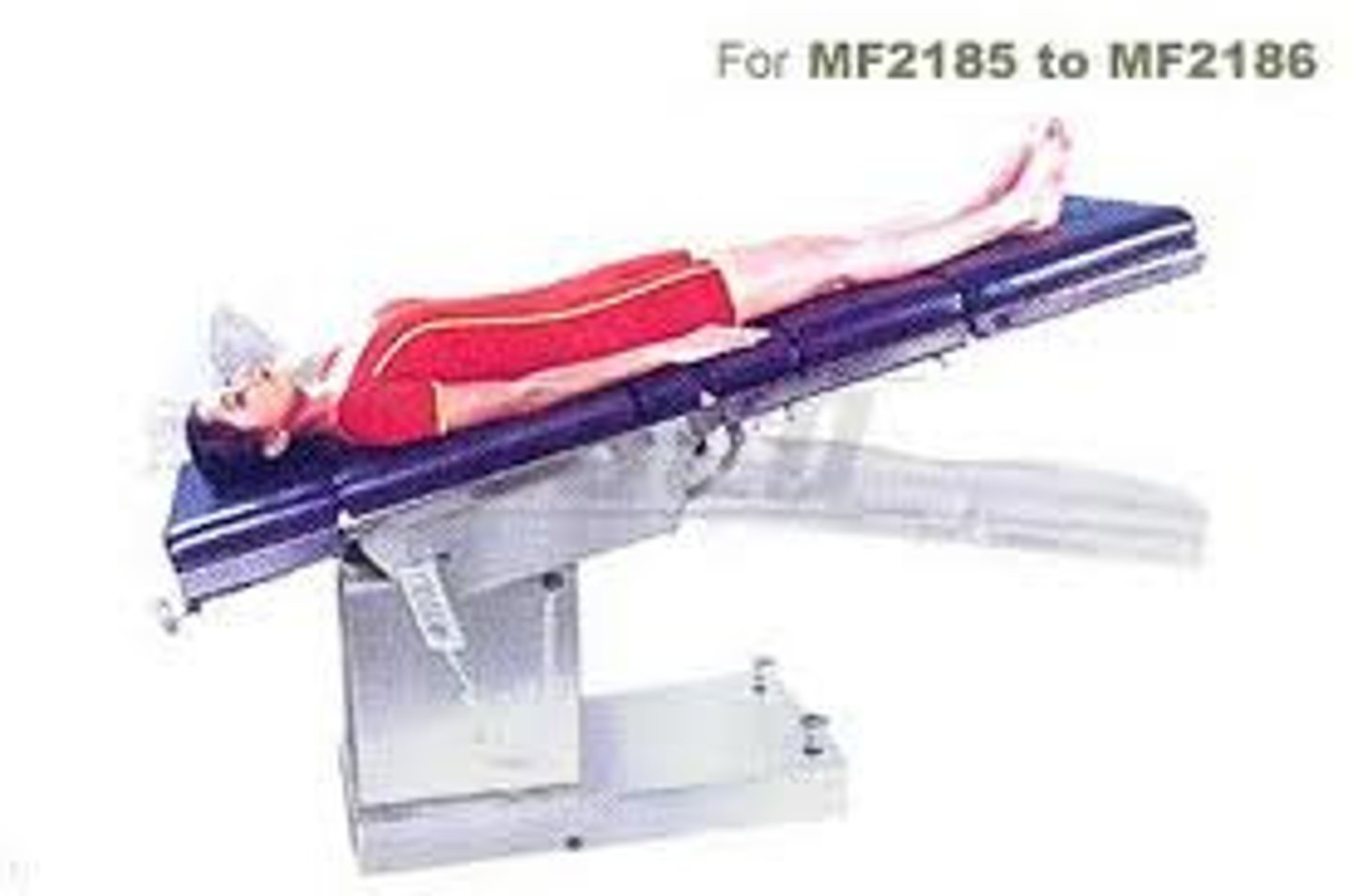
Trendelenburg's position
the head of the bed is lowered and the foot of the bed is raised like a tilt table. For trauma patients, do not bend back. (no longer recommended)
-Reason for the position: For trauma pt. reduces bend in the spine. NOT for blood flow since only ~250mL of blood goes toward the head
Shock Position
Trendenleburg's position but with bend in the back. Legs are elevated.
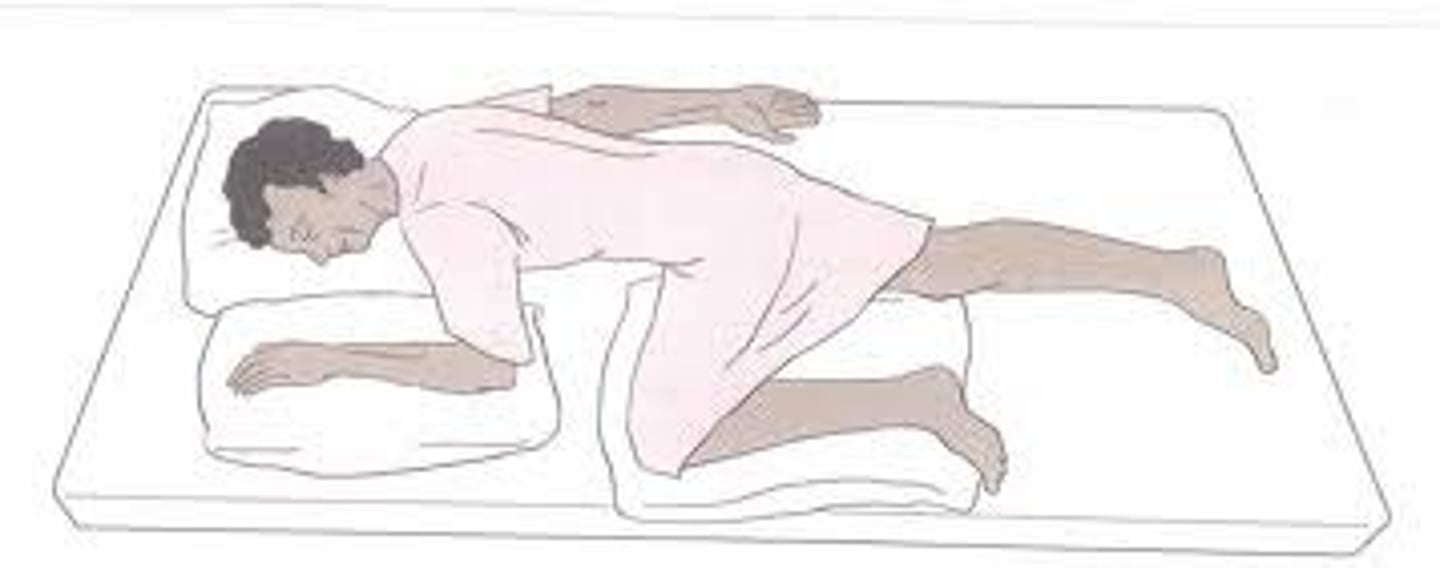
Sim's position
Prone position with flexed hip openness perineum.
For: Rectal temperatures, cleaning bowel movement, etc
Seated or Exam position
Seated with 90 degree angle
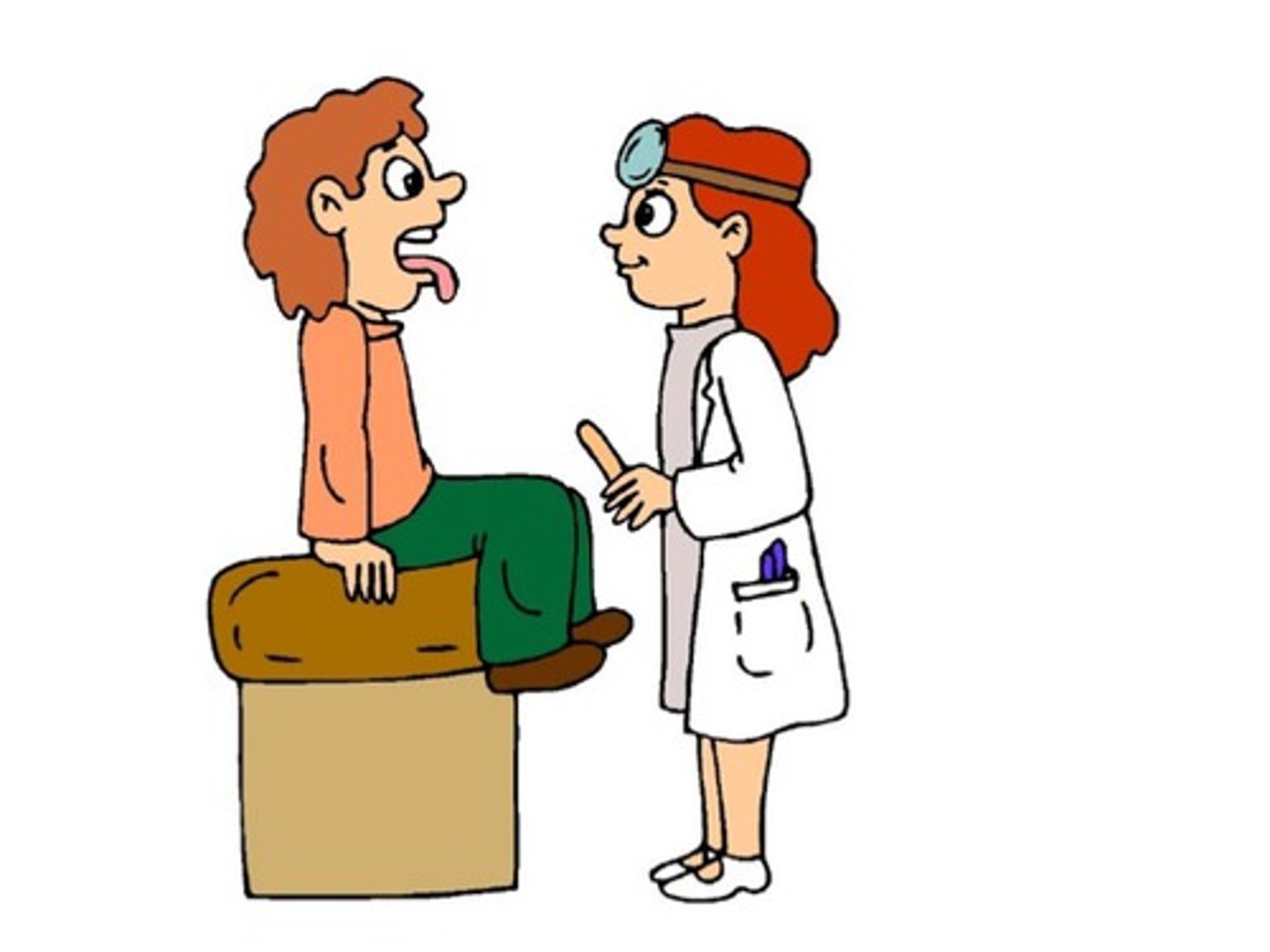
Skeletal System
Gives the body shape, protects vital internal organs, and provides for body movement.
-About 206 bones in human body
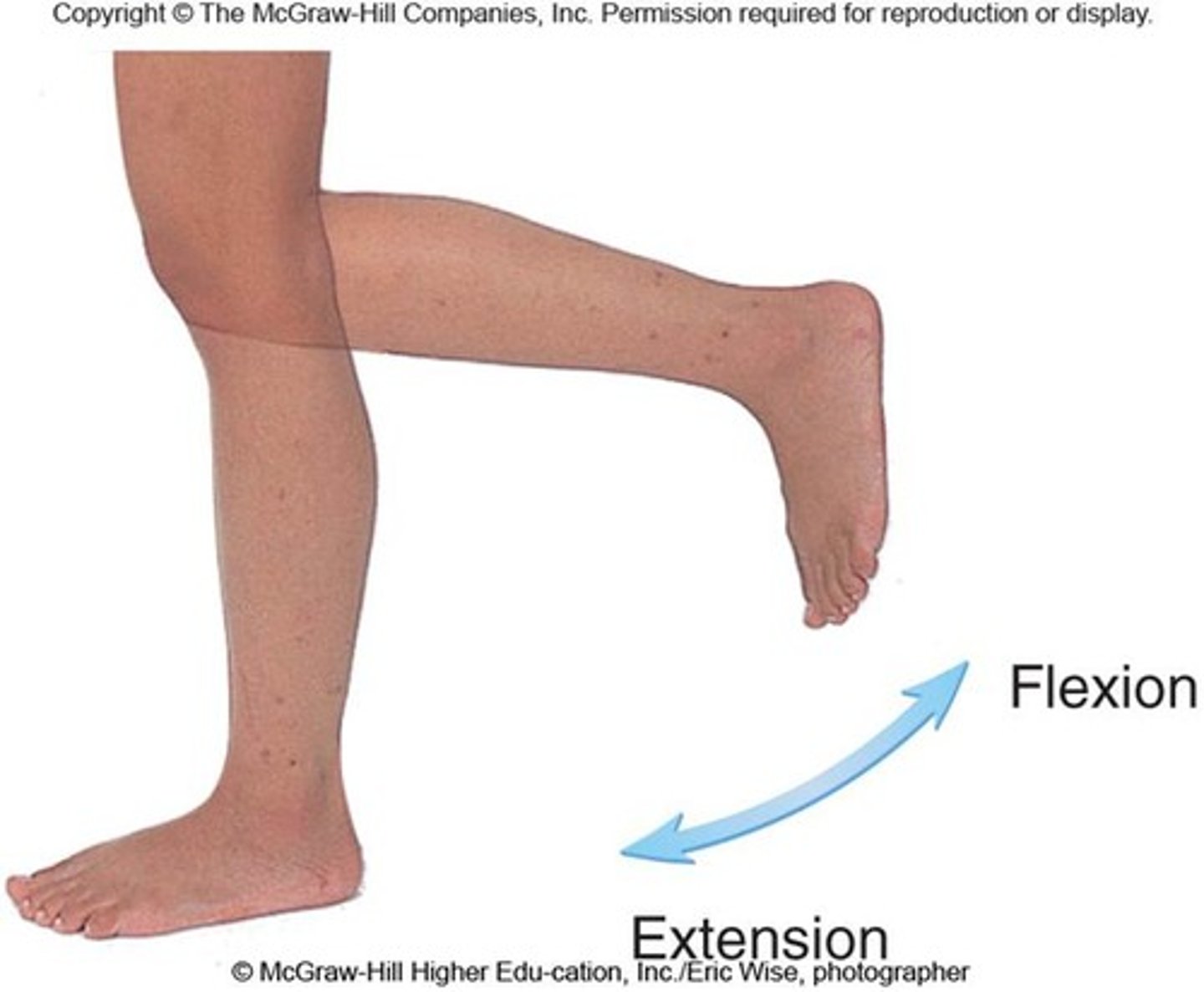
Flexion
Bending of the join in the direction it wants to go
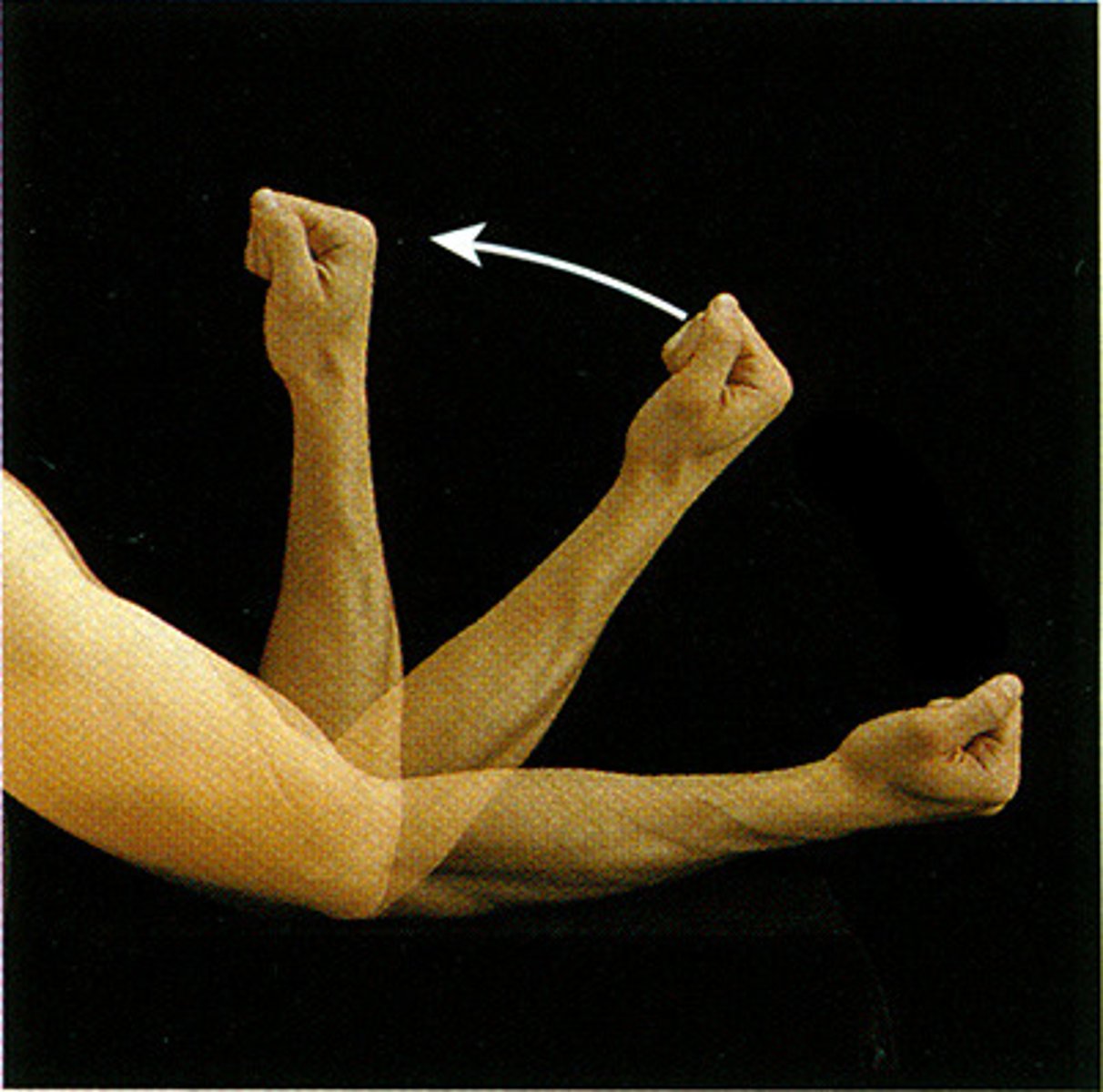
Extention
Bending of the join away from the direction it wants to go
Ribs
12 pair of ribs (24 total ribs)
True ribs
Ribs 1-7 because they attach directly to sternum
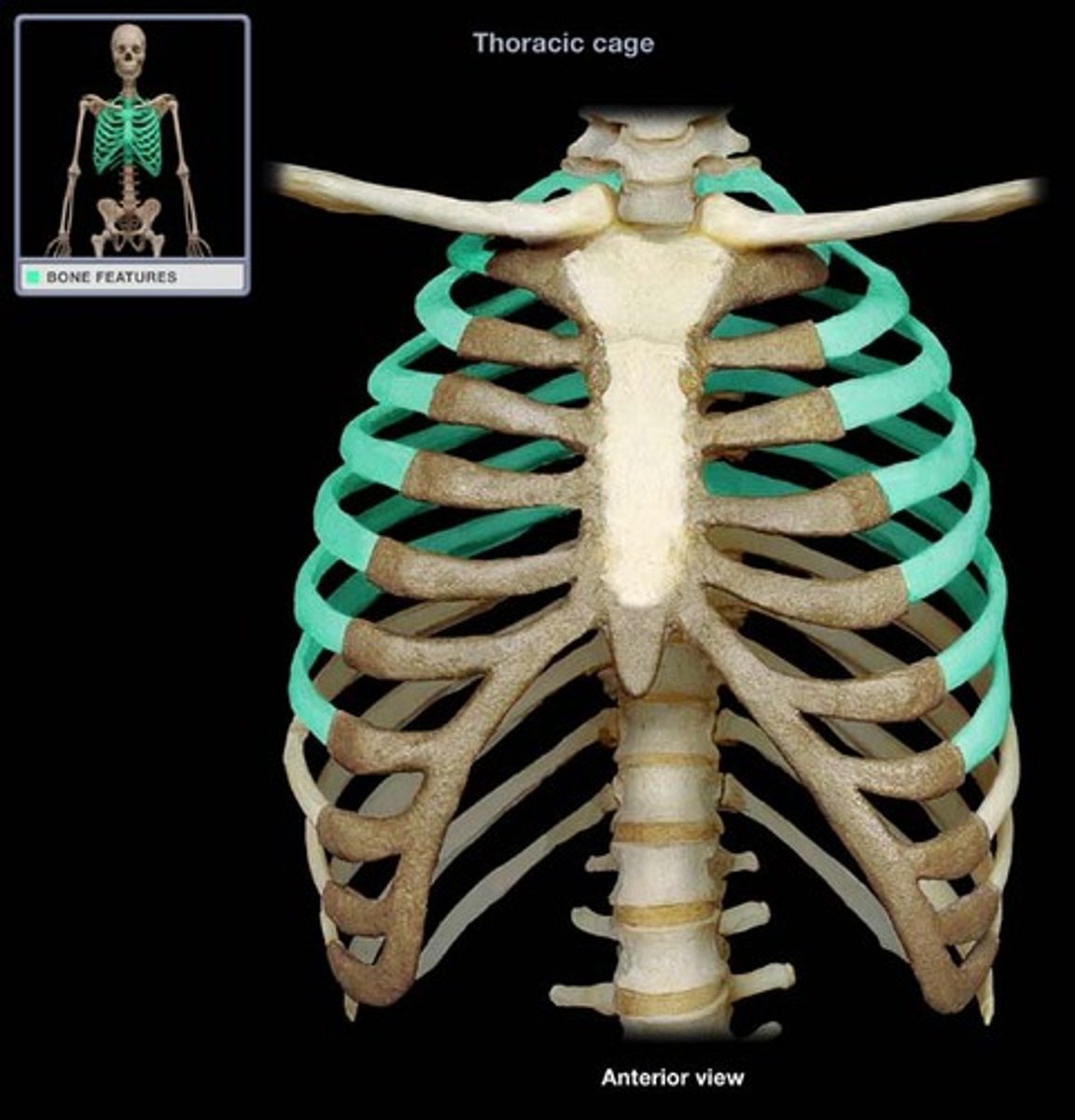
False ribs
Ribs 8-12 because they do not attach directly to the sternum
False floating ribs
Ribs 11-12 because they do not attach to the sternum or another rib ** (correct?)
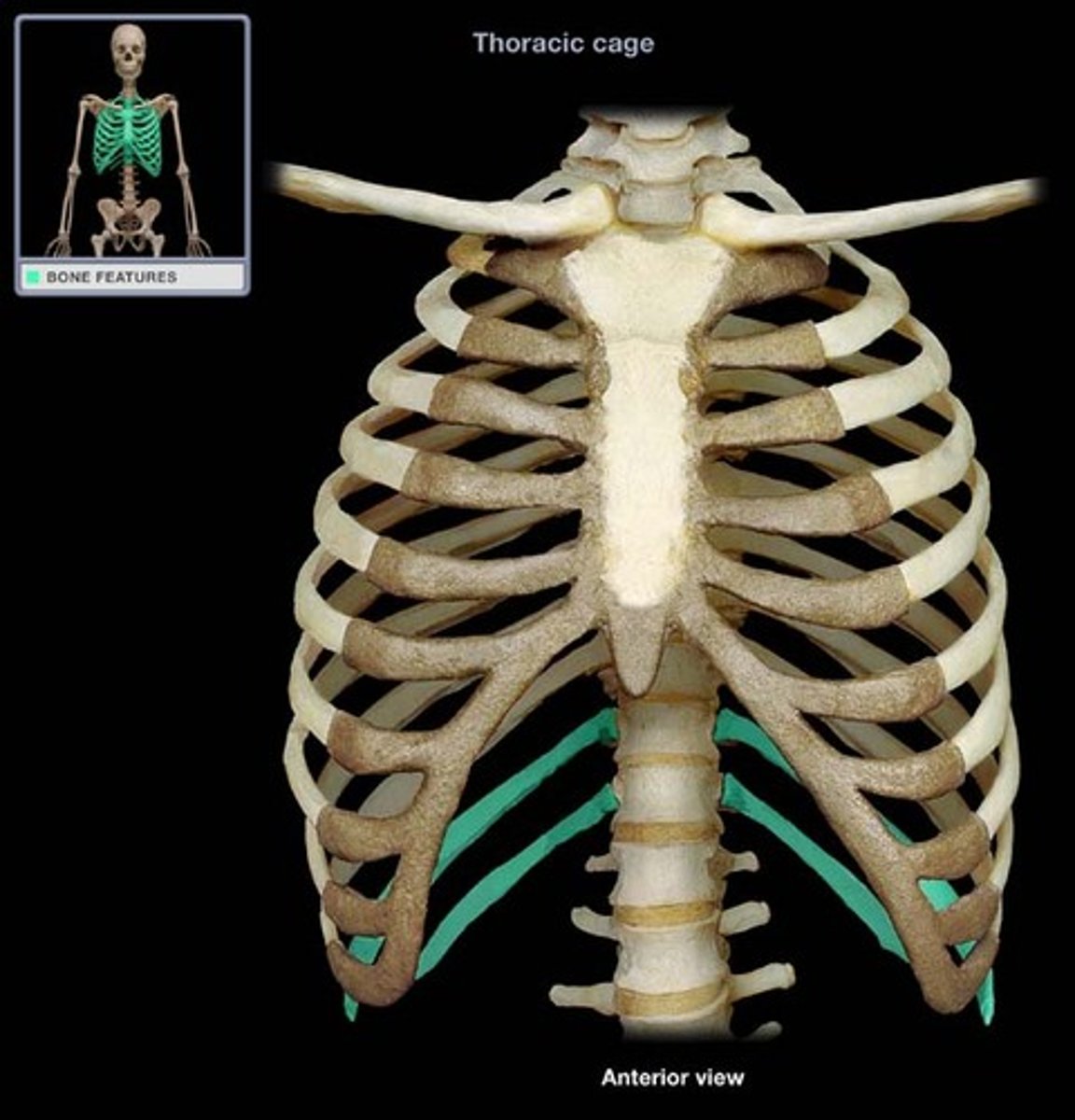
Axial bones
Essential bones for life
Ex: Ribs, sternum, skull, etc
Appendicular bones
Not essential bones for life
Ex: Humerous, femur, etc
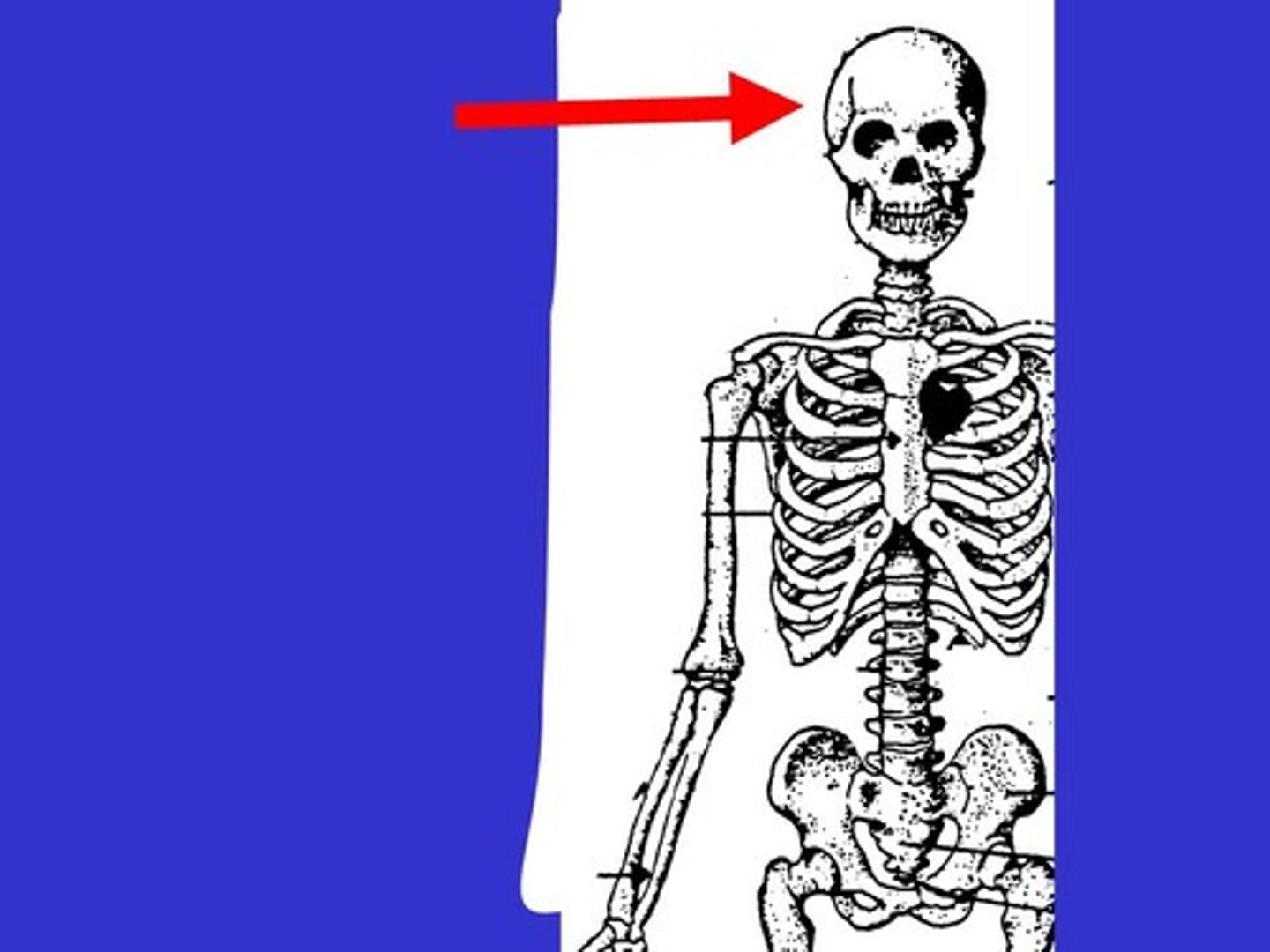
Cranium
Composed of a number of thick bones that fuse together to form a shell that holds and protects the brain
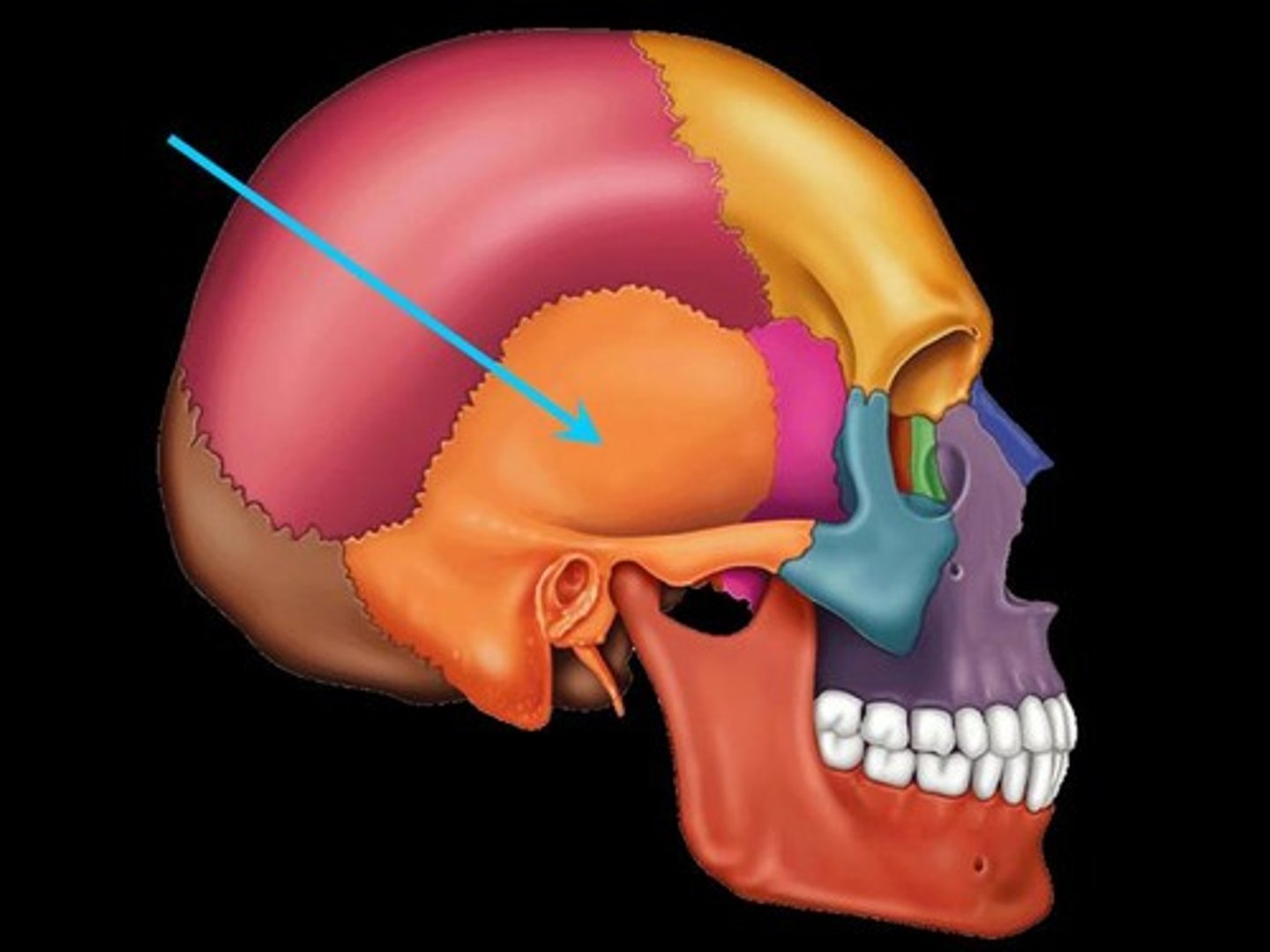
Temporal Bones
Bones that form the sides of the head in the ear region.
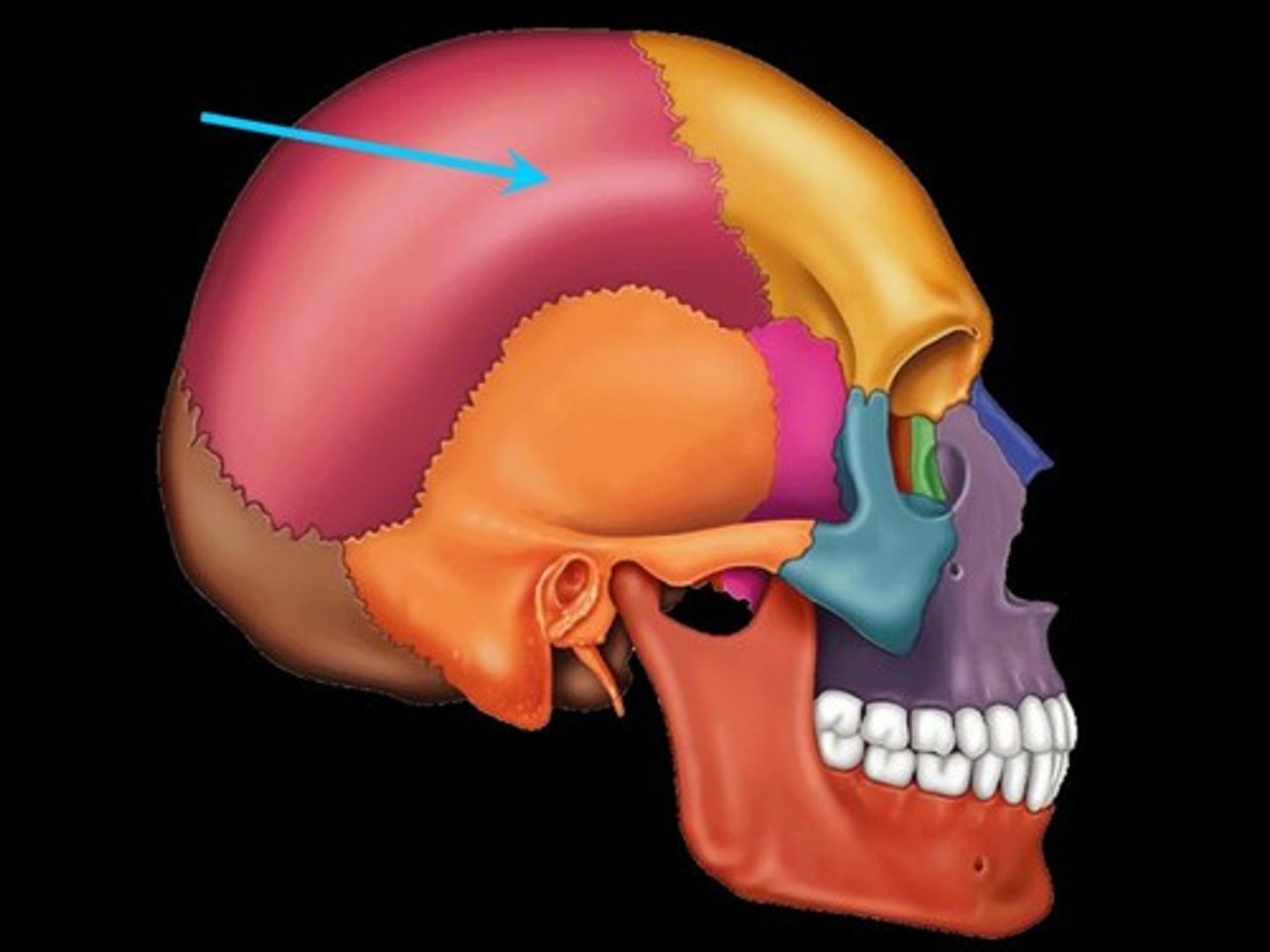
Parietal bones
Bones that form the sides and top of the cranium.
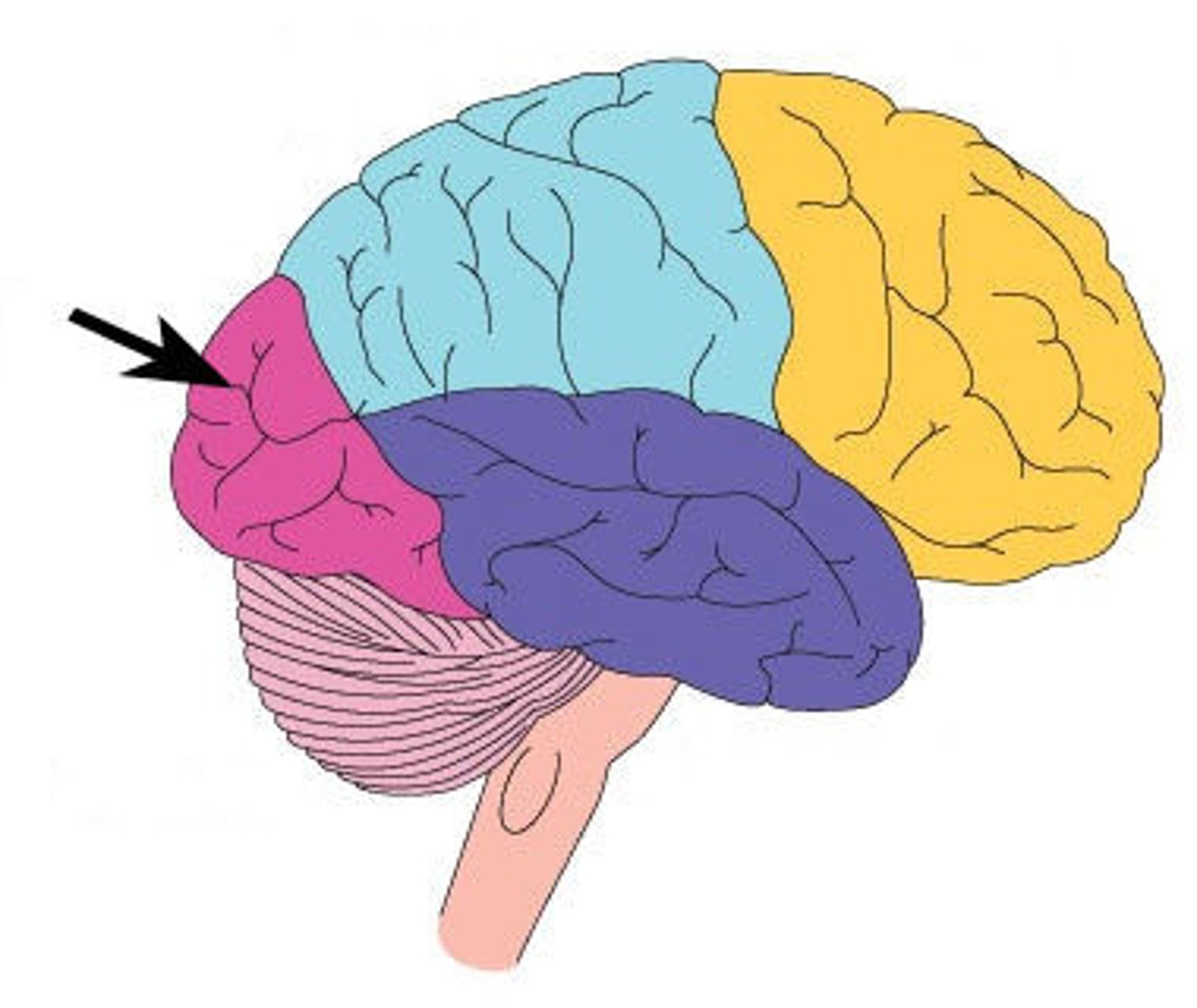
Occiptial bone
Hindmost bone of the skull, below the parietal bones; forms the back of the skull
Nasal bone
forms the bridge of the nose. Flexible cartilage
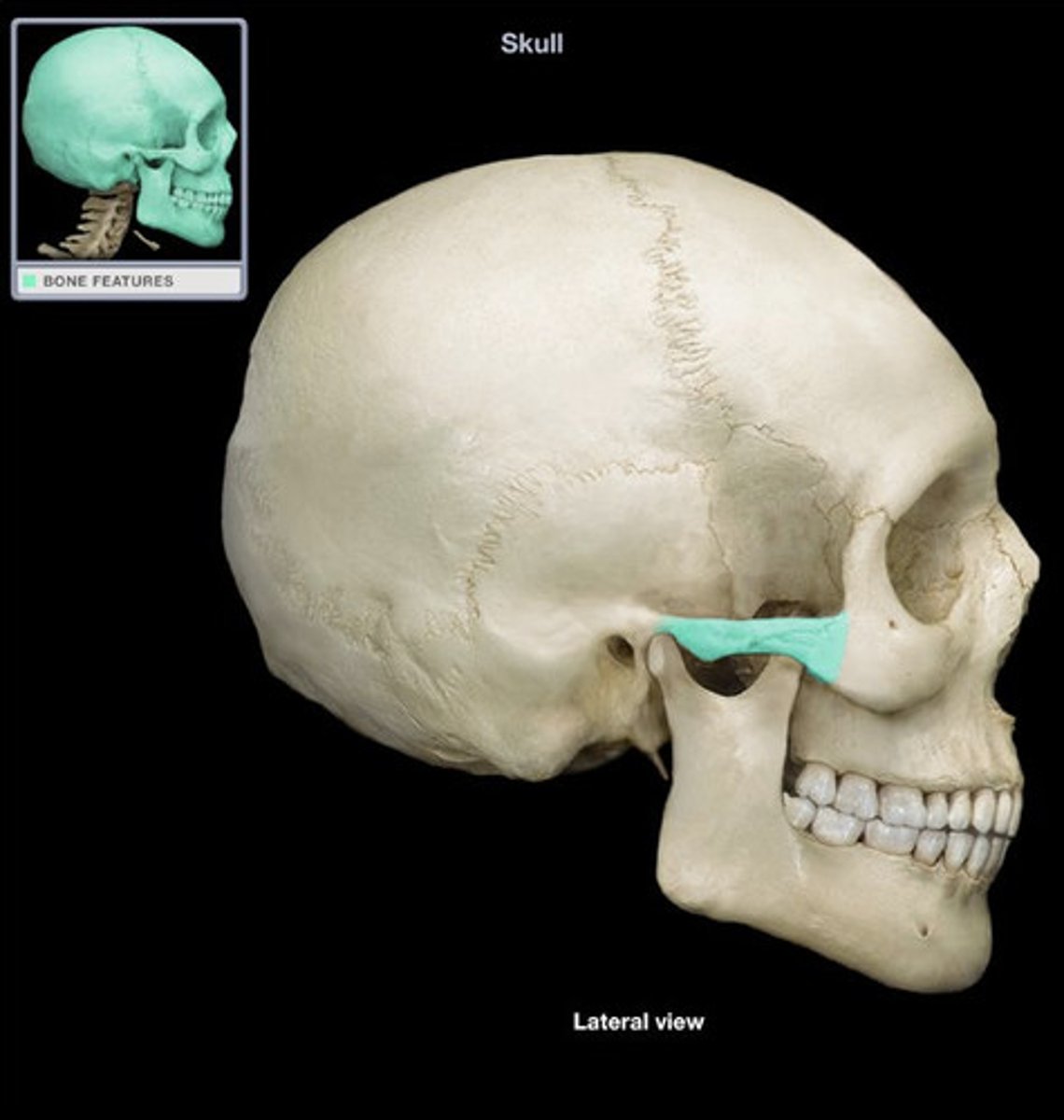
Zygomatic bones
Cheek bones
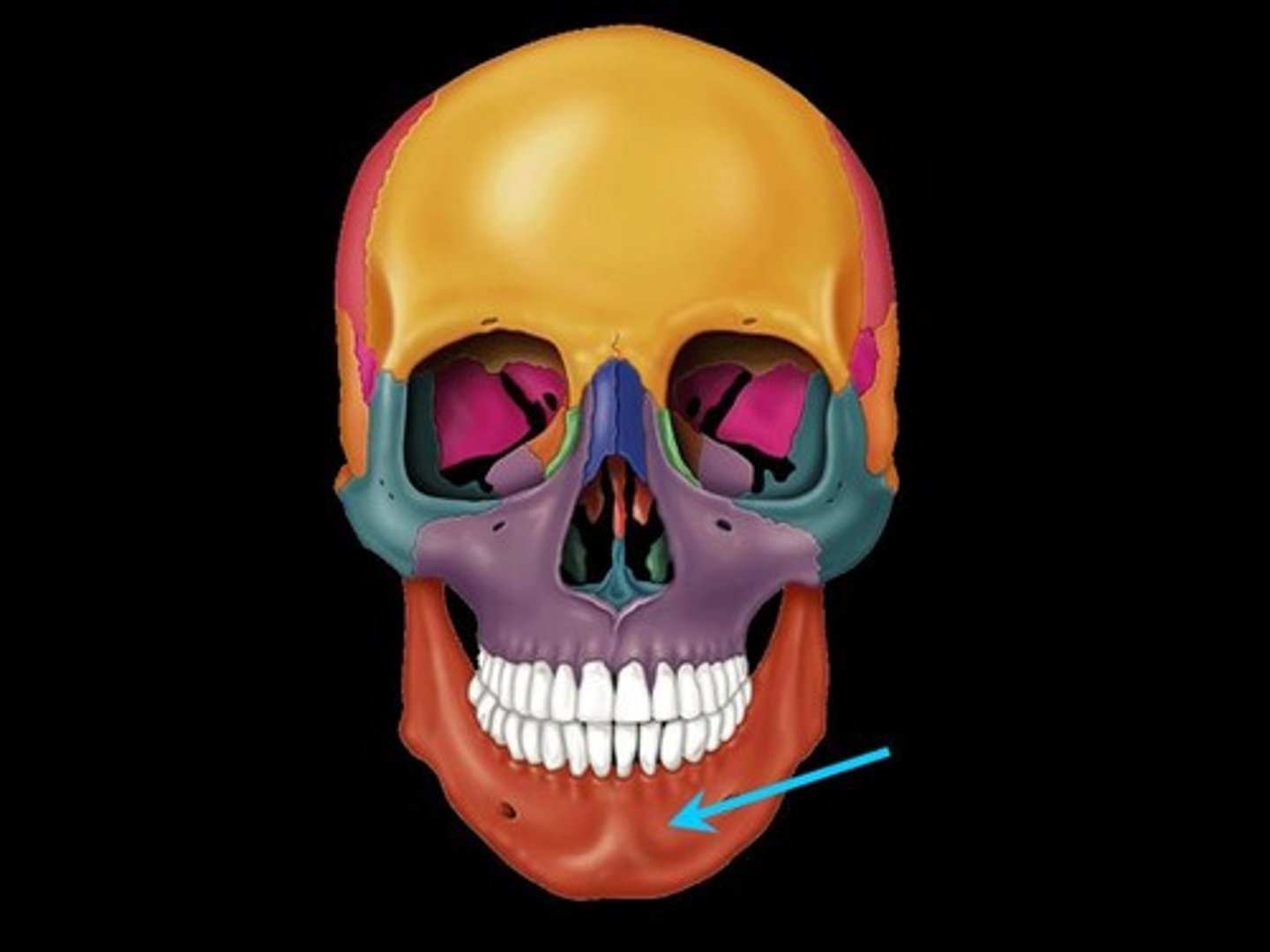
Mandible
Only moveable facial bone with a joint. Bottom jaw
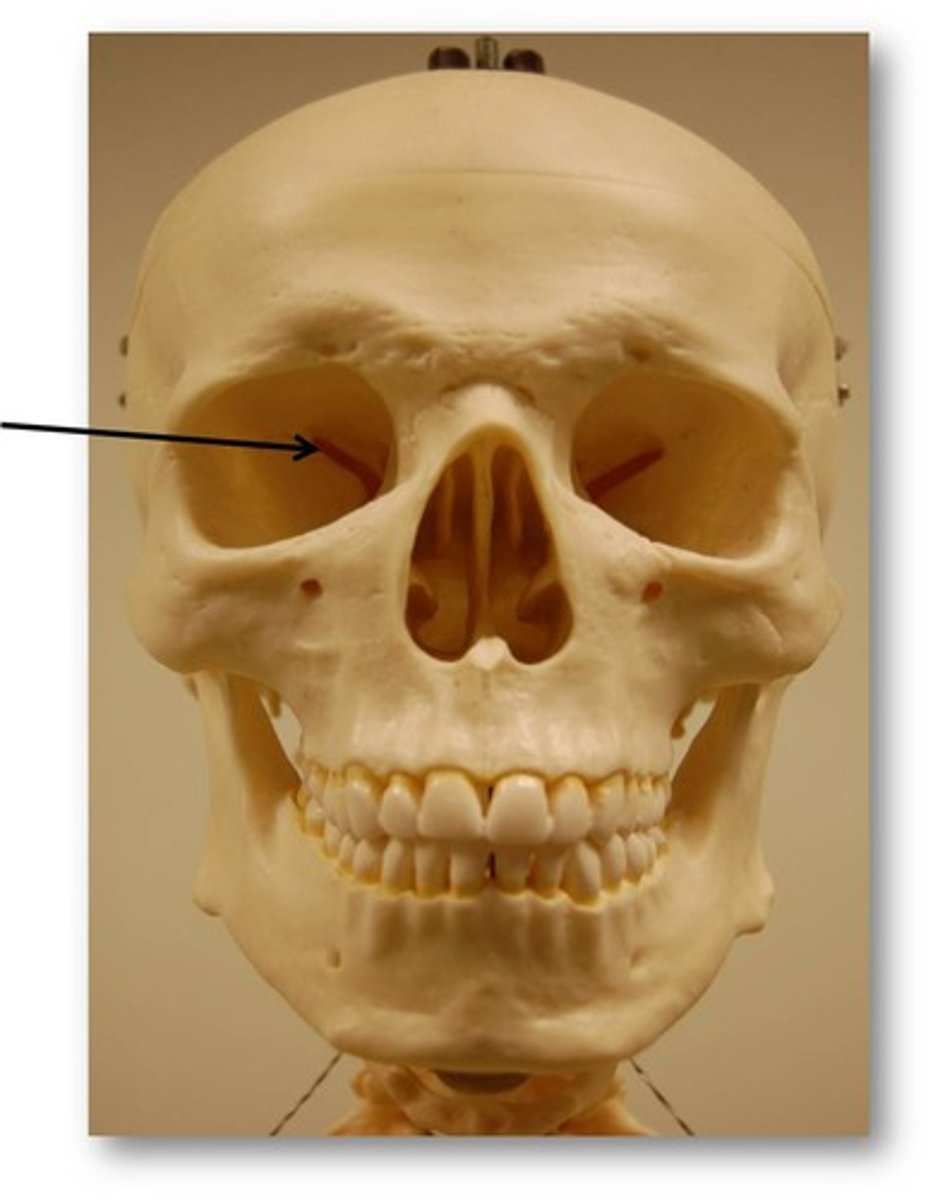
Orbit
The eye socket, made up of the maxilla and zygoma.
Thyroid cartilage
Adam's apple. Firm prominence in the upper part of larynx
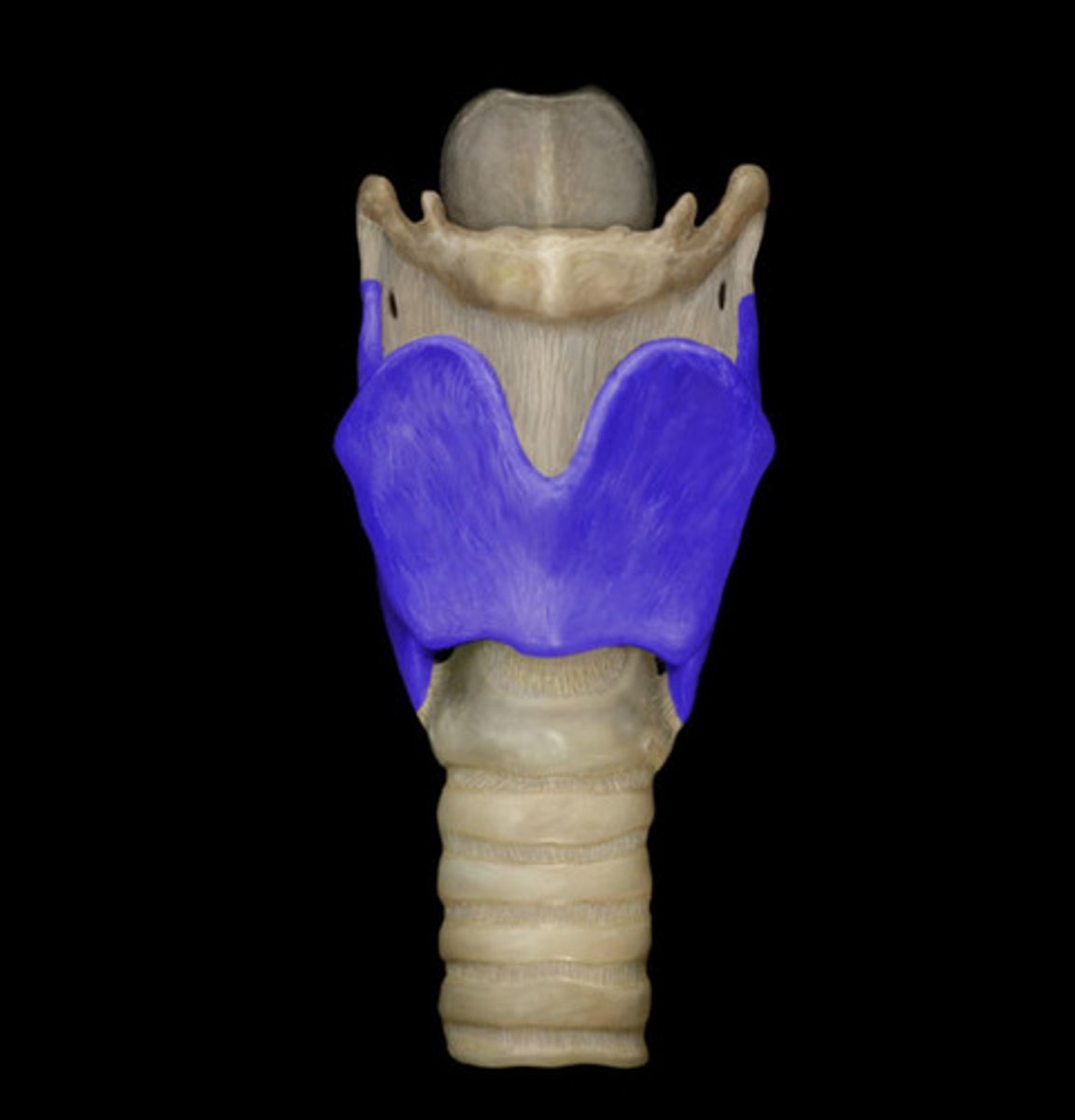
Cricoid Cartilage
A firm ridge of cartilage that forms the lower part of the larynx.
-Push down on it to help with intubation (helps see the vocal cords)
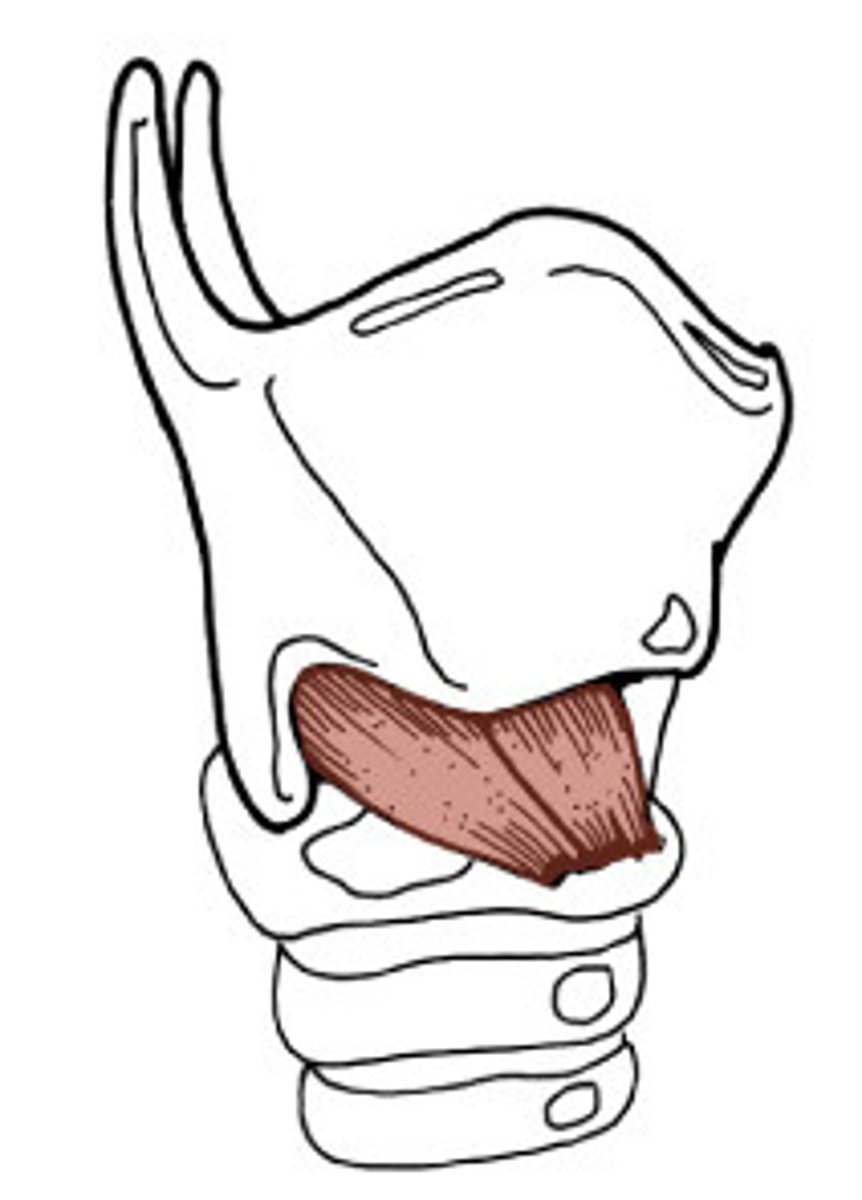
Cricothyroid membrane
A thin sheet of fascia that connects the thyroid and cricoid cartilages that make up the larynx.
Bronchi
Trachea connects the larynx with the main air passage of the lungs
Vertebra
Makes up the spine, 33 total vertebra
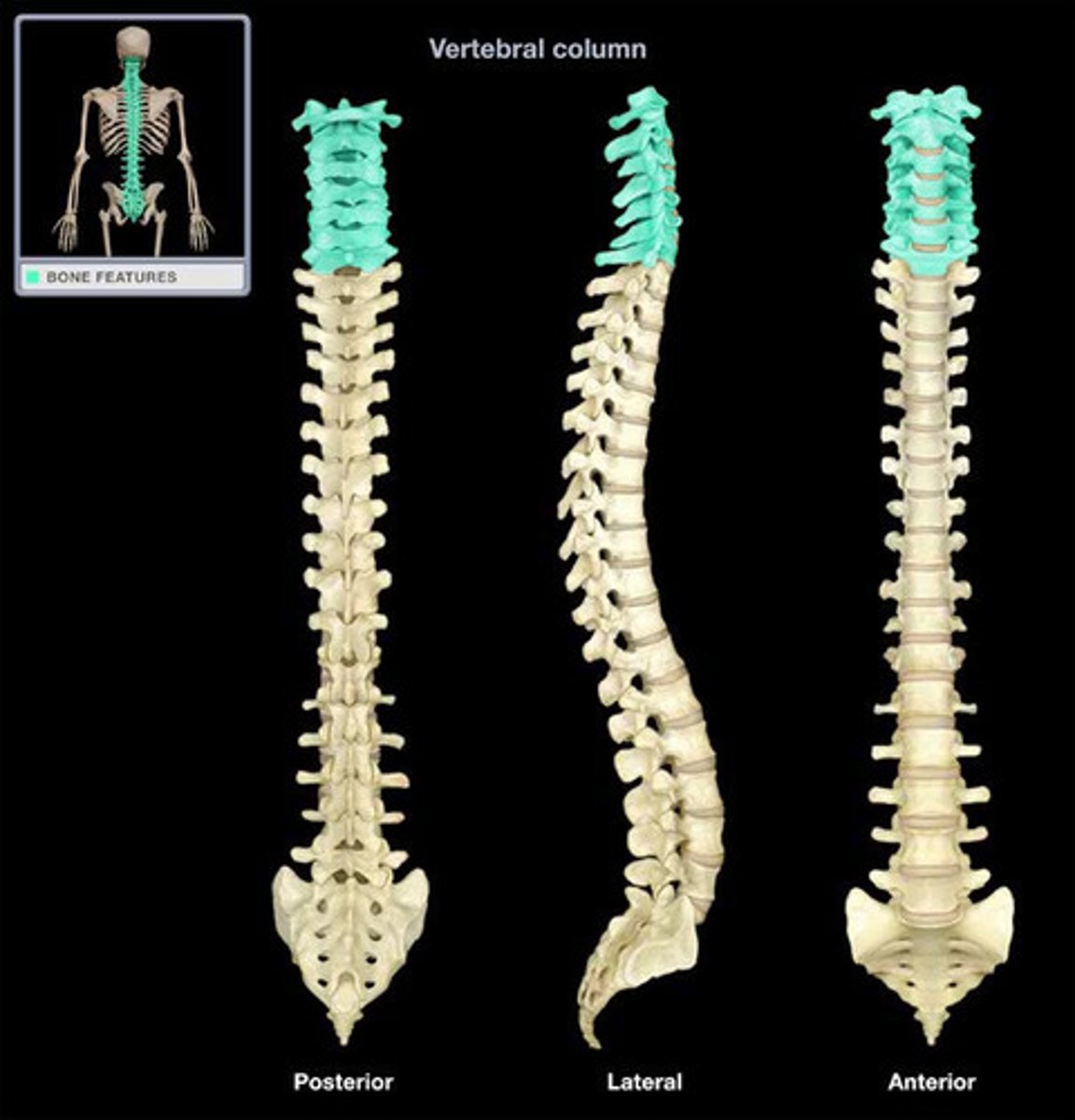
Cervical (neck) region
7 vertebra
Thoracic region (upper back)
12 vertebra
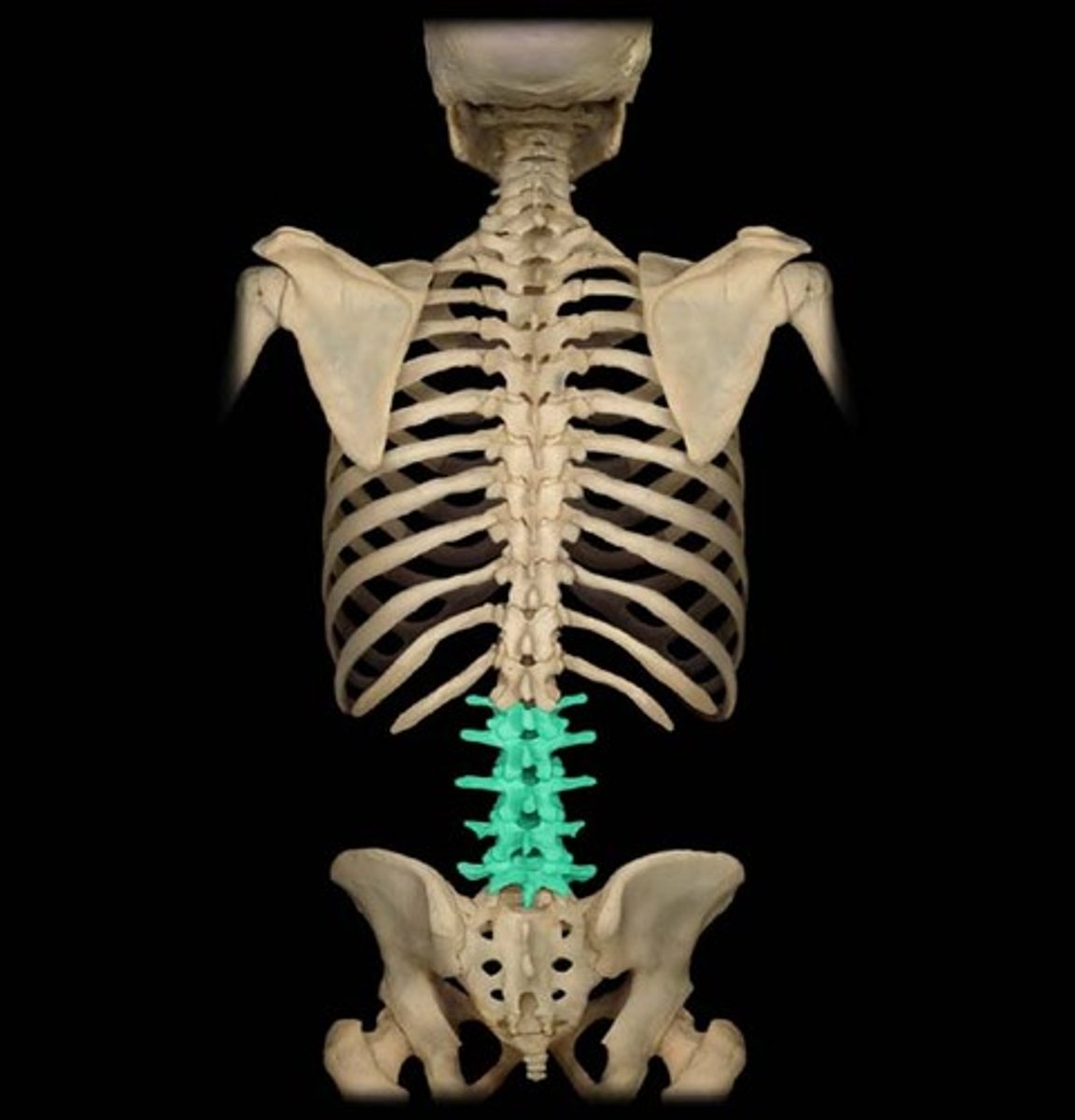
Lumbar region (lower back)
5 vertebra
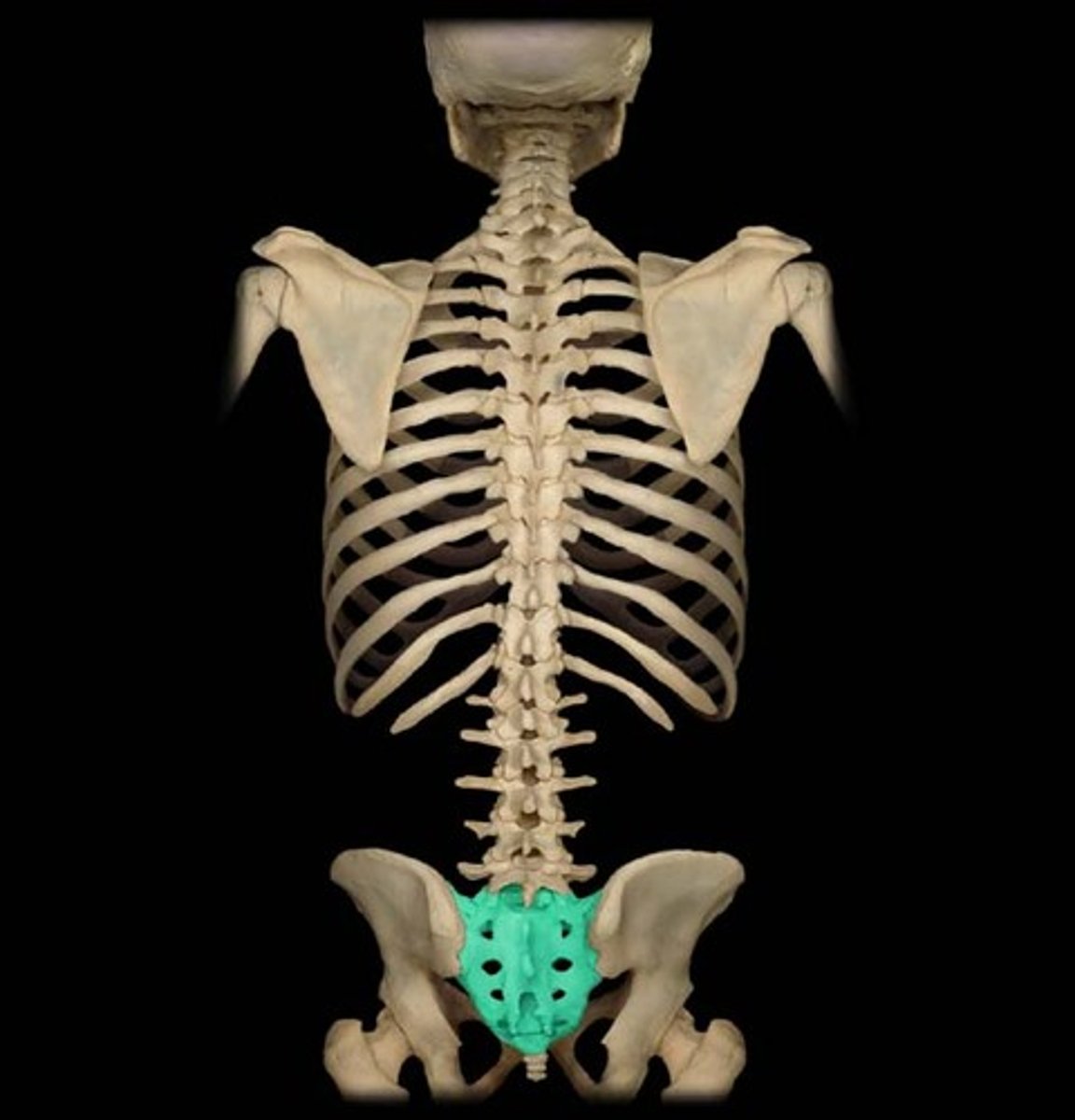
Sacral region (back wall of the pelvis)
5 vertebra
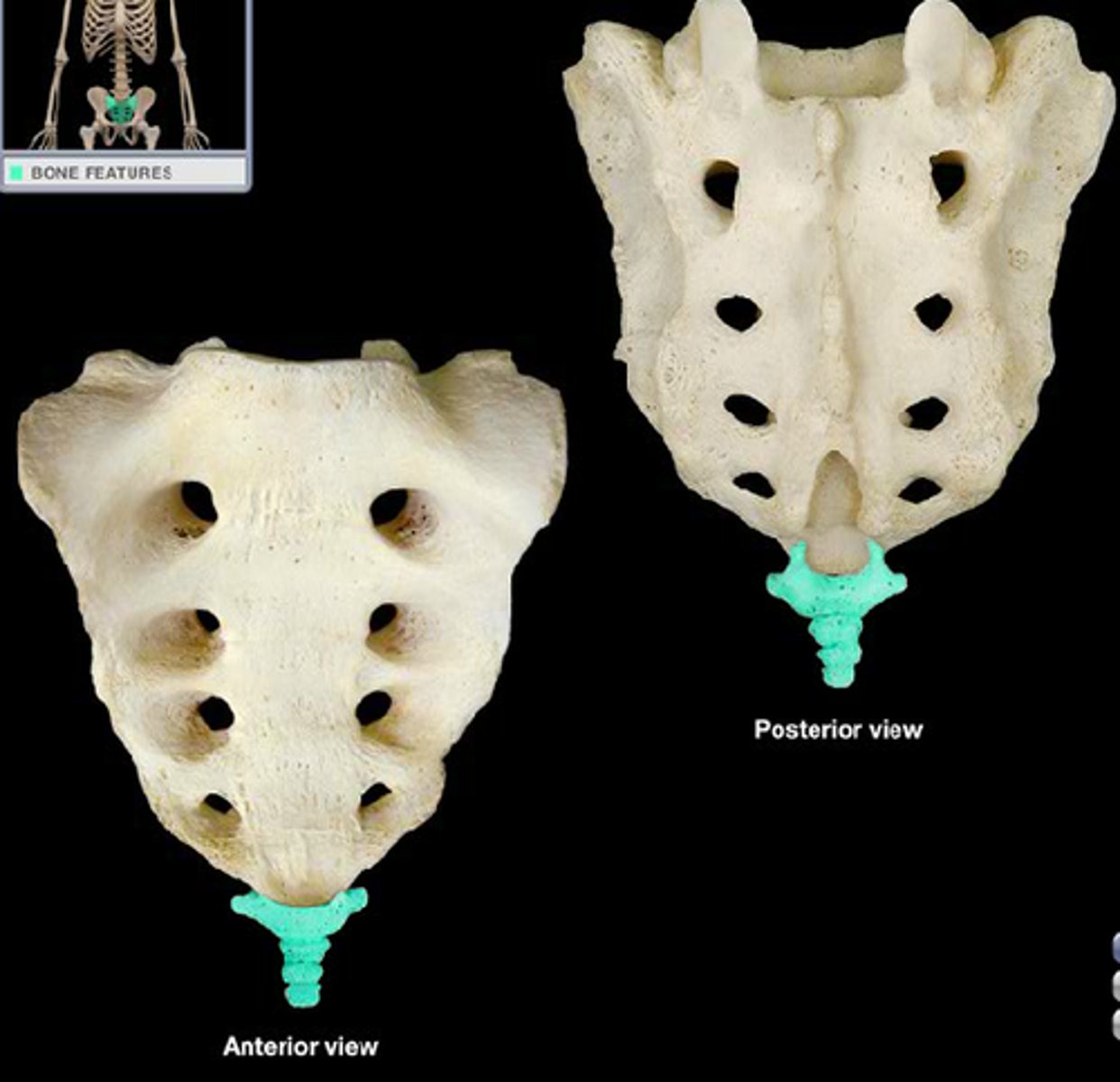
Coccyx region (tailbone)
4 vertebra
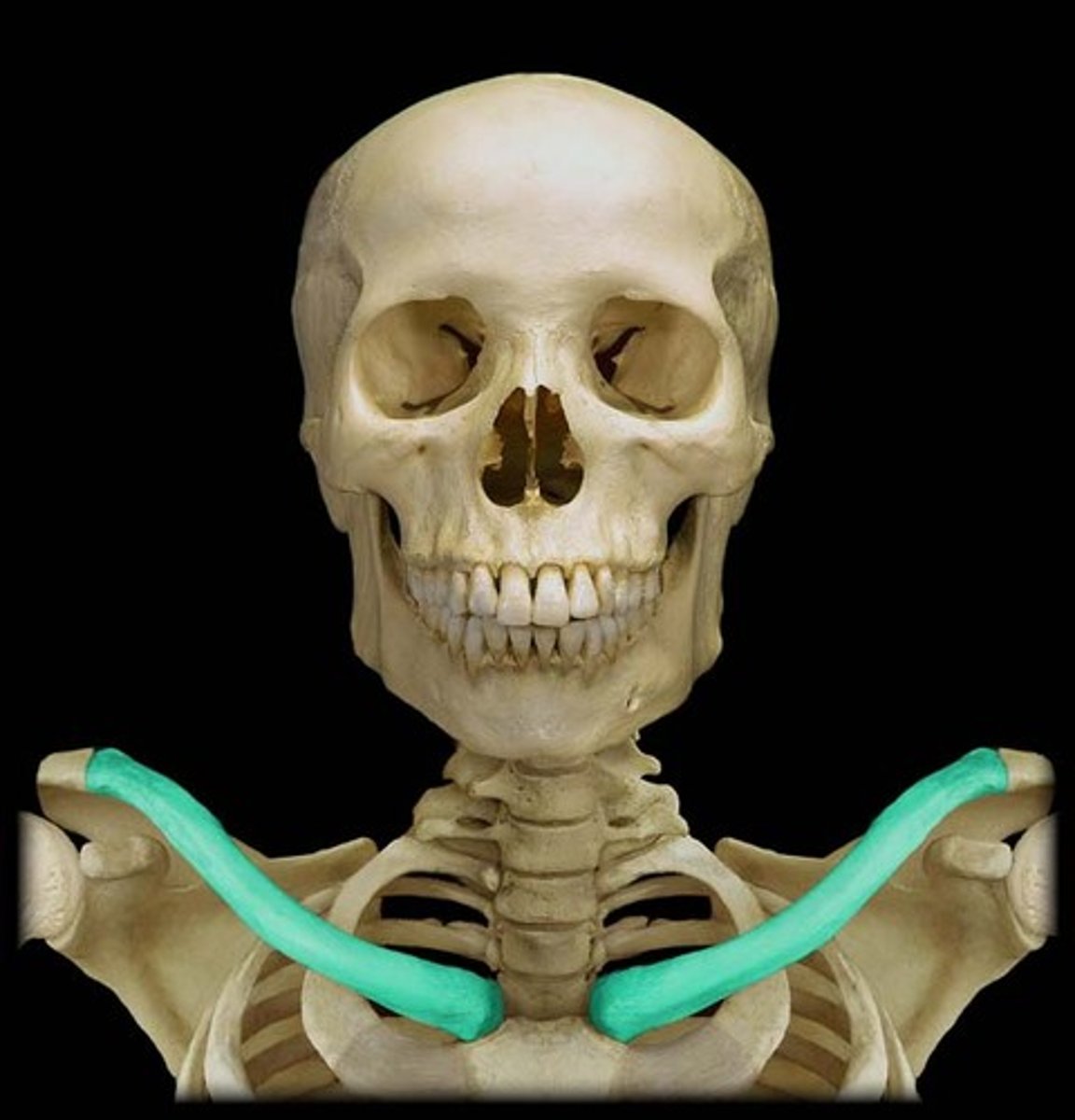
Clavicle
Collar bone. Most commonly broken bone when ejected in multi-system trauma
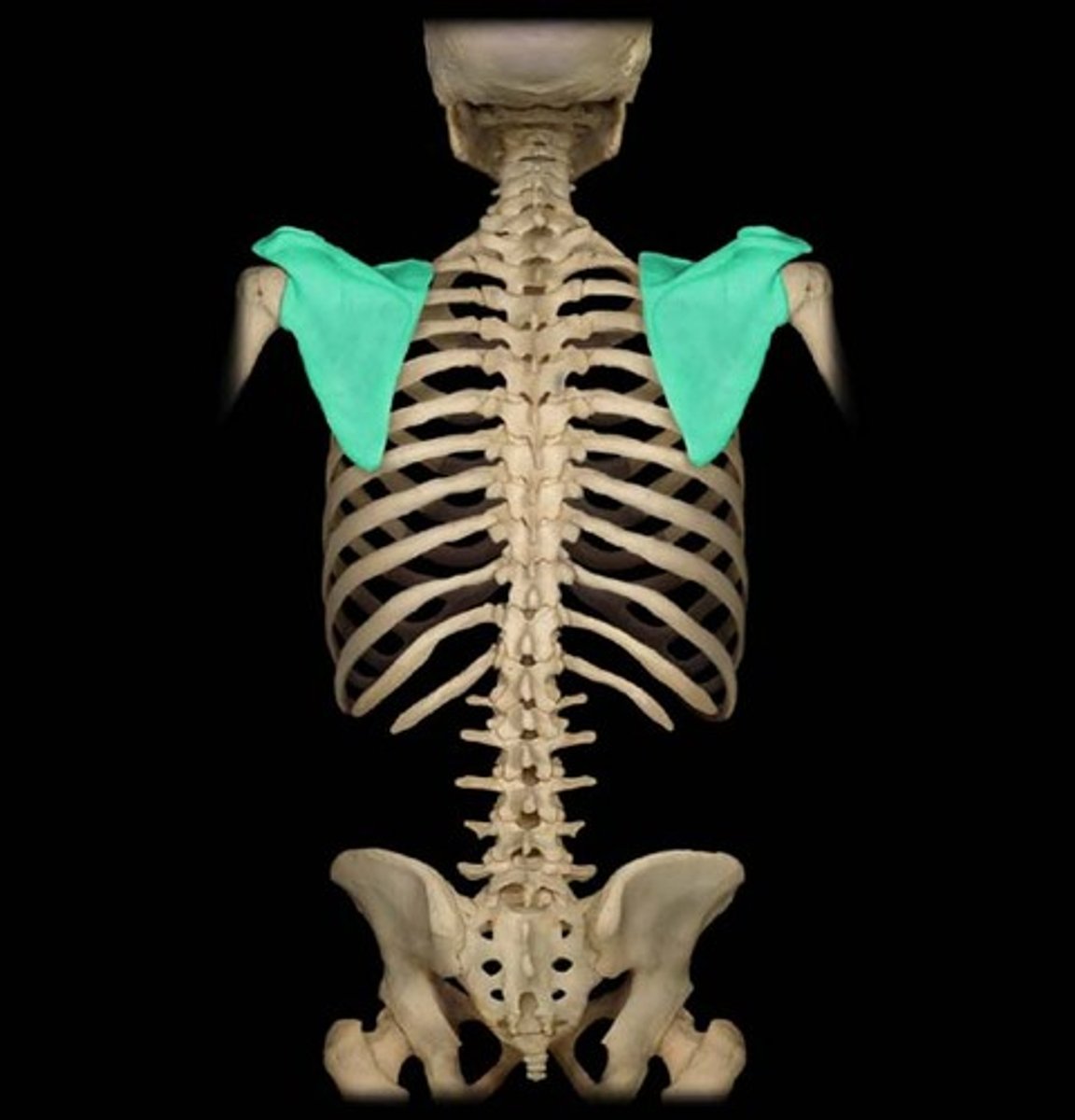
Scapula
The shoulder blade
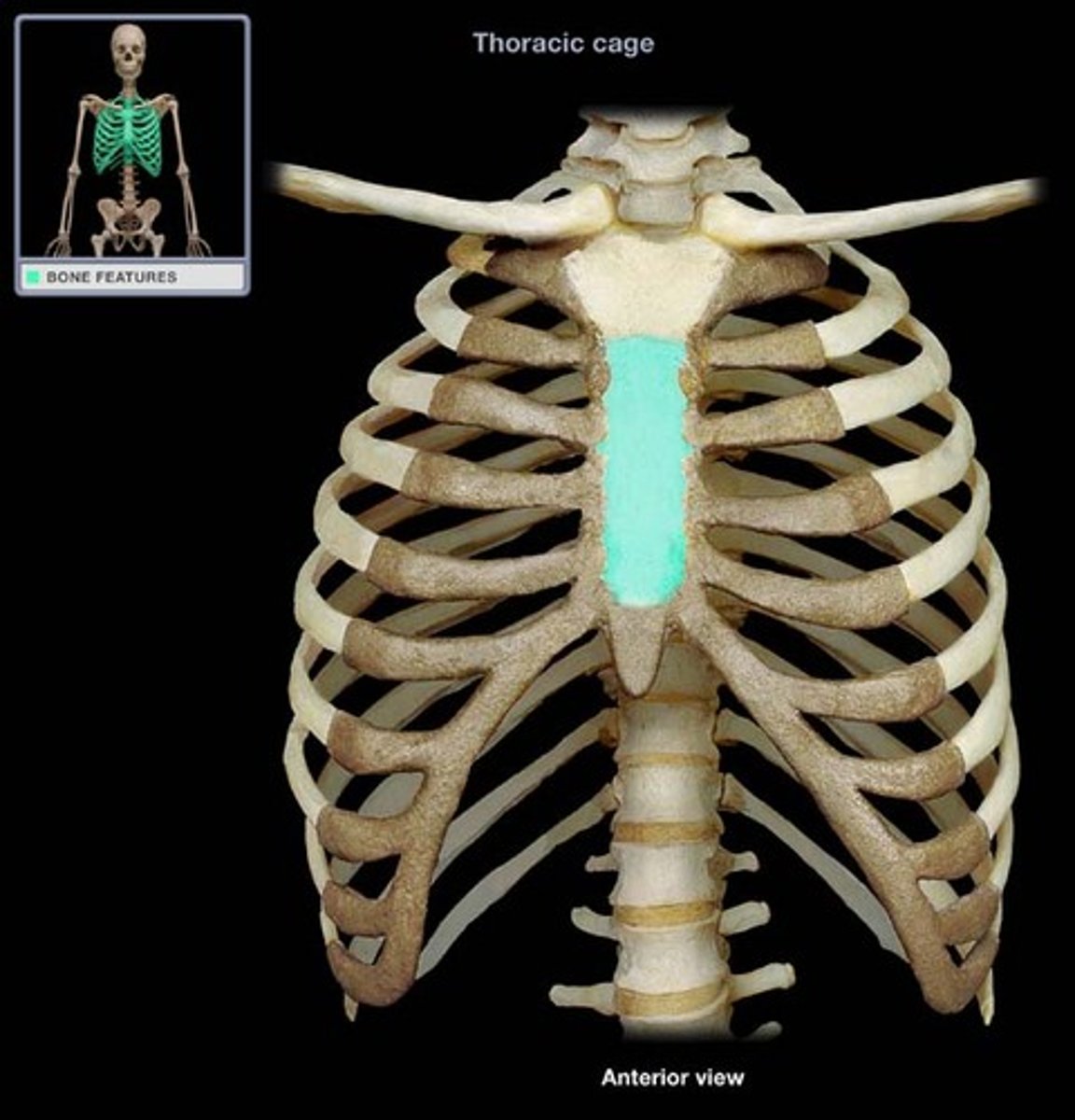
Sternum
The breastbone. Midline of the chest
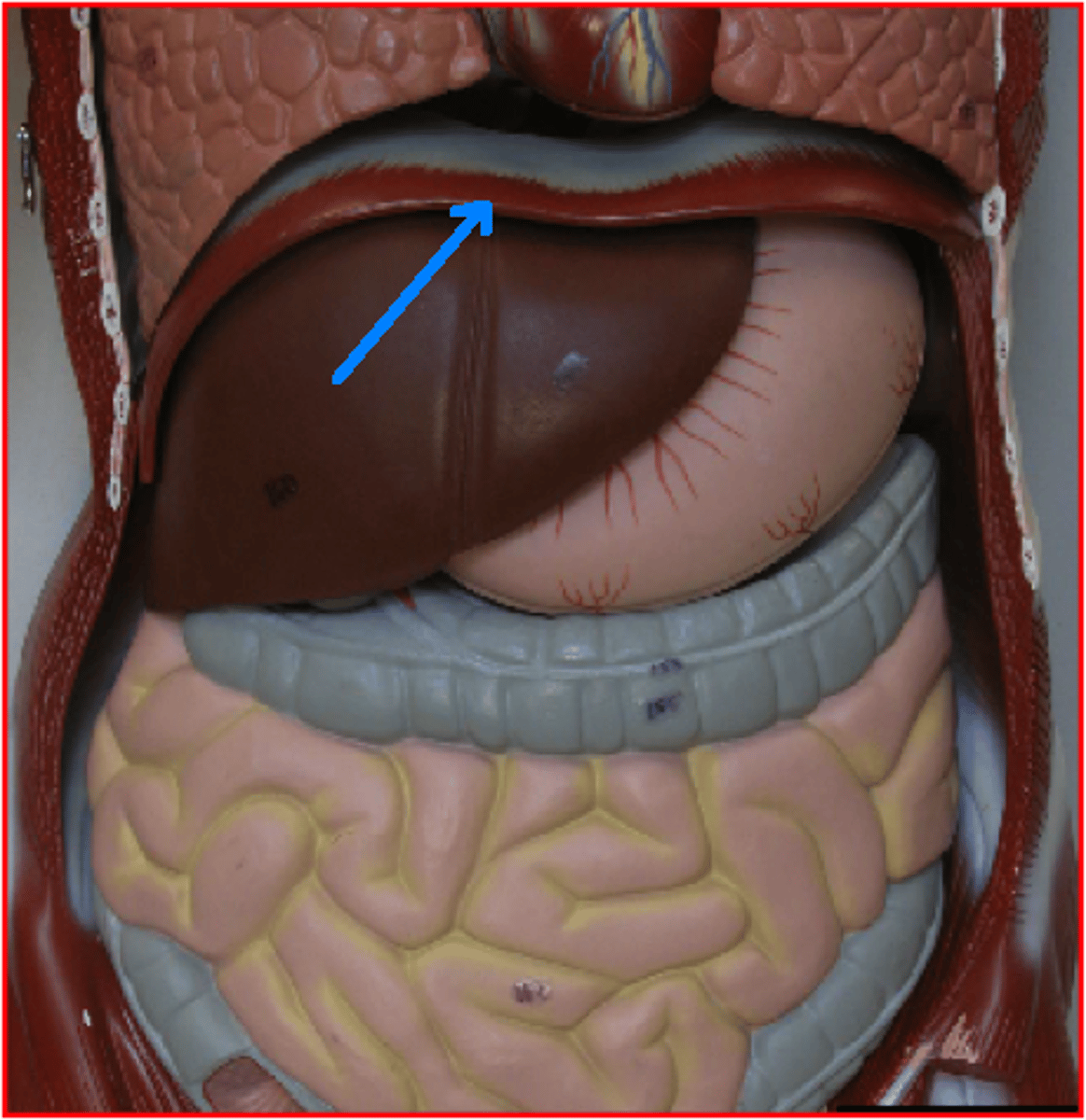
Diaphram
Large, flat muscle at the bottom of the chest cavity that helps with breathing
-When expands pushes on the abdomen
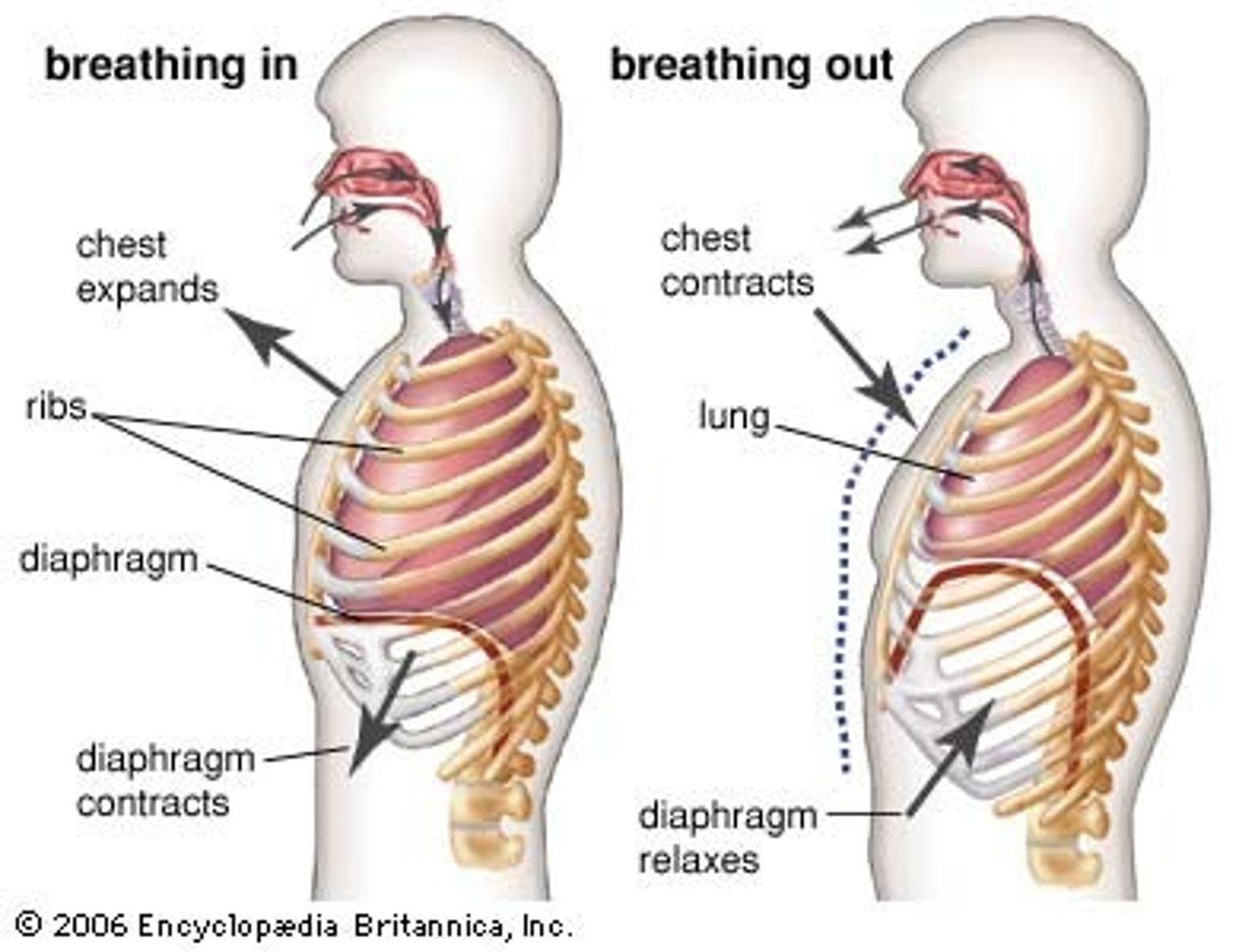
Inhalation
Breathing in. Diaphram contracts
Active
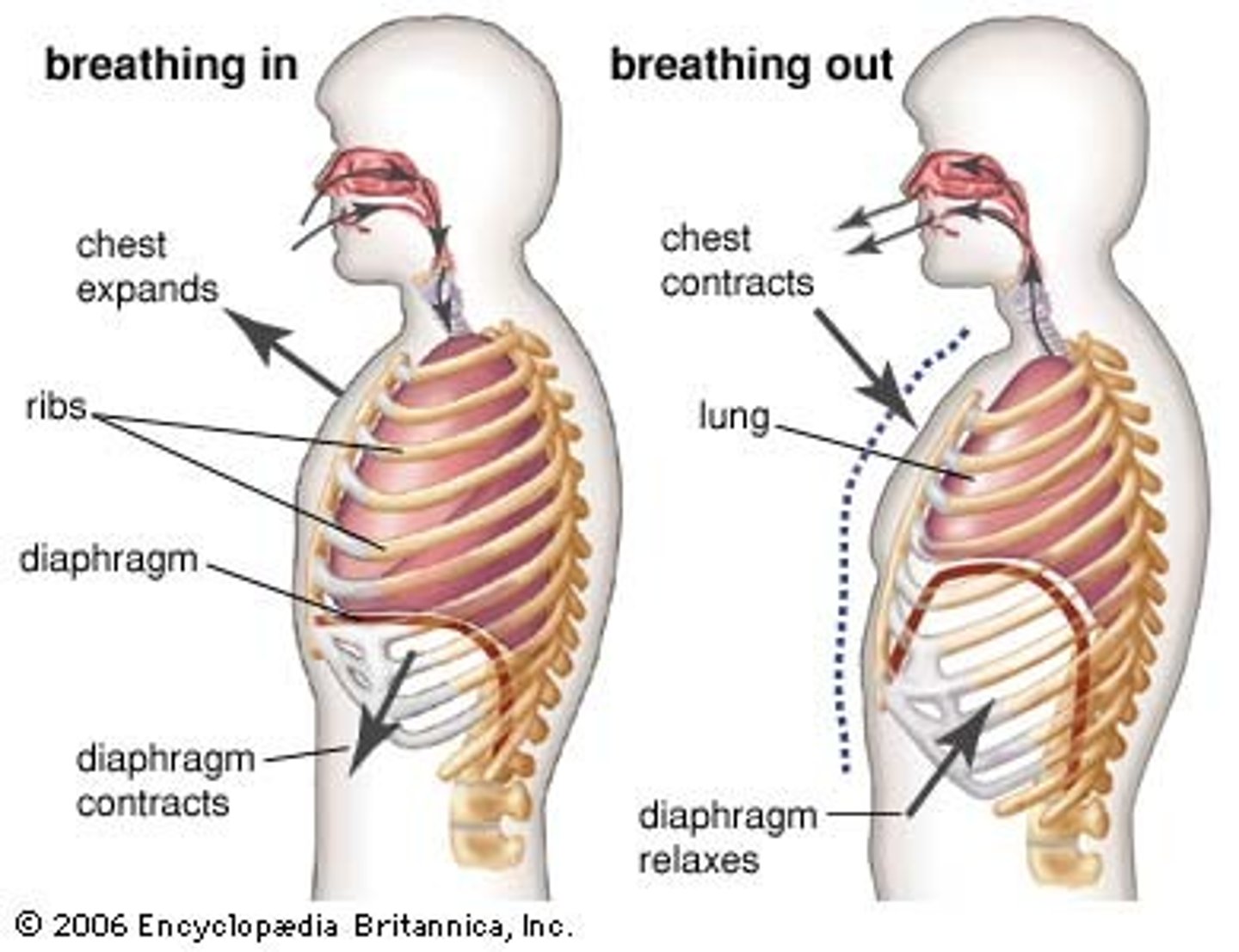
Exhalation
Breathing out. Diaphram relaxes
Inactive
Pelvis
Inclosed by three bones: sacrum, and two pelvic bones.
Body cavity
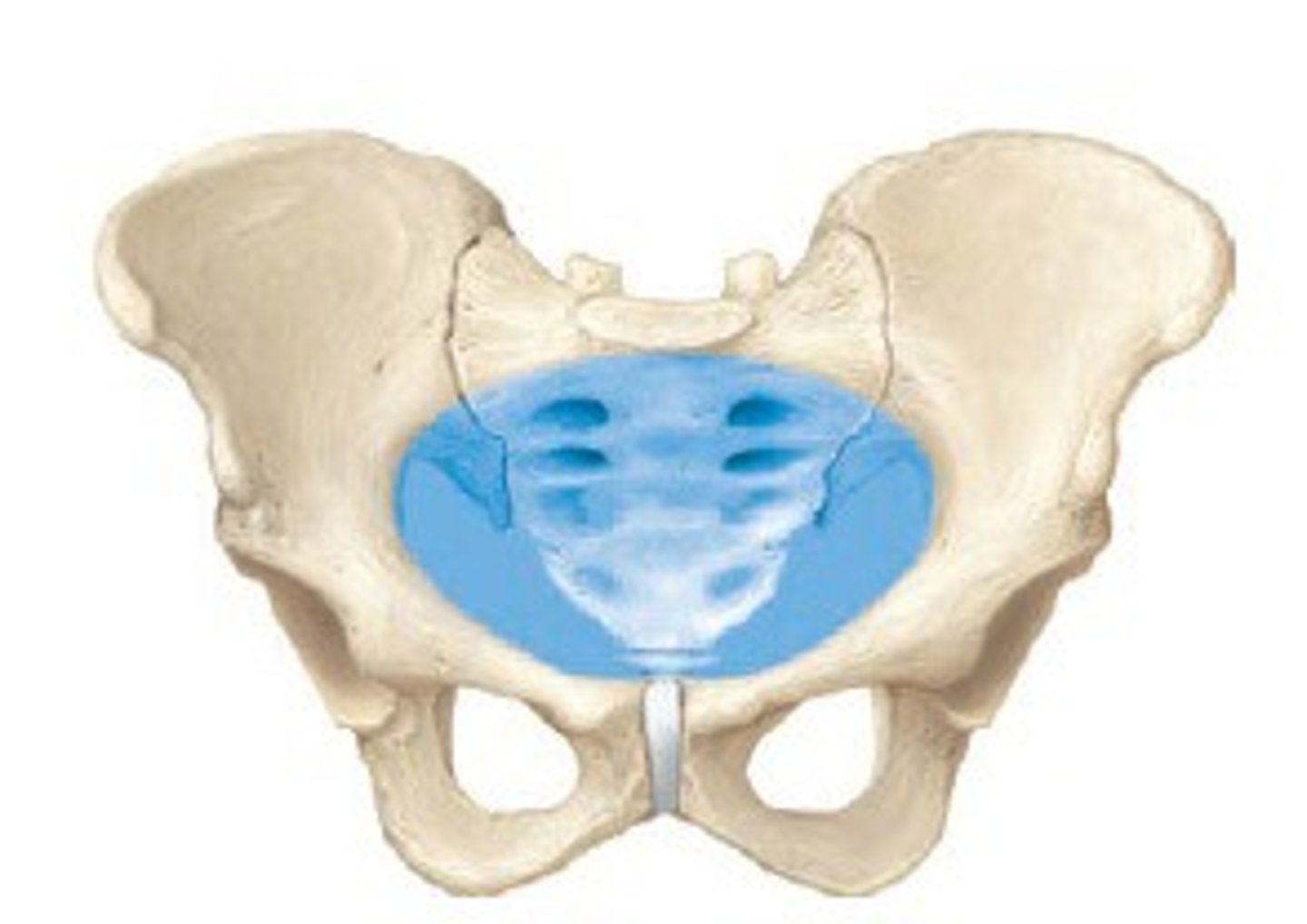
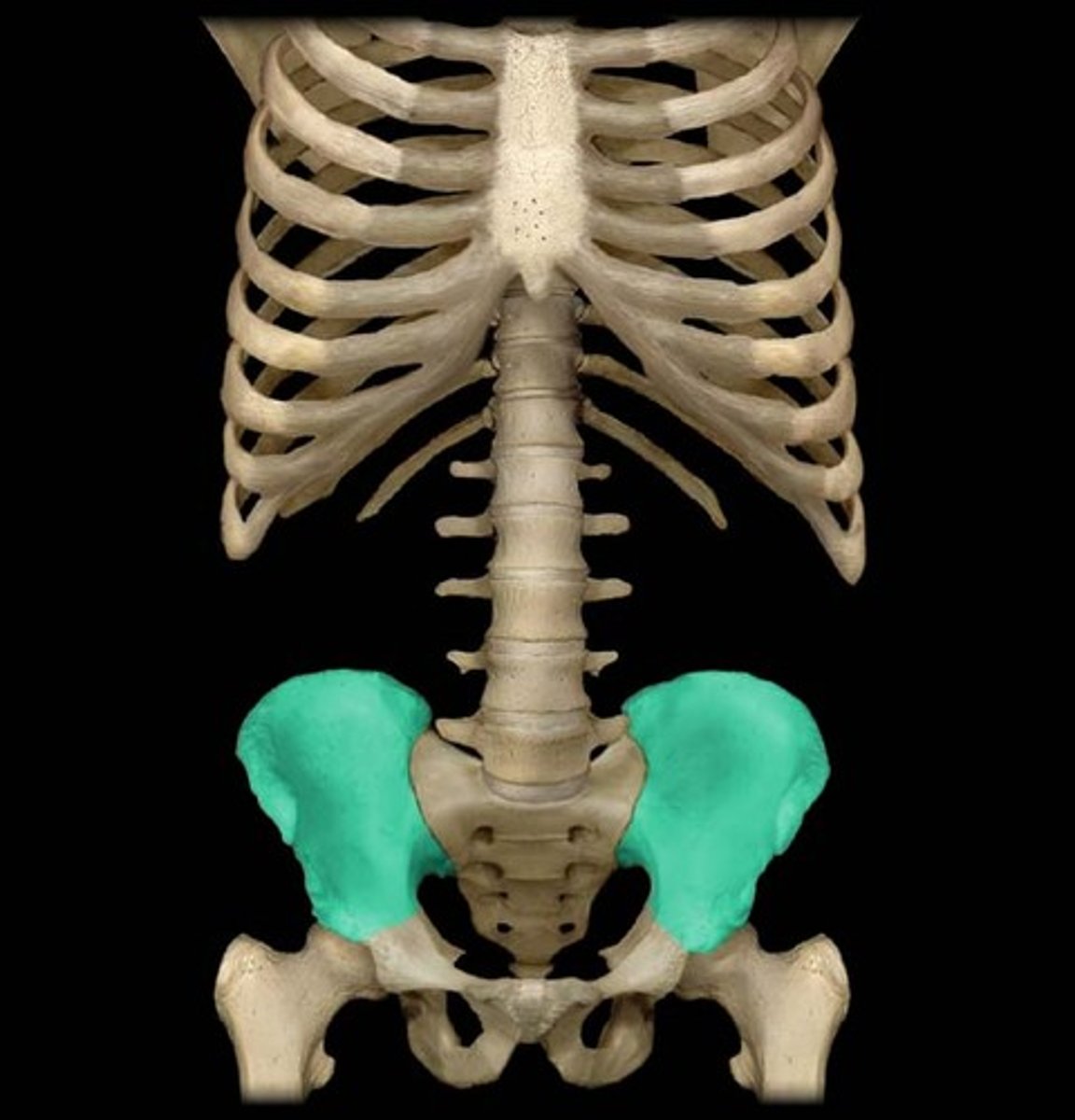
Ilium
the large broad bone forming the upper part of each half of the pelvis.
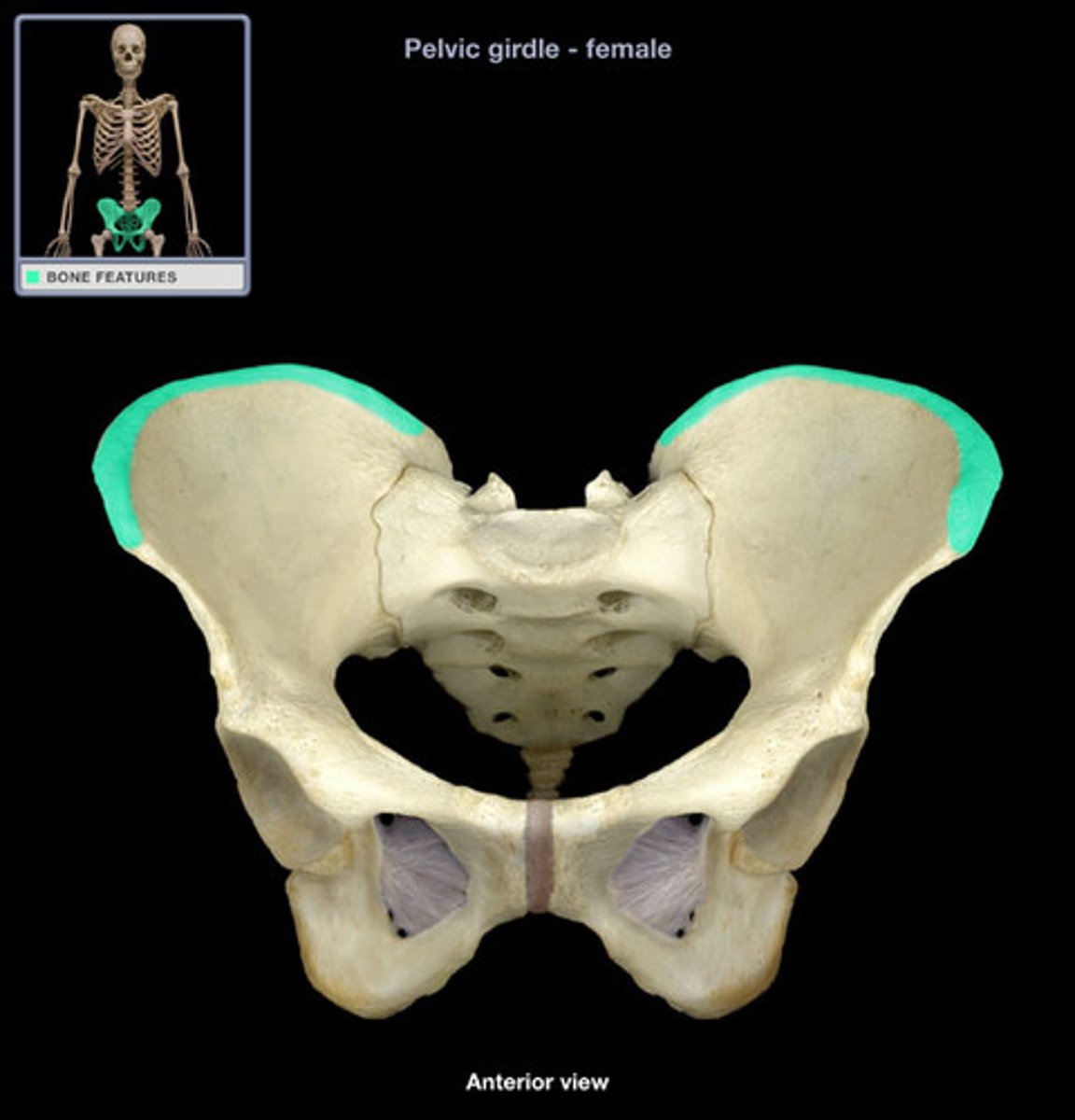
Iliac crest
Found on the top of the hip bone/iilum
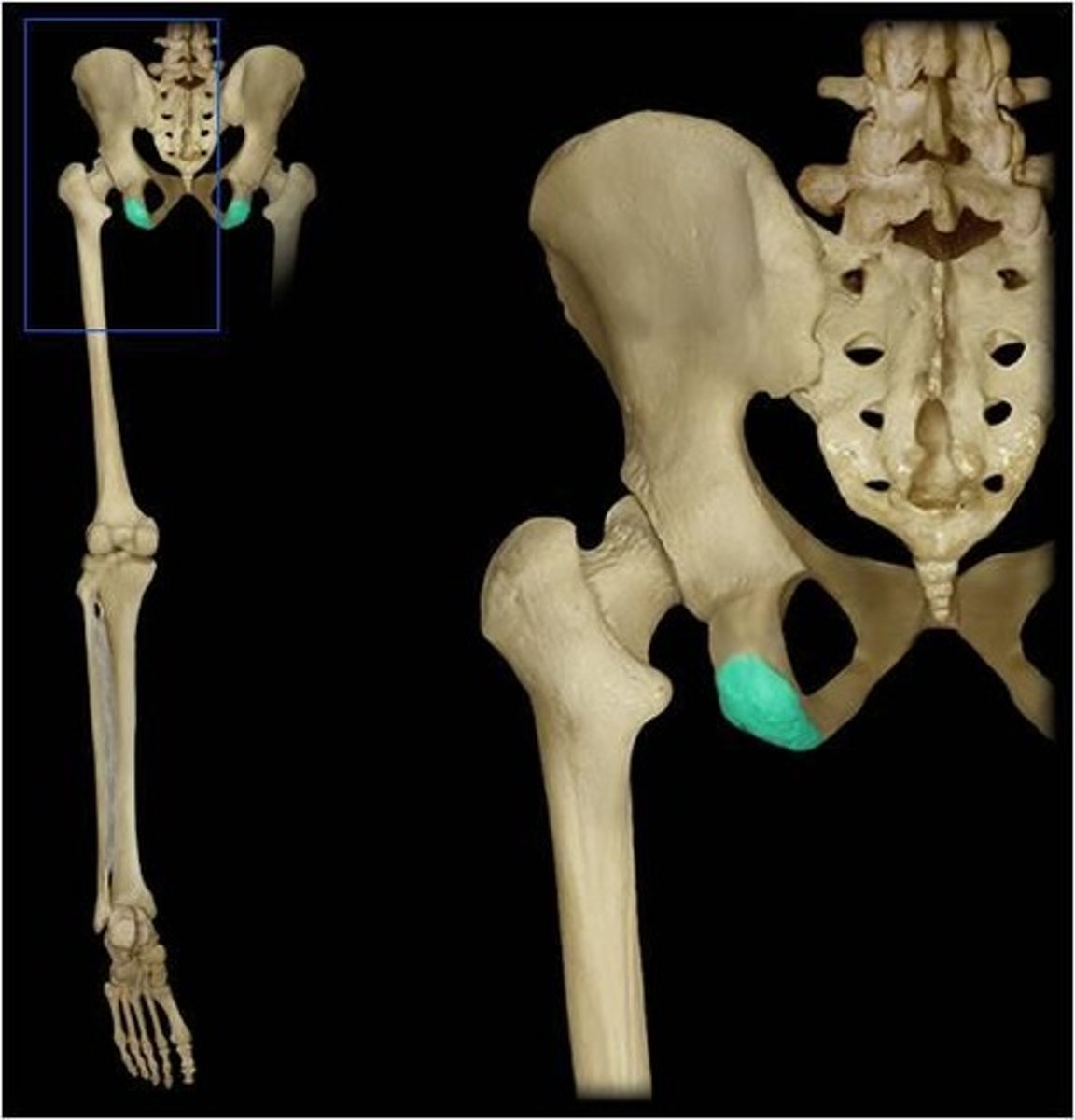
Ishial tuberosity
Circular bones used for ligaments to attach to
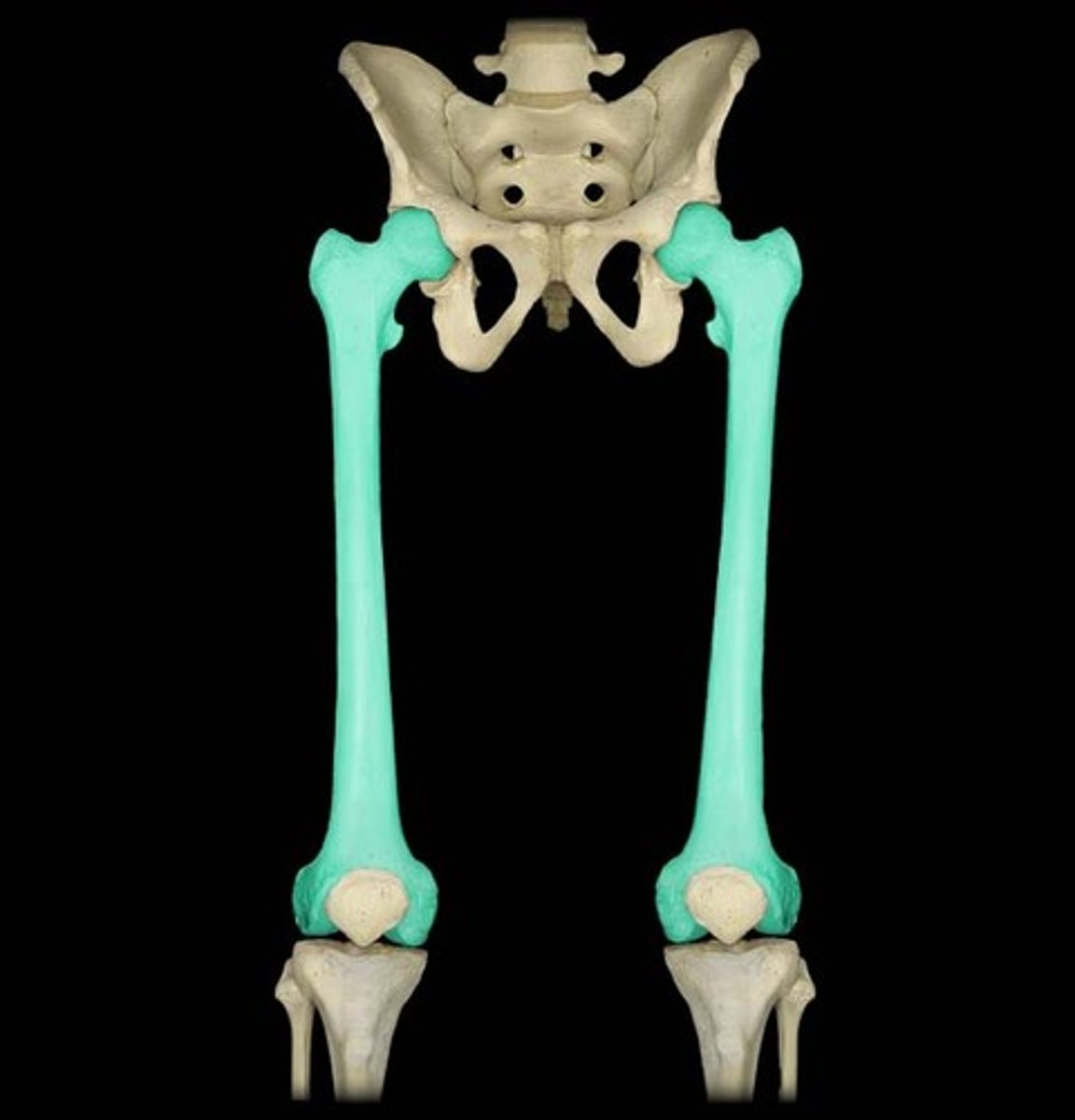
Femur
The thigh bone. Longest and one of the strongest bones
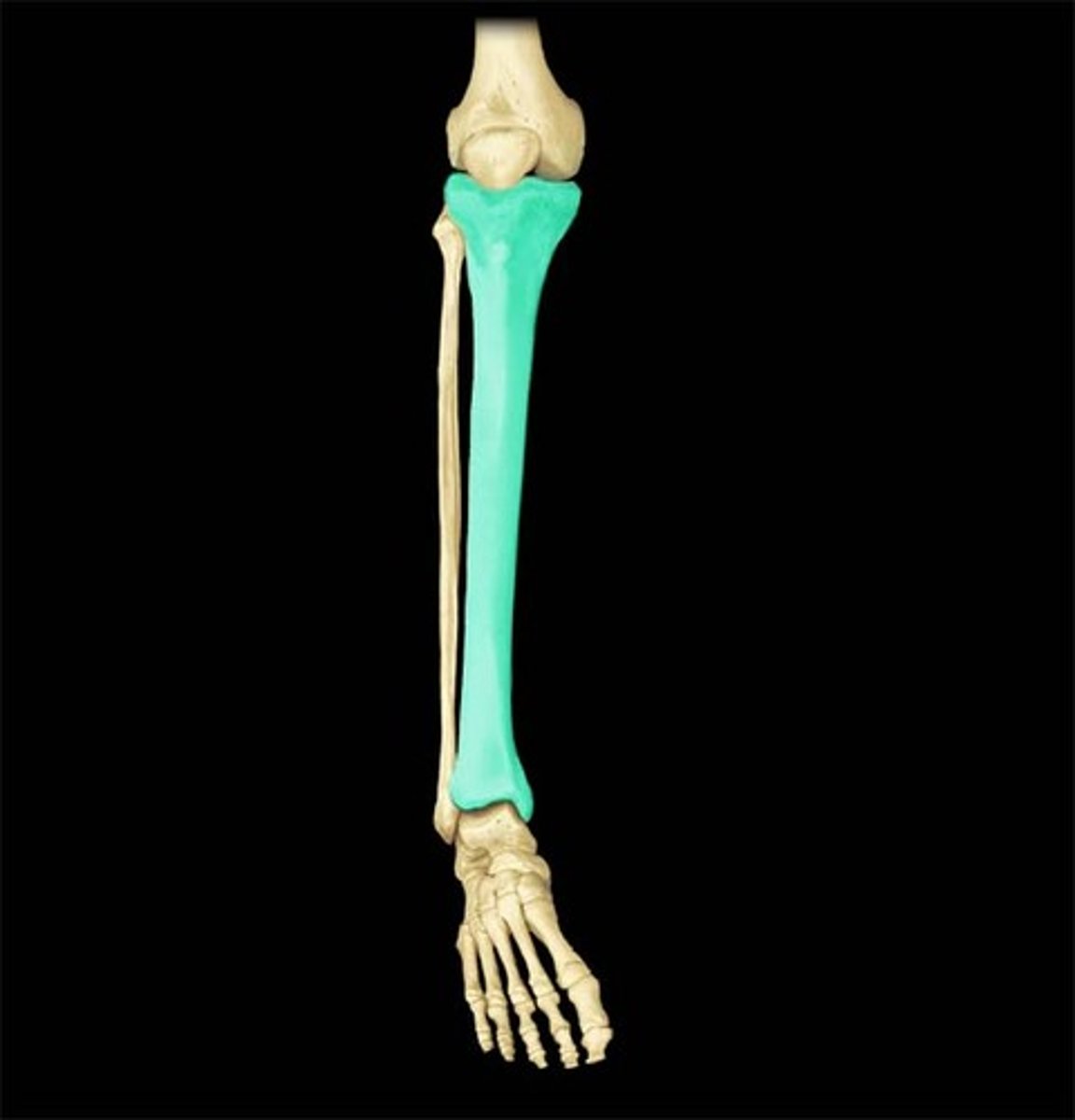
Tibia
Shin/Lower leg
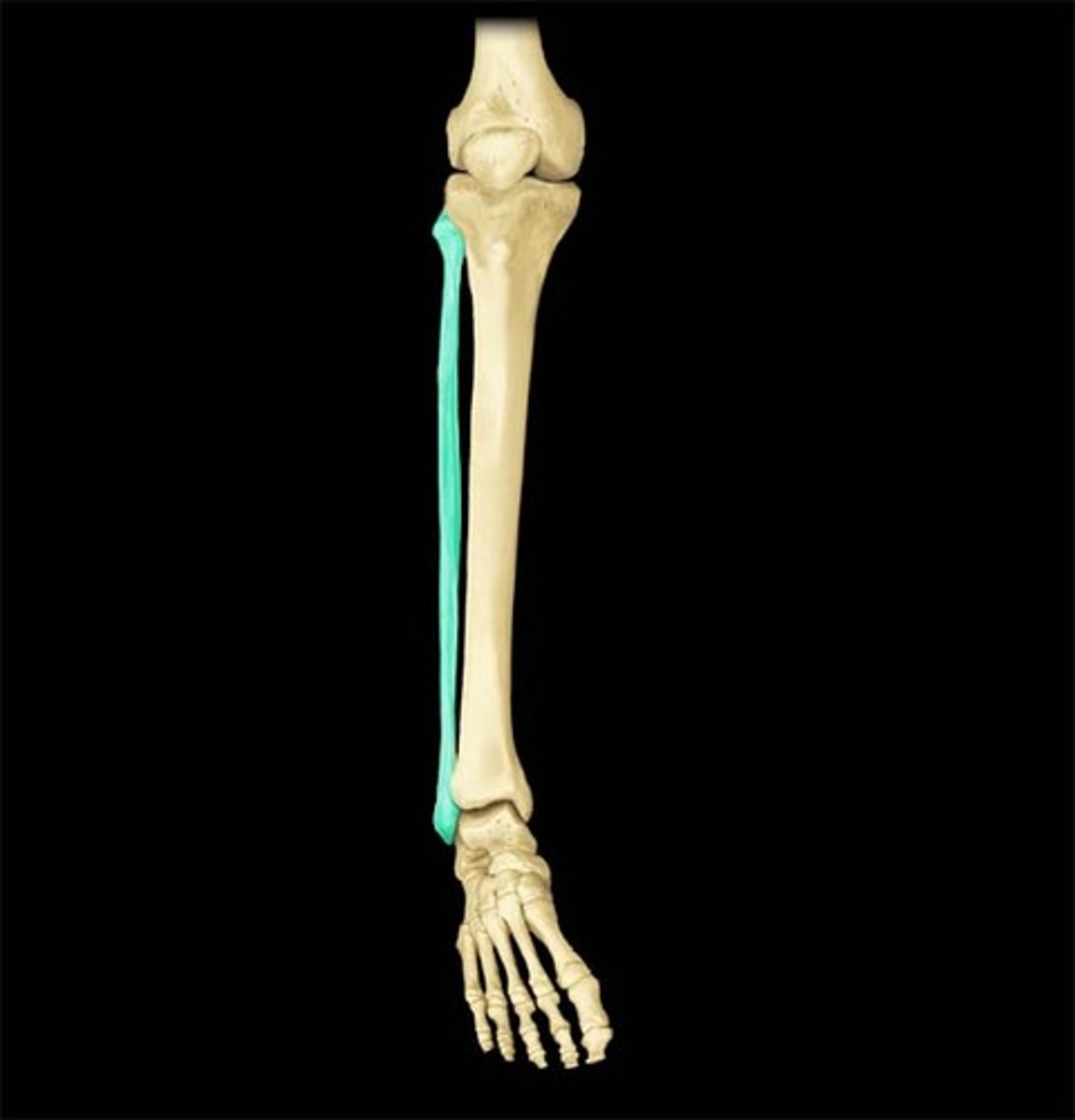
Fibula
Lower leg. Calf bone
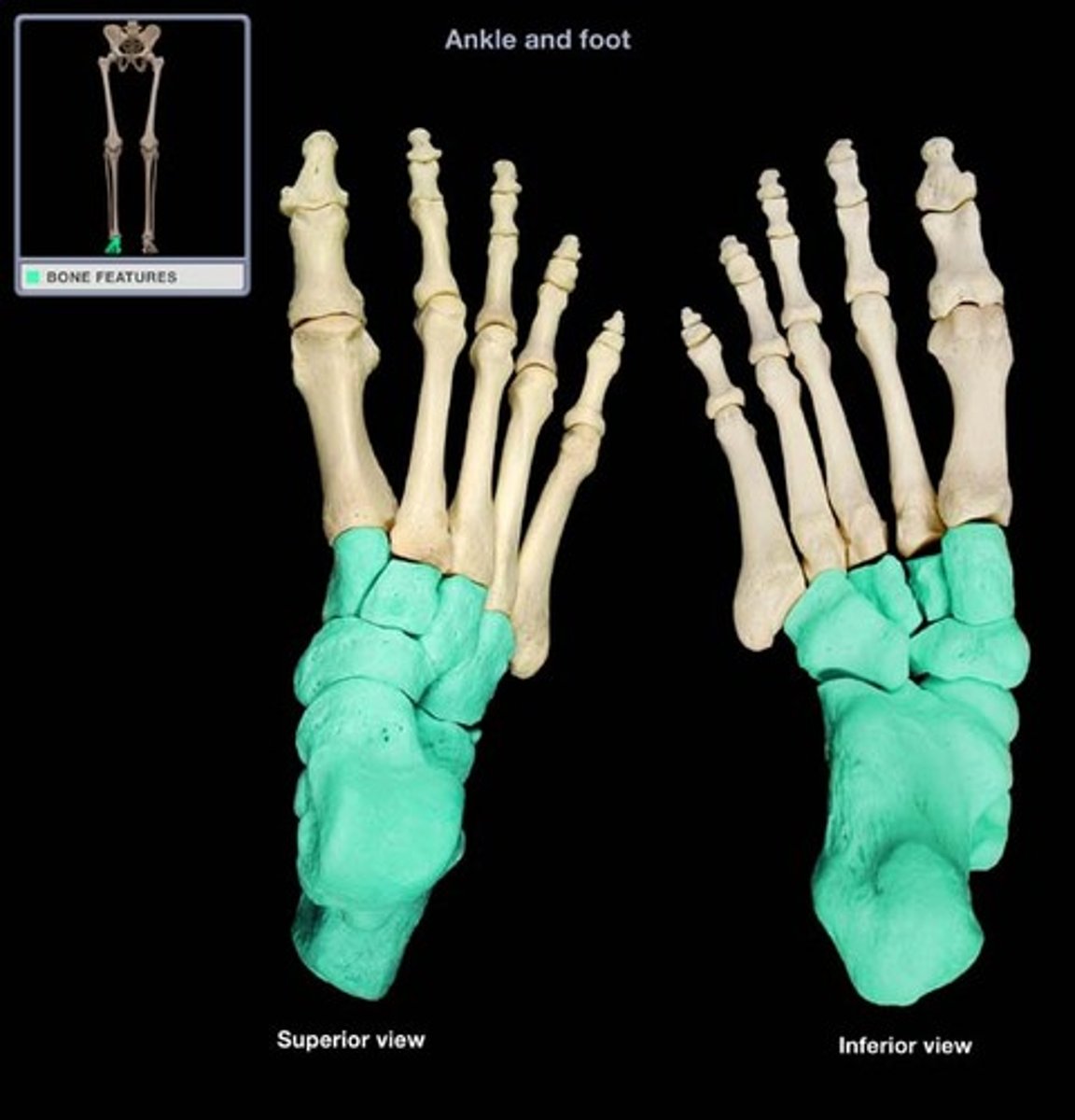
Tarsals
bones of the ankle
Metatarsals
bones of the foot between ankle and toes
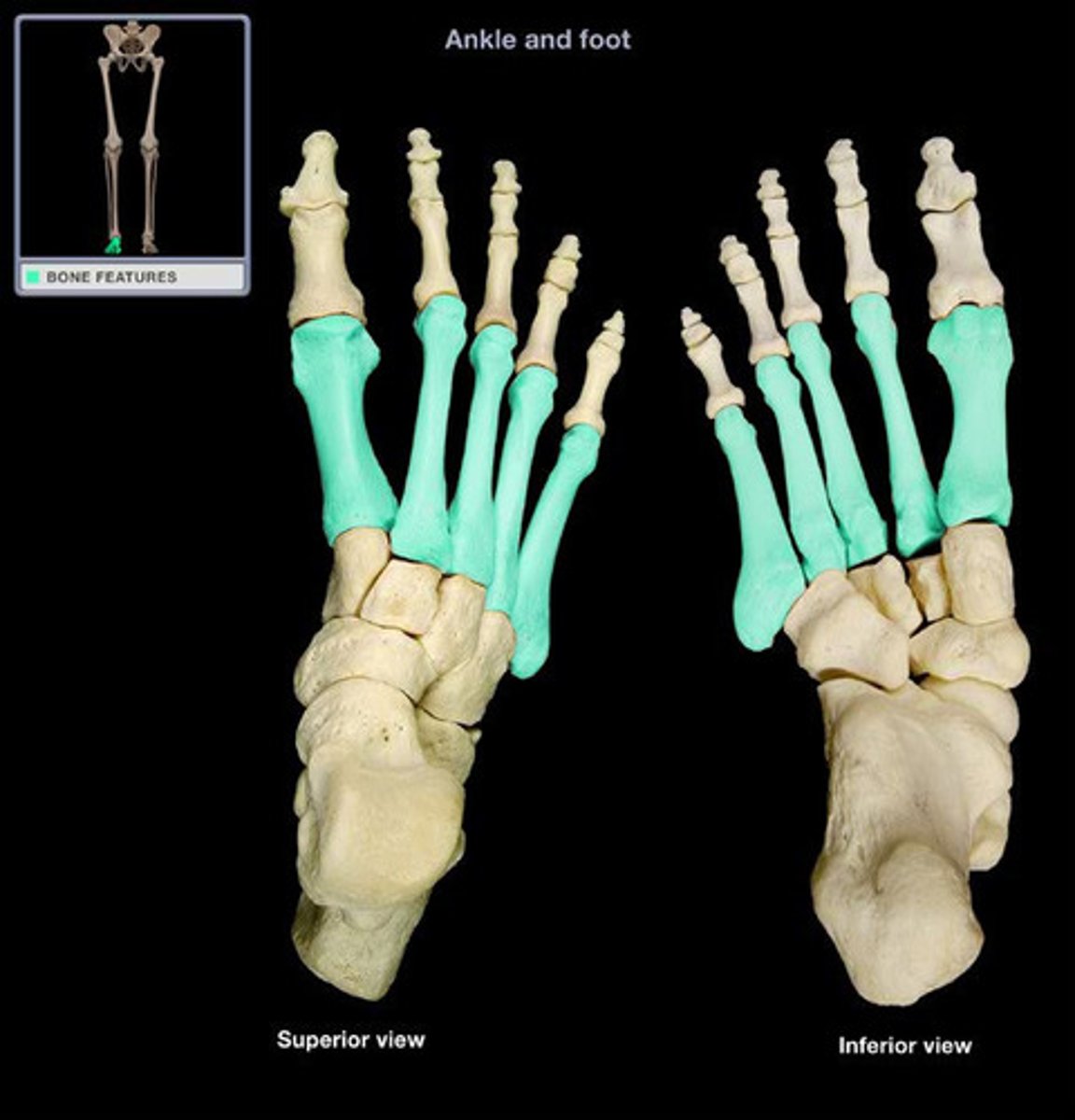
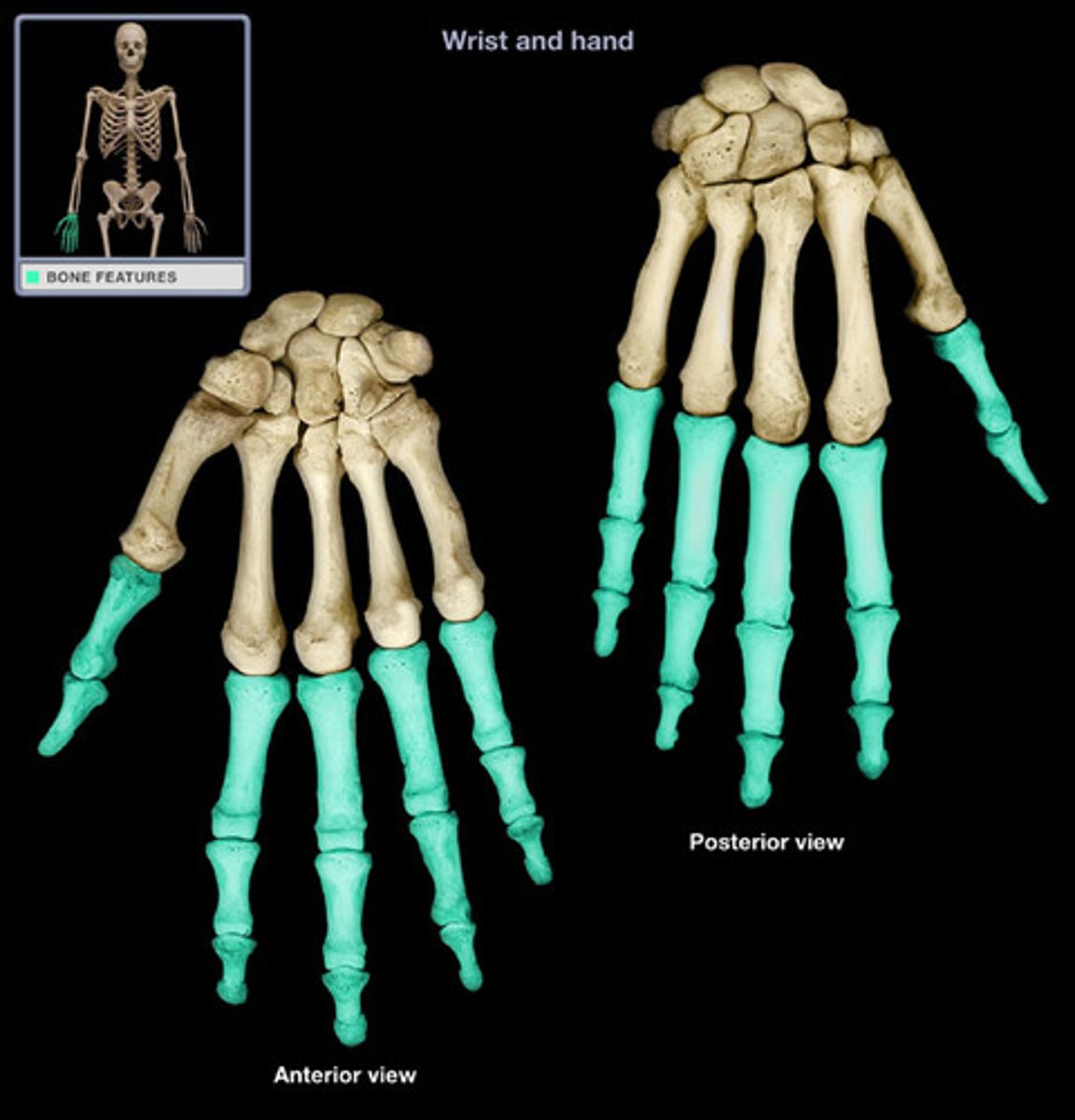
Phalanges
Fingers, toes
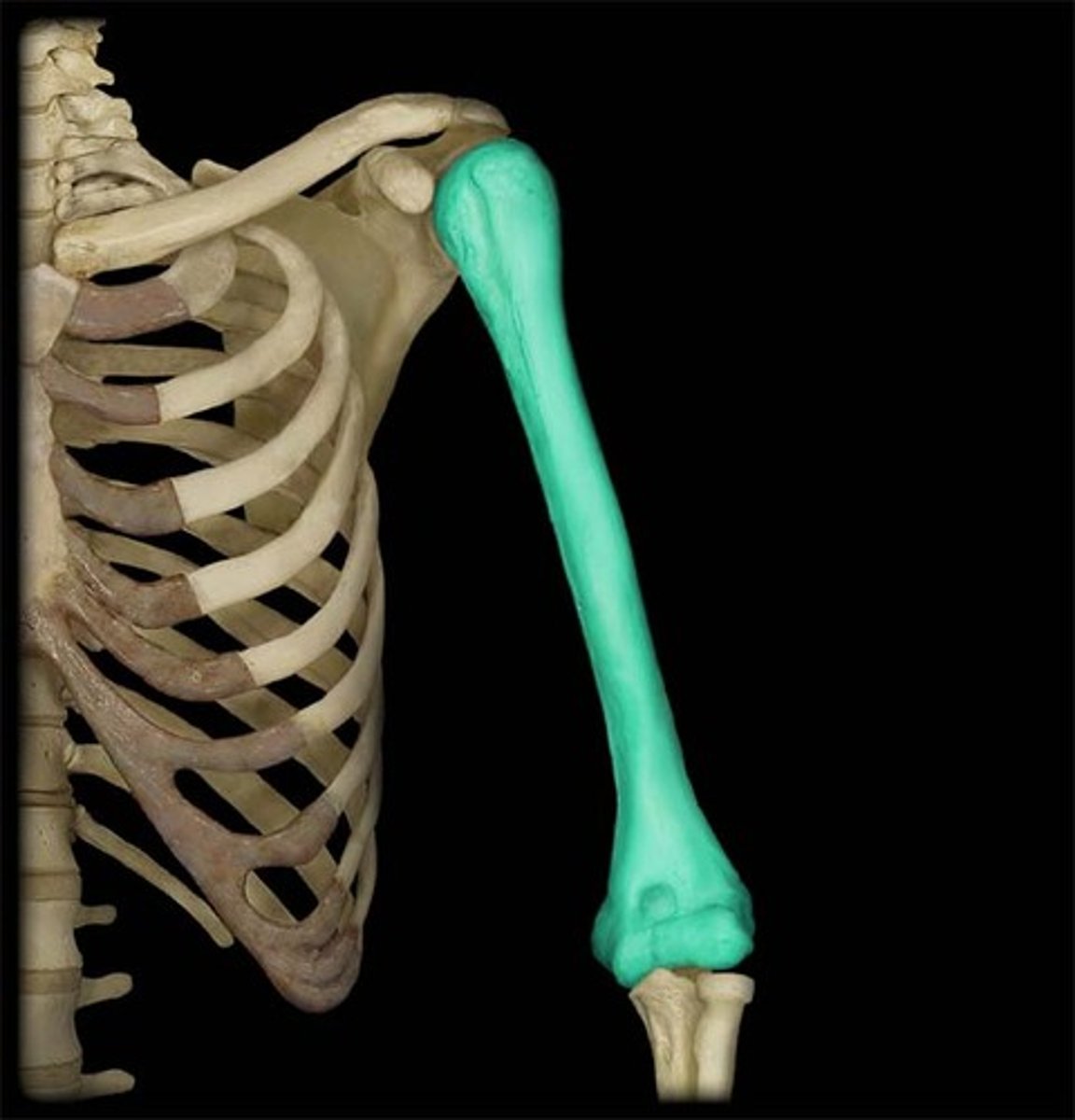
Humerus
upper arm bone
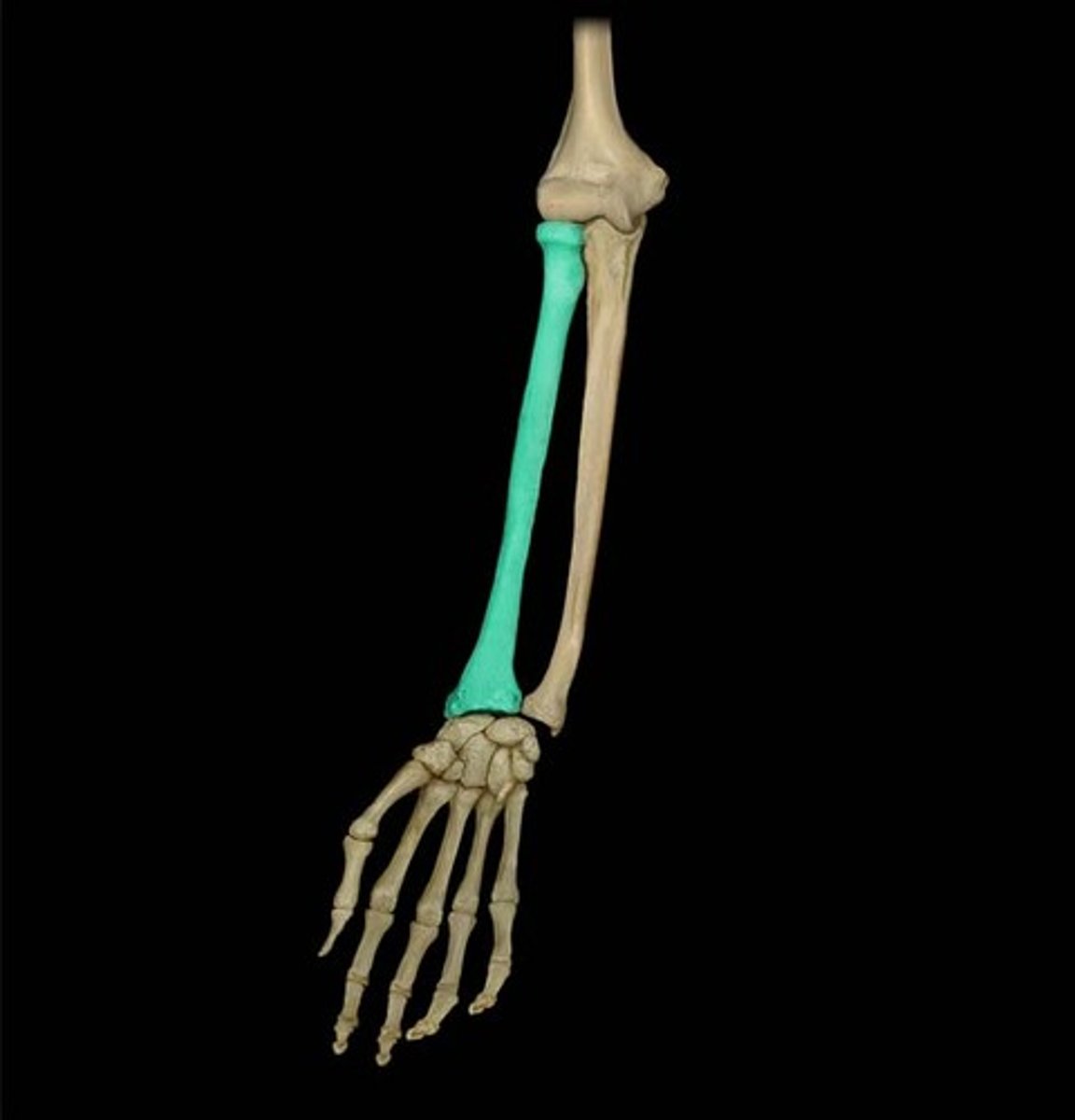
Radius
lateral bone of the forearm
Thumb side. Radial pulse
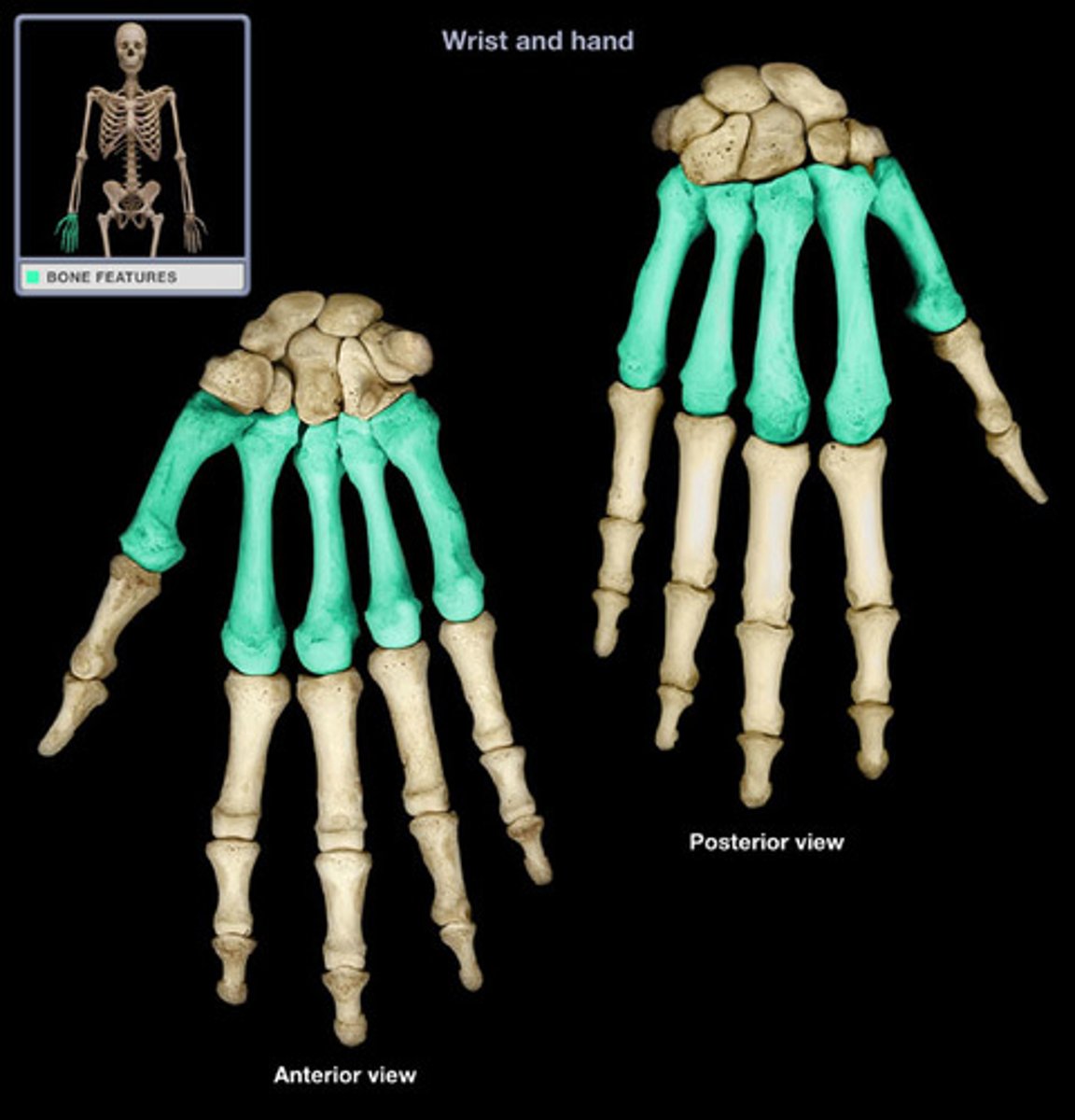
Metacarpals
Base for each of five fingers
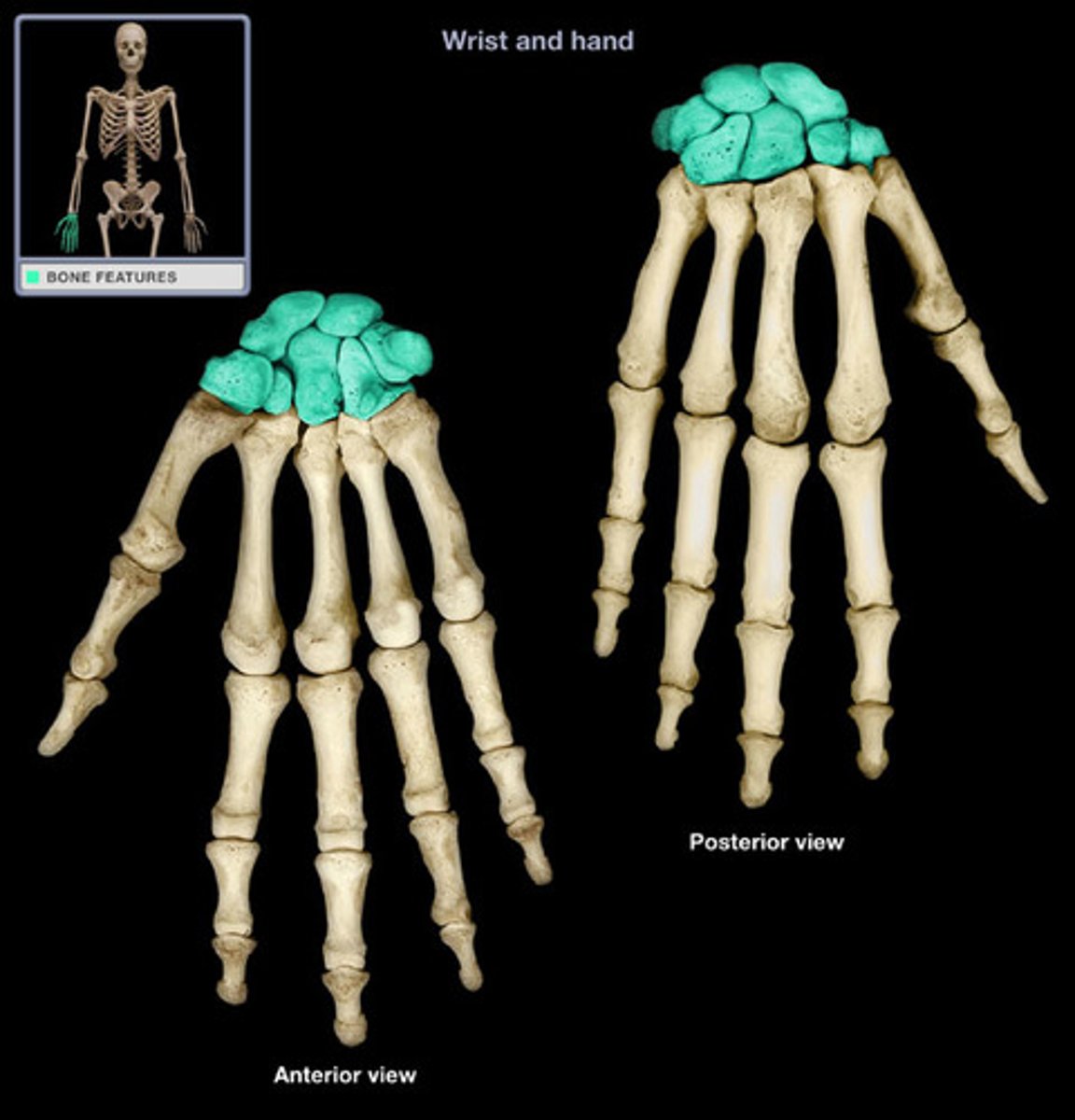
Carpals
wrist bones
Ligament
Connects bone to bone
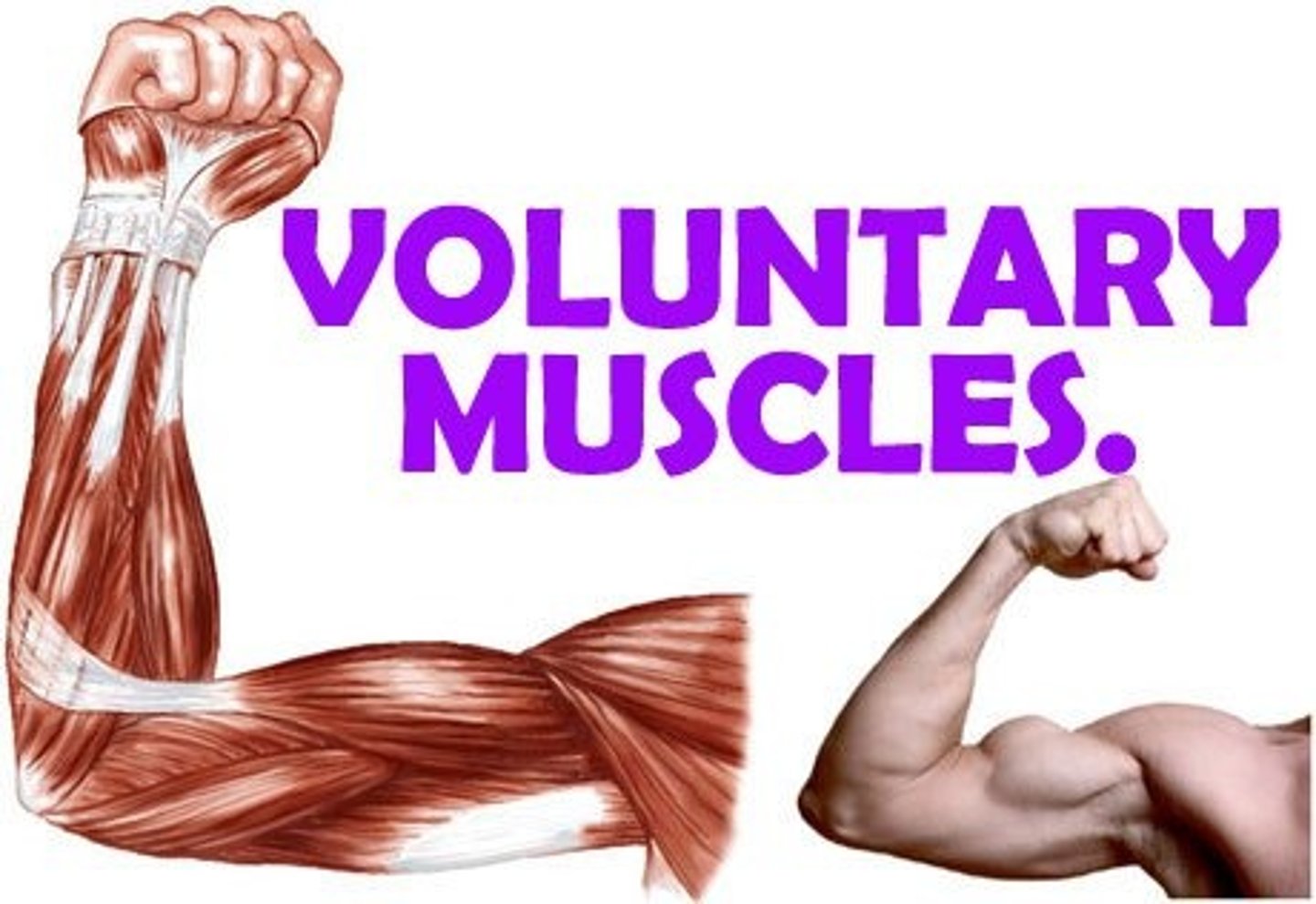
Voluntary Muscles
Striated Muscle
Muscles you are able to control
Forms major muscle mass of body
Involuntary muscles
Smooth muscle
Automatic muscular functions of the body
No control of muscle
i.e. blood vessels
Cardiac Muscle
Involuntary muscle
ECG only reads heart muscle
Automaticity - makes own beat
Oropharynx
central portion of the pharynx between the roof of the mouth and the upper edge of the epiglottis
-Upper airway
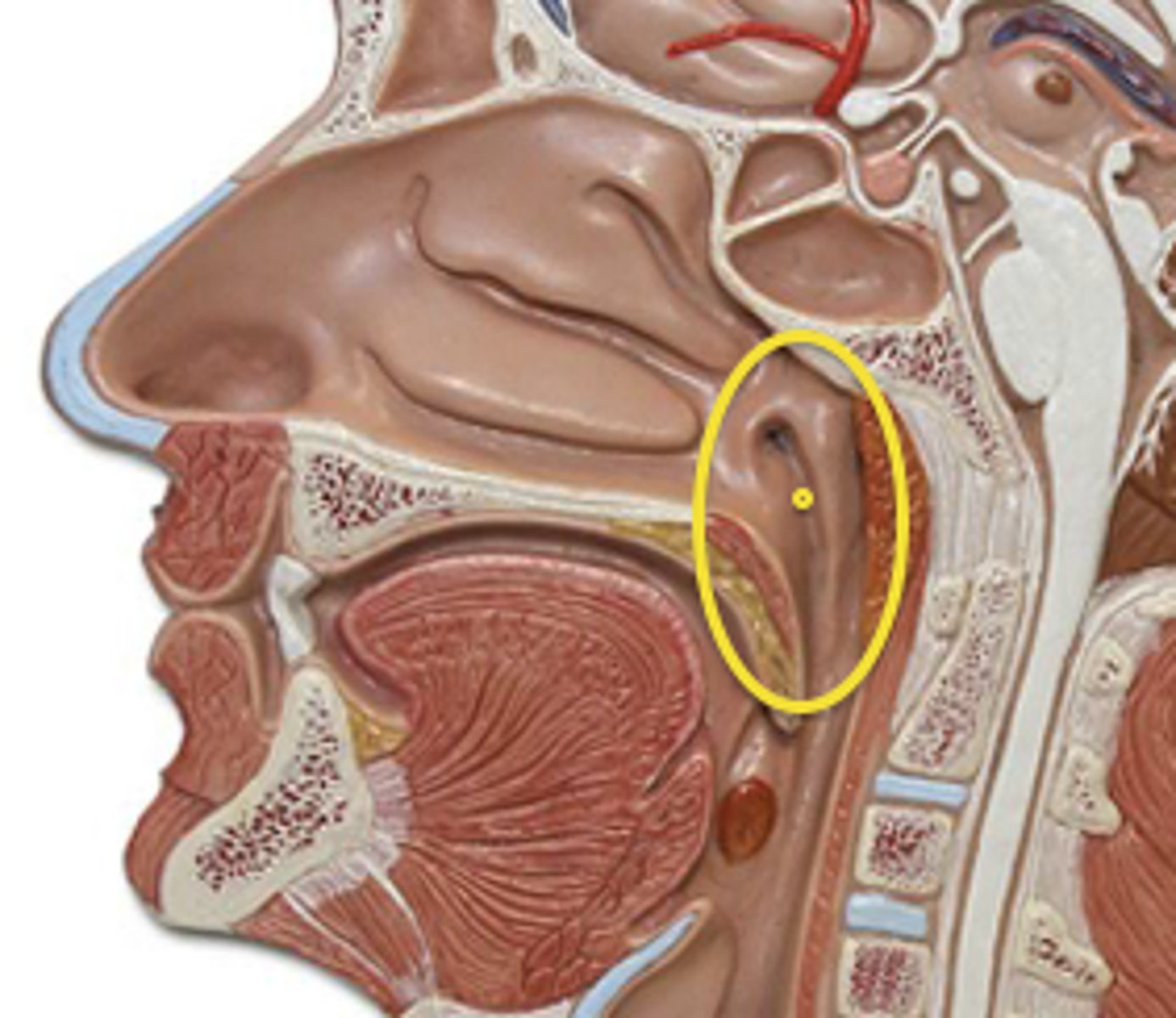
Nasopharynx
Above roof of mouth
Epiglottis
Leaf shaped structure that allows air to pass into the trachea but prevents foods and liquid from entering the trachea during swallowing
Larynx
The voice box
Lower airway **
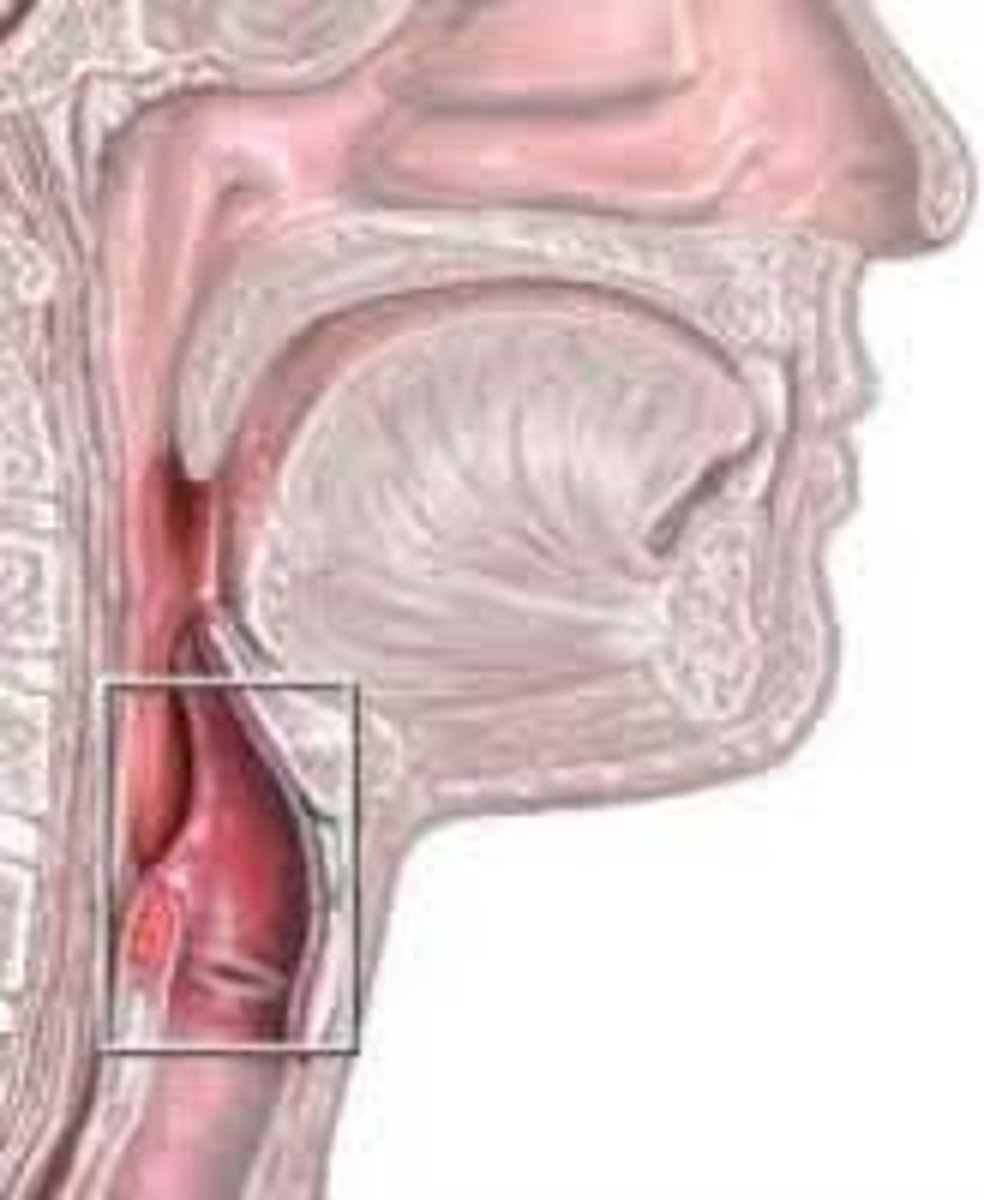
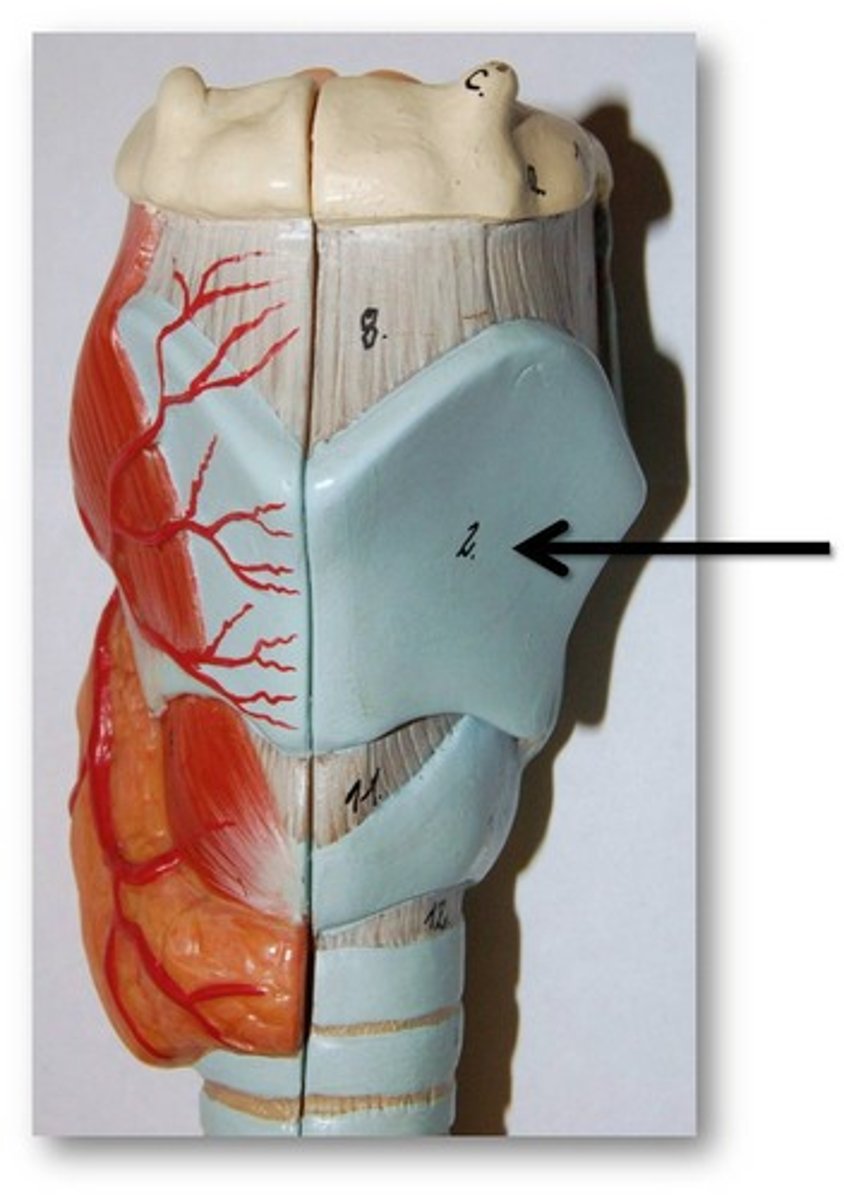
Thyroid cartilage
Adam's apple
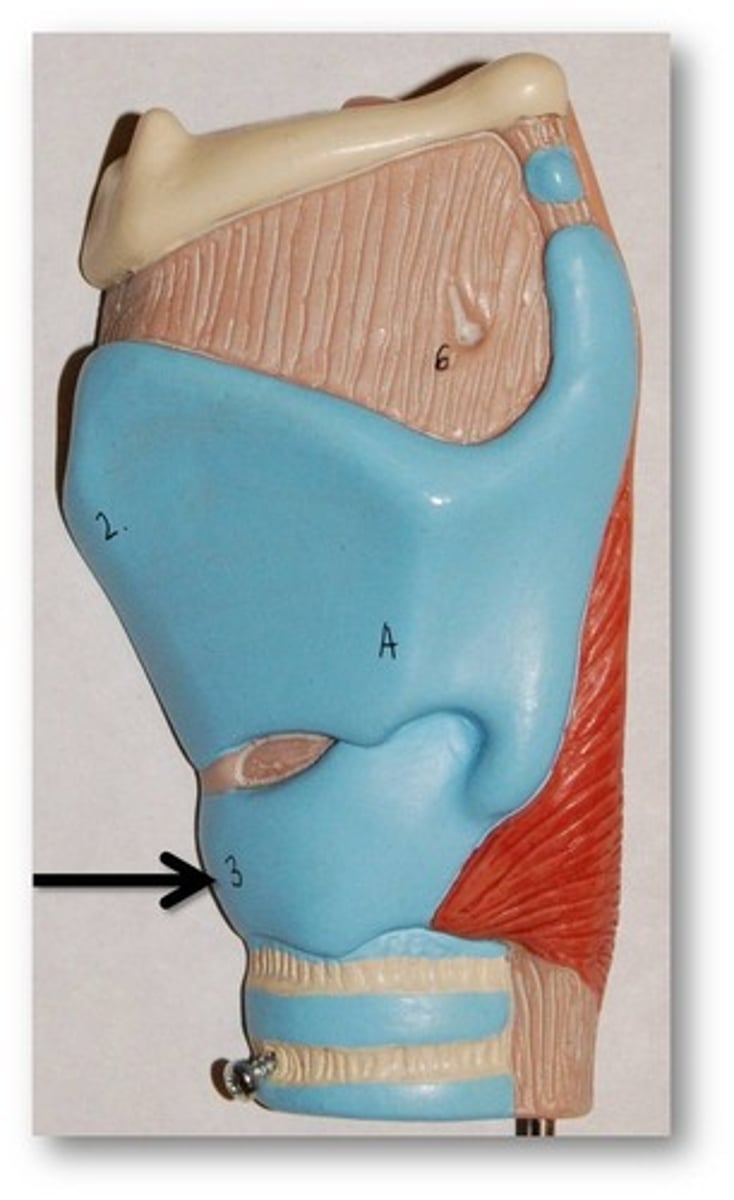
Cricoid Cartilage
Firm cartilage ring forming the lower portion of the larynx
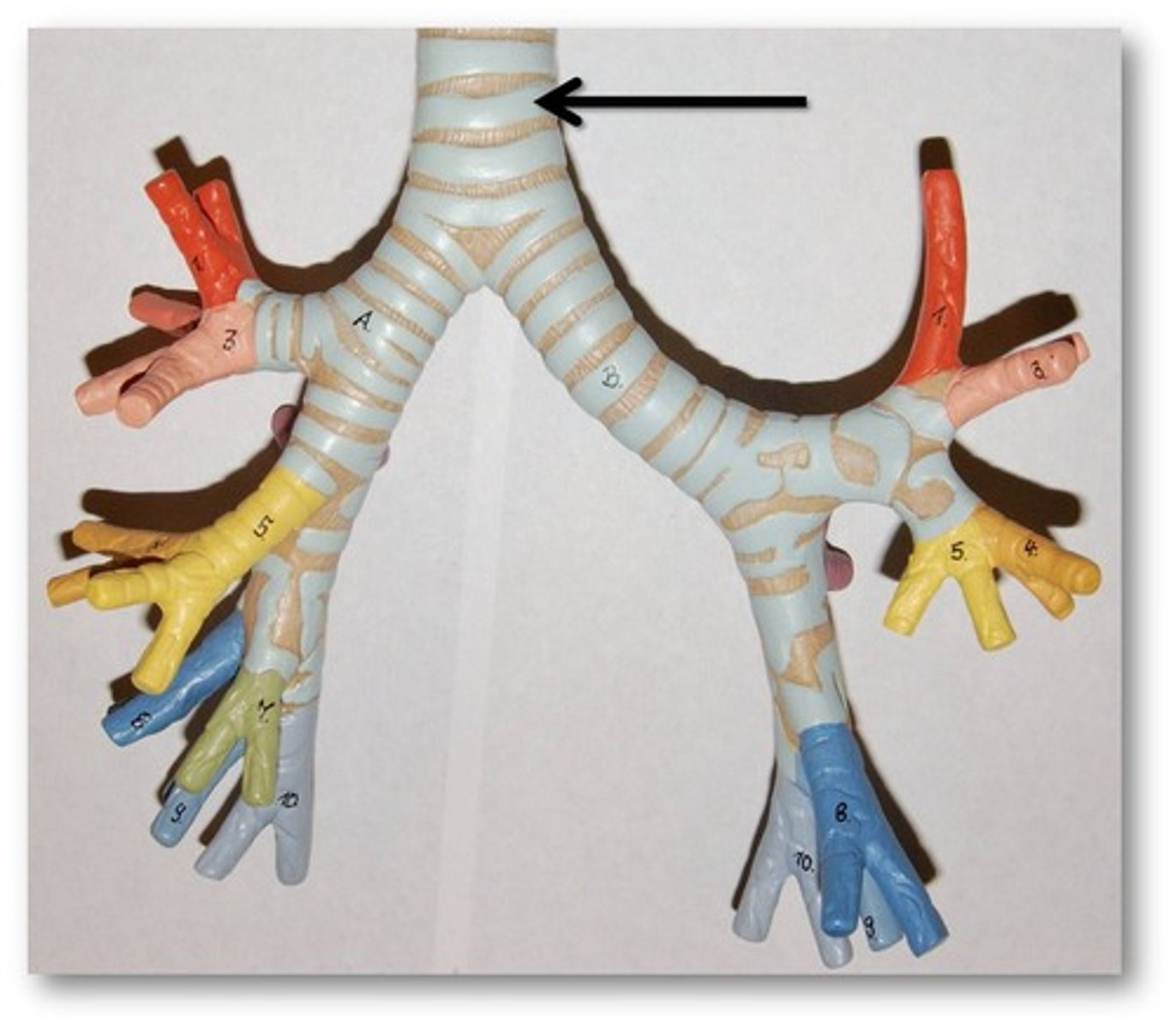
Trachea
The windpipe
About 5" long. Semi-rigid, enclosed air tube made up of rings of cartilage that are open in the back
Divides into left and right bronchi
Bronchi
Splits trachea and each main bronchus goes into the right and left lung
Each main bronchus branches within the lung into smaller and smaller airways
Lung overview
Lungs have a total of 5 lobes. Right lung has three lobes, left lung has two lobes (to make room for the heart)
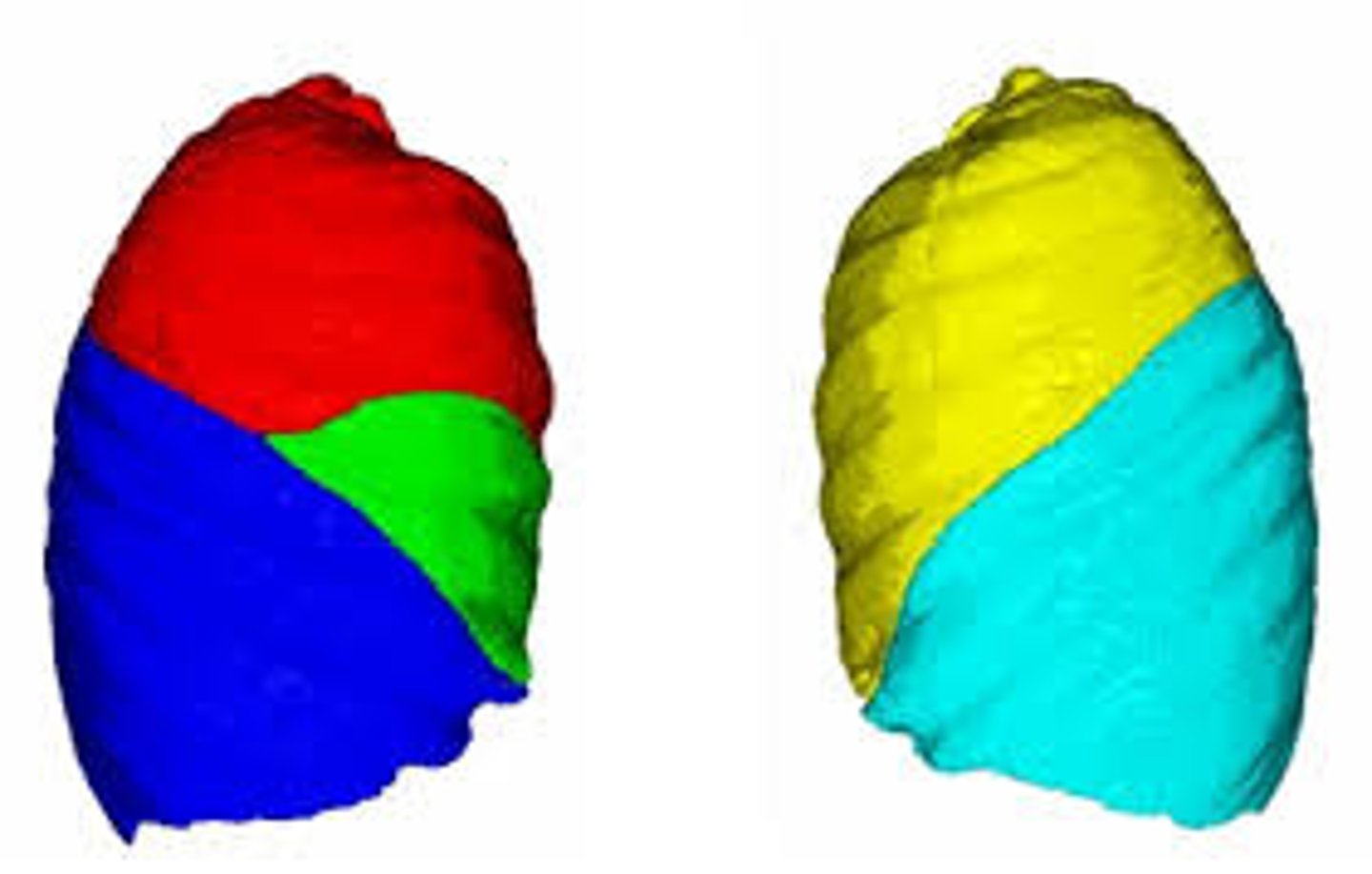
Alevoli
Exchange of oxygen and carbon dioxide occurs within the alevoli of each lobe
Pleura
Membrane surrounding the lungs
Visceral Pleura
Covers the lungs. A smooth glistening tissue
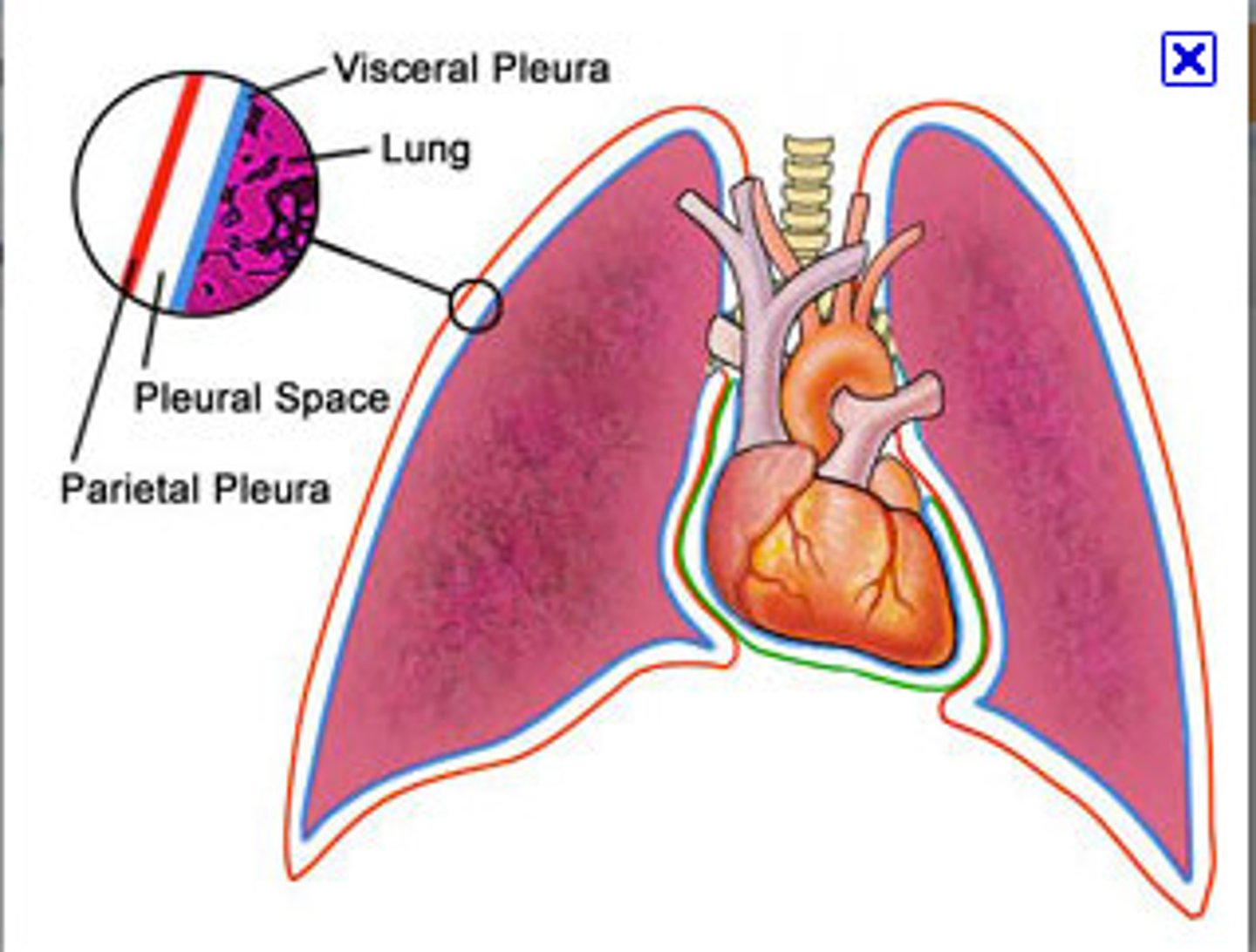
Parietal Pluera
Between ribs and lungs. Acts like velcro **
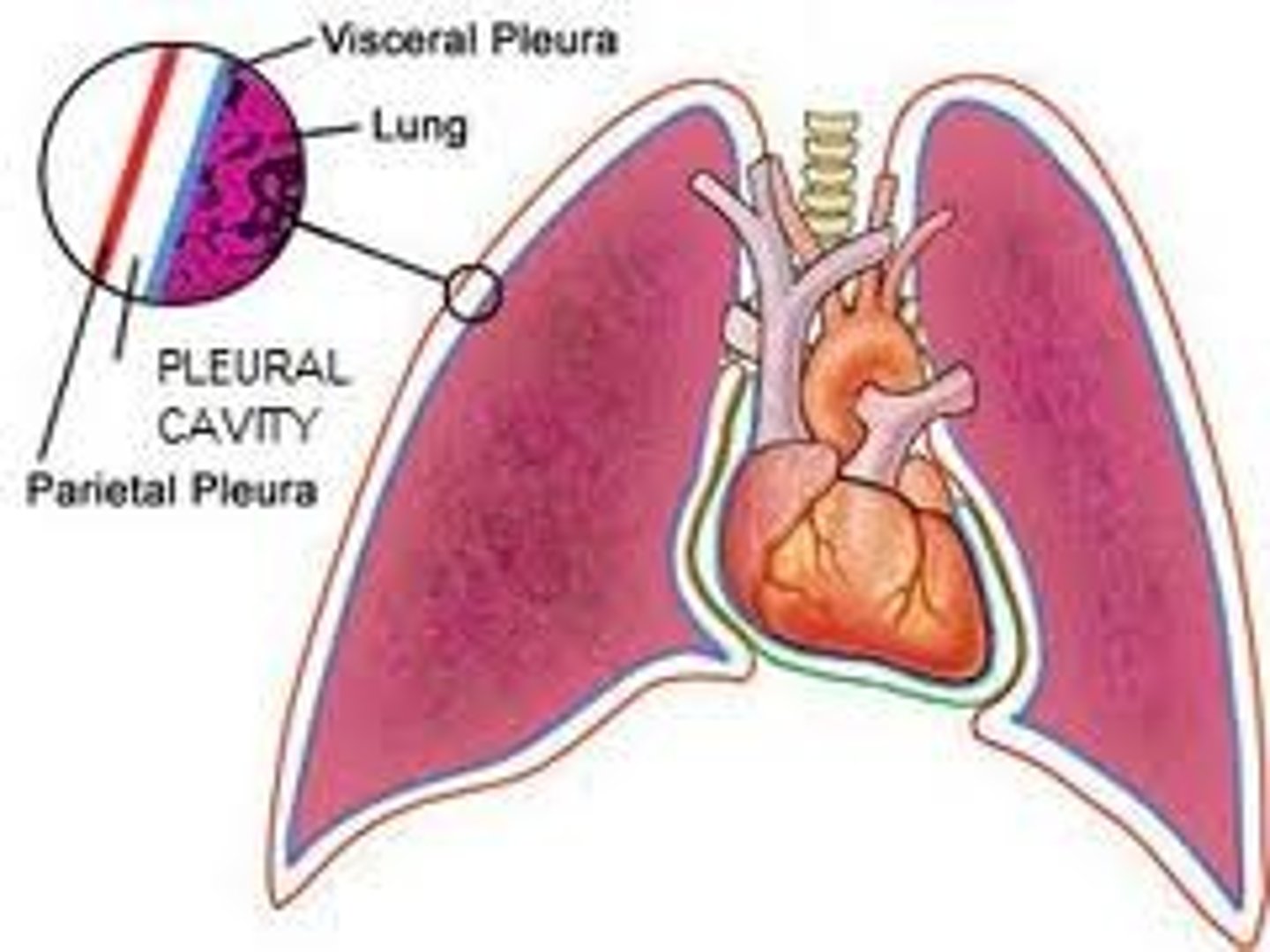
Pleura Space
Between parietal pleura and visceral pleura.
Diaphram
Skeletal and smooth muscle
Divides abdomen and thorax
Air
Environmental oxygen: 21%
Exhaled: 16% (consume about 5%)
Characteristics of normal breathing
Should be quiet, effortless, with equal chest rise
Rate:
Adult (8-10+): 12-20 breaths/minute
Child: (1-8): 15-30 breaths/minute
Infant: (0-1): 25-50 breaths/minute
Quality:
Deep enough breaths for oxygen exchange to occur
Infant/Child airway
Proportionally smaller airway relative to tongue, and more flexible as such they are more easily obstructed
Sclera
white of the eye
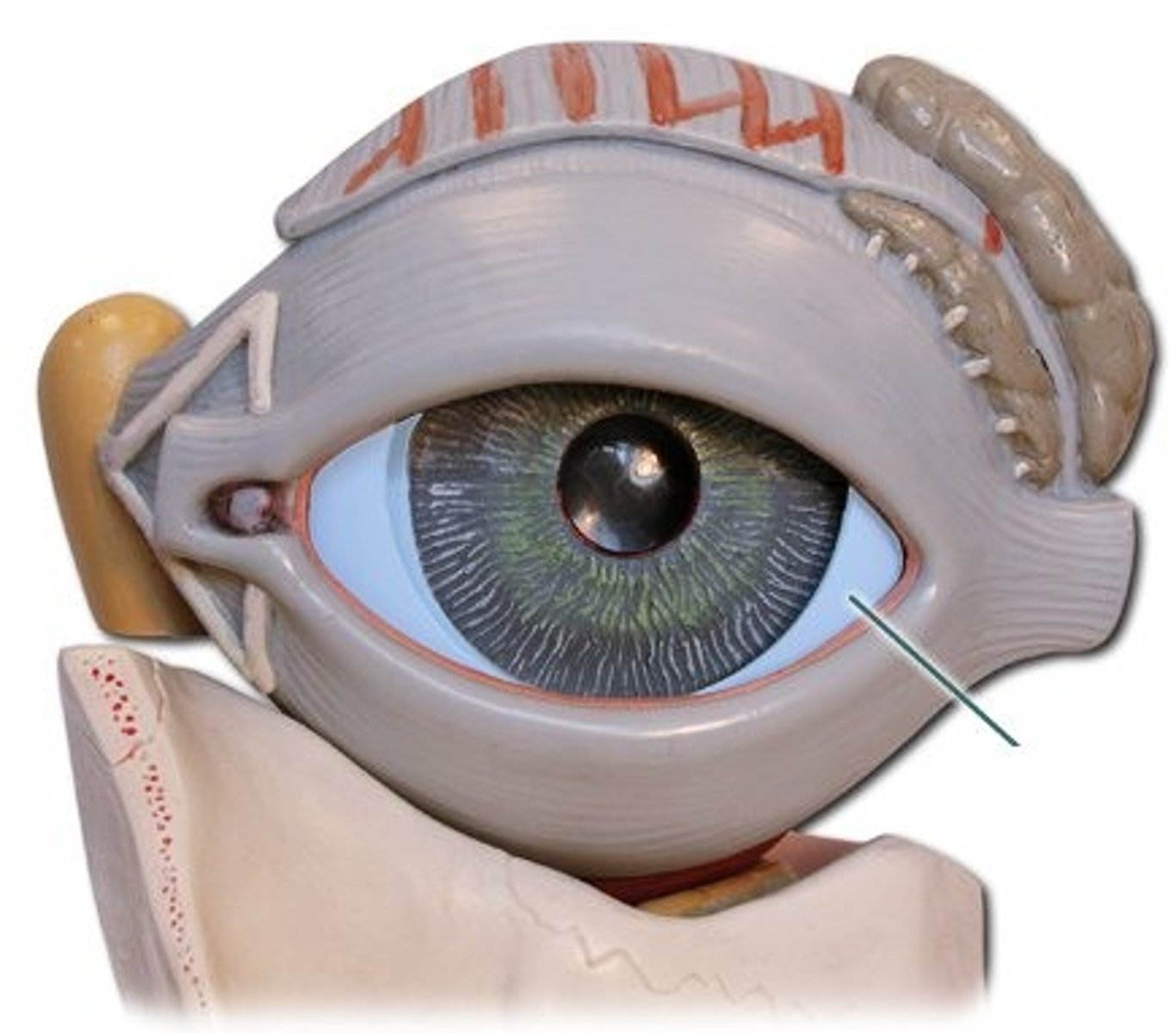
Cornea
The clear tissue that covers the front of the eye
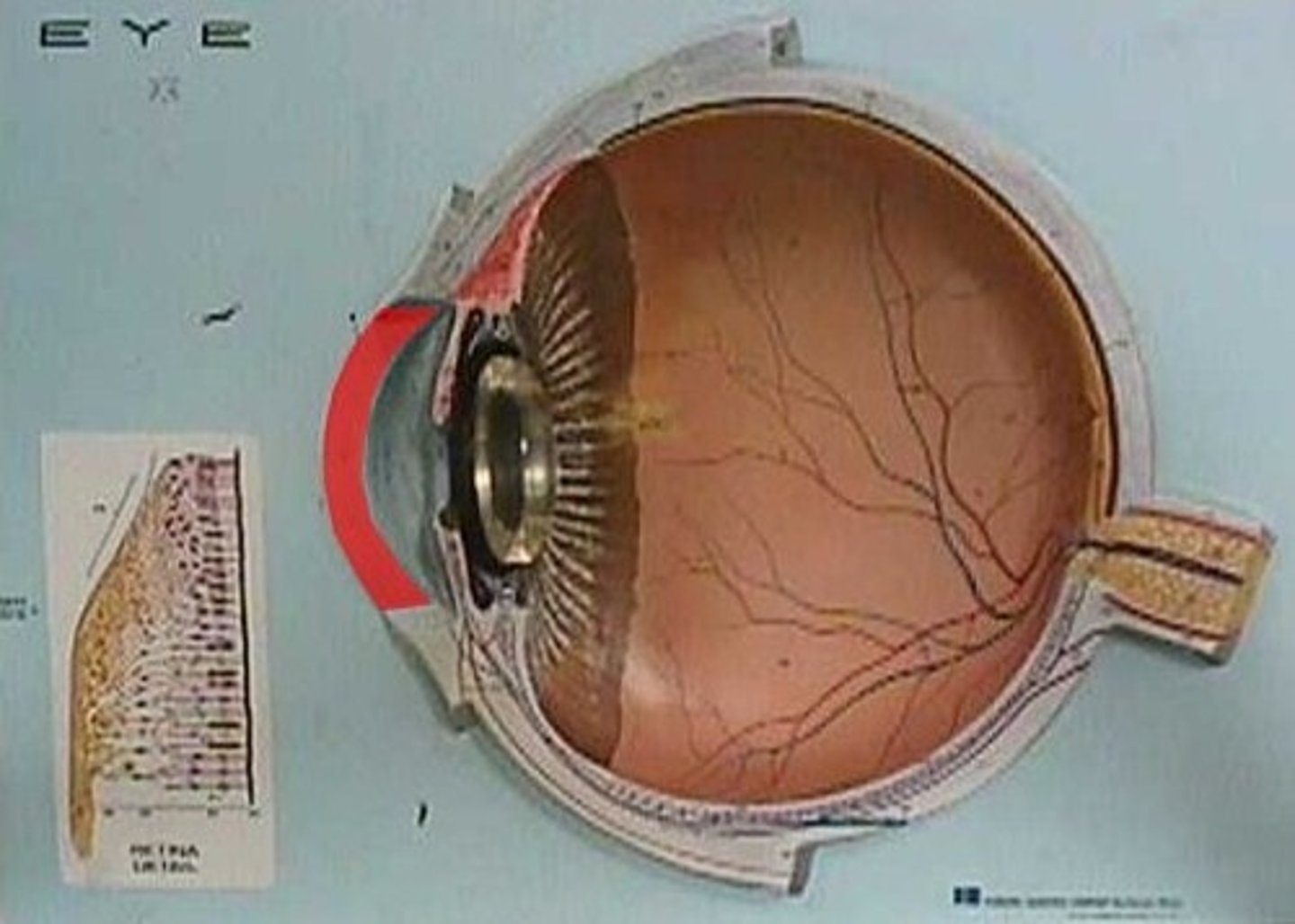
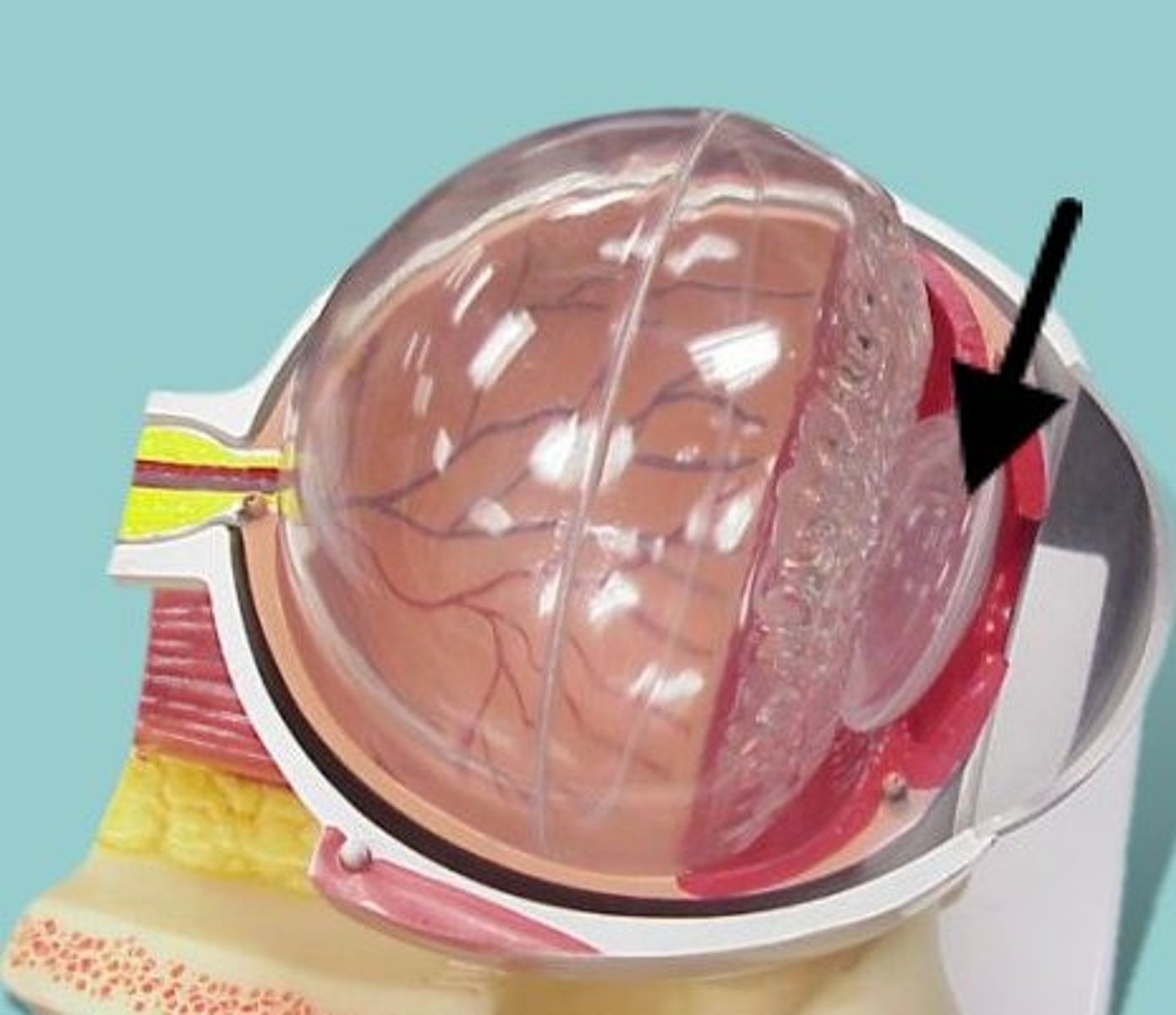
Lens
the transparent structure behind the pupil that changes shape to help focus images on the retina
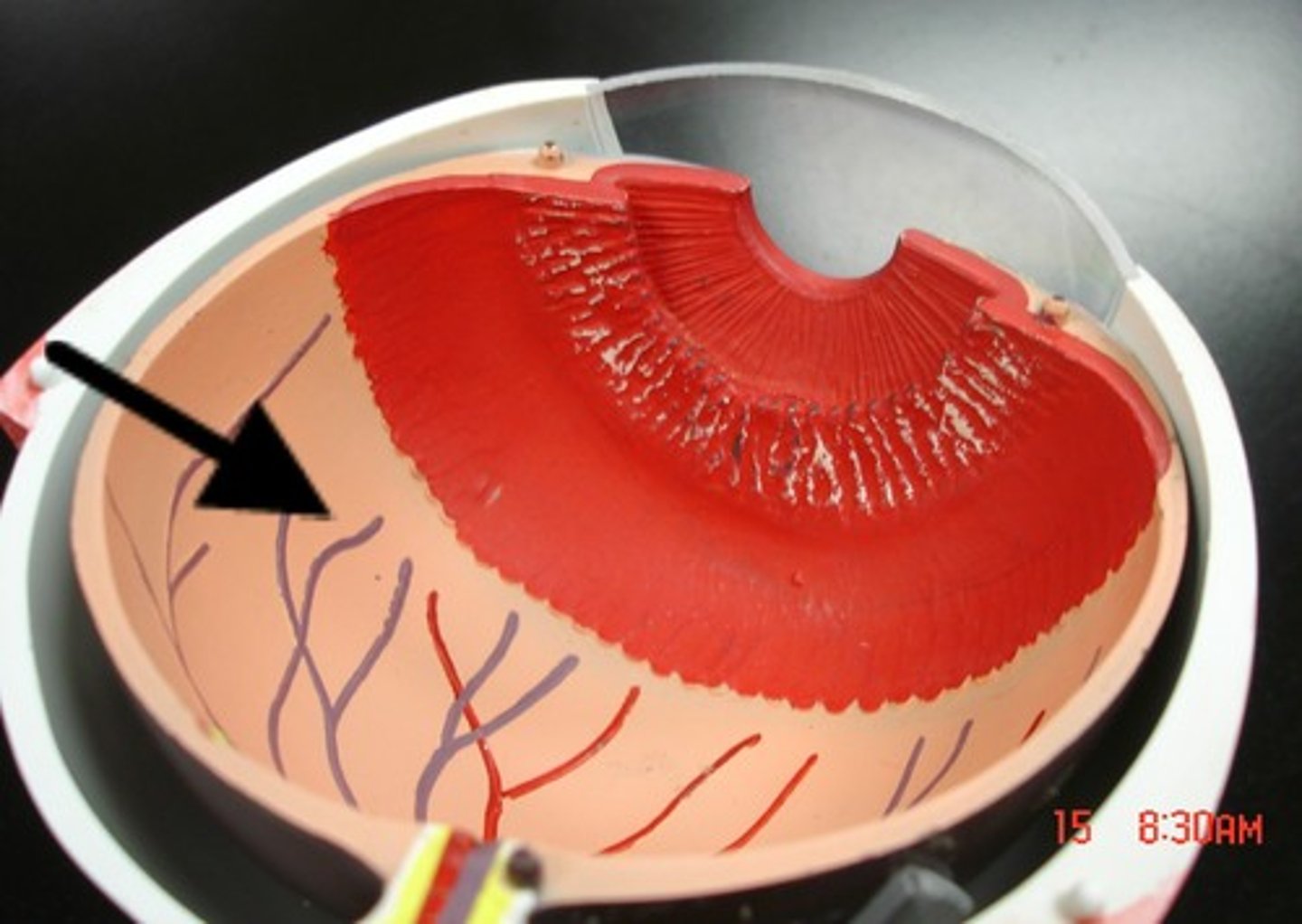
Retina
the light-sensitive inner surface of the eye, containing the receptor rods and cones plus layers of neurons that begin the processing of visual information
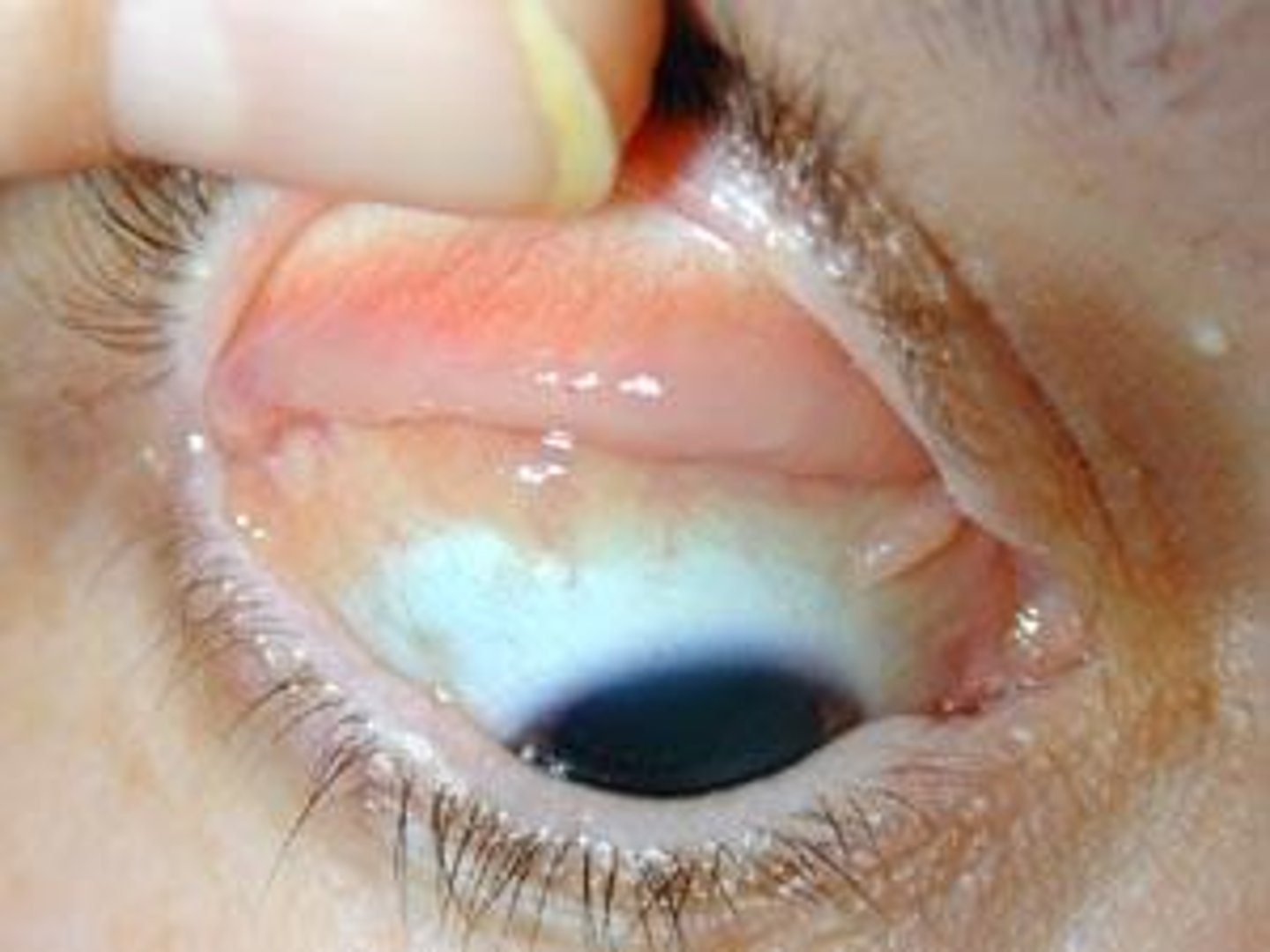
Conjunctiva
The delicate membrane lining the eyelids and covering the eyeball
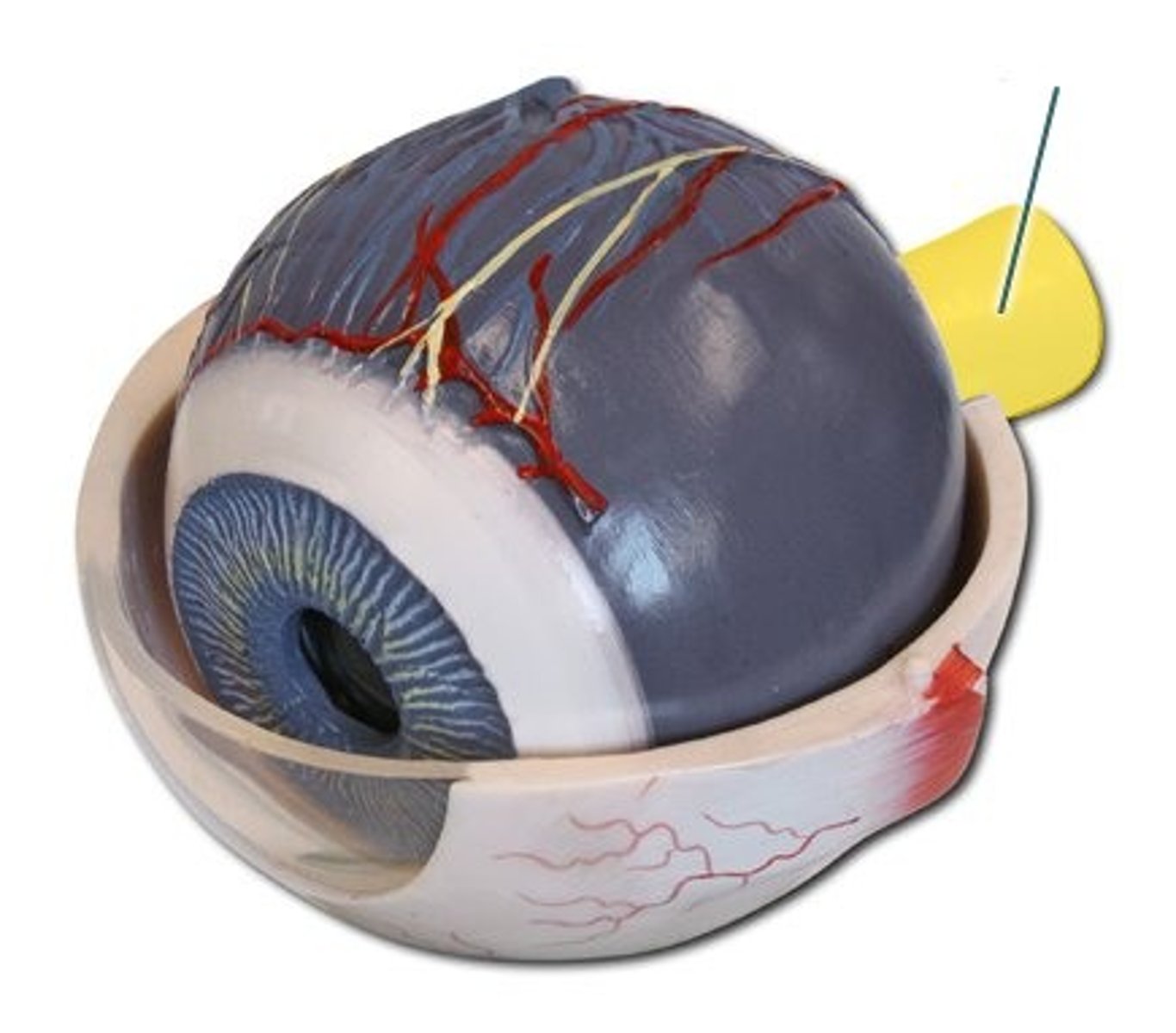
Optic Nerve
the nerve that carries neural impulses from the eye to the brain
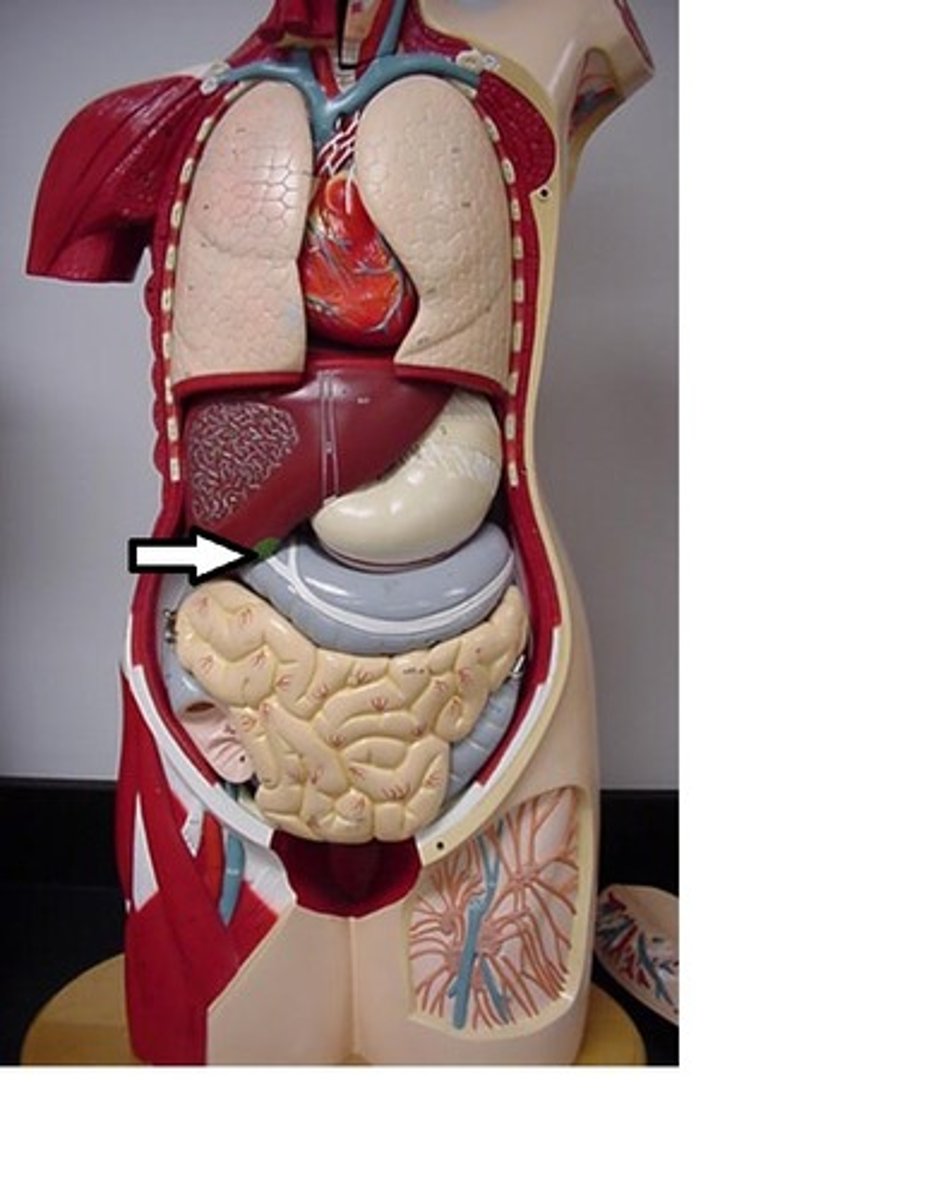
Liver
produces bile, RUQ
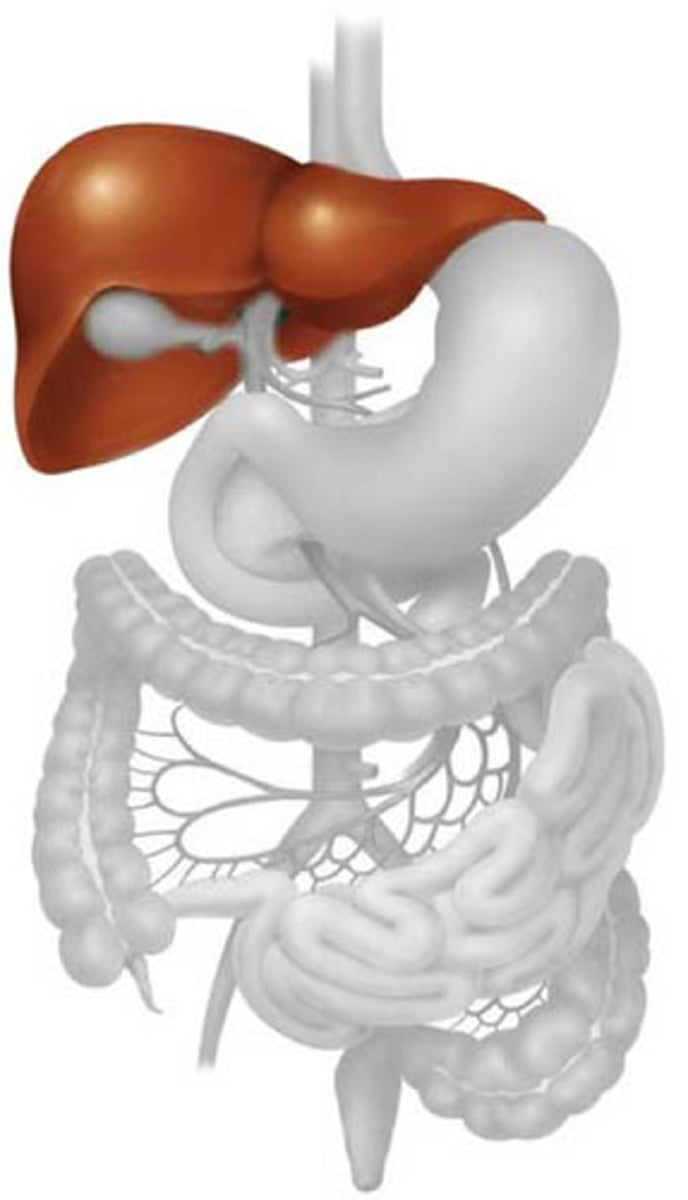
Gallbladder
stores bile, attached to liver, RUQ