Comprehensive Guide to Drug Structure, SAR, Lipinski's Rule, and Ionization
 Call Kai
 Learn
Learn Practice Test
 Spaced Repetition
 Match
Match Flashcards
 Knowt Play
1/19

There's no tags or description
Looks like no tags are added yet.
Name | Mastery | Learn | Test | Matching | Spaced | Call with Kai | Chat |
|---|
No analytics yet
Send a link to your students to track their progress
20 Terms
What is a drug?
A chemical substance that elicits a biological effect in animals.
What does the term 'active compound' refer to?
An active compound has a precise chemical structure and generally well-defined molecular targets in cells.
What is the Structure-Activity Relationship (SAR)?
The relationship between the chemical structure of a compound and its biological activity.
What is a pharmacophore?
The core elements within a drug's structure necessary for interaction and activity with its biological targets.
What are beta blockers?
A class of drugs that act as bAR antagonists, affecting the heart and blood vessels.
What does Lipinski's Rule of 5 predict?
It predicts if a drug would be orally active based on its chemical properties.
What is the maximum number of hydrogen bond donors allowed by Lipinski's Rule of 5?
No more than 5 hydrogen bond donors.
What is the maximum molecular weight for a drug according to Lipinski's Rule of 5?
Molecular weight should be less than 500 Da.
What is the significance of logP in pharmacology?
LogP measures the lipophilicity of a compound, influencing absorption and distribution.
What happens to ionized species in terms of lipid solubility?
Ionized (charged) species are lipid-insoluble and non-diffusible across tissue membranes.
What is the Henderson-Hasselbalch equation used for?
It quantifies the relationship between pKa of an ionizable group and the pH of the solution.
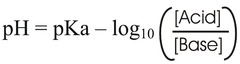
What occurs if pH < pKa?
Protonation will predominate.
What occurs if pH > pKa?
Deprotonation will predominate.
What is 'ion trapping' in pharmacology?
The phenomenon where drugs become trapped in urine due to ionization.
How does the pH of the stomach (pH = 2) affect the ionization of codeine?
In the stomach, codeine is more likely to be protonated and less absorbed.

How does the pH of the small intestine (pH = 8) affect the ionization of codeine?
In the small intestine, codeine is more likely to be deprotonated and more easily absorbed.
What is the relationship between drug distribution and logP?
Drugs with logP values < -0.5 are too hydrophilic to absorb, while those > +5 are too hydrophobic.
What does a logP value of 3 indicate about drug distribution?
It indicates a favorable distribution ratio into octanol.
What are the implications of drug formulation related to logP?
It affects how readily the drug can be absorbed and its strength of effect at the site of action.
What does a drug's persistence in the body relate to?
It relates to metabolism and excretion, impacting toxicity.