Ap Bio Unit 1
 Call Kai
 Learn
Learn Practice Test
 Spaced Repetition
 Match
Match Flashcards
 Knowt Play
1/81

Earn XP
Description and Tags
The Chemistry of Life
Name | Mastery | Learn | Test | Matching | Spaced | Call with Kai | Chat |
|---|
No analytics yet
Send a link to your students to track their progress
82 Terms
Covalent Bond
The sharing of a pair of valence electrons by 2 atoms
Polar Bond
The covalent bond between atoms that don’t share electrons equally
Nonpolar Bond
When electrons are shared equally
Ionic Bond
When 2 ions bond (1 giver/1taker). Cations bond with anions (+/-)
Hydrogen Bond
The non covalent attraction between a hydrogen atom and an electronegative atom with a partial charge
Van der Waals Interactions
The slight, fleeting attractions between positive and negative charges that enable all atoms and molecules to stick (Gecko)
The strongest bonds
Covalent, polar, non polar, and ionic bonds
Weaker Bond
Hydrogen Bond
Weakest Bond
Van der Waals Interaction
Cohesion
Hydrogen bonding between like molecules
Surface Tension
Measure of how difficult it is to break or stretch the surface of a liquid
Adhesion
The bonding between unlike molecules
Transpiration
This is the movement of H2O up plants
Temperature
The measure of intensity of heat due to average KE of molecules
Capillary Action
The tendency of water to rise in a thin tube, due to cohesion and adhesions
Thermal Energy
The total amount of KE in a system
High Specific Heat
The ability of water to resist changes in temperature
Evaporative Cooling
Molecules with greatest KE leave as a gas
Insulation by Ice
Less dense, floating ice insulates liquid water below
Solution
Liquid, homogeneous mixture of 2+ substances
Solvent
Dissolving agent (liquid)
Solute
Dissolved substance
Water
Versatile Solvent
Hydrophilic
Affinity for water, polar, ions
Hydrophobic
Repel water, non polar
Acid
Increases H+ concentration (HCl) (0-7)
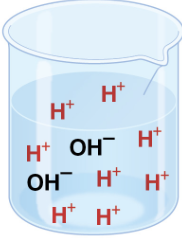
Base
Reduces H+ concentration (NaOH) (7-14)

Carbon
The most important to life because of its versatile bonding behavior. It can form up to 4 single, double, or triple covalent bonds with other atoms and can form rings or chains. The atoms can also be remodeled into a variety of organic compounds
Functional Groups
Chemical groups that affect molecular function by being directly involved in chemical reactions. Helps determine how that molecule will behave chemically; gives it shape
Hydroxyl, carbonyl, carboxyl, amino, sulfhydryl, phosphate, and methyl
The 7 functional groups
Hydroxyl
Because of oxygen, it adds to polarity

Carboxyl
Found on every amino acid. Acts as an acid

Carbonyl
Tends to be found in sugars. Also adds to polarity

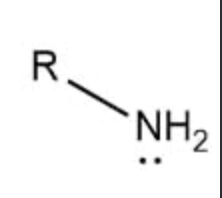
Amino
Acts as a base. Found on every amino acid
Sulfhydryl
will form the covalent cross-links with other cysteines in the tertiary and quaternary protein structures

Phosphate
Considered an energy releasing side group

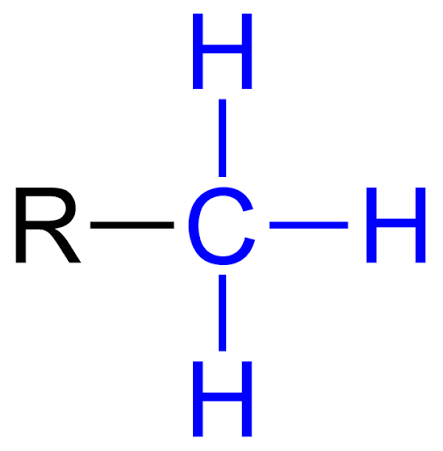
Methyl
Nonpolar
Monomers
Molecules used as repeatable subunits to build larger molecules
Polymers
Larger molecules that are built from chains of monomers
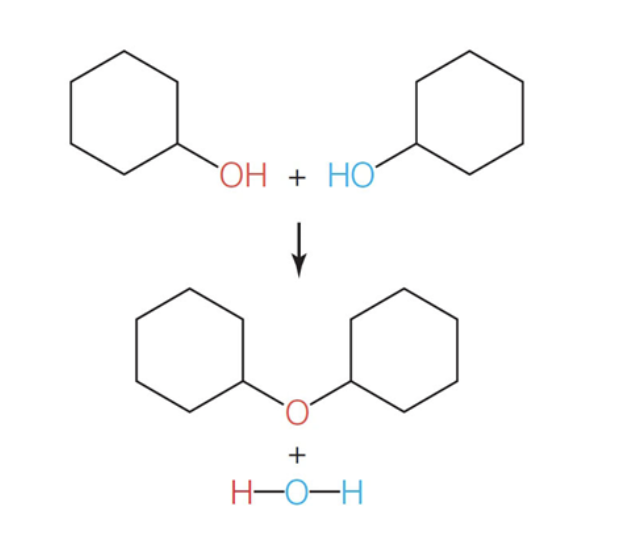
Dehydration Synthesis
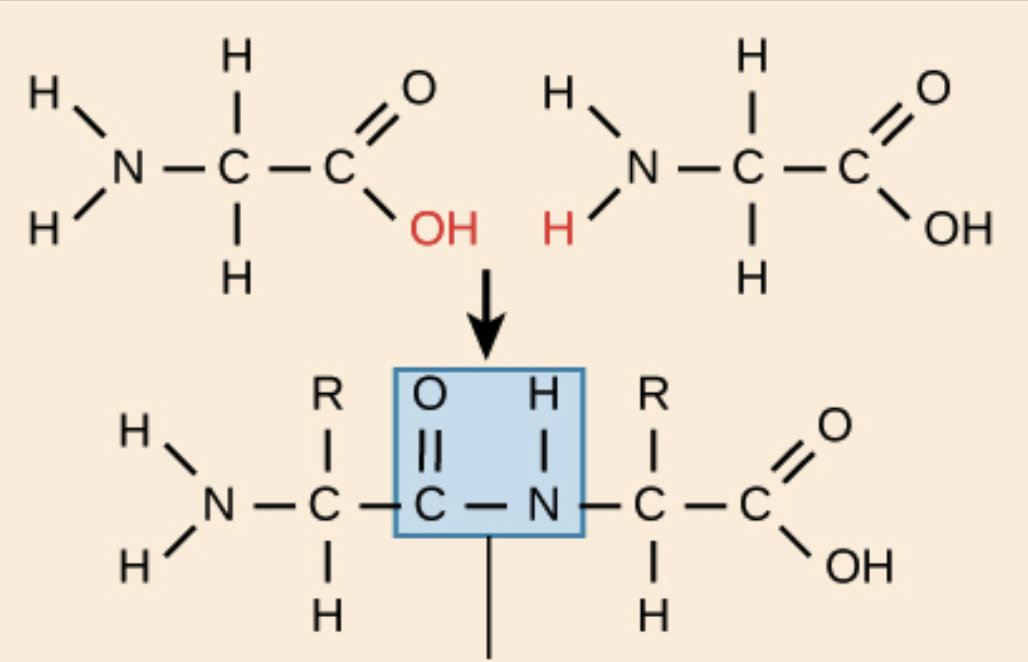
How cells build large molecules from smaller ones. An enzyme removes a hydroxyl group from one molecule and a hydrogen atom from another. A covalent bond forms between the mecums, and water also forms.
Monosaccarides
The monomers of carbohydrates
Glycosidic
The bond of carbohydrates
Amino Acids
The monomers of protein
Peptide
The bond of protein
Nucleotides
The monomers of nucleic acids
Phosphodiester
The bond of nucleic acids
Hydrolysis
How cells split large molecules into smaller ones. An enzyme attaches a hydroxyl group and a hydrogen atom (both from water) at the cleavage site

Carbohydrates
These consist of CHO in a 1:2:1 ratio and can be used for energy structure and for storing/transporting energy quickly
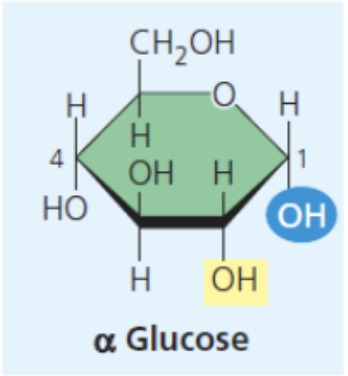
Monosaccharides
These are the monomers of carbohydrates also called simple sugars and are mostly used as an energy source or structure and are very soluble in water. They may be linear or ring form
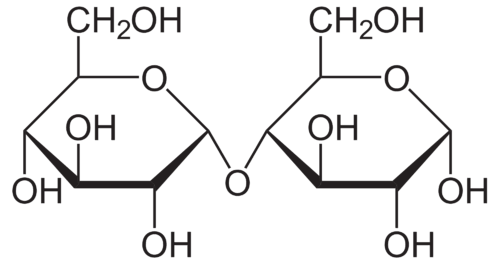
Disaccharides (Oligosaccharides)
These are made of 2 monosaccharides joined together
Polysaccharides
These are also called complex carbs since they contain many monomers. They can be branched or in straight chains

Lipids
These function as long term energy storage and the structural foundation of cell membranes. They can be fatty, oily, or waxy, are made up of CHO, and are insoluble in water
Fatty Acids
These are simple organic compounds with a carboxyl group joined to the backbone of 4 to 36 carbon atoms
Hydrocarbon tails
These are hydrophobic
Carboxyl Group “Head”
This is hydrophilic
Saturated Fatty Acids
These are single bonds within their hydrogen tails. They are fully saturated with hydrogen atoms and the tails are flexible. They can “stack up” at room temp, forming a soft solid (butter) and most animal fats are made up of them

Unsaturated Fatty Acids
These contain 1 or more double bonds in the carbon chain making the hydrocarbon tails slightly bent. They are less flexible and because they can’t stack together, they will be a liquid at room temperature

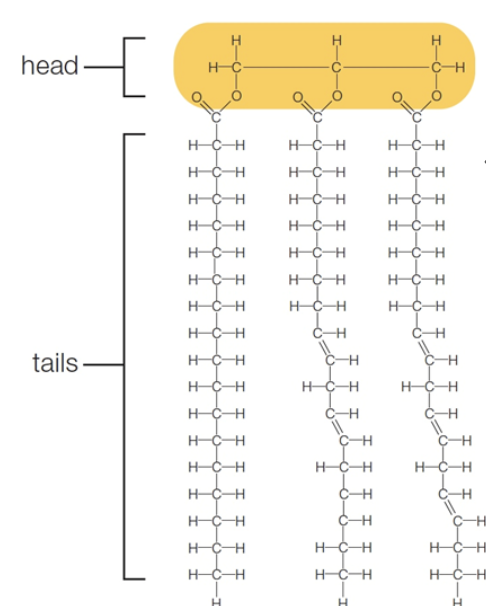
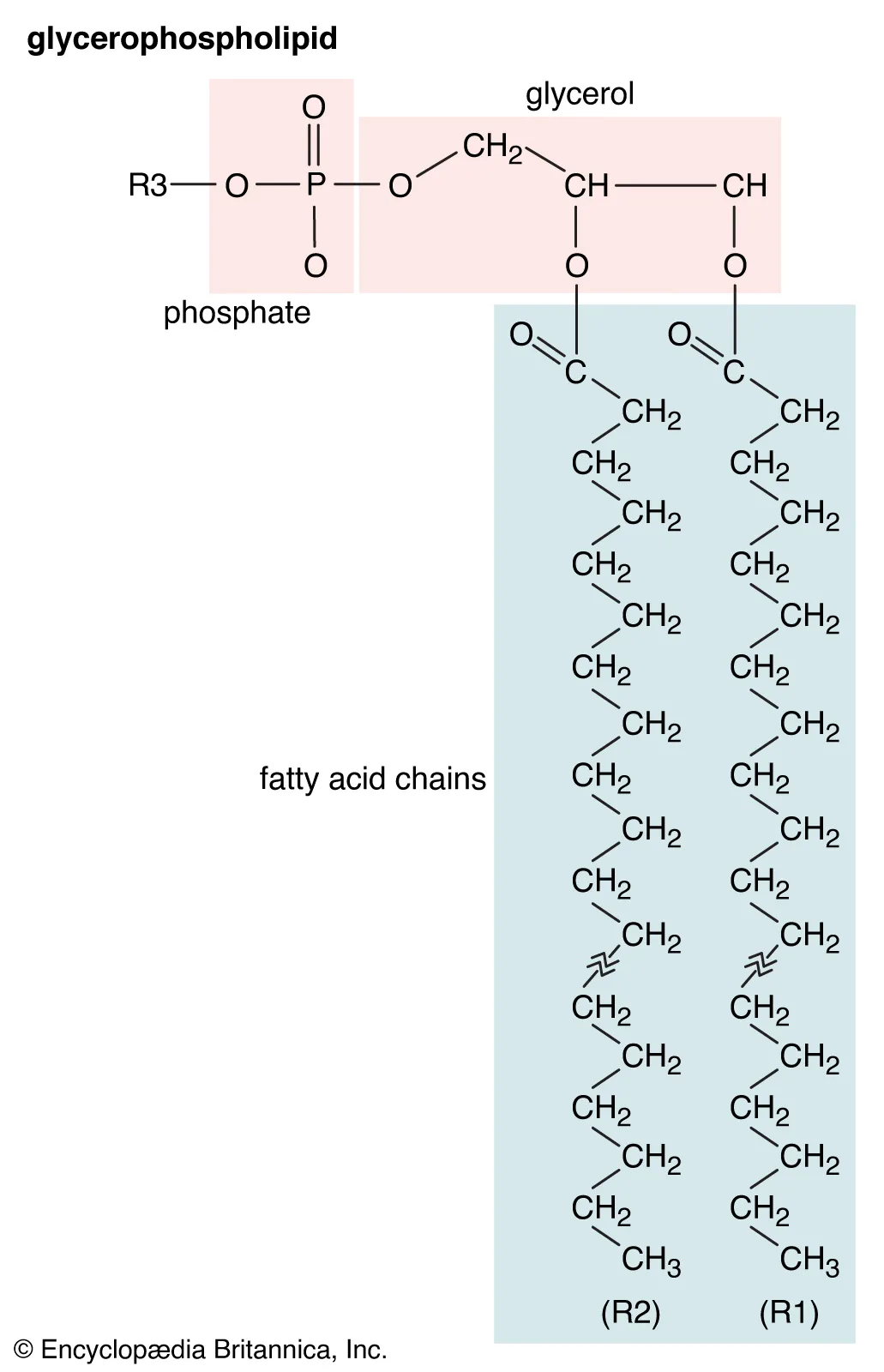
Fats
These are lipids with 1,2, or 3 fatty acids bonded to glycerol (alcohol). The fatty acid attaches to a glycerol via the carboxyl group, then losing its hydrophilic properties. Ex: triglycerides and phospholipids
Waxes
Complex molecules with a varied mixture of lipids with long fatty acid tails bonded to one chain alcohols or carbon rings. The molecules of these pack tightly, making them firm and water resistant
Steroids
These are lipids with a rigid backbone of 4 carbon rings and no fatty acid tails. Cholesterol and estrogen are examples of these
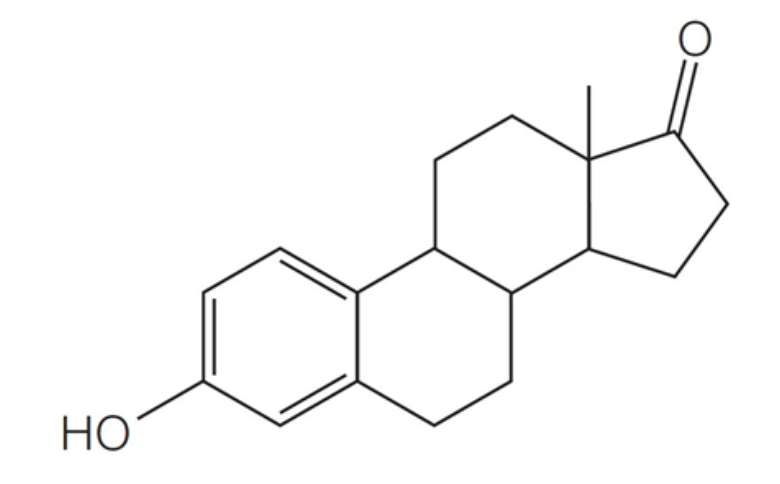
Cholesterol
The most common steroid in animal cell membranes
Estrogen and Testosterone
These govern reproduction and reproductive system development
Proteins
All cellular processes involve these. They are the most diverse molecule and are used for motor, defense, storage, regulatory, sensory, transport, enzyme, structural and signaling
Amino Acids
These are the monomer of protein, There are 20 possible, all with an amine group carboxyl group, and variable group. CHON is found in all of these and all of proteins
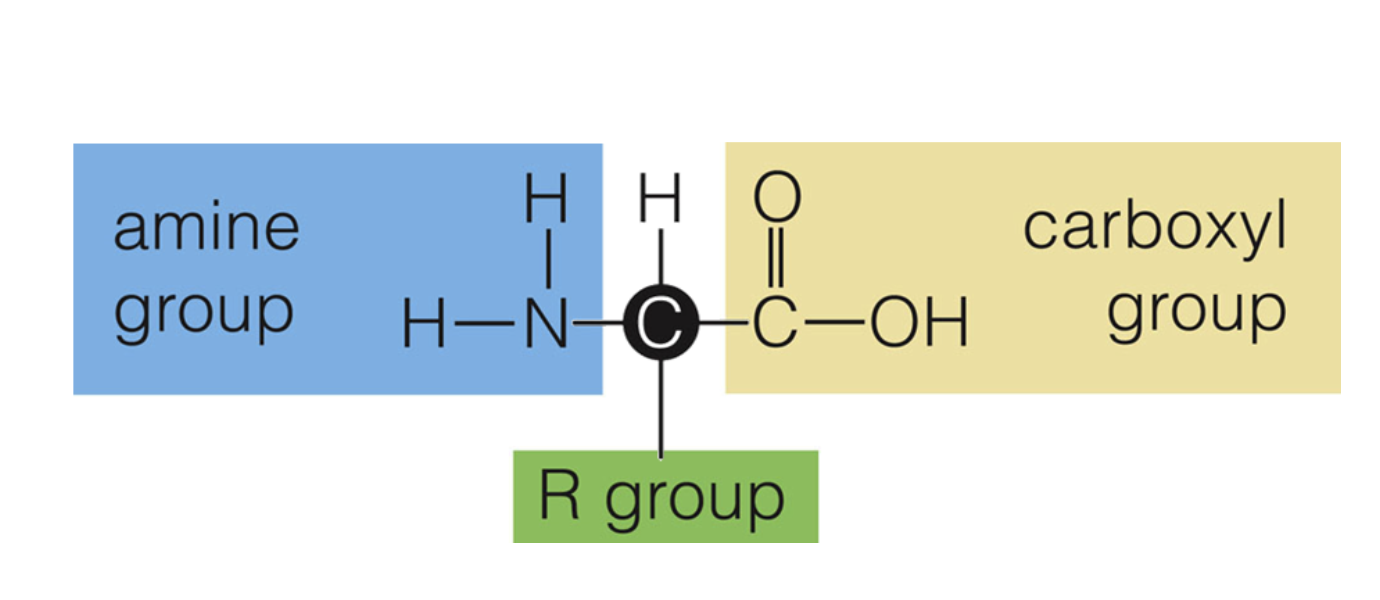
R Group
This gives amino acids their properties-hydrophobic/philic, acid, base, etc
Polypeptides
Linear chains of amino acids

Peptide Bonds
Between the amino group of one amino acid and the carboxyl group of another
Structure of a Protein
This determines the function of a protein (how it will work/behave)
Primary Structure of a Protein
The unique amino acid sequence of a protein. Amino acids are held together by peptide bonds

Secondary Structure of a Protein
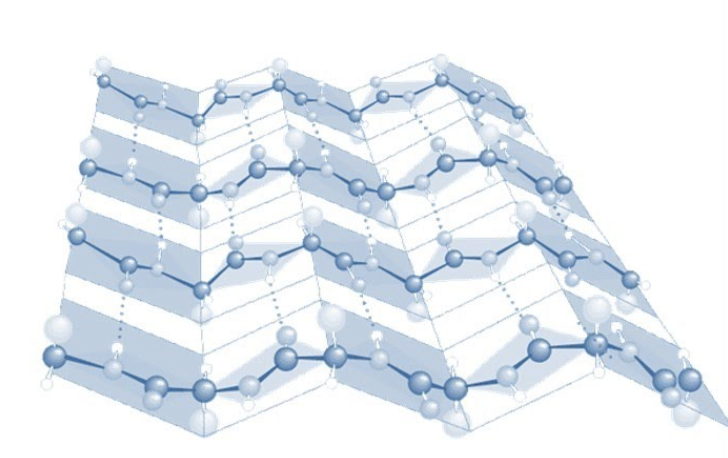
When the polypeptide chain folds and forms hydrogen bonds between the repeating portions of amino acids; resulting from interactions between the repeating portions of amino acids. Hydrogen bonds can cause the polypeptide to from beta sheets or alpha helices
Beta Sheets
Flat
Alpha Helices
Coils

Tertiary Structure of a Protein
Depends on how the R groups interact with each other. Hydrogen bonds, hydrophobic interactions, disulfide bridges (S), and ionic bonds (base-Acid)

Quaternary Structure of a Protein
When some proteins consist of 2 or more folded polypeptide chains in close association or covalently bonded together. The R groups interact (Ex: Hemoglobin)

Denature
When a protein loses its shape and no longer functions correctly as a result of its environment

Nucleic Acids (CHONP)
Store heredity information
DNA
A polymer with a double stranded helix, has N-bases: A, G, C, Thymine, stores hereditary information, is longer/larger and sugar is deoxyribose
RNA
This is single stranded, has N-bases: A, G, C, and Uracil, carries information from DNA to ribosomes and sugar is ribose
Nucleotides
The monomers of DNA with a phosphate group (-), 5 carbon deoxyribose sugars, and a nitrogenous base

1’ Carbon
Holds the nitrogen base
3’ Carbon
Has a hydroxide that will bond with the P group of another nucleotide
5’ Carbon
Holds onto the phosphate group