Ireland: Political History and Notable Figures
 Call Kai
 Learn
Learn Practice Test
 Spaced Repetition
 Match
Match Flashcards
 Knowt Play
1/9

There's no tags or description
Looks like no tags are added yet.
Name | Mastery | Learn | Test | Matching | Spaced | Call with Kai | Chat |
|---|
No analytics yet
Send a link to your students to track their progress
10 Terms

1595 - 1616 - Hugh O’Neill (All Facts)
Irish Chief (of his namesake clan) and Earl of Tyrone
Initially, he had been officially proclaimed Earl of Tyrone for his devoted services to the English cause
He loudly professed loyalty to England, having married the daughter of an aristocratic Anglo-Irish family
This union did not last, however
In doing so, he raised a force of 600 men, trained by the English
However, he was declared a traitor once he defected back to Ireland against the English
He replaced each year’s recruits trained by the English until he had a force of 4,000 musketeers, 1,000 pikemen, and 1,000 cavalry
He thus set himself up as the champion of the Catholics
He led the Nine Years’ War rebellion against Queen Elizabeth and England
He smuggled arms into Ireland in preparation for a Catholic uprising against the introduction of Protestant ways into Ireland by the English
Moreover, the Catholic Irish were angered by the immigration of into Ulster of fiercely anti-Catholic Scottish Calvinists
He captured Enniskillen and Monaghan Castles
He appealed to Philip II of Spain for help
He was later pardoned by Queen Elizabeth of England for his rebellious activities
He and his forces defeated the English forces in the Battle of the Yellow Ford, the first Irish victory of the War
He made a truce with Robert Devereux of England
After the Nine Years’ War, he fled to the continent of Europe and was received at the gates of Rome by seven cardinals, where the Pope placed a palace at his disposal, but back home he was declared a traitor and his land in Ulster was seized for settlement by Protestants from England and Scotland
He was eventually pardoned by King James of England and his land was restored to him
He initially fought with the English, then against the English, and then on their side later and against them later
When he found himself in a dispute over his feudal rights, King James of England invited him to put his case in London
Fearing arrest, he joined with Rory O’Donnell, the first earl of Tyrconnell, and hired a ship to escape abroad with both of their families and servants
They planned to go to Spain, but were driven ashore in France, and, not wanted there, they sought refuge in the Spanish Netherlands, and, unwelcome there, sought refuge in Lorraine and Switzerland, and unwelcome there; finally found refuge in Rome
Their restored lands granted via their pardon by King James of England were eventually seized after they were declared traitors back in Ulster for fleeing due to the namesake’s feudal dispute; and in which English and Scottish Protestants began to settle in those seized lands

1592 - 1602 - Hugh Roe O'Donnell II (All Facts)
He was the Lord of Tyrconnell in Ireland
Irish Chief and Leader of the confederacy of Irish lords during the Nine Years' War
He and his forces defeated the English forces in the Battle of the Yellow Ford, the first Irish victory of the War
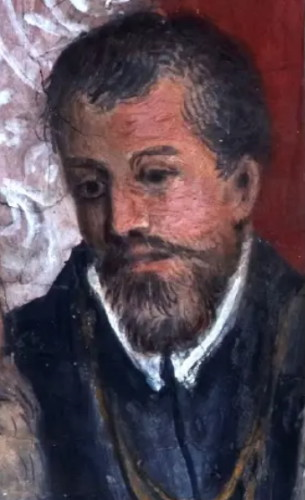
1603 - 1608 - Rory O'Donnell (All Facts)
He was the First Earl of Tyrconnell
He fled to the continent of Europe and was received at the gates of Rome by seven cardinals, where the Pope placed a palace at his disposal, but back home he was declared a traitor and his land in Ulster was seized for settlement by Protestants from England and Scotland
He was eventually pardoned by King James of England and his land was restored to him
He joined with Hugh O’Neill, the first earl of Tyrone, and hired a ship to escape abroad with both of their families and servants
They planned to go to Spain, but were driven ashore in France, and, not wanted there, they sought refuge in the Spanish Netherlands, and, unwelcome there, sought refuge in Lorraine and Switzerland, and unwelcome there; finally found refuge in Rome
Their restored lands granted via their pardon by King James of England were eventually seized after they were declared traitors back in Ulster for fleeing due to the namesake’s feudal dispute; and in which English and Scottish Protestants began to settle in those seized lands
1642 - 1652 - Confederate Ireland (All Facts)
Period of Irish history in which Ireland established their own rebel Parliament, the Catholic Confederacy, which first met during the Irish Rebellion of 1641 in Kilkenny
Irish rebels against England were divided into groups, both with loyalty to King Charles over the militantly Protestant Parliament in London, but with different demands
The Anglo-Catholic Irish wanted to protect Catholic Ireland from Protestant London
The Old Irish were more interested in
recovering confiscated property
preserving their rapidly vanishing Gaelic language and traditions

1611 - 1659 - William Lamport (All Facts)
Irish Adventurer, Nobleman, and Political Activist
He came to Mexico with plans to
abolish taxes and slavery
restore the power of religious orders
protect the privileges of ruling colonial families
He was tried by the Mexican Inquisition, his alleged crime being a plot to declare Mexico (New Spain) an independent kingdom ruled by itself
He suffered harshly under Spanish rule
His life story inspired the character of “Zorro”
1643 - 1689 - James Butler (All Facts)
He was the First Duke of Ormond
He was put in charge of quelling the Irish Rebellion during the Irish Confederate Wars, and negotiated a truce
1687 - 1689 - Richard Talbot (All Facts)
He was the Final Lord Deputy of Ireland
He was the First Earl of Tyrconnell
He was the First Viceroy of Ireland

1689 - 1690 - James II (All Facts)
Final Catholic King of Ireland
He was overthrown in the Glorious Revolution
After that, he fled to France where he received troops and money from France’s (Catholic) King Louis XIV
He then landed in Ireland following his exile to France
He was promptly acknowledged as King of Ireland by the Irish Parliament in Dublin
1600s - 1900s - Protestant / Anglican Ascendancy (All Facts)
Sociopolitical and economic domination of Ireland by a small Anglican ruling class, whose members consisted of aristocrats, landowners, barristers, politicians, clergymen, military officers and prominent professions, which were all by practice and law closed to Catholics
Period in Ireland during which Penal laws were passed, a form of racial and religious segregation introduced by the English into Ireland; a series of laws in which
The Catholic Irish were allowed to practice their religion
The Catholic Irish were not permitted to vote
The Catholic Irish were barred from the armed forces
The Catholic Irish were not allowed to send their children abroad to be educated as Catholics
The Catholic Irish were banned from gambling, done in an attempt to prevent the upper classes from losing their family fortunes
A Protestant could not marry a Catholic and must produce a certificate of religious denomination before marriage