Lung Cancer
 Call Kai
 Learn
Learn Practice Test
 Spaced Repetition
 Match
Match Flashcards
 Knowt Play
1/21

There's no tags or description
Looks like no tags are added yet.
Name | Mastery | Learn | Test | Matching | Spaced | Call with Kai | Chat |
|---|
No analytics yet
Send a link to your students to track their progress
22 Terms
Risk factors for lung & upper airway malignancies
Smoking (80–90% of cases), duration + cigarettes/day dose-response, Environmental tobacco smoke modest role, cooking fumes, mineral exposure
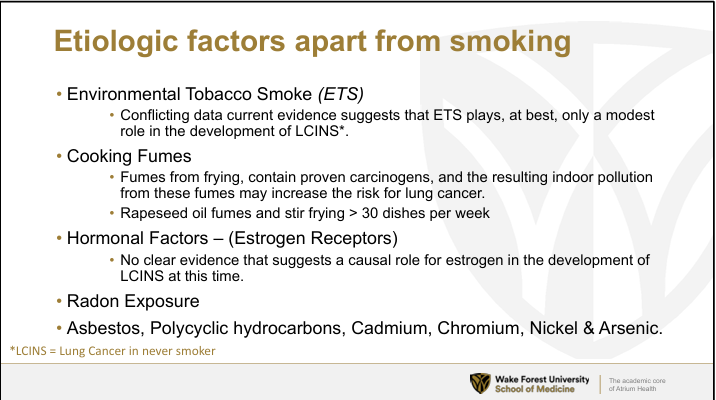
Neuroendocrine carcinomas and Epithelial Carcinomas(not super important)
Neuroendocrine carcinomas (Small Cell, Large Cell NE) epithelial tumors (Adenocarcinoma, Squamous, Large Cell)
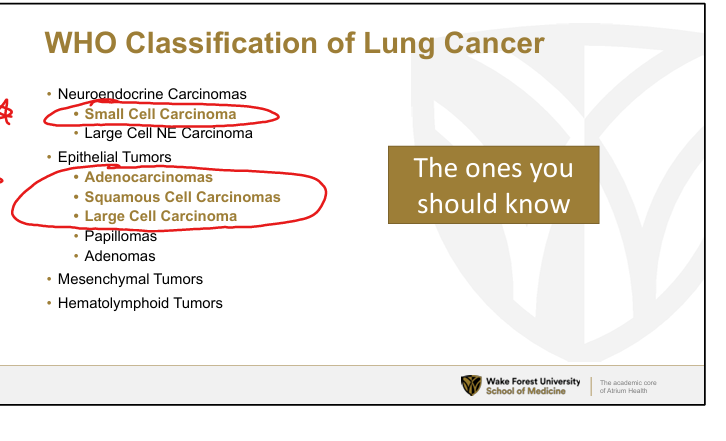
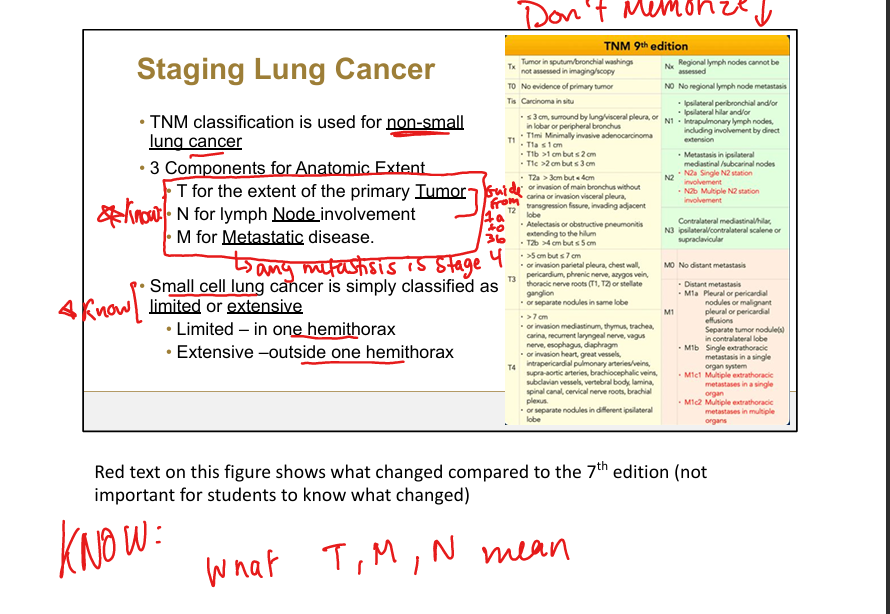
IASLC staging overview TNM system for NSCLC:
T = tumor size/invasion; N = lymph node involvement; M = metastatic
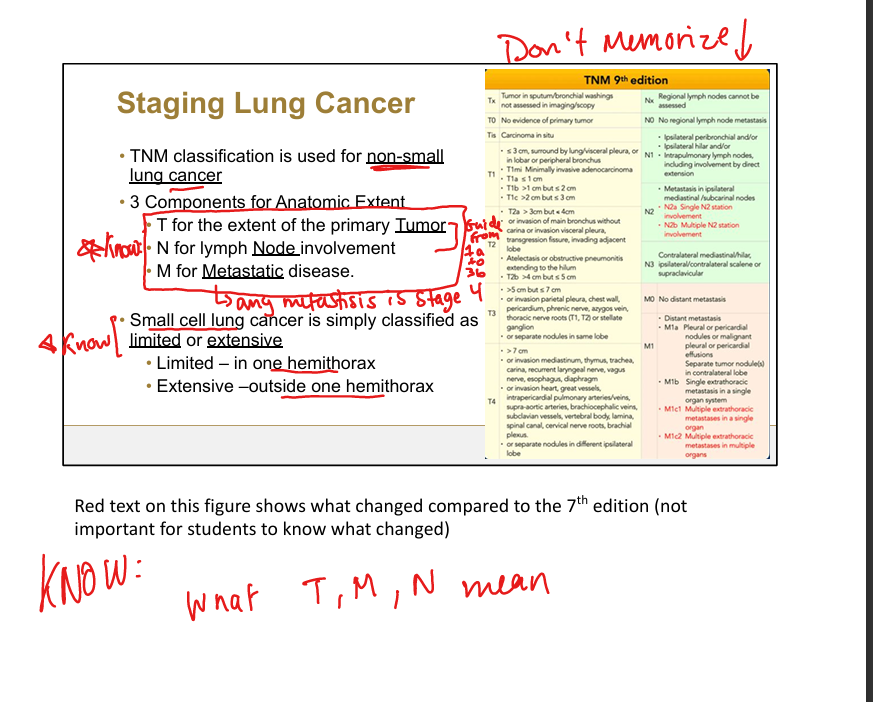
Patient presentations of lung cancer
Most common: cough, dyspnea, chest pain, hemoptysis.
Less common: clubbing, hoarseness, dysphagia, focal wheeze. 5–15% asymptomatic. 15% extra‑pulmonary symptoms
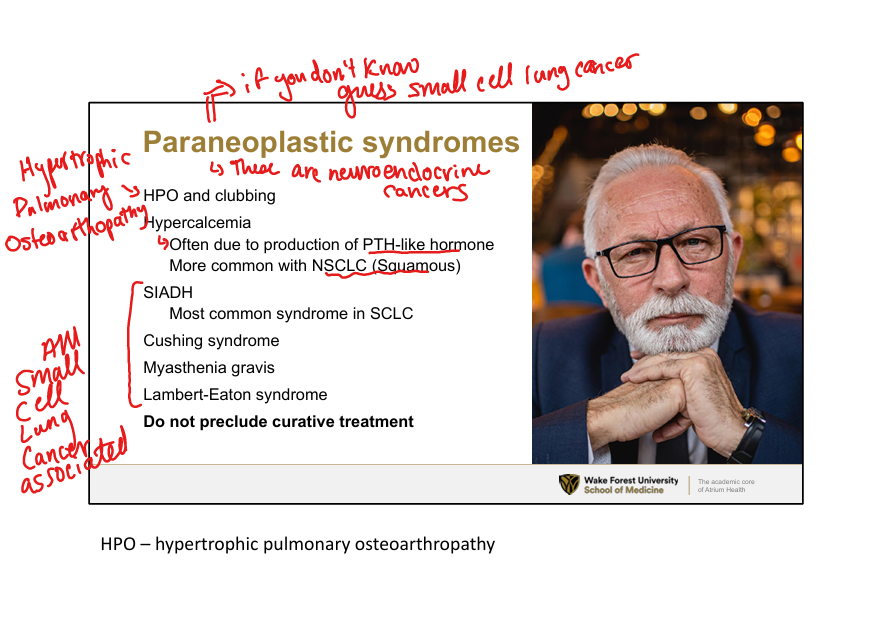
Paraneoplastic syndromes + lung cancer associations
Non Small Cell Lung Cancers» Squamous Cell Carcinoma → hypercalcemia (PTH‑rP). Adenocarcinoma → hypertrophic pulmonary osteoarthropathy.
Small Cell Lung Cancer → SIADH (most common), Cushing Syndrome, Lambert‑Eaton, MG.
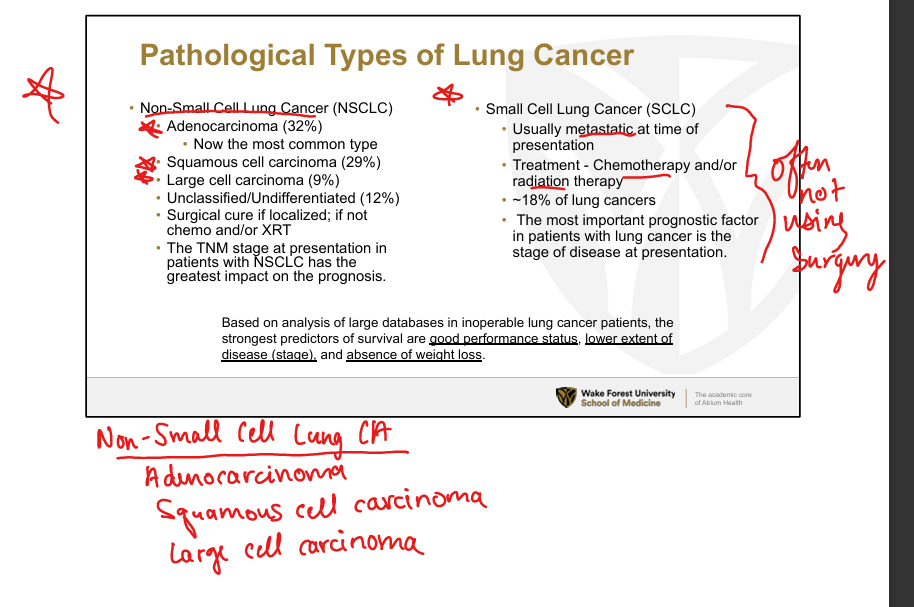
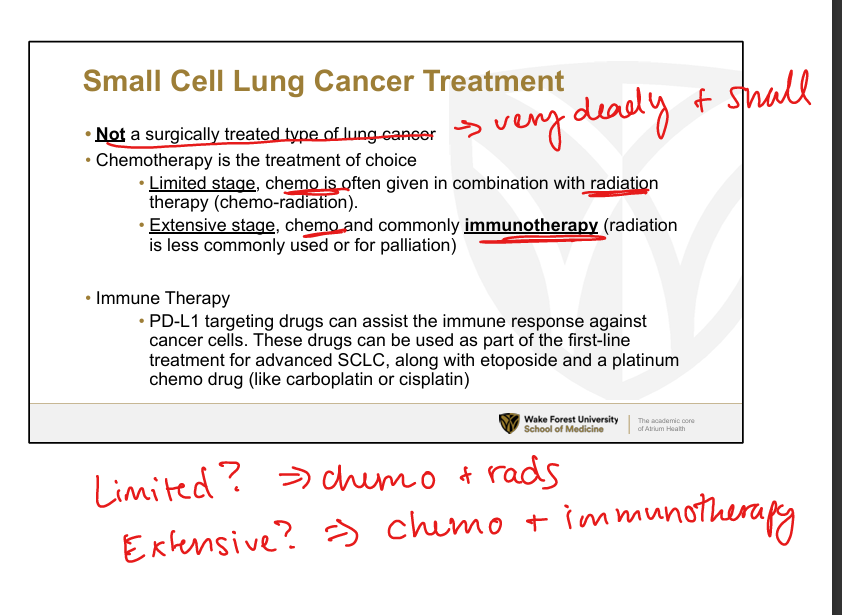
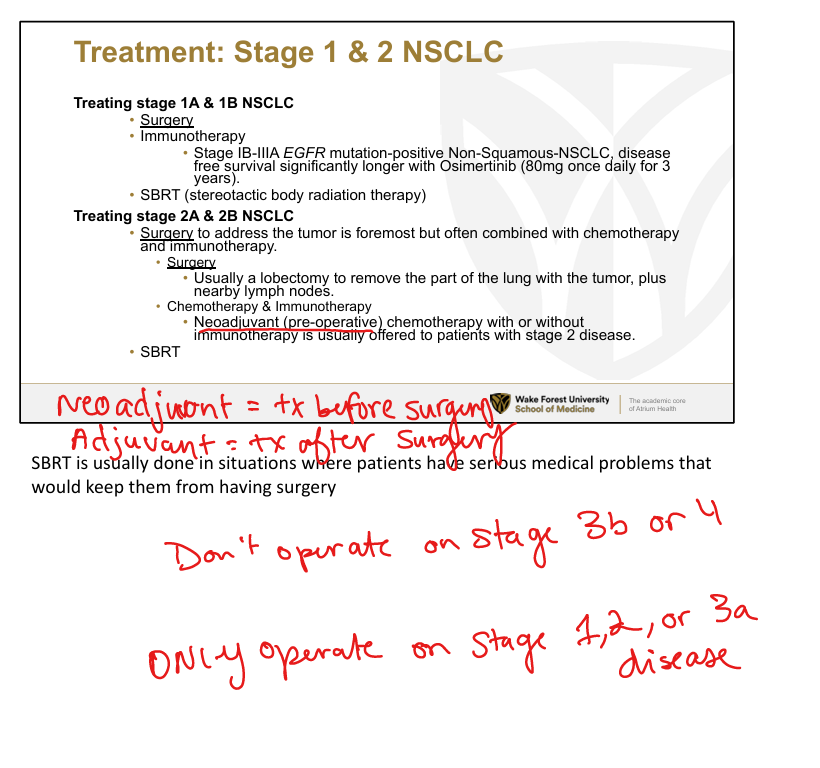
Treatment types for Non Small Cell and Small Cell Lung Cancer
NSCLC: surgery if localized(stages 1,2,or 3a), chemo for advanced or adjuvant, immunotherapy
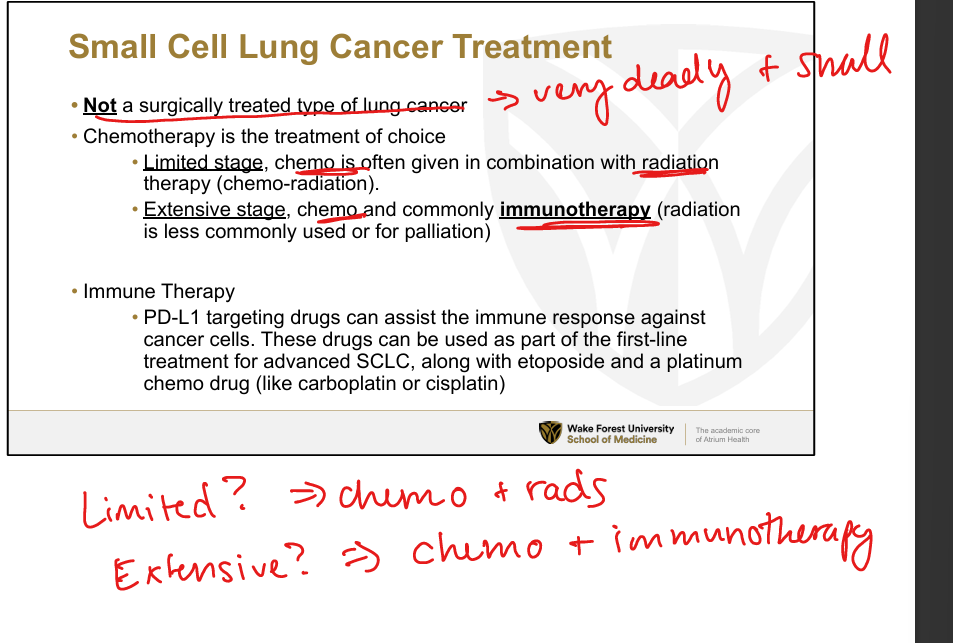
SCLC: Limited stage: chemo-radiation mainstay. Extensive stage: Chemo and immunotherapy
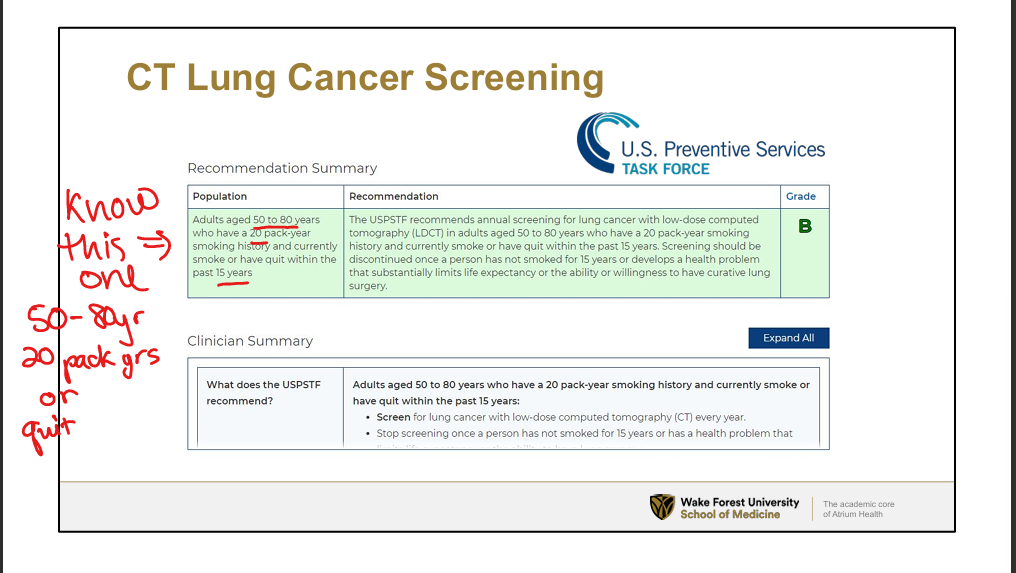
Criteria for who to screen for lung cancer
Adults 50–80 with ≥20 pack‑years, current smokers or quit <15 years. Screening reduces mortality with annual low‑dose CT.
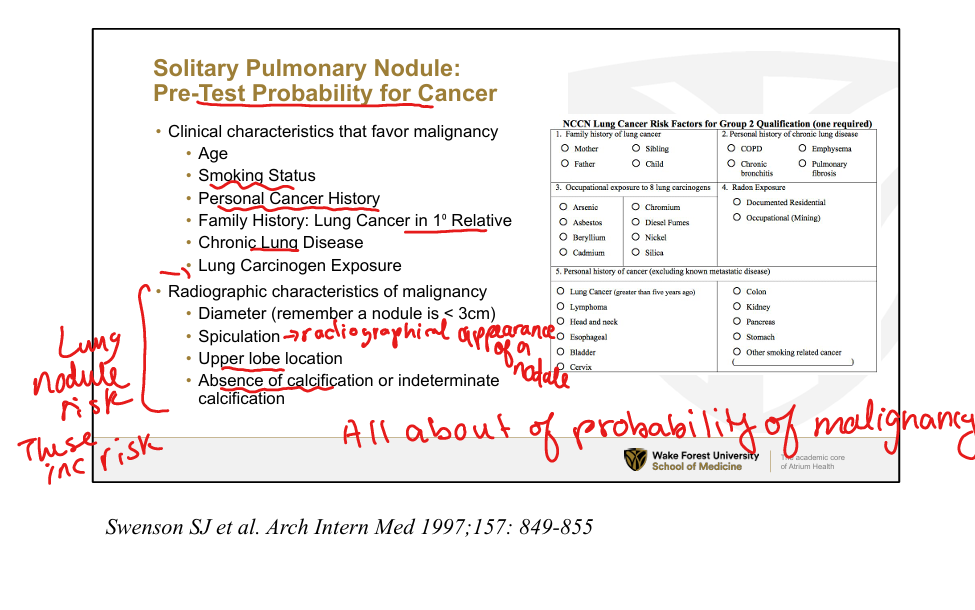
Risk-based approach to pulmonary nodules
Assess patient risk (age, smoking, cancer history, exposures) + nodule features (size <3 cm, spiculation, upper lobe, calcification pattern).
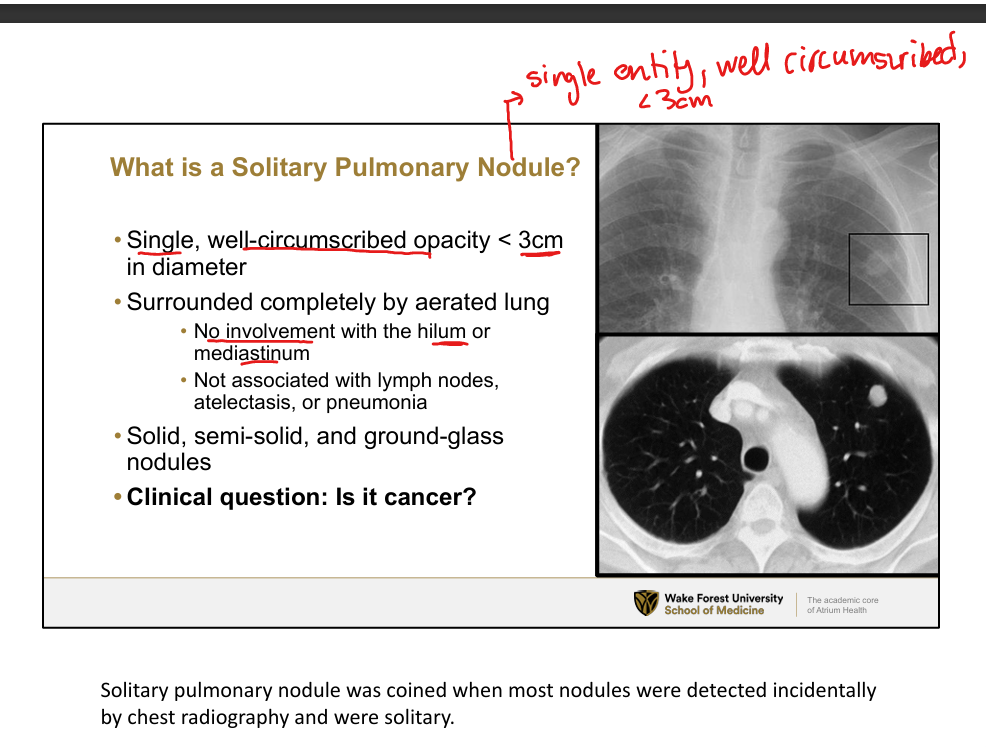
Solitary pulmonary nodule definition
“Single, well‑circumscribed opacity <3 cm… surrounded completely by aerated lung… no involvement with hilum or mediastinum.”
Staging of Lung Cancer in Small Cell Lung Cancer
Limited: in one hemithorax
Extensive: outside one hemithorax
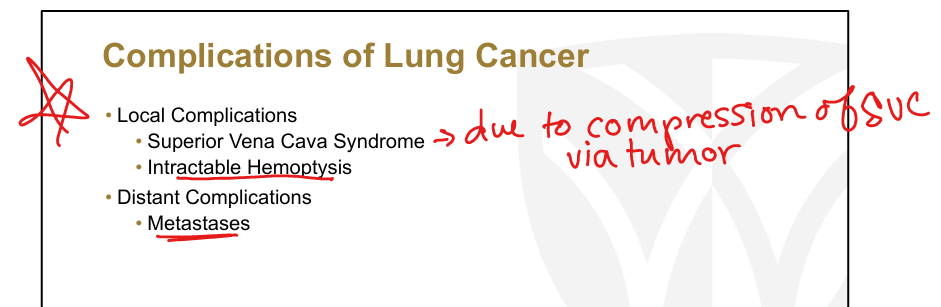
Complications of Lung Cancer
Local: Superior Vena Cava Syndrome, Intractable Hemoptsis
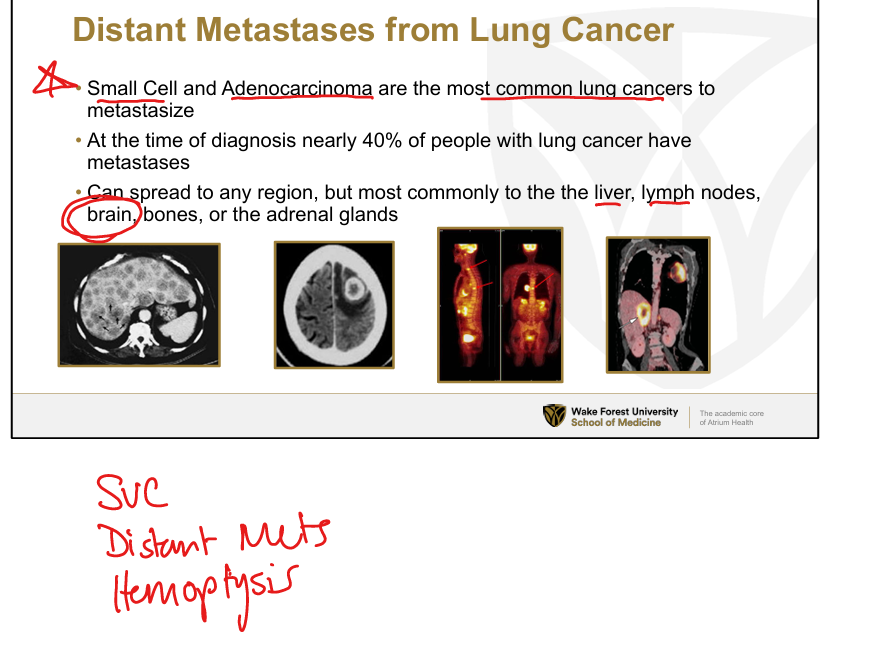
Distant: Metastases
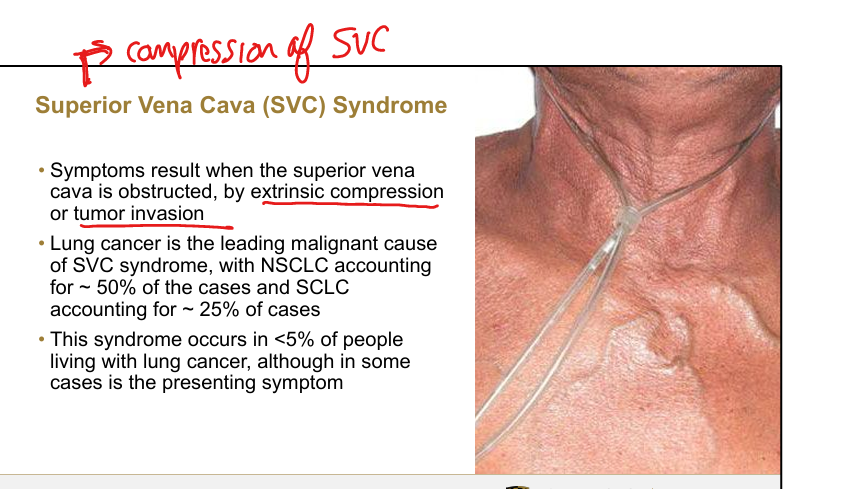
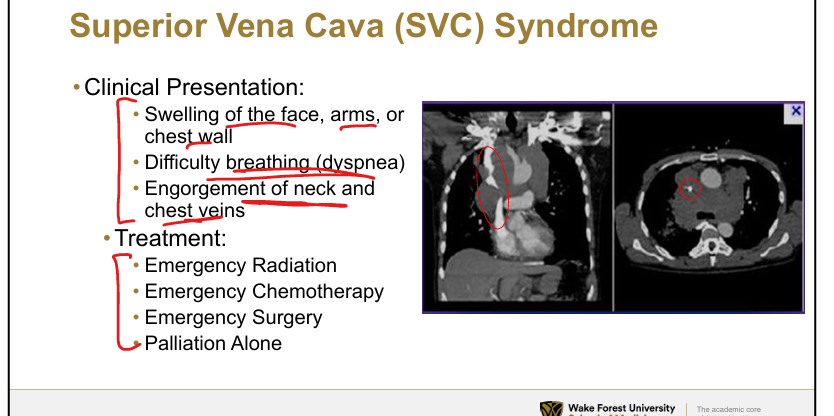
Superior Vena Cava Syndrome MOA, Sx, Tx
Results when SVC is obstructed/compressed often by tumor invasion. Sx: Swelling of face, arms chest wall, dyspnea, engorgement of neck and chest veins. Tx: Emergency chemo, rads, and surgery
Most common lung cancers to metastasize
Small Cell and Adenocarcinoma
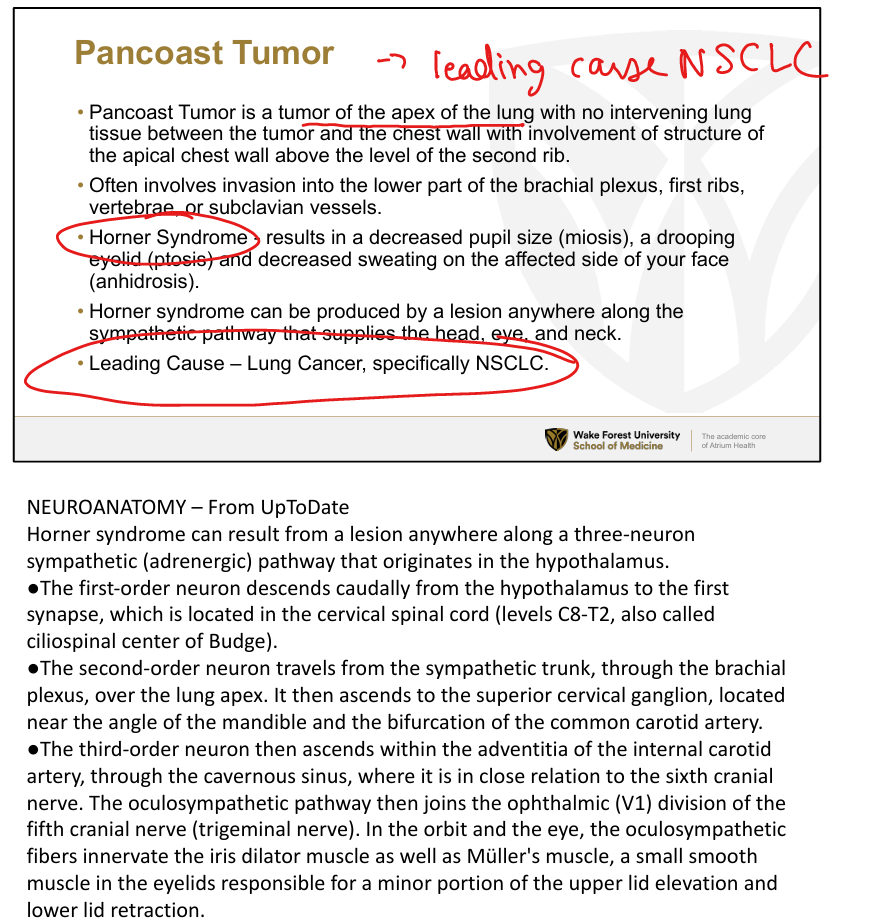
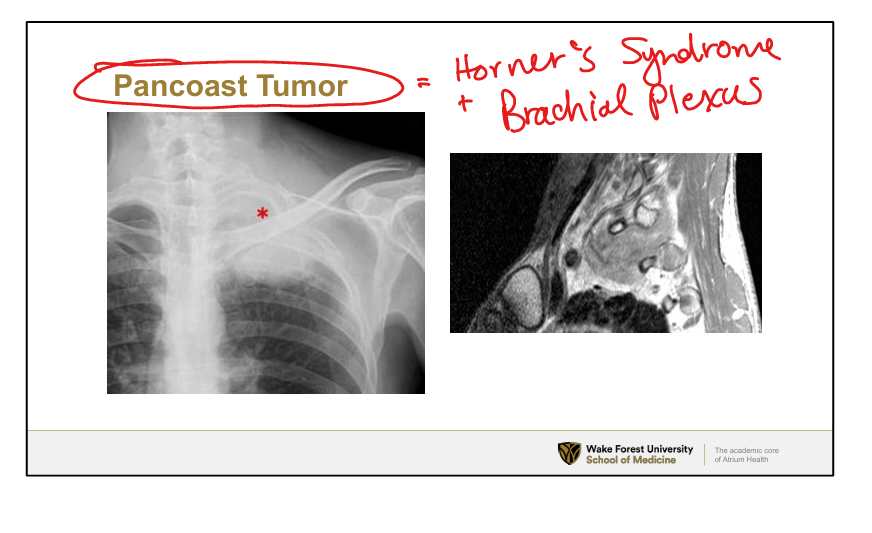
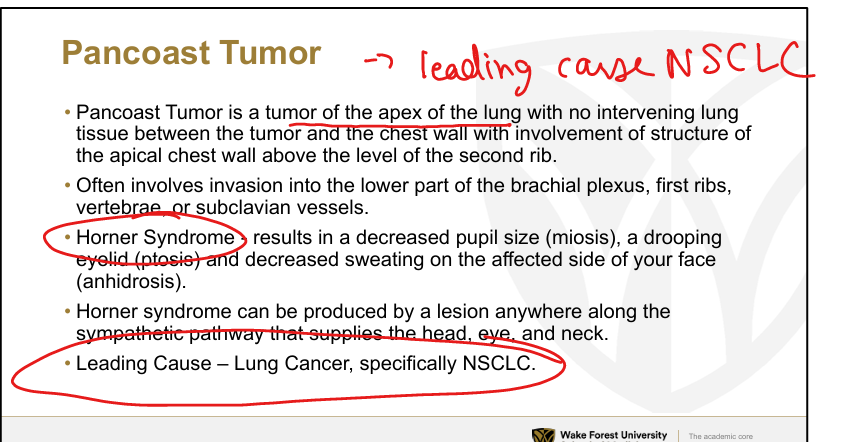
Pancoast Tumor
Tumor of apex of lung, often invades brachial plexus(arm changes), sympathetic pathway causing Horner Syndrome(miosis, ptsosis, and anhidrosis), leading cause is Non-Small Cell Lung Cancer
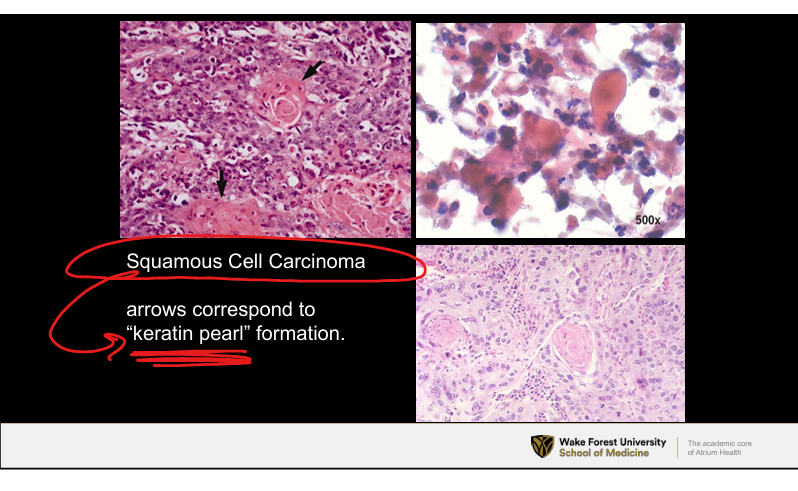
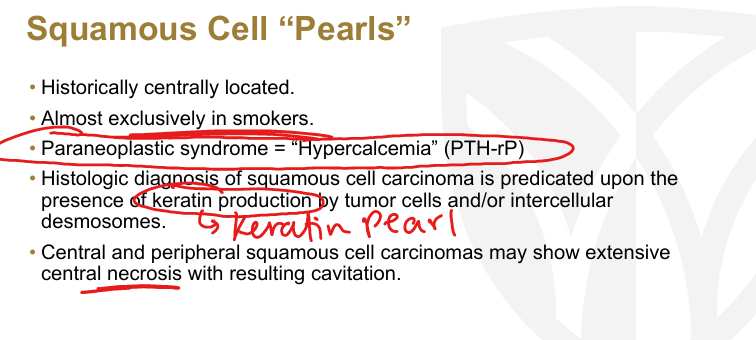
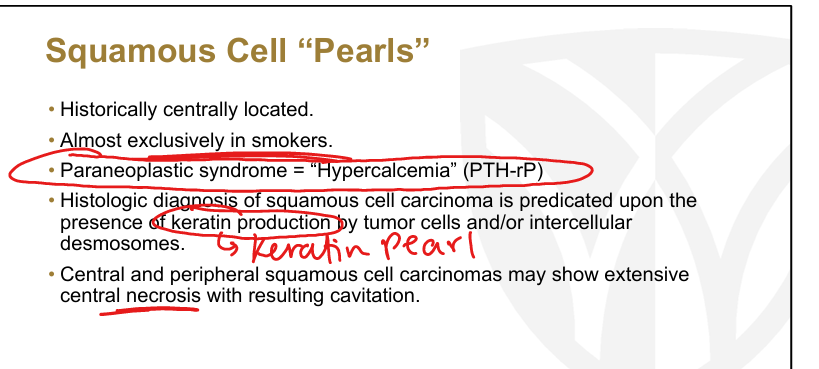
Squamous Cell Carcinoma Pearls
Smoking, Paraneopastic syndrome Hypercalcemia, keratin pearls on histo
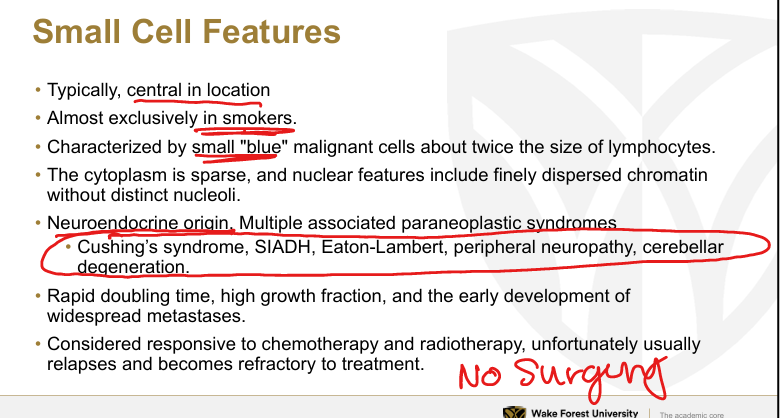
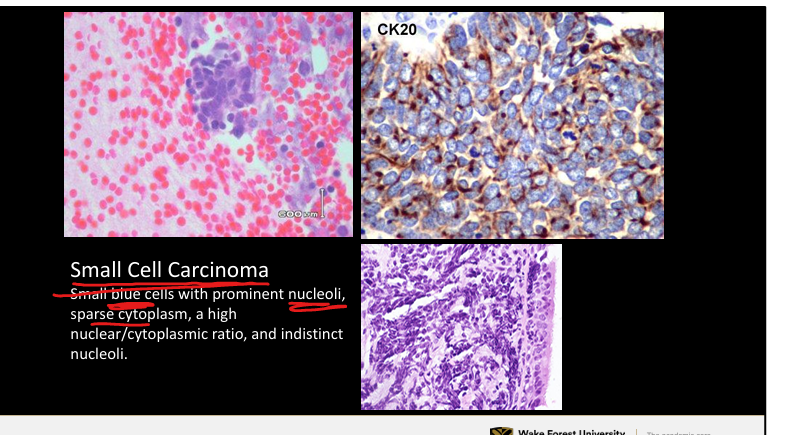
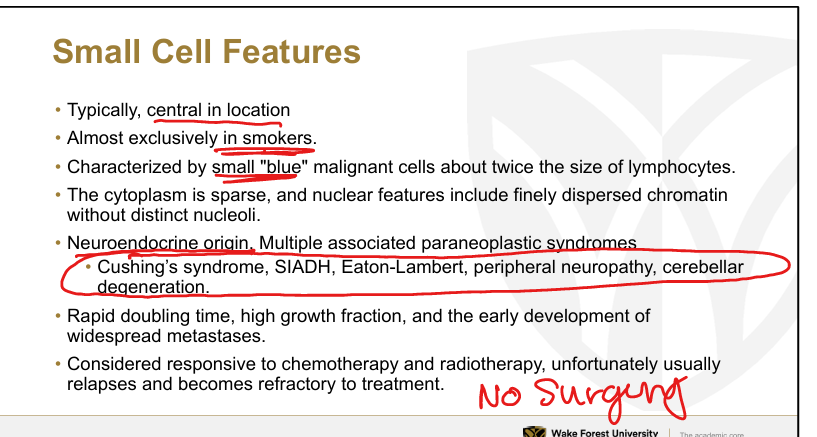
Small Cell Lung Cancer Pearls
Smoking, small blue malignant cells, associated with paraneoplastic syndromes like Cushing’s Syndrome, SIADH( low Na+), Lambert-Eaton, MG

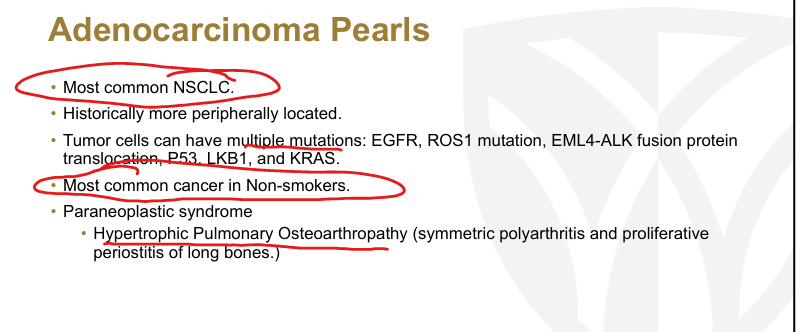
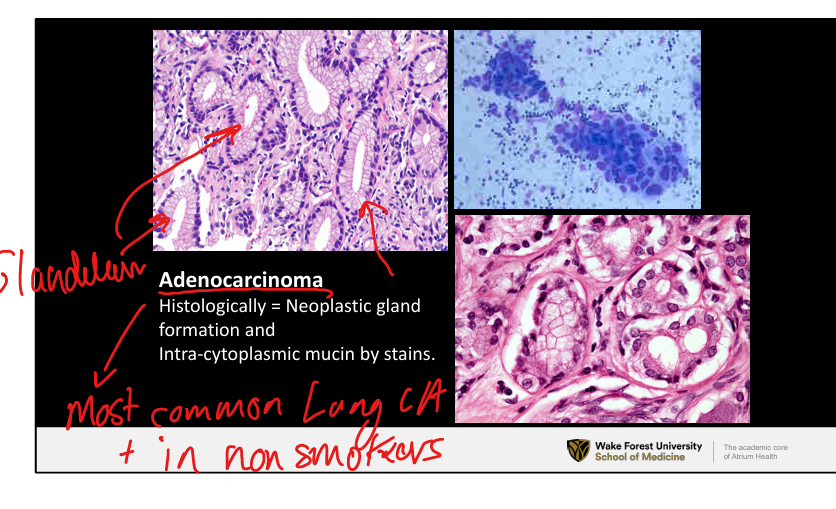
Adenocarcinoma Pearls
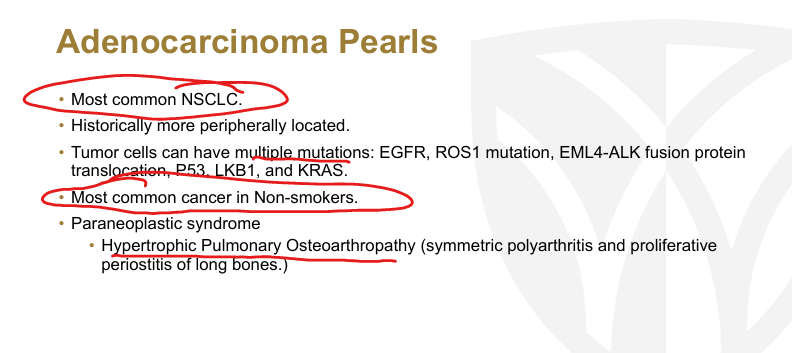
Most common Non-Small Cell Lung Cancer, more peripherally located, most common cancer in Non-smokers, glandular on histo Paraneoplastic syndrome: Hypertrophic Pulmonary Osteoarthropathy (polyarthritis and periostitis of long bones»pain in bones)
Older person with emphysema, SOB, left arm pain, and Horner’s syndrome
Pancoast Tumor, leading cause is Non Small Cell Lung Cancer
Older patient with cough, dyspnea and elevated Ca2+, keratin pearl on histo
Squamous Cell Carcinoma
Older Pt who is cold and smokes, Na+ is low, small blue cells on histo
Small Cell Lung Cancer
Pt who doesn’t smoke, with complaint of polyarthritis and periostitis of long bones, glandular histo
Adenocarcinoma
Most common cause of paraneoplastic syndrome?
Small Cell Lung Cancer