Ch 1 intro to dental anatomy
 Call Kai
 Learn
Learn Practice Test
 Spaced Repetition
 Match
Match Flashcards
 Knowt Play
1/37

There's no tags or description
Looks like no tags are added yet.
Name | Mastery | Learn | Test | Matching | Spaced | Call with Kai | Chat |
|---|
No analytics yet
Send a link to your students to track their progress
38 Terms
what is dentitions
delvelopment, number, and arrangment of teeth
Has a primary phase and permanent phase
Deciduous teeth formation
Also known as primariy teeth (baby)
form prenatally at 14 weeks → appear in mouth at 6 months → last emerge at around 28m →completed postnatally at about 3 yr → primiry dentition stay until 6 yr old
Succedaneous teeth cycle
permanent dentition begins when 1st permeant molar( a nonsuccedus tooth) comes in → ends once all primary teeth shed
usally starts at 6y and ends at around 14-15 BUT wisdom teeth (3rd molars) not in until 18-25 y
lower jaw nomecleture
mandibular
upper jaw nomenclature
maxillary
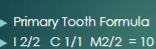
Primary tooth formula
maxillary/mandibular
total of 10 teeth
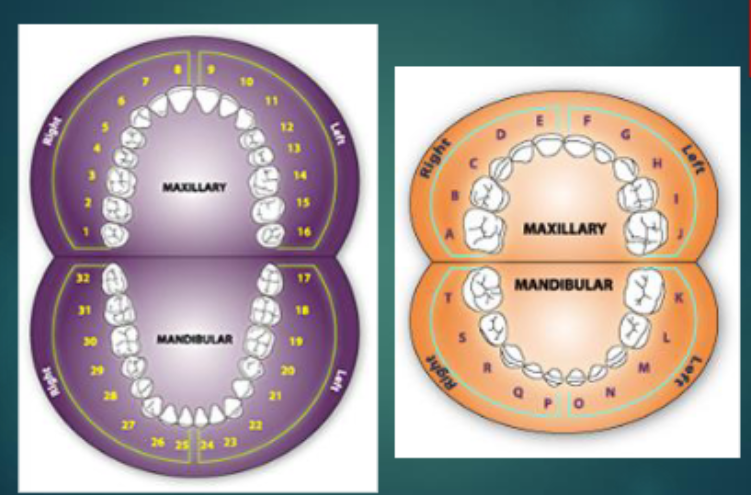
What number system is this
Universal
what we use
ADA
What number system is this?
Palmer
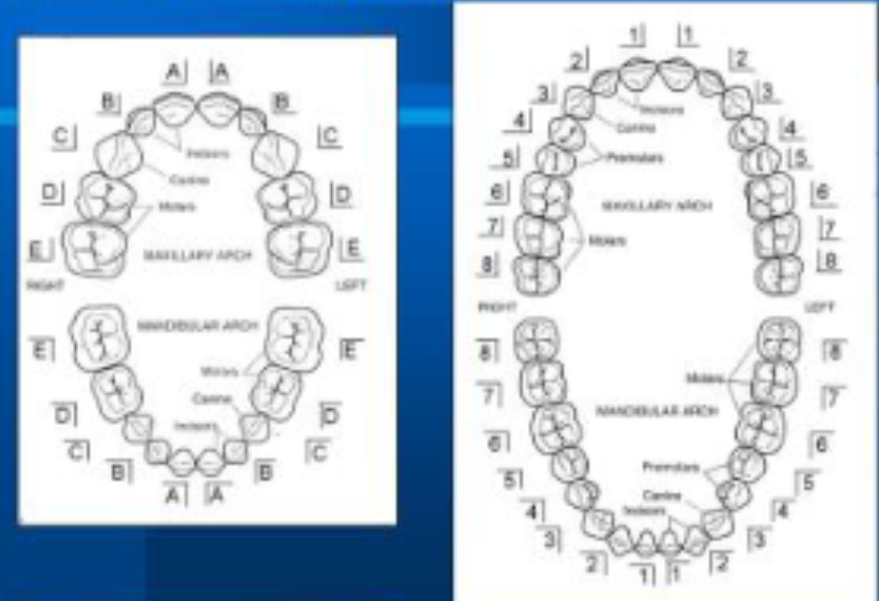
ADA symbolic system 1947
symbolic system
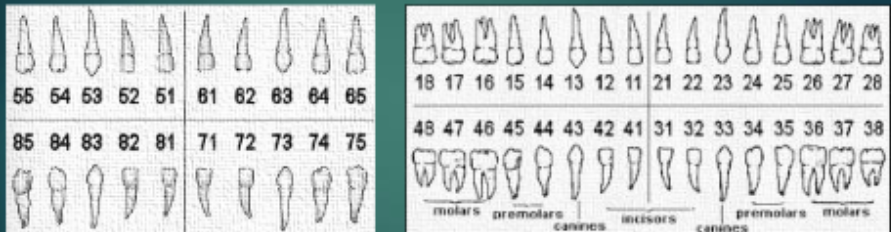
What number system is this?
Federation Dentaire Internatinonale (FDI)
2 digit
1st : repersents quad
1-4 adult
5-8 baby
2nd: tooth in a quad
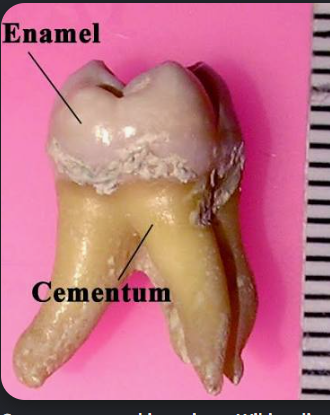
Crown and Root covered with
Crown: enamel
Root: cementum
when they meet its called the cementoenamel junction (CEJ)
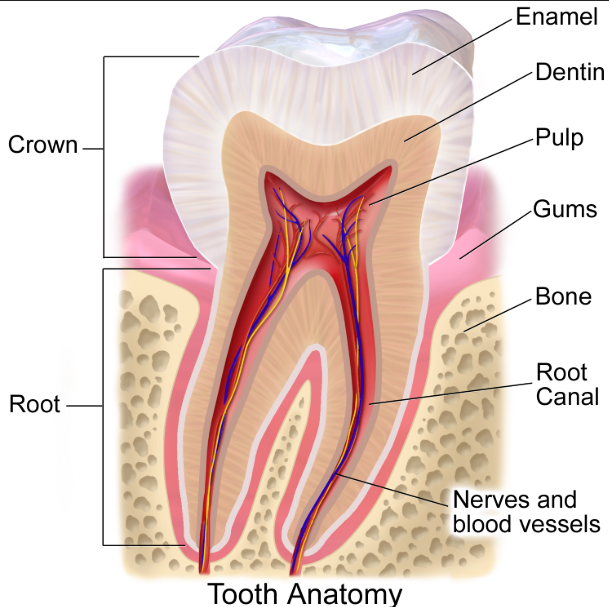
Dentin and Pulp
Dentin makes up bulk of tooth
pulp houses blood nerves and lyph
Pulp cavity (both spaces tgr)
Pulp chamber
Pulp canal
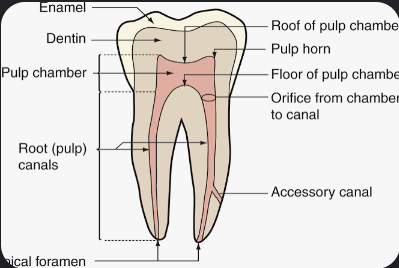
The 4 tissues of tooth
enamal, cementum, dentin, pulp
pulp is the only soft tissue, the others are hard
What supports the tooth
Alveolar process
its like the jaw bone ridge
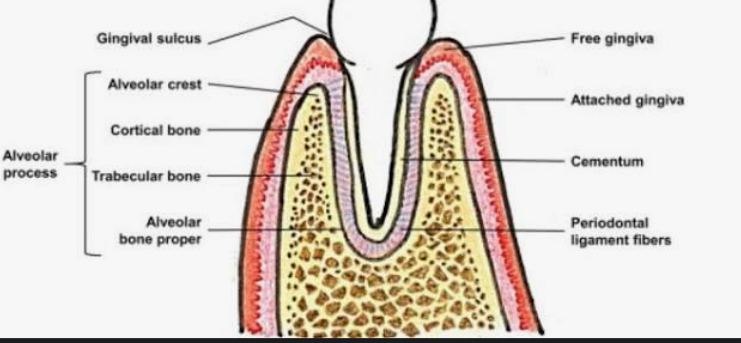
What is the name of the tooth socket bone
Alveolus/ Alveoli
Incisors/Canines surfaces and ridges
4 surfaces and a ridge (Labial, Lingual,
Mesial, Distal, Incisal)
Premolars/Molars surfaces and ridges
4 surfaces and 1 ridge (Buccal, Lingual, Mesial, Distal, Occlusal)
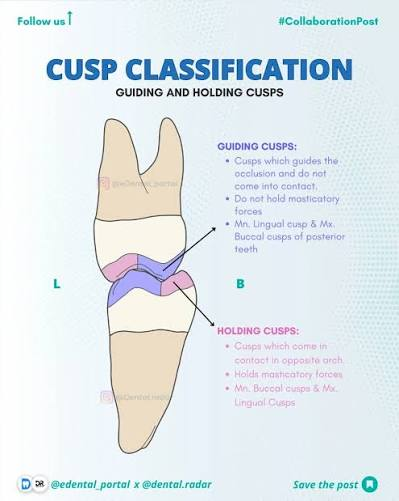
Cusp
elevation or mound on crown portion of tooth
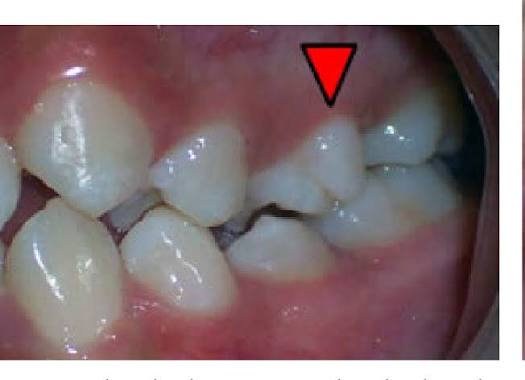
Tubercle
smaller elevation on some portion of crown produced by extra formation of enamel
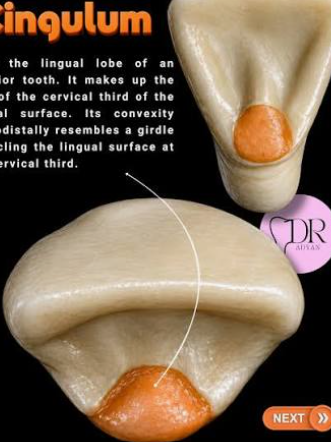
Cingulum
lingual lobe of anterior tooth
Ridge
linear elevation on tooth surface named according to location
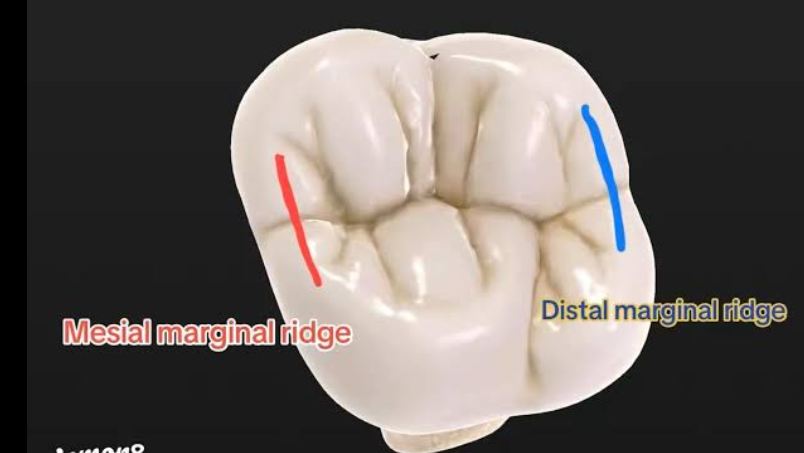
Marginal ridge
rounded borders on mesial/distal margins occlusal surfaces of premolars and molars as well as mesial/distal margins of lingual surfaces of incisors and canines
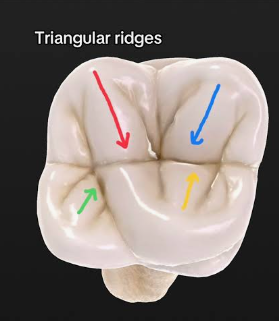
Triangular ridge
descend from cusp tips of molars/premolars toward central part of occlusal surfaces
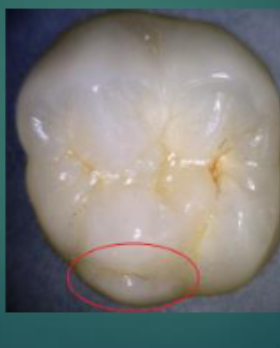
cusp of carabelli
An addition cusp on molars, extra bump on one or two of your teeth
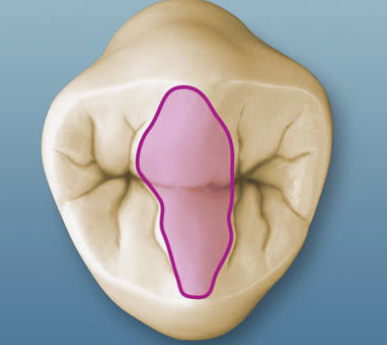
Transverse ridge
the joining of a buccal and a lingual triangular ridge
Oblique ridge
ridge crossing obliquely the occlusal
surfaces of maxillary molars (from DB cusp to ML cusp)
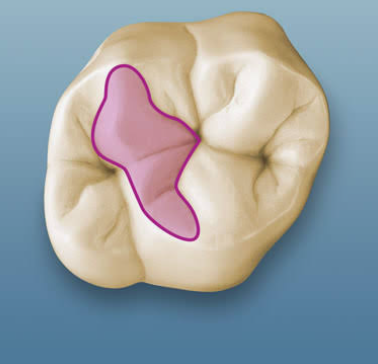
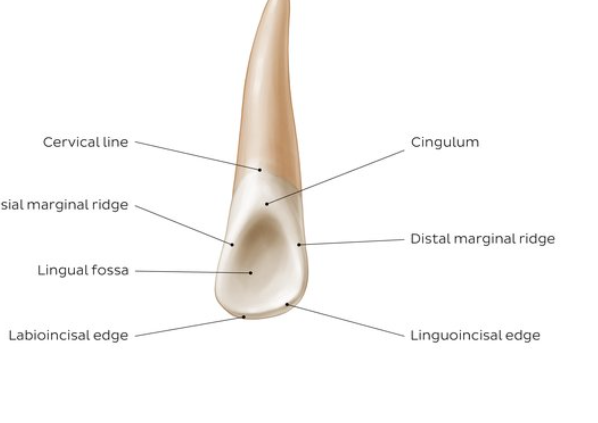
Lingual fossa
lingual surfaces of incisors
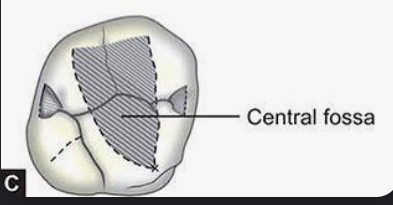
Central fossa
occlusal surfaces of molars
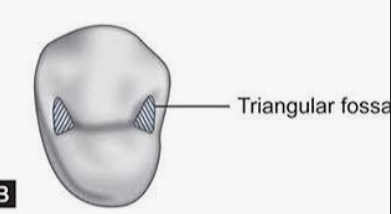
Triangular fossa
found on molars/premolars occlusal surface, sometimes found lingual surfaces of max incisors
Sulcus
long depression surface of a tooth between ridges and cusps
Mamelon
One of three protrusions normally found on the incisal edge of permanent incisors incisal ridges of newly erupted incisors
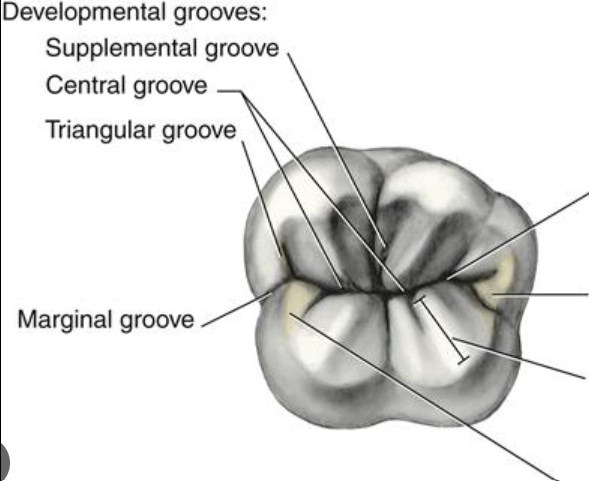
Developmental groove
shallow groove or line between primary parts of a crown or root
It marks where the primary growth parts (lobes) of the tooth joined together during development
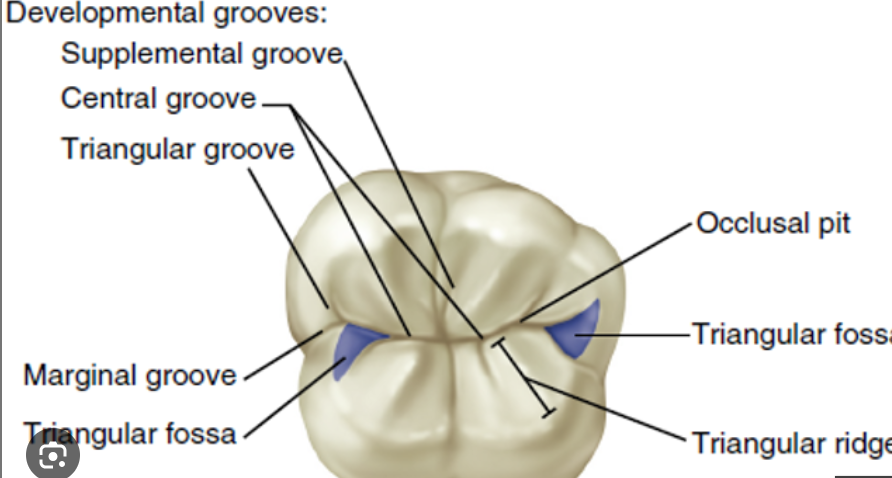
Supplemental groove
less distinct shallow linear depression on surface of a tooth
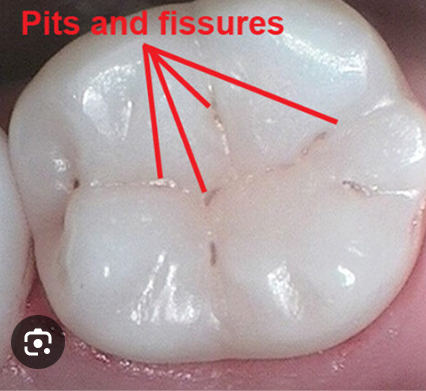
Pits-
small pinpoint depressions located at junction of developmental grooves or terminals of those grooves
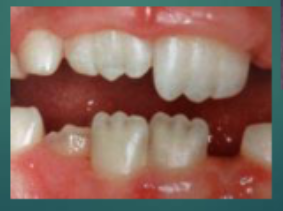
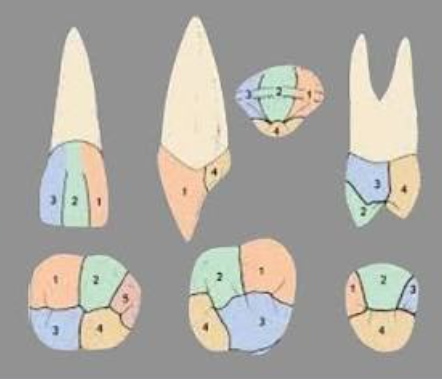
Lobe
one of primary sections of formation in the development of the crown
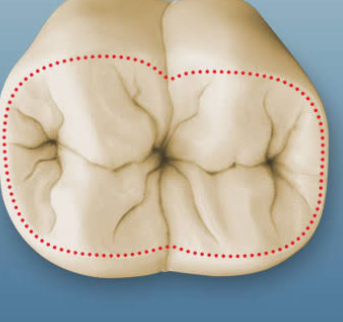
Occlusal Table
Portion of a crown on a posterior tooth that is bounded by the cusp tips, crest of the marginal ridges, and crests of the cusp ridges
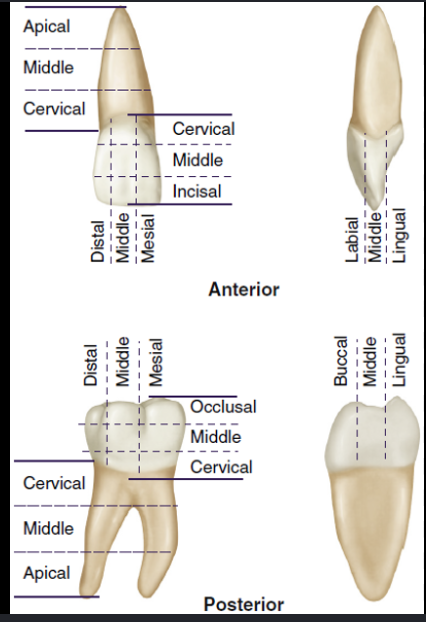
Division into thirds
Crown and root divided into thirds
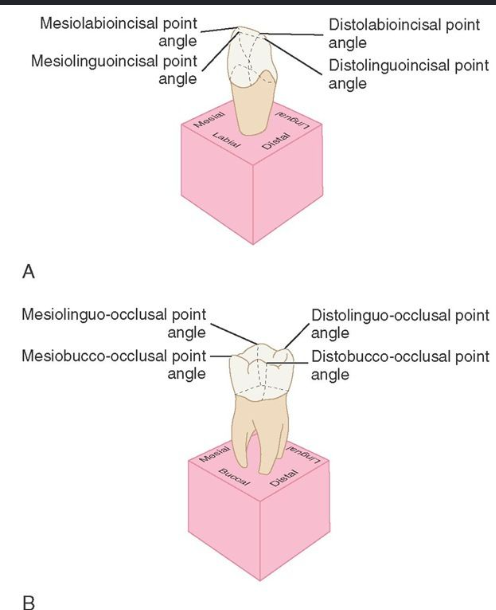
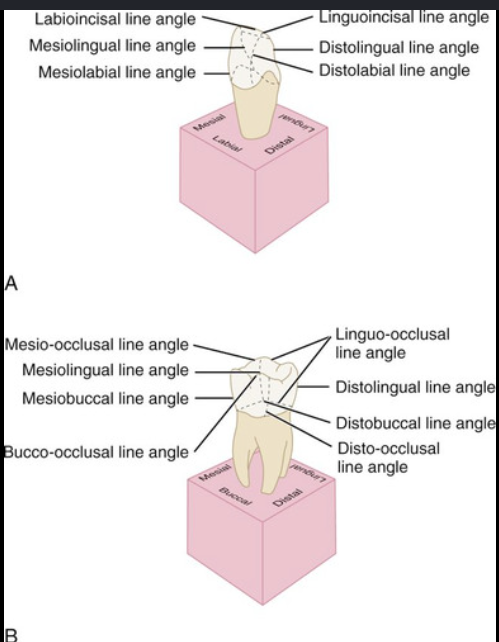
Line Angles
think 3D
combos-
meso or distal
buccal or lingaul or occusal
Point angel
Formed at the junction of three surfaces. basically tips of tooth