ARCHAIC PERIOD: 700–480 BCE
 Call Kai
 Learn
Learn Practice Test
 Spaced Repetition
 Match
Match Flashcards
 Knowt Play
1/15

Earn XP
Description and Tags
Early Archaic/Protoarchaic (Orientalizing): 700–600 BCE Daedalic Style: emerged primarily in Crete and then spread
Name | Mastery | Learn | Test | Matching | Spaced | Call with Kai | Chat |
|---|
No analytics yet
Send a link to your students to track their progress
16 Terms
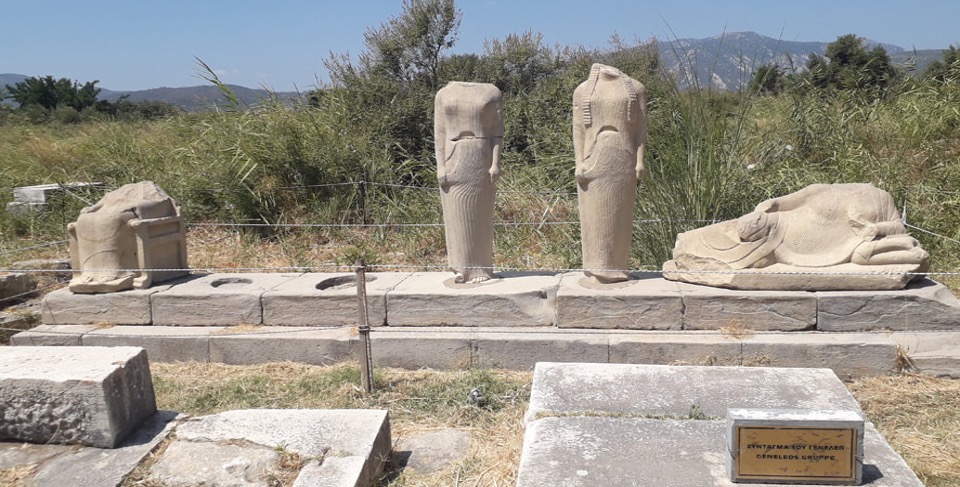
Genelaos Group
560–550 BCE
From the Samian Heraion in Samos
Long statue base originally with six labeled statues
We have all the labels but not all the statues
Left side: statue inscribed with name Phileia and sculptor’s signature
Right side: reclining male figure of “...arches”, who dedicates the group
In between: 4 cuttings for standing statues, two of which are preserved: korai Philippe and Ornithe
Overall group representative of aristocratic family dedicating statuary, father and mother with daughters and son
We see new types of garments that become characteristic of Archaic draped figures (esp. korai)
Emphasis on form of body underneath, position of legs implied motion
Becomes characteristic of korai in later 6th c. BCE
Marks an important way (significant change) in which drapery and garments are depicted by sculptors
Folds of cloth emphasized body position, forms
Different types of folds being implying different fabrics–aristocratic implication
Reclining male figure: aristocratic opulence; pose adopted from near eastern models
See this in contemporary greek vase painting scenes (esp in depictions of symposiums)
Draped males is VERY rare, usually free standing male statues are depicted nude
Large scale familial grouping
Both men and women have opulent drapery, women are pulling fabric with their right arm to emphasize their legs and clothing (becomes a common way to depict women)
Not a lot of heads preserved
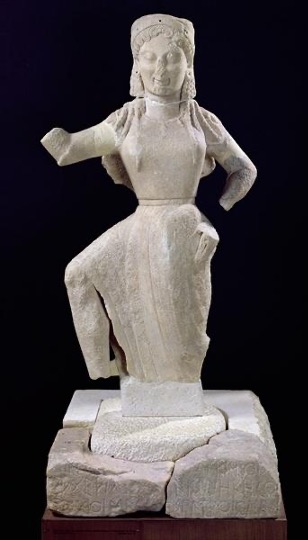
Nike from Delos
Ca. 550 BCE
Naxian marble
Sculpture Archermus of Chios?– nearby inscribed column
Blurred regional differences among islands by this time
“Running gorgon” (knielauf) pose– formal indicator of rapid movement in frontal figure
Combo of profile and frontal forms
Simplistic, schematic rendering of dress and folds
Wings are ultimately derived from depictions of winged demons in near eastern art
Stylized wings originally attached to back–developed from depictions of gorgoneia
Has polos headdress
Terrace of the Lions at Delos
Ca. 600 BCE
Dedicated to Apollo by the Naxians
9–12 squatting lions situated along the sacred way leading to the Sanctuary of Apollo & Artemis
Very weathered
(only comparable one in Greece) Monumental avenue comparable to Egyptian avenues of sphinxes/recumbent animals leading to temple complexes
Most of the lions are in Delos but some were taken by Venetians
Taken in 18th c. for Venetian victory over the ottomans
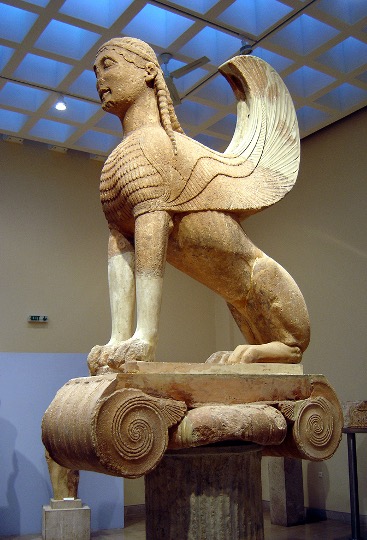
Naxian Sphinx from the Sanctuary of Apollo
Delphi
Ca. 560 BCE
Naxian marble sphinx on 30 ft high ionic capital
Ionic capital is similar to capitals seen at the temple of Dionysus in Naxos which dates to the 7th c. BCE
Naxos set up similar sphinxes around delos at this time
Base connects statue with Naxos
Attention to detail–patterning of feathers, ribcage, hair
Similar to egyptian styles
Oval head; large flat eyes
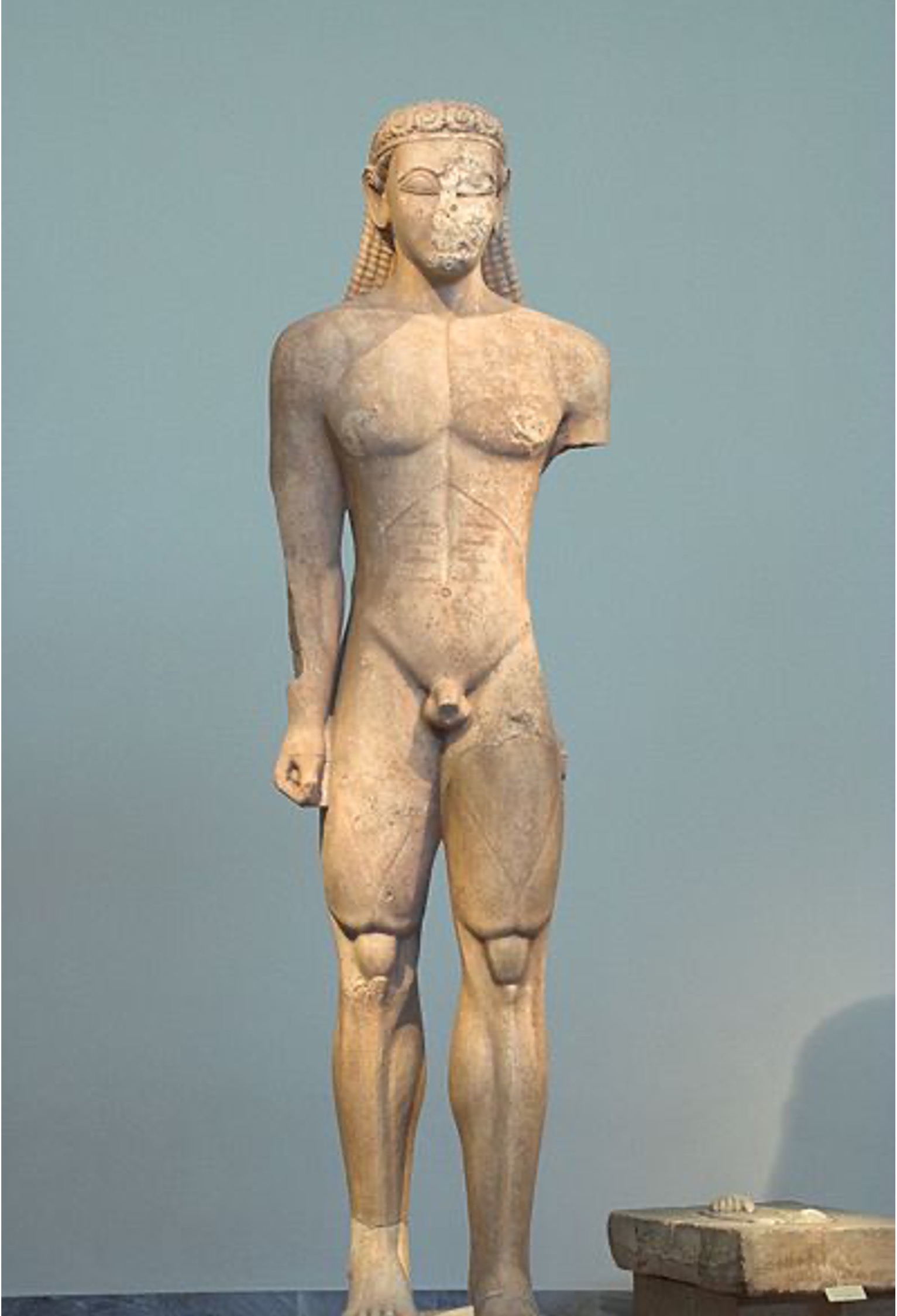
Kouros from the Sanctuary of Poseidon
Sounion
Ca. 590–580 BCE
Monumental votive statue, 10 feet tall
One of the only early kourai found in Attica
Weird looking ears–they look like ionic column volutes
More stylized/linear muscular articulation, strongly–defined knees and shins
Cycladic production? Forehead curls, back muscles–island sculptural workshop established in athens?
But also stylized and linear muscular definition typical of Attic production
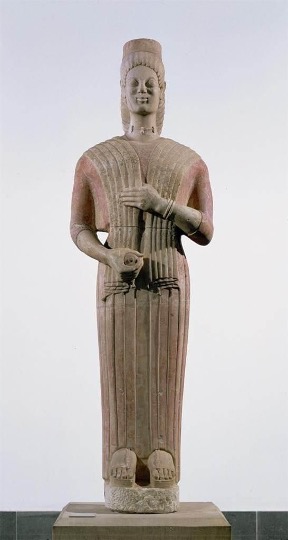
Kore from Attica/”Berlin Kore”
First half of the 6th c. BCE, these are a little less common
Different face shape, lips, eyes from other early attic sculpture
Wears polos with meander, holds pomegranate–depiction of Persephone? Grave dedication for a deceased woman?
Incised and painted decoration on chiton; well–preserved traces of color
broad , projecting pleats of fabric; folds along edge of mantle predicates later archaic stylized folds of cloth
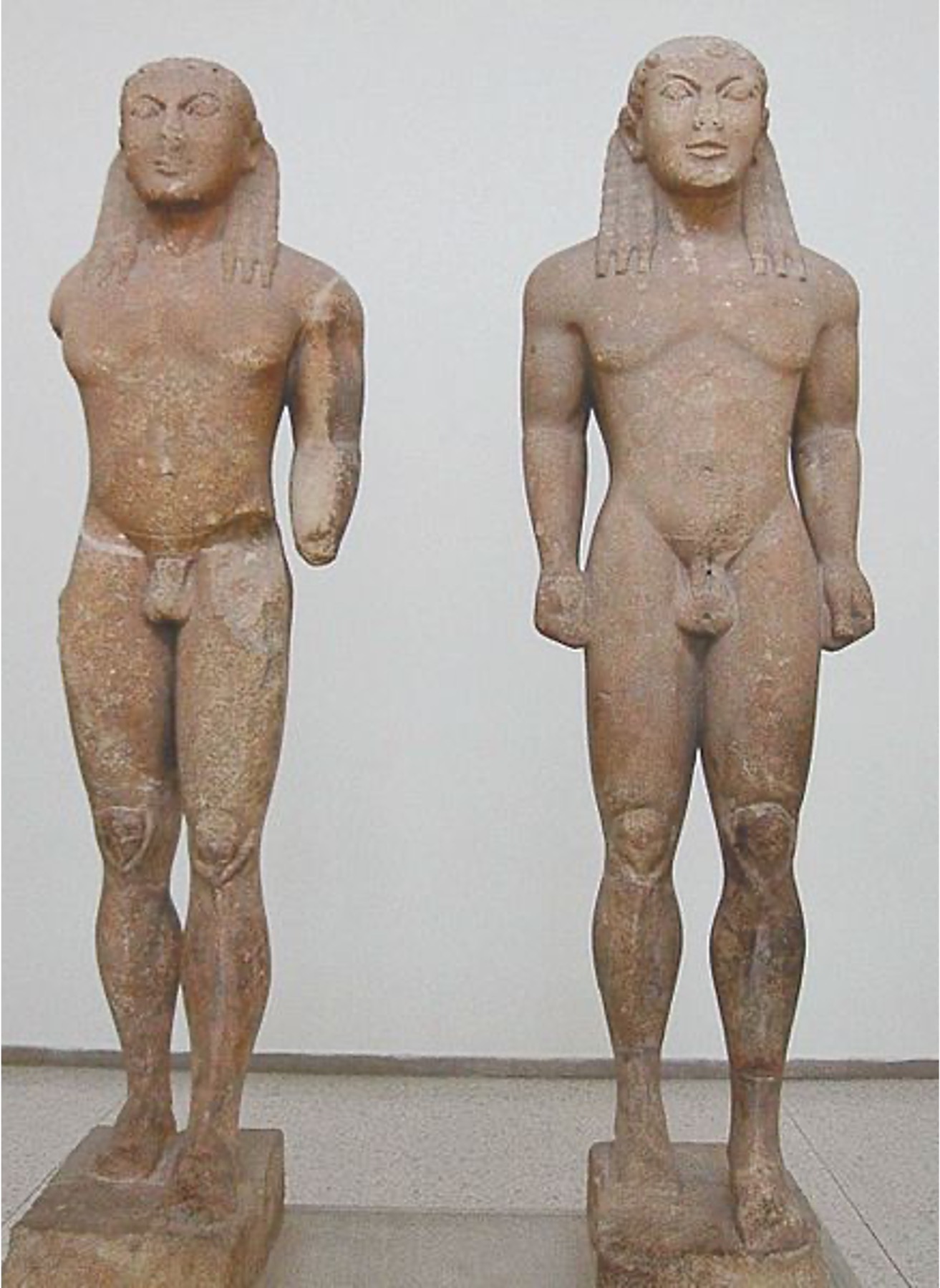
“Kleobis and Biton” from Delphi
Ca. 580–570 BCE
Pair of over life–sized twin kouroi made of island marble
Partially preserved inscriptions naming Argive sculptor
Herodotus–describes statues set up by Argives at Delphi in honor of Kleobis and Biton (Hist. I.31)
Could also be depictions of divine twins, Dioscuri
Few examples of non–funerary representations of individuals (mortals) in Archaic Greece
Daedalic hairstyle, flat face, almond–shaped eyes, simplistic rendering of musculature
Local school combining older traditions with new ones ?
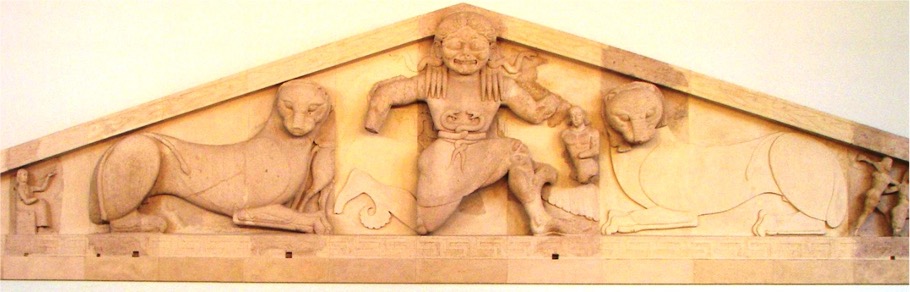
West Pediment of the Temple of Artemis, Mon Repos, Corfu
Both pediments had architectural sculptural
TRULY monumental!!!
Only west pediment are well preserved
Earliest datable stone peripteral temple with architectural sculpture
Stone metopes on exterior, some with sculpture
West pediment over 10 ft tall in center
Combines epiphanic central figure with smaller flanking figures that extended meaning, imply narrative
No coherence of subject or scale; flanking figures, simply smaller, denoting lesser importance
Hierarchy of scale
Gorgon in central portion of the pediment in knielauf pose
Similar t terracotta plaques from Italy used as antefixes
Similar gorgoneia centered in pedimental space in S. ITaly/Sicily
Apotropaic devices–used to ward off evil
Style of figures, panthers recalls Corinthian black–figure vase painting; heraldic animals become common theme in pedimental sculptures
Connected to Artemis as Potnia Theron
Progeny of Medusa shown flanking her–pegasus and Chrusaor, sprouted from beheading, although Perseus absent
Synoptic: compressed narrative, showing elements from same storyline but at different points in myth
Gigantomachy scenes in corners–become popular architectural theme
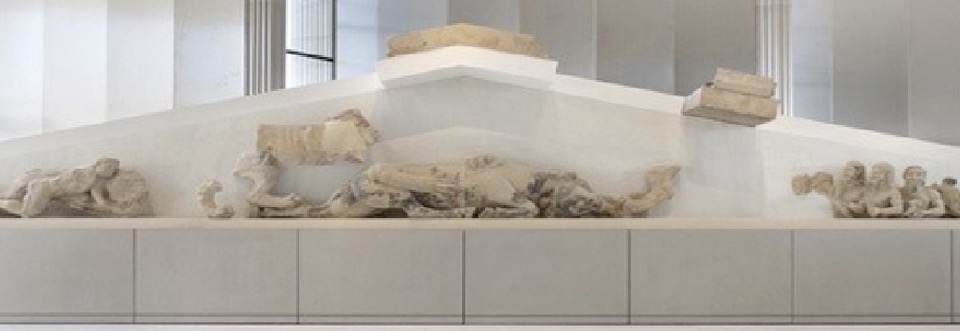
Pediment from the Hekatomepedon (?), “Bluebeard temple”, Athenian Acropolis
ca. 560 BCE,
Both pediments seem to reflect the same theme: lions eating bulls in central scene
serpentine/snakey guys in the corners who have blue beards and we are not really sure who they are
Number of monumental and small–scale pedimental sculpture found on archaic Athenian acropolis
Attributed to a number of temples, shrines, and treasuries
Large limestone pediments originating either from:
Old Athena temple predating existing foundations partially underlying Erechtheion (Dörpfeld Foundations)
Foundations are reused later
More people tend to think bluebeard temple was where these foundations are
Or from second early temple to south under later Parthenon–mention of Hekatompedon in late archaic inscriptions
We think these structures were demolished so old parthenon could begin being built circa 510 BCE
First large stone temple to Athena, inaugurated around the same time as Panathenaic games
2 pediments preserved, both depict lions feasting on bulls, one side in center of composition along corners
Near eastern in origin, apotropaic significance
In corners are compositions terminating towards corner
Greater consistency of scale in restricted space –but not entirely true to scale
Corners of the pediment with central lion composition depict Herakles westling Nereus and three enigmatic entwined snake–men (“bluebeard”) holding 3 different attributes–Typhon or Geryon
Attributes–water, grain, and bird–represent earth, air, and sea? Or unification of different political divisions of athens?
Relation to autochthonous (earth–born/indigenous) ancestors of Athens, Kings Cercrops and Erechtheus, also snake–like attributes
More formal arrangement of and unifications of center and flanks of pediment–development from arrangement at Corcyra
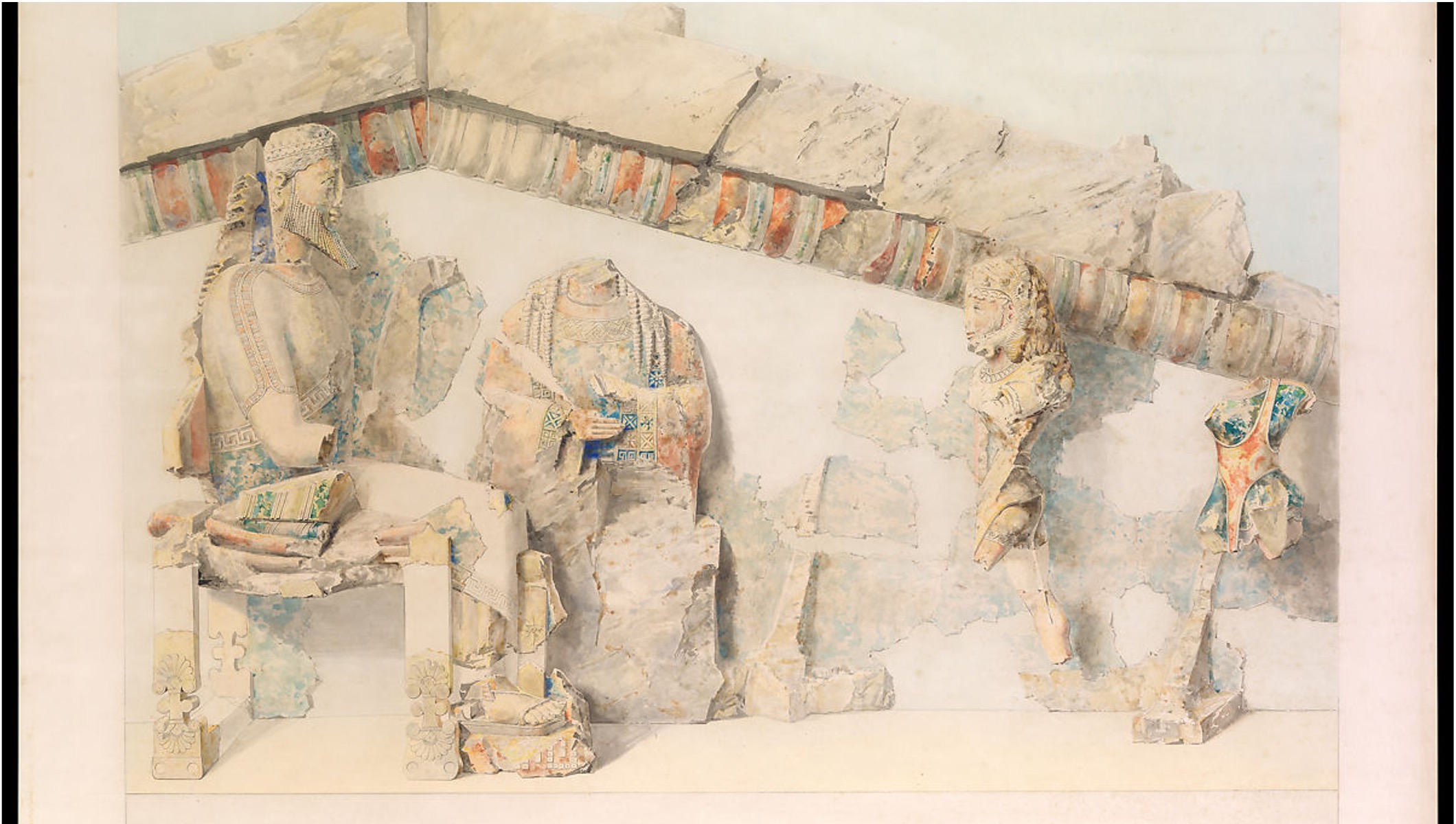
Athens, Acropolis, Herakles Pediment
Number of fragments of smaller pediments in similar style found throughout Acropolis
Either in high relief or small freestanding figures in front of relief background
Belong to small shrines (naiskoi) or treasury–like family dedications
¾ show scenes with Herakles–importants early Doric hero
Episodes from early mythical history of Athens
Introduction of hero to divine status on Olympus
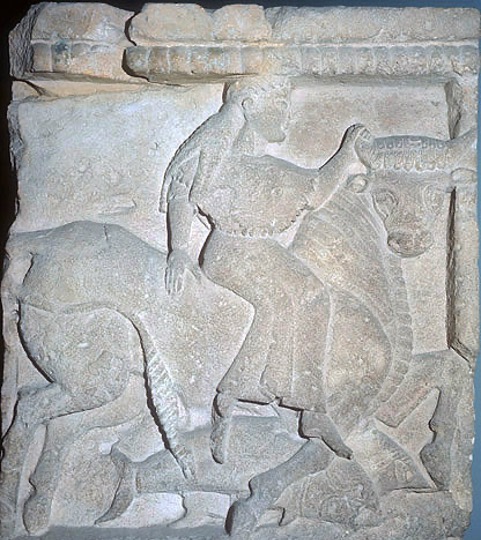
Selinus, Temple Y: Metope with Europa on the bull
ca. 560/550
Series of metopes from Selinus, Sicily – some of earliest from Greek world
Temple Y: unknown temple, similar metopal composition as Sicyonian Treasury although different style
No connection among various myths represented in metopes
Spatially restricted scenes – become norm for metopal panels; western origin for sculpted metopes?
Europa and the Bull: flatter figures but developments in rendering of dress and folds
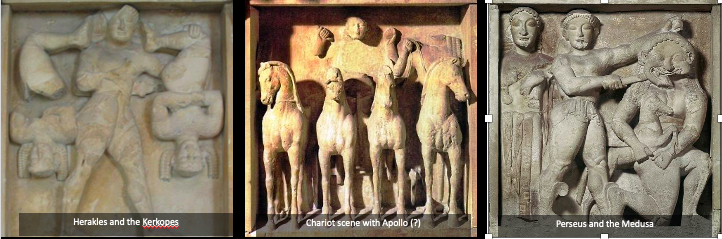
Selinus, Temple C (Temple of Apollo?), Metopes
One of the best preserved architectural programs in the archaic greek world
550–530 BCE
Metopes!
Adorned primary facade of temple C, found on ground near original position (very nice and convenient secondary deposition)
“Smorgasbord of myths”: PErseus and Medusa, Herakles, quadrigas, Orestes
Higher relief, more rounded figures
Also spatially restricted
Emphasis on frontality– “epiphanic”
Facial features and anatomy seem stylistically earlier than contemp mainland work– “provincial”
But anomalies foreseeing later developments make dating difficult–e.g. More elaborate folds in garments–long period of construction
Difficult to evaluate according to scene constructed form mainland works; regional schools
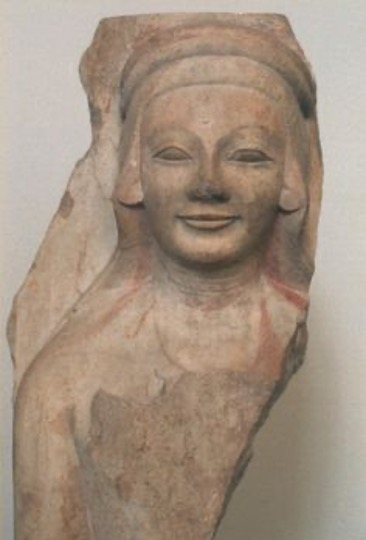
Marble Sculpted Column Drum, Didyma, Temple of Apollo
ca. 540–530 BCE
Large poleis of east Greece cosntructing large, complex marble isonic temples by this time
Peer–polity interaction: fostered competition amongst Greek city–states in region, to build larger and more elaborate temples
Samos, Ephesus, Didyma: Ionic temples preserving sculpted column drums with female figures
Processiural scenes
Constructed entirely in marble!!! Often quite large and are dipteros
Built with local marbles (from Anatolia)
Treasury of the Siphnians
Delphi
Ca. 530–525 BCE
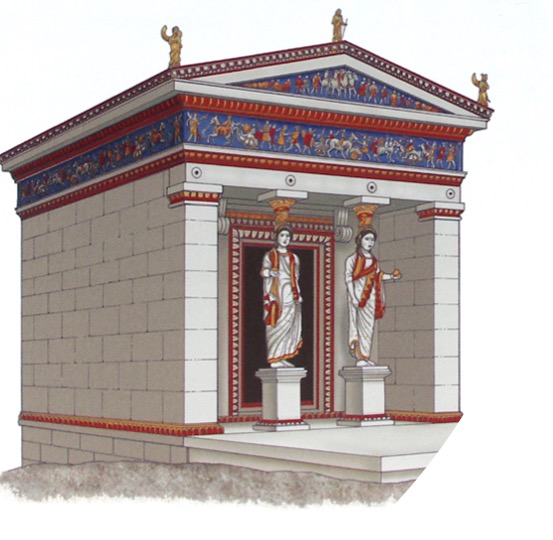
most complete example of combo Doric/ionic structure
Pediment, frieze, scroteria, sculpted moldings, caryatids
Strong ionic influence at panhellenic sanctuary
East Pediment
Best–preserved pediment; story relating directly to sanctuary
Herakls and apollo struggling over ythian tripod at Delphi, flanked by other dieties and Zeus at center
Allusion to first sacred war between Amphictyonic League of Dephi and Phocian city of Kirrha?
Chariot teams in corners
Frieze
Probs most famous element of the treasury
West and south friezes display stylistic unity (“Master A”) and east and north (“Master B”)
Master A: flatter, more archaic style, more 2D figures with heavier outlines, comparable to attic Black–Figure vase painting
Master B: younger contemporary of Master A? More rounded, soft and modeled figures; growing softness/plasticity of folds of patterns in dress; more naturalistic features; different depths in carving creating illusion of 3 space with overlapping figures. Comparable to attic Red–Figure vase painting
Movement toward greater naturalism resulting from cross–influences among different artistic traditions
East
2 thematically related scenes
Achilles and Menon fighting over body of fallen soldier
Zeus seated among Olympian deities, weighing souls to determine the outcome of the struggle
Strong themes of divine justice (not unsurprising considering the oracle and will of apollo at the sanctuary)
North Frieze
•Establishment of divine order by Olympians out of previously chaotic world of giants
•West and South friezes less well-preserved, but probably complementary themes
Caryatids
Illustrates increasing trend towards ornate drapery and hairstyle
Chiton, ionic–style himation
Carved with thick, deeply–undercut pleats folding back against themselves: 3D effect
Cycladic school of sculpture becoming dominant around mid–6th c. BCE
Emerging uniformity of style among mainland, cycladic islands, ionia to the east
Dated by Herodotus, who mentions that Siphnians had just built a treasury