Lab 25 - Vertebrate Organ Sysytems

0.0(0)
Studied by 0 people
call kaiCall Kai
Locked
learnLearn
examPractice Test
spaced repetitionSpaced Repetition
heart puzzleMatch
flashcardsFlashcards
GameKnowt Play
Card Sorting

1/58

encourage image

There's no tags or description

Looks like no tags are added yet.

Last updated 1:10 AM on 8/23/26
Name
Mastery
Learn
Test
Matching
Spaced
Call with Kai
Chat

No analytics yet

Send a link to your students to track their progress

59 Terms
1
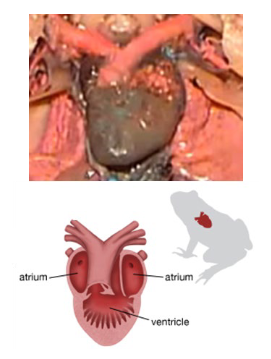
New cards
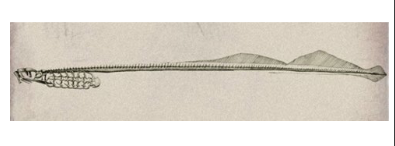
<p>This is the skeleton of a lamprey. It belongs in class ________ and it has a persistent notochord with some _______.</p>

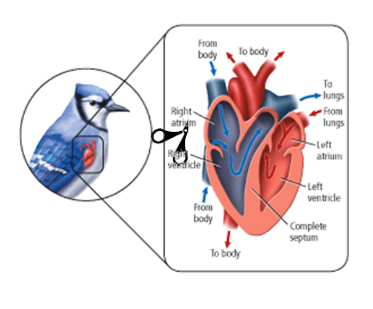
This is the skeleton of a lamprey. It belongs in class ________ and it has a persistent notochord with some _______.

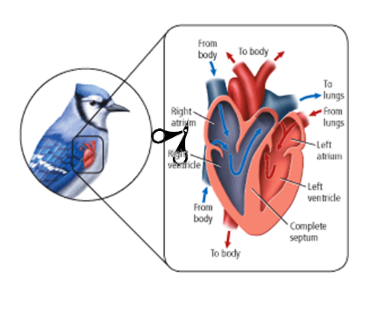
Agnatha, cartilage
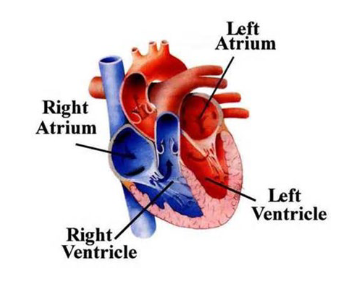
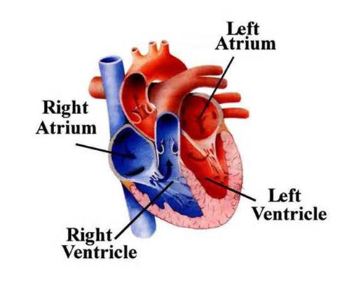
2
New cards
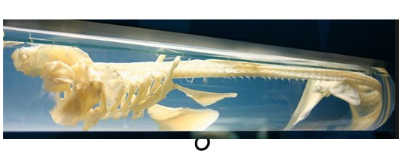
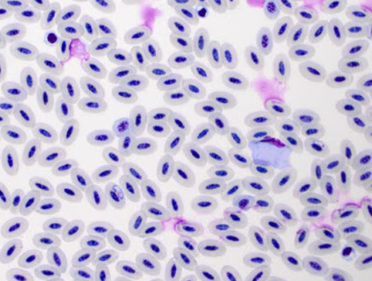
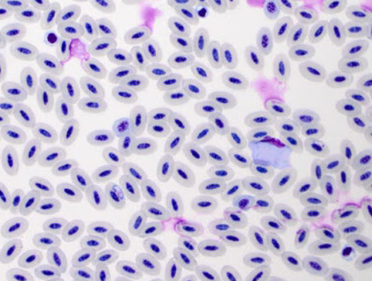
<p>This is a skeleton of a shark, it belongs to class _________, it has a skeleton made of ______ and spot _______ in its jaws.</p>

This is a skeleton of a shark, it belongs to class _________, it has a skeleton made of ______ and spot _______ in its jaws.

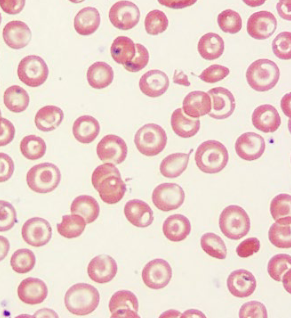
Chondrichthyes, cartilage, calcification
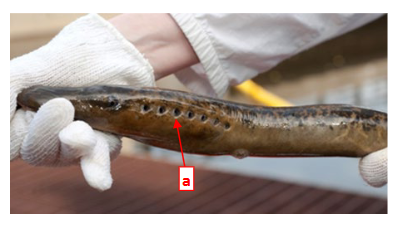
3
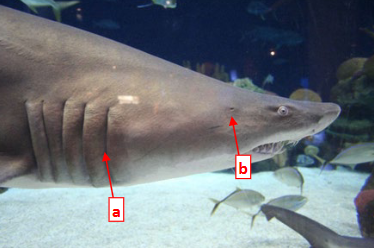
New cards
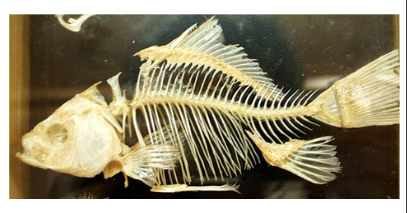
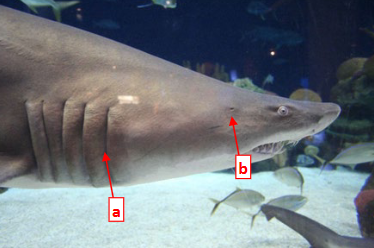
<p>This is a skeleton of a perch, it’s in class _________, its skeleton is made of ______, and its muscles are <strong>OR</strong> are not attached to the skeleton by tendons.</p>

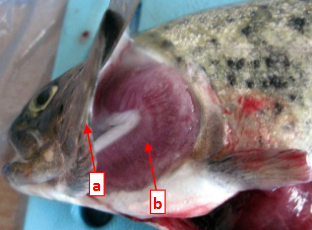
This is a skeleton of a perch, it’s in class _________, its skeleton is made of ______, and its muscles are OR are not attached to the skeleton by tendons.

Actinopterygii, bone, are not
4
New cards
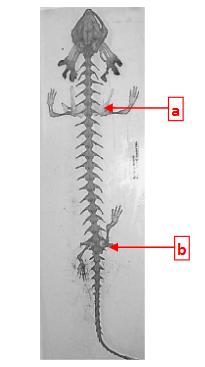
<p>This is a skeleton of a _________ in class ________.</p>

This is a skeleton of a _________ in class ________.

salamander, Amphibia
5
New cards
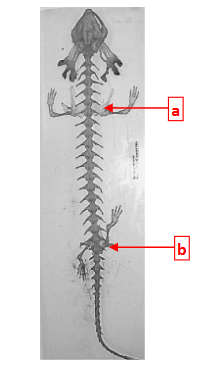
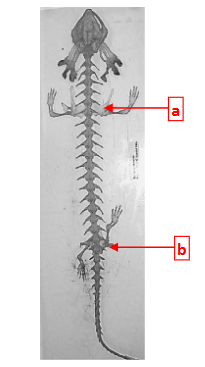
<p>Structure A is the ______ girdle and structure B is the ______ girdle.</p>

Structure A is the ______ girdle and structure B is the ______ girdle.

pectoral, pelvic
6
New cards
<p>Humans have 1 bone in the upper arm and upper leg. We have 2 bones in the lower arm and lower leg. How does this compare to amphibians and other tetrapods?</p>

Humans have 1 bone in the upper arm and upper leg. We have 2 bones in the lower arm and lower leg. How does this compare to amphibians and other tetrapods?

The skeletal system is the same.
7
New cards
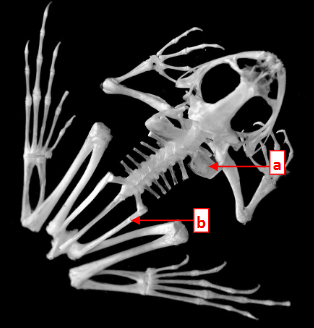
<p>This is a skeleton of a _______ in class ________.</p>

This is a skeleton of a _______ in class ________.

frog, Amphibia
8
New cards
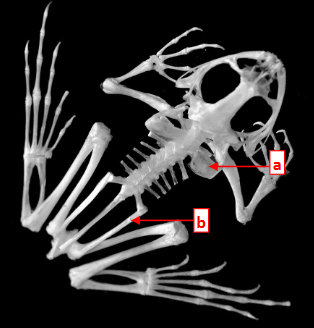
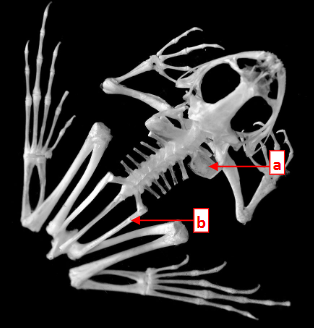
<p>Structure A is the _________ girdle and structure B is the ________.</p>

Structure A is the _________ girdle and structure B is the ________.

pectoral, pelvic
9
New cards
<p>Frogs are ________ because they have 4 limbs, and their muscles are <strong>OR</strong> are not attached to their skeleton by tendons.</p>

Frogs are ________ because they have 4 limbs, and their muscles are OR are not attached to their skeleton by tendons.

tetrapods, are
10
New cards
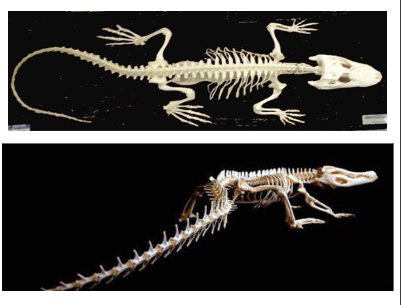
<p>This is a skeleton of an _______ and it belongs to the class _______.</p>

This is a skeleton of an _______ and it belongs to the class _______.

alligator, Reptilia
11
New cards
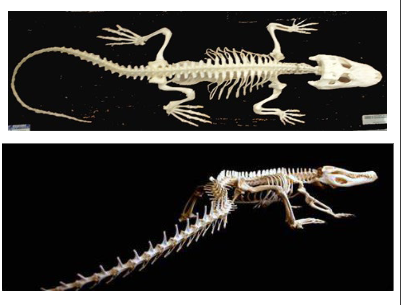
<p>How does the number of bones in the appendages of this reptile compared to amphibians and other tetrapods?</p>

How does the number of bones in the appendages of this reptile compared to amphibians and other tetrapods?

The number of bones is the same (homology)
12
New cards
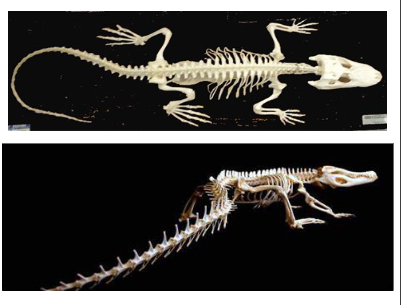
<p>Compared to the salamander skeleton, the girdles position the legs closer to <strong>OR</strong> further from the ground.</p>

Compared to the salamander skeleton, the girdles position the legs closer to OR further from the ground.

further from
13
New cards
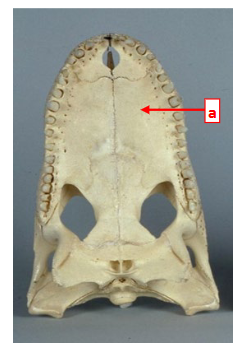
<p>This is an alligator skull that belongs to the class ________. Structure A is the _______ and it separates the respiratory and oral passages.</p>

This is an alligator skull that belongs to the class ________. Structure A is the _______ and it separates the respiratory and oral passages.

Reptilia, palate
14
New cards
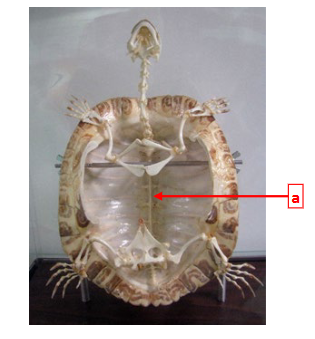
<p>This is the skeleton of a turtle in class _________. Structure A is the _________ and the upper shell is the carapace <strong>OR </strong>plastron.</p>

This is the skeleton of a turtle in class _________. Structure A is the _________ and the upper shell is the carapace OR plastron.

Reptilia, vertebral column, carapace
15
New cards
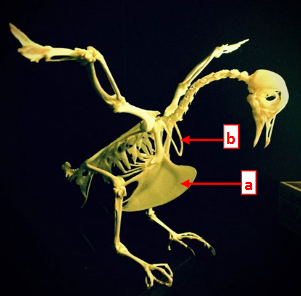
<p>This is the skeleton of a pigeon in class _______. Structure A is the _____ an extended sternum for attachment of flight muscles and structure B is the ______ a set of fused clavicles.</p>

This is the skeleton of a pigeon in class _______. Structure A is the _____ an extended sternum for attachment of flight muscles and structure B is the ______ a set of fused clavicles.

Reptilia, keel, furcula

16
New cards

The limbs of birds are _______ (same) to those of other tetrapods.

homologous
17
New cards
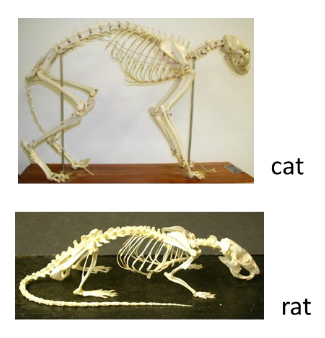
<p>These skeletons are in class Mammalia. How do the number of bones of mammal limbs compared to other mammals and to those of other tetrapods? This is the result of ________.</p>

These skeletons are in class Mammalia. How do the number of bones of mammal limbs compared to other mammals and to those of other tetrapods? This is the result of ________.

The number of the bones are the same, homology
18
New cards
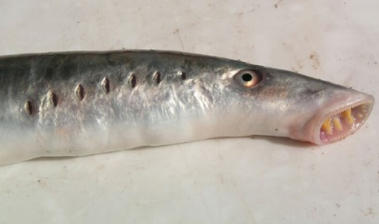
<p>This is the integumentary system of a lamprey in class _______. Does it have scales <strong>OR</strong> no scales?</p>

This is the integumentary system of a lamprey in class _______. Does it have scales OR no scales?

Agnatha, no scales
19
New cards
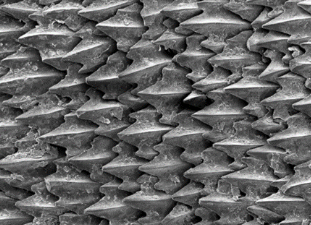
<p>This is the integumentary system of a shark in class Chondrichthyes. These are _______ scales which originated from the ______. They are made of dentine covered in enamel, which is similar to the structure of a ______.</p>

This is the integumentary system of a shark in class Chondrichthyes. These are _______ scales which originated from the ______. They are made of dentine covered in enamel, which is similar to the structure of a ______.

placoid, dermis, tooth
20
New cards
<p>This is the integumentary system of class __________ (ray-finned fishes).</p>

This is the integumentary system of class __________ (ray-finned fishes).

Actinopterygii
21
New cards
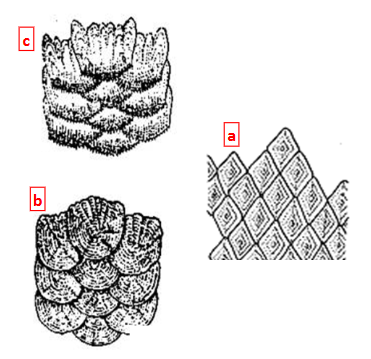
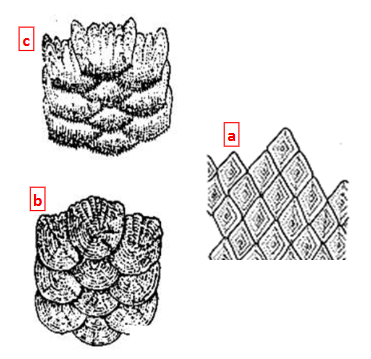
<p>Label A are ______ scales, B are ______ scales, and C are ______ scales. The scales originated from the _______.</p>

Label A are ______ scales, B are ______ scales, and C are ______ scales. The scales originated from the _______.

ganoid, cycloid, ctenoid, dermis
22
New cards
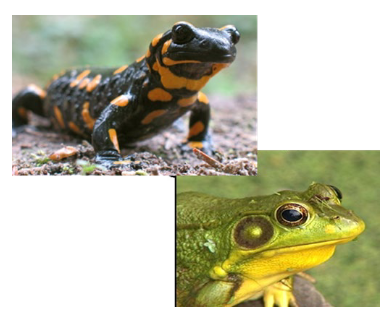
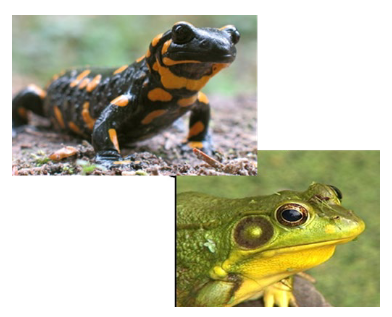
<p>This is the integumentary system of class __________. Their skin is _______, _______, and ________ for respiration.</p>

This is the integumentary system of class __________. Their skin is _______, _______, and ________ for respiration.

Amphibia, thin, moist, vascular
23
New cards
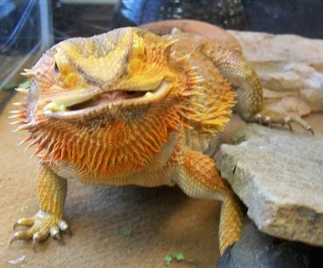
<p>Class Amphibia have no _______ and no ______.</p>

Class Amphibia have no _______ and no ______.

scales, claws
24
New cards
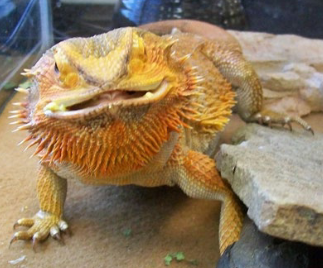
<p>This is the integumentary system of a bearded dragon in class ________. They have scales and claws made of ________ epidermis.</p>

This is the integumentary system of a bearded dragon in class ________. They have scales and claws made of ________ epidermis.

Reptilia, keratinized
25
New cards
<p>The scales of the bearded dragon protect against drying out and their claws provided ______ on land.</p>

The scales of the bearded dragon protect against drying out and their claws provided ______ on land.

traction
26
New cards
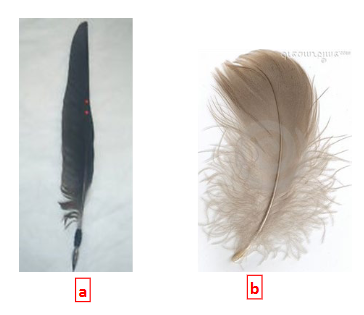
<p>These are bird feathers in class Reptilia and they are made of ________ epidermis.</p>

These are bird feathers in class Reptilia and they are made of ________ epidermis.

keratinized
27
New cards
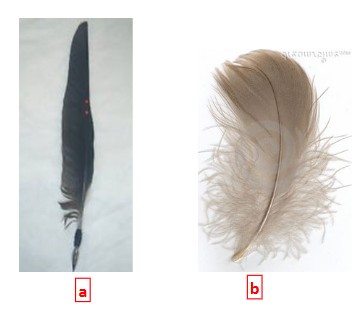
<p>Feather A is a ______ feather and feather B is a ______ feather.</p>

Feather A is a ______ feather and feather B is a ______ feather.

flight, contour
28
New cards
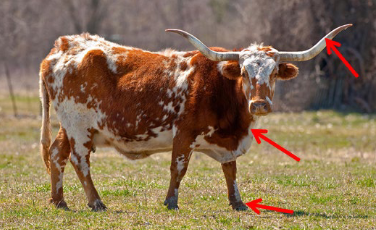
<p>This is class Mammalia, in this class, the claws, nails, hooves, fur/hair and covers of hors are made of ________ epidermis.</p>

This is class Mammalia, in this class, the claws, nails, hooves, fur/hair and covers of hors are made of ________ epidermis.

keratinized
29
New cards
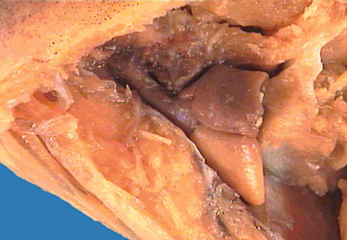
<p>This image shows the circulatory system of the classes Agatha, Chondrichthyes, Sarcopterygii, and Actinopterygii (all fishes). This system has ____ chambers in the heart and its circulation involves a single <strong>OR </strong>double circuit.</p>

This image shows the circulatory system of the classes Agatha, Chondrichthyes, Sarcopterygii, and Actinopterygii (all fishes). This system has ____ chambers in the heart and its circulation involves a single OR double circuit.

2, single
30
New cards
<p>This image shows the circulatory system of class Amphibia. This system has ____ chambers in the heart, and its circulation involves a single <strong>OR</strong> double circuit.</p>

This image shows the circulatory system of class Amphibia. This system has ____ chambers in the heart, and its circulation involves a single OR double circuit.

3, double
31
New cards
<p>This image shows the circulatory system of class Reptilia, specifically birds. This system has ___ chambers and its circulation involves a single <strong>OR</strong> double circuit.</p>

This image shows the circulatory system of class Reptilia, specifically birds. This system has ___ chambers and its circulation involves a single OR double circuit.

4, double
32
New cards
<p>Birds are ectotherm <strong>OR</strong> endotherms and unlike birds, most reptiles are ectotherms <strong>OR </strong>endotherms, and they have a ____ chambered heart.</p>

Birds are ectotherm OR endotherms and unlike birds, most reptiles are ectotherms OR endotherms, and they have a ____ chambered heart.

endotherms, ectotherms, 3 1/2
33
New cards
<p>This image shows the circulatory system of class Mammalia. This system has ___ chambers in the heart, and its circulation involves a single <strong>OR</strong> double circuit.</p>

This image shows the circulatory system of class Mammalia. This system has ___ chambers in the heart, and its circulation involves a single OR double circuit.

4, double
34
New cards
<p>The circulatory system of Mammals starts with the blood that goes from the lungs to the _____ atrium, then to the ______ ventricle, then to the body system, then to the _____ atrium, then to the ______ ventricle, and lastly back to the lungs.</p>

The circulatory system of Mammals starts with the blood that goes from the lungs to the _____ atrium, then to the ______ ventricle, then to the body system, then to the _____ atrium, then to the ______ ventricle, and lastly back to the lungs.

left, left, right, right
35
New cards
<p>This is a bird blood smear. The red blood cells (rbc’s) in the picture have nuclei. Amphibians <strong>OR</strong> Mammals <strong>OR</strong> both Amphibians and Mammals also have RBCs with nuclei.</p>

This is a bird blood smear. The red blood cells (rbc’s) in the picture have nuclei. Amphibians OR Mammals OR both Amphibians and Mammals also have RBCs with nuclei.

Amphibians
36
New cards
<p>These bird RBCs have a lower <strong>OR</strong> greater surface area to volume ratio than do amphibian RBCs.</p>

These bird RBCs have a lower OR greater surface area to volume ratio than do amphibian RBCs.

greater
37
New cards
<p>This is a mammalian blood smear. The red blood cells in the picture do <strong>OR </strong>do not have nuclei. The biconcave shape gives mammal RBCs a lower <strong>OR</strong> greater surface area-to-volume ratio than in bird RBCs.</p>

This is a mammalian blood smear. The red blood cells in the picture do OR do not have nuclei. The biconcave shape gives mammal RBCs a lower OR greater surface area-to-volume ratio than in bird RBCs.

do not, greater
38
New cards
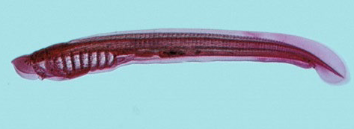
<p>This image shows the respiratory system of a lamprey in class Agnatha. Structure A are the _______ which lead to the gill _______.</p>

This image shows the respiratory system of a lamprey in class Agnatha. Structure A are the _______ which lead to the gill _______.

gill apertures, pouches
39
New cards
<p>This is the respiratory system of a shark in class Chondrichthyes. Structure A are the ______ and structure B is the _______.</p>

This is the respiratory system of a shark in class Chondrichthyes. Structure A are the ______ and structure B is the _______.

gill slits, spiracle
40
New cards
<p>The respiratory system of a shark goes from the mouth over to the ____ and out the gill slits. The alternate route is into the dorsal _____ over to the ____ and out the gill slits.</p>

The respiratory system of a shark goes from the mouth over to the ____ and out the gill slits. The alternate route is into the dorsal _____ over to the ____ and out the gill slits.

gills, spiracle, gills
41
New cards
<p>This shows the respiratory system of class Actinopterygii (ray-finned fishes). Structure A is the ______ responsible for the pumping movement that pulls water across the gills and structure B are the ____.</p>

This shows the respiratory system of class Actinopterygii (ray-finned fishes). Structure A is the ______ responsible for the pumping movement that pulls water across the gills and structure B are the ____.

operculum, gills
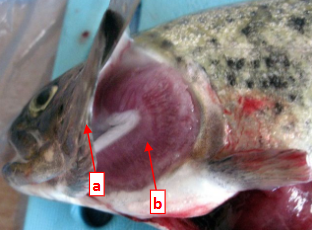
42
New cards
<p>The flow of water of this perch is _________ compared to the direction of blood flow through gills.</p>

The flow of water of this perch is _________ compared to the direction of blood flow through gills.

countercurrent
43
New cards
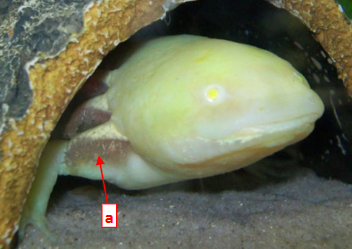
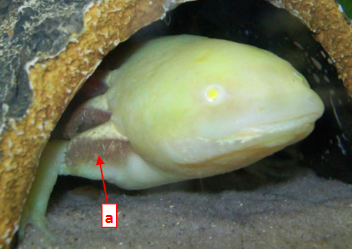
<p>This shows the respiratory system of an axolotl in class Amphibia. Structure A shows the ____ in larvae which are replaced by lungs/skin breathing when the larva metamorphoses into an adult.</p>

This shows the respiratory system of an axolotl in class Amphibia. Structure A shows the ____ in larvae which are replaced by lungs/skin breathing when the larva metamorphoses into an adult.

gills
44
New cards
<p>The development of axolotl is ______ meaning that they appear like larva for their entire life becoming sexually mature.</p>

The development of axolotl is ______ meaning that they appear like larva for their entire life becoming sexually mature.

neoteny
45
New cards
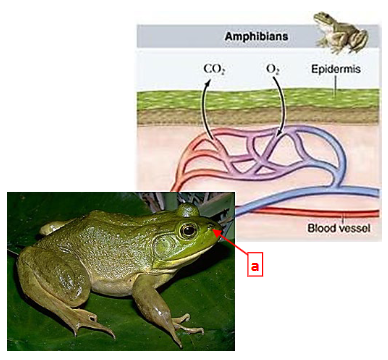
<p>This is the respiratory system of class Amphibia. Structure A are the _____ used for olfaction <strong>OR</strong> breathing <strong>OR</strong> both olfaction and breathing. The air is pushed into the lungs by contracting the mouth cavity <strong>OR</strong> pulled into the lungs by using body wall muscles.</p>

This is the respiratory system of class Amphibia. Structure A are the _____ used for olfaction OR breathing OR both olfaction and breathing. The air is pushed into the lungs by contracting the mouth cavity OR pulled into the lungs by using body wall muscles.

nostrils, both olfaction and breathing, pushed into lungs by contracting the mouth cavity
46
New cards
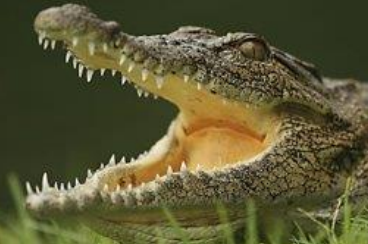
<p>This shows the respiratory system of class Reptilia, they are ectotherms. The air is pushed into lungs by contracting mouth cavity <strong>OR</strong> pulled into lungs by using body wall muscles. Unlike other reptiles, crocodiles have a _____ which separates the mouth cavity and the respiratory passageway.</p>

This shows the respiratory system of class Reptilia, they are ectotherms. The air is pushed into lungs by contracting mouth cavity OR pulled into lungs by using body wall muscles. Unlike other reptiles, crocodiles have a _____ which separates the mouth cavity and the respiratory passageway.

pulled into lungs by using body wall muscles, palate
47
New cards
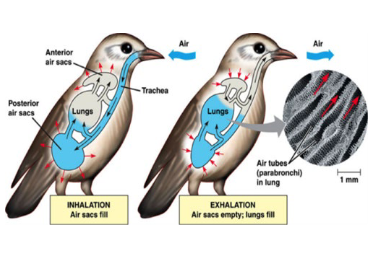
<p>This shows the respiratory system of birds in class Reptilia, they have lungs with _____ which allow gas exchange with both inhalation and exhalation.</p>

This shows the respiratory system of birds in class Reptilia, they have lungs with _____ which allow gas exchange with both inhalation and exhalation.

air sacs
48
New cards
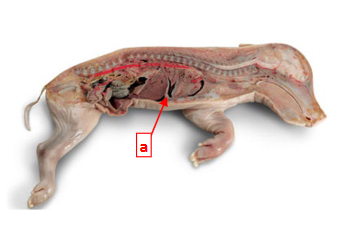
<p>This is the respiratory system of a fetal pig in class Mammalia. Structure A shows the _______ which contracts to pull air into the lungs.</p>

This is the respiratory system of a fetal pig in class Mammalia. Structure A shows the _______ which contracts to pull air into the lungs.

diaphragm
49
New cards
<p>This image shows the reproductive system of lampreys in class Agnatha. The ammocoetes larva are similar to ______ (Subphylum Cephalochordata).</p>

This image shows the reproductive system of lampreys in class Agnatha. The ammocoetes larva are similar to ______ (Subphylum Cephalochordata).

lancelet
50
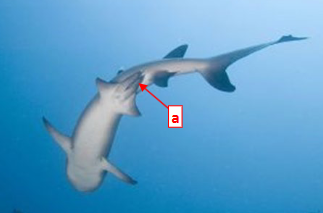
New cards
<p>This shows the reproductive system of sharks in class Chondrichthyes. Structure A are the ______ which are present in males <strong>OR</strong> females <strong>OR</strong> both.</p>

This shows the reproductive system of sharks in class Chondrichthyes. Structure A are the ______ which are present in males OR females OR both.

claspers, male
51
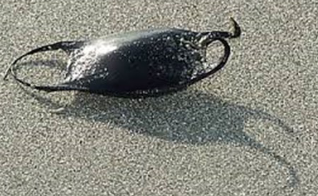
New cards
<p>This is a skate egg case from class Chondrichthyes. Skates are oviparous <strong>OR</strong> ovoviviparous <strong>OR </strong>viviparous<strong>.</strong></p>

This is a skate egg case from class Chondrichthyes. Skates are oviparous OR ovoviviparous OR viviparous.

oviparous
52
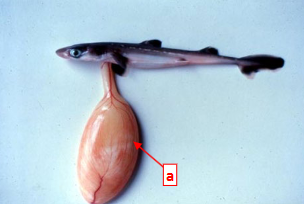
New cards
<p>This is the reproductive system of a dogfish “pup” in class Chondrichthyes. Structure A is the ________ and dogfish are oviparous <strong>OR</strong> ovoviviparous <strong>OR</strong> viviparous.</p>

This is the reproductive system of a dogfish “pup” in class Chondrichthyes. Structure A is the ________ and dogfish are oviparous OR ovoviviparous OR viviparous.

yolk sac, ovoviviparous
53
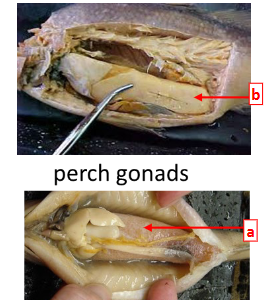
New cards
<p>This is the reproductive system of a perch in class Actinopterygii. Structure A are the _______ and structure B are the ______. Fertilization in Actinopterygii is usually external <strong>OR</strong> internal.</p>

This is the reproductive system of a perch in class Actinopterygii. Structure A are the _______ and structure B are the ______. Fertilization in Actinopterygii is usually external OR internal.

ovaries, testes, external
54
New cards
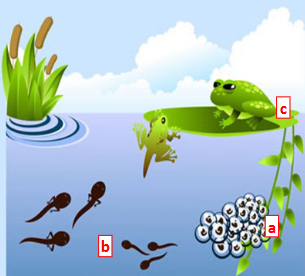
<p>This is the reproductive system of frogs in class Amphibia. Structure A are the eggs with have no shell so they must be deposited in ____ conditions. Structure B is the larva (tadpole) which has a heart with __ chambers and respiration with _______. Structure C is the adults with a heart with ___ chambers and respiration with _______ and _______.</p>

This is the reproductive system of frogs in class Amphibia. Structure A are the eggs with have no shell so they must be deposited in ____ conditions. Structure B is the larva (tadpole) which has a heart with __ chambers and respiration with _______. Structure C is the adults with a heart with ___ chambers and respiration with _______ and _______.

moist, 2, gills, 4, lungs and skin
55
New cards
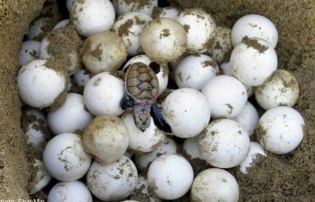
<p>This is the reproductive system of class Reptilia (ectotherms). Almost all reptiles lay amniotic ____ with leathery covering. The egg with a shell requires external <strong>OR</strong> internal fertilization.</p>

This is the reproductive system of class Reptilia (ectotherms). Almost all reptiles lay amniotic ____ with leathery covering. The egg with a shell requires external OR internal fertilization.

eggs, internal
56
New cards
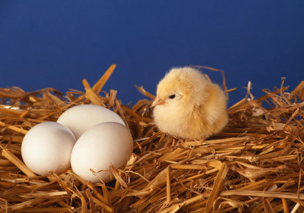
<p>This is the reproductive system of birds in class Reptilia. Birds have an ______ egg with a hard covering and like other reptiles, all birds use external <strong>OR</strong> internal fertilization.</p>

This is the reproductive system of birds in class Reptilia. Birds have an ______ egg with a hard covering and like other reptiles, all birds use external OR internal fertilization.

amniotic, internal
57
New cards
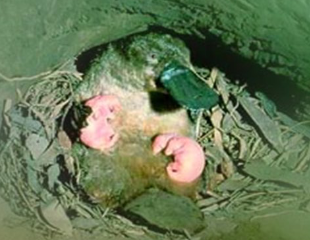
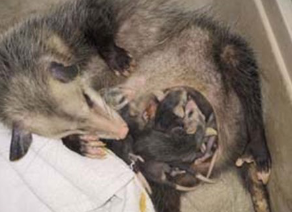
<p>This is the reproductive system of class Mammalia, specifically group ________. Platypus are oviparous <strong>OR </strong>viviparous.</p>

This is the reproductive system of class Mammalia, specifically group ________. Platypus are oviparous OR viviparous.

monotremes, oviparous
58
New cards
<p>This is the reproductive system of class Mammalia, specifically group _______. Opossums are oviparous <strong>OR</strong> viviparous.</p>

This is the reproductive system of class Mammalia, specifically group _______. Opossums are oviparous OR viviparous.

marsupials, viviparous
59
New cards
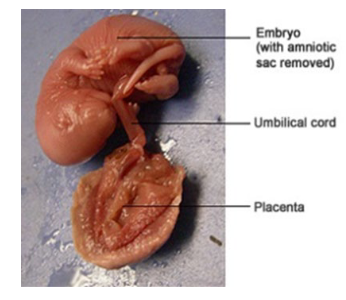
<p>This is the reproductive system of class Mammalia, specifically group ________. This rat embryo is oviparous <strong>OR</strong> viviparous.</p>

This is the reproductive system of class Mammalia, specifically group ________. This rat embryo is oviparous OR viviparous.

placentals, viviparous



