AP Art History: – Ancient Mediterranean (copy)
 Studied by 0 people
 Call with Kai
 Learn
Learn Practice Test
 Spaced Repetition
 Match
Match Flashcards
 Knowt Play
1/37

There's no tags or description
Looks like no tags are added yet.
Name | Mastery | Learn | Test | Matching | Spaced | Call with Kai |
|---|
No study sessions yet.
38 Terms
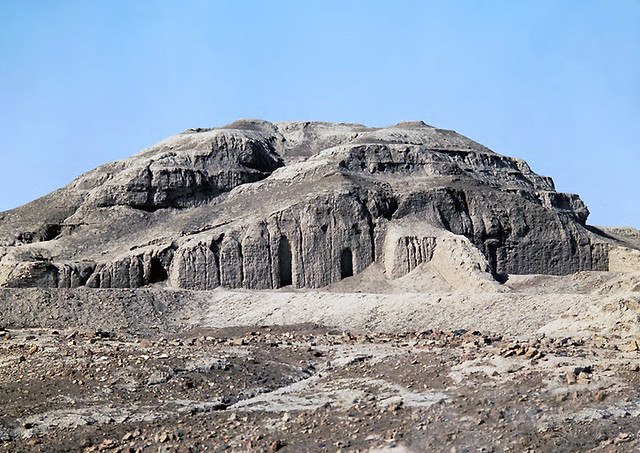
White Temple and its ziggurat
3500–3000 BCE
Sumerian
Mud Brick
Mountains were considered powerful, mainly because water for agriculture came from there
The earth goddess is associated with mountains
Elevation of religious architecture
Built in ten stages over centuries
Final height of ziggurat (mountain-like structure): 40ft
Function: meeting place between gods and humans
Required constant maintenance (like Mosque of Djenne)
Corners point in cardinal directions
Bent-axis plan: makes approach more challenging, standard for Sumerian architecture
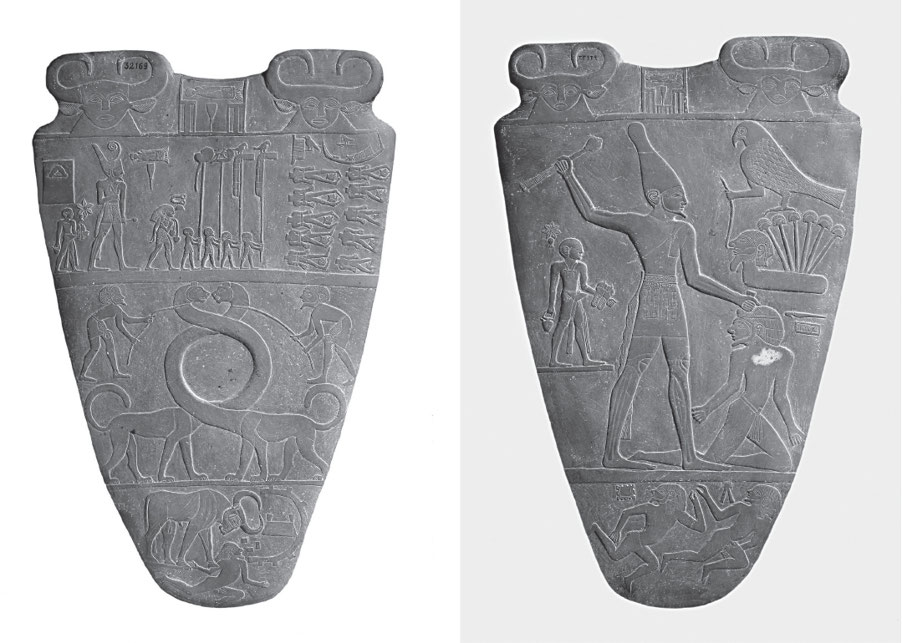
Palette of King Narmer
3000–2920 BCE
Predynastic Egyptian
Greywacke
One side depicts pre-unified Egypt, the other depicts newly unified Egypt (function: ceremonial)
An example of newly standardized visual canon, hieroglyphs, and religion under Narmer
Divided into registers (each representing a moment in time)
Heavy usage of hierarchy of scale
Usage of hieroglyphs
Falcon iconography is in reference to god Horus; pharoahs are considered to be an earthly embodiment of him (divine justification)
Papyrus flowers are iconography of Lower Egypt
Bull is iconographic of Narmer
Low relief
Establishes conventions in accordance with Ma’at
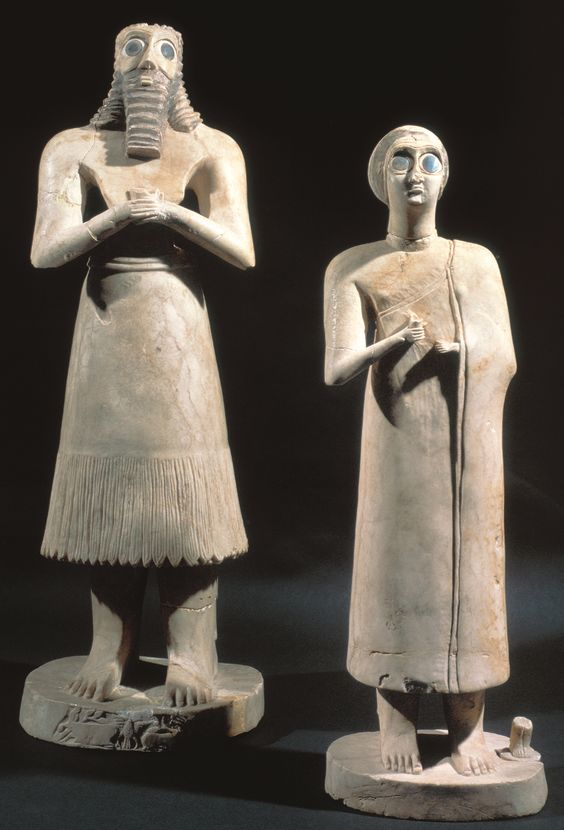
Statues of votive figures, from the Square Temple at Eshnunna
2700 BCE
Sumerian
Gypsum inlaid with shell and black limestone
Sumerian cities were erected to serve and labor for gods
Votive: a religious gift accompanied with a plea
Function: surrogate worshippers that offer constant prayer
Forms have some convention but typically vary due to inlays
Geometric shapes make up the body
Eyes are wide, an “open window to the soul,” represents piety
These are not portraits, but are individualized
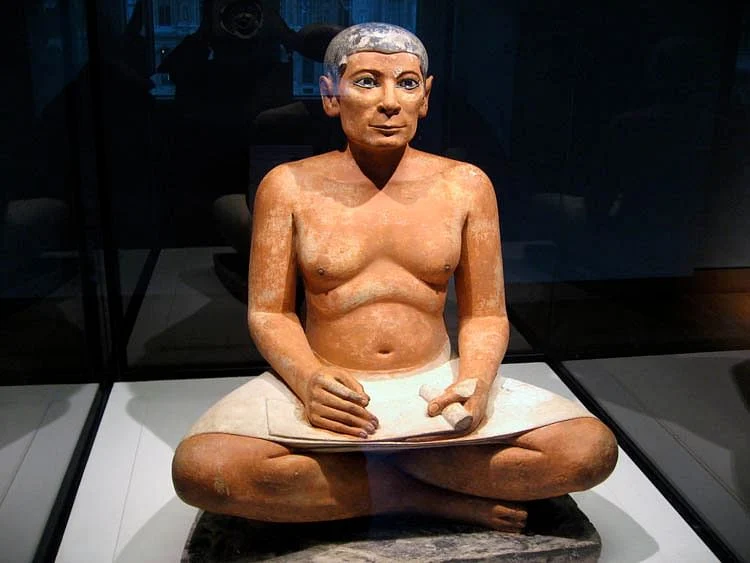
Seated Scribe
2620–2500 BCE
Saqqara, Egypt
Painted limestone
Function: a ka statue that provides a scribe for Pharoah in the afterlife
Ideals>likeness → less about individuality, more about occupation in society
Softer physique indicates that he isn’t a laborer
Eyes show alertness and obedience
Uses limestone because it’s cheaper and more porous for painting
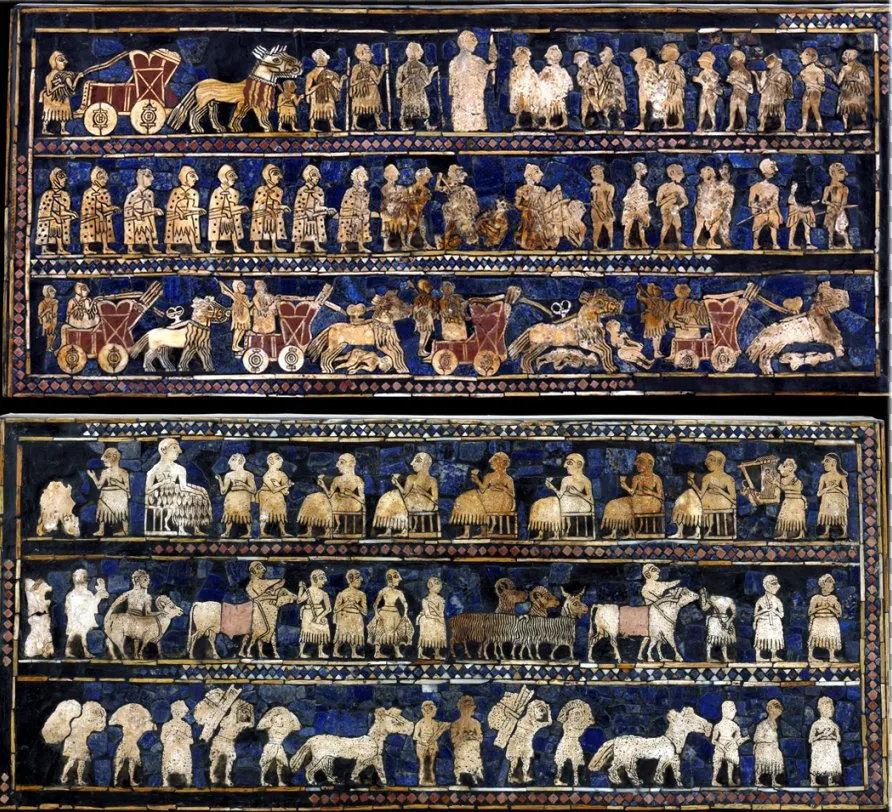
Standard of Ur
2600–2400 BCE
Sumerian
Wood inlaid with shells, lapis lazuli, and red limestone
Cities like Ur set the modern urban model (stands even today)
Each side depicts wealth (idealized representation of economy) and war (soldiers leading prisoners to doom or slavery) because, for Sumerians, waging and winning wars was directly connected to their wealth and tradition
Despite the title, this is likely not a standard, because the scenes are meant to be viewed up close.
Organized in registers with continuous narrative for both sides
Gathering of materials required agricultural surplus, which created classes, and that would lead to structure of power and control
The variety of materials indicates the distances the Sumerians traveled: lapis lazuli was from Afghanistan, limestone was from India, and shells were from the Gulf
On the war side, the king’s head breaches the frame (hierarchy of scale)
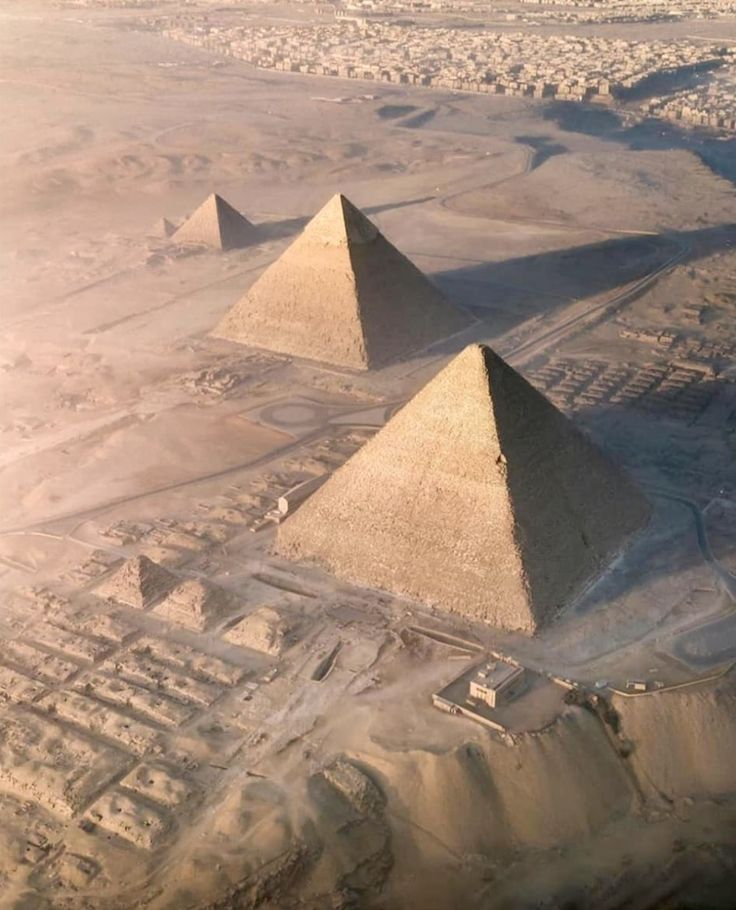
Great Pyramids (Menkaura, Khafre, Khufu)
2550–2490 BCE
Giza, Egypt
Cut limestone
Tomb practices revolve around beliefs concerning the afterlife
Mastabas were the precursor to pyramids, and were originally used for elite burials
Pharoahs needed something far bigger than mastabas, so they initially decided to start stacking multiple mastabas to create stepped pyramids
They were succeeded by true pyramids: equilateral triangles rising from a square base to meet at a point (this point was meant to evoke the sun, and also carried the Benben stone, which is iconographic of Ra)
Function: a place of rebirth, a monument, and protection of the body, as well as the afterlife palace
There was a distinct lack of open space and a false tomb chamber at the bottom to protect Pharoah/his things from thieves.
Relieving blocks were used to protect the burial chamber from the weight of the top by diverting weight down and out.
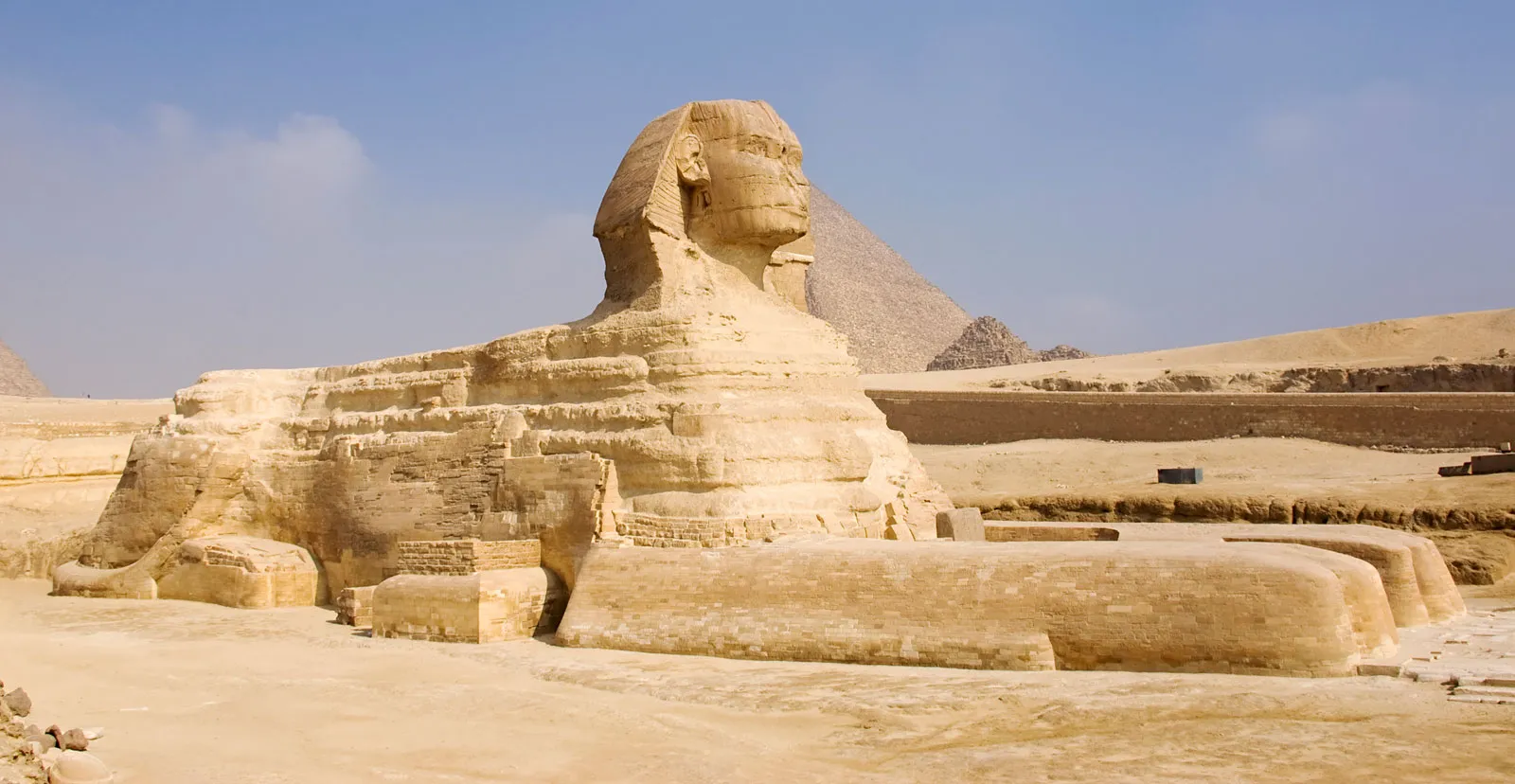
Great Sphinx
2550–2490 BCE
Giza, Egypt
Cut limestone
Made through living bedrock
Face is made from ashlar masonry
Form represents what pharoahs were expected to be: smart as a human, strong as a lion
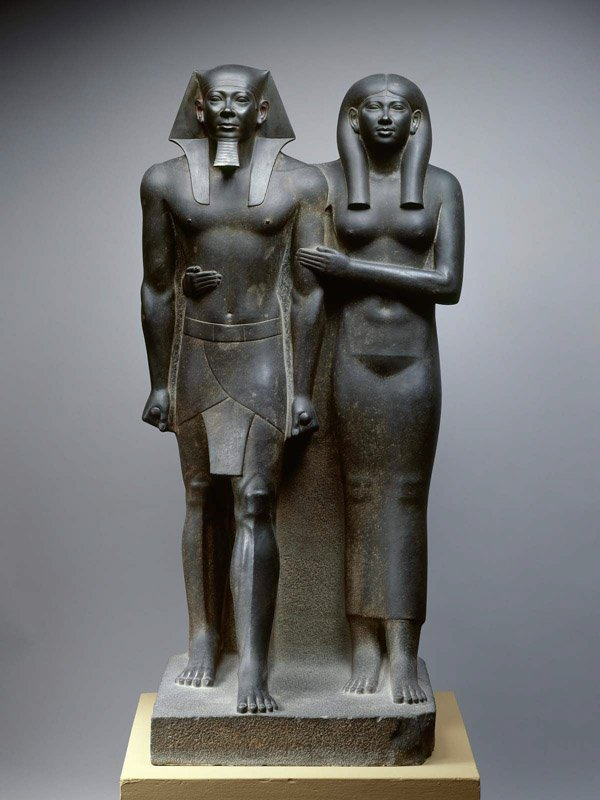
King Menkaura and Queen
2490–2472 BCE
Old Kingdom Egyptian
Greywacke
This is a portrait, which is supposed to represent the physical likeness of people; in this case, it reveals information about the idealized version of them → potraits are determined by role, not individuality
The portrait uses symmetry to represent the Egyptian canon based on the principle of ma’at (beauty and importance in balance)
Carved using the subtractive method
Meant to be seen up front
Function: ka statue: funerary statue that was meant to be eternal
Stone and greywacke gave stability to the form, as well as the Egyptian sculptural stance: one foot in front of the other, weight on back foot
This visually creates parallel lines
Nemes and false beard: symbolic of pharaonic power
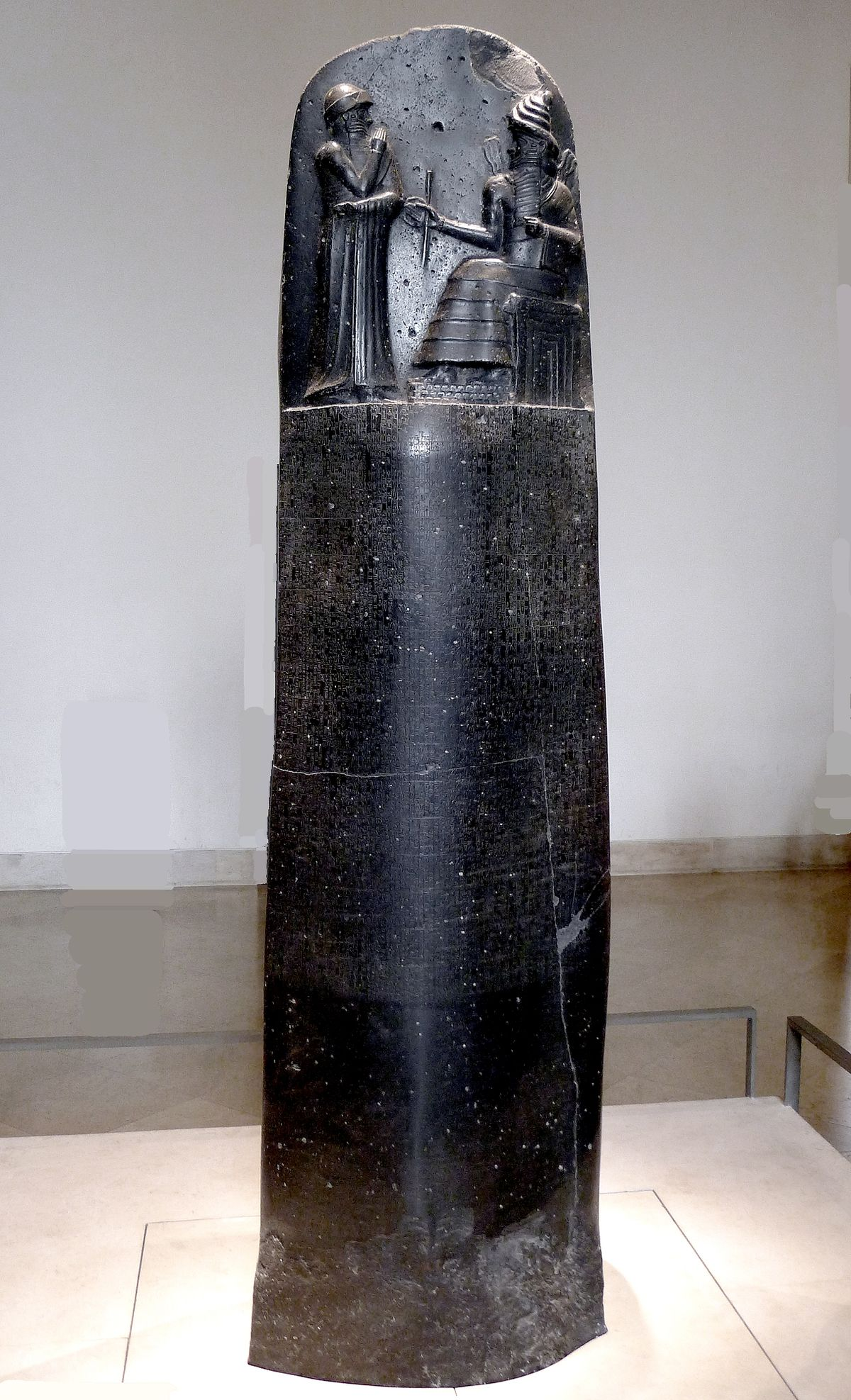
The Code of Hammurabi
1792–1750 BCE
Susian (Babylonian)
Basalt
This was a steele – similar items were all over
Function: to display the law code to everyone
This was the first written and displayed law code in history
Application of this law (i.e, judgement/punishment depended on gender and economic status)
Depicts Hammurabi w/ sun god Shamash, who hands the “rod of ruling” to Hammurabi at the top, while the rest of the steele has the written laws
Hierarchy of scale: Shamash would be significantly taller if he were standing
First ever usage of foreshortening (more naturalistic depiction of space)
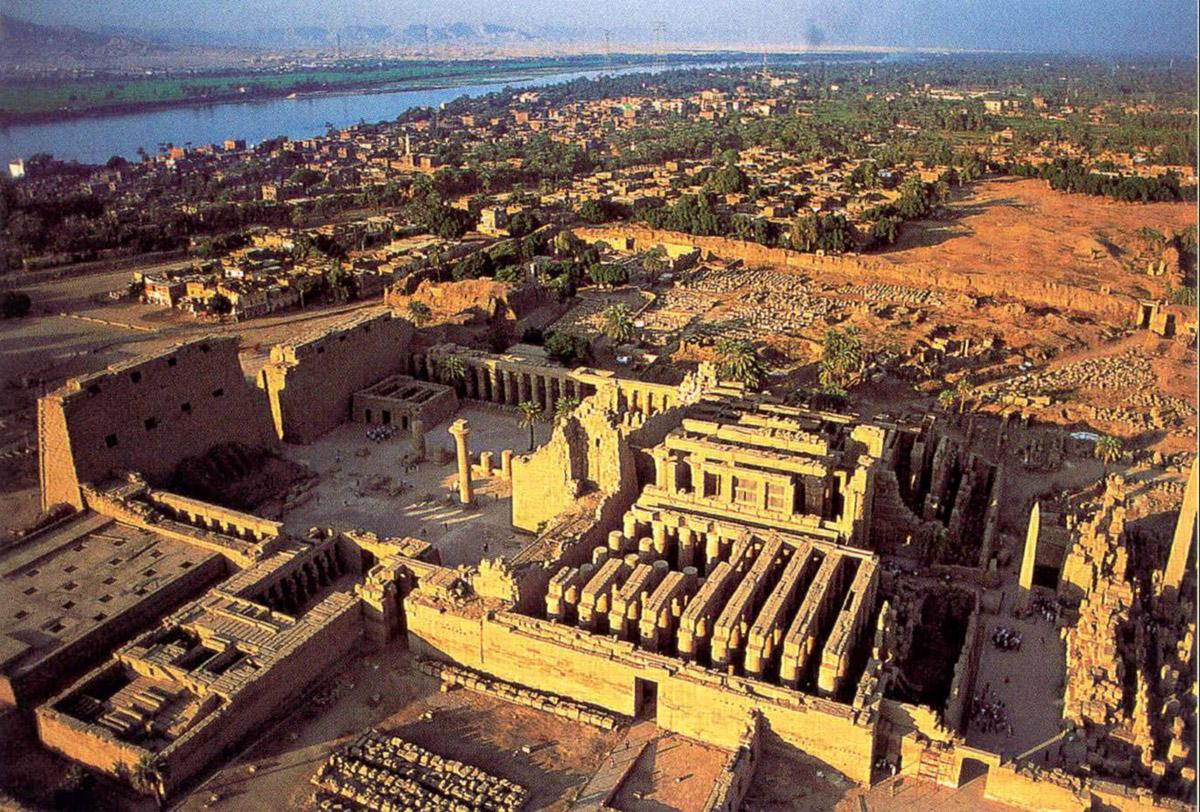
Temple of Amun-Re and Hypostyle Hall
Temple: 1550 BCE, hall: 1250 BCE
Karnak, near Luxor, Egypt
Cut sandstone and mud brick
Temple:
Function: principal religious center of god Amun-Re, to hold precincts of gods Mut and Montu, and a working estate for teh priestly community
Connected to the creation of the world
Increases in elevation as you get further into the temple (represents ascension from the horizon to the god)
Initially a modest structure, but new importance placed on the city of Thebes made Pharaohs want to make their mark on Karnak
The tallest obelisk in Egypt stood at Karnak; it was dedicated by female Pharaoh Hatshepsut
Hall:
The hall would’ve been brightly painted
134 sandstone columns; the center 12 stand at 69 ft.
Allowed for clerestory lighting (a section of the wall that allowed light and air to pass hrough an otherwise dark space
Earliest example of clerestory lighting
Restricted access
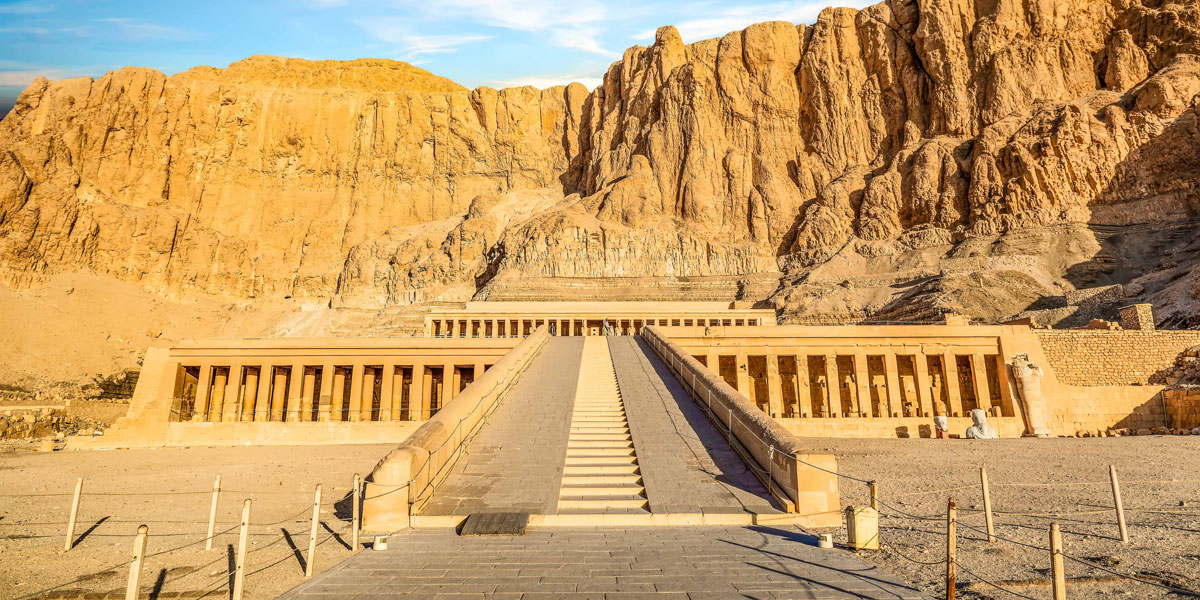
Mortuary Temple of Hatshepsut
1473–1458 BCE
Near Luxor, Egypt
Sandstone, partially carved into a rock cliff, and red granite
Built to honor Egypt’s first major female pharaoh; she assumed the power of a king (rather than the traditional regent), asserting her political and divine legitimacy (she created.
Function: a resting place and temple for dead honoring and god worship
She commissioned many works; she used art to convey her royal authority
Axial design: even architecture follows ma’at
Statue of Amun-Re was brought to the temple across the Nile once a year
20 yrs after Hatshepsut’s death, her nephew/stepson Thutmose destroys all images of her, which took an extremely amount of time and effort
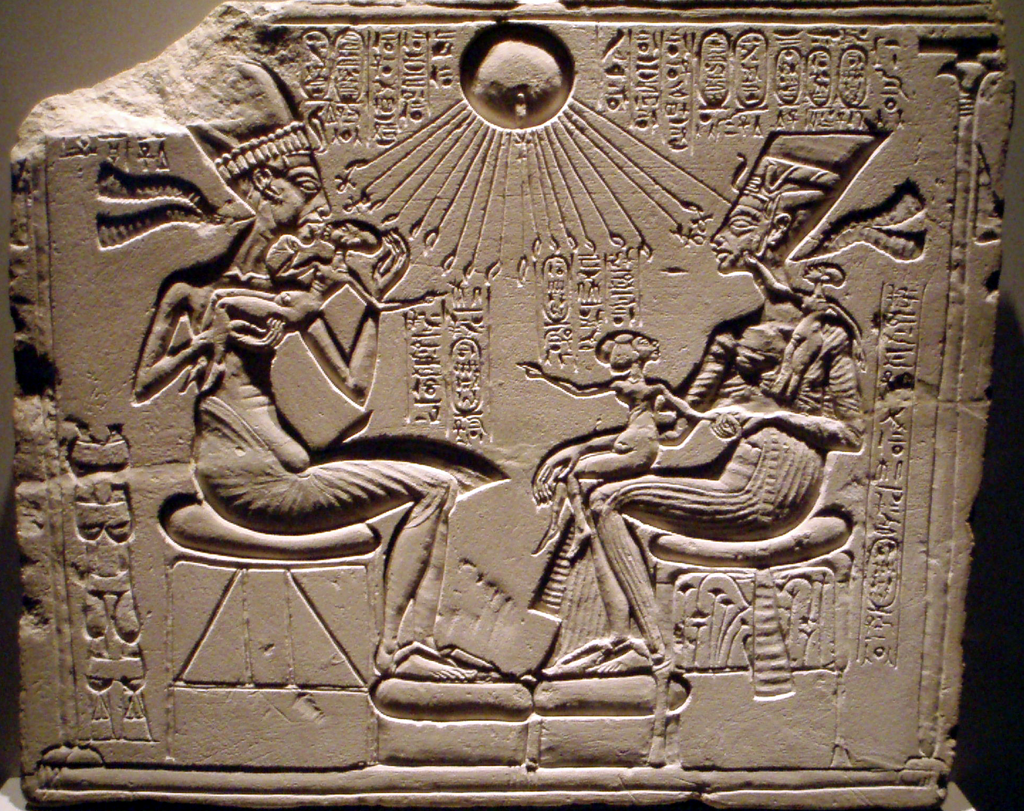
Akhenaton, Nefertiti, and Three Daughters
1353–1335 BCE
New Kingdom (Amarna) Egyptian
Limestone
Sunken relief technique: stone is carved away until the form is sunken
Reflects the Amarna Revolution: monotheistic worship of Aten replaces traditional gods.
Relaxed, intimate family scene replaces formal court imagery—highly unusual for Egypt.
Function: instrument of Aton worship and to communicate change (the best way to do this was visually)
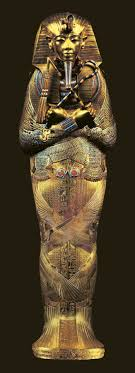
Tutankhamun’s tomb, innermost coffin
1323 BCE
New Kingdom Egypt
Gold with inlay of enamel and semiprecious stones
King Tut restored polytheism amidst external pressure
When he died, no tomb had been prepared because he was so young
Employed Mummification: maintaining the body for successful rebirth
70 days process, overseen by Anubis
“Egg nesting doll” → a coffin inside many other coffins
Solid gold, unlike other outer coffins
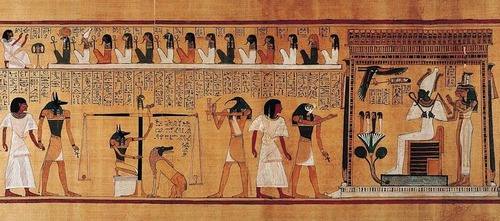
Last Judgement of Hu-Nefer
1275 BCE
New Kingdom Egyptian
Painted papyrus scroll
Function: Illustration from the Book of the Dead, an Egyptian book of spells and charms that acted as a guide for the deceased to make his or her way to eternal life (included in the tomb).
Combines text and image in continuous narrative → important example of Egyptian storytelling
Shows gods Anubis, Thoth, Osiris, and protective goddess Ma’at, reinforcing religious order.
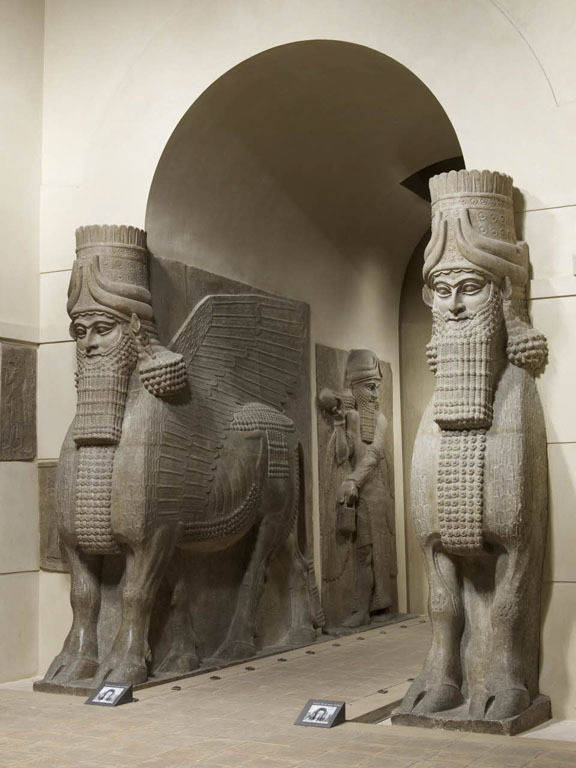
Lamassu from the citadel of Sargon II
720–705 BCE
Neo-Assyrian
Alabaster
Composite creaatures, very similar to the Sphinx
intelligence, strength, and mobility
Pan-near Eastern
Would be in the reception hall @ doorway
Function: to intimidate, to show king’s power, apotropaic
Variety of textures highlighted through paint
Context: Assyrian kings were known to be ruthless, borderline sadistic
Meant to be sen dead on or @ the side so leg count is correct at all angles (extra legs)
Athenian Agora
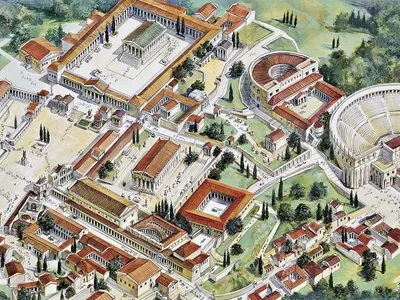
600 BCE– 150 CE
Archaic through Hellenistic Greek
Plan
Function: Town square of Athens; there’s one in every Greek city-state
Any functions (government, entertainment, etc.)
Number of spaces grow with the population, and it increases in articulation
Includes Bouleuterion, a government meeting spot, as well as temples and shrines
The Panathenaic Way cuts through along a hilly terrain from the northwestern to the southeastern corners.
Anavysos Kouros
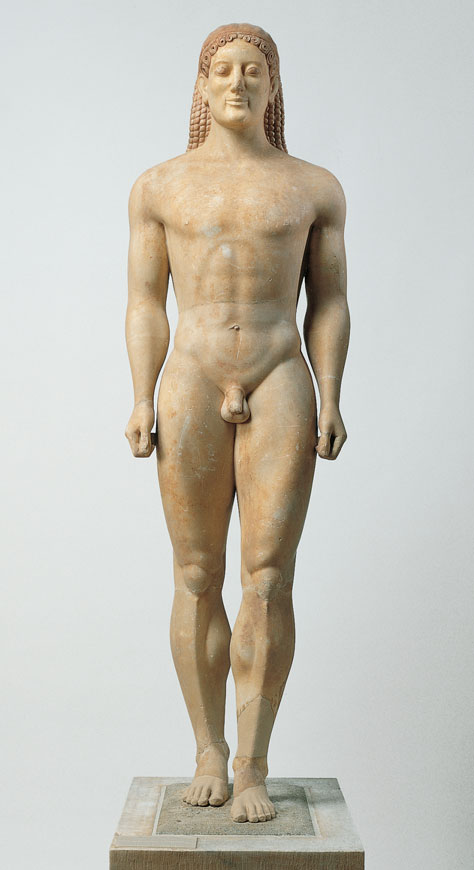
530 BCE
Archaic Greek
Marble with remnants of paint
Greek art: depiction of the male body slowly transitions from abstract to more naturalistic
Generally low plasticity, but it’s much higher than any given past sculpture
Function: grave marker and votive sculpture
Form resonates with Egyptian pharaonic canon, except it’s naked
Egyptians used copper (soft metal) to chisel greywacke and basalt (hard metal), while Athenians use iron (hard metal) to model marble
Nudity is a “costume” → it’s an expression of the idea of kalokagathia (“beautiful goodness”: strong body, beautiful soul)
Peplos Kore
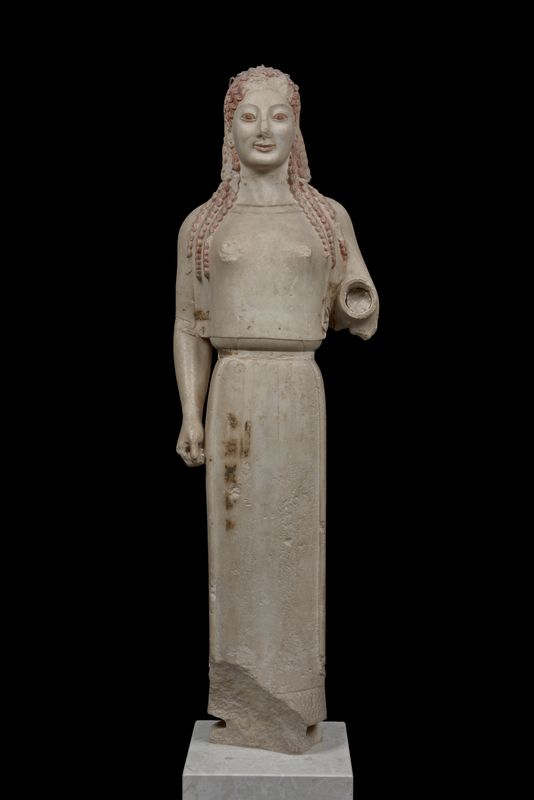
530 BCE
Archaic Greek
Marble, painted details
Form is more petite than male counterpart Kouros
Represents ideal Greek woman: beautiful and demure
Persians toppled these when they attacked around 480 BCE – the Greeks buried them not long after, effectively preserving them
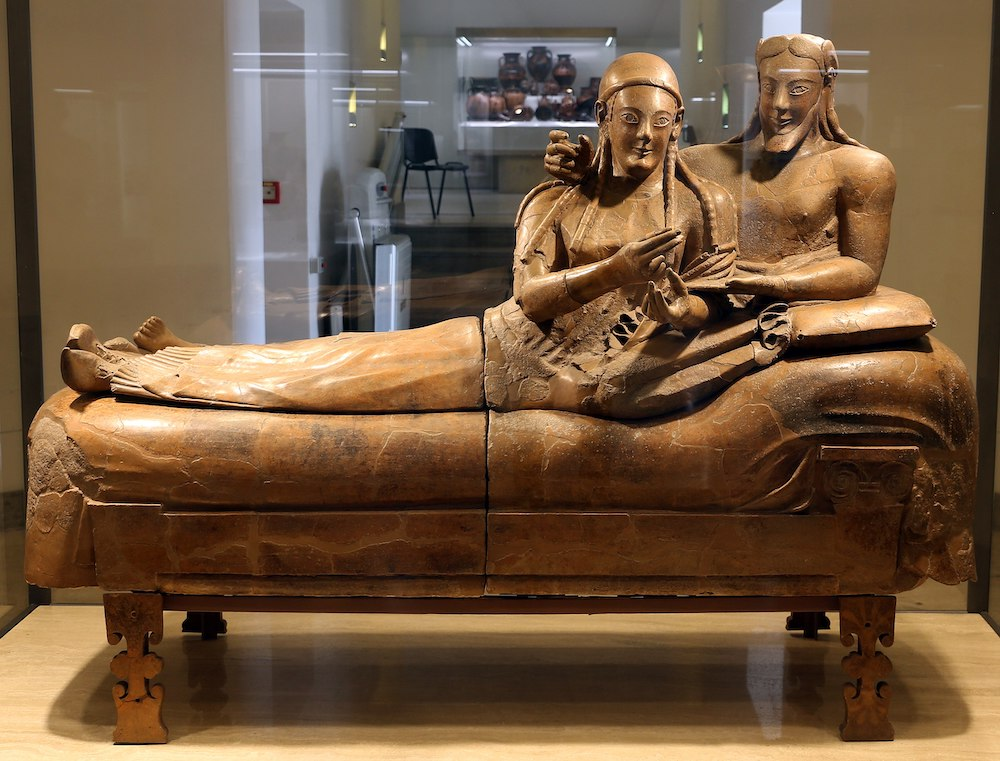
Sarcophagus of the Spouses
520 BCE
Etruscan
Terra cotta
Etrustcans were pretty much aboriginal Romans, chronologically overlapped with Greece
Etruscan do a lot with terra cotta
They were also incredibly wealthy due to mining, agriculture, and trade
Their culture was an amalgam of Indigenous, Greek, and Near Eastern cultures
Prioritized communication with hands
Function: held bones, bodies, ashes, etc.
Form is similar to Greek kouroi and korae, but depiction is intimate – definitively different from Greece
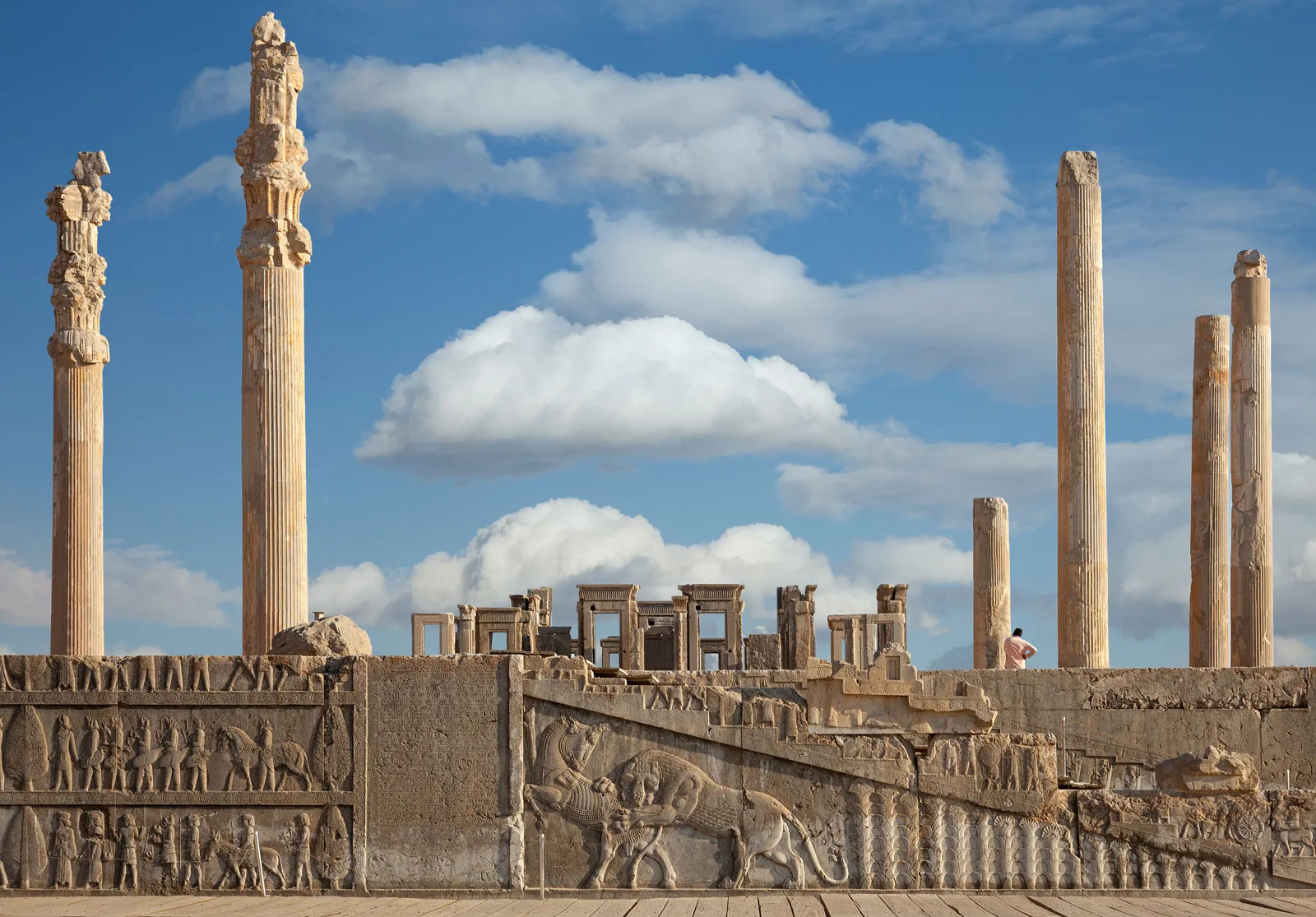
Audience Hall of Darius and Xerxes
520–465 BCE
Persepolis, Iran/Persian
Limestone
Persian empire was multicultural; it practiced cultural and religious tolerance to rule through soft power
Entire complex was placed on top of 40ft stone platform (elevation/visual strike)
Decorated with many visuals, like Persian generals flanked by lions, hunting, “immortals,” taxes being paid by various peoples, etc.
Limestone was from Lebanon
Could accommodate thousands with overflow
Hypostyle halls: 72 columns initially, only 13 remain.
The capitals of columns are animals
Highly geometric: clear straight lines laid out on rectangular plan
Function: Complex
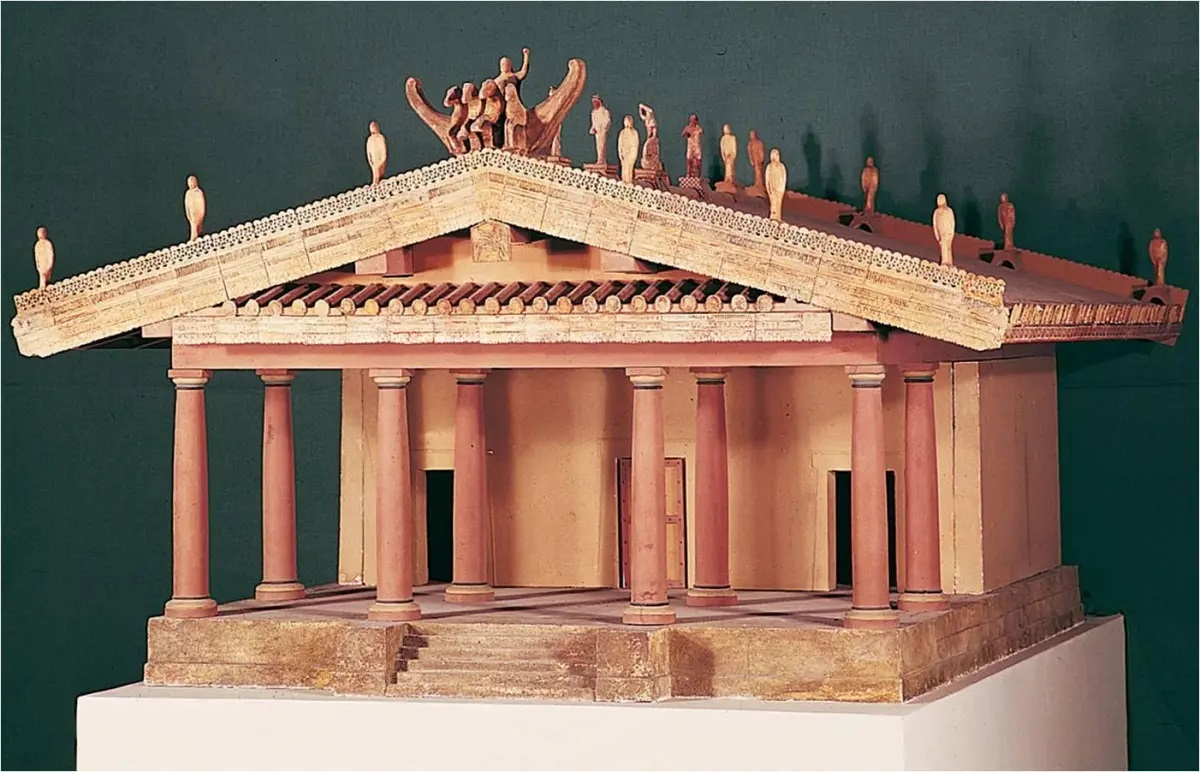
Temple of Minerva
510-500BCE
Master Sculptor Vulca
Wood, mud brick, or tufa; terra cotta sculpture
Tuscan column: Etruscan; Composite column: Roman; Doric, Ionic, and Corinthian column: Greece
Tuscan columns (stuccoed and painted) frame 3 cellae, created for three gods: Juno, Jupiter, and Minerva
Prostyle: columns are just in the front
Akroteria (decorative statue) has more dynamism than kouros statue, but only because of difference in material
Tomb of the Triclinium
Niobides Krater
Doryphoros (Spear Bearer)
450-440 BCE
Polykleitos
Acropolis
Acropolis, pt. 2: The Parthenon
Grave stele of Hegeso
Commemorates the death of Hegeso; an inscription identifies her and her father.
Genre scene is that Hegeso examines a piece of jewelry from a jewelry box handed to her by a standing servant; may represent her dowry.
Winged Victory
Great Altar of Zeus
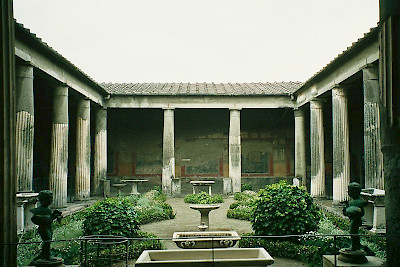
House of the Vettii
Second century BCE; rebuilt 62-70 CE
Pompeii, Italy
Cut stone and fresco
Alexander Mosaic
Seated Boxer
Head of a Roman Patrician
Augustus of Prima Porta
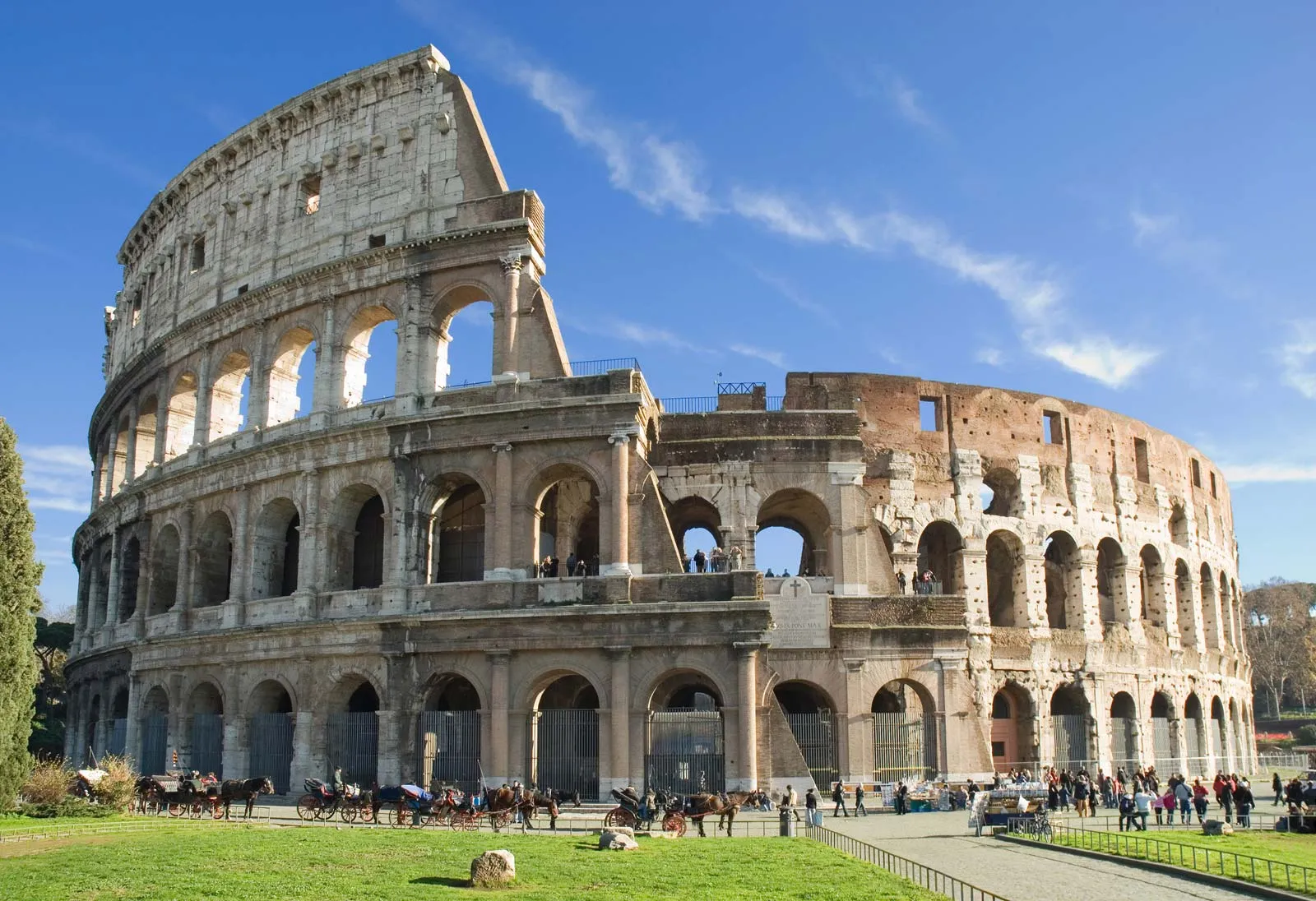
Colosseum (Flavian Ampitheater)
Forum of Trajan
Pantheon
Ludovisi Battle Sarchophogus