ch 4 - [1/2] BV and circulation (structure/function, capillary exhange, blood flow/pressure)
 Call Kai
 Learn
Learn Practice Test
 Spaced Repetition
 Match
Match Flashcards
 Knowt Play
1/43

There's no tags or description
Looks like no tags are added yet.
Name | Mastery | Learn | Test | Matching | Spaced | Call with Kai | Chat |
|---|
No analytics yet
Send a link to your students to track their progress
44 Terms
arteries
carry blood away from the heart → branch into arterioles
arterioles
branch into capillaries (smallest bvs); nutrient and waste exchange occurs
venules
combined capillaries making a small vein; thin walls compared to veins
veins
combined venules conducting blood to the heart; contains valves, larger lumens and thinner walls than arteries
summarize the BV pathway from largest to smallest
arteries → arterioles → capillaries
venules = bunches of capillaries
veins = bunches of venules
provides oxygenized blood to bodily tissues
systemic arteries of systemic circuit
returns deoxygenated blood to heart
systemic veins
leaves the heart with deoxygenated blood to bring it to the lungs for gas exchange
pulmonary arteries in the pulmonary circuit
returns freshly oxygenated blood from lungs to heart for the systemic pathway
pulmonary veins
blood leaves the ___ side of the heart for pulmonary circulation
blood returns to the ___ side of the heart for pulmonary circulation
right
left
label the arteries and veins in the pulmonary and systemic circulatory circuits
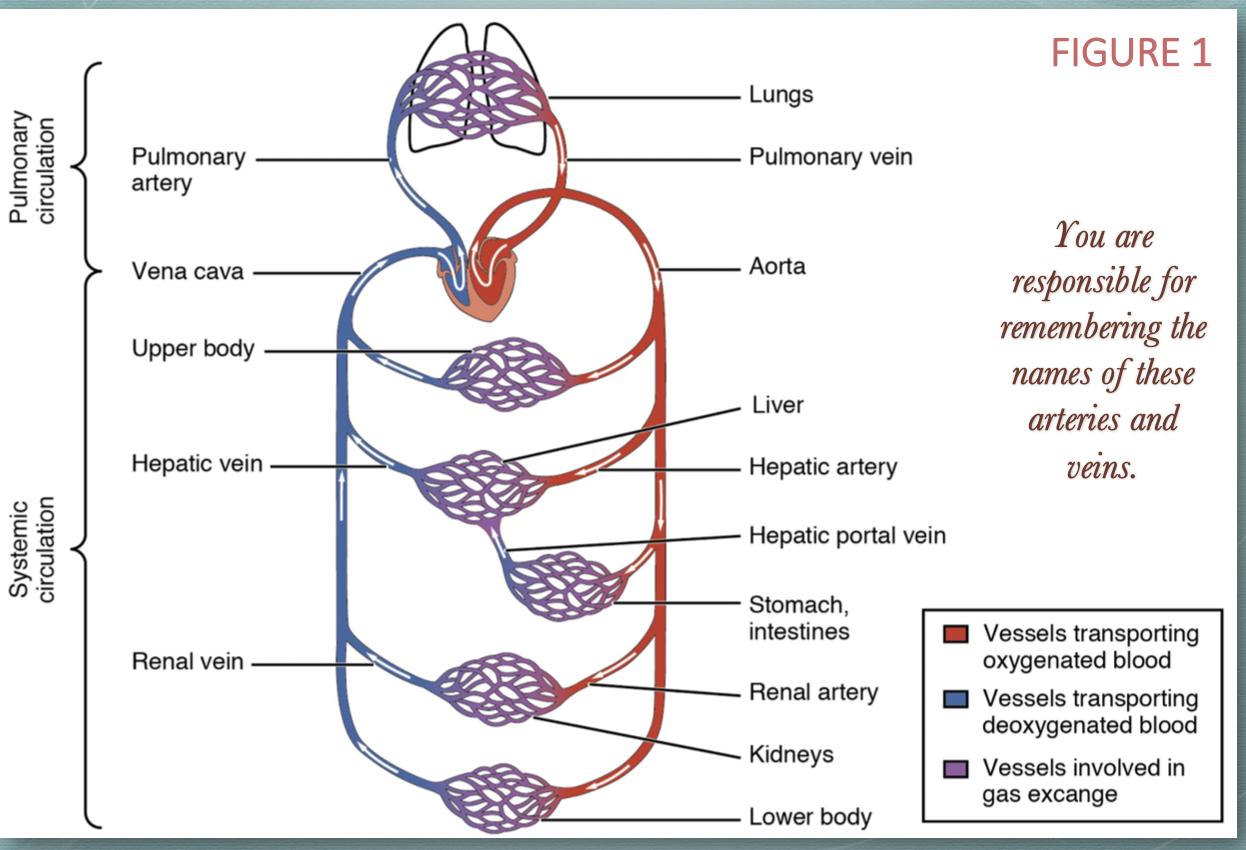
blood has higher pressure [away from / closer to] the heart
closer to the heart
compare blood pressure levels of arteries VS veins
arteries = thicker walls, smaller lumens to maintain BP = higher blood pressure
veins = thinner walls, wider lumens as surface area increases = lower blood pressure
purpose of valves
in veins - unidirectional bloodflow back to the heart
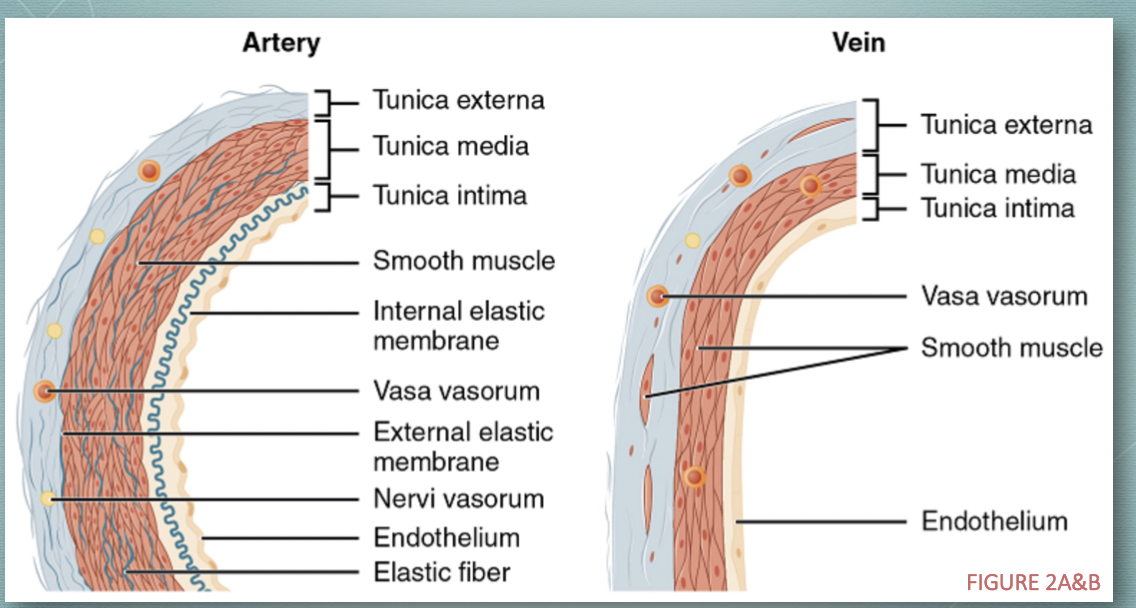
3 tissue layers in veins and arteries
tunics
tunica intima
tunica media
tunica externa
tunica intima in artery vs vein vs capillary
composition
regulates capillary exchange, blood flow
lined by endothelium, bound to areolar connective tissue via basal lamina
artery: has internal elastic membrane (wavy shape) for stretching/structure
vein: smooth endothelium, valves for unidirectional bloodflow connected
capillary: smooth endothelium
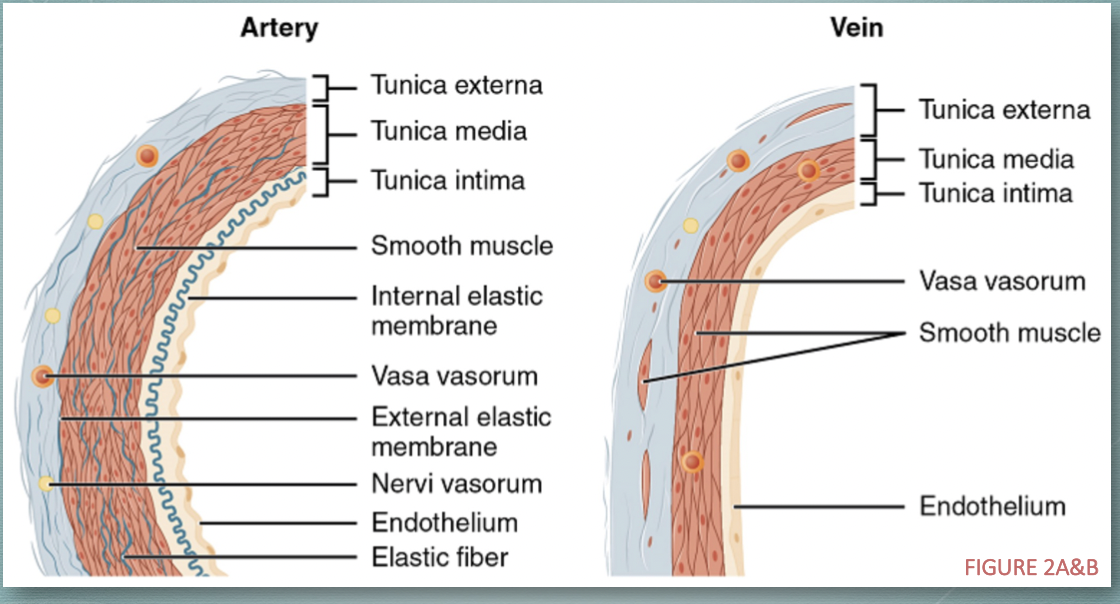
tunica media in artery vs vein vs capillary
contraction vs relaxation (the effect it has on body when it occurs)
composition
regulates blood pressure and flow
contraction = vasoconstriction, increasing BP
relaxation = vasodilation, decreasing BP
smooth muscle with connective elastic fibers, collagen fibres for flexibility
artery: thickest layer, many elastic fibers
veins: thinner than tunica externa, more collagen
capillary: does not exist
tunica externa in artery vs vein vs capillary
composition
connective tissue with mostly collagen fibers, some elastic fibers, smooth fibres in veins)
artery: thinner than tunica media (might be thicker in some large arteries)
veins: thickest layer, contains smooth muscle cells
capillary: does not exist
capillary exchange (def)
circulates gases/nutrients/wastes to and from bodily cells using diffusion across the endothelial membranes
capillary exchange: small mlcs
use simple diffusion to pass through endothelial membranes
capillary exchange: glucose, amino acids, ions
use facilitated diffusion (channel/carrier proteins) or intercellular clefts
capillary exchange: larger mlcs
pores of fenestrated capillaries
exocytosis/endocytosis
gaps of sinusoidal capillaries
capillary exchange: water
osmosis
blood pressure (def)
hydrostatic force exerted by blood on blood vessel walls
(ventricles contract, exerting pressure on blood and pushing it out into arteries)
blood pressure [drops/rises] as blood travels through smaller arteries → arterioles → capillaries → venules → veins
[drops] (wider lumens and thinner walls allowing for increased surface area, more flow with less resistance)
unit of blood pressure
mm Hg
bodily location where BP is commonly measured
systemic arteries - brachial artery of arm, mm Hg unit
ratio of 2 numbers that systemic BP is recorded in
ex: 120/80
numerator = systolic pressure
denominator = diastolic pressure
systolic pressure
(systole = contraction as blood is pumped out of heart)
arterial pressure causing blood to be ejected when ventricles contract
ex: 120/80
diastolic pressure
(diastole = relaxation period as blood fills heart chamber)
arterial pressure of blood during ventricular relaxation
ex: 120/80
mean arterial pressure
value of the actual mean in most people
condition occurring if value drops too low
avg blood pressure in arteries = 70-110 mm Hg
ischemia (insufficient bloodflow) leading to hypoxia (low blood oxygen)
pulse pressure
difference btwn recorded systolic and diastolic pressure values
normal blood pressure for adults
systolic pressure: less than 120mm Hg
diastolic pressure: less than 80 mm Hg
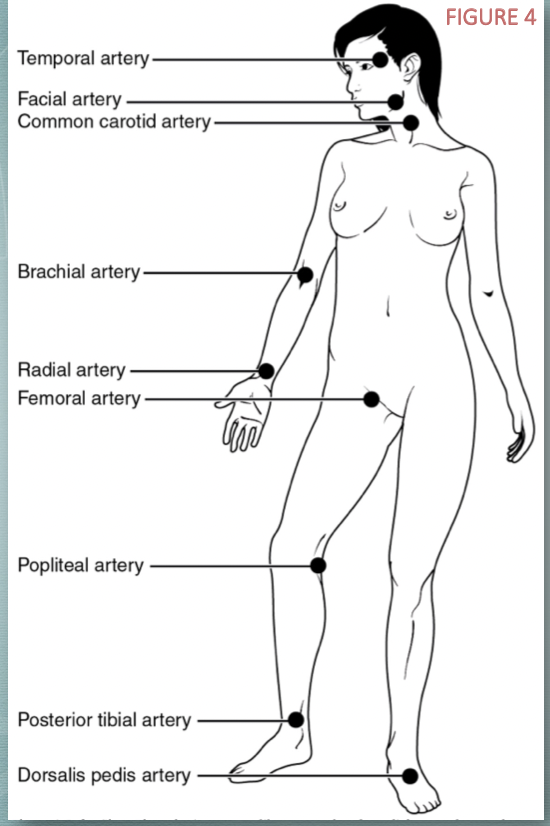
pulse (def)
expansion and recoiling of elastic fibers in arteries as blood flows out of heart
artery where pulse is most readily measured
radial artery (at wrist)
identify the various arteries where pulse can be measured (9)
relationship between blood flow and blood pressure
in the arteries (if more blood is not pumped)
in the veins
blood flow = movement of blood through body part
blood pressure = hydrostatic force of blood against blood vessel walls
if pressure in arteries increases (BP rises) but amt of blood pumped is the same, the flow decreases
if pressure in veins increases, flow will also increase as veins typically have low BP
6 variables influencing blood flow & blood pressure
cardiac output: blood flow out of the ventricles, affected by heart rate, stroke volume
compliance: ability for compartment to expand and accommodate increased blood flow (ex/ the more an artery expands when BF increases, the less BP will increase)
blood volume: when blood volume decreases → pressure and flow decrease
blood viscosity: increased blood viscosity = decreased flow, increased pressure
blood vessel length: longer vessel → greater resistance and lower flow
blood vessel diameter: determined by vascular tone; increased diameter = increased flow, lower pressure
factors increasing and decreasing cardiac output (variable influencing blood flow, blood pressure)
increasing:
epinephrine
norepinephrine
thyroid hormones
increased Ca2+
decreasing:
decreased Ca2+
parasympathetic stimulation (rest and digest)
increased or decreased K+
name 2 things affecting blood viscosity
blood plasma
formed elements
name 2 things playing significant role in regulating blood pressure
vasodilation of arterioles
vasoconstriction of arterioles
name 2 physiological pumps increasing pressure in the venous system
explain why pressure in the venous system must be greater than in the atria
skeletal muscle pump
respiratory pump
to ensure that blood can flow back to the heart through the venules and veins, especially in the lower appendages
skeletal muscle pump
physiological pump in venous system increasing pressure to ensure blood can flow back to the heart
skeletal muscles surrounding vein in lower appendages will contract, squeezing the vein and pushing blood upward
respiratory pump
physiological pump in venous system increasing pressure to ensure blood can flow back to the heart
inhalation: thorax volume increases, pressure decreases
pressure in veins of thorax decreases
blood from veins outside thorax will flow towards it, and to the atria