biology - topic 5, homeostasis
 Studied by 0 people
 Call Kai
 Learn
Learn Practice Test
 Spaced Repetition
 Match
Match Flashcards
 Knowt Play
1/80

Earn XP
Description and Tags
sept-
Name | Mastery | Learn | Test | Matching | Spaced |
|---|
No study sessions yet.
81 Terms
conditions we need to control in order for the human body to function and why (3)
correct glucose concentration in blood - too much can lead to problems like diabeties and damage to cells and tissues. Too little can lead to problems with energy
correct body temp - to maintain optimum conditions for enzymes to work in. Too high and enzymes are denatured. Too low and rates of reaction are too slow for cells to survive
correct water content - to maintain the correct concentrations of salts and sugars in our cells, tissues and organs
homeostasis define
the regulation of the internal conditions of a cell/organism to maintain optimum conditions
how our body responds to a stimulus
stimulus →receptor(sensory neorons will be found in sense organs)→coordinstion centre(motor neurons will allow muscles to move or substances to be released from glands →effector →responce
receptor (3)
define
examples
a group of cells that are sensitive to a stimulus
they take in info from the surroundings
e.g. light receptor cells in the eye are sensitive to light
coordination centre (2)
define
examples
an ORGAN that processes info from the receotirs and organises a responce for the effectors
e.g. the brain, the spinal cord, the pancreas
effector (3)
define
examples
responds to nervous impulses and causes a reaction
can be a muscle or a gland
e.g. leg muscles, pancreas
Nervous system
nerves
EWZDRXCTFGVBHNJMOGYTFURETS
long fibres
transmit electrical impulses from the brain and spinal cord (central nervous system (CNS)) to the rest of the body + back again
how are neurons adapted to send electrical impulses quickly
how are long and thin so that they carry messages quicker
they have many mitochondria so they have the energyto transmit electrical impulses
they have branches to connect to other neurons
they have a fatty surrounding the axon so that it is insulated
Nevous system
Effectors
effectors = muscles or glands which carry out a responce
a gland responds by secreating chemical substances
a muscle responds by contracting
how does your body respond to the information that you want to eat a cake in front of you
The receptor is in your eyes detect the stimuli. This is converted to an electrical impulse. This message is carried by the neurons To the brain, then the Effector (Salivary gland) Response to the nervous impulse and starts producing saliva when you eat the cake, the brain sends motor neurons to the effector making you reach for the cake
define synapse
Where two neurons meet there is a small gap called the synapse
what happens at a synapse
An electrical nerve impulse travels along the first axon
When the nerve impulse reaches the dendrites At the end of the axon chemical messengers called neurotransmitters are released
These chemicals diffuse across the synapse the chemicals bind with receptor molecules of the membrane to the second neuron
The receptor molecules on the second neuron can only bind to the specific neurotransmitters released from the first neuron
The binding of the neurotransmitter to the receptor stimulates the second neuron to transmit electrical impulse along its axon the signal therefore has been carried from one neuron to the next
define reflex actions
Rapid automatic response to a stimulus to protect the body from harm
reflex action flow diagram
Stimulus→ Receptor→(Sensory neuron) Relay neuron→(Motor neuron) effector → response
what is a reflex action
dangerous external stimuli is Detected by receptors
An electrical impulse is sent through the sensory neuron to the spinal cord
This trigger is a chemical called neurotransmitter to diffuse across the synapse
This causes the impulse to be carried through a relay neuron to the motor neuron
this causes a very rapid response by the effector E.G Muscle to contract
reaction time define
How long it takes to respond to a stimulus
factors affecting reaction time (5)
age
gender
caffeine
medication
practice
REQUIRED PRACTICLE: REACTION TIME
equipment (4)
30cm ruler
chair
table
partner
REQUIRED PRACTICAL: REACTION TIME
instructions (6)
use your week a hand for this experiment. Sit down on the chair with good upright posture and eyes looking across the room. Place your Full arm of your weaker arm across the table with your hand overhanging the edge of the table
Your partner will hold a ruler vert piece of the zero mark is level with the top of your thumb. They will tell you to prepare to catch the ruler.
Your partner will drop the ruler without telling you you must catch the real as quickly as you can when you sense the router is dropping
After catching the brewer look at the number level with the top of your thumb record this in the results table
Have a short rest and repeat up to 10 times
what places with your partner and repeat
REQUIRED PRACTICAL: REACTION TIME
IDC variables
I- the person
D- reaction time - how far the ruler is dropped
C- same hand
same amount of time between goes
placement of ruler - 0 cm between fingers
REQUIRED PRACTICAL: REACTION TIME
why aren’t you told wheb the ruler is foung to drip
so you aren’t aware and consciousit is happening - and reduced the bias
REQUIRED PRACTICAL: REACTION TIME
how could you improve the method
havw conversion chart in mm not cm (more precise scale)
test more students
drop from same height
more repeates
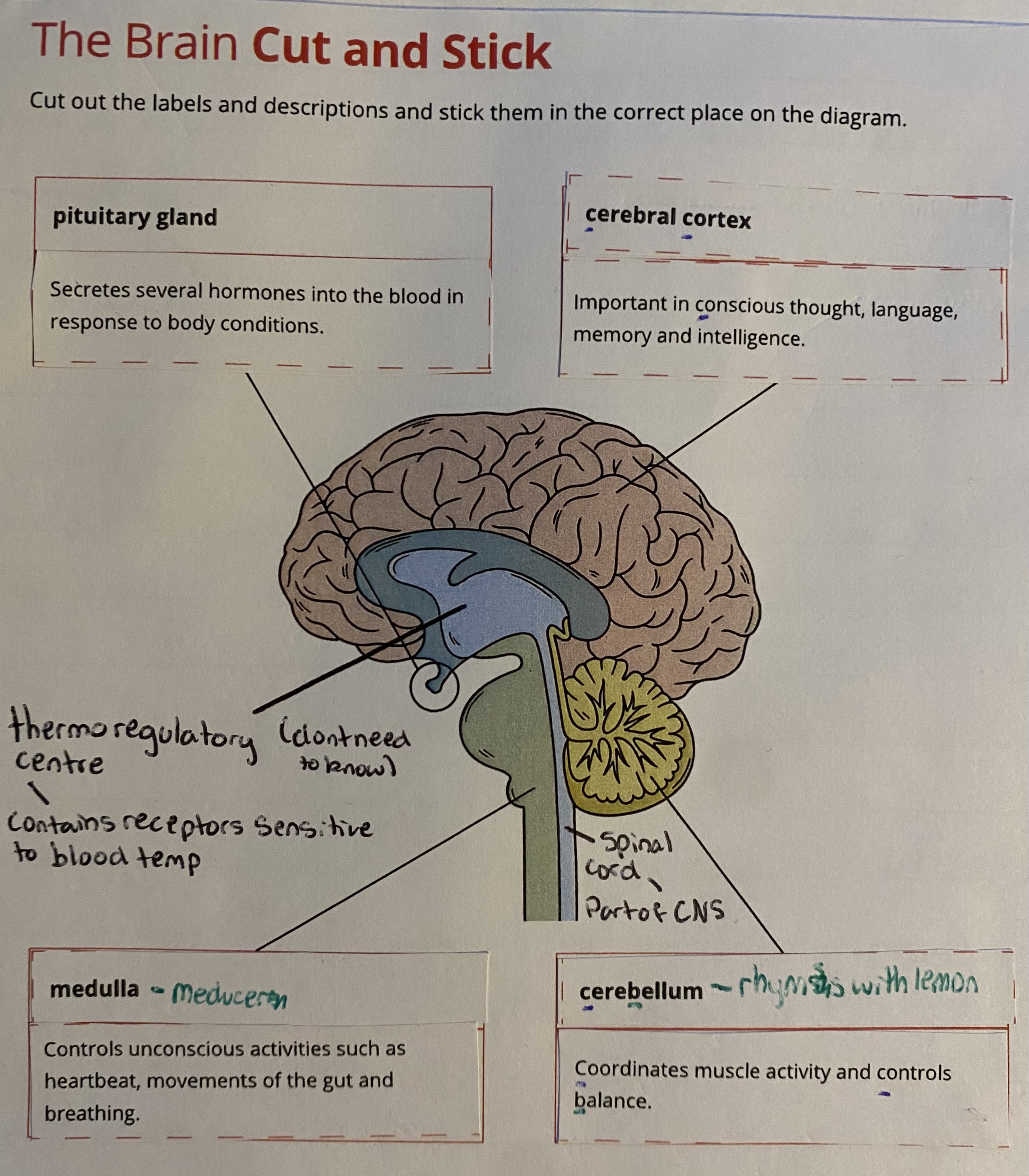
what is the pituitary gland
secrets several hormones into the blood in response to body conditions
what is the cerebral cortex
important in conscious thiught language memory and intelligence
what is the medulla
controls unconscious activities such as heartbeat, movements of the gut and breathing
ehat is the cerebellum
coordinates muscle activity and controls balance
what is the thermoregulatory centre
contains receptors sensitive to blood temp
br able to label parts of the brain
how can scientists study the brain
study people with brain damage
electrically stimulate different parts of the brain
scan the brain - CT scan, PET scan, MRI scan
ehats the difference between CT, PET, MRI scans
CT - uses Xrays
PET - uses radioactive chemicals
MRI - uses magnetic fields
ehy is treating the brain so difficult
wide range of things that can go wrong (timors, trauma, mental health, infection)
difficult to physically fix anything - invaded in a skull and surrounding brain tissue is fragile
the brain is so complex and we don’t fully understand it its difficult to fix wiyh drugs and chemicals
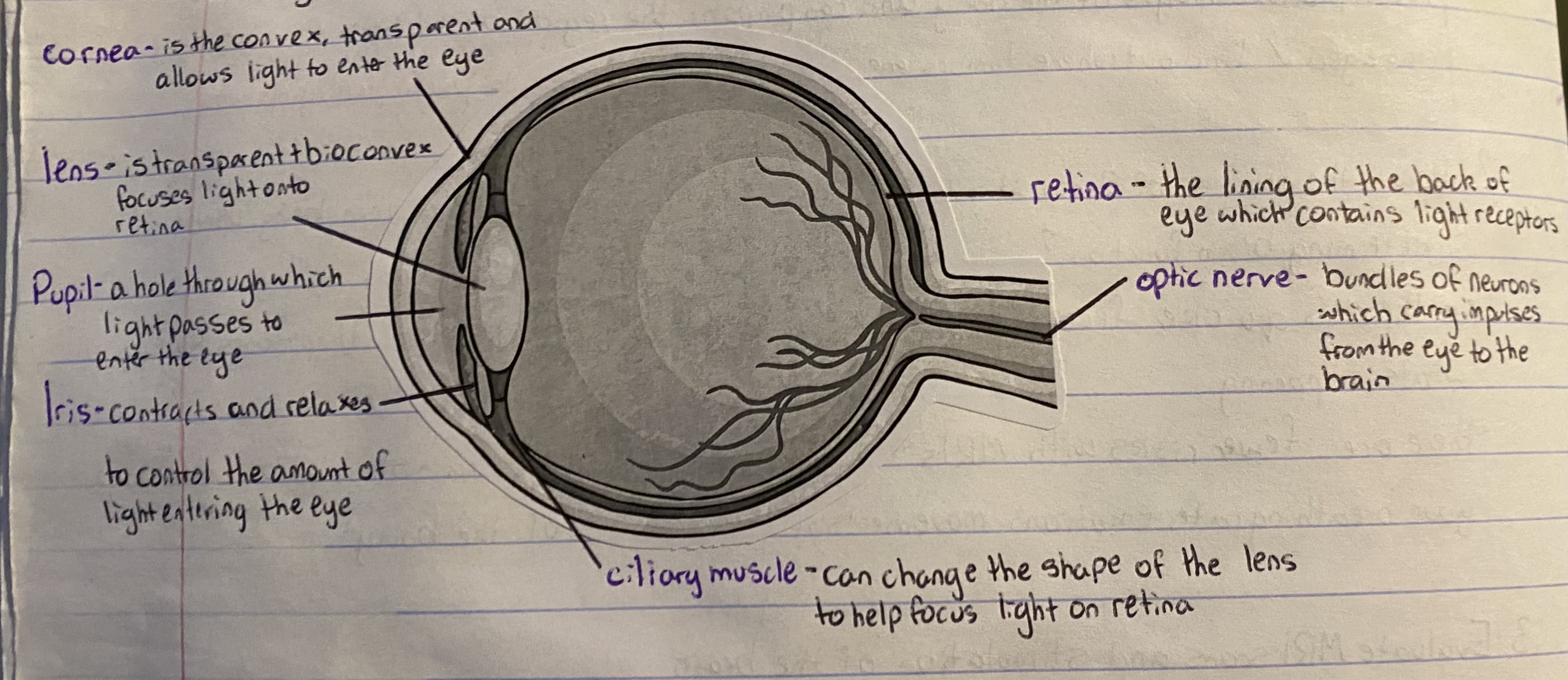
what is the function of the cornea
is the convex, transparent and allows light to enter the eye
what is the function of the lens
is transparent + bioxonvex, focuses light onto retina
what is the function of the pupil
a hole through which light passes to enter the eye
what is the function of the iris
contracts and relaxes to control the amount of like entering the eye
what is the function of the ciliary muscle
can change the shape of the lens to help focus light on the retina
what is the function of the retina
the lining of the vack of eye which contains light receptors
what is the function of the optic nerve
bundles of neurons which carry impulses from the eye to the brain
be able to label parts of the eye
lens reflex sheet
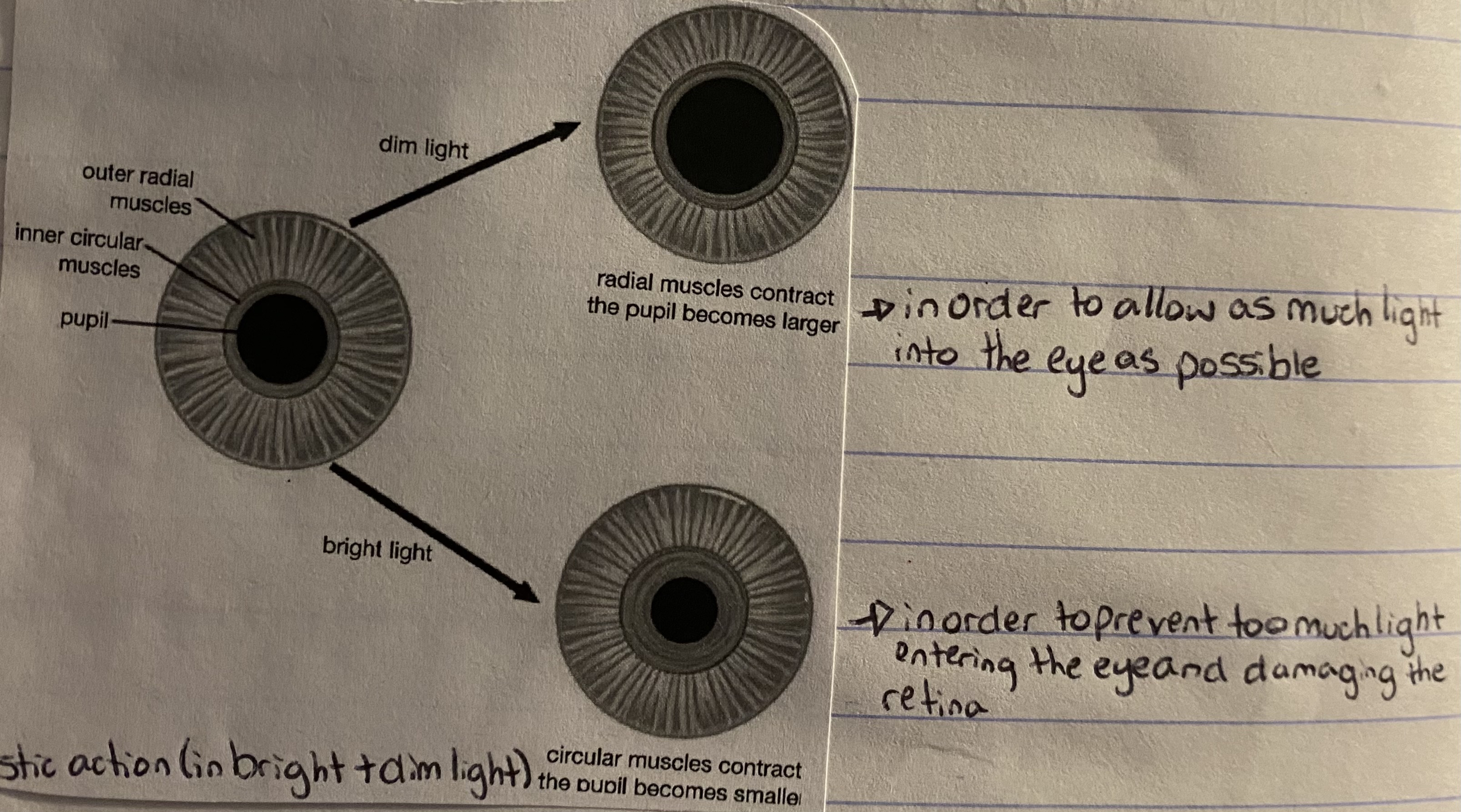
describe the antagonistic action (in bright + dim light)
the antagonistic action of muscles in the iris control pupil diameter. there are radial and circular muscles in the iris. when jt contracts, the other relaxes
in bright light, the pupil reflex decreases the diameter of the pupil. This decreases the amount of light that enters the eye. The circular muscles contract and the radial muscles relax
in dim light, the pupil reflex increases the diameter of the pupil. This increases amount of light that enters the eye. The circular muscles relax and the radial muscles contacts
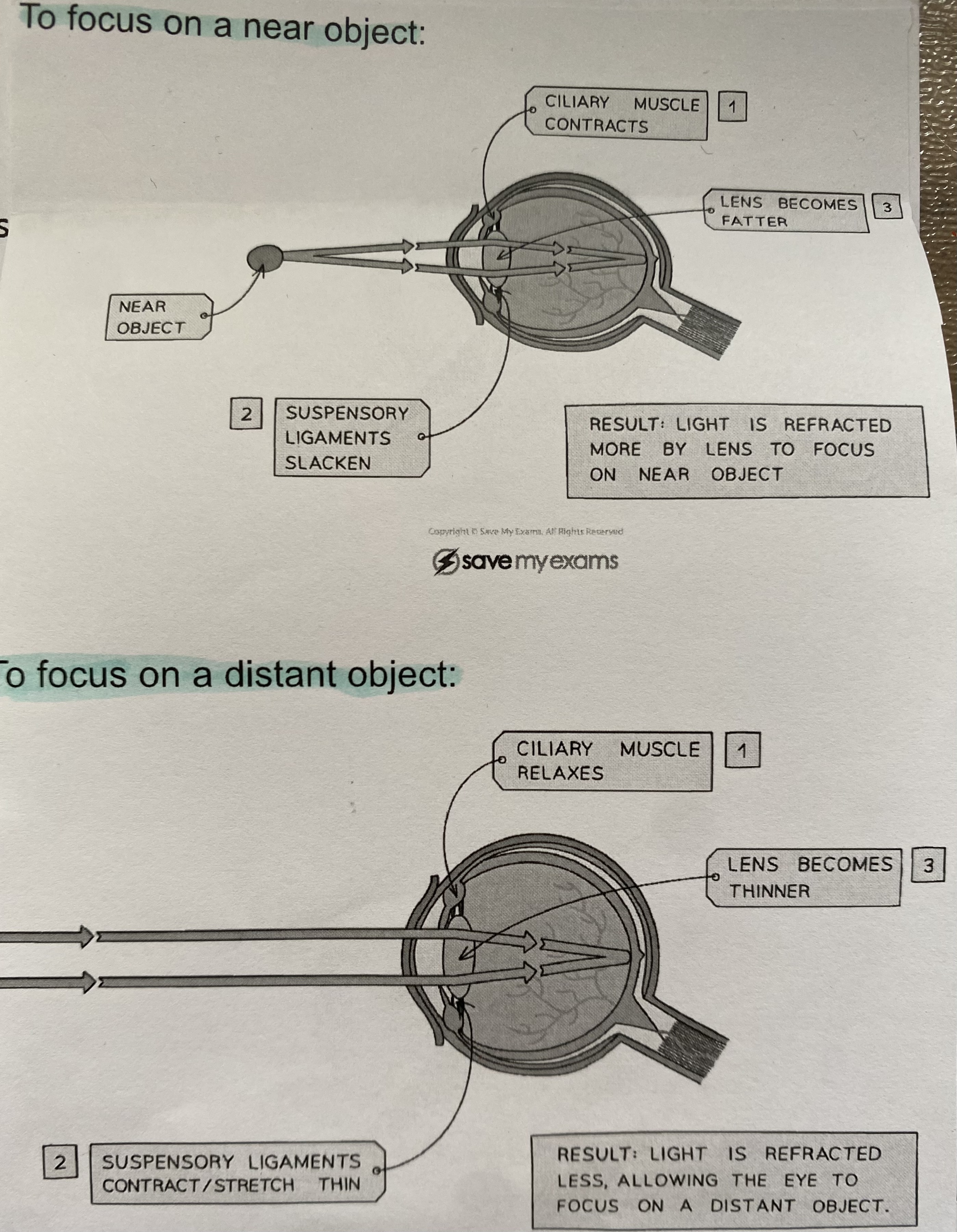
define accommodation
the process of changing the shape of the lens to focus on near or distant objects
what happens when you focus on a near object
and a distant object
near object - lens vefomes thicker, allowing the light rays to refract (bend) more strongly
Distant objects - lens is pulled thin, allowing the light rays to refract slightly
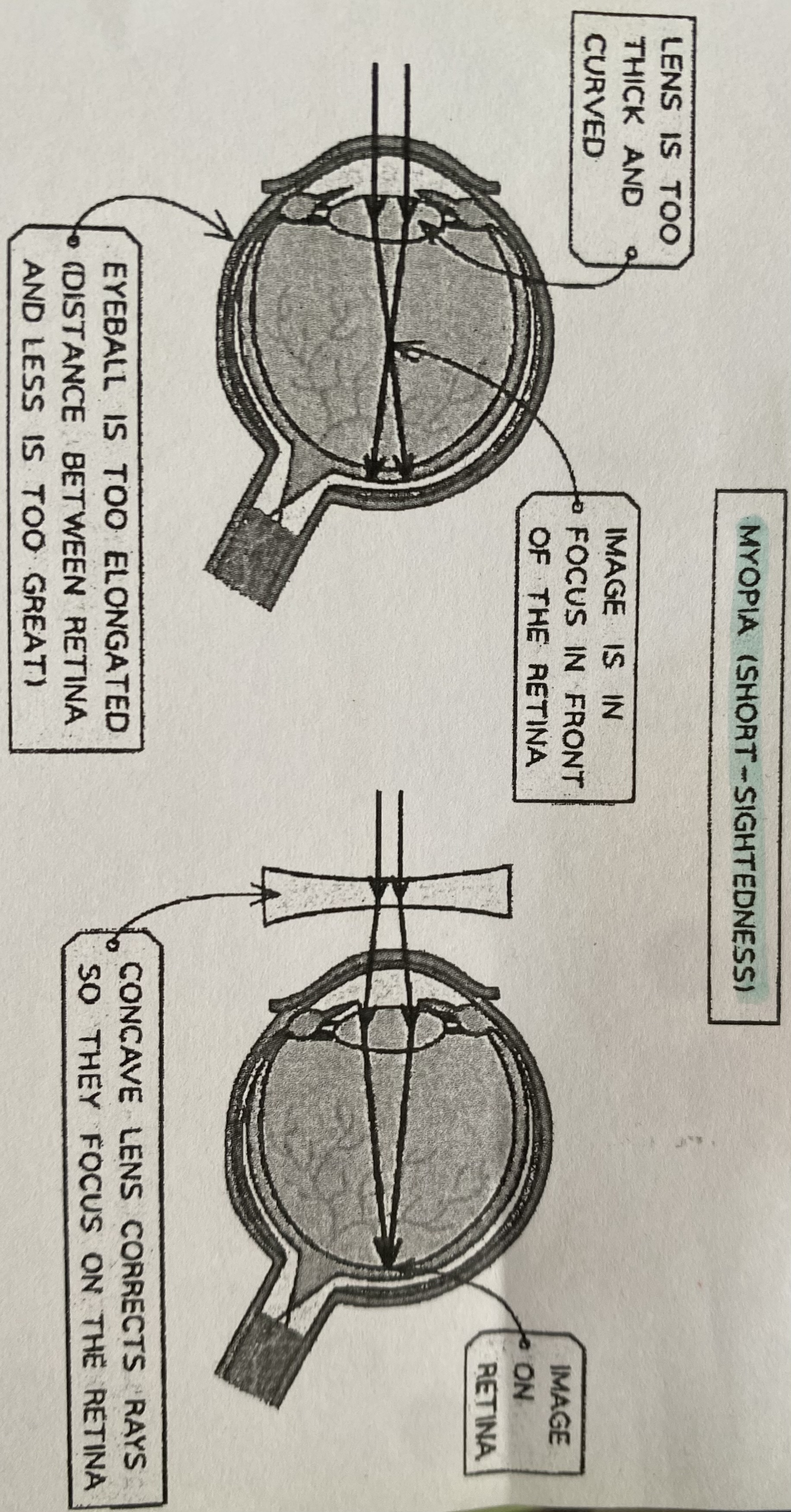
Define shortsightedness
why does this happen
and how it can be corrected
PICTURE
When someone can see near objects closely but is unable to focus on distant objects
This is because the lens focuses light in front of the retina instead of on it. Short sightedness xan be caused by the eyeball being elongated or the lens being too thick or curved. Shortsightedness can be corrected by putting a concave lens in front of the eye
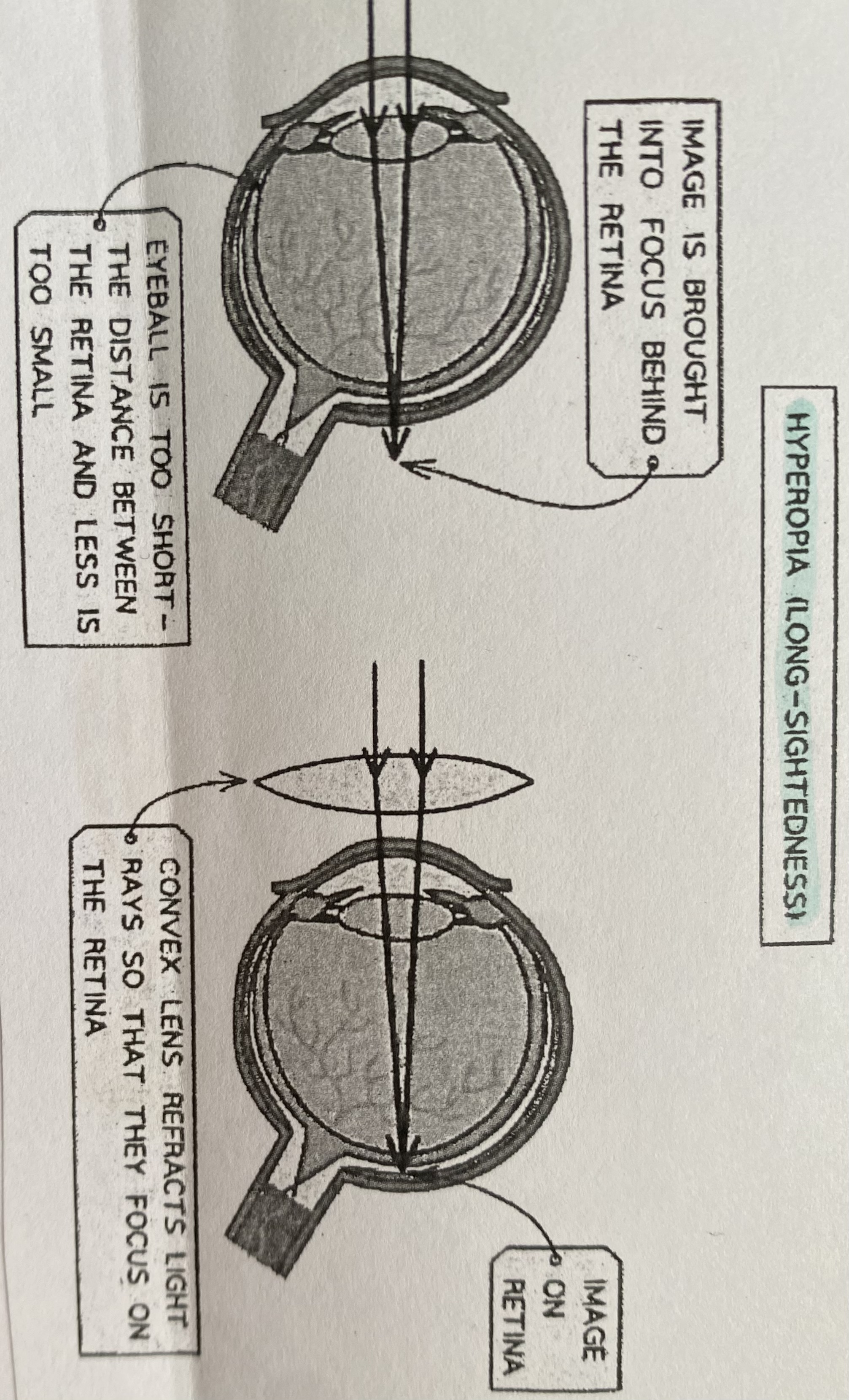
Define longsightedness
why does this happen
and how it can be corrected
PICTURE
longsightedness = when someone can see distant objects clearly but is unable to focus on near objects
this is because the lens focuses light behind the retina instead of on it. Long sightedness can be caused by the eyeball being too short or the lens losing elasticity (often age related). longsightedness can be corrected by putting a convex lens in front of the eye
what is the hypothalamus
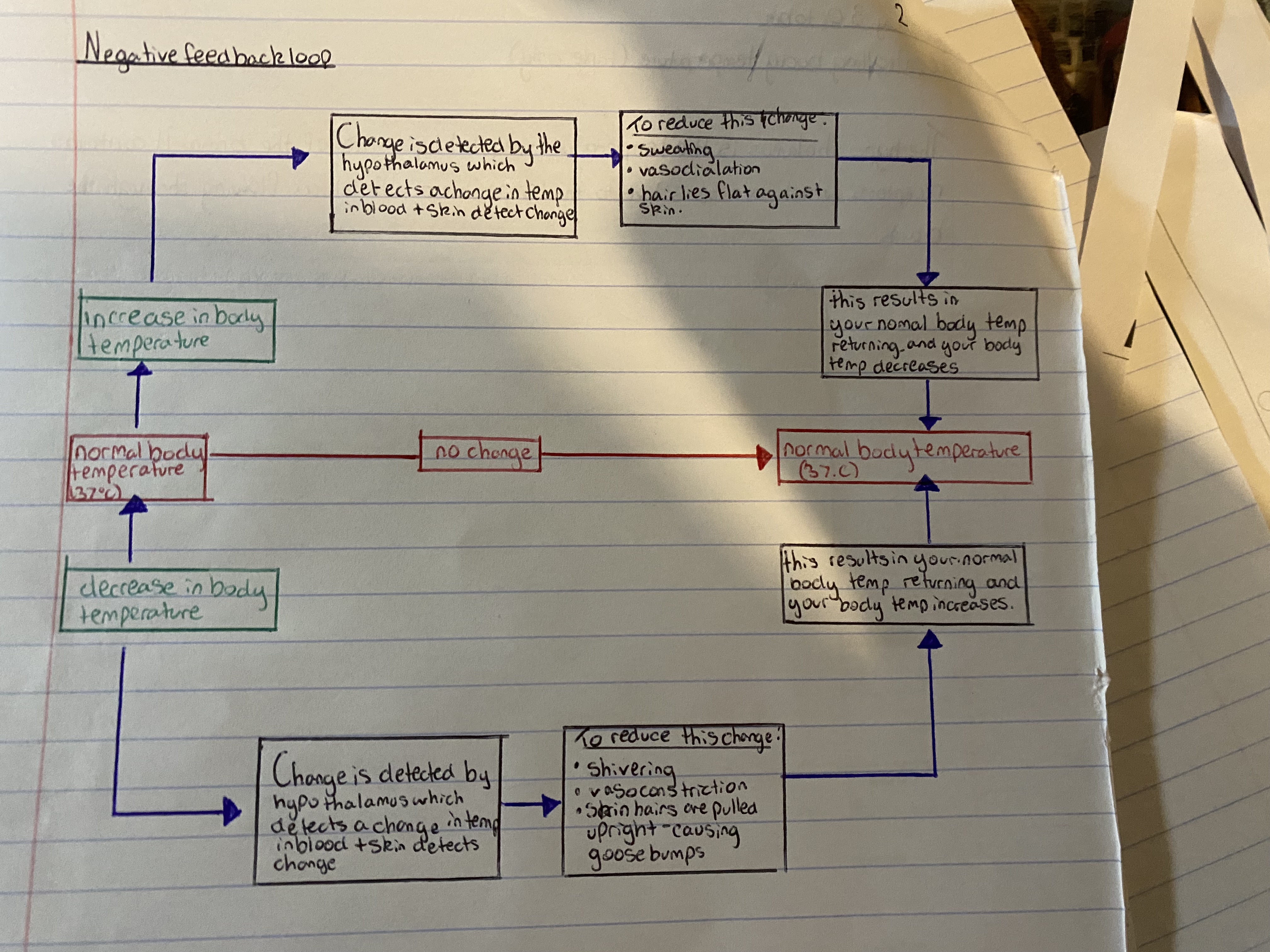
is the temperature - regulating centre of the brain. It contains receptors which are sensitive to the temperature of the blood flowing through the brain
negative feedback loop for body temperature
what does deamination do
prevents the buildup of excess AA
deamination process
the digestion of proteins (from diet) results in excess AA which need to be excreted safely
the liver removes the amino part of the AA by the process of deamination
they form ammonia (toxic) is immediately converted to urea in the liver cells, far less harmful
the urea enters the blood stream so it can be filtered out in the kidneys in urine
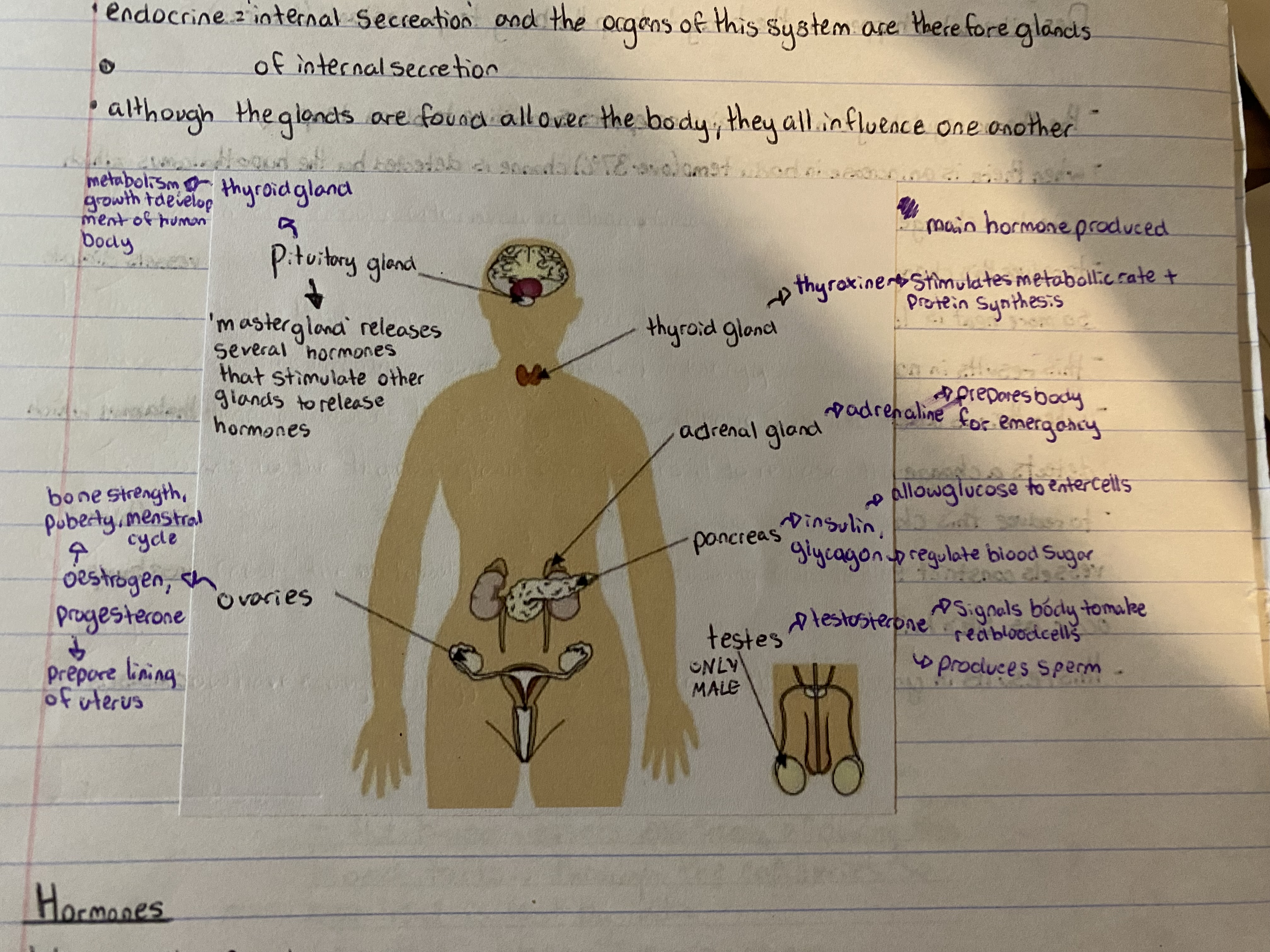
where are the
pituitary gland
thyroid gland
adrenal gland
pancreas
ovaries
testes (only male)
are in the body
what’s the main hormone produced in the
pituitary gland
thyroid gland
adrenal gland
pancreas
ovaries
testes
and what does each of them do
pituitary gland - thyroid gland - metabolism, growth and development of human body
thyroid gland - thyroxine - stimulates metabolic rate + protein synthesis
adrenal gland - adrenaline - prepares body for emergency
pancreas - insulin - allows glucose to enter cells
glycogen - regulate blood sugar
ovaries - oestrogen- bone strength, puberty, menstrual cycle
progesterone - prepares lining of uterus
testes - testosterone - signals body to make red blood cells + produces sperm
hormones
what are they
speed of message
where are they secreted from
means of travel
where do they travel to
chemical messengers
slow
long lasting
glands
in the blood
target organs/cells
adrenaline
where are the adrenal glands situated
what does it do
just above the kidneys, release a few hormones, including adrenaline
prepares the body for any emergency and increases heart rate, breathing rate and sending more oxygen and glucose to our cells
thyroxine
where is the thyroid gland situated
what does it produce
whats igs roles in the body
is the thyroid gland in control of its own secretions
situated in the neck
produce a few hormones including thyroxine
important roles jn the body:
-stimulates metabolic rate; this is the speed at which chemical reactions occur in the body
-also stimulates protein synthesis in cells - important for growth + development
thyroid gland is not in control of its own secretions - instead it requires an additional hormone to stimulate the gland to get it to perform iys function
TSH
what does the pituitary gland secrete
what does this stimulate
what happens thyroxine levels in the blood are too high
pituitary gland secretes a hormone called thyroid stimulating hormone (TSH)
this stimulates the thyroid gland to secrete thyroxine
when thyroxine levels in the blood are too high, less TSH and less thyroxine produced
thyroxine levels in the blood are reduced- known as negative feedback
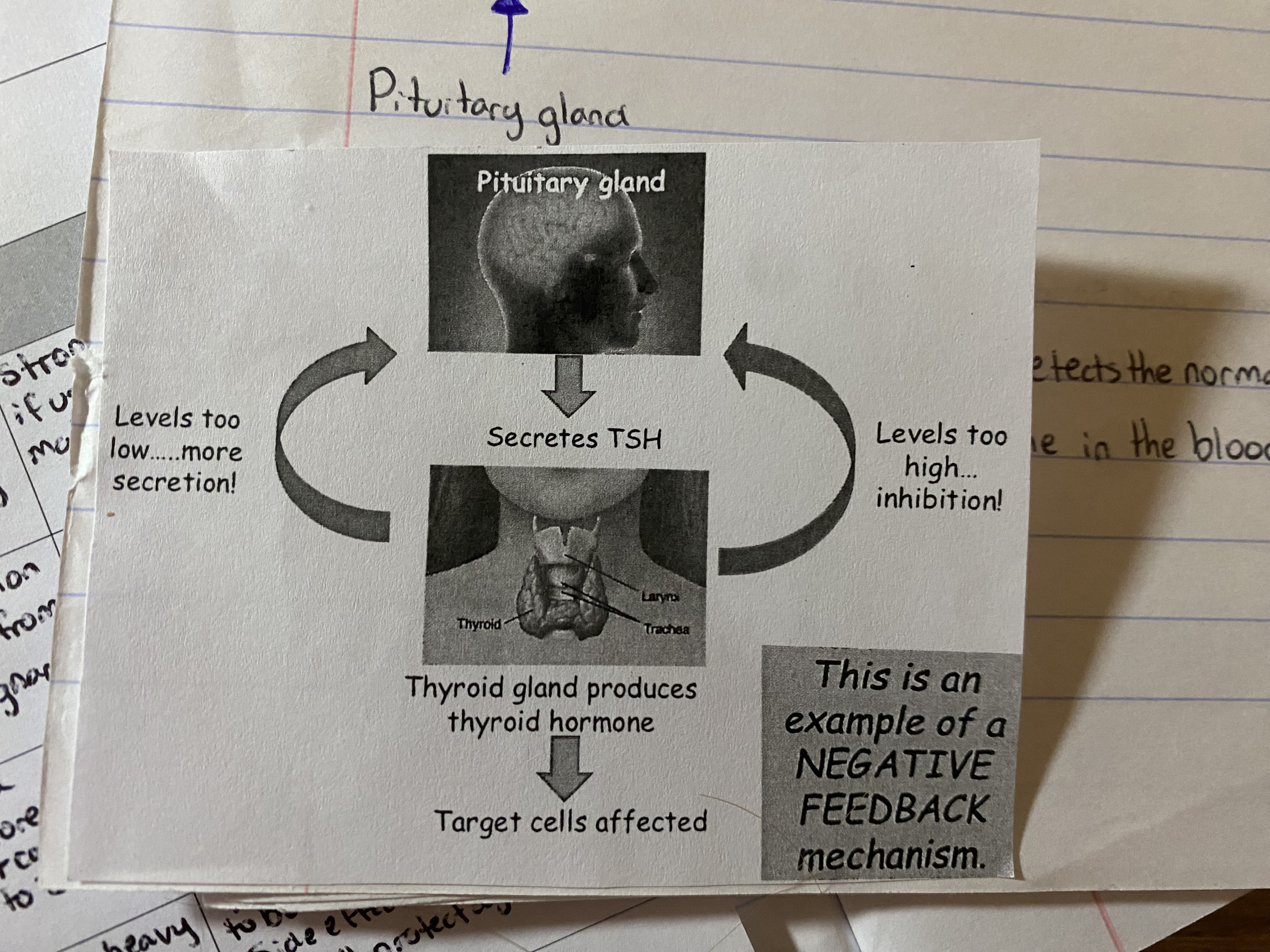
negative feedback by thyroxine
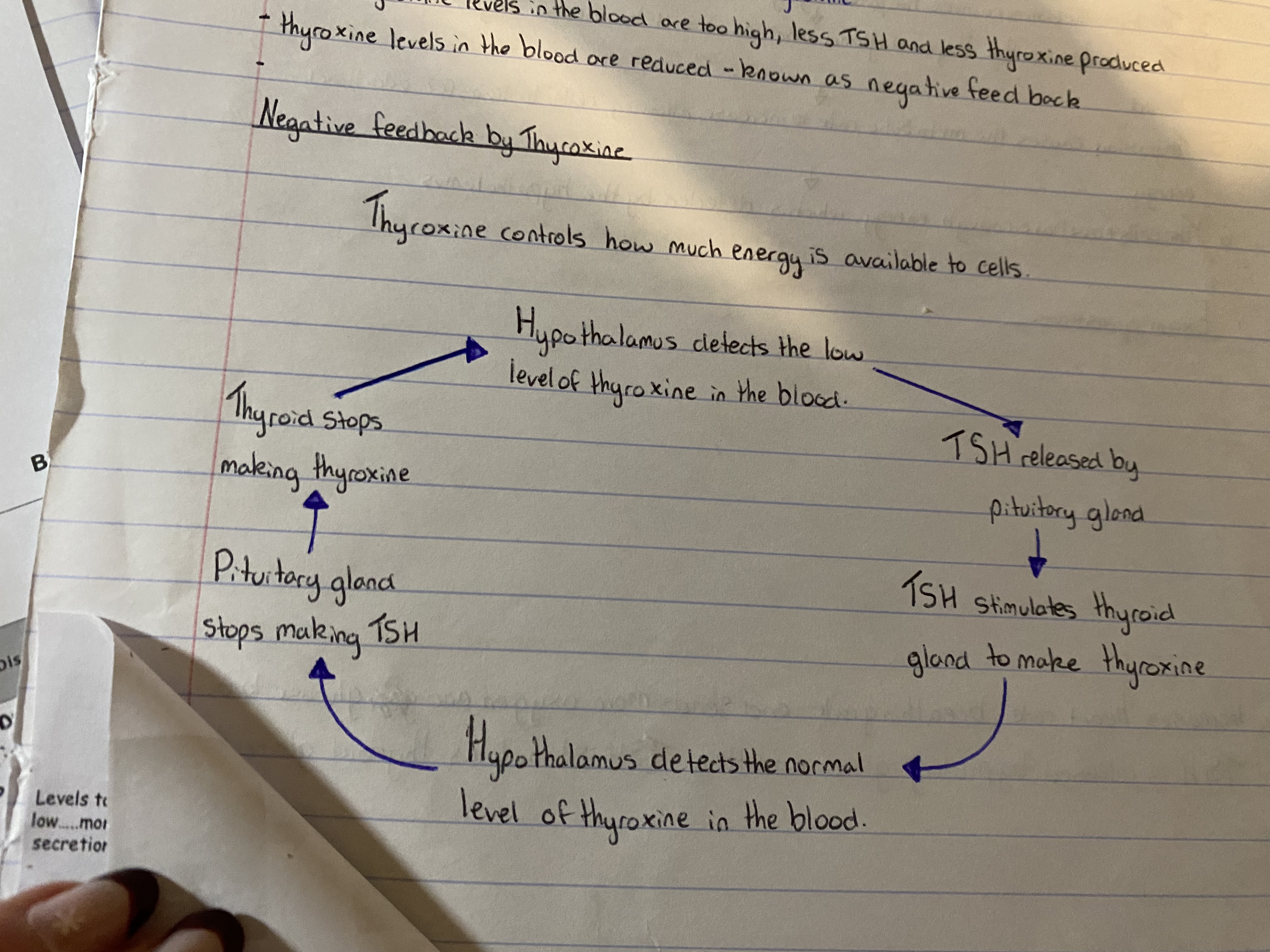
what is negative feedback
-negative feedback mechanisms in homeostasis help to maintain conditions in the body wiyh an optimal narrow range
-any movement away from ideal conditions results in changes occurring which bring them back
regulation of metabolic rate involving thyroxine
yhere is a fall in the energy which is available to cells
receptors in the hypothalamus detect the fall in energy
the hypothesis causes the pituitary gland to release TSH into the blood
TSH binds to the thyroid gland and causes it to release thyroxine into the blood
the cells now have enough energy, which is detected by the hypothalamus
glucose
what is it
whats it made up of
whats 1 molecule of glucose have the formula of
the simplest form of sugars/carbohydrate
made up of carbon, hydrogen and oxygen atoms
1 molecule of glucose has the formula of C(6)H(12)O(6)
glycogen
what is it
why is it longer
where is it stored
glycogen is also a carbohydrate but is much longer than glucose becasue it is actually formed when lots of the excess glucose molecules joined together
can be stored inside cells
how do you feel when you have too much and too little glucose concentration in blood
too much - thirsty, dizzy
too little - faint, lethargic, tired
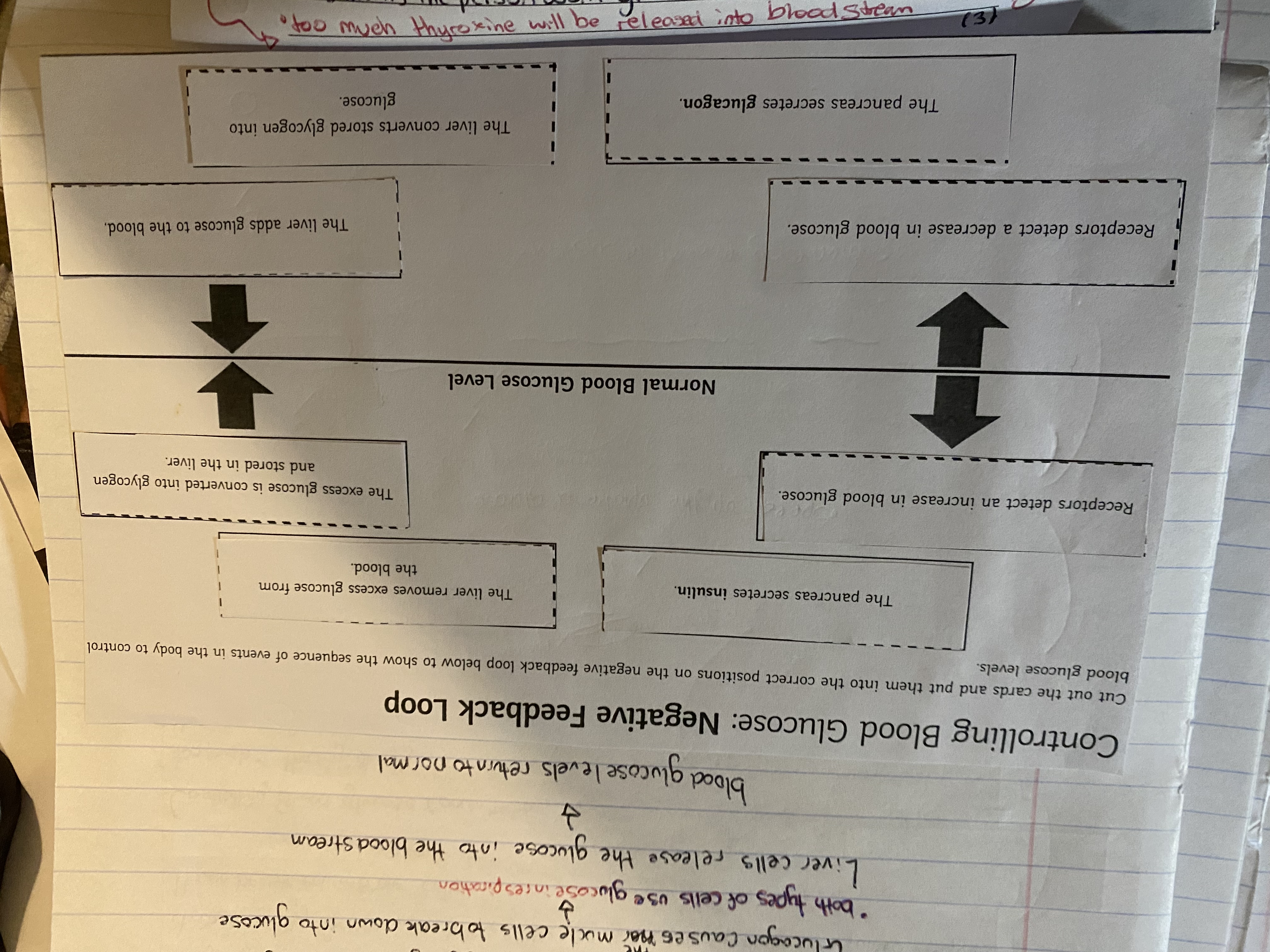
how insulin lowers blood glucose levels
blood glucose levels increase
pancreas detects high blood glucose
pancreas responds and releases insulin (travels in the bloodstream)
glucose is removed from the blood and stored as glycogen
blood glucose levels return to normal
isn’t a quick process
how glucagon increases blood glucose levels
blood glucose levels decrease
pancreas detects low blood glucose
pancreas responds and secretes glucagon (into bloodstream)
glucagon is transported to the liver and muscle cells. glucagon causes the muscle cells to break down into glucose
both types of cells use glucose in respiration
liver cells release the glucose into the bloodstream
blood glucose levels return to normal
controlling blood glucose negative feedback loop
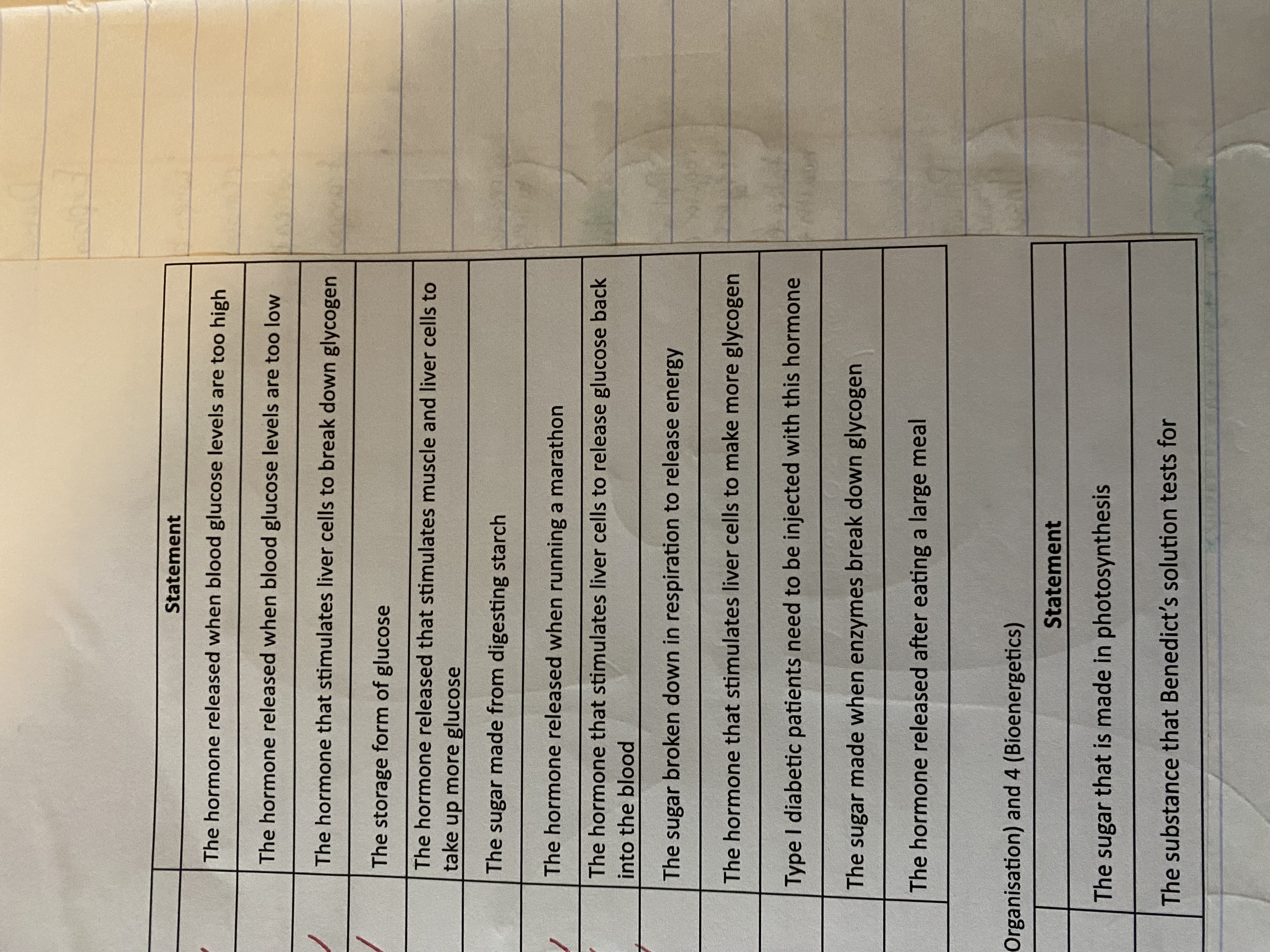
is it
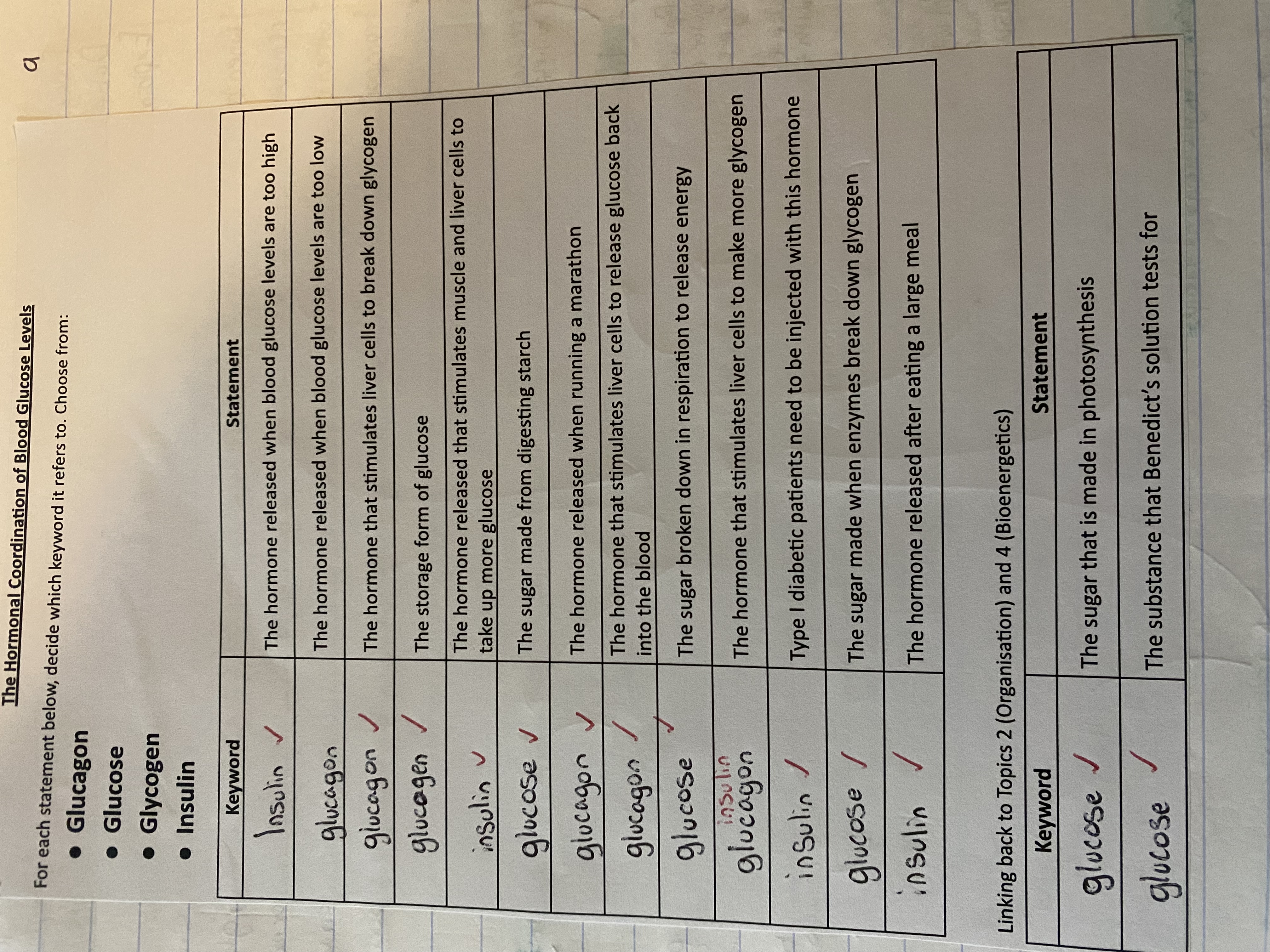
glucagon
glucose
glycogen
insulin
diabetes
symptoms
frequent urination (esp at night)
weight loss
blurred vision
thirsty
more tired
cuts + wounds taking ages to heal
diabetes
what is diabetes
a condition that affects how your body uses glucose
because ppl with diabetes have higher levels of glucose in their bodies and they either don’t have enough insulin to move it, or their cells don’t work as they should wiyh the insulin they have
diabetes
treating diabetes
ppl with type 1 diabetes have regular check up to make sure they are healthy
regular insulin injections/insulin pump to help their bodies to use glucose effectively
take extra care of their health + eat a healthy diet
diabetes
insulin injections + pump
ppl with diabetes dont produce their own insulin they need to get from somewhere else to make sure their glucose levels are controlled
insulin pumps - fitted with a tube that is inserted under the skin. pump is battery operated abd releases insulin into the body throughout the day
insulin injections - use a syringe + needle (often called a pen) needles are small and inject the insulin under the skin where it is taken into the blood
diabetes
type 1 diabetes
inherited NOT by your diet
pancreas can’t create insulin because immune system attacks pancreas by mistake
without insulin, your body isn’t able to move glucose from your blood + into your cells for you to use for energy
diabetes
type 2 diabetes
lifestyle related risk factors for developing type 2 diabetes are: obesity, poor diet, lack of excerise
body’s cells lose their sensitivity (no longer respond) to insulin being produced - makes it dofficult to control blood glucose levels - is preventable
ways water is removed from the body
skin → in sweat
lungs → water vapour leaves during process of exhalastion
kidneys → excess water leaves as part of urine
blood circulate the body under pressure and is brought to the kidneys in the renal artery (the amount of water and minerals ions yhat are reabsorbed varies - called selective re-absorption)
The kidneys filter the blood and then reabsorb all the useful material materials E.G.glucose
after it has been purified, the blood returns to the circulation through the renal vein
The kidneys make urine from the excess water, salt and urea
urea becomes toxic at high concentrations and must be removed from the blood
Urine travels away from the kidneys and tubes called uretes
Urine is stored in the bladder
When the bladder is full, urine has lost through the urea
urea is produced from the breakdown of excess AA in the liver
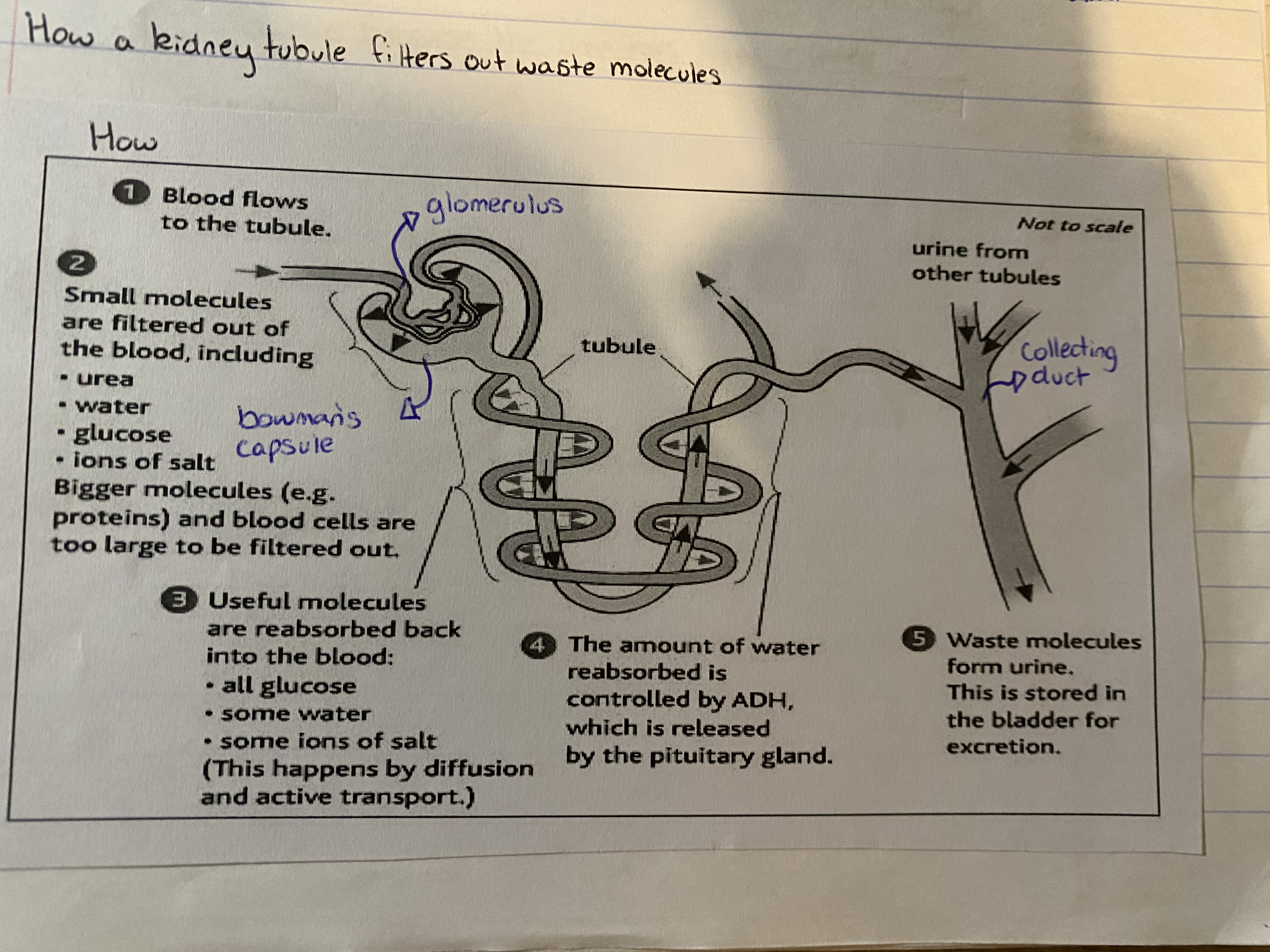
how a kidney tubule filters out waste molecules
blood flows to the tubule
small molecules are filtered out of the blood, including:
-urea
-water
-glucose
-ions of salt
-bigger molecules (e.g.proetins) and blood cells are too large to be filtered out
useful molecules are re-absorbed back into the blood:
-all glucose
-some water
-some ions of salt (happens by diffusion + active transport)
the amounts kf water re absorbed is controlled by ADH, which is released by the pituitary gland
waste molecules from urine. This is stored in the bladder for excretion
filtration
small molecules are squeezed out of the blood into the Bowman’s capsule
the walls have small holes in them. Any molecules small enough to go through these holes will be squeezed through, into the bowman’s capsule (e.g water salt glucose and urea)
most protein molecules are too big, so will stay in. blood along with the blood cells
role of ADH
is a hormone which is released by the pituitary gland and tracked through the blood to the kidneys
when the blood is too concentrated → ADH acts on the kidney tubules causing more water to be reabsorbed baxk knto the blood
this response lowers the concentration of blood and therefore less ADH is produced
negative feedback
how is urea produced
ues is produced from the breakdown of excess AA in the liver
dialysis - how it works
unfiltered blood (high in urea) is taken from a blood vessel jn the arm, mixed with blood thinners/ anti-coagulant (prevents clotting) is pumped into the dialysis
inside the machine, blood + dialysis fluid are separated by a partially permeable membrane, the blood flows opposite direction to the dialysis fluid - allows exchange to occur between the 2 where a concentration gradient exists
the dialysis fluid has no urea in it - there is a large concentration gradient exists the- means the urea moves across the partially permeable membrane (from blood → dialysis fluid by diffusion) important as urea needs to be removed from the blood
dialysis fluid has a glucose concentration = to normal blood sugar levels - prevents the net movement of glucose across the membrane as no consentration gradient exists. important as patient needs glucose for respiration
as dialysis fluid contains an ion concentration similar to ideal blood plasma concentration, movement of ions across the membrane only occurs where there is an imbalance
blood low in ions → diffuse from the dialysis fluid into the blood, restoring ideal blood levels
blood high in ions → excess ions diffuse from blood to dialysis fluid
ehat does the dialysis fluid contains
glucose concentration- similar to normal level jn blood
concentration of ions - similar to normal blood plasma
NO urea
the dialysis fluid needs to be sterile and at room temp - so that no pathogens entering the blood and the blood temp doesn’t change
urea and water pass from the blood into the dialysis fluid down their concentration gradient by diffusion and osmosis
glucose foesnt pass out of the blood into the dialysis fluid so there’s no concentration gradient between them
ions in the dialyss fluid are at normal blood consentration so only those ions that are at a higher concentration will diffuse into the dialysis fluid