South, East, Southeast Asia: China, Korea, Japan, Indonesia
 Call Kai
 Learn
Learn Practice Test
 Spaced Repetition
 Match
Match Flashcards
 Knowt Play
1/46

There's no tags or description
Looks like no tags are added yet.
Name | Mastery | Learn | Test | Matching | Spaced | Call with Kai | Chat |
|---|
No analytics yet
Send a link to your students to track their progress
47 Terms
Northern Wei Dynasty
adopted Han Chinese traditions and practices (Buddhism) in order to gain support from the elite classes.

Qin Shihuangdi
Ruler of China who united China for the first time. He built road and canals and began the Great Wall of China. He also imposed a standard system of laws, money, weights, and writing.
Bodhisattvas
Buddhist holy men and women return from enlightenment to teach others.

Vairocana Buddha
One of the cosmic buddhas in the Mahayana tradition. The term refers to the Buddha who is not bound by time and place. He occupies the central part of the universe. It became extremely popular in China starting from the sixth century.

Vajrapani
Buddhist guardian figures, highly muscular, with thunderbolts
shanshui hua
term for Chinese landscape painting; "mountain water painting"
Neoconfucianism
term that describes the resurgence of Confucianism and the influence of Confucian scholars during the T'ang Dynasty; a unification of Daoist or Buddhist metaphysics with Confucian pragmatism
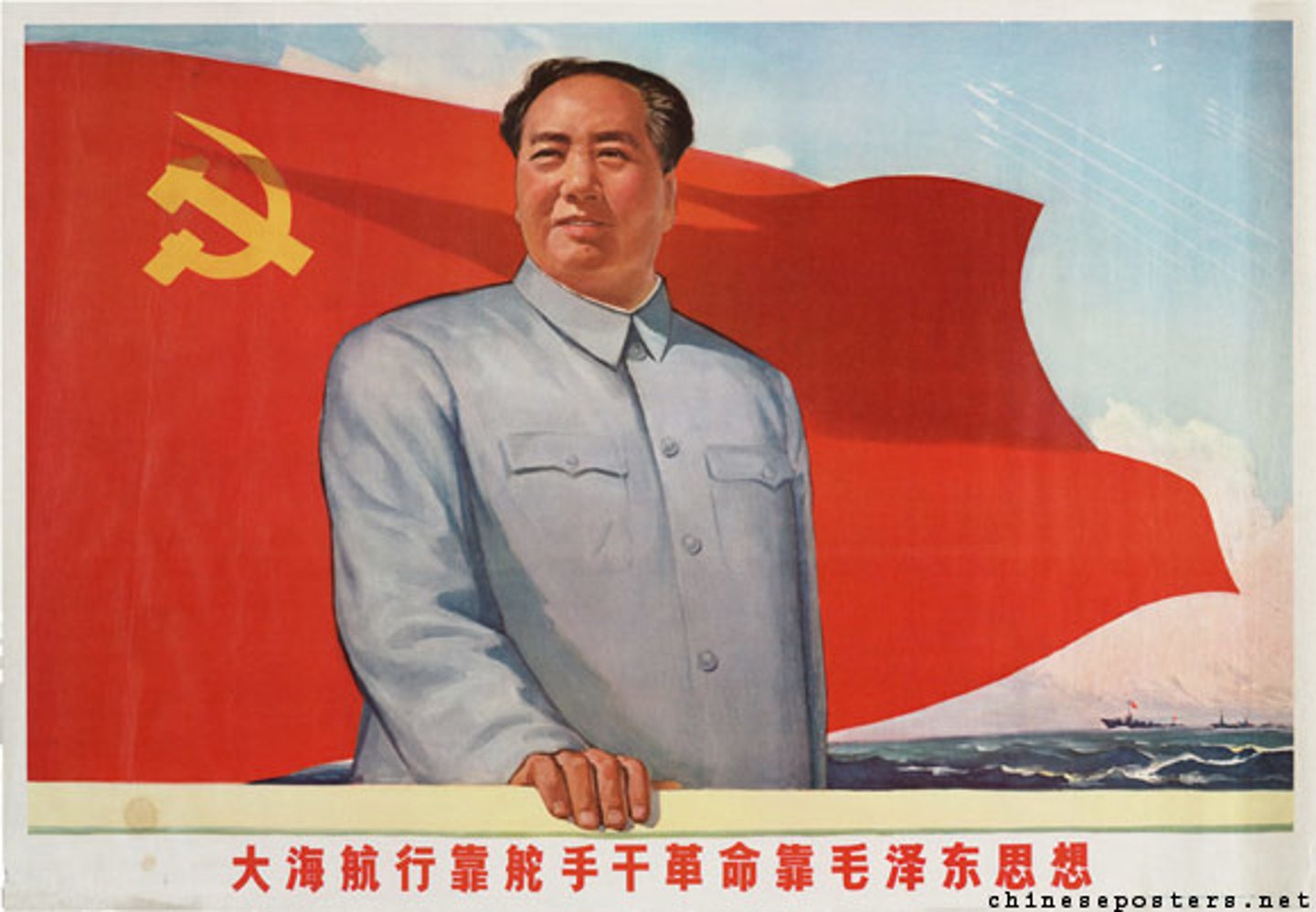
Mao Zedong
Chinese Communist leader from 1949 to 1976.
Silla Dynasty (Korea)
The first ruling dynasty to bring a measure of political unity to the Korean peninsula (688-900).
Shamanism
The practice of identifying special individuals (shamans) who will interact with spirits for the benefit of the community. Characteristic of the Korean kingdoms of the early medieval period and of early societies of Central Asia.
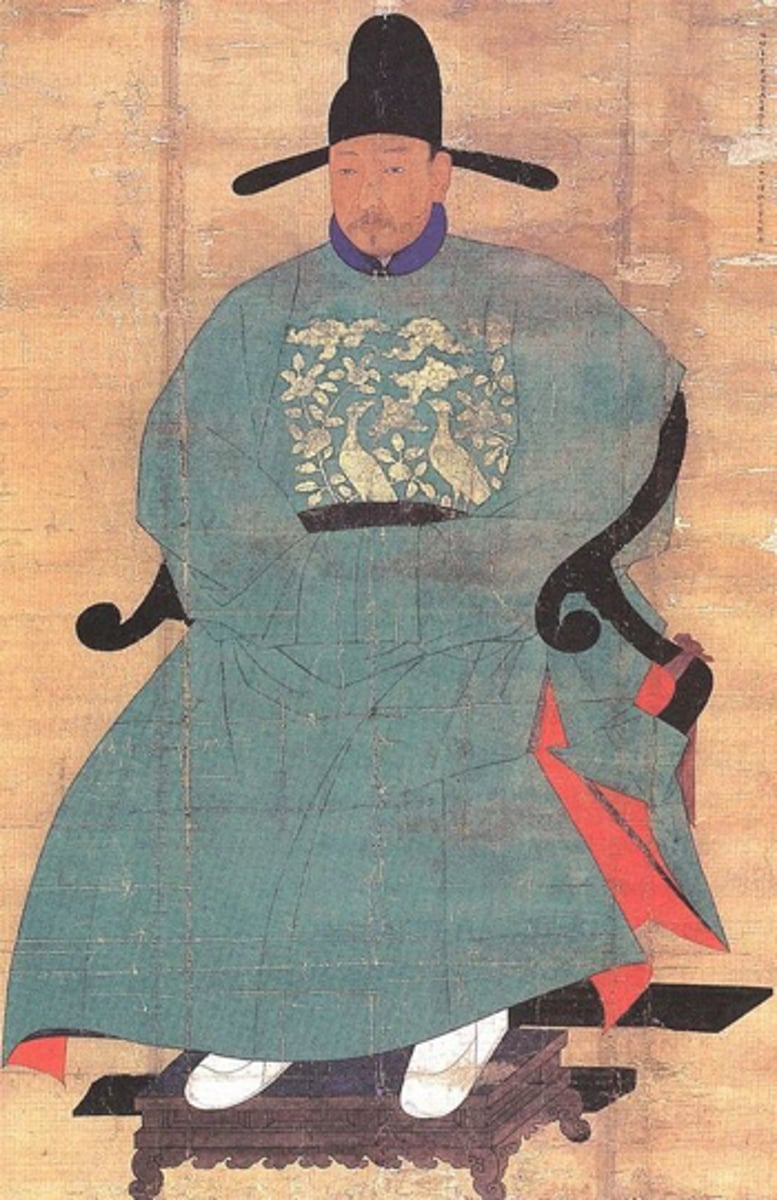
Imperial Bureau of Painting
Korean government agency that created portraits of officials
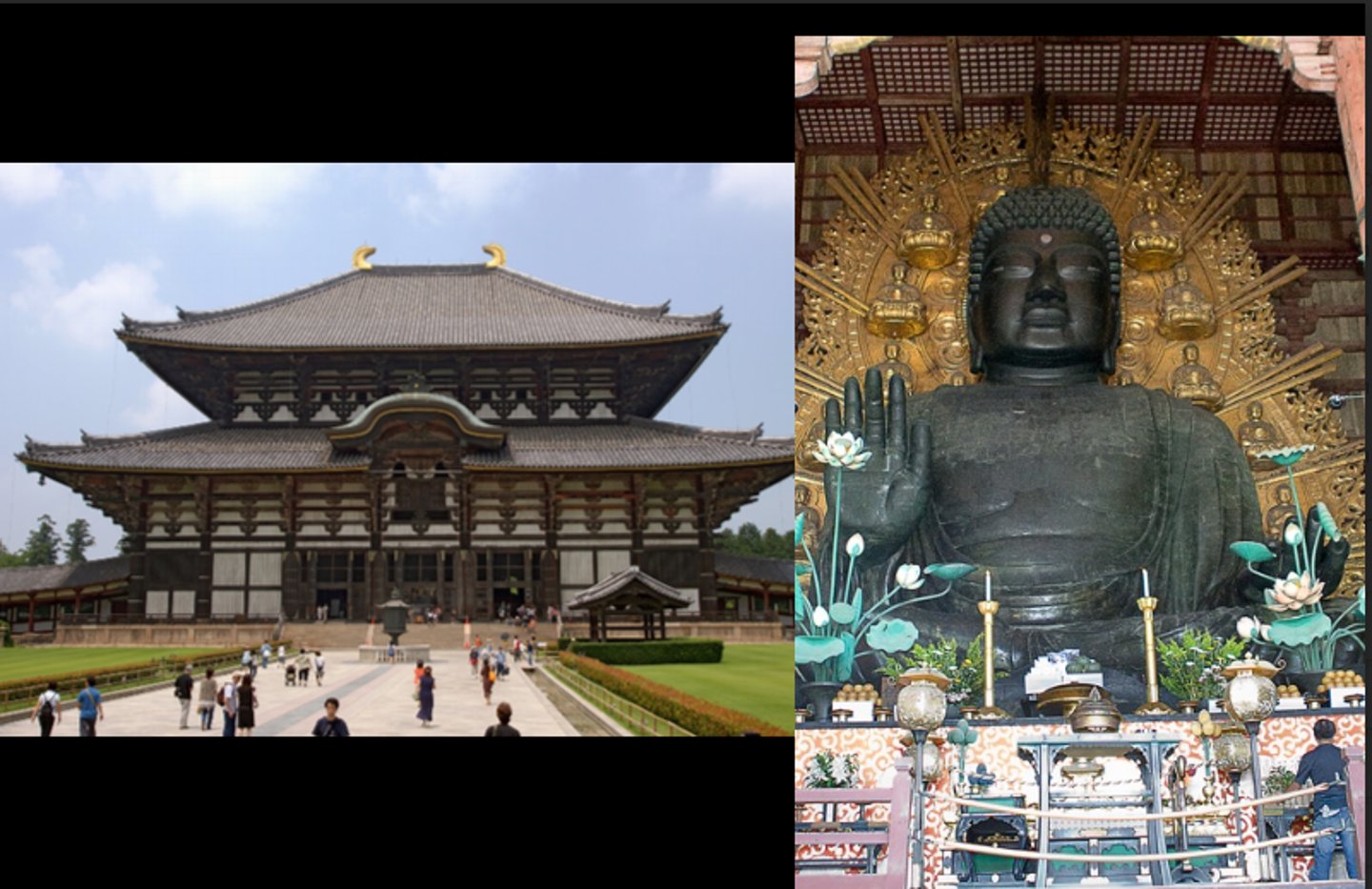
Emperor Shomu
Japanese emperor who ordered construction of Todaiji. His Decree of 741 ordered a Buddhist temple in every Japanese province. He wanted to join Japan together under Buddhism
Genpei Civil War
1180-1185; Japanese civil war that destroyed Todai-ji. Minamoto Yoritomo, the victor in the Genpei Civil War, rebuilt Todai-ji
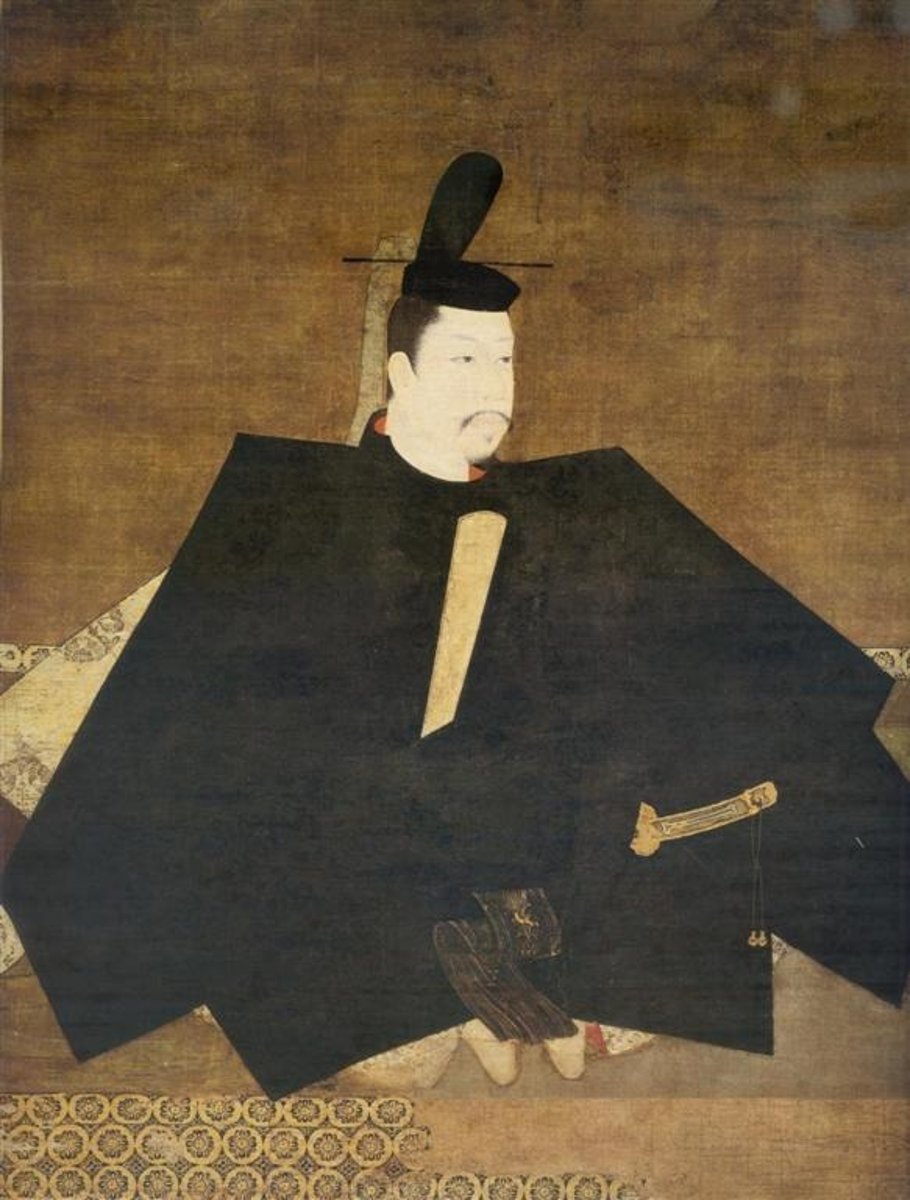
Minamoto Yoritomo (1147-1199)
The first shogun (military dictator) of Japan
Kei School of Sculpture
(emerged c. 1200) style of Japanese Buddhist art, based in Nara, remained influential until 19th cent. Masters did the Todaiji restoration; focus on simplicity, identity, and realism (crystals for statues' eyes)
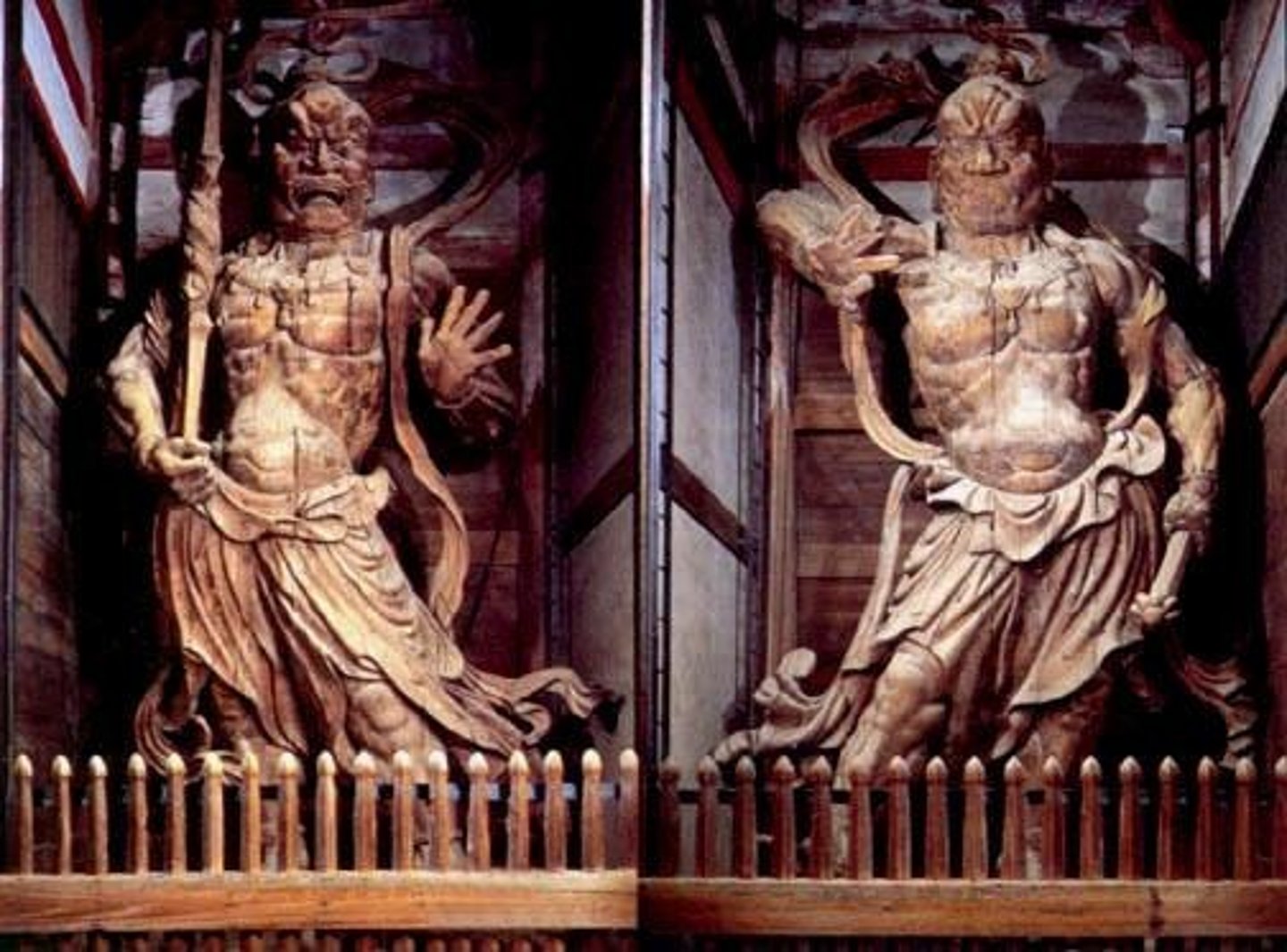
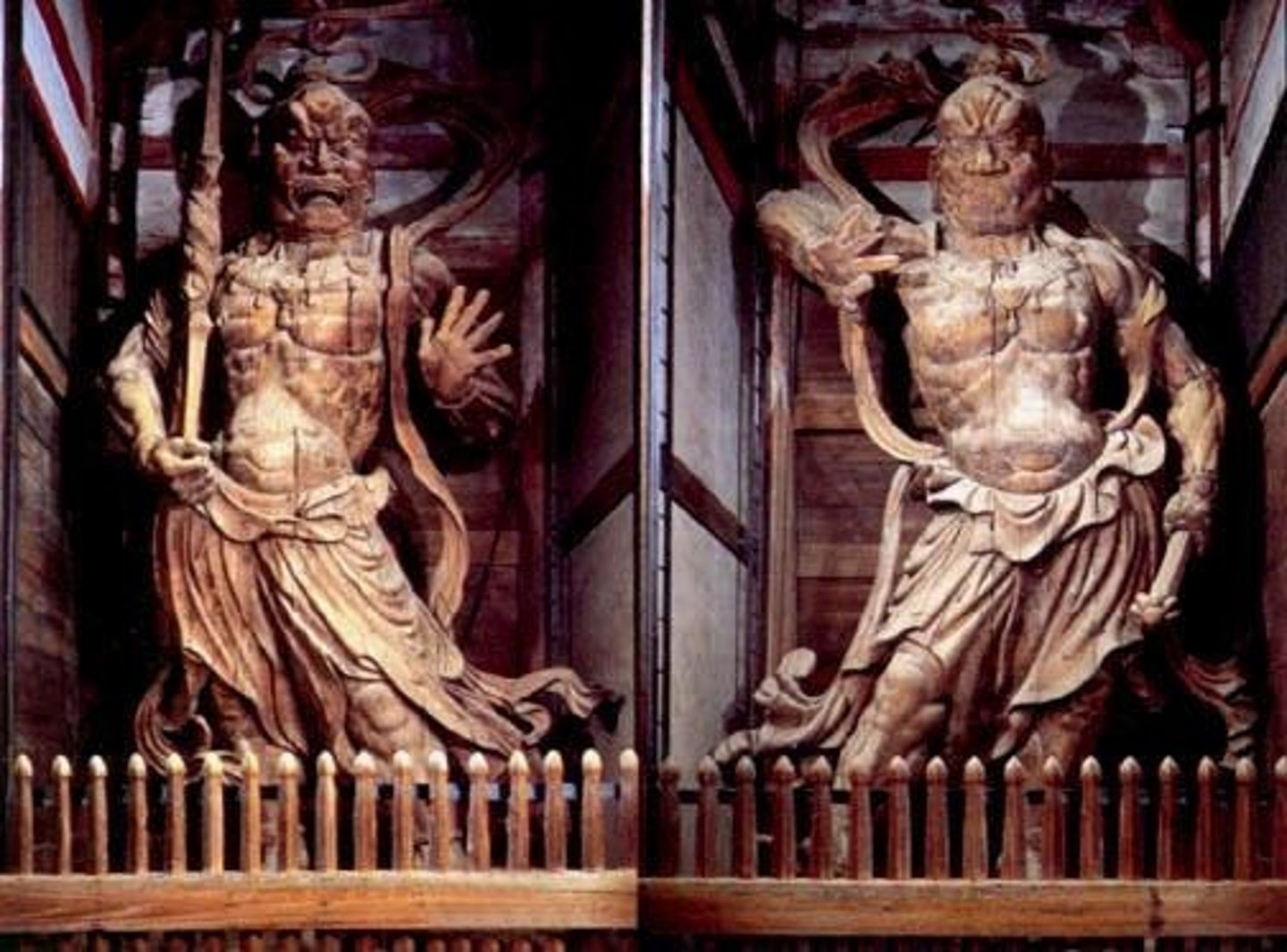
Unkei and Kaikei
Masters at the Kei School of Sculpture; designed Guardian Kings at Todaiji
Emaki
traditional Japanese picture scrolls.
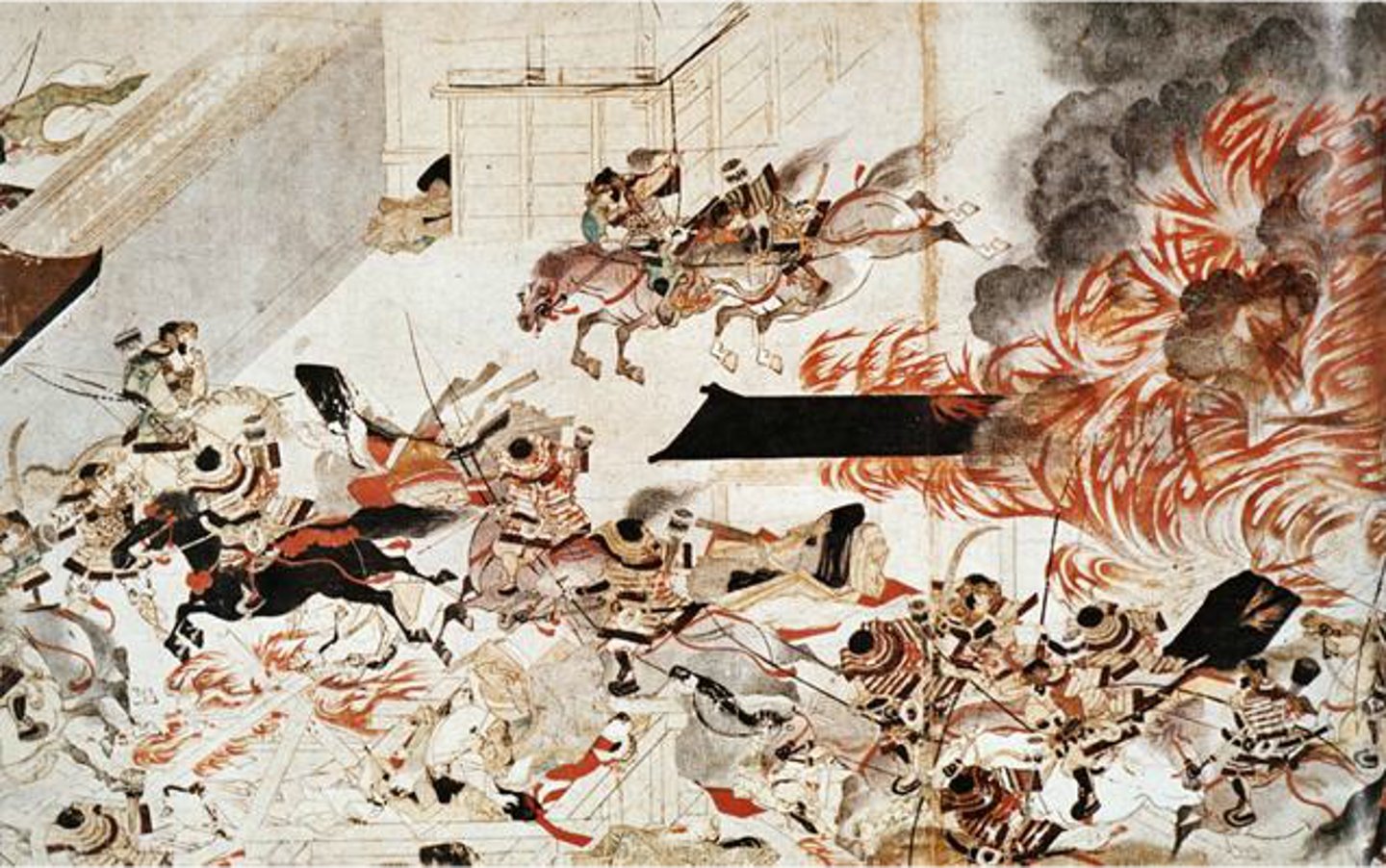
Otoko-e, Men's painting
painting of subject matter that concerns politics, history, folk tales, etc.
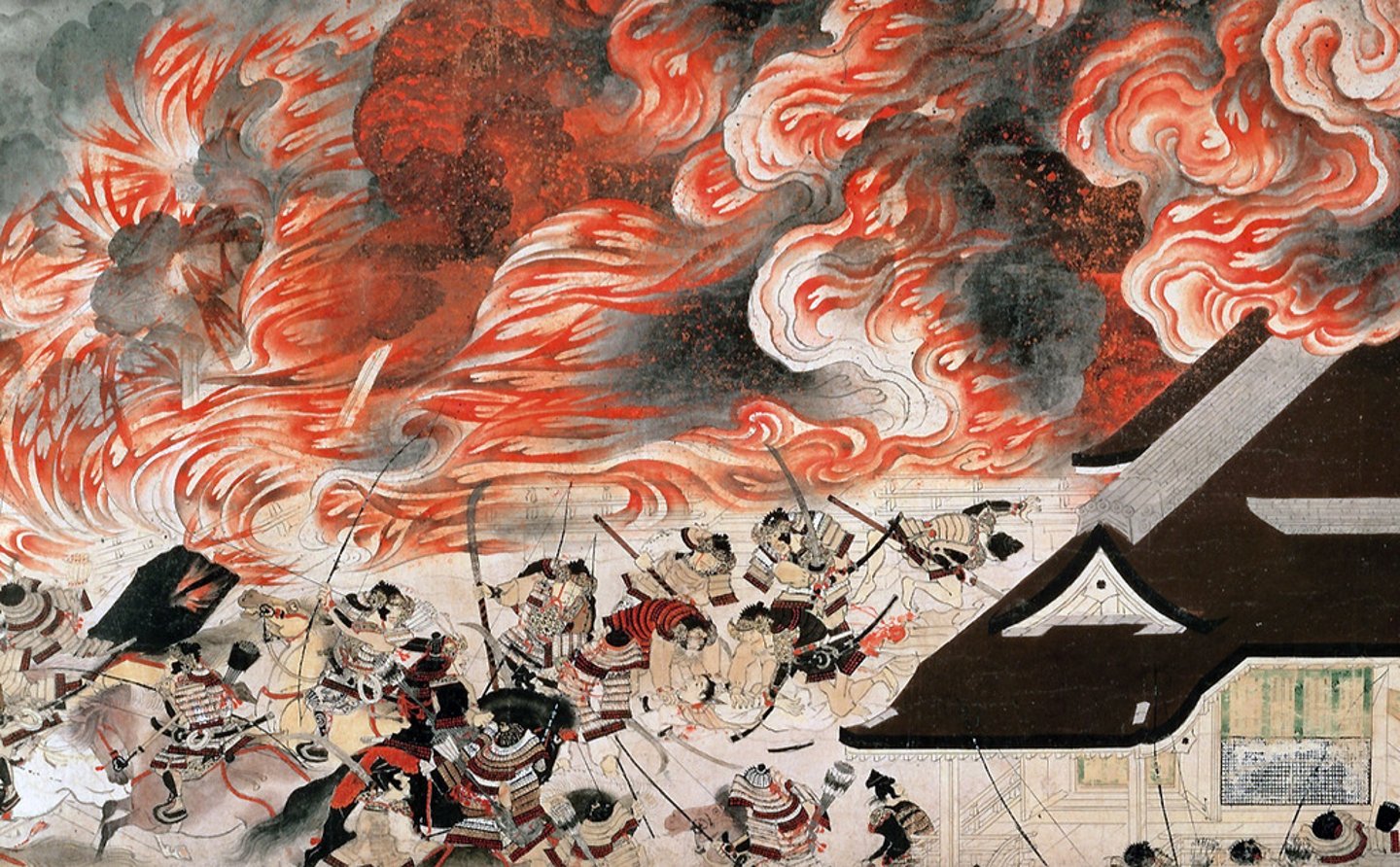
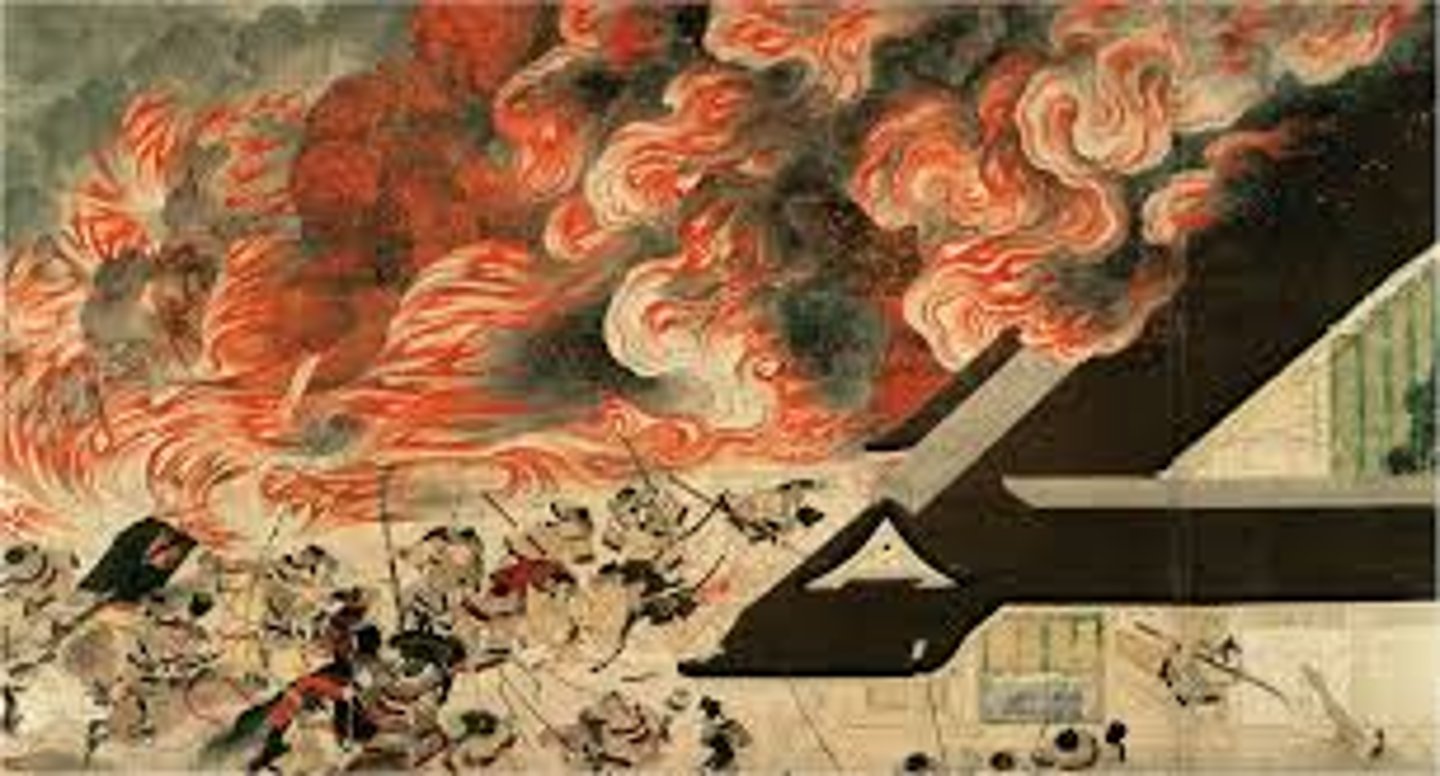
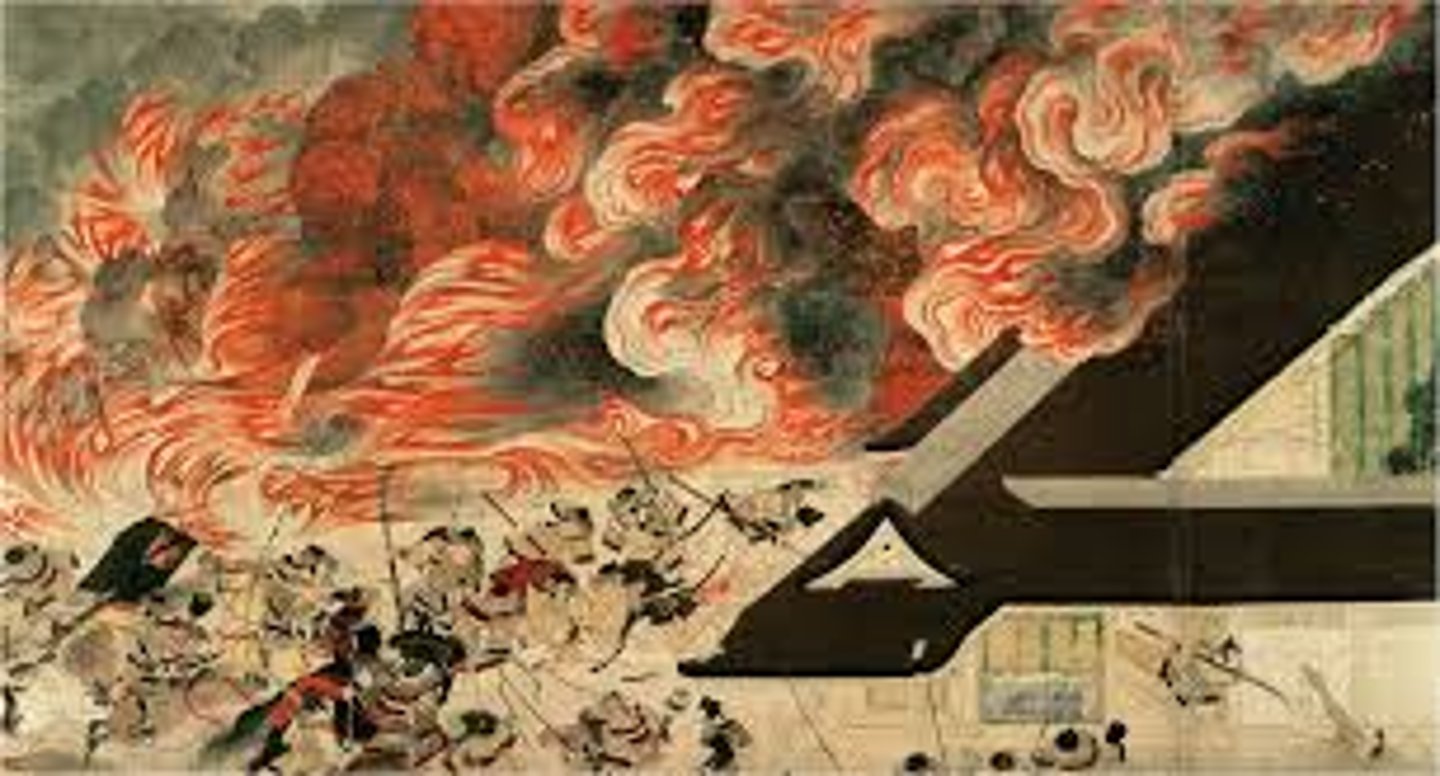
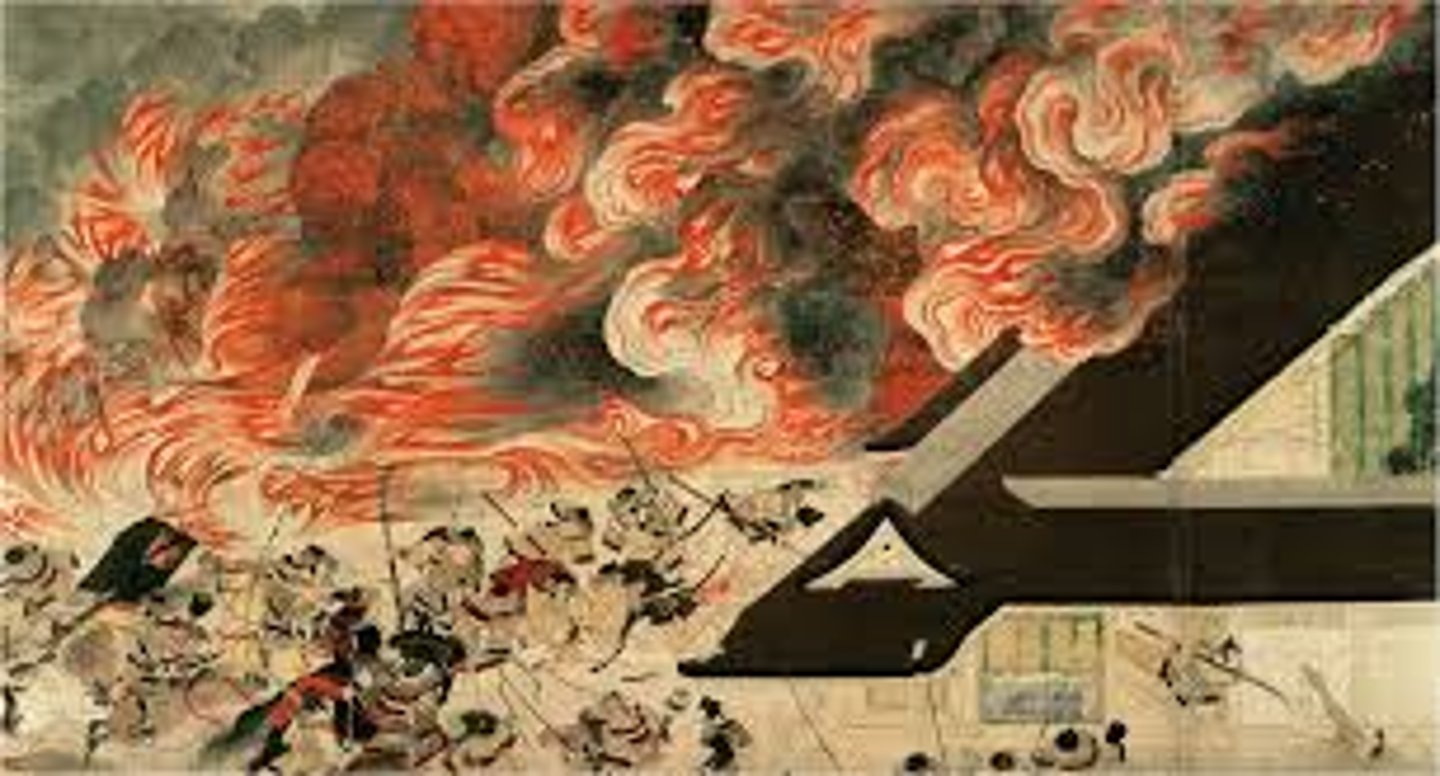
Heiji Rebellion (1160)
an event depicted in a series of scrolls, including Night Attack on the Sanjo Palace. Conflict between the Minamoto and Taira clans.
Minamoto Clan
Defeated the rival Taira family in Gempei Wars and established military government (bakufu) in 12th century Japan
Fujiwara no Nobuyori
He orchestrated the Night Attack that abducted the Emperor Nijo and retired emperor Go-Shirakawa who were supported by the Taira clan; He was supported by Minamoto clan.
Taira Clan
Powerful Japanese family in 11th and 12th centuries; competed with Minamoto family; defeated after Gempei Wars.
Rinpa School
major historical schools of Japanese painting. It was created in 17th century Kyoto, paint in shiny gold; big screens, dividers, asymmetrical designs
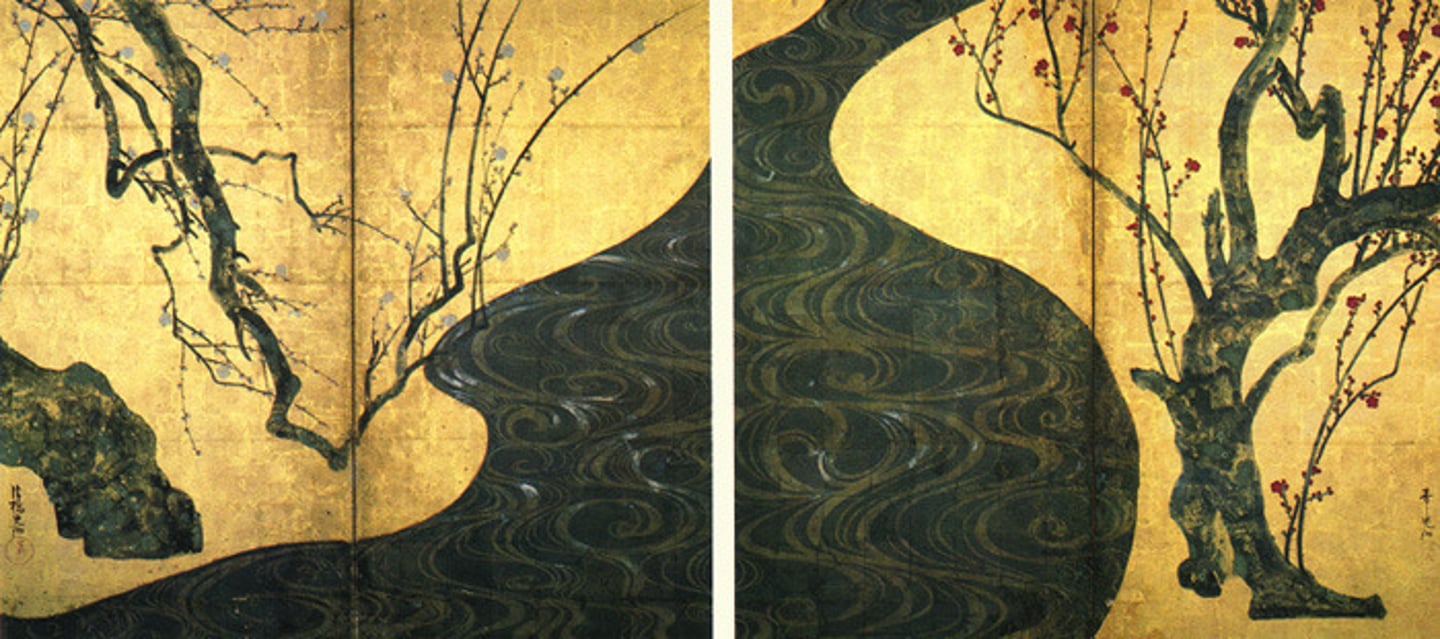
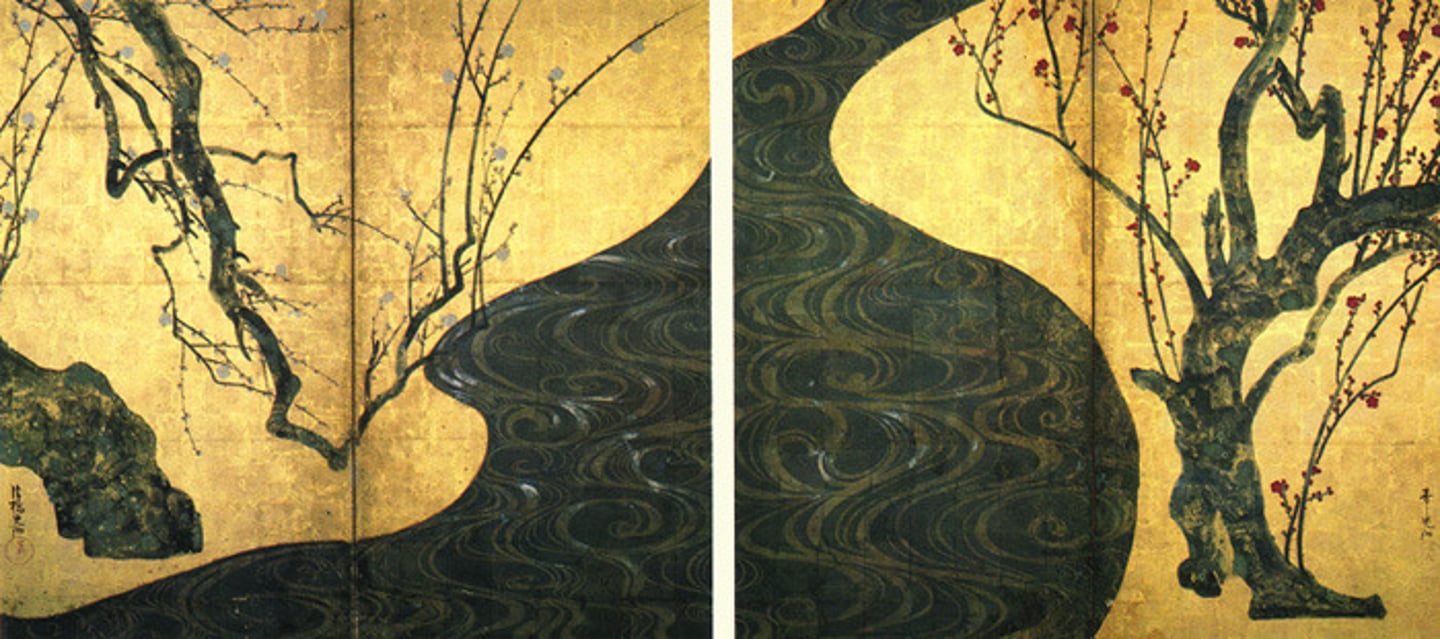
Ogata Korin
Artist of White and Red Plum Blossoms
Zen Buddhism
a Buddhist sect that emphasizes enlightenment through meditation and stresses simplicity and discipline
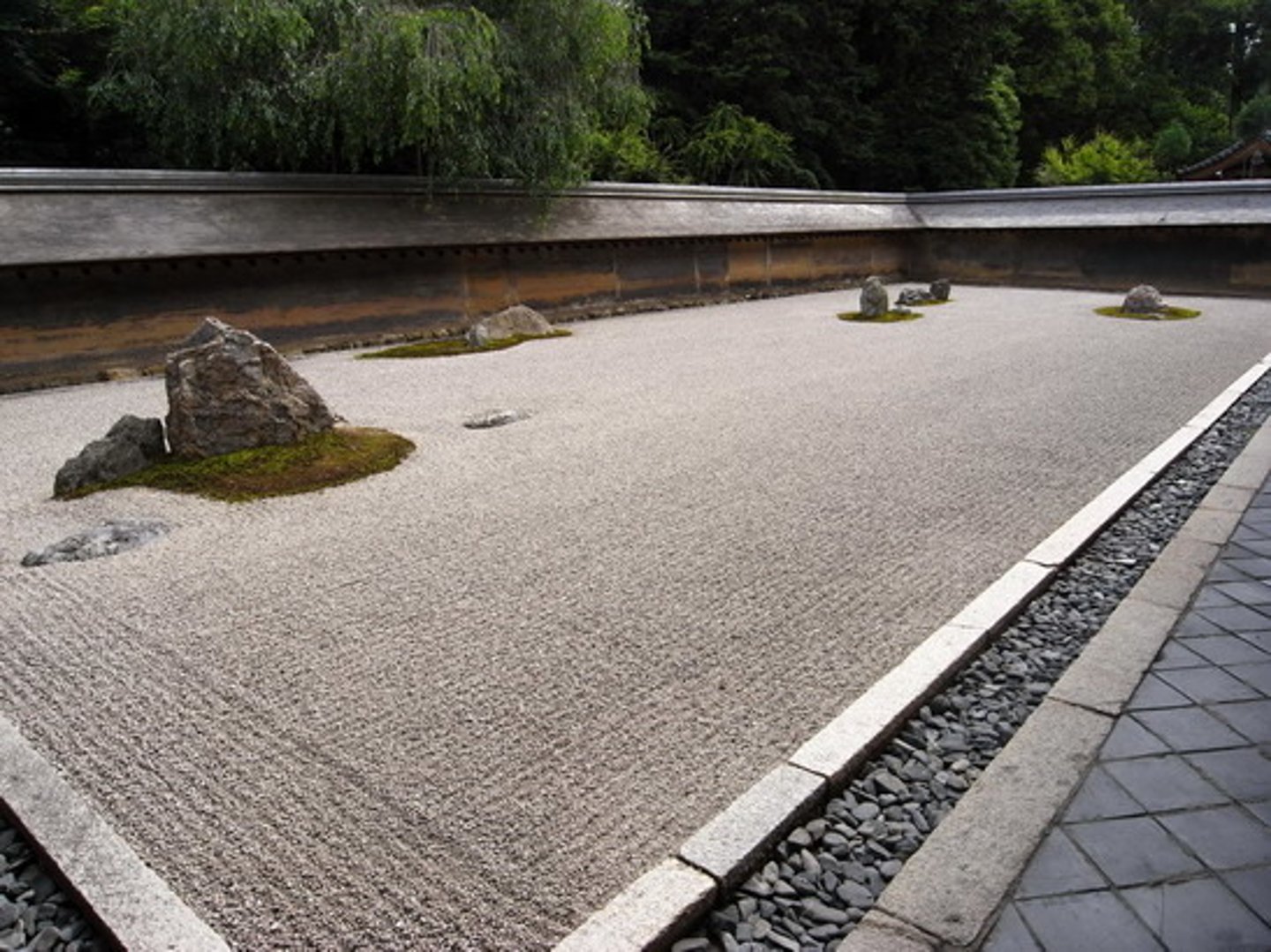
ukiyo-e prints
is a genre of Japanese woodblock prints (or woodcuts) and paintings produced between the 17th and the 20th centuries, featuring motifs of landscapes, tales from history, the theatre, and pleasure quarters. It is the main artistic genre of woodblock printing in Japan.

Mandala
a sacred diagram of the universe, often involving a square and a circle
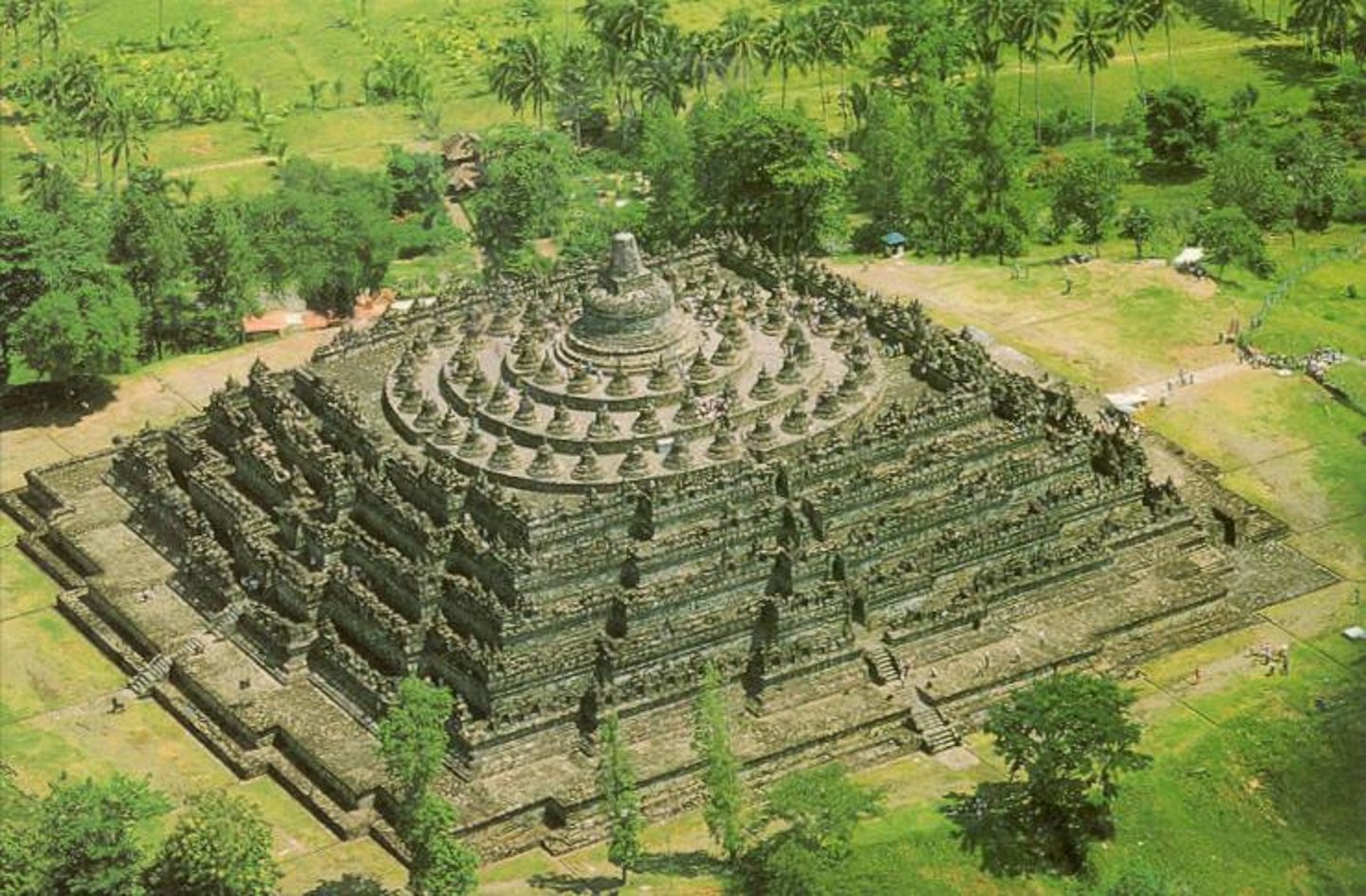
Gunadharma
Designed the Temple of Borobudur around 800 CE as a monument to Buddha
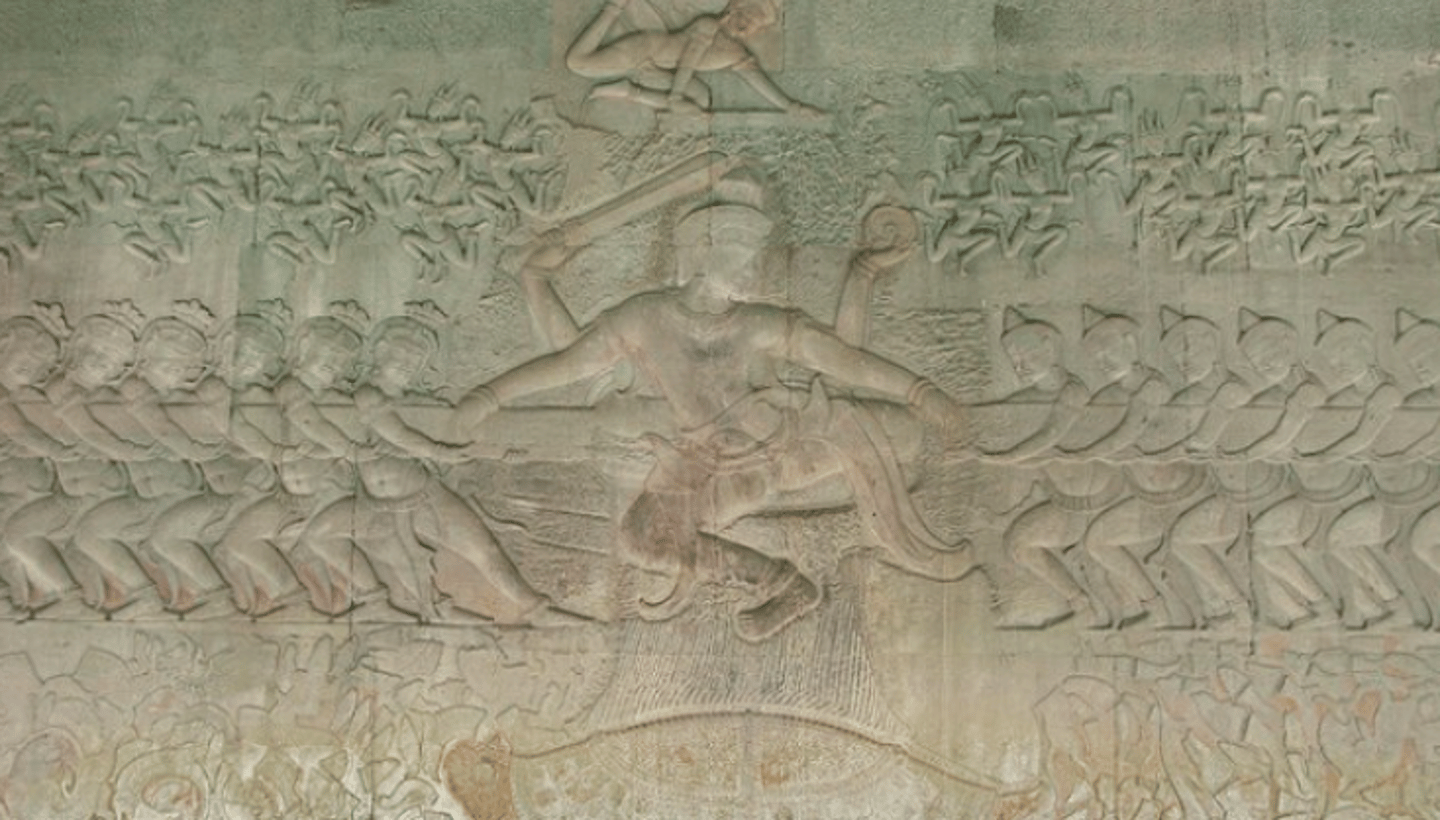
Churning of the Ocean of Milk
Part of Angkor Wat.
Shows the Gods and demons churning the ocean of milk with a snake in order to get the Nectar of Immortality. The sculpture is also used to mark the times of the year; during the summer solstice, the Gods are completely in light, while the demons in shadow, and vice versa during the Winter Equinox.
Mount Meru
The mythic mountain thought to be at the center of the Buddhist cosmos and the dwelling place of the gods.
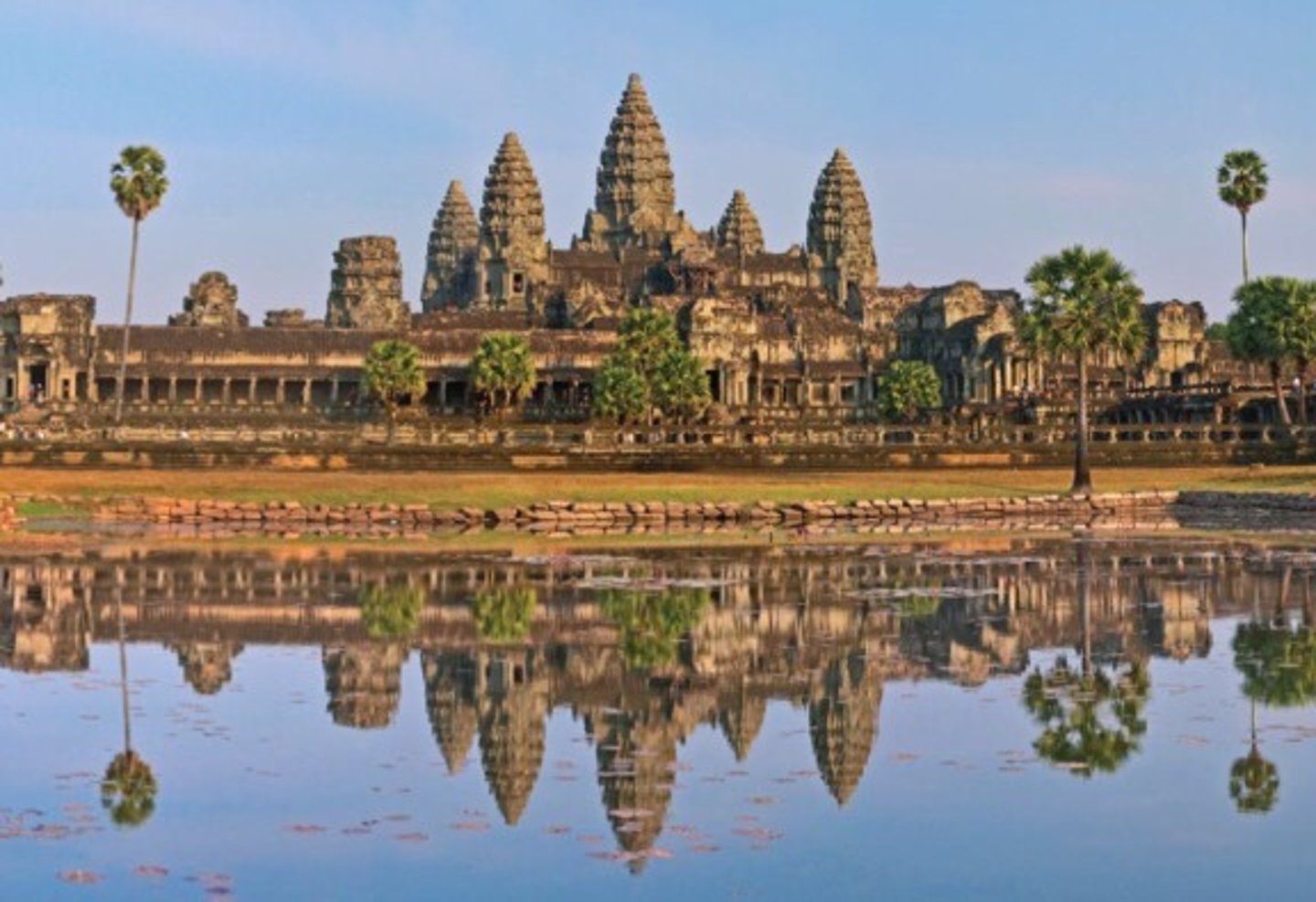
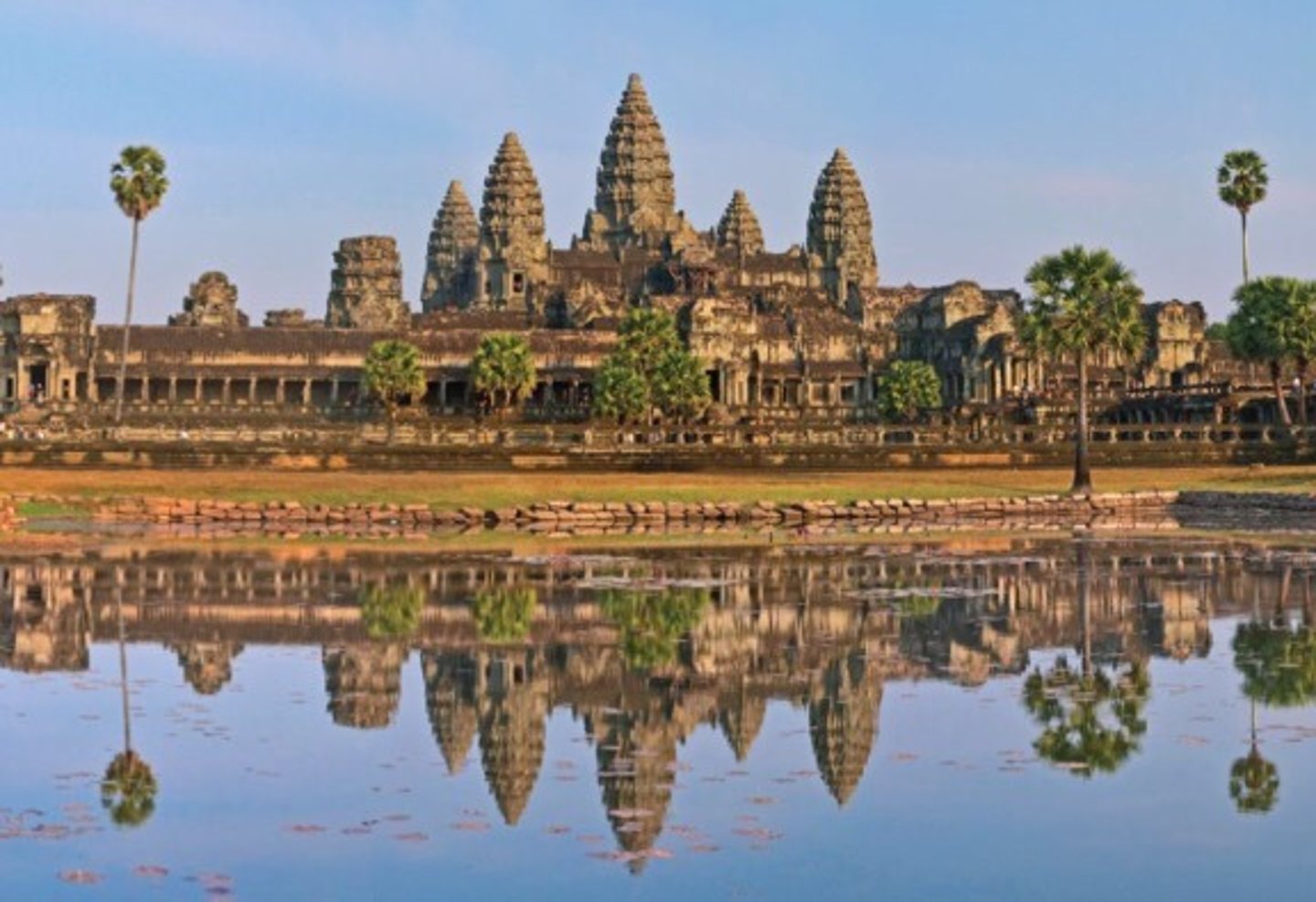
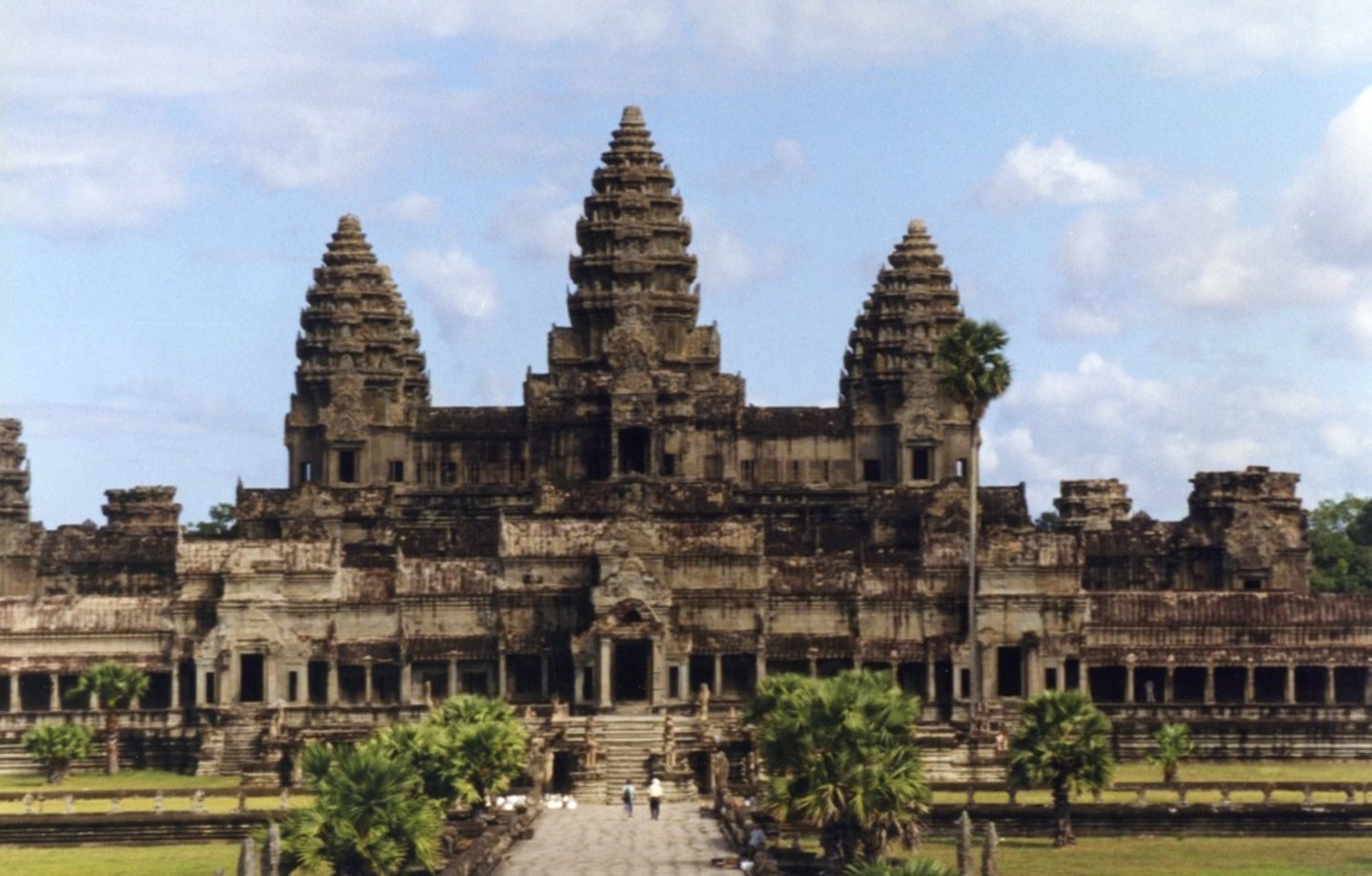
King Suryavarman II
built the great temple complex at Angkor Wat
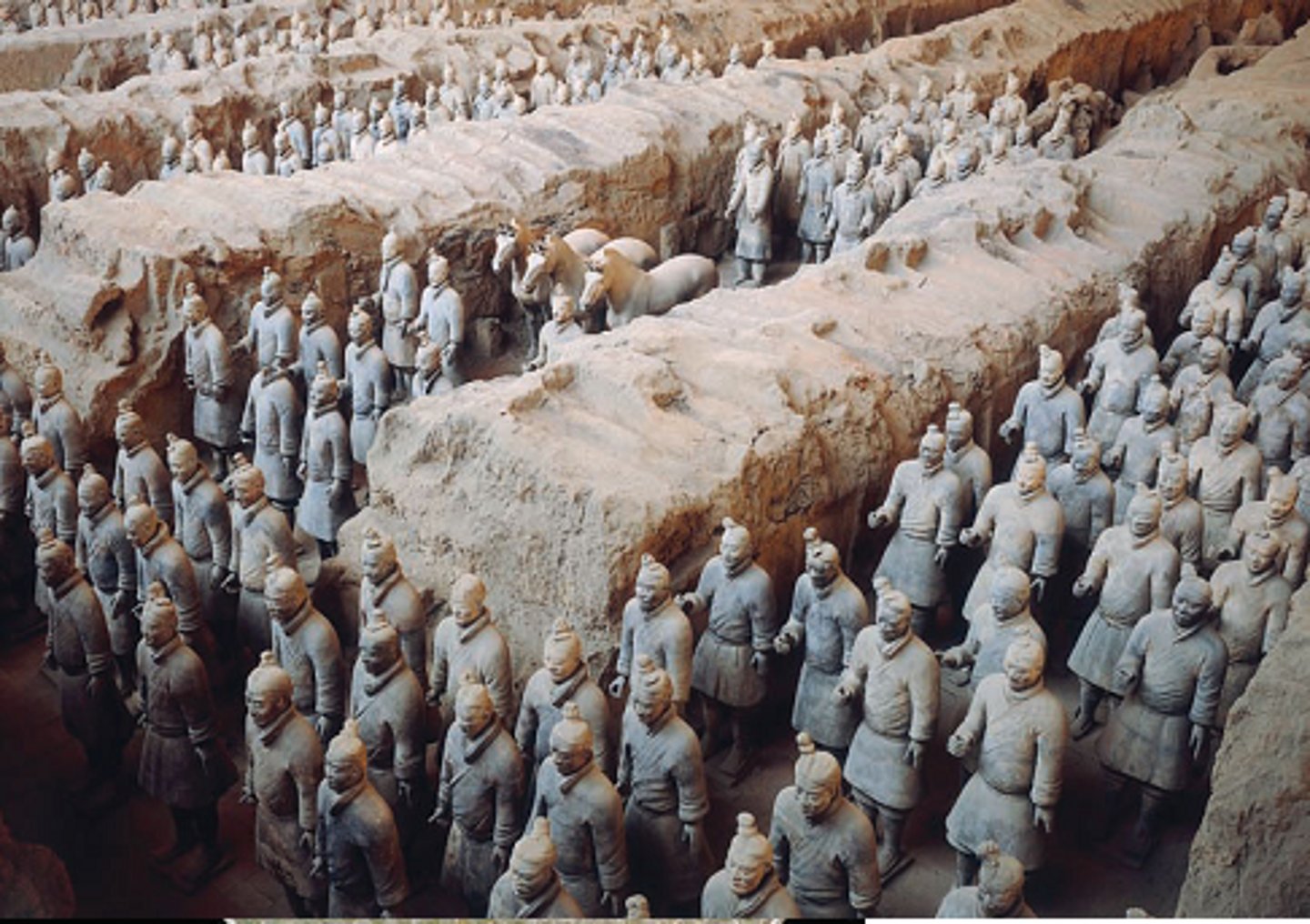
Terracotta warriors from the first Qin emperor of China
Dates: c. 221-209 B.C.E.
Culture: China, Qin Dynasty
Material: Painted terra cotta

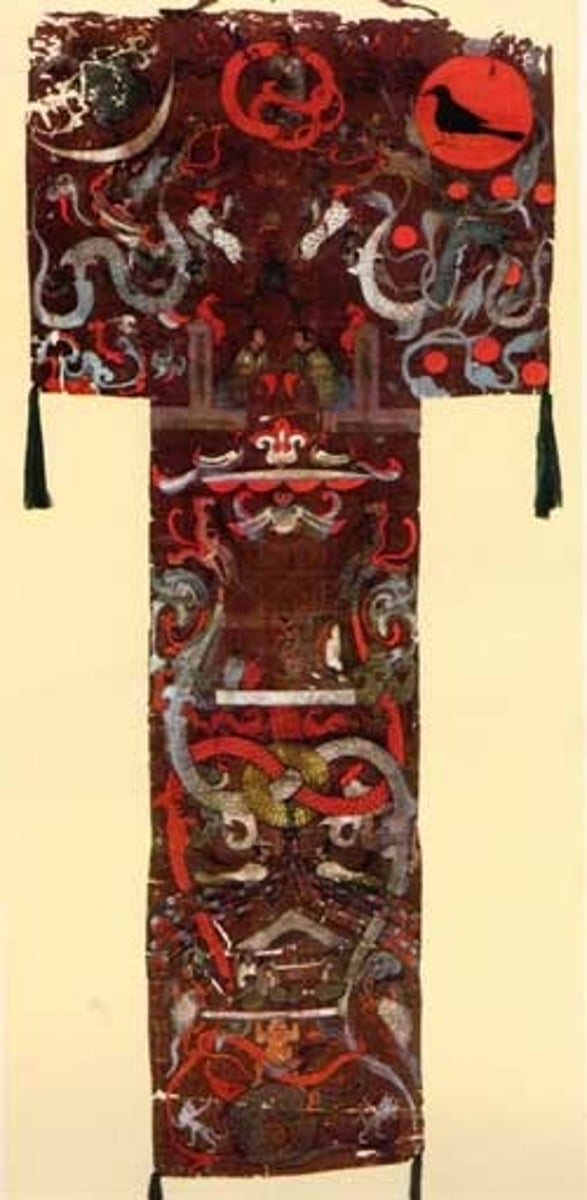
Funeral banner of Lady Dai (Xin Zhui)
Dates: c. 180 B.C.E.
Culture: China, Han Dynasty
Material: Painted silk
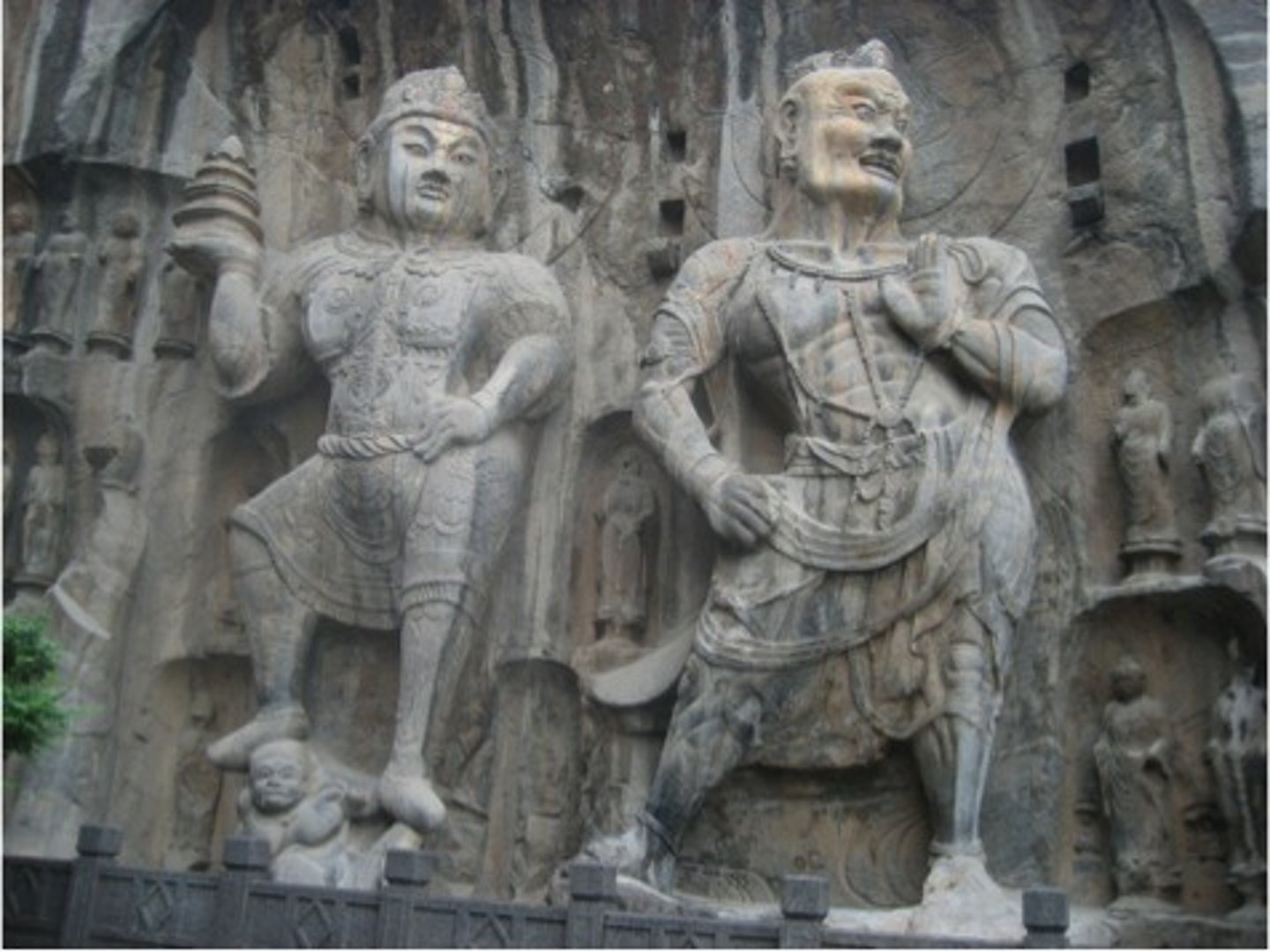
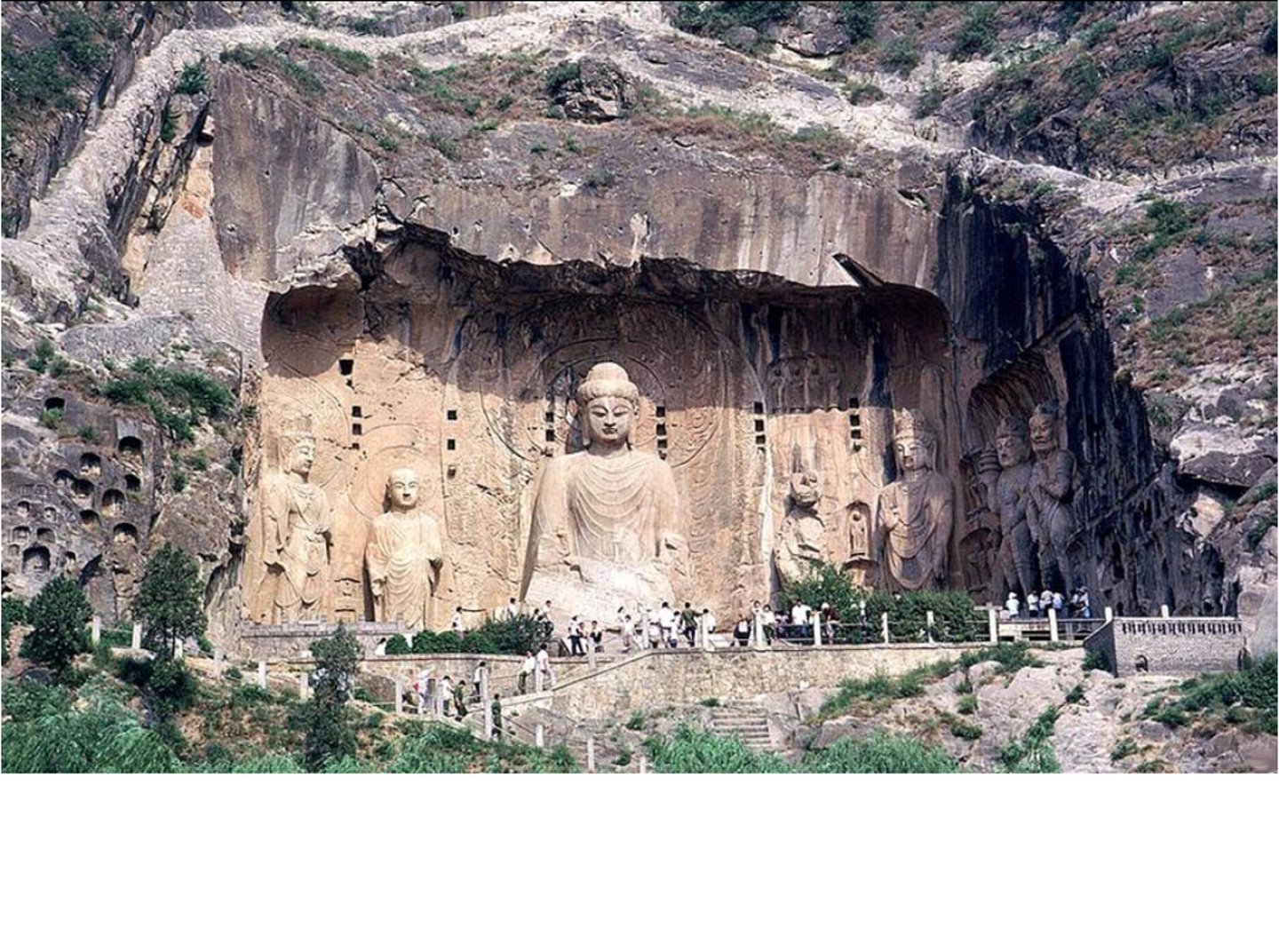
Longmen caves
Dates: 493-1127 C.E.
Culture: Luoyang, China. Late Northern Wei Dynasty to Tang Dynasty
Material: Limestone
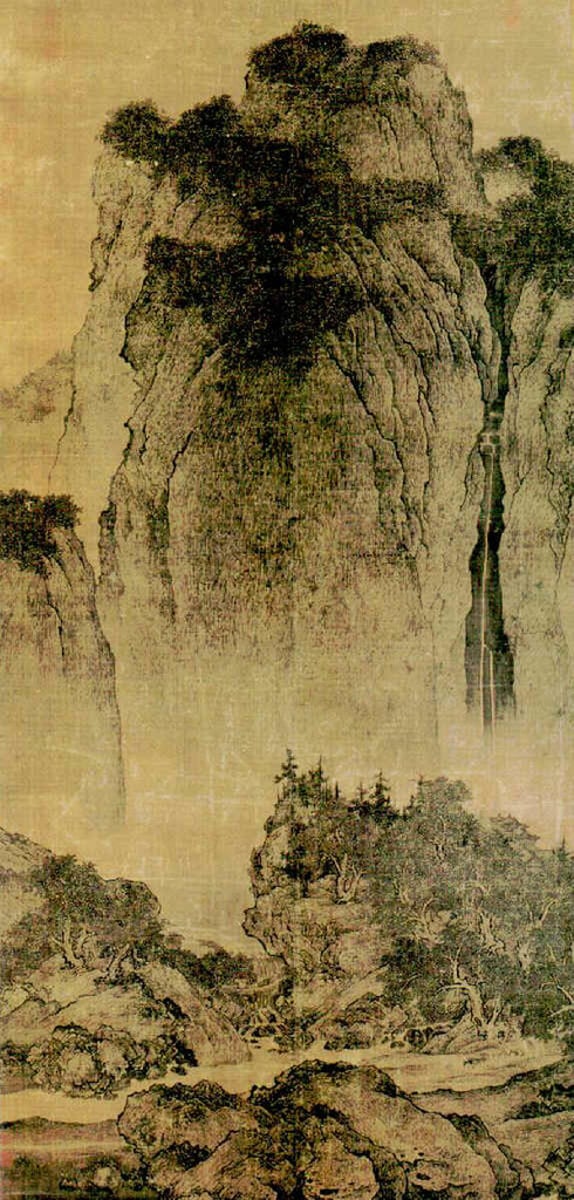
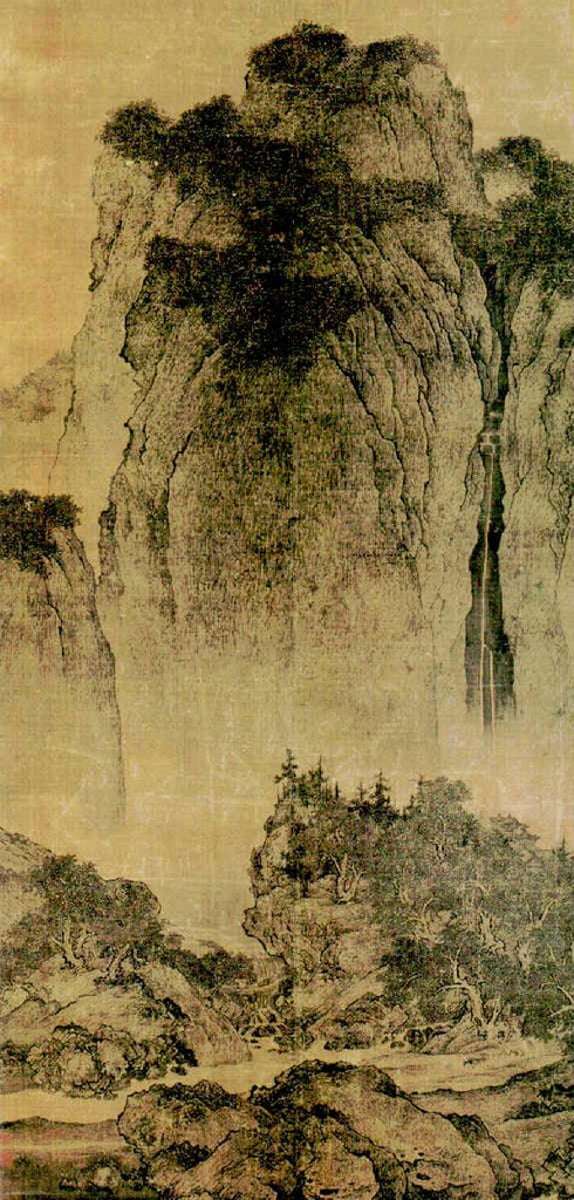
Travelers among Mountains and Streams
Artist: Fan Kuan
Period:
Dates: c. 1000 C.E.
Culture: China, Song Dynasty
Material: Ink on silk
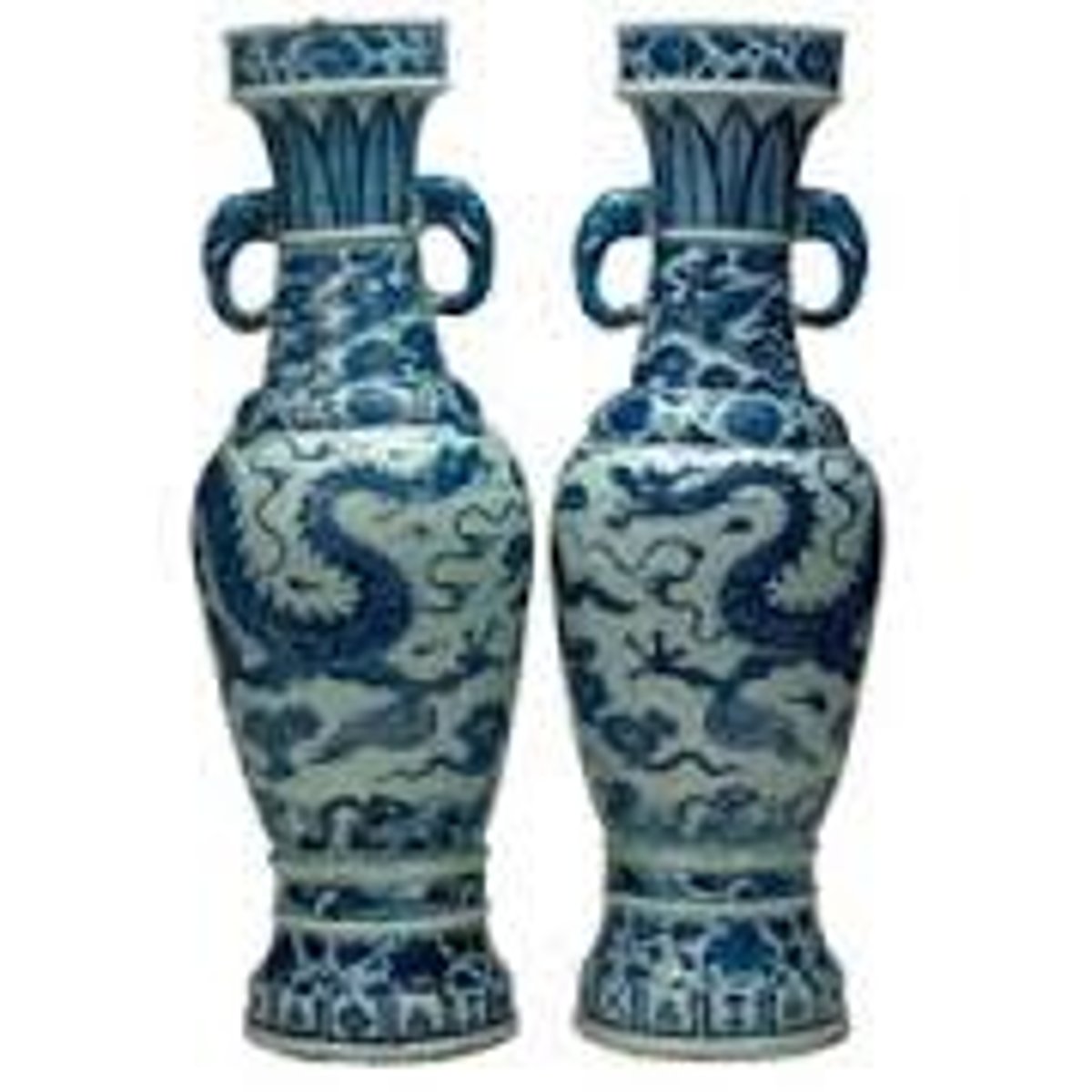
The David Vases
Dates: 1351 C.E.
Culture: Jingdezhen, China, Yuan Dynasty
Material: White porcelain with cobalt-blue underglaze
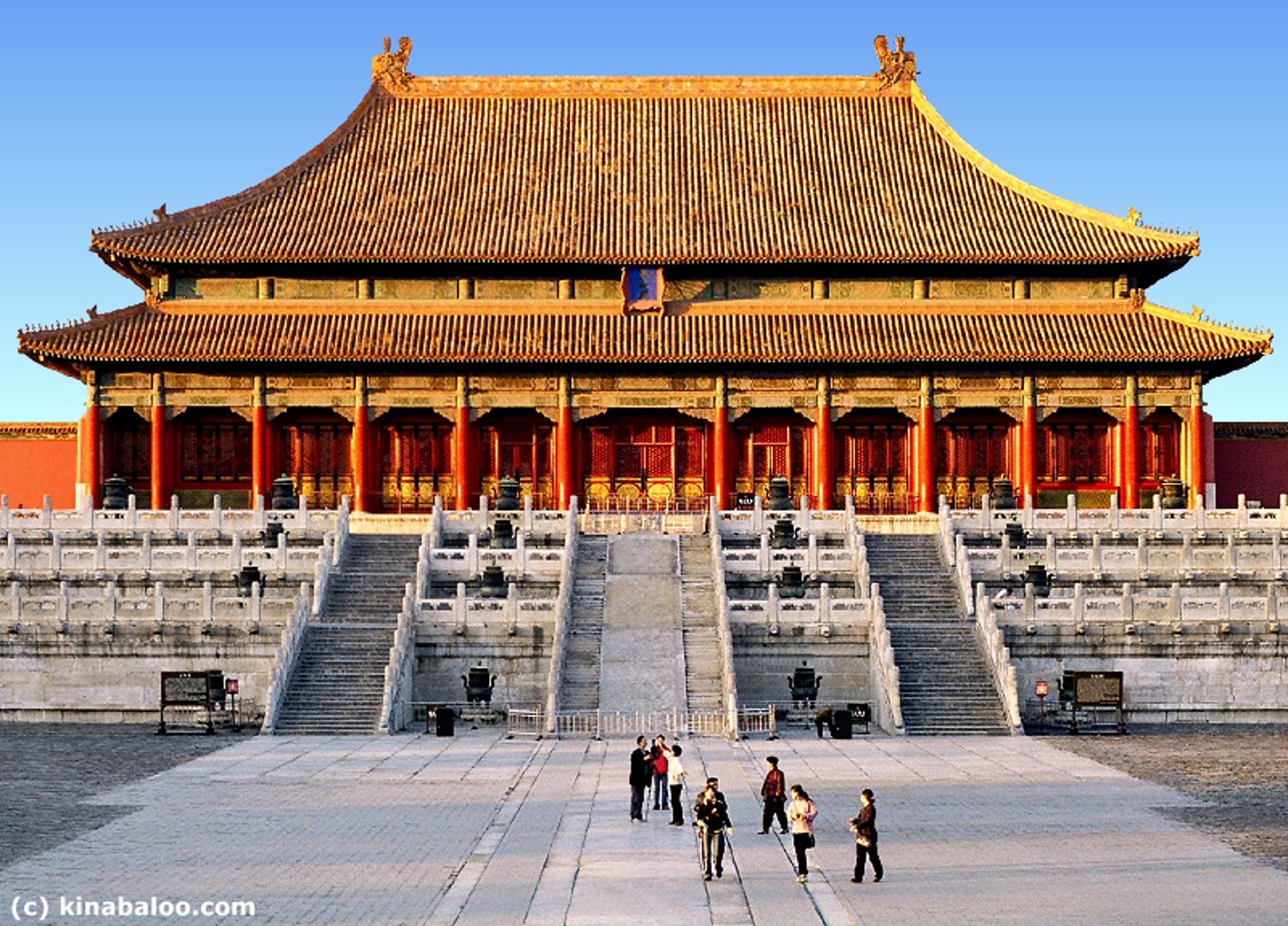
Forbidden City
Dates: 15th century C.E. and later
Culture: Beijing China. Ming Dynasty and Qing Dynasty
Material: Stonemasonry, marble, brick, wood and ceramic tile
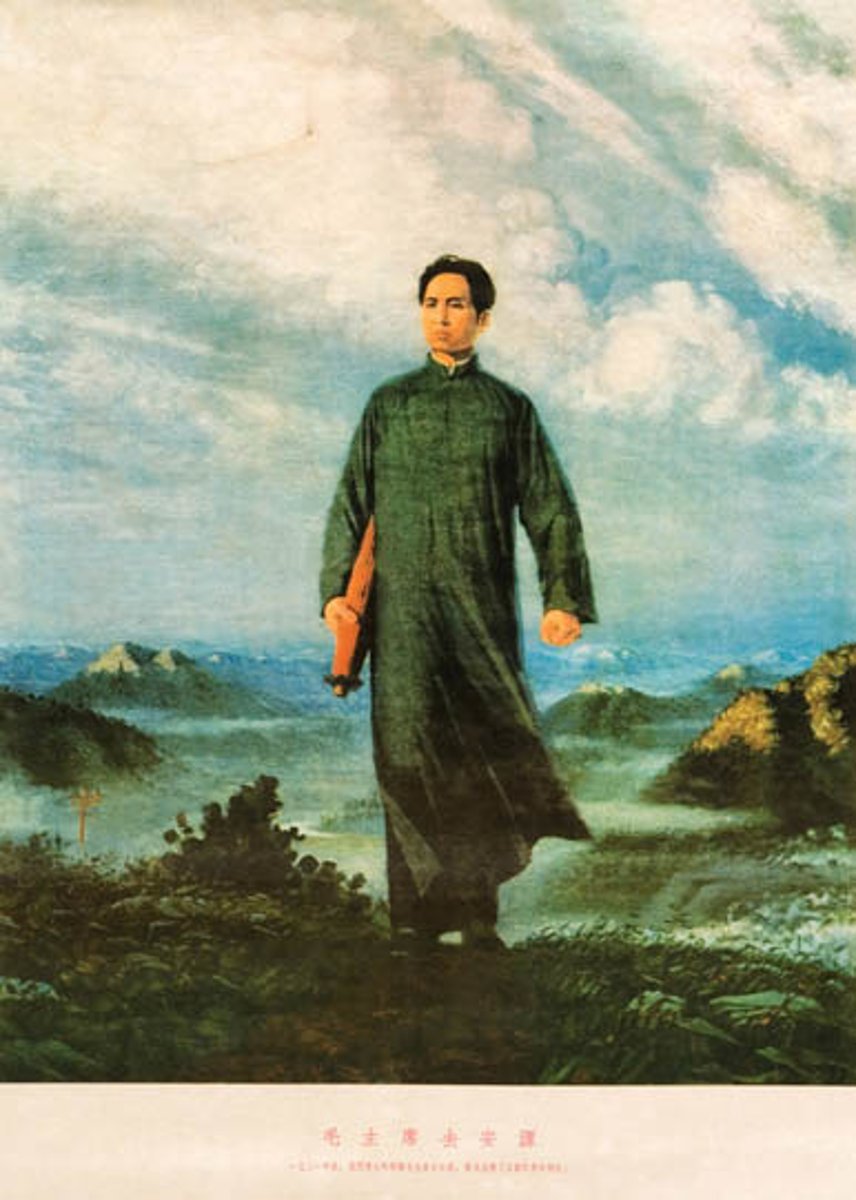
Chairman Mao en Route to Anyuan
Artist: Unknown; based on an oil painting by Liu Chunhua
Period:
Dates: 1969 C.E.
Culture: China
Material: Color lithograph
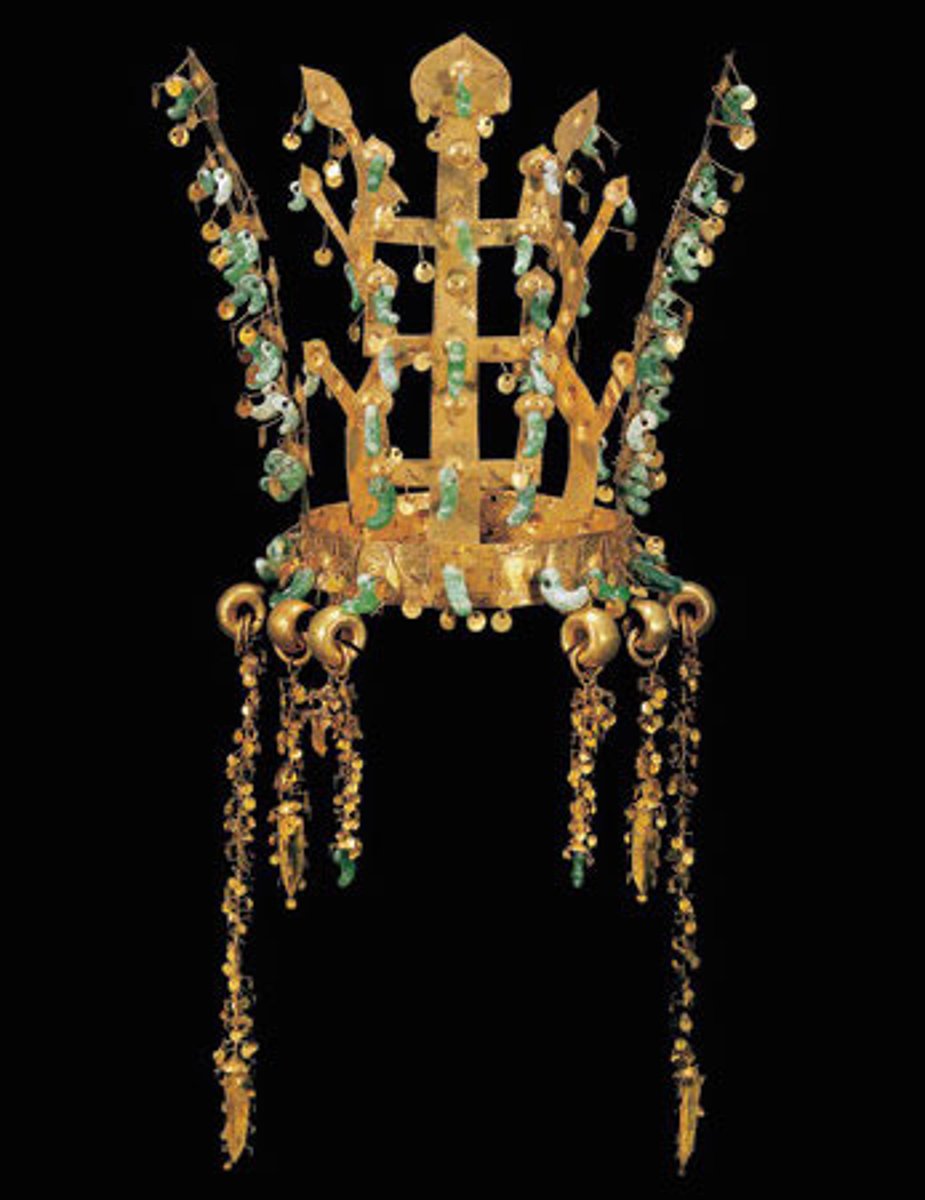
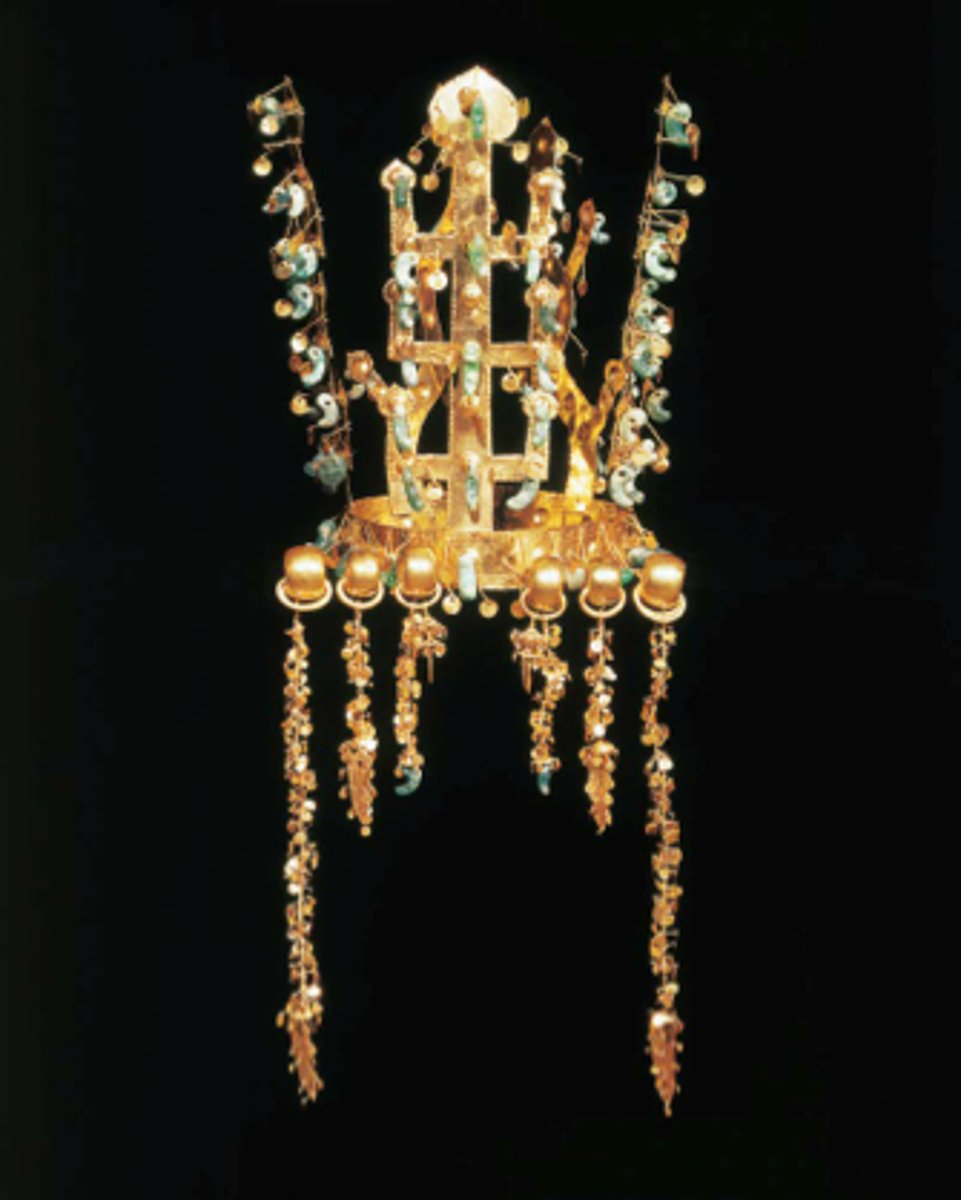
Gold and jade crown
Period: Three Kingdoms Period
Dates: 5th to 6th century C.E.
Culture: Silla Kingdom, Korea
Material: Metalwork
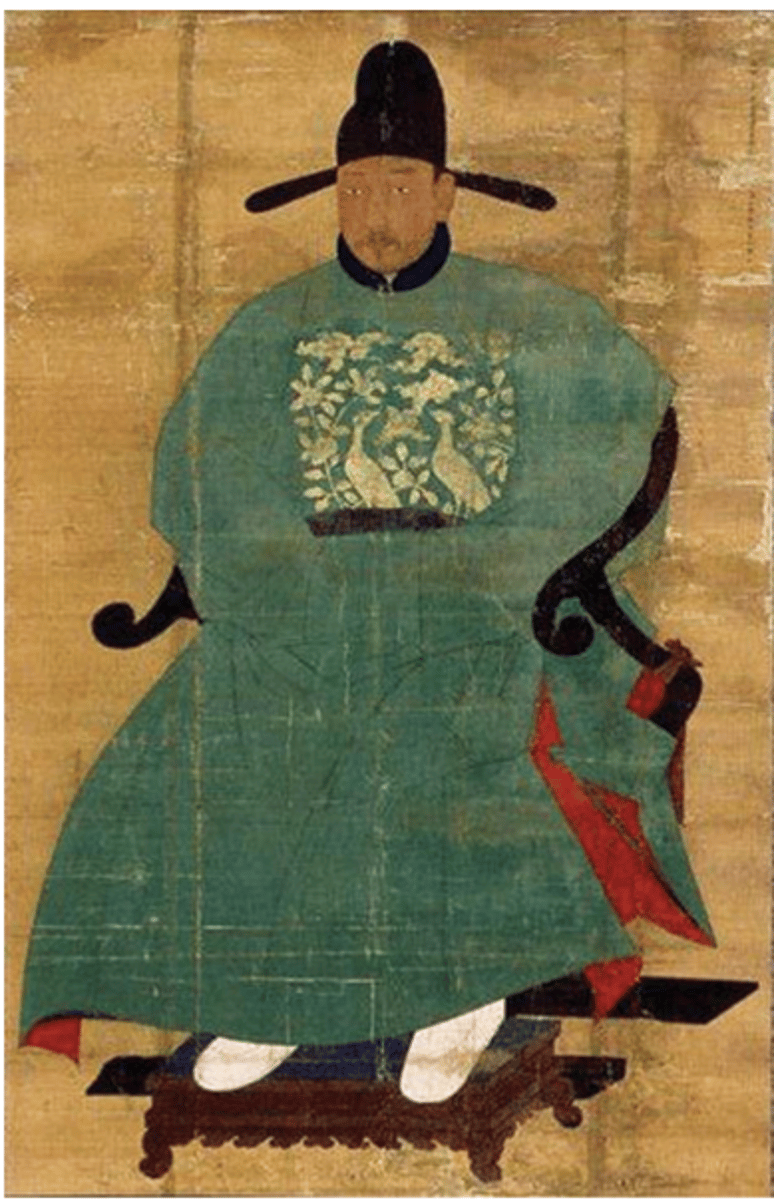
Portrait of Sin Sukju (1417-1475)
Artist: Imperial Bureau of Painting
Period:
Dates: c. 15th century C.E.
Culture: Korean, Joseon dynasty
Material: Hanging scroll (ink and color on silk)
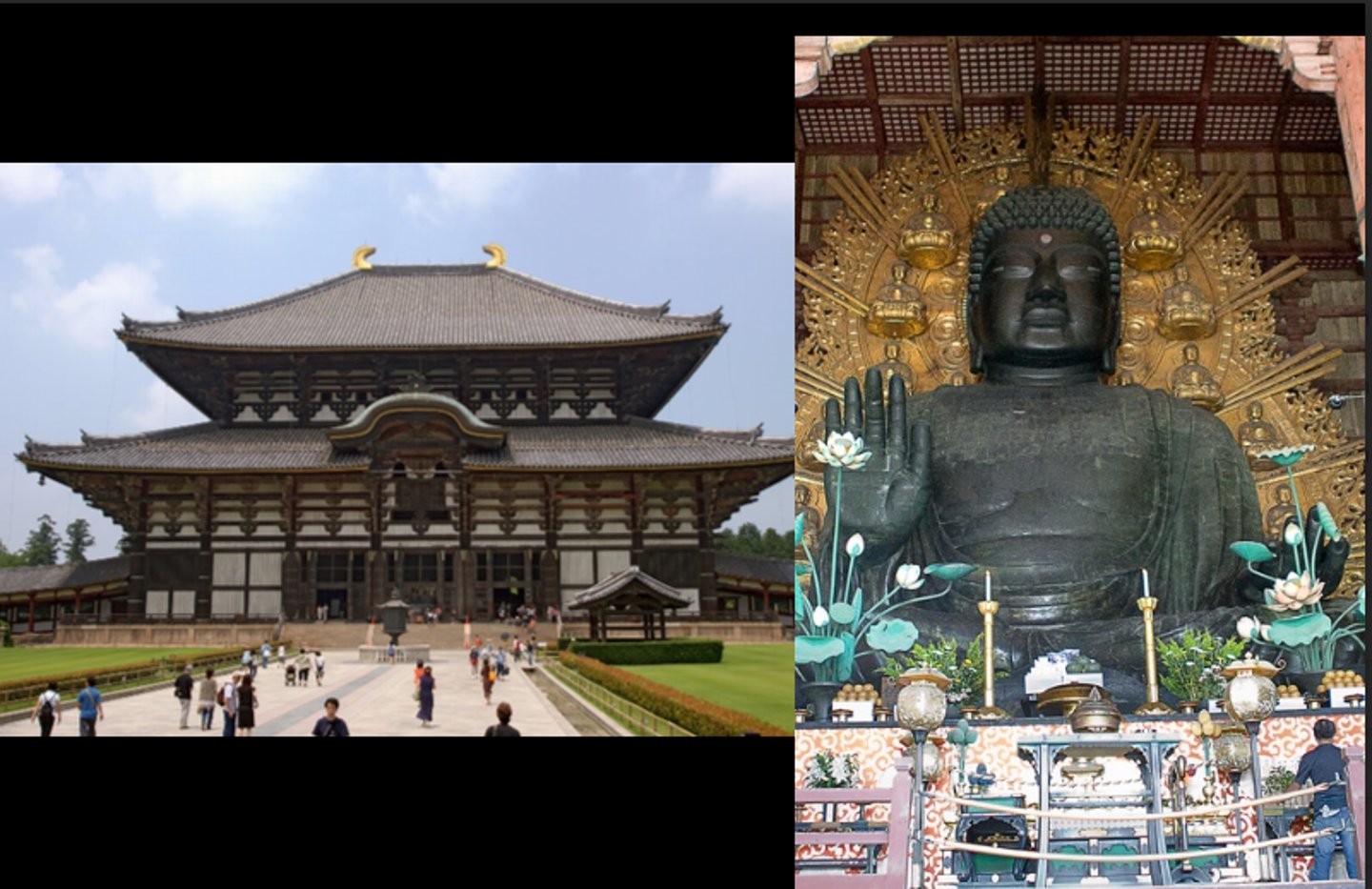
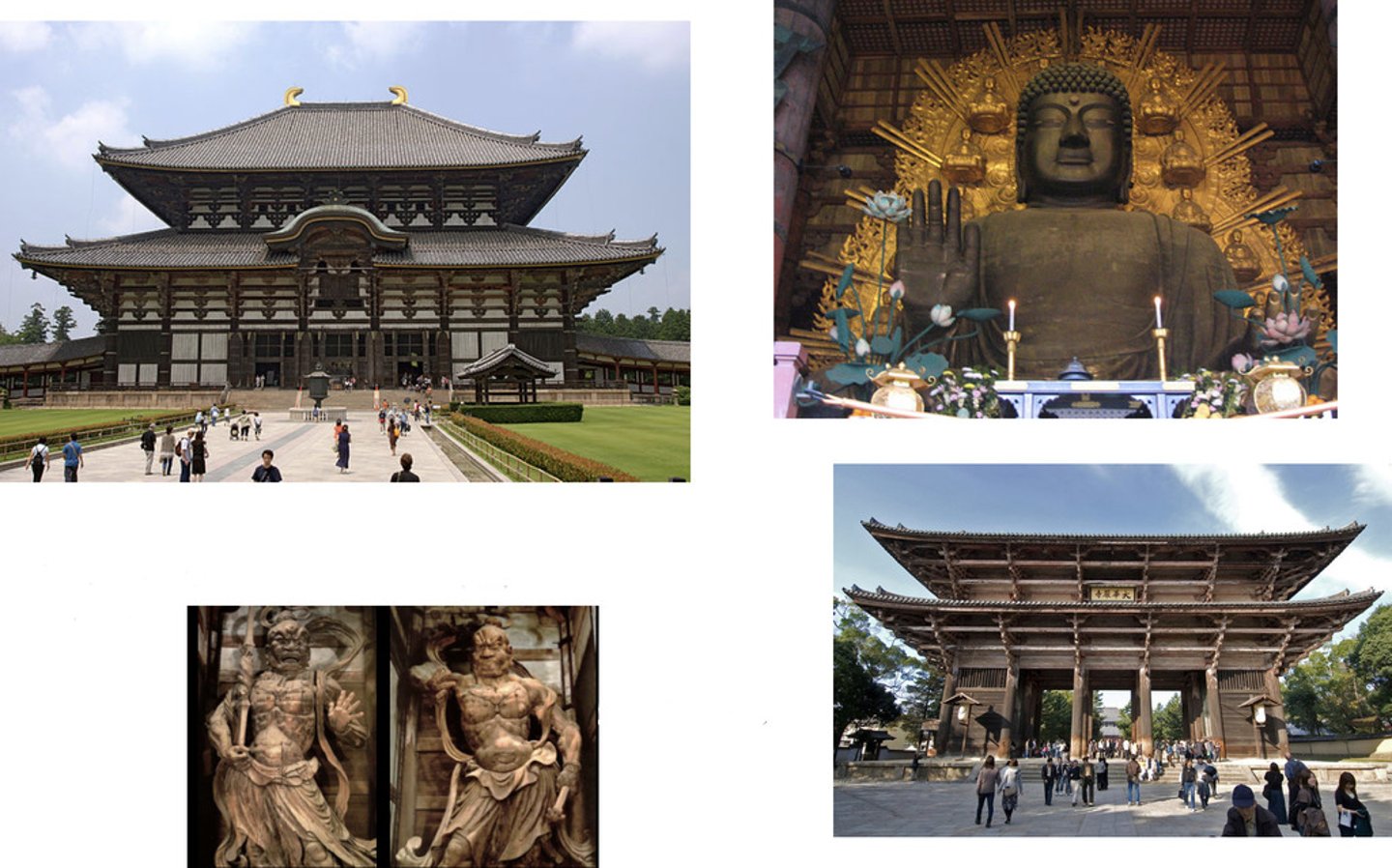
Todai-ji (Great Eastern Temple)
Artist: Various artists including sculptors Unkei and Kaikei as well as the Kei School of Sculpture
Period:
Dates: 743 C.E.; rebuilt c. 1700 C.E.
Culture: Nara, Japan
Material: Bronze and wood (sculpture); wood with ceramic-tile roofing (architecture)
Night Attack on the Sanjô Palace
Period: Kamakura Period, Japan
Dates: c. 1250-1300 C.E.
Culture: Japan
Material: Handscroll (ink and color on paper)
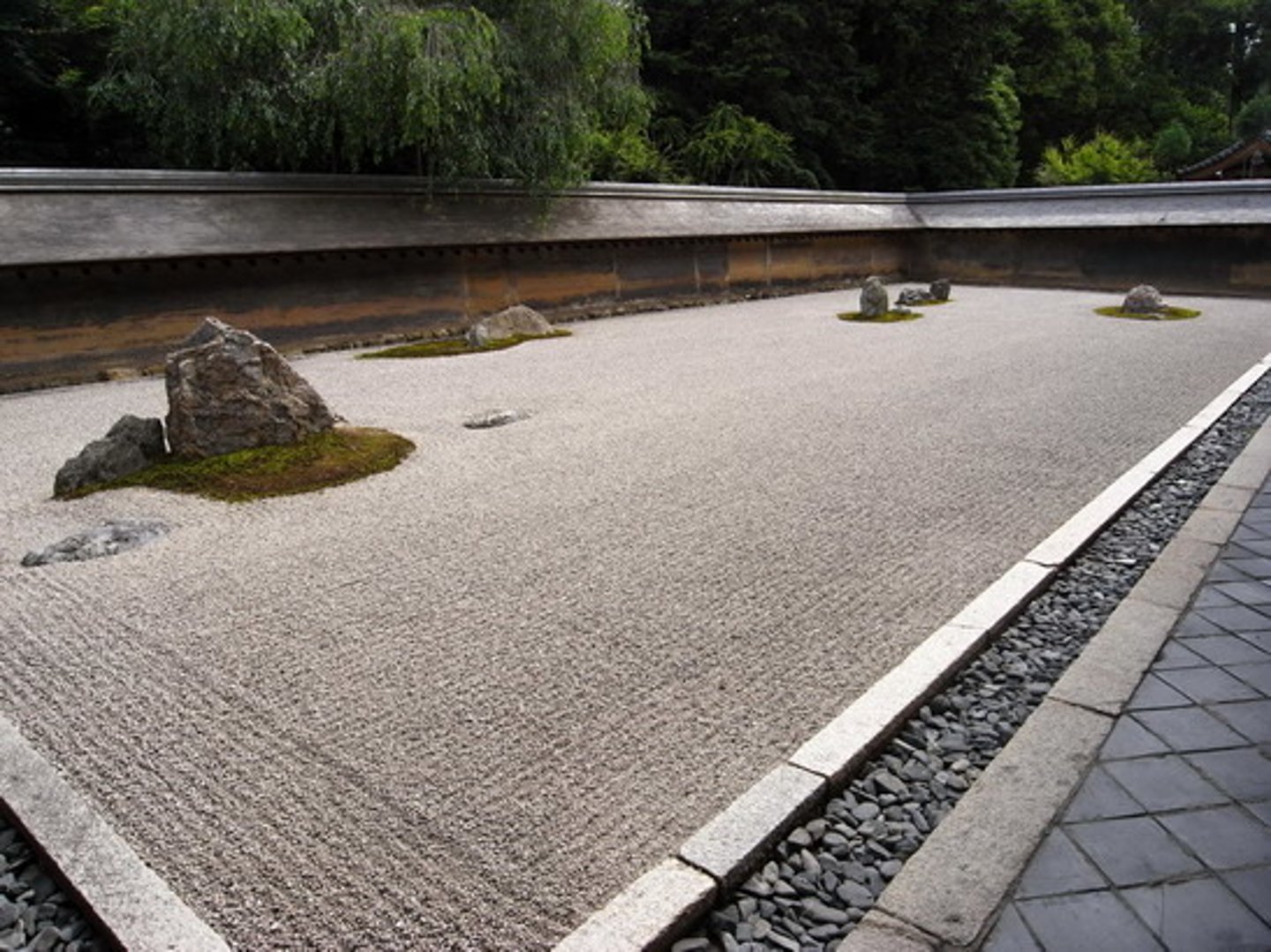
Ryoan-ji (Peaceful Dragon)
Period: Muromachi Period, Japan
Dates: c. 1480 C.E. current design most likely dates to the 18th century
Culture: Kyoto, Japan
Material: Rock garden
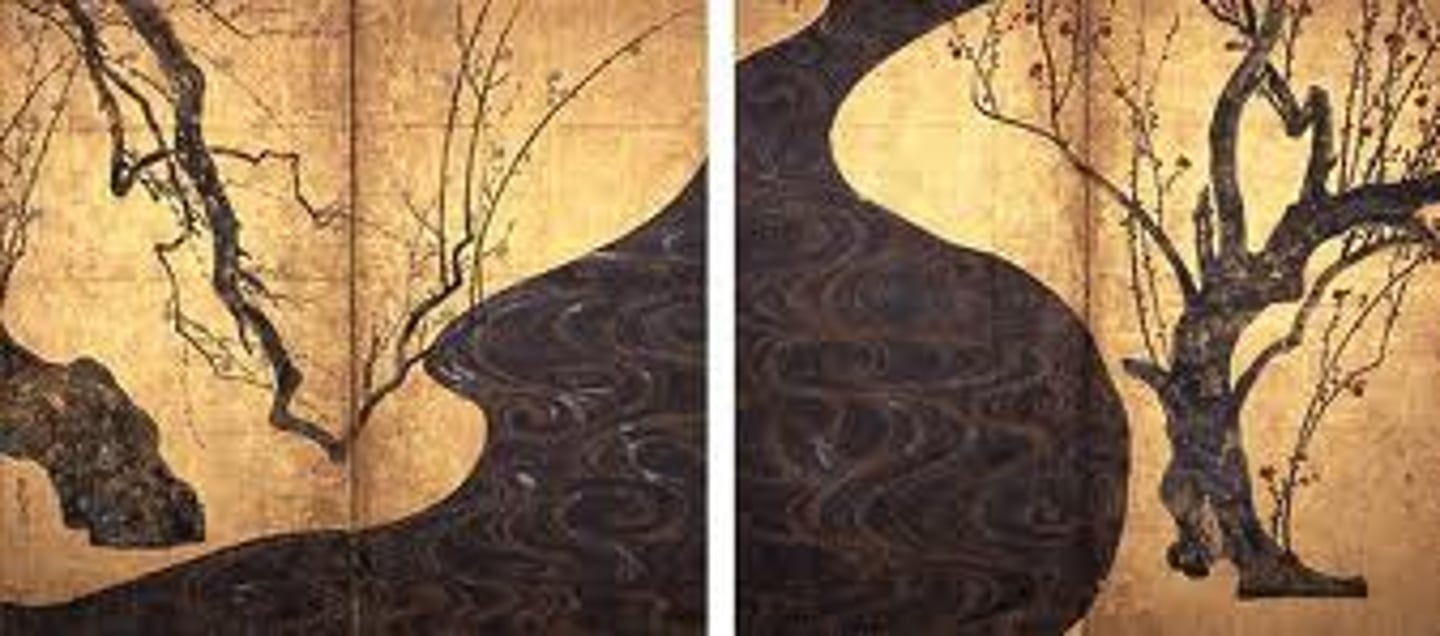
White and Red Plum Blossoms
Artist: Ogata Korin
Period:
Dates: c. 1710-1716 C.E.
Culture: Japan
Material: Ink, watercolor and gold leaf on paper
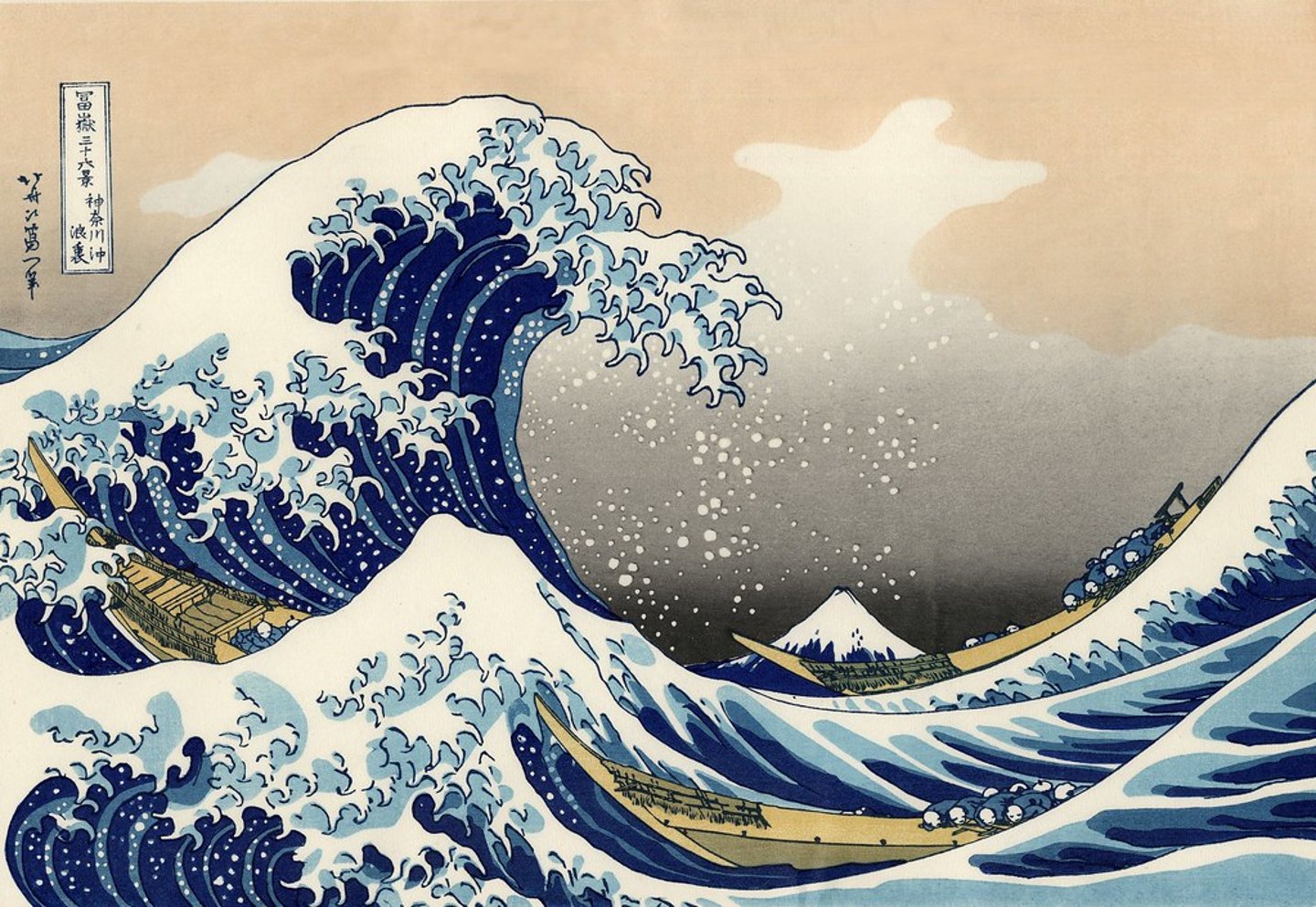
Under the Wave off Kanagawa (Kanagawa oki nami ura), also known as the Great Wave, from the series Thirty-six Views of Mount Fuji
Artist: Katsushika Hokusai
Period:
Dates: 1830-1833 C.E.;
Culture: Edo period, Japan
Material: Polychrome woodblock print; ink and color on paper
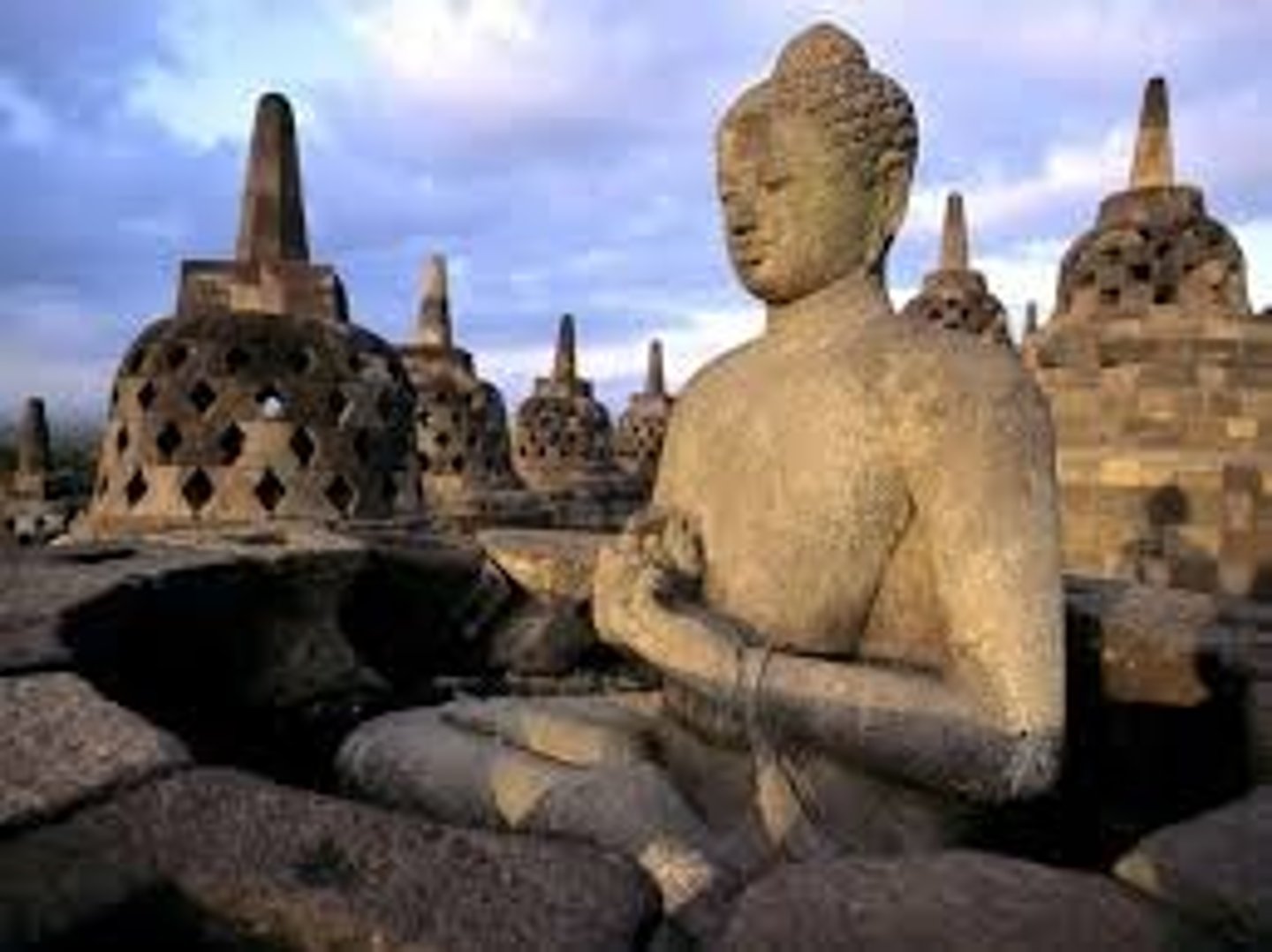
Borobudur Temple
Period: Sailendra Dynasty
Dates: c. 750-842 C.E.;
Culture: Central Java, Indonesia.
Material: Volcanic-stone masonry

Angkor, the temple of Angkor Wat, and the city of Angkor Thom, Cambodia
Dates: c. 800-1400 C.E.;
Culture: Cambodia, Hindu, Angkor Dynasty
Material: Stonemasonry, sandstone