6.2 gas exchange in single celled organisms and insects
 Call Kai
 Learn
Learn Practice Test
 Spaced Repetition
 Match
Match Flashcards
 Knowt Play
1/18

There's no tags or description
Looks like no tags are added yet.
Name | Mastery | Learn | Test | Matching | Spaced | Call with Kai | Chat |
|---|
No analytics yet
Send a link to your students to track their progress
19 Terms
exchange in single celled organisms (4)
small- large SA to volume ratio
oxygen absorbed by diffusion across body surface/co2 diffuses out
body surface only covered by a cell-surface membrane
if living cell is surrounded by a cell wall this is no barrier for gas diffusion
what problems do insects face with gas exchange?
increased SA needed for gas exchange, but conflicts with them conserving water
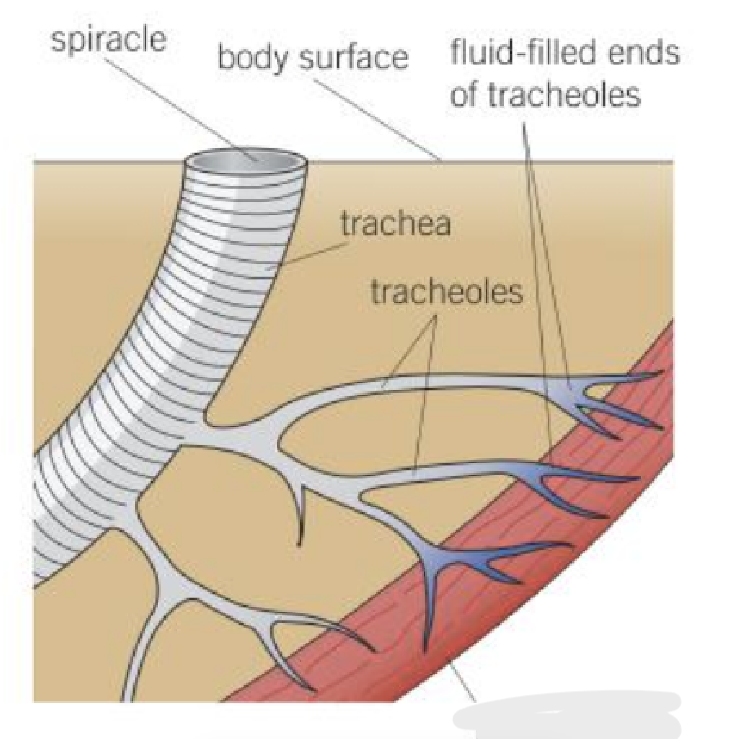
what is the missing term
muscle fibres
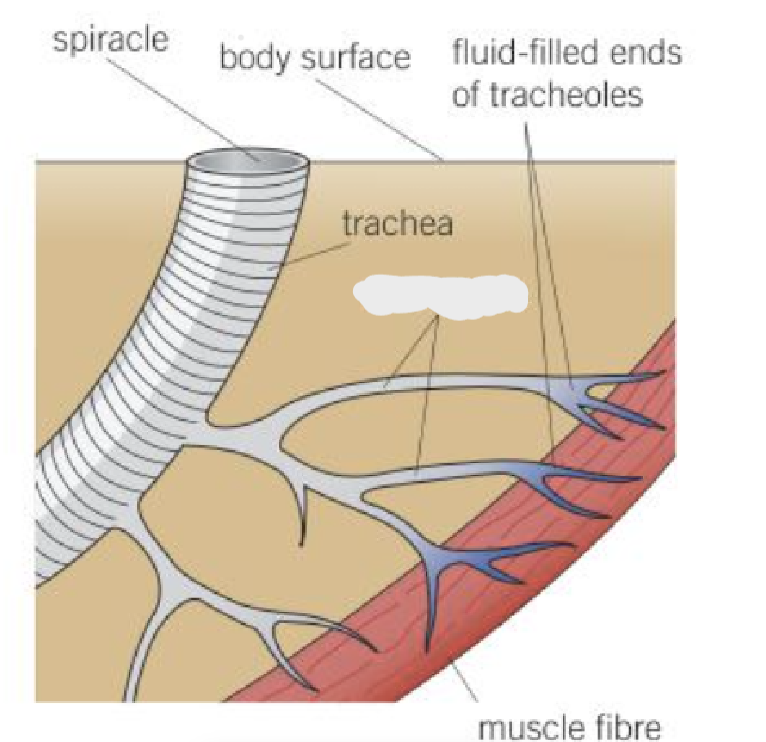
what is the missing term and what does it do
tracheoles- smaller dead end tubes. extend through all body tissues of insect.
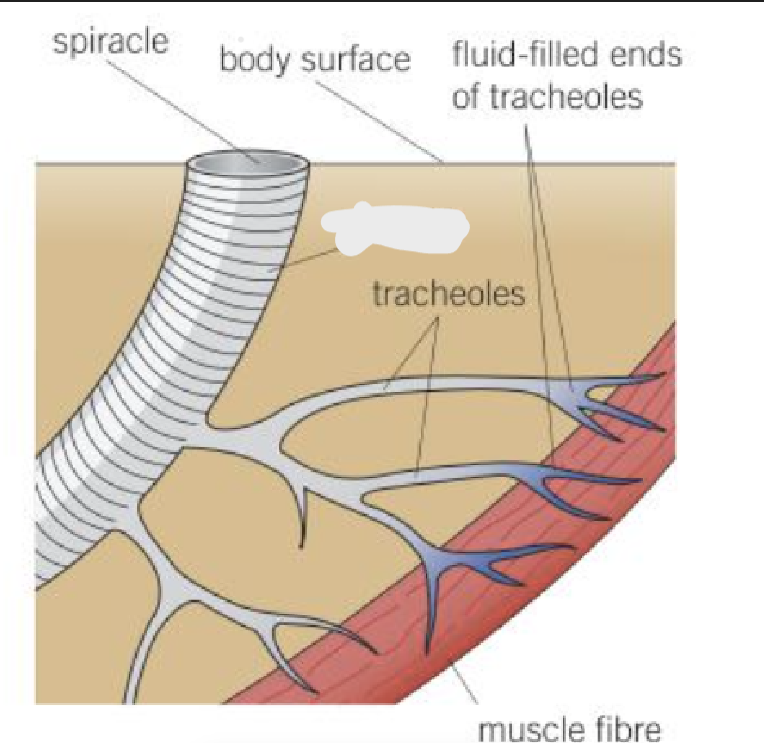
what is the missing term and what does it do
trachea- internal network of tubes. supported by strengthened rings to prevent from collapsing.
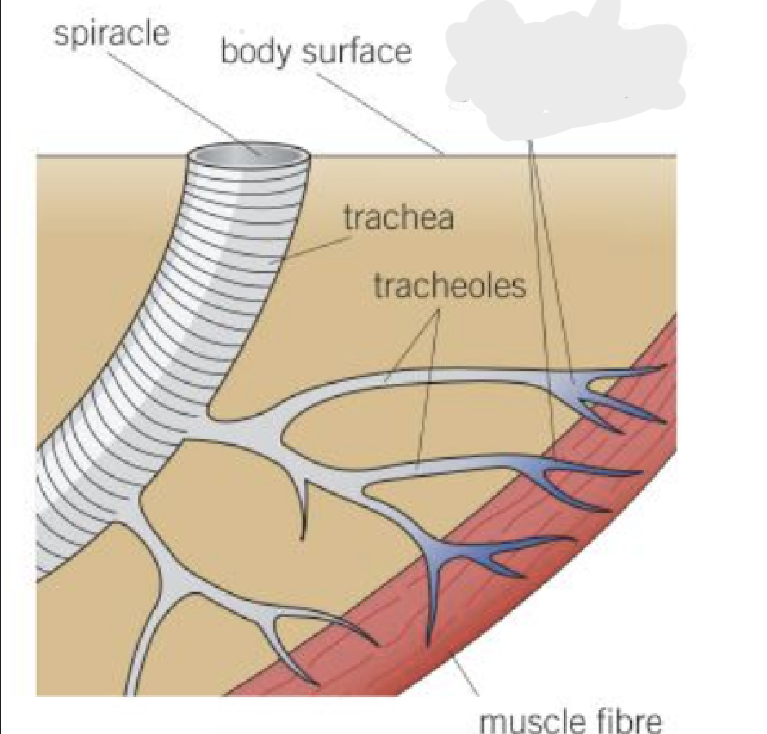
what is the missing term and what does it do
fluid filled ends of tracheoles
TRACHEAL SYSTEM- LONG ANSWER.
internal network of tubes- trachae, supported by strengthened rings to keep from collapsing
divide into smaller dead end tubes called tracheoles
tracheoles extend through all body tissues of insect
atmospheric air w oxygen brought directly to respiring tissues- bc short diffusion pathway from tracheole to any body cell
respiratory gases move in and out of tracheal system in 3 ways (simplified)
along a diffusion gradient
mass transport
ends of tracheoles are filled with water
how do respiratory gases move in and out of tracheal system along a diffusion gradient
when cells respire, o2 used up, decreasing conc at end of tracheoles
creates diffusion gradient, gaseous o2 diffuses from atmosphere through trachae and tracheoles to cells
CO2 produced by cells during respiration creating diffusion gradient in opposite direction
causes gaseous co2 to diffuse across tracheoles and trachae from cells into atmosphere
gases exchanged quickly as diffusion in air is more rapid than water.
explain how respiratory gases move in and out of tracheal system by mass transport
contraction of muscles in insects can squeeze the trachea
enabling mass movements of air in and out
this further speeds up exchange of respiratory gases
explain how respiratory gases move in and out of tracheal system using fluid-filled ends of tracheoles
during major activity, muscle cells around tracheoles respire and carry out aerobic respiration
produces lactate- soluble, lowers water potential of muscle cells
water moves into cells from tracheoles by osmosis
water in ends of tracheoles decreases and draws air further into them
final diffusion pathway is in a gas phase, diffusion is more rapid
increased rate at which air is moved in the tracheoles but leads to greater water evaporation
what are spiracles
tiny pores on the surface of insects
limitations of the tracheal system
relies mostly on diffusion to exchange gases between environment and cells
for diffusion to be effective, diffusion pathway must be short, which is why insects are small
as a result, length of diffusion pathway limits the size that insects can attain
what is the importance of a surface area to volume ratio?
larger the sa, the smaller the volume means efficient exchange across their body surface.
as organisms become larger, volume increases at larger rate than surface area, so simple diffusion of substances on outer surface is only for relatively inactive organisms
when is a specialised gas exchange surface needed
to increase sa to volume ratio in animals that are larger, e.g. gills in fish
the amount of oxygen needed by an organism is determined by what 4 things
number of living cells
rate they need to respire
volume of organism
activity levels
how do small organisms get all the oxygen they need?
diffusion through cell surface as they have a high surface area to volume ratio
why do large organisms need specialised exchange surfaces?
they have a small surface area to volume ratio. so the external surface area isn’t large enough for oxygen to diffuse through it rapidly enough to supply cells with the oxygen it needs.
5 adaptations of gas exchange surfaces
large sa to volume ratio, increases rate of exchange
very thin- short diffusion distance, materials cross exchange surface rapidly.
selectively permeable- allow selected materials to cross.
movement of environmental medium e.g. air to maintain diffusion gradient.
transport system- ensure movement of internal medium e.g blood to maintain diffusion gradient