SHS 300 - Velopharyngeal-Nasal System
 Studied by 4 people
 Call Kai
 Learn
Learn Practice Test
 Spaced Repetition
 Match
Match Flashcards
 Knowt Play
1/96

There's no tags or description
Looks like no tags are added yet.
Name | Mastery | Learn | Test | Matching | Spaced | Call with Kai |
|---|
No study sessions yet.
97 Terms
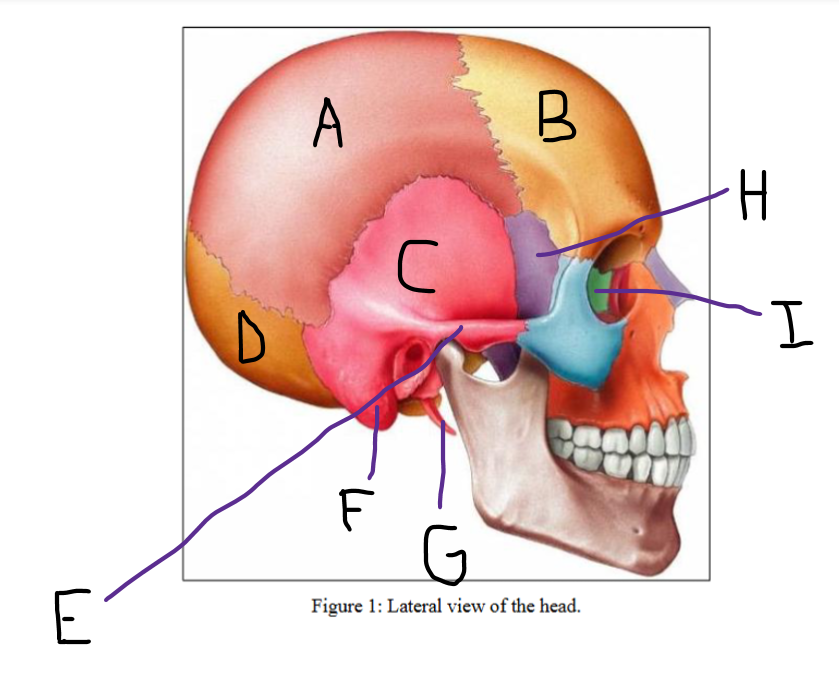
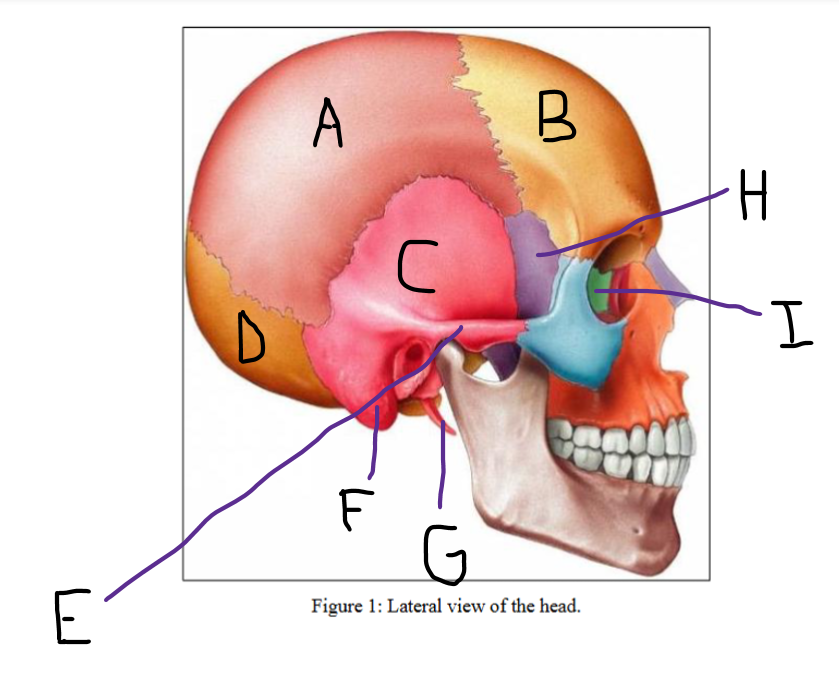
label a
parietal bone (lateral view)
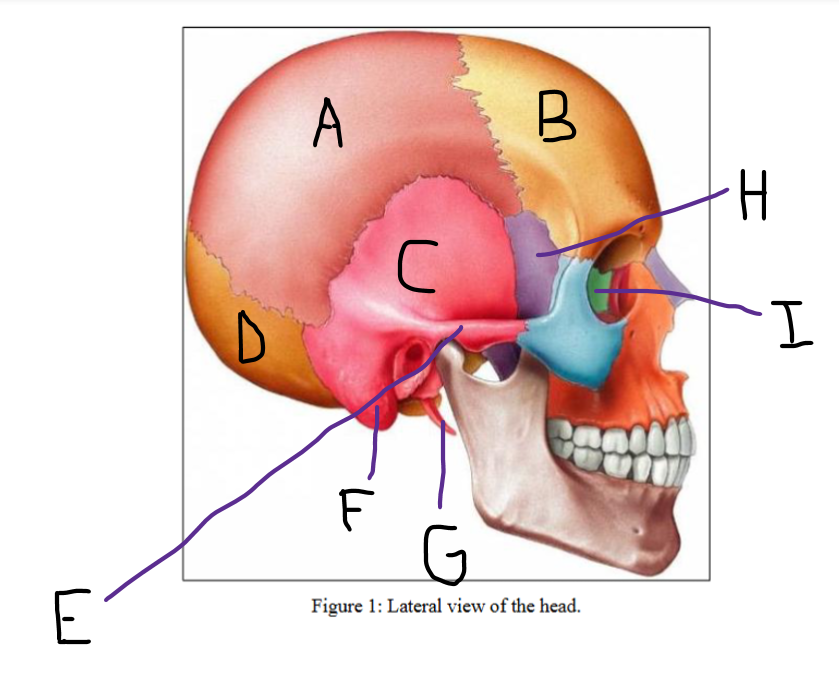
label b
frontal bone (lateral view)

label c
temporal bone (lateral view)
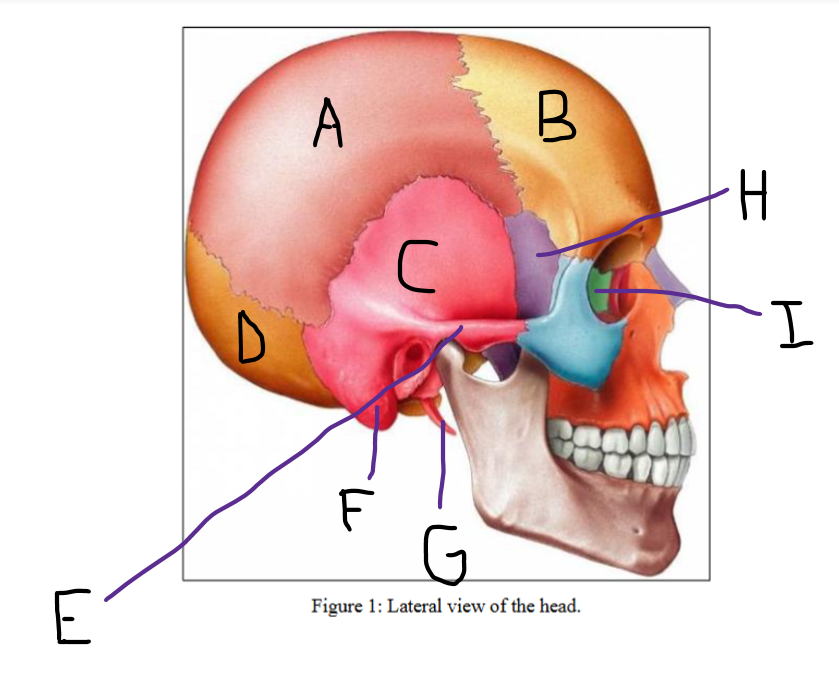
label d
occipital bone (lateral view)
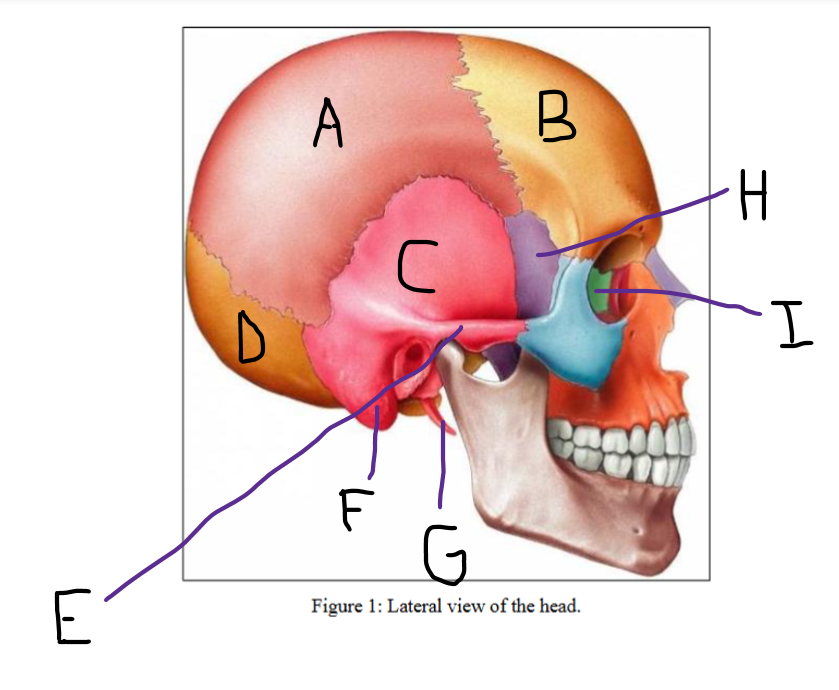
label e
zygomatic process (lateral view)
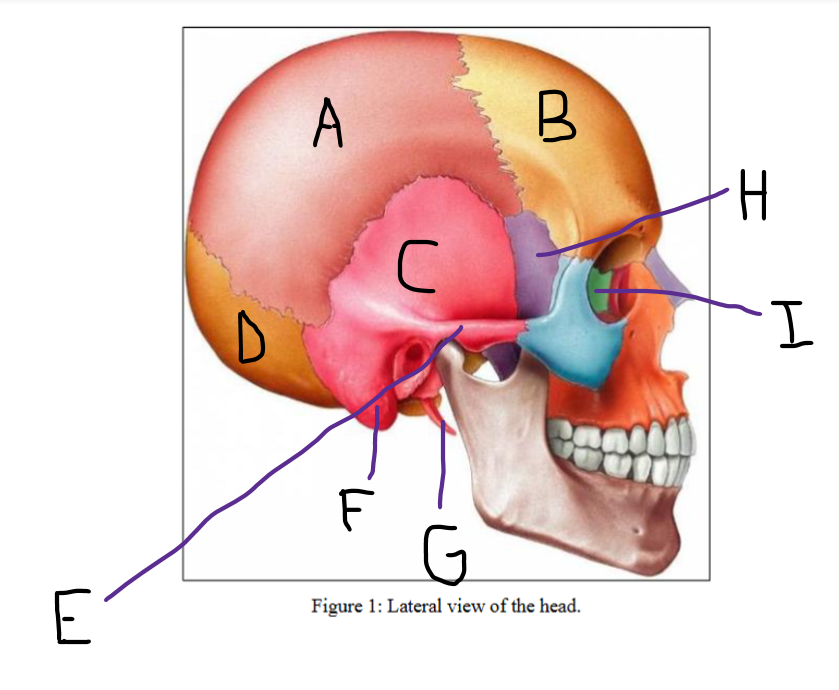
label f
mastoid process (lateral view)
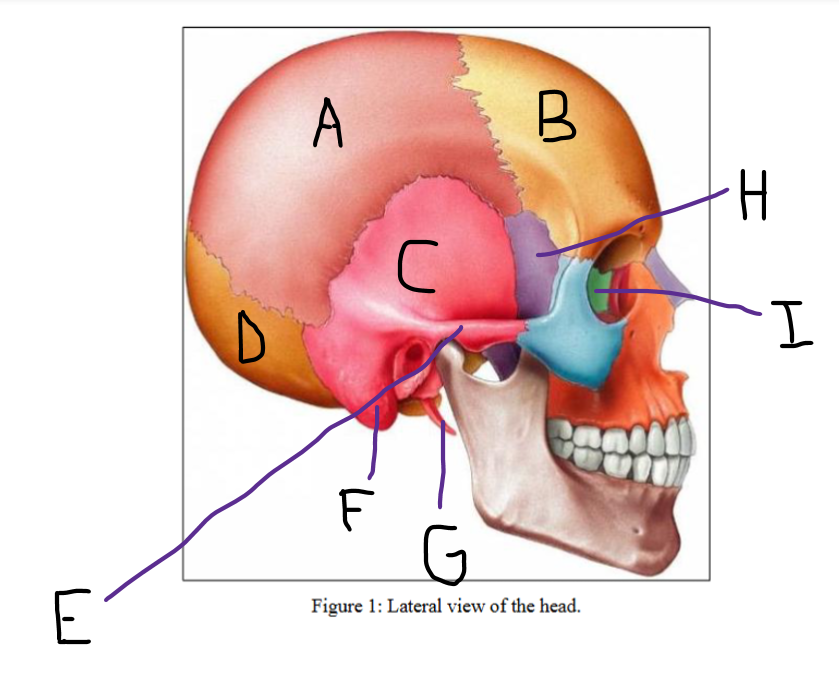
label g
styloid process (lateral view)
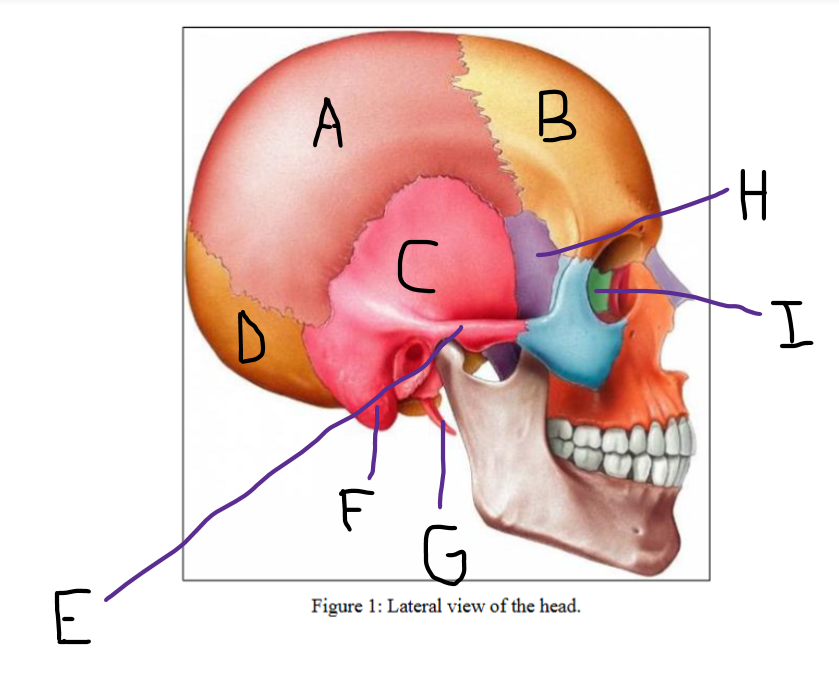
label h
sphenoid bone (lateral view)
label i
ethmoid bone (lateral view)
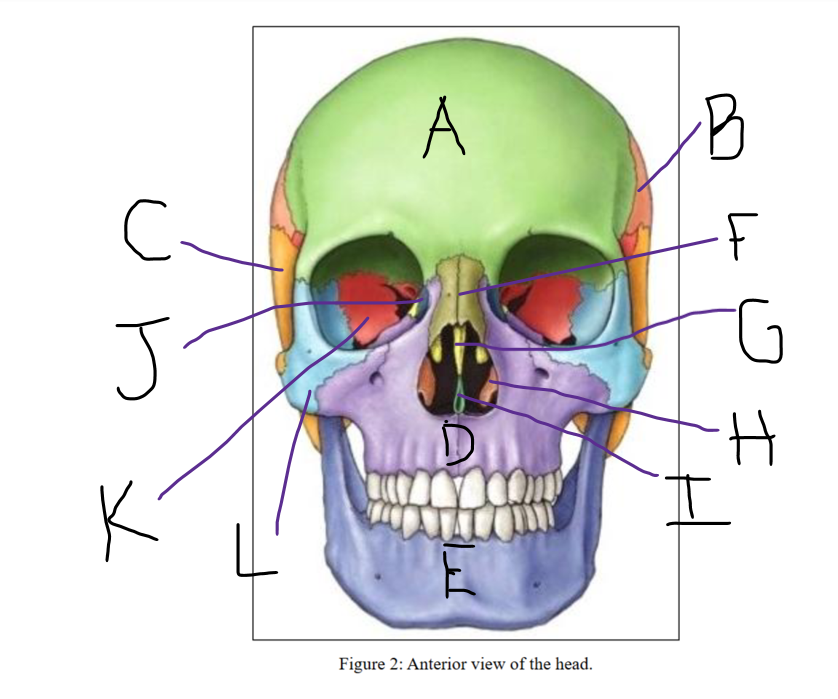
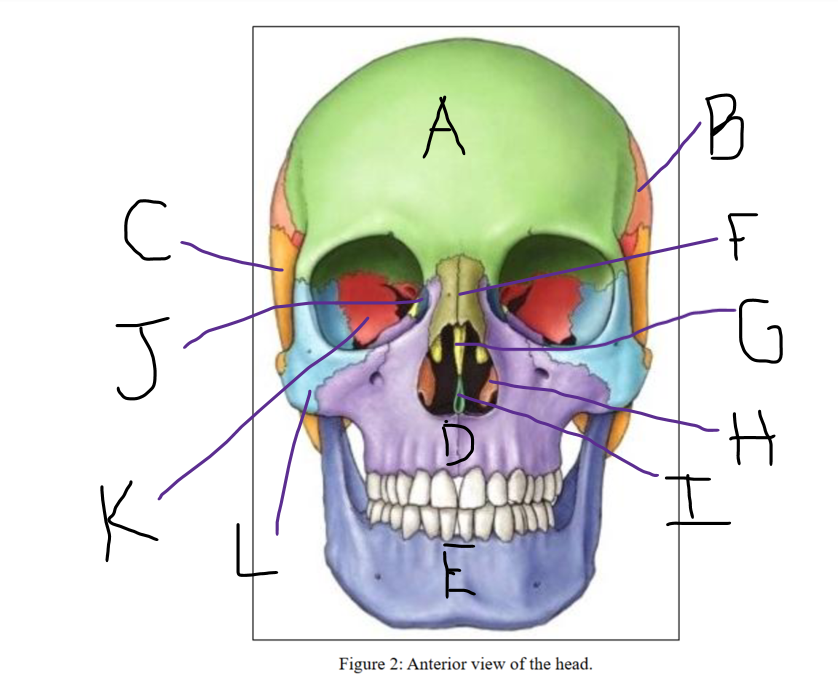
label a
frontal bone (anterior view)
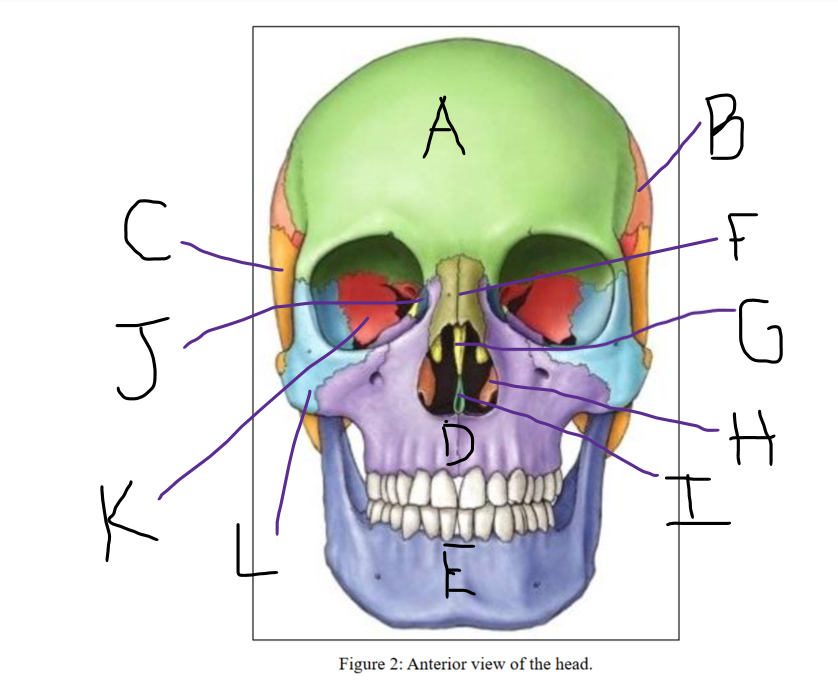
label b
parietal bone (anterior view)
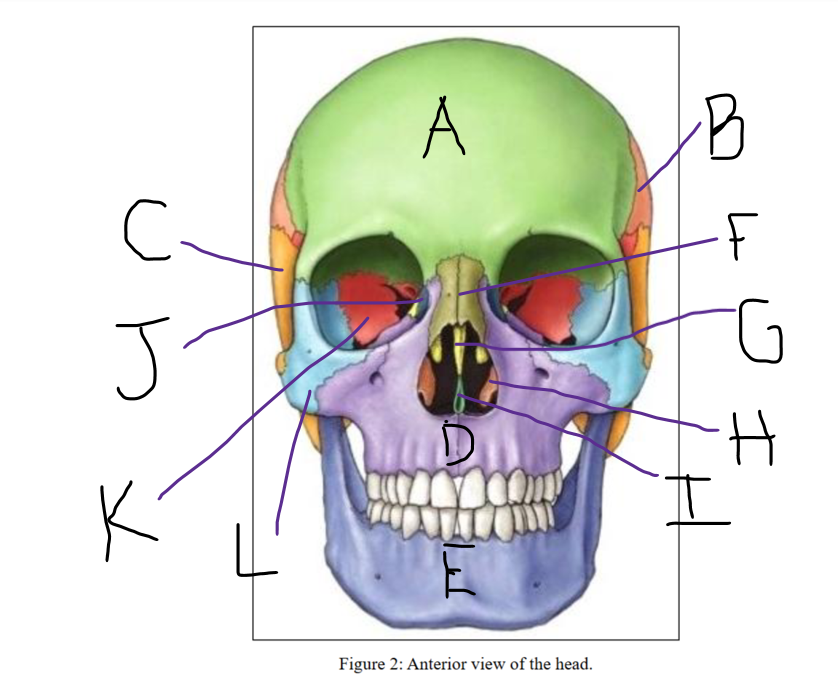
label c
temporal bone (anterior view)
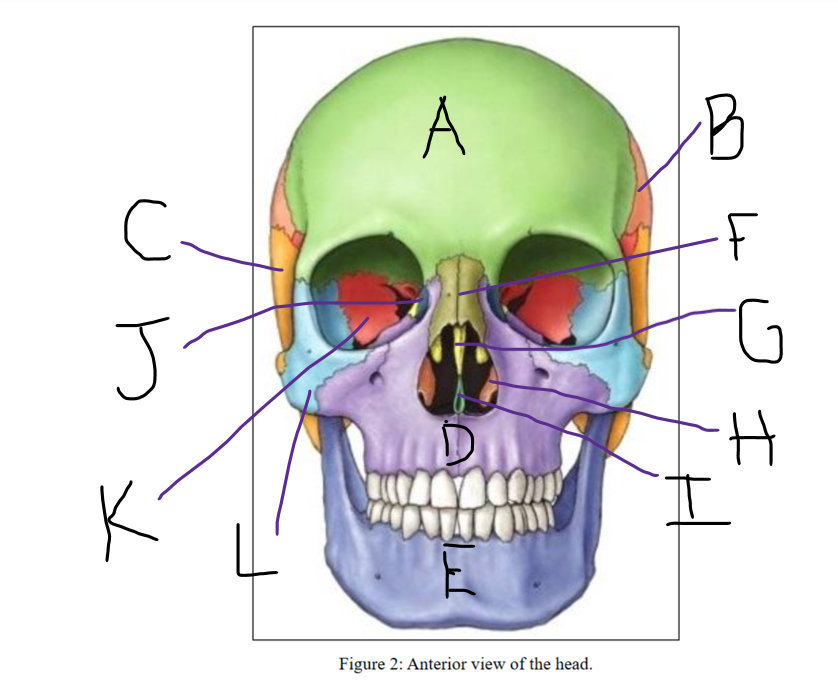
label d
maxilla/maxillary bone (anterior view)
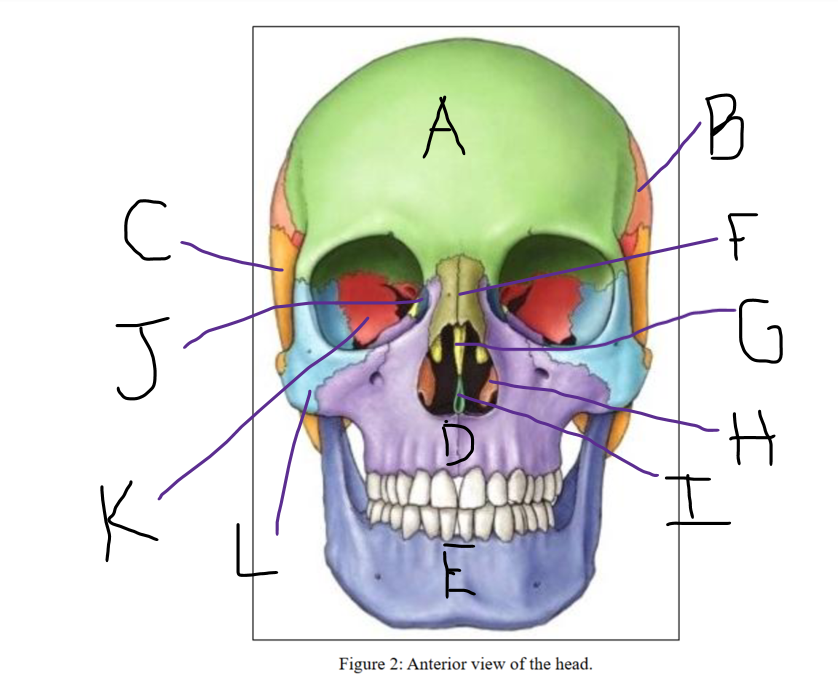
label e
mandible (anterior view)
label f
nasal bone (anterior view)
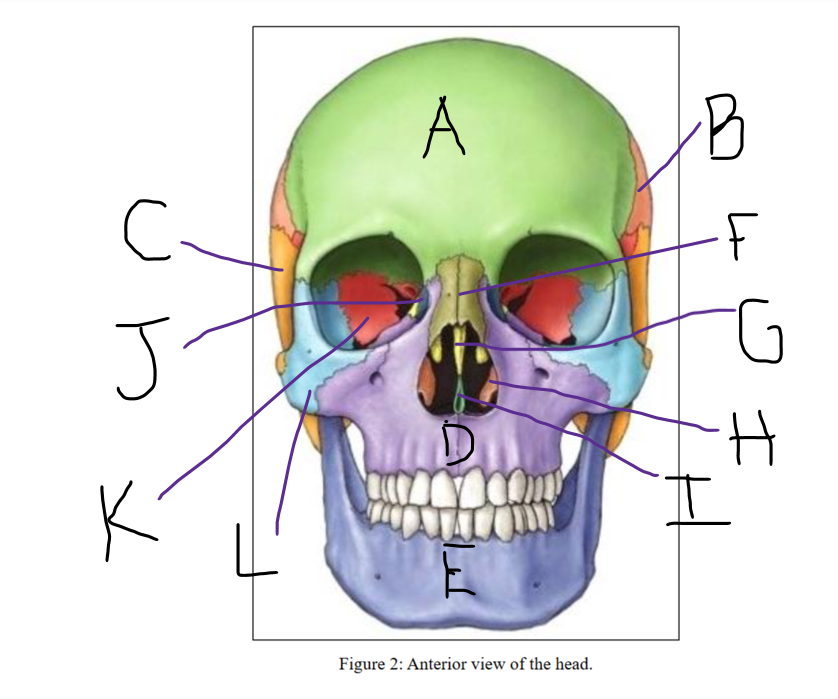
label g
ethmoid bone (anterior view)
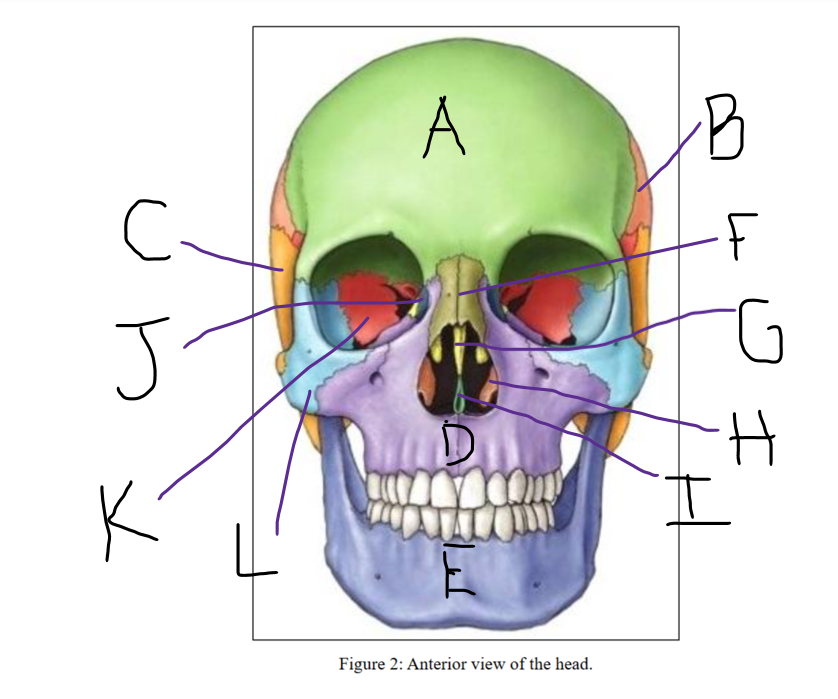
label h
inferior nasal concha (anterior view)
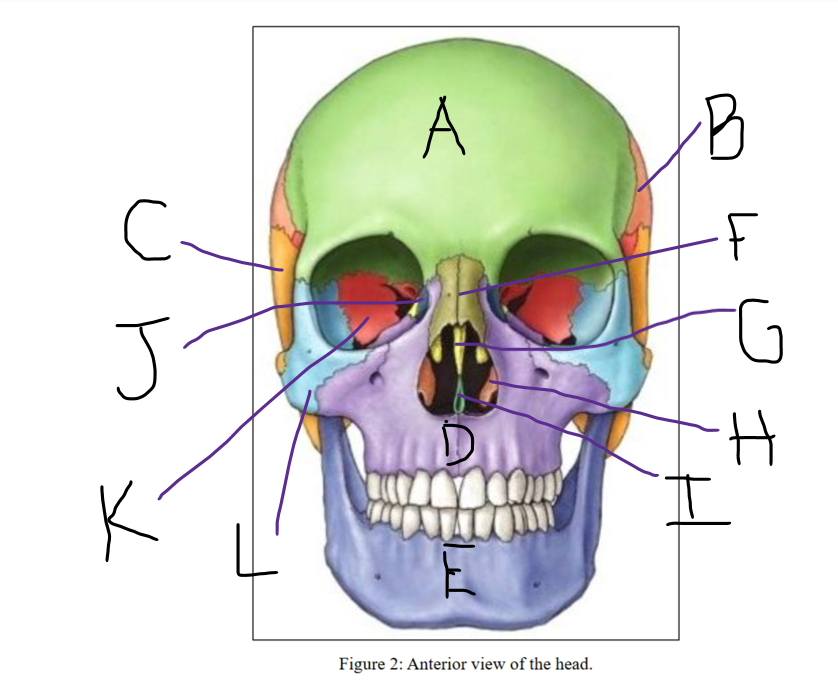
label i
vomer bone (anterior view)
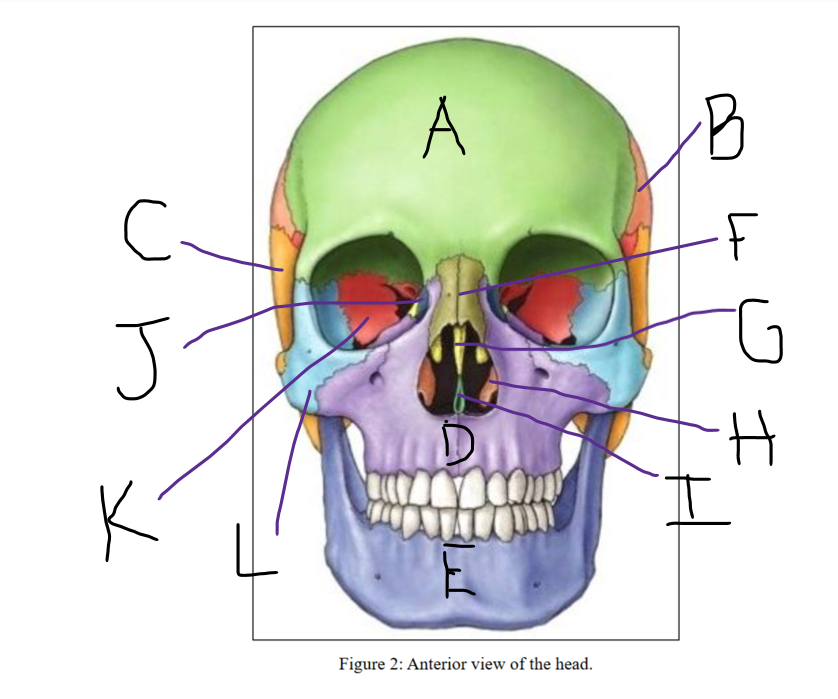
label j (navy blue)
lacrimal bone (anterior view)
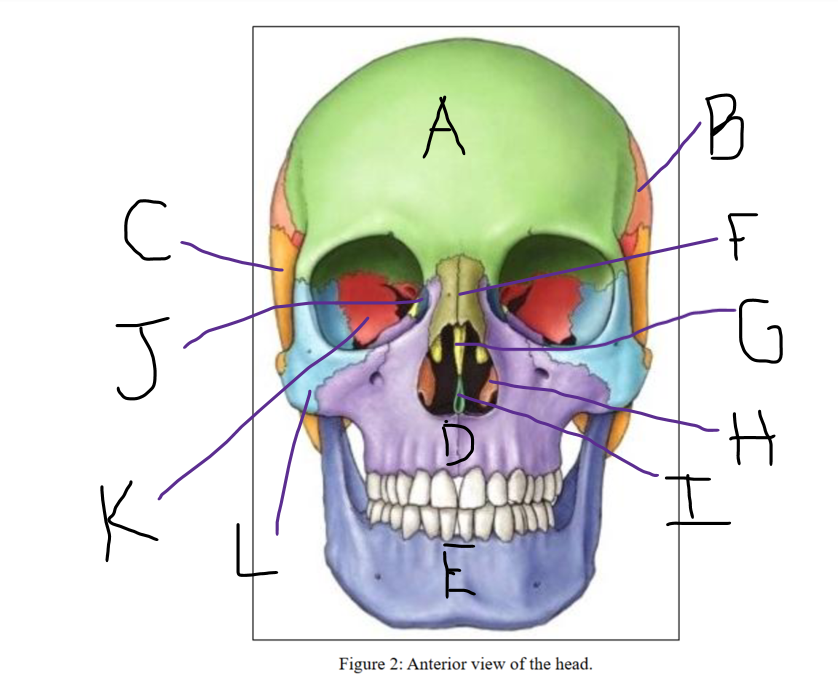
label k
sphenoid bone (anterior view)
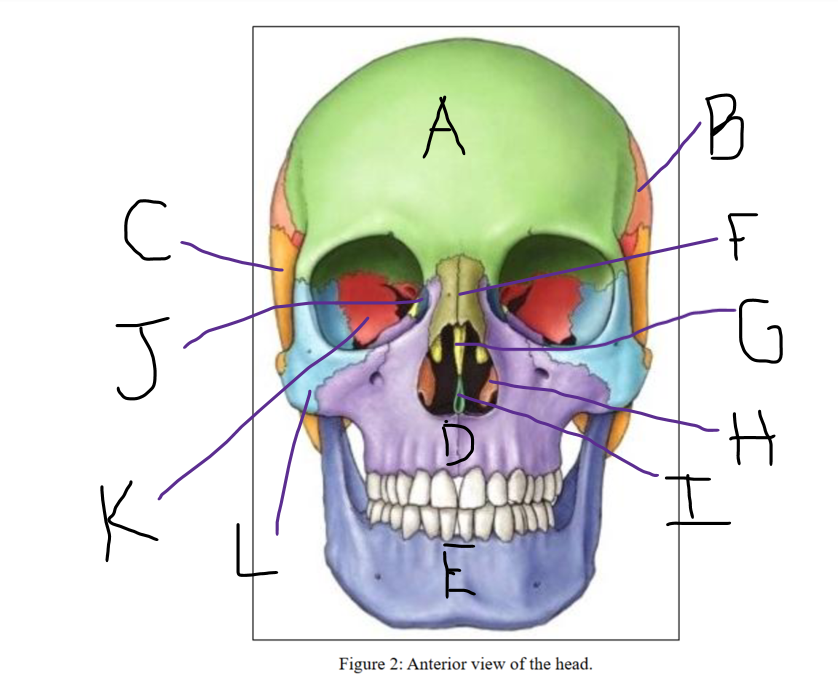
label l
zygomatic bone (anterior view)
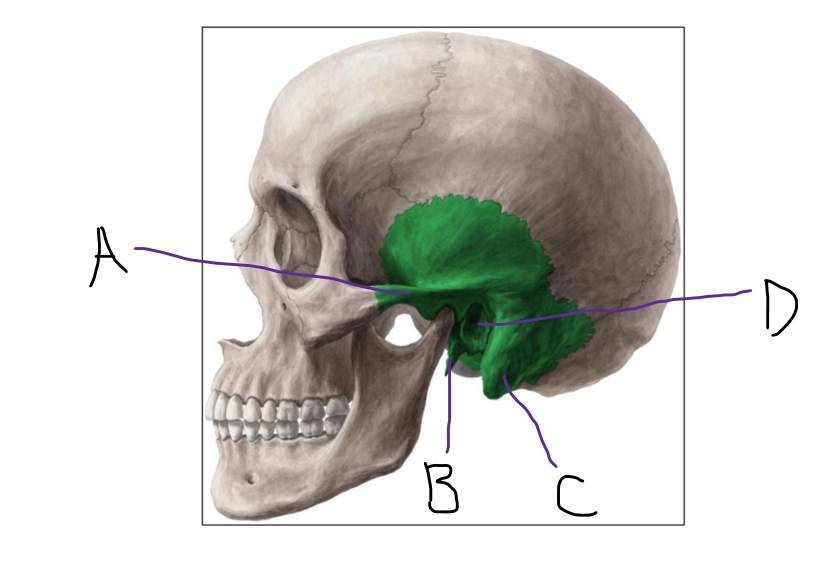
label a
zygomatic process of the temporal bone
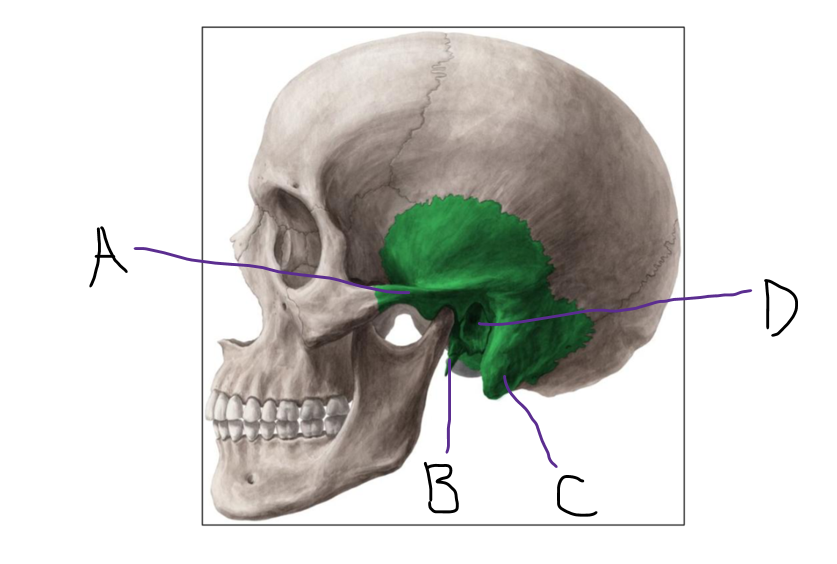
label b
styloid process of the temporal bone
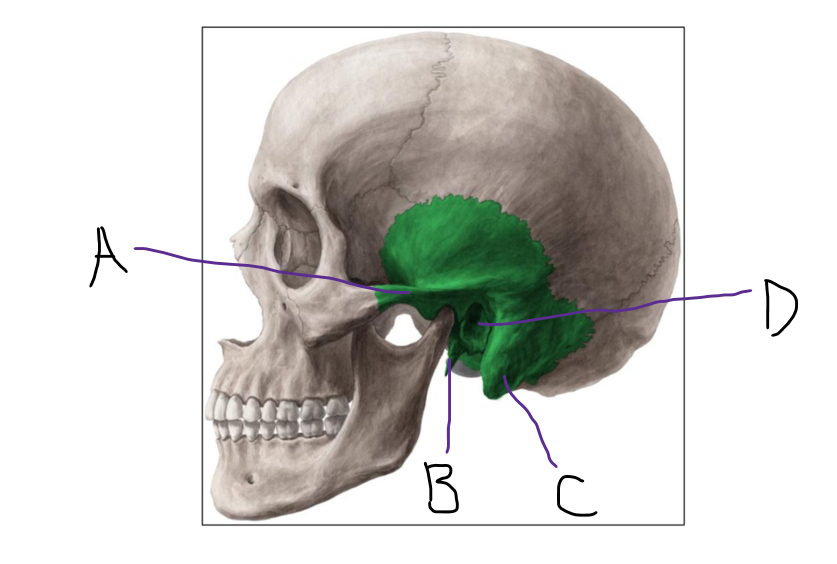
label c
mastoid process of the temporal bone
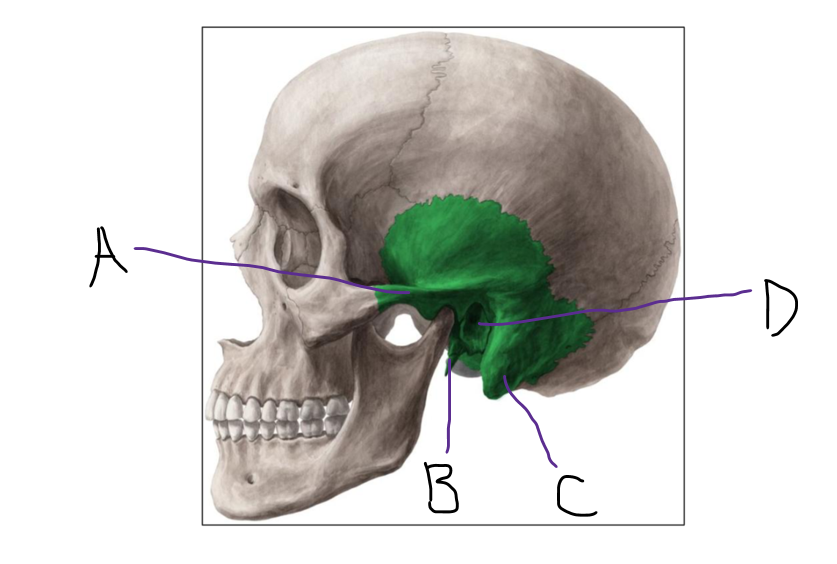
label d
tympanic process of the temporal bone
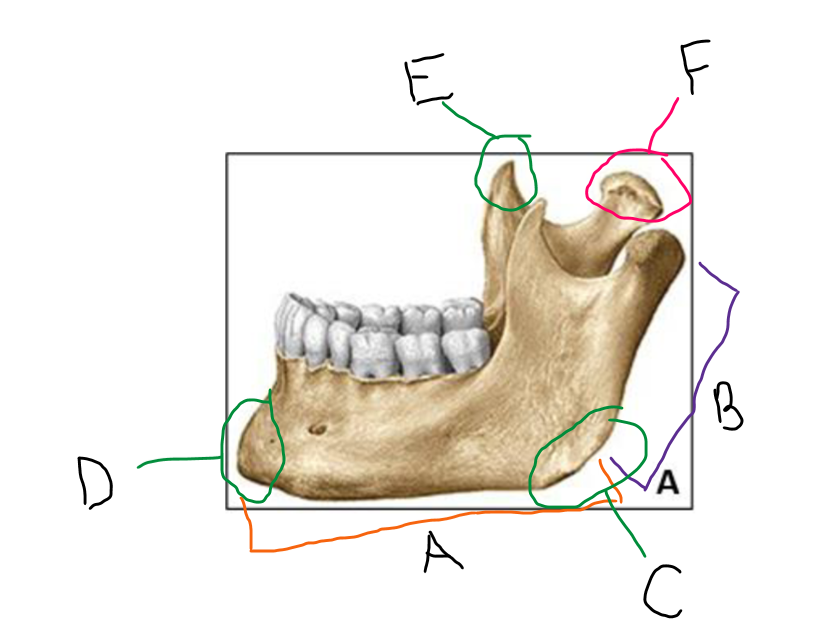
label a
corpus/body of the mandible (lateral view)
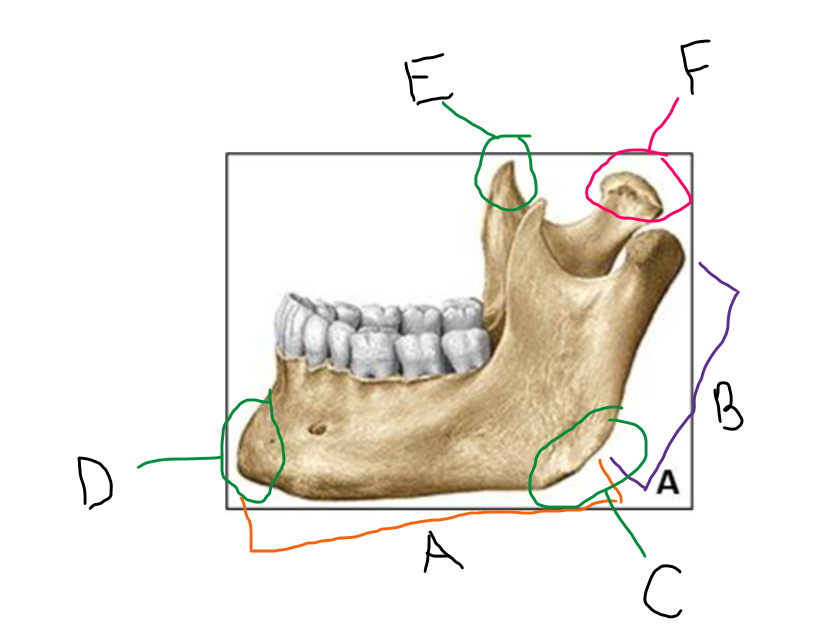
label b
ramus of the mandible (lateral view)
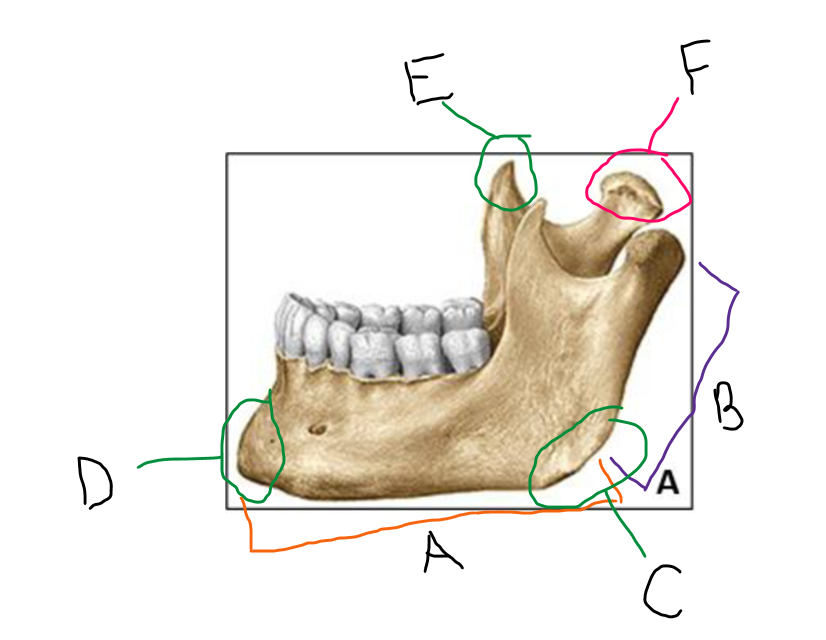
label c
angle of the mandible (lateral view)
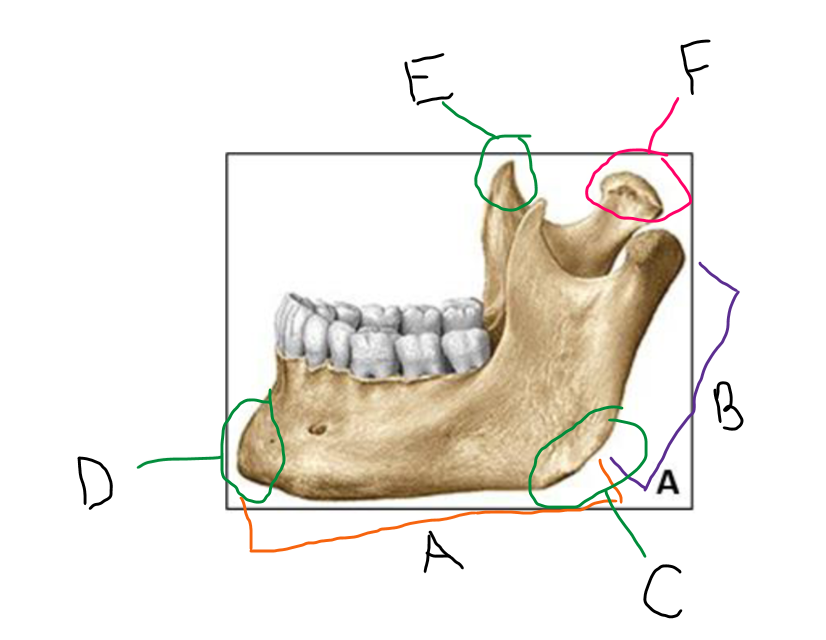
label d
mental symphysis of the mandible (lateral view)
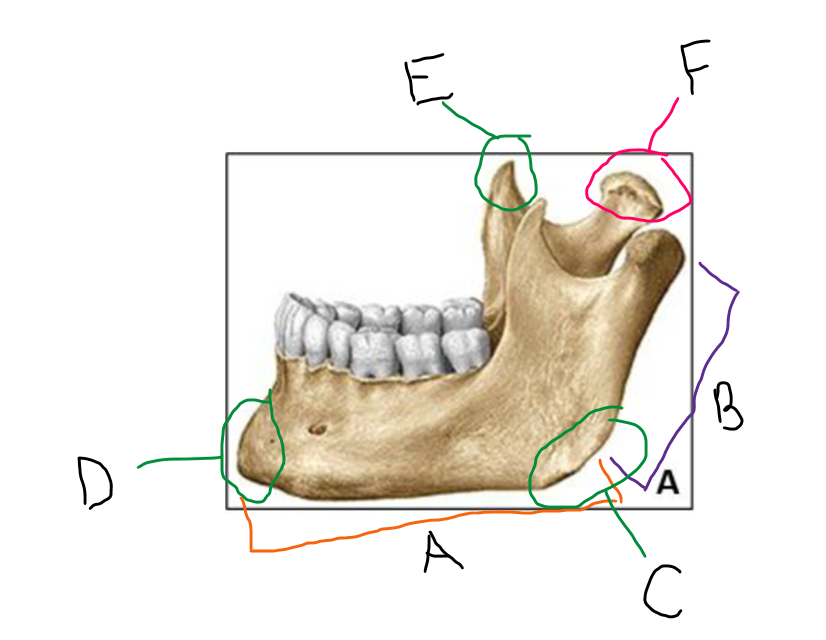
label e
coronoid process of the mandible (lateral view)
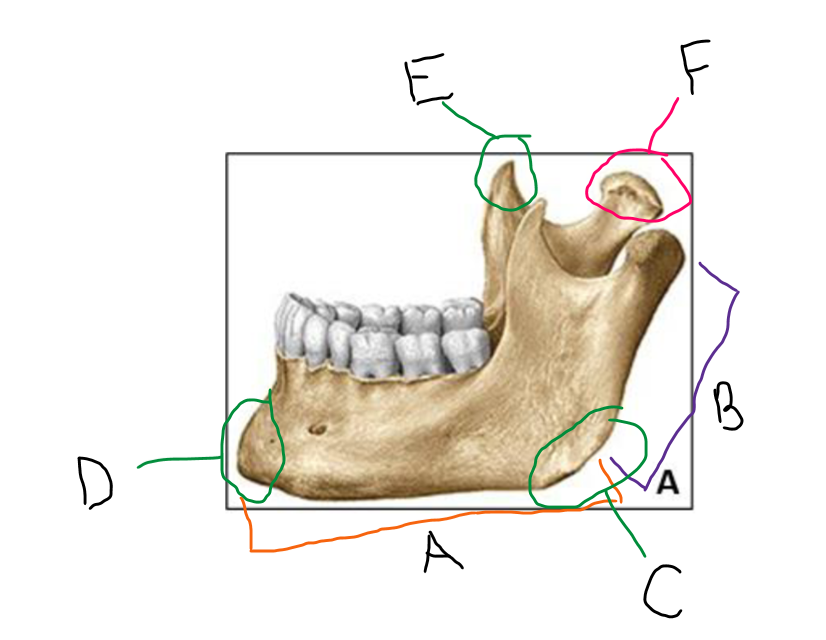
label f
condylar process of the mandible (lateral view)
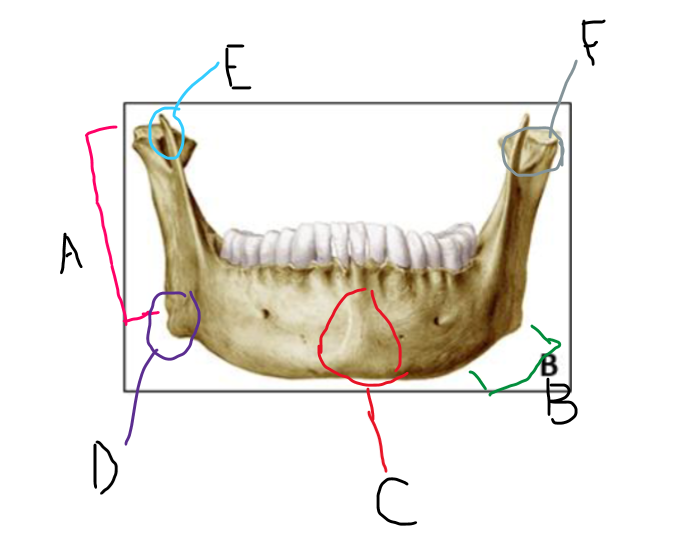
label a
ramus of the mandible (anterior view)
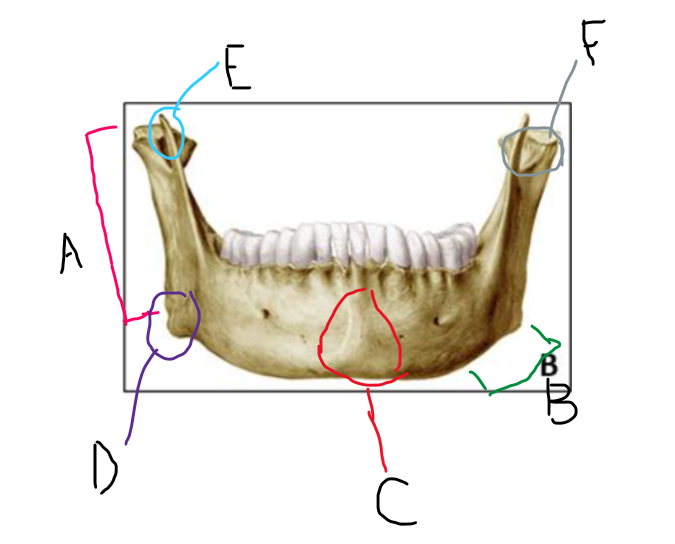
label b
corpus/body of the mandible (anterior view)
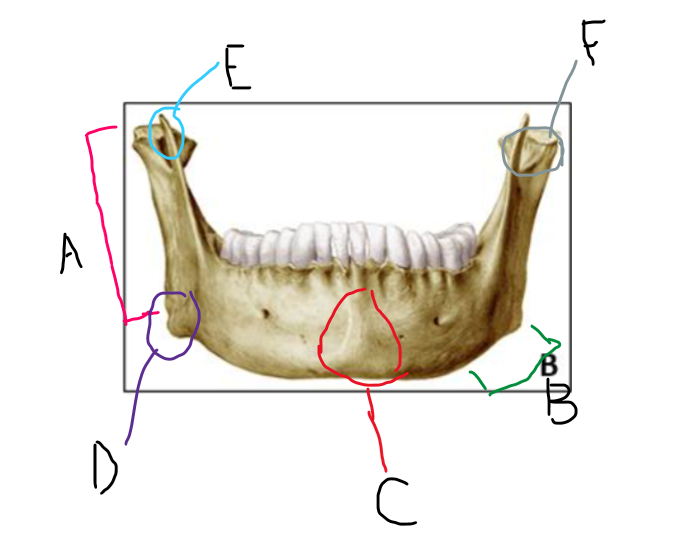
label c
mental symphysis of the mandible (anterior view)
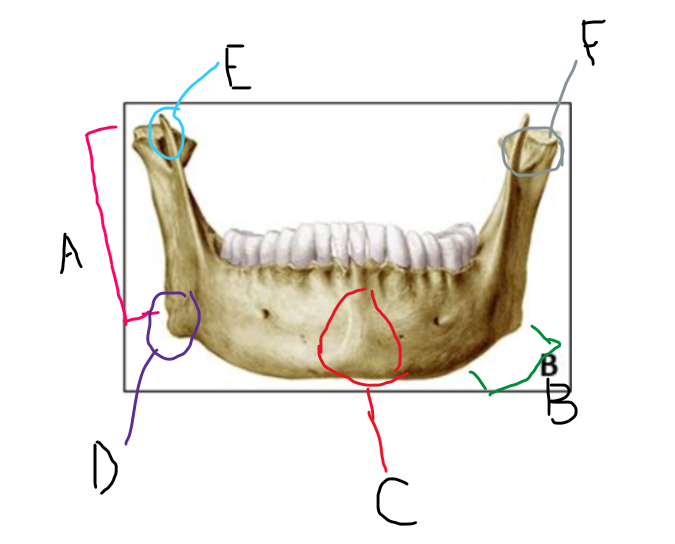
label d
angle of the mandible (anterior view)
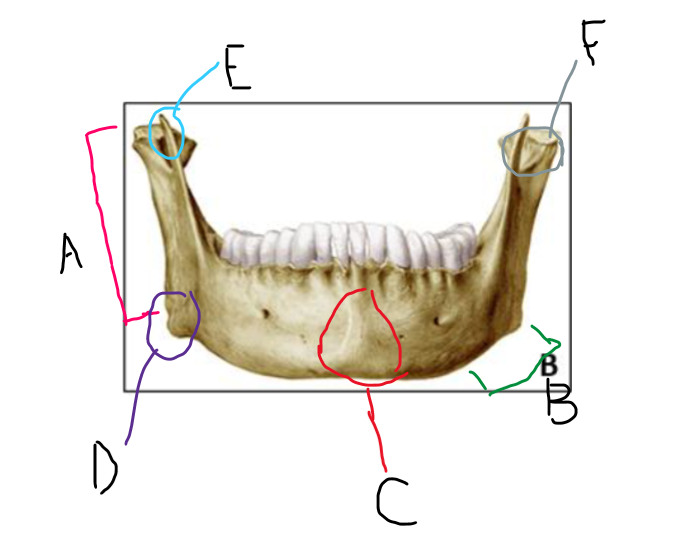
label e
coronoid process of the mandible (anterior view)
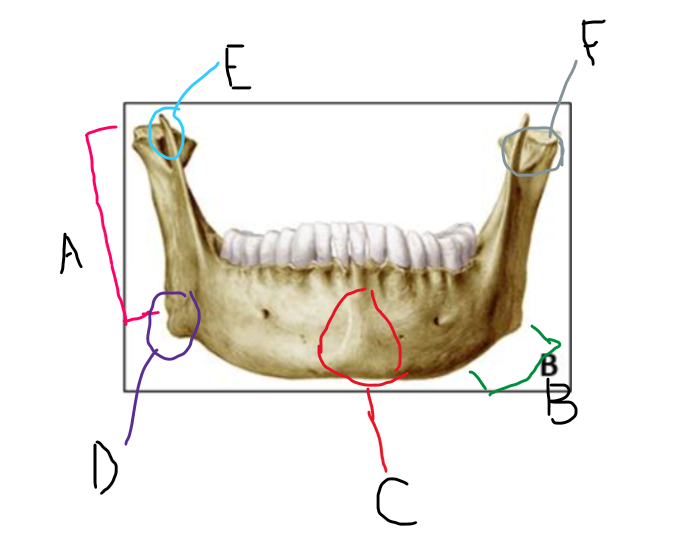
label f
condylar process of the mandible (anterior view)
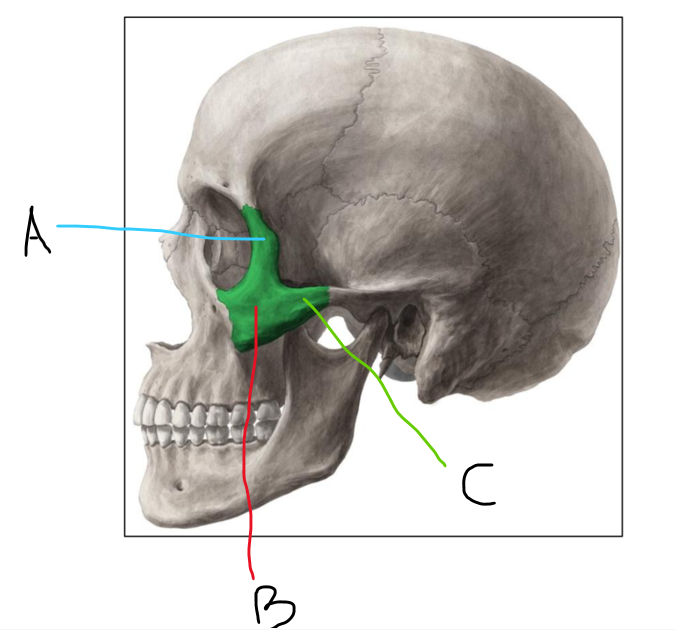
label a
frontal process of the zygomatic bone
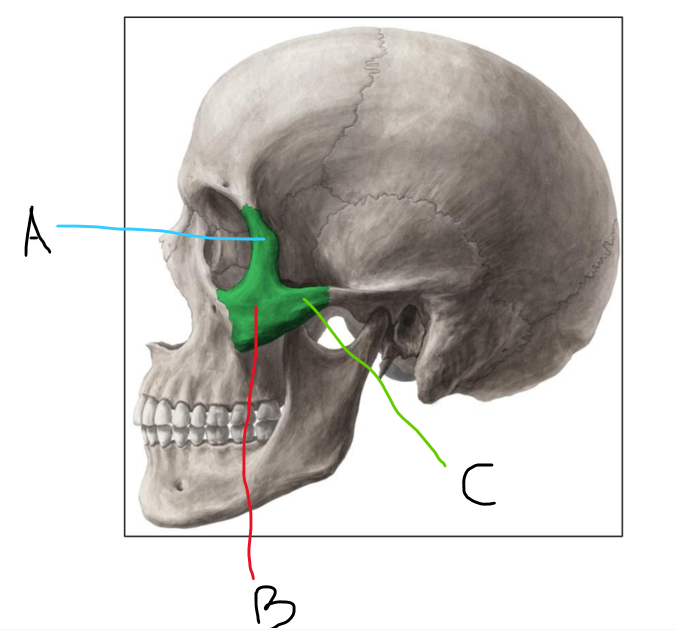
label b
maxillary process of the zygomatic bone
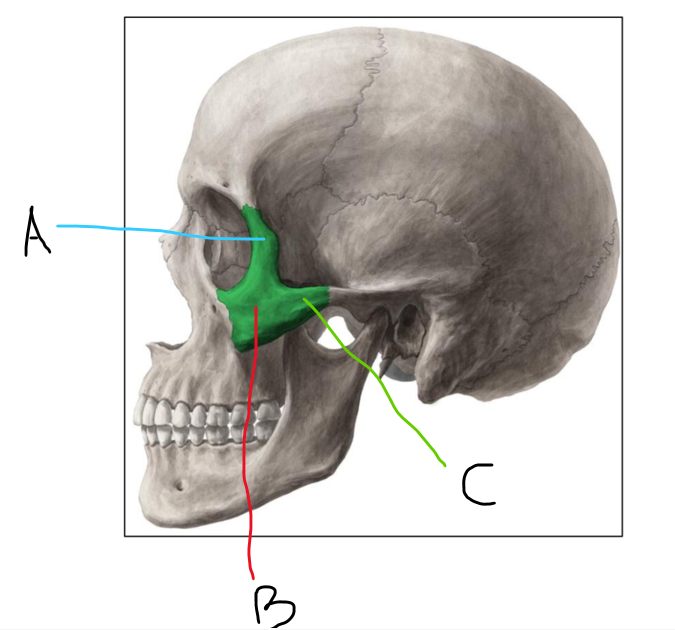
label c
temporal process of the zygomatic bone
bones that form the hard palate
palatine process of the maxillary bone and horizontal plate of the palatine bone
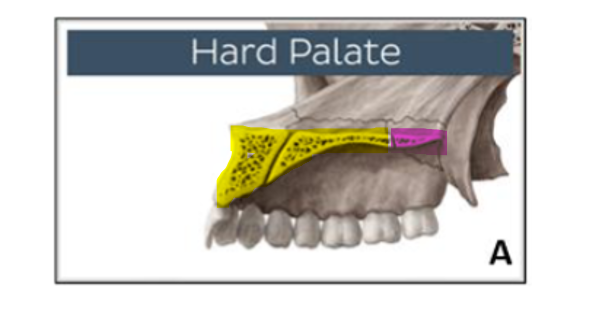
label yellow
palatine process of the maxillary bone (sagittal plane)
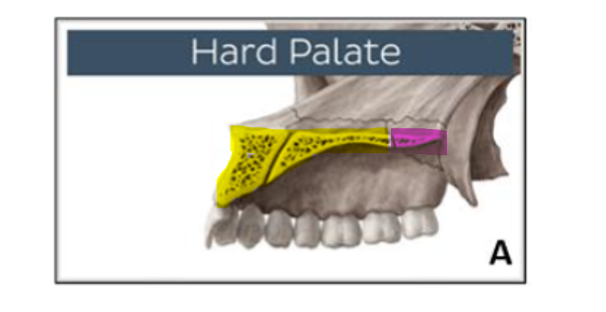
label pink
horizontal plate of the palatine bone (sagittal plane)
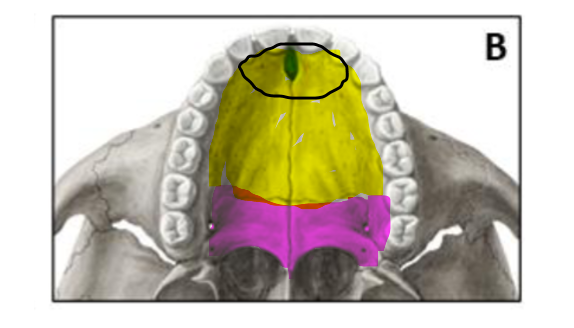
label yellow
palatine process of the maxillary bone (transverse plane)
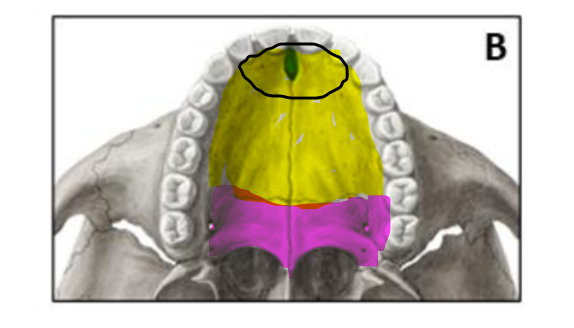
label pink
horizontal plate of the palatine bone (transverse plane)

label black circle
alveolar ridge (transverse plane)
bones that form the nasal skeleton (5 in total)
nasal bone
inferior nasal conchae
middle and superior nasal conchae of the ethmoid bone
lacrimal bone
maxillary bone
bones that form the nasal septum
vomer bone
perpendicular plates of the ethmoid bone
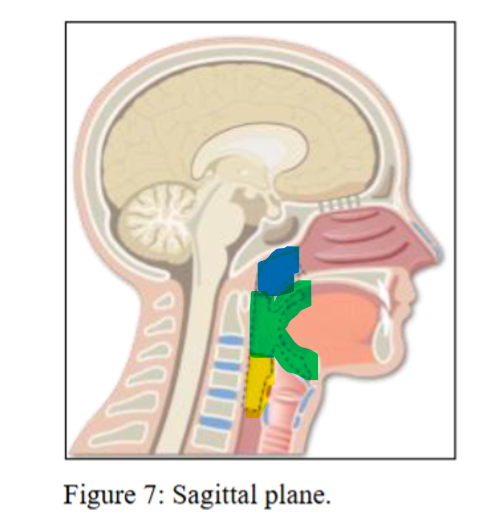
label blue (and its 4 boundaries)
nasopharynx
anterior boundary - nasal choanae
posterior boundary - posterior pharyngeal wall
superior boundary - cranium
inferior boundary - velum
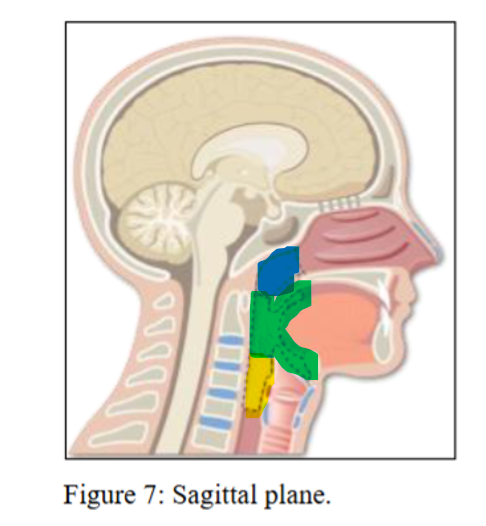
label green (and its 4 boundaries)
oropharynx
anterior boundary - oral cavity
posterior boundary - posterior pharyngeal wall
superior boundary - velum
inferior boundary - hyoid bone and anterior epiglottis

label yellow (and its 4 boundaries)
hypopharynx (laryngopharynx)
anterior boundary - base of tongue and laryngeal aditus
posterior boundary - posterior pharyngeal wall
superior boundary - hyoid bone and anterior epiglottis
inferior boundary - cricoid cartilage (esophagus)
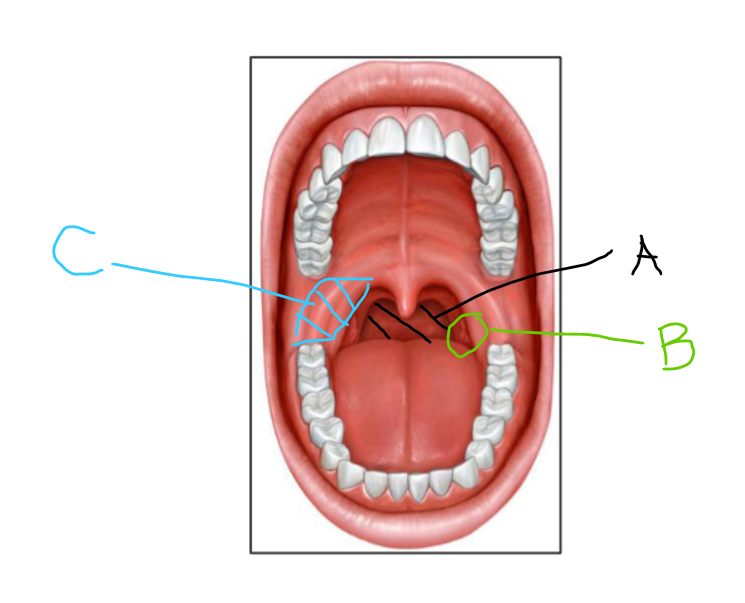
label a
posterior pharyngeal wall
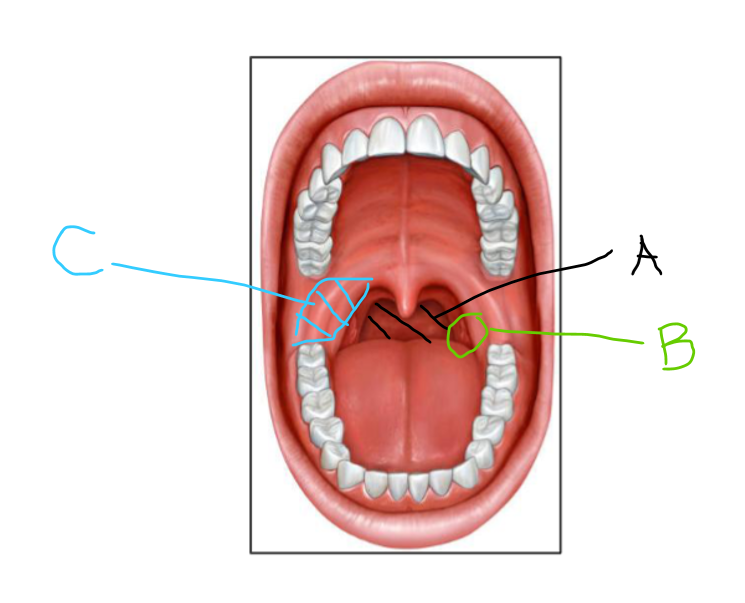
label b
palatine tonsils
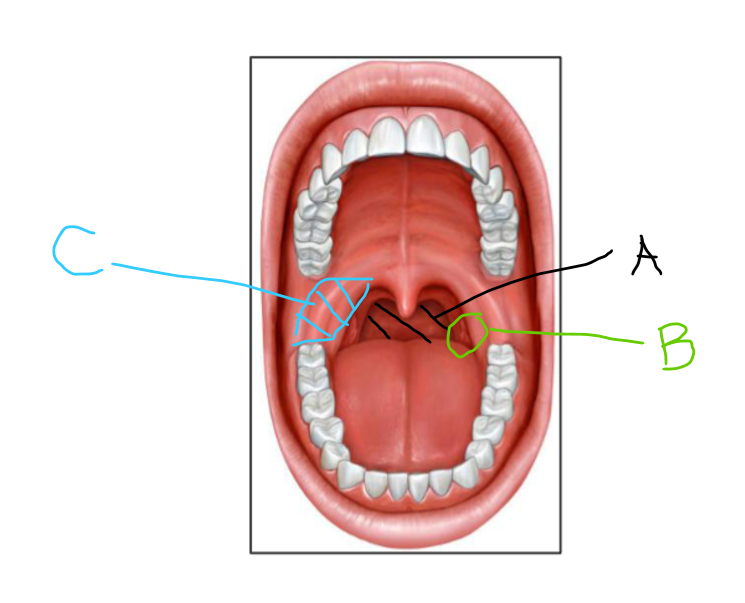
label c
anterior faucial pillar
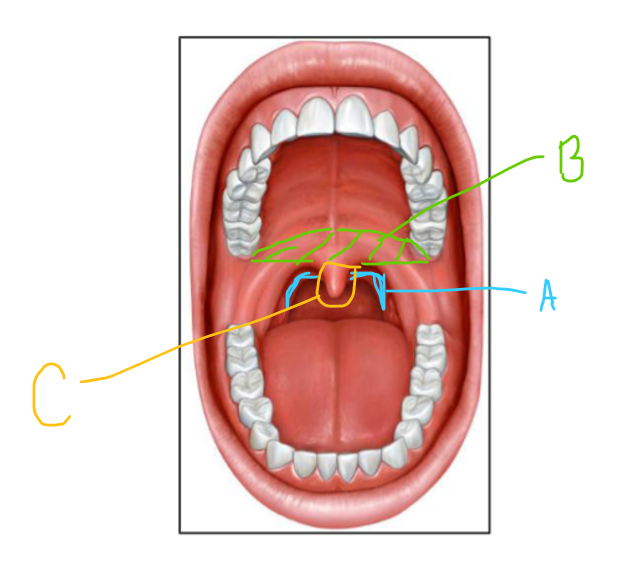
label a
posterior faucial pillar
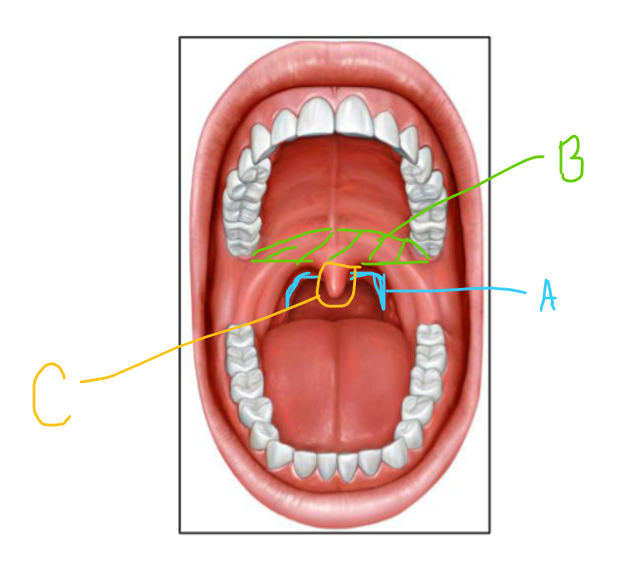
label b
soft palate

label c
uvula
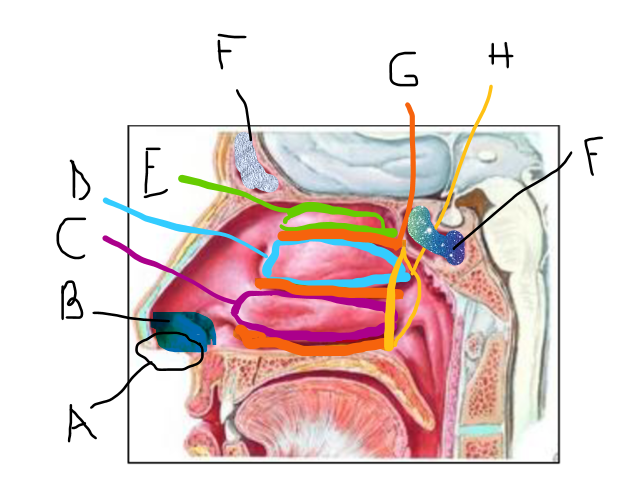
label a
nares (nostril)
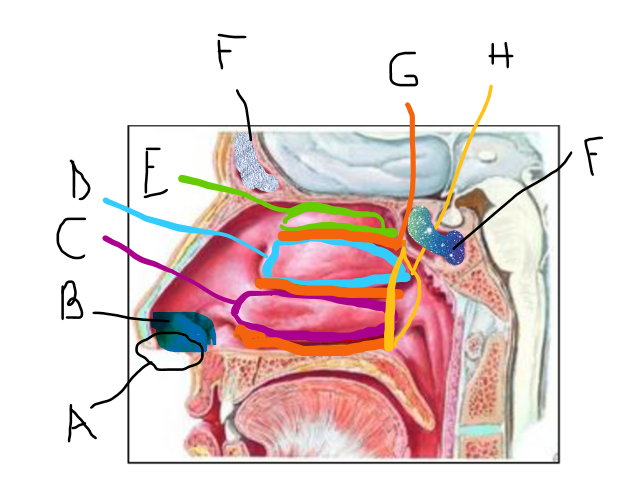
label b
nasal vestibule
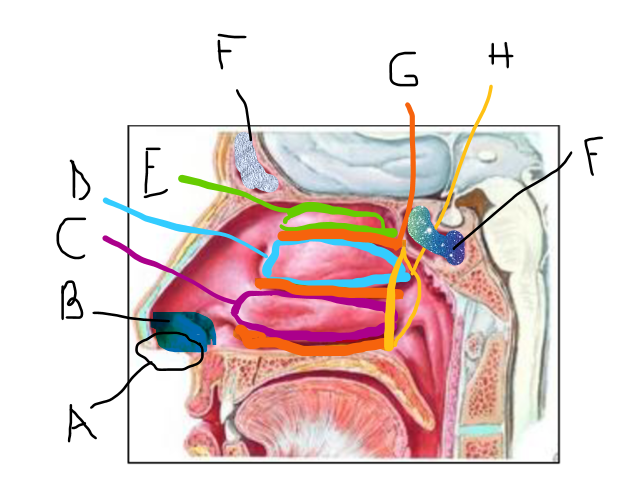
label c
inferior conchae (turbinates)
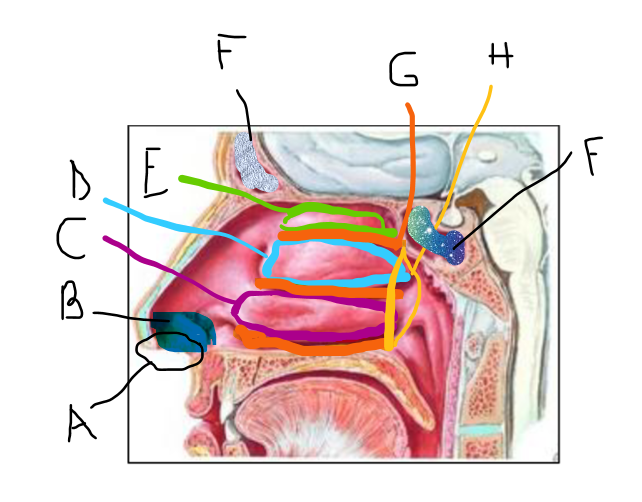
label d
middle conchae (turbinates)
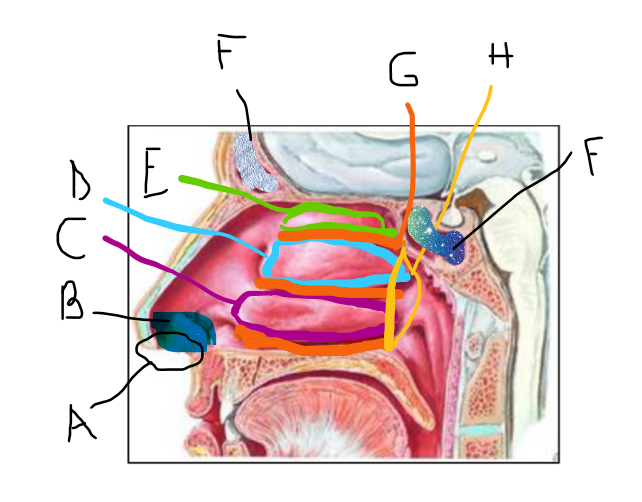
label e
superior conchae (turbinates)
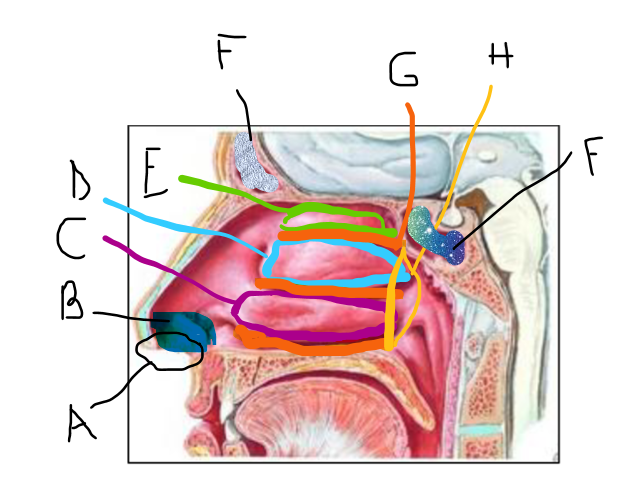
label f
frontal and sphenoid sinuses
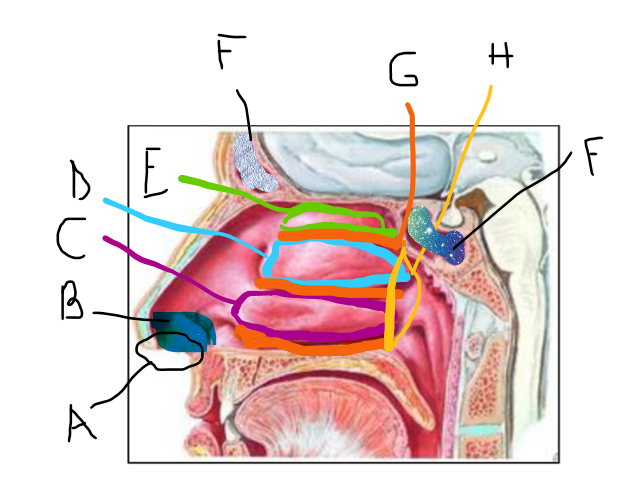
label g
meatuses
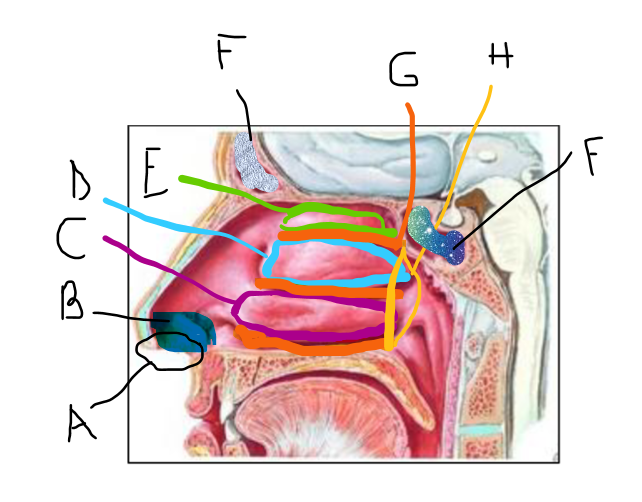
label h
choana
4 paranasal sinuses and their functions
maxillary, frontal, ethmoid, and sphenoid sinuses
function: contain cells that produce muscus; also warm up and humidify incoming air
structures forming the velum
soft palate and the uvula
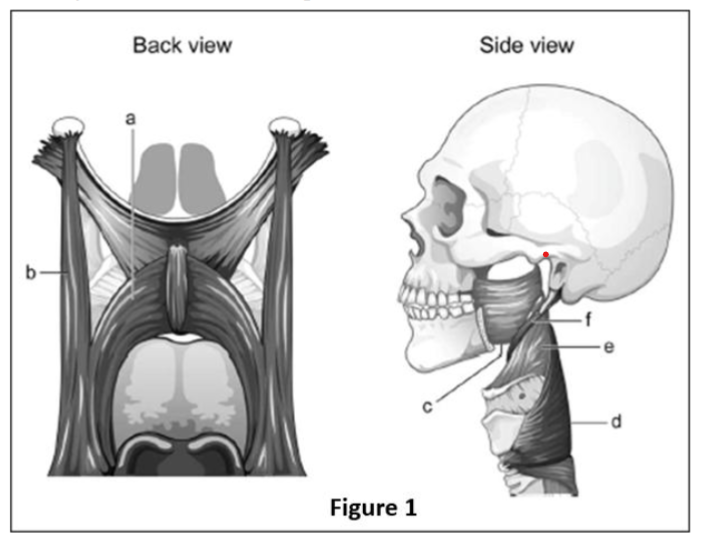
label a
palatopharyngeus (figure 1)
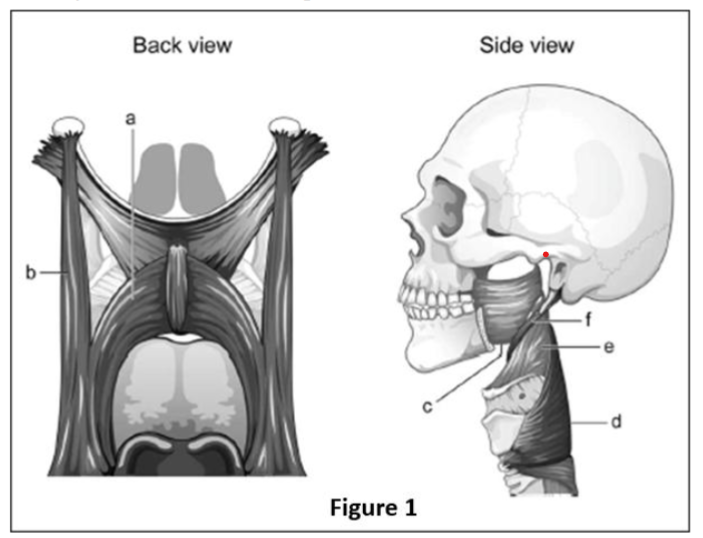
label b
salpingopharyngeus
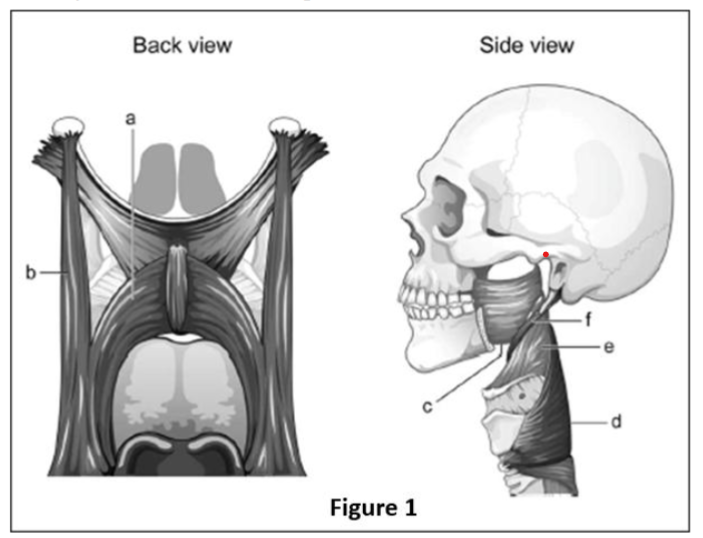
label c
superior pharyngeal constrictor
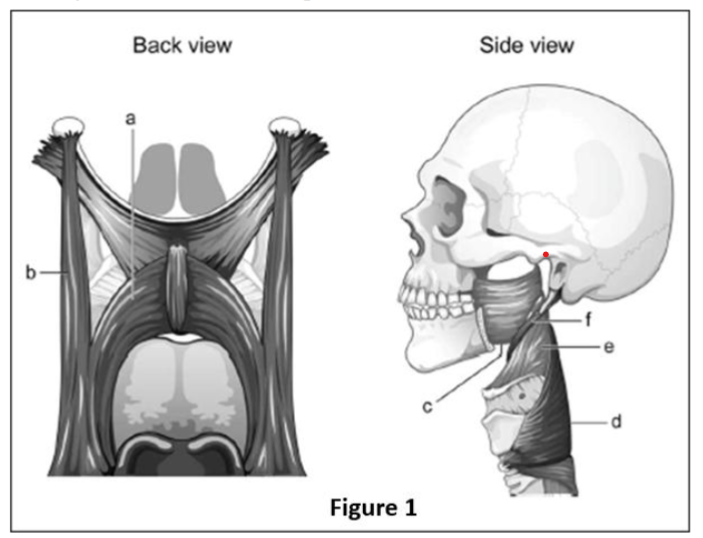
label d
inferior pharyngeal constrictor
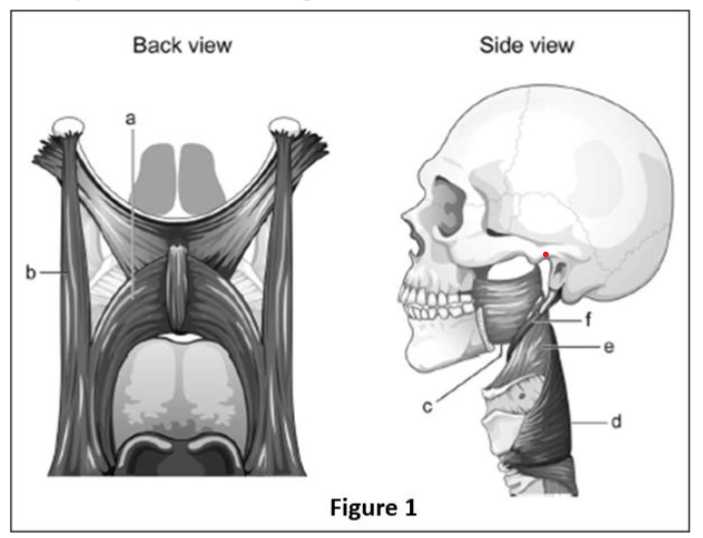
label e
middle pharyngeal constrictor
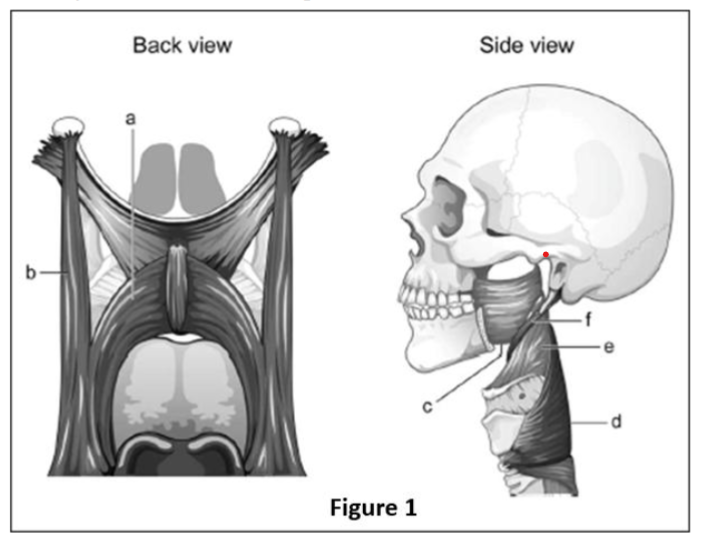
label f
stylopharyngeus
cricopharyngeus - motor innervation and function
motor innervation: CNX
function: allows food/liquid to pass into the esophagus by relaxing and opening when swallowing (otherwise, it is contracted and closed)
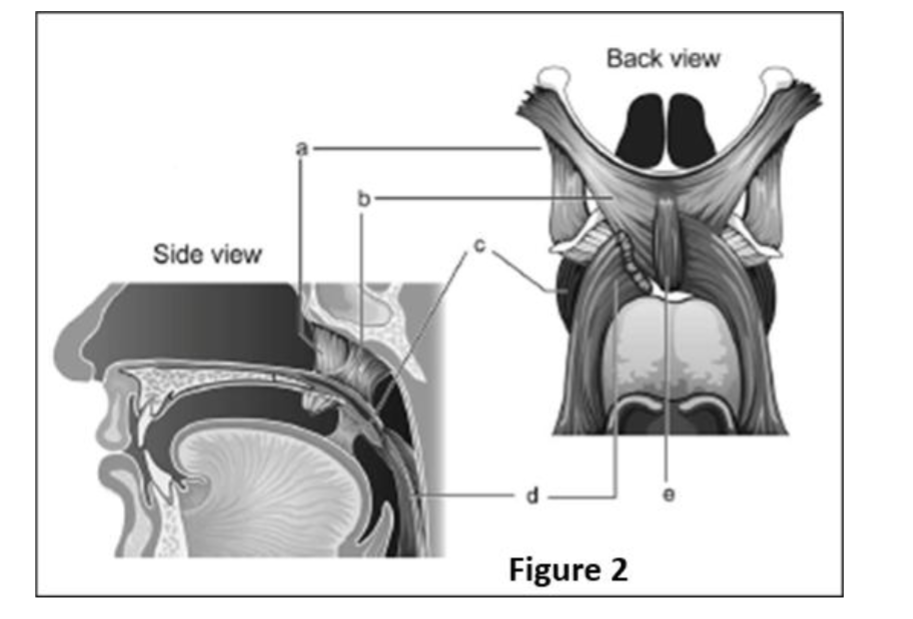
label a
tensor veli palatini
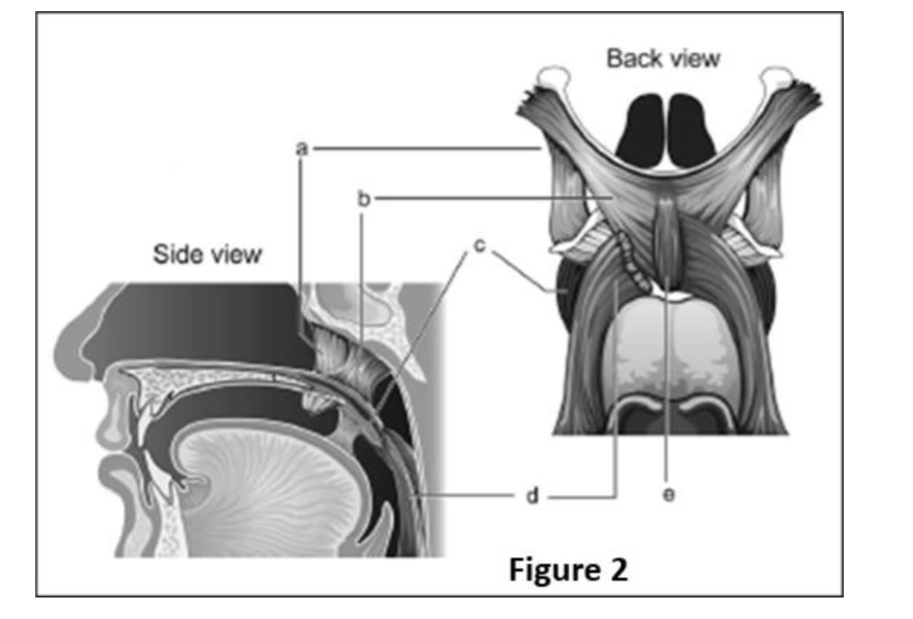
label b
levator veli palatini
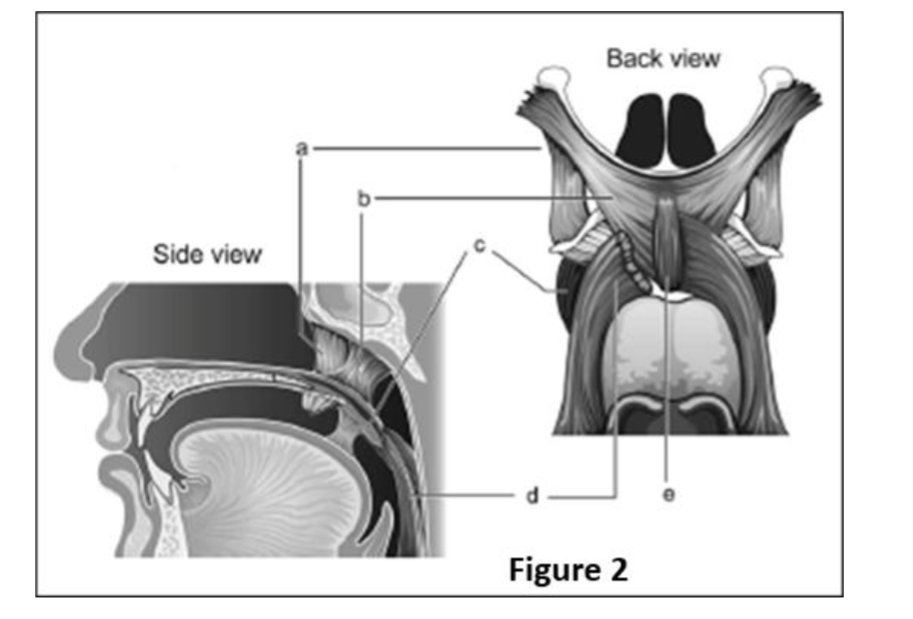
label c
palatoglossus
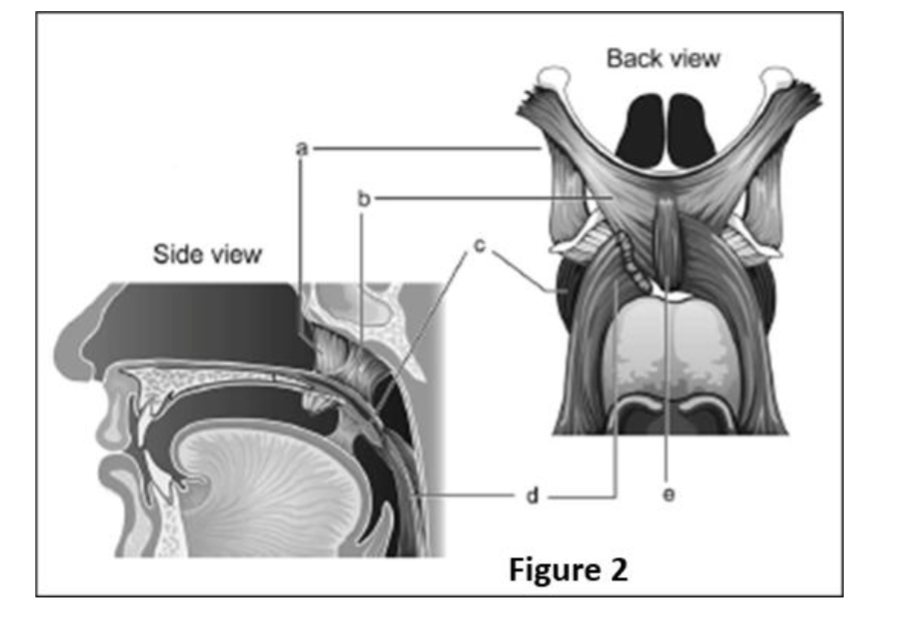
label d
palatopharyngeus (figure 2)

label e
musculus uvulae
muscles of the outer nose - motor innervation and functions
motor innervation: CNVII
functions: dilate (open) or compress (constrict) the nares
superior pharyngeal constrictor - motor innervation and function
motor innervation: pharyngeal plexus (CNIX, CNX)
function:
uppermost fibers - assist with velopharyngeal closure (close the communication point between the pharynx and the nasal cavity)
other fibers - move the posterior wall of the larynx forward and narrow the diameter of the pharynx (constrict the pharynx)
middle pharyngeal constrictor - motor innervation and function
motor innervation: pharyngeal plexus (CNIX, CNX)
function: move the posterior wall of the pharynx forward and narrow the diameter of the pharynx (constrict the pharynx)
for learn: middle PE
inferior pharyngeal constrictor - motor innervation and function
motor innervation: pharyngeal plexus (CNIX, CNX)
function: move the posterior wall of the pharynx forward and narrow the diameter of the pharynx (constrict the pharynx)
for learn: inferior PE
salpingopharyngeus - motor innervation and function
motor innervation: pharyngeal plexus (CNIX, CNX)
function: move the lateral walls of the pharynx upward and inward (shorten and elevate the pharynx)
secondary: equalizes ear pressure in the middle ear due to its connections with the eustachian tubes
palatopharyngeus - motor innervation and PHARYNGEAL function
motor innervation: pharyngeal plexus (CNIX, CNX)
function: move the lateral walls of the pharynx upward and inward (shorten and elevate the pharynx)
stylopharyngeus - motor innervation and function
motor innervation: CN IX
function: elevates the pharynx and (indirectly) the larynx; dilates (widens) the pharynx
levator veli palatini - motor innervation and function
motor innervation: pharyngeal plexus (CNIX, CNX)
function: elevate and retract the velum to close the velopharyngeal sphincter/port
tensor veli palatini - motor innervation and function
motor innervation: CNV
function: dilates the eustachian tubes to allow aeration of the middle ear
secondary: may assist with tensing the soft palate and closing the velopharyngeal port/sphincter
musculus uvulae - motor innervation and function
motor innervation: pharyngeal plexus (CNIX, CNX)
function: shorten and elevate the velum
palatoglossus - motor innervation and function
motor innervation: pharyngeal plexus (CNIX, CNX)
function: lowers the soft palate and elevates the back of the tongue to create a posterior seal in the oral cavity
important to note: forms the anterior faucial pillar
palatopharyngeus - motor innervation and VELAR function
motor innervation: pharyngeal plexus (CNIX, CNX)
function: lowers the velum (upper fibers) and narrows the upper pharynx (lower fibers)
important to note: forms the posterior faucial pillar
3 main functions of the velopharyngeal-nasal apparatus
ventilation:
nasal cavity - humidifies and warms air; filters incoming air
pharynx - connects the upper airways to the lower airways
speech production:
manages airstream to produce certain types of oral sounds
manages the flow of acoustic energy into the oral and nasal cavities
swallowing:
VP opened for nasal breathing during oral phase of swallowing
VP closed during the pharyngeal phase of swallowing
possible movement of the pharynx
lengthening or shortening (vertical)
inward/outward movements of the LATERAL pharyngeal walls (horizontal)
forward/backward movements of the POSTERIOR pharyngeal wall (horizontal)
possible movements of the velum
upward and backward —> closes VP (touches posterior pharyngeal wall)
prevents air from circulating to and through the nasal cavity (used during swallowing)
downward and forward —> opens VP (touches posterior tongue)
referred to as posterior containment/back-seal (used during chewing)
ways that the velopharyngeal closure can be achieved
elevate and retract the velum (most cases; accomplished by the levator veli palatini) = speech***
move the lateral pharyngeal walls inward (added: tensor veli palatini and superior pharyngeal constrictor)
1 + 2
1 + 2 + move the posterior pharyngeal wall forward = swallowing
***activation of pharyngeal walls for sound requiring higher pressure
difference in velopharyngeal movement when producing oral vs nasal sounds
oral - VP will be closed (tightly closed for high-pressure sounds)
nasal - VP will be open
3 velopharyngeal-nasal control variables
airway resistance - opposition to airflow through the velopharyngeal-nasal airway
open VP = low resistance (air in nasal AND oral cavities)
closed VP = high resistance (air ONLY in oral cavity)
sphincter compression - muscular force
low compression force = gentle closure
high compression force = forceful closure
acoustic impedance - opposition to the flow of sound offered by the velopharyngeal-nasal apparatus
open VP = sound energy is distributed in the nasal AND oral cavities
closed VP = sound energy is directed ONLY to the oral cavity