Ecology of Human Performance (EHP) MOP
 Call Kai
 Learn
Learn Practice Test
 Spaced Repetition
 Match
Match Flashcards
 Knowt Play
1/19

There's no tags or description
Looks like no tags are added yet.
Name | Mastery | Learn | Test | Matching | Spaced | Call with Kai | Chat |
|---|
No analytics yet
Send a link to your students to track their progress
20 Terms
Ecology of Human Practice
It emphasizes prevention, health-promotion, and rehab
intervention that is all inclusive towards people.
This model is made for practitioners across healthcare. It is
a person-centered model that respects and values all
people with varying disabilities.
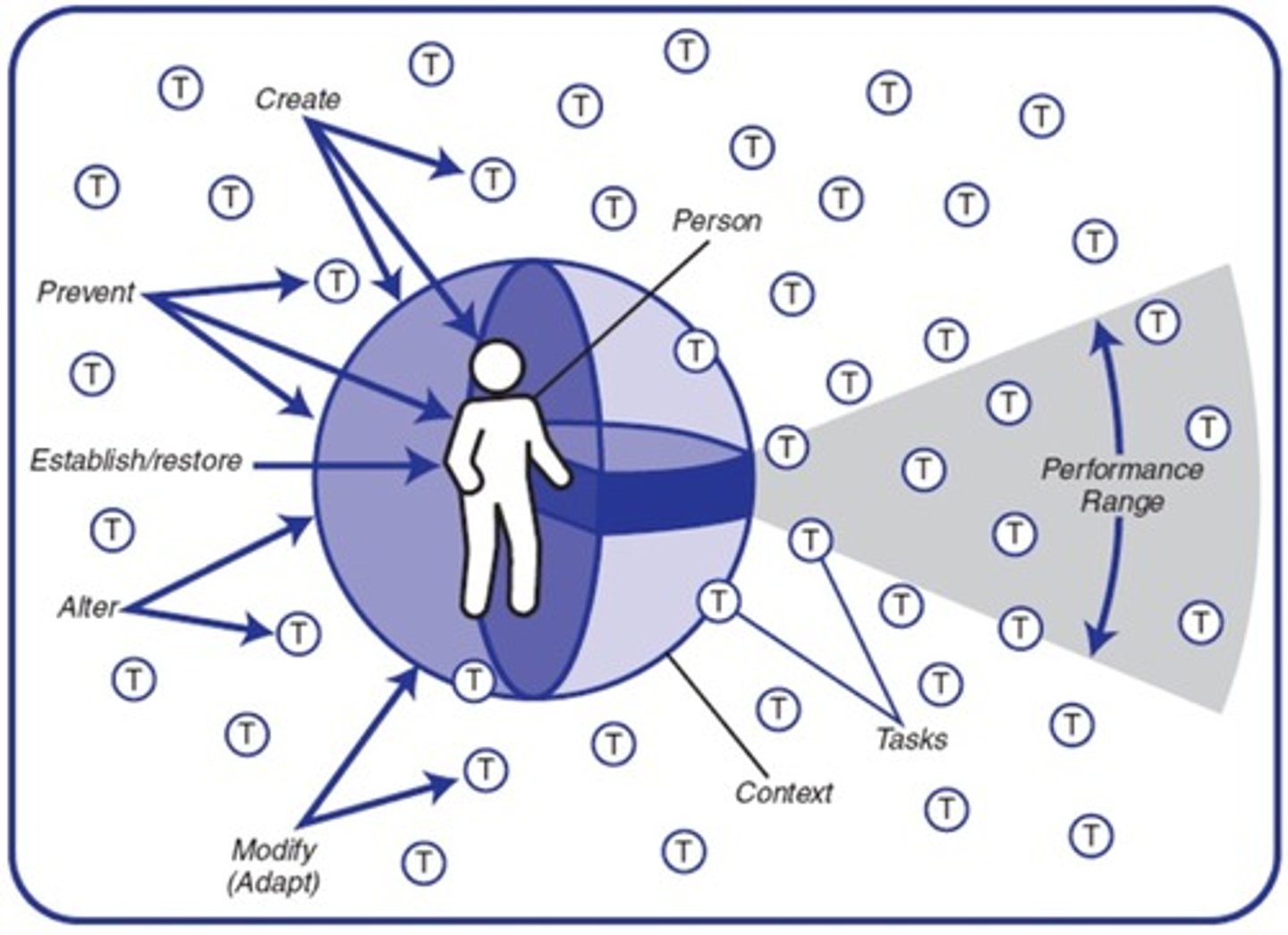
EHP componenets
person, task, context, performance
OTs role in this model
to analyze the situation to
ensure the person can work through all the components
without problems to achieve healthy functioning.
Theorists of EHP
Dunn, Brown, mcGuigan, Youngstorm
Motivation in EHP
Enhanced by directly asking the person what he or she wants and needs
If they are interested then they are more likely to engage
Function (EHP)
Individuals who have a high performance range of tasks and can participate in numerous occupations and roles
Assessment in EHP
OTs help clients by carefully assessing all components that
may be affecting performance outcomes and setting goals
for them to improve.
There are 6 steps
Step 1
Identify and prioritize the person's wants and needs
by gathering data
Step 2
Do a task analysis to understand still requirements and demands
Step 3
observe and evaluate performance style of completing tasks
Step 4
identify the desired context for clients
Step 5
assess person variables like strengths and weaknesses
Step 6
establish consumer-drive goals and empower client through the therapeutic process
5 intervention types
establish and restore, alter, adapt/modify, prevent, create
Establish and restore
A practitioner seeks to remediate person
variables that are part of one's sensorimotor,
cognitive, and/or psychosocial domains.
They use educational (behavioral) methods
and task analysis to restore or remediate
skills
Alter
Focuses on the context. It involves selecting
a context (environment) that matches the
client's current capacity and activity
demands. The practitioner seeks the best
environment to support human performance
for the client at their functioning level
Adapt/Modify
Focuses directly on the modification of the
context or task for successful performance.
The practitioner has determined that a way to
improve occupational performance is to
adapt/modify either the task or the contextual
features to match the person's current level
of functioning
Prevent
Focus is to proactively minimize risks and
avoid the development of the performance
problems. Representative of a health
promotional attitude and preemptive strategy,
it is a primary intervention approach
Create
Promotes enriching and meaningful
occupational performance. Targeted at
person variables, tasks, and contexts. The
goal is to support optimal performance by
maximizing opportunities that enhance one's
quality of life
Goal of EHP
to maximize a person's participation and success in daily life by understanding how their person, context, and task dynamically interact to shape their performance range