A&P - 12.5 Communication Between Neurons (graded potentials & synapses)
 Studied by 0 people
 Call Kai
 Learn
Learn Practice Test
 Spaced Repetition
 Match
Match Flashcards
 Knowt Play
1/16

There's no tags or description
Looks like no tags are added yet.
Name | Mastery | Learn | Test | Matching | Spaced |
|---|
No study sessions yet.
17 Terms
graded potential
change in the membrane potential that varies in size, depending on the size of the stimulus that elicits it
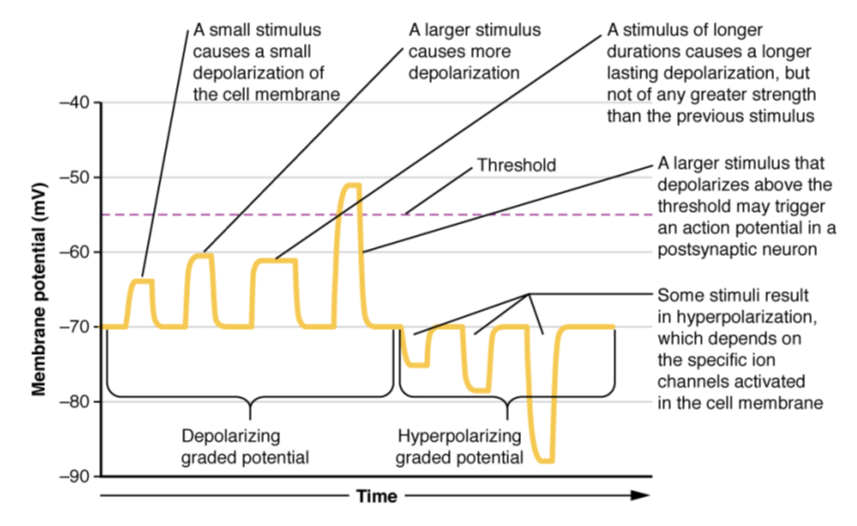
graded potentials can be of two sorts, either they are depolarizing or hyperpolarizing
graded potentials can summate and determine whether the neuron reaches its threshold
for a membrane at the resting potential, a graded potential represents a change in that voltage either above -70 mV or below -70 mV
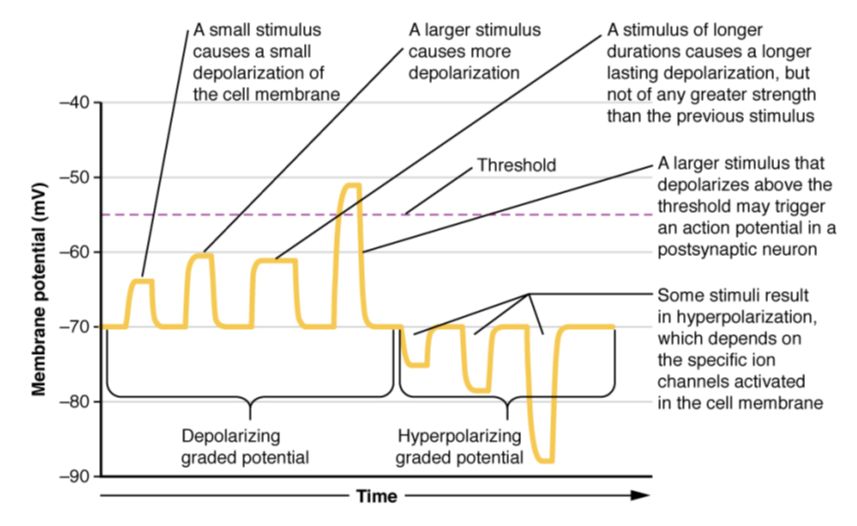
depolarizing graded potentials
typically the result of Na+ entering the cell (or Ca++ entering)
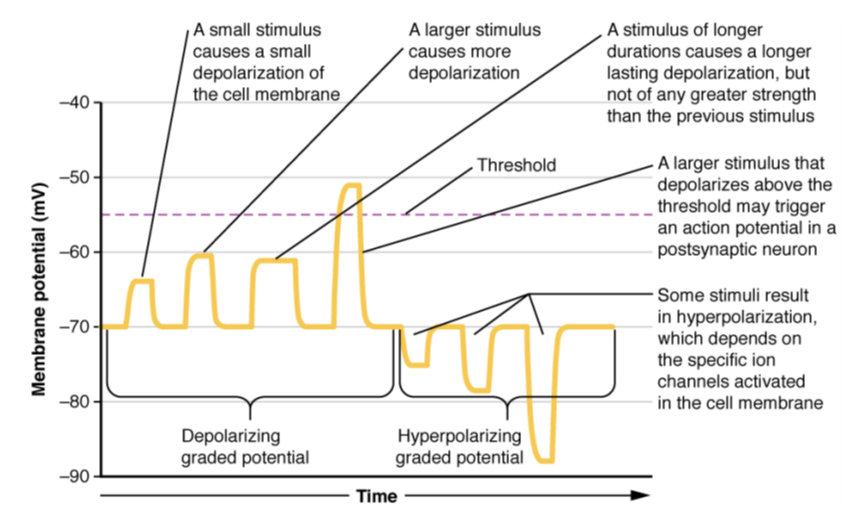
hyperpolarizing graded potentials
can be caused by K+ leaving the cell (or Cl- entering the cell), making inside the cell MORE NEGATIVE … threshold is that much further away
generator potential
graded potential from dendrites of a unipolar cell which generates the action potential in the initial segment of the cell’s axon
stimulus received by unipolar neurons (such as sensory receptors of the skin) will will generate an action potential within the initial segment of the axon
receptor potential
graded potential in a specialized sensory cell that directly causes the release of neurotransmitter without an intervening action potential
found in specialized sensory receptors for taste, vision, and hearing, results in the release of neurotransmitters at the synapse
postsynaptic potential (PSP)
graded potentials in the postsynaptic membrane caused by the binding of neurotransmitter to protein receptors
graded potential in the dendrites of a neuron that is receiving synapses from other cells
can be depolarizing or hyperpolarizing
excitatory postsynaptic potential (EPSP)
graded potential in the postsynaptic membrane that is the result of depolarization and makes an action potential more likely to occur
moves graded potential toward the threshold
postsynaptic neuron receives a depolarization signal meaning the graded potential is moving in a less negative direction (-70mV toward zero)
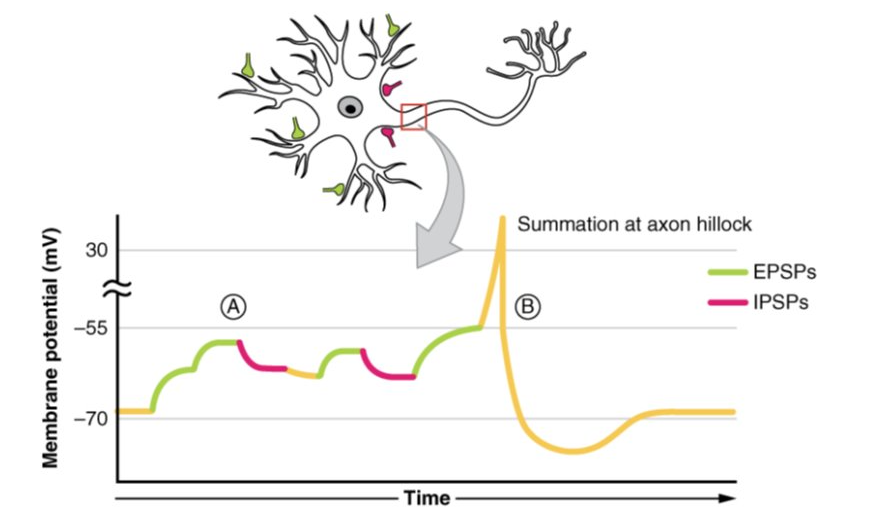
inhibitory postsynaptic potentials (IPSP)
graded potentials in the postsynaptic membrane that is the result of hyperpolarization and makes an action potential less likely to occur
moves the membrane potential away from threshold
postsynaptic neuron receives a hyperpolarization signal meaning the graded potential is moving in a more negative direction (-70mV toward -90mV)
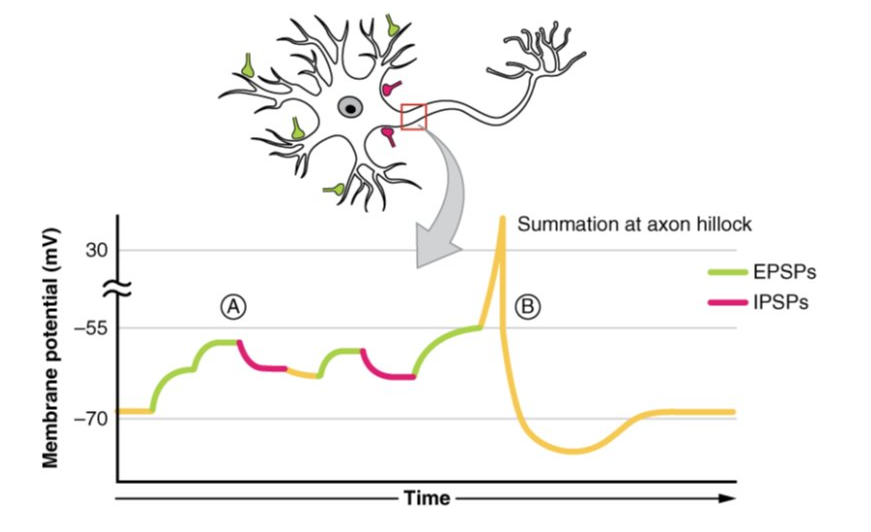
summation
overall change in the membrane potential is called summation
summation is the combined effects of all of the postsynaptic potentials
to add together, as in the cumulative change in postsynaptic potentials toward reaching threshold in the membrane, either across a span of the membrane or over a certain amount of time
spatial and temporal summation can act together, as well
the process of converting electrical signals to chemical signals and back requires subtle changes that can result in transient increases or decreases in membrane voltage, to cause a lasting change in the target cell, multiple signals are usually added together, or summated
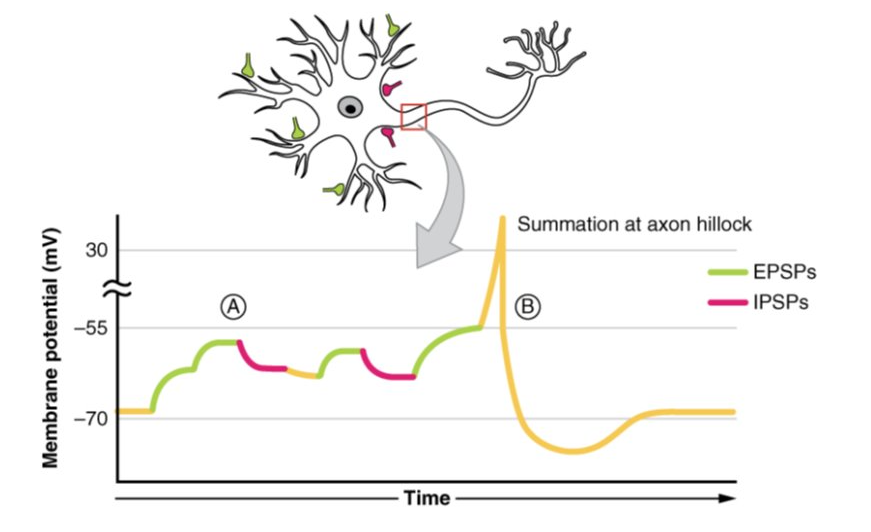
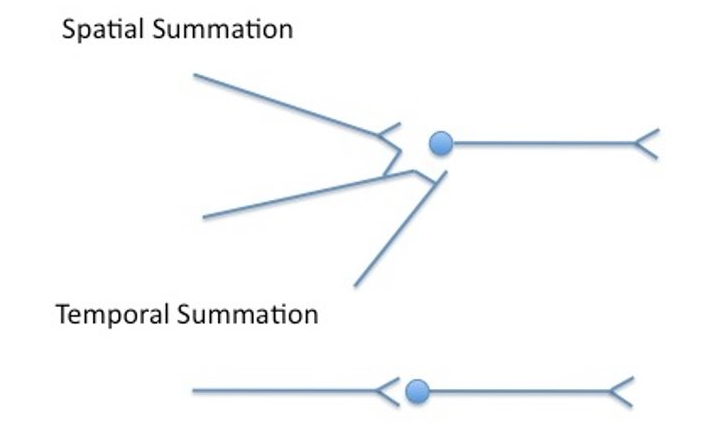
spatial summation
combination of graded potentials across the neuronal cell membrane caused by signals from separate presynaptic elements that add up to initiate an action potential
related to the activity of multiple inputs to a neuron at the same time but in different locations
multiple presynaptic neurons provide action potentials to a single neuron
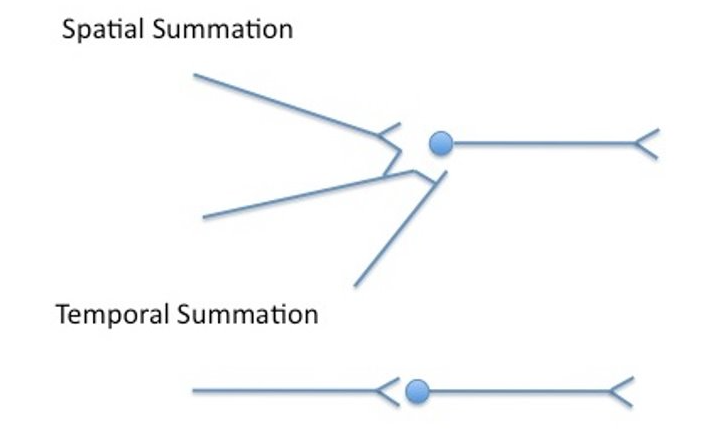
temporal summation
combination of graded potentials at the same location on a neuron resulting in a strong signal from one input
accumulation of multiple, repeated, and frequent inputs
multiple action potentials from a single presynaptic neuron resulting in significant change in the membrane potential
synapses
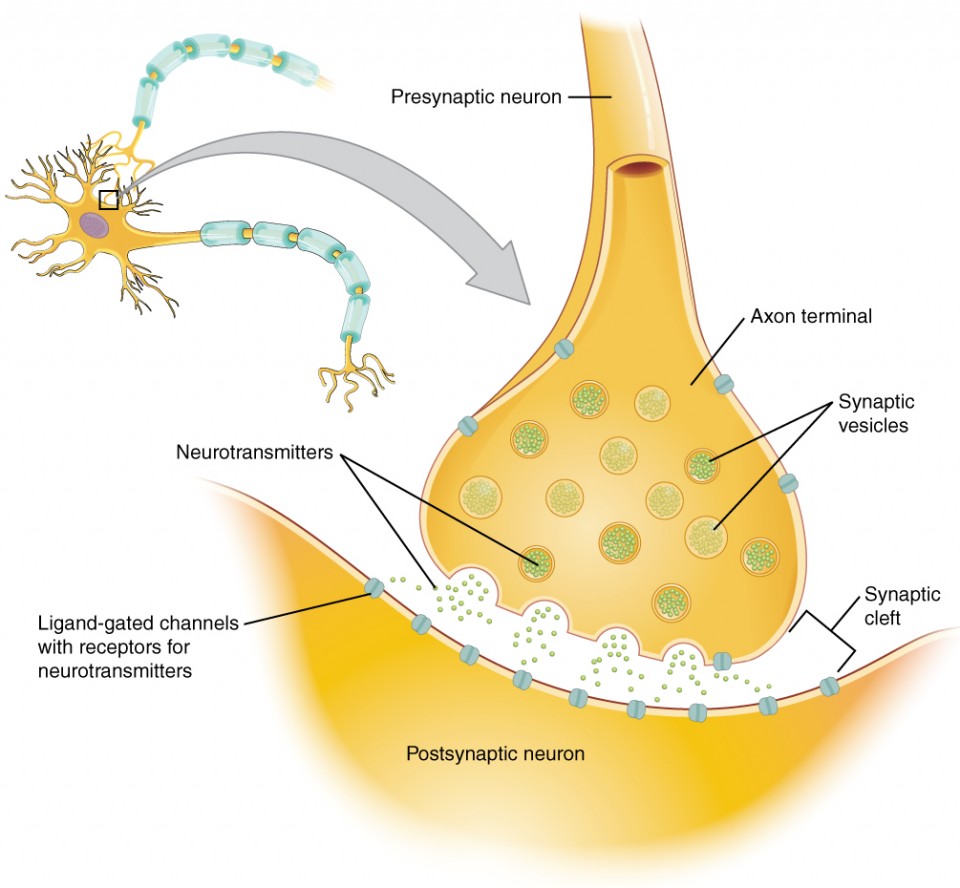
narrow junction across which a chemical signal passes from neuron to the next, initiating a new electrical signal in the target cell
serve as the site where the first neuron (called the pre-synaptic neuron) is communicating with a second neuron (called the post-synaptic neuron)
many electrical impulses must travel from neuron to neuron or from neuron to muscles or glands, when the message has to be sent from one cell to another, the cells are connected by a synapse
presynaptic and postsynaptic neurons communicate via either an electrical synapse or a chemical synapse
presynaptic neuron
cell conducting the impulse towards the synapse
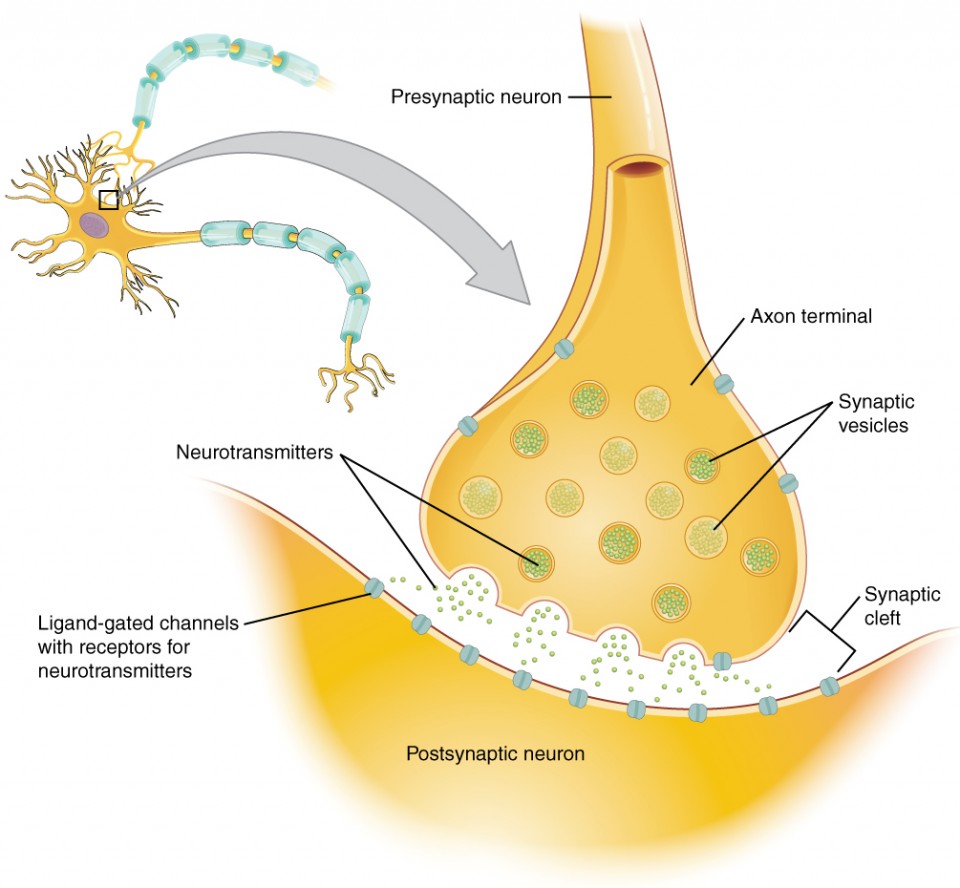
postsynaptic neuron
the cell transmitting the impulse away from the synapse
types of synapses
chemical synapses - use neurotransmitters
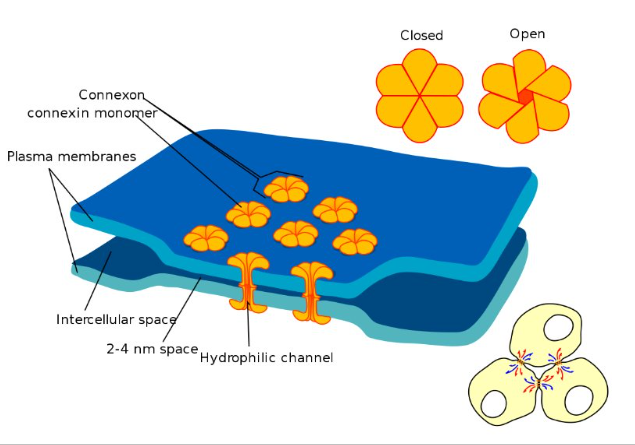
electrical synapses - use gap junction
chemical synapses
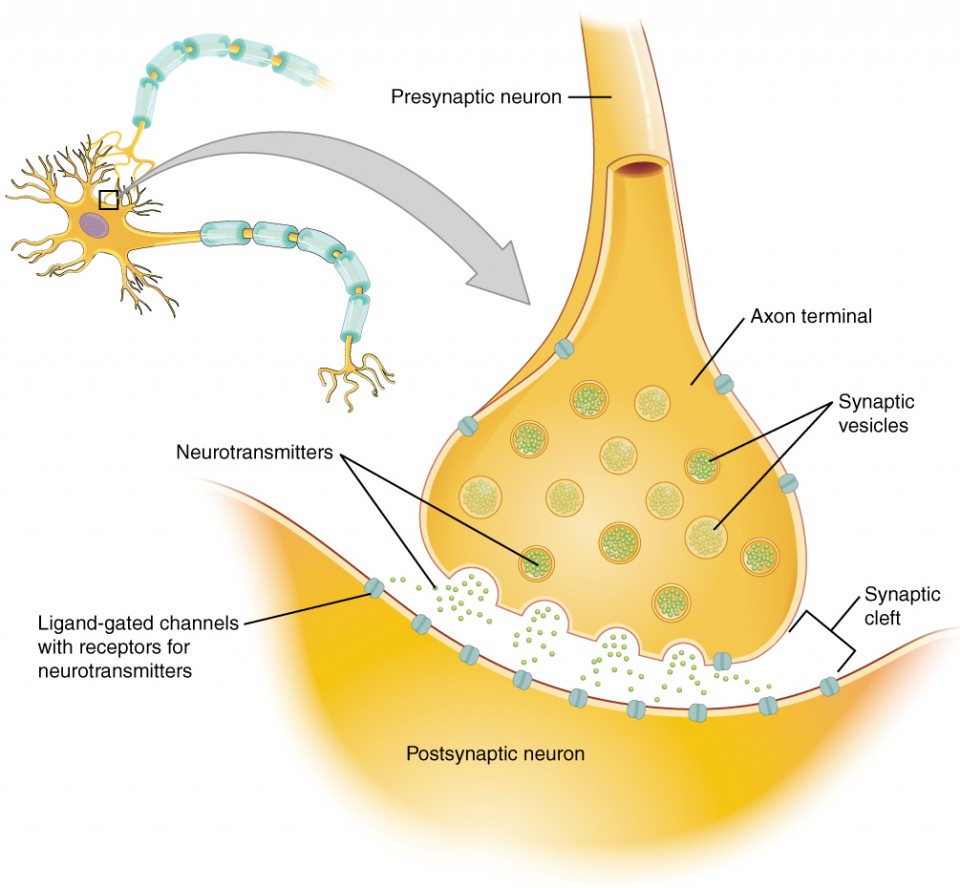
a chemical signal—namely, a neurotransmitter—is released from one cell and it affects the other cell
connection between two neuron, or between a neuron and its target, where a neurotransmitter diffuses across a very short distance
where a synaptic cleft is formed between the two neurons and the presynaptic neuron releases neurotransmitters that stimulate an action potential in the postsynaptic neuron
example:
chemical synapse in the neuromuscular junction (NMJ)
electrical synapses
there is a direct connection between the two cells so that ions can pass directly from one cell to the next
connection between two neurons, or any two electrically active cells, where ions flow directly through channels spanning their adjacent cell membranes
if one cell is depolarized in an electrical synapse, the joined cell also depolarizes because the ions pass between the cells
cell membranes of the two neurons are connected by gap junctions that allow ions from the presynaptic neuron to flow into the postsynaptic neuron so that the propagation of the action potential is continued in the next neuron
this type of synapse can be found in both the CNS and PNS but are relatively rare